This means Ferrari’s rear wing and other back-end aero parts are designed to push the car down onto the track. More downforce and better balance can make the car easier to steer through slow corners like Monaco’s.
In F1, the “power unit” is the car’s engine system, including the hybrid parts that store and reuse energy. If it’s “potent,” it means the car has strong acceleration and overall speed.
Monaco is a famous F1 race on a tight street track. The corners are slow and close together, so the car’s handling and balance matter a lot more than raw top speed.
This is how the car behaves when you’re going slowly, like in tight turns. A “good” low-speed response means it turns in and accelerates smoothly without feeling lazy or unpredictable.
They’re talking about winning the F1 championship for the season. It’s based on points from every race, so a team can still catch up if they’re improving at the right time.
A “shorter gearbox” means using gearing ratios that make the car reach higher engine speeds sooner, improving acceleration and drivability in specific speed ranges. In F1, gearing choices are closely matched to track characteristics and the car’s overall power delivery.
Suspension isn’t just for comfort—it also affects how the car sits on the track. That can change the airflow under the car and how well the aero parts work.
The “regulation box” is the space the rules allow teams to use for certain parts. Designers have to fit everything inside those limits, and clever packaging can still help performance.
“Exhaust blocking” is a trick for using the exhaust flow to help the car’s aerodynamics. The goal is to push more air in the right direction so the rear wing can generate more grip.
The rear wing is a major aerodynamic device that generates downforce by accelerating airflow and creating pressure differences. In modern F1, it’s tightly integrated with the rest of the aero package, so changes to airflow (like exhaust management) can significantly affect its effectiveness.
“Engine regs” are the rule changes about how F1 engines are allowed to be built. When those rules change, teams often have to redesign major parts of the car.
This is about when the new F1 rules for the 2027 season start being used. The teams are arguing whether to apply them right away in 2027 or push them back.
This means the extra time teams have to improve their cars before the next big rule change. More time can help them get upgrades working better instead of wasting effort.
This is a set of F1 rules that changes how the car’s power is divided between the engine and the electric part. The idea is to shift more power to the engine and less to the electric system.
A turbocharger helps the engine make more power by forcing more air into it. More air usually means more fuel can be burned efficiently, so the engine can produce more thrust.
Concept
early implementation
“Early implementation” here means bringing new F1 technical regulations into effect sooner than expected. That can reduce the time teams have to validate upgrades and amortize development work. The host frames it as a key objection because it could leave teams—especially Ferrari—less prepared for the new competitive landscape.
Ferrari’s FTM system (mentioned here as part of a “flick tail mode”) is an aerodynamic device/control strategy intended to alter the car’s rear behavior. In this discussion, it’s specifically tied to generating downforce and therefore drag. The FIA is considering banning it as part of efforts to reduce downforce and improve energy efficiency.
Term
flick tail mode
“Flick tail mode” is described as the operating mode associated with Ferrari’s FTM system. The name implies a rapid rear-aero adjustment to change the car’s balance and aerodynamic load. In this segment, it’s treated as a key contributor to downforce, which the FIA wants to reduce by banning the system.
ICE means the traditional engine that burns fuel. In F1 today, that engine is part of a bigger hybrid system that also uses electric energy. The host is using “ICE” to be specific about which part Ferrari developed.
The chassis is the main frame/structure of the race car. It’s what everything else mounts to, like the suspension and aero parts. The host is saying Ferrari also spent money developing that, so changing the rules can hurt them.
Concept
neutral governor of the championship
This phrase describes the FIA’s intended role as an impartial rule-enforcer rather than someone who tries to “steer” outcomes. The host argues the FIA should focus on addressing the stated criticisms of the regulations, even if interpretations end up affecting teams differently. It’s a governance concept about how rule changes should be applied consistently.
Turbo lag is the delay between when you demand power (throttle input) and when the turbocharger builds enough boost to deliver it. In F1 discussions, reducing lag is often linked to better launches and traction out of slow-speed corners.
A diffuser is a shape under the car that helps the air flow in a way that “sucks” the car down for better grip. More downforce usually means you can corner faster.
“Exhaust aero” means the exhaust isn’t just for getting rid of fumes—it’s also used to help the car’s aerodynamics. Teams try to make the exhaust flow improve grip and stability.
In F1, teams often improve the car gradually during the season. “Natural progression” means they’re building on what they already learned, rather than making big sudden changes.
F1 rules change over time, and those changes can affect which cars are fastest. Sometimes the new rules are meant to prevent one team from dominating too easily.
Ferrari is one of the biggest Formula 1 teams. The hosts are talking about whether Ferrari might get fast enough to challenge for the championship, especially if they improve their car’s performance.
“Tire regulations” are rules about what tires teams can use and how they’re allowed to run them. Since tires affect grip and race strategy, changing the rules can make some teams less competitive.
Toto Wolf is the top leader at Mercedes’ Formula 1 team. The hosts are basically asking how he would react if Ferrari keeps getting faster and threatens Mercedes.
Term
par units
“Par units” here sounds like shared parts or a shared engine setup. The point is that McLaren may not be able to make the same big changes as Ferrari because it’s using a similar baseline.
The “boost and overtake functions” are the car’s allowed bursts of extra power used to accelerate and pass. Teams have to use it wisely because it can’t be unlimited during the race.
A qualifying lap is the fastest lap drivers try to set before the race. The result decides where they start on the grid, and Mark Hughes is talking about the best ones he’s seen.
Sebastian Vettel is a top Formula 1 race driver from Germany. Mark Hughes is mentioning him as one of the drivers who’s done some of the most impressive qualifying laps.
Lewis Hamilton is a famous British Formula 1 driver. Mark Hughes brings him up because Hamilton was fighting for pole in the qualifying lap he’s praising.
Max Verstappen is a top Formula 1 driver from the Netherlands. Mark Hughes is talking about a qualifying lap where Verstappen had a problem late in the session.
Charles Leclerc is a Ferrari Formula 1 driver. Mark Hughes says Leclerc’s qualifying lap in Singapore in 2019 was the most exciting because he stayed extremely close to the walls and still got pole.
Singapore is the location of an F1 race track that’s basically a street circuit. It’s known for being very tight with walls close by, so qualifying laps there are especially intense.
The Anderson Bridge is a named spot on the Singapore F1 track. Mark Hughes is pointing to the exact area where Leclerc got into trouble but recovered without losing momentum.
Gilles Villeneuve was a famous F1 driver. The host is saying his Monaco lap in 1981 was so impressive because he could drive the car right at the limit and still manage it despite the turbo-era problems.
Person
Didier Perroni
Didier Perroni is the teammate the host mentions for that Ferrari team. The point is that while Villeneuve was on the front row, the teammate was much further back in qualifying.
Nelson Piquet was a top Formula 1 driver who won world championships. Here he’s mentioned because his Brabham was one of the cars Villeneuve was nearly matching in that race context.
This is about making tires and fuel more standardized for every team. If everyone starts with the same basics, teams spend less and it’s easier to compare who’s doing the best job with the car itself.
A cost cap is a rule that limits how much money F1 teams are allowed to spend. The idea is to keep the competition closer and stop wealthier teams from outspending everyone else.
Term
6040 2027
“6040 2027” is shorthand for the 2027 rule idea about how much of the car’s power comes from the gas engine versus the electric system. It’s basically a planned balance change for the hybrid setup.
That phrase means how much power the electric motor can provide using electricity stored in the battery. If you turn that down, the car relies more on the gas engine and teams may have to manage energy more carefully.
Energy management means deciding when to use the electric power and when to save it. Since the battery can run out, teams have to plan their power use instead of using everything all at once.
The boost button is a driver switch that gives the car a temporary power increase. It’s like tapping into extra stored energy so the car accelerates harder for a short time—often right when you’re trying to pass.
Overtake mode is a special driving setting that tells the car to focus on getting you past. It changes how the car uses its extra power so you can accelerate harder when you need it.
A chicane is a part of the track where the road zig-zags with quick turns. It forces cars to slow down and can make it easier to pass because drivers have to brake and line up carefully.
It means the car can be set up so it turns the way you want throughout the corner. Instead of feeling the same from start to finish, the car can be made to respond differently as you go in and through the turn.
A power deficit means the car isn’t as strong as the others in terms of acceleration and speed. The point here is that Monaco’s layout makes that weakness less obvious than on faster tracks.
It means the driver was using a higher gear than others while still going fast. That can suggest the car had enough grip and power to keep pulling without needing as many gear changes.
Understeer is when the car doesn’t “turn in” enough and feels like it wants to go straight instead of following the corner. It usually shows up when you’re trying to turn but the front tires can’t grip enough.
Red Bull is the F1 team being discussed. The host says their car has not suited Monaco as well because it doesn’t feel as stable over the track’s bumps and tight corners.
It means the car gets a bit jumpy when it hits the raised edges of the track. If the suspension can’t stay settled, the tires lose grip and the car feels harder to control.
Term
ceiling
They mean the car itself sets a limit on how good the driver can be. If the car isn’t capable enough, the driver can’t perform at the very top level no matter how skilled they are.
They’re talking about driving very accurately—hitting the right lines and braking points. On a track like Monaco, being off by even a little can cost you a lot.
Kimi Antonelli is an up-and-coming Formula 1 driver. They’re saying he’s very precise, which could help at Monaco, but he still has to avoid taking too many risky chances.
Term
audacity
They mean the driver is willing to take bigger risks instead of playing it safe. That can lead to great saves, but it can also make things go wrong more easily.
McLaren is a famous Formula 1 racing team with a long history. The host is talking about how the team stayed around for decades and how different leaders helped it become strong again.
This is basically a count of how many F1 races a team has started over the years. It’s a way of measuring how long they’ve been competing consistently.
In F1, there are two main championships. One is for the driver, and one is for the team. The constructors title is the team championship based on points from both cars.
A drivers title is the championship awarded to the individual driver who scores the most points across the season. It’s distinct from the constructors title, which is won by the team based on combined points.
Ron Dennis was a major leader at McLaren. In this segment, the host is saying his management and funding helped McLaren become a top team and stay ahead of others.
Ayrton Senna was one of the greatest Formula 1 drivers ever. The host is mentioning him to highlight how McLaren had world-class talent during its best era.
Alan Prost was a top Formula 1 driver and world champion. The host is listing him to show how strong McLaren’s driver lineup was during its most successful years.
Andrea Stella is a senior figure at McLaren. In this segment, he’s being quoted to explain that the team had to change how it operates to become consistently winning.
“Parity” just means things are fairly equal. In F1 talk, it means the teams are close enough in speed that you can compare drivers without one team having a huge advantage.
In Formula 1, the halo is a protective frame mounted around the driver’s head. It’s there to help keep the driver safer if something hits the car.
LIVE
Ferrari and Mike will end up with the fastest car. It could be one of those ones where the
driver that's had the quiet start of the season comes on increasingly strong and is getting
really a threat towards the end of the year. They've got their trick aerodynamic rear end,
which in combination with a power unit that was equally potent would make them one hell of a
combination. Yeah, if you're a total wolf you'd be very concerned. It's not the fastest team
at the moment, although it might well be a Monaco this weekend. Post-Covid, the Ferrari has been
dynamite there and that sweet handling and that low-speed response is perfect for Monaco,
plus Charles Leclerc in the car just makes it a very, very fast, almost, I wouldn't say unbeatable,
but a formidable combination. Well, Mark, here we are on the eve of another Grand Prix this time.
It's Monaco. It's a big week ahead for quite a lot of the teams.
Yeah, absolutely it is. There's a little bit of a reset about Monaco for several reasons,
but regardless of what's going on in terms of regulations and how the power outputs and
regeneration have been configured, especially for the circuit. There's a bit of a reset in terms
of what we expect of the competitive order, just because it's a track which could almost have been
configured to perfectly suit Ferrari and the play to its strengths and negate its weaknesses. So
we're expecting a lot of Ferrari this weekend. So that's a little bit different to how we've
gone to set up every weekend so far. So yeah, I think we might be looking at a slightly different
picture this weekend. Ferrari then. Ferrari, when you look at what's going on at Ferrari,
and from what I understand, you've written an article about what's going on with the duo and
Ferrari, but the way I interpret what's going on at Ferrari, have they played an absolute
blinder? Are they going to snatch the world champion? Is it too early? Are they going to
lose nose? Well, they've got a bit of a deficit to overcome if they were to do that, but the way
it's not been confirmed yet that Ferrari have got the ideal adjustment, but it's expected that they
will have. It was supposed to be conveyed to the teams off Monday, but there's been a little bit
of further discussion, so it's probably going to be the Monday after Monaco. But we expect it to
be confirmed that yes, Ferrari will have been adjudged to have been more than 4% adrift on the
power unit and as such will be granted two extra upgrades. So that would allow them to introduce
an engine which they've got ready in time for Austria, and then another one maybe Zanvoort
at a push, but definitely Monza. And they believe that if they're half a second off at the moment,
the Austria upgrade would half that deficit in terms of the engine performance, and the
second one would bring them on parity with Mercedes. So if that is indeed the case,
everything about the performance pattern of the car so far this year suggests that with power
parity it would be at least as fast as Mercedes, maybe even faster. So you could say yeah, they
might well end up with the fastest car if the ideal adjustment goes through as expected,
but it's still quite late in the season to be clawing that many points back, so I think yeah,
maybe it could be one of those ones where the driver that's had the quiet start of the season
comes on increasingly strong and is getting really a threat towards the end of the year,
let's see, but it's possible and they've got their trick aerodynamic rear end, which is
if they configure the whole car around to have a shorter gearbox and look at the suspension
going as far raking as far forward as possible to give them this extra little bit of area within
the regulation box at the rear, under which they've been able to do this really effective
that exhaust blocking which directs the airflow to the underside of the rear wing with much more
force and gives them a downforce advantage. So that in combination with a power unit that was
equally potent would make them one hell of a combination, yeah, in theory, but it's one thing
saying in theory, so it's another thing delivering it and then exploiting it.
Just so any listener, any viewer has just come across the duo for the first time, additional
development and upgrade opportunities, that's what a duo stands for, the acronym and it's just a
equalization process that's handed out for those teams that are too far off the pace,
but we've also got the prospect of engine regs being changed in 2027, which Ferrari
isn't happy about. Well, what can Ferrari do to stop the changes coming through? Are they
completely powerless? Is there anything they can do? And also, what other teams would go with them
on the journey to delay the change at the very least? Last time we spoke about this was before
the Canadian Grand Prix and we had only Mercedes and Red Bull were in favour of 27 implementation,
the other three were against. Two weeks later, we understand that Honda has flipped and is now in
favour along with Mercedes and Red Bull of the 27 implementation, so if Ferrari were to get it
delayed, it would have to be in conjunction with Audi, so it would have to be sure that Audi
stood firm with it. I'm not sure that Audi is that firm on it, it does have reservations about the
implementation, but I'm not sure it's as anti as Ferrari, because it really hurts Ferrari
competitively more than it hurts Audi. I think Audi's problem with it is one of cost and economics.
If Ferrari do get this additional time, this development time, this duo, and they are then
not voting to agree to bring the new regulations in for 2027, are they
somehow able to, have they been manipulating the system so that they can, in a fair way,
by the way, I'm not suggesting any wrongdoing, but have they manipulated the system in such a way
that it gives them some amazing advantage and then they can keep it going for further? Why would
they be against bringing the new regs earlier? The reason why they might be a very cynical
view, if I may say so. I have a Ferrari picture over my shoulder, by the way, just for fairness,
you know. I mean, cynicism aside, why they would be, I think, feeling hard done by
if the 27 implementation of the 6040 regulation went through, that is the
greater internal combustion engine power and reduced electrical power to help with all the
the criticisms that the new formula has generated this year. Why Ferrari might feel
hard done by if they were implemented as early as 2027, rather as they would prefer 2028?
They've spent a lot of effort and resource on producing this upgraded engine and the second
upgraded engine, which will have a bigger turbo, we are told. So they will have spent all this
resource and effort in overcoming the initial shortfall of their engine and
only to have it sort of neutralized by a new set of regulations for 2027, whereby everybody starts
again. So they wouldn't be having the advantage of all their work for more than a few races.
So I would think that that is probably their main objection to the early implementation
of the 6040 regulations. And there's an additional consideration that the FIA is thinking about
because it wants to reduce downforce because downforce creates drag, which costs battery power.
So they're thinking of reducing downforce by banning Ferrari's FTM system, the flick tail mode.
So Ferrari is potentially looking at a double whammy for 2027, if that happens, if they have
the early implementation of the 6040 rules and the banning of their FTM tailpipe, then
they've been hit twice competitively. So they could have played a blinder, on the other hand,
they may find themselves doubly hampered. So if they were playing the long game to start with,
assuming there would be no regulation changes or significant regulation changes, then great
job there by Ferrari, they've rolled the dice. But if the regulations change, then they will be
hampered by that. What's the ramifications from the FIA towards Ferrari? If Ferrari have said that
we've spent X amount of money on our power unit, the ICE part of the power unit, and our development
of chassis, we've got two customers that use our power unit. So that has a knock on effect for
those two teams as well. How does that work with the FIA with Formula One? How do they then
deal with that issue? The FIA has to prioritise what is best for the overall
good of the championship. And what it's trying to do is address the criticisms that this 5050 set
of regulations is brought about. So they're addressing those criticisms. But in doing that,
it's created a subset of problems and that may be directed more towards Ferrari than the others.
But really, the FIA should be just a neutral governor of the championship and it should be
looking to address the criticisms of this category that we've had so far and just
go on on that basis. It does sometimes happen that it unfortunately hampers one team more than
another team and all sorts of interpretations will be made of that. But I don't think the FIA can
afford to be trying to second guess that. I really just think it has to just plow on and
if it can get these regulations through sooner rather than later, the 6040 ones,
for 27 rather than 28, that's got to be better for the health of the championship.
Do you think that Ferrari have got the design right from where we currently are? Because they
have the small turbo so they have the great launch, less lag off the line, it has this clever
diffuser and exhaust aero as well. Where it currently sits and looking at the long game,
have they worked it out? They've got the natural progression that's allowed them to build through
the season if there were no changes? I don't think it's been as calculated as that, Brin. I think
it's just they've plowed their own path and this is where they've ended up. It is certainly a car
with a lot of ingenious design details and it's very innovative but at the same time it does have
a very significant power shortfall. It is half a second off the pace ultimately and that looks
mainly down to power unit and in terms of the history of that they were quite late in abandoning
what was going to be the 26th engine and redesigning it to give us the engine that we've
got now and so it is at an earlier stage of development than the equivalent Mercedes and
Red Bull power units for example. I think that's what you're seeing. The power unit is why they're
a little bit off the pace but it is very very good through the corners, a very good chassis,
it's very good aerodynamically, it has a lot of very very interesting design features. It's
probably the most interesting design on the grid and probably the most innovative but it's not the
fastest. We've seen over the years regulations come in not directly to hamper one team but
but maybe to slow down an advantage of one team and help the others catch up a little bit. I'm
thinking of Hamilton, the Rossburg era, things like that that Red Bull when they were very very
dominant and then things changed, allowed other teams to come back. This is pretty standard for
Formula One. It's not like it's a new thing for us to go their heads around. Is it striking you in
a slightly different way though because of the way it's come around with the regulation change
and the immediate look to the change of the regs? It is yes because it's not the fastest team
at the moment and although it might well be a moniker this weekend for reasons unconnected to
what we're talking about and it might subsequently be when it gets its upgrades but it's not being
slowed down because it's dominating too much if you would expect if anything that would be
aimed at Mercedes. I don't think the history of this set of circumstances is follows that
pattern. I think it's just a sort of an accident of history really to do with these regulations
and the way that the unintended consequences have unfolded. You can't change the
regulations without impacting the competitive order. That's just how it works but I don't
think in this case there's much evidence to suggest that it's being done to novel a dominant team and
perhaps enhance the chances of another one and we've seen that in the way we've seen in the
past with Mercedes and we've seen in the past with Red Bull and we've seen it going back a few
more years with Ferrari when they changed the tire regulations in 2005 in a way that really
disadvantaged the bridged on users which of the major teams was Ferrari. It's happened to all the
top teams at some point that there's been a regulation sort of pulling back done under
different guises but with the sort of quote unquote happy coincidence that it's decreased
the dominance or wiped it away completely. I don't think that's what we're seeing in this case.
If you were Toto Wolf would you be concerned about Ferrari looming ever so much larger in
the mirrors they seem to be gaining ground. It's not just Ferrari but things we're talking
about Ferrari at the moment. Yeah I would. I'd be particularly concerned with Ferrari given
that they have this ideal readjustment forthcoming we believe which McLaren won't do because they
use Mercedes par units. So yes I would be given that they're only half a second off the pace in
the way that the boost and overtake functions work out speed enough to make them a real
bother for Mercedes especially in the early races. If they can do that while half a second
off the pace well you'd think if they can get the power unit which is on par with the Mercedes
then yeah if you were Toto Wolf you'd be very concerned. Well that gives you I think a bit
of an idea of what Mark's latest column the MPH column is it's about it's about Ferrari but in
the knock-on effect and if you're listening to this in a bit sort of cross-eyed and you can't
kind of get your heads around it go and read the article motorsportmagazine.com it's all there
it's on the app as well it's a really good article it tells you all about the duo why Ferrari what
Ferrari will be getting why they might be against the regulations changing as early as next season
so go and give it a read. Mark it's time to move on to the viewers questions I've selected the usual
three for you you'll be delighted to hear. So the question I've got here is from Alex he says Mark
what's the best qualifying lap you've ever watched and there's a sort of a caveat here since 2000
now let's deal with that bit first because I want to dig in a bit deeper because I don't know why
we're limiting to 2000 but since 2000. Well he might be referencing the fact that I started doing
every race at the beginning of 2000 it may be that he has that knowledge who knows but yeah
I think if you're if you're talking about the best qualifying lap there's the several candidates
there's there's so many candidates and the same names kept cropping up the names of
Sebastian Vettel, Michael Schumacher, Lewis Hamilton, Max Verstappen, Charles Leclerc,
there there there just there's so many each of those has got multiple entries into that shorelist
and really in terms of technical perfection it's so close I wouldn't like to call it but in terms
of the lap which was the most thrilling and the most hard in the mouth I think for me it was Leclerc
at Singapore 2019 when he had that big Larry moment over the Anderson bridge collected it all up and
didn't lose any momentum and he was just so close to the walls and the bar is all the way through
and it was absolute full commitment around that track and he was fighting Lewis Hamilton for pole
and he got it and yeah for me that was the most thrilling pole position lap but yeah some of his
monocle laps are just extraordinary or backing laps you know the also I was struck when I was
thinking of a shortlist how many times Singapore comes up it's there's so many great laps around
there including Vettels Hamilton in 2018 Verstappen in 2018 with a misfire at the last couple of
corners when he might have taken pole they both incidentally described that as the the best lap
they'd ever done that you know within seconds of each other yeah it's it's it's usually at those
places where you can get a real sense of how committed they are because of the proximity
of the walls yeah I was going to ask you what would you what do you think is the well characterised
is the best is it a dramatic moment during the lap that they managed to recover from to get a
decent lap or is it the cleanest lap the neatest the tidiest the almost almost the perfect delta
yeah I mean it's it's all of those things it's it's just how much commitment and speed how
close they are to the the car's absolute on the edge limit and sometimes they get a pole by
going over the edge it beyond it a little bit but having the skill to bring it back so you
haven't really lost out all that much that was the case for that Leclerc lap in 19 I was talking
about yeah others it's just extraordinary you know perfection of how everything is melded together
with barely a you know you can really not see the joints it it's yeah there's so much that
that goes into a a great final lap that um yeah be unfair to try and pick one out for its technical
perfection because they're they're also close to it if I were to say okay you can't give one from
2000 onwards is there one that sticks in your mind for any particular reason from from before that
time 70s 80s that's kind of yeah for me it was Gilles Villeneuve at 81 at Monaco
in the turbocharged Ferrari at a time when a turbocharged car was at a disadvantage at Monaco
if they had some grunt down the straight obviously but had terrible turbo lag it was a really bad
chassis and agricultural chassis um and he had a a real world-class teammate Didier Perroni um who
was qualified to 17th or something like that and he put it on the front row and he was just hundreds
away from an underweight Brabham driven by Nelson Piquet um and went on to win the race but yeah for
me that was the most awe-inspiring coli coli lap I think I've I've seen from before before the uh
usage with some very very cool laps there I'll have to dig out some images if I can
John Smeaton he's come up with a question John Smeaton says F1 has become ridiculously expensive
and a long way from the late 60s into the DFV era and the early 2000s v10 era F1 needs to go back
to a scenario where a Tyrrell or a Brabham can challenge corporate might why not a formula with
a spec tyre and a spec fuel allocation and see who can produce the best solution be it a hybrid v6
or a lazy v8 I think even when you it's a good question John but I think even when you
reduce the cost which is basically what the cost cap is done but it's obviously it's set
it at a level way higher than the era that you're talking about in Brabham Tyrrell but
even when you reduce the cost the best teams still find an advantage and I don't think it's
so much to do with corporate might I think it's I mean if for example Red Bull was a dominant team
for ages and that's that's an independent that's very much in the spirit of Gordon Murray and
Brabham and that the you know the the Adrian Newie Red Bull you very similar so I know I
don't necessarily agree with the the premise of the question and the other the other thing is if
you have two opposing technical solutions one of them will end up better than the other one
and will become dominant so yeah it's interesting technically but I think it would only be
interesting for a little while while it sorted itself out and I don't think I think the business
of Formula One is so big now that it it probably doesn't need to do experiments like that and
probably wouldn't wouldn't want to but I mean yeah it would it would fascinate us nerds wouldn't it
it would it would be a really great little what if what if we did this and we twiddle this knob
and we twiddle that knob what would that look like but I think I don't think you can ever get back
to the past I think you know each each era had its own set of circumstances which which brought
it then I don't I don't think you can artificially create it to go back nice idea though yes nice
question uh Frank Harold this is the third question Frank Harold says as an alternative to the currently
proposed 6040 2027 powertrain regulation changes with the attendant engineering and cost increases
why not consider keeping the ICE engine power at the 2026 level and simply reduce the battery
electric motor output while this would slow the car somewhat would the racing really be
discernibly different for the viewer I think the danger with that is that if you restricted the
electrical further and you didn't have much combustion engine power then you're gonna have
to save what little electricity you've got even more than you do at the moment and I think that
would lead to even more backing off in qualifying than we have at the moment um yeah I see where
your logic's coming from and in terms of the expense but I don't I don't think that would
be a solution I think the solution is more internal combustion power um
you you need to have the it's it's to do with yes it's to do with the ratio but I think at the
level that it's at it's it's it's so almost on the cusp of um it of of not having enough
so in in terms of total power and I think you would need to do the simulation in every single
circuit to work out whether that was actually uh better or worse for the uh problems that
have been inherent in the 5050 rig so far so got a mark favorite question Alex John or Frank
they're all good Alex I think yeah did you put yourself in the shortlist there's no point
there's no point for myself on the shortlist thank you though Alex I do I do have a question
well done to Alex all three of you for the great questions I say through through
gritted teeth if the regulations change for 2027 and let's just assume that they're going to
are we going to have fresh car reveals and stuff like that because there are going to have to be
changes to the way the car looks to fit in the the slightly bigger fuel tank etc etc etc
yeah although um they may not need the bigger fuel tank we're talking about that would only
be needed for one or two circuits so I think as we talked about a couple of episodes ago they're
probably going to solve that by just knocking a couple of laps off the the circuits where that
would be a problem and at the other circuits they figure that the existing fuel tanks would
still be big enough for the increased fuel flow um but yeah they will be significantly
different cars because you have to re-optimize around all the changes that you've made to the
power unit and the power unit will be significantly different um you know you may even have different
layouts of power unit um and certainly if you're talking about banning
aerodynamic features that are currently there then you're going to redesign the car around that so
yeah it's quite conceivable that we have a very different set of 27 cars so those of 26 even though
about half the teams are understood to be planning on keeping the 26 chassis that's only the central
tub the car around that can look totally different and so yeah I would expect if you're if you're
going to change the power unit rigs and you're talking about reducing the downforce of in terms
of the aerodynamic rigs I think the cars will look significantly different yeah more razzmatazz
more car reveals all that kind of stuff but it won't just be livery reveals that'll be coming out
maybe for 20 27 maybe maybe mark it's monaco we've been talking about that monaco weekend as you know
i'm flying off to um to the Mediterranean um very very soon to to attend the grand prix in a working
capacity i'm not i'm not the greatest fan of the monaco grand prix i'm not the greatest fan because
i like overtaking do you think we're going to get to see and it's the age old question any proper
overtaking this time at monaco 2026 well there might be a little bit of surprise there because
you know how they've um they've limited the the speed at which the power unit starts to de-rate
instead of 290 kilometers it starts to de-rate at 200 kilometers and it's uh there's no
electrical charge whatsoever by the time you get to 300 kilometers so we're talking about between
125 miles an hour and 188 the boost button ditches all that so there's a bigger potentially a
bigger difference between being on the boost button and not being on the boost button than before
um so maybe the boost button combined with the overtake mode might just be powerful enough
to get your head on the run the sander vote or into the chicane out of the tunnel possibly i
don't know um it's certainly different how it's been so you know new as we've seen new
regulations can create all sorts of uh effects that hadn't been thought about and maybe one of
them is that it could be a positive one so maybe we'll we'll who knows but i noticed that you've
mentioned the two corners where the overtaking can happen the only two corners really apart from
sometimes nudging it down the inside of the very tight hairpin that's the only two real places
isn't it that you can oh there's um that the the right hand to be for the tunnel where jensen
but um what was it subtle on on his side because it was he hadn't been in the wider cars the 2017
cars were wider and he used to be able to get the 2016 cars to a breast through there and there were
a couple of passes made through there but the cars are narrower again so maybe there's a sneaky little
one to be done there well there you go for four potential overtake places at monaco this is getting
ridiculous this is getting ridiculous sublime to ridiculous um it's it's it's charles leclerc
um still a favorite isn't he he's a favorite at monaco obviously it's his hometown is where he
lived where he's grown up what makes him so good other than the fact he knows it like the back of
his hand wow you think they all know it very well but um he's just fantastic through there and i think
he's just so at ease with the car moving around that he's totally confident in taking
outrageous speed in but for the last oh since some post-covid those races 21 was it was the
first monaco the ferrari has been dynamite there and so it's given him all that he needs to really
express himself it's ferrari has had the best sort of corner adjustment you can make make the
angle of the the turn different as you go through the the corner it's very very adjustable um and
it's had the best response from its engine it's traditionally had a smaller turbo than the cars
around it it has again this year and that's given it this fantastic low speed response so that
combination that sweet handling and that low speed response is perfect for monaco and whenever
they've had a power deficit which they had in 21 and that they have this year it doesn't really
matter it's such a power insensitive track you hardly find any lap time from extra power around
there so it it just gets rid of the disadvantage that it has a more conventional track um so all
those things combined plus charles claire in the car is just it just makes it a just a very very
fast almost uncell unbeatable but a formidable combination um and even in last year where the
car wasn't particularly good he was still fighting for pull and he's speed through tobacco where he
was a gear up on everybody else it was just astonishing and um when the gps came out later
um the McLaren the two McLaren drivers were looking at it and they you know he's like 10 kilometers
in a gear up compared to them through tobacco and norris had said to piastri could you do that
and piastri said i think you should try it first you know that's just even even his rivals were
sort of you know saying wow you know so yeah you need the car to give you all the messages
that allows you to express yourself and um Max Verstappen has traditionally not had a great red
bull around there it tends to be a little bit understeer a bit bouncy over the curbs so in its DNA
red bull hasn't been a great car around monaco so you haven't been able to see the best of Verstappen
around there whereas la claire has had a perfect monaco car for several years and so he can really
express himself so you're not really comparing like with like and this is a point i keep trying to make
that when you're judging driver performances you have to bear in mind that the the ceiling that
the car is imposing on them not just in terms of its ultimate uh competitiveness but in in terms
of its traits and then how you need to drive so um yeah i think ferrari la claire is just a
perfect combination for monaco and if precision is key which it you know is monaco you make us
one tiny false move and that's it is game over if precision is key we've been talking
over the last few weeks about kimmy antonelli he's got to be one of those very fancy drivers
around someone like monaco because he's so so precise um yeah he around miami montreal he was
incredibly precise ali was combining that with real audacity you know real taken risks and thrown
himself in and and rescue in any little moments um you you sort of take a bit of a deep breath when
you think about that approach coming into monaco um but if anyone can make it work he can and um
yeah you're talking about the sort of the he would if there's anybody could uh
sort of approach la claire levels of monaco mastery he has the potential to do it but
i think yours has the potential to take a corner of the car off just because he's become a little
bit too audacious who knows um it's it's it's going to be quite a test for him actually because i
don't expect i think this was going to be the first race of the season that we see where the
Mercedes is not fastest car on qualifying so um i think if that is the case the temptation for him
will be to try and make it so and push um and he has to sort of i guess uh be aware of that
and and to control any frustration that might come from that it's a good test of his experience
and his increasing maturity yeah he's gonna have to really reign in his uh his fiery italian-ness
that we've seen over the last few weeks which is always a joy yeah i don't know if it's to do with
nationality but it's uh it's incredibly exciting to watch and it's incredibly
exciting to watch watch his development it's sort of you know it it sort of uh it increases
you know he comes ever more impressive as he evolves almost race by race
he certainly does now if you want to stay up to date with all things Formula One you can subscribe
to the F1 newsletter go to motorsportmagazine.com subscribe just there and you'll get the newsletter
to your email inbox and you'll be able to read and stay up to speed with all of the developments
throughout the course of the season now mark it is unreliably informed although it's incorrect
McLaren's 1000th Grand Prix this weekend at Monaco it's actually there 999th is going to be
but over there 998 current Grand Prix starts but we're going to say 999th for the for the sake of
this because they are celebrating their 1000th delivery looks fantastic by the way i saw it
today it's in the flesh it looks amazing but um they had 203 wins 261 podiums 10 constructors titles
and five drivers titles that's that's been pretty pretty significant um they're also Formula One's
longest running or second longest running team really so how have they survived so long when
the likes of Radbom and Tyrrell etc have fallen by the wayside being different evolutions of
McLaren so the original Bruce McLaren team which was taken over by Teddy Mayer after Bruce was
killed in testing that was the first generation of McLaren the second generation came when Ron
Dennis sort of did a sort of power play in combination with Philip Morrison eased himself in
and Teddy Mayer out um so that that was the real blockbuster years whether the real juggernaut of
McLaren success i mean they had championships before well there was some football in James
Hunt but the real juggernaut stuff the Alan Prost, Nicky Lauder, Ayrton Senna, Mega Hackerman years
that was that was Ron Dennis era McLaren just and then that would really it didn't just
change the fortunes of of the team um the way he sort of built it radically uh refinanced it and
made it made it he changed the scale of what a top team would be and that was why teams like
Tyrrell and Lotus and Brabham fell by the wayside because they just couldn't keep up they couldn't
keep up with that level of finance and that level of resource and that was all from Ron Dennis's
vision and his ability to make that vision come true so it was an absolute powerhouse of a team
for a long long time and when that era came to an end the the the Zach Brown era began and you
know it's taken a time for that to become a top team again because they they had fallen behind
and it it sort of started looking like the old McLaren by 23 and then the 24 and then of course
last season that they finally took both titles so um yeah I think uh it's it's because it's had three
sort of three goals at it and one of those established it as uh the the the goal standard
and so it it that carried a lot of momentum which enabled it to get through the sticky period of
when it changed uh the owners and then the generation changed so yeah it's um
it's a remarkable history isn't it yeah certainly is I mean I remember Andrea Stella saying that they
had to learn how to win because they hadn't there was no they just didn't know how to win so they
had to learn how to do that and so they were kind of they were slowly easing themselves into that
process one day in the last few years how close were they as a team to no longer being a team how
close were they to bankruptcy and disappearing yeah early 2020s very close um because the uh
not not only because of the the effects of COVID but the automotive side of the business
was really struggling it was it it could conceivably have pulled the form of one team down
and so the yeah they had to decouple the two companies and put them under different ownership
and sort of sort of sell sell the the McLaren Technology Center they've since bought it back but
and rent it you know just just to keep their heads above so though yeah it was very very close
to uh to going under and it took uh a lot of very adept um sort of maneuvering from
Zach Brown and the honours uh the Bahraini honours to to prevent that from our man
what about driver pairings then they've had some incredible driver pairings and some not so
incredible driver pairings over the years as well as you know for for Yin Yang let's keep parity here
how do Lando Norris and Oscar Piastri compare to the best they've had that's a very strong pair and
but you compare and you're comparing it to a team that's had maybe the greatest ever pairing in
eight and center arm prost you know so I think that's got to go down as that the top pairing not
just a McLaren but of anyone um they've also had prost and louder and you've had Hamilton and buttoned
Hamilton and Alonso even though that was it wasn't a good pairing but it was a good pairing
what a yeah what a formidable pairing Alonso and Hamilton you've had um
for the Alonso and button even though the car wasn't very competitive then
still an incredible pairing um yeah I think it's behind all those ones but not not so far behind
and I think it's uh it stands as one of the best on on the current grid yeah you touched upon
Bruce McLaren passing away um just you know this 1000th Grand Prix coming up on the on the um
on the halo there's the really nice logo the original Bruce McLaren motor racing
logo on the car which is absolutely fantastic Bruce McLaren passed away on the 2nd of June
back in 1970 and we are recording this episode on the 2nd of the month the 2nd of June so it's
56 years today as we're recording that he passed away I mean it was an awful time for the team
the 30-odd people working there's a fantastic documentary I think it's Netflix or Prime or
something called McLaren it's fantastic to watch how good was Bruce McLaren though because he had
four Grand Prix wins at the 100th start he had 27 podiums in his career would he have gone on to be
a world champion do you think or is that an impossible question to be able to answer I think
he was already considering um becoming more of a team owner unless of a driver he was a remarkable
team boss he was a top driver as well um but he wouldn't have put him in the same bracket as his
contemporaries like Jim Clark or or John Sertes or those guys um but he was uh remarkable in and
how he got a bunch of very talented people to follow him and to all point in the same direction
he was he was an inspirational character everybody that worked with him said he was just he had this
remarkable sort of charisma but not not a an extrovert charisma just a quiet sort of quite
cheeky but quiet determined charisma and everybody just sort of fell in with him and he was by 1970
which is when he was killed during testing the Kanankara Goodwood he was already thinking in
terms of for 71 he would retire from the cockpit and he was he had in mind he was trying to get a
partnership with Avra Mail to to become a bit of a powerhouse of an automotive company behind him
to really sort of do to do what Ron Dennis later did to take it onto a new league of facility and
finance so he already had the vision back then and then that was what he was planning so he was
thinking in terms of yeah I'm not going to be able to do that and still to be able to give
him all as a driver so no I don't think he was destined to be a world champ in I think he was
destined to be a world champion constructor rather than a world champion drive yeah and it's uh it's
really I mean it's a it's a beautiful story an incredibly sad story but the way the team
bounced back and then took on Kanam in 1970 and you know and won it as well it's just a phenomenal
story now Mark as always we'll revisit Monaco in a few days time but final thoughts on Monaco
coming up what are you expecting hoping I think we're going to have a change of
competitive order I think um Ferrari start this is favorites I'm not going to be shocked as a Ferrari
front row so yeah it might be a good McLaren track as well shorter wheelbase shorter gearing
I think Mercedes may struggle for the first time this year could be totally wrong on all of those
but that's just how it looks so far from the evidence that we had so far that's the way it's
parking Mark as always we shall revisit in your predictions and we'll you know we'll see whether
you've got it right but you're a bit on the fence there anyway but as always thank you very much
indeed it's been a real pleasure yeah it's been a pleasure as always and thank you so there we have
it don't forget to like and subscribe and tell your friends as well if you enjoyed the episode
tell them all about this new formula one show and also don't forget to get your questions
into mark next time you can do so they're going to motorsportmagazine.com
although putting your question in the comments on the youtube video now there's a new issue of the
magazine out it's available in the shops it's always a great read and this time it covers
celebrating 75 years since Ferrari's first F1 world championship win at Silverstone
Marianne Dretti, Jackie X, Nigel Mansell, Rubens Barrichello and more offer 75 reasons why we love
the prancing horse. John Lacey talks about driving for the Scuderia and the best job perk in history
and Mark manages to bring the talking heads into his analysis of the F1 regulation mess as I say
it's out in the shops right now or you can see it at motorsportmagazine.com or on the app as
always thanks so much for watching we'll see you next time
well mark here we are on the let's start again if we hadn't already had the
the the uh competition about the best question that would be in the shortlist but it
that's a really good question but it's too late now yeah you've lost it I got a shortlist though
you would have been on the shortlist but you weren't
honorable mention at the end all right it'll be
and uh really great question now about the uh enough enough enough
About this episode
Ferrari’s Monaco prospects take center stage as the hosts link its Monaco-suited aero and hybrid power delivery to a potential reshuffle of the competitive order. They also dig into Ferrari’s late-season “Duo” upgrade plan, including an engine ready for Austria and further steps at Zanvoort and Monza, plus exhaust-blocking downforce ideas. The conversation widens to 2027 60/40-style rule timing, Ferrari’s likely opposition, and how an FIA downforce/FTM ban could create a “double whammy” for 2027.
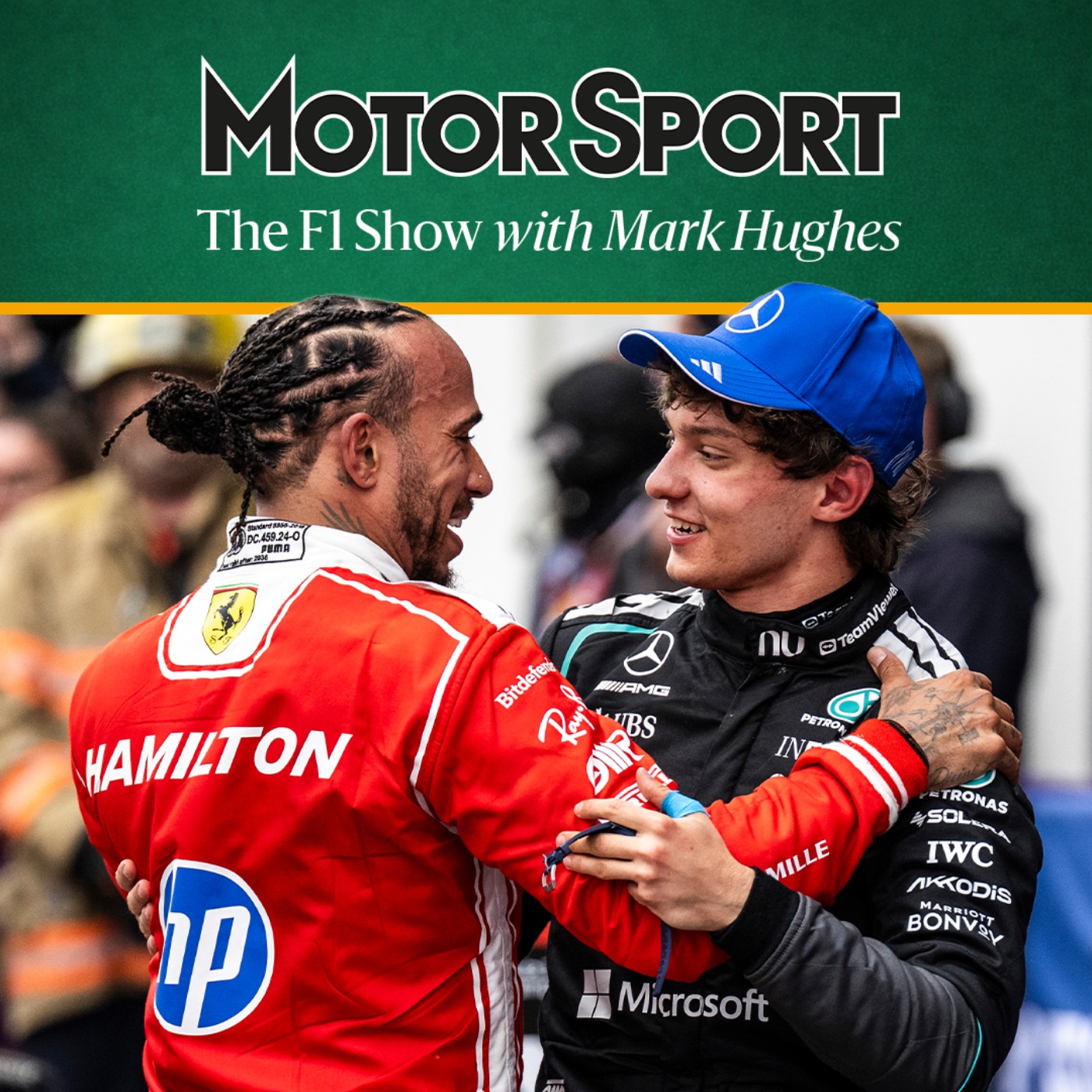
Ferrari is favourite to win in Monaco this weekend - and that might just be the start of a Formula 1 title fightback.
Mark Hughes and Bryn Lucas reveal why the team could end the 2026 season with the fastest car, thanks to its innovative aerodynamic features, plus the prospect of two key engine upgrades that promise to put the team at least on a par with Mercedes — and potentially ahead of the current championship leaders.
But all is not well at Maranello, as unexpected rule changes, proposed for next year, could strip away the team's key advantages. Will Ferrari succeed then suffer a double whammy? Can it block the new regulations. All is explored in this latest episode of the Motor Sport F1 Show.
We also look ahead to the Monaco Grand prix where, in shock news, overtaking could once more be on the cards, giving the polesitter more than usual to worry about. McLaren's celebrating its 1000th grand prix too: don't miss Mark's whistlestop history of the current constructors' champions, plus his view on how Lando Norris and Oscar Piastri compare to its greatest team-mate line-ups/
Plus: your questions answered - what has been the greatest qualifying lap of the 21st century so far? And has one of our viewers come up with the solution to all of F1's current woes?
More on the stories that really matter, in the latest episode of the Motor Sport F1 Show.
Subscribe now for every weekly episode and tell us what you want to know from Mark. Send us a message on social media or find this podcast at https://go.motorsportmagazine.com/49GnWSV and drop your questions in the comments. He'll answer a selection of the best every week.
Read Mark's column every Wednesday at https://go.motorsportmagazine.com/49GnWSV