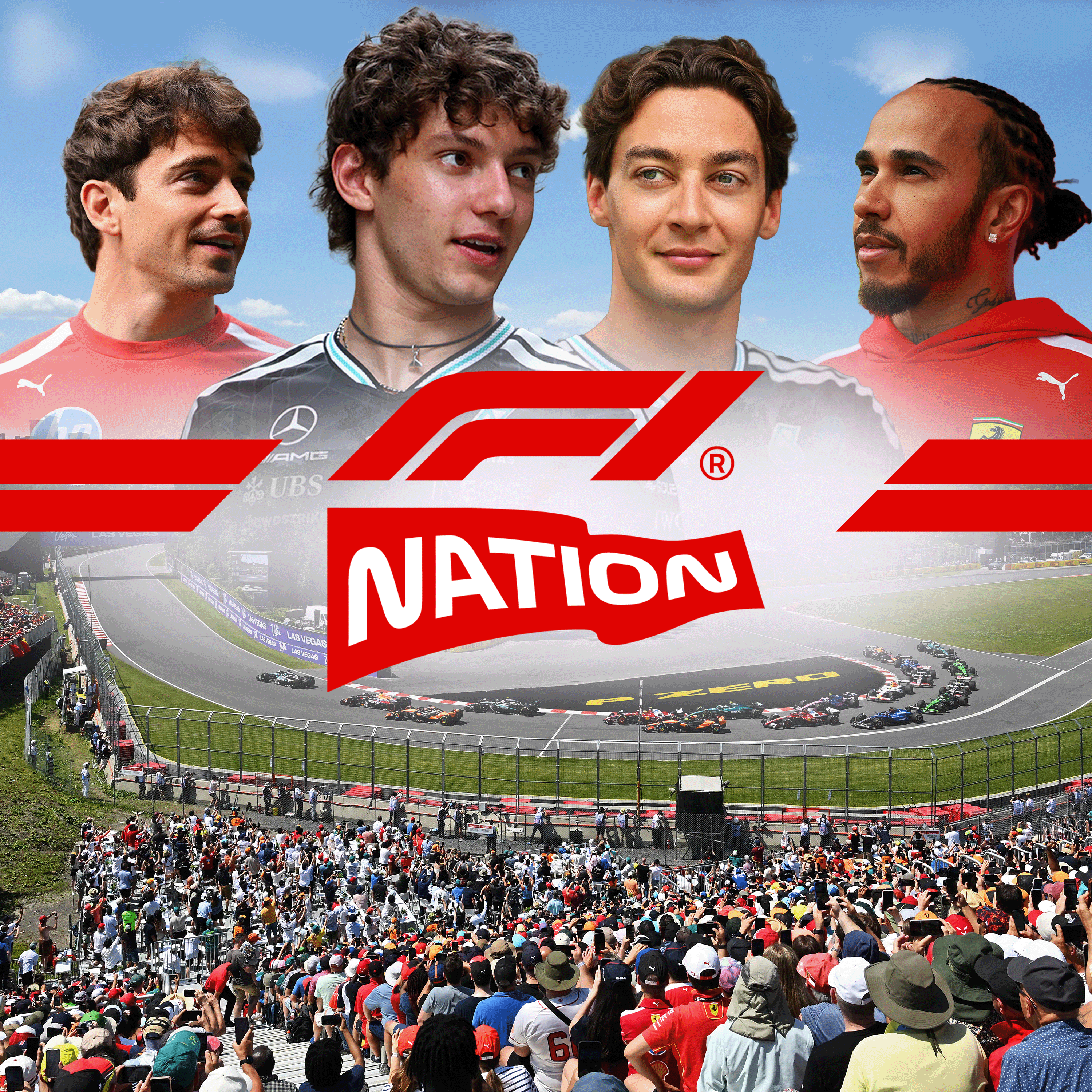
Will Kimi’s momentum continue? Big weekends for George, Lewis + Charles? - Canadian GP Preview with Palmer + Hinchcliffe
F1 Nation
Will Kimi’s momentum continue? Big weekends for George, Lewis + Charles? - Canadian GP Preview with Palmer + HinchcliffeF1 Nation · May 17, 2026
Annotations will appear as you listen
0:00
56:55
Concept
complex circuit
Some race tracks are just easier to drive than others. A “complex circuit” means the track has many different kinds of turns and braking spots, so you have to get both your driving and the car setup just right.
They’re talking about a previous race weekend in Miami as a contrast point. It’s basically used to explain how confident they are about what might happen next.
This episode is previewing the Canadian Grand Prix, the Formula 1 race in Montreal. Track conditions and layout can make some cars and driving styles do better than others.
A chicane is a set of corners that zig-zag to slow the car down. Instead of going fast in one direction, you have to turn, unwind, and turn again quickly.
Turn one is the first big corner of the lap. Because it comes right before the next tricky corner, drivers have to be careful not to get the car out of shape too early.
Curb riding means driving as close as possible to the raised edge of the track. Drivers do it to stay fast through corners, but it can make the car bounce and feel unstable.
Concept
steering and momentum
Momentum is basically how the car keeps moving through a corner sequence. Good steering helps the car stay stable so it doesn’t slow down too much or get out of shape.
Late braking means you wait longer before slowing down for a corner. It can make you faster, but it’s harder on the tires and can hurt your corner exit if you brake too aggressively.
A brake zone is the part of the track where you slow down for a corner. Drivers try to brake as late as they safely can to keep more speed going into the turn.
Sometimes after the race, officials can decide a car shouldn’t be counted in the final standings. That can happen if they find a rules issue during checks after the race.
Toyota is mentioned as one of the teams involved in an F1 race where the cars were disqualified after the race. The reason given was a brake rules issue.
Williams is mentioned as the other team in that 2004 example where cars were removed from the final standings. The stated reason was a brake rules problem.
Brake stabs are quick, hard brake applications. They can help you control speed for tricky corners, but they can also wear out the brakes and make the car less stable.
Brake trace is basically how you press the brake pedal as you slow down. If it’s “spiky,” it means you’re braking in a more jerky/aggressive way, which can be tougher on the brakes and harder to drive smoothly.
Term
brake calling
Brake calling is choosing the right moment to start braking for the corner. If it’s “at a premium,” it means you have to be very precise—braking too early or too late hurts your lap time.
Being “efficient on the brakes” means braking in a way that doesn’t cost you time. The goal is to slow down smoothly and then start accelerating again quickly.
A “late breaker” is a driver who waits longer before braking into a corner. That can keep the car faster for longer, as long as they slow down safely and still exit the corner well.
Longitudinal grip is how well the tires can grip when you’re braking or accelerating. If a track doesn’t have many high-speed turns, this matters even more than grip for turning.
“Lateral setup” is how the car is tuned for turning forces—basically how it behaves when you’re pulling left or right through corners. They’re saying this track doesn’t rely on that as much as braking and acceleration.
“Ride the curbs” means using the track’s edge bumps/kerbs to help you go faster through corners. But you have to do it carefully because too much curb can throw the car off balance.
Term
buckle up
They’re basically saying “get ready,” because this part of the track is intense and unforgiving. If you brake or turn wrong, there’s not much room before you hit the wall.
This is about the moment you stop braking and start accelerating again. Doing it at the right time helps the car keep traction and carry more speed through the slowest part of the corner.
Runoff is the extra space next to the track if you go off the racing line. It can make drivers more confident to push braking in practice because there’s room to recover.
Qualifying is the session where drivers try to set the fastest lap to determine their starting position for the race. It’s more about one-lap speed than experimenting.
“Rubbers up” means the track gets more grippy as cars drive over it. Tires leave rubber behind, and that usually makes the racing line faster over time.
Apex speed is your speed at the tightest part of a corner. Going faster there can help you carry momentum, but it can also make it easier to lose control or run out of room on the exit.
They’re describing how you have to drive Montreal to make a fast lap. The key is getting the last corner right and then carrying that speed into the final chicane.
A chicane is a sequence of tight turns designed to slow cars down and change direction quickly. The “final chicane” is the last such complex before the finish, so getting it right is crucial for overall lap time and momentum into the straight.
In racing timing, “tenths” refers to one-tenth of a second (0.1s). Drivers and teams talk in tenths because small differences in braking points, cornering speed, and traction can add up to meaningful lap-time gaps.
Track grip conditions are basically how “sticky” the road feels for the tires. More grip means you can brake later and corner faster; less grip means you have to be gentler.
They’re talking about how grippy the track should be this weekend in Montreal. They explain how earlier sessions and weather can change tire grip for later F1 running.
“Pirelli rubber” means the tire material left on the track by Pirelli tires. As more tires run, they leave rubber behind that can make the racing line grippier.
That means two drivers on the same team are racing each other for the best results. Since they’re in the same team’s car, it’s a pretty direct test of who’s doing better right now.
Term
P2
P2 just means second place. In this context, it’s where George Russell sits in the championship picture.
Suspension is what helps the car handle bumps and keep the tires planted. If the team changes it, the car can feel different—sometimes one driver adapts better than the other.
A Grand Prix weekend is the whole event from the first practice sessions through qualifying and then the race. Doing well across the weekend usually means you’re strong in both speed and race execution.
The starting grid is the order cars line up in before the race. Where you start matters because passing other cars can be tough, so starting near the front is often an advantage.
The championship lead is who’s currently winning the overall season points race. Since points are earned at every Grand Prix, the lead can change after one weekend.
A podium finish means you end up in the top three—first, second, or third. It’s a big deal in F1 because you earn lots of points and show the car and driver performed well.
In F1, an upgrade means the team adds new parts or changes to make the car faster. Here they’re saying McLaren is bringing another step of those improvements.
Mercedes is the F1 team being discussed. The idea is that if their driver gets beaten, the team will realize McLaren is a real threat and they need to respond.
A data set is the collection of performance results being considered when making a prediction. Here, the hosts argue that George Russell’s larger data set (more observed performances) makes him the safer bet compared with Kimi Antonelli’s smaller sample.
Term
over the year
“Over the year” here means how someone performs across the whole season. It’s about getting good results regularly, not only occasionally.
They mean proving you can stay competitive for many races, not just one weekend. In F1, one big mistake can hurt your points a lot, so steady results matter.
They’re using “bloopers race” to mean a race where the driver messes up or something goes seriously wrong. In F1, those bad races can cost a lot of points.
They mean that as a driver gets more experience, the improvements don’t keep growing at the same rate. Early on you learn a lot quickly, but later the gains can get smaller.
Toto Wolf is the team principal of Mercedes-AMG Petronas Formula One Team. In F1, a team principal manages strategy, resources, and driver messaging—so his “protect him” comments reflect how teams manage pressure on drivers.
“Protect him” here means the team tries not to overwhelm a young driver with too much pressure. They want him to stay confident after good races and not get crushed after bad ones.
“Subaru Uncharted” doesn’t clearly match a standard car model name you’d find in normal catalogs. In the podcast, it’s likely being used as a label for a specific Subaru-related car or situation that feels new and unfamiliar. The “uncharted” wording suggests it’s not something the driver has dealt with before.
A title-winning season means a driver is performing at a level that can realistically secure the championship over many races, not just win a few events. In F1, that depends on consistent results, the car’s competitiveness, and how well the team manages upgrades and strategy across the calendar.
A low-grip track is one where the tires don’t grip the road as well. That makes the car harder to drive consistently, so drivers and teams have to adjust how they brake and accelerate.
Term
swap at Monza
A “swap” here means something changed at Monza—like who got the better position or result. The hosts think that moment hurt Oscar Piastri’s momentum afterward.
The summer break is the break in the middle of the F1 season. Teams use it to regroup and make decisions before the final part of the year.
Term
give the place back
“Give the place back” means a driver gives up a position they gained, so the race result matches the rules. The hosts are referencing a past Mercedes situation involving Valtteri and Lewis.
In racing, an “incident” usually means something went wrong on track—like cars touching. They’re asking whether that kind of moment makes drivers think differently next time.
“Wheel to wheel” means two cars are right next to each other while racing. It usually happens during overtakes and it’s tense because there’s very little room for error.
It’s the part that turns your steering wheel inputs into the front wheels moving. If it’s adjusted or upgraded, the car can feel more precise and easier to drive fast.
Low-grip means the tires don’t grip the track as well as usual. When that happens, the car has to be set up to stay stable, and driving “on the limit” becomes harder.
It means the car is being driven as hard as it can go while still staying under control. Beyond that point, grip disappears and the car starts to misbehave.
A 24-hour race is endurance racing where the car has to keep going for a whole day, with drivers taking turns. It’s physically and mentally demanding, so the hosts are wondering if it affects an F1 driver’s sharpness.
“Outqualified” means one driver got a faster qualifying lap than another. That usually means they’ll start the race ahead, which can be a big advantage.
Term
Q3
Q3 is the final qualifying session in an F1 weekend. The fastest cars and drivers fight for the top grid positions there, so missing out on Q3 (or making a mistake in it) can directly affect race strategy and results.
When they say “new rules,” they mean the sport changed the guidelines for how the cars can be built and run. That can make teams’ cars behave differently, so performance can swing while everyone adapts.
A “pole” means the driver qualified fastest and starts the race from the very front. Starting first can make the race easier because you’re in control early.
Ferrari is one of the famous F1 teams. They’re talking about Ferrari learning from upgrades they tried at Miami and whether that will translate into better results in Canada.
In F1, “silly season” is when driver contracts and team changes are being talked about a lot. It’s mostly rumors and negotiations before anything is official.
“Aero” is short for aerodynamics—how the car cuts through air. A “big aero” change usually means major updates that can make the car stick better to the track and feel different to drive.
The “floor” is the bottom of the car. In F1 it’s designed to push the car down onto the track using airflow, so a new one can improve grip and handling.
When people say a team needs to restructure, they mean they’re changing how the team is organized and who does what. In F1, that’s often done to improve how the car is developed and how race strategy is handled.
In F1, the power unit is basically the car’s engine system. It’s not just the engine—it's also the hybrid parts that store and reuse energy to help the car go faster.
“Starts” means how well the car gets moving right after the lights go out. A good start can help you stay ahead; a bad one can put you behind other cars.
The drivers' championship is the overall points race between drivers across the season. If the gap shrinks, it means the points difference between them is getting smaller.
Starting from the back means you begin near the last cars. That’s tough because it’s harder to pass, so a win from there is especially impressive.
Concept
longest F1 race in the history of the sport
That 2011 Canadian GP lasted unusually long because of race interruptions (like weather). When a race runs long, teams have to adjust strategy and how they manage tires and fuel.
Mental health here means how drivers handle stress and confidence. The hosts are saying it can affect how well someone performs, even if they’re very talented.
LIVE
It looks like it should be simple. It's not. It's a really complex circuit to drive. And
if you get it right, you feel like a bit of a legend there.
Montreal is a track that we know George does run well at. It's not an excuse like we had
at Miami.
And if Kimmy gets it again, you start to think this is now a proper scrap for George Russell.
If I said a year's worth of salary that you have to put on someone being champion this
year, guys, who are you going to put it on right now?
I would still go George.
Right now today, I'd be with Kimmy.
Wow.
George has a level of experience and a level of maturity that he can go through a whole
season without another phone call from Toto and he'll be fine. Kimmy still, the team is
still outwardly projecting that they kind of have to bubble wrap this kid a little bit.
In the same way that it's a big weekend for George Russell, this feels equally big for
Lewis Hamilton.
You'll start to see a picture of Lewis can't be strong in Canada that you're thinking,
okay, the season's just drifting away from him again. So it's a big one.
Is this the moment where Charles is going to say, okay, are you going to give me a car
that I can challenge for the championship with or am I going to have to go elsewhere?
It kind of, for me, feels significant in that way. That's a tough question right now.
From Miami to Montreal, it's race week. Once again, welcome everyone to F1 nation's preview
of the Canadian Grand Prix. I'm Tom Clarkson and my regular teammates, Joly and Palmer
and James Hinchcliffe are with me. Now guys, talking of teammates, we had a lot of comments
from people who really enjoyed us completely losing it on last week's show. Have you stopped
laughing? Have we got everything under control today?
I've got over it. I have got over it just about. Hinch maybe not. I honestly, I've
not laughed like that. Trying to do a broadcast in my life. I don't know what it was, something
in the air last week.
Yeah, seven minutes of corp sing. I'm not sure exactly what the elapsed time was that
stayed in the show, but I can tell you everybody listening at home. It was quite a scene.
I couldn't even get my deep dive on Johnny Dumfries and Satoru Nakajima properly in.
I was laughing too much. It needs another special, I think, TC.
We were discussing teammate rivalries and if you want to hear us cracking up for that
full, well, not quite seven minutes actually in the final edit, do go back to last week's
episode of F1 nation. But this week, we're here to talk all things Morayale, 70 laps
of the circuit. Jill Vilner awaits Formula One this weekend. Guys, talk us through the
track. What challenges does it present the drivers in these new 2026 cars?
It's a tricky circuit. It's really characterful, I think. I would say it's pretty much all
chicanes. So every corner, apart from the hairpin, the really slow speed towards the end
of the lap is a sequence of corners. It's even turn one, you go left and immediately
you carry into walls turn two. It's all about curb riding. It's all about getting the right
balance, having the right attitude of steering and momentum and everything else as you bounce
over the curbs and get right up to the walls. Waller Champions is the famous one, but actually
there's another couple that you can easily clip as well. And we've seen plenty in the
past at turns four and turns nine, the right left chicanes where you can drop it on the
exit there. I really like it. It looks like it should be simple. It's not. It's a really
complex circuit to drive.
Yeah, but what is the complex thing about it, Hinch? Yes, because it's not that many corners.
So why is this one so demanding?
I think there's two elements that make it so difficult. It's got all these super-adviding
brake zones, right? And drivers love being the last of the late breakers, but that could
come at the cost of the exits.
And to Julian's point, these are all just chicanes. It's corner combos, but it's two
corner combos. It doesn't really go much past that. So you can gain a lot of time on the
brakes, but there's a good chance you're going to lose something on the exits and these chicanes
are all followed by long straights. So it tempts you into just wanting to brake later
and brake later, but sometimes eventually that payoff doesn't work out anymore. And
then the other side of it is the curb riding. There are some curbs that are friendly and
you can take quite a bit. Others less friendly, but you still have to take quite a bit. Mistakes
are so easily penalized because there's walls everywhere like Julian pointed out. So I think
characterful is a great way to describe it, but it's a lot of fun to race on.
Technically, how demanding is it? I'm showing my age now, but I'll never forget the 2004 race
there when both Toyota and Williams were excluded from the final results, both for brake
infringements. I think Ralph Schumacher had even finished P2 in the Williams. I mean,
is it one of the most demanding tracks for brakes?
It definitely is. You could just load of these just stabs on the brakes and you don't pick up
huge speed until basically you come back round to the final chicane or into the first braking
zone as well. A lot of it is you're building up reasonable speed and then slamming on the brakes
with a bit of a sort of spiky brake trace, 90 degree corners, and then you get out to the next one.
They're quite bumpy as well as some of the braking zones, particularly turn eight,
kind of in the middle of the lap. It's tricky. And you're always, I don't know if the brake
calling is always at a bit of a premium there. I remember Nico Rosberg in 2014, it was one of
Mercedes when they were romping everything. And he was struggling with the brakes as well,
and it was one of Danny Rick's wins, wasn't it? It was his first win, I think, in 2014.
So it's always one of those ones that's pretty marginal. And again, it just adds to the challenge
of things. How do you approach a quick lap? Because a lot has been made during the build-up
to this race that this is a significant race for George Russell. He's always gone well here, right?
Why does he go well here? What do you need? Is it being good on the brakes? Let's go back to the
brakes. Yeah, I think being efficient on the brakes is certainly a strength here. I think
George is one of the drivers that is good at being a late breaker. Lewis was always very good here.
He's kind of known for that as well. So that is a huge part of it. But again, it is that balance
because you still have to get off the corners, right? It's all about longitudinal grip here.
There's really no high-speed corners at all. It's not about the lateral setup.
It's about how you can stop the car and start the car on a straight line,
and then how you ride the curbs. Being able to judge how much curve to take at a few of these
places is so, so difficult. And it takes just a special kind of finesse, especially that final
chicane, because it can go so, so wrong. And yeah, I think George's left foot is very well
trained and well suited for this kind of track. And the walls, do they affect how you approach it?
Or, I mean, let's talk about that wall of champions at the exit of the final corner, right?
Are you always a little bit concerned, JP, as you're hitting the brakes going into that corner
combo? Or does it feel like as if there was no wall at all? Do you have to treat it as if there
is no wall at all? So you buckle up as you're heading up to that final chicane. So you've got
a such a long run. You're on a good lap. You come out of the head, and you shuffle up through the
gears as you're building speed. And then you're thinking, right, deep exhale, let's take a little
bit on the brakes. But then the trick, I think, generally is, okay, you can't brake early, but
releasing the brakes is where you're going to gain the speed through the minimum. So,
early on in practice, you get a chance to build up on the brakes there because you've got a bit
of runoff. So everyone's going to attack and find a sensible place on the brakes. When you get to
qualifying and you're trying to be a hero, last, last throws of qualifying, I think don't take the
last 10 meters on the brakes, just brake softer, release the brakes, carry the speed through the
apexes. To do that, you need a bit more grip. The track rubbers up. Also to do that, you need to
maybe get a bit more risky with the curbs, as Hinch was saying. So that's where you just think,
right, deep breath. Let's go for it. Let's attack with another couple of KPH apex speed. And you
know at that point, you're going to risk just running out of space on the exit. But that's
basically what you do in Montreal. It's the final big, big thing. And if you're on a good lap,
if you're cautious there, you're just going to lose a couple of tenths in the final chicane.
So you have to still attack all the way to the line. Keep it to the right hand side, minimize
your distance. I think the best lap in Montreal is going to basically scrape the wall. It's going
to be one of those ones where you get the perfect just brush on the exit. And then you just hug
the grass line on the way down to the end of the lap. And if you get it right, you feel like a bit
of a legend there. And the other thing that's so interesting about it is you have to nail it twice
for one good lap, because it is the final corner. If you don't get a good launch through there,
if you're not floating a bunch of speed to come and start the lap, you're already starting the
lap a couple kph down and you're losing a few hundredths down to turn one. So it's kind of annoying
because it's the most treacherous corner on the track. And for a good quality lap, you do have
to nail it twice. The weather forecast for the coming weekend looks a little bit iffy. There's
rain around on both Saturday and Sunday. But just for the sake of this next topic, let's assume it's
dry. The track was resurfaced a couple of years ago. What are track grip conditions like? And
this year, we've got F2, of course. It's the second leg of their North American doubleheader.
We've got F1 Academy there as well. So how's that going to affect grip levels?
We saw in Miami, actually, that the track grip came up pretty high quite quickly.
So in free practice for F1, it wasn't so much a procession of cleaning up the track as we've
seen in Miami, which is a temporary circuit as well, which had F2. They're both sprint weekends.
So I'd expect it'll be actually quite nice for the F1 drivers to have an F2 session on before,
just to put some Pirelli rubber down on the racing line and start to clear it up. Because
Montreal as well is one of those ones where you're on the Il Notre Dame. It's really peaceful when
you're out. Have you been trackside TC during a race weekend? Yeah, many times.
It's lovely and peaceful. You're by the waterways on this island. There's just birds just
cheeping out in the distance. And groundhogs. Groundhogs all around. You're in nature's paradise.
So imagine when a Formula One car turns up on a Friday morning for the first time. That's why
groundhogs get a bit of a fright. Because they're like, what on earth is this? But it does also mean
the track is generally, it builds up a lot. It's very green on a Friday. I remember it was always,
Montreal was for a similar reason, was wondering to me, just how many tear-offs am I getting through?
Just bug splat all day on the Friday. And then maybe they get the memo as well through the weekend.
So having F2 there will give the animals and the wildlife a little bit of a wake-up as well
before F1 and clean the track up should be helpful. This episode is sponsored by Lisa. If there's
one thing I know for certain, after a long run of races and uncomfortable airport seating,
it's that you really do appreciate your own bed. And I'm sure a lot of people in the F1
Paddock will agree with me. Hotel beds are all well and good. But there's something about
getting home and finally sleeping properly again that you just can't beat. Which is partly why I
finally decided it's time to replace our mattress at home. But to be honest, I didn't really know
where to start looking. I just know that if a mattress is too firm or too soft, my back definitely
lets me know about it. But Lisa's online sleep quiz was genuinely really helpful. It asks about
things like sleep position, firmness, whether you sleep hot and the sort of support that you need,
and it pointed me towards the superior hybrid. Medium firm, breathable, and designed with a
combination of supportive springs and memory foam. Honestly, it sounds perfect for me and I can't
wait to try it. Lisa's mattresses are designed and assembled in the USA and they've even been
awarded best hybrid and best memory foam mattresses by New York Times Wirecutter. Plus, they make the
whole process really straightforward with free shipping, easy returns, and a 129th sleep trial.
So go to lisa.com for 30% off select mattresses plus get an extra $50 off with the Promo Code
Nation exclusive to our listeners. That's lisa. Promo Code Nation for 30% off select mattresses
plus an extra $50 off. And support our show and let them know that we sent you after checkout.
lisa.com, Promo Code Nation.
Let's talk about this championship fight now, the intra-team battle between the leader, Kimmy
Antonelli and George Russell, who's in P2. Now, Hinch, you said in our Miami review that it's not
panic mode yet for George, but if he doesn't beat Kimmy in Montreal, that's when he might need to
start being concerned. Can you expand on that and tell us why you think this weekend coming
is such a crucial one in the championship fight? Yeah, well, I think a lot of it comes from the
fact that, you know, Kimmy's victories up to this point have been impressive. Two of the three have
kind of had, you know, we've said we've starred them in the record books as there were some elements
of, I hate to say luck, but to a certain extent luck and also tracks that George maybe hasn't been
as competitive on, tracks that we know Kimmy has been, he was quick in Suzuka last year, he was
very quick in Miami last year, so I don't think it was a surprise given the form that he's had,
you know, in the last season, early part of this season, that he was quick. Three wins on the trot,
that's starting to give a driver a lot of confidence, that's starting to get the team
to maybe look at one side of the garage in a different light than the other.
And Montreal is a track that we know George does run well at, so it's not an excuse like we had at
Miami where he kind of went into the weekend knowing it wasn't his favorite place, maybe some of it
was, you know, self-fulfilling there and in the performance. And, you know, you've got the upgrades
coming from Mercedes, that'll be interesting to see kind of how that plays into this all, maybe
there's an update that affects one driver more than the other. We saw it last year with their
suspension that they brought that sort of knocked Kimmy a little bit down and didn't affect George
quite as much, but if we get to Montreal, we get through Montreal and Kimmy's, even if he doesn't
win the race, this is what we were saying last week, even if he doesn't win the race, if he just
is ahead of George at a track that George runs well on the run that he's on, that's when you have
to start being a little bit concerned because we know what Kimmy's been capable of this year and,
you know, Miami was by far, I think, his most complete Grand Prix weekend and he's just going
to keep getting better. I pretty well agree with that. I mean, I do think George, he's had the
last two polls in Canada. He won last year comfortably when Mercedes didn't have a great season.
He does go well at this circuit. On top of that, Mercedes are really good around Montreal. It's
always been classically the colder temperatures that suit them, but for a long time now they've
been quick and so you've got these factors plus some expected pretty major Mercedes upgrades coming
should mean that one of them will win the race this weekend and so it's most likely a battle for
the win between the Mercedes duo and if Kimmy gets it again, you start to think, wow, that's four
in a row. One of George's strongest circuits on record and the championship lead will go over 25
points. So all of that would say, hey, this is now a proper scrap for George Russell to try and
recover. A little bit like we saw with Lando Norris last year. Right now, I think it's still in his
hands. He's controllable, but if he doesn't win this weekend, you start to think, okay, maybe this
is Kimmy's year. What was your take on how Antonelli performed in Montreal last year? I mean, the gap
to George, I think, was 0.4 in qualifying and then, of course, he finishes third and gets his first
podium in Formula One. I mean, we talk about how good George is. How would you guys view Antonelli's
performance last year? Can he feel confident coming into this weekend that he can shine a light and
at least run George close if nothing else? If we're honest, it was pretty much a half a second
gap he had to George in qualifying last year. That shouldn't have been enough to get him on the
podium. I think it was a great race from him to get the podium. He held off charging faster cars
later on. The McLarens were bearing down on him, and it was the first podium. 18-year-old,
there is that. It was great. But when you actually think the half a second gap, that's quite a lot
in Formula One terms. That's similar to what Yuki had compared to Max in the year.
That's actually what Kimi had to George last year. It was a flattering podium, I would say,
for Kimi. I think the race was better than the qualifying and he held pace there. But I don't
think the fact that he got the podium will show that he was good as well. I think there was
actually quite a gap to George. Interesting stat, by the way. It was Kimi's first podium. He became
the third youngest driver in F1 history to stand on a podium. I know you're both good at your history.
Who stood on a podium who was younger than Antonelli last year, can you remember?
So it's, I think, a hinge. Have you got it? Max has got to be one, right?
Max is one. Yeah. And the Great Canadian, isn't it?
It is the Great Canadian. The other Great Canadian hinge.
I'm not sure he's going to be troubling the scorers this year. Lance Stroll in the Aston
Martin. Look, worst-case scenario for George Russell now is that McLaren are bringing the second
part of the upgrade that they started in Miami last time out. Worst-case scenario is that McLaren
are super competitive, right? And Landau or Oscar wins the race. Antonelli beats George,
and Mercedes suddenly realize that they've got a serious fight on their hands with McLaren.
How do you think Toto Wolf is going to handle that going forward? Are we going to see a number
one, number two scenario at Mercedes? The number one becoming Kimi Antonelli? No.
Not a chance. At no point. Not a chance at this stage. It would be,
I just don't think that would be a sensible call from Toto. I think as we're sitting here,
if I said, I gave you a year's worth of salary that you have to put on being,
someone being champion this year, guys, you have to put it on. Who are you going to put it on right
now? We've had this discussion. We've done this little thought experiment. And when you and I had
this conversation, I said George Russell. And that was pre-Miami to be fair. But I think I'd
still, if you had to put everything on one guy today, I still look at the data set, the data
sample size that we have of Russell's performances. It's just so much greater than that of Kimi's
as impressive as his has been this year. And if you're betting the farm, I would still go George.
Interesting. Because I would actually, right now today, I'd be with Kimi.
Wow. One of you, one of you has lost the farm. What about you?
I would go George because I just think history has shown us that he is able to be consistent
over the year. I think he's got a little bit more maturity on his side. I think I still
feel like he's got the upper hand overall. And I think Kimi has shown bursts of pace that have
been really impressive. He showed some great races last year. Miami was one. Henry already
mentioned that Miami and Japan were strong. Also, you look at Brazil, various other
drives. Yeah, very good. But in terms of actually doing it over a season, not having a blooper race,
not having an Oscar Baku race where he just had a terrible half lap and the whole thing was blown.
And that's where I think probably the mindset of George is a bit more tested at this stage.
It's not to say he'll do it, but that would be my logic in thinking if I had to back
everything on one, I think I would have to go with George at the moment, which is why I don't
think Toto should plump everything behind one. Even the fact that we have disagreements,
it shows this is not black and white, even if Kimi beats George, I think.
Well, I just have been so impressed by the step that Kimi Antonelli has made this year. Yes,
you're absolutely right. When you look at last year, there was a huge difference between George
and Kimi. I feel that's just diminished hugely this year. And take as you find over the opening
four races, there's no doubt in my mind that Kimi Antonelli, a few starts aside, has done the better
job. So why can't he continue for the next 18 races or whatever we've got left?
Well, let me ask you this, TC, how impressed were you with Oscar Piatri's jump at this point
in the season last year from the year before? Huge, but I mean, that's the point. These guys
at the start of their... He lost the championship to his more experienced teammate.
Sure, but that point is that at the start of their career, these young guys are making huge
steps from one season to the next. And I think George is now at the point where it's diminishing
returns and so therefore the steps get smaller. So the gap between George and Kimi, I think, is
negligible. And I think that Kimi's sort of... He doesn't have a care in the world. I love the fact
that he doesn't seem to tighten up. He's enjoying it. I think he's protected by Toto Wolf brilliantly
in terms of not putting pressure on him. He reminds me so much of Lewis Hamilton 2007 spec,
when he... Let's not forget that Lewis could so easily have won that championship. He got those
nine podiums on the bounce to start the year until he, of course, he then won his first race in Canada
2007. So I think it can be done. And I think Kimi's made enough of a step to do it. But
hey, it's going to play out, right? I think you bring up a good point that's one worth noting,
is Toto Wolf, even post-Miami, is still saying we have to protect him. We've got to make sure he
stays grounded. We've got to make sure that the good days don't big him up too much, that the bad
days don't get him down too much. You don't have to do that with George. George has a level of
experience and a level of maturity that he can go through a whole season without another phone
call from Toto, and he'll be fine. Kimi still... The team is still outwardly projecting that they
kind of have to bubble wrap this kid a little bit because they need to make sure he stays in this
place. And if anything makes him deviate off that, there could be issues, which is that's just one
of those things. As an investor, when you're looking at betting your life savings on something,
that's an element that makes me nervous compared to George, who's a bit more of a known quantity
in that sense. But compare, Hinch, the dip in the European season last year, starting at Imola
actually for Kimi. I don't think we'll see that again this year. I think he learned a lot.
Why do you think that, TC? Why? Because I'm seeing a very consistent driver this year,
and I think he's learning from all the mistakes he made last year.
I'm not disagreeing. I'm just curious. He's had a good run, and he's won the three races,
and we're all singing his praises because he's doing a brilliant job.
I'm not saying that George Russell's not going to bounce back. George Russell could easily win
this Grand Prix by 10 seconds and relaunch his championship campaign. That is a very realistic
proposition. But my point is that I think Kimi has the consistency now, and will be a very real
threat for the whole year. This is uncharted waters though, isn't it, for Kimi? I think that's
the difference. And I think with George, the season that he ran last year was a title-winning
season if he had the right car. I think Kimi's wasn't. We haven't had that European season to
confirm that he can be consistent over 20, 22 races, 24 races. We could easily have said the same
for Oscar. The comparison, I think, with Oscar and Lando last year is a great one because we're in
a really similar position. Oscar had another year under his belt, but the step was also big.
He had Lando under huge pressure. Then Zanvoort happened, and suddenly I would have bet the
house on Oscar after that. But Lando found that other gear. George potentially still has in his
locker. At the same time as Oscar started to struggle, maybe it was a run of low-grip tracks.
Maybe it was a little bit of title-wearing pressures and everything else.
JP, sorry to interrupt you, but you say then Zanvoort happened, right? Well, I'll then say
then Monza happened. I think the ramifications of the swap at Monza really affected Oscar
Piastri. I think that sort of situation won't happen at Mercedes because of the way
Toto Wolf is approaching the season and approaching the way he looks after Kimi Antonelli.
Kimi wins in Montreal. No, McLaren won too in Montreal. They had the best car. Kimi's the
George's fourth. You are saying all in for Kimi. I've seen enough.
No, I was asking the question. I was asking the question, JP. No, I was asking the question.
Of course, it's too early to go all in for Kimi, but I think it would, to Hinch's point in our
Miami review, I think that is the moment where George has really then got to step it up when
we go to Monaco next time out. Otherwise, Mercedes might have to start making some
difficult decisions come the summer break. And they're a team that have got history of
making those decisions, which McLaren haven't in recent times. We saw with Valtteri and Lewis,
the famous, give the place back. That was when Valtteri was out of championship contention,
and Lewis was still sort of tenuously defending from Seb. So maybe that will happen. And McLaren
still are confident that they can be a regular race winner as the season progresses.
So I agree. For all the debate, this is a huge weekend for George Russell. So we take it back
to that part. And I do think he has to show what he can do here. And also the next point you make
is Monaco's around the corner. Not an easy race for anyone. Might not be a Mercedes stronghold
circuit. There's been years in the past where they've dominated, but couldn't get ahead around
Monaco. So you don't want to rely on Monaco being the one you're going to bounce back,
because you might just be kicking the can down the road.
Let's talk a little more about McLaren now, because, of course, it was Montreal last year
that was the scene of the crash between Oscar and Lando. Only a handful of laps left to go in the
race when Lando Norris tried to sneak up the left-hand side of Oscar between him and the
Will. And, of course, hits his teammate, race over Lando to his credit, apologised immediately.
How much does an incident like that hang over the drivers? I mean, they'll smile about it, but
does it in any way carry forward to the next time you race there?
No, I don't know. There's no thoughts about that going into this weekend for either of those guys
until Thursday when people like us bring it up in the press conference.
I think you bank it, though, as a driver. If you're Oscar, you bank it. And I'm not saying
he's going to still be lingering on that. I think they're long gone because of the Monza thing and
the everything else that played out, Singapore and Austin and everything else. But I remember
Felipe Naza, when I was teammates with him in GP2, and he tried to move at turn three in Barcelona
on the inside of me late on. It was for second place. And he basically just drilled into the
back of me. And I was like, I think he came off worse than me. But I was like, we're not going
to fall out about this. But now I know how you're going to race, and I don't love it. So next time
we go wheel to wheel, I'm going to be that little bit more aggressive. I had the same thing.
Ten years on, you're over it, aren't you? Well, no, I'm still bitter about it, TC.
So if I ever get back behind the wheel, I've got Felipe Nazar as my teammate,
he's going to pay a heavy price for that Barcelona race.
No, you do. You have to bank these things, I think, as a driver, because you're learning a
little bit about your rival. As I said, for the McLaren guys, they learn a huge amount more. I
think that was the first flashpoint, wasn't it, between them? And then they had more. And I think
they're coming to Montreal in a different position as well. I think they will be a little bit more
cooperative with each other. There's not, as it stands, the championship on the line,
where they finish fourth or fifth. It's not as important as it was last year.
But I think they're figuring out stuff on each other the whole time.
What about Red Bull? I mean, Hinch, after what you saw in Miami with the Red Bull upgrade,
of course, Max now much happier with the steering rack and the feeling he's getting
through the wheel. Can we see Max challenging? I think it's possible, yeah. It just allows
Max to do Max things. And this is the kind of circuit where you can take those kinds of risks
that he just is so good at taking and pulling off, executing in those chicanes, riding those curbs.
I know curb riding's not been a particular strength of the Red Bull historically,
but new ruleset, maybe it'll be a little bit better this time. But I think, again, it's
another kind of low-grip circuit like we had in Miami. We know he is comfortable on the absolute
limit. So if the car continues to improve and they can continue to dial in performance, now
they've got it handling in a way that is speaking to him, yeah, there's no reason why he can't be
in the mix. Hinch, you've done some endurance racing, right? Now, Max was doing the Nurburgring
24 hours last weekend. How long does it take you to get over a 24-hour race? Is he going to be on
his A? I mean, a kind of serious question. Will he arrive in Montreal just a little bit jaded,
or do you think it doesn't affect someone like him? No, I think he's fine. I mean, he's been doing
24-hour sim races during Grand Prix weekends in the past. He'll be just fine. So no, look,
he's young, he's fit, he's prepared, he knows what he's getting into. So I don't think it'll
hurt him too much at all. Didn't Nico Hülkenberg, he won Le Mans about a decade ago now. And then
I think he turned up in the Force India to Austria and qualified it straight up in the top three again.
Or he had a really strong showing when he returned. And bearing in mind, he hadn't had a podium at the
time. It was another great chance for him. So that was a winning Le Mans. And do you know what,
I was at that Le Mans in 2015 when the Hulk won for Porsche. And he'd had a damn good party on
the Sunday night. I can tell you that. And even then he turned up fresh the next week. Yes, exactly.
Now, look, guys, what about Ferrari, right? So this is a Hamilton track. He's won this race seven
times, which is equal with Michael Schumacher as the most successful driver in the Montreal
Grand Prix history. It feels in the same way that it's a big weekend for George Russell, this feels
equally big for Lewis Hamilton. Because after being quite close to teammate Charles Leclerc early on
this season, the gap seems to have grown. And this is the weekend where he's sort of got to
bring it back under control again, really. Do you guys agree with me?
Yeah, I think so. I think that his track record around Canada is really supreme. He has only been
outqualified by a teammate three times out of 16 attempts. So it's a pretty good track record.
Outqualified Charles last year, although I think Charles had a kind of a better pace and missed it
right at the end of Q3. But it does feel like he needs to just halt that downwards momentum now
as well. After those early few races, very upbeat Lewis loves the new rules, input in the cars good.
The Ferrari was obviously a competitive race leading car. Still was in Miami, but just not with Lewis.
So he sort of chipped away at it through the Miami weekend as well and got quite close.
But Canada's circuit, he's always been really strong at seven wins, six polls.
He needs to get it back here, I think. I think he can as well. I think Ferrari should have a
sensible car still. And if you're Lewis, then you do just turn up with a little bit more swag at
a circuit you've always gone well at. But is it one of those things? It's almost the same argument
that we're using with the Mercedes pair, right? Where Kimmy's season last year started very
strong. All the races that we've done up to this point, he was very competitive at. Get to Canada,
obviously had a great race finish on the podium, but in relation to George was a bit off the pace.
Last year with Lewis, right? We go through the first couple rounds, strong in China last year,
strong in China this year, a little bit off in Miami last year, a little bit off in Miami this year.
It seems to be almost following a similar sort of script. So like you say,
Charles probably had a little bit more out and out pace last year, even though Lewis did
qualify ahead of him. Do we think that this is an important one for Lewis going to a track
that he knows so well, that he runs so well at that if he is behind Charles again this weekend,
that it is an indication that maybe though he's had his fingerprint on this car from the beginning,
it's still not quite what he needs it to be. That's exactly it, I think. I think even for Lewis,
if they're just close on pace, I think that's fine. If they're just back in the mix together on
the same row on the grid, and we're talking about the two Ferraris being in contention,
rather than can Charles win it, which felt like it was the case through Miami. You had Charles
trying to hunt down the McLarens in the sprint. You had Charles leading half the Grand Prix.
All the while Lewis, I know he had a bit of damage in the Grand Prix, but he was sort of there
because he was fighting with Colin Pinto at the start. He was just struggling a little bit more
last couple of tenths. If it's the same on a circuit he's always been good at,
the next one once again is Monaco. I know Lewis has been all right in Monaco,
but Charles has been brilliant in Monaco. It's his home track. He's sensational around there.
Again, you'll start to see a picture of Lewis can't be strong in Canada, that you're thinking,
okay, the season's just drifting away from him again. It's a big one.
When you think of the season, I feel that this coming weekend is the moment where we're going to
see sort of the pecking order as I think it probably will stay for the rest of the year because
Mercedes are bringing their upgrades. Ferrari are hopefully going to understand the upgrades they
brought to Miami a little better. We're going to see McLaren bring the second half of their
upgrades. Red Bull are going to bring a bit more. Then we get into the busy European season where
it's bash, bash, bash, and everything happens so relentlessly that I feel we're going to leave
Montreal knowing the lay of the land at the front end at the very least. It feels significant
somehow for Ferrari because since Miami, okay, there's been this three-week break and the new
cycle in Formula One never stops, but there's been speculation about Charles Leclerc's future.
Have Aston Martin made him a bid for him? Have Red Bull Racing made a bid for him? You just
wonder with the driver's silly season starting to kick into gear, is this the moment where
Charles is going to say, okay, where are we in the pecking order? I've been here since 2019.
Are you going to give me a car that I can challenge for the championship with or
am I going to have to go elsewhere? It kind of, for me, feels significant in that way.
Yeah. He'll know what's coming up in the pipeline as well behind the big Miami upgrade and the
understanding of them. So typically in a season, you get this sort of Miami weekend,
Montreal weekend, this sort of used to be Spain, didn't it, where you bring this sort of first
major upgrade package, and then you'll see something around sort of Austria-Silverston could
be Spa now weekend mid-summer for a conventional big-aero platform difference and a new floor,
and new aero surfaces that'll spruce the car for a few tents. And then it'll be little bits and
bobs of tweaking through the rest of the year. So Charles will know if Ferrari are telling him,
you know, this is good. Let's fight. I'm sure Monaco, he can be fighting for a win anyway.
Maybe he can be there this weekend on a circuit that could suit Ferrari a bit more.
And if they're saying, just hold in, because when we get to Silverston, we've got the proper
package coming, and he'll know that. We don't know that at the moment. So if they don't have
anything more, if they're sort of thinking, okay, we'll bring a little bit of bits and bobs, but no
big upgrade package, and they're not competitive right now, I just think if you're Charles,
you have to start looking elsewhere. He's been so loyal to Ferrari. He came through the ranks with
them, did a year at Salber, got into the main seat in 2019, and he's just been sensational.
I think his level of performance is clearly worthy of a championship. So he has to start
looking around. If Ferrari can't deliver, even a championship challenge, he has to be a driver
that has the talent to at least see a championship challenge one day. And I think this is the time
you set a regs. If it's not Ferrari, then where can I go to try and mount this?
Oh, good question. Where can he go?
Well, because I mean, he's made this point, right, how desperately he wants to win a championship
with Ferrari. But at some point, that loyalty has to waiver if they're just incapable, you know,
after a decade of him driving there, of providing him with a car to fight for a championship.
Where do you go? That's a tough question right now. I don't think there's an obvious answer,
not knowing where, you know, is Piastro going anywhere? Probably not. The Mercedes pair staying,
probably. The Domino's really max, isn't it? That's what makes this whole conversation interesting.
If not, I don't really see another option. He's not going to Aston Martin. That's not a risk
worth taking, right? He doesn't need the money, does he? No, no. Based on the boat he just took
delivery of, he's doing just fine. You know, so I think what it does do is it gives him maybe a
little bit more negotiating power with Ferrari to as bad as this might sound. I mean, he signed a
record breaking historical contract with Ferrari in terms of its length, right? I don't think he's
assigned for another five years. I think if he decides to re-up, it's going to be very much
shorter term without clauses, and it's going to be more kind of a Sharl bias sort of contract.
He's earned that. The team, I think, understands that if they want to hang on to them, they're
going to have to acquiesce on some of those things, and it does put him in a position of power
negotiating next time. In mid-27, he is going to become the driver who's done more races
for Ferrari than anyone else. He's going to pass Michael Schumacher. Now, Michael Schumacher at
Ferrari won five world titles. Sharl might have won one in that time if the cards fall for him
in the second half of 2026, but it's looking unlikely as we sit here now.
And that has to make you question your loyalty, I think, when you just look at the stats. You've
now done more races for this team. You've only won a handful, let alone world titles.
But the difficulty is where does he go? That is the problem. Would you go to Red Bull? If Max
leaves, is Red Bull a better bet at this stage? It feels to me like a team in transition, but at
this stage, is Red Bull a better bet than Ferrari? You'd want some serious assurances
if you're going to go to Red Bull just because of the exodus of people. We spoke about it when
GP announced his move to McLaren that's impending. You want to know who they're bringing in to
restructure the team to take it back towards the championship, because if he doesn't have a lot of
faith that Ferrari are going to be champions, there's not a lot right now that says that Red
Bull can if they lose Max as well. And you've got to restart this new driver coming in,
new race engineers, all these partnerships once again. They're doing a good job. Their
rock grade package for Miami was great. Their power units really impressive. But you're leaving
Ferrari who are capable of race wins this year, I reckon, for a Red Bull who would certainly
not going to fight for a title this year either. Aston Martin, as we said, that's such a long
term project. I don't see him doing that. So the only thing for me is if Max leaves Red Bull,
could someone else be suckered into taking that Red Bull seat?
And then Charles could look at a McLaren or a Mercedes if that door would open.
Because that was the one rumor, right, was Piastri is being courted by Red Bull as a potential
Max replacement. So then yeah, if Max leaves and Piastri moves, then I think that's a no-brainer.
You know, I think if you're Charles, you have to consider that.
Hinch, do you think that rumor of Piastri to Red Bull was started by Charles' management?
To try and force the situation so that he can then go to McLaren?
TCA hadn't thought about that, but now I hope so just because it makes a better story.
Unbelievable play, if it is. And then it happens.
All right then. Predictions time. Both of you guys. I want a sprint winner and then the top
three for the Grand Prix on Sunday. Who wants to go first?
Okay, I'll go. We were playing chicken there. We were both doing like the big inhale as if
we're about to speak, hoping the other guy went first. No, okay. So I think that,
I think George will win the sprint. Actually, no, do I? I don't know. Yeah, I think George
will win the sprint. It's a short run from pole. It's a short run down to turn one,
less opportunity for them to have a bad start. And he's been still a little bit better on the
starts than Kimmy, even though it's not been Kimmy's fault. Some of the time the team's admitted
that this is not throwing shade at Kimmy. And I think he wins the Grand Prix. I think this is
what it, it starts to turn, the tides turn, the championship tightens back up. But I do think
it's going to be Mercedes track. So I'm going to go George Kimmy Lando. Pretty good. That's pretty
good. That's the problem with winning the chicken is then you look like a chicken if you just bat
the other guy. You should have gone first. Yeah, damn it. So I'll throw in a curveball here. And
I'm going to say, Charles wins the sprint because I think the Ferrari team can get up to speed
pretty quickly. I think they'll have that started advantage. And I can see them being pretty efficient
around, around Montreal as well. Their handling characteristics should be good for two-thirds
of it. They'll obviously be a little bit struggling down into the final chicane, but I think he's
shown great race craft so far. So in the sprint, I think he can win. In the race, I don't see him
on the podium though. I see it being the exactly as you say, Hinch, I'm fully backing you here.
It's Russell Antonelli and Norris, your top three. So it's all on you, TC.
Do you think the Ferrari start advantage will be so noticeable, given what Hinch was saying about
it being a short run to turn one? It's actually, it's similar. I mean, Miami is a short run to the
first corner. And still, it was enough for them to charge through. The only thing with them is
whether Mercedes can get on top of, on top of their starts a little bit more as well. They're
still trying to understand it, but their starts are still bad. If they're no better than they were
in Miami with, obviously, Kimmy's were terrible, but George's weren't good enough either.
If they can't improve as a team, they won't be leading the first lap.
The only thing is McLaren starts a good with the same power unit. So
Charles going to actually have to qualify the McLarens to jump them both off the line because
otherwise you'll see sort of Lando or Oscar probably because the Mercedes in the way that
the Ferrari's usually do. Well, at my predictions, I think George is going to win.
I think George is going to win the Sprint and the Grand Prix. And I think Kimmy's going to be
second and I'm going to go for Oscar for P3 on Sunday. But I think the gap between George and
Kimmy is going to be really close. So while the gap will start to shrink in the drivers
championship, I think Antonelli will come out of this race feeling like he's had a good one
because he instead of the gap being four tenths, five tenths as it was last year in qualifying,
I think it's going to be down to a tenth. And then he'll get all the backing from the Mercedes
team to go on the title charge for the next 18 races. Yeah, that's it. That's it mate. You're
predicting the future. While we're talking about drivers and how they approach championships,
Canada always brings back memories for me of Jensen Button's sensational victory from the very
back of the grid in what turned out to be the longest F1 race in the history of the sport back
in 2011, more than four hours. And Jensen's my latest guest on F1 beyond the grid. And while we
were reflecting on 20 years since his first win in Hungary 2006, it led us onto a really
interesting discussion about driver insecurities. As drivers, we're flawed. We are insecure.
And I will go for any driver. You know, when I hear Lewis Hamilton on the radio last year
in front of the Ferrari, when he asks a question, they don't come back to him. And he's like,
Have I done something wrong? It's like, you're a seven-time world champion. You know, the
confidence you should have is out of this world. But, you know, insecurities creep in.
You forget what you've achieved. And you just think about that last session. You're like,
I'm not good enough. You know, I was two tenths, part of my teammate. It's crazy. And the pressure
you put yourself under, it's enormous. And that's why you see so many drivers fail in the sport,
even though they have the talent. Mentally, they're just in a really dark place. And
I've heard it from many drivers. And, you know, we think of it as a weakness,
so we don't talk about it. And that's what amazed me with Lando, you know, the way he's been
outspoken over the last couple of years of mental health. Really, really good. And I think that
gives you a lot of strength. JB was really strong on that. And it was a wonderful chat.
But I'd love your thoughts, JP and Hinch, on just your own experiences of
insecurities. I mean, is it the insecurities that drive you on the constant need to prove yourself?
Yeah, I mean, I think a lot of drivers thrive off an inherent fear of failure, right? It's
hating to lose more than loving to win. And I think it's just, it's such a competitive
environment, motorsports, that it breeds that insecurity, right? It's not a one-or-lose proposition.
You can finish second. eighth. twelfth. But you can go down
that dark hole if a teammate especially is beating you on a given day. And racing drivers'
memories are really short. You know, we love bigging ourselves up when we've had a good day,
but we're just as quick to knock ourselves down internally when we've had a bad day. And I have
to echo Jensen's sentiments there. And I said it throughout last year. I was super impressed with
how Linda approached the year, how he approached his own struggles, how he spoke about them so
openly. I don't think it was just good for him. I do think it's going to have a waterfall effect
in a very positive way for the future of not just racing drivers, but athletes in general.
There's kind of been a movement in professional sports that is, a lot of athletes have been
more openly talking about mental health and some of their struggles. But for sure, you have some
unbelievably dark days as a driver. I had them more often than not because, again, unless you're
winning as often as, say, an Alex Polo as an Indy car or as Max Verstappen was in 23,
it's hard not to kind of fall down that path. JP, do you think Max Verstappen,
for everything he's achieved in Formula One in recent seasons, do you think
he still has insecurities? No, I don't. I think he's the most all-round talented driver in the
world, isn't he? So I think he knows that. He demolishes teammates for fun. Honestly, I'm slightly
surprised to hear Jensen almost describe the extent of it from him. I can only speak from my
personal experience, which was in Formula One, I got pretty well battered in 2017 by Nico Holkenberg.
2016, I had my ups and downs, always felt like I could have a good run. But of course, the level
of competitiveness is so intense that you can be me in 2016, you can be anyone in the field,
you can be Lewis with Nico Rosberg, you can be Lewis now with everything that he's achieved.
If you don't have a good lap, you're not going to win. And if you don't put it on paper,
it goes down as a loss forever. So there's a little bit of that in your mind that you know you need
to bank the result, but that's kind of professional sport, isn't it? I'm surprised with the level of
success that Jensen had, that he kind of feels it in that way. Obviously, he had a very different
career to mine. So yeah, I can't really explain it from that side, but you look around and you
just see, I see a lot of drivers just brimming with confidence. You know, you see Ollie Berman
walking around the paddock, young guy, I think he has so much inner confidence in his abilities.
I don't see that level of insecurity, but you have to be self critical, JP. 100%. And there's
a difference, I think, between if any time you can do something better, you have to look at it
and take responsibility for what's yours. You have to own it and also point the finger if you
think someone's let you down in the team. If you think that your setup wasn't right, you went with
someone rather than your own feeling or you know, the way that you left the garage wasn't right,
which you hear a lot. You say, why guys, why are we in traffic? And you have to have ownership of
that, I think. I think there's an important thing too, though, that you can have those moments of
doubt, but you also have to believe you can pull yourself out of it. I think that's where, you
know, Jensen talks about some very talented drivers that don't make it. I think that's the
differentiator for me in some of these cases is you can have that moment where you get beat or
you make a mistake or whatever and you get down on yourself, but you have to believe that
you've got the ability to turn it around, right? You have to have that inner belief about, you know,
because I always had that thing, right? Even if I got beat in a session, I'd go look at the data
and I'd say like, okay, anything that this driver can do, I can do. I never thought that somebody
could do something I couldn't. It was in the moment they did it and I didn't, right? So it's,
I think not having the belief in yourself that you can get there is what can be kind of the
nail in the coffin for a career. So I used to have this thing where any time after any session,
it could be on the way up to Formula One or even in Formula One. I'd get, literally get a print
out of a track map, look through the data of a best lapse and just write down where my time losses
were and why. Just so I could simplify, the guy's got the same car as me. If he's breaking 10 meters
later, right, I need to write that down and bank it because I have to have the belief that, okay,
he's doing that. I can see that he's doing that. So let's go out and try and do that.
And improve. And of course, it's not so easy and you come back in and now he's breaking earlier,
but still going quicker or whatever. It really sucks. But then I write down,
breaking earlier, going quicker. And I'm just on this loser of a trail. But in my career, I wouldn't
say until 2017 that I, I think it's a fear of failure, isn't it? It's a fear of not putting
down a result on paper that you think justifies it. You respect the competition so much.
That you know that if you miss a lap, they're going to beat you. So there is, there's a little
bit of that. But until 2017 came along and I got absolutely pulped, I always felt like I didn't,
I didn't feel like I necessarily would have called it like an insecurity for a lot of my career.
It's fascinating that both of you have spoken about a fear of failure rather than it being
a lure of success rather than it being, I really want to win this race. It's, I don't let myself
down. I don't want to, to fail. You just feel like you've got something in your
grasp. So when I was winning GP two, it was the fear of letting the opportunities slip
more than becoming the champion. I knew that I could do it. But every time you were just like
another weekend of extending the championship lead of taking a win, it was, of course, you
celebrate the win, but you know that you have this guilt edge chance. You have to go and take it.
And it's, yeah, it goes both ways, but it's just how do you live with yourself if you, if you
blow it from here? It's a fascinating discussion and you can listen to Jensen on F1 Beyond the
Grid now and you can watch it on the F1 YouTube channel as well. Well guys, thank you both very
much. Another show done and dusted. For those of you listening at home in selected countries,
you can watch the Canadian Grand Prix on F1 TV. As usual in the US, the race will also be available
on Apple TV and for the first time this weekend, Netflix as well. And of course, you can keep
across all the action on F1.com, the F1 app and at F1 on social media. Well guys, thank you both
very much. Hinch, I think you're busy at an oval race this coming weekend. Amazing. Indy 500.
Are you excited? Oh, can't wait. Christmas and May for us on the IndyCar side. Very,
very excited, very proud to be able to call the race because it's one of the coolest ones that
happens on the planet every year. But bummed that I won't be able to be in Montreal with you guys.
Well, Hinch, here's a thought. McLaren could do the double on Sunday. I mean, realistically, right?
They could be in the Indy 500 and then two hours later win the Canadian Grand Prix, right?
They certainly could. I don't know if Zach's planning on being at both, but I'll try to
hop on the jet and rip over to Montreal to say hi if he does. JP, you're in Montreal with us,
aren't you? I sure am. Looking forward to it big weekend. You're packing the rain jacket, though,
TC. Yeah. Yeah. Well, rain on Saturday and Sunday. Let's hope it's not as bad as 2011.
Got very wet feet back then. Well, guys, at home, thank you very much for listening. We will,
of course, be back on Monday to discuss all the big talking points from Montreal,
so we'll speak to you then. F1 Nation is produced by Formula One and Audio Boom Studio.
About this episode
Montreal is framed as a pivotal Canadian GP swing point for championship momentum—especially for George Russell and Lewis Hamilton—while the hosts weigh whether Kimi Antonelli’s breakthrough can keep building. The discussion zooms in on Circuit Gilles Villeneuve’s chicane-heavy, curb-riding demands, where late braking and longitudinal grip matter, and where small mistakes in the final chicane can cost tenths. Upgrades, rubber buildup, and sprint/race predictions all feed into the big question: can the momentum last?
Tom Clarkson, Jolyon Palmer and James Hinchcliffe are back to preview this weekend’s Canadian Grand Prix.
After three wins on the bounce, Kimi Antonelli leads George Russell by 20 points at the top of the World Championship standings, so how crucial is it for George to beat Kimi in Montreal? If he doesn’t and more teams get in the mix, will Mercedes have some tough decisions to make?
For Ferrari, is Canada a defining moment in Lewis Hamilton’s season? Will Charles Leclerc be thinking about his future if they’re unable to fight at the front in this next run of races?
Plus, the guys debate the topic of driver insecurities and share their personal experiences after Jenson Button discussed the topic on the latest F1 Beyond The Grid podcast.