
Zeekr 7X Reaches 5,000 Deliveries in Australia | Geely EX2 Price Guess
About this episode
Zeekr 7X delivery momentum takes center stage, with the hosts noting “Now, new EVs to 5,000 deliveries” and discussing how fast that attention can amplify both excitement and complaints. They also lay out Geely EX2 rollout and pricing guesses, including “So it'll be in Victoria until the end of June” and the question “Will it be sub 30?” Between segments, they debate EV adoption drivers like home charging, and shift into charging reliability—“Out of the 195 CCS2 plugs, only 12 were out of service.”
Got a Question or Comment? Send us a Text Message!
Catch up on the latest in Electric Vehicle news from Australia and around the world! Hosted by Tom & Joy Gan of Ludicrous Feed, Riz Akhtar from Carloop and Roland Lam from Zapped
Catch us LIVE on Wednesday nights 9pm Sydney time on YouTube
Contact Ludicrous Feed

Dodge Charger
"Mark says, met an oldie charger who wanted to see the future before he died."
The Dodge Charger is a car that’s known for a powerful, sporty style. People often remember older Chargers because they were popular for performance and character. It came up in the conversation as a “classic” car story.
The Dodge Charger is a classic American muscle car known for its bold styling and strong performance heritage. In a podcast about EV adoption, it’s brought up via a personal story about an “oldie Charger,” which highlights how car culture and nostalgia still matter even as people shift toward electric vehicles. It’s a good example of the kind of legacy vehicles that many enthusiasts compare against modern EVs.

Byd Seal
"I see this twice now. When will we review the BYD Seal 6? Is that a hybrid?"
The BYD Seal is an electric car (a sedan) that uses a battery. The podcast mentions it because people want to know when it will be reviewed and whether a specific “Seal 6” version is a hybrid. That’s about figuring out what kind of powertrain it uses.
The BYD Seal is an electric sedan positioned as a more mainstream, value-focused EV. In the podcast, it’s mentioned because someone is asking when they’ll review the “BYD Seal 6,” and whether it’s a hybrid—showing how buyers are trying to understand the exact powertrain and model variant. That kind of confusion is common when EV lineups expand and model names vary by market.

EX30
"To be quite similar. EX30. Yes. True."
The Volvo EX30 is Volvo’s smaller electric SUV. The hosts are talking about it because its price has dropped, making it a more affordable option.
The Volvo EX30 is a compact electric SUV positioned as a value-focused EV. The hosts mention it in the context of a price drop, implying it’s competing on affordability in Australia.

scenic e-tech
"I think I'm thinking of the scenic e-tech. Yeah. Scenics a bit more expensive, isn't it?"
The Scenic e-Tech is Renault’s electric family car. The hosts are saying it usually costs more than some smaller EVs.
The Renault Scenic e-Tech is an electric version of the Scenic family MPV. The hosts contrast it with the Volvo EX30, noting it’s typically more expensive.
connectivity
"Yeah. That's one thing. No. Scotis still don't have connectivity."
“Connectivity” here means the car can connect to the internet and your phone. The host is saying the car still doesn’t have those connected features.
In EVs, connectivity usually means the car’s ability to link to the internet and mobile apps for features like remote functions, live traffic, and over-the-air updates. The host says “Scotis still don't have connectivity,” implying the system isn’t working or isn’t available yet.
Apple CarPlay
"But it's got Apple CarPlay. So, you know. I suppose you don't really notice it."
Apple CarPlay lets you connect your iPhone to the car’s screen. Then you can use apps like maps and music right on the dashboard display.
Apple CarPlay is a smartphone-integration system that lets you use certain iPhone apps through the car’s infotainment screen. It’s commonly used for navigation (Maps) and music (like Spotify) while keeping your phone functions in a more driver-friendly interface.
Android Auto
"You can load up your maps and Spotify and all that through CarPlay and Android Auto."
Android Auto lets you connect an Android phone to your car’s screen. You can then use navigation and music through the dashboard interface.
Android Auto is Google’s smartphone-integration system for Android phones, displayed through the car’s infotainment. Like CarPlay, it’s designed to make navigation and media easier to access while driving.
GWM Aura 5
"Thoughts on the new Aura 5. Well, I'd like to think about it too. I've been sort of hassling... reminding GWM to loan us a car."
The GWM Aura 5 is an electric car model the hosts are interested in. They’re talking about what it offers and whether it’ll be a good deal in Australia.
GWM Aura 5 is an EV model being discussed in the context of Australian availability and features. The host is comparing its value and specs (like battery type and range) and also talking about getting a loan car to evaluate it.
LFP
"4.4 metre vehicle. LFP. 430 kilometres."
LFP is a specific kind of EV battery. It’s known for being stable and lasting a long time, even though it may not store as much energy per kilogram as some other battery types.
LFP stands for lithium iron phosphate, a type of lithium-ion battery chemistry used in many EVs. It’s often chosen for good safety characteristics and long cycle life, though it can have different energy density versus other chemistries.
430 kilometres
"LFP. 430 kilometres. Front-wheel drive."
“430 kilometres” is how far the EV claims it can go on one full charge. Real-world range can be higher or lower depending on how you drive and conditions.
“430 kilometres” is an EV range figure—how far the car is expected to travel on a full charge under a specified test cycle. Range numbers are useful for shopping, but they can vary with speed, weather, and driving style.
Front-wheel drive
"430 kilometres. Front-wheel drive. Could be good."
Front-wheel drive means the front wheels do the work of moving the car. It’s a common layout and can feel stable in normal driving.
Front-wheel drive (FWD) means the engine’s power is sent to the front wheels. In EVs, FWD layouts can help packaging and often provide predictable traction in everyday driving, though handling balance can differ from rear- or all-wheel-drive setups.

Zeekr Zika 7X
"Sticking with the GLE brand. So Zika 7X on track to become one of Australia's fastest sel..."
The Zeekr 7X is an electric SUV. It’s being talked about because people expect it to be very quick compared with other cars. That performance is part of why it might attract buyers to EVs.
The Zeekr 7X is an electric SUV from Zeekr, positioned as a performance-leaning, feature-rich EV. The podcast frames it as being “on track to become one of Australia’s fastest…” which suggests it’s being discussed for speed/acceleration and overall driving appeal. In an EV adoption conversation, that kind of performance can influence how quickly people are willing to switch from petrol cars.

D9 Denzer
"It's like the Lexus of Geely, right? It's like, Denzer is the Lexus of BYD. Zika's like the Lexus of Gee..."
The D9 is a larger, premium-style electric people-mover. It’s mentioned because the speakers are comparing it to a luxury approach—more comfort and upscale feel. It’s part of the discussion about what kinds of EVs are becoming available.
The D9 is a Geely-related luxury minivan/people-mover that’s being compared in the podcast to “the Lexus” of its brand family. That comparison is about positioning—how it’s meant to feel premium and comfortable rather than purely sporty. It’s mentioned in the context of other high-end EVs, which matters when discussing what’s available as EVs move upmarket.

Kia EV5
"Mate's Missus is a twin. They both bought a Kia EV5 in the same color. Fantastic."
The Kia EV5 is an electric crossover, meaning it’s a battery-powered car with an SUV-like shape. The podcast brings it up because someone’s partner bought one and they’re happy with it. It’s an example of an EV that regular buyers choose for daily life.
The Kia EV5 is an electric crossover aimed at buyers who want a practical, family-friendly EV without going to the largest size. The podcast mentions it through a real-world ownership story—two people buying the same color—highlighting how it can appeal to everyday drivers. It’s relevant to EV adoption because it shows mainstream interest beyond just performance models.
Volvo
"[1143.2s] I feel like Polestar and Volvo, they don't, sorry. [1147.6s] They still definitely push the Swedish design..."
Volvo is a Swedish car company. Here it’s mentioned because Polestar and Volvo are related in how their EVs are built and engineered.
Volvo is the Swedish automaker that shares engineering and platform relationships with Polestar. The transcript frames this as “overlap” between the two brands, especially in how their EVs feel and what’s underneath them.
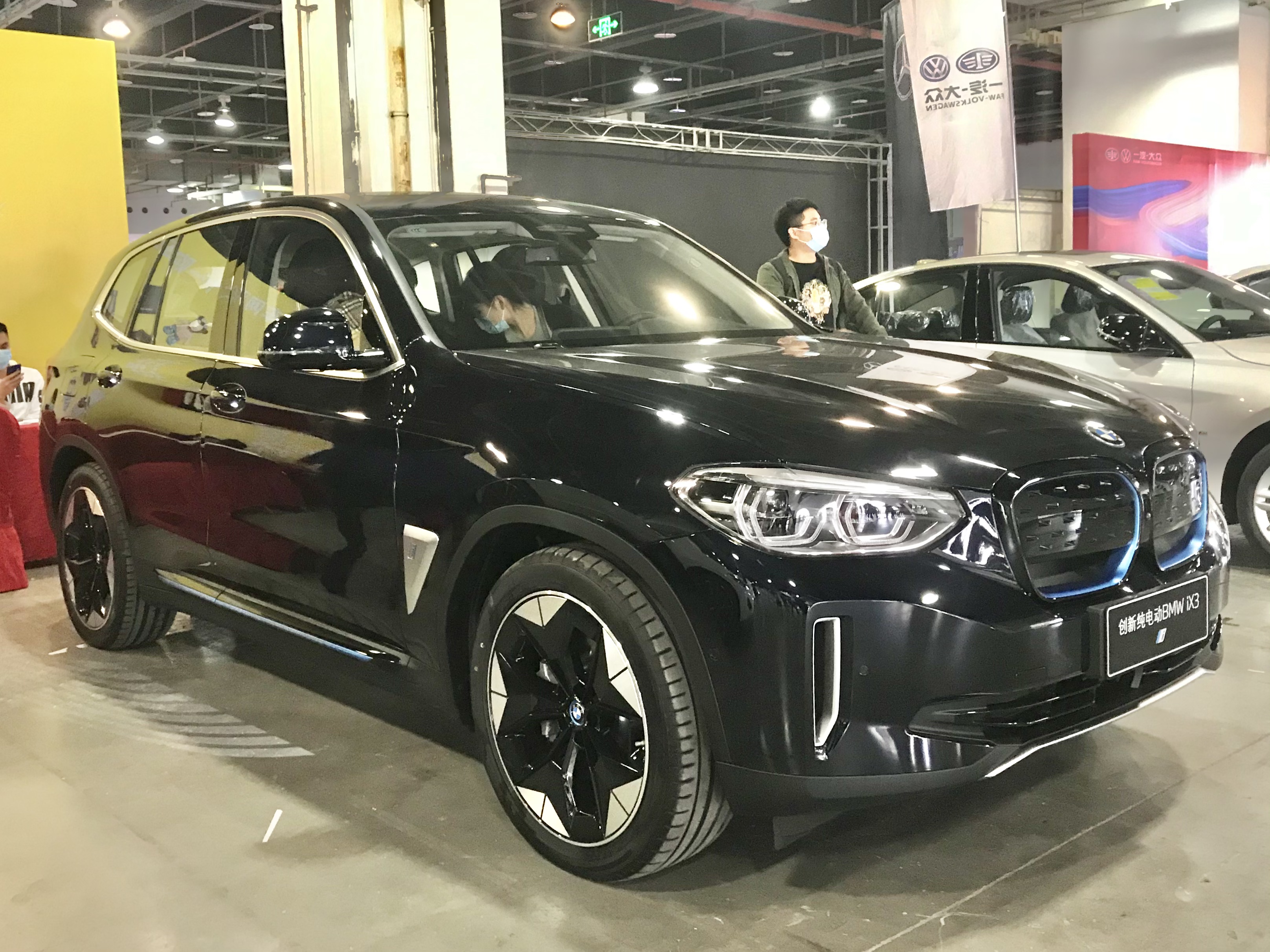
Bmw Ix3
"I mean, look at the BMW iX3, right? [1201.8s] Even the 40, I think it's, what, 89, I think?"
The BMW iX3 is BMW’s electric SUV. The point here is that it’s priced very high, which makes it hard to justify compared to other EVs.
The BMW iX3 is BMW’s electric version of the X3, positioned as a more premium, European-leaning EV. The host uses it as an example of how expensive some European EVs are compared with other options.
support seats
"I'm disabled with severe back problems as Leon. [1261.8s] Can you recommend an EV with high support seats? [1265.4s] That's a good question."
“Support seats” means seats that are designed to feel more stable and comfortable, especially if you have back problems. The question is basically asking which EVs have seats that help reduce strain.
“Support seats” refers to seats designed to provide extra comfort and stability for people with back pain or limited mobility. In EV reviews, this often overlaps with features like stronger bolstering, adjustable positioning, and easier ingress/egress—so the hosts can recommend cars that are easier to live with day to day.
accessibility handle
"And we got to think about the ones that had an accessibility handle even on the driver's side, [1277.1s] because some of cars actually did have that, isn't it? [1281.1s] And some don't have any at all, like even for the passengers."
An accessibility handle is a sturdy grip you can hold onto when getting into or out of the car. The hosts are saying some cars include these handles for easier access, while others don’t.
An accessibility handle is a grab point built into the seat area or door area to help people get in and out of the car safely. The hosts are using it as a practical indicator of how “accessible” a vehicle is for drivers and passengers with mobility limitations.

Polestar 5
"Oh, check this out, Daryl. [1294.3s] Drop the mic. [1295.3s] The Polestar 5 was being dropped off to Ottoman today."
Polestar 5 is a new, higher-end electric car from Polestar. In this segment, they’re just saying one is arriving for them to check out.
Polestar 5 is Polestar’s upcoming flagship EV, positioned as a high-end, performance-oriented grand tourer. The mention here is about logistics—one being dropped off—so it’s a concrete model reference tied to the episode’s EV adoption and review angle.
premium economy
"[1334.2s] It's, okay. [1335.2s] I mean, I don't want to say premium economy because I think that's actually insulting to Polestar. [1339.2s] But it's like, I mean, I would always fly premium economy if I could."
“Premium economy” is a higher tier of airplane seating. In this conversation, they’re using it like a comparison for paying more money for a nicer EV—whether it’s worth it depends on your priorities and budget.
“Premium economy” is an airline cabin class, and here it’s being used as a metaphor for paying extra for a higher-end EV experience. The host is essentially arguing that whether it’s worth it depends on how much you value the upgrade relative to the price.
value
"[1358.4s] I feel like, I feel like if everybody could get a secondhand Polestar, you know, like a demo Polestar, [1364.9s] they probably would because then the value is there for that. [1367.5s] If you can get, if you can get one for cheaper than kind of like the advertised price, but yeah."
Here, “value” means whether the deal feels fair—whether the car is worth the money. The host is saying that if you can get a Polestar for less than the listed price (like a demo or secondhand one), it feels like a better buy.
In this context, “value” means whether the car’s price makes sense compared with what you get—especially when considering secondhand or discounted pricing versus the advertised price. The host suggests that if Polestar 4 (or Polestar models) could be bought cheaper via demo/used deals, more people would see the value and buy in.

Polestar 4
"[1419.5s] Roland, do you want to read this out? [1421.8s] Yeah, so long story short, this was a Polestar 4 on social media, [1426.8s] and it was an update in regards to your pre-order for our 7 GT,"
The Polestar 4 is Polestar’s electric crossover. In this part, it’s mentioned because a post about it is being used to talk about preorder updates.
The Polestar 4 is an electric crossover-coupe from Polestar, aimed at buyers who want a sportier shape than a typical SUV. Here it’s referenced as the social-media post that relates to updates on a different Polestar preorder, showing how EV brands use online updates to manage customer expectations.

Z9 Denza Z9
"... a mini battle between the 7 GT from Zika and the Denza Z9 GT endorsed by Daniel Craig. Like those two cars ..."
The Z9 is an electric car model being talked about in a comparison with other higher-end EVs. The discussion mentions a “GT” version, which usually means a sportier trim. It’s brought up because people are comparing what’s available in the premium EV space.
The Denza Z9 is an electric vehicle discussed in the podcast as part of a comparison set, including other fast or premium EVs. The mention of a “Z9 GT” alongside the “7 GT” suggests the conversation is focused on performance trims and how buyers compare options at higher price points. It’s relevant because it shows EV adoption expanding into more luxury and performance-focused segments.

XPeng P7 Plus
"And someone brought up the X-Ping as well. Yes. P7 Plus. P7 Plus, I think that's more likely to come than..."
The XPeng P7 is an electric sedan. In the podcast, they talk about the “P7 Plus” and whether it’s likely to arrive. That matters because it affects what EVs people can actually choose from.
The XPeng P7 (referred to as the P7 Plus in the podcast) is an electric sedan positioned around technology and driving feel. It’s mentioned with the idea that the P7 Plus is “more likely to come,” which ties directly to EV adoption—availability in a market affects what people can buy and review. The P7 line is often discussed because it targets buyers who want a sedan rather than an SUV.

Xiaomi SU7
"And yeah, Xiaomi's Su7. I mean, that's another, even the U7."
The Xiaomi SU7 is an electric car made by Xiaomi, the same company known for phones and other tech. The hosts are bringing it up as another EV option that could affect pricing and what people can afford.
The Xiaomi SU7 is an electric car from Xiaomi, notable because it’s a tech-company EV aimed at mainstream buyers rather than only traditional automaker customers. In this segment, it’s mentioned alongside other EVs as part of the broader EV adoption conversation.
FBT amounts
"Definitely being over luxury car tax. Not luxury car tax, the FBT amounts. Yeah, I don't know."
FBT amounts are related to Australia’s Fringe Benefits Tax. If a company provides a car to an employee, the tax can change the real cost of that car, so it can influence how expensive it feels to buy or use.
FBT amounts refers to Fringe Benefits Tax (FBT) in Australia, which can apply when an employer provides a vehicle to an employee. For EVs, the FBT calculation can materially affect the total cost of owning or using the car, which is why pricing discussions often mention it.
Zeekr 7GT
"Here we go. 7GT in Europe is 5% less than 7X. I've heard that as ..."
The Zeekr 7GT is an electric SUV. The podcast is comparing it to another Zeekr model and talking about how the price can differ by region. It’s mentioned because it may be a faster or more performance-focused option.
The Zeekr 7GT is an electric SUV variant discussed in relation to the Zeekr 7X, with the podcast noting pricing differences in Europe. That kind of comparison is useful when thinking about how EVs are positioned across markets and what buyers might expect to pay. It’s also relevant because it frames the 7GT as a performance-oriented option within Zeekr’s lineup.
Z9 Denza Z9 Gts
"Dump some of the BMWs. It's some 7GTs and Denza Z9 GTs. Oh, Daryl's saying 20 to 35K difference."
The Z9 GT is an electric car in a sportier “GT” trim. The podcast compares it to another GT model and mentions a price difference. It’s brought up because people are deciding which higher-end EV is worth the extra money.
The Denza Z9 GT is discussed as a higher-performance, more premium EV option, compared directly with other “GT” models like the Zeekr 7GT. The podcast also references a price gap (“20 to 35K difference”), which makes it relevant to how buyers weigh performance and features against cost. In an EV adoption conversation, these comparisons show how EVs are moving into luxury and enthusiast-oriented trims.
ADR approved
"It's been spotted a couple of times. It's been ADR approved, so where are you? Yeah, correct."
ADR approved means the car has been cleared to meet Australia’s legal safety/emissions rules. If it’s ADR approved, it can be sold and registered in Australia.
ADR approved refers to Australian Design Rules, the government safety and emissions standards vehicles must meet to be legally sold and registered in Australia. If a car is ADR approved, it means it has cleared the regulatory requirements for the Australian market.
Encap Rating
"and here is something close to Joyce Hunt, [1695.7s] Encap Ratings. [1697.0s] Looks like Subaru's next two EVs [1699.9s] that Roland Spotted have received 5-star Encap Rating."
An Encap Rating is a safety score from a testing program in Australia/New Zealand. If a car gets 5 stars, it generally means it performed very well in crash tests and has good safety features.
An Encap Rating refers to a vehicle safety score from the Australasian New Car Assessment Program (ANCAP). It’s based on crash-test performance and safety systems, and a “5-star” rating indicates strong overall protection for occupants and pedestrians.

Subaru Trailseeker
"Let's start with this one. [1703.5s] This is the Trailseeker. [1707.8s] Apparently, this can actually do proper off-roading, [1710.0s] which is good."
The Subaru Trailseeker is a coming Subaru EV that the hosts say is meant to handle real off-road driving. That’s notable because many EVs are mostly built for pavement, not trails.
The Subaru Trailseeker is described here as one of Subaru’s upcoming EVs, positioned to handle “proper off-roading.” That matters because it suggests Subaru is aiming for an EV that can still do rugged, trail-style use rather than being purely a city crossover.
off-roading
"This is the Trailseeker. [1707.8s] Apparently, this can actually do proper off-roading, [1710.0s] which is good."
Off-roading means driving on rough terrain like dirt roads or trails instead of normal paved roads. If a car can do it “properly,” it’s typically better at traction and handling bumps than a regular street-only vehicle.
Off-roading means driving on unpaved or uneven terrain like dirt tracks, rocks, and trails. When a vehicle is marketed as capable of “proper off-roading,” it usually implies the drivetrain, ground clearance, and traction are tuned for low-grip surfaces.
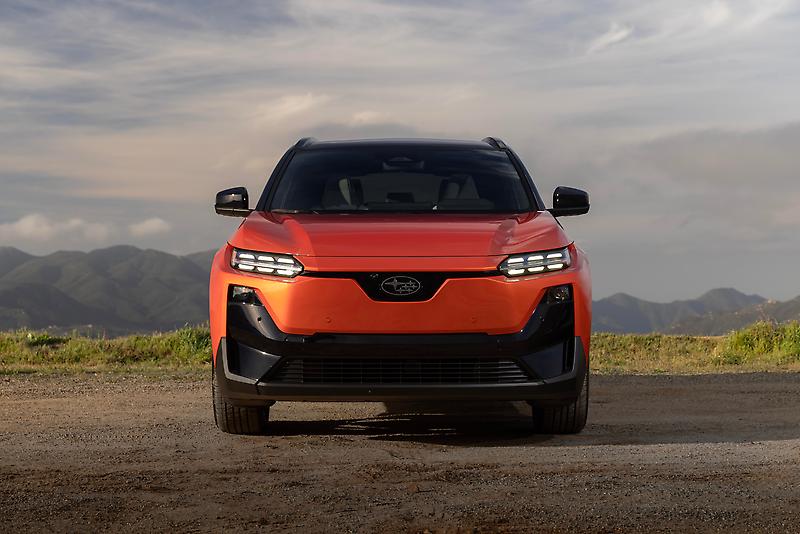
Subaru Uncharted
"...the back, like, there's more of a fastback in the Uncharted. I still feel that black section on the front,"
The Subaru Uncharted is an EV-related model being discussed for its design. People are pointing out the shape—especially the rear looking more like a fastback—and a noticeable front styling section. It’s brought up as something that could be part of Subaru’s future EV direction.
The Subaru Uncharted is an electric concept/derivative discussed in the podcast, with attention to its styling details like a fastback-like rear shape and a distinctive front design element. It’s mentioned as part of the broader EV conversation, where design language and body shape influence buyer interest. Concept or upcoming models like this often come up when people talk about what might be coming next.
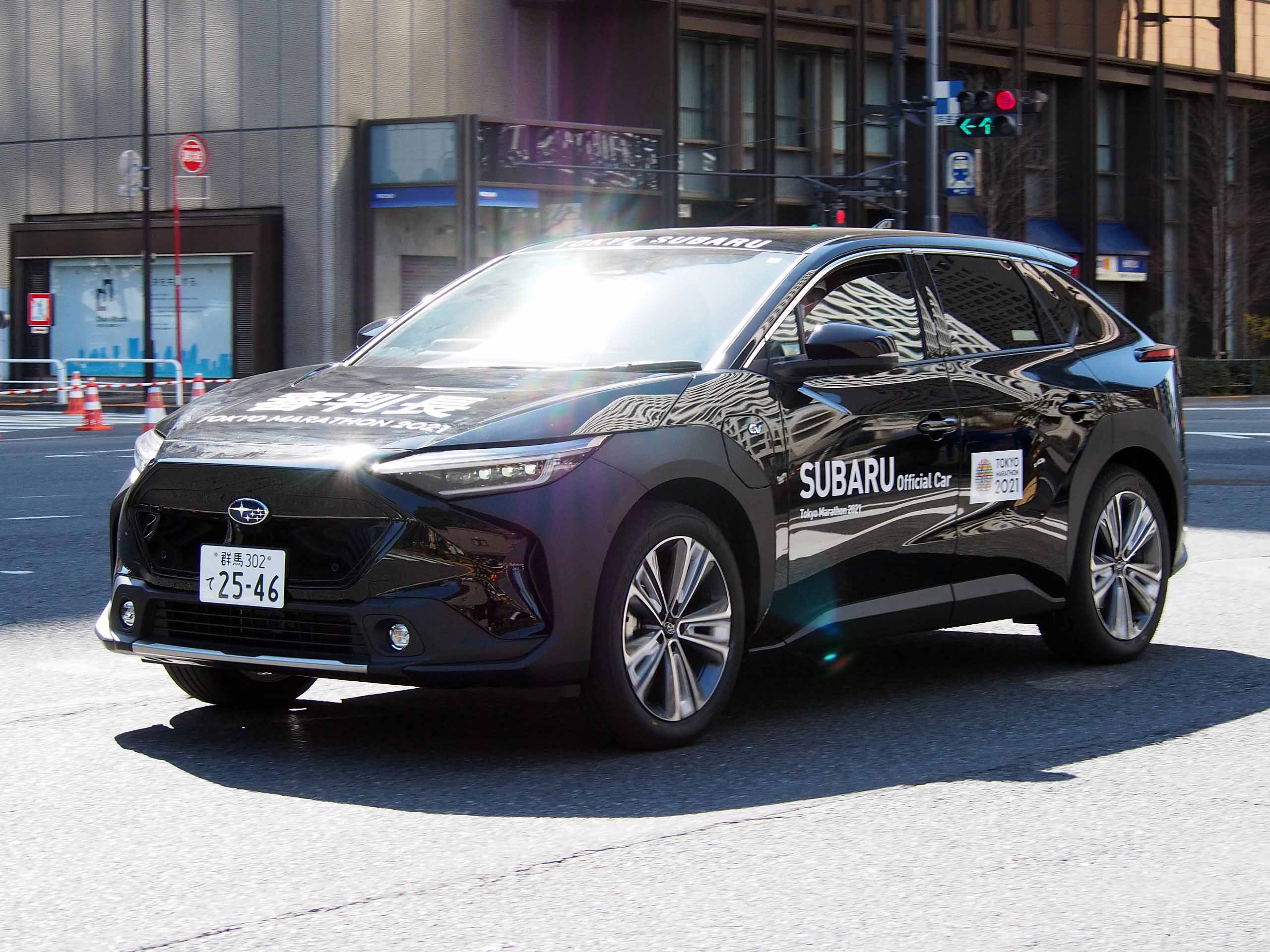
Subaru Solterra
"Yeah, yeah, it's too much. Like, the Solterra and the Beezit Forex. Similar design language."
The Subaru Solterra is an electric SUV made by Subaru. It’s being discussed because it looks similar to another EV and because some people think it’s too expensive. That makes it relevant to the topic of whether EVs are affordable enough for more buyers.
The Subaru Solterra is an electric SUV from Subaru, designed to bring battery-electric driving to the brand’s crossover/SUV audience. It’s mentioned alongside the bZ4X and described as having a similar design language, which points to how some EVs share styling and platform traits. The conversation also frames it as “too much,” tying it to pricing and adoption barriers.
ADRs
"There's no ADRs for that yet, is there, Roland, from memory? [1954.1s] No. No. [1954.8s] I don't recall seeing that yet."
ADRs are Australia’s official safety and design rules that cars must meet before they can be sold. The host is saying this model doesn’t seem to have those official approvals listed yet.
In Australia, ADRs refers to Australian Design Rules—government-mandated requirements that vehicles must meet to be legally sold and registered. The host is saying there aren’t ADRs published yet for the spotted model, implying it may not be approved for sale in Australia at the time of discussion.
Huawei
"Camels, will Huawei come to Australia? [1960.6s] I think the Chang'an avatar is confirmed. [1964.4s] There's a joint Huawei with Chang'an."
Huawei is a major tech company, and here the host is asking whether it will come to Australia through EV-related partnerships. The point is that Huawei may be involved in the car’s technology, not just the phone-world.
Huawei is discussed as a potential entrant to Australia via a partnership in the EV space. In this context, the host is linking Huawei to a joint effort with Chang'an, suggesting Huawei’s tech involvement (often software/connectivity) rather than being the sole car maker.
Chang'an
"[1960.6s] I think the Chang'an avatar is confirmed. [1964.4s] There's a joint Huawei with Chang'an. [1967.1s] Yep. I think it's been spotted as well, I think."
Chang'an is a Chinese car company. The host is saying Huawei and Chang'an are working together, so if Huawei shows up in Australia, it may be through a Chang'an EV.
Chang'an is mentioned as the partner brand in a joint Huawei collaboration. Chang'an is a major Chinese automaker, and the host is implying that a Chang'an EV (with Huawei involvement) is likely to be the vehicle that appears in Australia first.
ground clearance
"If you want a high ground clearance, that's what they're known for. [1977.4s] 211 ground clearance, which is pretty good."
Ground clearance is how high the car sits off the ground. More ground clearance usually makes it easier to drive over rough roads and obstacles without scraping.
Ground clearance is the distance between the road surface and the lowest part of a vehicle. The host highlights it as a key SUV trait—here citing 211 mm—because more clearance generally helps with rough roads, speed bumps, and off-road-ish conditions.

Toyota bZ4X
"It's true. BZ4X, Subaru, Suzuki, it's just quite pricey at the mo..."
The Toyota bZ4X is an electric SUV, meaning it uses a battery and an electric motor. It’s mentioned because people think it costs a lot compared with other options. That price is part of why it may be harder for some buyers to choose.
The Toyota bZ4X is an electric SUV built on Toyota’s bZ (Beyond Zero) electric lineup. It’s brought up as being “quite pricey,” which makes it relevant to a discussion about EV adoption—especially how cost affects what buyers choose. The bZ4X is also often compared in terms of value and pricing within the EV market.

Tesla Model 3S
"...ou actually do take it on to the track, the older Model 3s and Ys have track modes. And I haven't seen or he..."
track modes
"Because I know the Performance models are the minority. But I ask because if you actually do take it on to the track, the older Model 3s and Ys have track modes."
“Track mode” is a software setting (common in performance cars) that changes how the car behaves for sustained hard driving. It often adjusts throttle response, stability/traction control thresholds, and thermal management so the car can handle repeated laps without overheating or intervening too aggressively.

Model Y rear wheel drive
"I went from a, and it was red as well, a red Model 3 Performance to a Model Y rear wheel drive."
The Tesla Model Y rear wheel drive (RWD) uses a drivetrain layout where power is sent to the rear wheels only, typically making it feel different from all-wheel-drive versions. Here, the host says moving from a Model 3 Performance to this Model Y setup wasn’t an upgrade, highlighting how drivetrain choice changes the driving experience.

Model 3 Performance
"I went from a, and it was red as well, a red Model 3 Performance to a Model Y rear wheel drive."
This is a higher-performance version of the Tesla Model 3. It’s set up to feel quicker and more eager to drive than the regular versions, and the speaker says it affects their patience and driving behavior.
The Tesla Model 3 Performance is a performance-focused version of the Model 3, tuned for quicker acceleration and sharper driving feel than standard trims. In this segment, the host compares it directly to a different Model Y drivetrain setup, emphasizing how the “Performance” character changes the way you drive day to day.
RS title
"Tony says, Roland, you might to keep joy away from the performance cars or you might lose your RS title."
“RS” is commonly used in car culture to mean a performance-focused badge (for example, “RS” models in some brands), and “RS title” here sounds like a playful status label among the group. In this context it’s not a specific technical system, but it’s a shorthand for owning or driving the “fast/performance” cars.

Ford F-150 Lightning
"Yeah. See, Lightning Aussie makes a good choice. Like they lost a lot ..."
The Ford F-150 Lightning is an electric pickup truck. It’s mentioned because someone thinks it’s a good choice, and they also talk about how its value may have changed. It’s relevant to EV adoption because it shows electric options in the truck market.
The Ford F-150 Lightning is an electric version of the F-150 pickup, bringing battery-electric power to a vehicle type traditionally known for work and towing. The podcast mentions “Lightning Aussie” and says it “makes a good choice” while noting it “lost a lot,” which suggests discussion around value changes and buying decisions. It’s a key EV topic because pickups are a major segment and electrifying them is a big step for adoption.
Powerwall 3
"They said, no, we're going to make people buy a new Powerwall 3."
Powerwall 3 is a home battery made by Tesla. It stores electricity so your home can use it later, and it’s managed by software that decides when to charge and when to power your house.
Powerwall 3 is Tesla’s third-generation home battery system. It’s designed to store electricity for home use and can be paired with solar, with software controlling charging/discharging and grid interaction.
Powerwall 2
"f you've got a Powerwall 2, if you're hanging out for this, let us know."
Powerwall 2 is Tesla’s earlier home battery generation, preceding Powerwall 3. The mention here suggests compatibility or upgrade timing issues—i.e., owners with Powerwall 2 may need to wait for a software or system change rather than buying new hardware.
12-volt batteries
"Roland, what do you think of all the Zika 7x delivery issues? Lack of updates from delivery schedule, 12-volt batteries"
The 12-volt battery is the car’s “small battery” that runs the electronics you use every day. EVs still need it, and if it’s problematic, the car can’t boot or run certain systems properly.
A 12-volt battery is the small auxiliary battery that powers low-voltage systems in a vehicle, like computers, lights, and sensors. Even in EVs, the high-voltage traction battery doesn’t directly run all electronics, so 12V battery issues can cause warning lights, delayed deliveries, or system update/compatibility problems.
built order
"like if the car doesn't exist [2673.3s] in their network that you can buy straight away, [2676.1s] it's a built order, which means it's a long way."
A “built order” is when you order a car and it gets made after you buy it, instead of being ready at the dealership. Because it has to be built, it usually takes longer to arrive.
A “built order” means the car isn’t sitting on a dealer lot ready to sell; it’s produced after you place the order. That typically creates longer delivery timelines because the factory schedule has to line up with your specific configuration.
software update
"So they're very happy with the software update recently too,"
Many modern EVs can get updates over time, like a phone. This “software update” can fix problems or improve how the car feels and works.
A software update in an EV typically means the car’s computer gets new code to change behavior—often improving infotainment, efficiency, drivability, or fixing bugs. Here, the host points to a recent update as a reason some 7X owners feel positive.
Hume Highway
"AEVA, which is Australia's Electric Vehicle Association voluntary organization, have awarded a B plus to vehicle charges along the Hume Highway, which is one of the busiest stretches of road in Australia from Sydney to Melbourne,"
The Hume Highway is a major road corridor in Australia connecting Sydney and Melbourne, so it’s heavily used by both commuters and long-distance travelers. For EVs, it’s an important route because charger reliability directly affects road-trip feasibility.
snap audit
"from Sydney to Melbourne, after it conducted a snap audit during the June 2026 long weekend, which is just the weekend past."
A snap audit is a quick check done over a short period. Here, they looked at charging stations during a specific holiday weekend to see what was working and what wasn’t.
A snap audit is a quick, time-limited inspection done over a short window to assess real-world conditions. In this case, AEVA checked chargers during the June 2026 long weekend to see how many were working and how usable they were.
charging speed
"They said each station was checked for physical condition, for service, charging speed, usability, and the charging apps, et cetera."
Charging speed is how quickly your electric car can charge at a station. Even if a charger is rated fast, your car may charge slower depending on things like battery temperature and how full the battery already is.
Charging speed is how fast an EV can add energy at a charger, typically tied to the charger’s power output (kW) and the car’s ability to accept that power. Higher charging speed usually means shorter charging sessions, but real-world results depend on battery state and temperature.
CCS2
"They said each station was checked for physical condition, for service, charging speed, usability, and the charging apps, et cetera. Out of the 195 CCS2 plugs, only 12 were out of service."
CCS2 is the plug shape many electric cars use for fast charging. It’s what you look for at public charging stations so your car can plug in and charge quickly.
CCS2 (Combined Charging System, “Type 2”) is the most common fast-charging connector used for many EVs in Australia and Europe. When the host says “CCS2 plugs,” they mean the physical charging ports at public fast-chargers that EVs plug into.
plug
"I mean, look, you'll be great if every single plug is working, but that might be unrealistic still. I think the key is just more at each site, right?"
Here, “plug” means the charging connector where you plug your EV in. The point is: if there are only one or two, you might have to wait or worry that it won’t work when you need it.
In EV charging, a “plug” is the physical connection point used to transfer electricity from the charger to the car. When the host says they can’t trust “one or two plugs,” they’re really talking about having enough charging connectors available so you’re not stuck waiting if one is occupied or out of service.
charging site
"I get excited thinking about it now, driving on the highway. I mean, it'd be great to have at least six, if not eight. And now with 20% uptake, we need more charges at these locations."
A “charging site” is a place where EVs can charge, like a roadside or shopping-center charging area. They’re saying more chargers at the same place makes it easier and less stressful to charge.
A “charging site” is a specific location with one or more EV chargers (often at a highway stop, shopping center, or service area). The discussion is about scaling these sites—adding more chargers so drivers have a better chance of finding an available connection.
redundancy
"True. Redundancy. Yeah."
“Redundancy” here means having extra chargers so if one isn’t working (or is taken), you can still charge using another. It’s like having backups so you’re not stuck.
“Redundancy” means having backup capacity so the system still works if one part fails. In EV charging, multiple chargers at the same site reduce the chance that a single broken/occupied charger leaves everyone stranded.
early adoption phase
"We're getting there. I would say we're still in the early adoption phase, right?"
“Early adoption phase” means EVs are becoming more common, but the charging network is still playing catch-up. The idea is: as more people buy EVs, charging stations need to add more chargers so it feels dependable.
“Early adoption phase” describes the period when EV charging infrastructure is still catching up to demand. The host argues that because adoption is still growing, charging sites need more capacity and reliability improvements to keep drivers confident.
range anxiety
"Gaffers is exactly, it's not range anxiety. It's charging anxiety. It really is. Range anxiety is gone. I mean, I've got no range anxiety."
Range anxiety is the worry that your EV’s battery won’t last long enough to get you where you’re going. People feel it when they’re not sure they’ll find a charger in time.
“Range anxiety” is the fear that an EV won’t have enough battery charge to reach the destination or the next charging station. It’s usually tied to real-world driving range, charging speed, and how reliably chargers are available when you need them.
charging anxiety
"Gaffers is exactly, it's not range anxiety. It's charging anxiety. It really is. Range anxiety is gone."
Charging anxiety is the stress of not knowing whether you’ll be able to charge your EV when you arrive. It can be about charger availability or how long you’ll have to wait.
“Charging anxiety” is the worry that you’ll have trouble charging when you need to—like finding an available charger, dealing with slow charging, or waiting for power. It’s a more practical concern than range anxiety once EVs can cover typical distances.
BP
"So, yeah. Oh, BP. Yeah, I think we discussed this. BP is building a 24 stall station at Melbourne Airport."
BP is an energy company expanding into EV charging infrastructure. In this segment, the host mentions BP building a multi-stall charging station at Melbourne Airport, which matters because more stalls can reduce waiting and improve charging reliability.
Melbourne Airport
"BP is building a 24 stall station at Melbourne Airport. It really should be on the human stand."
Melbourne Airport is a busy airport in Australia. Adding EV chargers there helps because many people pass through and need reliable charging options.
Melbourne Airport is a major travel hub in Australia where charging infrastructure can be especially important for EV adoption. Airports concentrate lots of predictable traffic, so adding charging capacity there can improve convenience for travelers and staff.
power availability issue
"Maybe they already had power available at the airport. That's not an issue, right? It is a power availability issue sometimes."
A “power availability issue” means the location may not have enough electricity capacity for all the chargers to work as intended. So chargers might be slower, limited, or not fully usable until the power is upgraded.
A “power availability issue” means the site doesn’t have enough electrical capacity (or upgrades aren’t ready) to support the charging station’s planned number of stalls and charging speeds. Even if chargers are installed, limited grid capacity can cap output or delay full operation.
DC charger
"Is a reasonably priced DC charger for home? Yes, there is actually. If you have a SIG energy,"
A DC charger is a type of charging that can fill up an EV faster. It’s usually used for quicker charging, not just overnight at home.
A DC charger is a fast-charging station that sends direct current to the car, bypassing the car’s onboard charger. That’s why it can charge much quicker than typical home AC charging, especially when the car supports DC fast charging.
SIG energy
"If you have a SIG energy, you can buy a stock, but buy a DC charger for a reasonable price."
SIG energy is the company being mentioned as the place to look for the charging setup. The host is connecting it to home DC charging and EV power options.
SIG energy is referenced as the provider you’d use to buy a stock and pair it with a home DC charger. In this context, it’s being treated as an energy/charging ecosystem for EV owners.
12 or 25 kilowatts
"You can charge at 12 or 25 kilowatts potentially, but you can probably probably don't need a DC charger at home."
Kilowatts (kW) tell you how fast the charger can deliver power. More kW usually means faster charging, but the car still has limits.
Kilowatts (kW) are a measure of charging power—how quickly energy can be delivered to the battery. In practice, higher kW can reduce charging time, but the car’s own charging limits and battery state of charge also control the real-world speed.
11 kilowatts
"11 kilowatts is enough, I think, you know, it can charge up in a few hours."
11 kW is a typical home charging speed. If you plug in long enough (like overnight), it can be enough to recharge for everyday driving.
11 kW is a common level for home EV charging power (often AC), and it can be enough for many daily driving needs. The key idea is that charging speed plus how many hours you have overnight determines whether you can refill the battery by morning.
V2H
"And then you can continue to V2H with a DC charger, of course, with SIG."
V2H means your EV can send electricity back to your house. It usually needs special equipment and a car that supports charging both ways.
V2H (vehicle-to-home) means using an EV’s battery to power a home, typically during outages or to offset electricity use. It requires compatible hardware (like a bidirectional charger/inverter) and the right EV support for bidirectional charging.

Photon K2
"[3522.7s] There's three variants that I've put there on the top right. [3527.3s] Photon K2. [3528.5s] So two battery sizes, one just over 50 kilowatts"
Photon K2 is an electric van model. The speaker says it’s offered with two different battery sizes, which can change how far it can go on a charge.
Photon K2 is an EV model being discussed in the context of Australia’s growing commercial-vehicle adoption. The host mentions it comes with two battery options (one just over 50 kWh and another just under 67 kWh), which directly affects range potential and pricing.
kilowatt hours
"[3528.5s] So two battery sizes, one just over 50 kilowatts [3531.4s] and the other just under 67 kilowatt hours. [3534.7s] And it's a standard wheelbase and a long wheelbase."
Kilowatt-hours (kWh) tell you how big an EV’s battery is. A bigger battery usually means you can drive farther before needing to recharge.
Kilowatt-hours (kWh) are a measure of battery capacity in an EV. More kWh generally means the battery can store more energy, which can translate into more driving range (though real-world range also depends on vehicle size, weight, and efficiency).
wheelbase
"[3534.7s] And it's a standard wheelbase and a long wheelbase. [3536.8s] And the long one, I think, had a really high roof as well. [3541.0s] So all the commercial cars seem to be about 120 odd to 150 kilowatts."
Wheelbase is the spacing between the front and back wheels. A longer wheelbase usually gives more room inside the van, while a shorter one can be easier to drive in narrow streets.
Wheelbase is the distance between the front and rear axles. In vans, a longer wheelbase typically provides more interior space for cargo or seating, while a shorter wheelbase can help with maneuverability in tight urban delivery routes.

PV5 Kia Pv5
"The more, the better. Photon, Verizon, Kia, PV5, eDeliver, LDV, Renault partner, all good things."
The PV5 is an electric vehicle that’s mentioned along with other EVs. The point is that it’s one of the options people are talking about. The podcast doesn’t go into details here, but it’s part of the wider EV list.
The PV5 is an electric vehicle mentioned as part of a broader list of EVs and brands being considered for adoption and availability. The podcast groups it with other models and commercial/partner references, implying it’s part of the conversation about what’s coming into the market. In that context, the PV5 is discussed more as an option in the EV lineup than for specific performance details.
Request an Explanation
Heard something you'd like explained? We'll add it to this episode.
Sign in to request explanations for terms you heard.
Want to learn more?
Browse our glossary for plain-English explanations of automotive terms, jargon, and concepts.
Help improve this episode
See something that's not quite right? Our annotations are AI-generated and can sometimes miss the mark. Click the flag icon on any annotation to suggest a correction.