
#074 - The Camaro is BACK! New GM Sedans & Jimmy, Porsche Sales Drop, Chinese EVs & More
About this episode
The Clutch Culture crew starts with a wholesome listener email about their soothing voices putting a baby to sleep, then pivots into car talk with big headlines: GM’s Camaro return, Porsche sales dropping sharply, and the accelerating pressure from cheap Chinese EVs. They debate whether GM’s Camaro comeback is real strategy or another stop-start “portfolio management” move, and connect broader market stress to credit pullbacks and dealer pressure. The discussion also covers a Corvette C8 stop-sale software issue, the rumored return of the GMC Jimmy, and a spirited rant on buying cars because they’re “cool,” not because you love them.
We're building the biggest online car club in the world. Join the community! clutch.club
Clutch Culture Hoodies BACK IN STOCK: https://hypercleanstore.com/collections/gear-up/products/clutch-culture-hoodie
Hey you! Yeah you... Drop us a 5 Star rating AND review if you enjoy the show. Thanks in advance!
Sharing the show is the best way to help it grow!
Email your questions, topics, stories: [email protected]
If you're a parts manufacturer or supplier that want's to be apart of either the 2003 LX470 or 2014 Gen 1 SVT Raptor, get in touch with us via email at [email protected]
Follow the show on social @ClutchCulturePod on Instagram & TikTok
Watch the video version on YouTube @ClutchCulturePod
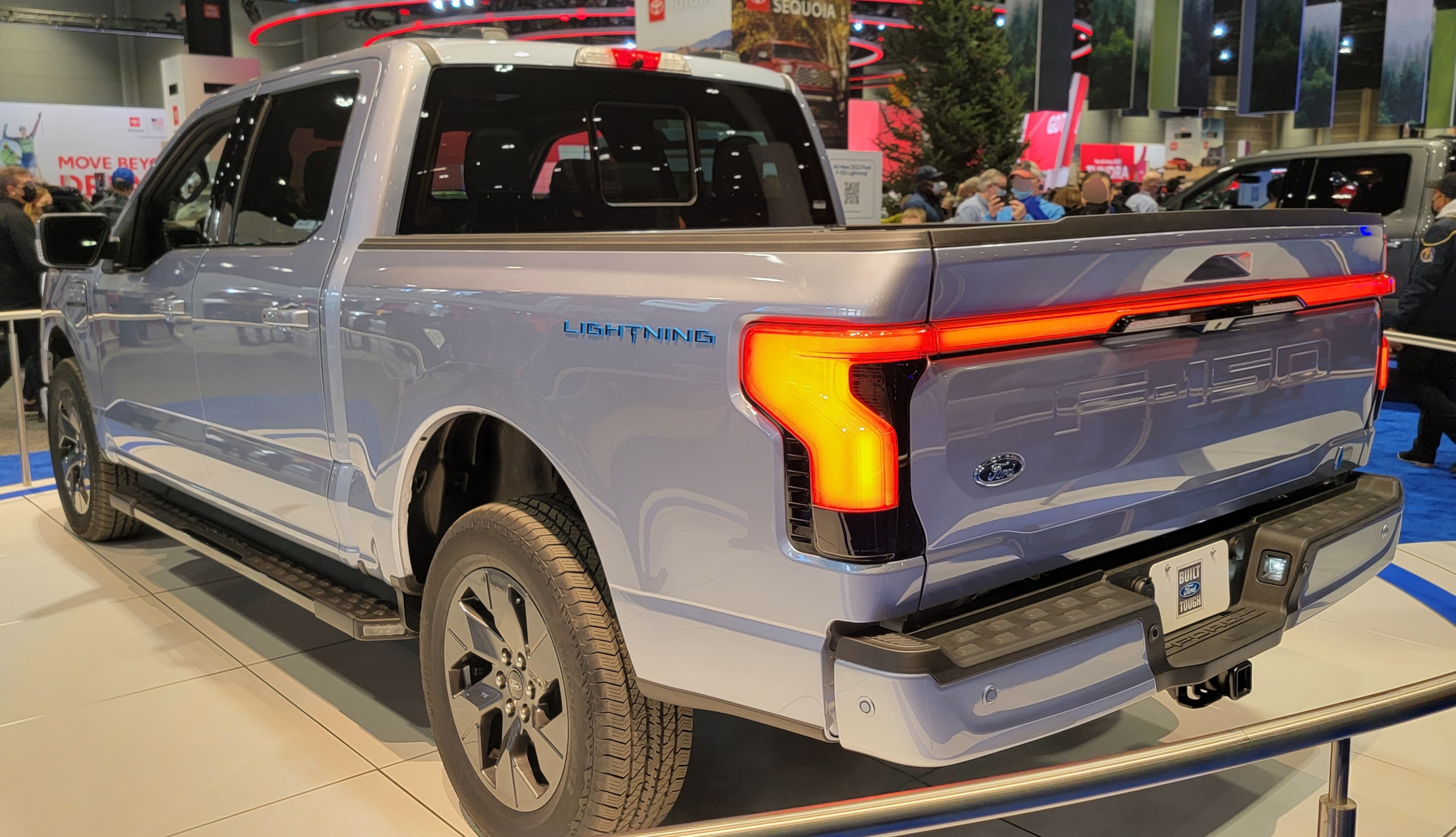
F-150 Raptor
"...there with your stories and you know, your Gen 1 Raptor that wasn't your idea. I mean, you're just livin..."

Chevrolet Corvette
"... gonna be about this, but you know, and it's not Corvette talk, well, that's gonna be for later,"

Chevrolet Camaro
"... gonna be for later, but GM is bringing back the Camaro, did you know this? Big news this week."
GM
"...but GM is bringing back the Camaro, did you know this? Big news this week."
GM is General Motors, the company that makes Chevrolet and other car brands. They’re the ones being discussed as bringing the Camaro back.
GM (General Motors) is the Detroit automaker behind brands like Chevrolet, GMC, Cadillac, and others. In this segment, GM is the company making the announcement about the Camaro’s return.
power plant
"I guess they didn't say the power plant. The things that I saw, I think it's, you know, we have heard from a lot of people in these buildings..."
“Power plant” just means what makes the car move—like the engine, or for newer cars, the electric or hybrid system. They’re saying GM hasn’t revealed what kind of setup the new car will have.
“Power plant” is a broad term for the engine and its related propulsion system (and in modern cars, it can also include hybrid or electric drive components). When the speaker says GM “didn’t say the power plant,” they mean the announcement didn’t confirm what kind of drivetrain the new Camaro will use.

Dodge Challenger
"...ot of people. This can be said about charger and challenger going the route that they did"

Dodge Charger
"for a lot of people. This can be said about charger and challenger going the route that they did"
General Motors
"The going in and out of Camaro over the years, I think has just been a terrible play by General Motors."
General Motors is the big company that owns brands like Chevrolet. The point here is that GM’s decisions about the Camaro haven’t been consistent, which can hurt sales.
General Motors (GM) is the parent company behind Chevrolet and other major brands. The speaker argues GM’s repeated “going in and out” with the Camaro has been a poor long-term strategy.

Honda Accord
"Corolla, Camry, Accord, they all sell well."
The Accord is Honda’s popular sedan. The speaker is saying it keeps selling well, so it’s not automatically a “dying” segment.
The Honda Accord is a long-running mid-size sedan that’s known for consistent sales and broad customer appeal. It’s referenced to support the idea that mainstream sedans can remain successful even if the market narrative turns negative.

Toyota Camry
"that we say about Toyota and Honda. Corolla, Camry, Accord, they all sell well. So even in some of ..."

Ford Mustang
"one as they grow up. I think the Camaro, the Mustang, those two primarily examples,"
30% interest
"You can go to buy here, pay here a lot, [1397.6s] and pay 30% interest on a car. [1399.3s] So anybody can get financing for a car"
They’re pointing out that some financing deals can have very high interest. That means you end up paying a lot more for the car overall, even if the monthly payment seems manageable.
The speaker is highlighting how some high-risk financing programs can come with extremely high interest rates. In car buying, interest rate directly affects the total cost of the vehicle over the life of the loan, not just the monthly payment.
Chinese EV
"Speaking of globally, I saw one of my first... I saw the first Chinese EV on the road here in Central Texas"
A “Chinese EV” is an electric car made by a company in China. More of them are showing up in other countries, and that can change pricing and competition for everyone else.
“Chinese EV” refers to electric vehicles made by Chinese automakers. This matters because Chinese EVs have been expanding globally, often bringing aggressive pricing and fast product development that can pressure other brands’ market share and pricing.
EVs
"As Americans, we've rejected EVs. I mean, largely across the board, it's just not been something that's very popular adoption."
EVs are cars that run on electricity from a battery instead of gas. The point being made is that, in the U.S., EVs didn’t catch on as fast as automakers hoped.
EVs (electric vehicles) are cars powered primarily by electricity stored in a battery, rather than gasoline. The discussion here is about how widely Americans adopted EVs compared with what automakers expected when they invested heavily.
semiconductors
"Right. And so we think of semiconductors and we think of this and we think of that. We think of chips."
Semiconductors are electronic components used throughout modern vehicles, from engine control units to infotainment and driver-assistance systems. Shortages can constrain production and force automakers to change sourcing or trim features.
reboot of a modern neon
"But would it be the worst idea for them to have a reboot of a modern neon? It wouldn't be the worst idea."
They mean making a brand-new version of the old Neon for today’s market. The hope is it would attract buyers who want something practical and affordable.
A “reboot” here means bringing back an older model nameplate with a modern platform, powertrain, and design. The speaker’s argument is that even if it’s not a huge profit-maker, it could help the brand compete in the compact, first-car market.
market share
"The reason Toyota was able to take so much market share was operational excellence, right?"
Market share means how much of the car-buying “pie” a company gets. If a company gains market share, it’s selling more than competitors.
Market share is the percentage of total vehicle sales a manufacturer captures in a given market. The speaker uses it to illustrate how operational excellence can translate into better sales performance.
Jim Farley
"Yeah, like if you look at Jim Farley, who's a guy we like to hear from. I like to hear the guy talk."
Jim Farley is Ford’s CEO (at the time of the referenced discussion). Mentioning him signals that the episode is drawing on leadership-level commentary about Ford’s strategy and operational realities.

Toyota Corolla
"Toyota's, Corolla and Camry, they're more profitable than they should be on those cars because of their efficiency."
The Toyota Corolla is a very common, everyday Toyota. The point here is that Toyota can make money on cars like this because they’re efficient at building them.
The Toyota Corolla is a compact car that’s often used as a benchmark for manufacturing efficiency and profitability. In this segment, it’s mentioned alongside the Camry to illustrate how Toyota can earn strong margins even on high-volume, lower-cost models.
rear turn signal
"GM hit pause on Corvette C8 sales because of a rear turn signal issue, one so subtle that most owners would never spot it unless it happened to them."
Your rear turn signal is the blinking light on the back that tells people you’re turning. If it doesn’t work properly, other drivers may not realize what you’re doing.
A rear turn signal is the blinking light on the back of the car that communicates your intended direction to other drivers. The segment describes a case where the rear signal fails to trigger the expected tail-light behavior and/or driver warning.
dealership
"So is it they do have a fix? You just got to go into the dealership? It doesn't sound like they have a fix... Imagine stopping in the dealership."
A dealership is where you go to get your car serviced or repaired under warranty. If they don’t have the right fix available yet, you may feel like you’re getting bounced around.
A dealership is the retail service channel where owners typically take vehicles for warranty work and recalls. The segment suggests the dealership may not have parts or an approved remedy yet, leading to frustration for customers.
removable tops
"I will say this about removable tops. I love to give shout outs to things that interest me and we give creators..."
A removable top is a roof section you can take off to make the vehicle feel more open to the air. The host is basically saying it’s a fun feature and they wish more cars offered it.
Removable tops (like convertible-style roof setups) change the vehicle’s open-air experience without necessarily being a full factory convertible. The speaker is praising the idea and highlighting it as something that should exist more often, using the Range Rover example.
leaked design data
"They had a leak. Somebody leaked the data. That made people kind of mad. They're like, well, you know, there's no such thing as original design anymore."
They’re talking about a controversy where design information got leaked. The debate is whether that means someone stole ideas, or whether modern design is always influenced by what already exists.
The segment describes a situation where someone leaked design “data,” which angered people because it implied copying or using proprietary design work. The speaker counters that “original design” isn’t realistic anymore, framing it as a broader industry issue about inspiration vs. imitation.
auction
"I watched the auction for this particular one. Yes, he has it on he had it on his YouTube."
An auction is like a bidding event for cars. People compete to buy the car, and the final price is what the winning bidder pays.
An auction is where cars are sold to the highest bidder, often with limited time to inspect the vehicle. For enthusiast cars, auction results can strongly influence market value because they reflect what buyers actually paid.
eight cylinder
"Yeah. Eight cylinder 38,000 miles. Yeah, I think it went for like 49."
“Eight cylinder” means the car has a V8 or inline-8 engine, depending on the design. More cylinders generally indicate smoother operation and often stronger performance, but they also tend to come with higher fuel consumption and maintenance costs.
buying something because you like it (no practical sense)
"[3177.8s] Because that is truly, you're buying something because you like it and it makes no sense. [3184.3s] Right?"
They’re describing a situation where someone buys a car just because they love it. Even if it’s expensive or doesn’t “make sense,” the excitement is the point.
The speaker emphasizes a “passion purchase” mindset: the buyer wants the car because it’s desirable to them personally, not because it’s a rational financial decision. This is a common theme in enthusiast communities and collector markets.
SEMA
"But I think that's the same thing about SEMA. I think SEMA needs to reinvent itself. It's 2026."
SEMA is a big car show in the U.S. that’s mostly about aftermarket upgrades—like parts, accessories, and custom builds. They’re saying the show needs to change so it’s more relevant to what people actually want.
SEMA is the Specialty Equipment Market Association show, a major U.S. event focused on aftermarket parts, customization, and performance accessories. The speaker argues that SEMA needs to “reinvent itself,” implying the show’s current format or incentives may not be serving consumers as well as it could.
car show or auto show
"So imagine being at a car show or auto show and you have these people that can pop up somewhere set up and make money off the car business because they don't make money in the car business."
An auto show is where car companies bring cars to display and promote them. Some people make money just by showing up, promoting, or working the event scene rather than building or selling cars.
An auto show is an event where brands and vendors display vehicles, accessories, and marketing partnerships. The discussion here is about how some people monetize exposure at these events rather than working directly in manufacturing or sales.
lifted
"Lifted Bentley Bentayga could preview production model."
“Lifted” means the car sits higher off the ground. That can help it handle rough roads and gives it a more rugged look.
A “lifted” vehicle has its suspension raised to increase ground clearance. On SUVs, this is often paired with larger tires and off-road-oriented styling, and it can change how the vehicle handles and rides.
white wheels
"I'm a huge fan of white wheels, by the way. When it looks good, it looks good."
“White wheels” refers to wheel finishes painted or coated in white, which can look striking but are also more prone to visible grime, brake dust staining, and discoloration. The segment notes that the white finish has turned brown, changing the look negatively.
Request an Explanation
Heard something you'd like explained? We'll add it to this episode.
Sign in to request explanations for terms you heard.
Want to learn more?
Browse our glossary for plain-English explanations of automotive terms, jargon, and concepts.
Help improve this episode
See something that's not quite right? Our annotations are AI-generated and can sometimes miss the mark. Click the flag icon on any annotation to suggest a correction.