They’re talking about how the classic car market can change—sometimes prices keep rising, and other times they drop. Even “cool” cars can get less valuable if fewer people want to buy them.
A “gated manual” is a stick shift where the lever moves through clearly defined slots. People like it because it feels more precise and satisfying to shift.
“JDM” means cars that were originally sold in Japan. The market for them can be hot because enthusiasts want specific models, and many were changed by owners for racing or drifting.
A drift car is a car prepared for drifting—sliding the rear end while keeping control. If a car was built for drifting, it may have been modified a lot, so it might not be as “stock” as collectors want.
They’re talking about the Toyota Supra, a famous Japanese sports car. They’re debating whether a stock (factory) one is still as exciting as the modified versions people usually build.
Leasing is like a temporary rental with an option to buy later. If lots of cars are leased, many of them come back after a few years, and dealers can sell them as used cars.
If a dealer “punted” on leasing, they basically didn’t focus on leasing deals for a while. That can change what cars they’ll have later when leases end and cars come back.
An oversupplied market is when there are too many cars for the number of people ready to buy. When that happens, dealers and brands often use incentives like leasing to get cars off lots.
If used cars are “piling up,” it means dealers have more cars than they can sell right away. To move them, they may need to cut prices or offer stronger deals.
A used car market supply shortage happens when fewer vehicles are available for sale than buyers want. The hosts connect this to reduced lease volumes and fewer vehicles entering the used pipeline, which can tighten inventory and push prices up.
When a lease ends, the car gets turned back in. If lots fewer people are leasing than they used to, there are fewer “almost-new” cars entering the used market, so used prices can rise.
Car
GTI
The Volkswagen GTI is a sporty Volkswagen hatchback that’s popular with enthusiasts. The hosts are basically saying some older cars still look cool, even if they’re not necessarily worth big money to everyone.
Mass liquidation means a lot of older cars are being sold quickly. If many people are selling at the same time, there can be more cars for sale than usual, which affects pricing.
They’re saying older cars are getting cheaper because more people are selling them and fewer people want to buy them at the same price. That supply-and-demand shift is what drives the price drop.
Car prices don’t stay the same forever. They rise and fall as different generations want different kinds of cars, so older cars can get cheaper for a while before they become popular again.
They’re saying economic fear can make people sell cars sooner or more aggressively. More cars for sale usually means lower prices, at least in the short term.
When money feels tight or uncertain, people are more likely to sell their cars. That extra selling can make classic car prices drop, even if other parts of the economy look okay.
Concept
"special stuff from the 60s and 70s" vs "95 98 99 percent" not special
Some older cars are genuinely rare or famous, and those usually keep their value better. The hosts are saying most cars—especially the more ordinary ones—don’t have that same “must-have” demand.
Metrovec is mentioned as a guest’s workplace, with the guest described as a VP of operations. While not a car part or product, it’s a company name worth noting for listeners who may want to look up the guest’s background.
Hyper Clean is presented as the sponsor and the brand behind a “complete detail kit.” In detailing terms, a kit typically bundles multiple products (cleaners, protectants, and tools) so you can wash and protect a vehicle consistently.
A “complete detail kit” is a bundled set of detailing products designed to cover the main steps of cleaning and protecting a car. The idea is to make the process simpler by giving you everything you need in one package rather than buying products separately.
The Nissan Xterra is a tough SUV meant for rough roads and outdoor trips. The hosts are saying Nissan’s decision around it (including canceling it) was a big deal for people who wanted that kind of vehicle.
The Toyota FJ Cruiser is a retro-styled, off-road-focused SUV known for its simple, capable design. Here it’s mentioned alongside the Nissan Xterra as another model that was canceled, and the hosts argue that those cancellations were bad timing.
Overlanding means taking a vehicle on long trips, often to remote places, and being prepared to camp or handle rough conditions. The hosts are basically saying the market wanted these kinds of SUVs more than ever right after they were discontinued.
Term
night rider grill
They’re comparing the car’s front styling to the Knight Rider TV show. The point is that the grille/front lights look flashy and recognizable, not subtle.
Quality control is how a company checks that cars are built correctly and consistently. If quality control isn’t solid, even good plans and new models may still fail.
Infiniti is Nissan’s luxury brand. The hosts are saying Infiniti got off track because it didn’t share enough with Nissan, and now they plan to work together more again.
Off-road SUVs are cars built to drive on dirt, trails, and uneven ground. The hosts are saying Nissan is betting heavily on this type of vehicle to rebuild momentum.
They’re saying Nissan and Infiniti will work in a simpler, more coordinated way. That usually means fewer unique parts and more shared technology between the brands.
They’re talking about sharing parts or technology between Nissan and Infiniti. When companies share more, it can make the cars cheaper to build, which sometimes helps lower prices for buyers.
They’re hoping the changes will make cars cost less. If a company can build cars more efficiently, it may be able to offer better pricing to customers.
Out-the-door (OTD) price is the total cost to buy the car, including taxes, registration, and dealer fees—what you actually pay at purchase. The hosts’ discussion about getting the SUV into the $90k–$95k range (and “stealing sales”) is really about whether the final OTD number is low enough to win customers versus competitors.
Average transaction price is basically the average “real price” people end up paying for cars. If that number is too high, fewer people can afford the cars, so companies may need to lower prices or offer bigger deals.
They’re talking about how car dealers are dealing with the market right now. When prices are high and sales slow down, dealers and big dealer groups feel it and start pushing back or speaking out.
Concept
Out-the-lot price vs starting MSRP
They’re pointing out that the price you see first (like “starting under $40,000”) isn’t always the price you end up paying. Options and add-ons can push the total up a lot.
They compare Nissan’s pricing to the Toyota 4Runner, which starts in the low-$40,000s. The idea is: if Nissan’s Xterra can be priced similarly and still be easy to buy, it could pull customers away from Toyota.
Concept
Concept world vs production
They’re saying it’s not enough to just hear about ideas or concepts—what matters is what actually gets built and sold. Production cars can end up different from what was shown earlier.
They’re talking about the Nissan Skyline coming back. It’s a famous car name, and they’re also saying different executives have hinted at different branding—Nissan versus Infiniti.
They mean using the same basic “car foundation” for multiple models. That usually makes it cheaper and faster to build new cars because the company isn’t designing everything from scratch.
A turnaround plan is what a company does when it’s not doing well and needs to get back on track. For car companies, that often means dropping some models and using the same parts/technology across multiple vehicles to save money.
They’re talking about the Nissan Rogue, which is one of Nissan’s most important-selling cars. The idea is to simplify the options (fewer trim levels) and add a hybrid version to attract more buyers.
They’re saying the Nissan Juke is expected to get an electric version. Automakers often do this by using the same underlying electric technology across multiple models.
They’re saying the new electric Nissan Juke would use a lot of the same electric parts/technology as the Nissan Leaf. That helps the company build the new EV faster and cheaper.
They’re talking about Nissan selling fewer different car models. That can help the company manage costs and avoid having too many slow-selling versions.
They mention Jaguar as an example of a car brand that’s had a tough time. The point is that even well-known brands can struggle, so the future isn’t guaranteed.
They’re talking about how car companies need to win over younger drivers. If younger people aren’t already into sports cars, brands have to offer something that feels relevant to them.
They mention the Nissan Z as a sports car that younger people are interested in. The idea is that a good sports-car platform should be able to pull in more fans when it comes back.
They mention the Toyota GR 86 as a fun, relatively affordable sports car. The argument is that it should be more popular with younger buyers, but it isn’t getting enough attention.
They bring up the Subaru BRZ as another fun sports car in the same category as the GR 86. The point is that even good cars can be overlooked if they don’t get enough hype.
They’re saying selling cars today is partly about social media. If a company can get the right people talking about the car online, more buyers will notice it.
They’re talking about influencers—people online who can make others want a car. The hosts think brands like Nissan have to pick the right influencers to get the word out.
Concept
Hyundai boulder concept
They’re referencing a Hyundai concept car called the Boulder. The point is that concept cars can create excitement and help a brand get attention when it’s trying to win over new fans.
They bring up the Chevrolet Camaro as a comparison. The takeaway is about whether automakers will keep investing in a model long enough for it to succeed.
They’re talking about how long a company plans to stick with a product. In cars, you usually need more than a couple of years to build demand and prove the strategy works.
They’re talking about a company reorganizing behind the scenes to get back on track. The concern is whether that turns into long-term fixes—or quick trimming when things don’t improve fast.
They mention bankruptcy to explain how serious the company’s financial situation was. When a company is in that kind of trouble, it can affect how long it keeps supporting certain models.
They’re talking about a special discount designed to lure people away from a competitor. The idea is: if you’re loyal to another brand, the company offers money off to get you to switch.
They mention the Ford Bronco as the kind of competitor Nissan wants to steal customers from. It’s used to illustrate who the marketing is trying to attract.
Car
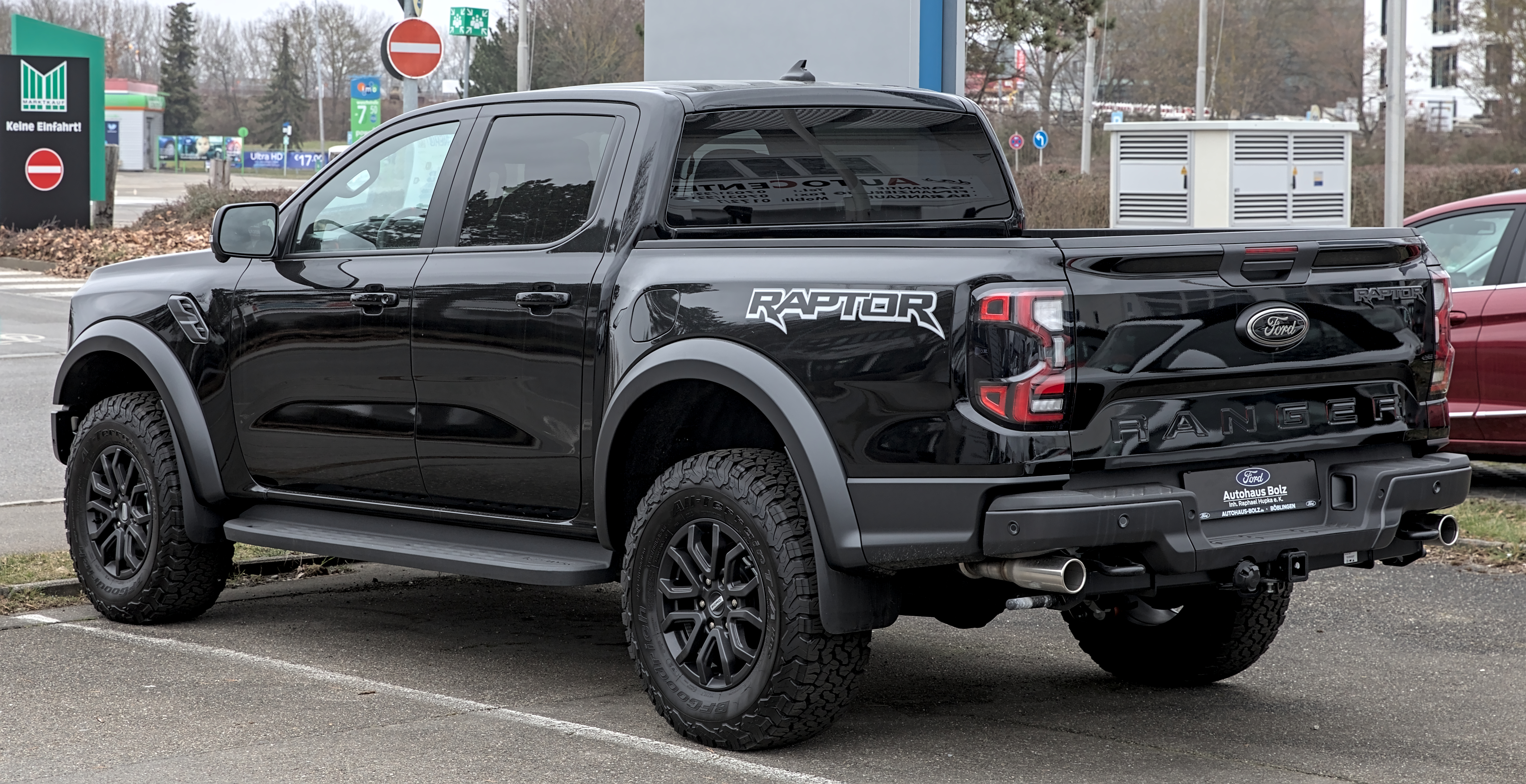
Ford Raptor
The Ford Raptor is a super capable off-road truck. It’s great for trails, but in a downtown area with tight streets and lots of obstacles, it can feel like overkill.
The hosts are talking about how companies improve after they admit they messed up. It’s basically the first step before they change what they’re doing.
A Range Rover cabriolet would be a fancy Range Rover with the roof down. They’re comparing it to a more affordable SUV like the Xterra to see what you’d pick.
A cabriolet is an open-top car with a power-operated soft top (as opposed to a fixed roof). In the context of a GT3, it’s a notable packaging and audience shift: Porsche is betting that customers want the look and experience of open-air driving more than strict track practicality.
The Porsche 911 GT3 is a special 911 meant to feel more like a track car than a normal 911. Here, the big twist is Porsche making a cabriolet (open-top) version, even though most GT3s aren’t actually driven on track.
A markup is the price increase above the manufacturer’s suggested price, often driven by limited supply and high demand. The hosts suggest the GT3 cabriolet could command a markup because it’s a desirable, scarce Porsche variant.
The Corvette is a Chevrolet sports car known for performance. The hosts are saying some owners focus more on showing off details online than actually driving the car.
“Cars and coffee” is a casual car meet where people show up with their cars and hang out. The hosts are using it to point out that some communities shift toward looking and showing rather than actually driving.
Instead of talking about how the car drives, some people focus on the exact options and details. The goal becomes showing off who you are in the car world, not just enjoying the drive.
They’re saying Porsche used to be seen mainly as a car you drive and enjoy. Now, some people talk more about the exact interior and options—more about the car’s “look” than how it drives.
Rolex makes very expensive luxury watches. In this conversation, it’s being used as an example of how car communities sometimes show off with other pricey hobbies.
An authorized dealer is an official store that’s allowed to sell a brand’s products. The hosts are saying some people use those relationships as proof they’re “in the club.”
This means more of the car’s features are controlled by software. Instead of everything being fixed at the factory, the car can gain improvements through updates and connected services.
Refreshing “80% of its North American lineup by volume” means Ford plans to replace or significantly update most of the cars that make up the majority of sales in that region. It’s a strategy to keep products current as regulations, customer preferences, and technology (like electrification) change.
A platform is the car’s main “building system.” If Ford uses a universal platform, it can make different models more efficiently and potentially share parts and technology across them.
BlueCruise is Ford’s system that can help drive the car in certain situations. It doesn’t mean the car drives itself everywhere—your attention is still required.
The hosts reference the “new F-150 generation” coming in 2029, implying a major redesign cycle for Ford’s best-selling truck. New generations typically bring updated platforms, powertrains (including hybrids), and software features.
A recall is when a manufacturer has to fix a problem in cars already sold. The hosts are saying they’d rather hear about fewer problems than marketing announcements.
This is a hybrid where a small engine acts like a backup generator. When the battery gets low, it helps keep the car going instead of leaving you stranded.
A traditional hybrid uses both a gas engine and an electric motor. The electric part helps with acceleration and braking, and the battery gets recharged along the way.
Suspension setup means the car’s ride/handling parts working together, like shocks and springs. If it was never released, it likely never became an actual option you could buy, so it’s more of a behind-the-scenes engineering story.
The Lexus LS 400 is a luxury sedan that was famous for being smooth and well-built. Here, it’s special because one (or a couple) were modified with a very unusual suspension system from Bose.
Bose is famous for speakers and audio, but they also worked on an experimental suspension system. Instead of just relying on springs and shocks, it uses electronics to actively help control how the wheels move.
A linear electromagnetic motor is like a motor that moves in a straight line using magnets. In this suspension idea, it helps push or pull the suspension to keep the ride steadier over bumps.
They’re saying the system can actively lift the car to clear obstacles. That’s different from normal suspension, which mainly absorbs bumps instead of actively jumping.
Quattro refers to Audi’s all-wheel-drive system. It helps the car grip the road better, and in this story it’s what caught their attention before they spotted the Lexus.
The Mazda 626 is a mid-size sedan/coupe that was sold for many years and is now relatively rare in many markets. The host calls it a personal favorite, noting how uncommon it is to see one today.
Because the Bose electromagnetic components were removed, the car retained visible changes in the braking hardware. The host notes a specific difference in brake caliper placement relative to the rotor, which is a clue that the suspension conversion required packaging/fitment changes.
The brake caliper is the part that squeezes the brake pads against the spinning brake disc. They’re saying this prototype’s caliper ended up mounted differently after the Bose system was removed.
The segment claims the Bose electromagnetic suspension didn’t reach production because it was too heavy and too expensive. This is a common barrier for advanced active-suspension tech: added components increase mass and complexity, and the electronics/hardware cost can be prohibitive.
Concept
ultra comfortable driver seat for semi truckers
The host says the underlying technology found a later use in an ultra-comfortable driver seat for semi trucks. This is an example of how automotive R&D can “spin off” into other vehicle applications where ride comfort and vibration control are critical.
If one front corner is “sagging,” it means that side of the car is sitting lower than the other. That often happens when suspension parts wear out or break, and it can affect handling and tire wear.
EV means electric vehicle. They’re discussing whether making this car fully electric will be enough, or whether it should still include some kind of engine-based power.
GT-R is Nissan’s performance car badge. They’re saying the upcoming Skyline probably won’t be the same kind of gas-powered GT-R performance setup.
LIVE
What's going on everybody welcome to another hang here at clutch culture the number one automotive related podcast on planet earth
Haven't said that in a while the podcast has grown a lot
So if you're new to the show welcome to the number one automotive related podcast on planet earth
Nick I gotta bring up something that we didn't even talk about pre-show
You know, we'd have a little little banter back and forth
I had a video sent to me this debate never seems to end and I don't think it's gonna end in our comment sections when you go on your
You know educated rants about classic cars
I want to pull it out for you
But have you in any like have you seen anything at auctions or anything in markets particularly with classic cars
It has changed your mind one way or the other of their values
Well, you know, obviously you have pockets, right? You're seeing and we kind of said this coming out of Pebble Beach
It wasn't it was just a numbers thing you saw, you know, not truly vintage Ferraris
But Ferraris from the 90s early 2000 you saw, you know, maybe late 80s. You saw those pick-up steam
Gated manuals going crazy
You know, I know a lot of guys are jumping in
I'll be interested to see what happens with some of those JDM cars because so many so many of them were modified or
You know used for drifting or built into drift cars
I think, you know, you're starting to see some guys on YouTube dive into buying those
I'm interested in that JDM market. They're not cars. I want to own they weren't really the things that I was interested in
I'm interested to see what those do because I obviously, you know, you see, you know, Supra and those things
But it's hard to find original, you know, do I see anything interesting? I think you just still see momentum around certain days
I saw a mark for Supra this morning dropping the kids off at school in a blue color that I never see and I'm like, oh that is
But then I think it looks stock
But then I think of you and I'm like, well, that can't be that enjoyable stock, you know
I was thinking it's not a great car stock
But like everybody that's into those cars. No, I mean you can you can put a lot of little changes in it all of a sudden
It becomes exciting
I'm very interested as we've seen the economy slip book
dealers are now
Dealer principals CFOs controllers of big dealership groups
They are going on podcasts all of a sudden really and starting to talk about the pressures
They're under and and the tide has changed against them. We've we've we've discussed car maxes struggles and those types of things
I think it's one of the most unique times in my lifetime for the dealer and
Manufacturing world because you have a problem and I heard one guy say this and this is something people probably don't know about
Especially in the dealer network. Is it basically for five years five six years now. They haven't really done a whole lot of lease deals
Mm-hmm, right. I mean that lease deals used to be every brand all different types every commercial was a lease deal every five minutes
Yeah, and so but the thing is lease deals turn into used inventory
Mm-hmm, and so the used inventory is not really there
Because they don't have all these lease trade ends and this guy's walking through like we may have made a real mistake
Not having a bunch of leased, you know leases go out the last six years
And it was a fascinating conversation to listen to he was a he's a big dealer principle. He goes look. I'm not complaining
I'm just telling you that you know, we basically punted on leasing for the last five years
That's really interesting
You say that and I hadn't really thought about it because as somebody that doesn't really lease cars
But I would notice those being way less, you know, especially on TV and even radio
Did you was their conclusion as to why they punted on it for the last well?
They didn't need to right because they didn't lease deals usually come from oversupply
They really haven't been in an oversupplied market, you know, oh, that makes sense over there
Yeah during during that five years
So now as they're coming out these things are piling up
Are they reacting quick enough with the manufacturer dealer relationship to go? Hey, we got to get back to leasing cars
Well, that's it all seems easy
But if you haven't done something on a very very very high level for five to six years, you know
There's a lot of internal things to kind of work out
It was an interesting conversation again. That's not my world every day
Yeah, but this is what I kind of say to to a lot of consumers
Those conversations should be interesting to you because what you get is you get a perspective
And don't look at it like why I hate manufacturers and I hate dealers
It's like well, they also can paint a picture of why the used car market has not have enough supply
A lot of it comes from and in my estimation and listening to these people
Is that a lot of used cars that people wanted to buy sort of on the higher level were two year three year lease turn-ins and
There is none, you know considering
The levels we used to be at right so I know people still lease cars, but you all have to remember
We're talking about
Millions of cars used to be leased and now let's say a couple hundred thousand get leased. That's a huge drop
I want to come back and play this video real quick because it's funny enough
There's somebody in leadership that left Hyundai that would actually kind of piggyback off what you just talked about
But I want you to see this video they sent to me
I think listener Dean sent it to me so shout out to our listeners that send stuff over
I'm not sure how many of you agree with this, but all these older cars and there's tons of them here
Do not interest me at all. They're nice
But I couldn't tell you if that's worth 10,000 50,000 60,000
This looks cool. I guess
This GTI trans out into 427 Corvette's nice all this other stuff
You're seeing a mass liquidation of older cars by older people or their kids as they get older and
The kids have no interest in these cars
So it's not so really I've seen it's almost like we started saying that in 2020 thousands cars going crazy
These older car are getting a lot cheaper
So if you want these older cars, I encourage you to buy them by they're pretty cheap here
But I do think they'll be going down with each passing year man
That sounds verbatim pretty similar to some of our podcasts. Yeah, and it's just
It's the it's the cyclical nature of cars, right? They're you know, if you look at your dad's generation my dad's generation
They weren't trying to buy 40s and 50s. Yeah
You know, they just weren't and those fell like a rock and now 60s and 70s are going to get hit
Uh, I actually think it's happening a bit faster than I thought because you know, some of these people
My parents generation, you know, they're somewhere between 62 and 66
And they're already starting liquidation, you know with life expectancy stores still being at 75 76 77
That's a little surprising. You thought you'd have a little bit more stable next, you know, five to seven years looks like that's not happening
uh also
I think you're seeing mass liquidation because of fears in the economy. Yeah
Also, I was gonna say maybe you can comment on uh, everybody right now leave a comment
Maybe about your parents or this older generation. They also seem a little disinterested just in general
They seem very disinterested with a lot of what's going on. Just yeah, they seem very disconnected. It's yeah, just probably
It's probably a little different than you know
What you remember as your grandparents age. Yes, and you're like, hey, they're still out
They're watching the kids are over at the house. They're doing that's just not this generation. It's not at all
It's really no, it's like if they if they see your kids a couple times a year. They're good
And even then and even then that that's that's a little
And I'm not saying this as like an indictment. This is just the generation. It is what it is. Yeah, they're absolutely
liquidating these cars
Faster than I think anybody thought they would because you would think from sort of like 63 to 70 years old
They would have wanted to drive these cars a little more
And it seems like by the time they hit 65. They're like, yeah, I'm done with it. Yeah. It's like, well, wait a minute
I mean it came all this way. I was gonna get it from you in like five years
But if you want to get rid of it now, I'm not ready to take it off your hands from you
I don't have the space for and by the way five years from now
I kind of thought you'd be out of it a little bit more and I would just sell it
But if we're gonna do it, let's do it now
Yeah, but I think the economy also drives it man when you start to have it
We've said this for the last two years basically
When there's instability
In the market, it doesn't matter that the stock market is still up. You have, you know gas and oil and all this bad news out there
If somebody looks in their garage and they're 66 years old and they go, I don't really care that much about it
I can get a little bit of cash
You know put it under the mattress or whatever they're going to do
There's there's probably part of that that's driving this a little quicker. I mean this this stuff is
Uh and people have to remember the special stuff from the 60s and 70s will always be special
95 98 99 percent whatever you want to say is not special
And those are going to drop like a rock because that's what happened to the 40s and 50s cars
Yes, let us know in the comments now do your parents hate you and your grand and their grandkids
Let us know right now in the comments and make for a great conversation
But before we get to like the big kind of newsmaker of the week or at least of the last couple of days
I will say the guest show is out now. We've been talking about it for a little while
This is kind of a pet project of mine where I can't I don't want to I don't want to guarantee you every friday
Although it is going to be every friday for a while because I have some episodes banked
We just want to bring all of you people that love the show an extra piece of content
For all the support that you've been giving us over the last year and a half a variety of guests
The first one a friend of ours now, um andrew from metrovec. He's a vp of operations
I've got somebody who runs a big graphic shop. I got somebody who's going to be doing the the uh
A suspension work on my raptor
Another big og youtuber from the the car world. I got a lot of cool guests and uh,
Nick was on board with the idea when the year started and this is all brought to you by hyper clean
So, you know, don't blush. I want to just let everybody know and this isn't even like it was my idea
I was like nick we got to put all of these products that are awesome into a kit
Which is basically the complete detail kit, which is what we're calling it
And I have a video of the raptor getting detailed
You'll see it in the intro to the episode with andrew
But do you want to give anybody any kind of insight on on this complete detail kit?
I know it's my favorite product, but it's kind of the staple of the hyper clean brand
Yeah, this is this is what if you guys are just trying to get into keeping your car looking good
We've just kind of put everything in there to make it look simple
Uh, you know, you got rob's raptor there as some of the photos and
Uh, it's just something we wanted to put together for everybody. Look. I listened to uh the andrew episode this morning
The other thing is guys, you know, we got to support these people making stuff here. Yeah, you know, we
It doesn't seem like a big deal. It is a big deal though. They've kept that in new jersey in the family
I've been using the stuff at my shop. I'm blown away about the quality
Uh, I was I was using it over the last couple days here in the shop filming some stuff
And I just I think it's one of those things
Our true belief on this podcast and and and obviously with with me being an owner in a in a manufacturing facility here in the us
We got to start
Pumping up these things that are made here for a variety of reasons
But when you talk about something that's been family owned for as long as metro back, I think that's pretty cool
Dude, 1939 is crazy. Imagine living in 1939 starting a business with 50 dollars that your family member gave you
That's nuts. What and to be and to still be around still be doing a you know, old school assembly lines and
Stamping your your metals in your own factory. It's awesome, man
I love I love seeing stuff like that. And if anybody's got companies
Send the dm. You know, you got american made stuff
It's it's time to start pumping that stuff up put our money where our mouth is a little bit
Yeah, class culture podcast at dmail.com for the general inquiry stories or comments
And then obviously clutch club if you want to join the discord which we're up to uh, just I think under maybe 100 members or so
In there, which is very cool
Um, all right not made in america
But still really cool of all the things that nissan has talked about this week
Has any of them really perked your ears with genuine interest?
Xterra Xterra. I mean they need this was the
Probably one of the fj cruiser and xterra being canceled when they were
Were probably two of the worst decisions
At the time because overlanding just went nuts right after they canceled. This is so i'm so
They they announced xterra, but for some reason didn't have it
Yeah, no
in true
manufacturers modern-day manufacturers. Yeah
It's like we're out Bronco and forerunner, but we're not going to show it to you. Yeah, we're going to show you this looks like night rider grill
Which I like don't get me wrong. I love night ride. I do love night rider
Yeah, man. I'm excited. I think
Anytime that that you see a manufacturer that seems like they're getting back on track
Who knows if it all plays out this way and quality control and we have a lot of worries
nissan and infinity
seemed to me
They're making the right announcements and the right moves. This has to play out over the next five to seven years
It's not going to be known in the next two months
They seem to be making
The right changes. Yeah, and I would need to see that. Well. Yeah, because otherwise they're just not going to survive, right?
We talked about the conversations they had with what was it mitzvah bishi and honda last year
And those kind of all fizzled out and then that whole conversation just fizzled out and we everyone stopped talking about it
Didn't make any news headlines
But now all of a sudden like here's another one for instance nissan's going all in on off-road SUVs teasing a blurry concept
So outside of the exterra they're talking about and we'll get into the other one
Which is a sports line now an off-road line
They like I would love to be a fly on the wall for the last like six seven months where they were just like, okay
It doesn't look like we're going to merge with anybody. We really just need to turn the ship around. What do we do?
Who's got ideas? Yeah, and and I I heard an infinity conversation where they basically
Were saying why infinity went off track and it's because they basically tried to make infinity its own company
Didn't share anything
Largely with nissan and so now they're going to go back to a more streamlined process where there's going to be these nissan versions
They're going to share some stuff into the infinity line
I kind of hope that drives the price down. I was having this conversation with somebody here this week
When all this stuff started to break
Just imagine
If you're sitting at infinity and you had a hell of a run in the 90s early 2000s
It was really, you know, good stuff, you know, probably all the way up to what 2010 ish. Yeah
You've had a real bad 15 year run here
The crazy part to me is I think there's actually
And I don't know that they could drive price down to this level
But if you start at that q80 or or they're top in suv
The first thing we all said is you guys can't sell 125,000 suv. Yeah, but if they could find a way to make that suv
$95,000 90 grand
They would start stealing sales
Did you see what ceo of nissan america said about the price of the xdera, huh sub 40,000
No, yes, that would be unbelievable. Yes. So the one what I just pulled up was car and driver
Let me just pull up real quick road and track actually had
And this was straight from the horse's mouth kind of thing
Let's see. This is it right here
Start under $40,000 when it returns executive reveals
So
That's good news
That's huge you kind of hit the nail on the head without even you know mentioning it to you
But yeah, um
Look at that. Yeah
Average transaction price in the us is $48,000 and they say it's not sustainable
Look, that's your winning formula right there
They are seeing things and and seeing so many of these dealers speak out
I can only imagine the last 12 months
Behind the scenes all of these companies all these big dealer principles go
Everyone's tapped
Things are going to fall off a cliff. You better start going to the downside which we've kind of
I mean, it's not rocket science. We kind of said somebody's going to have to make the move to the downside
If it's nissan you could see a reinvigorated brand a lot sooner than seven years from now
So it's interesting to what's in christian. Yeah christian muner
Sorry if I got that wrong
But um and it's funny because you know as he's saying in the interview prices starting under 40,000 doesn't mean that that's necessarily what you're
Going to drive the extra off the lot for you know option streams could push the price up several thousand dollars
But I think if you give the average american looking for this size of scb with these capabilities
An option to just get the thing they want with you know one or two things
They could be out of there under 45. I don't see why not
Yep, and and it says the toyota forerunner starts at 43,000. We all know they're not driving off the lot. Nope
Mainly under 50
So if you could get your nissan to drive off the lot at the toyota forerunner starting price
You could steal some sales here if it's interesting if it's a good platform all that stuff's yet to be seen
We got to see this play out. We got to see it in production. We got to get out of the concept world
Which they're not even showing us the concept at this point, but
I'm very interested in some of the things they're doing look. They're bringing the juke back. They're bringing
Skyline's coming back. Yeah, skyline's coming back is what I read at the beginning of the week and then about mid week
I saw and and this is funny when it's the same brand but executives from the different
Brands kind of say conflicting things. So the infinity exact. I believe said it was going to come back as an infinity
not as a nissan skyline well then
Under what I heard infinity say is that if it doesn't
Share a lot of things with nissan. We're kind of out of that world now
So it would make sense that a nissan's coming back of some sort. Yeah. Yeah, it does make sense
Uh, I don't I didn't have that particular one with the comments from the infinity
But even then infinity is another brand that hey, yeah, like bring us something that's sporty but luxurious
That's with that affordable price like that used to be their bread and butter
Yep, and you do right now. You can't go and compete at the top end price wise if you're infinity
It's not going to work. It doesn't matter how much you think it might work
We we know you're not going to be seen as lexus right lexus has kind of done things the right way for 20 25 years
You've had a 15 year kind of historically bad run here. You need to move to the downside
And you know get things back in line try to make some some money by by using cross platforms here across multiple brands
I think it could be really cool if nissan gets back on track
I mean
And there's another story from auto blog nissan is cutting 11 models as it tries to turn itself around
So I didn't go through all of this
It's almost that's exactly what I said on the turnaround plan before they announced the turnaround
Yeah, because we went through all the smaller cars right like uh six months ago or so that they had already
Well, I said if you okay keep the nissan rogue have three trims go to market
Yeah, and they're going to have a hybrid rogue now. I believe or is another variation of well the juke's going to be all
EV isn't it?
I believe so actually and it's going to share it's going to share with the
The leaf basically yeah, so announces the nissan skyline revealed on an all-new juke ev
27 hybrid row yep, and then tease the exterior return
Um
It intends to reduce it from 56 models to 45 still seems like a lot
Yeah, it should be 56 cut in half. Yeah, right 28. It's crazy that after cutting 11 stuff 45
Yeah, that seems like a problem
Slowly, you know, they're making the right move zone. So and and so if for everybody not watching they basically have this
Uh internal strategy slash plan where they're going to base everything where it can start to share a lot more
I think that's what their announcement really is is we're going to start to streamline
I mean the most famous one of this is gm. I mean everything gm builds like a park's been
Pretty much car has been for a long time. Not that that's always successful for them
But uh, this is what nissan had to do. I kind of like your theory. They realized. Hey, nobody's coming to save us
So we better get in gear. Yeah, we really need to start throwing stuff against the wall
Oh the sylvia another one that they're going to revive which is pretty cool
It'll probably be an ev but I mean it's a step in the right direction
I agree with you
I agree with you
Um, oh and I think that go ahead. I think this is a really really cool
Thing to see we got to see it play out. Let's all say that for a million time
We got to make sure they do this right
But what they're saying seems like a company that's kind of gotten its bearings back
And is starting to make some very common sense decisions
You know, we see that out of a car brand. It's a lot more rare than you think
I mean jaguar proves that in spades boy. Are they going to be around in five years?
Buddy they they make it sound like they're going full force. I don't know if everybody's just trying to keep their job
They're like, yeah, I've been looking around tough job markets. So let's just keep acting like we got something special here
Jaguar when you have a name, I guess you can you know really hold out for a while
Like we always say Aston Martin's still around most of you don't buy them
I was gonna say real quick on the Nissan thing to get your opinion
You with these different like genres of cars the off-road the sport even a luxury with infinity or even within you know
Nissan some of it
It feels like they have to
Conquer a younger generation who isn't already inherently into the sports car because it seems like as we get older
A lot of people not everyone but they get into larger family SUVs or off-roaders or even trucks
And it
They don't have that right now like there's not a ton of the younger kids already wanting a z or wanting a skyline or wanting a
Z kind of proves that they just it's a good platform
It should be more popular super kind of you know when it was reintroduced should have been a little bit
I mean gr 86 you have all these kinds of the brz should be more popular than it is
Uh, so to release new cars and have to go out there and conquer a demographic that's not already willing to put out
Yeah, and I think that just becomes the social media game
Right, you know how how good are they at you know going out and starting to create buzz
internally
Partnering with the right influencers. I think is is probably something that a company like Nissan is gonna have to get right
I don't know that they will car fluid as we call them
Our email is clutch culture podcast
Imagine if we were the first car fluency that Nissan worked with be like, you know what guys each one of you're getting the next
era
All right, Nick's get Nick gets the base one because he loves base stuff. I'll get the fully loaded one
What do they call them back in there? Was it extra pro? It was like a pro, wasn't it? It was still an extra pro something
I mean, would you be down for that? Would you peruse vegas?
So Nissan go ahead and send us an email. We'll be your car fluencers. Don't worry. Yeah
Look if it's good, it's good. It is, you know, this is the same exact thing
We would say about the boulder concept from Hyundai
It's the same thing you would say about anytime you change the platform and go to a new platform with forerunner
I mean
There's just companies that haven't been doing things well for a long time multiple brands and then there's these other brands you go
Yeah, man, they're just riding the wave
I mean forerunner still rides the wave of doing it well for 10 20 30 years now
Right and and X Terra could have been that so if they rectify it now
And we kind of said this about Camaro last week
I just hope this stuff isn't a five-year commitment. I hope it's like
No matter what happens we're committed to this long term
And we're gonna get it right and we're gonna build a following
And that's what you always have to be concerned about all of us listening is
I kind of like when things are announced like hey, okay
You're trying something but trying something in the car business is not five years
Also, I don't think they have the runway to just give something a five-year like flashing the pan and see what else happens after that
Because after that there might not be anything left to try with exactly
Yeah, exactly and Nissan infinity was brushing up against that. Yeah, I mean basically
What six months ago we're talking about bankruptcy
So I hope that all of this internal reorganization and getting things back to where they need to be
Is sort of part of a 10 to 15 year plan and not like well when things don't work in 24 months
We're just going to start clipping things. I don't I hope we don't see that. Yeah, that's not going to pan out very well
No, um, what do you think?
What was the the the rebate you would get when you go from one manufacturer to another?
Wasn't it a conquest something right? I forget what oh man
There was something they just need to run a promotion like look
We're trying to win over all the Bronco and all the trd Toyota fans
Whatever this conquest rebate you're gonna get we're gonna make it worth your all if you just come by when he's ex tears
Love it. Love it. Look at you call rob. Please call me, you know, yeah
You know, we're just here. We're here to help rob and the raptor will pick up your phone call anytime
Anytime do you have something better on gas because I'm really looking for that right now brother
brother
Hey, hey, uh next time I go to Houston. Definitely not taking the raptor. How about that?
I'm not just kidding. Uh, although god dammit, man
I was I was in downtown and I was like this is not the truck to be driving around these little streets of downtown Houston
Yes, that's very true. I'm like, I'm gonna catch one of these light poles
Which why do we have so many light poles on the sidewalk guys like we can't figure out
Like those a lot of them in Houston are still those old yellow lights. So really doesn't light anything up
Oh, good time. Some of us have modernized and others are just not which is, you know
People would be like, well, you guys like old stuff. Like, yeah, but when it makes sense like old infrastructure doesn't make sense
Old cars do make sense 42 light poles that don't light up the street. That's not good technology
All right, last comment on Nissan one of their executives, which is I think the main guy we've talked about him
Ivan like the ceo not like america like in america north or whatever. He said we made a lot of mistakes
It's just that was his love it. Love it. Good. I mean, that's
Part of what I think happens that these auto manufacturers not just Nissan
I think you can see it, you know with the u.s manufacturers and and manufacturers globally
The first step is admitting you got some things wrong and not a lot of them do it
A lot of them do it. So I I'm positive when somebody goes, ah, we screwed some stuff up
Let's take a drive to the other side of the world. Um, so nick loves cabralese, you know, we did the whole thing on the car
On nick from cars and bids
We did the whole thing on that cab, which again, I stand by what I said
I don't know why you don't have one. Do we need how do we need a sort?
Do we if you source you one at the right price, would you buy it?
By the way, that's why we're talking to Nissan now Nissan if you have a mint condition that you would love me to drive around and represent
Here's the thing that rano cabriolet better yet better yet
Would you take a new estera or a range Rover cabriolet if that those are your options
Range Rover cabriolet. Come on. Really?
Yeah, cabriolet right there, baby cabriolet
He says it was such excitement. No, we're talking about Porsches though the 20 27 9 11 gt 3 sc first look uh this
I could see you driving this at 65
This is Porsche saying we know most gt 3s never see the track so we might as well put a convertible on it
Yikes clip it chat clip it for me because this is going to be the first clip to go viral from this episode
I think it's cool that it's a manual, but uh the jokes were endless this week
I think you saw a lot of channels a lot of instagram tick tock making fun of the gt 3 cabriolet owner
I mean
Porsche knows its audience for these types of cars and they're going to sell a lot of them
If they choose to and they're going to
Probably have a markup on them
If I had to take a guess because it says gt 3 on it. Are these coolers in the back for tiger's neuters back there?
You take you take her fishing and you just go ahead and load her up. Yeah, I
I had a lot of fun with the with the jokes. I saw flying on all different types of channels
Sorry, I can't there's there's a guy out there that's making these ai videos. What's his name like angels crest or something
But I gotta tell you he's he is the funniest dude and it's all ai so it's not him personally. He makes the funniest videos
Look
I I couldn't get enough of the jokes. I mean starts at 275, which most of them are going to transact into threes
That's pretty insane to think about
Uh, I saw a lot of people talking about
You know
The 9 11 the 9 11 cabriolet is already a great car
Where does this fit in it just shows you they're trying to capitalize on the gt 3. Yeah, of course
I mean, let's just all be up front. That's exactly what this is
But did I love the jokes all week? Absolutely. I thought it was fantastic
Now what are the people on the receiving end of those like are they also do they have enough self-awareness to be like?
Yeah, you know, you're right. No
The least self-aware people
In cars right now are
Core vet owners and Porsche owners. They're the least self-aware
You know, we're already down this rabbit hole
Why do you think they're the right now because it seems like it wasn't always like that? Obviously never it was
Very recent. Yeah, very internet thing that made that happen. Yeah, it's
I think
When you get away from
Driving the car
Which I think is what?
You know kind of happens a lot in the core vet community you get away from driving the car
You're out of cars and coffee you got the billboards next to your car
I just think especially around, you know gt 3 or Porsche as a whole they just got away from
The driving of the car, you know, what stitching do I have and do I have this special thing and what about my door pulls and
You know, it's it just it just took a transformation that's just fun to joke about. I mean, that's just what it is like
If you weren't around to see the transformation and you're sort of new into the car world
And you got into the car world because you like gt 3
You don't know what this used to be like. I mean Porsche was just the driver sports car for the for the euro mart and people just
Bragged about driving their car all the time and then it became like what color do you have in the interior?
And what spec did you get what I mean? It just kind of happened seemingly overnight
So if the new balances in the shorts are the Corvette, you know, uh outfit, what are the what's the costume for the current
Porsche Porsche. Oh, it's it's it's watch guy. It's a watch guy. Just oh, yeah
Because if you go to somebody and they're they're a Porsche guy, they're gonna also talk about watches
I mean almost exclusively they're going to talk about what watch they were as a guy that has watches likes the watch community
This is not a shot at them
It's
What Rolex do you have?
What what authorized dealer do you have a relationship with to get your watches? It's it's just
It's corny. You know what I mean? Just like the white new balances and jeans shorts. We all make a joke
It's the same thing in the Porsche community now
Uh
It's wild to watch man. It's such a great car
They do they do their car so well and so well engineered
that
Everyone that remembers what it used to be
Is saying the exact same thing that i'm saying right now that they can't believe where this all ended up
Well, it'll be fun to see when when we're like a thousand episodes into the show where that whole community is either
Either it's going to be torn to bits from the internet and jokes like this constantly
Or it's going to have some sort of like uh like a rebirth to just like, you know, land low being cool
You know being well, it's like, you know, uh that guy that has the ai account
That's always talking about where these guys go and eat for cars and coffee and I don't know that you need to send that account
I've never seen oh my god somebody put it in the comments because I really feel it's like
Angela's crest highway or at angel buddy
He just lights everyone on fire. Okay. It is hilarious. I love it if next into it
You know, it's a pretty good rabbit hole to go down
Oh, buddy, it's great
And I apologize
I'm not getting your name right because you deserve all the credit and we'll give it now
We'll for sure give you the exact we'll pull it up next week whenever we have the actual account
So good. I want to pull this up on the show. Uh, all right
We're gonna take another trip back over here to the americas. Uh, I'm gonna read you a phrase better yet
Did you hear about ford's new division that they announced? No, okay
So ford has launched a new division called the product creation and industrialization
So that's a mouthful which says it will deliver one of the most intensive product software and services in ford's history
So, yes, I couldn't be I could not be less interested with that announcement
Fantastic
You keep that look on your face
The new group will lead ford's plan to refresh 80% of its north american lineup by volume and 70% of its global lineup by volume
So this is kind of on the heels of what we talked about not too long about
I thought nico was about to fall out of his chair, buddy
Why is there this is an internal email once again ford is the king
of
Internal emails being an announcement
uh
I mean, you don't care about the universal eb platform that we talked about a couple of times
No, and they're no they're nobody listening to their new blue cruise improvements and uh the hybridization of everything in their lineup
The new f-150 generation coming in 2029
You know what I would be interested in if they told me their recalls were down 70%
Well, they're up. That's why we don't have an email. Yeah, that's what that'd be a see that would be an announcement
Otherwise details are sparse. What will we expect the next generation the niffle and 50?
Yeah, that was about 2029 if i'm not mistaken or 2030
Yeah, I thought that was interesting because I knew you'd love the fact that it was kind of a nothing burger on on that on their end
Yeah, let's let's announce that we just promoted becky to
You know, uh, you know top administrative assistant and uh in the in the I mean, it's like what is this stuff?
Okay, how about this? What about this? All right, the lightning is returning. All right of returning with a range extending
Extender hybrid setup. Uh, we expect traditional hybrid powertrains to continue and then let's hope it's 42,000 dollars. Well, that's what that's an announcement
That's where it's going to end up after they don't sell 42,000 dollars 80 thousand dollars. You didn't announce anything
You know what I mean? Like you everybody listening has to be seeing the same thing. It's like how is this an announcement?
It's like well Nissan can't have all the shine right like we got to say something
Yeah, so let's put out some corporate jargon that nobody cares about
Yeah, this is what they talked about during their uh, their zoom meeting or their Microsoft
the media arm of ford
has probably done
The worst job of understanding what an announcement is and what is just like something that you put out to like dealer only stuff
Like this seems like this should be like a dealer email. Yeah. Hey, we wanted to let you know what's coming
Instead they like announce it to people like us and the people listening and you go what?
Who cares how do I make a viral clip out of this? Yeah, you're making software with this. You're making software work on the motors, please
Yeah, like let's just I don't know. Let's get back to making cars. Let's just make cars better making better
Do do better less recalls
Interesting stuff like this isn't it man. This is this is this is bad pr once again. Yeah, you heard nick said it make cars great again
Anyway, so moving on
We got hats being made right now. We got hats being made right now. Exactly
Uh, funny you say do better go back to making better that whole phrase triggered something I had up here
We talk about I mean the LS 400 top top of the list, right? Yeah, are you I was unfamiliar
So I'll just go ahead and not that I don't want to you know, throw this out
You would just like I'm bamboozling you there was an LS 400 suspension setup
That was never released or put into production. Are you familiar with this? I just okay, bro
This was I I kind of felt it's one of those things where like people are like
It's uh, it's sad when so and so knows more ball than you kind of thing
Because this is a boyfriend girlfriend and the girlfriend picked up on this and this was sent to me by think listener joe
So thank you for sending this over but check this out
This is by far the craziest car that I've ever just randomly spotted while out driving
This is one of two lexus LS 400 that had been fitted with Bose electromagnetic suspension
Some of you guys might recognize this famous comparison video of the stock LS 400 versus the one fitted with the Bose electromagnetic suspension
Basically, there was a linear electromagnetic motor fitted at each wheel that allowed the wheels to move essentially separately from the body
Because the motors would counteract whatever force was being put on the suspension
The Bose engineers even added this fun party trick where the car could literally jump over obstacles
In the night, I know that this lexus I found was in fact the famous car
Well, you can see the controls here including the jump switch with a jump switch right there
How there's this not what aftermarket screen installed in the glove
Look another glove box screen like modern box area, which I couldn't find a video of online working
But I assume it was some sort of readout of the suspension's performance
And the funniest part of this all is that we only pulled over in the first place because my boyfriend noticed this outie quattro
Sitting there and then I noticed the lexus and realized what it was and there was also a t5 all-wheel drive manual s40
Which is a personal favorite and a mazza 626
I genuinely can't remember the last time I saw one of these now
I'm sure you're thinking Annie show us the Bose suspension
But unfortunately I read online that as a term of sale the Bose electromagnetic components had to be removed
You can still see the remnants of them being there such as the modified brakes
Where the caliper is now sitting on top of the rotor as opposed to in front on the normal ls 400
The suspension never made it into a production car as it was deemed too heavy and too expensive
But the tech did go towards making an ultra comfortable driver seat for semi truckers pretty crazy, right?
That's awesome. That is amazing. Can you imagine if that car had been put in production with that suspension?
It would still be running today and it would be the car that they sell the most and then when one broke you'd never be able to fix it
That'd be a hundred percent. See we told you it's too expensive. That's too expensive. Hey, you have your left front is sagging
It's going to be 43 grand. It's going to be two more ls force 400s to fix buddy
That is nuts
And so you see the cars today like the the china e v's that like jump over a potholes and stuff like they were doing this
With lexus in the 90s
It's so cool, man. And by the way, shout out to to to that girl or that woman there. That is unbelievable
To put all that information into a video. I that is awesome
Shout out annie automotive annie. Uh, the first comment though was imagine your girl has more ball knowledge than you
Hey, internet comments are awesome. I know and she was like now we're just hey, she had more ball ball knowledge than us
Yeah, for sure. Yeah, good for her. She's like we like different things
Yeah, that's awesome, man. Very supportive of her
Um, I did pull up we talked about earlier at the top of the show
But did you see the the kind of like skyline teaser photos?
I saw a few of them. Okay. This is these are the only ones I saw. I just wanted to pull up since we did talk about it
Um, you know, it's got the skyline. It's kind of reminds me of the z like the z font
Yeah, good call didn't get a whole bunch of it. Um, it's going to be e v to my knowledge
So it's not going to be a gtr skyline. I just read that it was going to be a skyline
But again step in the right direction
Yeah, let's hope that they
Have an e v along with an engine. I think that's what we all can say
I don't know that that platform is going to do well just as a pure e v
I think it'll do okay if it has, you know, some some engine bits, you know and some trim models
So let's see what they do. I don't want anybody to misunderstand me. I'm not pumped that the juke is e v
Yeah, I'm just saying Nissan has a decade long turnaround
You know initiative here like it's going to be 10 years. Let's see what comes out of it. What settles in
I hope the skyline is not all e v. I don't I don't think that's the right platform. Yeah, um
Is there any Nissan because I know, you know, not the biggest JDM fan per se
But of that lineup of the old cars like did you care for a styling of uh,
Sylvia 100z. Oh 300z. That's right. Oh, that was a good one. That was pop up headlights, right?
Yeah, teatops. Yeah, that's that was great. I mean that that's kind of where
For me personally, it kind of ended, you know, I like those cars like I like the vr4
Turbo 3000 gt like I thought that was a cool car
I think all the stuff is cool is just not stuff that that you know, even just a mark for Supra
I understand that they're cool. Just wasn't something I was totally into as like trying to buy one, right?
But yeah, I mean there's there's a lot of those cars
I mean you go back to the the Acura nsx and those types of things like dude those those were awesome
All right, so I'm glad that I just wish there was just more original ones
Right all this stuff so we could see them kind of be driven around in the original form
To speak of nsx. Did you have any time with the new the more modern generation of the nsx? Yeah
Yeah, I had a couple people that bought them. I got to drive them around
I just
This is where you kind of go back to Acura's whole problem is it was sort of the infinities whole problem
I get that it was a great car, but the Acura nsx is not a $200,000 platform
You know when you're bringing it out of the blue. That's the mistake. I think they made
Now I can still say it was a great platform
I just don't think they had the name for people to buy a $200,000 platform, right?
Dang, was it 200 something when it came out? I think it was like 180 something if I had to guess
Uh real quick from the discord mark says regarding the Camaro the four doors will be no bueno
I think a lot of people said that also can't wait to try the bear ice cream
I hope I have it up here or if I have it
Yeah, get the honey one don't don't get any other one only only get the honey dog
Don't fuck with the the cooking cream and the cookie dough. Don't fuck with that the honey honey only
That fucking ranch get that ranch out it's blue cheese with wings and go fuck your mother
God that was a classic that was oh so good. Hey any updates on uh, your sauna. I'm really curious
Yeah, it's supposed to be shipping here in like a week. Okay, next full blown optimization mode right now, which I really appreciate
Absolutely using those hsa funds
How are you getting your movement these days? Are you doing a lot of like still just work wise? Are you calis calisthenics?
You know, uh, I'm off weights. I get we do get a lot of these questions
We do which is cool. Yeah, which is why I got to bring it up. Yeah. No, I'm I'm
full calisthenics nothing else
Uh, I get over a hundred push-ups a day, you know, I've been doing that going back to the beginning of 2025 so
I'm just trying to stay in my pocket rob. I'm just trying to stay in my pocket
Are you getting on the mat every now and then and then go on. Yeah, I probably shouldn't be doing this
Give up weights, but you're hopping on the mat every once in a while. Yeah, and it bites you. I mean you've been there
Yeah, do you tell me? Hey, not this shoulder not this knee. Yeah, not my neck. No leg locks. We're not we're not cranking ankles here
You know those kinds of things we're not doing, you know
I need to start on the knees. We're gonna start on the knees. I don't want to go for full blown takedowns
Hey, let me tell you something man
For everybody that's not in this world. There's a whole new generation
I think you're in training to like crank on someone's neck do a full arm. It's like bud
Every evening class is a fight. Yeah, stop watching the ufc. This isn't the ufc
But most schools have that they have competition classes like that way you can separate yourself from the uh, the
Yeah, I mean, we're going I think next weekend. We got a we got a belt graduation for my my five-year-old
Nice, you know, we're progressing. We're doing what we got to do sticking with it by choice and just so and just so we're clear
Belt graduations is to keep getting your money. I'm very well aware. Okay. I'm well aware of the game
Gracie's taking shots right now. Look, she's at she's at a gym full of killers, man
I mean, obviously being in vegas, it's not it's not hard and and with the people that that I I'm around
It's not hard to find a good gym. But yeah
That's awesome. Is she what last question? Uh, is she doing it by like like not choice, but she enjoyed actually
We dropped some classes because she'd rather do it. Nice. That'll change, you know, month to month. I'm sure
but yeah, this is uh for everybody that asked me this is a
non choice of of my kids
You can do anything else you want to do
I'm glad to pay for whatever else you want to do. But these are
It's a dangerous world out there. You're gonna have to learn to take somebody by the neck if things get out of control
You're gonna have to learn a double leg
One last time is like jiu-jitsu if I'm in a problem. I got a I got a nine in my asshole right now
Oh my god, I don't have no time for no jiu-jitsu dog
Um, we have a group in the discord that's like family haulers
And I'm trying to find one of the stories that I pulled up earlier Edmunds did like a long extensive
I think it was like nine or 12 of today's top family haulers
Because we get this question a lot actually
You only have so many options
I think in our opinion that you would actually choose from but could you suggest anything today to the family haulers that are looking for a new whip?
New new is gonna be tough
Right. I mean, this is kind of what a lot of people first of all big family haulers are real expensive
You know
But I think you got you know, I would be really looking at
Some used sequoias, you know with the with the v8 in them
I think those are still
Look, I know they are a little higher priced, but they're still kind of underappreciated
Look, if you can get a 200 series land cruiser, you're in that top echelon of buyer
I think that becomes a no-brainer
The gx that we own, you know, those are the kind of family haulers I'd recommend to people
I don't I mean, I love the new navigator, but you also have to realize
Ford is full of recalls
And I don't know how comfortable everybody is with you know, dealing with that
So this isn't a a laughing matter obviously, but my sister my younger sister sent me this video of people testing out their different third row functions
On you know, because of the most recent accident buddy, that's wild
I've been seeing that too. So the uconn was did you see the uconn one? It's quick and in a hurry too
Like it's not like a it's literally roll that thing up
They put a baby I put like a doll in there and they just ate that thing up
well
And let me real quick as you're thinking about it a lot of the comments were hey at some point
We really need to start keeping ourselves accountable of what we're leaving in these seats before and I agree and by the way, I agree with that
Yeah, I agree with the the self responsibility. We also
We've tried to make things so convenient
That in making getting the third row up and down as convenient as it is with these buttons
We've sort of put our trust in these auto manufacturers that they have it all figured out
And by the way, if you've listened to this podcast long enough, they do not have it figured out
There was nothing wrong with the old pull tab
You know, but it was more work. Yeah, you know jump seats, which I have in my lx
There was nothing wrong with them. Those are great. It's a little more work
And as we know for most
People in America, they don't want to do the work
So they made it more convenient. You probably don't want to leave anything back there that you care about
The only one thing I thought about is I'm kind of surprised. We don't hear more about like small dogs climbing back there
That's a good point somebody like putting the seat down. That's a really good point. I mean, I call them cats
I mean under a certain weight your dog is not a dog. It's a cat
But bro, I'll give you the opposite of a cat. I was so as I was in houston the last two days, um
I saw a guy in a dodge ram
Literally with it had to have been I mean the dog was half his size in his lap
All he's driving on 610 on 610
The dog's head was out the window like I'm like, dude, there's no way. What are we doing here?
Dude, I have a neighbor that has a great dane when you see those things in person. You can't believe that's real
No, they're dinosaurs if you just go
Man that thing is and by the way my dog my female is like 120 pounds
You know, I got I got a big dog
I got in my my my boy is you know, my my my male dog is what like maybe 75
You know 80 pounds my females big dog now imagine having that female in your lap while you're driving the lx down
That's crazy. I'm not I'm not doing I'm real
My dogs get in my vehicle to go to the vet and that's it and that's that's a wrap up
I mean, look we have we have parks and stuff near our house and so you can do stuff like that walk them there
but
Yeah, the the the dogs everywhere thing is is one of those things that's been very modern
In our lifetime. Hey, I'll make enemies real quick with my opinions on these people and their dogs everywhere
So I'll just leave it at that but it is I'm a soft this fight at a grocery store once probably probably with good reason
Dude had his dog sniffing in the meat section and one dude just went off
Just went off like I was like man, they're gonna throw hand pretty close to throwing hands
I saw the same thing with ladies. This lady was trying to bring her dog into the dentist
I'm like you gotta draw the line somewhere. Yes. It's it's the dentist. I don't want your dog's butthole
Well, I'm trying to get my teeth clean like right
She's dude. Yeah, no, I'm I'm kind of we would make a lot of enemies with the dog thing
Okay, good to know you're on the same page and you have dogs
Look, my dogs are never on furniture
Definitely not in the bed not on anything shoes on while they're inside. Yeah, like we're we're
I know we're dogs and I grew up, you know around hunting dogs and and
You know, there are certain dogs that I grew up with that had to live out
And you couldn't go like you couldn't have little kids back by their cages because they were true hunting dogs
Like they nobody goes back there unless they're going hunting like you don't go mess with these dogs like
But I
It's a cultural problem. It is. Yes. I've just not understanding the moment like you said
Uh, you're at the dentist
It's not a dog place. It's not it's it's just not a dog place
I don't really need to say much more than that. You're right. You're right. Let me uh, let me segue into a story
I write a story but also first with a question for you
When something happens and I almost know the answer but just for the listeners humor the listeners when something happens that you
Don't necessarily plan for in a day like let's say you're going somewhere
In either an accident traffic something makes you have to go to another area or even just a whole new place altogether
You didn't have in mind
Are you wanting to accept that and just say well, let's just see what the adventure holds for the day
Or do you really hold that in as a son of a bitch?
I guess it would depend on what I was trying to get to
All right, let's say you were picking up food for your for your crew and that's what that was the trip
And you had an idea of going this place in this area and then you had to go somewhere else to another area
Yeah, that would kind of suck because once I have my mind made up
Like hey, we're all going to eat at this place. We all love. Yeah now. I got to like, you know revamp everything
Yeah, it would kind of burn me a little. I'll be like damn. I really was looking forward to that carnation
so I was I was picking up food for one of the places I was going to and
Same thing or what I just explained couldn't go there accident the whole thing
I'm like, you know what I'll just try to support local somewhere else
Go to another place and I try to when this happens because it happens a lot especially in the cities
Like you don't always get to go where you want to go especially in houston
Yeah, it's always a cluster and uh, so I was like, all right, whatever. I'm just gonna
I'm gonna fucking george castanza or franka stanza like serenity now
Like I'm just gonna let the world take me where the world takes me
So I show up to this place to get barbecue that I'd been to it hadn't been maybe 10 years a long time
but supporting local so yay, and I saw this guy who immediately I knew who he was
And um, he was like the number one guy and still is number one painless repair. What is it?
PDR painless dim repair. Yes
uh chat shout out chat the dent dog and
He like we we caught up for like five minutes and on our way out as I got my to go food for everybody
You put a dent in his own car
Door dingdom right in the parking lot
He used to do a lot of his work out of one of the dealerships that I worked in the f and i office
In my early 20s and we caught up again when we got out because he was still driving the same
So again, shout out to chat. It was like a 2013
Uh tundra still this still 250
Not a dent to be seen not a dent to be no very clean nice little lift nice bumpers
He put a supercharger on our zone still rocking it with a supercharger after 10 15 years no issues
And then he loves I found out he actually likes cars
So I we exchanged numbers again
We actually had a convoy going from 10 years ago still in our phones
So I sent him the podcast link. He goes. I'd love to check it out
Now he's looking at getting like a Whipple f 150
He's like I kind of just want something that's still a truck to put my tools in but if I really want a haul ass
You know, I can so it was just like a fun
Sounds a very houston thing very houston thing and he's not mexican. He's white by the chat
Why his name's chat
Yeah, the mexican gt everyone loves the mexican gtr a single cab with a whipple on it like that's fantastic good for him
Man, that's awesome. Yeah, um, but that industry too by the way is a very fascinating interest
Yeah, it's a storm chaser industry. Yep. I mean if you want to make a lot of money in pdr
You're you're chasing hailstorms. Yeah, I mean that's
Those guys are on the road a lot
Know a lot of those guys shout out if you guys are listening
pdr is like roofing you chase the storms
Ah, that's a good point like roofing and also really good money because it's kind of endless depending on where you are
Like you can always have
Yeah, like well texas
oklahoma
Certain parts of like that central south
You know that do get lots of hail
You can stick there, but you got you know, uh few years ago
There was a big storm that went through colorado like I knew guys flying out of florida like
We're going to I mean so to make money in that world you can do a lot of dealer work locally
You know just on door dings and stuff like that
But you want to make the big board money you're you're chasing hailstorms
so and what reminded me of that because the next article is is uh
Reminiscent of the cars that he does a lot of work on but
Mercedes reveals the electric c-class cabin. Are you a c-class connoisseur?
And have you seen this yet? I'm even less interested
Fantastic, I love it
Check this out
That's that's bigger than the tv in most people's houses that I see these days. I'm not gonna lie
So can I zoom in on this yet? Can I zoom in? Let's go a little closer. There we go
If you're not watching on youtube, I thought this was ai and it probably is but this is what it's gonna look like
Why?
I don't know. You look like you got a really small pair of a cups on this side of the dash
And every and then you got this big all vent over here on the opposite side
I I just
And look at all the cheesy like
Like mid 2010 like uh
Faux kind of background with uh tablets. It's just I know this looks like it was like windows xp
That's dude. Good one. You know so windows vista windows vista
I just don't think this is what
I I've said it on this podcast probably too many times
I think this is all just a wow people
Hopping in the car to buy it
You know what I mean? Like this this would probably look really cool
To the average consumer
That hops in they got some type of test display they can put up at the dealership when you get in the car and
They'll wow you with the lights and the ambient ambiance. What is it ambiance ambiance?
Look at how busy that steering wheel looks still
They have had the busiest freaking steering wheel for years
This looks like san antonio with your two layers your upper and your lower level
Highway, what are we doing?
Uh better than a yoke though. I guess it's better than their yoke. No question. Uh
I I just think this isn't for people like us all you listeners. This isn't for you
This is this is to impress somebody who doesn't know what they're looking at with technology that they're never going to use
That's what this is
I am convinced if we're ever able to get one of these people on from these manufacturers
We're gonna be like dude, you have no idea how many we sell
Just because somebody gets in there and looks at this big screen
It'd be funny if there was executives are like look it's an uphill battle
Like I'm trying to say we don't need this and then there's just kind of outnumbered by those that think they show
Yeah, and the sales number show when we get you know, john and louise in here and and
They they see all the lighting and all the the bells. I mean it that looks like a vegas casino
That's it actually looks like you could watch a game
Play a game and drive the car that screen is so big. Well, you could you could divide it up into here?
You could watch the astros there you go banging on trash cans over here. You could play madden
So we're moving on to the next story and uh
Rocky that's rocky. That's usually what astros fans did. Well, it didn't actually happen. You know, we weren't wearing apple watches
That's not exactly that was boston by the way. That was the red sox. That was the red sox. All right get it straight
Who cares about the reds? Anyway, they're starting to fight with pittsburgh over here. Like what are you doing?
Look, aren't you're interested. You're talking about it. I'm well. Yeah, I'm talking about it disinterested though, but I am
I got an issue. I meant to bring this up earlier in the show because we were talking about uh executives and leadership
So hunday's us sales chief just abruptly left the company the article is so short. It's literally just two sentences
He has uh executive blah blah blah left. That's it
That usually means gotten a fight with somebody above him
I was gonna ask you like you got any insight to what possibly just leads somebody to you told somebody above him to f off
And they're like guess what you're gonna be doing next week finding a new gig
Hey, you just okay, you think that's cool. Go find a new job. Yeah, here's your severance package
Yeah, I think that sideline reporter with the whole vape label. Oh, yeah, dude. She's
Looking for something out there. I don't know if I told you this somebody very close to me was neighbors with rabble
No way. Yeah. Oh, yeah, and I mean real close to me
That group chat is wild
That group chat is wild. I can't imagine. Yeah, because I mean look rabble's a buck. I he's one of us
I got your back gotta stick together brother. Yeah, guys. I've seen that video. Look at all this brother brother brother
It's like right line of raptors like look at all this brother brother. Yeah. No, it's uh
Uh
That's a wild story and now more is coming out from other
sideline reporters that are just kind of piling on they're talking about who's the uh, who's the la coach
Oh, shan mcvay shan mcvay that handsome devil like apparently back in 2016 that was something going on 17
And yeah, brit mchenry, wasn't it dude? They're just throwing some mud at everybody. Yeah, well
We're all adults here. You know here at the clutch culture family. We're all adults
I know we have a kid that might be taking a nap. Let's hope he's already napping 57 minutes in yeah for sure
Uh sound asleep. Is anybody shocked by any of this are we surprised? Yeah
It's guys and chicks hanging out. What what do you think's going on guys and bros being dudes?
I mean like we say
Yeah, I mean
I know my people all you men out there. I know who you are
I know I know all you degenerates is what he said that those codeword for that buddy there
There's a reason why only fans makes like seven billion dollars a year like I mean, are we all shocked here?
Oh, yeah, well, I said we never talked about of course we wouldn't but yeah, I think the guy that created it died rent
Said suddenly something like no way is 43. I think he was like 43. I'll tell you the wild story
Okay, one of my clients here that you know who's like ultra famous
He has uh, he's so famous. He has security with them and they're down in miami two three years ago
And for anybody that hasn't been to miami
When you go to a nightclub, there's it's a talented venue
Miami
And they've been going there for you know, 10 15 years as they've been famous that long, you know, exactly what I'm talking about
Yeah, yeah, so a security looks at me and he goes
I have never seen anything like what I saw at that club. I'm like, what'd you say? I'm like, what the hell? Like there was a fight
He goes
Have you ever heard of only fans and he says it to me just like this and I'm like, yeah
He goes you should have seen the table with the guys that started that
I've never he goes there was not an anything below a 10 to be seen
And saying that in miami
Means it was a 10
And to look on his face. I'm like, are you so he goes buddy?
I've never seen anything like it
This is from another world. No, that was that was my all-time only fan story that I heard some
He goes dude the talent at that table. That's crazy, dude
People always say, you know, that's like a whole another like not just country
But like another planet when you go down there to that party scene. I love miami
I love miami miami is uh
Yeah, that's that's one of those things
Hopefully all of you in your early 20s in your 20s, you're not hooked up with anybody yet
Go enjoy miami if you get the chance
It's one of those you gotta you gotta do it when you're young for sure
Absolutely because you will be banned from there
If
If you have somebody in your life that knows what's going on, don't ask me how I know
Yeah, because I'm banned
Uh, what a fun show. Let me see. I had a couple of other stories here. Let's just pick one randomly
Um, there was an auction. Maybe you saw this. Did I delete it? Damn. That was like this gm
Kind of look like a like a military vehicle. I don't know if you saw it. It was supposed to be going up for auction somewhere
No, I deleted. No, but I tell you what I did see is that neos was up 20 percent in the first quarter
Really? They were they're like selling their stuff to
rental fleets
and like utilities and
those types of things and so
As a brand that we all want to see stick around. I think if most of us like those old defenders
Seemingly they they found a little hunting hole here in the first quarter of the year
That's I mean if you're a listener and you decided to go buy one of these, please let us know what wait, so rental fleets
I think they did rental fleets
But they were sounding to like utility companies and different, you know getting into
More of like what the f-150
Okay finds as construction sites and stuff like that. Maybe
It's kind of the way they made it sound. I didn't dive too deep into it
But to see that it's good for us that want to see it hang around. I don't I don't want to see it go away
um
Man now i'm just thinking like could that be a move to like kind of flood a certain area with more of these
So you see more of them and then you go try to find the like you're you know the the more yeah
I mean we we have a fresh dealership here. They put an inios dealership here. We're seeing them more
We were already seeing a fair amount here, but you know, there's no doubt
Ineos is chasing a certain type of rich person
The big concern was did they already kind of
Shoot their wad because that's such a small amount of people and if they can find other uses for these
I think that'd be pretty cool, man. Like I want to see it work out
Yeah, I want to see it work out. I also want one of those in your fleet. There's a few vehicles that you're like
I really want to that that that is one of a modern vehicle. That is one I could absolutely
You know, so I need what you guys like and subscribe right now some money rolling in like and let's get an inios
Yeah, let's capitalize on these millions of views that we get on every every short clip
From every episode let's cash flow. Let's start taking sponsorship dollars factor meals
Everybody have I hear one more fucking factor meal. It's horrible. It's horrible. That's why it was like the old member blue apron
I do remember blue apron blue shoe. They turned into blue shoe. By the way, blue apron turned into blue shoe
From food to you know
Hey, did you see that all birds company that used to make shoes? Oh, I'm glad you brought this up
Did you mention all birds to me a long time ago? Or was that not you?
But all birds made shoes and then yesterday they announced or this week they announced they're an ai company and their stock went up
Like 800. Yeah, it was like 300% like tell me we don't live in the craziest inflated weird market. Yeah while they're while they're also
Uh cutting every data center spend
They're pausing canceling. They're like this shit's not what we thought
It's too much money and all birds is like we're an ai company. It's like 800 stock
There's got to be insider trading. Yeah, it's like who's shorting this and how much did you make?
Wow, the funny thing is if if you were shorting it, you got hammered because I mean it went up like 800 i think 800
Something like that. I saw the I did see some memes about it
Something about like you just have to put ai in your company name and then your evaluation immediately goes up
I had a buddy of mine send me he goes. I think I just I should just make my company ai and see what happens
And he's like he like makes like fittings for pipes
Tomorrow he's on a jet
Dude, it's hilarious like
I will say this has been one of the most interesting starts to a year where a lot of my group chats are all over the place
Like 2026 just seems like one of those things that this is going to be off the rails the whole year
Yeah, there's too much going on to stay focused on like one or two things. You're kind of like frantically like if you have like car
Group chats you got this thing going on and you got business people and everybody's just off the rails
Yeah, and on top of that apparently there's like an uh, there's an epidemic of lime disease going around
So everybody look out for that more people are getting lime disease. Did you get any bravo on that?
No, I didn't get any bravo on that
I can though. There's just boxes of ticks being left in the field. I could who left the bricks and who left the ticks
Do you guys do you guys deal with it down there?
Uh, luckily not really, but i'm starting actually here like literally just last week, uh, friend of a family friend of a friend
Older not older. He's probably like in his or late 40s. So here was a crazy thing when I grew up
hunting
The reality was
You had to look for ticks. Mm-hmm very rarely. Did you you know you would you know?
Tuck your you know pants into your boots a certain way all that kind of stuff, right?
Very rarely did you find a tick now my buddies are like, yeah, but I mean they're just fucking everywhere. Yeah, I'm like
Everywhere it's strange, isn't it?
Well, the crazy thing is, you know, we have mosquitoes in vegas now
That's also not usual not buddy and they're like triple the amount they've ever been
And they're like making announcements about incisor in like quantity. No no quantity
So like we have and then and then you know all these people at the university that study mosquitoes that basically didn't have anything to do for 75 years
they're like
Yeah, I mean, they're just not dying off in the winter time anymore. It's like
Well, that seems kind of strange. No, and they just like slide it in there like well, you know, it's kind of happening and you go
Can we maybe get to the bottom of where they can get a gloss over that and move on?
Yeah, we never had to worry about that stuff and now all of a sudden it's just it's just everywhere
Well, welcome to texas life
Yeah, well, I'm not in texas. Well, you are now. All right. It's hot in the mosquitoes. You're basically in fucking texas. Okay
As a matter of fact, it's a different type of heat. Oh, yeah, for sure. Well, it's not as humid
You're not at swamp ass every time as soon as you walk outside the door
I'm going to start a new channel in the discord now that I think of it's called
It's going to be called interesting and those of you that have made it to the end of the show
Which is a lot of you. Um, put in those interesting conversations that you want nicks takes on, okay?
You want to talk about ticks and mosquitoes?
And uh, what do you call the things in the sky? Come on. Come on. You know what it is
Uh, I know, you know cam trails cam trails con trails the whole thing
Put it in the interesting channel because I want to know what you guys are reading outside of car news and car markets because
Like nick said, it's a roller coaster review a lot's going on
And I know that nick finds himself in these rabbit holes at night that he hasn't said yet on the show
But he knows that tick tock that tick tock shopping live. I'm like, I cannot believe what's happening
You're listening to this guy tick tock shop who who knows where they are. Are they real? What are they doing?
Are they they're probably ai buddy? It's the wildest place on earth. All right
If you haven't joined yet clutch dot club so you can get an invite to the discord
This was hilarious and a half of an episode. We'll see everybody next week as a matter of fact
Stick tune or stay tuned to your friday, uh feeds so you can see the guest shows pop up when they do
And we'll see you guys next week
About this episode
The hosts kick off with a debate about whether classic car values are cooling, then pivot to how dealer and manufacturer decisions are reshaping the used market—especially the lack of lease turn-ins over the past five to six years. They discuss older-car liquidation driven by generational change and economic anxiety, plus a bunch of news: Nissan’s off-road revival (including an Xterra return rumored under $40k), a Porsche 911 GT3 cabriolet that’s already spawning viral jokes, and Ford’s vague new software-focused division. The show also covers a rare Lexus LS 400 Bose electromagnetic suspension prototype, family-hauler buying advice, and a detour into PDR and even dog etiquette.
If you're a parts manufacturer or supplier that want's to be apart of either the 2003 LX470 or 2014 Gen 1 SVT Raptor, get in touch with us via email at [email protected]
Follow the show on social @ClutchCulturePod on Instagram & TikTok