
#075 - A Sub $40,000 Xterra? Nissan Makes Waves, A Cabriolet GT3, Classic Car Market Tanking & More
About this episode
The hosts kick off with a debate about whether classic car values are cooling, then pivot to how dealer and manufacturer decisions are reshaping the used market—especially the lack of lease turn-ins over the past five to six years. They discuss older-car liquidation driven by generational change and economic anxiety, plus a bunch of news: Nissan’s off-road revival (including an Xterra return rumored under $40k), a Porsche 911 GT3 cabriolet that’s already spawning viral jokes, and Ford’s vague new software-focused division. The show also covers a rare Lexus LS 400 Bose electromagnetic suspension prototype, family-hauler buying advice, and a detour into PDR and even dog etiquette.
Support Clutch Culture Content by ordering The Complete Detail Kit from hyperCLEAN: Support those that support the show!
We're building the biggest online car club in the world. Join the community! clutch.club
Clutch Culture Hoodies BACK IN STOCK: https://hypercleanstore.com/collections/gear-up/products/clutch-culture-hoodie
Enjoying the show? Drop us a 5 Star rating AND review. Thanks in advance!
Sharing the show is the best way to help it grow!
Email your questions, topics, stories: [email protected]
If you're a parts manufacturer or supplier that want's to be apart of either the 2003 LX470 or 2014 Gen 1 SVT Raptor, get in touch with us via email at [email protected]
Follow the show on social @ClutchCulturePod on Instagram & TikTok
classic cars market tanking
"But have you in any like have you seen anything at auctions or anything in markets particularly with classic cars [31.4s] It has changed your mind one way or the other of their values"
They’re talking about how the classic car market can change—sometimes prices keep rising, and other times they drop. Even “cool” cars can get less valuable if fewer people want to buy them.
The hosts are discussing how classic car values can shift based on broader market conditions, not just collector taste. When demand softens, even desirable cars can lose value, while niche segments may move differently.
gated manuals
"But Ferraris from the 90s early 2000 you saw, you know, maybe late 80s. You saw those pick-up steam [52.3s] Gated manuals going crazy"
A “gated manual” is a stick shift where the lever moves through clearly defined slots. People like it because it feels more precise and satisfying to shift.
“Gated manual” refers to a manual transmission with a shift lever that moves through distinct positions in a physical gate pattern. Enthusiasts often prefer them because the feel and mechanical engagement can be more engaging than some other shifter designs.
JDM market
"I'll be interested to see what happens with some of those JDM cars because so many so many of them were modified or [64.4s] You know used for drifting or built into drift cars [68.1s] I think, you know, you're starting to see some guys on YouTube dive into buying those"
“JDM” means cars that were originally sold in Japan. The market for them can be hot because enthusiasts want specific models, and many were changed by owners for racing or drifting.
The “JDM market” refers to buying and selling Japanese domestic-market vehicles, parts, and sometimes specific trims that were popular in Japan. Demand can be driven by enthusiast culture, import availability, and how many cars were modified for motorsports like drifting.
drift cars
"You know used for drifting or built into drift cars [68.1s] I think, you know, you're starting to see some guys on YouTube dive into buying those"
A drift car is a car prepared for drifting—sliding the rear end while keeping control. If a car was built for drifting, it may have been modified a lot, so it might not be as “stock” as collectors want.
“Drift cars” are vehicles set up for drifting, typically involving suspension tuning, steering/angle changes, and drivetrain choices that prioritize controllability over comfort. The hosts imply that many JDM cars were used this way, which affects how “original” they are and how desirable they may be to collectors.

Toyota Supra
"I'm interested to see what those do because I obviously, you know, you see, you know, Supra and those things [85.3s] But it's hard to find original, you know, do I see anything interesting? I think you just still see momentum around certain days [92.6s] I saw a mark for Supra this morning dropping the kids off at school in a blue color that I never see"
They’re talking about the Toyota Supra, a famous Japanese sports car. They’re debating whether a stock (factory) one is still as exciting as the modified versions people usually build.
The Toyota Supra is being discussed as a JDM icon with strong collector and enthusiast demand. The hosts are contrasting “stock” examples versus modified ones, and questioning whether a factory-spec Supra is as fun or desirable as a more personalized build.
lease deals turn into used inventory
"[158.3s] Mm-hmm, right. I mean that lease deals used to be every brand all different types every commercial was a lease deal every five minutes [166.1s] Yeah, and so but the thing is lease deals turn into used inventory [169.8s] Mm-hmm, and so the used inventory is not really there"
Leasing is like a temporary rental with an option to buy later. If lots of cars are leased, many of them come back after a few years, and dealers can sell them as used cars.
When automakers and dealers run lots of lease programs, many leased cars come back at the end of the term. Those returned vehicles then become used inventory for dealers to sell, often with predictable timing and volume.
punted on leasing
"[184.4s] And it was a fascinating conversation to listen to he was a he's a big dealer principle. He goes look. I'm not complaining [190.8s] I'm just telling you that you know, we basically punted on leasing for the last five years [195.8s] That's really interesting"
If a dealer “punted” on leasing, they basically didn’t focus on leasing deals for a while. That can change what cars they’ll have later when leases end and cars come back.
“Punting” on leasing means dealers chose not to push leasing programs for an extended period. That can reduce the flow of lease returns, which later affects how much used inventory dealers have to sell.
oversupplied market
"[203.6s] Did you was their conclusion as to why they punted on it for the last well? [207.0s] They didn't need to right because they didn't lease deals usually come from oversupply [211.5s] They really haven't been in an oversupplied market, you know, oh, that makes sense over there"
An oversupplied market is when there are too many cars for the number of people ready to buy. When that happens, dealers and brands often use incentives like leasing to get cars off lots.
An oversupplied market means there are more cars available than buyers want at current prices and incentives. In that environment, leasing can be used as a sales tool because it helps move inventory and manage residual values.
used inventory piling up
"[216.1s] Yeah during during that five years [218.3s] So now as they're coming out these things are piling up"
If used cars are “piling up,” it means dealers have more cars than they can sell right away. To move them, they may need to cut prices or offer stronger deals.
“Used inventory piling up” refers to dealers having more pre-owned cars than they can sell quickly. That typically increases pressure on pricing, incentives, and floorplan/holding costs.
used car market supply shortage
"It's like well, they also can paint a picture of why the used car market has not have enough supply A lot of it comes from and in my estimation and listening to these people"
A used car market supply shortage happens when fewer vehicles are available for sale than buyers want. The hosts connect this to reduced lease volumes and fewer vehicles entering the used pipeline, which can tighten inventory and push prices up.
lease turn-ins
"Is that a lot of used cars that people wanted to buy sort of on the higher level were two year three year lease turn-ins and There is none, you know considering"
When a lease ends, the car gets turned back in. If lots fewer people are leasing than they used to, there are fewer “almost-new” cars entering the used market, so used prices can rise.
Lease turn-ins are the vehicles returned to the leasing company at the end of a lease term. When fewer cars are leased (or fewer leases reach term), the used-car supply can shrink, which affects pricing and availability in the used market.

GTI
"This GTI trans out into 427 Corvette's nice all this other stuff You're seeing a mass liquidation of older cars by older people or their kids as they get older and"
The Volkswagen GTI is a sporty Volkswagen hatchback that’s popular with enthusiasts. The hosts are basically saying some older cars still look cool, even if they’re not necessarily worth big money to everyone.
The Volkswagen GTI is a performance-oriented compact hatchback known for its turbocharged engine and sporty driving feel. In this segment, it’s mentioned as part of a mix of older cars being liquidated, implying these models still have enthusiast appeal even as they age.
mass liquidation of older cars
"You're seeing a mass liquidation of older cars by older people or their kids as they get older and"
Mass liquidation means a lot of older cars are being sold quickly. If many people are selling at the same time, there can be more cars for sale than usual, which affects pricing.
Mass liquidation refers to a large number of older vehicles being sold within a short period, often due to life changes like aging owners selling off cars. When many cars hit the market at once, it can increase supply and influence used prices and availability.
older car are getting a lot cheaper
"[342.2s] These older car are getting a lot cheaper [345.1s] So if you want these older cars, I encourage you to buy them by they're pretty cheap here"
They’re saying older cars are getting cheaper because more people are selling them and fewer people want to buy them at the same price. That supply-and-demand shift is what drives the price drop.
The hosts are describing a market shift where older cars lose value as supply increases and demand softens. This can happen when owners sell off collections or when buyers move on to newer trends, pushing prices downward.
cyclical nature of cars
"[361.7s] It's the it's the cyclical nature of cars, right? They're you know, if you look at your dad's generation my dad's generation [368.7s] They weren't trying to buy 40s and 50s."
Car prices don’t stay the same forever. They rise and fall as different generations want different kinds of cars, so older cars can get cheaper for a while before they become popular again.
Car values tend to move in cycles as each generation develops different tastes and buying power. When the market shifts away from certain decades or styles, prices can drop quickly, then recover later when demand returns.
mass liquidation because of fears in the economy
"[403.8s] uh also [405.6s] I think you're seeing mass liquidation because of fears in the economy."
They’re saying economic fear can make people sell cars sooner or more aggressively. More cars for sale usually means lower prices, at least in the short term.
The segment links car-market liquidation to broader economic uncertainty. When people worry about the economy, they may sell assets (including cars) to reduce risk, which increases supply and can depress prices.
classic car market tanking
"When there's instability [491.0s] In the market, it doesn't matter that the stock market is still up. You have, you know gas and oil and all this bad news out there [498.6s] If somebody looks in their garage..."
When money feels tight or uncertain, people are more likely to sell their cars. That extra selling can make classic car prices drop, even if other parts of the economy look okay.
The hosts are describing how the classic car market can soften when the broader economy feels unstable. Even if the stock market is up, higher costs and uncertainty can push owners to sell sooner, which increases supply and can pressure prices.
"special stuff from the 60s and 70s" vs "95 98 99 percent" not special
"Uh and people have to remember the special stuff from the 60s and 70s will always be special [521.8s] 95 98 99 percent whatever you want to say is not special [525.7s] And those are going to drop like a rock because that's what happened to the 40s and 50s cars"
Some older cars are genuinely rare or famous, and those usually keep their value better. The hosts are saying most cars—especially the more ordinary ones—don’t have that same “must-have” demand.
They’re making a value argument: truly special, iconic cars from the 1960s and 1970s tend to hold value better than more common or less distinctive cars. The “95–98–99 percent” comment implies that most vehicles aren’t scarce or culturally important enough to keep prices from falling.
metrovec
"The first one a friend of ours now, um andrew from metrovec. He's a vp of operations I've got somebody who runs a big graphic shop."
Metrovec is mentioned as a guest’s workplace, with the guest described as a VP of operations. While not a car part or product, it’s a company name worth noting for listeners who may want to look up the guest’s background.
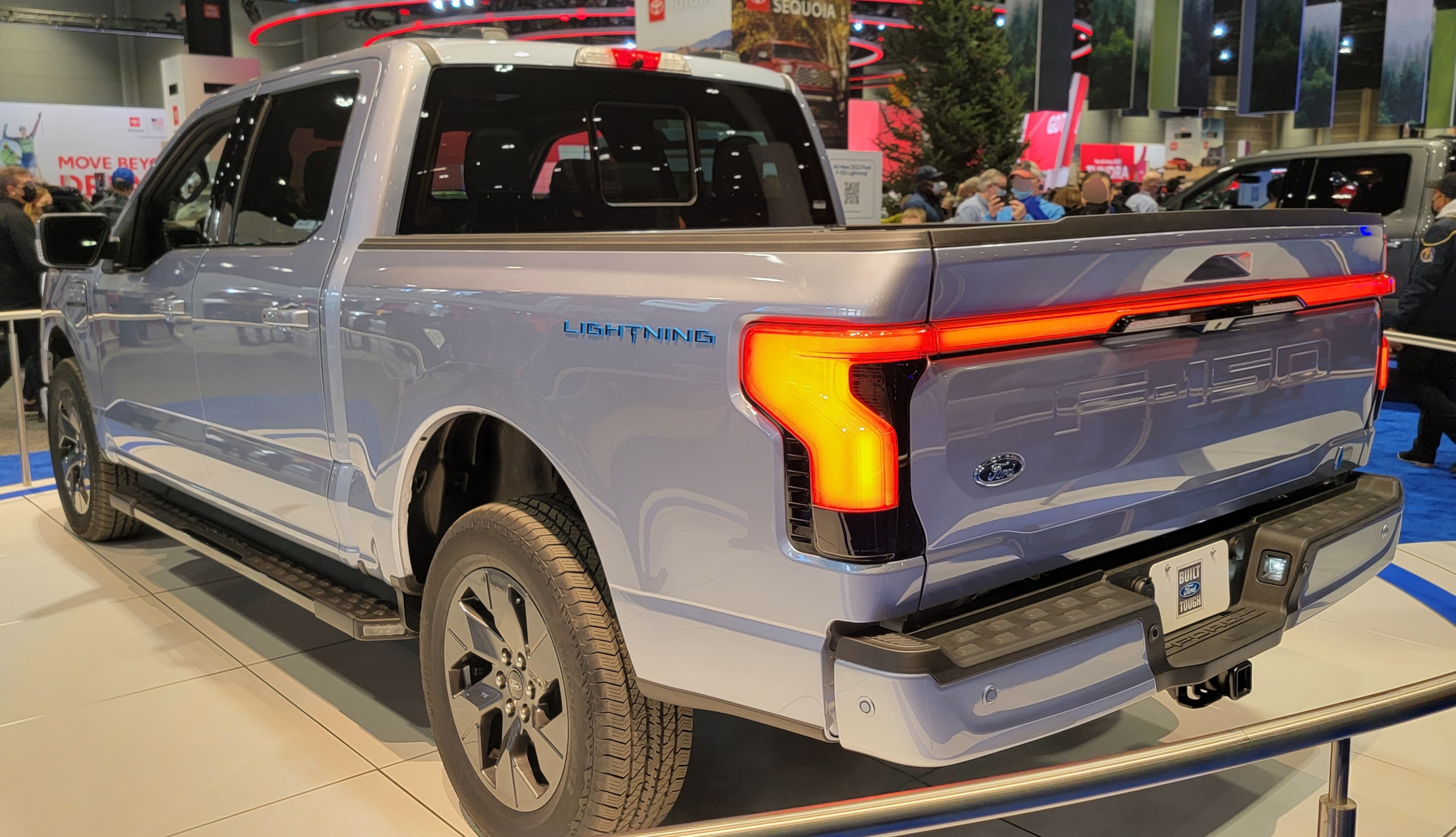
F-150 Raptor
"...g to be doing the the uh A suspension work on my raptor Another big og youtuber from the the car world. ..."
hyper clean
"So, you know, don't blush. I want to just let everybody know and this isn't even like it was my idea ...this is all brought to you by hyper clean So, you know, don't blush."
Hyper Clean is presented as the sponsor and the brand behind a “complete detail kit.” In detailing terms, a kit typically bundles multiple products (cleaners, protectants, and tools) so you can wash and protect a vehicle consistently.
complete detail kit
"I was like nick we got to put all of these products that are awesome into a kit Which is basically the complete detail kit, which is what we're calling it And I have a video of the raptor getting detailed"
A “complete detail kit” is a bundled set of detailing products designed to cover the main steps of cleaning and protecting a car. The idea is to make the process simpler by giving you everything you need in one package rather than buying products separately.

Xterra
"Um, all right not made in america [703.4s] But still really cool of all the things that nissan has talked about this week [706.6s] Has any of them really perked your ears with genuine interest? [710.1s] Xterra Xterra. I mean they need this was the [714.2s] Probably one of the fj cruiser and xterra being canceled"
The Nissan Xterra is a tough SUV meant for rough roads and outdoor trips. The hosts are saying Nissan’s decision around it (including canceling it) was a big deal for people who wanted that kind of vehicle.
The Nissan Xterra is a rugged, body-on-frame SUV built for off-road and “overlanding” use. In this segment, the hosts are reacting to Nissan’s recent talk about the Xterra and how its cancellation affected the market and buyer interest.

Toyota FJ Cruiser
"[714.2s] Probably one of the fj cruiser and xterra being canceled when they were [719.8s] Were probably two of the worst decisions [722.4s] At the time because overlanding just went nuts right after they canceled."
The Toyota FJ Cruiser is a retro-styled, off-road-focused SUV known for its simple, capable design. Here it’s mentioned alongside the Nissan Xterra as another model that was canceled, and the hosts argue that those cancellations were bad timing.
overlanding
"[719.8s] Were probably two of the worst decisions [722.4s] At the time because overlanding just went nuts right after they canceled. This is so i'm so [729.0s] They they announced xterra, but for some reason didn't have it"
Overlanding means taking a vehicle on long trips, often to remote places, and being prepared to camp or handle rough conditions. The hosts are basically saying the market wanted these kinds of SUVs more than ever right after they were discontinued.
Overlanding is long-distance, self-reliant travel—often off-road—using a vehicle equipped for camping and remote conditions. The hosts are saying the Xterra and FJ Cruiser were canceled just as overlanding demand was exploding, making the timing feel especially wrong.
night rider grill
"[740.0s] It's like we're out Bronco and forerunner, but we're not going to show it to you. Yeah, we're going to show you this looks like night rider grill [747.0s] Which I like don't get me wrong. I love night ride. I do love night rider"
They’re comparing the car’s front styling to the Knight Rider TV show. The point is that the grille/front lights look flashy and recognizable, not subtle.
“Night Rider” refers to the classic TV show Knight Rider, where the car had distinctive, glowing lighting. Calling it a “night rider grill” suggests the vehicle’s front design includes eye-catching, possibly LED-style lighting elements that resemble that pop-culture look.
quality control
"Who knows if it all plays out this way and quality control and we have a lot of worries nissan and infinity seemed to me"
Quality control is how a company checks that cars are built correctly and consistently. If quality control isn’t solid, even good plans and new models may still fail.
“Quality control” refers to the processes that ensure vehicles are built to consistent standards and don’t have defects. The hosts connect it to worries about whether Nissan/Infiniti’s turnaround plan will actually succeed over the next several years.
Infiniti
"nissan and infinity seemed to me ...I heard an infinity conversation where they basically Were saying why infinity went off track..."
Infiniti is Nissan’s luxury brand. The hosts are saying Infiniti got off track because it didn’t share enough with Nissan, and now they plan to work together more again.
Infiniti is Nissan’s luxury brand, and the hosts attribute Infiniti’s struggles to trying to operate too independently from Nissan. They say Infiniti will move back toward a more streamlined approach, sharing more parts and platforms with Nissan.
off-road SUVs
"But now all of a sudden like here's another one for instance nissan's going all in on off-road SUVs teasing a blurry concept So outside of the exterra they're talking about..."
Off-road SUVs are cars built to drive on dirt, trails, and uneven ground. The hosts are saying Nissan is betting heavily on this type of vehicle to rebuild momentum.
Off-road SUVs are vehicles designed to handle rough terrain, typically with higher ground clearance, tougher underbody protection, and driveline features that help traction. The hosts say Nissan is “going all in” on this segment, which signals a strategic shift in product focus.
streamlined process
"Didn't share anything Largely with nissan and so now they're going to go back to a more streamlined process where there's going to be these nissan versions They're going to share some stuff into the infinity line"
They’re saying Nissan and Infiniti will work in a simpler, more coordinated way. That usually means fewer unique parts and more shared technology between the brands.
A “streamlined process” here means simplifying how Nissan and Infiniti develop and approve products, likely by sharing more engineering and components. The hosts suggest this will lead to more Nissan-based versions within the Infiniti lineup.
share some stuff
"They're going to share some stuff into the infinity line I kind of hope that drives the price down."
They’re talking about sharing parts or technology between Nissan and Infiniti. When companies share more, it can make the cars cheaper to build, which sometimes helps lower prices for buyers.
“Share some stuff” implies platform/parts sharing between Nissan and Infiniti—using common components across multiple models. This can reduce development costs and speed up new product cycles, which may influence pricing and availability.
price down
"I kind of hope that drives the price down. I was having this conversation with somebody here this week When all this stuff started to break"
They’re hoping the changes will make cars cost less. If a company can build cars more efficiently, it may be able to offer better pricing to customers.
The hosts connect brand strategy and parts sharing to potential pricing effects—specifically hoping it will “drive the price down.” In the auto world, lower manufacturing and development costs can translate into more competitive MSRP or incentives, though it depends on demand and dealer pricing.
Out-the-door price
"But if you start at that q80 or or they're top in suv ... The first thing we all said is you guys can't sell 125,000 suv. Yeah, but if they could find a way to make that suv $95,000 90 grand"
Out-the-door (OTD) price is the total cost to buy the car, including taxes, registration, and dealer fees—what you actually pay at purchase. The hosts’ discussion about getting the SUV into the $90k–$95k range (and “stealing sales”) is really about whether the final OTD number is low enough to win customers versus competitors.
Average transaction price
"Look, that's your winning formula right there ... Look at that. Yeah ... Average transaction price in the us is $48,000 and they say it's not sustainable"
Average transaction price is basically the average “real price” people end up paying for cars. If that number is too high, fewer people can afford the cars, so companies may need to lower prices or offer bigger deals.
Average transaction price is the typical amount buyers actually pay after discounts, incentives, and dealer pricing—not the sticker price. When the hosts say the average transaction price is $48,000 and “not sustainable,” they’re discussing how high real-world pricing can pressure demand and force manufacturers/dealers to adjust incentives or MSRP.
Dealer pricing and demand pressure
"They are seeing things and and seeing so many of these dealers speak out ... Behind the scenes all of these companies all these big dealer principles go ... Everyone's tapped"
They’re talking about how car dealers are dealing with the market right now. When prices are high and sales slow down, dealers and big dealer groups feel it and start pushing back or speaking out.
This segment shifts into how dealers and major dealer groups are reacting to pricing and sales conditions. The hosts mention “dealers speak out” and that “everyone’s tapped,” which points to the idea that dealer networks are feeling the strain when consumers push back on high prices.
Out-the-lot price vs starting MSRP
"...prices starting under 40,000 doesn't mean that that's necessarily what you're going to drive... option streams could push the price up several thousand dollars..."
They’re pointing out that the price you see first (like “starting under $40,000”) isn’t always the price you end up paying. Options and add-ons can push the total up a lot.
The hosts emphasize that a vehicle’s “starting under” price doesn’t equal what most buyers pay, because options and packages can add thousands. This is a common shopping issue: the MSRP headline number can be misleading compared with the final transaction price.

Toyota 4Runner
"Yep, and and it says the toyota forerunner starts at 43,000. We all know they're not driving off the lot. Nope Mainly under 50"
They compare Nissan’s pricing to the Toyota 4Runner, which starts in the low-$40,000s. The idea is: if Nissan’s Xterra can be priced similarly and still be easy to buy, it could pull customers away from Toyota.
The Toyota 4Runner is used as a pricing benchmark, with the hosts noting it starts around $43,000. They argue that if Nissan can match the 4Runner’s starting price but still get buyers to actually purchase and drive off the lot, it could take sales.
Concept world vs production
"We got to see this play out. We got to see it in production. We got to get out of the concept world..."
They’re saying it’s not enough to just hear about ideas or concepts—what matters is what actually gets built and sold. Production cars can end up different from what was shown earlier.
The hosts say they need to see the plan move from “concept world” into actual production. That distinction matters because concept cars often differ from final cars in cost, packaging, powertrain, and features.

Nissan Skyline
"...Skyline's coming back. Yeah, skyline's coming back is what I read... executives from the different Brands kind of say conflicting things... the infinity exact..."
They’re talking about the Nissan Skyline coming back. It’s a famous car name, and they’re also saying different executives have hinted at different branding—Nissan versus Infiniti.
The hosts discuss the return of the Nissan Skyline, which is a historically significant nameplate in performance and motorsport culture. They also highlight brand/strategy confusion: executives from Nissan and Infiniti reportedly gave conflicting statements about whether it would return as a Nissan or Infiniti model.
cross platforms
"...get things back in line try to make some some money by by using cross platforms here across multiple brands"
They mean using the same basic “car foundation” for multiple models. That usually makes it cheaper and faster to build new cars because the company isn’t designing everything from scratch.
“Cross platforms” refers to using shared vehicle platforms (underbodies, engineering foundations, and sometimes powertrain components) across multiple models. This reduces development cost and manufacturing complexity while allowing different cars to be offered with less unique engineering.
turnaround plan
"It's almost that's exactly what I said on the turnaround plan before they announced the turnaround... reduce it from 56 models to 45... base everything where it can start to share a lot more"
A turnaround plan is what a company does when it’s not doing well and needs to get back on track. For car companies, that often means dropping some models and using the same parts/technology across multiple vehicles to save money.
A turnaround plan is a corporate strategy to reverse declining performance—often by cutting unprofitable products, restructuring operations, and refocusing on higher-demand segments. In automaking, it frequently includes platform sharing and reducing the number of unique models.

Nissan Rogue
"Well, I said if you okay keep the nissan rogue have three trims go to market... and they're going to have a hybrid rogue now"
They’re talking about the Nissan Rogue, which is one of Nissan’s most important-selling cars. The idea is to simplify the options (fewer trim levels) and add a hybrid version to attract more buyers.
The Nissan Rogue is referenced as a key product in the lineup, with the hosts discussing trimming it to three trims and adding a hybrid variant. The Rogue is a high-volume crossover, so changes to it can have an outsized impact on sales and profitability.

Nissan Juke
"...and it's going to have a hybrid rogue now... or is another variation of well the juke's going to be all EV isn't it?... share with the leaf"
They’re saying the Nissan Juke is expected to get an electric version. Automakers often do this by using the same underlying electric technology across multiple models.
The hosts mention the Nissan Juke going EV, implying a new all-electric version. They also connect it to platform sharing with other Nissan electrified models, which is a cost-saving approach for automakers.

Nissan Leaf
"...and it's going to share it's going to share with the The leaf basically"
They’re saying the new electric Nissan Juke would use a lot of the same electric parts/technology as the Nissan Leaf. That helps the company build the new EV faster and cheaper.
The Nissan Leaf is brought up as the technology-sharing reference point for the upcoming Juke EV. When a new EV is said to “share” with the Leaf, it typically means using similar battery/electronics architecture to reduce development and production costs.
reduce it from 56 models to 45
"Um... It intends to reduce it from 56 models to 45 still seems like a lot... after cutting 11 stuff 45"
They’re talking about Nissan selling fewer different car models. That can help the company manage costs and avoid having too many slow-selling versions.
The hosts discuss cutting Nissan’s model count from 56 to 45, which is a strategy to simplify the lineup. Fewer models can mean less inventory risk, lower marketing and tooling costs, and easier production planning.
EV
"Oh the sylvia another one that they're going to revive which is pretty cool [1203.8s] It'll probably be an ev but I mean it's a step in the right direction"
EV means the car runs on electricity. Instead of burning gas, it uses an electric motor, usually powered by a battery.
EV stands for electric vehicle, meaning the car is powered by an electric motor instead of a traditional gasoline engine. When a brand says it will revive a classic name as an EV, it usually means the styling/identity will remain, but the drivetrain and driving feel will change.
Jaguar
"I mean jaguar proves that in spades boy. Are they going to be around in five years? [1238.0s] Buddy they they make it sound like they're going full force."
They mention Jaguar as an example of a car brand that’s had a tough time. The point is that even well-known brands can struggle, so the future isn’t guaranteed.
Jaguar is brought up as an example of a brand that has struggled to maintain long-term stability. The hosts question whether Jaguar will still be around in five years, using it as a cautionary tale about brand survival.
Aston Martin
"Like we always say Aston Martin's still around most of you don't buy them [1255.8s] I was gonna say real quick on the Nissan thing to get your opinion"
They bring up Aston Martin to make a point about luxury brands lasting a long time. Even if most people don’t buy them, the brand name can keep going.
Aston Martin is referenced as a brand that has “held out” for a long time, implying it has brand power even if many people don’t buy them. The hosts use it to illustrate how certain luxury brands can remain relevant despite limited sales volume.
Conquer a younger generation
"You with these different like genres of cars the off-road the sport even a luxury with infinity or even within you know [1265.0s] Nissan some of it [1265.9s] It feels like they have to [1267.0s] Conquer a younger generation who isn't already inherently into the sports car because it seems like as we get older"
They’re talking about how car companies need to win over younger drivers. If younger people aren’t already into sports cars, brands have to offer something that feels relevant to them.
The hosts discuss how car brands need to attract younger buyers who may not already be into sports cars. This is essentially about market segmentation and product strategy—brands often expand or reposition offerings (off-road, sport, luxury) to broaden appeal.

Nissan Z
"there's not a ton of the younger kids already wanting a z or wanting a skyline or wanting a"
They mention the Nissan Z as a sports car that younger people are interested in. The idea is that a good sports-car platform should be able to pull in more fans when it comes back.
The Nissan Z is referenced as an example of a sports-car platform that younger enthusiasts want. The hosts argue that when a model like the Z is reintroduced, it should attract more of the demographic that’s already into cars like it.

Toyota Gr86
"I mean gr 86 you have all these kinds of the brz should be more popular than it is"
They mention the Toyota GR 86 as a fun, relatively affordable sports car. The argument is that it should be more popular with younger buyers, but it isn’t getting enough attention.
The Toyota GR 86 is mentioned alongside the Subaru BRZ as a modern “affordable sports” platform that should be more popular. The hosts are making a point about how some cars don’t reach their potential audience even when the product is strong.

Subaru BRZ
"I mean gr 86 you have all these kinds of the brz should be more popular than it is"
They bring up the Subaru BRZ as another fun sports car in the same category as the GR 86. The point is that even good cars can be overlooked if they don’t get enough hype.
The Subaru BRZ is referenced as part of the same affordable sports-car set as the GR 86. The hosts suggest that these cars should attract more buyers, implying that marketing and cultural visibility matter as much as the driving experience.
social media game
"Yeah, and I think that just becomes the social media game Right, you know how how good are they at you know going out and starting to create buzz"
They’re saying selling cars today is partly about social media. If a company can get the right people talking about the car online, more buyers will notice it.
The hosts frame car marketing as a “social media game,” meaning brands must generate attention and desire through online content, creators, and community buzz. This is a modern go-to-market strategy: the product may be good, but it still needs visibility to reach the right buyers.
influencers
"Partnering with the right influencers. I think is is probably something that a company like Nissan is gonna have to get right"
They’re talking about influencers—people online who can make others want a car. The hosts think brands like Nissan have to pick the right influencers to get the word out.
Influencers are discussed as a key part of how Nissan (and other brands) can create buzz with younger buyers. The idea is that partnering with the right creators can shape perception, reach niche communities, and drive interest faster than traditional advertising.
Hyundai boulder concept
"We would say about the boulder concept from Hyundai It's the same thing you would say about anytime you change the platform and go to a new platform with forerunner"
They’re referencing a Hyundai concept car called the Boulder. The point is that concept cars can create excitement and help a brand get attention when it’s trying to win over new fans.
The hosts compare their hypothetical influencer partnership to Hyundai’s “Boulder” concept, implying that concept cars can generate excitement and brand attention. The underlying idea is that changing platforms or introducing new concepts can help a brand refresh its image and attract new buyers.

Chevrolet Camaro
"And we kind of said this about Camaro last week I just hope this stuff isn't a five-year commitment."
They bring up the Chevrolet Camaro as a comparison. The takeaway is about whether automakers will keep investing in a model long enough for it to succeed.
The Chevrolet Camaro is referenced as a prior example of a model strategy the hosts discussed “last week.” The mention is used to frame concerns about how long a manufacturer will stay committed to a product plan.
five-year commitment
"I just hope this stuff isn't a five-year commitment. I hope it's like No matter what happens we're committed to this long term And we're gonna get it right and we're gonna build a following"
They’re talking about how long a company plans to stick with a product. In cars, you usually need more than a couple of years to build demand and prove the strategy works.
“Five-year commitment” is shorthand for how long a manufacturer is willing to support a model with updates, marketing, and product investment. The hosts argue that in the car business, you can’t treat a new direction like a short experiment because the market may not respond quickly enough.
internal reorganization
"Yeah, exactly and Nissan infinity was brushing up against that. Yeah, I mean basically What six months ago we're talking about bankruptcy So I hope that all of this internal reorganization and getting things back to where they need to be Is sort of part of a 10 to 15 year plan"
They’re talking about a company reorganizing behind the scenes to get back on track. The concern is whether that turns into long-term fixes—or quick trimming when things don’t improve fast.
“Internal reorganization” refers to corporate restructuring—changing how a company is organized and managed—to stabilize operations and refocus strategy. The hosts connect it to Nissan/Infiniti’s earlier financial trouble and hope it results in a long-term plan rather than short-term cuts.
bankruptcy
"Yeah, I mean basically What six months ago we're talking about bankruptcy So I hope that all of this internal reorganization and getting things back to where they need to be"
They mention bankruptcy to explain how serious the company’s financial situation was. When a company is in that kind of trouble, it can affect how long it keeps supporting certain models.
Bankruptcy is mentioned as a reference point for Nissan/Infiniti’s financial stress. In automotive terms, bankruptcy risk often leads to restructuring, delayed product plans, and changes in how brands are funded and supported.
conquest rebate
"What was the the the rebate you would get when you go from one manufacturer to another? Wasn't it a conquest something right? I forget what oh man There was something they just need to run a promotion like look"
They’re talking about a special discount designed to lure people away from a competitor. The idea is: if you’re loyal to another brand, the company offers money off to get you to switch.
A “conquest rebate” is a marketing incentive aimed at getting customers who currently own a competitor’s brand to switch. The hosts describe it as a promotion that would be offered to win over buyers from other manufacturers’ loyal fanbases.

Bronco
"We're trying to win over all the Bronco and all the trd Toyota fans Whatever this conquest rebate you're gonna get we're gonna make it worth your all"
They mention the Ford Bronco as the kind of competitor Nissan wants to steal customers from. It’s used to illustrate who the marketing is trying to attract.
The Ford Bronco is referenced as a competitor whose fans Nissan would want to attract with incentives. The host frames it as part of a broader “win over” strategy targeting off-road-oriented buyers.
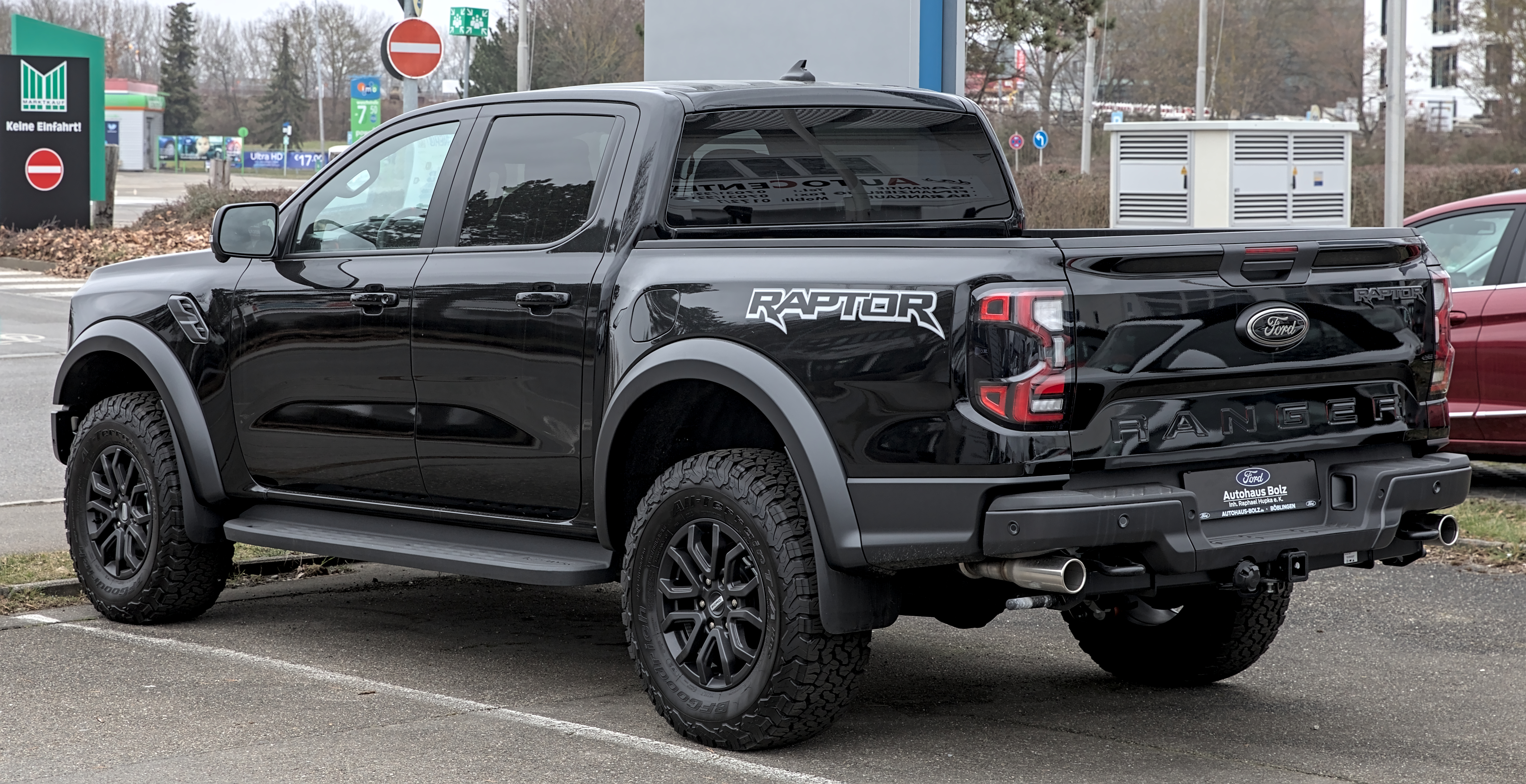
Ford Raptor
"“Hey, hey, uh next time I go to Houston. Definitely not taking the raptor. How about that? ... I was I was in downtown and I was like this is not the truck to be driving around these little streets of downtown Houston”"
The Ford Raptor is a super capable off-road truck. It’s great for trails, but in a downtown area with tight streets and lots of obstacles, it can feel like overkill.
The Ford Raptor is a high-performance off-road pickup built for rough terrain, with upgraded suspension and off-road-focused engineering. The hosts mention it in the context of driving around downtown Houston, which is a practical reminder that even capable trucks can be awkward in tight city streets.
admitting you got some things wrong
"“Part of what I think happens that these auto manufacturers not just Nissan ... The first step is admitting you got some things wrong ... A lot of them do it. So I’m positive when somebody goes, ah, we screwed some stuff up”"
The hosts are talking about how companies improve after they admit they messed up. It’s basically the first step before they change what they’re doing.
In business and product strategy, “admitting you got some things wrong” is often the first step toward rebuilding trust and correcting course. In automaking, it can mean acknowledging engineering, quality, or market-positioning issues before making changes to future vehicles.

Land Rover Range Rover
"“...Would you take a new estera or a range Rover cabriolet if that those are your options”"
A Range Rover cabriolet would be a fancy Range Rover with the roof down. They’re comparing it to a more affordable SUV like the Xterra to see what you’d pick.
A “Range Rover cabriolet” refers to a convertible version of Land Rover’s Range Rover. The hosts use it as a luxury alternative to a more budget-friendly SUV choice, highlighting how buyers weigh style/experience versus practicality and cost.
cabriolet
"Range Rover cabriolet. Come on. Really? Yeah, cabriolet right there, baby cabriolet This is Porsche saying we know most gt 3s never see the track so we might as well put a convertible on it"
A cabriolet is an open-top car with a power-operated soft top (as opposed to a fixed roof). In the context of a GT3, it’s a notable packaging and audience shift: Porsche is betting that customers want the look and experience of open-air driving more than strict track practicality.
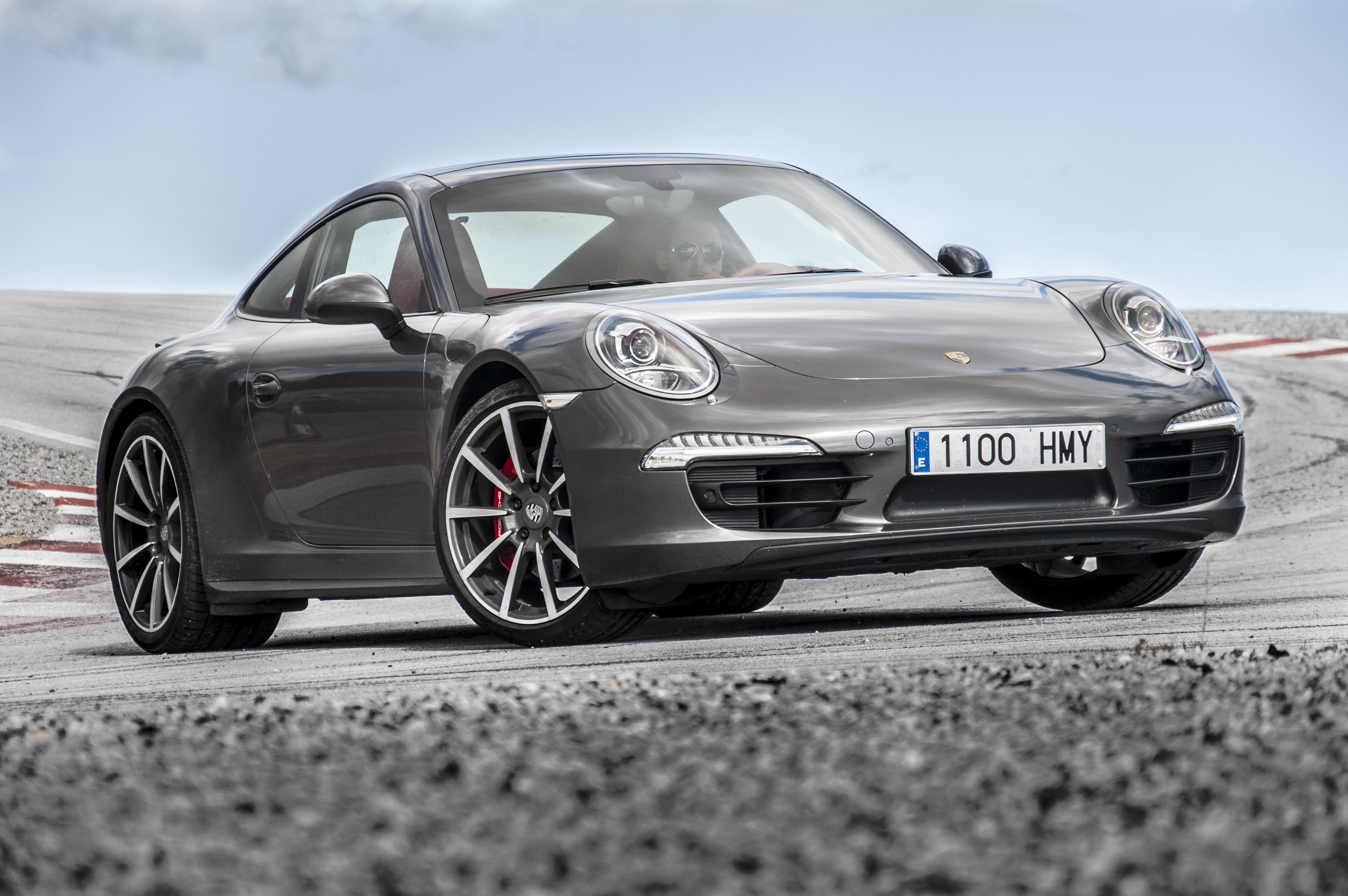
Porsche 911 GT3
"No, we're talking about Porsches though the 20 27 9 11 gt 3 sc first look uh this I could see you driving this at 65 This is Porsche saying we know most gt 3s never see the track so we might as well put a convertible on it"
The Porsche 911 GT3 is a special 911 meant to feel more like a track car than a normal 911. Here, the big twist is Porsche making a cabriolet (open-top) version, even though most GT3s aren’t actually driven on track.
The Porsche 911 GT3 is a track-focused 911 variant known for its performance hardware and driver-oriented setup. In this segment, the hosts discuss a GT3 cabriolet concept—Porsche effectively adding open-top styling to a model that most owners would never use on a circuit.
markup
"Porsche knows its audience for these types of cars and they're going to sell a lot of them If they choose to and they're going to Probably have a markup on them"
A markup is the price increase above the manufacturer’s suggested price, often driven by limited supply and high demand. The hosts suggest the GT3 cabriolet could command a markup because it’s a desirable, scarce Porsche variant.

Corvette
"The least self-aware people In cars right now are Core vet owners and Porsche owners. They're the least self-aware"
The Corvette is a Chevrolet sports car known for performance. The hosts are saying some owners focus more on showing off details online than actually driving the car.
“Corvette” refers to Chevrolet’s performance sports car line. In the context of this episode, the hosts are talking about how some Corvette owners have shifted from enjoying driving to more internet/spec/status signaling.
internet-driven car culture
"Very recent. Yeah, very internet thing that made that happen. Yeah, it's I think When you get away from Driving the car"
They’re saying the internet changed how car communities behave. Instead of focusing on driving, people may focus more on what looks impressive online.
The hosts attribute the shift in behavior to a “very internet thing,” meaning social media and online forums changed what gets rewarded in car communities. The result is more emphasis on optics, branding, and curated identity rather than seat time.
cars and coffee
"You know kind of happens a lot in the core vet community you get away from driving the car You're out of cars and coffee you got the billboards next to your car"
“Cars and coffee” is a casual car meet where people show up with their cars and hang out. The hosts are using it to point out that some communities shift toward looking and showing rather than actually driving.
“Cars and coffee” is a recurring informal car meet culture where enthusiasts gather to show cars, talk, and socialize—often with lots of photos and attention to appearance. In this segment, it’s used to illustrate how the hobby can become more about display than driving.
spec/status signaling
"You know, it's it just it just took a transformation that's just fun to joke about. I mean, that's just what it is like If you weren't around to see the transformation and you're sort of new into the car world And you got into the car world because you like gt 3"
Instead of talking about how the car drives, some people focus on the exact options and details. The goal becomes showing off who you are in the car world, not just enjoying the drive.
The hosts are describing “spec/status signaling,” where enthusiasts focus on visible or collectible details (trim, interior color, special options) to communicate identity and status. It’s a cultural shift from driving experience to online presentation—especially common in social media–driven car communities.
driver sports car identity shift
"I mean Porsche was just the driver sports car for the for the euro mart and people just Bragged about driving their car all the time and then it became like what color do you have in the interior?"
They’re saying Porsche used to be seen mainly as a car you drive and enjoy. Now, some people talk more about the exact interior and options—more about the car’s “look” than how it drives.
This segment contrasts Porsche’s older reputation as a “driver sports car” with a newer identity centered on interior/exterior spec choices. It’s essentially a discussion about how enthusiast priorities can shift from performance and feel to customization and ownership presentation.
Rolex
"What Rolex do you have? What what authorized dealer do you have a relationship with to get your watches?"
Rolex makes very expensive luxury watches. In this conversation, it’s being used as an example of how car communities sometimes show off with other pricey hobbies.
Rolex is a luxury watch brand often used as a status marker in car and fashion communities. The hosts are drawing a parallel between watch-collector identity and the way some Porsche enthusiasts signal belonging through brands and dealer relationships.
authorized dealer
"What what authorized dealer do you have a relationship with to get your watches? It's it's just It's corny."
An authorized dealer is an official store that’s allowed to sell a brand’s products. The hosts are saying some people use those relationships as proof they’re “in the club.”
An authorized dealer is a retailer officially approved by a brand to sell its products. For luxury watches like Rolex, authorized channels can be part of how availability and purchasing access are managed, which the hosts reference as a “community” signal.
product software and services
"So that's a mouthful which says it will deliver one of the most intensive product software and services in ford's history So, yes, I couldn't be I could not be less interested with that announcement"
This means more of the car’s features are controlled by software. Instead of everything being fixed at the factory, the car can gain improvements through updates and connected services.
“Product software and services” refers to building vehicle features that rely on software—like connected services, updates, and digital functions—rather than only hardware changes. Automakers increasingly treat software as a product stream that can be improved over time.
refresh 80% of its north american lineup by volume
"The new group will lead ford's plan to refresh 80% of its north american lineup by volume and 70% of its global lineup by volume So this is kind of on the heels of what we talked about not too long about"
Refreshing “80% of its North American lineup by volume” means Ford plans to replace or significantly update most of the cars that make up the majority of sales in that region. It’s a strategy to keep products current as regulations, customer preferences, and technology (like electrification) change.
universal eb platform
"I mean, you don't care about the universal eb platform that we talked about a couple of times No, and they're no they're nobody listening to their new blue cruise improvements"
A platform is the car’s main “building system.” If Ford uses a universal platform, it can make different models more efficiently and potentially share parts and technology across them.
“Universal EB platform” refers to Ford’s shared vehicle architecture strategy—using a common platform foundation across multiple models. A universal platform can reduce engineering and manufacturing costs while enabling consistent technology and electrification options.
BlueCruise
"No, and they're no they're nobody listening to their new blue cruise improvements and uh the hybridization of everything in their lineup"
BlueCruise is Ford’s system that can help drive the car in certain situations. It doesn’t mean the car drives itself everywhere—your attention is still required.
BlueCruise is Ford’s hands-free driver-assistance system (a driver monitoring + lane-centering/assistance setup) that works only in supported conditions and mapped areas. The hosts mention “improvements” as part of Ford’s ongoing software and tech push.
hybridization of everything in their lineup
"No, and they're no they're nobody listening to their new blue cruise improvements and uh the hybridization of everything in their lineup"
This means Ford wants more of its cars and trucks to use hybrid engines. Hybrids use both gas and electricity to help the vehicle use less fuel.
“Hybridization” means adding hybrid powertrains (typically combining an internal-combustion engine with an electric motor) across a lineup. Automakers do this to improve fuel economy and meet emissions requirements while keeping performance and drivability.
Ford F150
"The new f-150 generation coming in 2029 You know what I would be interested in if they told me their recalls were down 70%"
The hosts reference the “new F-150 generation” coming in 2029, implying a major redesign cycle for Ford’s best-selling truck. New generations typically bring updated platforms, powertrains (including hybrids), and software features.
recalls
"You know what I would be interested in if they told me their recalls were down 70% Well, they're up. That's why we don't have an email."
A recall is when a manufacturer has to fix a problem in cars already sold. The hosts are saying they’d rather hear about fewer problems than marketing announcements.
The hosts discuss recalls as a key metric for how well Ford is executing product quality and engineering changes. Recall rates can reflect issues discovered in real-world use, supplier parts, or design flaws.
range extending hybrid setup
"Okay, how about this? What about this? All right, the lightning is returning. All right of returning with a range extending Extender hybrid setup. Uh, we expect traditional hybrid powertrains to continue and then let's hope it's 42,000 dollars."
This is a hybrid where a small engine acts like a backup generator. When the battery gets low, it helps keep the car going instead of leaving you stranded.
A range-extender hybrid uses a small engine to generate electricity when the battery runs low, extending how far the vehicle can go. It’s different from a traditional hybrid that relies on the engine and electric motor together to drive the wheels most of the time.
traditional hybrid powertrains
"Extender hybrid setup. Uh, we expect traditional hybrid powertrains to continue and then let's hope it's 42,000 dollars. Well, that's what that's an announcement"
A traditional hybrid uses both a gas engine and an electric motor. The electric part helps with acceleration and braking, and the battery gets recharged along the way.
“Traditional” hybrid powertrains typically combine an internal-combustion engine with an electric motor to improve efficiency, often using regenerative braking to recharge the battery. Unlike range-extenders, the engine usually plays a more direct role in propulsion rather than mainly generating electricity.
suspension setup that was never released or put into production
"You would just like I'm bamboozling you there was an LS 400 suspension setup That was never released or put into production. Are you familiar with this? I just okay, bro"
Suspension setup means the car’s ride/handling parts working together, like shocks and springs. If it was never released, it likely never became an actual option you could buy, so it’s more of a behind-the-scenes engineering story.
A “suspension setup” refers to the specific engineering package—spring rates, dampers, geometry, and related hardware—that determines ride and handling. When a setup is never released or put into production, it typically means it stayed as a prototype or internal development item, which can make it rare and interesting to enthusiasts.

Lexus LS 400
"This is one of two lexus LS 400 that had been fitted with Bose electromagnetic suspension"
The Lexus LS 400 is a luxury sedan that was famous for being smooth and well-built. Here, it’s special because one (or a couple) were modified with a very unusual suspension system from Bose.
The Lexus LS 400 is a flagship luxury sedan from Lexus, known for its smooth ride and early reputation for high build quality. In this segment, the hosts are talking about a rare LS 400 prototype/modified car fitted with an advanced Bose suspension system.
Bose
"This is one of two lexus LS 400 that had been fitted with Bose electromagnetic suspension"
Bose is famous for speakers and audio, but they also worked on an experimental suspension system. Instead of just relying on springs and shocks, it uses electronics to actively help control how the wheels move.
Bose is best known for audio equipment, but in the 1990s it developed an experimental electromagnetic suspension system. The idea is to use motors to actively counter forces at each wheel, improving ride control beyond a conventional passive suspension.
linear electromagnetic motor
"Basically, there was a linear electromagnetic motor fitted at each wheel that allowed the wheels to move essentially separately from the body"
A linear electromagnetic motor is like a motor that moves in a straight line using magnets. In this suspension idea, it helps push or pull the suspension to keep the ride steadier over bumps.
A linear electromagnetic motor converts electrical energy into straight-line motion, rather than rotating like a typical motor. In this suspension concept, it can push/pull at each wheel to counteract road forces and stabilize the ride.
jump over obstacles
"The Bose engineers even added this fun party trick where the car could literally jump over obstacles"
They’re saying the system can actively lift the car to clear obstacles. That’s different from normal suspension, which mainly absorbs bumps instead of actively jumping.
The segment describes an active-control “party trick” where the Bose-equipped car can lift/jump over obstacles using its electromagnetic suspension. This highlights how active suspension can generate rapid, commanded wheel/body movements rather than just absorbing impacts.

Audi Quattro
"my boyfriend noticed this outie quattro Sitting there and then I noticed the lexus and realized what it was"
Quattro refers to Audi’s all-wheel-drive system. It helps the car grip the road better, and in this story it’s what caught their attention before they spotted the Lexus.
“Quattro” is Audi’s well-known all-wheel-drive system, used to improve traction and stability in varying conditions. Here it’s mentioned as the reason the group pulled over first, before noticing the rare Lexus LS 400 Bose setup.

Volvo S40
"and there was also a t5 all-wheel drive manual s40"
The Volvo S40 T5 is a sportier version of the S40. They mention it just as part of what was parked there, not as the main focus.
The Volvo S40 T5 is a performance-oriented trim of the S40, typically associated with a turbocharged engine and a sportier setup. In this segment it’s name-dropped as another car present, alongside the Lexus and Audi quattro.

modified brakes
"You can still see the remnants of them being there such as the modified brakes"
Because the Bose electromagnetic components were removed, the car retained visible changes in the braking hardware. The host notes a specific difference in brake caliper placement relative to the rotor, which is a clue that the suspension conversion required packaging/fitment changes.
brake caliper
"such as the modified brakes Where the caliper is now sitting on top of the rotor as opposed to in front on the normal ls 400"
The brake caliper is the part that squeezes the brake pads against the spinning brake disc. They’re saying this prototype’s caliper ended up mounted differently after the Bose system was removed.
A brake caliper is the component that clamps brake pads against the rotor to slow the car. The segment says the caliper was repositioned (sitting on top of the rotor rather than in front, as on a normal LS 400), implying significant re-engineering for the experimental setup.
too heavy and too expensive
"The suspension never made it into a production car as it was deemed too heavy and too expensive"
The segment claims the Bose electromagnetic suspension didn’t reach production because it was too heavy and too expensive. This is a common barrier for advanced active-suspension tech: added components increase mass and complexity, and the electronics/hardware cost can be prohibitive.
ultra comfortable driver seat for semi truckers
"But the tech did go towards making an ultra comfortable driver seat for semi truckers pretty crazy, right?"
The host says the underlying technology found a later use in an ultra-comfortable driver seat for semi trucks. This is an example of how automotive R&D can “spin off” into other vehicle applications where ride comfort and vibration control are critical.
left front is sagging
"See we told you it's too expensive. That's too expensive. Hey, you have your left front is sagging"
If one front corner is “sagging,” it means that side of the car is sitting lower than the other. That often happens when suspension parts wear out or break, and it can affect handling and tire wear.
“Left front is sagging” usually means the front-left corner of the car sits lower than it should. That can point to worn suspension components (like springs/struts) or issues such as a failed shock/strut or broken suspension hardware.
potholes
"And so you see the cars today like the the china e v's that like jump over a potholes and stuff like they were doing this"
Potholes are basically road damage that can hit your tires hard. That jolt can shake loose or break suspension parts over time.
Potholes are a major cause of suspension damage because they create sudden, high-impact loads on tires and suspension components. EVs and other modern cars can still be affected—especially if the suspension travel and damping aren’t well matched to rough roads.
china e v's
"And so you see the cars today like the the china e v's that like jump over a potholes and stuff like they were doing this"
They’re talking about electric cars made in China. The point is whether those cars can handle rough roads without getting damaged.
“China EVs” refers to electric vehicles made by Chinese manufacturers. The discussion is about how some of these cars handle rough roads and potholes, implying differences in suspension tuning and durability.
e v
"Um, it's going to be e v to my knowledge ... I don't know that that platform is going to do well just as a pure e v"
EV means electric vehicle. They’re discussing whether making this car fully electric will be enough, or whether it should still include some kind of engine-based power.
“EV” means electric vehicle—cars powered primarily by an electric motor and battery rather than a gasoline engine. The hosts debate whether an EV-only platform will work well for this kind of performance/enthusiast model, or whether it needs an engine or hybrid approach.
GTR
"So it's not going to be a gtr skyline. I just read that it was going to be a skyline"
GT-R is Nissan’s performance car badge. They’re saying the upcoming Skyline probably won’t be the same kind of gas-powered GT-R performance setup.
“GTR” refers to Nissan’s performance model line, commonly known as the GT-R. In this segment, the hosts use it to distinguish a traditional high-performance Skyline direction from what they believe will be an EV-focused Skyline.
Request an Explanation
Heard something you'd like explained? We'll add it to this episode.
Sign in to request explanations for terms you heard.
Want to learn more?
Browse our glossary for plain-English explanations of automotive terms, jargon, and concepts.
Help improve this episode
See something that's not quite right? Our annotations are AI-generated and can sometimes miss the mark. Click the flag icon on any annotation to suggest a correction.