“Starting price” is the cheapest price you’ll see for a car. It usually means the most basic version, and you often have to pay extra for features you actually want.
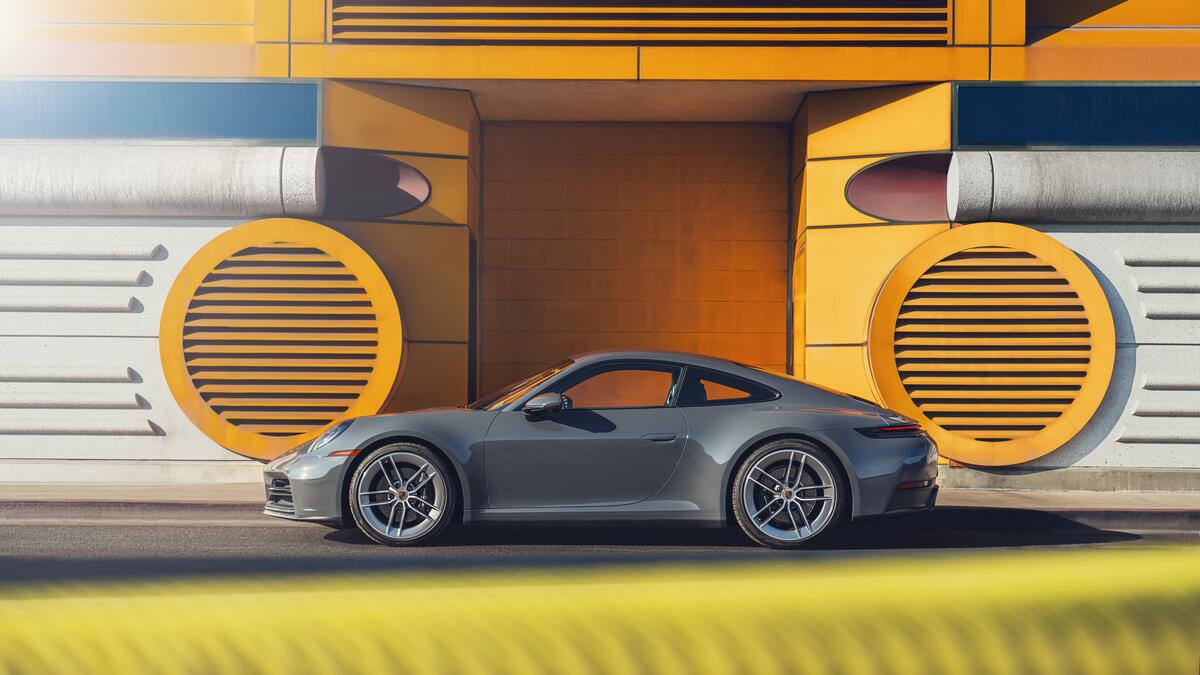
The hosts use “base 9-11” as a shorthand for the Porsche 911 base model, contrasting it with a higher-performance variant like a GT3. The point is that the cheapest version of a model line won’t be the same as the top track-focused trim once you account for options and equipment.
Jim Farley is referenced as a public automotive executive whose statements are being discussed in the context of changing messaging. The hosts use him as an example of how automakers and leaders can shift their tone over time.
Brand
Caniscus
They mention another person’s name (spelled “Caniscus” here) and say they changed their tune. The exact person isn’t clear from the transcript, but it’s part of the discussion about shifting statements in the auto industry.
Honda is referenced as a company that would be involved in acquiring a struggling brand. The discussion is about corporate consolidation—bigger automakers absorbing brands that are financially weak.
They’re talking about two different worlds: real-world car culture (people who build, sell, or fix cars) versus internet car culture (people who make money by posting car videos online). The point is that the internet version can be more about content than actual car experience.
Concept
Internet hype vs real-world value
This part is about how people online can get really confident about cars without having the full picture. The host is basically saying: don’t confuse loud opinions with what’s actually true.
Regional service centers are bigger repair shops that handle maintenance for many customers in a region. They’re often part of a plan where the car company manages service instead of relying on local dealers.
Direct-to-consumer means the car company sells to you directly, instead of using regular dealerships. The idea is that the company also helps with things like service through its own locations.
In car sales, “invoice” usually refers to the price a dealer pays the manufacturer for the vehicle (often called the dealer invoice). The transcript contrasts what dealers pay on invoice versus what they sell for, which is central to how dealer profit is discussed.
Wholesale is the price a business pays or sells at, not the price you’d pay as a customer. The host is using it to show how the numbers don’t match what people claim online.
A dealer is the store that sells the car to you. The host is saying the dealer’s profit can be limited by the company that makes the car, which changes how the whole buying process works.
Term
math
They mean the price calculations people do online. The host is saying the numbers people use are wrong, so there’s nothing to “agree to disagree” about.
At many dealerships, there’s a desk where they finalize the paperwork and try to sell extra add-ons. That’s also where they can make extra money on top of the car price.
A PPI is an inspection you do before you buy a used car. It helps you find hidden problems so you don’t get surprised after you pay. “Independent” means the inspector isn’t working for the seller.
A pre-purchase inspection is a thorough check of a used car before you buy it. The goal is to spot problems early, especially ones you might not notice right away.
“Margin” here means how much profit the seller is making on top of their cost. Higher margin usually means the price has more room for profit built in.
Dealers often borrow money to buy cars before they sell them. That borrowing is called floor planning, and the dealer pays interest while the cars are waiting on the lot.
A markup means the dealer charges more than the usual price. If a car is marked up, you’re paying extra compared to MSRP or the expected selling price.
The Porsche 911 Turbo is a high-performance 911 model with a turbocharger for extra power. The discussion here is about whether you can actually buy one for the price people say online.
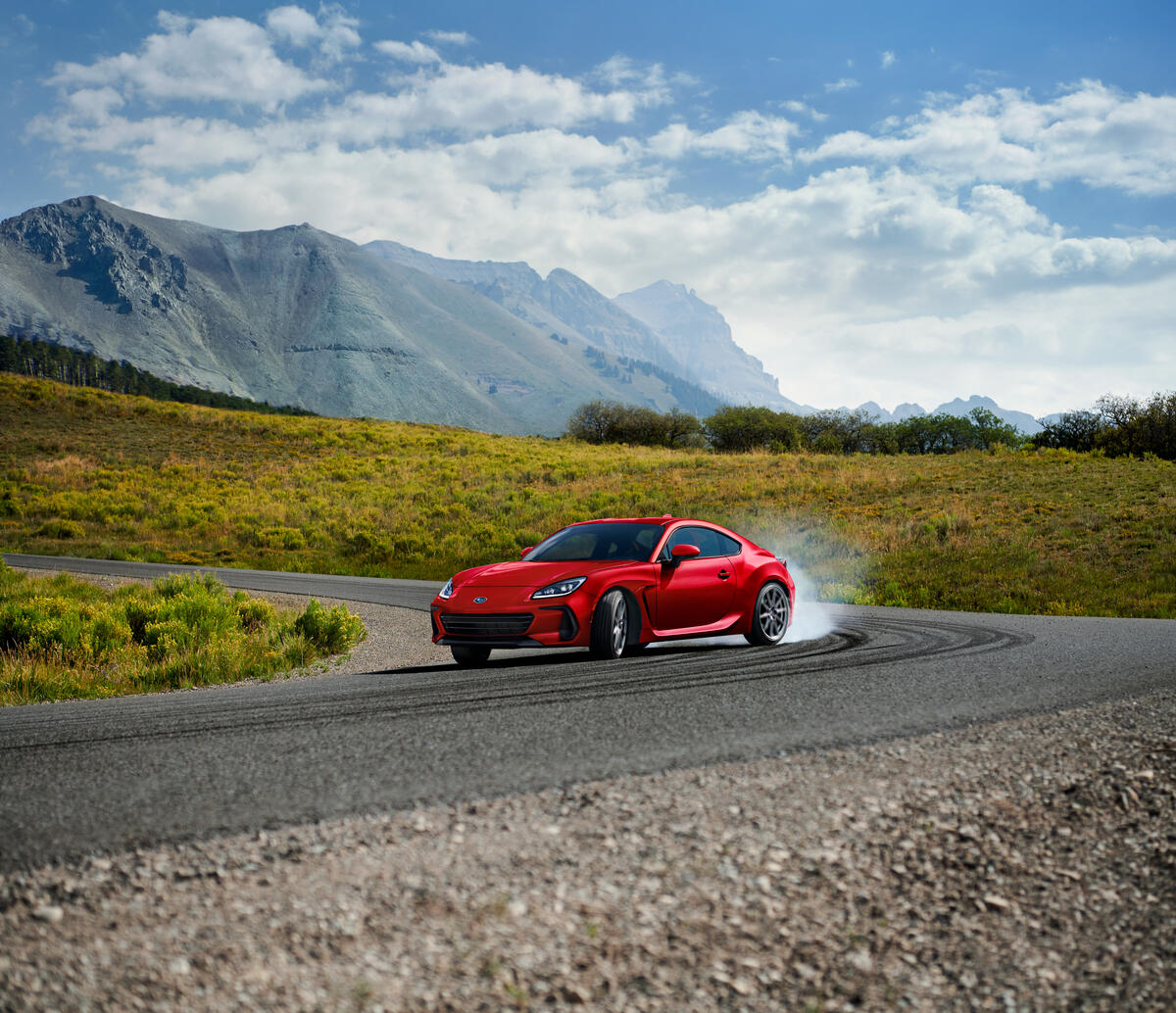
The Subaru BRZ is a small sports car. The podcast mentions a manual version, meaning you shift gears yourself instead of the car doing it for you. They’re talking about the car as part of what they’re showing or discussing on the episode.
Car
Toyota BRZ
The Toyota BRZ is a small, sporty car that’s popular with drivers who like a manual. The hosts are just pointing out they saw one at the dealership.
They’re referring to an older, first version of the Porsche Cayenne SUV. It’s the kind of Cayenne you can sometimes find cheaper used than the newer ones.
They mean the Porsche Cayenne SUV. The host is surprised because it seems to be priced lower than you’d think for a Porsche.
Concept
search results
They’re talking about how to narrow down online car listings. If one brand has tons of listings, it can make the search results less useful for comparing prices.
Hyundai is a car brand. The host is saying that if they include it in their search, it generates so many results that it makes it harder to find the cheaper cars they’re trying to compare.
Cadillac is a luxury car brand. Here, they’re talking about Cadillac’s electric cars and saying you can get a lot for about $30,000.
Term
special fuel
“Special fuel” usually means a type of gas that isn’t the normal stuff at the pump. Some cars need it to run correctly, while others can use regular gas.
Term
AC bill
They mean the money they had to pay to get the air conditioning fixed. Usually that involves finding the leak, fixing it, and then refilling the refrigerant so the A/C can cool again.
Schrader valves are the little valve parts on the A/C system where technicians connect tools. If one leaks, the air conditioner can lose refrigerant and stop cooling well, so you end up paying to fix and recharge it.
Recharging the A/C means putting refrigerant back into the system. If there isn’t enough refrigerant, the air conditioner can’t cool well, so it needs to be refilled after the leak is fixed.
CVT means “continuously variable transmission.” It’s a type of automatic gearbox that can smoothly change ratios instead of shifting like a normal car.
“Safety features” are the car’s systems that help avoid crashes or lessen injuries, often using sensors and computers. If you remove part of that system, the car may need major rework to function correctly.
A sensor is a part that “notices” things—like distance, lane position, or wheel behavior—and sends that info to the car’s computer. If you remove one sensor, the safety system may not work the way it was designed.
“Doom scrolling” means getting stuck scrolling online, usually through stressful or negative stuff. The hosts are saying it can pull you away from making smart, real-world choices—like researching a car properly.
The Tesla Model Y is an all-electric SUV. They’re talking about how much it costs and why the price isn’t lower, based on how the car business and markets work.
BYD is a car company from China that makes electric cars. The hosts mention it when discussing why some Chinese EVs seem cheaper and how that affects prices and availability in America.
“Flood” here is a market concept meaning a large influx of vehicles into the U.S. market. The hosts are arguing that trade/market access and competitive dynamics influence pricing and availability, not just manufacturing cost.
Concept
tilt the table in your favor
They’re talking about getting leverage in a car deal. It means you set things up so you’re less likely to get taken advantage of and more likely to pay a fair price.
They’re referring to a specific older generation of the Ford F-150 pickup (from the early 1980s). People like it because it’s a popular platform for customizing and upgrading.
“Twin-traction beam” is a type of front suspension used on some older Ford trucks. It’s a bit different from modern setups, and it can make the truck easier to modify in the front.
This is an off-road suspension upgrade that lets the wheels move up and down more than stock. “TTB” is the specific front suspension style the kit is built around, and the kit is meant to handle rough terrain better.
Headers are special exhaust parts that change how the engine’s exhaust exits. They can help the engine breathe better, which often improves power on modified builds.
Company
FPA
FPA is the shop or person they’re referencing for the header-related work. The key point is that Steve at FPA helped with the tooling/production for the headers.
A jig is a tool that helps you make parts the right way every time. It holds things in place so the result comes out consistent—like for building headers.
Ceramic coating is a heat-resistant coating applied to parts like exhaust components. It helps keep temperatures under control and can make the parts last longer in hot conditions.
“Dyno tested” means they tested the setup on a machine that measures engine power. It’s a way to confirm it performs correctly before selling or installing it.
They’re talking about the time when COVID caused delays in making and shipping things. That affected how quickly car parts could be produced and delivered.
Springs are the parts that help absorb bumps and keep the truck sitting at the right height. If springs are on back order, the suspension work can’t be finished.
“Handling” is how the car behaves when you turn—how well it grips the road and how smoothly it follows your steering. A car with “good handling” feels controlled and predictable in corners.
Concept
SUV's sports car edge
They mean the SUV is being tuned to feel more sporty, like a sports car. That usually comes from changes that make it turn and corner more confidently instead of feeling big and slow to respond.
A four-door sedan is a car with two rows of seats and a trunk, and you get in through four doors. The hosts are saying it would be a big deal if Ferrari actually makes one.
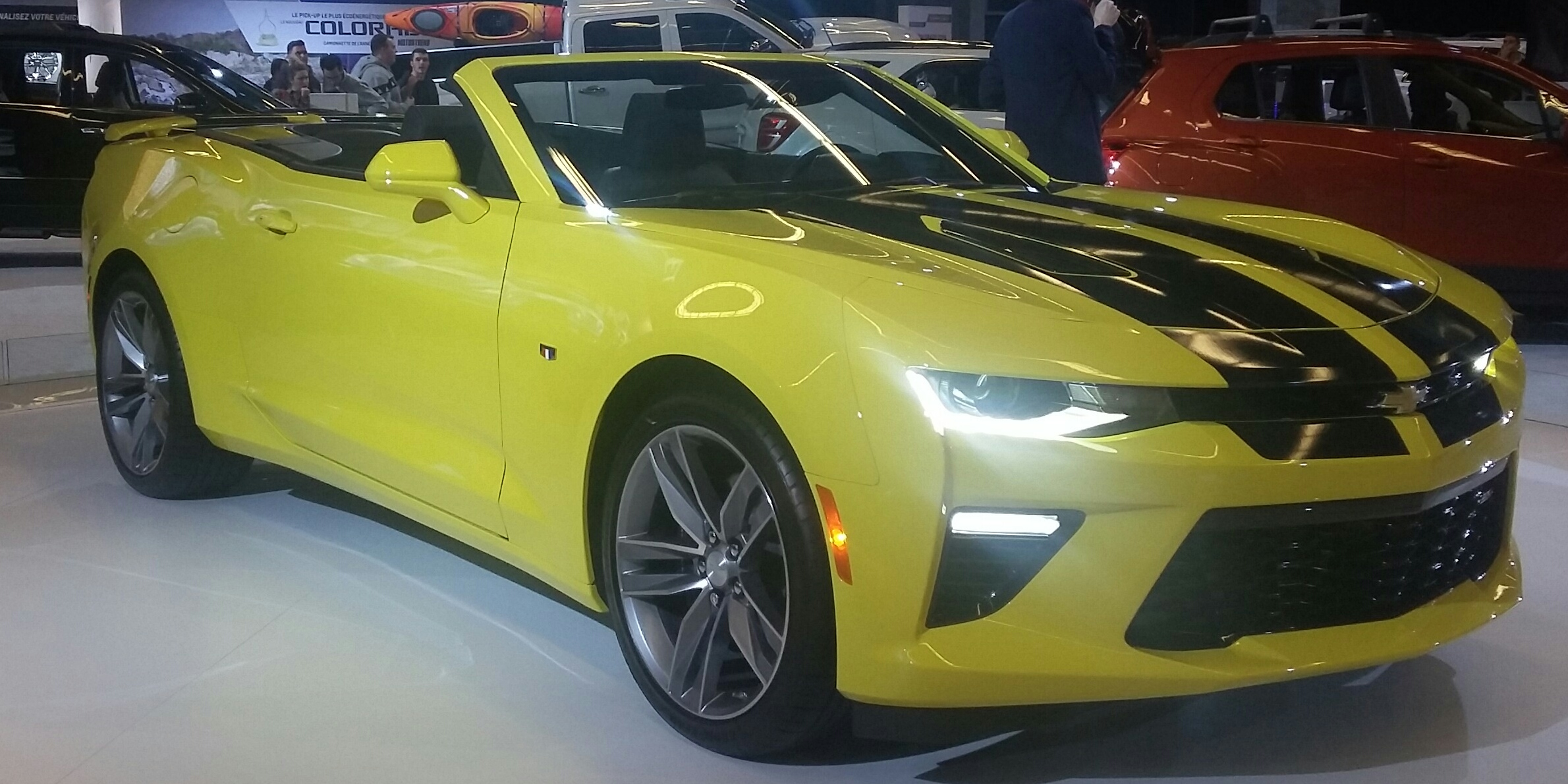
The Chevrolet Camaro is a sporty two-door car designed for performance. It’s the kind of car people talk about when they’re discussing what models are popular or returning. In the episode, it’s brought up as part of that bigger conversation.
The Acura RSX is a small sporty Acura that people liked for being fun and relatively affordable. Here, the hosts are saying it was supposed to become an EV, but that plan got canceled.
The Chevy Bolt is a small electric car. They’re saying it didn’t get enough attention, and they’re also talking about it being canceled as Chevrolet’s EV plans change.
The Chevy Volt was a plug-in hybrid—meaning it could drive on electricity, and then it had a gas engine for longer trips. They’re using it as a reference point for what they think a small EV should be.
The Hyundai Ioniq 5 is an electric car that’s shaped like a crossover. In the podcast, it comes up because the speakers are talking about the Ioniq lineup and may be comparing or correcting which model they’re referring to. It’s mainly part of that model identification conversation.
The GMC Safari is a van-style vehicle meant to carry people. In the podcast, the speakers are talking about how its styling looks—like it tries to look rugged but also upscale. They’re basically saying the overall look doesn’t quite make sense to them.
Concept
Lamborghini EV
“Lamborghini EV” refers to the idea of an electric vehicle built under the Lamborghini brand. The hosts are debating whether an EV can fit Lamborghini’s customer expectations and brand identity, and whether buyers would actually want it.
Sony is being talked about as a partner brand connected to a car idea. The hosts’ point is that even a famous tech brand can’t make a super-expensive car automatically appealing.
The Tesla Model S is an electric luxury car. People talk about it a lot because it’s one of Tesla’s main models, and it can be a good option if you’re looking at used EVs.
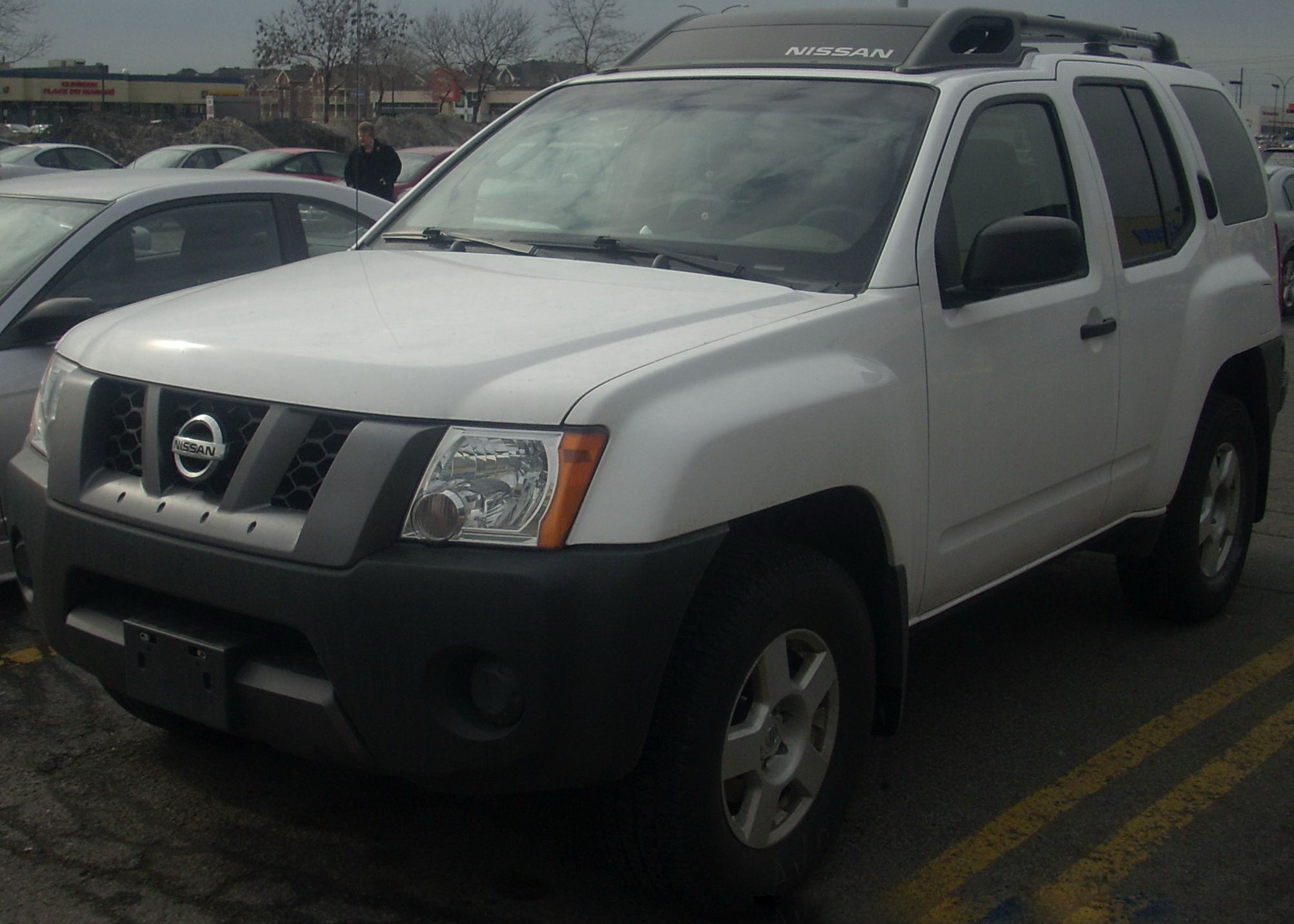
The Nissan Xterra is a tough-looking SUV that’s built for rough roads and off-roading. Here, it’s mentioned because the hosts have strong opinions about it.
The Ford Falcon is a Ford car model. In this episode, the hosts are criticizing the way its doors look and saying they don’t like that design. It’s being mentioned as an example of a styling choice they dislike.
“Goal wing” doors are doors that open upward/outward instead of swinging out normally. They’re popular on some sports cars because they look flashy and make getting in/out feel special.
Volkswagen’s ID line is their electric-car lineup. The hosts are saying some of these EVs have had problems, which affects how people feel about buying them.
Company
Stellantis numbers
Stellantis is a big car company that owns multiple brands. When they say “Stellantis numbers,” they mean the company’s recent results like sales or financial performance.
“Starting V8” means the cheapest trim/option that still comes with a V8 engine. They’re saying you don’t necessarily have to pay a huge amount to get a V8 in this SUV.
LIVE
You know, we were kind of overdue for one of these like very, very viral moments, I guess, for one of our conversations.
I mean, we just got to start the show with it. We posted some videos, or actually one, of the Nissan Xeratoc.
You know, what the CEO of, you know, Nissan America said the price could be, which was sub 40,000.
And it kind of just hit like a lot of the other ones have, so can I just pan it over to you?
Because you were the one really in the thick of it, as they say.
Yeah. Well, we just can't cheer anything on anymore.
You know, so now making things, you know, a cheaper starting price, which is what everybody's told us they want.
You know, if you look through comments of anybody's automotive opinions, it's like, I want cheaper. I want cheaper.
So then Nissan says, hey, the XTERA, we're going to try to make it sub 40,000 dollars.
We said very clearly, let's see what happens when it lands.
Okay. Because a lot of promises get made by a lot of companies and we need to see what happens.
And now that a company's moving to the downside or trying to, people still complain.
Well, that'd be for a four by two. Yeah, man, I know what starting price means.
I mean, I think we all know what starting price means.
It doesn't mean you're getting all the bells and whistles for 39,000 or 38,000 or 40,000.
That doesn't happen in any brand. You know, if you get the base 9-11 and you strip out all the options, you aren't getting a GT3.
I mean, it's not rocket science, but as consumers and as enthusiasts, we've gotten very comfortable and we crack more jokes than anybody.
Oh yeah.
So let's be clear. We talk about Jim Farley. We talk about Caniscus changing his tune.
I mean, we give a lot of gruff out into the automotive world.
I think he's a guff. I was like, man, having a guff in a long time.
This is the most professional, unprofessional podcast in this space if we're being honest.
100%. So we give, I think the average guy a lot of voice because we say things other people are unwilling to say because they're looking to get press cars or get access
or the latest Jim Farley interview with that guy who basically just stood there or sat there and didn't say anything and then somehow promoted it as, you know, look, we interviewed Jim Farley.
I'm not sure you did, but I also understand the game he's playing.
He's getting a view because he's having Jim Farley on.
He's not getting a view because he has a personality and wants to actually hold accountable.
So we try to hold people accountable.
A brand that was bankrupt or on the verge of bankruptcy 12 months ago was looking like they were going to get gobbled up by Honda seems to be doing all the right things and a lot of you can't cheer it on.
It's like, guys, you got to have both.
Yeah, it's kind of, and we're going to stay in the pocket on this for a while because it's permeating throughout all of internet car culture.
You've made a really good distinction of what car culture is and what internet car culture is.
So for those that are new to the show, can you sum it back up for people that haven't heard you say this?
Because I know you have a hot take about your perspective of today's internet car culture.
Internet car culture is not real.
There's no, you even look at people that quote unquote have car collections that have internet channels.
I don't care what it's on, TikTok, YouTube, doesn't matter.
If you guys knew the secrets behind that stuff, if you knew how many of these channels were renting cars and it wasn't a car collection at all.
I mean, the list goes on.
And when you talk about the quote unquote automotive press, I mean, come on.
You're a dog, come on dog.
I mean, come on.
And here's the basic way you look at it.
There are men and women that make money in the automotive business and then there are men and women that make money off the automotive business.
And what permeates internet car culture are people that make money off the car business.
They've never actually worked in the car business at a high level.
They've definitely never operated a car business of any kind, a mechanic shop, a body shop, a dealership, whatever.
Maybe they worked somewhere along the way for two years at such and such company when they were 21 years old.
Now they're 45 years old.
They haven't been in the car business for 20 years.
And it's not a negative.
It's just a reality.
And so what happens is we give out, hey, man, if an ex terror comes out at space prices, $38,000, that's a hell of a move in the right direction.
That doesn't mean I think it's going to be the most unbelievable vehicle ever built.
The company was was looking like it was going to go out of business 12 months ago.
So we gave them a bunch of headache 12 months ago about their bad decisions.
They are starting to what looks like make better decisions and we're not supposed to cheer that on.
So I don't know exactly what you enthusiast.
And I'm going to tell you where this a lot in our content.
These off road guys are some of the most delusional and out of touch people in the car business.
You don't know anything about the car business.
And the guys that drive the tacos and the guys that drive the forerunners, you think you have it all figured out.
You don't realize you've been overpaying for better part of 15 years for those platforms.
But you want to act like your vehicles better than everybody else's.
And I got news for you.
Those aren't even the best vehicles Toyota builds or has built.
Yeah, I mean, you're just you're just nowhere near reality.
And so that's where all of this starts.
Let me get people don't know how any of it works, but they have a really massive opinion about it.
Of course, like most things on the Internet today, right?
Let me start by pulling this one out.
I hope I have them in order here for us to look at.
If not, I'll cut it up.
Yeah, there we go.
Get rid of the middleman says, Paul Paul Lammy, which is great.
How awesome that Paul Paul was in the name because Nick has used that several times.
Cell Direct to Consumer Regional Service Centers to which somebody replied.
I wonder who had I've had zero issues in 25 years buying thousands of cars.
It's not about experience.
It's about price knocks 10 to 15.
I'm guessing meant K off the top dealerships are the last are the thing of the past.
That was just one.
So now I want you to think about this.
If any of you believe that dealerships are making 10 to 15 K per car, those people would be richer than Elon Musk.
You just don't know how the system works.
They don't make 10 to 15 K off a car.
They don't.
And I this is a comment section, guys.
So if you're not watching on YouTube, I suggest you go to YouTube for this part of the podcast.
This is a comment of a guy that doesn't know what he's talking about.
So there's the start of it.
He thinks you're going to not 10 to 15 K off sales prices.
If you get rid of dealerships, go to the next one.
And this was right after that to which Nick replied.
Absolutely no clue how it works.
You haven't you aren't knocking 15 K off any scenario.
Ford going into and maybe this is what this was the second one, right?
Going in.
So you're saying Ford is going to run distribution and service centers for free in your world?
And you have zero idea what dealers pay invoice versus what they sell for.
Let me give an example.
60 K invoice price for an F 150 sells for 64 K on average.
If they sell it wholesale at 62 K.
I hope this helps you.
Now the next comment by this guy is the most important comment to understand how many people are trying to talk on the Internet and don't actually know how anything works.
He says, let's just agree to disagree.
Now I want you guys to understand what he's agreeing to disagree on how it actually works.
I strongly believe we need to eliminate the dealer.
Now, in his previous comment, he says you're going to knock 10 to 15 K off.
He's now been proven wrong.
He wants to agree to disagree.
First one that does that that's not an EV has my business.
So we're supposed to believe he doesn't drive any cars at this point, right, which is not true.
Right.
So go to the last one.
Let me see if I actually pulled it up.
Let me ask you before I pull it up.
As you're typing this out, are you just thinking to yourself, all right, how do I make this as clear so that I can maybe actually get the point across?
I want people to realize I'm not we don't do these segments on the show because we want to complain about commenters.
I'm doing this because there's so many of you that think you know how the system works when you don't.
And I think it's valuable for those of you that are trying to actually learn, which this guy wasn't agree to disagree on the math.
There's nothing to agree or disagree with.
That's how it works.
Many of you don't know matter of fact, the reason all the BS to get sold in the finance office has happened.
The real core of it is that the dealers have been screwed over by the manufacturer and not given enough profit to make on a car.
Like normal retail businesses should, Home Depot, Lowe's, Costco, Walmart doesn't matter.
So now you get sold all these BS warranties in the finance office because that's where they actually have to make money on the car.
Nissan dealers are the worst for this because they don't make any money on the car.
So when all of you think you know what's caused the system to be dysfunctional, you never look at the manufacturer because you don't know what an invoice looks like because you've never seen one.
And the follow up to that was just pure pure genius and really shortened to the point.
And it was just simply agree to disagree on math and how it actually works.
Gotcha.
Yes.
And I want you to think that you go and you comment on a video, any of us and somebody says, let me explain how it works.
And you go agree to disagree because how it actually works doesn't fit your BS opinion.
And this is where we get into really, really troubling internet car culture.
When you look at the world at life in general for all of us, we all have an opinion about stuff.
Hell, we're sitting on this podcast giving an opinion for an hour, 15 minutes a week.
And we get screenshots of people on their TV and their car.
So here's the craziest part.
We are cool with people's opinions, obviously, because we give opinions.
When you give opinions, there's levels to it, right?
So if Michael Jordan gives his opinion on the game of basketball, everybody listening, his opinion is more valuable than yours.
Hate to break it to you.
Why?
Because he has a level of experience, a level of winning in the game of basketball you don't have.
I don't have, right?
Right.
So he just has a more valuable opinion.
We've now okayed, especially in the car world, but this is all of society, having zero experience, giving an opinion, thinking you are right.
And in a sane world, you'd go, that's just stupidity.
But that's not what we do in car culture anymore, right?
It's just like you and I talked about all these guys that want to wash their hands of the things they put on the internet 10 years ago to start some of this stupid car culture.
They're like, well, you know, I don't know why this stuff's going on.
It's like, come on, brother.
Can we play the tape?
Hey, blue band, play the tape.
Yeah, it's like, come on.
I mean, you guys want to sit there and really ring your hands of it because you happen to be 45 years old right now.
And, you know, you're a little dad get off my lawn and acting like you weren't the idiots on the internet 15 years ago.
Come on, man.
Like, we have just gotten to a point where we don't understand that there are certain ways that things work.
And to remind everybody, I don't care about dealerships.
I don't care about manufacturers.
I'm not loyal to any of them.
For the hundredth time, Nick has never sold cars at a dealership.
He's not a salesman.
No, neither one of us are salesmen.
No relationships with dealers.
You went and bought a car.
No relationship to the dealer.
You followed our principles.
Yeah.
You had an excellent experience.
You've enjoyed driving the truck at the price you were willing to pay.
You did an independent PPI.
You got the vehicle checked over.
You knew the things you were in for.
What's the problem with the dealership?
The problem with the dealership is men, especially like this guy talking, don't know how the system works, but he's convinced he does.
And what do you explain to to keep it in car terms is when you let's just use the Michael Jordan example.
If you ask him a question or if he just gives you an opinion, you have to be willing to understand that you've got blind.
There's a blind spot somewhere that you got to be open to accepting.
Most people give the opinion or give any kind of thesis or whatever, and they're not going to say I have a bad thought or a missed thought about it.
Or I'm just completely blind.
I have a blind spot to this thing.
They're just like, no, no, no, no, I got my blinders on.
That's the right opinion.
I want you to think about this in a normal retail setting, which is what a dealership is.
They would have on a high ticket item anywhere between 20 and 35% margin built in so they could sell it at 20 to 30% margin.
They sell it at like eight.
That one's like five.
Five.
Three.
In Nissan's case, zero.
They have to pay us to take it off their hands.
So you guys are sitting here.
You don't have a problem going and buying a light bulb at Home Depot that they're making 700% on.
No issue with Home Depot.
No issue at all.
You have an issue with a dealership, which again, I'm not defending them.
They do some things I wouldn't do.
I wish they do some things I wish weren't part of the ecosystem.
Everybody needs to hear that part.
But I also know the actual problem exists at the manufacturing level and what they sell the cars to the dealers for.
That's where the problem starts.
For those of you that don't know how it works, you think it starts at the dealer.
It starts at the manufacturer screwing up the system, not giving enough profit into the system.
So the cars can be sold at a reasonable price with a reasonable margin.
Therefore, they don't have to sell bullshit finance products.
See, you don't understand that part because you want to just look for the boogeyman, but you don't actually know who the boogeyman is.
And even, you know, in today's world, it's the easiest it's ever been to like pick an AI of your choice or even just Google and find out how it works.
Like if you really want to know, am I being swindled, taken advantage of whatever, type in your scenario, figure out.
You can even go as far as really understanding some of the things we've talked about from time to time, which is like floor planning or the, you know, the back end deals,
or the do they write up the interest rates or what all that stuff can be learned.
But a lot of these people too, I think they've only been so used to buying used that they use these big chunks of dollar amounts on used units.
You know, people think that they're charging, which is could be true, obviously, five, 10 plus thousand dollars on a well, if it's a hot unit that somebody wants to buy,
and they're going to pay for it, you might see that.
But when you're going to go buy a new Nissan, nobody's marking it up, especially for a fucking whatever SUV or crossover, 10, 15, $20,000.
People are so delusional with this markup thing.
99% of cars in the history of the car business have been sold with zero markup, and a large percentage of those have been sold below MSRP.
That's our next viral clip right there.
We're talking about the history of the car business.
Not the last five years.
Not the five years that you guys watched a supply and demand issue.
You guys just don't know how it works.
And you're being a cancer to your circle acting like you know what you're talking about.
And yourself, because if you made the purchase and you signed on a dotted line, you're hating the purchase.
By the way, you signed on like 25 dotted lines.
True.
You didn't sign on one.
When you signed the paperwork for your Raptor, did you just sign in one place?
No, you signed a million paperwork.
And they had a fucking Tony Stark desk where it was all like just on the table.
Honest to zoom in.
Yeah, they're literally going like this as I'm signing papers.
What's going on here?
And the guy had been in the business 20 years, he's like, I know, right?
And you, having no relation using the basic foundation we've given everybody to buy a car a thousand times on this podcast,
had a perfect experience.
And matter of fact, I think you texted me something like, I can't believe how nice this experience has been.
I did.
You know what I'm saying?
Like there was no special treatment.
They didn't know you.
You didn't have a connection to the dealership.
They didn't know about clutch culture.
They didn't know about Rob.
They didn't know about Nick.
Nothing was given.
Like people just don't have any clue.
And you guys are so convinced because you watch these nitwits on the internet that are, by the way, buying cars for you.
Right.
And you think they don't have any dog in the fight to make you believe that this whole system is corrupt.
It's not corrupt.
You just don't know how it works.
There's bad dealers out there.
Five seconds on a dealer lot.
If they tell me I can't get a PPI, I walk off the dealer lot.
Oh, that's a good, okay.
Let's role play for like five seconds in just a fun way.
If you were the average person who was looking to get a family vehicle or any vehicle, any vehicle, any vehicle,
and you were going on to any lot, doesn't matter.
What are the two or three things that was one right there that they don't let you get a PPI walk?
What are the other things that somebody should be like?
All right, this doesn't seem right.
I'm just going to leave.
What's like another two things that they don't let you do?
A non-special car with some type of markup on it.
That's true.
You know, look, if you're going to go buy a brand new GT3, let me tell you, if they can mark it up, they will.
Most of you aren't in that market.
You don't have to worry about what they do with a GT3.
Yeah.
And I had a guy say, well, you can't get a 911 Turbo without a markup.
But I can literally leave on Saturday mornings.
The jujitsu gym my daughter's in, walk to the Porsche dealership from that jujitsu gym.
And let me tell you what I can do by a 911 Turbo with no markup.
It'd be so funny if you just walked out with your phone.
As a matter of fact, we're going to do a live podcast right now as we do this on the show.
Look, they had a BRZ, you know, manual BRZ that kind of sits on this podium on the super lot that you can walk.
It looks great.
I look and I go, it's got a six speed.
There's no markup on that invoice.
No.
There's no markup.
You guys want to go buy a sports car?
It's a manual.
Probably get it under MSRP, too.
100%.
So saying things doesn't make it real.
Listening to people on the internet doesn't make it real either.
Unless it's clutch culture, of course.
Like, where did you go buy a 911 Turbo at?
And they go, well, you know, there's a $75,000 markup.
Another isn't.
God, $75,000.
Where do you come up with these numbers, people?
And it's like, it's not true.
And I can go buy a Taycan or Taycan or whatever people want to say how it said.
Those are on deal now.
You can get a used one for like 20 grand.
We've shown it on the show.
I'm going to tell you this.
I went down a rabbit hole this week because I was just looking at cars.
You realize I found an under 50,000 mile Gen 1 Cayenne for nine grand.
Did you buy it?
It was, I didn't like the blue.
It wasn't real fun in the blue.
But then I extended out the search and I go under 50,000 miles up to $35,000 price.
Dude, I found all kinds of 2016's, 2018's under 50,000 miles under 30 grand.
If you're willing to, like we've talked about, buy older, buy used, have a budget to fix something.
There's a ton of stuff, dude.
I'm still looking.
I was literally talking to my wife yesterday.
Like why, I just bought a Raptor.
Why am I looking for a four, a four door, you know, wagon or sedan manual?
And she's like, cause you're sick in the head.
I'll ask you a question under 30,000 mile.
Cause I just had to do this under 30,000 mile and everybody follow me on this.
None of us are going to buy this car.
I want you to think about this.
If you just needed to get around your town, you needed to get back and forth to work.
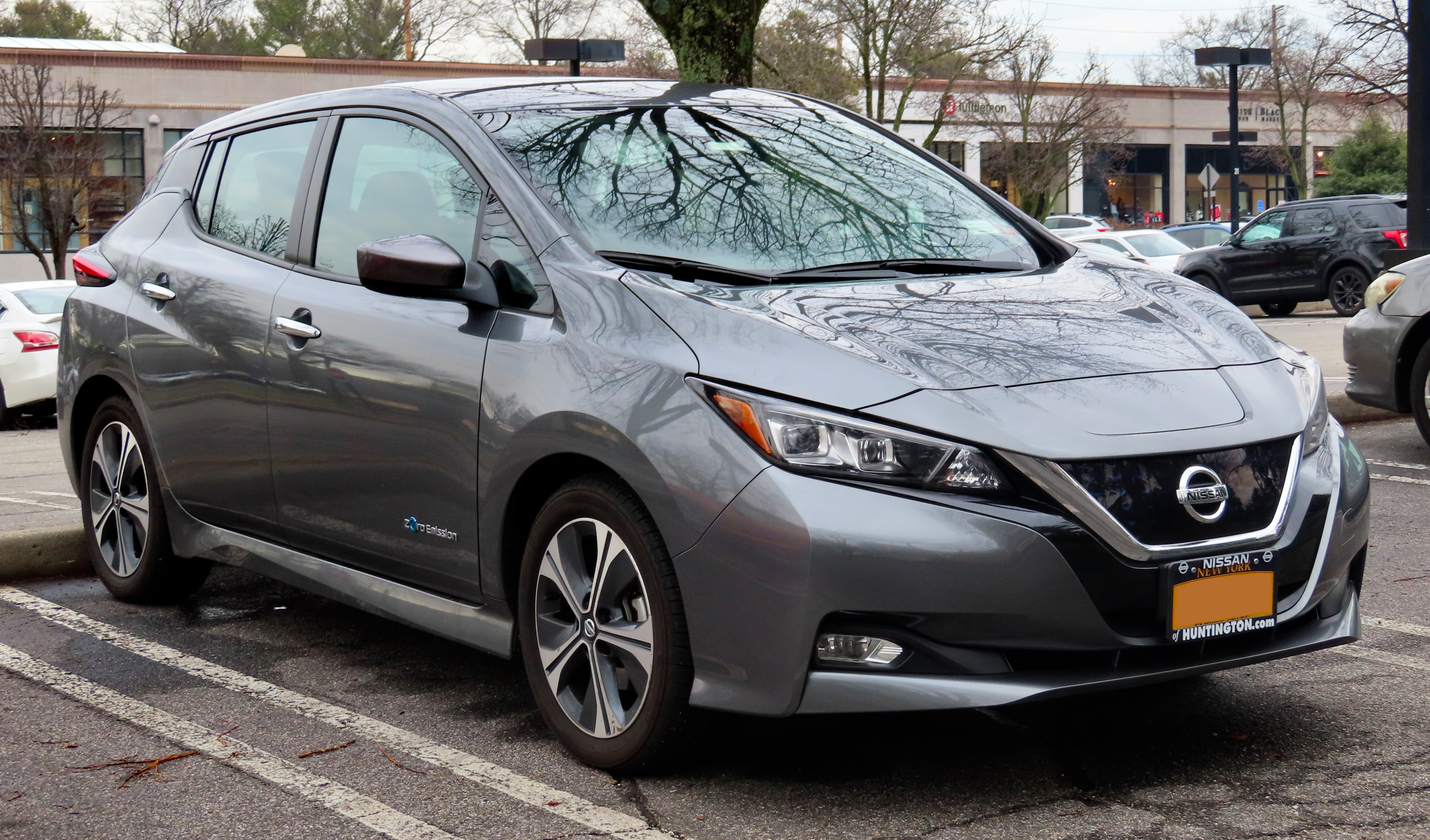
How much do you think you can buy an Nissan Leaf for under 30,000 miles on it?
Under 30,000 miles for a leaf.
I mean, considering they're releasing those really inexpensively, I'm going to guess 10 grand.
Two.
Two grand?
2,800.
Wow.
2,700.
2,300.
3,100.
Okay.
Well.
And I'm going, we just had somebody.
I might gas kind of expensive.
Dog, we had somebody in the discord this morning, early morning, bought a car.
I don't know if they want the Civic or if they want with the Hyundai for gas purposes.
Don't quote me on it.
Listener, I don't have your name in front of me.
They might have paid like 26 for it or somewhere around there.
Damn, I don't have you in front of me.
Dude, I couldn't believe it.
Now, none of us are buying that car.
I understand that.
Okay.
Two grand.
That's crazy.
Wait, wait.
First of all, how did you end there?
Like, how did you have that even come up on your radar?
Well, as you know.
Okay.
Now we're getting somewhere.
I just literally took Porsche off there and I started to say cars under 20 grand under
50,000 miles, cars under 10 grand under 50,000 miles, you know, things like that.
And I did it because I go, God damn these Cayans are cheap.
What else is cheap?
Yeah.
It's just, it's like that mode.
A logical question to ask.
You're not really looking at anything.
You're just like, what else is cheap?
What else is on sale right now?
Yeah.
But I was, I was shocked.
I mean, first of all, you have to eliminate, if you want to actually have search results,
you can go through it.
You got to eliminate Hyundai and Kia because they'll just flood.
That'll be like the first 8,000 pages of the losses.
Yeah.
I mean, anything.
I'd be surprised that you can't buy 25,000 of each vehicle that are under an insane price.
Yeah.
So you had to eliminate those from the search results once you figured out like, dude,
I'll have to wade through eight million pages.
I'll tell you another one I looked at.
I won't say looked for, but it popped up.
That entire Cadillac EV lineup, you can get a lot of vehicle for 30 grand.
That's very true.
9,000 miles.
Yup.
And I'm going, looks pretty good.
You're just sitting there by yourself.
He's sitting in his sauna just like, I don't know, kind of a good deal.
Looks pretty good.
Yeah.
You do get bored in there.
So last night I was watching Nuggets Wolves.
Wolves eliminated the Nuggets.
Oh, wow.
Yeah.
Dude, I don't know if you saw it, probably not.
The Knicks were up like 50 points over the Hawks in the first half.
I couldn't believe it.
I was like, I got to believe I could have put up 26 points.
I mean, I just throw it from half court and put up 26.
This is the only time where I start to kind of pay attention to basketball because it
is exciting.
Like it gets so intense.
So, so great.
And this Boston series is nuts.
Like it's now game seven.
Philly looked great last night.
Boston looks like they're stumbling.
It's going to be at the garden, which by the way, if you guys never, I've seen games
at the old garden and the new garden.
Game seven first round.
Hey man, I enjoy it.
And the other thing is I'm starting to lose touch.
I want to see where you're at.
We got to do something with trying to find where all the fights are now.
We got to have this discussion.
Okay.
Okay.
You and I are big fight fans.
Yeah.
What were you trying to find that you couldn't?
Well, do you remember when, you know, and some of you are this old and some of you aren't.
When you had a cable box, you knew the channels that were going to be showing rerun fights
and what was going to be going on, but it's getting lost in the sauce now.
Yeah.
Is it on prime?
Is it on Netflix?
Is it on Paramount Plus?
Is it on the zone?
I'm finding it hard to get back into the, hey, I'm rewatching Anderson Silva, Rich Franklin
from 25 years ago or 20 years ago.
I don't know that this whole streaming thing is going to play out real well.
Yeah.
You got to have it all in one at a point in time.
Excuse me.
UFC Fight Pass obviously had the catalog pretty much set.
Sure.
And then if you wanted to zone for some of the boxing events and other, you know, international
stuff, cool.
But like you said, now you got prime.
Where's one playing?
Now we got Paramount.
Well, let me tell you the problem.
This is a time of year where if you're a sports fan, flipping channels was money.
I'm going to watch the NBA, go to the hockey game, got my baseball team playing.
I'm going to flip through.
I never watched a commercial in my life.
Yeah.
Now try to get it where you're trying to get out of Amazon Prime, get to TNT on YouTube TV.
You can't do it.
By the time you get back, it's like you've already missed a quarter of the fucking game.
So I'm in this, I'm in this like dead zone where now I'm starting to think up in my loft.
I'm like, okay, I need to get three TVs.
You know, you know what I'm saying?
Like, this is like a real thing now.
I love that we're talking about this because I was having a conversation with my brother
actually what I can, and I might have a solution for you if you're willing to hear me out.
What do you use to stream your sports on TV, on a device?
I use YouTube TV, Amazon Prime, and I guess some Netflix.
It's basically, but like, you know, some NBA games are on peacock.
But is it using the built in like on the top over the top at their fucking apps?
I'm using Apple TV.
I'm using Apple TV and I use the apps.
Okay.
So with the Apple TV, you don't find it easy to double click the rectangle to jump from
app to app.
Oh, no, I find that easy, but everything's got to launch.
Everything's got to like be pulled up and then you got to get into the game.
Yeah.
Yeah.
No, I can pull all that off.
I'm not that old.
Bro, I can pull all that off.
I'm just saying it takes so much time instead of just hitting the back button like you used
to and go, oh, I'm going back to the hockey game.
That's true.
Some of the apps, I usually never have an issue with it relaunching.
As long as you're still playing, I can jump from like whatever the local app is for like
Astros Rockets and then jump back into like MLB TV and it's still playing.
Speaking of your Rockets.
Coming back.
Your Rockets with Durant just sitting out.
Yeah, I know.
Got to be tweeting from that burner.
Oh my God.
You've got to be on that burner account.
You know, do you have some input on Durant?
Man, because listen, I'm just going to say.
He's the weirdest top 10 to 15 player of all time.
I mean, when he was with OKC in the early days and then obviously.
He's just weird.
Strange, strange cat.
But he's seven foot with handles and a J.
That's a whole different, I mean, wherever you have him, he's got to be top 20 of all
time.
But he is weird, man.
He's a weird personality.
He blows up locker rooms.
People don't seem to be like being around him.
It seems like kind of a grumpy dude.
But man, he can ball and like just sitting out games.
Weird.
Hey, your boy LeBron did clown Shangoon the other night.
I did see that.
It's on the island.
Don't talk about fouls, my guy.
Everyone else on your team can.
Don't you talk about fouls.
He better just stop talking and keep playing because you're going from about to sweep the
Rockets to this is getting close again.
Well, let's be I mean, Lucas out.
Austin Reeves misgames.
You know, the fact that the Lakers are even alive with a 41 year old, you know, past his
prime superstar.
Like I cannot believe that dude's 41 years.
Dude, he's starting to look at that.
Let's be honest.
But have you ever seen a dude that is that big and still that athletic?
Like what if you were just at the park and this dude rolled up and was like, I used to
be a former athlete and look like that cat at 41 years old.
You'd be like, damn.
Yoel Romero is the only one.
Yeah.
Well, you never knew his age.
He could have came over when he was 40.
You could have come over when he was 23.
You never knew.
But he was a freak.
And if you never saw that dude in person, which I'm assuming a lot of you didn't.
And I got to see him a lot in person.
Boy, it looks ridiculous.
Bro, him and then also slept on Hector Lombard.
Lightning.
Yeah, that's true.
I'll tell you who looked like a freak.
And this is going way back.
Randy Couture was like that.
Yeah, he looked like a gentleman.
Randy Couture looked freaky at 40 years old.
And you know, his gym's like right here.
Yeah, extreme couture, right?
Yeah, yeah.
No, it's, and that place has been there and been in the same spot for years.
Speaking of real quick, Hector Lombard, the reason they came to mind is, you know,
I was at a bar probably about two weeks ago and I planned something and then I'm like,
wait, what is this?
Is that, I think it was like Houston, Alexander and Hector Lombard.
And they were in the pillow fight championship.
I was like, I had to like rub my eyes like, am I dreaming that I already get too many
drinks?
I haven't even started drinking it.
Like what's going on?
So is Chail sunning and Mazvedal going to happen?
I sure hope so.
Me too.
And I hope it's no gloves.
No, I don't want, come on.
There's someone's going to break a hand immediately.
A fight's going to be over.
Who cares?
No, no, no.
I just want to see the silliness of it.
Are you going to watch the Ronda Carano event?
I don't want to get, I don't want to get in trouble here.
I got a real weird thing with the women.
I get it.
Women fighting thing.
Like, Nunez is the only one that I ever was like, okay, this looks like, yeah.
We'll hurt Cyborg, obviously.
Yeah.
Cyborg now.
But yeah, I mean, Nunez, I could tune in some of this stuff, man.
I'm like, I don't know.
Well, we'll just focus on the rest of the card.
You got Nganu obviously on there.
I think there's a couple of other stars that are going to be on that fight.
Yeah.
So I mean, look, I'm a sicko.
So I'll tune in.
So that's all.
If it's on and I can find it because of my age.
Exactly.
If it's on some app somewhere that I know what app it's on.
Yeah, there we go.
Well, if you do got to get the three TVs, I'd love to see what kind of setup you go with
because sometimes I think of the same thing.
Like, is this wall big enough for one TV?
Should I get multiple?
I don't really like putting them together.
Well, dude, I'm starting to think, do I need two TVs by the pool?
Yeah.
I only have one.
Yeah.
What am I going to do when it's pool season?
Yeah, man.
I mean, this app thing's a problem.
And you know what?
That's kind of why I've exclusively watched MLB because I can watch four games at once.
MLB TV.
And then the commercial start.
In YouTube TV, I can watch multi-view.
I can watch the time, but if they're not all on YouTube TV and they're on like, you know,
something else, then I can't really.
Yeah, it's not smooth.
I can't really move down like that.
It's not smooth.
Yeah.
That's why college football and the NFL is great because, you know, it's all on mainstream
TV and you can put four boxes up and you're good.
Yeah.
I'm going to start getting more into college football or college sports in general, just
because there's always something going on.
There's always excitement.
There's always, and you know, they're going to, you're going to see them later.
Obviously in their career.
I mean, especially like college baseball and the College World Series.
That's fun to watch.
Love it.
Love it.
Love it.
I know some of you sickos out there watching women's volleyball.
Don't lie to yourself.
I mean, who does not watch women's volleyball?
You know, they got skills.
They got hands.
Yeah.
Sounds like that.
I wasn't going to say, oh, what are you paying for gas right now?
Because I think you put a picture in the discord.
609, I think.
609.
I actually had it right now when you said pull up the picks from the conversation that
we pulled up at the beginning of the show.
I had it in our thread and I forgot to send it to you.
Filled up last night.
446.
It's pretty hefty for Texas.
It is, but it's 93.
Yeah, it's true.
Yeah.
It's still hefty.
Yeah.
Especially since you guys like your whole state's built on refining and shit, you think
it would be like almost free.
I mean, in Saudi, it's free.
So you think where you pulled it from the ground in Texas and then refined it because
you tried to flex on that one of these episodes.
You know, I'm going to say if you need special fuel because you're a desert of fuel as well,
you really can't talk much.
All right.
You need special fuel that's extra taxed and has a rainbow flag on it otherwise you can't
get it.
Aye, what?
My car's run.
What do you want me to do?
Speaking of, how's it running?
Because I just had a second AC bill on the Raptor this past weekend.
Yeah, what happened?
Oh my God.
I don't know.
It was one of the Schrader valves.
It was just another leak along the, you know, 14 year old system.
So you know, unexpected, but another five and this is what I was going to say too when
you were talking about the cost of buying a car, manufacturing, whatever.
The tax got a charge, but they got a charge to fix your shit.
So if you're upset about that as well, keep that in mind when you're going out for a
new car or a used car or whatever, when you see like, yeah, one 15 hour, one 25 or whatever
it is, right?
One 70 an hour.
Like, hey, it is.
Are you going to fix it?
Are you going to recharge the system or whatever breaks?
So anyway, but it's fixed and now it's great because it's starting to get real hot.
Yeah, I feel like I'd love to hear everybody's opinion on this.
I feel like there's a segment of the population that would complain if it was 50 bucks an
hour.
Yeah.
And they did when it was 50 bucks an hour.
Yeah, it's like, it's never not going to be a complaint.
That was my biggest note from the Nissan thread was that no matter how hard somebody seems
to try, it's never good enough.
There's always something to complain about CVT this, they're going to mark it up.
You say 50k like it's good.
Yeah.
Everybody's like this.
Well, if they took all the safety features out, that would reduce the price.
But they're not going to do that.
That was another one.
Yeah.
They're not going to do that.
Like, what world are you guys living in?
If they take one sensor out, they got to rebuild their whole safety platform.
They're not taking one sensor out to save you a thousand bucks.
That is not how manufacturing works.
And for those enthusiasts that follow us to like have fun and bust balls, but also want
to have some information that's based somewhat in reality, we have to look at this in a very
real thing.
If you get caught up with people in your life that just simply are never going to acknowledge
how the world works when it comes to cars, I can't run from those people fast enough.
I just have no interest in that anymore.
Like, I'm not going to sit around and I'll have this from time to time.
People will be around me.
They'll want to talk about the car they just bought.
It doesn't matter what the cost of it is.
And they want to tell me the realities of their car and how they bought it.
And I'm just not interested in that.
The bottom line is they get it wrong 100% of the time.
And it's okay, man.
It's your money.
Spend it how you want.
If you love a Tacoma, go buy the goddamn thing.
Nobody cares.
I don't care.
You don't care.
The listeners don't care.
But you act like that's the best vehicle that's ever been built in the history of the world.
You're just living in fantasy land.
And I mean, I implore you, if you haven't seen that video about the exterior, you'll
find it.
It's one of the newer ones.
After this episode drops.
I can't eat.
The comments can't be loaded right now.
Please try again later.
I've been trying to load our comments to pull them up here live as we're recording this.
And it won't even load.
There's so many packing forth right now.
So I just wanted to show you guys that.
Go have a hoot.
Maybe even throw something in there with whoever is yapping away, which I got a question for
you.
The term YAP, you know, it's become very prevalent online, which is funny because Rob was yapping
in his car.
I was literally Rob G in the ST 15 fucking years ago.
And now yapping seems to be the thing everybody wants to do from their phone on their Instagram
account, which is fine.
But you got to be careful who you listen to yapping and what they're saying.
Oh, it's I think we all have to take that advice because there's things that we're all
interested in that we're not spending our daily lives doing as a job.
Yeah.
Right.
Like you can kick.
I mean, we all can get caught up in in nonsense.
I mean, that's that's the nature of the Internet.
I mean, they call it doom scrolling things like that now.
Right.
But when it comes to something that's expensive for a lot of people as a car, man, you got
to start living in the real world and you got to figure out at least the basics of how
all this works.
So you can tilt the table to your advantage.
Right.
You're never going to go and find a hundred and fifty thousand dollar car in perfect condition
for 10 grand.
Okay.
That's not what I mean by tilting it in your advantage.
But if everybody paid 150 for the car and you were a little bit better at negotiating
and you got it for 138, hey, man, you tilted it in your in your direction.
And all of this, that if we take all this stuff out of the system and what I can't understand
about people taking things out of the system, a Model Y is what 40 grand.
Yeah.
40, 45,000 dollars.
Why isn't it 30 or 20?
They don't have anybody in the system.
Why isn't it 15 grand off because there's not that kind of money in the car business.
Yeah.
And people just don't want to hear that.
And it starts with manufacturing a car costs a lot of money and everybody that's getting
caught up in this Chinese BYD low price, this and that, that's great, man.
When you live in America, you don't have access to it.
That's not how your economy works.
Yeah.
It is what it is.
If you want to say let's flood America with Chinese cars, then don't say you're pro America.
Yeah.
Because you don't really know why that's being done and it's being done because we're not
allowed to flood their marketplace all the time, but the things we want to sell.
It's that simple.
Tilting it in your favor is such a beautiful line.
That needs to be a shirt or a segment or a series or something because when you tilt
it in your favor, you can, again, enjoy the buying experience and then also enjoy the
ownership experience because if you did not have any of it tilted in your favor and you
still signed misery for the next however many years you have that vehicle.
Yes.
100%.
And you're angry, you're mad, you're bitter, you start to say things that aren't true to
the people around you now that you've infected them with your bad advice.
I've always told people this and I have it dealing with people the last 15 years on trying
to get them out of bad car deals or help them with car deals.
The most cancerous people in the car business are your buddies that don't know what they're
talking about because they're telling you how it works when it doesn't work that way.
And so you have no chance to tilt the table in your favor and there's absolute ways to
minorly tilt this in your favor compared to every other consumer.
Dude, since we're talking about older cars or whatever, did you by chance have, has
this person who's working on a Ford project come across your screen?
It's like a bull knows F 250 is making into a Raptor.
No.
Oh, I got to find the name dude, dude, dude, everybody go follow this guy.
No free shout outs, but this guy seems really cool.
He pitched this idea to Ford and they greenlit it.
So essentially they're making, I think it's early 90s, we'll call it our late 80s, F 250
into what would be a modern Raptor.
I got to find his account and I got to pull it up so everybody bear with me here.
But it's cool and I personally never even like these old Fords myself.
Man, my internet's going slow.
All right, give me a second until I actually pull it up, but it's really cool, man.
This is the kind of stuff that enthusiasts live for.
Let me see his name is
Doc Johnson, Doc Johnson's restorations.
Let me try to pull it up as I have the screen here in front of me now.
There it is to get a load of this.
He's making a whole series out of it and let's see if I can find day one.
Yup, sure did.
Let's go.
Hey, Instagram gave the volume knob back.
They change that thing every other day.
Here we go.
Oh, check this out, Doc.
We're built a Raptor in the 80s.
Here we go.
Ever in a million years did I think I'd get a contract with four
performance to build a marketing project.
And on top of that, I can't believe they chose a bullnose for this project.
For those who don't know bullnoses are 1980 to 1986 Ford F 150, 250 and 350.
They're some of the best trucks ever built and share a lot with the OBS platform.
Not to mention it's extremely easy to drop in a rowdy small block or big block.
And because that twin-traction beam is one of the weirdest factory
suspensions ever designed, it offers lots of room to make something
super epic with some parts from Carrot Customs.
And look how awesome those Raptor emblems are from Custom Car emblems.
We're going to be fabbing up this chassis with the Carrot Customs
long travel TTB kit, and we're going to be blasting that 600 horsepower
small block through the desert.
In the production of these engines lapsed during COVID, Steve at FPA
had literally given away the jig to make these headers.
I got them to track them down from his buddy's attic and make me a set.
And it can make you a set too.
They are officially back in production.
They're dyno tested, ceramic coated and super awesome.
So this is the official end of day one of this build.
Tomorrow will be cutting out old suspension.
Dude, so you're going to love this.
If you follow this guy's account, he's on.
That was day one only, maybe like a week ago.
I won't play the audio.
I'll just kind of play it on the background.
But here's kind of just an idea of like, I think it was like day five.
So he's already made a lot of it.
This dude has a shop, but this is his home shop that he's just working
on after hours, just knocking this thing out for Ford.
That's awesome, man.
Yeah, I love seeing stuff like that.
That's that's that is really cool.
That and it's really cool.
It looks like, you know, Ford is egging him on and saying, let's go do this.
And let's do a marketing project.
And I think that's awesome, man.
Yeah.
So again, you know, somebody will have something shittier to say about
Ford doing this on an 80s truck.
Like, yeah, I think it's awesome.
Yeah, it's super cool.
I mean, I mean, let's drop an 80s on yours.
No, I don't.
Yeah, so I'm saying let's just get an 80s body and go to work.
Absolutely not.
I still love driving this thing.
Finally, I've had parts on back order for the suspension project.
So they're supposed to be in late May.
And it's funny, you know, we're way past beyond this whole COVID era.
But like he even said on that motor or those headers during that era, a lot
of things did get disrupted where if you were a smaller guy and you weren't
like a huge conglomerate, the odds of you getting back on track with any
kind of manufacturing was really tough.
And same for other springs and suspension parts.
I think people, you know, we obviously have some conflicts going on around the
world that is is going to probably enter some of these things back into the chat.
I mean, it's it's it's going to get pretty rough if we don't get get some
ending to all of this.
And for those of us that live through it, I don't think a lot of these
manufacturers have really got back on gotten back on track with parts, how
much of it's on purpose, how much of it is, you know, unorganized or, you know,
just not paying attention to it, all that can be debated.
But I think we all can say parts shouldn't be this big of an issue this
far down the road.
And there's definitely something wrong in the ecosystem.
And these global disruptions are showing a complete weakness in the global
market of when you're working on global distribution and you're working
on a global marketplace, you know, not having things, you know, in North
America ready to go is becoming more and more of an issue that's becoming glaring.
Absolutely.
Let's speed run through a couple of these stories.
We this was a really fun episode of the first quarter or three quarters of it
talking about all this stuff we did.
But I want to get your opinion on have you driven the Buddha Sangway, the Ferrari?
No, I have not.
So the 27 gets a handling, a speciale sharpens the SUV's sports car edge.
This thing looks so good.
You like this, right?
You think it looks great?
Yeah, it looks great.
So this 27 is going to handle more like an actual Ferrari sports car rather
than SUV.
So when you ask Ferrari, like when you built the first one, you didn't want
it to handle like a Ferrari since your name is Ferrari.
I'm so glad you said that because it was going to ask you like, isn't this kind
of had a characteristic to this being the upgrade to the car?
And here's the thing, man, they they've done pretty well with this thing.
I mean, I think they came out with a pretty deep waiting list for the original.
Yep.
Uh, I know all of us purists.
When you're as comes came out here, Sangway came out, all this kind of stuff came out.
We all had kind of a visceral reaction to it.
But with the popularity of you're us, I think that's over.
I mean, I think the purest part of these companies, they're never going back now.
And if I'm not mistaken, Ferrari has announced a four door sedan.
Yeah, I read it.
I didn't pull it up or I don't know what it looks like.
But yeah, I read that that was going to be coming in that, you know, going back
to the Camaro conversation from like that's going, that might be a flop
because I believe it's fully V.
Oh, they're probably going to have some and it's not to market yet.
Everybody needs to calm down.
Who's see what happens.
But I believe that's what they're they're going to do with the four door sedan.
Speaking of EVs, we'll shift over to that one as we speed run through this.
We talked about probably, I don't know, six months ago, a bunch of EVs that
weren't making it into 2026.
Here's kind of a revitalized list of what's not making it to 2027.
I don't think you really had any high expectations for any of these makers
and their EVs, but we'll run through them just for listeners.
In case you you cared or you thought maybe you'd be picking this up in the future.
But Acura RSX, what a shame that they didn't make this into a small affordable
economical sports car for the for the public.
It was going to be an EV and they're just not going to make it all together.
Yeah, that sounds about right.
Yeah, that brand that brand means big revitalization.
A lot.
They should take some notes from Infinity and Nissan right now, honestly.
We can get funny at least say some shit.
Yeah, go the Farley ride if you're going to say shit.
Yeah, just just say crazy stuff.
BMW i4 BMW ix BMW or sorry, the Chevy Bolt.
The Bolt was a slept on car way back in the day.
The little car, the Volt, rather the Volt.
Yeah, the Bolt could have been with the Volt should have just like a small,
really good, reliable, like, you know, energy efficient, whatever car.
Yeah, I agree.
But they're going to cancel it because it looks like a Blazer or Trail Blazer
or whatever the or what was that?
What's that?
It looks like a small equinox.
Equinox. Yeah, it's just like, what are we doing?
You got some design chops in there, like mix it up.
This Honda, this one was weird.
Did you remember seeing this one a couple of months back?
Well, you remember they had that whole partnership
with Sony, right?
Yeah, kind of like fell through.
We all know why these are getting canceled.
I mean, that one right there, the Honda Zero Series sedan.
That I don't know how that made it out of anybody's brain.
I mean, when I thought this, I took the words right out of next mouth,
heinous, like that's the first time immediately said heinous.
Yeah, that's heinous.
I mean, it's Hyundai Ioniq 6.
We do that.
The the mouse cockroach looking car.
The Kona EV, the EV, a lot of Kia, Hyundai.
Well, it's like I told you, you got to be careful
when you're search results looking for cars
because you'll see a lot of Hyundai's and Kia's on them.
Jesus, great.
Another one.
Look at this, another Kia.
The Niro EV, that one looks OK.
It looks all right.
But I mean, look, this list is like mostly Hyundai's and Kia's being canceled.
Lamborghini, this one I never thought was really going to make it,
but it was canceled this year.
Yeah, that that never had a prayer.
No, that's like you took the the year is and you're like,
can we just make it into a coupe with that cell?
Yeah, and let's just make this look weird dynamically.
Like they wanted a safari up, but keep it luxury.
And like you could have done it better.
Well, but is anybody buying or hyped up about buying a Lamborghini EV?
I mean, it's what Porsche has found out.
Right. It's it's not it's just not the.
It's just not your brand.
I mean, and it's it's not a pivot you can make on a whim.
Right.
Right.
Moving on.
This was the pure.
Oh, there you go.
The Fila Fila.
Yeah, this is a Sony Fila.
Yeah, what a great idea.
They were like, hey, we got this Sony Honda partnership,
and this car is going to cost two hundred and ten thousand dollars.
Like, yeah, I don't think that's going to work.
We make really good subs in tweeters.
Can we do the same?
Well, first, we do these.
You want to see our new car?
Obviously, we know about the Model S and the by the way,
another one that comes up.
Yeah, you can get a lot of cars for 20 grand.
A lot of car.
Would you consider ever getting an older S?
Really cool. Nice.
Yeah, I would. Absolutely.
Axe, obviously, we know the X.
I was never the biggest fan of we've talked about it before, but.
The Falcon doors were stupid.
Yeah, it's pretty dumb.
Do you like those kind of doors in general, just like goal wing type doors?
Yeah, on goal wing.
Sure, sure, sure.
Yeah, fair enough.
You know, you know when I like Lambo doors on a Lambo,
you don't like them on Corvettes.
It wasn't cool on your Supra.
You're not cool unless you pee your pants.
The Volkswagen ID form.
They've had a lot of problems with some of these ID cars.
By the way, do you see the Stellantis numbers?
No, which ones?
Big profit on Q1, except when you dig into the numbers,
it's because they're already taking credit for the tariff refund
they haven't gotten yet.
Ah, Stellantis.
Very American.
They're like, hey, look at this.
Great. And then you got to dig through the fine print.
It's like, oh, yeah, we kind of think we're getting all that tariff money back.
By the way, if you've ever looked to get money back from the government,
how quickly do you think that check's going to come in?
It'll be a couple of tax seasons before you get it back.
I would assume.
It'd have been funny if they attributed it all to the Durango.
The IRS just sent them a $13 check at a time.
Like the Seinfeld, when he got those 12 cent checks
and he had to sign them on.
He was like getting Carpal Trons, the Tons of Trons from signing them.
Ah, it's the checks.
It'd be hilarious if the IRS didn't direct deposit it into Stellantis account.
They just kept sending them small-ass checks.
So funny.
I did see a lot more people talking about the Durango sales after our episode dropped.
I'm just saying, not saying you copy those.
Obviously, we're covering similar topics.
But good for them.
I hope that keeps them going in that direction
and doesn't try to revert to this long list of EVs to try to sell.
Well, I think the cool thing about Durango,
and you did start to see people going out to the dealers and putting up,
you know, they've gone to the downside on that price.
Yeah, very much so.
I mean, I think you can get a starting V8 at what, 43?
Yeah, 45.
This is so funny.
This is almost it's like the serendipitous things that I would say happen.
We were at the ballpark a week ago.
This was as I was making notes for the Durango episode that dropped last week
or, you know, segment.
And one of the moms is like, I guess we just got a new car.
She is like a Durango GT or whatever.
She's like, that Hemmy sounds so great.
And seeing the excitement in her face for having a family size SUV with a Hemmy.
And I was like, well, this is perfectly, you know,
it just feeds into the idea that that is what some people want to pay,
especially when you price it right where it makes sense,
where consumers are used to saying like, OK, that's justifiable.
Well, and I really, you know, obviously any of us lost track of Durango.
Yeah, it wasn't at the forefront of everybody's mind.
But when you start reading through things, looking through things,
brought buttons back, you know, kind of said, hey,
we've listened to the market a little bit.
We're going to where we can make it a simple change.
We will move to the downside, put the V8 back in, added some buttons.
And here you are going, hey, we got a little right revitalization in our sales.
I'm not saying every company can do that, right?
Like Toyota doesn't have any reason to change course.
They made twenty six billion dollars, right?
So they're not going to make some wholesale change to their bid.
They're like, yeah, now we're good.
But these manufacturers, you know, if Ford has a lagging segment,
if Chevy has a lagging segment, there is something to just go on back
to the simple a little bit. Absolutely.
Well, speaking, this is a two part question coming up next, speaking of simple,
speaking of V8s, we have a 685 horsepower Cadillac CT5V Blackwing
special edition for the F1 fanboys reports car and driver.
You love black on black on black.
This is all murdered out.
Kind of to look like the livery that the Formula One car is going to have.
You know, Cadillacs having their first team, I believe, launched this year.
Second part of this question, one is, do you think this is awesome,
to motor sports fan?
Were you ever really an are you at all like a motor sports follower?
I've been to a lot of events.
I've been to a lot of NASCAR races.
Do you follow seasons?
No, I've never been like that.
Yeah, me neither.
I mean, there's nothing kind of more fun than, you know,
going and partying at a NASCAR race.
And that's that's that's a lot of fun.
I've been to the Indy 500.
I've also been to the brickyard at Indy.
You know, got to go down on the bricks with with some things
I was involved in. That's cool.
And so here's the deal, man.
I think motor sports are one of those things that I think
if you're into it, you know, you follow something like F1.
You follow something like NASCAR.
You follow something like I did watch a little bit of the Indy race
out at Long Beach.
I would like to probably go attend that.
But they don't really exactly have that whole event figured out.
If you ask me, it's kind of hard to see things and it's kind of hard
to maneuver around if you've ever been to Long Beach, great place.
I mean, I like Long Beach, especially downtown Long Beach.
But I think the one cool thing that Cadillac can probably do
with getting into F1 is stuff like this.
And, you know, it's going to be insanely expensive.
I'm not sitting here saying we're all going to be running out to buy this thing.
But I do think it's cool that they're doing it.
Absolutely.
Two got two more things here to swing by you.
So Ford, whoo, add into that recall list.
They are recalling about nearly 5000, which seems like a low number.
We'll see 5000 Bronco SUVs because they might roll away was the headline.
So these were apparently units that were already fixed and they have
misaligned drivetrains blinds that might prematurely wear out.
So it could just unless you have the emergency break on, just roll away.
And something tells me this is like an under reported number
if we're just going with 5000.
Well, when do we call it Jim recall Farley?
Like when when when do we kind of give that moniker out?
Because this is manufacturing cars, not easy.
We always got to say it.
Things are going to happen.
It it's just that every turn they have something.
Yeah. And it's like never really all that minor.
No, no, hey, your car might roll into traffic
if you don't put the parking brake on, you know what I mean?
It's like always something you go, that's a little bit of a problem.
You know, it's not like, hey, it's this tiny sensor.
It's not really going to affect anything.
You know, it's like your gas pedal is going to get stuck.
It seems like Ford is in that mode where it's like your brakes might cut off.
You slept on the wrong part of the assembly line and we have a real big problem now.
Yeah, we we we didn't actually check the brakes.
So we realize that now and we swear it only affects 5000.
I bet you that number rises, like you said.
Yeah.
But I'll say it, maybe a little less time on pointless podcasts
and a little bit more time on the factory floor might do some good here.
Surprise. That's not an actual show.
Pointless, like I'm sure there's there's that one with this car talk.
I think we could probably rename this show. No, no, no.
How dare you?
I said podcast. I didn't say pointless.
Our podcast. Oh, I got you that.
Oh, smartless.
I was thinking of the one with like Jason Bateman and the other guy
from willing to race. They're pretty they're pretty funny.
They're, you know, I got I got kind of disinterested in Ozarks.
What? You didn't finish it?
Not really. Wow, that's crazy.
Oh, there you. Yeah, I mean, I'm sorry.
It got worse. No, it didn't.
You didn't finish it. You don't know.
I do know the ones I was watching in the third season were worse than the ones
in the first season. I mean, it's what it was.
Well, sometimes it's a lull, but it you know, look, I'm a the wire guy.
OK, so that to me, that's a good show.
The wire was a wire good all the way through.
Absolutely. And anybody that says different, you need to get your head
examined. I was a sopranos, the wire, you know, those types of things.
So now I get through landman season one.
I'm like, yeah, season two is here.
And then season two, I'm like, oh, come on, they just they roped you in
and they swindled you.
Yeah, it's like what I felt about Yellowstone.
I'm like, I don't know, man, I don't see it.
I heard the prequels were better.
Believe it or not, I didn't get through the first one.
So the prequels, not an option.
All right, speaking of strong opinions, these are just all my notes
because, you know, it just is like many things.
Conversations come up with Nick and I and we brought up Corvette again.
Doesn't matter why, but we were talking about Corvette.
It's one of my favorite cars.
Maybe it was even in the discord, whatever.
What is your strong aversion to saying that the Corvette,
particularly the C6, because like C6, C7s are all right, is a good car.
Or even that I said, hold on, I never said it wasn't a good car.
Well, let me rephrase it.
I said, I love that's a great car.
We have different definitions of great.
Yes, we do.
OK, we do have different definitions.
Yes. Yeah, absolutely.
I I'd take my M3 at the price for a C6, 06.
I said, let's put some qualifiers in.
What makes it a great car?
And I need this is therapy.
I need you to give me three good things about the C6 Corvette.
But I mean, obviously out of the box, it's insane power.
All right.
And so before all of you Corvette bros get up in arms, I've owned a Corvette.
It was like a C2 or C3.
It was a C4.
Oh, sorry. Get off my back.
OK, and I made money on it, which is we're not talking about money.
So I'm moving the goalpost and I enjoyed owning that car.
Here's the deal in a straight line.
All the way through C7 Corvette is awesome.
Yeah, like, you know, obviously C8 fixed the handling issues
because of the nature of the of the the engine and the placement of things
they could do with it.
I'm never really all that excited about just a car that can go fast in a straight line.
And then you go to like drive around slight curves and you're like, oh, OK,
this is now extremely limited.
I'm I'm in danger.
Yeah, but I still love the Viper.
I can still say that the Corvette is a great platform.
It's been handled extremely well throughout history for for what it is.
I just and we had a creator that I don't want to say here,
that that's what he bought as a car.
And I just go, I don't know, man, I'm not that excited about it.
That doesn't mean I hate the car.
It just it doesn't excite me.
We were also talking.
And this is where my opinion has to stop, I guess, because heaven forbid.
I say, I just I would just buy something different.
Heavens me, he says.
Yeah, I mean, in my mind, I was like,
clutching your pearls when I said I don't I don't get that excited.
What I was writing notes for this one.
I was writing notes because I was like, all right,
how do I how do I pose this where I'm like, how does the everyday man,
the the people's champ?
First of all, how does the people's champ get it across to the aristocrat
that the American Ball Legal C6 is a great guy?
What in the champ champ?
What? Let's make sure we understand.
What you can talk about the people's champ all you want.
I'm the double champ.
Have you ever heard the aristocrat?
Have you ever heard?
Yeah, the LX 470 I own.
Boy, I really only like expensive cars.
Those Japanese.
Have you ever heard Brock Lesnar do his
snow coats? Oh, so I was rolling when he was on Pat McAfee show,
like two, three years ago, doing so good.
Yes, so good.
But I do like the platform.
Yes. So for people while Rob's trying to paint me into a box,
I have actually owned the Corvette.
Right. He has looked at them online.
I like the C606.
Don't get me wrong.
I mean, just out of the box, it's an insane car, right?
Like, it's unbelievable what they did with that platform
and all the way through, you know, C7 with a front engine.
I just think when I like some nimbleness,
if I'm going to buy a car, I like that.
Now, if you go, hey, man,
I just love going in a straight line really fast.
It's a great car to buy.
But I could say the same thing about the Viper.
Like, I would absolutely buy a Viper.
Not the greatest in the corners.
You know what I mean?
Not the not the most enjoyable, you know,
making a fast left hand turn, you know, but but yeah, I just.
It was a weird thing for for me to see on that specific day.
I'm like, we did what?
Going back to last week. Huh?
Sure. Yeah, no.
But I don't want to be pigeoned.
I've owned the Corvette.
OK, I'm all I think Corvette has been one of the best.
The best handled platforms
by a manufacturer globally has been Corvette.
So late later, he's handled it well.
Later in that same day, we'll call it on the discord.
We're somebody brought up.
It was actually another Robert of the discord.
Shout out to you, sir.
The Evo conversation about the cars you can import into which I said,
yeah, I love you, Nick Wilde Wilde takes.
Someone says love evo's like, what?
Take it. Well, if you love Evo, what's the next level Corvette?
And and so you love that.
Right. So you just love everything.
No, it's it's like ranking everything a 10.
You'd be the worst judge in the world.
But everything can be a 10.
I didn't say I didn't say I adore it.
All right. I didn't have dreams about it.
That's what I just asked. I said, what's your scale?
When I say I love something, it's like, dude, do you love your LX?
Yes, love. What's up? What's up from there?
Meaning like from an SUV perspective?
I don't know. I saw it from the hip.
I need you to shoot from there.
No, I I think when you say you love evo's,
my question is the next thing you love
that's way above an Evo, that means you love everything equally.
That's what I was kind of getting at.
It's like, I love Ferrari F40s.
You love evo's. We're not the same.
That was the exact quote.
It's so dumb.
What a crazy comparison.
What a crazy way to bring it all together.
So here's my question.
Do we have to go to exact numbers on a one through ten scale like,
hey, an Evo is a seven point two for you.
I think we need to do a meter.
You know what, for both, that should be a new
staple to the show where we have a meter, right?
Where we say this is on our meter.
And I'm going to tell you this.
You are going to contradict yourself, me and you both,
because there's just going to be times in a moment you go like,
that's a nine point one. OK.
And then something else comes out.
You're like, oh, shit, I ranked that.
Exactly. We can't move it.
Once it's stuck on there, you can't talk.
So what's the Aztec on the one to ten on our meter?
We'll start with that one.
Man, that's a good question.
Yeah. See, now we have to have qualifiers.
Is it for overall enjoyment?
It's for actual. Exactly.
Look, we don't have this figured out.
OK. We were going to.
I mean, Aztec for insanity purposes.
Oh, it was a 10 out of 10.
So the reason that the Aztec gets loved from us is
if you weren't there at the time,
you don't realize how out of place that thing was.
Yeah. But what's great.
And you would see when you'd be like, who bought that?
You know what I mean?
I mean, you look back and you go,
why didn't more people buy that?
I knew I married the right person when we had this first
discussion over a year ago.
And when I told her, she's like, yeah, I love the Aztec.
When I was young, I was like, what? No way.
There you go.
You like the gray plastics after two months of owning it.
I know. I would say that probably one of the hardest things to do.
And that's why we joke about it.
One of the hardest things to do is to put into context
how you would rank cars.
And then the other part of it is how you rank cars
that you have no hope of owning, right?
Like I need a lot of things to go right in life to get an F50.
But I have to rank it.
Sure.
You know, and I've been around that car a lot.
I've been in that car a lot.
I have to rank it.
But I go, I'm ranking it on a scale of I'm never going to be
able to own it.
And I really want to.
And that's why you see like Toyota guys or JDM guys
or American muscle guys, they're like,
these are the best cars ever.
And I go, well, then there's nowhere to go up.
Maybe they don't want to go up.
That is a saying to buy.
I mean, so then how do you have a realistic conversation about
those really insane cars that most of us are probably not going to buy?
And that's what makes this shit so fun.
Is because I take it as fun and people take it as like it's their life.
Yeah, they get bent out of shape,
which is the biggest disappointment of a lot of the stuff.
Like, hey, man, you really shouldn't be getting this bent out of shape
about our content.
Yeah.
And most of us say stuff about cars we've actually never owned and lived with.
Yeah, for sure.
Or even been around, let's be honest.
Yeah.
And a lot of people have not been around a lot of cars, you know,
and cars and coffee walking around doesn't doesn't count.
But that I think is the most interesting thing about cars is that a lot of us,
unless you're somebody that's just owned a lot of stuff,
if you've stayed, stayed brand loyal to something, Toyota, Ford, Chevy, whatever,
you really have a really unbalanced opinion because you're saying all these things about
other brands you've never owned.
Yeah, that's very true, which is kind of hard for some people to say,
I'm going to buy something outside of what they consider is their brand,
brand loyal, you know, vehicle brand.
But I suggest it.
It might bring some headaches.
I'm not going to lie to you.
It might be some headaches, but it's totally worth it.
Here's something we can actually probably agree on to go out on the show.
This is also said to us on the Discord.
And they wanted to quote your modger and assault on my eyes to quote Nick.
No.
So, type sh is the sticker on the top of the windshield.
But yeah, that is quintessential Honda, you know, stuff.
That's why the culture of Honda just never, of these types of Honda has never spoke to me.
I mean, even when in my time, Civic hatchbacks were a big thing.
Yeah, they still are.
Just never spoke to me.
Yeah.
But I had buddies that put a lot of work into them.
They were fun as hell to drive.
I just never wanted to own them.
And I saw some great examples.
I saw guys do really cool shit to them and actually have like taste with them
and, you know, made them powerful and fun to drive.
And I had fun driving them.
It just wasn't something that spoke to me.
Before we land the plane officially, I got one crazy study I just want to throw out there
to get maybe a quick hot take of yours.
And then I want to bring it up just so I can please also employ everybody.
Don't be this person.
So it was a study by the IIHS drivers are more likely to use their phones while speeding.
So the whole study was basically the result was the faster you go above the post-it speed limit,
the more likely you are to be on your phone at the same time.
That kind of goes into the whole reckless thing, huh?
Yeah, dude.
I know you see it all the time where you are.
Yep. Oh, yeah.
I mean, it's, it's, uh, I'm not even going to play.
I mean, it's, I think we all, we all have done things we shouldn't have done with our phone
in the car, driving, looking at it.
I think, you know, we haven't talked about this Ford camera situation that they put out there
where the camera would look into the look at the driver.
And if you were impaired, it would disable.
Ford's got so many goddamn problems.
I can't understand why they're doing any of the stuff they're doing sometimes.
Like you got, you can't get the brakes to work.
But like, let's, let's put a pause on, you know, all these big camera innovations, you know,
don't you feel, and I'd be interested in everybody's opinion on this,
because I don't think there's a right and wrong that there's going to come a time
when they're going to disable the ability to send texts or call in the car.
Yeah.
And I think that's going to be somewhere in the, uh, the legislation that's, you know,
kind of going through this circuit right now of just being able to one,
do the kill switches and two, be able to actually peek inside the car to see where
distracted eyes.
It's literally along those lines.
And I know you probably haven't kept up with it or a lot of people have,
but it's already going through the very upper federal legislation.
Yeah.
But what I, what I mean is all this other draconian stuff in the cameras and all that
shit, I just kind of thought what would happen by now.
And I, everybody just has an opinion on how they thought this would go.
When distracted driving became as talked about as it's been talked about for what,
five, seven, eight years now, I just thought somewhere along the line,
people would be like, we're just going to make the phone where you can't text.
You hop in the car, there's something in the car, it disables the phone.
You can use it, you know, you can hit an emergency button so you can send a text
or a call or whatever.
I just kind of thought we would be there by now.
Yeah, I agree.
And I'm not, I'm not for or against any.
Sure, sure.
You know, I'm not giving what should or shouldn't happen, but you just showed a study.
Guy's going to 85 and his raptor, Austin to Houston, and he's on his phone.
It's I-10, it's a straight line.
Yeah.
I'm just kidding.
But, but you look at all of this and I'm kind of surprised something hasn't happened.
Yeah.
And to go to officially land the plane on the surveillance stuff, if you haven't
kept up with these flock systems that are in our cities, I don't know.
Have you heard about the flock cameras going around and how they're easily tapped into by,
by people?
Dude, I'm just, this, this is for our interesting channel in the discord, by the way.
Post all the stuff you've heard and seen about it.
Of course, you turned the interesting channel into alien talk.
I did not.
I did not.
Someone else did first.
Whoever did that, you just went right down Rob's rabbit hole and now we don't have anything
interesting.
That's not true.
They already know, they know what's interesting and they're letting us know.
This is what the masses are watching.
That is the number one thing to get me to click off.
I don't care if there's aliens.
I assume there are.
Who cares?
Who cares?
What, what exactly for all you alien freaks out there?
If you find out that there's aliens, which you already believe,
what exactly going to do with that information?
You're going to befriend them, obviously.
But here, my question is, wouldn't you have already befriended them?
Along with lizard people and some of the things I've done in my life,
like you're definitely a lizard person and an alien and I'm glad you're my friend.
Look, we have area 51 out here.
There's a lot of chatter in a town like this of people that take that flight out
to area 51 every day.
I just don't know what everybody's going to do.
So you find out they're real and look, obviously a guy like Rogan's been on this
entire time and I just never see the solution.
Okay, Joe, they tell you who it is that there's aliens.
You're going to go out to your back door and start shooting your gun in the air
and hope you clip a couple of them.
What exactly are you going to do?
Listen to me.
All right, what is it where you can't have a fascination about it?
Like, or why don't you have a fascination about it?
It's a better way.
Because if my point is this, if you have the opinion that they exist,
that's the end of the opinion.
There's no next level to it.
You already assume they exist.
What's the fascination?
That's like saying, I don't believe the Kennedy story.
Okay, which one do you believe?
I believe this one.
Cool.
The book's closed.
But new information.
New information surfaces.
So it's like re-rattles the brain.
What do you think they're going to say?
Hey, Rob, you've been driving to Austin to Houston.
And you know what?
Those aliens have been keeping your car on the road.
What kind of story do you think you're going to hear that's going to be like,
oh, now I can go drive over here and hang out with them?
Is that the new information you're waiting on?
I mean, maybe men in black was something about real life cars that we could go into.
Maybe.
I'm just, I'm just, I'm interested.
And a lot of you guys are interested.
Again, man of the people, the Aristocrats would never understand.
I'm saying I'm on your side.
I believe it's a huge, we got a huge universe out there.
I believe it'd be crazy to think we're the only thing living in the universe.
Cool.
That means I believe there's things on other planets, right?
Or other places.
What else do I need to believe in?
You never, you never think that's the thing.
What's the next step?
Sometimes there's not a next step right now, right now.
But if you want to learn how to communicate with them,
you got to be in this little gray area of I'm going to learn about.
You know what I'm saying?
Yeah, I just think the conversation's gotten a bit stale.
That's, I just leave that that.
All right, fine.
I think it's gotten a bit stale.
By the way, speaking of the wire,
evidently, Amazon is doing a series on the actual dude Marlowe.
Really?
Like the Marlowe-Stanfield whole thing.
It's supposed to be coming out in May.
Boy, will I be glued to that.
Who's putting this together?
Amazon, or it's on Amazon.
I don't know who did it.
Okay, I'm going to put that in my lookout for it.
I just saw it coming out.
Did you hear now in a quick entertainment corner,
Netflix is buying up like the Radford lot in LA
and all these big production lots that they were once obviously competition of.
It sold for like $2 billion two or three years ago.
And now I think Netflix is buying it for 350 million.
Oh yeah.
So, you know, I've done some like magazine shoots for cars and different like prop stuff,
not tons in my career, but some of it.
From my understanding, because I still have some people I know that live in Los Angeles,
is like, that's just a ghost town.
Ghost town, productions overseas, it's somewhere else, it's in Canada,
it's in other states, it's not there.
I, everybody can say why all this happened.
You know, you can say the tax thing and this thing and that thing.
We were supposed to get a big Sony studio out here in Vegas,
and that kind of, I think hit the skids or had something happen.
I just think the way things are developed now was way more impactful than some tax thing.
I think just they found ways to not have so many editors and not have so many,
you know, writers and not have so many.
I think that is more the story than some type of tax thing,
because there was always ways to get around that.
You know, these big corporations, I mean,
you wouldn't keep Disneyland or Disney World in Los Angeles if tax was that big of a concern,
right?
Like you would have moved it out of there long ago and said,
oh, we'll move this amusement park to Reno, Nevada or wherever.
So I think taxes get blamed.
I just think the way they develop stuff, things are much more quick to develop.
People are on those lots all day.
But yeah, I believe it.
I mean, I believe easily if they paid two billion, it's worth pennies now.
Crazy.
This was a really fun episode.
Quick plug, go to hypercleansstore.com, pick up the complete detail kit.
That's the kit you're going to see the Raptor was cleaned with.
And we're going to be doing a whole bunch more stuff with it.
And Nick's got some things always cooking at hypercleansstore.com,
where you can support American-made car care.
That's all I got for you, bro, unless you want to go out on some more alien talk.
I mean, we're good here.
Yeah, we're good.
All right, see you guys next week.
All right, bro.
About this episode
The hosts spend much of the episode pushing back on internet car culture’s assumptions about pricing, dealer margins, and what a “starting price” really means. They back it up with real-world examples from Nissan, Porsche, used EVs, and bargain hunting across the market. From there, the conversation jumps to a Ford-backed Bullnose build, canceled EVs, a Cadillac CT5-V Blackwing special edition, and a Bronco recall, with plenty of side chatter about sports streaming, distracted driving, and entertainment news.
If you're a parts manufacturer or supplier that want's to be apart of either the 2003 LX470 or 2014 Gen 1 SVT Raptor, get in touch with us via email at [email protected]
Follow the show on social @ClutchCulturePod on Instagram & TikTok