Trevor Long and Stephen Fenwick dive into the intriguing world of Advanced Driver Assistance Systems (ADAS) in electric vehicles, discussing their benefits and the common frustrations drivers face. Joined by Sean Tysers from IAG's Automotive Research Center, they explore research findings that reveal many drivers turn off these features due to annoyance or misunderstanding. The episode also features a review of the VW ID Buzz, highlighting its spaciousness, unique design, and the balance between nostalgia and modern technology. Listeners will gain insights into the evolving landscape of EV safety features and practical advice on navigating the electric vehicle market.
Anyone who owns or has driven a new car lately might have come across the annoying beeps and bongs that happen when you get near the speed limit or look too long at the radio, or perhaps get close to the edge of your lane on the road.
These safety features are known as ADAS - but they are often annoying. We catch up with Shawn Ticehurst from NRMA Insurance's Research Lab about what they are doing to research the feelings of drivers toward these systems.
Plus, we've driven the all-electric Kombi - the VW ID.Buzz, and Ben joins us to talk about his classic wagon as he considers an electric wagon.
Get in touch, text or WhatsApp to 0477 657 657.
Filter:
|
TechnicalToo Afraid to Ask
Car
VW ID BUZ
"We're also going to talk about this week about the VW ID BUZ, a much requested car for us to review."
The VW ID BUZ is a small electric car from Volkswagen that can carry people and stuff. It runs on batteries instead of gasoline, so it’s quiet and good for city trips.
The VW ID BUZ is a compact electric SUV produced by Volkswagen, part of the ID series of battery‑electric vehicles. It offers a spacious interior, modern tech features, and a range suitable for city and short‑to‑mid‑range driving.
"[137.0s] ADAS. There's some people listening and others that go, what are you talking about? [141.0s] What is ADAS? [144.0s] ADAS ADAS stands for Advanced Driver Assistance Systems."
ADAS are safety features in cars that can help you drive more safely by warning you of hazards, keeping the car in its lane, or even stopping it automatically if needed.
Advanced Driver Assistance Systems (ADAS) are electronic systems that use sensors, cameras, and software to help drivers with driving tasks such as braking, steering, and lane keeping.
"The big one is autonomous emergency braking. This is the feature that will stop your car for you autonomously, automatically"
AEB is a safety tool that can stop your car by itself if it thinks you’re about to hit something. It helps prevent crashes even if you don’t react fast enough.
Autonomous Emergency Braking (AEB) is a safety feature that automatically applies the brakes when a collision is imminent, without driver input. It uses sensors like radar or cameras to detect obstacles and calculate braking distance.
"So is that part of essentially the ADR, the design rules that you can't sell a car in Australia without the forward collision assistance or alert?"
ADR is a set of rules that cars in Australia have to follow so they’re safe and clean. Think of it like a checklist every car must pass before it can be sold.
ADR stands for Australian Design Rules, a set of mandatory safety and environmental standards that all vehicles sold in Australia must meet. It covers everything from crashworthiness to emissions.
"And a lot of cars, there's blind spot monitoring. They're all very helpful features in principle."
Blind spot monitoring is a safety feature that tells you if there's another car in the lane next to yours, so you can avoid a collision when changing lanes.
Blind spot monitoring is an advanced driver assistance system (ADAS) feature that uses sensors or cameras to detect vehicles in the driver's blind spots and alert them, usually with lights or sounds.
"And this is what's causing part of the problem is things like lane keep assist must default to being turned on"
Lane keep assist is like a gentle reminder that keeps your car from drifting out of its lane. If you start to drift, it can warn you or even nudge the steering wheel back into place.
Lane keep assist is a driver assistance feature that monitors lane markings and can provide steering inputs or alerts to help the driver stay centered in their lane.
Car
BYD CL6DMI wagon
"[1233.0s] And it's the BYD CL6DMI wagon."
The BYD CL6DMI wagon is a new electric car from the Chinese company BYD. It has a roomy, truck‑like shape and runs entirely on batteries.
The BYD CL6DMI is a battery‑electric crossover SUV produced by Chinese automaker BYD. It features a spacious wagon‑style body, an all‑electric powertrain, and advanced driver assistance systems.
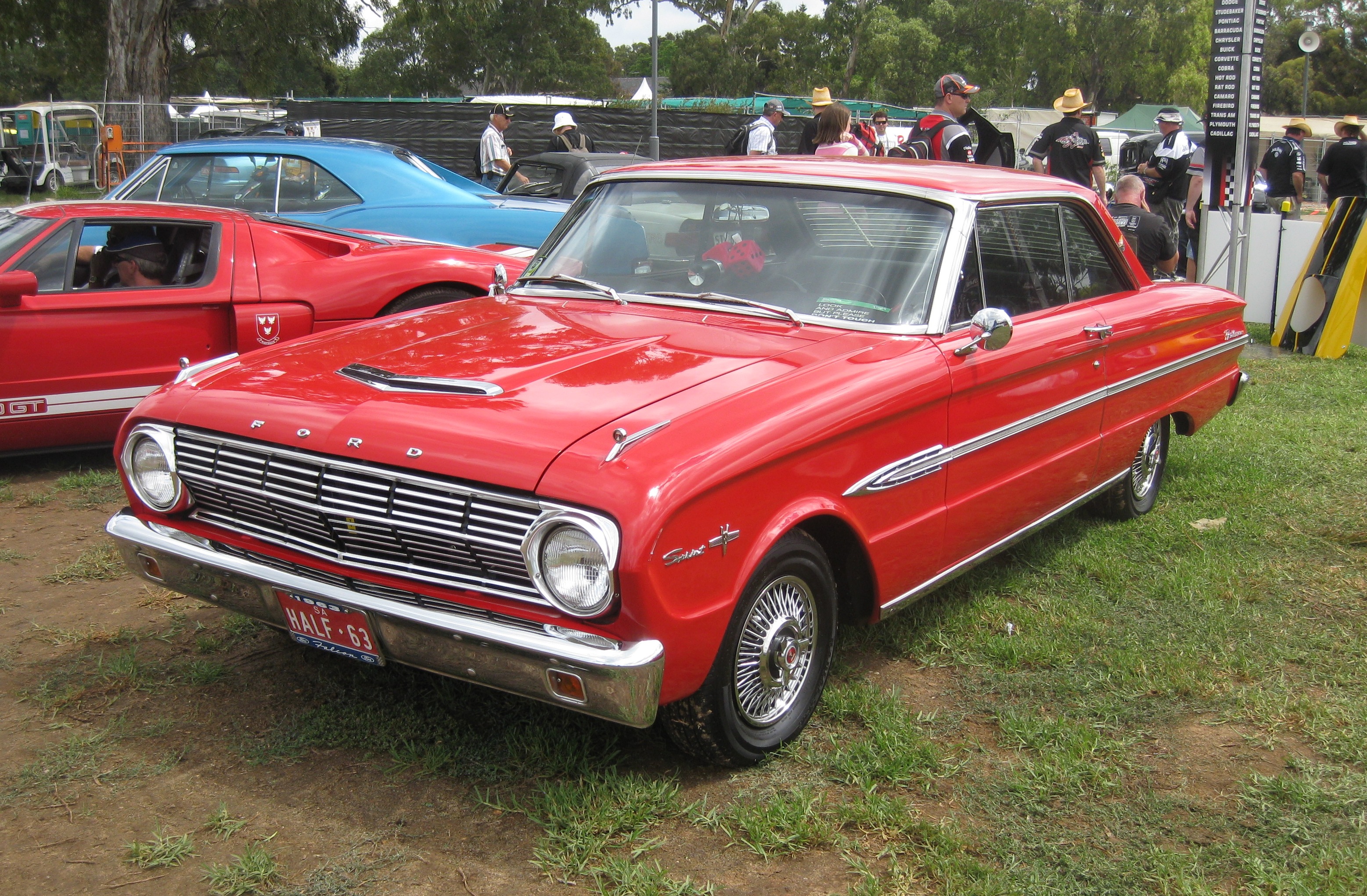
"[1242.0s] We can tell because you've held on to a Ford falcon wagon [1251.0s] I'll be honest with you."
The Ford Falcon wagon is a big family car from Australia that could carry more passengers or cargo because it has a long rear door and extra space. It was very common in the 70s and 80s.
The Ford Falcon is a mid‑size car produced by Ford Australia, known for its robust body and versatile wagon (station‑wagon) version that was popular in the 1970s and 1980s.
"The other thing with the electric car I was looking at"
An electric car runs on electricity from batteries instead of gasoline. It’s quieter, has no exhaust fumes, and can be charged at home or public stations.
An electric car is a vehicle powered primarily or solely by electricity stored in batteries, rather than gasoline or diesel fuel.
"[1411.0s] assuming that their car can then provide to the grid [1413.0s] but the difference I would say is"
The "grid" is the big network that brings electricity into your house. Some electric cars can send power back to this network when they’re plugged in.
In this context, the "grid" refers to the public electricity network that distributes power to homes and businesses. Plug‑in vehicles can feed energy back into this grid when charged.
"[1415.0s] you've got to see the battery of the car as a static storage of electricity [1421.0s] which can be drawn upon when needed"
A car battery holds electricity that lets the car run. In electric cars it can also give power back to the home or the electricity network when you plug it in.
The car battery stores electrical energy that powers the vehicle’s electric motor and accessories. In plug‑in hybrids or fully electric cars, it also supplies power to the grid when the car is plugged in.
"[1690.0s] BYDC wagon was that it was a petrol hybrid"
A petrol hybrid is a car that uses both gasoline and electric power. It can switch between the two or use them together to save fuel.
A petrol hybrid combines a gasoline engine with an electric motor and battery pack, allowing the vehicle to run on either power source or both for improved fuel efficiency.
"[1775.0s] lining up for a fuel pump [1777.0s] to put petrol in your car."
The fuel pump is the part that moves gas from your car’s tank to the engine so it can run. Without it, the engine would have no fuel.
A fuel pump is a component that draws gasoline or diesel from the tank and delivers it under pressure to the engine’s fuel injectors or carburetor. It ensures a steady supply of fuel for combustion.
"And that's the Volkswagen ID Buzz, the modern Combi van, which I've got to say"
Volkswagen is a car company from Germany that makes many popular cars, like the Golf and the Beetle. They’re now making electric cars too.
Volkswagen is a German automaker known for models like the Golf, Passat, and the iconic Beetle. The company is also expanding into electric vehicles with its ID series.
"[1895.0s] we had the GTX, [1896.0s] which is the long [1897.0s] wheelbase, [1898.0s] seven‑seater."
The Camaro GTX is a special version of the Chevy Camaro that comes with nicer seats, bigger wheels, and extra style touches. It’s a more upscale choice for people who want a sportier look and feel.
The Chevrolet Camaro GTX is a high‑performance trim of the Camaro sports car, featuring upgraded interior materials, larger wheels, and more aggressive styling compared to the base model. It was produced mainly during the 6th generation (2010‑2015).
"[1937.0s] I own a Cooper Abort, [1938.0s] similar platform."
Cooper is a small car company from the UK that made lightweight sports cars, especially popular in racing history.
Cooper is a historic British automotive manufacturer known for producing lightweight sports cars and racing vehicles, most famously the Cooper T car used in Formula One during the 1950s.
"[1945.0s] And in this case, [1946.0s] there's a head up display as well."
A head‑up display shows important car data, like speed or directions, right on the windshield so you don’t have to look down at a dashboard screen.
A head‑up display (HUD) projects key information—such as speed, navigation prompts, or warning alerts—directly onto the windshield in the driver’s line of sight. This lets drivers keep their eyes on the road while staying informed.
"[1949.0s] The seven-seater [1950.0s] extended wheelbase is enormous."
A seven‑seater car can fit up to seven people, usually with two seats in the front and three rows of seats behind.
A seven‑seater vehicle is designed to accommodate up to seven passengers, typically arranged in a 2-3-2 or 2-4-1 seating configuration. This layout is common in larger SUVs and minivans.
"[1952.0s] There's a lot of space [1953.0s] for every single row."
An extended wheelbase means the car’s front and back wheels are farther apart, giving more room inside for passengers or luggage.
An extended wheelbase refers to a longer distance between the front and rear axles of a vehicle. This design increases interior space, especially for rear passengers or cargo, and can improve ride comfort.
"[2062.0s] wanted a sliding door car, [2063.0s] there's no way"
A sliding door car is a vehicle that has doors that move sideways instead of swinging open, which makes it easier to get in and out, especially for big families or people with limited space.
A sliding door car refers to vehicles equipped with doors that slide horizontally along the side of the vehicle, often used in vans or minivans to improve accessibility and ease of entry.
"[2276.0s] ID Buzz,
[2277.0s] good-looking car.
[2278.0s] We enjoyed it"
The ID Buzz is a new electric van from Volkswagen that looks like the old VW camper vans but runs on batteries instead of gasoline.
The ID Buzz is an electric van concept from Volkswagen that was later developed into the commercial ID. Buzz and the consumer-oriented ID. Buzz camper, featuring a boxy design inspired by classic VW vans.
"Have you put a strip down the middle to make it a split window?"
A split window is when the back side windows of a car are cut into two parts instead of one big pane. It gives the car an old‑school, stylish look.
A split window refers to a car design where the rear side windows are divided into two separate panels, often with a vertical divider. This style was popular in classic American cars and adds a distinctive retro look.
Select text to request an explanation
This is Two Blokes talking electric cars with Trevor Long and Stephen Fenwick, thanks to NRMA Insurance and Unidan.
Thank you to NRMA Insurance, helping Australians protect what matters most for over 100 years and many more to come.
And they're also one of Australia's largest insurers of electric vehicles.
And of course, Unidan Smart Dashcams, helping keep you with a little bit of peace of mind about what's happening on the road around you,
whether it's an incident that occurs or just something that you want to share.
Something to defer your entertainment.
I mean, let's be honest, we all love a bit of dashcam owners Australia, don't we?
Do we ever, yeah. But makes you get the front and rear cameras too, the Unidan cameras award-winning dashcams for your vehicle.
Always a great way to go. We have a big show for you today and we'd love to hear from you as always.
04777657 is the number you can send a text or a WhatsApp to us.
We'll get those, we'll get you on the show, whether you are long into your EV journey or you're just starting,
or you've literally started thinking, what, electric? Let's talk about it.
Let's see what questions you've got. That's one of the favourite things, isn't it, Steven?
Absolutely, yeah.
Helping people with those early questions.
We have put a lot of people in EVs after they've heard this show, so we're happy to help.
Let's do more of that as we can.
We're also going to talk about this week about the VW ID BUZ,
a much requested car for us to review.
The modern Combi, you might say, Steven.
Yeah, I'll call it more the Scooby-Doo vehicle, but anyway, we'll talk about that.
Yeah, fair enough, fair enough.
But we both had the pleasure of driving the extended wheelbase GTX version of that, expensive,
but an interesting car in many ways.
So a good one to look at, so we'll get to all of that shortly.
So that's coming up on Two Bikes Talking Electric Cars.
But first, we want to talk a bit of research about a very important topic, a very important topic.
And it's one that's kind of gotten to us a little bit over time.
It is the driver safety systems that exist on cars today, for good reason.
But IAG, the NRO Maze parent company, IAG did some research into this.
So I'm pleased to say that Sean Tysers, the head of IAG's Automotive Research Center, joins us on the line.
We've had him on the show before. Sean, good to be with you, mate.
Hi, Trevor. Hi, Steven. Good to be with you as well.
Mate, thank you so much for joining us.
Let's go right back to basics here before we talk about the research that you've done.
ADAS. There's some people listening and others that go, what are you talking about?
What is ADAS?
ADAS ADAS stands for Advanced Driver Assistance Systems.
It is the collective name for a whole number of technology systems
that are now found in the majority of new cars that can help you avoid accidents
and can actually help save lives.
So in principle, we're big fans of them because they can help reduce our road toll
and they can also save drivers from those annoying car park accidents as well.
So what sort of systems, warnings, what do they produce ADAS?
What does it cover?
It covers a lot of features.
So I'll just give examples of some of the key ones that people may know or would be most interested in.
The big one is autonomous emergency braking.
This is the feature that will stop your car for you autonomously, automatically
in a case where the driver may not notice that he or she needs to stop.
So it kicks in and its best situation is those classic front and rear end accidents that you see in cities.
I've got no doubt it's preventing a lot of those from happening in Australian cities.
Sure as love as well because those little bingles are a paperwork headache.
They're a headache for the people that have the incidents.
Wiping out those little incidents is a good thing for the roads.
But it's also something that probably a lot of people don't even know they have.
You might have had a beep.
But I guess a lot of us don't realise that after the beep should and may come actual braking
that will prevent the thing from happening, right?
That's right.
And what people will find with these systems, the majority of them have a warning of some sort
and then an assist feature.
So some sort of the car does something for you.
So with that autonomous emergency braking, what you get first is what's called a forward collision warning.
So it'll be a light that flashes in your dash or maybe in your head up display if the car has that.
It'll warn you, you get to be close or you need to hit the brakes.
And that I am sure is saving a lot of collisions, a lot of inconvenience, potentially saving a lot of lives.
It gives you that little warning.
There are those moments when you get distracted as a driver.
There's a passenger talking to you.
There's a kid screaming about something.
There's something on the side of the road that distracts your attention for a minute.
It can really save you.
In extreme situations, majority cars, and it's now mandated for new cars in Australia, they'll put on the brakes.
It's weird though because you kind of think, okay, it beeps and I hit the brakes.
So in reality, the car knows so well how much time it's going to take to brake that it's going to break
and it's going to break very late.
It's probably going to end up very, very close.
In fact, I guess it may even hit, but it's going to be a lot less than what would have occurred if nothing had happened.
Is that the goal of that?
Correct, yeah.
Physics still applies to you.
Yeah, of course.
It may not fully reduce a collision.
A collision may happen, but yes, to your point, it'll reduce the severity of it.
And you said that's mandatory now.
So is that part of essentially the ADR, the design rules that you can't sell a car in Australia without the forward collision assistance or alert?
Correct, yes.
So since March this year, March 2025, all new cars that are on sale in Australia need to have that car-to-car AED fitted autonomous emergency braking.
And then from August next year, 2026, it'll be mandatory for all new cars to have car-to-pedestrian autonomous emergency braking.
So the car will also pick up a pedestrian.
And just imagine the positive impact that can have.
But then there's also the warning when you go over the speed limit, which a lot of people are annoyed by when included.
Then there's also lane keeping.
And lane keep, I've got to say, is some cars are pretty aggressive with the lane keep.
But those are all the things we're talking about when we're talking about ADAS, right?
That's right, exactly.
So lane keep assist, the speed limit information is now driver attention monitoring.
Yeah.
And a lot of cars, there's blind spot monitoring.
They're all very helpful features in principle.
But this is what we're finding.
People are either becoming overconfident in them.
Almost this point of view, my car's so smart, it'll save me.
Or as you guys have pointed out, the features can be annoying.
And that's what we want to understand.
Is it a problem with the system inherently?
And we know not all ADAS is created equally.
But is it also a point of driver education?
And could we at NRMA Insurance play a role in that to help educate people about how this new technology works
and how drivers interact with it?
And is that what comes down to the misconceptions that exist?
Because I'm assuming there's a bunch of misconceptions about ADAS that you as a part of the motoring industry
could potentially help educate people on.
And we're talking about the misconceptions. What are they?
And that's what we want to understand.
So what we're announcing now is a research project that we're doing about why is ADAS not fulfilling its potential
to reduce as many road accidents as it could.
And we think understanding the Australian driver behaviour is a key part of that.
We've partnered with Queensland University of Technology
and also an outfit called iMove, which is a federally government funded research cooperative
that brings together industry players like us with university players like Queensland University of Technology.
And we'll put 60 Australian drivers onto a test track,
so a facility that's a test environment, not a public road, but it mimics Australian roads.
And we want to see how people behave and help understand what are the challenges
and what might we be able to do to help fill that knowledge gap.
So where did the idea come from?
Was there something that prompted the research?
Was there some disturbing figures or accident figures that you guys saw that prompted this research?
I'd say there's two key things.
One is we're not seeing as much a reduction in the frequency of accidents as we expect
given that autonomous emergency braking is so prevalent in cars.
And ADAS features more broadly are starting to roll out in so many affordable new cars.
So it was just not seeing that reduction in collisions on Australian roads.
And the other one that's always so sobering to read is that road toll that's just not going down.
And as I've had 30 years in the car industry, I've watched this technology evolve
and thought, wow, ADAS is going to play such a strong role in saving lives.
Yet here we are with a road toll that's not coming down.
And our question was, could we play a role here in just helping Australian drivers
understand this technology that could save lives?
You've obviously got a lot of research to come, but you've done a bit already.
What have you learned so far from the discussions or surveys
or things you've spoken to people about?
What are your initial findings in terms of consumer sentiment on ADAS?
Our initial finding, we did some research of just over 2,000 Australians
to understand their knowledge and their behaviour at the moment with ADAS.
There were some really insightful things there that we learned.
And a big one was that 60% of drivers openly admit to turning off ADAS in their car.
And it's coming down to that point, you guys, the system's annoying me.
I don't understand what these chimes and bongs and gongs are telling me.
It felt like the steering wheel got yanked out of my hand when I was trying to exit the freeway.
We hear these sort of comments.
And that was something that the survey of over 2,000 people told us.
The other one that was a big one is people are learning about ADAS through trial and error.
So they're learning about it while they're driving their car on a public road.
And 70% of the people we surveyed said, not surprisingly,
they would benefit from more information and some instruction on how to use this.
So people do want to understand this technology.
And so you mentioned that the research showed that some people are turning it off
or trying to turn it down.
Are there any parameters?
I know each car is different.
But are there ways that you can actually tweak it for your own benefit
while still maintaining the essential safety features of ADAS?
There are, yes.
In the majority of cars, you can go into a menu somewhere in the car,
probably on the central screen.
And for example, you can say things like,
I want autonomous emergency braking to kick in early or to kick in late.
You can monitor the speed limit information as well.
And you can often set parameters around that.
You can turn things like rear autonomous emergency braking on or off.
So for example, the rear autonomous emergency braking,
I've got no doubt is saving a lot of car park accidents
where people back into a pole that they just didn't see.
But I hear examples of people that live in a house, for example,
where their car park is surrounded by trees.
And the A-B can kick in because of shrub.
It picks up a shrub, for example.
You might say, it's okay.
I'm happy for the car to touch the shrub.
It's the only way I can park in this spot.
You don't want the thing, you know, slamming on the brakes.
So you can turn that one off.
That personalisation is critical, I think.
And look, it's anecdotal and it's just one bloke
and maybe another here.
But I really think that if we sat down
and educated people, as you say,
that's one of the challenges, educating people on it.
But I also think that there's, and it may be a ruling
and maybe you can tell me this,
or whether it's a fear from the car manufacturers.
But I have a set of rules the way I want it to work.
I want the speed sign to be a notification, not an alert.
Like I want it to see it, but I don't want it to beep.
Rear braking, I want it to be on medium, not high.
You know, I want to be able to set a bunch of settings
and say, it's me. That's how I drive.
One of my cars has a fingerprint sensor to say, it's me.
So I should be able to save that stuff.
But I find, Sean, most of these things,
when you adjust them, have to be adjusted
every time you get in the car.
And I feel like that's the car manufacturers going,
we're just trying to adhere to the law.
But in fact, what we need to do is make it something
people are going to use, not turn off.
Don't we?
Correct. Exactly.
And that's what, it's a challenge here
with probably no simple solution.
And that's why we have a research center.
Let's research these things and try and find a good solution.
I think for me, the overriding thing here
is that ADAS should be like a good coach
that coaches you to be a better driver.
And the problem I think a lot of people are experiencing
is it feels like that annoying school master
that yells at you for the one indiscretion on the plate.
It's a bit of a nag.
But I'm with Trev having to do that every single time
you get behind the wheel is annoying.
You want it to be helpful and not that nag.
And like those features you mentioned are fantastic
and of course you want to use them.
But I think there needs to be a bit of a compromise there.
Yeah, there does.
Do you feel like your research will be able to
feed into regulation here?
Because obviously most of these things are software based.
So there can be tweaks.
I remember Mike here, we've talked about it here.
It was annoying beep on speed alerts.
One kilometer over the limit and I'm getting beeped at.
So they instituted a button where I can just mute that
and turn that setting off in one button click.
You've got to do it every time I drive, but I'm okay with that.
Do you feel like you're able to feed into where regulation occurs?
And is there an appetite for the regulation to be
moving feasts and perhaps more driver focused?
I think in principle there is, yes.
So yes, certainly that would be an outcome of our research
is that it can feed into future regulations.
And I think there is an appetite.
I look at what's happening in Europe, for example.
So the EU mandated four Auton-ADAS features in 2024.
And this is what's causing part of the problem is things like
lane keep assist must default to being turned on
to be able to sell a car in Europe.
Now, carmakers can't keep programming a different setting for Europe
compared to Australia, compared to another market.
It's very complex.
So in some ways the carmakers have been forced almost to say
well it's got a default to one so we can sell with us in many markets.
But there is probably a solution here somehow.
And yeah, we aim for this research to really understand
that driver behaviour.
Not just having rules that tick a box
without acknowledging the human interface.
Is there a bit of a timeline around when you want to achieve that result
and when we'll hear from you again about what you saw
from those 60 people in the real world?
That's a pretty cool set of tests.
Yeah, we'll have our findings published in mid-2026.
So the team's working actively now to get ready for the track research.
They're reviewing a lot of the literature that's available
and information that's on hand right now to prepare for that.
So mid-2026.
And I'll just add in, if I may,
what one other aspect of the project we want to look at
is investigating whether these driver assistance systems
decay in performance over time.
That's something we don't know as well.
And I just wonder, I look at a driver five-year-old car.
Is all the ADAS working as well in 2025?
Is it in 2020?
So we want to look into that as well as possible.
Any classes for your sensors, mate?
It's an interesting question you wouldn't think about as a driver.
It needs to be researched.
Yeah, that's right.
Wouldn't that make it sort of the manufacturer
where they wouldn't be part of maybe the servicing process?
They've got to check that everything's still up to speed.
Yeah, but are they?
Yeah, and that's right.
Exactly. These are the all the questions to ask.
So mid-next year, we'll have a lot of the findings.
Yeah, we'd like to talk to you about it again.
You're doing the Lord's work, I think.
Most people with a brand new car.
It's fascinating because we do drive different cars every week
and sometimes there's nothing to worry about
and other times it's overbearing.
Some leave it to your own devices.
Others can be a little bit over your shoulder.
And that's a brand thing too.
Sean, is there any trend in terms of what you see
in terms of, you don't have to name brands,
but is it obvious that some brands are going over the top
or perhaps just ticking the box
and it's not as fruitful as it perhaps should be?
What we find is that not all AIDAS systems are created at Corkman.
There are variations.
And we look at that through the IAG Research Centre
every week with the new cars we get into assess.
And we talk with the OEMs,
with the car manufacturers about this.
And what I'm really pleased to hear
is a lot of the car manufacturers now saying
we want to do Australian testing on our AIDAS.
We want to locally calibrate it to Australian roads
and recognise there are differences here to Europe or Asia.
So I'm really encouraged that I'm hearing more and more
of the car manufacturers talk about
that local Australian calibration
before they bring a car to market.
Yeah, that's good to hear.
And you're doing a lot of research.
So we look forward to talking to you again
when you've got more to share.
Sean Tysos from IAG's Automative Research Centre
with the NRA mate.
Appreciate your time and look forward to talking again soon.
Thanks Trevor. Thanks Stephen.
Look forward to speaking again soon.
Cheers mate.
All right.
We'd love to hear from you.
04077657657.
Any time send us a text or a WhatsApp
we'll get you on the show and we'll talk EVs.
Ben's on the line today, Ben.
Good day guys.
What can we do for you mate?
You're an EV owner or where are you at?
No, I'm the proud owner of the last of the bit of falcon wagons.
And I'm starting to wonder whether or not
it's my ego that's getting to me.
Or whether I should be looking at an EV
because I've kitted this thing out
with basically everything I need.
It's got an Apple CarPlay for 90 bucks from Kogan.
Yep.
I've got, you know, all sorts of tech in it.
It runs like a dream.
I've had it for 10 years
and because of your seven grand
I reckon it's worth the same now.
So yeah.
So I've been looking at some of these EVs
and there's one I'm particularly interested in
but I don't know if it's available in Australia.
I did read that they saw one of them.
One of them has been seen in the wild apparently.
And it's the BYD CL6DMI wagon.
Yeah, that's an actual wagon.
See, you're a wagon man.
We can tell because you've held on to a Ford falcon wagon
and now you're looking for a wagon mate.
I've seen the car you're talking about.
You're right.
It's available overseas.
I'll be honest with you.
I don't see that coming here.
The sales of wagons in Australia are so low
that even Audi does have a wagon.
There are some BMW wagons.
We're talking such low numbers.
I just don't think it'll happen mate.
I think you've got to either stick with your beast there
or consider going SUV.
As those knees age, perhaps an SUV will be right for you mate.
I don't know.
Would you consider an SUV because I'll be frank with you.
I don't think you're going to see that wagon.
I could be wrong but at this point
I think you've got to know it's an SUV world.
That's a shame.
Look it is what it is.
I'm 6'4".
I wouldn't be getting into any little add-ons or anything like that.
Have you jumped in any?
No, I haven't.
It was only when I saw the wagon that I took some interest in it.
That's what I think interest in EV when you saw the BYD version.
Why are you a wagon fan?
Is it a functional thing?
Are you a part of your work or why do you like the wagon so much?
Every couple of years we do a trip up north with the family and the dog
and it's good to have that room.
The low profile is going to be better on the fuel economy.
The other thing with the electric car I was looking at
was the V2H side of things.
I hear that down in Victoria where I'm at
they might be contemplating now
whether or not people will actually have to charge to throw
excess power back in the grid
if you've got a solar system at home during peak periods.
You mean be charged?
What do you mean by that?
Be charged.
Instead of receiving a tariff from your power company
because the grid can't cope with it,
they actually charge you is what I've heard.
They're going to look at charging you
because right now I only get half a cent or something
so we're basically at neutral.
If the grid, people get more and more solar
and the grid can't deal with it
I don't know how true that is.
I think you're right to question it.
Let's remember when my uncle got solar panels,
he was like, I'm raking it in.
There was like a 60 or 20 or 30 cent feed-in tariff
and now it's like seven cents, five cents, three cents.
It's basically useless to have solar now
in terms of generating power
other than for yourself, right?
So you're right, there is a question
slash concern around what will happen
to people who plug their cars into their home
assuming that their car can then provide to the grid
but the difference I would say is
you've got to see the battery of the car
as a static storage of electricity
which can be drawn upon when needed
and so rather than you're consistently just pumping it out
I think given we have smart meters and smart all that
I think it'll probably end up being the case
where you'll be able to set it.
Like I think a company like Amber will probably set it
so that I'm not willing to feed back to the grid
unless it's a certain tariff available to me.
I don't see a time, I do see it,
no sorry, I do see a time when they say
if your car slash home slash meter
aren't smart enough to regulate when you feed it out
then yes, you might be charged if you're excessively feeding out
but I think we'll probably
more likely get to a point where
the technology is such that
your car won't do that unless you want it to
and that's probably the dream.
Yeah, right.
Either way, I mean the big attraction to me
if the VTH think is
if I could instead of getting that piddly little
whatever the tariff is
throw it into the vehicle and pull it out
when I need it during peak periods
and if I got an EV today
would it actually
and Australia got their stuff together
and the regulations were sorted out
and we could actually do this V2H
would a car that I get today be able to do it?
In a perfect world and it's really important actually
I'm not pulling you up on this but it's really important
V2H is just to your home.
V2G is to the grid, right?
I don't know many cars
I'm just trying to write my way
but I don't think there's any cars that do V2H
but not V2G, right?
But there's a lot of cars that do V2L
so vehicle to load
which means you can put a little plug into a charging port
and have a power point.
My Kia for example, a lot of cars have a power point
in the back.
Hand if you go camping or something.
Mate, you think about your estate wagon
like my Kia which
with the third row seats down
is a wagon I see it as
five seats with a wagon in the back
if there's a power point back there, right?
I could keep a fridge running or whatever.
So vehicle to load, lots of cars have
vehicle to home, some cars have
vehicle to grid the same some cars have
and you have the power
as the home owner
and the charger provider
you know, owner to say
I want my power to be
either not used by the home
to be used by the home, not used by the grid
in the same way that Steven and I now can
set our home chargers to say
I want you to use power
no matter how you get it to charge the car
or economically use as much solar as you can
or just use solar.
I think you'll be able to say
I only want to power my home.
I don't give a rat's about the grid.
I just control.
I just want to power my home.
That's what I'm thinking.
Yeah, that's what I'm thinking.
I'm just on the home
because my power bills
just keep going up and up.
I've got two teenage daughters
and you know, it's
those hair straightens
don't power themselves mate.
Mate, what they do for the girls
but anyway...
They've even more
than made to keep your running costs down
although I'm sure you're currently
petrol is not exactly cheap
but at the moment or ever.
So having an EV
will really reduce your running costs.
So what sort of driving do you do, mate?
Apart from your occasional camping trips
do you put a lot of keys on every day?
How do you drive?
Are you and your family?
Not really.
I get the trains to the city
so I work in the old town
in Oldman City
and travel probably
it's a good hour and a half commute
each way.
But yeah, it's better than driving.
I just use it really under weekends
and probably don't travel that far on it
like I think anything would be
suitable for me.
So you'd be ideal for you.
Yeah.
Yeah, it's just a big trip.
What's the next step then?
Yeah, what's the next step?
Are you going to start having a look at a few?
Because I think for me
as knowing you're a wagon man
I think you just need to go and look at
the size, the interior
and the kind of overall feeling
of a few SUVs, you know?
Kia EV5
BYDC Lion
7
What's another good SUV?
Probably not the Golf.
The Elite Motors?
Yeah, Elite Motor.
They're going to get Geely.
Yeah.
A good value.
The Zika.
Have a look at a few.
Yeah.
Have you ever driven an EV before?
Never driven one.
Nah.
You've got a book in a test drive.
Yeah.
Yeah.
Yeah, I should.
The other thing just quickly
the other attraction for that
BYDC wagon was that it was a petrol hybrid
and the range on it was like 1500Ks.
So then a couple
a couple I would look at then
the BYDC Lion 6
because it is a petrol hybrid.
There's Jakun.
Yeah.
They're doing lots of
they've got these, you know
and Cherry also which is the same company
but different models
are different brands.
Jakun, Cherry, the BYD
they all have hybrids.
It's like they've realized
there's even
is it Denza?
Is that the name of BYD's premium brand?
Down at the airport
the domestic airport
there's a massive SUV
looks like a Land Cruiser size thing
which is a petrol hybrid
which they're pushing
and I think that
that range thing
they're realizing that
here's what I think their strategies
BYD and others
I think they've realized
that people are range anxiety
big time
and so they're trying to push themselves
as brands that have cars
that go a long way.
Get them in.
Get them into the family
and then
for the next car
there'll be an EV for them.
Do you know what I mean?
So I think he could be the perfect buyer
for a plug-in hybrid car.
Maybe look at the BYD shark as well
if you might be a Ute Man
as well.
That could be.
I don't think he's a Ute Man.
Ben, you're a Ute Man.
Yes.
Oh, not really.
They tend to have
not a lot of room in the back.
You know it's
you can fit an SQN
and that's about it.
But
the petrol hybrid thing too
is because
so we'll be traveling at Christmas
up the Hume
and it's hard enough
lining up for a fuel pump
to put petrol in your car.
Yeah.
I just worry about the experience
of if you've got a line-up
to charge the EV behind other people
and it's not just
like a minute or two
to put fuel in your car.
It's a different experience
and no doubt
you've got a lot to adjust to
and learn.
But I've made I think in the end
the first thing you need to do
is just go and start
looking at some.
One every two weeks.
Just go and have a look at a JQ.
Have a look at a Cherry.
Look at a BYD
and start to understand
what they've got in terms
of those plug-in hybrids
because it feels to me
like plug-in hybrid
might be the ultimate solution for you.
But also too,
there's a lot more charges
being put in as well.
So by the time you actually
buy your EV
whether it's this year,
next year, whatever
it's going to be
you'll be a lot more charges
installed.
You'll be noticing a lot more.
But consider yourself
on the journey, Ben, mate.
And we're with you, mate.
So we look forward to hearing
what you drive
and what you end up getting
if it happens, mate.
Yeah.
Good on you boys.
Thanks a lot for your
thoughts there.
It helps a lot.
No worries at all.
Thanks for getting in touch, Ben.
Anytime, mate.
Anytime.
And you can get in touch as well.
Just go to your
text message app
or what's happened.
Send us a text
0477
657
657
we'd love to hear from you
here on
E-Cars.
Ah, too much talking
electric cars.
I shouldn't be allowed
to control the buttons, really.
No, mate.
Should I?
It's not appropriate.
Well, yeah.
Anyway,
it was great to hear
from Sean
about ADAS.
And I'm glad
people are looking into it.
But let's talk about
a car that I don't
remember noticing.
Having any
concerns about beeping
and bonging,
as they say.
Beeps and bongs in the car.
That sounds like it could be
wrong.
But you know what I'm saying,
you know what I'm talking
about.
And that's the Volkswagen ID
Buzz, the modern
Combi van,
which I've got to say
first and foremost,
we had it in the,
we had the GTX,
which is the long
wheelbase,
seven-seater.
We had it in two-tone,
so red
and silver,
which is a $4,000
option.
And it turned heads.
Yeah.
And you know me here
in the office.
So I can see who's watching.
Yep.
Like the number of people
that stopped,
they look around it.
They walk around it.
But that happened a lot.
That was while it was parked.
I had people,
like waving out the window,
try to want me,
talk to me while we're
driving,
just pulling up next to me
in the car
and saying,
and asking all these
questions and said,
mate,
I'm trying to pay
attention to the road here.
Yeah, yeah.
It was a head turner,
definitely.
It's very much a
Volkswagen built on
the Volkswagen Electric
Platform.
I own a Cooper Abort,
similar platform.
So the controls
for the gears is a dial
at the top.
There's an instrument cluster.
There's an infotainment.
And in this case,
there's a head up display as well.
It's a beast.
This thing's huge.
The seven-seater
extended wheelbase is enormous.
There's a lot of space
for every single row.
I will say,
it didn't at all
have a car-like driving experience.
It felt like I was driving a van
pretty much all the time.
That goes from someone
who owned a Kia Carnival,
which would be
its nearest competition
as a family seven-seater.
I've got to say,
it didn't feel like
I was lugging it around.
Oh, no, not lugging.
It's just,
there's a different feel
to the drive-in steering
of a van versus a...
Not too different.
I'd say,
my personally,
I felt it wasn't
radically different to
an SUV.
Harry loved the armrests.
Yeah.
Armrests.
Both sides of the...
over the boat,
the passenger and driver seats
had armrests.
Adjustable.
If you're on a long,
long road trip,
you've got armrests.
Lots of space.
Like, let's be honest.
Cup holders, though,
they also were very clunky
to get stuff in and out of.
Yeah.
Like, I felt like I was going to
spill the Coke
if I pulled a drink out.
Oh, you mean it was
gripping too hard.
Yeah, it's kind of gripping.
Right, right.
So I was using the
center tray
with a divider
and then just to put cups and things.
Fair enough.
Yeah.
There is no, at all,
there's nothing under
the front of this thing.
It just opens up
to show you the washer fluid.
It's actually,
yeah, that was what
it took getting used to just,
yeah, you didn't have
a big long bonnet.
No, that's right.
It was right there.
There,
there's the motor,
loader,
whatever is available
for the all the forward collision
stuff.
Yeah, it sits above the dashboard
and it's this kind of bump
on the dashboard.
I feel like it's a really weird
design, it would have been
better to make it a flush thing.
Strange.
Head-up display too,
had it, this one had it up.
Head-up display was good
for sure.
I didn't mind that at all.
Yeah.
Now, the price on the one we drove,
long wheelbase,
seven seat,
Vick,
because obviously there's a van
version as well,
a cargo version,
is basically $129,000.
Yeah.
And that's a lot of money.
Well, that's kind of
isn't that in the
EV9 class?
Yeah, but so looking at
that same size car,
same capacity.
I would say to you,
even as someone whose wife
wanted a sliding door car,
there's no way
the ID buzz is a better car
to drive,
handle or anything
than the EV9.
Okay.
Sure, it has more room
for the seven people.
So if you're,
let's say you had twins
and triplets
and you got old
teenagers, right?
Yeah.
Then, yeah, you need
leg room and stuff.
This is probably the go.
You're carrying it to another van
like a high end Ostaria
or something, right?
It's a bus.
Yeah.
But here's my thing.
So that's $130,000
for this long wheelbase,
seven-seater.
The short wheelbase
ID buzz,
five-seater,
$79,990.
Wow.
Right?
The seven-seat version
of that is
$84,990.
Oh.
Now, I've got to tell you,
I don't know how much
room you're compromising
along the leg room,
but let's say you're
compromising 10 centimetres
for the middle row
and 10 centimetres
for the back row,
even if 15.
Is it worth an extra
$50,000?
I would 100% recommend
you get the pro,
which is the short wheelbase,
seven-seater.
Yeah.
And you know what?
I expect it without the two-tone
on the website
in just white.
Yeah.
It looks good.
Yeah.
Like it's not as funky
and outlandishly
combi as the two-tone.
But honestly,
I think it looked good.
Absolutely.
No, I quite like the two-tone.
I'd tick their boxes.
Yeah, I think so.
It's four grand
for a family
trying to go electric
with seven seats.
I remember them
when Joe first saw it.
She goes, oh, it's the fan
from Scooby-Doo.
That's what she said.
She said, yeah,
Shaggy and Scooby
are doing very well,
I said.
Can they reveal
your face at the end?
But let's talk range
up to 452 kilometres
of range.
Yeah.
And charging time,
10% to 80%,
you can charge
in 26 minutes,
which is pretty speedy.
Yeah.
The luggage capacity
is remarkable.
Of course.
2,469 litres.
That's a lot.
Yeah.
There's a lot of space in there.
It is a van
in every sense of the word,
but it still has a nice finish to it.
Yeah.
Look, it's a premium.
The whole experience
was excellent.
I think it's a
definitely premium car,
premium vehicle.
I think that obviously
people that have bought
vans before
over the years,
different models,
whatever they are,
then they're petrol.
I'm looking to go electric.
It's, frankly,
the only real passenger option
on the market.
But I think the nostalgia
that it brings out
in people with the,
I mean,
there are people who will
stop on me on the road
and walk around the car
with the people
who I think were new
of the Combi
and they see that V-Dub
symbol on the front
of a flat,
a flat-fronted vehicle
like a Combi.
They go,
oh, wow.
It's the Combi
for the 21st century.
It's gorgeous.
Yeah.
Have a look at it.
Worth a drive
if you need a seven-seater.
Have a look at it.
And the thing I would
simply say is,
get your family
in the short-wheelbase
at the dealer
at the wheelbase
and tell yourself,
is that leg room
they're asking for
worth 40, 50 grand?
Yeah.
I'm not sure.
Does the model,
the other cheaper models
you spoke about
have the automatic sliding doors?
It may not.
You know,
they're obviously...
That may be a consideration
because to say you're
buying this,
you know,
you might have,
you might be
picking up elderly passengers
or...
Yeah.
And it's very easy then
for them to get it out
if they don't have
to touch the door.
It's also easy
for you to go.
There's no more reason
for it to be more expensive
than just being
longer wheelbase.
Of course.
To be clear,
I haven't sat and compared
the spec for spec,
but at $40,000 difference,
it's going to be
a lot of things.
Clearly,
it's not going to have
a head-up display
and a bunch of other things,
but I would wonder
what the compromise is
and that's what
you need to tell yourself.
Anyway,
ID Buzz,
good-looking car.
We enjoyed it
and you might as well,
so check it out yourself
when you're in the
market for something
with that kind of money,
it might suit the tree.
If you have an extra
or WhatsApp,
we'd love to talk to you
about your car.
If you've got an ID Buzz,
tell us what you like to own.
Yes.
We'd love to talk
to someone who's driving
one of those around.
What colours you get?
Have you put a strip
down the middle
to make it a split window?
Let's go.
Old-school retro.
Two black story
electric cars.
Thanks to NRMA Insurance
and Union and Smart Dashcans.
We'll be back next week,
Steven.
Let's do it all again,
man.
I'll be here.
Bye.
Request an explanation for:
5 cars
5 cars featured
Request an Explanation
Heard something you'd like explained? We'll add it to this episode.
Sign in to request explanations for terms you heard.
Want to learn more?
Browse our glossary for plain-English explanations of automotive terms, jargon, and concepts.
See something that's not quite right? Our annotations are AI-generated and can sometimes miss the mark.
Click the flag icon on any annotation to suggest a correction.
Report incorrect info
Suggest better explanations
Flag missing cars
More from Two Blokes Talking Electric Cars - The EV Podcast