
129 - Tesla's Child Seat issues and the GWM Ora gets another wrap!
About this episode
Tesla ownership sparks plenty of debate: a Model Y buyer complains that “but I paid for the FSD, still hasn't come.” The hosts also dig into Tesla Model Y child-seat fitment, arguing Australia’s “top tether is an Australian-specific requirement” and that “no car seat installer will sign off on the YL because of the captain's change.” Between that, they compare charging and maintenance experiences, then turn to the GWM Ora—discussing its appeal, servicing, and real-world practicality.

Tesla Model 3
"Humble brag. So hang on, Model 3 and what else? Two Model 3s. 2022 and then a Juni..."
The Tesla Model 3 is an electric car that runs on a battery instead of petrol. It’s designed to be a practical everyday car, not just a niche EV. The podcast mentions it because it’s one of the common models people talk about and own.
The Tesla Model 3 is a compact electric sedan known for its mainstream, high-volume approach to EV ownership. It often comes up in discussions because it’s a common benchmark for everyday electric driving and real-world charging routines. In the podcast, it’s mentioned as a specific example of what the hosts have been using or comparing.

Tesla Model 3S
"...mble brag. So hang on, Model 3 and what else? Two Model 3s. 2022 and then a Juniper Model Y from last year."

Tesla Model Y
"... what else? Two Model 3s. 2022 and then a Juniper Model Y from last year. Okay."
The Tesla Model Y is an electric SUV, meaning it uses a battery and an electric motor. It’s similar in concept to the Model 3 but with more room and a more upright driving position. The hosts mention it because they’re comparing specific versions they’ve had.
The Tesla Model Y is an electric compact SUV built on the same general platform as the Model 3, but with more space and a higher seating position. It’s frequently discussed because it’s a popular choice for families who want an EV with SUV practicality. The podcast references a “Juniper” Model Y, indicating a particular generation or update they’re talking about.
buyer's remorse
"Well, am I detecting a bit of buyer's remorse there, Vidoe, mate? ... You're not as happy with it as you were back then, mate, or?"
Buyer’s remorse means regretting a purchase because it hasn’t turned out the way you hoped. In this case, it’s about being unhappy with the Tesla experience after paying for FSD.
Buyer’s remorse is regret after purchasing something, often because the product didn’t meet expectations. Here it’s used to describe dissatisfaction with the Tesla after paying for FSD and not getting it.
FSD
"but I paid for the FSD, still hasn't come. ... I'd imagine, mate, you would have paid what?"
FSD is Tesla’s “Full Self-Driving” software package. The person in the clip says they paid for it, but the feature still hasn’t shown up on their car.
FSD stands for Full Self-Driving, a Tesla software package that’s sold as an upgrade and is intended to add advanced driver-assistance and automated driving capabilities over time. In this segment, the key issue is that the buyer paid for FSD but hasn’t received it yet.
top setter
"Yeah, so the issue is the top setter. The top setter doesn't like slides off the shape of the headrest."
The “top tether” (what they’re calling “top setter”) is a strap on many child seats that helps hold the top of the seat in place. It’s meant to reduce how much the seat can move during a crash.
The “top setter” here refers to the top tether strap used on many forward-facing child seats. It routes to an upper attachment point behind the seat to reduce head movement in a crash.
anchor point
"So in the captain's chairs, there are ISO fix and there's an anchor point at the bottom of the seat. And I've seen a video of this."
An anchor point is a built-in spot in the car where the child seat can be locked in place. It helps keep the seat from shifting around.
An anchor point is a fixed attachment location in the vehicle structure meant for securing a child seat. In ISOFIX setups, these anchors are typically used with the lower connectors to prevent excessive movement.
third row
"But you can put them in the back row, in the third row. [236.6s] Really? [237.1s] But then I can't put them back to the same problem"
A third row means there’s a third set of seats behind the back seats. It can take up space, which can make it harder to fit child car seats and still use the trunk/cargo area the way you want.
A third row is an additional set of seats behind the second row, typically found in larger family vehicles. Adding or removing third-row seating can change how much space is available for child seats and how easily the rear seats can fold down for cargo.
car seats
"So you want to put the rear seats down, [265.6s] put the double-prem in there. [267.1s] You want two kids in car seats and you can't do it."
“Car seats” means child safety seats for kids. They’re talking about whether the vehicle’s seat layout gives you enough room to install them and still use the rest of the space.
“Car seats” here refers to child safety seats installed in the vehicle. The hosts are discussing how seating layout and seat-folding/cargo space can limit whether child seats can be installed and positioned correctly.
isofix
"but I think if my memory serves, ISOFIX, which is the little hooks inside the seat, in Europe, you just ISOFIX and you're done."
ISOFIX is a common way to attach a child car seat using built-in hooks in the car. It’s designed to make installing the seat easier and more secure.
ISOFIX is a standardized child-seat mounting system that uses rigid anchor points in the car. In many European markets, you attach the child seat to these anchors and that’s enough for installation, without needing a separate harness setup.
harness
"That's the legal requirement for a car seat. You don't actually use a harness. No, the top tether is an Australian-specific requirement."
Here, “harness” means the straps inside the child car seat that hold the child in. They’re saying the installation rules differ by country, and Australia focuses on the top tether.
In child-seat context, a harness is the built-in set of straps that restrains the child. The hosts contrast harness usage with ISOFIX anchoring, and then explain that Australia’s legal requirement instead involves the top tether.
top tether
"You don't actually use a harness. No, the top tether is an Australian-specific requirement. But no car seat installer will sign off on the YL"
A top tether is a strap that helps hold a child car seat in place. In Australia, it’s required for certain child-seat installations, so the car needs the right anchor points.
The top tether is an additional strap used to secure a forward-facing child seat to an anchor point behind or above the seat. The hosts note it’s an Australian-specific requirement, meaning some cars/seat configurations must support it for legal compliance.
captain's change
"But no car seat installer will sign off on the YL because of the captain's change. Because it's required under Australian law"
This phrase is about a change in how the seats are arranged (the “captain’s chairs”). The hosts are saying that the seat layout affects whether child seats can be installed the way Australian rules require.
“Captain’s change” refers to a change in the vehicle’s seating layout—specifically the captain’s chairs configuration. The hosts imply that this layout change affects whether child-seat installers can fit the required harness setup in the Model YL variant.

Zeekr Zika 7X
"...y been shopping out there? Have you looked at the Zika 7X? Because that might sell it."
The Zeekr 7X is an electric SUV, so it runs on a battery. The podcast brings it up as a possible option they’ve been looking at. The point is to compare EV choices and see what might work for them.
The Zeekr 7X is an electric SUV from Zeekr, positioned as a modern, family-friendly EV. In the podcast, it’s mentioned as a model the hosts might consider because it could “sell” the idea of switching vehicles. That context suggests they’re discussing alternatives in the EV market and what might appeal to buyers.
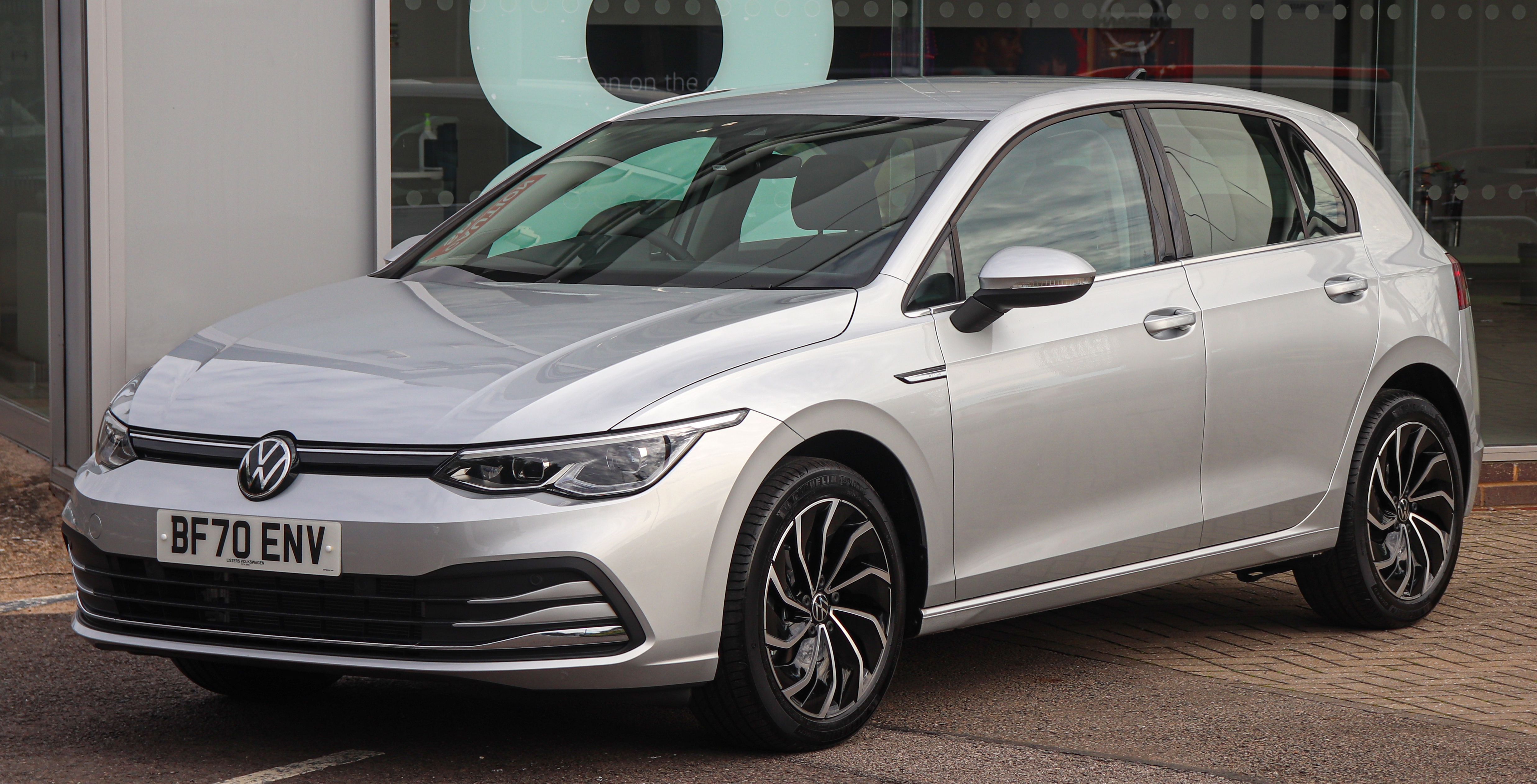
Volkswagen Golf
"I've never gone to a mechanic, it's just such, I had a Volkswagen before that, and I drive about 50,000 Ks a year. It was just from commuting to work. And I used to service Golf every six months."
The Volkswagen Golf is a popular everyday car. The speaker is saying they had to get it serviced much more often than their Tesla.
The Volkswagen Golf is a mainstream compact hatchback that’s commonly used as a baseline for everyday commuting. Here, the host uses it to illustrate how frequent servicing intervals can feel excessive compared with EV ownership.
after sales service
"But yeah, I think other brands, though, are sort of coming into the space now where their after-sales service is just as compelling as Tesla."
After-sales service is how a car company looks after you once you’ve bought the vehicle. That can include repairs and support when something goes wrong.
After-sales service refers to what a brand provides after you buy the car—things like servicing, repairs, warranty support, and customer help. The hosts are arguing that some EV brands’ service experience is becoming as strong as Tesla’s.

Kia EV5
"Have you looked at a Kia EV5? No, I haven't actually looked at the Kia's. I think Kia EV5 might be a very nice option."
Kia EV5 is an electric Kia SUV. They’re talking about whether it’s roomy enough for car seats and whether it could be a good alternative to a Tesla.
The Kia EV5 is a battery-electric SUV model from Kia, positioned as a practical family-sized EV. Here it’s discussed as a size fit for child seats, and as a potential alternative to Tesla based on overall ownership practicality.
plug-in hybrid
"Obviously, BYD C-Line, there's a new C-Line, but it's a plug-in hybrid, the bigger version. The 8-1, right?"
A plug-in hybrid is a car that you can charge like an EV, but it also has a gas engine. You can use electricity for some driving, and the gas engine helps when the battery runs low.
A plug-in hybrid (PHEV) is a car that combines an electric motor with a fuel engine and can be charged from an external power source. That means it can often drive short distances on electricity, but it still has a conventional engine for longer trips.
long range in performance
"[476.8s] I guess I have a long range in performance. [480.4s] All right, hang on a minute, minute."
“Long range” usually means the EV is set up to go farther on one charge. “Performance” usually means it’s the quicker, more powerful version.
“Long range” is an EV trim/packaging term that generally means the car is configured for a longer driving range on a charge. In this context, it’s being discussed alongside “performance,” implying a higher-output variant paired with the longer-range battery.
power walls
"[500.7s] You're not wedded to Tesla, [502.4s] but I feel like you're going to be a Tesla family for life. [506.9s] Yeah, look, I mean, we've got the Powerwalls at home."
Powerwall is a home battery made by Tesla. It stores electricity so your house (and sometimes your car charging) can use stored power later.
Powerwall is Tesla’s home battery system. It stores electricity (often from solar or the grid) so you can use it for home power and, in some setups, support EV charging.
warranty recall
"[509.7s] We've got five now, [511.7s] because they did a replacement from the two to the three [514.6s] because there was that warranty recall. [516.4s] So, we ended up with five now in the garage."
A warranty recall is when a manufacturer issues a recall and covers the fix under warranty terms. The speaker is saying their Powerwall units were replaced due to such a recall, changing the system from “two to the three” units.
wall charger
"[520.2s] So, it's just a charging unit together. [523.6s] Now, we've got two wall chargers all ready to go, [526.1s] so that way, one car's parked outside, [528.3s] one's in the garage."
Wall chargers are EV chargers mounted at home. Having two means you can charge two cars at the same time.
Wall chargers are home EV charging units installed at a residence. Using two wall chargers lets multiple vehicles charge simultaneously, which the speaker describes as their current setup.
V2
"If I was a betting man, I'd say V2 is going to be another Tesla and a performance model by the Santa."
“V2” here means “version 2,” like an updated version of Tesla’s child-seat setup. The discussion suggests Tesla may have changed the design after problems showed up in the first version.
In this context, “V2” refers to a second version of Tesla’s child-seat (or child-seat-related) setup. It’s the kind of iteration Tesla would release after early feedback or failures, and listeners should treat it as a specific product revision rather than a generic “version.”
captain's chairs
"But it's really, really interesting and great feedback on the captain's chairs. It's so timely."
“Captain’s chairs” are individual seats with their own space—more like two separate seats than one long bench. The podcast is saying the child-seat issue shows up specifically with this kind of seat layout.
“Captain’s chairs” are the individual, separate front or middle seats (often with armrests) rather than a single bench. In EVs and family-focused vehicles, these seat layouts matter because child-seat mounting and tether routing depend on the exact seat shape and structure.
little clips
"And what do they do? They've got to put little clips or something on the seat to hook it in?"
The “little clips” are small parts that help attach the child seat to the car seat. If those clips don’t hold properly, it can make the child seat harder or unsafe to install correctly.
“Little clips” here likely refers to small mounting hardware used to attach or secure the child-seat to the vehicle seat. When child-seat mounting relies on clips/adapters, fitment and durability become critical—especially if owners report failures.
tether extension
"Yeah, they said a tether extension, but I don't know. I mean, there's all these posts about people saying at the car show,"
A “tether extension” is a small add-on that makes the child-seat strap reach the right anchor point in the car. If the tether doesn’t reach or fit correctly, the child seat may not be secured as intended.
A “tether extension” is an added length piece used to connect a child-seat tether to the vehicle’s anchor point. It’s relevant because child-seat tether geometry (distance and angle) affects how securely the seat restrains a child in a crash or sudden stop.
Y strap
"they said tether extension, and you can do the Y strap around. Yes, yes."
A Y strap is a tether configuration where two strap segments split into a Y shape to route around/into the child-seat installation points. It’s a specific installation method that can affect strap geometry and how forces are distributed during a crash.
ISA fixed seats
"Even though we know that the cars are safe overseas and they're running the ISA fixed seats, Australia has higher standards,"
ISA fixed seats means the car has built-in anchor points designed for child seats. The idea is that the seat can be installed in a consistent, approved way so it’s safer.
“ISA” here refers to a child-seat installation system used by some vehicle manufacturers to provide standardized anchor points for child seats. When a car is described as having “ISA fixed seats,” it means the child restraint is designed to lock into those anchors in a prescribed way.
higher standards
"and they're running the ISA fixed seats, Australia has higher standards, and I'm in favour of standards that protect kids,"
“Higher standards” means the rules and safety tests are stricter. Here, the point is that Australia may require more proof that child seats are installed and perform safely.
“Higher standards” refers to stricter regulatory or testing requirements for child-restraint installation and performance. In this context, it’s used to argue that what’s acceptable overseas may not meet Australia’s safety expectations.
Australian Competition and Consumer Commission
"Anyway, whatever local state you're in, Department of Fair Trading, Australian Competition and Consumer Commission, the ACCC, I'm writing a letter saying, I paid for this in X number of years ago."
The ACCC is an Australian government agency that looks after consumer rights and fair business practices. They’re being referenced because the speaker thinks they were treated unfairly about a paid feature.
The Australian Competition and Consumer Commission (ACCC) is Australia’s national consumer-protection and competition regulator. The speaker mentions it in the context of writing a letter about consumer rights related to a paid vehicle software feature.
Department of Fair Trading
"I would today write a letter to your Department of Fair Trading and the ACCC, CC to Tesla and begin the process, mate,"
They’re talking about contacting a government consumer-protection agency. The idea is to complain formally if a company’s product promises don’t match what customers actually get.
The hosts mention the Department of Fair Trading as a government body they’d contact to raise a consumer-protection complaint. In this segment, it’s tied to the argument that Tesla may have misrepresented what customers would receive.
ACCC
"I would today write a letter to your Department of Fair Trading and the ACCC, CC to Tesla and begin the process, mate,"
ACCC refers to the Australian Competition and Consumer Commission, which enforces competition and consumer-protection rules in Australia. The hosts cite it as part of a formal complaint process related to Tesla’s FSD delivery and legal compliance.
subscription
"It's only a subscription. It's only a subscription."
A subscription means you keep paying over time to keep a feature working. Instead of buying it once and owning it forever, you pay as long as you want access.
A subscription model means the feature or software capability is paid for on an ongoing basis rather than purchased outright. For EVs, this often shows up as paid driver-assistance or connectivity features that can be enabled while the subscription is active.
full self-drive
"I'd love to hear from people that use full self-drive too. I see so many videos on it."
“Full self-drive” is Tesla’s software that tries to help the car drive more on its own. Even then, you’re still responsible for watching the road and taking over if the car can’t handle something.
“Full self-drive” refers to Tesla’s driver-assistance package that aims to automate more of the driving task than basic autopilot features. In practice, it’s still a supervised system: the driver is expected to stay engaged and ready to take over at any moment.
Aura Gwm Aura
"...n the world of electric cars? So I've purchased a GWM aura in March this year. Nice."
The Aura is an electric car model from GWM. The podcast host says they bought one in March, so it’s being used as an example of a real EV purchase. The discussion is likely about what it’s like to own and use.
The GWM Aura is an electric car model that the podcast host says they purchased in March. It’s brought up as a personal ownership example, which is useful in an EV discussion because it grounds the conversation in actual buying and living with the car. The mention suggests they’re talking about their experience with a specific EV they now own.

Toyota Corolla
"Nice. Just due to my ageing Corolla that I had for years. That's an interesting upgra..."
The Toyota Corolla is a small, everyday car that many people use for commuting and errands. It’s known for being straightforward to own and maintain. The podcast mentions it because the speaker is thinking about moving on from their older Corolla.
The Toyota Corolla is a long-running compact car that’s widely known for being practical and easy to live with. It’s often used as a reference point in ownership stories because many people keep them for years. In the podcast, it’s brought up as the host’s ageing car before considering an upgrade.

Saturn Aura
"Because the Corolla is a small car. The aura is a small car. Now, to be clear, we're talking a..."
The Saturn Aura is a regular (non-electric) car model. In the podcast, it’s mentioned because the speaker is comparing it to their older Corolla and thinking about what size to choose next. The key point is the car size and what might replace the Corolla.
The Saturn Aura is a non-electric, mid-size car that the speaker contrasts with the Corolla as part of their “what size should we move to?” thinking. It’s mentioned because the host describes both the Corolla and the Aura as small cars in their context, setting up a comparison of what fits their needs. In the podcast, it’s relevant as a reference point for vehicle size and replacement decisions.
bubble car
"It's a little bubble car. Yeah. Yeah."
A “bubble car” is a nickname for very small, rounded microcars with a compact footprint and simplified shapes. It’s often used to describe EVs or city cars that prioritize easy parking and low-speed practicality over traditional “big car” proportions.
Granny charger
"The granny charger at the moment is filling that gap very well. [1153.3s] I do about 90 Ks when I go to work."
A "granny charger" is a simple, slower way to charge an electric car using a normal home power outlet. It usually takes longer than a dedicated home charger, but it can work fine for everyday commuting.
A "granny charger" is a slang term for a basic, low-power EV charger—often the portable unit that plugs into a regular household outlet. It’s slower than dedicated home wall chargers, but it can be enough for daily driving if your car isn’t empty for long.
public chargers
"And, you know, obviously I've just used public chargers [1168.7s] when I've had to travel."
Public chargers are charging stations you use when you’re away from home. They’re handy for road trips, but they can be slower or more expensive depending on where you find them.
Public chargers are EV charging stations available outside your home—typically at places like shopping centers, highways, or hotels. They’re useful for longer trips, but availability, speed, and pricing can vary widely by location and network.
EV charging
"The hotel's got free EV charging. [1183.2s] Lovely."
EV charging means plugging your electric car into a charger to fill up its battery. How fast it charges depends on the charger you’re using.
EV charging is the process of replenishing an electric vehicle’s battery using an external power source. In practice, it includes both home charging (like a wall unit) and charging at destinations (like hotels), and the charging speed depends on the charger type and power level.

Dodge Charger
"...eah, it's just, yeah. The plan is to put a proper charger in the home down the future, you know, down the l..."
The Dodge Charger is a car that’s usually built for a sporty, powerful driving experience. In the podcast, it comes up because the discussion turns to installing a proper charger at home. That’s about making it easier to charge an electric vehicle where you live.
The Dodge Charger is a performance-oriented sedan/coupe-style muscle car, typically associated with strong power and a sporty driving feel. In an EV-focused podcast context, it’s mentioned because the speaker is planning home charging for their future setup. That makes it relevant as part of the broader “how you’ll charge” conversation rather than as an EV itself.
kilowatts
"You know, I think they're... Compared to a Corolla. 126. They're 126 kilowatts. And from 0 to 70, it is actually quite impressive."
Kilowatts are a way to measure how much power a car can produce. Saying "126 kilowatts" is basically telling you how strong the electric motor is.
Kilowatts (kW) are a unit of power used to describe how much energy an electric motor can deliver. When the hosts say "126 kilowatts," they’re giving a measure of the Ora’s electrical power output rather than a fuel-based metric used on gas cars.
0 to 70
"They're 126 kilowatts. And from 0 to 70, it is actually quite impressive. See how it's to me like you've given it a bit of a squirt."
“0 to 70” means how quickly the car speeds up from a standstill to 70 (mph or km/h). It’s a simple way to talk about how fast the car feels when you put your foot down.
"0 to 70" refers to acceleration time from 0 mph (or 0 km/h) up to 70 mph (or 70 km/h). It’s a practical way to describe real-world shove in the speed range where many drivers merge and overtake.
ongoing servicing for five years
"And, mate, I'm glad you've enlightened us on the super affordable ongoing servicing for five years."
This means the car company is covering routine maintenance for five years. That can make owning the car cheaper and less stressful because you know what servicing will cost (or won’t cost).
“Ongoing servicing for five years” is a bundled maintenance offer that covers scheduled service work over a set period. For EV buyers, it matters because it can reduce the total cost of ownership by limiting what you pay for routine checkups during the warranty-like coverage window.

Toyota Land Cruiser
"... a big car if you love big cars. Because you're a Land Cruiser owner, Colin. I think for someone like yourself w..."
The Toyota Land Cruiser is a big SUV designed to be tough and capable, including on rough roads. It’s the kind of vehicle people choose when they want size and durability. The podcast mentions it because they’re comparing it to other large cars they want to try.
The Toyota Land Cruiser is a large, body-on-frame SUV built for durability and off-road capability. It’s often discussed by owners who want a big, tough vehicle that can handle rough conditions. The podcast references it because one of the hosts is a Land Cruiser owner and they’re talking about sitting in similar large vehicles.
battery portion
"[1430.8s] And this was a plug-in hybrid as well. [1433.1s] So you've got a motor as well as the battery portion. [1437.0s] So for your city driving."
The “battery portion” is the battery part of the car that stores electricity. It’s what you charge from a plug, and it affects how far you can drive using only the electric motor.
“Battery portion” refers to the part of a plug-in hybrid’s system that stores electrical energy for the electric motor. In practice, it’s the battery you charge externally, which determines how much driving you can do on electricity alone.

Sealion Cline 7
"Yes. My partner is in love with the C-Line 7. Oh, right."
The Sealion 7 is an electric car model. The podcast mentions it because someone’s partner really likes it and wants to look at it more. It’s part of their search for an EV to buy.
The Sealion 7 is an electric vehicle model discussed in the context of the hosts’ shopping and test-driving plans. It’s specifically mentioned because one of the speakers’ partners is interested in it, indicating it’s a serious contender in their shortlist. In an EV podcast, that makes it relevant as part of the real-world “what are people actually considering?” theme.

GWM Ora
"The GWM didn't mind. I think for someone who is into big cars,"
The GWM Ora is an electric car from Great Wall Motor. Here, they’re talking about how it feels inside and what kind of tech you get.
The GWM Ora is an electric car line from Great Wall Motor (GWM). In this segment, it’s being discussed in the context of interior tech and how buyers perceive it versus other cars.
diesel engine
"when you compare that car, I think once it has a decent diesel engine in it,"
A diesel engine is a type of engine that runs on diesel fuel and starts by compressing air so it ignites. People sometimes prefer it for certain driving needs, and it comes up in comparisons here.
A diesel engine is an internal-combustion engine that uses compression ignition instead of spark plugs. It’s often discussed as a “what people want” power source, even in comparisons that otherwise focus on EVs and their tech.
tech
"when you compare that to a 300 in the way of how they are inside, the tech that they've got for 80 grand,"
When they say “tech” in a car, they mean the electronics and features inside—like the screens, apps/connectivity, and driver-assist safety features. They’re comparing how much of that you get for the money.
In car talk, “tech” usually refers to the in-car electronics and driver-assistance features—things like infotainment, screens, connectivity, and safety systems. Here, it’s used to compare what you get inside a car for a given price.

D9 Denzer
"...m going to sit in a LandCruiser, a GWM tank and a Denzer, like the D8 or D9, I think they're called."
The D9 is a large car model that the hosts want to check out in person. They mention it in the same breath as other big SUVs, which points to them comparing size and comfort. The goal is to see how it feels when you sit in it.
The D9 is referenced as a large vehicle the hosts want to sit in, alongside other big SUVs like the Land Cruiser and a GWM “Tank.” The context suggests the D9 is part of a shortlist of bulky, comfort-focused cars rather than a specific technical deep-dive. It’s discussed because the hosts are evaluating size, feel, and fit for their needs.

Tank Gwm Tank
"I'm going to sit in a LandCruiser, a GWM tank and a Denzer, like the D8 or D9, I think they're ..."
The Tank 500 is a big SUV. The podcast mentions it because they want to sit in it and compare it with other large cars. It’s included in their search for a vehicle that feels roomy and tough.
The Tank 500 is a large, rugged SUV that’s mentioned as one of the vehicles the hosts plan to sit in, alongside the Land Cruiser and the D9. It’s brought up because it fits the “big car” theme and likely appeals to buyers who want a commanding, off-road-capable stance. In the podcast, it’s part of comparing large SUV options.
rock crawls
"that if you're taking it on rock crawls [1563.6s] and running off-road, [1564.5s] and maybe there's some absolute credentials there."
Rock crawling is off-roading over rocks at very low speeds. It’s demanding because the car has to keep traction and move carefully over obstacles.
Rock crawling is a slow, technical form of off-roading where a vehicle navigates uneven rocks and obstacles with precise throttle control. It’s one of the hardest real-world tests for traction systems, low-speed gearing, and suspension articulation.

Toyota RAV4
"...for my partner. She wanted to downsize out of her RAV4 and we were looking at a Kona."
The Toyota RAV4 is a compact SUV, meaning it’s a practical family-style car with higher ground clearance than a sedan. The podcast mentions it because someone’s partner currently drives one. They’re considering downsizing to a smaller vehicle next.
The Toyota RAV4 is a compact SUV that many people choose for its practicality and everyday usability. In the podcast, it’s specifically mentioned as the partner’s current vehicle, with the discussion focusing on downsizing from it. That makes it central to the conversation about what kind of smaller replacement they’re shopping for.
BYD
"The Kona dealership is also the BYD dealership. She bought a Kona and I wandered up the corridor and bought a BYD at the same time."
BYD is the car brand the guest bought from. They’re talking about it in the context of shopping for electric cars at the dealership.
BYD is the automaker the speaker bought from in the same dealership corridor as the Kona. In EV discussions, BYD is commonly associated with battery-electric vehicles and plug-in models.
petrol hybrid
"Hang on, did she get the electric Kona or plug-in hybrid or the petrol? She got the petrol hybrid."
A petrol hybrid uses gasoline and an electric motor together. Unlike a plug-in hybrid, you usually don’t charge it from a wall socket—its battery is topped up while driving.
A petrol hybrid is a hybrid vehicle that uses a gasoline engine plus an electric motor, but it’s typically not designed to be charged from the mains like a plug-in hybrid. The electric assistance is usually generated through regenerative braking and the engine.
electric engine
"She wasn't quite ready for the electric engine. She's part of the way there."
They mean the electric motor that powers the car. It’s the main reason an EV feels and drives differently from a petrol car.
In EV context, “electric engine” is shorthand for the electric drive system that provides propulsion. It’s the key difference versus a petrol car, because the car is powered by electric motors rather than burning fuel.
dealer principle
"What about, just by the way, what about the dealer principle at that joint? He's just sold two cars to one household. He's very happy."
They’re talking about the dealership’s main person and how he sold two cars to the same family. It’s more about the sales situation than the cars themselves.
The hosts discuss the “dealer principle” (the dealership’s top decision-maker/owner) and how the same household bought two cars from one person. It’s used to comment on dealership strategy and customer relationships rather than vehicle tech.
fast charges
"There's some fast charges relatively close to home. There's a supercharger not that far away."
“Fast charges” are charging stations that refill an EV battery quicker than a normal home charger. They’re handy when you’re traveling or don’t have time to charge overnight.
“Fast charges” refers to higher-power charging stations that replenish EV battery range much quicker than standard home charging. They’re especially useful for longer trips or when you need to top up during the day.
supercharger
"There's some fast charges relatively close to home. There's a supercharger not that far away."
A “supercharger” is Tesla’s fast charging network. It’s meant to charge your EV much quicker so you can keep driving on longer trips.
A “supercharger” is a high-power DC fast-charging network used by Tesla. It’s designed for rapid charging on longer journeys, reducing the time spent at charging stops compared with slower chargers.
East Coast
"There's a few places in the state that aren't great, the East Coast, not great at the moment."
The East Coast is a part of Tasmania. The speaker is saying charging there isn’t as good as other areas, so it can be harder to plan EV trips.
The “East Coast” refers to a region of Tasmania where the speaker says charging isn’t great right now. This highlights that EV charging infrastructure can vary significantly by region, affecting trip planning.
public charges
"They're putting three charges in up there at their dealership, public charges."
“Public charges” refers to EV charging stations that are available for anyone to use, typically in accessible locations like dealerships or public areas. The hosts are saying the BYD dealership added multiple public charging points.
Tasmania
"So what is it like in Tasmania? Are people noticing more EVs on the road or are they sort of holding back a little bit?"
Tasmania is a part of Australia (an island state). The hosts are wondering whether people there are buying more electric cars and noticing more EVs on the road.
Tasmania is an Australian island state, and the hosts are discussing how EV adoption differs there compared with other regions. They connect the higher visibility of EVs to local attitudes toward the environment.
Hobart
"And it may look three dealerships. I assume they're in Devonport, Launceston and Hobart."
Hobart is the main city in Tasmania. They’re listing it as one of the places where EV dealerships might be.
Hobart is the capital city of Tasmania. The hosts include it in a list of likely dealership locations, suggesting dealership coverage across major Tasmanian population centers.
Launceston
"And it may look three dealerships. I assume they're in Devonport, Launceston and Hobart."
Launceston is a city in Tasmania. The hosts are guessing it’s one of the locations for EV dealerships.
Launceston is a city in Tasmania. In this segment, it’s named as a probable location for EV dealerships, which can matter because easier access to sales and charging often encourages adoption.
Devonport
"There's a Tesla supercharger in Devonport, is there not? Yeah, there is. Not very far away."
Devonport is a town in Tasmania. The hosts mention it because there’s a fast Tesla charging station there, which makes it easier to drive an EV in that area.
Devonport is a location in Tasmania, Australia, where the hosts say there is a Tesla Supercharger. The mention matters because it’s part of the real-world charging access question for EV ownership.
PlugShare
"[1966.8s] but what's the population in Devonport? [1968.2s] Because I'm looking at plug share, [1970.9s] and I'm a little bit blown away by how few public charges there are."
PlugShare is a website/app that shows where public EV charging stations are. People can also leave updates about whether chargers are working and how easy they are to use.
PlugShare is an app/website that crowdsources and maps public EV charging locations. It’s commonly used to check where chargers are, what connectors they offer, and how busy or reliable they seem.
bays
"[1993.1s] Yeah, and that's the issue, you know, [1995.8s] that the Tesla charger has three or four bays. [1998.1s] I think the marketplace charger has four bays,"
“Bays” are the separate parking/charging spots at a charging station. More bays usually means more cars can charge at the same time.
In EV charging, “bays” are individual charging spots/ports at a station where one vehicle can charge. A station with more bays can serve more cars simultaneously, reducing wait times during peak travel.
elevation
"[2055.4s] but it's an interesting thing in terms of like trip planning, [2058.2s] and it's where you go to an app like PlugShare where it understands elevations [2061.7s] and you can look at it and go,"
Elevation change is how much a route goes up or down, and it strongly affects EV energy consumption. Going uphill typically drains the battery more than expected, while going downhill can be more efficient because the car can recover energy and require less propulsion effort.
battery percentage
"[2082.8s] I've done one reasonable trip, 250 kilometres round trip, [2087.3s] and I was somewhat obsessed with the battery percentage [2090.1s] and the amount of kilometres I had left,"
Battery percentage is a simple number that tells you how much charge is left in the EV. It helps you plan a trip, but it can feel confusing on hilly routes because going downhill can “save” energy and going uphill uses more.
Battery percentage is the driver-facing estimate of how much energy remains in an EV’s high-voltage battery. It’s commonly used for trip planning, but it can be misleading if the route has big elevation changes because the car’s estimate is influenced by how much energy you’ve actually used and recovered.
sleeper
"“[2136.1s] I gave it big wraps last year. [2137.9s] I just think it's, I think it's a sleeper. [2139.6s] It's selling very well, but I think as a part of the market,”"
A “sleeper” is something that seems ordinary at first, but is actually really good. In this context, they mean the car is selling well but still feels underrated.
“Sleeper” is a slang term meaning something that doesn’t look or sound like it should be impressive, but turns out to be. In car talk, it usually implies strong performance, value, or appeal that’s underappreciated by the broader market.
infotainment system
"and their infotainment system [2260.7s] is pretty seamless."
The infotainment system is the car’s screen and controls for things like music, maps, and phone features. It’s basically the “tech center” inside the car.
An infotainment system is the car’s main dashboard screen and electronics for media, navigation, and settings. In EVs it often also controls vehicle functions and connects to your phone for apps and calls.
Apple CarPlay
"It's really easy to pair [2262.1s] your phones and to be able to [2266.0s] access carplay and Android Auto."
Apple CarPlay lets you connect your iPhone to the car so the car screen can show and control certain phone apps. It’s a convenient way to use maps, music, and calls without touching your phone.
Apple CarPlay is a phone-to-car connection that mirrors supported iPhone apps onto the vehicle’s display. It lets you use navigation, music, calls, and messages through the car’s interface while keeping your phone’s apps in control.
Android Auto
"It's really easy to pair [2262.1s] your phones and to be able to [2266.0s] access carplay and Android Auto."
Android Auto lets you connect an Android phone to the car so you can use certain apps on the car’s screen. It’s meant to make navigation and music easier while driving.
Android Auto is a phone-to-car connection for Android devices that brings compatible apps to the car’s infotainment screen. It’s similar to CarPlay, focusing on navigation, media, and communication apps in a safer, dashboard-friendly way.
MG's app
"They've even got an app, as well, [2269.6s] if you want to go into it, the MG's app [2271.6s] is actually quite handy, too, if you want to do things"
MG is the car brand. The “MG app” is the phone app that lets you control certain car features remotely, like getting the car ready before you drive.
MG is a car brand (from the MG Motor group) and the speaker is referring to MG’s smartphone app. That app is used to control EV-related functions like remote actions and, in this case, preconditioning.
preconditioning the car
"if you want to do things [2273.9s] like preconditioning the car [2275.6s] and do all those kinds of things"
Preconditioning is when you use the car’s app to get the cabin (and sometimes the battery) ready before you leave. That way the car is comfortable right away and can drive more efficiently.
Preconditioning the car means using the vehicle’s systems (often via an app) to warm or cool the cabin and battery before you start driving. On EVs it can improve comfort immediately and help battery performance by bringing temperatures into an efficient range.
range anxiety
"And, of course, [2300.0s] having a petrol engine in your back pocket, [2302.3s] there's no kind of [2303.2s] range anxiety issues going on here,"
Range anxiety is the stress of wondering if you’ll run out of power before you can recharge. The host is saying this car’s petrol engine helps reduce that worry.
Range anxiety is the worry that an EV (or other limited-range vehicle) won’t have enough energy to reach the next charging point. The speaker claims that because the car has a petrol engine, it avoids that kind of fear.
1.5 litre turbo petrol engine
"so it's got a 1.5 litre turbo petrol engine under the hood, literally."
This is a gas engine that’s 1.5 liters in size, and it uses a turbo to help it make more power. The turbo squeezes more air into the engine so it can perform better without needing a bigger engine.
A 1.5-liter turbo petrol engine is a gasoline engine with a turbocharger that forces more air into the cylinders to improve power and efficiency. “1.5 litre” describes the engine’s displacement, while “turbo” describes the forced-induction system.

MG HS
"Joe's next car should be something like the MG HS Super Hybrid, because you get the benefit of all the hybrid stuff on the main roads... ... MG have the hybrid and the Super Hybrid of the HS, which means you've got the option of the Toyota style hybrid or a plug-in hybrid"
The MG HS is an MG SUV. Here, they’re talking about different versions that use hybrid technology—some you mostly run like a hybrid, and a plug-in version you can charge and drive more on electricity.
The MG HS is an MG (Chinese) compact SUV that’s being discussed here specifically in a hybrid and plug-in hybrid context. In this segment, the hosts are comparing MG’s HS hybrid options—one closer to a Toyota-style hybrid and another that can be driven as a plug-in hybrid.
Toyota style hybrid
"which means you've got the option of the Toyota style hybrid or a plug-in hybrid, which would be awesome."
“Toyota style hybrid” usually means a hybrid that doesn’t rely on you plugging it in. It charges its battery using the car’s own systems, and the gas engine and electric motor work together to save fuel.
“Toyota style hybrid” refers to Toyota’s mainstream hybrid approach, where the car uses an electric motor plus a gasoline engine, but the battery is typically charged by the car itself (not by plugging in). The result is usually strong efficiency in stop-and-go driving without needing external charging.
Intelligent Cruise Assist
" [2354.7s] Intelligent Cruise Assist, [2356.9s] their autonomous emergency braking."
This is a system that helps you drive more easily on the highway. It can help keep a safe distance from the car in front and may help with braking if needed.
Intelligent Cruise Assist is an advanced driver-assistance feature that helps manage speed and spacing while you’re driving, often with steering and braking support. It’s typically part of a broader suite of safety tech rather than a single function.
autonomous emergency braking
" [2354.7s] Intelligent Cruise Assist, [2356.9s] their autonomous emergency braking. [2359.2s] They have all those safety features,"
This is an automatic braking feature. If the car thinks you’re about to crash, it can brake for you to help avoid or lessen the impact.
Autonomous emergency braking (AEB) is a safety system that detects an imminent collision and automatically applies the brakes to reduce speed or avoid impact. It’s designed to work even if the driver doesn’t react in time.
adaptive cruise control
" [2362.5s] Adaptive cruise control, forward collision warning, [2365.4s] blind spot detection, lane [2366.8s] change assist is all there."
This keeps your car at a safe distance from the one in front. It can slow down when traffic slows, instead of just holding one speed.
Adaptive cruise control automatically adjusts your speed to maintain a set following distance from the vehicle ahead. Unlike basic cruise control, it can slow down and speed back up as traffic changes.
forward collision warning
" [2362.5s] Adaptive cruise control, forward collision warning, [2365.4s] blind spot detection, lane [2366.8s] change assist is all there."
This system watches the road ahead and warns you if it thinks you might hit the car in front. It’s meant to give you a heads-up before braking is needed.
Forward collision warning (FCW) alerts the driver when the system detects a potential crash with the vehicle ahead. It typically uses sensors to estimate closing speed and distance, then warns with visual or audible alerts.
blind spot detection
" [2362.5s] Adaptive cruise control, forward collision warning, [2365.4s] blind spot detection, lane [2366.8s] change assist is all there."
This watches your blind spots while you drive. If there’s a car you can’t see, it alerts you so you don’t change lanes into it.
Blind spot detection monitors areas next to and slightly behind the car where you can’t easily see. It warns you when another vehicle is detected in your blind spot, helping prevent lane-change collisions.
lane change assist
" [2365.4s] blind spot detection, lane [2366.8s] change assist is all there. [2369.3s] And of course too,"
This helps when you’re switching lanes. It can warn you (and sometimes intervene) if another car is in the way or you’re not safe to move over.
Lane change assist helps monitor traffic while you’re changing lanes and may provide warnings or steering/braking intervention if a collision risk is detected. It’s usually tied to blind spot detection and lane-keeping sensors.
10 year warranty
" [2369.3s] And of course too, [2371.0s] 10-year warranty on this car as well. [2372.8s] 10 years. [2375.0s] They'll back at MG."
A 10-year warranty means the company promises to cover certain repairs for a long time. It can make owning the car less stressful because big problems may be paid for.
A 10-year warranty is a long coverage period that can reduce ownership risk by covering certain repairs for a decade. In EVs and hybrids, warranties often include specific coverage for components like the battery and powertrain.

Hyundai Kona
" [2392.9s] And I think you talked to the dealer about the different [2394.7s] options, because it's like the Hyundai Kona. There's multiple [2396.6s] drivetrain options, and I just think these [2398.7s] days, if you're on the edge,"
The Hyundai Kona is a small SUV/crossover. The hosts mention it to explain that some cars come in different versions depending on the drivetrain you want.
The Hyundai Kona is a compact crossover that’s used here as a comparison point for how buyers can choose between different drivetrain options. The takeaway is that some models offer multiple powertrain variants rather than just one setup.
drive train options
" [2392.9s] And I think you talked to the dealer about the different [2394.7s] options, because it's like the Hyundai Kona. There's multiple [2396.6s] drivetrain options, and I just think these [2398.7s] days, if you're on the edge,"
“Drivetrain options” just means the car is offered in different powertrain versions. It’s about what kind of engine or hybrid setup you get.
Drivetrain options refers to different ways power is delivered to the wheels, such as different engine types, hybrid setups, or other powertrain configurations. When a model has multiple drivetrain options, buyers can choose the efficiency/performance balance they want.
Request an Explanation
Heard something you'd like explained? We'll add it to this episode.
Sign in to request explanations for terms you heard.
Want to learn more?
Browse our glossary for plain-English explanations of automotive terms, jargon, and concepts.
Help improve this episode
See something that's not quite right? Our annotations are AI-generated and can sometimes miss the mark. Click the flag icon on any annotation to suggest a correction.