
About this episode
The hosts trace Buick’s V6 revival from an earlier Fireball idea to a practical oil-crisis solution, including a junkyard test mule that was installed in a 1974 car and driven from Flint to Toledo. They also get into the engineering side, from bore changes and machining to block strengthening, while noting how compact the engine package was for the era. The discussion mixes business history with hands-on mechanical detail.
Emily tells the story of Buick buying back their rights and tooling for their 60 degree V6 from Jeep. Rose tells the tale of the Dodge Bros. demise.
Recorded @iapdx
Recorded & mixed by Emdognightmare & Queen of the Vans
Editor: Emdognightmare
Production & research Queen of the Vans & Emdognightmare
Find us: Car Krush
Stay updated w/ our newsletter
Hugs, thank you & high fives to Greg Meleney for the killer tunez!
Chrysler Corporation
"their company remained profitable under the widow's management until it was sold to Chrysler Corporation until eight. they were hustlers, you know, supplying two other automakers and making it happen."
Chrysler Corporation is a big car company. The hosts mention it because it bought another business that had been making/supplying automotive parts.
Chrysler Corporation is a major American automaker. In the segment, it’s mentioned as the buyer of a company’s assets/operations, tying into the broader story of who supplied parts to whom in the auto industry.

Ford Mustang
"...ree V six, which was in Pintos and the downsized Mustang two. Rose BB22: they were that, that they were b..."
The Ford Mustang is a sports car made by Ford. Over time, it has been offered with different engines, including smaller V6 options in some “downsized” years. The podcast is mentioning it because those engine choices are part of how the Mustang changed over time.
The Ford Mustang is a classic American pony car known for its sporty styling and wide range of engines over the years. In the podcast context, it’s specifically tied to versions that used a smaller V6 (including the “downsized” era), which helps explain how Ford changed the Mustang’s powertrain to fit different regulations and market needs. It’s often discussed because it represents major shifts in how performance cars were engineered during that period.

Ford Pinto
"...'s European Design 60 degree V six, which was in Pintos and the downsized Mustang two. Rose BB22: they we..."
The Ford Pinto is a small car made by Ford. The podcast is mentioning it because it was offered with a smaller V6 engine in some versions. That’s why it comes up when talking about how Ford’s engines were used across different cars.
The Ford Pinto is a compact car that became well known for its historical reputation and the way it’s discussed in automotive history. In the podcast context, it’s connected to the use of a smaller 60-degree V6 engine, showing how Ford applied that powertrain in multiple models. It’s frequently mentioned because it’s a reference point for how design and engineering decisions played out in real-world ownership.

Buick
"So, uh, Buick chief engineer, Philip Bowser, found himself, uh, up Shit Creek and he was like, you know what? The old Fireball V six, um, sounds just like what we need."
Buick is the car brand the story is about. They’re explaining how Buick changed its engine choices when fuel prices and supply became a problem.
Buick is the brand the hosts focus on when discussing engine strategy—specifically moving from an aluminum V8 direction back toward a V6 during the oil crisis. The segment frames Buick’s chief engineer and internal testing as part of how the company adapted its powertrain plans.
oil crisis
"Mm-hmm. You know, we're, we're going from the sixties into the seventies here, folks. Okay. So oil crisis is coming around and Buick is like, shit, we need a V six again, guys."
An oil crisis is when oil becomes harder to get and gas gets more expensive. The hosts say Buick needed a different engine plan because of that sudden change.
An oil crisis is a period when oil supply tightens and fuel prices rise sharply. The segment uses it as the motivation for Buick to reintroduce a V6 approach, because smaller engines were more practical when gas became expensive.
V six
"Okay. So oil crisis is coming around and Buick is like, shit, we need a V six again, guys."
A V6 is an engine with six cylinders arranged in a V shape. The hosts mention it because Buick wanted a smaller engine than a V8 when fuel became more expensive.
A V6 is an engine with six cylinders arranged in a “V” shape. The segment discusses Buick needing a V6 again, and later references specific V6 variants and changes (like bore and cylinder layout) as part of the redesign work.
bore
"Anyway, that's, I mean, that's part of where this story goes is like they, they move the bore up a little bit from three and three quarter to 3.8."
Bore means how wide each cylinder is inside the engine. Increasing bore can make the engine bigger, which often helps it make more power.
Bore is the diameter of an engine’s cylinders. The hosts say they “move the bore up” (from 3.75 to 3.8), which increases displacement and can change power and torque characteristics.
cylinders three and six
"So the, the four three, same thing derived from the three 50. They just slid cylinders three and six out"
They’re talking about changing which cylinders are used/where they sit in the engine. That kind of change is part of how engineers create a new engine size from an existing design.
The segment describes modifying cylinder layout by “slid[ing] cylinders three and six out,” which is a way of explaining how an engine’s architecture can be reworked to create a different displacement/variant. It’s a technical detail about how the engine family was adapted.
production deck
"...weld up the middle of the dog bone, water hole at the rear of the production deck to tie the cylinder to the block. This step naturally requires resurfacing of the decks."
The “deck” is the flat surface on the engine block that the cylinder head bolts to. If it gets altered (like by welding), you often have to resurface it so the head seals correctly.
The “deck” is the machined surface of an engine block where the cylinder head mounts. The hosts mention the “production deck” and talk about resurfacing it after welding, which is a common step to restore flatness for proper sealing.
water hole
"Smoky Eunuch feels it's necessary to weld up the middle of the dog bone, water hole at the rear of the production deck to tie the cylinder to the block."
A “water hole” is where engine coolant flows through the block. The hosts are describing changes to that passage to strengthen the area and control coolant movement.
A “water hole” refers to a coolant passage in an engine block. The segment says it’s being welded/modified, then discusses resurfacing decks and alternative approaches (epoxy or plugs) to manage coolant flow.
dog bone
"Smoky Eunuch feels it's necessary to weld up the middle of the dog bone, water hole at the rear of the production deck to tie the cylinder to the block."
“Dog bone” is a nickname for a specific metal section in the engine/block area. They’re describing a reinforcement step—basically adding strength where the block is weak.
“Dog bone” here appears to be a nickname for a specific structural area/part of the engine block or casting that’s being welded/modified. The hosts discuss welding up the middle of it to tie the cylinder to the block, which is a machining/strengthening technique.
resurfacing
"This step naturally requires resurfacing of the decks. Other builders consider strengthening unnecessary and partially fill the hole with epoxy or screw in plugs to restrict water flow."
Resurfacing means re-machining a surface to make it smooth and flat again. They say it’s needed after welding so the engine parts can seal properly.
Resurfacing is machining a surface again to restore the correct flatness and finish. In the segment, resurfacing is needed after welding because the deck surfaces must be true for the cylinder head gasket to seal.
screw in plugs
"Other builders consider strengthening unnecessary and partially fill the hole with epoxy or screw in plugs to restrict water flow."
Screw-in plugs are small threaded pieces that you install to block a hole. Here, they’re mentioned as a way to stop or limit coolant flow.
Screw-in plugs are threaded inserts used to block or restrict fluid passages. The hosts mention them as an alternative to welding/epoxy for controlling coolant flow in the modified area.
epoxy
"Other builders consider strengthening unnecessary and partially fill the hole with epoxy or screw in plugs to restrict water flow."
Epoxy is a strong glue. In this story, it’s mentioned as one possible way to fill a passage and limit coolant flow.
Epoxy is a strong adhesive used here as a potential alternative to welding to partially fill a hole and restrict coolant flow. The segment contrasts different builder approaches for strengthening/modifying the block.
stick welding
"...looking at the back of this block that he's welding on and he stick welding mind you. Uh, okay. Oh yeah. Huh? I see what he's doing."
Stick welding is a common manual welding method where a rod melts to join metal. The hosts mention it to describe how the reinforcement work was actually done.
Stick welding (shielded metal arc welding) is a manual welding process that uses a consumable electrode. The hosts specifically note “stick welding,” implying a hands-on fabrication approach to reinforcing the block area.
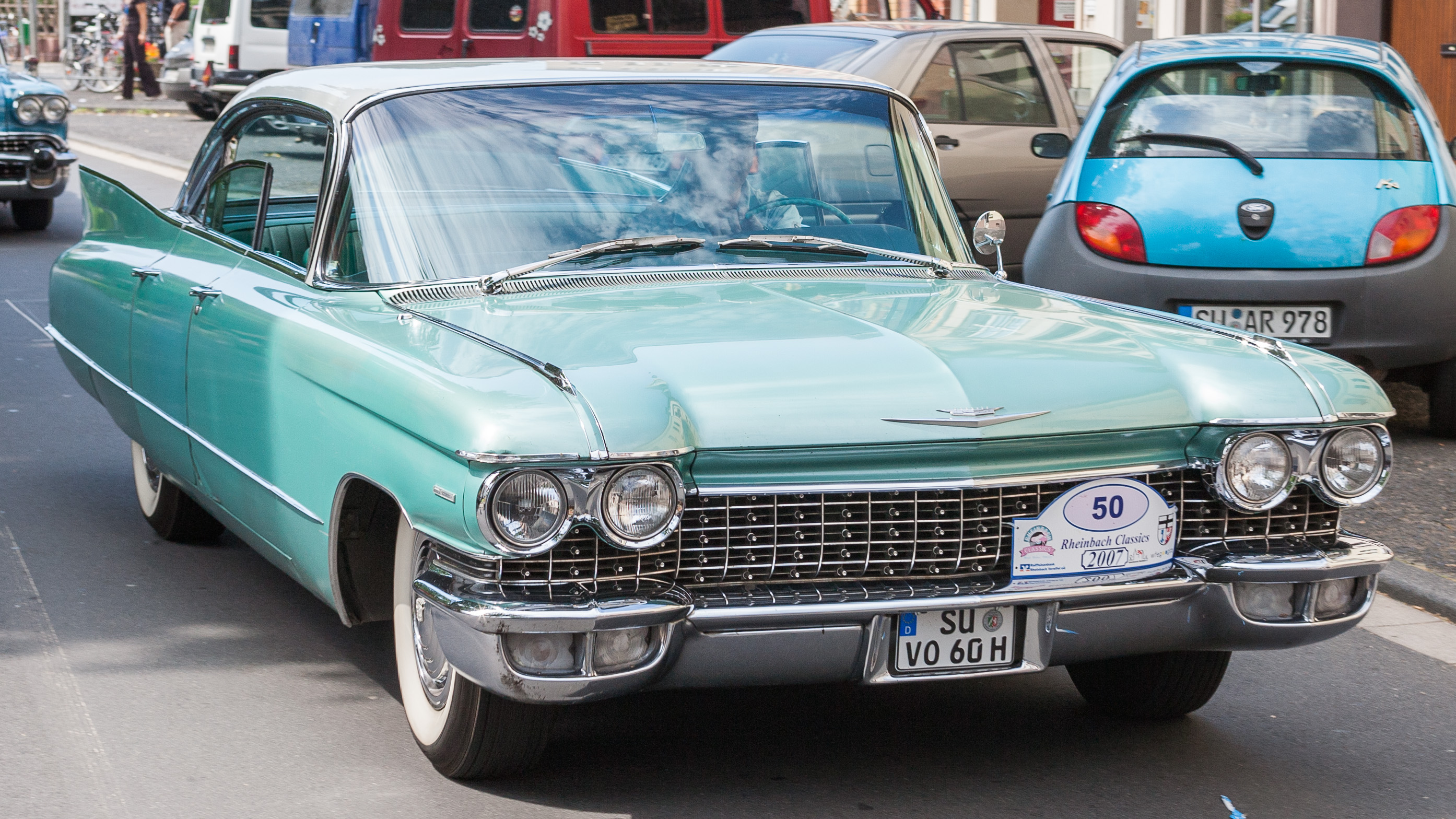
Cadillac
"And the whole thing about that folks, and what's significant about that in machining, the flatter two surfaces truly are, and like grinding things, it's not really flattening them. blaster. So my question is what, what award did Cadillac win that completely changed the game for this brand that gave them credibility?"
Cadillac is a car brand. They’re about to talk about an award that helped change how people viewed the brand.
Cadillac is mentioned as the brand that won an award which “changed the game” and gave it credibility. The segment is setting up a discussion about how recognition/engineering milestones affected Cadillac’s reputation.
Request an Explanation
Heard something you'd like explained? We'll add it to this episode.
Sign in to request explanations for terms you heard.
Want to learn more?
Browse our glossary for plain-English explanations of automotive terms, jargon, and concepts.
Help improve this episode
See something that's not quite right? Our annotations are AI-generated and can sometimes miss the mark. Click the flag icon on any annotation to suggest a correction.