The redesigned 2025 Toyota 4Runner marks a significant update after 15 years, featuring a turbocharged four-cylinder engine and various trim options. The hosts discuss their experience with the SR-5 trim, highlighting its off-road capabilities and unique personality despite some handling and ride quality drawbacks. They also delve into the vehicle's interior features, including the simplistic controls and lack of modern amenities like powered seats. While the 4Runner appeals to its cult following, the hosts express concerns about its price and overall refinement, suggesting potential buyers consider their specific needs for an off-road SUV.
Topics:2025 toyota 4runneroff-road capabilitiesturbocharged engineinterior featureshandling and ride qualityprice and valuetrim optionsdriving experiencefuel economysafety features
This week, we share our impressions of the redesigned 2025 Toyota 4Runner. Now in its sixth generation, the 4Runner retains its body-on-frame platform, preserving its rugged off-road identity while introducing some modern updates. We break down what Toyota got right—like easier access and more comfortable seating—as well as where the redesign falls short. Plus, we answer audience questions about vehicle drive modes and which manufacturers make the best physical controls.
"A 2024 Buick in Vista, the 25 Chevy Equinox, the 24 Chevy Tracks, the 25 Ford F-150, and the 25 Jeep Compass. I'll have traditional climate controls with a lot of harder controls as well,"
"... Chevy Tracks, the 25 Ford F-150, and the 25 Jeep Compass. I'll have traditional climate controls with a lo..."
Select text to request an explanation
Welcome back to the Talking Cars Podcast. I'm Alex Nizek. I'm Maddie McCarty. I'm Ryan Policowski. All right. So today we are talking about the redesigned 2025 Toyota 4Runner. And here's what you need to know about it and what we bought. So this is the first redesigned for this truck in about 15 years. The fifth generation came out in
2010. And this is, you know, basically 15 years later. So there's a lot of, you know, cult following for this vehicle and people have been waiting a long time for this new sixth generation version. And we bought the SR-5 trim, which is basically the most on-road version of an off-road vehicle, which is interesting. So there are a ton of off-road versions, TRD Pro, and TRD sport, all these things, tons of trims. And that's probably what you're seeing most of the content around this new 4Runner on. If you're looking around me, you can see that there's a lot of things going on here. And that's probably what you're seeing most of the content around this new 4Runner on. If you're looking around me,
the internet reading about this thing. So we actually bought, you know, the more mainstream versions SR-5, more regular, if you will. And so there are different ways you can configure this thing. We got the non-hybrid, so it's just the Turbo 4 cylinder 4-wheel drive, and essentially no other options. And we spent $44,630. And basically the only other way to spend less on a new 4Runner is to get 2-wheel drive SR-5. So this is it. This is kind of where it all starts. All right. So Maddie, I'm going to start with you.
What did you like most about this 4Runner? I like the color. It's a beautiful color. Yeah, I think there's some kind of blue... It's a heritage blue. Yeah, but no. For reals, I actually did think it was kind of fun to drive. I don't drive a lot of large vehicles and hop into me like, oh, I feel kind of cool in this car. But I did succumb to the general vibe of it out there. Yeah, and I felt it was fun driving. I didn't take it off road, so I can't speak to that. Yeah, we haven't really done that yet.
But there's something about this truck, right? And like Toyota trucks in general, too, where you're driving it. It's enjoyable, and it's fun. But then you go through like you look at our log, but it's like, yeah, the handling's not that great. The ride's not that great. The steering's not... But something. I don't know. It has a little special thing to add. I don't know. It's hard to quantify. It's got a personality on the rest of the cars we test anymore. This is a sore point with me. No, I love the fact that there's this thing is still unapologetically like an off-road
vehicle. Yeah. And yeah, if it's going to be somewhat off-roading, it's not going to handle well on-road. Like this is compromised, right? The Wrangler, the Bronco, this thing. I appreciate the fact I'm still making cars with a little personality like that. It doesn't ride the best. It doesn't handle the best blah, blah, blah. But it has a personality, and I love the truckiness of it. I think that's the fond of driving. That's why it's not like driving a highlander. Highlander's fantastic vehicle, but it's an on-road vehicle, right? Much more on-roady. Much more on-roady.
More well-mannered in that sense, but that's not always fun. It's practical. It's not always fun. It's got a personality. I think that's the best part about this car. Yeah, you're not isolated from everything, right? You feel all of the bumps in the road. You hear all the road noise. You're definitely driving the truck. Yeah. And yeah, I don't know. I definitely felt it too. Driving is like, yeah, okay, objectively on paper. Maybe some of these things aren't great, but I feel kind of cool driving it. Yeah.
I like that. That was always the classic thing that they had. The styling, I think they brought some of the other generations in a nice mix. I like to look at it. I think the best part about it, well, this is kind of a weird thing, because it's also one of the worst things about it. The power train has power, finally. Yeah. So I've been in many foreigners, and you know, the last generation foreigner, great motor, because it lasts forever, but it has no power. It felt like a dog, I thought. Yeah.
Some, you know, spunk to it. Right. It's all good, I think. We'll talk about the. Yeah, I mean, it's making after a lot more power and also has an eight speed. The other one was a five speed, so just making it feel antiquated and probably not helping it feel any quicker. No, and fuel economy was not good on the other. Yeah. Yeah. So. What was it in the other one? What's low? Low. It's like, I think it's like 22 in this one, which not great. Right. Oh, I don't know exactly. It wasn't. It's not good. And every time you, I mean,
they're all modified now, too. And you see when it has big tires, right? Not getting it's a original fuel economy. Yeah. And I think it's worth noting, too, there is that hybrid option, but it's really more about making more power. Right. Then it is. This isn't trying to turn the four runner into a Prius and get 30 miles per gallon. No, you saw that with the land cruiser. Right. It has the same thing. Great power, but that's got his other quirks anyway. But it's not for fuel efficiency really. It's just for power. Yeah. Yeah. Just a coil was the same one. Yeah. And speaking of other Toyota trucks, I mean,
we were seeing a lot of similarities on the inside, right, with controls. It's like, mostly pretty simple, I would say. Yeah. I think this one is like, especially as the base trim, it is very much bare bones. Definitely. Which there's like, yeah, aesthetics wise, you're getting that rugged truck look inside, but you also get those harder, bigger controls, I guess. Like comically large, yeah. Like the dial is like this big. Yeah. But then the volume one is like, yeah. So it's
going on there. Yeah. I don't know. So they're taking like, I don't know, you're going to be wearing gloves and stuff. Sure. I don't know. But so you can like easily adjust like the climate control, which is great. But then like the touch screen itself is kind of small with the buttons. So it's kind of not seamless. And in terms of like thinking about the design and who's going to be using it. Yeah. Right. But at the end of the day, at least you can adjust your climate. For sure. Yeah. You can use some hard button knob. Yeah. But I wish that there was auto climate.
Because I'm a big auto climate user. So you do have to adjust everything manually, which is like not the worst thing in the world. At least you can do that. But then also the seat itself is manual. So we don't have those powered seats. But we oddly have lumbar. That is power, which I'm not complaining about that. Just unexpected. Yeah. But yeah. So I think very bare bones. I kind of enjoyed the bare bones nature of it. Not necessarily the price that it costs to get the bare bones version. We'll talk about that. But just as
as a concept of like, yeah, you're not overwhelmed by features and all this stuff, right? It was kind of just to the point. Yeah. They're a little surprised by the driver's seat not having power functions or adjustability. I feel like most cars, even when we get like the middle of the range, like the popular. Yeah, the trim level. It's always got at least a power driver's seat. Yeah. And that affects our acts are, you know, seat comfort driving tradition scores, because you can get those finite adjustments. Where the, you know, the manual ones are kind of just locked into those sections. Right. Right. Right. Which I would
always able to get comfortable in this thing. I had no problems. I was surprised by the seat. Honestly, the seat is super basic. But I thought there were comfort seats. That is not not so much back. No, no. I thought the front seat was quite comfortable for a simple seat. There's nothing special about them. But they just hugged me well. Yeah. Right. Right. Yeah. Agreed. And I thought, you know, because we bought this on road trim version things, like, yeah, it's not a quiet vehicle in other ways. But like road noise was decent because these are highway tires instead of these crazy offer tires. I should say we
did get to sample the TRD Pro, which was like a totally different experience. And then things like access right getting in and out of this because it's lower to the ground. It doesn't have a lift get on it. That's some of the other versions have. So yeah, wasn't too bad. No, I still high up for shorter people like myself. Yeah. It's not a reasonable. Right. Yeah. But just look at that body. I'm framed like you're going to have to step up that awkward little bit. Right. Like the Tacoma. Yeah. It's not the, you know, the unibody like the Highlanders got a lower entry point. Right. Right. Right. Right.
Right. But that's just a nature of the type of construction this vehicle is. Yeah. Right. Right. Yeah. And it is sharing, you know, a lot with other Toyota trucks out. We talked about controls. But this frame, this TNG, whatever platform is now shared with Tacoma and Sequoia and just, you know, all these other trucks. So there's a lot of similarities going on. So I don't know. It's interesting. The truck feels kind of the forerunner feels kind of wide. And I'm wondering if that's somewhat of that platform sharing like it's shorter. It hasn't grown too much in dimension.
The last one. But in the width, you're just driving in it feels kind of substantial in terms of, you know, with when you're looking out over the hood. But I was my girlfriend has the last generation 2015. And it doesn't feel that it's different size to me. And I was just driving it. Yeah. Yeah. I've noticed a lot of people wrote that in a logbook that feels wider. I don't know why that is. I don't know. Maybe because the window that the windshield is shorter. I don't know the weird thing. But I do like the hood on this. Like looking out over this hood is better than the last one. The other one kind of just like flattened. Yeah.
It's got a little bit more muscle looking to it, you know. Yeah, for sure. Yeah. Maddie, eight S-wise. I mean, it seems to do okay. Yeah. I think so. So eight S-wise, what we're talking about here is the Toyota Safety Sense 3.0. That actually comes standard, which is great. So that has like your lane centering. So it's going to be able to help you keep your vehicle centered in the lane. And in the forerunner's case, I think it actually does pretty well. It is. I do. I did find that it kind of like would sway.
It's a little bit in the lane. So it wouldn't keep you perfectly centered. Maybe it would swing wide a little bit around the curves. But you can still kind of help steer it through those curves without it feeling like it's fighting you, which I think is like really important. Yeah. Because you don't want it to just take over everything. And then feel like you're fighting it. Yeah. So I actually had a pretty decent time driving with it on. What about you? Did you end up using it? Yeah. Use it a little bit. And for me, when it comes to an L2 system or one of these, you know,
I mean, centering, it's that it's all about it not fighting me or putting in these inputs that start to become annoying or something like that. So I didn't really get that here. So I found it a bit more useful. Yeah. I didn't use it. That's okay. Not everyone does. I didn't spend a ton of time. But yeah, I didn't spend a ton of time in it. But that's so worse when you're fighting it. Like it holds you like it's like on the highway, taking like a nice sweeper and it's just, but it's like hugging one side too far. You're trying to move it off back away. And it's just fighting you off of that. Like it just doesn't leave me alone. Yeah.
Yeah. But being able to adjust that, that's huge. Like that a little bit of adjustment. But yeah, I'll get a chance to play with that a little more. And in terms of the adaptive cruise control. Yeah. I didn't have an issue with that as well. I think that this is a very much straightforward system. Even the controls themselves are quite large on the steering wheel straight forward. So if you are generally well versed in how to use these systems or how they work. So like adaptive cruise control being able to
keep you a certain distance from the lead vehicle while maintaining a maximum set speed. This one is able to accelerate, it's able to downshift and get that power in order to keep up with traffic as it moves. I haven't been able to test it at really low speeds. So we'll see if that powertrain can work well with that. Yeah. And one thing we always hear from listeners and readers is they're curious about a spare tire on their new car. I'm always curious. Yeah, right. More and more, they are not coming.
With the one they come with the, you know, the spare tire or the repair kit, basically. Yeah, don't get me started. Yeah. I don't know how. I've never had success. Anyway, this one. This foreigner has a spare tire. It's a space saver. So it's not a full-size spare. But it is tucked up underneath. So it's there. So that's good to know. Yeah. So at least there's that. So let's get into the negatives. And it's funny. When you go through the logbook, just we're pretty positive on the overall experience. Right. It's fun. It's whatever. But then you start looking and it's like, oh, there's
actually a lot of red here, right? Yeah. I was noticing that today. I took a peek before just like. And yeah, there's a lot of red. Yeah. And critical areas. Yeah. So what stood out to you most right? It's a clunky powertrain. Yeah. You know, the power is there. I mentioned earlier that we like it. It's got good power. And it's pretty smooth. If it stays in one year, but it gets a little lost. And it's just uneven power.
Delivery. And the clunkiness from some of the shifting. It's a bummer. It was that section was pretty red. Yeah. I don't know. Even I know this. And I'm not even the person who does the dynamics testing. Yeah. Yeah. It's just the handling. Oh, sorry. The handling stuff aside. We can talk about that after. But that kind of goes with what it is. But it should shift better. I think it should be a little bit more a little bit more pleasant. Right. So Maddie. I mean, if you're not normally noticing that type of thing, what did the
400 do that you were like, wow, this powertrain like something from when starting from a stop. Yeah, especially. You just get that little lurch. There's like that delay. And then it kind of shoots for it. And and also anytime. Cause this has auto stop start. And so anytime the engine kicked back on. It would like shake the whole thing. Refined version of that. Yeah. Yeah. So that's just something that I like noticed. And I was very conscious of whenever I had someone in the car is like, I didn't.
I had to remember first to turn off the auto stop start engine. And then if I didn't just making sure that I kind of preemptively took my foot off the break a little bit. So the engine will kick in before the green light would happen. So you're just you're driving. Yeah. Yeah. Which I don't want to have to think about that. But in this car, I was. Yeah. So yeah, it did take a little bit away from the driving experience I've seen. I get in a habit. A lot of cars is turning the stop start off. Obviously experienced it here or there. But this is a car that you want to turn it off in.
Yeah. Because of that. But yeah, I just I don't know. I felt like they could have done better there. Um, I was actually putting it in eco mode. The drive mode. Yeah. Like, yeah, it lacks it off the line. Yeah. Yeah. Not only was the start stop jumpy, but just the tuning of the accelerator pedal just, you know, it was easier to be smooth. If I put it in a a dollar mode basically. That's a good tip. Yeah. Yeah. So Ryan, you mentioned the ride in handling, right? Yeah, it feels trucky and it's fun. But.
Objectively, not not the greatest. Well, listen, it's not going to, it's not going to have high scores in our handling assessment, right? Or even ride. But, um, and that's the nature of this. It's kind of a trucky vehicle. Um, I don't, I can't get, I'm going to harp on it too much because I, I also like the truckiness stuff, right? So you get a little head tossing. It's got some bounce to it. Um, I, I did think I'm like secondary ride like someone like just straight up impacts were soaked up reasonably well. Not too much like shutter, the body on frame. Some vehicles sometimes you hit something like that because they're stiffer.
Um, they'll just kind of, the whole thing kind of shudder. It's a deal. Yeah, I didn't do that bad. I, I didn't think, um, but it's, yeah, it's got some body roll and, um, certain underlations in the road kind of tosses you around a little bit, but it's, it's, it's going to because it's that type of a vehicle. I think, um, yeah, to a point. I mean, sure you could make it a little better. Perhaps, but, um, but yeah, I mean, that's a downside to this type of vehicle and this vehicle, right? Well, I think, I don't know, you're naturally going to, I would think compare this against something like the Bronco and the Wrangler, right? With the Wrangler. Yeah.
And kind of the most extreme option as far as the off road capability, all that stuff, Bronco, in my opinion, maybe somewhere in the middle, this is probably the more refined more civilized, civilized version. It kind of has always been that that way. Yeah, still giving you that off road capability. Yeah. Yeah. You know, the roof doesn't come off. So it's a little. Yeah. It's, yeah. Yeah. Um, the price, right? This is not of inexpensive vehicle. I mean, we paid what was it? About $44,000. Almost 45.
For this base trim, right? And I think you get in and, okay, yes, you're getting off road capability and kind of the look and feel you're buying into this club a little bit. Um, but the fit and finish, I was like, this is not. I was surprised. Yeah. Yeah. It's like gray seat covers. And in my head, I'm like, this is a very off road intended to be like rugged type of vehicle. Yeah. But the soft cloth, that is lighter. I feel like it's going to get dirty. So.
Quickly, do you remember our Tacoma? Yeah. Tacoma had those lights colored seats in it. They were. We had to clean clean them. They were before we got rid of it. Yeah. There was awful. And I totally agree. All of that. I totally agree. Like then this is even more off road in a sense. And it's, um, yeah. Um, comfy seats, but they're not going to. Well, they should have been at least a darker. Yeah. Yeah. Yeah. Yeah. Yeah. Yeah. Try and hide the dirt. Right. Yeah. Yeah. And I was just, I don't know. Like, yes, there's a ton of plastic around. But that might be a more rugged choice than covering things.
Whether or whether, but just the, the feeling of solidity isn't necessarily there. There's these grab handles on the center console. For example, or the door pole when you pull on it to close the door. It's like the whole thing flexes. And it's just not. Yeah. What I would expect for a the price or this company. Yeah. Yeah. I don't know. I struggled with the price a little bit. I mean, what do you average price? It's our new car today. It's right. Well, it's almost 50. I'm sorry. It's upper. Yeah. Yeah. Yeah. So it's like, you know, it's, it's
a Toyota. It's a four runner. So it's got a little bit of a cult following. Right. Yeah. I think the price was too, too out of line. Yeah. It should be better interior fit and finish. Sure. Yeah. But I mean, you're going to pay. What are you going to pay that for? You're going to pay more for a Wrangler or Bronco? Sure. Well, and Bronco's not put together that well. It'd be real. Yeah. None of these things. Yeah. Are necessarily like top of the. Yeah. Yeah. Class for. Yeah. And finish. It's a matter for the price. Hand down. But I just, that wasn't like my, where my head went initially. Sure. Well, it's fair.
And I think it's just too, as you start, you know, climbing the trim ladder, if you will, or adding options, right. You know, it just gets out of hand pretty quickly. I don't know the exact cost of that TRD Pro that we got to sample. But it was. It's up there. Yeah. The jump from like the trim that we got up to the next one is like over 10 K. And I mean, you do get. I believe like the amenities that you might think of as it's more higher.
The trim or like the sunroof and power lift gate, powered seats, you don't even get a wireless charger in this one. I just remembered. And that's something that comes in like vehicles in the 20, 20,000. So that, I think that was surprising to me. But. Yeah. It's just a different set of priorities. Right. Yeah. It is. Yeah. If you don't care about that. Yeah. If you don't care about the interior, what it looks like, then sure. It's great price. But. If you want your.
Your little, your little things that make me be driving the car, they whole experience a little more luxury. Yes. I guess. The creature comfort. The creature comfort. Yeah. It's missing those. Yeah. Yeah. Curious if either of you paid attention to or looked at the seat folding mechanism. Like there's a lot of talk online with four runner people that they're kind of upset with the way toy to redesign the second row seat folding. I didn't. I didn't.
But either it doesn't really fold flat with the rear cargo floor. You have to flip the whole seat up. Right. And so it kind of takes away from your cargo space. Or if you leave it in this folded position, it's no longer flat when the older one comes up on that way. Yeah. It's almost like because you can get a third row in this. And so I think. They rather than offering two different styles of second row seats like they did in the past. It's one seat right presumably to save costs and manufacturing all that. So now if you don't have that third row, it doesn't really make sense for the seat.
It doesn't do what it does, but no. I don't know. Something to be aware of if you're going to be, you know, filling up the cargo area or car camping or something like that, which is popular thing with you. Yeah. Exactly. So kind of a curious decision. But. All right. So to wrap this up, would you, you know, think about buying the four runner yourself or suggested to friends family? I mean, where does it stand for you as far as yeah. Cross shopping and recommending in this type of category. Right.
This power powertrain, I would maybe, well, I want I like to try the hybrid just to be just curious. I mean, we didn't do that great. A lot of crew there. So who knows what this would be, but I'd be curious to try that. I like the idea of it. I do. But it's fall short on all everything we just said. Yeah. Yeah. I won't be recommending it to people, especially his first year of it. Make sure he designed the rule of thumb. Even if you're Toyota, you don't buy the first year. Yeah, we see what happened to it. Maybe maybe let me make some adjustments based on what we're whining about.
Right now. So I do love the look of it. I think it did a nice job in the styling and it's going to be popular. I've never already seen a bunch of them driving around. Yeah. Yeah. Yeah. Yeah. I don't know. Maddie, what are you? I agree. Yeah. I think it looks nice on the outside. And I like the idea of it. I think it just needs a little bit of more refinement. Before I'm like, yeah, this is a solid car that I think that my family or friends should drive. They want it. But like I mean, if you're a huge fan. Yeah. Yeah. I mean, it's definitely improving on something.
I think it's more about for me. It's like, do you really want an off-road-focused SUV? Like, let's start there. Regardless of forerunner or. Yeah. That's a very important. Whatever. Yeah. Like a lot of people that out. No, that's true. A lot of people, they want to wrangle or want to wrangle and they get wrangler. And you gently try to tell them like, it's fun. But over time, it gets a little bit tiring. Yeah. It's not the most. And a couple months later, they're like, yeah, you know, but it's still a lot of it because it's fun, you know, but it's sort of like, this is that same vein maybe, right?
It's a little more civilized. Yeah. Yeah. Over time, I don't know. You might get a little tired of it. Especially if you're coming away, you're coming from. If you're coming from a more civilized car, like a, you know, a highlander or something like that, you, this is going, you know, you're going to be exhausted. Right. Well, the good thing is that Toyota's tend to hold their value pretty good. So if you're ready to sell it, it's like, you probably, you know, do pretty well. So. You have your own forerunner. So I'm wondering what you think about this. Yeah. You're a purest technically. Yeah. I guess. I mean, I have an old.
It's 2000. So I don't know. This one's not a manual. So that's true. Can't, can't go back from that. But no, I mean, it's cool that it still has like the roll down window and stuff. And I think in some ways, my 25 year old one with, you know, some modifications, what not rides a little better and like it's a little smaller and things like that. But I felt like I was driving one based on my experience. So that was pretty good. It was still fun to drive. All right. So let's move on to our audience.
The questions and, you know, as always, you can submit questions to CR.org slash talking cars, written or even better video questions, they're, they're all good. So our first one comes from David from a place in North Carolina that I cannot pronounce. But we did look and it's at least on Google maps. It shows up when you type it in. So anyway, you can probably see it on the screen. So David says, I have a 2025 Honda CRV with three driving modes. Normal, econ and snow. I know what.
Normal and snow are, but what is the econ setting for? When I switch it from normal to econ, my engine revs do not change. So what does the econ setting actually do? Ryan, why don't you get us started on this one? Yeah. So the econ is an economy mode. What they're doing is they're just playing around with your throttle mapping and the shift points or the CVT. The ratio for that.
And basically, they're, you know, they're not taking away, I'm probably your top actual horsepower, but they're giving it to any more gentle manner so that you don't use as much fuel. So if you look at your window sticker, your city, city fuels is always going to be lower than your highway fuel economy for the most part, right? At least not a wreck. Yes. Yeah.
And that's because you take more energy to get a car to start rolling from a stop up to speed. That's when you're using most energy. So if you can doll out how they delivered that power thing delivered after you step on the throttle, you can potentially save some fuel.
And with the CVT, they can go a little further with it and actually, you know, hold the revs in a certain place. It might not feel as quick or spunky the drive because you're kind of dulling all that out.
But it's similar with the snow modes. They're basically just cutting that immediate burst of power so you don't spiny the tires up right away.
So it's, it's just a way of kind of helping you adjust your throttle inputs.
Right. Right. Without changing too much about how you're actually driving or putting inputs into the car.
Kind of don't have to think about it, but it does, you know, and then you know, some cars will have a sport mode and you'll notice maybe like the steering a little quicker, but also the throttle snapier.
Yeah. Right. So just opposite direction, but you're going to use more fuel, probably.
Yeah, we did sound glad you brought that up because we did do some testing, you know, a while ago at this point, kind of a one off thing with testing sport mode versus economy mode to see what the effects were. And it wasn't on the CRV, you know, specifically, but just more broadly.
And economy, or yeah, the eco modes didn't really have that much of a positive impact.
But the sport mode had a noticeable negative impact because it would just hold up our entire use more fuel, that's the thing.
I was going to say within this, I think there's a little gimmicky personally.
You're not going to change things drastically. The car they're already making the car pretty efficient as a can in the way.
But yeah, you might just like the way it drives in one mode first.
For me, we driven cars like that was better in eco mode. Yeah, absolutely.
Wasn't a slower, right? Sometimes we see that with EVs where they will legitimately reduce the power output.
But that's because you're starting from 700 and it's like eco mode gets you five right in this, both are ridiculous, but less so with a traditional car like this.
Our second question comes from a person in a much easier to pronounce place, Rob from Arlington, Virginia.
He says, I love talking cars. Well, I love CR in general.
As your team points out, the current automotive UI is touch screens and form over function.
I have limited tactile sensation and perception in my right hand and all of these touch screens are impossible to use.
I can use traditional vehicle controls, but can't feel nor control my hand well enough, especially when driving to use these new designs.
Are there any vehicles with easy to use controls that you can recommend?
Also, will we ever have vehicles where all controls can be voice controlled? All right, Maddie, we're going to start with you.
I love this question because this is something that we talk about not only a lot here, but we also hear a lot of chatter about.
And there's also in the news talk about how people are wanting to go back to these physical controls that the cars used to have.
Because now they're being replaced and have been replaced with a lot of touch screens or even touch capacitive controls or panels,
which make it really hard to use while you're driving, because you can't just feel for it.
And you have to look to make sure you're pressing the right button that you want.
So, to answer Rob's question, it really depends on the vehicle itself and even the trim.
But in general, lower trim vehicles tend to have these controls that you can use without looking, so the dials and the buttons.
I think this is coming about because the industry sees right now touch screens as more luxurious.
These touch capacitive controls as something that maybe people wanted, but they thought that they wanted.
But now we're seeing companies realizing maybe people just want to be able to adjust their volume without looking.
And so we've heard this from a few brands like VW, Subaru, their new 26 Outback is going to have their climate controls back as hard dials and buttons, which is fantastic.
So we're seeing this trend, really an idea.
Yeah, so it's good that we're going in this direction.
So the scores that we give to cars, the higher the score, obviously, the more usable it is, which means it's more likely in general to have these physical buttons and dials.
And so the vehicles that tend to score higher, and I swear we aren't sponsored, but Honda tends to score really high.
And it's because they have the physical buttons for the temperature and for fan speed, for volume.
Most things that have to be controlled on the touchscreen, you can also use buttons on your steering wheel.
You have a traditional shifter. You have traditional stocks on the steering column for windshield wipers and headlights.
So those are going to be really easy to use most likely.
There are some other cars up there, so more than just Honda.
It's like a little treat for me to get, because it's simple.
We did the passport.
I got in the other day and I was like, this is so nice.
I can use that for you.
I can go back in time, but it's like a modern car.
But it has those things.
It's not the thing that we need to be messing with necessarily.
It's not just that they're physical controls, they're well laid out.
They're where you would expect, and they work well.
They're where they were. They used to be there and not place.
Why do we get away from it?
Maybe we needed the perspective.
Yeah, we lost it.
Yeah, exactly.
To add to the list of more than just Honda.
For Nissan and Mitsubishi, there are some really good controls.
Now, it's funny, because it kind of goes in line with what we're talking about before.
But the older versions, the older system of Nissan and Mitsubishi, those are easier to use.
So, there's newer ones like the ARIA and the Marano that we scored lower,
because those are starting to incorporate those touch capacitive buttons,
and those are harder to use.
So, like I said before, it really depends on the vehicle within each manufacturer.
Hyundai and Kia are up there as well.
They have been using more physical controls and shortcut buttons,
not only in the center stack for like media and phone,
but also in this steering wheel itself.
So, you do have to be careful with the climate controls on those sometimes,
but Toyota is another one.
So, even the four-runner that we were talking about,
that one also, we were talking about the climate controls, very easy to use.
And I want to also just give a few more examples for him,
in case he wants wider range of options.
But this is from the list of vehicles that we have.
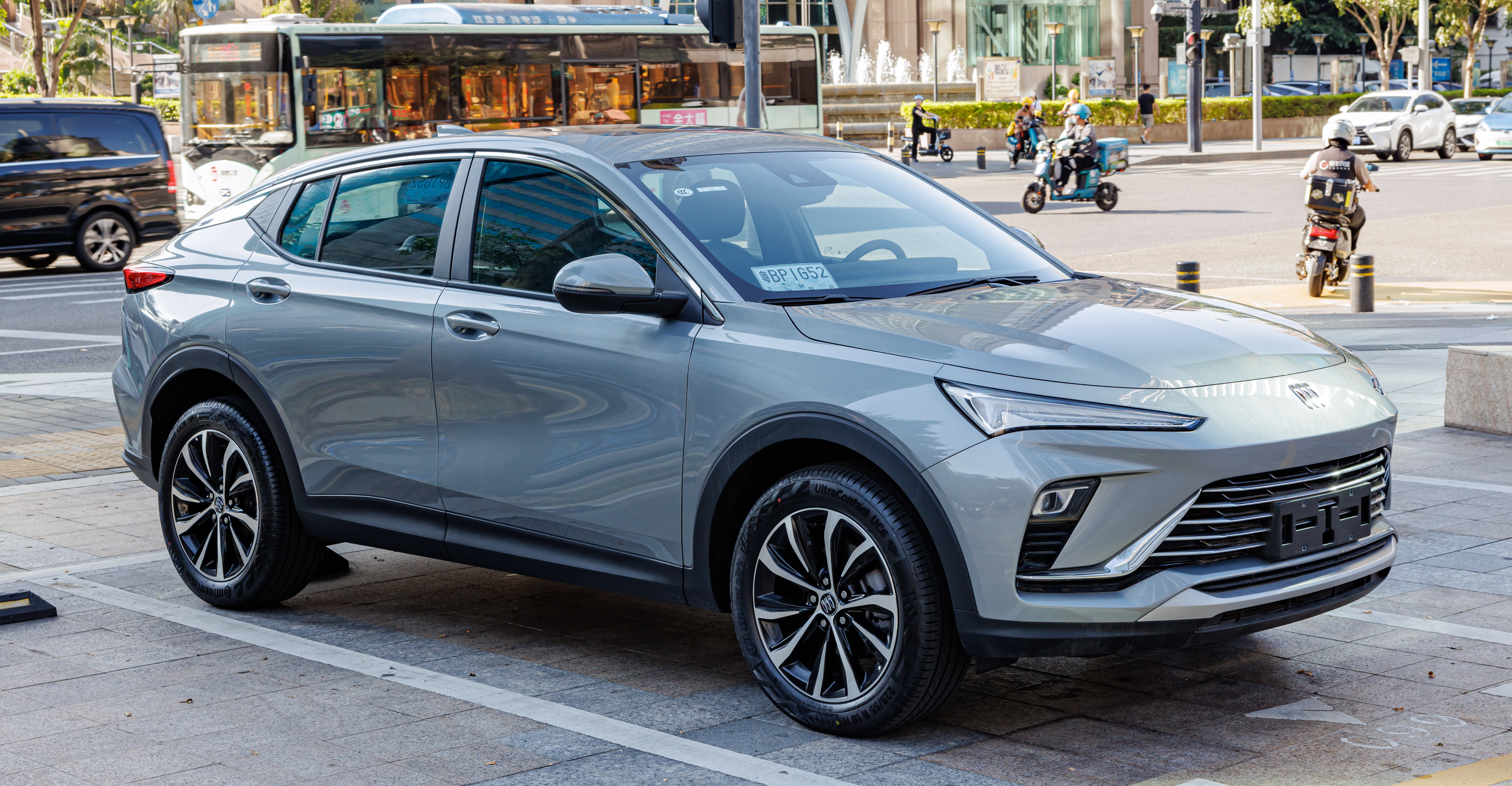
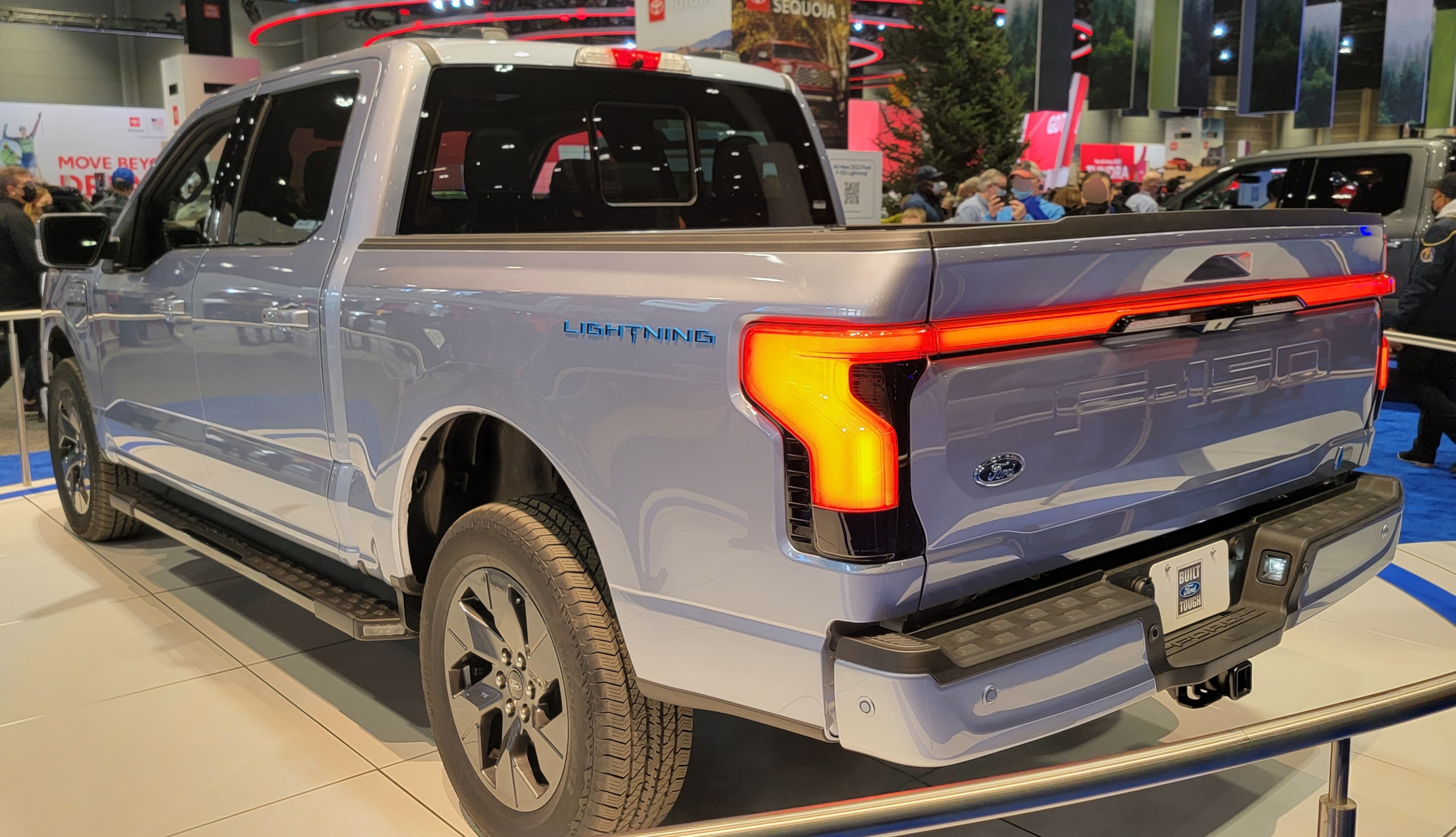
A 2024 Buick in Vista, the 25 Chevy Equinox,
the 24 Chevy Tracks, the 25 Ford F-150, and the 25 Jeep Compass.
I'll have traditional climate controls with a lot of harder controls as well,
and less functions in the touchscreen.
So, those are some to consider.
There's, I know there's other problems with these vehicles,
but I wanted to give a wider range for him.
Yeah, no, great.
And then lastly, there's something that we tend to not really like,
but technically is a physical control.
That's the rotary dial, or control wherever you want to call it,
that is kind of like functions as an external way to control the touchscreen
without having to touch it.
It's like a mouse.
Yeah, Mazda.
Yeah, exactly.
And then some BMWs.
So, if you want a luxury brand, you can, you have options.
He has options.
So, there's a lot to throw out there,
but it's helpful because I know that it seems very overwhelming
looking at all the cars on the line and being like,
wow, those are just all touchscreens.
So, yeah, hopefully it's helpful.
Yeah, and a lot of these cars, even the good ones you mentioned,
they still have a big screen, and still touch screen.
Yeah, yeah.
It's nice to have that blend of mixing in all those other,
the primary control that you want to use all the time should be easy.
Absolutely.
Like the seated seats should be a pretty, it should be an easy button,
like stuff like, you know?
In Subaru, they're just like down in the center console,
so you don't even have to look.
They'll only even stay on across ignition cycles.
Yeah, yeah, yeah.
So, Maddie, what about voice controls?
Voice controls.
Rob's asking, you know, we ever have vehicles where all controls are
done via voice.
Well, considering...
Considering that we have Tesla that is like almost entirely in the touchscreen,
we might also go in that direction with voice controls,
where I think that consumers now have the power with what they buy.
And so, if there are vehicles that have like really good voice systems,
people might be buying those more, or you always can, you know,
express whether or not you want these controls,
and hopefully, manufacturer listen, we listen, we actually interview,
or we survey our members and ask them about like,
how often do you use voice controls and ready to use them for?
Or do you like them?
So, we're seeing still there's a very broad spectrum of the capabilities
of these voice systems.
We still have ones that are very strict and rigid with the commands that you can give it,
where it will take you like, like, line by line of, what do you want to do?
Where do you want to go? What's the city?
What's the state? What's the zip code?
But then, we also have vehicles that are putting like Google Assistant
and Alexa in the cars, and then that's just very natural speech.
So, you have the full spectrum, and they're also like Mercedes and other vehicles
you can start asking for like the heated steering wheel to be on.
So, I think there's quite a high chance of that happening.
It's going to take a while, especially perfecting it so that it can understand
process natural speech.
But with AI, that is really taking it forward and accelerating this.
So, I think that it's quite a real possibility.
Yeah, and just hopefully not as a substitute for good controls, right?
But in doing those surveys and talking with people, it's choice.
Or having the options for multiple ways of interacting with these systems is always positive, right?
So, a good set of physical controls and also a capable voice control system would probably be fantastic.
Awesome, thank you.
So, that's our show.
And just as a reminder, CR.org slash talking cars to submit questions.
And thank you for watching.
And we'll see you next time.
Request an explanation for:
14 cars
Scroll for more
14 cars featured
Request an Explanation
Heard something you'd like explained? We'll add it to this episode.
Sign in to request explanations for terms you heard.
Want to learn more?
Browse our glossary for plain-English explanations of automotive terms, jargon, and concepts.
See something that's not quite right? Our annotations are AI-generated and can sometimes miss the mark.
Click the flag icon on any annotation to suggest a correction.