
About this episode
Hosts kick off with the 2026 Charger’s power options and the exact AWD spec they bought: a twin-turbo 420 hp 3.0L straight-six with an eight-speed automatic, plus the blacktop package and a “ludicrous paint” mention. They debate whether it’s exciting or “boring,” then dig into real-world behavior—loud cold starts, rough low-speed shifts, and rain traction/lag. Interior notes cover touch climate controls, seat comfort, ergonomics, and fit/finish, plus Stellantis reliability concerns and daily-ownership tradeoffs.
In this episode, we share our first impressions of the all-new 2026 Dodge Charger. The Charger features new styling and a hatchback design, a twin-turbo inline-six-cylinder engine, all-wheel drive, and an updated interior that feels small, despite the vehicle's overall size. We also discuss what Dodge got right, where the Charger falls short, and whether we'd recommend it over other enthusiast-focused vehicles. Plus, we answer a question about the differences between racing fuel and premium gas, and how octane ratings and ethanol-free fuel can affect performance in regular vehicles.
SHOW NOTES:
0:00 - Intro
0:19 - 2026 Dodge Charger R/T Blacktop Overview
1:18 - What we like about the 2026 Dodge Charger
04:51 - Ride, Performance, Comfort & Daily Driving
17:46 - The Downsides: Interior, Controls & Practicality
36:05 - Would We Buy the New Dodge Charger?
41:12 - Audience Question: Is Racing Fuel Worth It?
LINKS:
Review: 2026 Dodge Charger R/T: https://www.consumerreports.org/cars/sports-cars/dodge-charger-review-a9212537968/?EXTKEY=YSOCIAL_YT
Test Results: 2026 Ford Mustang: https://www.consumerreports.org/cars/ford/mustang/2026/overview/?EXTKEY=YSOCIAL_YT
Why You might Not Need Premium Fuel: https://www.consumerreports.org/cars/fuel-economy-efficiency/why-you-might-not-actually-need-premium-gas-a6382185831/?EXTKEY=YSOCIAL_YT

2026 Dodge Charger
"So in today's talking cars, we are going to talk about the 2026 Dodge Charger... Both electric and old school internal combustion power are offered."
The 2026 Dodge Charger is a new version of the classic Charger nameplate. They’re saying it can be powered in different ways—either electric or a gas engine—and this one they drove uses all-wheel drive and a turbocharged straight-six.
The 2026 Dodge Charger is notable because it’s a modern Charger that’s offered with both electric power and traditional internal combustion power. In this segment, they focus on an all-wheel-drive four-door variant with a twin-turbo straight-six setup, tying the “classic Charger” vibe to newer drivetrain tech.

Dodge Spirit
"This is a blast from the past. The Mopar Spirit is still kicking. I mean, this car."
The Dodge Spirit is an older Dodge model from the past. It’s being mentioned because it’s still around and people remember it. The conversation is likely about classic Mopar cars and why they’ve stayed interesting.
The Dodge Spirit is a compact-to-midsize Dodge from the past, and the podcast’s “blast from the past” framing highlights its classic-era Mopar identity. It’s mentioned as a car that people still talk about and that can still be found running today, which speaks to its lasting presence among enthusiasts. In a podcast, it often comes up when discussing older Mopar models and what made them memorable.
twin turbo
"We bought an all wheel drive, four door art model, which comes with a twin turbo 420 horsepower, three liter straight six cylinder engine..."
“Twin turbo” means the engine uses two turbochargers to push extra air into the cylinders. More air usually means more power, so the car can feel stronger.
A twin-turbo setup uses two turbochargers to force more air into the engine, which helps it make more power than a similar engine without turbocharging. It can also improve throttle response depending on how the turbos are arranged and controlled.
straight six cylinder engine
"We bought an all wheel drive, four door art model, which comes with a twin turbo 420 horsepower, three liter straight six cylinder engine hooked up to an eight speed automatic transmission."
A straight-six engine has six cylinders lined up in a row. People often like it because it can run very smoothly compared with some other engine designs.
A straight six (inline-six) engine is a six-cylinder layout where all cylinders are in one line. This configuration is often praised for smoothness and balance because the engine’s internal forces can cancel out more effectively than in many other layouts.
eight speed automatic transmission
"We bought an all wheel drive, four door art model, which comes with a twin turbo 420 horsepower, three liter straight six cylinder engine hooked up to an eight speed automatic transmission."
This is the car’s automatic gear system with eight different gear ratios. Having more gears can help the car stay in the “right” engine speed for smoother driving and better efficiency.
An eight-speed automatic transmission is an automatic gearbox with eight forward gear ratios. More gears can help keep the engine in its efficient or power-friendly range more often, improving both acceleration feel and fuel economy potential.
blacktop package
"We also added the blacktop package, which includes a whole bunch of features that I'm not going to list right now."
A “blacktop package” is an option bundle that gives the car a darker look. It’s usually mostly styling—like black trim or wheels—rather than a new engine or drivetrain.
A “blacktop package” is a dealer/manufacturer option group that typically adds darker styling elements—often black exterior trim, wheels, or appearance-focused features. It’s usually about visual theme more than changing the core mechanical performance.
Ludicrous paint
"Well, first of all, how did you not mention one of the options, the ludicrous paint?... Ludacris was was very creative."
“Ludicrous paint” is the name of a specific paint color option. It’s basically a branded color choice that helps the car stand out visually.
“Ludicrous paint” appears to be a specific named exterior color option for the Charger. Named paint colors are common in enthusiast brands because they’re part of the car’s identity and can be tied to particular trim/option packages.
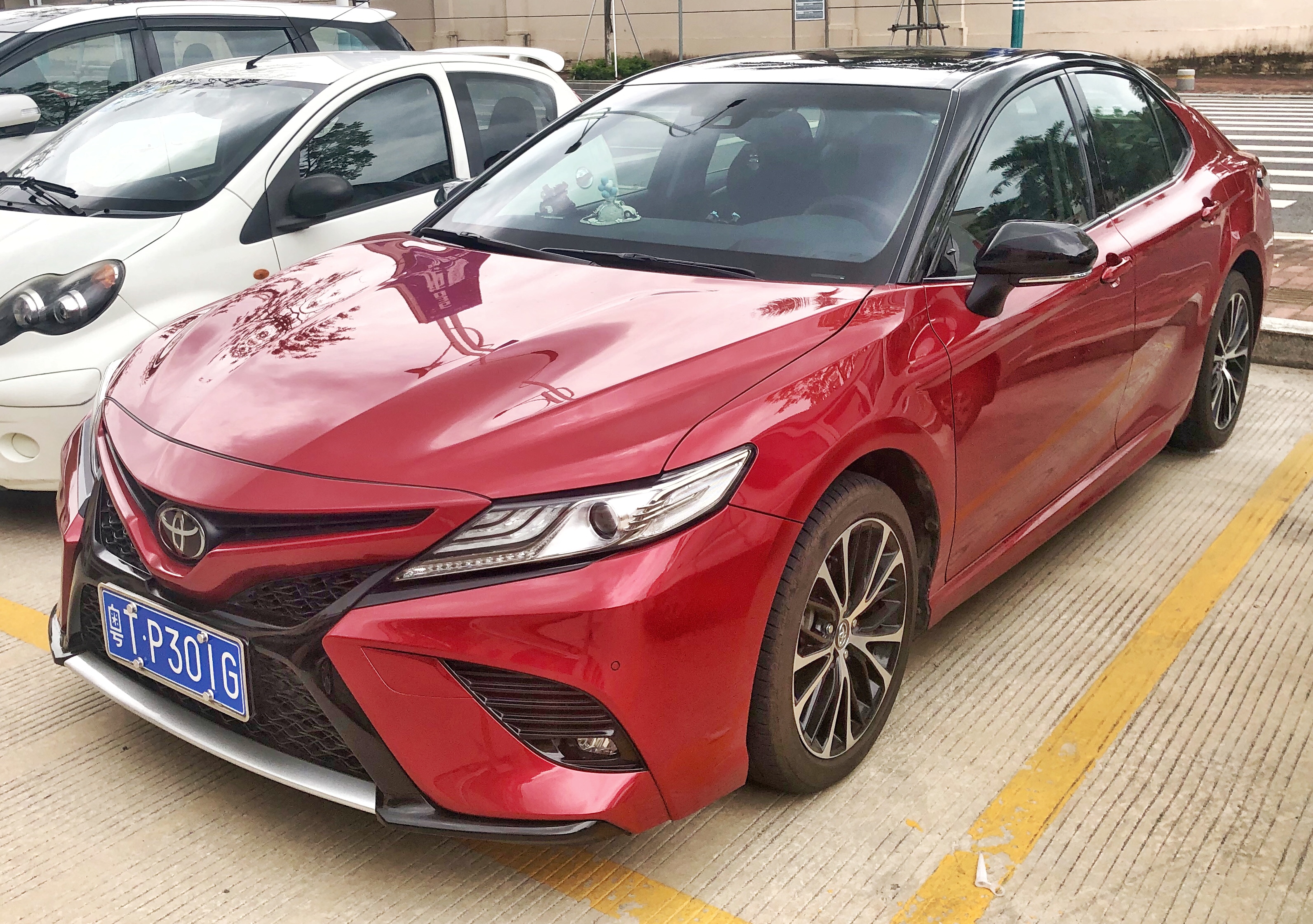
Toyota Camry
"...ually just said, well, everyone should just buy a Camry, be done with it. And so I'm glad that the world ..."
The Toyota Camry is a regular, everyday car in the midsize sedan category. People like it because it’s comfortable and practical for commuting and errands. It’s often suggested when someone wants a dependable car that’s not complicated.
The Toyota Camry is a mainstream midsize sedan that’s often recommended for its practical day-to-day usability and broad appeal. It comes up in conversations because it’s seen as a “do-it-all” choice—comfortable, efficient for its class, and generally easy to live with. When a podcast says “everyone should just buy a Camry,” it’s usually referring to that reputation for sensible ownership rather than excitement.
low aspect ratio
"When you start putting 22 inch wheels, very low aspect ratio on the tires, you're asking to have a stiff ride in this car. [318.9s] I mean, it soaks up most bumps that you throw at it pretty easily."
Aspect ratio is how tall the tire’s sidewall is. A low aspect ratio means less “cushion,” so the ride usually feels stiffer over rough pavement.
“Aspect ratio” is the tire’s sidewall height compared to its width. A “very low aspect ratio” means a shorter sidewall, which generally makes the ride firmer and less able to absorb impacts compared with taller-sidewall tires.
22 inch wheels
"When you start putting 22 inch wheels, very low aspect ratio on the tires, you're asking to have a stiff ride in this car. [318.9s] I mean, it soaks up most bumps that you throw at it pretty easily."
Bigger wheels can make the ride feel harsher. The host is saying that when you go up to 22-inch wheels, the car tends to be stiffer over bumps.
Wheel size matters because larger wheels usually come with shorter tire sidewalls. When the speaker says “22 inch wheels,” they’re pointing to a setup that tends to ride firmer and feel less forgiving over bumps.
19s
"I mean, it soaks up most bumps that you throw at it pretty easily. [322.2s] I mean, these are nineteens these are the small these wheels. [324.4s] These are actually 2020 because of the blacktop."
“19s” means 19-inch wheels. The host is saying wheel size affects ride feel—bigger wheels often make the ride firmer.
“19s” is shorthand for 19-inch wheels. In this context, the host is comparing how different wheel sizes (18s/19s/20s) change ride harshness and how much you notice the suspension working over bumps.
20s
"Yeah I think it comes with eighteens. [329.1s] These are 20s two 5545 tires. [333.0s] Okay. [333.5s] So but it actually does pretty darn well."
“20s” means 20-inch wheels. Bigger wheels usually go with shorter, firmer tires, which can make the ride feel less cushioned.
“20s” refers to 20-inch wheels, which typically pair with lower-profile tires. The speaker mentions “20s” and then gives a tire size example (“two 5545 tires”), using it to explain why wheel/tire choices can make a car feel stiffer.
suspension
"because that's something as soon as you start driving a test car out of here and you start hitting some of the bumps, one of the first things I think about is, oh, crap, what what size and how large these wheels, that's, you know, screwing up the, the suspension and the and, the ride and this thing. [359.2s] Actually, I thought it did pretty darn well."
Suspension is what helps the car smooth out bumps. The host is saying that with certain wheel and tire sizes, you can feel the suspension working more when the road gets rough.
In this segment, “suspension” refers to the system that controls how the car absorbs bumps and keeps the tires in contact with the road. The host connects suspension feel to wheel/tire size, saying you start noticing what the suspension is doing when you hit rough patches.
cruiser
"I mean, to the point that most of the time you're not thinking about what is the suspension doing... [359.2s] Actually, I thought it did pretty darn well. [360.9s] Yeah. It's, it's a cruiser."
A “cruiser” is a car that feels made for relaxed driving, especially on longer trips. The host is saying this one is comfortable and easy to live with.
A “cruiser” is a driving style/vehicle character associated with relaxed, comfortable long-distance driving rather than sharp, track-focused handling. Here, the host is concluding that the Charger R/T’s ride and demeanor suit highway trips.
I-75 from Fort Lauderdale to Valdosta, Georgia
"Yeah. It's, it's a cruiser. [363.4s] You know, and I mean, I, one of my notes is like, you want to go from take I-75 from Fort Lauderdale all the way up to, like, Valdosta, Georgia, perfect car for it. [372.0s] You want to continue on to the tail?"
They’re talking about a specific highway drive route and saying this car works well for that kind of trip.
The hosts discuss a specific road-trip route as a use-case for the car’s ride quality. This functions as a practical “where it fits” segment rather than a technical explanation.
The Dragon
"The Dragon. Not really the best, right? [375.1s] Okay. Not where you're going to have fun with that. [378.3s] But yeah, it just you can lock in and just go."
“The Dragon” is a well-known curvy road where driving gets very technical. The host is basically saying this car isn’t the best choice for that kind of twisty, aggressive driving.
“The Dragon” is a nickname for a famous twisty mountain road known for tight turns and frequent driver challenges. The host is contrasting it with the earlier highway route, implying the Charger’s strengths are better suited to cruising than technical mountain driving.
harkens back to the cars of the 60s and of the 70s
"But yeah it's, it's, it's, it harkens back to the cars of the 60s and of the 70s in the sense so big, slightly ungainly maybe if it gets really technical. [396.9s] But you know, they just kind of waft down the road, and it's quiet too, other than the engine exhaust."
They’re saying the car feels like older American cars from the 1960s and 1970s. It’s described as big and relaxed—more about cruising than being super precise in technical driving.
This is a characterization of the Charger’s driving feel and styling vibe as reminiscent of 1960s–1970s American cars. The host describes it as big and slightly ungainly when things get technical, but still smooth and quiet while cruising.
engine exhaust
"they just kind of waft down the road, and it's quiet too, other than the engine exhaust. [403.1s] Yeah. [403.5s] So you said, you know, the big baskets at startup."
“Engine exhaust” is the sound coming out of the car’s exhaust pipe. They’re saying the car is mostly quiet, but you still hear the exhaust.
“Engine exhaust” is the sound and flow coming from the exhaust system. The host is using it to describe the car’s noise character—quiet overall except for the exhaust note.

Ford Mustang Gt
"It made me think of of the Ford Mustang GT, which has a setting where you could do a quiet startup because allegedly, when they were developing the the current Mustang, one of the engineers or product, plant or guys was was their neighbors complained that how loud it was what they startups like."
The Ford Mustang GT is a sporty Mustang. The host is talking about a setting that can make the car start more quietly, because people complained about how loud it was during development.
The Ford Mustang GT is a performance version of the Mustang, and the speaker is referring to a feature that allows a quieter engine start. The idea is that during development, loud startup noise from the car drew complaints, so Ford added a quieter startup mode for certain conditions.
pedestrian warning sound
"And of course, there's no sound, with those, but or awful fake sounds or awful fake sounds for, for or the pedestrian warning sound, obviously."
Electric cars can be so quiet that people might not hear them coming. A pedestrian warning sound is an artificial noise the car makes at low speeds to help people notice it.
A pedestrian warning sound is an artificial noise system used on EVs at low speeds to alert people nearby. Because electric cars are very quiet, the sound helps pedestrians and cyclists notice the vehicle, especially during slow driving or startup.
parking lot mode
"Anyway, I startled some people at, in a parking lot mode, starting it from inside."
“Parking lot mode” means the car is behaving like it’s in a slow, low-speed situation (like starting or moving around in a lot). The host is saying the car’s initial response was loud or sudden enough to surprise people nearby.
“Parking lot mode” here refers to a low-speed/low-activity operating behavior where the car’s startup and initial response are noticeable to people nearby. The host says they started it from inside in that mode and startled people, implying the car’s sound and/or movement cues are more prominent at low speed.
full song
"It kicks in like it's getting on full song."
“Full song” here is just a way of saying the car suddenly sounds and feels like it’s really going. The host means the response ramps up fast rather than gradually.
“Kicks in like it’s getting on full song” is a descriptive way to say the car’s performance/engine note ramps up quickly to its strongest operating behavior. In this context, it matches the earlier comments about the startup being sudden and the car sounding like it’s hitting its peak response.
power delivery
"So so John, speaking of kicking in when you're driving it and say you're merging on the highway, what what did you think of the power delivery, the response, the noise?"
Power delivery is how the car’s power comes on—how quickly it feels like it accelerates when you ask for it. The host is talking about how it felt and sounded when merging onto the highway.
Power delivery describes how an engine or drivetrain sends torque to the wheels—how quickly it responds and how smoothly it ramps up. The host is asking about the Charger’s response when merging onto the highway, linking it to both feel (“response”) and sound (“noise”).
eco or sport
"I didn't find myself putting it in and out of eco or sport to lessen it. It just, it just was kind of background noise and it was enjoyable background noise."
Eco and Sport are settings that change how the car drives. Eco usually makes it feel calmer and more efficient, while Sport makes it respond quicker when you press the gas.
“Eco” and “Sport” are drive modes that change how the car behaves—typically throttle mapping, shift strategy, and sometimes steering feel. Switching modes can make the car feel more relaxed (Eco) or more eager to respond (Sport).
downshift
"Like if you fly it, if there is a little delay before it really does anything, then it gives a quick downshift. Power comes on pretty much immediately."
A downshift is when the transmission drops to a lower gear. That usually makes the engine rev higher so the car can pull harder when you accelerate.
A downshift is when an automatic transmission changes to a lower gear to increase engine speed and deliver more immediate acceleration. In this segment, the host describes a small delay before the car reacts, followed by a quick downshift to bring power on.
full throttle
"Power comes on pretty much immediately. The shifts are very smooth and quick at full throttle."
Full throttle means you’re pressing the gas all the way down. They’re saying that when they do that, the car’s gear changes feel smooth and fast.
Full throttle means the driver requests maximum power by pressing the accelerator fully. The host is using it to describe how the transmission behaves under maximum demand—smooth, quick shifts when the car is working hardest.
Stability control
"I don't want to find out how good the all wheel drive is for the tires. Stability control. Yeah, I just yeah,"
Stability control is a computer-assisted safety feature that helps prevent skids. If the car starts to slide or rotate the wrong way, it can brake individual wheels and reduce power to help you stay in control.
Stability control is an electronic safety system that helps keep the car pointed where the driver intends. It uses sensors to detect loss of traction or yaw (skidding) and can apply brakes and reduce engine power to regain control.
delay
"But there is a little bit you're like you said, there is a little bit of a delay. It's it's really it's really good when it's rolling."
Here, “delay” means the car doesn’t respond instantly when you press the gas. There’s a short pause before you feel the power or movement.
In this context, “delay” refers to a lag between your input (like accelerating from a stop) and the car’s response. That can happen with traction management, drivetrain control, or how quickly power is delivered to the wheels.
climate controls
"I I'm torn on the climate controls because they're accessible. They're the, like, their, touch sensitive bar..."
Climate controls are the car’s heating and air-conditioning settings. The host is talking about how the temperature, airflow mode, and fan speed are arranged and how easy they are to use.
Climate controls are the dashboard systems that manage cabin temperature and comfort, typically including temperature setting, airflow direction/mode, and fan speed. Here, the host is specifically discussing how those functions are laid out and how easy they are to operate without using a screen.
touch sensitive bar
"They're the, like, their, touch sensitive bar that that Chrysler Stellantis is moving to. And they're really accessible."
It’s a climate-control strip you tap or slide on, instead of pressing individual buttons. The host is saying it’s easy to reach, but the feel and feedback don’t feel as premium as real buttons.
A touch-sensitive bar is a climate-control interface where you interact with a continuous strip (often capacitive) instead of separate physical buttons. The speaker is evaluating it based on accessibility, tactile feedback, and whether the controls feel solid or “cheap.”
Chrysler Stellantis
"They're the, like, their, touch sensitive bar that that Chrysler Stellantis is moving to. And they're really accessible."
They’re talking about Chrysler’s parent company, Stellantis. The point is that the car’s climate controls use a modern touch-style layout that Stellantis/Chrysler has been moving toward.
The speaker is referencing the climate-control design direction associated with Chrysler under the Stellantis umbrella. Stellantis is the parent group that owns Chrysler, and it has been standardizing interior user-interface ideas across multiple brands.
tactile sensation
"So I don't mind the tactile sensation I like that. Yeah."
Tactile sensation is the physical feedback you feel when you use a control. The host prefers it because it makes it clear the car actually took your input.
Tactile sensation refers to the physical “feel” you get when using a control—like resistance, clicks, or vibration that confirms an input. In this segment, the host likes the tactile feedback because it helps confirm the climate system responded to your command.
bolstering
"Well, I think there's actually quite good bolstering on the seat back in particular. Like, if I move over slightly the bolsters right there move over that way..."
Bolstering is the padded “bulges” on the sides of the seat. They help hold you in place when the car turns, instead of letting you slide around.
Bolstering refers to the raised side sections of a seat that press into your body. More bolstering usually means better lateral support, helping keep you positioned during cornering.
lumbar support
"The only issue I had is that, I thought it just had a little bit too much built in lumbar support. But we can talk about using the rest of these."
Lumbar support is the part of the seat that supports your lower back. If it’s too strong, it can feel uncomfortable; if it’s right, it helps you sit better for longer.
Lumbar support is the seat’s built-in support for the lower back (the lumbar region). Too much lumbar support can feel intrusive, while the right amount can reduce fatigue and improve posture.
"I mean, the lumbar work for me, and it has a pocket. You all, you know, when you're writing, you often talk about the seat, the pocket that you sit in."
Here, “pocket” means how the seat is shaped to hold your body. A better pocket helps you feel supported and less like you’re sliding around in turns.
In seat-talk, a “pocket” describes the shaped area of the seat that you sink into and that helps position your body. A good pocket can improve grip and stability so you don’t feel like you’re sliding or sitting “on top” of the seat.
climate system
"Now, what was going through my mind, those we were talking about the climate system was were other controls."
The climate system is the car’s heating and air-conditioning. It controls how warm or cool the cabin feels and how air moves inside.
A climate system is the car’s heating and air-conditioning setup, including controls that manage cabin temperature and airflow. The host is transitioning from seat comfort to other cabin controls.
paddle shifters
"But then I think the last, GMC terrain that we tested, the paddle shifters were right next to them. [959.9s] And I remember not being able to figure out, am I on the volume or on the upshift paddle?"
Paddle shifters are little buttons or levers behind the steering wheel. They let you shift gears without moving your hand to a gear stick.
Paddle shifters are steering-wheel-mounted controls that let you change gears without using a traditional gear lever. They’re commonly paired with automatic transmissions (like dual-clutch or torque-converter automatics) to give a more driver-focused, manual-like feel.
hatchback design
"[981.8s] I think the final thing and probably you might you may agree with me, may not hatchback design. It's [988.9s] it certainly is different in the muscle car world like that."
A hatchback is a car where the back door opens upward like a hatch. It usually makes it easier to load things compared with a normal trunk.
A hatchback design uses a rear door that swings upward and includes the rear window, which can make the cargo area easier to access. The hosts are contrasting this with the more traditional trunk layout they associate with the “last charger,” and they connect it to usability and cargo practicality.
rear package shelf
"instead of having a having design compromised by the, the rear package shelf and the seat backs and, you know, then you have your sticking stuff that goes far in..."
The rear package shelf is the panel behind the back seats. It can make the trunk area feel more blocked, so it’s harder to reach items back there.
The rear package shelf is the panel behind the rear seat that can partially block or shape the cargo area view and access. In the segment, it’s mentioned as a packaging element that can make it harder to load or reach items compared with a hatchback layout.
sedan
"The one thing I will add is I'm just glad that it's a sedan. [1030.3s] So so we as opposed to an SUV."
A sedan is a car with a separate trunk and a normal passenger cabin. The host is saying they prefer this sedan shape over SUVs because it affects how the car feels and how easy it is to use.
A sedan is a passenger car body style with a separate trunk and a fixed roof, typically with three distinct sections (front engine bay, passenger cabin, and rear trunk). The host highlights that they’re glad the Charger is a sedan rather than an SUV-like vehicle, because it changes packaging and visibility.

Toyota Crown
"...en Toyota, dropped the Avalon and brought out the crown and the and they made the styling of the crown ki..."
The Toyota Crown is a Toyota car model name that has been around for a long time. It’s typically positioned as a more premium or higher-end option compared with basic models. In your podcast context, it’s being discussed as a newer direction for Toyota after the Avalon.
The Toyota Crown is a long-running Toyota model name that has been used for a range of passenger cars, including more upscale versions. In the context you provided, it’s discussed as a replacement for the Avalon, with attention on the Crown’s styling and how Toyota positioned it. Podcasts often bring it up because it represents Toyota’s approach to evolving a familiar nameplate into a new role and design direction.
marketing hyperbole
"So before I get to the car, I want to say that I'm done with, like, the marketing hyperbole. [1087.5s] And because according to Dodge, it's the world's most powerful all wheel drive muscle car."
Marketing hyperbole is when a company uses over-the-top wording to make a product sound better than it can realistically be. In this segment, the host thinks Dodge’s claims are exaggerated and not very meaningful.
Marketing hyperbole is exaggerated or absolute-sounding promotional language that’s meant to grab attention rather than be strictly factual. The host uses it to criticize Dodge’s “world’s most powerful” style claim and compares it to an obviously unrealistic example.
all wheel drive
"And because according to Dodge, it's the world's most powerful all wheel drive muscle car. [1092.4s] And that's like saying we work with the world's tallest."
All wheel drive means power goes to all four tires. That usually helps the car grip better on slippery roads. In this segment, it’s central to Dodge’s “muscle car” marketing claim.
All wheel drive (AWD) means the car can send power to all four wheels, not just the front or rear axle. That can improve traction in rain, snow, and low-grip conditions, and it’s a key part of why Dodge is marketing this Charger as a muscle car with AWD.
muscle car
"And because according to Dodge, it's the world's most powerful all wheel drive muscle car. [1092.4s] And that's like saying we work with the world's tallest."
A muscle car is a type of American performance car built for quick acceleration. It’s usually about big power and a sporty feel. Here, the host is questioning whether adding AWD changes what “muscle car” should mean.
A muscle car is a performance-focused American car category known for strong engine output and a heavy emphasis on acceleration and straight-line driving. The host is specifically reacting to Dodge’s attempt to label the Charger as a muscle car while also having AWD, which they argue is unusual for the category.
headroom
"Headroom. No headroom. Yeah. I mean, and then, like I said, the hatch floor, the rear hatch floor is really high."
Headroom is how much space you have above your head when you’re sitting. If there’s “no headroom,” it usually means your head is too close to the roof, making the seat feel tight.
Headroom is the vertical space between a person’s head and the roof when seated. The hosts say there’s “no headroom,” which is a key indicator of why the rear seat feels cramped and uncomfortable.
hatch floor
"I mean, and then, like I said, the hatch floor, the rear hatch floor is really high. So I mean, it's cool to have, but you're not really stacking a lot of stuff there as the, as the, the glass comes down."
The hatch floor is the floor in the back cargo area. If it’s high, it’s harder to load and stack items, and it can also be a sign that the car’s underbody layout is taking up space.
The hatch floor is the floor level in the cargo area behind the rear seat, shaped by the vehicle’s underbody packaging. A “really high” hatch floor can reduce how much you can stack or fit, and it often correlates with other packaging constraints that affect rear-seat comfort.
EV platform
"And this is guess guest guessing on it because of the EV development. That's my guess. So remember how it used to be that you'd take a gas, platform and turned it into an EV and there'd be some compromises?"
An EV platform is the basic car layout designed specifically for an electric powertrain. Even when a car is built for EVs from the start, the battery and drivetrain still take up space and can make the cabin feel less roomy in certain spots.
An EV platform is a vehicle “base” designed around electric components (battery placement, electric drive units, and wiring) rather than adapting an existing gas-car layout. The point here is that choosing an EV-first architecture can still force packaging compromises that show up as awkward rear-seat geometry or footwell space.
compromises
"Well, turns out if you go the other way and do an EV platform, there's compromises, compromises, and also just and also not helping this situation, this make that, situation that leads to feel uncomfortable is besides this the bottom cushion raked high floor, but also very hardly any space for your feet underneath the front seats."
“Compromises” here means the trade-offs designers have to make when building an electric car. The battery and drivetrain take up space, so you might lose comfort or room in the cabin even if the car is big.
In EV development, “compromises” refers to the trade-offs engineers make when packaging batteries and electric driveline components. This segment argues that whether you convert a gas platform to EV or design an EV platform from scratch, you can still end up with cabin discomfort due to floor height, seat shape, and footwell constraints.
fit and finish
"I mean, on the topic, you brought up the the fit and finish in the trim is, is interesting because hit and miss, hit and miss. Like Alex and Isaac noted, there's a there's a weird plastic piece on the door where two pieces of trim meet, but they meet with this divider as if they couldn't get it to line up perfectly."
Fit and finish is how neatly the car’s parts are put together—like whether trim pieces line up and whether the surfaces look clean. If it’s “hit and miss,” some areas look great and others look sloppy.
Fit and finish describes how well interior and exterior parts line up and how cleanly they’re assembled—panel gaps, trim alignment, and surface quality. The hosts mention it being “hit and miss,” pointing to a plastic piece where two trim sections meet that doesn’t line up perfectly.
manual transmission
"If you look at a manual transmission. Oh, yeah, of a 70s, a Cuda or challenger and it is that pistol."
A manual transmission is a car where you shift gears yourself. You use a clutch pedal to change gears, and it’s usually more involved than an automatic.
A manual transmission is a gearbox you shift yourself using a clutch pedal and a gear lever. In the context of muscle cars like the 1970s Dodge Challenger and Plymouth Barracuda, it’s often discussed because it changes how the car feels day-to-day and how reliably it’s maintained.

Plymouth Cuda
"Oh, yeah, of a 70s, a Cuda or challenger and it is that pistol. Give me the Hurst."
The Plymouth Cuda is a famous 1970s muscle car. It’s the kind of car people associate with big styling and performance, and it also has a reputation from that era that can include reliability stories.
The Plymouth Cuda is a 1970s muscle car known for its aggressive styling and performance-focused reputation. When the host compares it to modern reliability, they’re referencing the era’s cars and how their drivetrains and overall build quality were often discussed.
Hurst
"Give me the Hurst. Exact. Right. Yeah."
Hurst is a performance-focused brand best known for shifters and other manual-transmission accessories. In muscle-car culture, a “Hurst” shifter is often associated with the classic feel of 1970s cars—short, crisp throws and a very tactile driving experience.
auto stop start
"they are hidden under a ledge and they're buttons that you would use, such as the turning off the auto stop start. They can be low because they're not commonly used controls."
Auto stop-start turns the engine off when you’re stopped and turns it back on when you’re ready to move. Some people prefer to turn it off with a button because it can feel annoying or distracting.
Auto stop-start is a system that automatically shuts the engine off when the car is stopped (like at a red light) and restarts it when you release the brake or press the accelerator. The host is discussing a physical button to disable it, which matters because some drivers dislike the feel or potential wear concerns of frequent restarts.
wireless charger
"Where's the wireless charger for $57,000. Yeah. Yeah. So they trick you you. I couldn't even believe the trick."
A wireless charger lets you charge your phone by setting it on a pad—no charging cable needed. In this car, the host is pointing out that the phone-charging setup feels incomplete for the price.
A wireless charger is a charging pad that transfers power to a phone without plugging in a cable, usually using electromagnetic induction. In cars, it’s typically built into the center console or dash area so you can drop your phone in place while driving.
center console
"On the toward the front of the center console where you would put two different phones with a divider between them. And it's even in it's a grippy rubber base there."
The center console is the area in the middle of the car between the seats. It often has things like storage compartments and buttons, and in this case it’s where the phone slots are.
The center console is the main storage and control area between the driver and passenger, often housing cupholders, shifters, infotainment controls, and charging ports. In this segment, the host describes phone slots located on the center console.
keyfob
"Where's the wireless charger for $57,000. Yeah. Yeah. So that's the other weird thing is so it's great that it's a hatchback, but there's no way to there's no button to open it on the driver's dash area or on the sometimes it's in near the driver's door pocket area. It's not even on the keyfob."
A key fob is the remote you carry to control the car. Here, the host is saying the hatch doesn’t have an easy button on the dash or even on that remote.
A key fob is the remote control used to lock/unlock the car and operate certain functions without inserting a key. The host notes the hatchback-related button isn’t available on the driver’s dash area and isn’t even on the key fob.
squeaks and rattles
"And as you know, sometimes cold weather can affect a vehicle's structure. It might accentuate some squeaks and rattles."
Squeaks and rattles are annoying little noises from inside the car. They can get worse when it’s cold because parts shrink slightly and start moving or rubbing.
Squeaks and rattles are small noises that often come from loose trim pieces, joints, or vibrations in the body structure. They can become more noticeable in cold weather because materials contract and clearances change.

Kia Stinger
"And it sounded like the Kia Stinger that we tested years ago, which also was a hatchback design which always had squeaks in it."
The Kia Stinger is a fastback-style hatchback (liftback) that the host compares to the Charger’s noise behavior. They’re using it as an example of how a hatchback design can be associated with squeaks and rattles, especially under certain conditions.
cargo area
"And while the, the hatchback is kind of convenient for hauling stuff, one of the things that that Jeff Bartlett pointed out was, you know, I went to the grocery store and, and my groceries tipped over..."
The cargo area is the back space where you put bags and stuff. In a hatchback, that space can be shaped in a way that makes it harder to grab items once they’re inside.
The cargo area is the space in the rear of the vehicle used for carrying luggage and other items. In hatchbacks, the cargo area’s shape and access can affect how easily you can reach items and how they behave when the car is driven or loaded.
visibility
"Visibility with the hatchback as well. Again, that's also one of the downsides of that."
Visibility is how easy it is for the driver to see what’s around the car. The host is saying the hatchback shape can make that worse in some ways.
Visibility refers to how well the driver can see around and through the vehicle’s glass and body openings. Hatchback designs can reduce rearward or overall sightlines depending on the rear opening and window angles.
hi dash angled windshield
"Yeah. So I mean I found it it's it's compromised. It's it's very hot. Kind of a hi dash angled windshield."
The windshield angle changes how the glass sits. That can affect how easy it is to see and how reflections/glare look.
A windshield angle affects how much the glass slopes and how the driver’s sightlines and reflections look. A more steeply angled windshield can change perceived visibility and glare, especially in certain lighting or weather.
hood scoop
"Oh you got a hood scoop in the front. It's it's okay, but it's not great, right?"
A hood scoop is a raised opening on the front of the hood. It can help bring air to the engine, but sometimes it’s there mostly to look sporty.
A hood scoop is an opening on the hood that channels air toward the engine bay. On many performance cars it can help with cooling or intake airflow, but on some designs it’s also used mainly for styling.
blind spots
"But you know, there's some huge blind spots formed by those. The, the huge rear pillar stuff on, you know, I mean the world of backup camera standard now for, for decade plus, and all the sensors, you know, you're getting people now rely on that."
Blind spots are parts of the area around your car that you can’t see well. Thick window pillars and rear glass shape can make those areas bigger, so you may need cameras or sensors to help.
Blind spots are areas around the vehicle that the driver can’t see directly from the mirrors or through the windows. The speaker links blind spots to thick pillars and the rear window’s shape, which can make turning around and checking traffic harder.
backup camera
"The, the huge rear pillar stuff on, you know, I mean the world of backup camera standard now for, for decade plus, and all the sensors, you know, you're getting people now rely on that."
A backup camera shows you what’s behind the car on a screen when you’re backing up. It helps with parking, but it can sometimes stop working or need repairs.
A backup camera is a rear-view camera that displays what’s behind the car on a screen when reversing. The speaker points out that many drivers have come to rely on it, even though it can fail or require recalls.
rough shifts
"So, I mean, I think one of the big ones that you notice almost immediately is some rough shifts from the transmission."
“Rough shifts” is when the car changes gears and it feels bumpy or jerky instead of smooth. It’s especially noticeable when you’re barely moving and lightly pressing the gas.
“Rough shifts” means the transmission changes gears in a way that feels harsh or jerky rather than smooth. In this segment, the roughness is tied to upshifts at very low throttle and low vehicle speeds, which can make the car feel crude when you’re just trying to roll forward.
upshift
"when you just get going and you know, it wants to upshift and you're at hardly any throttle, and it's almost always really rough"
An “upshift” is when the car changes into a higher gear. They’re saying it happens in a way that feels rough when you’re just starting to move slowly.
An “upshift” is when the transmission moves to a higher gear ratio (typically to reduce engine speed as you accelerate). The hosts specifically mention upshifting in parking-lot situations—when you’re barely on the throttle—which can lead to a noticeable jolt if the shift timing or torque delivery isn’t seamless.
modulate
"You said hard to modulate at low speeds... Even just starting from a stop, I found it a little bit hard to modulate."
“Modulate” here means gently and gradually pressing the gas so the car responds smoothly. They’re saying it’s tricky to do that at very low speeds, so the car can lurch if you’re not careful.
To “modulate” the throttle means to apply the gas pedal smoothly and in small increments to control how much torque the engine sends to the drivetrain. The hosts say it’s hard to modulate at low speeds, implying the car’s response can be abrupt unless you’re extremely gentle.
throttle delivery
"it actually takes off with a little bit of a, a lurch, right? ... Kind of an abrupt throttle delivery."
“Throttle delivery” is how the car’s power comes on when you press the gas. They’re saying it can come on suddenly, which makes the car jerk when you start moving.
“Throttle delivery” describes how quickly and how strongly the car responds when you press the accelerator—essentially the shape of the torque request. The segment suggests an “abrupt throttle delivery,” meaning the torque comes in suddenly, which can contribute to a lurch during low-speed takeoff.
Dodge Charger R/T
"I, you know, I will ding it score wise when when we actually get into the true testing of this car, it has to be dinged for that as far as its powertrain... And yeah, some some bumpy downshifts here and there... This reminded me of driving the of the Taos, reminded me of driving this, this charger, the low speed drivability..."
This is the Dodge Charger R/T, a version of the Charger meant to feel more “driver-focused.” The host is talking about how it drives at slow speeds—like pulling out and turning—and whether the engine/exhaust sounds good or annoying.
The Dodge Charger R/T is a modern Charger variant that’s judged heavily on how well its powertrain behaves in everyday driving, not just straight-line speed. In this segment, the host focuses on low-speed drivability—especially how the car behaves during slow maneuvers and downshifts—plus the character of its engine and exhaust sound.
powertrain
"I, you know, I will ding it score wise when when we actually get into the true testing of this car, it has to be dinged for that as far as its powertrain."
Powertrain is the “go” system of the car—engine and the parts that send power to the wheels. The host is saying the car’s powertrain doesn’t feel great in real-world driving, not just on paper.
Powertrain is the set of components that make the car move—typically the engine (or motor), transmission, driveshafts, and final drive. When the host says the car needs to be “dinged” for its powertrain, they’re pointing to how the engine and transmission work together, especially in everyday driving.

Volkswagen Taos
"one of the things was a 21, 22 Volkswagen Taos... it's got that bad, you know, it's it's got the drivability issues... This reminded me of driving the of the Taos, reminded me of driving this, this charger, the low speed drivability..."
The Volkswagen Taos is a small SUV/crossover. The host brings it up because it felt similar to the Charger at slow speeds, especially how the car behaves when you’re starting off and turning.
The Volkswagen Taos is a compact crossover that the host uses as a comparison point for drivability feel. Here, the key idea is that the Taos and the Charger can feel similar at low speeds, suggesting the issue is more about transmission/shift behavior than about the vehicle type.
drivability
"it's got that bad, you know, it's it's got the drivability issues... This reminded me of driving the of the Taos, reminded me of driving this, this charger, the low speed drivability..."
Drivability is how pleasant and predictable the car feels day to day. The host is saying the Charger (and the Taos) can feel off when you’re driving slowly and doing basic maneuvers.
Drivability is how easy and smooth a car feels in normal driving—starting, stopping, turning, and low-speed control. The host links “drivability issues” to the Charger’s low-speed behavior, implying the problem shows up in everyday maneuvers rather than highway cruising.
inline six
"It's, you know, I think leave it to Stellantis to somehow take an inline six, which is known as one of the smoothest engines that's ever been created."
An inline six is an engine with six cylinders lined up in a row. The host is saying this type of engine is usually smooth, so it’s surprising when the car doesn’t sound or feel as good as you’d expect.
An inline six is an engine with six cylinders arranged in a single straight line. The host notes it’s “known as one of the smoothest engines,” meaning the cylinder layout tends to produce smoother power delivery and less vibration than many other layouts.
dead pedal
"I mean, I found a few driving position quirks that, I know I think you also found that, the left foot rest are what we in the industry call the dead pedal."
The dead pedal is a small footrest for your left foot. It’s there so you can rest your foot while driving instead of keeping it floating in the air.
A dead pedal is an extra footrest area for your left foot, usually on the driver’s side floor. It gives you a place to rest your foot while you’re using the accelerator and brake, helping with comfort and control during steady driving.
driving position quirks
"I mean, I found a few driving position quirks that, I know I think you also found that, the left foot rest are what we in the industry call the dead pedal."
“Driving position quirks” means the car’s layout makes you sit a little awkwardly. Here, it’s about where your feet, knees, and elbows end up while driving.
“Driving position quirks” refers to small, repeatable fit-and-feel issues that affect how you sit and operate the car. In this segment, the host is pointing out how the footrest angle and armrest/center-console layout change where your elbows and knees end up.
steering wheel
"So with both hands on the steering wheel, I'm trying to do it here."
The steering wheel is the primary control you use to steer the car, and its position strongly affects hand placement and elbow angle. In this segment, the speaker is describing how the wheel and armrest geometry forces their right elbow to sit awkwardly.
manual gearbox
"You can get it with a manual gearbox. It, handles way better. It's more space efficient, makes way more sense."
A manual gearbox is the kind of transmission where you shift gears yourself using a clutch and a stick. The host is saying it can make the car feel better to drive.
A manual gearbox is a transmission where the driver selects gears using a clutch pedal and a gear lever. The host argues that choosing a manual gearbox improves how the car handles and makes the driving experience more engaging.
warranty
"And it's pretty darn good. Stop and kill the warranty, but bygones. You don't, you don't."
A warranty is the coverage that helps pay for certain repairs for a limited time. The host is warning that some actions—like mods—can complicate or reduce what the warranty will cover.
A warranty is the manufacturer’s promise to cover certain repairs for a set period or mileage. The host says to “stop and kill the warranty,” implying that modifications or ownership choices could affect warranty coverage.
STI approved mods
"So you do buy STI approved mods. Yeah. From you. Just you just."
“STI approved mods” means performance parts that Subaru’s STI team has okayed. The host is saying it’s smarter to use proven parts instead of doing random changes that could cause issues.
“STI approved mods” refers to performance parts and modifications that are validated by Subaru’s STI (Subaru Tecnica International) division. The host is suggesting that if you’re going to modify a car, using approved parts is a more practical way to avoid going too far and potentially creating problems.
Mopar
"So I'm not a mopar guy. So it's I don't have this long lost love. I don't look back me like, oh, nostalgia or anything like that."
Mopar is a nickname car people use for Chrysler/Dodge/Plymouth muscle-car culture. The speaker is saying the Charger brings in a certain kind of fan, and that’s why some people love it while others don’t.
Mopar is the enthusiast nickname for Chrysler’s performance and parts ecosystem (Dodge, Chrysler, and Plymouth), and it’s commonly used to describe the culture around those cars. In this segment, the host says the Charger is “polarizing” because it attracts Mopar fans—people who are especially drawn to that brand identity.

Dodge Challenger
"We've had logbook comments of like, oh, this guy in the charger, this guy in a challenger, and this, you know, someone in a Dodge Avenger."
The Dodge Challenger is a Mopar muscle car, similar in spirit to the Charger. The speaker is basically saying people notice these cars and react to them—especially when they’re driven by Mopar fans.
The Dodge Challenger is the other major Mopar muscle-car in the Charger/Challenger family, known for its retro styling and performance trims. Here it’s grouped with the Charger as part of the “Mopar” crowd that draws attention and comments from other people.

Dodge Avenger
"We've had logbook comments of like, oh, this guy in the charger, this guy in a challenger, and this, you know, someone in a Dodge Avenger."
The Dodge Avenger is a regular, regular-driver Dodge sedan. Here it’s just being used as an example of someone who’s still driving a Mopar, even if it’s not a Charger or Challenger.
The Dodge Avenger is a mid-size sedan that Dodge sold in the U.S. as a more mainstream, everyday alternative to the brand’s muscle-car lineup. In this segment, it’s mentioned as an example of a Mopar owner showing up in something other than a Charger or Challenger.
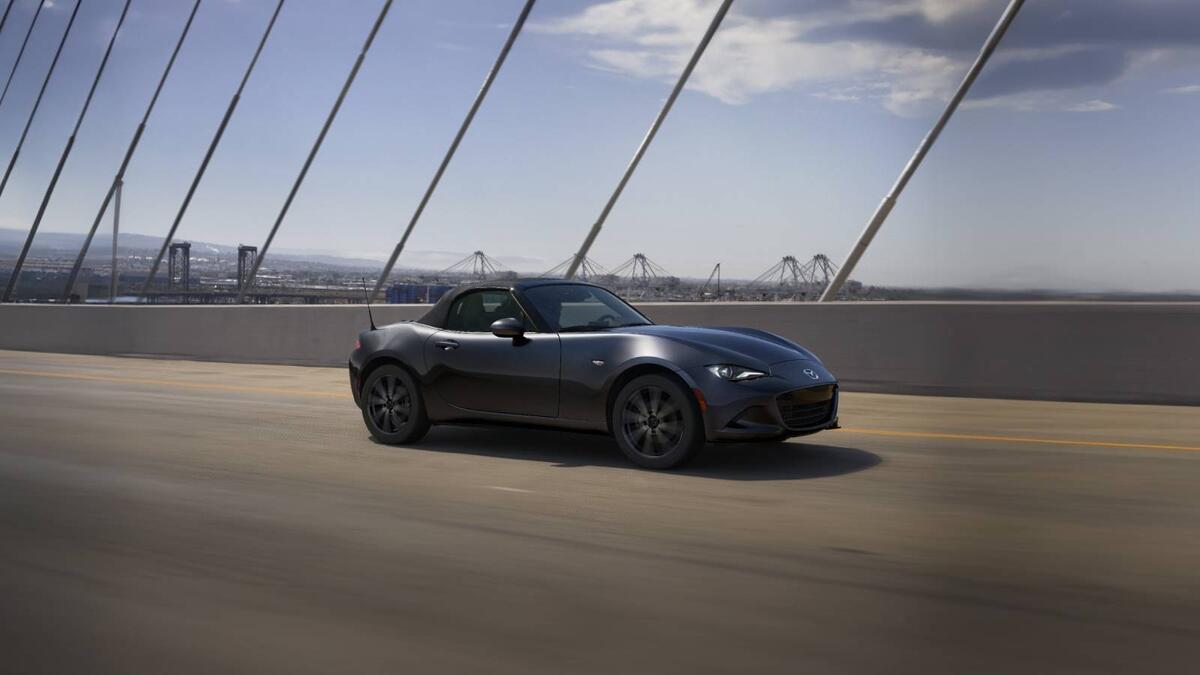
Mazda MX-5 / Miata
"...or me, I'm, I'm going to go for a mustang GT or a miata because we've talked about me, honest to to you, ..."
The Mazda MX-5 (Miata) is a small two-seat convertible roadster. It’s made to be fun to drive, with a light feel and responsive handling. People mention it when they’re looking for a sporty car that’s still relatively simple.
The Mazda MX-5, commonly called the Miata, is a lightweight two-seat roadster designed to deliver an engaging driving experience. It’s frequently mentioned because its simple, balanced setup makes it feel nimble and fun, especially for drivers who want “driver’s car” character rather than raw power. In a podcast, it often appears in recommendations alongside other performance cars when someone is choosing a fun option.
cross shopping
"I don't see people crossing. I mean, I'm not saying you cross shopping. I'm. I'm like, right there for I'm categorized again, just kind of a silly car."
Cross-shopping is when a buyer compares multiple competing models before deciding. The host mentions it to frame how the Charger’s new direction may or may not pull in the same kind of buyers as the previous generation.
V8
"Actually, I was a big fan of the previous, edition Charger and Challenger. I like V8 and rear wheel drive and and that's something that this vehicle is, is is obviously lacking."
A V8 is an engine with eight cylinders. People often like V8s because they tend to feel powerful and sound great.
A V8 is an engine with eight cylinders arranged in a “V” shape. In enthusiast talk, V8s are often associated with strong sound and smooth power delivery, which is why the host says they like V8s in the Charger/Challenger context.
rear wheel drive
"Actually, I was a big fan of the previous, edition Charger and Challenger. I like V8 and rear wheel drive and and that's something that this vehicle is, is is obviously lacking."
Rear-wheel drive means the back wheels do the work of moving the car. Some drivers prefer it because it can feel more “classic” and engaging than other drivetrains.
Rear-wheel drive (RWD) means the engine’s power is sent to the rear wheels. The host frames it as part of what made earlier Chargers appealing, implying the new Charger’s setup doesn’t match that traditional driving feel.
EV
"And because it was an EV initially and it had an EV an EV is supposed to be different. ... When he's starting off reintroducing the charger as an EV, he probably just took the wind out of the sails of a lot of the previous buyers."
EV means electric vehicle. Instead of using gasoline, it runs on electricity, and that can make the car feel and behave differently than the older gas Chargers people were expecting.
EV stands for electric vehicle, meaning the car is powered by an electric motor instead of a gasoline engine. The host argues that when Dodge reintroduced the Charger as an EV, it changed the “presence” and expectations of buyers who wanted the older, more traditional Charger vibe.
racing fuel
"I noticed a gas pump stating racing fuel for $10.99 per gallon. ... people use it on boats, motorcycles, chainsaws, ATVs and vehicles, saying customers claim the engine runs cleaner and increases engine performance."
Racing fuel is usually more expensive gas that’s made to resist knocking better. But unless your car is set up to use it, you typically won’t get extra power—just a lighter wallet.
“Racing fuel” is a consumer term for higher-performance gasoline blends that often have higher octane than standard pump fuel. The key point is that the engine must be calibrated to take advantage of it; otherwise, it’s mostly a cost increase.

2014 Subaru Crosstrek XP
"Besides draining my wallet, if I use this racing fuel, well, what happen if I used it in my 2014 Subaru Crosstrek XP? ... His Crosstrek was designed to run on 87 octane fuel, regular fuel by Subaru."
This Subaru is meant to use normal gas (87 octane). If you pour in a more expensive racing gas, you usually won’t feel a performance gain because the car isn’t tuned to use it.
The 2014 Subaru Crosstrek XP is a compact crossover built around Subaru’s typical “regular fuel” strategy. It’s designed to run on 87 octane fuel, so using a higher-octane “racing fuel” usually won’t unlock extra power on its own.
octane
"His Crosstrek was designed to run on 87 octane fuel, regular fuel by Subaru. And that's what it's designed to run on. Putting higher octane in your car does not immediately mean more power, though."
Octane is basically how “hard” the fuel is to ignite too early in the engine. Higher octane can help some engines, but if your car is built for regular gas, higher-octane usually won’t make it faster.
Octane is a measure of a fuel’s resistance to knocking (uncontrolled combustion) inside an engine. Higher-octane fuel can be beneficial when an engine is designed/tuned for it, but it doesn’t automatically create more power just because the number is higher.
higher compression ratio
"You've probably changed some, internal components of the engine. You've given it a higher compression ratio."
Compression ratio is how tightly the engine squeezes the air-fuel mixture before it ignites. Higher compression can make more power, but it usually needs better (higher-octane) fuel to avoid knocking.
Compression ratio is the relationship between the cylinder volume when the piston is at its lowest point versus highest point. A higher compression ratio generally increases efficiency and power potential, but it also raises the risk of knock—so it often pairs with higher-octane fuel and careful tuning.
turbocharging
"Quite often people turbocharging, you would you would, be able to do that, but without a specialized tune, you're not going to hardly make much gain at all."
Turbocharging adds extra air to the engine using a turbocharger, which can make more power. But the engine often needs the right tune so it burns fuel safely and effectively.
Turbocharging uses a turbine-driven compressor to force more air into the engine, which can increase power. Because it changes boost pressure and combustion conditions, turbo setups typically require a specialized tune to take advantage of higher-octane fuel and avoid knock.
ethanol free fuel
"That said, there are reasons to use expensive fuel, and for some of the ones that Kirk mentioned, or that the, the gas station person mentioned, and that would be to get ethanol free fuel."
Ethanol-free fuel is gas without alcohol in it. The benefit is that it tends to store better and is less likely to cause problems in carbureted engines that sit for a long time.
Ethanol-free fuel is gasoline without alcohol additives (ethanol). The speaker’s point is that ethanol can degrade fuel over time and can cause issues like gumming up carburetors, so ethanol-free fuel is often used for small engines stored for long periods.
carburetors
"And for instance, I use this VPI, this ethanol free fuel in my chainsaw in my generator that I use, at home and as well as in my two carburetor, I have two dirt bikes that are carb rated, ethanol really gums up the carburetors."
Carburetors are older-style systems that mix fuel and air for the engine. Ethanol can cause sticky deposits that clog or gum up the carburetor, which is a bigger issue for small engines that aren’t used often.
Carburetors are fuel-mixing devices that meter gasoline into the engine using jets and passages rather than electronic fuel injection. Ethanol in fuel can leave deposits and “gum up” carburetor components, especially in engines that sit unused.
two carburetor
"And I will say, I do. I am one of those people that does that. I buy two VPI racing fuel now... as well as in my two carburetor, I have two dirt bikes that are carb rated, ethanol really gums up the carburetors."
They’re talking about dirt bikes that use carburetors. Carburetors can get clogged or sticky from ethanol, so ethanol-free fuel helps prevent that.
In this context, “two carburetor” refers to dirt bikes that use carburetors (not fuel injection). The key idea is that carbureted engines are more sensitive to fuel additives like ethanol, which can cause starting and running issues.
two stroke
"And so but you say you make a gallon or two gallons of, you know, you mix that chainsaw fuel because it's two stroke. You might have that for years."
A two-stroke engine runs on a different cycle than a typical four-stroke engine. Because you often mix and store fuel for these small engines, fuel that doesn’t go bad as quickly (like ethanol-free) can be important.
A two-stroke engine completes its power cycle in two piston strokes (one crankshaft revolution), unlike a four-stroke. The speaker is using this to explain why they mix and store a small amount of fuel for longer periods, where ethanol-free fuel can help prevent degradation and starting problems.
Request an Explanation
Heard something you'd like explained? We'll add it to this episode.
Sign in to request explanations for terms you heard.
Want to learn more?
Browse our glossary for plain-English explanations of automotive terms, jargon, and concepts.
Help improve this episode
See something that's not quite right? Our annotations are AI-generated and can sometimes miss the mark. Click the flag icon on any annotation to suggest a correction.