The discussion covers first drives of the 2026 Mazda CX-5, Jeep Cherokee, and Grand Cherokee, plus a BMW M2 CS track test. Highlights include Mazda's retention of a six-speed automatic and standard all-wheel drive in the CX-5, with a future hybrid powertrain developed in-house. The CX-5 grows slightly in size and features a large new touchscreen infotainment system, though it loses physical HVAC controls. Jeep’s new Cherokee and Grand Cherokee showcase future powertrain options. The episode also touches on EPA policy changes regarding auto stop-start technology credits.
In Podcast #372, Jessica Ray fills in as host to discuss some of the latest new vehicles that the MotorWeek crew has been testing. We start things off with Mazda and a first-drive in their best-selling model, the CX-5 crossover as it enters its 3rd-generation with some well executed updates. Then it’s over to BMW and our recent track time in their entry-level track car, the M2 CS. Finally, it’s over to Jeep where we drove both the all-new Cherokee and updated Grand Cherokee, which feature the future of the Jeep brand’s powertrain options. Plus, a Lightning Round which considers the EPA’s recent decision to rescind credits to automakers for utilizing auto stop/start technology.
"We're going to start things off with Mazda and a first drive in their best-selling model, the CX-5 Crossover, as it enters its third generation with some well-executed updates."
The Mazda CX-5 is a popular small SUV that many people buy. The newest version has new features and improvements to make it better to drive and use.
The Mazda CX-5 is a compact crossover SUV and one of Mazda's best-selling models. The third generation includes updates that improve design, technology, and performance.
"We're going to start things off with Mazda and a first drive in their best-selling model, the CX-5 Crossover, as it enters its third generation with some well-executed updates."
A crossover is a kind of car that looks like a small SUV but drives more like a regular car, making it easier to drive and more comfortable.
A crossover is a type of vehicle that combines features of SUVs and passenger cars, typically built on a car platform for better ride and handling.
"Then it's over to BMW and our recent track time in their entry-level track car, the M2CS."
The BMW M2 CS is a sportier and faster version of a small BMW sports car. It's made to be really good on race tracks.
The BMW M2 CS is a high-performance variant of BMW's entry-level M2 sports car, designed for track use with enhanced power, handling, and lightweight components.
"Finally, it's over to Jeep, where we drove both the all-new Cherokee and updated Grand Cherokee, which feature the future of the Jeep brand's powertrain options."
The Jeep Cherokee is a medium-sized SUV that can drive well off-road. The newest version has new designs and features.
The Jeep Cherokee is a midsize SUV known for its off-road capability and rugged design. The all-new Cherokee represents the latest generation with updated features and design.
"Finally, it's over to Jeep, where we drove both the all-new Cherokee and updated Grand Cherokee, which feature the future of the Jeep brand's powertrain options."
The powertrain is all the parts in a car that make it move, like the engine and the parts that send power to the wheels.
A powertrain is the group of components that generate power and deliver it to the road, including the engine, transmission, and drivetrain.
"...EPA's recent decision to resend credits to automakers for utilizing auto-stop start technology."
This technology turns off the car's engine when you stop, like at a red light, and turns it back on when you start driving. It saves gas and helps the environment.
Auto-stop start technology automatically shuts off the engine when the vehicle is stopped, such as at traffic lights, and restarts it when the driver is ready to move again. This helps improve fuel efficiency and reduce emissions.
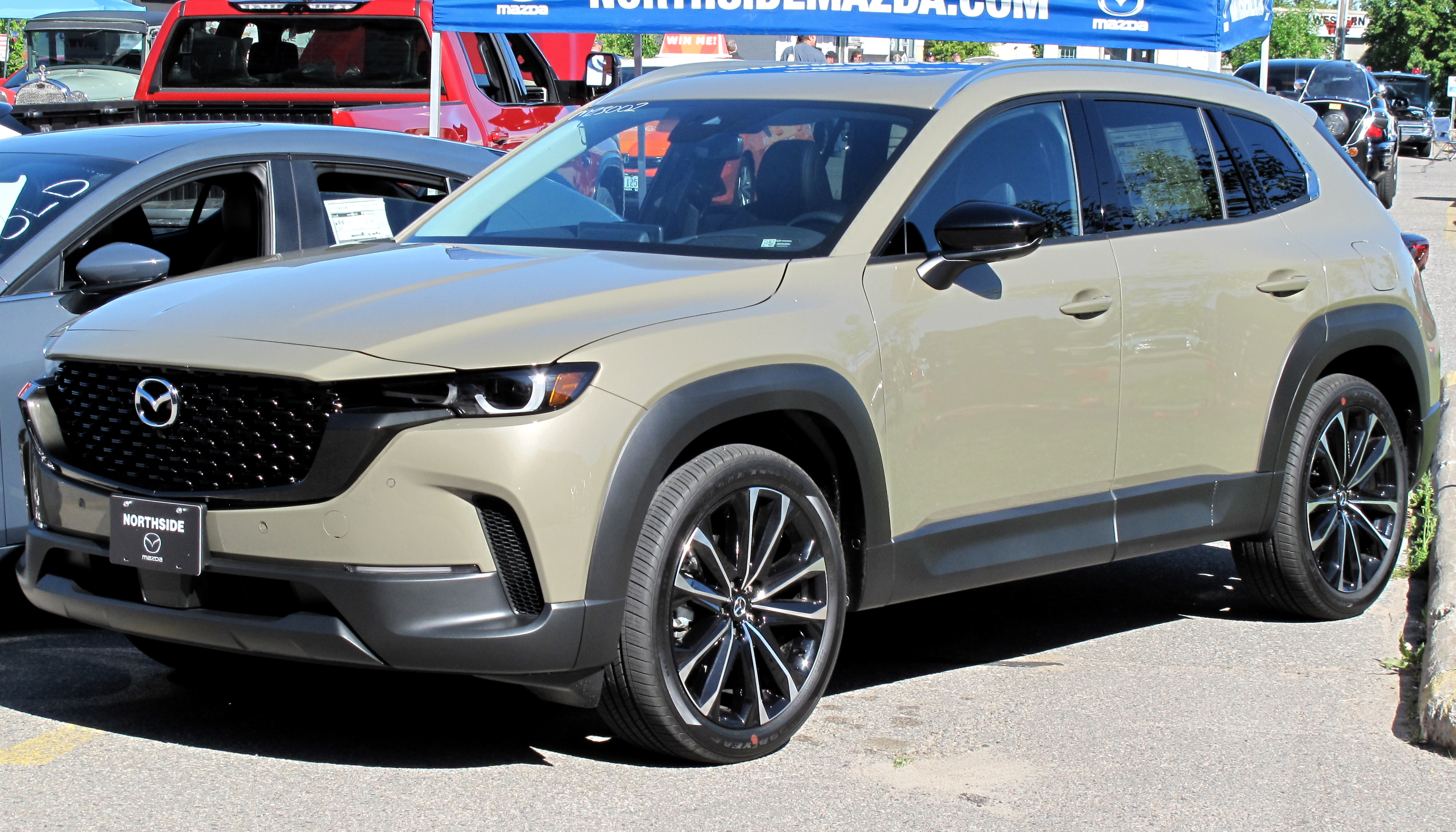
"Alex, we're going to start with you. When the more rugged Mazda CX-50 came out back in 2022, a lot of the press thought it might mean the end of the line for the best-selling CX-5, but Mazda said that wasn't the case,"
The Mazda CX-50 is a new SUV that can handle rough roads better than some other Mazdas. It’s made for people who want a car that looks tough and drives well.
The Mazda CX-50 is a rugged, more off-road oriented SUV introduced in 2022, designed to complement rather than replace the popular CX-5. It offers a blend of Mazda’s signature driving dynamics with enhanced capability and a more aggressive design.
"And I also went to California four years ago to drive the CX-50."
The Toyota CX-50 is a type of small SUV that is good for driving on and off roads. It is made by Toyota and is meant for people who like outdoor activities and need a car that can handle different kinds of terrain.
The Toyota CX-50 is a compact crossover SUV introduced by Toyota, designed to offer rugged styling and off-road capability compared to other models in Toyota's lineup. It is part of Toyota's strategy to expand its SUV offerings with a focus on outdoor adventure and versatility.
"The engine, right now we only have that naturally aspirated version of the 2.5-liter inline"
A naturally aspirated engine is one that breathes air in by itself without any extra help from things like turbos. It usually feels smooth and simple to use.
A naturally aspirated engine draws air into the combustion chamber without forced induction like a turbocharger or supercharger. This typically results in linear power delivery and simpler mechanics.
"Well no hydrogen as of yet, just a hybrid down the road. Really the powertrain otherwise really hasn't been changed."
A hybrid car has both a gas engine and an electric motor that work together to save gas and pollute less.
A hybrid vehicle uses a combination of an internal combustion engine and one or more electric motors to improve fuel efficiency and reduce emissions compared to traditional gasoline-only cars.
"The exterior follows this Kodo design language we've seen. I mean a lot of their vehicles embrace that, but we saw it a lot on like the CX-90 and the CX-7."
Kodo design is how Mazda makes their cars look stylish and alive, like they are moving even when parked. It's a special way they design the shape and lines of their cars.
Kodo is Mazda's design philosophy emphasizing dynamic, flowing lines intended to evoke a sense of motion and vitality even when the vehicle is stationary. It is a signature style seen across many Mazda models to create a cohesive brand identity.
"The exterior follows this Kodo design language we've seen. I mean a lot of their vehicles embrace that, but we saw it a lot on like the CX-90 and the CX-7."
The Mazda CX-90 is a big SUV that looks stylish and has a nice, smooth design. It’s made for people who want a bigger car that still feels nice to drive.
The Mazda CX-90 is a larger SUV that follows Mazda’s Kodo design language, emphasizing sleek, flowing lines and a premium feel. It represents Mazda’s move into more upscale and spacious vehicles while maintaining driving enjoyment.
"I mean a lot of their vehicles embrace that, but we saw it a lot on like the CX-90 and the CX-7. I mean it really does look like a baby version of the 98."
The Mazda CX-7 is a medium-sized SUV that was made a while ago and is known for being fun to drive. It looks a bit like newer Mazda SUVs but is smaller and older.
The Mazda CX-7 is a mid-size crossover SUV that was produced in the late 2000s and early 2010s, known for its sporty handling and distinctive design. It shares design cues with newer Mazda SUVs but is considered a predecessor to models like the CX-90.
"I'm mistakenly Mazda and part of that is the available soul red paint, which is still in my opinion the best red in the business, just a beautiful color."
Soul Red is a special bright red color Mazda uses on their cars. It looks shiny and really nice in the sunlight.
Soul Red is Mazda's signature vibrant red paint color known for its depth and metallic sparkle. It is often praised for its rich appearance and is a popular choice among Mazda buyers.
"...buy a smartphone these days, you get the phone, a charger and like a quick start guide, because they kind ..."
The Dodge Charger is a big car that looks sporty and can go very fast. People like it because it feels like a muscle car but you can still use it every day.
The Dodge Charger is a full-size sedan known for its powerful engine options and muscle car heritage. It blends modern technology with classic American performance, often discussed for its aggressive styling and V8 powertrains.
"it's a 40-20-40 split, which means both seats can fold down independently and that center can fold down independently"
The back seats are split into three parts, so you can fold down one or two parts to carry bigger things, but still have seats for people.
A 40-20-40 split refers to the rear seat configuration where the rear bench is divided into three sections: two outer seats each making up 40% and a center section making up 20%. This allows for flexible folding options to increase cargo space while still accommodating passengers.
"but right now, just standard all-wheel drive. That is an interesting choice."
All-wheel drive means the car sends power to all four wheels at the same time, which helps it grip the road better when it's wet or snowy.
All-wheel drive (AWD) is a drivetrain system that powers all four wheels of a vehicle simultaneously to improve traction and handling, especially in slippery conditions like snow or rain.
"where you're hardly ever going to have to deal with snow or one all-wheel drive, so having a front-wheel drive option that saves you 1500 bucks is a great choice, but you're doing away with that."
Front-wheel drive means the car's engine only powers the front wheels. This usually makes the car cheaper and better on gas, but it might not do as well in snow or rain.
Front-wheel drive (FWD) is a drivetrain layout where the engine powers only the front wheels. It is typically more fuel-efficient and less expensive than all-wheel drive but may offer less traction in poor weather.
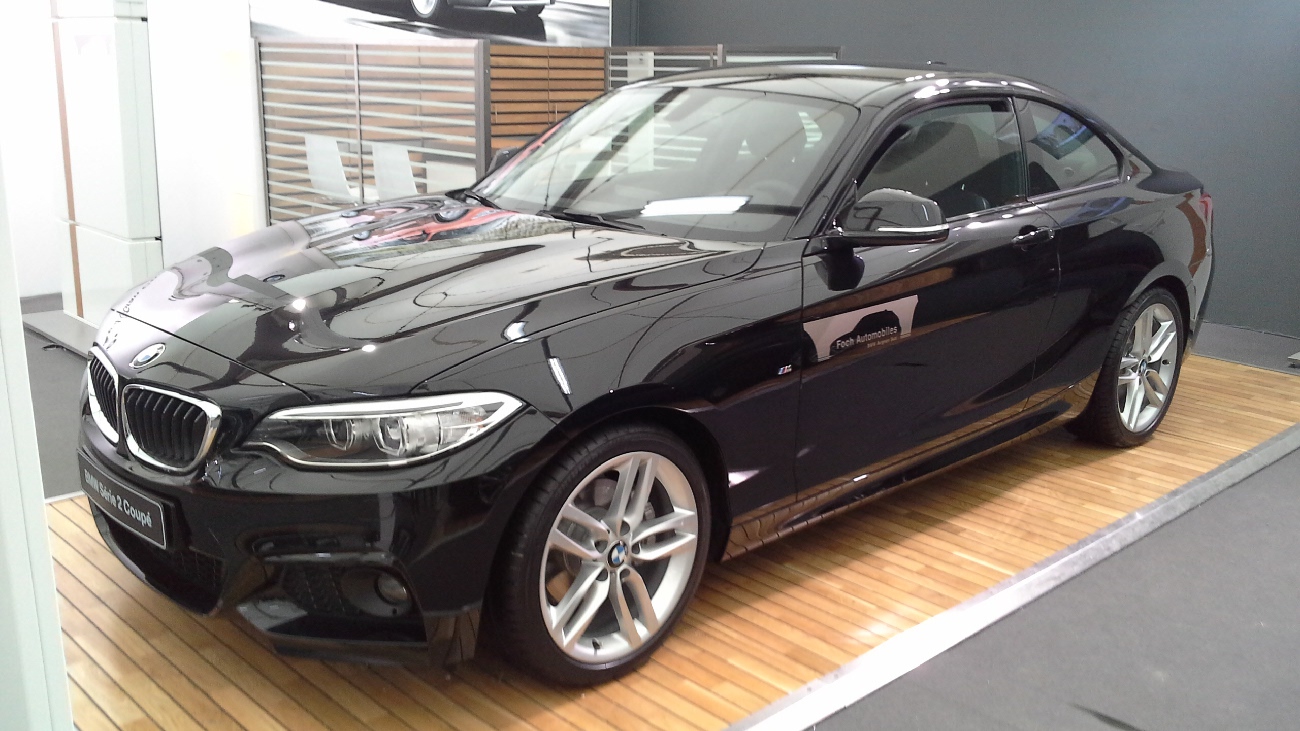
"Absolutely. So we started off with a BMW 2 Series Coupe, which is their smallest car you can..."
The BMW 2 Series is a small, sporty car that’s fun to drive and easy to park. It’s a good choice if you want a fancy car that feels quick and nimble.
The BMW 2 Series is BMW’s smallest coupe and convertible, offering sporty performance in a compact package. It is praised for its sharp handling and is often seen as an entry point into BMW’s performance lineup.
"You can get an M version of that, the M2, which cranks up the performance, puts the
3-liter inline 6 there and there, versus the 4-cylinder 2-liter in the standard car."
A 3-liter inline 6 engine is a type of car engine with six cylinders lined up in a row, making the car powerful and smooth to drive.
A 3-liter inline 6 engine is a six-cylinder engine arranged in a straight line with a total displacement of 3 liters. This engine configuration is known for smooth power delivery and strong performance, commonly used in BMW M models.
"One thing to note is it's rear-wheel drive only, so it's the most powerful M car that is rear drive. Pretty much everything above that is all-wheel drive now."
Rear-wheel drive means the back wheels of the car get the power from the engine. This helps the car drive in a way that feels fun and sporty.
Rear-wheel drive (RWD) means the engine's power is sent to the rear wheels only. This setup is often preferred for sporty driving because it can provide better handling balance and acceleration characteristics.
"They're going to get a totally redone suspension. It's like a third of an inch lower, much stiffer damping and spring rate."
Suspension is the part of the car that helps it ride smoothly and handle turns well. When it's changed or improved, the car can feel better to drive, especially on twisty roads.
Suspension refers to the system of springs, shock absorbers, and linkages that connect a vehicle to its wheels, allowing for smooth ride quality and handling. A redone or upgraded suspension typically improves handling and ride stiffness.
An 8-speed automatic transmission is a system that changes the car's gears for you, making the car go faster or slower smoothly without you having to shift manually.
An 8-speed automatic transmission is a gearbox that automatically changes through eight gear ratios, providing smooth acceleration and improved fuel efficiency compared to fewer gears.
"... coupe, but if you remember back to the original E30 M3s, had those really big fenders that come out ..."
The BMW 3 Series is a small, fancy car that is fun to drive and feels sporty. The older versions had special wide parts on the sides that made them look cool and helped them go faster.
The BMW 3 Series is a compact luxury car that has long been praised for its driving dynamics and sporty character. The original E30 M3, in particular, is iconic for its performance and distinctive wide fenders, influencing many enthusiasts and automotive designs.
"Like it had a carbon roof and everything, which was just awesome. ... A big part of it is shaving weight, which is a lot of carbon fiber on the roof. The rear deck lid is carbon fiber. The wheels are lighter. Basically just a lot more carbon fiber, which it sounds great,"
Carbon fiber is a special material that is very light but strong. Car makers use it on parts like the roof or wheels to make the car lighter and faster.
Carbon fiber is a lightweight and strong material commonly used in high-performance cars to reduce weight and improve handling. It is often used for parts like roofs, deck lids, and wheels to shave off unnecessary mass.
"..., which, you know, they didn't turn into a Mazda Miata or anything like that. It's already like the big..."
The Mazda Miata is a small, two-person car that is really fun to drive because it’s light and easy to handle. It’s one of the most popular sports cars that doesn’t cost too much.
The Mazda MX-5, also known as the Miata, is a lightweight, two-seat roadster celebrated for its fun-to-drive nature and affordability. It’s often credited with reviving the affordable sports car segment with its simple, engaging design.
"4.1 seconds on the 0 to 60 and 12.6 at the quarter at 116."
0-60 time tells you how fast a car can go from stopped to 60 miles per hour. The smaller the number, the quicker the car is.
The 0-60 time measures how many seconds a car takes to accelerate from a complete stop to 60 miles per hour. It's a common benchmark for assessing a vehicle's acceleration performance.
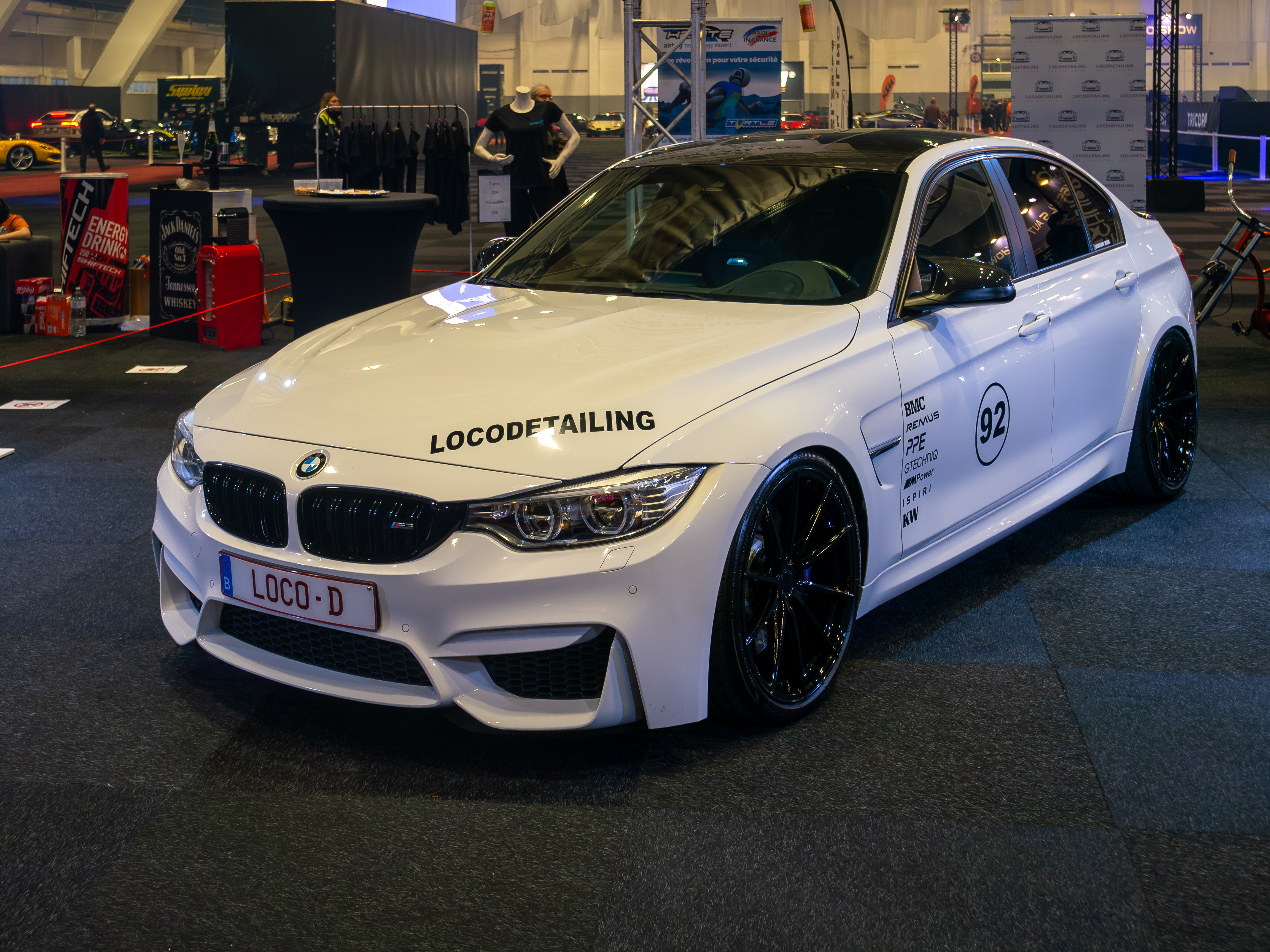
"...'ve talked about this before. It's like what the M3 was at one point, you know, going back to the E30..."
The BMW M3 is a faster and sportier version of a regular BMW car. It’s made to be really good at driving fast and turning well, which makes it special.
The BMW M3 is the high-performance version of the 3 Series, famous for its powerful engines and precise handling. The original E30 M3 set the standard for sporty sedans and remains a benchmark in the performance car world.
"Half our fleet down there. We had the Supra inline six. Same engine."
The Toyota Supra is a fast sports car that has a strong engine with six cylinders in a row. Many people like it because it’s quick and also lasts a long time without problems.
The Toyota Supra is a legendary sports car known for its powerful inline-six engine and strong tuning potential. It has a rich history in motorsports and car culture, often praised for its balance of performance and reliability.
"Because it was before. And the existence of the Grand Cherokee. Not according to Jeep."
The Jeep Grand Cherokee is a type of SUV that can drive well on rough roads and also feels comfortable inside. It was one of the first Jeeps to be both tough and nice to ride in, so many people like it for different reasons.
The Jeep Grand Cherokee is a mid-size SUV known for its off-road capability and luxury features, first introduced in the early 1990s. It marked a significant evolution for Jeep by combining ruggedness with comfort, making it a popular choice for both adventure and daily driving.
"And like you said, not trail rated. So the Cherokee is no longer, you know, focused to be an off-road vehicle like other Jeeps have been."
Trail Rated means the Jeep is tested to be good at driving on rough, off-road paths.
Trail Rated is Jeep's certification indicating a vehicle has passed tests for off-road capability, including traction, water fording, maneuverability, articulation, and ground clearance.
"So 1.6-liter turbocharged four-cylinder engine, two electric motors, ECVT,"
It's a small engine with four parts that make power, and it uses a turbo to help it go faster and use less fuel.
This is a small displacement engine with four cylinders and a turbocharger that forces more air into the engine to increase power output while maintaining efficiency.
"ECVT, not a traditional banded CVT. There are differences."
A banded CVT is a type of transmission that changes gears smoothly using a belt or band inside.
A traditional banded CVT (Continuously Variable Transmission) uses a belt or band to vary gear ratios continuously for smooth acceleration, but can have different mechanical characteristics compared to electronic CVTs.
"... that fuel economy in. But I'm comparing it to a RAV4, a CRV, a Tiguan, maybe a Forester. So they need..."
The Toyota RAV4 is a small SUV that lots of people buy because it’s reliable, uses gas well, and has plenty of space. It’s good for families and everyday driving.
The Toyota RAV4 is a compact SUV that is one of the best-selling vehicles worldwide due to its reliability, fuel efficiency, and practicality. It competes directly with the Honda CR-V, Volkswagen Tiguan, and Subaru Forester in the popular SUV segment.
"...omy in. But I'm comparing it to a RAV4, a CRV, a Tiguan, maybe a Forester. So they need to steal those b..."
The Volkswagen Tiguan is a small SUV that looks nice inside and outside and is comfortable to drive. It’s a good choice for people who want a practical car with a bit of style.
The Volkswagen Tiguan is a compact SUV that balances European styling and driving dynamics with practicality. It competes with other popular SUVs like the RAV4 and CR-V, often noted for its upscale interior and smooth ride.
"...el economy in. But I'm comparing it to a RAV4, a CRV, a Tiguan, maybe a Forester. So they need to ste..."
The Honda CR-V is a small SUV that’s good for families because it’s roomy, saves gas, and doesn’t usually have many problems. It’s one of the popular cars people use every day.
The Honda CR-V is a compact crossover SUV known for its practicality, fuel efficiency, and reliability. It competes closely with other popular SUVs like the Toyota RAV4 and Volkswagen Tiguan in the family vehicle segment.
"This one, is this a continuation of that chassis? Or is this an all-new chassis? It's the all-new chassis."
The chassis is like the car's skeleton that holds everything together and helps it drive safely and smoothly.
The chassis is the main structural frame of a vehicle, supporting the body and various components. It plays a critical role in the vehicle's rigidity, safety, and handling characteristics.
"But it still has like snow mode, mud, sand, all that good stuff."
Mud mode helps the car not get stuck or slip when driving through mud.
Mud mode is a driving setting that optimizes traction and power delivery to help a vehicle maintain grip and control when driving through muddy terrain.
"But it still has like snow mode, mud, sand, all that good stuff."
Snow mode helps the car drive safely on snow by making it less likely to slip or slide.
Snow mode is a vehicle setting that adjusts the throttle response, transmission, and traction control to improve stability and control on snowy or slippery surfaces.
"But it still has like snow mode, mud, sand, all that good stuff."
Sand mode helps the car drive better on loose sand so it doesn't get stuck.
Sand mode is a driving setting that adjusts the vehicle's traction control and throttle to prevent wheels from digging into soft sand, improving mobility on sandy surfaces.
"...ng like this will probably find its way into the Wrangler. We kind of already know that it's going to make..."
The Jeep Wrangler is a tough SUV that can drive on very rough roads and trails. It looks like a classic Jeep and is made for people who like outdoor adventures.
The Jeep Wrangler is an iconic off-road SUV known for its rugged design and exceptional capability on rough terrain. It has a strong enthusiast following and is often updated with new features while maintaining its classic style.
Select text to request an explanation
Welcome to the podcast of Motor Week, television's original automotive magazine.
Motor Week is made possible by AutoValue and Bumper2Bumper and TireRack.com.
Here's your Motor Week podcast host, Jessica Ray.
Welcome everyone, this is the Motor Week podcast and yes, I am your host, Jessica Ray.
We've got a great episode today to talk about some of the latest new vehicles that we have
tested. We're going to start things off with Mazda and a first drive in their best-selling
model, the CX-5 Crossover, as it enters its third generation with some well-executed updates.
Then it's over to BMW and our recent track time in their entry-level track car, the M2CS.
Finally, it's over to Jeep, where we drove both the all-new Cherokee and updated Grand
Cherokee, which feature the future of the Jeep brand's powertrain options.
Plus, a lightning round, which considers the EPA's recent decision to resend credits to
automakers for utilizing auto-stop start technology.
Now joining me today here in the studio are writer-producer Brian Robinson, producer-reporter
Greg Carlos, and staff writer Alex Kellam.
Howdy.
All right, I think that's a great way to start it off.
Alex, we're going to start with you.
When the more rugged Mazda CX-50 came out back in 2022, a lot of the press thought it might
mean the end of the line for the best-selling CX-5, but Mazda said that wasn't the case,
and now we are happy to see the CX-5 enter its third generation this year with an updated
model, including some big powertrain news on the horizon.
So Alex, you went to California to actually drive it, so tell us about it.
And I also went to California four years ago to drive the CX-50.
Yes, that's right.
Is it that trip?
So I don't know if it's fate.
No, it's not fate.
It's the executive producer.
You did such a good job last time they invited you back.
Yeah, four whole years later.
Yeah.
No, I've done other Mazda since.
And yeah, so I was actually really excited to drive the CX-5 because I remember when
I got the invite for it, we all, I think, like the CX-5 and the CX-50, ever since I did
that CX-50 drive, you know, I fell in love with that vehicle.
I was dared by someone on the staff who would not be named, but is our digital producer
to see if I would like the CX-5 potentially a little bit more because they slightly prefer
the CX-5 over the CX-50.
And so I went, and yeah, I mean, it retains a lot of the things that I think we all really
like about the CX-5, which is, and this is very relative, but Mazda has a way with their
crossovers and even like their larger SUVs, but the CX-5 being a small one, I think really
helps in that regard where it feels a bit more, I'm going to use the words engaging
and more like a driver's car.
Again, this is very relative just in a crossover space.
And that does sort of start with the powertrain and it's really not the engine.
It's the fact that they use a true six-speed automatic for one.
They probably could have gotten more efficiency with a CVT or something like that, but they
decided to stick with a six-speed, which I really like.
You do get standard all-wheel drive here, which also helps.
The engine, right now we only have that naturally aspirated version of the 2.5-liter inline
four.
We don't really have a turbocharged variant right now, which is, I think a little bit
of a slight against it.
I don't think that really helps in the driver's case.
I drove it outside of San Diego up in the mountains and that's when you can kind of
really feel like you wish you had a turbocharged variant of it.
Just a little bit of extra horsepower.
I think turbo with premium gas was like 256 horsepower and 320 pound-feet of torque.
This, the naturally aspirated, it's unchanged at 187 horsepower and some of the forms say
186 pound-feet, some say 185, but either way, that's what you get.
I was going to say a lot of in this class of a vehicle having that more like higher performance
engine did set the CX-5 apart a little bit compared to some of the other models.
Yeah, so the naturally aspirated version is fine.
Once you're up to speed, it's fine.
It gets up to speed just fine as well, but if you do want a little extra power, well,
I can't say this for fact, but there is a hybrid version coming.
We don't know what the performance is.
I have to imagine you will get more horsepower, more torque, and likely more efficiency, but
again, we don't really have any details there.
We do know, the big news about it is that this is Mazda's own hybrid powertrain, which
is different from what they did with the CX-5.
Correct.
The CX-50 was using their partnership with Toyota leveraging that to have a hybrid system
and that this is going to be all of their own.
I think they're calling it, it's not under the SkyActive name, but I forget what SkyActive
E or something like that, that they're putting a hyphen and putting it there.
So the powertrain.
SkyActive H, myself.
H, you think H?
Yeah.
It follows along with G, H, right?
Okay.
I like that.
I'm not in marketing though.
Some people might think it's a hydrogen.
Oh.
Idiots like me.
Well no hydrogen as of yet, just a hybrid down the road.
Really the powertrain otherwise really hasn't been changed.
Most of the changes are going to be with the, really the interior.
The exterior follows this Kodo design language we've seen.
I mean a lot of their vehicles embrace that, but we saw it a lot on like the CX-90 and
the CX-7.
I mean it really does look like a baby version of the 98.
It is still, I'm mistakenly Mazda and part of that is the available soul red paint, which
is still in my opinion the best red in the business, just a beautiful color.
It's grown a little bit and I know some people hate to hear that, but it really didn't grow
that much, four and a half inches in both wheelbase and in just overall length and it's
not even an inch wider, so you really don't have to, like if you're already parking a
CX-5 it should fit in whatever space you have.
With that extra length you do get a little bit of extra leg room front and back.
It's on paper it's not a lot, it's like fractions of an inch, but the way they've designed the
rear seats and the front seats, it just, it does feel like there's a lot more room.
When I sat in the second row I felt perfectly fine, you know having the seat in front of
me adjusted to what would be my driver's position, I'm about 6'1", so you can gauge
that right there.
I think the big change with the interior is the screen and this is where, like if they
really do, like I know I was saying the thing about the turbocharged powertrain, but if
there's one area where there's a lot of good and a little bit, like they missed a couple
things it's here with the screen, so this is the largest screen ever fit in a Mazda.
If you buy the highest trim, it only comes in that trim, it's a 15.6 inch display, Robinson
I'm looking at you because I know you love all the screens.
That's a big display, yeah.
I mean 12 is kind of where we're at with like a normal size now, so that's yeah.
And I sat in one that had the 12.9 inch infotainment and I've got to be honest with you, it's enough,
it's fine, you really don't need this big hauls of a screen, but it's there and if you
got a really good app, you can customize it with like different widgets, so if you care
about having a calendar on your infotainment screen, it's there.
It looks like new software too, different from what we've seen in other Mazdas.
It's good.
Which I'm assuming the one with the smaller screen gets that same software.
It's the same, yeah, yeah, to my understanding, there might be like a couple different features
that the highest trim will get that maybe you'll see on that, I'm not entirely sure,
but in terms of the software, the OS, it's all pretty much there with the Google built-in.
It's all touch screen now, which means that the dial is gone.
Yeah, so the command dial is gone, they basically rationalized it and actually I really like
this analogy, so I'm totally going to steal it and pretend like I came up with it.
Basically when you buy a smartphone these days, you get the phone, a charger and like
a quick start guide, because they kind of just assume you know how to use the phone and also
when you start the phone, it'll have all the instructions there and that's kind of how
they feel about this screen is like people were getting in with the commander dial or
command dial and once you use it enough, like you get used to it, it's fine, like I never
really had major issues with it, but if you haven't been in a Mazda in a while or someone
new drives it, it is like a bit of a different interface and they started kind of going to
touch screens a little bit, but the screens were always high up because they didn't want
you to look down at the screen, so this tries to kind of bridge that a little bit.
I think the big con to this is that you really lose a lot of your physical, well pretty much
all your physical controls for HVAC, I think you have, I think it's your front and rear
to foster that are next to the hazards and then everything, you don't even get a volume
knob, which I think is a little bit of a loss there, but you do get physical controls on
the steering wheel and behind that is a 10 and a quarter inch gauge display.
I think my favorite feature about it though is the rear, that second row, so the way you
can, it's a 40-20-40 split, which means both seats can fold down independently and that
center can fold down independently and they put latches back there, so it's really easy
to access, so just things with modularity and all that and after driving it for a day,
I came to appreciate a lot of that stuff and even kind of going back to that original thought,
it has firmer suspension, it has daughter steering, these are things that we kind of
routinely say about Mazdas, but it's not to the point where it's uncomfortable, it's
certainly not a sports car, but you can tell that whole hands-on mentality really went
into the design of it.
And pricing, do we have any pricing here?
Yeah, so it starts just over $30,000 and that's for a base model, if you go with that higher
one because you want that super huge screen, you're going to pay around $40,000, so.
One question, and a follow-up if I may, with these changes, would you say they made the
CX-5 more like the CX-50 or less like the CX-50?
Neither, I think they just made it a new CX-5, like it doesn't have the same, and actually
that I forgot to kind of answer my thing, I'm still team CX-50 personally because I like
that more rugged approach, the growth especially, I think the wheelbase is identical now, but
the overall growth pretty much puts it in the ballpark of the CX-50, which was always
a little bit longer, so in terms of size, it's pretty much there.
The CX-5 compared to the 50, even though I said it has like firm or suspension, that's
compared to its competitors, this feels like it's lost a little bit of the edge compared
to say like the CX-50, which was this design for North American audiences, this more rugged
appeal to it, so.
And a follow-up, can you still get a front-wheel drive only CX-5?
To my understanding, no, it's all standard, all-wheel drive.
Just like the CX-50.
Yeah, to my understanding, every trim.
Now, when the hybrid comes out, I don't know if anything's going to change, I doubt it,
but right now, just standard all-wheel drive.
That is an interesting choice.
Well, yeah, to me, that was one of the selling points, like if you live in Atlanta or somewhere
where you're hardly ever going to have to deal with snow or one all-wheel drive, so having
a front-wheel drive option that saves you 1500 bucks is a great choice, but you're doing
away with that.
I do wonder if, you know, obviously we live in the Mid-Atlantic where we've had a fair
amount of snow very recently, so I think people around us, or if they don't have all-wheel
drive, they're certainly thinking that maybe their next car purchase will be all-wheel drive.
But I do wonder if this sentiment is kind of evolving past just those of us that might
live on the cusp of areas with more inclement weather and maybe even people in Atlanta say
when it rains, they're more interested in getting an all-wheel drive car, just for the
like, it's one of those things to have it, just to have it, maybe?
I think for every person that says, like, I don't need to spend the extra 1500 because
they know they don't need it, there's someone who says, like, I might as well just get it
to have it.
I'm already financing it for seven years anyway, so why not just get ahead of the curve there?
But that is interesting because also the CX-5 is a global product, I mean, they sell it
all over the world, and so not just strictly for the North American market, where is the
CX-5?
It was.
It did.
Really when?
That'd be cool.
It was right?
First gen, I think.
First gen.
I remember it was one of the first cars when I was interning here.
I think they still come with owner's manuals.
Just a quick start guide, probably.
How are you going to get through it?
There's no knobs or anything.
Greg, any thoughts on the new CX-5?
Yeah, I mean, from talking to some other people, it sounds like they kind of softened
it a little bit, which I think is probably the way to go, because even I had mentioned
that maybe they had gone, maybe I'm just getting old.
The steering was a little bit too heavy, I thought, in the suspension.
It's like they're almost like trying to out-maze themselves, so now that they are going a little
more upscale, to me it makes a little bit of sense that they would kind of dial back
some of the sport performance.
Yeah, a little less zoom-zoom, which I'd be cool with.
Nice.
Yeah.
Yeah, so it seems like both the CX-5 has its own identity as separate from the 50s.
They've kept the niches.
Yeah, I mean, if they're going to try to even, not that they could ever keep pace with Toyota
or Honda, I mean, they need to do something to try to get to shorten that gap a little
bit.
Well, what is kind of interesting, too, is I was looking down at the sales numbers of
the CX-5 and the CX-50.
And the CX-5, actually, even with the introduction of the CX-50, really didn't see much of a
change at all in sales figures.
So I guess it goes to show just how what a very different buyer that these two products
are catering to.
So, well, thank you very much, everybody.
That was a great little discussion.
You don't need to thank me.
Well, I don't need to thank you, but we're going to take over our next topic here.
Now, when BMW wants to take one of their M cars to the next level, they give it a CS
badge, otherwise known as competition sport.
The latest M2 gets this special edition treatment for 2026.
And with the addition of some nice performance upgrades, we felt it perfect to bring along
for our winter track testing down at Robling Road Raceway earlier this year.
So, Brian, can you give us some of the details of this new little sport?
Absolutely.
So we started off with a BMW 2 Series Coupe, which is their smallest car you can get.
You can get an M version of that, the M2, which cranks up the performance, puts the
3-liter inline 6 there and there, versus the 4-cylinder 2-liter in the standard car.
Then you can further upgrade that M2 to this CS, which cranks that 3-liter up to 523 horsepower
incredible amount of power for such a small car, but I'm not complaining on that end.
One thing to note is it's rear-wheel drive only, so it's the most powerful M car that is rear drive.
Pretty much everything above that is all-wheel drive now.
So that's unique if you need it.
They had a CS version of the M2 a few years back.
This just kind of builds upon what they started there.
It's essentially a track-focused version of the M2.
They're going to get a totally redone suspension.
It's like a third of an inch lower, much stiffer damping and spring rate.
It is one change from last CS.
This one is automatic only, 8-speed auto.
Last time you could get a manual.
I don't think you can get a manual on the M2 still.
We tested a few years ago as a manual.
Okay, so yeah.
That's still the case.
So automatic only for the CS now, and they didn't give an exact number of production numbers,
but it is definitely going to be limited.
I think it was 2,000 last time around.
So there's at least one.
Yep, they tested it.
And it did.
So if you, as far as styling, obviously it's a small coupe,
but if you remember back to the original E30 M3s,
had those really big fenders that come out around the rear wheels,
it's got that going for it.
I always had a purpley paint job with gold wheels.
Purple and gold drip.
Yeah, it was like 1980s.
Fantastic.
It was so cool.
I think it's a Tiro color that purple, too.
Like it had a carbon roof and everything, which was just awesome.
Yeah.
That's a great way to segue.
Hey, you're welcome, man.
Anytime.
Anytime.
A big part of it is shaving weight, which is a lot of carbon fiber on the roof.
The rear deck lid is carbon fiber.
The wheels are lighter.
Basically just a lot more carbon fiber, which it sounds great,
but then they only took 100 pounds out, which, you know,
they didn't turn into a Mazda Miata or anything like that.
It's already like the biggest M2, right, that they've ever made.
If you know of hand, that's 100 pounds compared to an M2 with that eight speed, right?
That is correct.
Okay, yeah.
Thank you.
Thank you.
Just, hey, let's just ask it.
It was a follow-up question.
So, yeah, we drove it on the track.
I would say, you know, both of you guys drove on the track as well.
I'll just give my quick two cents and pass it over.
But, you know, it felt more purposeful than the M2,
as far as just the precision and the steering.
I think most I've ever felt in a BMW in quite some time,
but still playful, still M2 playful.
Maybe you guys can jump in with your track experience.
It's a good tagline for the road test.
Purple and purple purpose.
I can't say it purposeful.
There we go.
It airs this weekend.
Well, Greg, you should probably talk before me.
Oh, man, I would much rather listen to you.
Oh, that's, hey, that's one person.
Well, actually, you would kind of put it best.
So, I'm going to steal what you're probably going to say.
You said something about like, like with the throttle,
especially like sometimes it feels like you're on the razor's edge a little bit.
Like you really have to modulate that throttle very carefully.
And I experienced that for myself as well.
But once you kind of get into the groove with it,
it's very satisfying to drive that thing,
like just getting a little bit closer to the edge.
I looked up, so I was 0 to 60 in our quarter mile and whatnot.
The last M2 that we tested, as you've already said, was a 6B manual.
So obviously the numbers are a bit different,
but this one, our 0 to 60, 3.6 seconds.
The quarter was 11.8 at 120.
The six speed that we drove, what was it?
I guess three years ago now, somewhere around there.
4.1 seconds on the 0 to 60 and 12.6 at the quarter at 116.
So again, part of that's obviously going to be the transmission,
but some of that is also just the CS appointments as a whole.
So it is scientifically proven to be faster.
It's not like it's, it's drove faster,
but half a second in terms of motor sports is quite a lot.
Yeah, I felt fast as a great way to describe it,
because it's just faster than you think it is coming out of corners,
faster mid-corner, faster entering corners.
Brakes were great.
I mean, I was pushing like 160, over 160 at the end of the straight,
which you think about, you don't look at that car,
and you think it's that kind of car.
I mean, it's fast.
Twitchy is the way I described it, but in a good way.
Yeah, like you said, you kind of have to like just look at the throttle,
and it'll, and that's how you modulate it, right?
But it's, you know, we've talked about this before.
It's like what the M3 was at one point, you know, going back to the E30.
If you want the purest performance experience in BMW,
it's probably M2 rather than an M3 at this point.
M3 to me is like borderline supercar.
It's so fast.
And like you had said, Robinson, about the all-wheel drive.
So, yeah, while the M2 might be a little bit chunkier than it was before,
you know, you certainly didn't feel it.
And I, it's probably, I had maybe the most fun driving that car out of any we had at Robling.
So, yeah.
It was one of three cars we had that were inline sixes,
which was an interesting, fun fact.
Half our fleet down there.
We had the Supra inline six.
Same engine.
Yeah, that's right.
Is it the same exact engine?
It's business like BMW.
I'm sure it's not the same exact engine.
Yeah, sorry.
We didn't have to swap it out for you.
They're sorry, yeah.
They're cousins.
But yeah, we had that, the M2 and the charger, yeah.
Inline six has been making a comeback for a few years now.
But no, you mentioned the seats there, Greg.
Inside, inside, it's still, you know, you still have all your features.
It's not like the kind of track upgrade where they tear a bunch of stuff out or whatever.
So, you still got all your infotainment stuff.
You still got the two M buttons on the steering wheel to pre-program your own settings.
Which, it's like, at first it's a little intimidating,
but once you realize you can just use those to customize everything you want,
then all you just do is rely on those two buttons.
It's cool.
And then we were kind of mesmerized by the door detail, remember?
Because of all that carbon fiber, like the door inlays.
There's carbon fiber.
And at nighttime, we're looking at the CS logo on it.
And we're like, is that like a puddle lamp?
So we're putting our hands, like trying to see if there's a shadow casting.
But I guess it's rear projected on it.
And you can change the colors and the brightness of it.
It's probably one of the funkier, cooler features we've seen.
From when you're track driving at night.
I was going to say, we talked a lot about track driving,
but, you know, driving to and from the track.
What was the experience like?
I drove it from Spartanburg, South Carolina.
That's what you did.
It was raining and a little bit of snow mixed in there.
And when you're on tires that are not meant to be driven below like 50 degrees,
it was an interesting drive.
Not, yeah, certainly not something I'd want to street, especially in those seats.
But it got lots of looks.
And I didn't really, because I picked the car up and needed to get down to Savannah.
And I didn't really look at the car, believe it or not.
And then on the way down.
Look, man, we've been doing it long enough.
A car is a car, right?
So I'm driving down and, you know, after the whole rain,
then people started like really getting up close to me and like driving weird.
And I'm like, why are they so interested in this car?
It wasn't until I got to Roebling and really looked at it.
And I'm like, wow, it is a pretty cool.
It's striking.
So I would imagine a lot of people saw it on the street and were very interested in it.
Definitely.
Definitely.
Well, great.
Well, thank you, everybody.
That was a nice little discussion about the BMW M2 CS and our upcoming track test,
which will air on MotorBeak very soon.
Now, let's move on to our lightning round.
But before we do that, stay tuned, because we are going to talk about the all-new
2026 Jeep Cherokee.
Greg is going to fill us in on all the details about its new hybrid system
and how it drives later in the show.
And I also want to thank the sponsors of this podcast and of the show MotorBeak,
Auto Value, and Bumper2Bumper, and Tyraq.com.
We know our viewers and listeners appreciate your dedication to MotorBeak.
Now, our lightning round.
So a few weeks ago, the EPA announced that they're eliminating the credit automakers receive
for utilizing auto-stop-start technology.
About two-thirds of vehicles are equipped with the feature,
and it can improve city fuel economy by 7% to 26%.
We should note that the auto-stop-start tech has never been mandated, but instead incentivized.
So how do we think automakers will respond to this?
It wants to start.
If they listen to their customers, they'll probably get rid of it pretty quickly,
because I feel like that's one of the biggest gripes I hear from people who aren't in the industry.
I feel like the smart thing to do, though, because they've already put it in all these vehicles,
and they've already gone through the hassle.
I don't know how much of a hassle it is to implement it.
But at the very least, they could have it where when you turn it off, it stays off,
or it's off by default, and you can turn it on if you want.
Because that's how they got the credit.
It had to automatically turn on every side of the engine.
My point being that I wonder if that's just the invitation to like,
oh, it's already in the vehicle, so whatever.
But now we can make it where once you turn it off, it's off.
Remember during COVID, when there was the chip shortage and there was a select amount of GM vehicle?
Yeah, that didn't have auto stop start.
So I mean, I guess it would just be a matter of not using those chips that were hard to get at some point.
I don't know. I mean, to me, I've come to live with it, like in terms of actually using it.
It's not a big deal.
There are some systems that are better or worse than others.
I think we can all think we all have maybe in our mind that are a little worse at it than others.
The way the administration kind of approached it was like talking about how
everybody thinks it's annoying and blah, blah, blah, blah, blah.
It's like, I got plenty of things that I think are annoying if you want to sit down and have a conversation.
Like I'd go to more safety oriented stuff.
We should do that.
We should have conversations.
Yeah, for sure.
Like, I don't know.
We've got a whole rant and rave coming up later.
If we're going to step in and say, you don't need to do this anymore.
It's like, all right, well, let's talk about headlights.
Let's move back to having them on stocks or in a unified area or something like that.
So yeah, you know.
Well, I'm glad you were pointing out that it was never mandated, nor has it been banned.
So I've heard all of that in the last week or two that it was mandated that it has been banned,
neither of which are true.
So as you mentioned, they've just done away with the credits.
Car makers are all about dollars and cents, literally deciding one thing or another based
on literal cents, not dollars.
So if they can save a few cents by not putting it in there,
my guess is they won't be putting it in there.
Well put.
Yeah, well put.
Yeah, I mean, it is important for us to talk about that, that this is not,
the EPA is not telling them that they can't do this.
You can.
You just aren't going to get any credits, you know.
Well, the other thing was like everybody was worried about the stress it puts on your engine.
On the starter, I think specifically.
But like, has anybody, it's probably been around for, let's call it a decade now.
About.
Like, ubiquitously almost.
Uh, to my knowledge, I don't know if there's any been like long,
any longevity studies done on this and how there might not be.
I think mostly it's pretty widespread that it, it isn't as harsh on your powertrain as people
think it is.
I think really a lot of people were worried about the starter, but I mean,
it's not like we're seeing massive amounts of cars from 2018 whose starters are just
exploding or not, not starting.
Yeah, that would be a problem.
But, but yeah, so we will see what happens, how the automakers respond.
I think for the most part, we might see a little bit of a status quo, at least for the time being,
at least in the next couple of vehicle releases that come out.
So great.
Thank you.
Um, now let's go back to our, um, something we mentioned earlier, which is the all new
2026 Jeep Cherokee.
There's been a lot of change in the air for the Jeep brand recently.
And one of their new key models is the return of the Cherokee,
which is back in their lineup after a few years out of production.
It's back with a new powertrain ready to compete in the compact crossover segment.
Greg, you recently went out to California to drive this Cherokee.
And you also drove the return of the Cherokee previously.
Yes.
In 2014.
So yeah, a couple of corrections here.
My name is not Greg.
I don't want to step on your toes here.
Am I wrong?
I don't think you mentioned it, but LA went to LA, typically a very sunny,
dry place, which is why they bring us out.
Correct, yes.
It was not sunny or dry.
It was very wet, so much so that they wiped out this off-road course they had put a song.
He said Jeep event, of course they went off-road.
So it wasn't wet trail rated?
It's just trail rated.
It's not even trail rated at all.
It's like, it's kind of like the wagon ears, how they're not trail rated.
Sorry, I'm going to get a swear on.
And you, well, so funny thing you mentioned the compact SUV segment.
Is it?
We would all assume the Cherokee is a compact SUV.
Because it was before.
And the existence of the Grand Cherokee.
Not according to Jeep.
Okay.
They call it a mid-size.
And when we asked, we're like, why is it a mid-size and what are you comparing it to?
They wouldn't actually say the names of the vehicles they compare it to.
They gave us the first letter of the brands.
We're like, okay.
The first letter of the brand.
Yeah, but like, so size-wise though, like we're talking about a compact,
like what we call it a mid-size.
So the interesting thing is the way they say, well, it's class leading this,
class leading that.
It's like, well, what are you comparing?
Like that essentially means nothing if you're comparing it to things that aren't
actually in its class.
So that, you know, I don't want to harp on that too much, but I do think it's
interesting that all of a sudden they call it a mid-size.
But the Grand Cherokee is mid-size.
Well, they call that full.
Why?
Yeah.
So, well, we'll talk about that a little bit down the line.
Like it doesn't really matter.
It's just marketing.
Exactly.
It's just marketing.
We'll start with this Cherokee.
The big news is that it's all hybrid all the time.
And like you said, not trail rated.
So the Cherokee is no longer, you know, focused to be an off-road vehicle like
other Jeeps have been.
Now we've asked if there's going to be a trail hog version Jeep decline to say,
but I think we can all read between the lines that that's going to come eventually.
So 1.6-liter turbocharged four-cylinder engine, two electric motors, ECVT,
not a traditional banded CVT.
There are differences.
So like when you accelerate, to me, the response is a little more immediate,
maybe a bit abrupt, but you're not waiting around for those bands to tighten up.
And you don't have quite the effect of the traditional CVT when you're accelerating.
But honestly, you still get that nice, long, slow drone of the engine.
And I'm saying that facetiously, of course, because it's awful.
And 37 miles per gallon city.
And they claim that it gets 500 miles on a full tank, which is 13.7 gallons.
But if you do the math there on 37 miles per gallon combined at 13.7 gallons,
it like would just barely get you to 500 miles.
So you're like assuming best-case scenario, you're rolling into that gas station,
basically on fumes at 500 miles.
But technically, how would we do it?
Well, if you auto stop starting and keep that fuel economy in.
But I'm comparing it to a RAV4, a CRV, a Tiguan, maybe a Forester.
So they need to steal those buyers.
And to do that, they've introduced some more tech.
They've made the interior more sleek.
So you have a digital gauge cluster, which is about 10 inches.
The infotainment screen, this is all standard and 12 inches.
It's a really sleek look.
It's integrated into the dash.
So it's not like you don't have the infotainment screen sticking up,
like some other manufacturers have done.
So I think it looks really nice there.
The introduction of, again, like the marketing,
they call it a level two system of driver assistance.
But you need to keep your hands on it.
So it would be essentially what you have is adaptive cruise control and lane keeping,
but you need your hands on it.
But that's standard.
So that's pretty cool.
Driving it around, I thought it's still very much kind of like road and kind of chopped around
the road like a Jeep.
I wouldn't call it the smoothest thing in the world, but not awful.
I did think the hybrid system worked really well, very seamless.
Again, that ECVT immediate response from the throttle.
People were kind of saying 210 horsepower, 230 pound feet isn't enough.
I don't know, man, like you could always ask for more power, right?
But then you sacrifice fuel economy.
And it's like in a vehicle where you're trying to maximize the amount of fuel economy,
you don't want it to be the most powerful thing.
And it doesn't have to be.
And it also has the benefit of being a little smaller.
Right.
I thought it was fine.
Enough power getting up and down the roads out there in LA.
Let's see, I got to throw all my notes here.
Did I hit everything?
One kilowatt hour battery.
You can drive totally on battery power for a limited amount of time,
up to like 62 miles per hour.
So it's not like the four.
And then this is the other thing.
This is a Jeep first, because it's a hybrid system.
Now they've had a plug-in hybrid, the four by E.
That was a plug-in, bigger battery, very range.
This is the first time in America that there is a just regular traditional hybrid system.
So that's why you don't really have real EV range, because it's just
constantly working with those two electric motors in the engine.
The last Cherokee was based on the Dodge Dart.
This one, is this a continuation of that chassis?
Or is this an all-new chassis?
It's the all-new chassis.
It's good.
That's the Lantus chassis.
STL, yeah, exactly.
It's like the large chassis.
Yeah, that's why it's a mid-sized vehicle.
Right.
So also, you can kind of see some of the other influence, because the starter button
actually looks exactly like the Dodge Charger start button.
And they have now a dial shifter on the dash, which again, this is what we do on these press
events when you're driving with your drive partner for three hours a day.
You just complain about certain things.
So we were debating dial shifters.
Not everybody loves them.
If they're done right, I think they're cool, especially if they're appropriately sized.
And not like Genesis, where you have the infotainment dial next to the dial shifter,
which makes no sense at all.
Yeah, and so you're just constantly using the wrong knob.
So yeah, that's, again, they kind of like de-cherokee the Cherokee.
It's a little more mainstream.
So it should do better in sales.
But for somebody who wanted more of like an off-road rugged thing,
well, it may look that way.
I was gonna say, it has the looks.
Like they very, I mean, the last Cherokee was a interesting design.
I don't even know how to just, yeah.
It looked routine, kind of weird looking.
But it was rugged.
It was like they had real off-road kind of chops to it.
And this one, I mean, again, I don't know if I mentioned,
they're all all-wheel drive.
It's not a full-time all-wheel drive system.
So if you're just cruising around, it can disconnect the rear axle,
and then you're just on front-wheel drive.
But it still has like snow mode, mud, sand, all that good stuff.
And like I said, I think we're gonna see a track-hawk eventually.
Right, yeah.
Or trail-hawk, sorry.
Trail-hawk, either one.
Maybe a track-hawk, yeah.
I'm up for either one.
Yeah, yeah, yeah.
Brian and, or sorry.
Yeah, just to finish it off before we open it up.
Yeah, just keep going on and on.
Starts at $37,000 just under that.
After destination.
Yeah, this is all after destination.
Laredo trim is what they assume is gonna be their volume seller.
That's $39,000.
Again, just under 40.
Limited, $41,000.
And the top, Overland.
Top for now.
Overland trim is just under $45,000.
Wow.
Brian, any thoughts?
While I asked my question earlier, and I don't have a follow-up,
but I think Stellantis likes to do that a lot,
where they kind of play in-between segments, right?
They compare, they say best in class,
and they'll compare themselves to vehicles above,
and they'll use best in class,
and compare themselves to things below.
So that's kind of not new for them.
They like to play that middle ground.
To that end, they added some length to it.
It's like five inches longer overall.
But most of that goes into cargo area,
which I thought was interesting.
So they extend to the cargo area,
but the leg room is actually a little bit less.
Now, they've increased the width too,
so actually you have more shoulder and hip room.
So I felt the second row was okay,
but I didn't know, I did think it was a little odd
that you add five inches of length,
and it basically all just goes to cargo.
So I think that's just a direct reaction to what their buyers want.
This is just a little more cargo room.
Yeah, I mean, when you look at the Cherokees of past,
obviously this probably looks much more like the Cherokees
that everybody knows and loves, but...
You're talking about the XJ?
Yeah, I mean...
They kept trying to say,
like, what we used, we took influence from the XJ,
and I'm sitting there looking at it like,
I don't really see that.
I mean, you can tell me, but...
Just like you can tell me it's a midsize, but...
It's just boxier, right?
Yeah, I mean, well, think about it,
like 13 years ago, when the rebirth of the Cherokee came out,
it was like...
Wasn't that in?
Swoopy kind of...
Is that styling in?
Well, not the headlights,
but think about the actual body line,
so they're being a little more rounded.
And now, boxy is hot, right?
So let's go back to boxy.
Bring it back, yeah.
Alex, any thoughts?
I think we pretty much got all of it there.
I mean, I did the first look of it back in the summer,
and yeah, it was pretty much the same thing.
They had a bunch of old Cherokees out,
and were like, look, the D-pillar, look, this thing.
And I'm like, I kind of see it, especially in the back,
but it is very much kind of like its own thing.
But you're right, boxy is beautiful again,
so they've tried to go that way.
And I thought the interior was nice.
I like the way they integrated the screens.
Like, if you're going to do it, doing it that way
makes the most sense.
But yeah, I don't really have much else to add to that,
which is probably for the best.
Well, one thing that I believe this Cherokee will eventually get
is the new powertrain that's going into the Grand Cherokee,
which is what you also drove, Greg.
That'd be interesting.
That hurricane in the Cherokee would be interesting.
Just put a hammy in it.
Yeah, I mean, at that rate, right?
Like, yeah, so we did have the Grand Cherokee.
Not as much newness there.
This is more of a refresh for 2026.
But like you had mentioned, the new thing is the engine.
So two-liter turbo is still there, but it's not the old one.
It's a new hurricane.
It's the same block, but it's smaller.
So, yeah.
Different weather condition.
Yeah, they went out of their way to say that it shares
essentially nothing with the previous two-liter
and the current hurricane.
It's like there's really not a lot of carry over there.
They do have, they were very, let me just say,
324 horsepower, 332 pound-feet of torque.
Pretty respectable.
It was quick, man.
I enjoyed getting into that after the Cherokee,
to be honest with you.
So it was fun to get around to that thing.
And it's also jumping up to the Grand Cherokee.
It's two different classes of vehicle in terms of ride.
I mean, I said the Cherokee drives like a Jeep.
The Grand Cherokee drives more like a luxury vehicle.
I mean, that's a really comfortable,
especially when you get into the L with the longer wheelbase.
So the other interesting thing is so they,
compared to the standard V6, which is still standard.
Which is just the 3.6-liter Pentastar.
You still get the same amount of towing, 6,200 pounds,
and better fuel economy, 23 miles per gallon combined
on four cylinders.
But they, so they were very proud of the,
what do they call it, turbulent jet ignition.
Has anybody heard about this?
No, but it sounds riveting.
So there's basically this little cup at the top
of the combustion chamber, which they pre-fill
with just a tiny amount of fuel.
And when that is ignited,
it goes down into the combustion chamber
and then results in somehow like a cleaner, faster burn.
This is how, this is what they're attributing
the extra power and the fuel efficiency too.
It's more efficient.
I'm not an engineer.
They showed me the tiny little cup
and it's literally like he was showing it to us in his hand.
And just imagine basically holding your fingers together.
And that's about the size of this time.
That's like we're talking about the tiniest amount of fuel
that according to Jeep makes a huge difference
in the ignition of the fuel in there.
So that's the big deal.
I guess I'm curious, did you notice that with like any turbo lag
or anything quite like that?
So no, there wasn't a lot of lag.
A lot of the, I think like they say 90% of the power comes
in between like 2,600 RPM and 6,000 maybe.
And then it's 100% at 3,000 up.
So I didn't think there was a lot of lag.
I think it depended on which drive mode I was in.
There were moments of lag,
but I think that was more of a transmission thing
than the actual engine thing.
So not a ton of lag from the engine.
It was loud though.
It was a loud engine, especially in sport mode.
And it kind of had like this diesel clatter to it
because they use like a combination
of direct injection and port injection.
So it's like this weird performance diesel sound
at the end of the day, which I didn't think was awful,
but I will note that it was a little loud, I think,
for a grand Cherokee.
Interesting. Brian, any thoughts on those?
I'm just intrigued by the little cup of fuel.
Yeah, indirect injection.
Indirect injection.
And then you throw in a little dash of extra fuel.
Throw in like 30 pounds of boost.
All right, what could go wrong?
I know.
Well, I mean, my understanding is that Jeep
has pretty big plans for this engine.
I don't know that it's set to replace the current turbo
for completely quite yet, but I imagine something
like this will probably find its way into the Wrangler.
We kind of already know that it's going to make its way
to the Cherokee, I believe, sometime next year.
So, yeah, this is sort of the launching point
for the rest of the brand.
Alex, any thoughts?
Not really.
No, I don't know what I'll say.
Yeah, I mean, no, I've dealt with a few cars
that do the direct import injected,
my car being one of them.
So I'm kind of familiar.
It doesn't make it a little bit louder,
but you do get the performance gains out of it.
So it seems like a worthwhile way to go.
And yeah, I think, like I said,
I did the first look of the Cherokee,
and that one kind of intrigues me a lot,
but this Grand Cherokee sounds like it's,
you know, you said it rides a little bit more
like a luxury car, so.
Yeah, and then they, you know,
Jeep's got a whole bunch of, they simplified
their whole trim structure.
There was a ton of variants you could have done,
so they wanted to simplify that.
Pricing is about the same a little bit cheaper
in some areas, and they did mention that,
like, if you choose a red, white, or blue paint job,
those colors are free.
Oh, wow.
Because America, so.
Because America, which is true,
because pretty much they charge for every paint job.
Right, but not red, white, or blue anymore.
Wow, okay, impressive.
Genius.
Brilliant, brilliant.
I mean, it definitely sounds like the,
we can kind of tell like how different of a buyer it is
for their going for the Cherokee versus the Grand Cherokee.
Big time, yeah.
Yeah.
Two very different products, yeah.
Yeah, it's like, I don't even know
if you could really call the Cherokee a baby Grand Cherokee
because I feel like it's quite a different vehicle.
Okay, good to know.
Yeah, well, great, thank you, everybody.
Now, before we start wrapping things up,
I do want to remind everyone about the Motor Week app,
the all-in-one place to watch all the latest
Motor Week content from our road test reviews,
to feature stories, to full episodes.
You can find it all for free on the Motor Week app,
available on mobile devices or tablets.
Now, our last segment of the show,
our rant or rave segment.
Who's got one for us today?
Always.
I don't do these as much anymore.
So I think about...
You really don't.
Yeah, I think about rants more often these days.
They need a, I need an outlet, here it is.
I don't know if it's a rant.
It's been cold here, man, and I absolutely hate driving
with anything more than a t-shirt on.
It doesn't matter if it's zero degrees or 100 degrees.
Like, I feel so restricted if I have to wear a sweatshirt
or, God forbid, a jacket.
But because it's been so cold,
I'm constantly taking jackets on and off,
and I just was curious if that's like a me problem
or if anybody else feels this way.
I feel like I was ahead of you on the game on that one, Greg.
I've never liked wearing a jacket, driving.
Always goes in the back seat when I get in the front seat.
So I'm with you.
You just go around the table.
Yeah, yeah, yeah.
We should go have a drink later.
You know, like this bond that...
I would love to hang out with you more, Robinson.
It depends on the car.
It depends on the jacket.
That's, you know, I don't know.
Like, I have a real light windbreaker I wear sometimes,
and I can usually drive.
If it's rainy, I don't want to get out of the car
and then I'm getting wet and all that,
or put my raincoat on or whatever.
But yeah, this time of year, the really heavy jackets,
especially like, you know, being in a smaller car,
it does get a little, you know, constricting.
My thoughts on this are I'm always cold, so...
And also my jeep, like, never seems to really get warm enough for me,
so I usually will just wear a full-on winter coat.
That's part of the jeep thing.
You got to use that.
I feel like that's just a newer jeep thing, though.
It's like the older jeeps, the heat will blow you away.
Did yours have a hard top or soft top?
Soft top.
You have a soft top on it.
See, I think the problem is my heat is okay,
but I'm not driving long enough to, like,
get to a point where, like, it's warm enough.
Like, I spend half of my drive,
because I don't really heat up the car.
Like, I don't wait till it's, like, warm inside to go.
I just wait till the...
Hence the jacket.
Yeah, hence the jacket.
So, like, I'll be, like, driving to work,
and my drive is, like, maybe 20 minutes.
And so, like, 10 minutes in.
Okay, now it's starting to get, like, warm.
And then I'll take off my gem.
But that's not what we're taking off the jacket.
You successfully turned your rant into a jeep conversation.
Yeah, always.
Didn't mean for that to happen.
It wasn't even a rant to begin with.
I was just curious if I was...
Because I will gladly put up with a few minutes
of being frozen cold,
so that I don't have to spend the rest of my drive
with a jacket on.
It just drives me nuts.
To be fair, like, this...
Pretty much every car we get now comes with heated seats
and a heated steering wheel.
So, pretty much the minute you turn those on,
you're getting warmer faster from those
than you are from the actual, like, heat itself.
Yeah, it's another benefit of electrification, too,
is a lot of those will have electric heat.
You're not relying on your car warming up,
so you turn that heat on.
It's just, bam, you got heat.
Right, for sure.
Any other ranta raves?
Or just about jackets?
Just jackets.
Well, let us know, you know.
Shoot us an email, motoricatpbs.org.
Shoot us an email and let us know
if you also hate wearing jackets.
I don't think that's the thing.
I don't hate jackets.
No, hate wearing jackets in the car.
Hate wearing jackets in the car.
Sorry, asterisk, my bad.
Yeah, and when it's incredibly cold out,
and even though you're going from one heated environment
to another to drive to another,
you should still have a jacket with you
in case something were to happen
and you were to get stranded alongside the road.
True that, that's a great point.
That's actually a really great point.
Wow, all right.
Rant turned into a great safety tip.
They're from Brian Robinson, great.
Well, I think that's a nice way to end it.
So I want to thank our panelists today,
Brian Robinson, Greg Carlos, Alex Kellum.
Thanks for joining us.
I also want to, I am the podcast producer,
although I am double-dudying on host duties
this week, filling in for John Davis.
We have our audio engineer, David Wainwright,
and of course our podcast creator, Bob Mixter.
Remember, you can catch new episodes of Motor Week
every single week on PBS stations nationwide.
Visit motorweek.org slash watch to find air dates.
If you've cut the cord, no worries.
The PBS app is available for most smart TVs
and new episodes stream there for free.
Plus, all of our reviews and feature story segments
can be found on our YouTube channel
with new videos uploaded every Saturday morning
for your viewing pleasure.
Basically, if you have a screen, you can watch Motor Week.
On behalf of myself and our fearless leader, John Davis,
until next time, and thanks for being a part of Motor Week.
You can also visit our website at motorweek.org
for more car reviews and the latest automotive news.
And watch Motor Week,
television's longest-running automotive magazine series
each week on your local PBS station or the Motor Week app.
Request an explanation for:
17 cars
Scroll for more
17 cars featured
Request an Explanation
Heard something you'd like explained? We'll add it to this episode.
Sign in to request explanations for terms you heard.
Want to learn more?
Browse our glossary for plain-English explanations of automotive terms, jargon, and concepts.
See something that's not quite right? Our annotations are AI-generated and can sometimes miss the mark.
Click the flag icon on any annotation to suggest a correction.