
2026 Mazda CX-50 Hybrid Test: Effiency & Fun to Drive Too?
About this episode
The America on the Road crew tackles a busy mix of auto news and real-world ownership talk, from rising used-car prices and tight inventory to Tesla remotely disabling full self-driving in regions where it isn’t approved. General Motors’ push against distracted driving and Volkswagen’s shift away from Chattanooga ID4 production toward the Atlas are also covered, along with Toyota’s 2027 Land Cruiser updates and a Mini limited edition. Road tests compare the 2026 Acura MDX Type S and the 2026 Mazda CX-50 Hybrid, then Ray Schefska of CarEdge shares practical guidance on extended warranties and buying smarter.
This week on America on the Road, Jack Nerad and Chris Teague review two impressive SUVs — the high-performance 2026 Acura MDX Type S and the fun and fuel-efficient 2026 Mazda CX-50 Hybrid. They also dive into rising used car prices, Tesla’s crackdown on Full Self-Driving hacks, GM’s new distracted driving tech, Volkswagen’s U.S. production shift, the new MINI Red Line Edition, and Toyota’s updated 2027 Land Cruiser.
🚙Jack Nerad’s Road Test: 2026 Mazda CX-50 HybridJack reviews the 2026 Mazda CX-50 Hybrid Premium Plus, which combines 219 total horsepower, standard AWD, excellent 38 mpg combined efficiency, and rugged outdoors styling. He covers its smooth hybrid powertrain, composed ride, upscale interior, 10.25-inch display with wireless CarPlay/Android Auto, strong safety suite, and assesses its value at $43,265 as tested.
🚗Chris Teague’s Road Test: 2026 Acura MDX Type SChris tests the 2026 Acura MDX Type S, the most powerful and luxurious three-row SUV in Acura’s lineup. It features a 355-hp turbocharged 3.0-liter V6, 10-speed automatic, Super Handling All-Wheel Drive with torque vectoring, adaptive dampers, Brembo brakes, massaging seats, and an available 25-speaker ELS Studio 3D audio system. Is it still the go-to in the luxury three-row segment?
🎙️Special Guest InterviewRay Shefska from CarEdge joins the show. With over 40 years in auto retail, he shares expert insights on extended warranties and smart car-buying strategies.
📰This Week’s Headlines Used Vehicle Prices SurgeTight inventory and strong tax-refund demand push the Manheim Used Vehicle Value Index up 6.2% year-over-year, with wholesale prices nearing $20,000 and supply at record lows.
Tesla Cracks Down on FSD HacksTesla is remotely disabling Full Self-Driving on vehicles using unauthorized unlock devices, voiding warranties and raising ownership and safety questions.
GM Fights Distracted DrivingGeneral Motors’ new Driver Attention Assist technology and a major awareness campaign aim to reduce the 3,200+ annual deaths caused by distracted driving.
Volkswagen Shifts U.S. ProductionVW ends ID.4 production in Chattanooga to focus on the gasoline-powered next-gen Atlas SUV.
MINI Launches Red Line EditionThe spunky brand introduces a bold new special edition of the Cooper S with sporty styling, red accents, and performance upgrades starting around $34,000.
2027 Toyota Land Cruiser UpdatedSome new equipment accompanies the hybrid powertrain with 326 hp and 465 lb-ft, enhanced off-road tech, and modern amenities.
❓Listener QuestionTheotis from Chicago asks: “What used car brands are most reliable over 100,000 miles?” Jack and Chris share their recommendations.
📚 Jack Nerad’s New BookJack’s crime novel, Only One Thing Stays the Same, is available now in paperback and eBook on Amazon — currently at a sale price.
🎧 Where to ListenCatch America on the Road on your local Sports Byline Radio Network station each week and subscribe to the podcast on Apple Podcasts, Spotify, YouTube, and more. Follow for new car reviews, guest interviews, auto news, and road tests.
Sponsored by Mercury Insurance and DrivingToday.com
📺 Watch & SubscribeFind America on the Road on YouTube and Rumble. Subscribe for road test videos, shorts, and extended reviews.
📨 Email: [email protected]
Check Out Matt DeLorenzo’s BookPick up a copy of co-host Matt DeLorenzo’s terrific new book Mercedes-AMG: Race-Bred Performance
Special Price for Jack’s Newest Crime NovelJack is now offering his newest crime novel, Only One Thing Stays the Same, at a 67%-off price of just $4.99. Click here to buy from Amazon at this special limited-time price.
Used vehicle prices are climbing again
"Plenty of automotive news to talk about this week. Used vehicle prices are climbing again. Tight inventory, strong seasonal demand as tax refunds hit consumers' wallets."
Used car prices can go up when there aren’t many cars available and more people want to buy. If people get extra money around certain times of year, they may be more likely to purchase, which pushes prices higher.
When used vehicle prices rise, it usually reflects a mix of limited supply and strong demand. Tight inventory can keep prices elevated, especially when seasonal factors (like tax refunds) increase buying power.
Tight inventory
"Used vehicle prices are climbing again. Tight inventory, strong seasonal demand as tax refunds hit consumers' wallets. Those are nice things."
Tight inventory just means there aren’t many cars for sale. When cars are scarce, sellers can often ask more money because buyers have fewer choices.
Tight inventory means there are fewer vehicles available for sale than usual. In the used-car market, that scarcity can raise prices because buyers have fewer options.
full self-driving
"We'll break down all that. Tesla is remotely disabling full self-driving for owners using unauthorized hacks. I want to talk to Chris about this story."
“Full self-driving” is Tesla’s name for a system that can help with driving tasks. Even when it’s enabled, it doesn’t mean the car is fully autonomous in every situation, and the driver still has responsibilities.
“Full self-driving” is Tesla’s marketing term for an advanced driver-assistance feature set that’s intended to automate more driving tasks. The key point is that it’s still regulated and limited by software controls, driver monitoring, and legal requirements.
remotely disabling
"Tesla is remotely disabling full self-driving for owners using unauthorized hacks. I want to talk to Chris about this story. This has been making the rounds here, pretty interesting stuff."
Remotely disabling means the company can turn off certain features using the car’s internet connection. It’s a reminder that what you can use in a car can change based on software rules.
Remotely disabling a feature means the manufacturer can change or revoke functionality over the internet. This highlights how modern cars are controlled by software and can be updated—or restricted—without a physical visit to a dealer.
unauthorized hacks
"Tesla is remotely disabling full self-driving for owners using unauthorized hacks. I want to talk to Chris about this story. This has been making the rounds here, pretty interesting stuff."
Unauthorized hacks are changes someone makes to the car’s software without permission. Because the car is software-controlled, those changes can lead to the manufacturer limiting features or taking action.
Unauthorized hacks refer to modifications that bypass or alter a vehicle’s intended software controls. In connected cars, these can trigger safety, legal, or warranty-related consequences, including feature restrictions.
Volkswagen
"Boy, a lot of selfs in that sense. Volkswagen is shifting gears in the U.S., ending production of the ID4 electric vehicle in Chattanooga,"
Volkswagen is a big car company. They’re talking about changing what they build in the U.S., especially for electric vehicles.
Volkswagen is a major automaker that sells both electric and gas vehicles in the U.S. In this segment, they’re described as changing their EV strategy by ending production of a specific model and focusing on other SUVs.
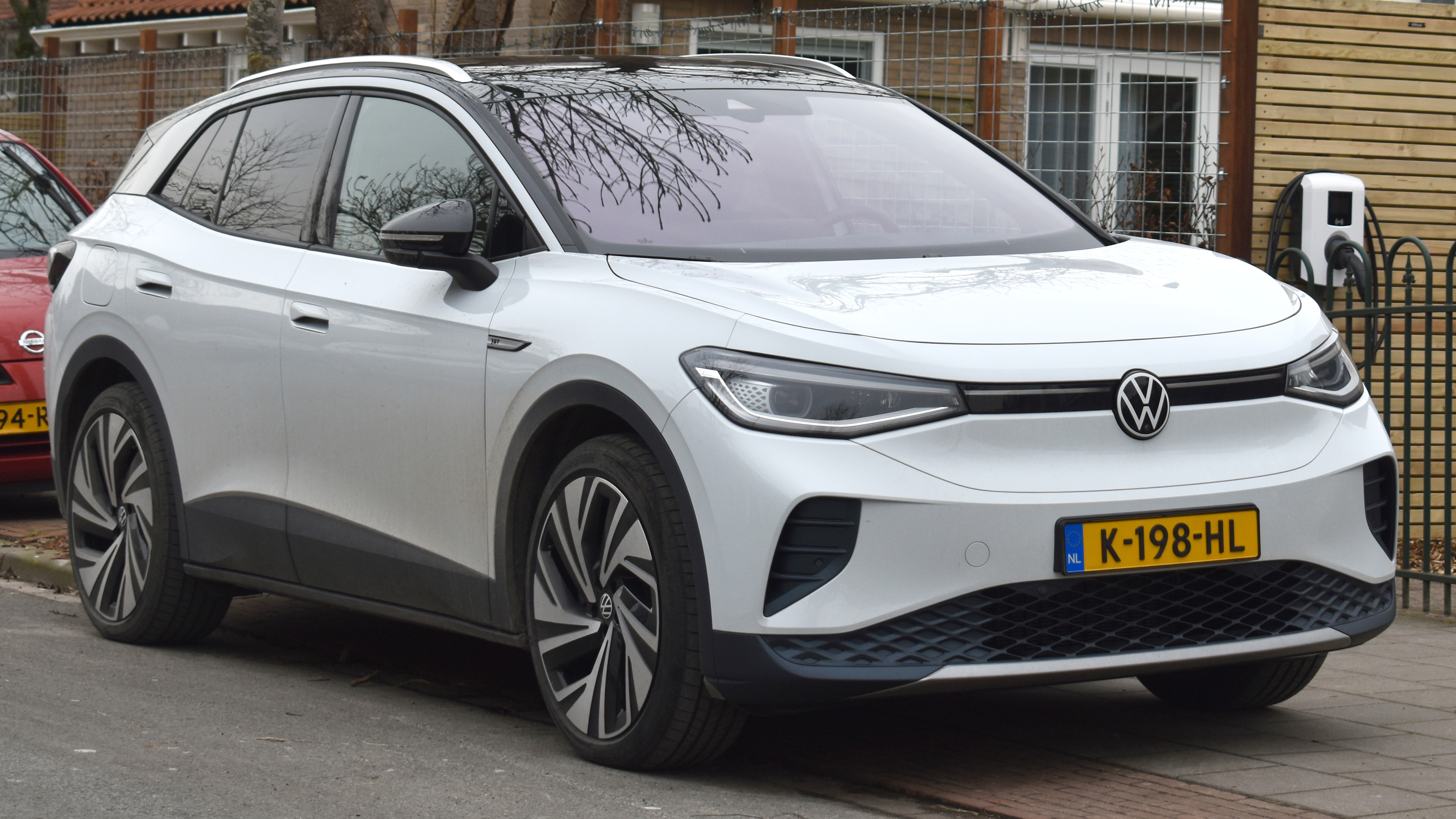
Volkswagen Id4
"...ting gears in the U.S., ending production of the ID4 electric vehicle in Chattanooga, doubling down o..."
The ID.4 is an electric SUV, meaning it runs on a battery instead of a gas engine. The podcast notes that production is ending in the U.S., which can affect how easy it is to find new ones. It’s discussed because it’s a well-known electric model and changes in production can matter to shoppers.
The Volkswagen ID.4 is an all-electric compact SUV designed for commuting and family use without gasoline. The podcast context mentions production ending in Chattanooga and the shift in focus for the model, which makes it relevant to talk about availability and what that means for buyers. It’s also a notable U.S. EV because it helped establish Volkswagen’s electric lineup in the market.

Toyota Land Cruiser
"Toyota is updating the Land Cruiser for 2027, at least a little bit, so we'll talk about that. Chris, do you think a Land Cruiser would fit in your lifestyle?"
The Toyota Land Cruiser is a long-running, rugged SUV known for off-road capability and durability. The hosts mention Toyota updating it for 2027, suggesting changes to keep it current while maintaining its core identity.
Mercury Insurance
"Only one thing stays the same. And Mercury Insurance, if you're looking to save some money, you should switch to Mercury for your auto and home insurance."
Mercury Insurance is a company that sells car and home insurance. They’re advertising a way to get a quote and possibly save money.
Mercury Insurance is an auto insurance provider mentioned as a sponsor. The hosts claim it can reduce costs for drivers and homeowners, and they direct listeners to a quote link.

Acura Mdx
"That's drivingtoday.com slash auto hyphen insurance. Chris, what is your test vehicle for this week? I spent the week driving the 2026 Acura MDX Type-S."
The Acura MDX Type-S is a sportier version of the MDX SUV. In this episode, they’re using the 2026 model as their test vehicle.
The 2026 Acura MDX Type-S is the performance-oriented trim of Acura’s three-row MDX SUV. Type-S typically adds sportier tuning and equipment compared with the standard MDX, making it a more driver-focused version of the family hauler.
Seasonal demand goes up in the spring
"Seasonal demand goes up in the spring. Cox Automotive, some place that you know pretty well, Chris,"
In spring, more people tend to shop for cars. When more buyers show up at once, used car prices can rise.
Vehicle shopping often increases in spring due to weather, budgeting cycles, and consumer behavior. That seasonal demand can raise used-car prices because more buyers enter the market at the same time.
Cox Automotive
"Seasonal demand goes up in the spring. Cox Automotive, some place that you know pretty well, Chris, has said that the Mannheim Used Vehicle Index"
Cox Automotive is a company that studies and reports on car market trends. When they share numbers, it helps explain whether prices are rising or falling.
Cox Automotive is a major automotive data and marketplace company that tracks industry trends like pricing and inventory. Their commentary is often used as a reference point for how the market is moving.
Mannheim Used Vehicle Index
"has said that the Mannheim Used Vehicle Index rose 6.2% in March compared to a year ago, so that's acceleration there."
The Mannheim Used Vehicle Index is a pricing indicator used to track changes in wholesale used-vehicle values over time. A rise (like the 6.2% mentioned) suggests used cars are getting more expensive at the wholesale level, which often filters through to retail prices.
Wholesale price
"so that's acceleration there. Wholesale price is typically,"
Wholesale price is the price cars trade for between businesses, like dealers. If wholesale prices go up, it often means the used cars you see for sale may cost more too.
Wholesale price refers to what vehicles are worth at the dealer-to-dealer level, not the sticker price a consumer pays. Wholesale trends often lead retail pricing, so rising wholesale prices can signal higher used-car costs for buyers soon.
used car market
"I mean, it's pretty tight out there in terms of the used car market, isn't it? Yeah, we talked about this last week,"
The used car market is just the pool of pre-owned cars people can buy. If more people want them than there are cars available, prices usually go up.
The used car market is the supply-and-demand system for pre-owned vehicles. When demand rises or supply tightens, prices tend to increase even if individual cars aren’t changing much.
average transaction price
"the new car average transaction price is around $50,000, I think, as of this month,"
Average transaction price is the average price dealers actually sell new cars for. If that average goes up, more people look at used cars instead.
Average transaction price is the typical selling price of new cars after discounts and incentives, based on actual deals. When it rises, it often pushes shoppers toward used cars because the new-car options feel less affordable.
tax refunds
"One thing pushing up demand is the fact that a lot of people are expecting tax refunds or getting tax refunds, so that's kind of a nice thing."
A tax refund is money you get back from the government. If people have extra cash, they may be more likely to buy a car—especially when there aren’t many cars available.
Tax refunds can temporarily increase consumer purchasing power, which can boost demand for cars. In a tight supply situation, that extra demand can translate into higher used-car prices.
inventory is constrained on the used side
"New car prices, of course, are pushing more shoppers into the used car market. Inventory is constrained on the used side."
Constrained inventory means there aren’t enough used cars for everyone who wants one. When cars are scarce, prices tend to rise.
When inventory is constrained, there are fewer used cars available than buyers want. That imbalance (low supply, steady or rising demand) typically increases used-car prices.
vehicle supply of just 37 days
"A vehicle supply of just 37 days, that's a record low, that means that there are relatively few used cars on the market, which translates into higher prices, doesn't it?"
“Days of supply” is a market metric estimating how long current inventory would last at the current sales pace. A record-low number like 37 days implies very limited used inventory, which usually pressures prices upward.
COVID effect
"It does, and I can't help but wonder if some of this is the tail end of the COVID effect"
The “COVID effect” means the pandemic changed how cars were made and how people bought them. Those changes can still affect today’s car prices and availability.
The “COVID effect” refers to how pandemic-era disruptions (production shutdowns, supply chain issues, and shifts in demand) can have lingering impacts on vehicle availability and pricing. Even after conditions improve, the market can take time to rebalance.
used vehicles coming into the market
"I'm fairly close to the JD Power folks, and they indicate that we're gonna see more used vehicles coming into the market this year than last, but as you say, that was an issue for a long time."
Leases are like rentals you return at the end. If fewer people are returning cars, there are fewer used cars for sale. If more used cars start showing up, it can make it easier to find a deal.
When lease returns dry up, fewer used cars hit dealer lots, which can tighten supply and keep used prices elevated. As lease activity normalizes, more used vehicles enter the market, improving availability and potentially easing pricing pressure.
JD Power
"I'm fairly close to the JD Power folks, and they indicate that we're gonna see more used vehicles coming into the market this year than last, but as you say, that was an issue for a long time."
J.D. Power is a well-known automotive research and consulting company that tracks industry trends like vehicle quality, sales, and customer behavior. In this context, the hosts are citing J.D. Power’s outlook on how many used vehicles will enter the market.
underground market of devices
"This is in regions and countries, basically, where this has not yet been approved. There are reports from Europe, Asia, and the Middle East that Tesla has just started to remotely disable the feature..."
This refers to unofficial gadgets people buy to unlock features that the company didn’t intend to be enabled that way. It can cause trouble with safety rules and with the car’s warranty.
An “underground market” here means unofficial hardware or device-based methods sold outside normal dealer or manufacturer channels to bypass software restrictions. This matters because it can conflict with regulations, warranty terms, and the manufacturer’s safety/liability responsibilities.
remotely disable the feature
"There are reports from Europe, Asia, and the Middle East that Tesla has just started to remotely disable the feature in vehicles where it senses they're being used."
Cars can receive software updates over the internet. The story says Tesla can also turn off a feature remotely if it thinks the feature was enabled improperly.
Remote disabling is an over-the-air (OTA) software action where a manufacturer can remotely change or revoke a feature in a vehicle. In this case, Tesla is reported to disable the capability when it detects the car is being used in a way that suggests unauthorized activation.
underground device
"I can see where a third-party underground device could cause some issues with the car and maybe have some reason to void the warranty and take the features away,"
They’re talking about an unofficial gadget that people use to unlock features the car wasn’t supposed to have in that area. That kind of workaround can cause problems and may affect warranty coverage.
An “underground device” here describes an unofficial third-party hardware/software hack used to enable features that aren’t approved for certain regions. These devices can interfere with vehicle systems, potentially creating safety, legal, or warranty risks.
void the warranty
"could cause some issues with the car and maybe have some reason to void the warranty and take the features away,"
A warranty is the promise to fix problems for free (within limits). If you change the car in an unauthorized way, the company might say the warranty doesn’t apply.
“Voiding the warranty” means the manufacturer may deny warranty coverage if it believes unauthorized modifications or tampering caused the problem. In connected-car contexts, using third-party devices or altering software can give the automaker a reason to refuse claims.
safety officials have said, we're not going with this yet
"where safety officials have said, we're not going with this yet."
Even if the car can do the feature, government safety rules may not allow it yet. That’s why some regions get the feature and others don’t.
This points to regulatory approval as a gating factor for advanced driver-assistance and autonomy features. Even if a car has the capability, governments may restrict deployment until safety testing and legal requirements are met.
hack allows the system to do
"one of the things the hack allows the system to do and allows the driver to do is basically avoid the fact that they're being monitored"
They’re saying the workaround changes what the car thinks you’re doing. The car may be trying to confirm you’re paying attention, and the hack could trick it.
The “hack” is described as changing how the autonomy system behaves—specifically around driver monitoring. This suggests the system uses sensors to confirm driver attention, and the hack may try to bypass that requirement.
monitored to determine whether they're actually looking down the road
"avoid the fact that they're being monitored to determine whether they're actually looking down the road"
The car may watch your eyes or face to make sure you’re paying attention. If someone tries to defeat that monitoring, the car can’t reliably tell whether it’s safe to keep assisting.
Many advanced driver-assistance systems include driver-monitoring: cameras or sensors check whether the driver is looking ahead and paying attention. If that monitoring is bypassed, the system may be less able to ensure safe human oversight.
inattentive behind the wheel
"We've talked about some fatal crashes involving people who were really inattentive behind the wheel while using some of these features."
A big risk with driver-assist tech is that people may stop paying attention. If something unexpected happens, the driver still needs to react fast.
The transcript highlights a key safety issue: crashes can occur when drivers become inattentive while using driver-assistance features. This is often discussed as a human-factors problem—people over-trust automation and don’t respond quickly enough when the system can’t handle a situation.
driver monitoring features
"And I think those driver monitoring features are there for a reason. And even though they're kind of a pain to some people, they do serve a purpose."
These are the systems that watch you to make sure you’re paying attention. If you look away or stop paying attention, the car can warn you or limit the feature.
Driver monitoring features use sensors (often cameras and/or steering-wheel/eye tracking) to detect whether the driver is paying attention. They’re designed to reduce risk when advanced driver-assistance systems are used, because inattentive drivers are a known failure mode.
regulatory people have been slow
"because the regulatory people have been slow"
Sometimes the car’s software can’t be fully turned on right away because government rules have to approve it first. That can delay when drivers get access to certain capabilities.
The segment points to regulatory approval as a gating factor for advanced driver-assistance capabilities. Even if a company has the technology, features may not be enabled or expanded until regulators review safety and compliance.
crack the code
"You can see why they go, okay, well, I'll throw some more money at this and crack the code. But it also makes you wonder, like, who owns the car?"
“Crack the code” here means trying to pay extra to unlock something that’s not currently available. It’s basically about getting access to a feature through software permissions.
“Crack the code” is a colloquial way to describe paying for access to a feature that may be locked or region-restricted. In automotive terms, it often points to software enablement, subscriptions, or feature gating that depends on authorization.
Tesla
"It's not Tesla's car, it's your car, right? Yeah, I mean, look, Tesla shouldn't have sold those features in countries unless they were able to back it up with actual functionality."
Tesla is a car brand that relies heavily on software features. The hosts are questioning whether it’s fair to sell features in some places if they can’t actually be used there.
Tesla is an automaker known for software-driven vehicle features and over-the-air updates. The discussion here is about selling features that may not be enabled in certain countries, and whether those features should work once paid for.
distracted driving
"Well, one company that is pushing that kind of feature, like self-driving, to target distracted driving, actually, is General Motors. I mean, they have made a new push to avoid distracted driving."
Distracted driving means you’re not fully focused on driving—like looking at your phone or fiddling with controls. The idea behind safety tech is to help keep your attention on the road.
Distracted driving is when a driver’s attention is pulled away from the road, increasing crash risk. The podcast ties this to advanced driver-assistance features, arguing that technology should reduce distraction rather than create it.
General Motors
"Well, one company that is pushing that kind of feature, like self-driving, to target distracted driving, actually, is General Motors. I mean, they have made a new push to avoid distracted driving."
General Motors, or GM, is one of the big car companies. Here they’re being mentioned because they’re working on safety tech aimed at reducing distracted driving.
General Motors (GM) is a major automaker that has been investing in driver-assistance and safety-related technology. In this segment, GM is mentioned as pushing features intended to reduce distracted driving.
cameras inside the cabin
"These things, as much as they do feel like a little bit of a privacy invasion in some cases, you know, especially having cameras inside the cabin looking at you and all that, it's gonna be more widespread as we go forward."
Some cars use small cameras inside the cabin to watch the driver’s attention. If you look away too long or seem distracted, the car can warn you. The idea is to reduce crashes caused by not paying attention.
In-cabin cameras are driver-monitoring systems that watch for signs of inattention or unsafe behavior. They’re increasingly used to detect distraction and can trigger alerts or safety interventions, and the transcript suggests these will become more common.
Insurance Institute of Highway Safety
"The Insurance Institute of Highway Safety is gonna start including some of these things to prevent, you know, reckless and distracted driving"
The Insurance Institute of Highway Safety, or IIHS, is an organization that tests cars for safety. They help set expectations for what safety features should do to prevent crashes and injuries.
The Insurance Institute for Highway Safety (IIHS) is a U.S. nonprofit that evaluates vehicle safety and crashworthiness. It also influences safety policy by pushing automakers toward features and testing methods that reduce real-world injuries and fatalities.
top safety pick plus
"So I think in order to achieve a top safety pick plus, more and more cars are gonna have to start having these technologies."
It’s a label that means a car scored really well in safety tests. To earn the highest level, manufacturers usually have to include advanced safety features, not just passive crash protection.
“Top Safety Pick Plus” refers to a high tier in vehicle safety ratings, typically based on crash-test performance and active-safety features. Automakers often add more driver-assistance tech to qualify for these top categories.
hands free technology
"General Motors is pushing hands free technology. Of course, voice controls, that can help a lot."
Hands-free technology generally means you can control certain vehicle functions without physically touching controls—often via voice commands. It’s commonly paired with infotainment and connectivity features to reduce distraction while driving.
Bluetooth connectivity
"You can talk to your car as opposed to looking at the dash or looking at a touchscreen, Bluetooth connectivity. I mean, that seems like so old school now, but I guess a lot of people are still not using that."
Bluetooth is how your phone can “talk” to your car. It often enables hands-free calls and music without plugging in every time.
Bluetooth connectivity lets your phone communicate with the car for hands-free calling, audio streaming, and sometimes voice assistant integration. It’s a common baseline feature now, but the hosts note not everyone uses it.
supercruise
"Yeah, I'm getting ready to take a 300 mile road trip and most of that's gonna be done with supercruise in a cattle like Escalade, so I'll report back."
Super Cruise is GM’s hands-free driver-assistance system for certain roads, using a combination of sensors and mapping to help the car steer and manage driving tasks. It’s designed for highway use where the system can monitor lane position and driver attention.

Cadillac Escalade
"most of that's gonna be done with supercruise in a cattle like Escalade, so I'll report back."
The Cadillac Escalade is a big luxury SUV. The host is saying they’ll use GM’s Super Cruise driving-assist feature during a long highway trip in it.
The Cadillac Escalade is GM’s large luxury SUV, and the host mentions using Super Cruise in it for a long road trip. That matters because Super Cruise availability and performance are tied to specific GM models and trims.

Volkswagen Atlas
"And that plant is going to build the Atlas SUV, a three row SUV with a conventional powertrain... Like that's the one that sells three row SUVs sell in America, so I'm glad that they're able to keep the Chattanooga facility going."
The Volkswagen Atlas is a big, three-row family SUV. The hosts are saying it’s the main seller, so it makes sense to keep building it.
The Volkswagen Atlas is a three-row SUV aimed at family buyers, and the hosts call it Volkswagen’s “breadwinner” in the U.S. market. They’re discussing how production at the Chattanooga facility will focus on the Atlas with a conventional powertrain.
three row SUV
"And that plant is going to build the Atlas SUV, a three row SUV with a conventional powertrain... Like that's the one that sells three row SUVs sell in America, so I'm glad that they're able to keep the Chattanooga facility going."
A three-row SUV is a bigger family vehicle with extra seating in the back. It’s built so more people can ride together, usually for road trips and kids.
A “three-row SUV” is a larger vehicle designed to seat more passengers, typically with two seats in the first row, two in the second, and a third row for additional riders. These models are often targeted at families and tend to be longer and heavier than two-row crossovers.
pivoting back to internal combustion engine vehicles
"It's interesting that Volkswagen had pivoted from diesels and that kind of thing, internal combustion engine vehicles to electrics and now is pivoting back to internal combustion engine vehicles."
“Pivoting back” means the company is changing direction again—making more gas-powered cars after planning to go mostly electric. It’s usually driven by what buyers want and how the market is developing.
This refers to a major strategy shift: moving away from an all-electric focus and returning to producing vehicles powered by internal combustion engines (gasoline/diesel). Automakers have been adjusting plans due to changing consumer demand, charging infrastructure realities, and regulatory/market pressures.
hybrid powered
"Toyota has unveiled updates to the Land Cruiser for 2027. Of course, this is now hybrid powered. And well, it goes without saying that has an off-road focus."
A hybrid uses a gas engine and an electric motor together. That can help it use less fuel and can also make it feel strong at low speeds.
“Hybrid powered” means the vehicle uses both an internal combustion engine and an electric motor/battery system. Hybrids can improve fuel efficiency and provide strong low-speed torque, which can be helpful for off-road driving and stop-and-go situations.
off-road focus
"Of course, this is now hybrid powered. And well, it goes without saying that has an off-road focus. What's your take on the Land Cruiser?"
“Off-road focus” means the SUV is built to handle dirt, rocks, and uneven ground. Even if it’s hybrid, the goal is to keep it capable off the pavement.
An “off-road focus” means the vehicle is engineered and marketed for rough terrain—often emphasizing traction, ground clearance, durable driveline components, and control systems suited for low-speed crawling. When paired with hybrid power, manufacturers typically aim to keep the same capability while improving efficiency.
high-mounted air intake
"The new features are a high-mounted air intake, so I guess you could do more waiting, more creek passing."
A high-mounted air intake moves the engine’s air opening higher on the vehicle. That helps the engine keep running when you’re going through deeper water or messy terrain.
A high-mounted air intake relocates the engine’s air inlet higher up the vehicle, helping it breathe when driving through deeper water or dusty conditions. It’s a common off-road modification/feature because it can reduce the risk of water ingestion.
creek passing
"so I guess you could do more waiting, more creek passing. And upgrade in second row seating with heating and ventilation..."
“Creek passing” means driving through a shallow stream. It’s tricky because water can get into places it shouldn’t, so off-road features help keep the vehicle running and stable.
“Creek passing” refers to driving through shallow streams or water crossings, which tests a vehicle’s sealing, ground clearance, and intake/exhaust placement. It’s not just about clearance—water can also affect airflow and traction, so features like a high intake matter.
heating and ventilation
"And upgrade in second row seating with heating and ventilation, which might be great for the T-girls."
Heating and ventilation are seat comfort features—warm air for cold weather and airflow for hot weather. They help passengers stay comfortable on longer drives.
Heated and ventilated seats add comfort by warming the cabin and actively moving air to reduce heat buildup. In an off-road SUV context, it’s a convenience upgrade that can make long trips more comfortable, especially in cold or hot climates.

Toyota 4Runner
"I'm not a huge fan of it as much as I am of the new 4Runner, I think that's a better all-around vehicle for most people... when you look at the Land Cruiser and the 4Runner side-by-side, you kind of scratch your head over why you would pay a lot more for the Land Cruiser, but that's my take."
The Toyota 4Runner is a rugged SUV that’s popular for off-road trips and everyday driving. In this discussion, the hosts think it makes more sense for most people than the Land Cruiser.
The Toyota 4Runner is a midsize SUV built around a proven off-road platform, often chosen for its trail capability and straightforward ownership. Here, it’s positioned as the better “all-around” buy compared with the Land Cruiser for many shoppers.
limited-run Redline edition
"Many has just introduced a limited-run Redline edition. How do you feel about these limited editions?"
A limited-run edition is a special version of a car made in smaller numbers. It usually has unique styling or extra features to make it stand out from the regular models.
A limited-run “edition” like a Redline package is a special trim produced in smaller quantities, usually with distinctive styling and/or equipment. These editions are often aimed at buyers who want a unique look or a curated feature set rather than the standard lineup.
Type S
"Chris, you're road testing a vehicle, a sporty SUV in Type S trim... Tell us all about it. Yes, it's the 2026 Acura MDX Type S."
“Type S” is Acura’s way of saying “this version is meant to be sportier.” It usually means you get more than just different looks. Here, they’re saying the powertrain is improved too, so it should drive better.
“Type S” is Acura’s trim label used to indicate a sportier, more performance-oriented version of a model. It typically signals changes beyond exterior styling—often including engine, tuning, or drivetrain upgrades. In this segment, the host specifically calls out that the Type S has an upgraded powertrain.
appearance package
"I appreciate this Type S, because it has an actually upgraded powertrain. This is not an appearance package."
An “appearance package” is mostly about styling—things you can see. The host is saying the Type S isn’t just a look-only upgrade. It’s supposed to include real performance-related changes.
An “appearance package” is an option bundle that mainly changes the vehicle’s look—like trim, wheels, or exterior styling—without significantly altering performance. The host explicitly says the Type S is not just an appearance package, implying it includes real mechanical or powertrain upgrades. That distinction helps listeners understand what they’re paying for.
as tested price
"You can get into this vehicle, the base models for around $52,000, so this is not a cheap vehicle by any means. My as tested price was almost $78,000."
“As tested price” means what that exact car costs with all the options it was equipped with for the review. It’s not the cheapest version you can buy. So the test car can end up costing a lot more than the starting price.
“As tested price” is the price of the specific vehicle used in the test, including selected options and accessories. It’s different from the base price because the test car is usually configured with higher-end features. That’s why the segment contrasts a lower starting price with a much higher as-tested number.
3.5 liter V6
"You don't expect some of these things, but the base powertrain in this vehicle is a 3.5 liter V6. It makes 290 horsepower."
This is the size of the engine in the Acura MDX—specifically a V6 with 3.5 liters of displacement. Bigger displacement often means more power potential and smoother operation.
A 3.5-liter V6 is an engine displacement that helps define how much air and fuel the engine can move, which strongly influences power and smoothness. In this segment, it’s described as the base powertrain for the MDX being discussed.
twin turbocharged 3.0 liter V6
"My MDX Type S tester had a twin turbocharged 3.0 liter V6. It makes 355 horsepower with 354 pound-feet of torque."
This engine uses two turbochargers to help it make more power. Turbos basically cram more air into the engine so it can burn more fuel and feel stronger.
“Twin turbocharged” means the engine uses two turbochargers to force more air into the cylinders, improving power output. Pairing that with a 3.0-liter V6 is a common way to get strong performance without using a larger naturally aspirated engine.
torque vectoring all-wheel drive
"You get torque vectoring all-wheel drive as standard with the Type S, ..."
This is an all-wheel-drive system that can “aim” power to the wheels that need it most. The goal is better grip and more controlled handling, especially when turning or on slippery roads.
Torque-vectoring all-wheel drive actively varies how much drive torque each axle—or even each wheel—receives. That can improve traction and cornering stability by helping the vehicle rotate and grip more predictably.
10-speed automatic transmission
"... as well as a 10-speed automatic transmission, and it also has adaptive air suspension with auto leveling,"
This is an automatic gearbox with 10 different gear ratios. It helps the engine stay in the right “power or efficiency” zone so the car shifts smoothly and can feel quicker.
A 10-speed automatic transmission uses ten gear ratios to keep the engine in a more efficient or responsive range. More gears can help with both acceleration feel and fuel economy depending on driving conditions.
adaptive air suspension with auto leveling
"... and it also has adaptive air suspension with auto leveling, which if you're not expecting it, you're sitting in a traffic light at times. You can see the nose raised and lower at times,"
This suspension uses air bags to change how the car rides. “Auto leveling” means it can adjust the height to keep the car sitting level, which can make the front end move slightly even when you’re stopped.
Adaptive air suspension uses air springs instead of traditional steel springs, and “auto leveling” adjusts ride height to keep the vehicle balanced. The hosts describe how the nose can rise and lower at traffic lights, which is the system compensating for load or driving conditions.
Sport Plus mode
"most of the time, but when you put it into Sport or Sport Plus mode, the suspension really tightens up, and you get pretty decent handling for a three-row SUV."
Sport Plus is a button or mode that makes the car feel more “aggressive.” It usually firms things up so the ride and steering respond faster when you drive harder.
Sport Plus mode is a driving setting that changes how the vehicle responds—often tightening throttle mapping, steering feel, and suspension behavior. In this segment, it’s specifically described as making the suspension tighter for sharper handling.

Acura Integra
"I wouldn't put this on Acura Integra or Honda Civic Si Type handling levels, but very capable for a large vehicle here."
The Acura Integra is a smaller, sportier car. The point here is that a big three-row SUV won’t feel as sharp as a compact performance car like the Integra.
The Acura Integra is a compact performance-oriented hatchback/sedan that’s often used as a benchmark for handling and driving feel. Here, the host says they wouldn’t expect the three-row SUV’s handling to match Integra-level sportiness.
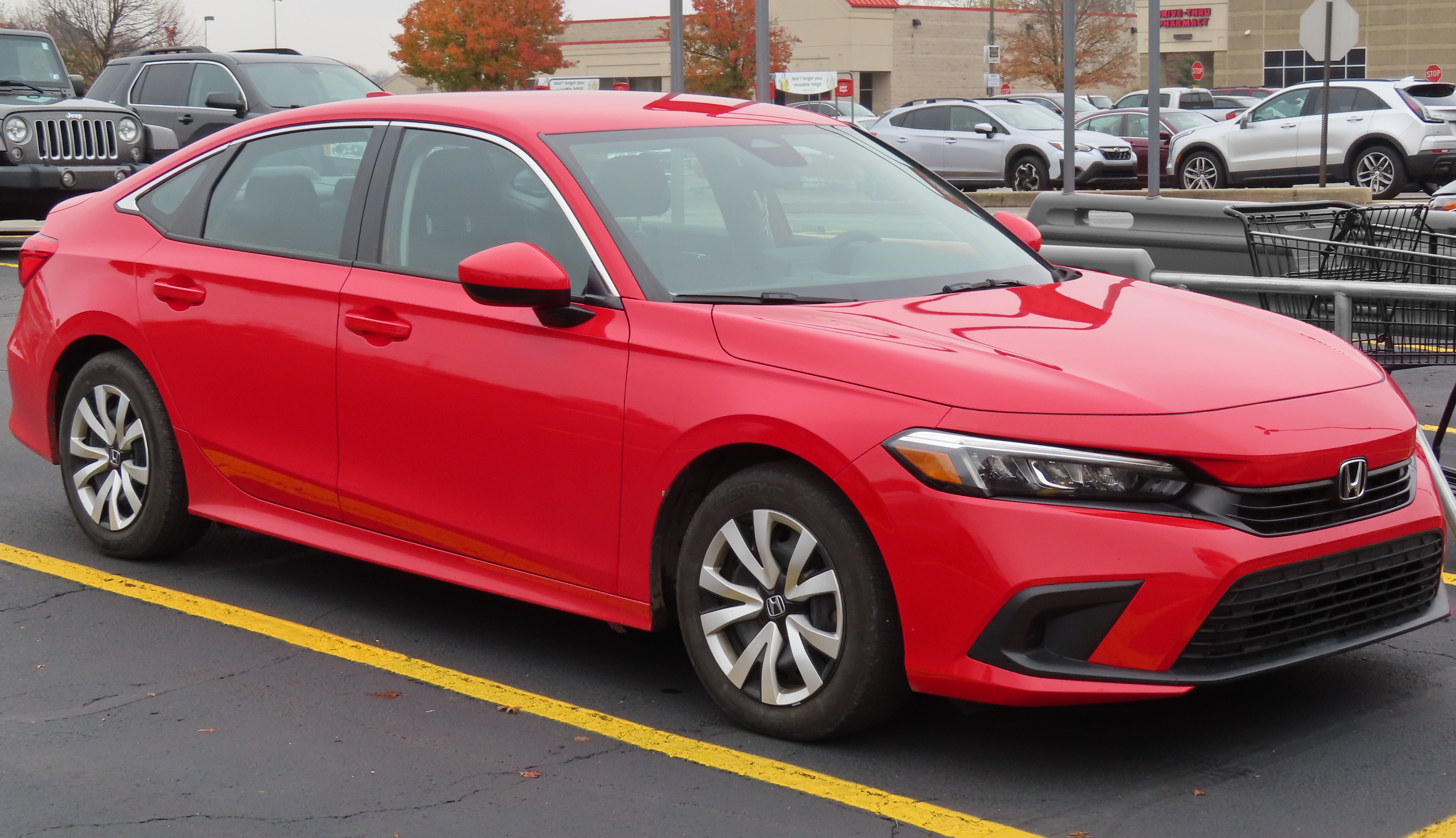
Honda Civic
"I wouldn't put this on Acura Integra or Honda Civic Si Type handling levels, but very capable for a large vehicle here."
The Civic Si is a sportier version of the Civic. They’re saying this SUV can handle well for its size, but it won’t drive like a Civic Si.
The Honda Civic Si is a performance trim known for relatively sharp steering and a more driver-focused feel than typical economy compacts. The host uses it as a comparison point for handling levels, implying the SUV is capable but not as sporty.
21 or 22-inch wheels
"I think they're either 21 or 22-inch wheels, or maybe even 20s on this, but you get less rubber, so the ride quality here is a little bit harsher"
Bigger wheels often mean thinner tires. That usually makes the ride feel a bit firmer, even if the car handles better.
Wheel size affects ride comfort because larger wheels typically come with shorter sidewall tires (“less rubber”). That can make impacts feel harsher, while also improving steering response and handling grip.
less rubber
"or maybe even 20s on this, but you get less rubber, so the ride quality here is a little bit harsher than the base MDX."
It means the tires have less cushion between the wheel and the road. That usually makes bumps feel sharper, even if the car feels more responsive.
“Less rubber” is shorthand for having less tire sidewall height due to larger wheels. Less sidewall flex generally reduces ride cushioning and can make the suspension feel harsher over bumps.
quilted and perforated Milano leather upholstery
"Inside, you get sports seats with quilted and perforated Milano leather upholstery with ultra suede accents."
Quilted leather is stitched in a decorative pattern. Perforated leather has tiny holes so it can feel less hot and more comfortable.
Quilted upholstery uses stitched patterns for a more premium look and feel, while perforated leather has small holes to improve airflow. Together, they’re common in higher trims to add comfort and a more upscale interior appearance.

Alfa Romeo Milano
"...you get sports seats with quilted and perforated Milano leather upholstery with ultra suede accents."
The Alfa Romeo Milano is a car model from Alfa Romeo, and the podcast is talking about what the inside looks and feels like. It mentions special seat materials and finishes, like leather and suede-style accents. That’s usually what people mean when they discuss a car’s “trim” or interior package.
The Alfa Romeo Milano is a sporty, modern vehicle name tied to Alfa Romeo’s design and interior-focused approach. In the podcast context, it’s discussed with specific interior features—like quilted and perforated Milano leather upholstery with ultra suede accents—highlighting how the cabin is positioned as a premium experience. That makes it a natural topic for a segment focused on trims and what you get inside.
ultra suede accents
"and perforated Milano leather upholstery with ultra suede accents. My test vehicle had, I think it's called Ivory Leather,"
Ultra suede accents are soft, fabric-like trim pieces inside the car. They’re mainly there to make the cabin feel nicer and look more premium.
“Ultra suede accents” refers to a soft, suede-like material used on trim areas (often inserts or panels) to elevate the interior’s look and texture. It’s typically used for style and touchpoints rather than being the main seat material.
heated and ventilated front seats
"You get heated and ventilated front seats, heated rear seats, massaging front seats, and a heated steering wheel."
Heated seats warm you up in winter. Ventilated seats blow air through the seat so you don’t get sweaty in hot weather.
Heated seats warm the cabin quickly in cold weather, while ventilated seats use small fans to move air and help cool you down. Together, they improve comfort across a wider range of temperatures.
heated rear seats
"You get heated and ventilated front seats, heated rear seats, massaging front seats, and a heated steering wheel."
Heated rear seats warm the back-row passengers. It’s a comfort feature that’s especially nice in cold weather.
Heated rear seats provide warmth for passengers in the back row, which can make a big difference on long trips or in colder climates. They’re less common than front-seat heating, so they’re often used as a premium comfort feature.
massaging front seats
"You get heated and ventilated front seats, heated rear seats, massaging front seats, and a heated steering wheel. I will tell you that it took me until the third or fourth day having this vehicle to realize that it had massaging seats."
Massaging seats add a vibration or pressing sensation to help you feel less tired. Some people love it, and others barely notice it.
Massaging seats use built-in motors and actuators to create vibration or pressure patterns in the seat cushion and/or backrest. They’re designed to reduce fatigue on longer drives, but the intensity and usefulness vary by design.
heated steering wheel
"You get heated and ventilated front seats, heated rear seats, massaging front seats, and a heated steering wheel."
A heated steering wheel warms the part you hold, so your hands don’t feel cold. It’s especially helpful in winter.
A heated steering wheel warms the wheel surface to improve comfort and grip in cold weather. It’s typically controlled via the infotainment or steering-wheel buttons and may have multiple heat levels.
premium interior
"they're charging a premium price, they better give a premium interior, and so I think they've really upped their game there."
A “premium interior” means the car’s inside feels nicer—better materials and more comfort features. The hosts are saying Acura is charging more, so it has to deliver a nicer cabin.
“Premium interior” refers to cabin upgrades that go beyond basic functionality—better materials, more comfort features, and more refined design. The idea is that if a brand charges a higher price, buyers expect the cabin experience to feel more luxurious too.
platform sharing
"I think a platform with the Honda Pilot and the Honda Odyssey and a few other Honda vehicles, [1041.7s] but inside this car, it doesn't feel like a Honda..."
Platform sharing is when different cars are built on the same basic “skeleton.” They can still feel different because the company changes the look, comfort features, and how it’s tuned.
Platform sharing means multiple vehicles use the same underlying engineering base (like chassis layout and major components). Automakers do this to reduce cost and speed development, then differentiate models with unique styling, tuning, and interior materials.

Honda Odyssey
"I think a platform with the Honda Pilot and the Honda Odyssey and a few other Honda vehicles, [1041.7s] but inside this car, it doesn't feel like a Honda..."
The Honda Odyssey is a family minivan. The hosts mention it to show that some Honda vehicles share the same underlying design, even if the final product feels different.
The Honda Odyssey is a minivan known for family-friendly space and comfort. In this segment, it’s mentioned because it shares a platform with the Acura MDX, illustrating how manufacturers can reuse underlying architecture while giving each model its own identity.

Honda Pilot
"I think a platform with the Honda Pilot and the Honda Odyssey and a few other Honda vehicles, [1041.7s] but inside this car, it doesn't feel like a Honda..."
The Honda Pilot is a family SUV with three rows. The hosts are saying it’s related to the Acura MDX underneath, so some parts of the driving feel can be similar.
The Honda Pilot is a midsize three-row SUV. Here it’s referenced as a vehicle that shares a platform with the Acura MDX, which helps explain why some fundamentals feel similar even when the interior design differs.
12.3-inch digital gauge cluster
"This vehicle comes with a 12.3-inch digital gauge cluster, [1056.9s] a 12.3-inch touchscreen. [1059.0s] The touchpad controller system from several years ago is gone."
A digital gauge cluster replaces traditional analog dials with a screen that can display speed, navigation, and vehicle status. The size (12.3 inches here) often correlates with how much information can be shown at once and how customizable the display can be.
touchscreen
"This vehicle comes with a 12.3-inch digital gauge cluster, [1056.9s] a 12.3-inch touchscreen. [1059.0s] The touchpad controller system from several years ago is gone."
A touchscreen is the main screen you tap to control things like music and navigation. If it’s responsive and well laid out, it’s easier to use while driving.
A touchscreen is the main interface for infotainment functions like media, navigation, and vehicle settings. In modern cars, touchscreen size and responsiveness can strongly affect day-to-day usability.
touchpad controller system
"The touchpad controller system from several years ago is gone. [1062.3s] I think most people really despise that, [1064.3s] Acura hung onto it for longer than I thought they would..."
Some cars use a trackpad-like controller instead of tapping the screen directly. If you don’t like it, it can feel awkward because you have to learn a different way to control the infotainment.
A touchpad controller system uses a trackpad-style input (instead of direct touchscreen buttons) to control infotainment. Many drivers dislike these systems because they can be slower to learn and less intuitive than tapping the screen.
10.5-inch full-color head-up display system
"but the Type-S also comes with a 10.5-inch full-color head-up display system [1070.6s] that has navigation and safety alerts and things like that."
A head-up display shows important info on the windshield. That way you can keep your eyes on the road instead of checking the screen.
A head-up display (HUD) projects key driving information onto the windshield so you can see it without looking down. A “full-color” HUD can show more than just basic speed, including navigation prompts and warnings.
wireless Apple CarPlay
"You also get wireless Apple CarPlay and Android Auto. [1078.3s] I had a lot of trouble getting wireless [1079.8s] to connect in this vehicle."
Wireless Apple CarPlay lets you use your iPhone features through the car’s screen without a cable. If it doesn’t connect right away, you may need to try again or use a wired connection temporarily.
Wireless Apple CarPlay lets an iPhone connect to the car without plugging in, bringing up apps like Maps, music, and messaging on the infotainment screen. Connection reliability can vary by phone model, software version, and the car’s wireless hardware.
Android Auto
"You also get wireless Apple CarPlay and Android Auto. [1078.3s] I had a lot of trouble getting wireless [1079.8s] to connect in this vehicle."
Android Auto brings your Android phone apps to the car’s screen. If wireless connection is flaky, plugging in can be a quick workaround.
Android Auto mirrors compatible Android phone functions to the car’s infotainment system. Like Apple CarPlay, it can be offered wirelessly, and connection issues can happen depending on phone settings and software versions.
Bang & Olufsen
"You also get a Bang & Olufsen sound system with the Type-S, which sounds fantastic. It's more than loud enough."
Bang & Olufsen makes premium audio equipment. If a car has their sound system, it’s usually meant to sound noticeably better than the standard speakers.
Bang & Olufsen is a premium audio brand known for high-end car sound systems. When a vehicle offers a Bang & Olufsen setup, it typically means more advanced speakers and tuning than base audio packages.
forward collision alerts
"and then you get a full suite of safety equipment, so you get forward collision alerts, blind spot monitoring with rear cross-traffic alerts, adaptive cruise control, and so on"
Forward collision alerts are warnings that help you avoid hitting the car in front. The car watches traffic and tells you when a crash might be coming.
Forward collision alerts warn the driver when the system detects a potential crash with a vehicle ahead. It’s an early safety feature that helps you react sooner, often using radar and/or cameras to judge distance and closing speed.
blind spot monitoring with rear cross-traffic alerts
"so you get forward collision alerts, blind spot monitoring with rear cross-traffic alerts, adaptive cruise control, and so on"
Blind spot monitoring helps you know when another car is in your blind spot. Rear cross-traffic alerts warn you about cars coming from the sides when you’re reversing.
Blind spot monitoring watches for vehicles in areas you can’t easily see, typically using sensors in the rear corners. Rear cross-traffic alerts add warnings when traffic is detected while backing out of a parking spot.
adaptive cruise control
"blind spot monitoring with rear cross-traffic alerts, adaptive cruise control, and so on, with automatic lane keeping and things like that."
Adaptive cruise control is like regular cruise control, but it also reacts to the car in front. If traffic slows, it helps slow you down too.
Adaptive cruise control automatically adjusts your speed to maintain a set following distance from the car ahead. Unlike traditional cruise control, it can slow down (and sometimes speed up) based on traffic detected by sensors.
automatic lane keeping
"adaptive cruise control, and so on, with automatic lane keeping and things like that. So I think if I were buying an NVX jack, I'd probably opt for a lower trim"
Automatic lane keeping helps the car stay in its lane. If you start drifting, it can gently steer you back.
Automatic lane keeping helps keep the vehicle centered in its lane by applying steering corrections when lane markings are detected. It’s usually part of a broader driver-assistance suite and is designed to reduce fatigue on longer drives.
three-row luxury SUV
"but if you're buying a three-row luxury SUV, you probably don't need the extra power and the extra sport mode and air suspension characteristics here. Yeah, I've always wondered about these sporty three-rows."
A three-row luxury SUV is built for people who need room for more passengers. The focus is usually comfort and space, not racing-style performance.
A three-row luxury SUV targets families who need extra seating and space, prioritizing comfort, ride quality, and convenience over pure performance. Because they’re heavier and larger, “sporty” features can feel less important than smoothness and practicality.
sport mode
"you probably don't need the extra power and the extra sport mode and air suspension characteristics here. Yeah, I've always wondered about these sporty three-rows."
Sport mode is a button that makes the car feel more eager to accelerate and respond. It’s meant to make driving feel more exciting, but it can also make the ride less relaxed.
Sport mode is a driving setting that typically changes throttle response, steering feel, and shift behavior (on automatics) to make the car feel more responsive. It may also adjust stability/traction calibration and other dynamics depending on the vehicle.
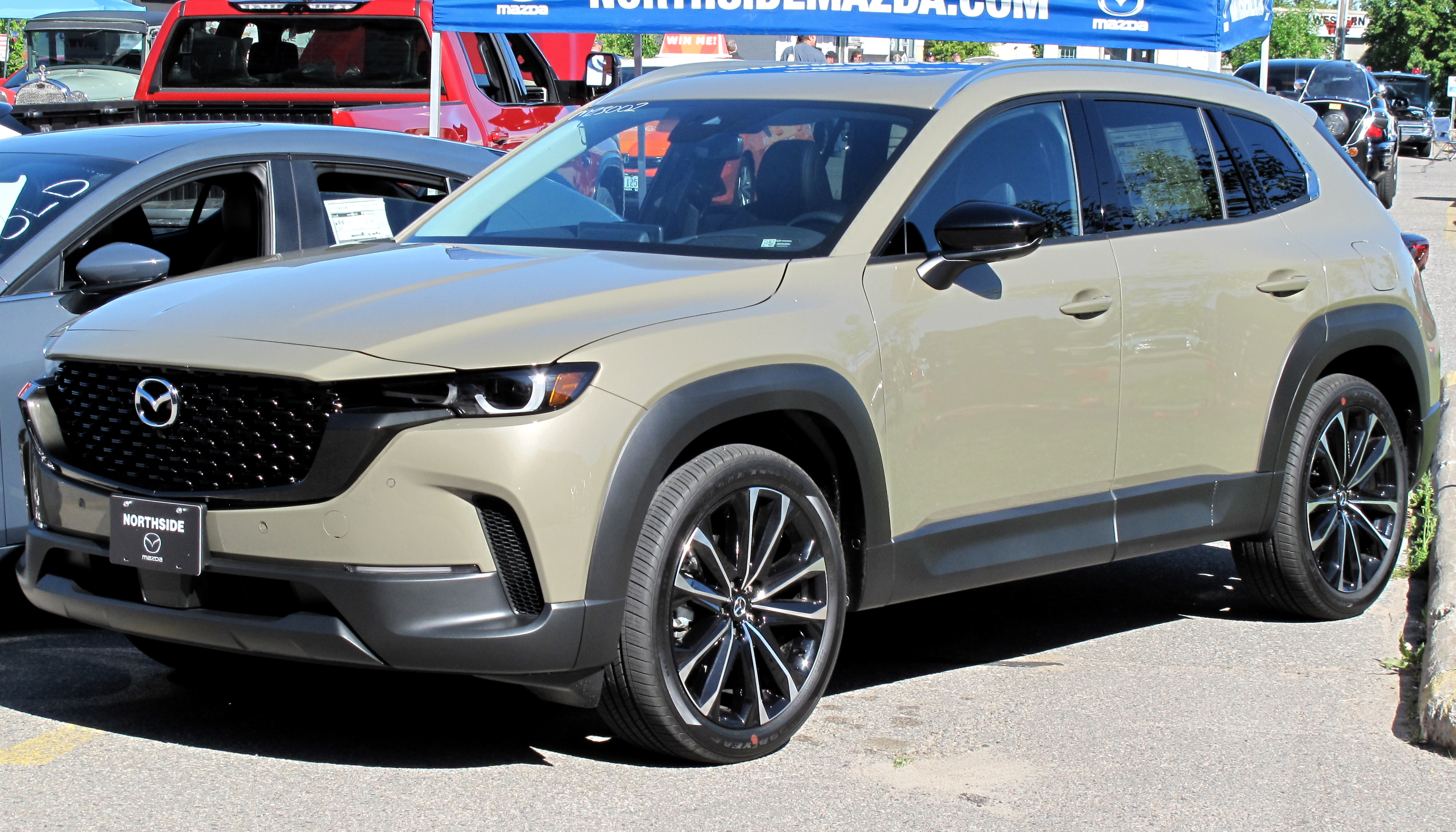
2026 Mazda CX-50 Hybrid
"[1155.2s] I was driving the 2026 Mazda CX-50 Hybrid. [1161.4s] This is somewhat of an expansion of the model lineup."
This is Mazda’s CX-50 SUV, but with a hybrid powertrain. The point they’re making is that it’s meant to drive more like a normal car on the road, while still being useful for everyday errands and road trips.
The 2026 Mazda CX-50 Hybrid is Mazda’s hybrid version of the CX-50 compact SUV. In this segment, the hosts frame it as a road-oriented SUV that still offers practical utility, like carrying luggage on trips.

Mazda Cx5
"[1169.9s] There's also the CX-5, [1171.6s] which is kind of largely competitive [1174.2s] with this vehicle in some ways and in some ways not."
The CX-5 is another Mazda SUV in the smaller/compact category. They’re using it as a comparison point to explain how the CX-50 fits into Mazda’s SUV lineup.
The Mazda CX-5 is Mazda’s smaller compact SUV that the hosts compare to the CX-50. They note it’s competitive in some ways, but not in others, framing how Mazda’s lineup overlaps.
trims
"[1212.4s] but the Hybrid alone is available [1214.6s] in preferred premium and premium plus trims, [1217.9s] and we had the premium plus trim,"
A trim is basically the version of the car you buy—like how much equipment it includes. Different trims can change the price and what features you get.
“Trims” are different equipment and feature packages offered within the same model. Here, the hosts say the CX-50 Hybrid is only available in specific trim levels (Preferred Premium and Premium Plus), which affects pricing and included options.
MSRP
"MSRP of $43,265, goodness. We'll talk about value though a little bit later."
MSRP is the sticker price the manufacturer suggests. What you actually pay can be different because dealers may add fees or offer discounts.
MSRP (Manufacturer’s Suggested Retail Price) is the price automakers recommend dealers sell a vehicle for. It’s a baseline number—real transaction prices can be higher or lower once incentives, dealer discounts, and fees are added.
hybrid system
"powered by a two and a half liter four-cylinder engine with a hybrid system, combined 219 horsepower, which is plenty."
A hybrid system uses both a gas engine and an electric motor. The car can switch between them (or use both) to save fuel and feel quicker when you need it.
A hybrid system combines a conventional engine with electric motors and a control strategy that decides when to use gas, electricity, or both. In practice, it helps with acceleration response and improves efficiency by using electric power at the right times.
electric torque
"And then the fact that it has this electric torque from the electric motors and it has four and a half electric motors with an electronically controlled CVT,"
Electric motors can deliver power right away. That’s why hybrids often feel smooth and quick when you start moving or accelerate gently.
Electric torque is the twisting force produced by the electric motors, typically available instantly from low speeds. That immediate torque can make a hybrid feel more responsive in everyday driving, even if peak horsepower isn’t “sports car” territory.
electronically controlled CVT
"from the electric motors and it has four and a half electric motors with an electronically controlled CVT, electric all-wheel drive, of course."
A CVT is a transmission that can smoothly change the gear ratio without shifting like a traditional automatic. The computer controls it so the car stays efficient and drives more naturally.
A CVT (continuously variable transmission) uses a belt or chain and pulleys to keep the engine operating near its most efficient range. “Electronically controlled” means the car’s computer actively manages ratios and behavior to improve drivability and smoothness.
electric all-wheel drive
"with an electronically controlled CVT, electric all-wheel drive, of course. That's pleasant."
All-wheel drive means power goes to more than one set of wheels. When it’s “electric,” the car can manage how much power each axle gets, which can help grip and stability.
Electric all-wheel drive uses electric motors (or electric control of torque distribution) to send power to more than one axle. Compared with purely mechanical AWD, it can help traction and make torque delivery feel more immediate and controllable.
low end torque
"I mean, the driving dynamics are pretty good because you've got that low end torque. And good EPA estimates, a fuel economy estimates,"
Low-end torque is the power you feel when you’re just starting to move or accelerating from slow speeds. More of it usually means the car feels easier to drive and doesn’t need as much revving.
Low-end torque is the strong pulling force available at low engine speeds. It matters because it reduces the need to rev or downshift for everyday acceleration, which can make the car feel more relaxed and responsive.
EPA estimates
"And good EPA estimates, a fuel economy estimates, 39 miles per gallon in the city, 37 on the highway, and 38 combined."
EPA estimates are the official fuel economy ratings you see on the window sticker. Your real mileage may be a bit different depending on how you drive and conditions.
EPA estimates are fuel-economy numbers published by the U.S. Environmental Protection Agency based on standardized testing. They’re useful for comparing vehicles, but real-world mileage can vary with driving style, weather, and route.
Request an Explanation
Heard something you'd like explained? We'll add it to this episode.
Sign in to request explanations for terms you heard.
Want to learn more?
Browse our glossary for plain-English explanations of automotive terms, jargon, and concepts.
Help improve this episode
See something that's not quite right? Our annotations are AI-generated and can sometimes miss the mark. Click the flag icon on any annotation to suggest a correction.