2026 Monaco GP Race Review
About this episode
Monaco GP race review centers on Kimmy Antonelli’s dominant win, pace, and restart execution, while the hosts keep circling back to how penalties and track limits were handled—especially when safety car timing complicated decisions. They also break down Monaco’s “flow” and why qualifying/starting position matters so much, then pivot to other race threads: Verstappen’s getaway issues, Hamilton’s second-place run, and McLaren’s engine-power problems. The episode ends with listener “moment of the race” picks and teasers for upcoming coverage.
From endless penalties and numerous retirements to late red-flag drama, the Monaco GP had a LOT going on. Join Ben and Sam as they break it all down and somehow fit it into one episode.
Get involved in F1 Fantasy this season! Join the Late Braking league and see if you can beat us... LEAGUE CODE: C6Y6R4ZUY02
Want more Late Braking? Support the show on Patreon and get:
- Ad-free listening
- Full-length bonus episodes
- Power Rankings after every race
- Historical race reviews
- & more exclusive extras!
Don't forget! You can also gift a Late Braking Patreon subscription—perfect for loved ones or your own wish list. Choose anything from 1 month up to a full year of top-notch F1 content: https://www.patreon.com/latebrakingf1/gift
Connect with Late Braking:
- You can find us on YouTube, Instagram, X (Twitter) and TikTok
- Come hang out with us and thousands of fellow F1 fans in our Discord server and get involved in lively everyday & race weekend chats!
- Join our F1 Fantasy League and see if you can beat us!
- Get in touch any time at [email protected]
Hosted by Simplecast, an AdsWizz company. See pcm.adswizz.com for information about our collection and use of personal data for advertising.
pit lane speeding
"Then picks up a penalty for speeding in the pit lane. Doesn't serve that penalty correctly when the safety car comes out"
Pit lane speeding means going faster than the allowed limit in the pit lane. Because people and cars are close together there, the rules are strict and you can get penalized.
Pit lane speeding is a violation of the pit lane speed limit, which is enforced because the pit lane has pedestrians, crew members, and moving cars. In F1, it’s treated as a serious infringement and can lead to time penalties or other race penalties depending on how it’s handled.
drive-through penalty
"Is therefore given a drive-through penalty that he serves towards the end of this race leaving him out of the points with. No real option to get back into the points at the end"
A drive-through penalty requires a driver to enter the pit lane and pass through at pit-lane speed without stopping, as punishment for a rules infringement. In Monaco, where overtaking is hard, this often costs a driver significant track position and points.
qualifying is so important in Monaco
"Where do you want to start with this one? I mean, this is why qualifying is so important in Monaco. He got caught up behind the car that in theory should have been pretty quick"
In Monaco, it’s really hard to pass other cars because the track is narrow and surrounded by walls. So where you start the race—your qualifying position—matters a lot.
Monaco is famous for limited overtaking because of narrow streets, tight corners, and barriers. That makes qualifying position especially valuable: starting near the front often determines your race outcome more than in many other circuits.
undercount
"So they try something a bit crafty. They try going for an undercount they find a good gap there. And he's one of the first to be caught up by what feels like this continuous timeline of pit lane speeding penalties"
An undercount is a strategy timing trick—teams try to pit or sequence laps so their driver ends up in a better spot relative to other cars. It’s about finding gaps and avoiding getting stuck behind slower traffic.
In F1 strategy, an “undercount” is a timing/strategy move where a team tries to pit or cycle the car in a way that makes the driver’s next stint timing look better than it actually is relative to rivals. The goal is to find a gap in traffic or pit-lane timing so the driver can gain track position.
five second penalty
"It just kind of feels like you brought that on yourself. That's five seconds. That's bad [681.0s] We have to move on with it. That's your own fault [706.6s] What happened with my penalty? Did we serve the penalty?"
A five-second penalty is a punishment where the driver effectively loses five seconds due to a rules mistake. The team has to serve it the right way during the race, or they may get an even bigger penalty.
A five-second penalty is a time-based punishment added for a rules infringement, such as speeding in the pit lane or failing to follow pit stop procedures. In practice, teams must serve it correctly—either via a pit stop time penalty or a designated procedure—otherwise it can lead to a larger penalty later.
double stacked
"Which is under safety car. They double stacked the Mercedes that he is of course stopped [692.5s] The call is too late for him to stay out [694.9s] Quite clearly on the radio when they're playing showing the replay"
Double stacking is when a team brings two cars into the pits back-to-back. If the timing isn’t perfect, the second car can get stuck waiting and lose positions.
“Double stacking” is a pit strategy where two cars from the same team are scheduled to pit in very close succession, often to take advantage of safety car timing. It can be risky because if the first car isn’t ready or the timing is off, the second car can be delayed, losing track position.
regulations
"Maybe but this is ruined any chance of any points ability because I'm saying it's not going to manage the situation in the pit lane [729.0s] It's fairly clear in the regulations as well [731.2s] I know there were some questions about it"
The regulations are the official rules for how the race and penalties are handled. The point here is that the correct way to serve that penalty is spelled out.
In Formula 1, the regulations are the official rulebook that defines how penalties must be served and what procedures teams must follow. The hosts are pointing out that the correct penalty procedure is clearly defined, so confusion shouldn’t change the outcome.
tyres
"Then Russell comes in [756.5s] They kind of have tyres there, but not quite ready in position. The pit stop is actually [762.4s] Pretty good."
“Tyres” refers to the race tires used in F1, which teams change during pit stops. Readiness matters: if the team has tires staged but isn’t fully set up, the car can be delayed, which is especially damaging during a double-stack under safety car.
jackmangers
"That's as good as everyone not getting it because the jackmangers get the jackmangers straight in there to pick up the car Immediately and you're right the front left is straight off and the front right hesitates for about a second"
In the pits, there are crew members who lift the car so the tires can be changed. If they don’t do it at the right moment, it can cost time or mess up penalty timing.
“Jackmen” (transcribed here as “jackmangers”) are the pit crew members who use the car’s jacking points to lift it for tire changes. Their timing matters because a slow or mistimed jack can cost seconds and affect whether a penalty is served correctly.
pit stop
"There's no point delaying then because you're going to get the penalty You might as well just make the pit stop as quick as you can Uh, a real scruffy day for Russell even sort of excluding that again"
A pit stop is when the car pulls into the pits during the race. The team can change tires, and sometimes they also use the stop to serve penalties.
A pit stop is when a race car enters the pit lane to change tires and/or make adjustments. Penalties like a five-second penalty are often served during a pit stop by keeping the car stationary for the required duration.
crossing the white line
"Almost got a penalty for crossing the white line White line and in both of those instances you could say well"
The track has painted lines that drivers have to respect. If you cross the wrong one, race officials can consider it a rules violation and hand out a penalty.
Crossing a white line in Formula 1 is typically a track-limits or pit-lane-related infringement, depending on where it happens. Stewards can treat it as a rules violation even if the driver doesn’t gain an obvious advantage, which is why it can trigger penalties.
maximizing qualifying here in monaco
"Yeah, it's just a result of what happened in qualifying. That's why you need to maximize qualifying here in monaco We've seen this year after year. It's not a massive surprise"
The hosts are emphasizing that qualifying position is especially important at Monaco because overtaking is difficult and the circuit layout punishes mistakes. A strong qualifying result reduces the need to fight through traffic during the race.
George Russell
"This is heartbreak for george russell in terms of championship permutations. I think Maybe dangling dusting at this point, which is really unfortunate"
George Russell is an F1 driver. The hosts are saying his result changes the math of the championship—what could still happen based on where he and others finish.
George Russell is a Formula 1 driver whose race outcome can swing championship scenarios. Here, the hosts frame his result as affecting “championship permutations,” meaning how different finishing outcomes change the possible championship standings.
championship permutations
"This is heartbreak for george russell in terms of championship permutations. I think Maybe dangling dusting at this point, which is really unfortunate"
It means the different ways the championship standings can still change. Since points depend on finishing positions, one race result can affect who’s still in the title fight.
“Championship permutations” refers to the set of possible championship outcomes based on different race results. Because points are awarded per finishing position, one driver’s result can open or close paths to the title for multiple rivals.
Mercedes
"But on the flip side secretly I wonder if this makes Mercedes life really simple I wonder if now they go they've got a lead driver"
Mercedes is the F1 team/brand. The hosts are saying that depending on how things shake out, it may make Mercedes’ strategy easier.
Mercedes is the Formula 1 constructor/brand the hosts refer to when discussing team strategy and driver roles. The comment suggests that if one driver’s situation changes, it can simplify how the team manages its remaining lead driver.
tarmac come away
"We've seen tarmac come away before but not in recent history So it was quite a new problem to unpick"
It sounds like the asphalt surface started to peel or break loose. That can make the track slippery or unsafe, so the race may need to be stopped.
“Tarmac come away” describes the track surface detaching or breaking up, exposing an underlying layer. In a race, that can drastically change grip and stability, and it can also create debris that forces officials to stop the session.
engine braking issue
"Actually, it was an engine braking issue that caused the car to snap into the wall which I'm quite fascinated by really"
Engine braking is how the car slows down when you lift off the gas. If something goes wrong with that deceleration behavior, the car can lose grip and suddenly become hard to control.
An “engine braking issue” means the car’s deceleration under lift-off (when the driver eases off the throttle) wasn’t behaving as expected. If the engine braking characteristics or driveline behavior are off, the car can become unstable and “snap into the wall,” especially at a corner where traction is already critical.
brakes
"It's the brakes I he's come out after and said you know only one of three of my brakes are working in a formal one car That's not ideal"
They’re saying the car didn’t have full braking power—only some of the brakes were working. That can make the car harder to slow down and can throw off how it turns.
The segment points to a brake system fault: the driver says only “one of three” brakes was working. In F1, that implies a partial brake failure (not all braking circuits performing), which can severely affect stopping power and balance into corners.
marbles on the tire
"Both at the same corner both with marbles on the tire both turning over that contact pack"
“Marbles” are little bits of rubber that get left on the track. If they get on your tires, they can make the car lose traction and feel slippery.
“Marbles” are small rubber debris that builds up on the racing line as tires wear. When they’re on the tire, they can reduce grip and make the car slide more easily, especially in braking zones and at corners.
red flag
"Um, I think the decision to throw the red flag was correct [1330.4s] I think in that moment we could have seen a real deterioration of the track"
A red flag is the signal to stop the race right away because something on the track isn’t safe. Officials then fix the problem and the race can restart later.
In Formula 1, a red flag means the race is stopped immediately for safety. Marshals and officials can address hazards on track (like debris or a crash) before the race restarts.
Lewis Hamilton
"Uh, Lewis Hamilton, should we just talk about him briefly because uh, a second consecutive second place finish for him [1663.1s] Um, didn't have the pace ultimately to challenge antinelli"
Lewis Hamilton is one of the most famous Formula 1 drivers ever. In this part of the episode, they’re talking about how he finished second again, but couldn’t go as fast as the winner.
Lewis Hamilton is a top Formula 1 driver known for multiple World Championships and for consistently competing at the front. In this Monaco GP race review segment, the hosts discuss his second consecutive second-place finish and why he couldn’t match the pace of the race leader.
speeding in the pit lane
"One was the penalty in the uh speeding in the pit lane because you know, his teammate managed to mitigate it [1688.9s] That's been many other drivers up and down the grid."
F1 has a speed limit in the pit lane for safety. If a driver goes too fast, they can get a penalty that affects where they finish and how they have to plan the rest of the race.
Speeding in the pit lane is a rules violation in Formula 1 because the pit lane has pedestrians, team equipment, and limited visibility. Penalties for it can include time penalties or other race consequences, often forcing drivers to manage strategy around serving them.
10 car lengths
"Which is usually not heard of the other one, of course [1704.6s] Was when the investigation came around that here was more than 10 car lengths away from kimmy ante getting under safety car"
In F1, “car lengths” are used as a practical distance measure when discussing rules and incidents, such as how close cars are when the safety car is deployed or when drivers must follow specific spacing requirements. Here, the hosts argue that being more than 10 car lengths away when getting under the safety car is a significant breach.
safety car infringement
"Then he got away with not being penalized for the safety car infringement other than that. I thought his race was pretty flawless"
A safety car infringement means a driver didn’t follow the rules while the safety car was out. That can lead to penalties because it can unfairly change track position.
A safety car infringement is a rules violation related to how drivers behave when the safety car is deployed. Common examples include not maintaining the required gap, gaining an advantage, or failing to follow the correct procedures during the neutralization period.
qualifying review
"And that's exactly how it played out and it's something we discussed in qualifying review yesterday how third and fourth place whilst a a solid result for ferrari"
A qualifying review is a segment where the hosts break down how qualifying went—who got pole, how the grid shaped up, and what it means for the race. It’s especially relevant in Monaco because starting position strongly influences race outcome.
Catalonia
"So do it do it. Catalonia They might be first going to your favorite corner of all time. I did. Yeah, catalonia term wants to be very interesting"
Catalonia refers to the Circuit de Barcelona-Catalunya region in Spain, where F1 often races. The hosts contrast it with Monaco, implying that track layout and overtaking opportunities change how starting position affects results.
pole
"He led every single lap. He got pole and he got fastest lap of the race, surely"
Pole position is awarded to the driver who qualifies fastest and starts the race from the front of the grid. In Monaco especially, starting from pole is often a huge advantage because overtaking is difficult.
fastest lap
"He led every single lap. He got pole and he got fastest lap of the race, surely"
Fastest lap is the quickest single lap time set by any driver during the race. It’s often rewarded with extra points in F1, and it can indicate strong race pace even if the driver didn’t win.
front row
"Um, should we go max for stappen first given front row promised quite a lot and then ultimately the car said no"
“Front row” means the two cars that start right at the front of the starting grid. Those cars usually have the best chance to get a strong start and lead early.
In Formula 1, the “front row” is the starting position group on the grid: the pole sitter and the second-place qualifier. Starting from the front row usually gives a cleaner launch and a better chance to control the opening laps.
formation lap
"Only it goes completely the other way and you saw at the formation lap that the getaway was Difficult it looked like the car did not want to get off the line"
The formation lap is the lap right before the race where the cars get in order and prepare to start. If a car has trouble getting going, it can ruin the race from the very beginning.
A formation lap is the warm-up lap before the race where cars line up behind the pace car and get up to speed. If something goes wrong during this phase, it can affect the start and sometimes leads to an early retirement.
retire the car
"It's worked through that problem and it just doesn't go anywhere immediately to retire the car. It's a real shame"
To “retire the car” means the driver withdraws from the race, usually due to mechanical failure or an issue that makes continuing unsafe or impossible. In race reviews, retirements are often treated as major turning points because they remove a contender from the result.
turn one
"And I don't know what would have happened if he was able to get first place into turn one"
“Turn one” is the very first corner after the start. It’s where a lot of position battles happen, and if you get it wrong you can lose your chance to compete for the lead.
“Turn one” is the first corner of the race, where the field is bunched up and drivers are most likely to jostle for position. In Monaco specifically, getting through turn one cleanly is often crucial because overtaking later is very difficult.
engine supply
"Uh here the engine supply sort of issue that that mclaren have and and whether that would change at all in the future"
“Engine supply” means one team is getting its engines from another team. If something goes wrong with those engines, the team using them has to work with the supplier to figure out what happened and how to fix it.
In Formula 1, “engine supply” refers to the relationship where one team provides engines (and often related technical support) to another team. If there’s an engine-supply issue, the customer team can’t fully control the design or root cause, so fixes depend on the engine supplier.
basalona
"Like if it's a car issue purely a car issue. I'm pretty sure there would be a debrief going on right now exactly [2582.3s] What happened? Why did it happen? How do we fix it? How do we ensure this doesn't happen at basalona?"
They’re talking about the next race in Barcelona (the Circuit de Barcelona-Catalunya). The issue needs to be understood quickly so it doesn’t keep happening at the next event.
“Basalona” is almost certainly a mis-transcription of Barcelona, referring to the Circuit de Barcelona-Catalunya. The speaker is saying the team can’t fully investigate immediately because the engine isn’t theirs, and they need answers before the next race there.
powertrains
"HPP Mercedes high high performance powertrains [2604.0s] And understand exactly what has gone wrong here and the timeline of that is going to be extended out"
“Powertrains” means the car’s power system—how the engine and related parts work together to make and deliver power. In F1, it usually points to the full engine/power-unit package.
“Powertrains” is the broader term for the components that generate and deliver power to the car—especially the engine and its associated systems. In F1, it’s commonly used to refer to the complete power unit package that includes the engine and related energy/thermal systems.
pit wall
"You just sat there on the pit wall like not being able to do anything just basically watching as it goes by with monaco"
The pit wall is where the team watches the race and tells the driver what to do. If they’re “stuck on the pit wall,” it usually means they can’t change what’s happening on track right now.
The pit wall is the elevated area beside the pit lane where a team’s engineers and strategists watch the race and communicate with the drivers. When someone says a car is “on the pit wall,” they mean the team is stuck waiting for a situation to change—often due to track position or a mechanical issue.
data analysis
"It is data analysis. It's been able to put upgrades on the car run through them"
Data analysis means the team looks at numbers from the car (like speed, temperatures, and tire behavior) to figure out what’s going on. They use it to improve the car and make better calls.
Data analysis in F1 is the process of using telemetry and race data to understand what happened on track and to guide decisions. It’s how teams evaluate upgrades, diagnose problems, and decide how to adjust strategy or car setup.
upgrades
"It's been able to put upgrades on the car run through them"
Upgrades are new parts or changes the team brings to make the car faster. They usually test and measure whether the changes really help.
Upgrades are new parts or aerodynamic/technical changes a team adds to improve performance. Teams use data analysis to evaluate whether upgrades actually work, and sometimes a failed or unreliable upgrade can cost race weekends.
engine failure
"We're now in canada and here in monaco due to an engine failure"
Engine failure is when the car’s engine can’t keep running. In racing, that usually means the driver has to stop the race right away.
An engine failure means the power unit can’t continue operating reliably—often forcing the car to retire or limp back. In F1, it’s especially damaging because it can end a race instantly and also affects the team’s ability to run the car in future sessions.
contract
"At what point do they turn around to Mercedes and they must have had something in their contract"
A contract is a formal agreement with rules and promises. Here, they’re talking about whether the supplier owes money back (or a discount) if reliability targets aren’t met.
In F1, engine suppliers and teams often have commercial agreements that can include reliability or performance-related terms. The discussion here is about whether a minimum reliability expectation in the contract triggers compensation if things go wrong.
parts
"Yeah, I think uh, landa norris is running out of parts as well"
“Parts” in F1 usually means limited-use components like engines and other regulated hardware that can’t be replaced freely without penalties. When someone says a driver is “running out of parts,” it implies they’re approaching the end of their allowed allocation and may face grid or other penalties.
q3
"Getting into q3 Getting that ninth place start to then take advantage of"
Qualifying is how F1 decides the starting order. Q3 is the last and most important part of qualifying, where the quickest cars fight for the best starting spots.
In Formula 1 qualifying, Q3 is the final segment where the fastest drivers set their best lap times. Finishing higher in Q3 determines grid position, which matters a lot at tracks where overtaking is difficult.
Using the other driver to build a gap
"Of course last year with the mandatory to stop but that it's effectively the same strategy of Using the other driver to build a gap To secure some points."
In F1, teammates can work together. One car can help the other by setting the pace and keeping a little distance from the cars behind, so they’re more likely to finish in a points-paying position.
This describes a common F1 midfield tactic where one car helps another by controlling pace and creating separation from the cars behind. By managing traffic and race rhythm, a driver can “build a gap” that improves their teammate’s or their own chance of scoring points.
mandatory to stop
"Of course last year with the mandatory to stop but that it's effectively the same strategy of Using the other driver to build a gap."
F1 rules require a pit stop during the race. That means teams have to plan their timing and tire choices around when they’re forced to stop.
The “mandatory to stop” refers to F1’s requirement that cars must make at least one pit stop during the race. Because tire changes are tied to that rule, it heavily influences race strategy like when to pit and which tire compounds to use.
soft tires
"Um, albin seemed comfortable in front of that group. They put them onto the soft tires"
Soft tires are the grippier tire option in F1. They help you go faster, but they don’t last as long as harder tires, so teams have to plan when to use them.
“Soft tires” are a tire compound in F1 designed for faster lap times, but they typically wear out sooner than harder compounds. Teams choose compounds based on how long they need to run and whether they’re aiming for track position or a late push.
defensive work
"The pace was okay, but the pace was good like nothing wrong with the pace at all. It was just the defensive work was [3272.1s] He immediately made mistakes two in two laps essentially"
“Defensive work” is what a driver does to stop someone from passing. It can include where they position the car and how they brake so the other driver can’t find a clean way through.
“Defensive work” in racing means the actions a driver takes to prevent an overtake—typically by choosing lines, managing braking points, and staying close enough to deny passing opportunities. It’s often discussed alongside pace because a driver can be fast but still lose time if they’re forced into repeated defending.
hold-up strategy
"Overtakes to happen and then they only seem to have this strategy. What's speaking of this hold-up strategy [3283.3s] What did you make of the call for norris to hold up rustle?"
A “hold-up strategy” is when one driver is told to slow down on purpose to make another driver lose time. The goal is usually to help their teammate by keeping rivals from getting past or by messing with pit timing.
In Formula 1, a “hold-up strategy” is when a car is instructed to slow or defend in a way that delays another competitor. Teams use it to protect track position or to influence when rivals pit, effectively controlling the flow of traffic rather than just racing flat-out.
margin
"I'm guessing they just didn't have the margin to do it [3292.3s] But then they told norris to go back to normal speed."
Here, “margin” means how much wiggle room the team has. If they don’t have enough margin, pitting (or making a move) could cost them too much time or put them in a bad spot on track.
In F1 strategy, “margin” refers to how much time or safety buffer a team has to make a decision—like whether they can pit without losing too much track position. If the margin is too small, pitting can be too risky because traffic and timing can trap the car behind slower cars.
Racing Bulls
"Um, we should probably mention [3338.2s] Racing bulls because what a great day it was for them. What a great day is for you, sam"
They’re talking about Racing Bulls and how well that team did in this race. The key point is the strong finishing positions and good day overall.
This segment highlights Racing Bulls’ race performance, focusing on their drivers’ finishing positions and how well the team executed its strategy. It’s treated as a notable storyline from the Monaco GP result.
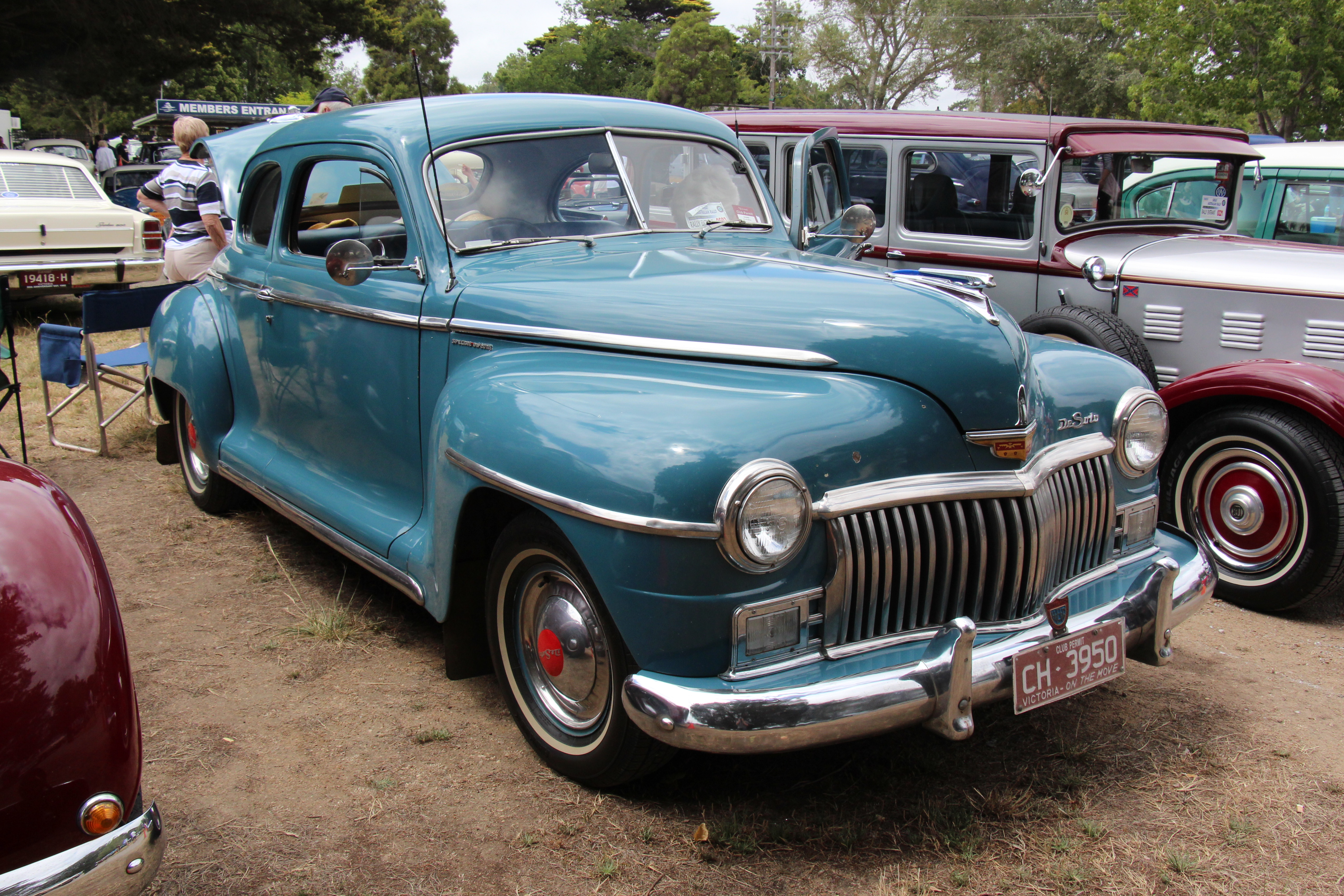
Plymouth P15
"...lt especially for for limblad who started in what p15 is crampere Yeah, it was"
The Plymouth P15 is an older car model made by Plymouth. It was built for everyday driving, like getting people to work and around town. In a podcast, it’s usually mentioned because it represents what cars were like during that time period.
The Plymouth P15 is a mid-1940s American passenger car model from Plymouth, known for being a common, practical family car of its era. It may come up in a podcast discussion because it’s tied to period history and the kinds of vehicles people drove or started with in that timeframe. If a guest mentions “P15” in a personal or historical context, it’s likely referencing this specific Plymouth model.
racing incident
"It's a pure racing incident. It's just unlucky [3696.2s] I think I put color pinto at fault 100% but that corner is rough and the way Russell was backing up that pack"
A “racing incident” is what officials call a crash or contact that happens during normal racing. It means it’s considered part of the fight on track, not someone intentionally causing trouble.
A “racing incident” is a stewarding classification used when two cars collide or make contact during competitive driving and it’s judged to be part of racing rather than deliberate wrongdoing. It usually implies neither driver is clearly at fault, even if the outcome is still unfortunate.
full lock
"He is really trying his best to not go in like you can see him [3718.4s] It's almost like this. Full lock. Yeah"
“Full lock” means the driver turned the steering wheel all the way to one side. It’s a way of saying the car is being steered very sharply, like in a tight corner or when trying to fit past someone.
“Full lock” means the steering is turned to its maximum angle, so the front wheels are angled as far as the car can physically steer. In racing, it’s often used to describe how aggressively a driver is turning in tight corners or when trying to squeeze past another car.
overtaking
"A lot of strategy taught today obviously with the lack of overtaking. What are you going for here? [3763.6s] I was going to give it to McLaren for the fails hold up George Russell that amounted to nothing and just cost"
“Overtaking” just means passing another car. At tracks like Monaco, it can be really hard to pass because the track is narrow and there’s not much room for mistakes.
“Overtaking” is the act of passing another car on track, typically by braking later, using a different line, or taking advantage of traction and tire grip. In Monaco specifically, overtaking is often limited by narrow streets and barriers, so strategy and timing become more important than pure speed.
Request an Explanation
Heard something you'd like explained? We'll add it to this episode.
Sign in to request explanations for terms you heard.
Want to learn more?
Browse our glossary for plain-English explanations of automotive terms, jargon, and concepts.
Help improve this episode
See something that's not quite right? Our annotations are AI-generated and can sometimes miss the mark. Click the flag icon on any annotation to suggest a correction.