
2027 Nissan Z Nismo Manual Review; Lambo Update
About this episode
The Smoking Tire kicks off with a Nissan Z Nismo manual review, then shifts to shop logistics and the real-world cost of suspension work—down to expensive Countach bushings and missing tie-rod ends. The conversation returns to the Z with track-focused manual updates: GT-R brake rotors, low-fuel starvation fixes, and weight savings. Pricing and competition come next, with comparisons to M2, Corvette, Supra, and Dark Horse, plus a debate over whether the Z can replace the R35 GT-R’s appeal.
Matt Farah reviews the much-anticipated manually-shifted 2027 Nissan Z Nismo; a preview of our thoughts on the new Aston Martin DB12S; a new Countach bill puts things in perspective; and we answer Patreon questions including:
- Nissan's recent comeback strategy
- Is my floor mat fetish strange?
- Does the Z Nismo replace the GT-R?
- Do you need to own a FWD car to truly experience it?
- Pre-flight checklist before getting into a new car
- How do we manage disappointment?
- Is a restomod Countach a good idea?
- A recent graduate wants advice
- First car: 2009 Civic Si or 2001 Prelude SH?
- Best non-automotive item in your car?
- Build a big engine out of small engines: go!
- 4-seat drop-top recommendation
- AMG E53 thoughts?
- Cars that are owned by nerds.
- Link the band to the car
- And more!
Recorded May 18, 2026
Mac tools
Go to https://mactools.org/tire to learn more and see if there’s an open route near you
Zoc Doc
Stop putting off those doctors appointments and go to https://Zocdoc.com/TIRE to find and instantly book a doctor you love today. Thanks Zocdoc for sponsoring this message
Factor
Head to https://Factormeals.com/tire50off and use code tire50off to get 50 percent off and free daily greens per box, with new subscription only, while supplies last until 09/27/2026. (See website for more details).
Quince
Refresh your everyday with luxury you'll actually use. Head to https://Quince.com/TIRE for free shipping on your order and 365-day returns. Now available in Canada, too.
ButcherBox
As an exclusive offer, new listeners can get their choice between free Sirloin Tips, Ground Beef or Chicken Wings in every box for LIFE, PLUS $20 off when you go to ButcherBox.com/tire
Enter to WIN our AMAZING 2025 Porsche 911 Turbo S!! https://www.dreamgiveaway.com/tickets/porsche?promo=SMOKINGTIRE
Promo Code Offer: Get 4X bonus tickets with any donation of $25 or more. With every donation you are helping benefit some wonderful veterans' and children's charities.
Podcast Promo Code: SMOKINGTIRE
Want your question answered? Want to watch the live stream, get ad-free podcasts, or exclusive podcasts? Join our Patreon: https://www.patreon.com/thesmokingtirepodcast
Use Off The Record! and ALWAYS fight your tickets! Enter code TST10 for a 10% discount on your first case on the Off The Record app, or go to http://www.offtherecord.com/TST.
Watch our car reviews: https://www.youtube.com/thesmokingtire
Tweet at us!
https://www.Twitter.com/thesmokingtire
https://www.Twitter.com/zackklapman
Instagram:
https://www.Instagram.com/thesmokingtire
https://www.Instagram.com/therealzackklapman
manual gearbox
"All right, folks, on this episode of the podcast, my review of the Nismo Z with a manual gearbox, plus our video up on YouTube."
A manual gearbox means you shift gears yourself using a clutch pedal. It often feels more engaging because you control when the engine revs and which gear you’re in.
A manual gearbox requires the driver to use a clutch and shift gears themselves. Compared with automatics, it usually gives more direct control over engine speed and can make the car feel more connected during spirited driving.

Porsche Taycan
"I was talking about if I could take the Taycan. I can't. I have to stop and charge in case you were wondering."
The Porsche Taycan is Porsche’s electric car. The point here is that when you drive an EV, you may need to stop to charge it during trips.
The Porsche Taycan is Porsche’s electric performance sedan, known for fast acceleration and a high-tech battery and powertrain. In this segment, the host mentions needing to stop and charge it, which highlights how EV road trips depend on charging stops.
extended warranty
"Maybe it will feel different. Maybe it'll feel tighter, but yay extended warranty. That's the first that and that some little valve in the air conditioning."
An extended warranty is extra coverage that helps pay for repairs after the normal warranty ends. In this story, it covered some specific problems the car had.
An extended warranty is coverage beyond the factory warranty period, paying for certain repairs after the original warranty expires. Here it’s mentioned as covering the bushing replacement and an air-conditioning-related issue.
bushings
"The bushings for a Coontosh are $13,000. How many bushings are there? So many. There's a million bushings."
Bushings are the “soft mounts” inside the suspension that help parts move smoothly and quietly. If they wear out, the car can feel off and the fix can be pricey. This segment highlights that the Countach uses a lot of them.
Bushings are rubber (or sometimes polyurethane/metal) isolators used in suspension links to allow controlled movement while reducing vibration and noise. On cars like the Lamborghini Countach, worn or hard-to-source bushings can be expensive because there are many of them and they’re often specific to that suspension layout. The hosts emphasize both the quantity and the difficulty of getting the right parts.
Heim joints
"But I think, are you talking about like the Heim joints? It's also, yeah. It's also the Heim joints."
Heim joints are metal ball-and-socket style joints used in some suspension setups. They help suspension parts move in a controlled way with less “rubber squish.” In this segment they’re part of the Countach’s complicated suspension linkage system.
Heim joints (also called rod ends) are spherical bearing joints used in suspension and steering linkages. Compared with rubber bushings, they typically allow more precise, adjustable geometry and can reduce compliance (flex) under load. The hosts mention Heim joints alongside bushings to describe the Countach’s mix of suspension connection types.
Penske
"They just put the shocks together. They just, no. They went out to, go ahead. Penske or Coney, I think, Coney."
They’re talking about sending the shocks out to a specialist shop. That’s common when parts need rebuilding instead of just swapping them. Penske is one of the names they throw out.
Penske is mentioned as a possible shop/service provider the shocks were sent to for service. In the context of this segment, the key point is that suspension components like shocks may be rebuilt by specialized businesses rather than handled entirely in-house. The hosts also suggest another similar-sounding option right after this.
Coney
"They went out to, go ahead. Penske or Coney, I think, Coney. Which everyone's in Florida."
They’re naming a shop that likely rebuilt or serviced the shocks. The exact company name is a bit uncertain in the transcript, but the idea is that specialists handle the job. Coney is one of the options they mention.
“Coney” is mentioned as the other possible shock-service provider besides Penske. The hosts’ wording suggests they’re recalling which company handled the shock work. The practical takeaway is that shock rebuilding is often outsourced to specialized services.
full suspension
"know, for the full suspension and the cleaning and reassembly of the hubs. Yeah. But it's like, [337.3s] it was like 23 hours of work."
“Full suspension” means working on the whole set of parts that connect the wheels to the car. Instead of fixing one broken piece, they’re refreshing everything so the car drives correctly.
“Full suspension” means rebuilding or refreshing the entire suspension system rather than just replacing one worn component. That typically includes parts like control arms, bushings, bearings, and related hardware, and it often requires careful reassembly and alignment afterward.
hubs
"for the full suspension and the cleaning and reassembly of the hubs. Yeah. But it's like, [337.3s] it was like 23 hours of work."
The hubs are the parts the wheel mounts to, and they’re closely related to the wheel bearings. If they’re cleaned and put back correctly, the wheel can spin smoothly and stay tight.
Hubs are the wheel-mounting components that support the wheel and typically contain or interface with wheel bearings. Cleaning and reassembly of hubs is common during suspension or brake-related rebuilds because bearing condition and fitment strongly affect wheel play and drivability.

Lamborghini Kuntosh
"...ewhere. What do you think will be done first, the Kuntosh or the Mercedes? Oh, the Mercedes probably. Proba..."
The Countach is a famous Lamborghini supercar known for its bold, unusual design. In the episode, it’s mentioned as part of a comparison about which car would be addressed first. The main point is that it’s an iconic, highly recognizable supercar.
The Lamborghini Countach is a legendary Italian supercar known for its dramatic styling and historical significance in the supercar world. The podcast references a comparison question about what would be done first—implying a discussion about future plans or projects involving these iconic cars. It’s brought up because the Countach is a recognizable benchmark for “classic” supercar status.
tie rods ends
"For Kuntosh. Yeah, we were missing three parts. We're missing some tie rods ends. [417.5s] They weren't very expensive."
Tie rod ends are small steering parts that help connect the steering wheel to the front wheels. If they’re worn or not installed yet, the steering won’t feel right and the tires can wear unevenly.
Tie rod ends are steering linkage components that connect the steering rack to the rest of the front suspension. If they’re worn or missing, the car can develop vague steering feel and uneven tire wear, and it can affect alignment.
inventory
"I'm not sure they inventoried every single like, you know, fastener and nut and bolts, [464.0s] because those are things that are easy to get."
In a shop context, “inventory” refers to cataloging which parts and fasteners are on hand before assembly. A thorough inventory helps prevent delays from missing hardware like nuts, bolts, or small brackets that can stall a rebuild.

Delorean DMC-12
"...cify birthday. It's a funny one. Happened with my DeLorean. I, I, I got it for what was going to be my 30th ..."
The DeLorean DMC-12 is a sports car with a very unusual look, including a stainless-steel body. In the episode, the speaker talks about buying one as a personal milestone gift. It’s mentioned because it has a strong identity and story behind it.
The DeLorean DMC-12 is a distinctive sports car best known for its stainless-steel body and its pop-culture fame. The podcast context is personal—someone says they got it for what would have been their 30th birthday—highlighting the car’s emotional and collector appeal. It’s discussed here more as a story and a memorable ownership moment than as a performance machine.
PTS
"And it's like, it's, it's a year and a [643.9s] month later, there's still a hole. I bet you this is some like PTS plus plus something. [651.2s] Expensive manufacturer thing. Wow. It's a long delay."
PTS usually means “custom paint to match a sample.” If you order a car with that kind of custom paint, it can take much longer to get built and delivered.
PTS (often used as “Paint To Sample”) refers to a custom paint program where a buyer specifies a color sample and the manufacturer matches it. The host implies this kind of custom paint can add significant delay to production and delivery.

Porsche Cayenne
"... like over, like over a year, I think, to get his Cayenne because of paint the sample. I mean, it was like ..."
The Porsche Cayenne is a Porsche SUV, meaning it’s a bigger vehicle meant for daily driving and carrying people or gear. People talk about it because it still aims to feel sporty, not just like a regular family SUV. In the episode, it’s mentioned because the exact car they wanted took extra time to get.
The Porsche Cayenne is a luxury SUV from Porsche, known for blending everyday usability with strong performance. It often comes up in discussions about Porsche ownership because it’s one of the brand’s most common ways to get into a Porsche without buying a sports car. In the podcast context, it’s mentioned as a specific vehicle someone had to wait for due to paint/sample availability.

Aston Martin Vantage S
"This car is like almost double the price of the Vantage S... Well there's quite a bit of parts sharing in the interior."
The Aston Martin Vantage S is a smaller, sportier Aston Martin. In this segment, the host says the inside is very similar to the DB12S because they share a lot of interior parts.
The Aston Martin Vantage S is a performance-focused Aston Martin coupe/GT that’s positioned below the larger DB12S in price and size. The host highlights that, despite the different models, there’s significant interior parts sharing, which is why the cabins can look and feel very similar.
Aston Martin DB12S
"The DB12S has more legroom, some things like that. Like there are things that do matter that are different."
The Aston Martin DB12S is a luxury, long-distance cruiser. Here, the host is basically saying it feels similar to a related Aston Martin, but the DB12S gives you a bit more room for your legs.
The Aston Martin DB12S is a grand tourer from Aston Martin with a focus on comfort and upscale interior packaging. In this segment, the host compares its cabin space and feel to another Aston Martin model, noting that the DB12S has more legroom and that some interior parts are shared across the lineup.
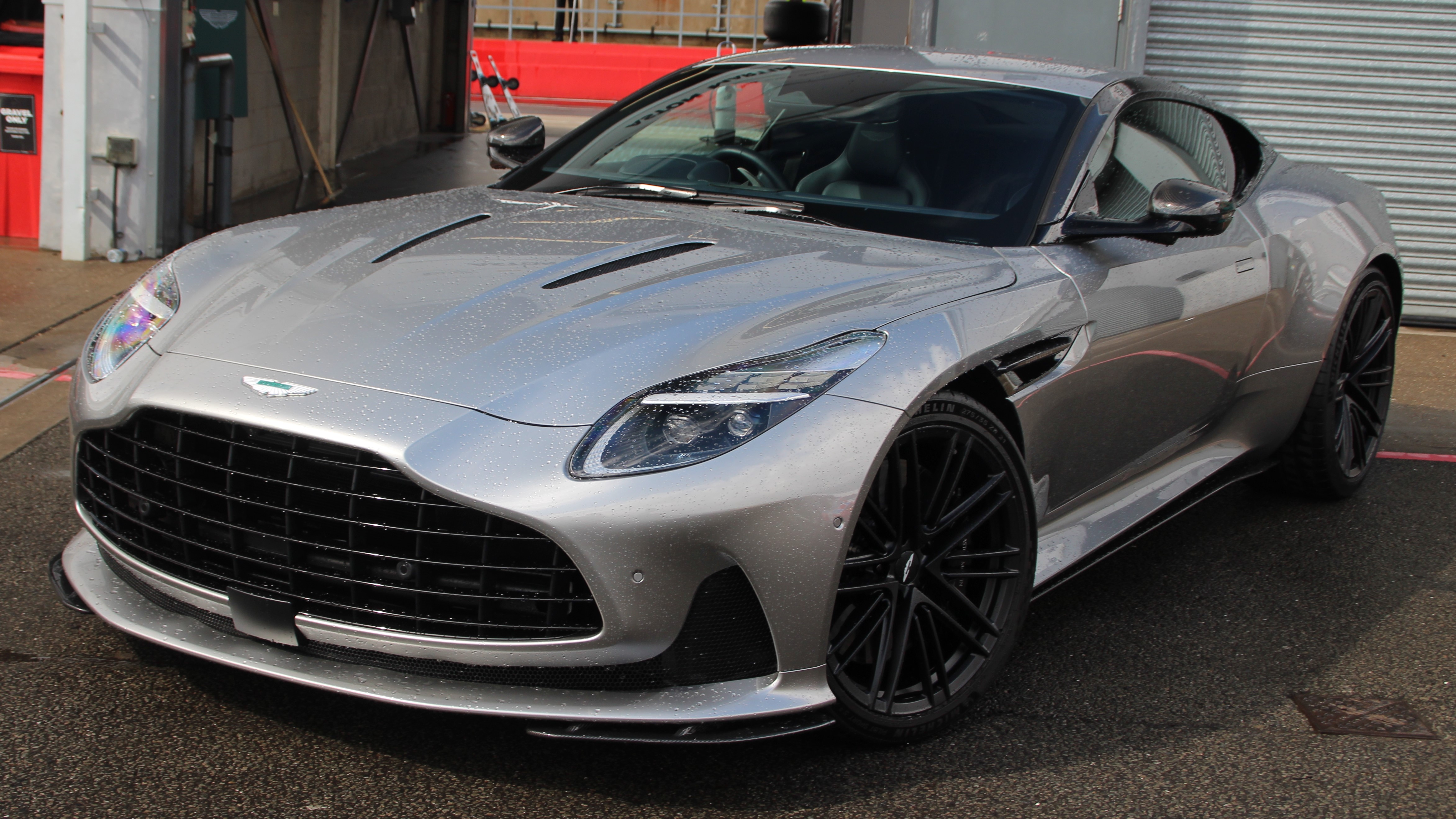
Aston Martin DB12 Volante
"I looked at that because the last, the last thing we had before that was the DB12 Volante."
The Aston Martin DB12 Volante is the convertible (drop-top) version of the DB12 family, aimed at buyers who want the same grand-touring vibe with open-air driving. The host uses it as a reference point, saying the coupe-like seating position and cabin look can feel similar unless you specifically want the drop-top experience.
manual embargo is off
"But I want to, I want to talk about the main story today, which is the Nismo Z manual embargo is off today this morning, right? 18th."
An embargo is basically a “don’t talk about it yet” rule for car reviews. When they say it’s off, it means reviewers are finally allowed to post their thoughts on that specific version.
An embargo is a media restriction that delays when reviewers and journalists are allowed to publish their impressions. When the host says the “Nismo Z manual embargo is off,” it means the review access window has opened for that specific variant, so coverage can go live.
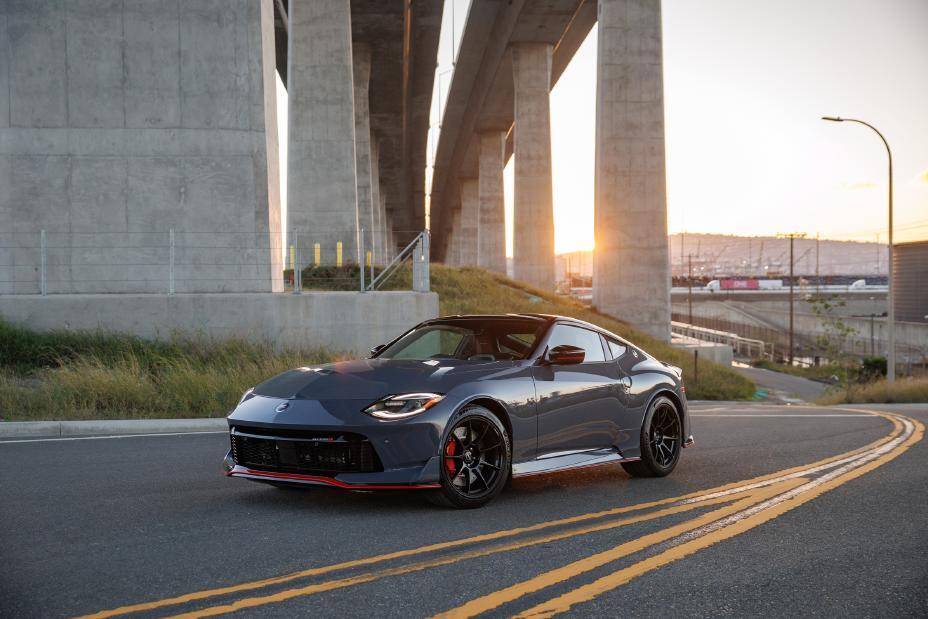
Nissan Z
"Better be the Nissan Z. When I drove this thing like two years ago, it was automatic only. But otherwise, honestly, like great car."
The Nissan Z is a sports car meant to feel fun and engaging to drive. In this segment, the host talks about the manual version and how Nissan updated it based on what drivers complained about.
The Nissan Z is a modern sports coupe built around a driver-focused layout, and this episode specifically discusses the manual version. The host contrasts it with the earlier automatic-only setup and then highlights the changes Nissan made after listening to feedback.
brake rotors from the R35 GTR
"They've got some new wheels. They've also done some other things. They've got brake rotors from the R35 GTR, which is 16 pounds of unsprung weight reduced."
They’re using brake rotors taken from the GT-R. Rotors are the parts the brake pads squeeze to slow the car down, and the GT-R parts are known for handling heat better.
The host says the Nissan Z uses brake rotors sourced from the R35 GT-R. Rotors are the friction surfaces that clamp down with the brake pads, and using a proven GT-R component can help with heat handling and braking consistency.

Nissan R35 Gtr
"...ome new wheels. They've got brake rotors from the R35 GTR, which is 16 pounds of unsprung weight reduced. T..."
The GT-R is Nissan’s high-performance sports car. In the episode, they talk about parts from the R35 GT-R, specifically brakes, and how lighter brake components can help the car respond better. It’s mentioned because it’s a performance-focused platform.
The Nissan GT-R (R35) is a high-performance sports car known for its advanced all-wheel-drive system and track-capable performance. The podcast mentions brake rotors from the R35 GT-R and highlights reduced unsprung weight, which can improve responsiveness. It’s referenced as a source of performance parts and engineering details.
unsprung weight
"They've got brake rotors from the R35 GTR, which is 16 pounds of unsprung weight reduced. The manual isn't exactly the same as the manual in the performance model."
Unsprung weight is the car’s weight that the suspension doesn’t directly support. If you reduce it, the wheels can move more easily over bumps, which helps the car stay planted.
Unsprung weight is mass not supported by the suspension—things like wheels, tires, and some brake components. Reducing unsprung weight helps the suspension react faster over bumps, improving grip and ride control, especially during hard driving.
shifter throw
"It's got a better shifter bushings and a slightly shorter shifter throw. The length of throw is a little bit reduced."
Shifter throw is how far the shifter moves to get into a gear. A shorter throw usually makes shifting feel faster and more direct.
Shifter throw is the distance the gear lever travels from one gear position to another. A shorter throw typically means quicker, more direct shifts and can improve driver confidence, especially in spirited driving or track use.
retuned the steering
"So and they've retuned the steering and the shocks have larger tubes for a bit better resistance to heat on track days."
Retuning steering means adjusting how the steering feels and responds. The idea is to make it easier to place the car accurately, including when driving hard.
Retuning steering means changing how the steering system responds—often via calibration of assist characteristics or control logic in power steering systems. The goal is usually to improve feel and consistency for the way the car is being driven, including on track.
fuel starvation issue
"Also, there was an issue apparently when on track days with the last year's cars, with you could get a fuel starvation issue when you had a low fuel in the tank. They've done some like baffling and reshaping of the fuel tank"
Fuel starvation is when the engine briefly doesn’t get enough fuel. On a track, the car’s movement can make the fuel slosh away from the pickup, so the fix is about keeping fuel available even when the tank is low.
Fuel starvation is when the engine doesn’t receive enough fuel momentarily, often due to fuel pickup uncovering during hard cornering or low fuel levels. On track, sustained lateral/longitudinal forces can expose the pickup, so manufacturers may add baffling or reshape components to keep fuel available.
baffling
"They've done some like baffling and reshaping of the fuel tank and doing some things like that. Not reshaping the fuel tank. That's not the right word."
Baffling is stuff inside the fuel tank that helps stop the fuel from sloshing around too much. That helps the engine keep getting fuel during hard driving.
Fuel tank baffling uses internal walls or partitions to control fuel movement. This reduces sloshing so the fuel pickup stays submerged during braking, cornering, and acceleration—helping prevent fuel starvation on track.
Button Willow
"They've developed the car to run a 30 minute track session at Button Willow in 95 degree heat. Not an easy thing."
Button Willow is a race track. The host mentions it to show the car was tested for tough conditions like hot weather and sustained driving.
Button Willow is a motorsports venue used here as a reference point for heat and track demands. The host is using it to emphasize that the car’s changes are meant to survive real track conditions, not just showroom driving.
pressure plate and clutch
"The shifter is a six millimeter shorter. Has unique throttle mapping and has a unique pressure plate and clutch, which is separate from the regular Z."
The clutch system includes parts that let you smoothly connect and disconnect the engine from the transmission. A pressure plate clamps everything together, and the host says this car uses a special clutch setup for this manual model.
A pressure plate is part of the clutch assembly that clamps the clutch disc to the flywheel. The host notes Nissan uses a unique pressure plate and clutch for this manual Z, separate from the regular Z, which usually indicates durability and engagement tuning for the performance/track use case.
throttle mapping
"The shifter is a six millimeter shorter. Has unique throttle mapping and has a unique pressure plate and clutch, which is separate from the regular Z."
Throttle mapping is how the car translates your gas pedal input into engine response. Different mapping can make the car feel more immediate or smoother when you press the pedal.
Throttle mapping is the calibration that determines how much engine response you get for a given throttle pedal input. Unique mapping can change how quickly the car responds, which affects drivability and how predictable it feels during aggressive driving.
gearbox mounts
"Reinforce gearbox mounts, bushings, and case. Minus 20 pounds on spring weight and from cooling."
Gearbox mounts hold the transmission to the car. If they’re reinforced, the transmission moves less under load, which can make the car feel tighter and help it last longer when driven hard.
Gearbox mounts are the structural supports that attach the transmission to the chassis. Reinforcing them and related bushings helps control drivetrain movement and vibration, which can improve shift feel and durability under track loads.
spring weight
"Minus 20 pounds on spring weight and from cooling. The gearbox itself, the manual gearbox, saves 30 kilos versus the automatic equipped car."
Spring weight means how heavy the suspension springs are. Lighter springs can help the suspension react faster when the tires hit bumps or track surface changes.
Spring weight here refers to mass associated with the suspension springs. Reducing it can help the suspension respond more quickly to bumps, improving traction and ride control, particularly during repeated track impacts.
sequential
"[1576.4s] and I was like, oh, is [1576.4s] that shifter going to be for a future sequential thing? And there was like a little eyebrow, but [1581.6s] they can't say yes, but yeah."
“Sequential” means the gears go in order—one step at a time—rather than using a classic gate-style shift pattern. They’re wondering if the shifter they saw could be for a future sequential transmission.
A sequential transmission lets you shift in a step-by-step order (like moving up/down through gears) rather than using a traditional H-pattern. In this segment, the hosts speculate whether a shifter shown at an event could be for a future sequential setup.
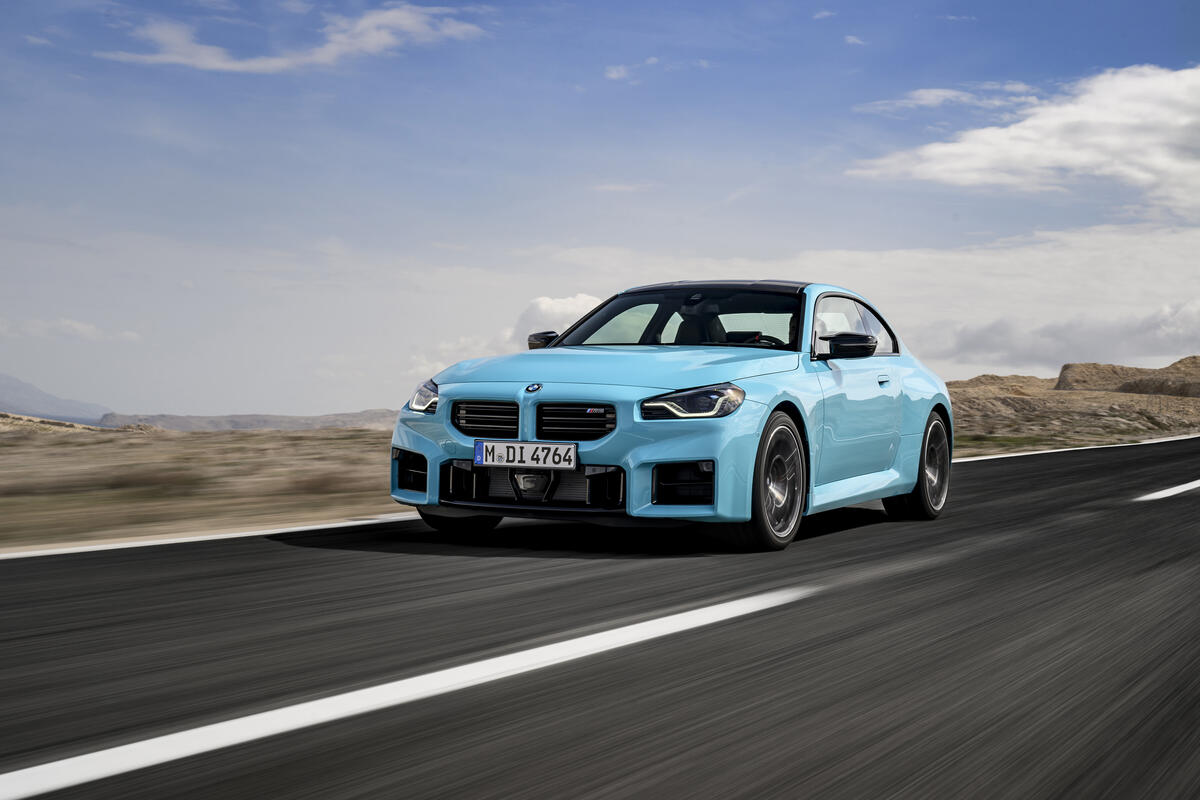
BMW M2
"Like the NISMO one really is. And the real competition is going to be [1601.7s] your M twos, right? Your, your, your basis of base Corvettes. Yeah. Really your basis of Corvettes."
The BMW M2 is a small BMW that’s built for driving hard—quick, agile, and fun. In this discussion, it’s the yardstick for whether the Nissan Z Nismo is actually competitive.
The BMW M2 is BMW’s compact, rear-drive performance coupe, known for delivering sharp steering and strong track capability in a smaller package. The hosts use it as a benchmark for how the Nissan Z Nismo should stack up in both lap-time performance and day-to-day road manners.

Chevrolet Corvette
"And the real competition is going to be [1601.7s] your M twos, right? Your, your, your basis of base Corvettes. Yeah. Really your basis of Corvettes."
The Chevrolet Corvette is a well-known American performance sports car. They’re using it as a comparison point for what buyers might choose instead of the Nissan Z Nismo.
The Chevrolet Corvette is a performance sports car line known for strong track performance and high power potential, especially in higher trims. Here, it’s mentioned as part of the “real competition” set for the Nissan Z Nismo based on how much performance you get for the money.

Ford Mustang Dark Horse
"Supra and Mustang. Yeah. Performance pack slash dark horse. Yeah. Really I mean, [1617.4s] for the money, for the NISMO, really dark horse. Now, the M two in the dark horse were faster on [1622.6s] the track, but I would argue neither was as good on the road."
The Ford Mustang Dark Horse is a more hardcore version of the Mustang. They’re talking about how it can be quicker on a track, but how that doesn’t always mean it’s as good for everyday driving.
The Ford Mustang Dark Horse is a high-performance Mustang variant built to compete with other track-capable muscle cars. The hosts compare its lap-time advantage to how well it translates to real-road feel, and they contrast it with the Nissan’s automatic/paddle-shifter approach.
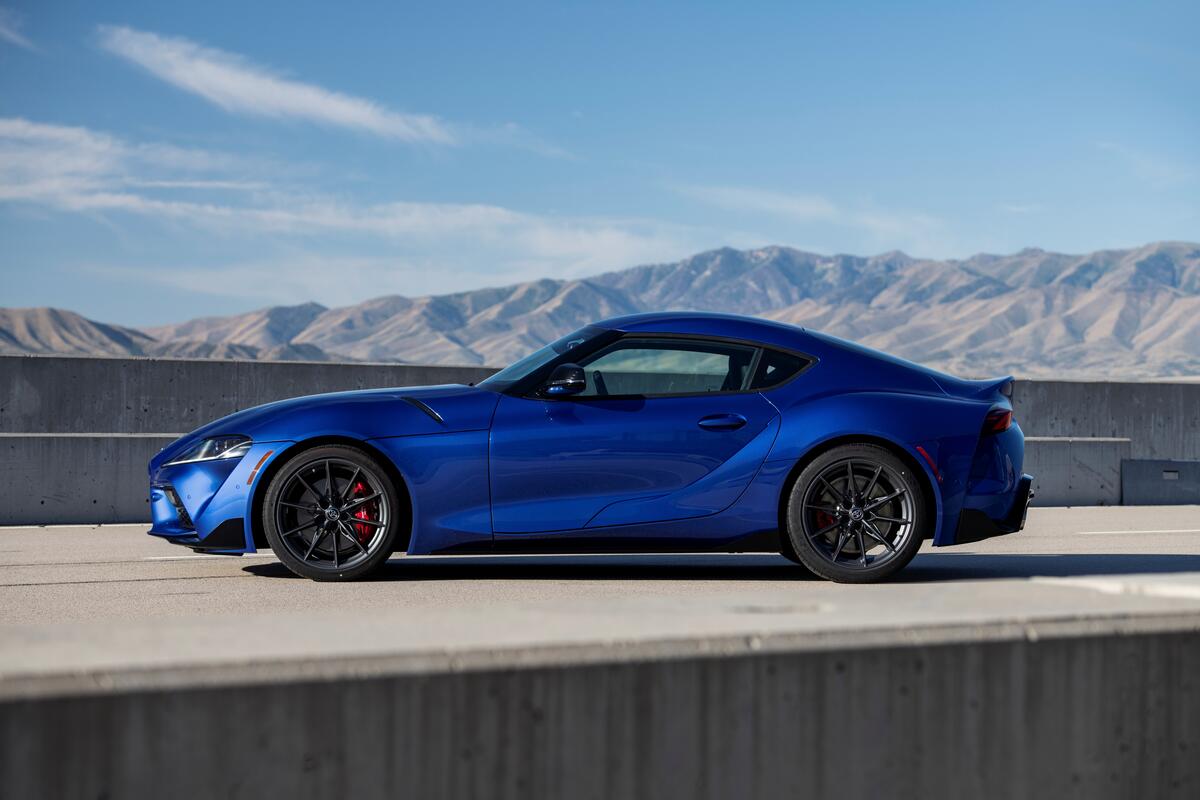
Toyota Supra
"Supra and Mustang. Yeah. Performance pack slash dark horse. Yeah. Really I mean, [1617.4s] for the money, for the NISMO, really dark horse. Now, the M two in the dark horse were faster on [1622.6s] the track, but I would argue neither was as good on the road."
The Toyota Supra is a sports car that’s famous for being quick, especially with power upgrades. Here they’re saying the Nissan Z Nismo may feel better in normal driving, even if the Supra can be made faster with modifications.
The Toyota Supra is a modern performance coupe that’s often praised for its straight-line speed and tunability. In this segment, the hosts argue the Nissan Z Nismo feels better on the road—steering, braking, and balance—while the Supra can be made faster in a straight line with tuning.
paddle shifters
"[1633.7s] you know, for an automatic. There's, oh, it's for lap times. Look, look, obviously, [1646.8s] if you care about lap times, you, you would buy a stick shift dark horse, not, not an automatic [1652.5s] Nissan."
Paddle shifters are the little levers on the steering wheel that let you change gears without a manual shifter. They’re debating whether that matters mainly for track lap times or for how the car feels on the road.
Paddle shifters are controls behind the steering wheel that command gear changes without using a clutch pedal or traditional shifter. The hosts discuss Nissan’s argument for paddle shifters in an automatic, framing it around lap times versus driving feel.
lap times
"[1633.7s] you know, for an automatic. There's, oh, it's for lap times. Look, look, obviously, [1646.8s] if you care about lap times, you, you would buy a stick shift dark horse, not, not an automatic [1652.5s] Nissan."
Lap times are the measured time it takes to complete one circuit of a track. The hosts use lap times as the metric that supports the case for certain transmission choices, while arguing that track speed doesn’t always equal better everyday road behavior.
low center of gravity
"It's got a low center gravity. It's got a short wheelbase. It's a tight package."
“Low center of gravity” means the car’s weight sits lower. That usually makes it feel steadier in turns and less “tippy” on a track.
A low center of gravity means the car’s mass is positioned closer to the ground. That typically reduces body roll and helps the car feel more stable and predictable during cornering, especially on track.
short wheelbase
"It's got a low center gravity. It's got a short wheelbase. It's a tight package."
Wheelbase is how far apart the front and rear wheels are. A shorter wheelbase often makes the car feel more nimble when you turn or change direction.
Wheelbase is the distance between the front and rear axles. A short wheelbase generally makes a car quicker to rotate and easier to change direction, which can improve agility in tight track sections.
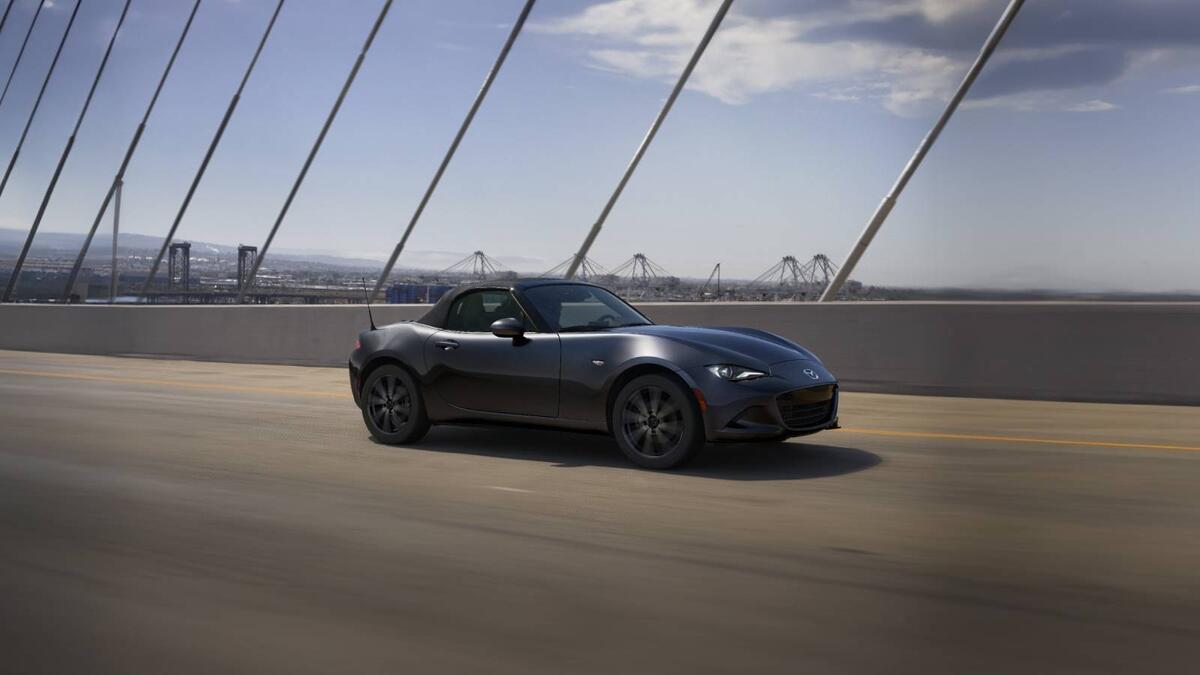
Mazda MX-5 / Miata
"...ts car that is like the, the right gap in between Miata or Boxster and like really fast stuff. Like Corve..."
The Miata is a small two-seat convertible made for driving enjoyment. It’s known for being light and easy to drive, so it feels quick even without being a huge, powerful car. The podcast mentions it as a baseline for where performance starts to get serious.
The Mazda MX-5 Miata is a lightweight, affordable two-seat roadster focused on fun handling and driver engagement. It’s frequently used as a benchmark for “small, nimble sports car” experiences. The podcast references it as a point on a performance spectrum between entry-level roadsters and much faster sports cars.
auto rev matching
"The shifter is nice. It has the auto rev matching. If you want it, you can turn it off."
Auto rev matching helps the engine speed match the gear you’re selecting when you downshift. It makes downshifts smoother and less jerky, especially when driving quickly.
Auto rev matching automatically adjusts engine RPM when you downshift so the engine speed matches the lower gear. That makes downshifts smoother, reduces driveline shock, and helps the car feel more refined and easier to drive hard.
traction control
"It has two levels of traction control and stability control, but not much."
Traction control helps prevent the wheels from spinning when you accelerate. It can be useful on track, but if it’s too aggressive it can make the car feel less “raw” to drive.
Traction control is a stability system that limits wheelspin by reducing engine power and/or applying brakes at the slipping wheels. On track, it can help you keep the car moving forward under acceleration, but too much intervention can dull the driving feel.
stability control
"It has two levels of traction control and stability control, but not much."
Stability control is designed to help the car stay under control if it starts to slide or steer away from where you’re aiming. It uses sensors and can brake individual wheels to help correct the situation.
Stability control (often called ESC) helps correct loss of steering control by detecting things like yaw and wheel slip. It can apply brakes and adjust engine output to help the car stay pointed where the driver intends.
drive modes
"You know, it has drive modes. It actually does have a regular and a sport throttle map. And then it has the two modes of traction control..."
Drive modes are buttons that change how the car behaves. In this case, the host likes that the car doesn’t overwhelm you with lots of different settings.
Drive modes are preset settings that change how the car responds—commonly throttle mapping, steering feel, and traction/stability system behavior. The host praises this Nissan for having fewer, simpler modes compared with some rivals.

Boxster
"Even in, in, in like my Boxster, like there is a, there is a button, but like all it does is like turn off a cylinder deactivation..."
The Porsche Boxster is mentioned as an example from the host’s own experience. They’re using it to show that some cars only change one thing with a button, rather than many different modes.
The Porsche Boxster is referenced as the host’s personal example of how some cars use a single button to change a specific engine behavior. In this segment, it’s used to contrast simple manual-car setups versus more complex mode logic in dual-clutch cars.
cylinder deactivation
"Even in, in, in like my Boxster, like there is a, there is a button, but like all it does is like turn off a cylinder deactivation and shit like that."
Cylinder deactivation is when the engine shuts off some cylinders to save fuel. Turning it off keeps the engine firing normally, which can feel smoother and more predictable when you’re driving hard.
Cylinder deactivation temporarily shuts off some cylinders to improve fuel economy under light-load conditions. Turning it off can make throttle response and engine sound more consistent, which some drivers prefer for spirited driving or track use.
PDK
"But if you have a PDK car, it does a whole bunch of other things. In the manual cars, it's like not."
PDK is Porsche’s automatic-style gearbox that shifts very fast using two clutches. The host is saying cars with PDK often have more configurable behavior than manual cars.
PDK is Porsche’s dual-clutch transmission. Because it can manage gear changes very quickly, PDK-equipped cars often coordinate more systems (like throttle response and shift behavior) across multiple drive modes than a typical manual.
rear grip
"And I found it actually, this car has a shitload of rear grip. Like, yes, you can slide it..."
“Rear grip” means how well the back tires can hold the road. If the rear has a lot of grip, the car feels more stable; if it doesn’t, it’s easier for the back end to slide.
“Rear grip” is how much traction the rear tires have before they start to slip. More rear grip usually means the car can put power down and stay stable longer, while less rear grip makes it easier to induce oversteer and slides.
BMW M2 CS
"Like the way the CS did. Yeah. Oh, the CS, no, the CS would immediately instantly go into a slide..."
The BMW M2 CS is a sharper, more performance-focused version of the M2. In this discussion, it’s mentioned because it’s easier to make it start sliding quickly compared with the Z.
The BMW M2 CS is a track-oriented variant of the M2, known for a more aggressive, responsive feel. Here it’s used as a comparison point because the hosts say the M2 CS would “immediately” go into a slide, unlike the Nissan Z Nismo’s more progressive breakaway.
SP Sport Max
"They're, they're the SP Sport Max, SP Sport something."
“SP Sport Max” is a specific type of Dunlop performance tire. Different tire models grip and handle differently, so the exact model helps explain the car’s feel.
“SP Sport Max” refers to Dunlop’s performance tire line. Tire model names matter because different tread patterns and rubber compounds change grip, steering response, and how easily the car breaks traction.
Dunlop
"This has the, these Dunlop tires, which I really like. They're, they're the SP Sport Max, SP Sport something."
Dunlop makes tires. The hosts are saying the tires on this car are a big part of why it feels grippy and fun.
Dunlop is a tire brand known for performance-oriented compounds and tread designs. In this segment, the hosts specifically connect the Nissan’s feel to the Dunlop tires, saying they’re the same style they liked on another car.

R32 GTR
"the steering wheel is a circle and it's the same diameter and thickness of the R32 GTR wheel, which is like bang on."
The R32 GT-R is a famous old-school Nissan sports car. They’re comparing steering wheel size and feel, saying this car’s wheel is “just right” the way that one is.
The Nissan Skyline GT-R R32 is a legendary Japanese performance car, and its steering wheel design is being used as a reference point. The hosts say the steering wheel on this car matches the R32 GT-R’s diameter and thickness, implying a similar steering feel and tactile feedback.
driver to seat to car to wheels
"but so much of what we're missing is fun connection from driver to seat to car to wheels."
They’re talking about how “connected” the car feels. It means you can feel what the tires are doing and how the car is responding to your inputs.
This phrase describes “connection,” meaning how well the car communicates what the tires are doing back to the driver through steering, pedals, and chassis response. It’s a subjective but important performance metric: two cars can have similar speed, yet feel very different in how directly they respond to inputs.
dampers
"The M2 CS had those really amazing dampers, but outside of that, it wasn't to me as like connected as I wanted."
Dampers are the shock absorbers that control how the suspension moves. The right setup helps the tires stay planted, which makes the car feel more controlled.
Dampers (shock absorbers) control how quickly the suspension compresses and rebounds. Better damper tuning can improve grip and steering response by keeping the tires in contact with the road over bumps and during cornering.

Ford Dark Horse
"The dark horse and the M2 lack a little bit... The dark horse is really fast and really sticky, but it's like big and like the steering is like super digital, right?"
The Ford Dark Horse is a very performance-focused Mustang. They’re saying it’s quick and grips well, but it doesn’t feel as connected or precise in steering as they’d like.
The Ford Dark Horse is a high-performance Mustang variant built for strong track capability. The hosts say it’s “really fast and really sticky,” but also that it lacks the same kind of steering feel/precision they want, comparing it to the Nissan’s balance and size/steering character.
steering is like super digital
"but it's like big and like the steering is like super digital, right?"
They mean the steering doesn’t feel smooth and natural—it feels more artificial or abrupt. It can make the car feel less communicative about what the tires are doing.
“Super digital” is a driver’s description of steering feel that feels overly on/off or artificially filtered, often associated with how modern steering systems translate input. It usually means less natural feedback through the wheel and a less progressive sense of tire slip and chassis movement.
precision control
"what you really have is I think best in class precision control, the front tires to the steering,"
They’re talking about how accurately the car follows your steering inputs. It’s about predictability—how well it stays composed when you’re pushing it.
“Precision control” here refers to how accurately the car responds to steering and front-tire grip—especially during turn-in and maintaining a line. The host ties it to front tire behavior and steering, implying a chassis setup that makes the car feel predictable at the limit.
rear control
"but it's still a good amount of rear control on [2032.5s] the pedal."
“Rear control” means how stable the car feels at the back when you accelerate or change inputs. If the rear has good control, it’s less likely to start spinning or sliding unexpectedly.
“Rear control” describes how well a car keeps the rear tires gripping and prevents unwanted rotation or sliding. It’s influenced by throttle input, traction control/ABS behavior, tire grip, and suspension setup.
lift-off oversteer
"Like a lift just like makes the nose just talk right in."
Lift-off oversteer is when you let off the gas and the car starts to rotate more than you expect, often making the rear feel like it wants to slide. It’s a balance/grip change caused by engine braking.
Lift-off oversteer is when you reduce throttle (lift off the gas) and the car’s balance shifts so the rear wants to step out. It happens because engine braking changes the load on the tires, which can reduce rear grip.
Akebono calipers
"These, it's acabono calipers with a, [2078.1s] with this R35 GTR vented rotor."
Akebono calipers are the parts that squeeze the brake pads against the rotors. Better calipers can help the brakes feel stronger and stay consistent when you brake hard more than once.
Akebono calipers are brake calipers made by Akebono, a well-known brake component supplier. Calipers clamp the brake pads onto the rotor, so the specific caliper design can affect braking feel, heat handling, and consistency under repeated hard stops.
R35 GTR vented rotor
"These, it's acabono calipers with a, [2078.1s] with this R35 GTR vented rotor. They lasted no problem."
A vented brake rotor has channels that help it cool down faster. That matters because brakes can get less effective when they overheat, especially with repeated hard stops.
An R35 GT-R vented rotor refers to a ventilated brake disc design associated with the Nissan GT-R (R35 generation). Venting helps move heat away from the rotor, which improves fade resistance during repeated hard braking.

Porsche Cayman
"...f all these metrics, my brain immediately went to Cayman. You know, that's because those I think used to b..."
The Cayman is a Porsche sports car with two seats and a hard roof. It’s built to feel sporty and handle well, and it’s often considered a close cousin to another Porsche roadster. In the episode, it’s mentioned because it matched the speaker’s criteria right away.
The Porsche Cayman is a mid-engine two-door sports car that shares much of its performance DNA with the Boxster, but with a fixed roof. It’s commonly mentioned when people talk about the “best” Porsche-style driving experience without going to the 911. The podcast notes the Cayman as the immediate mental pick after considering various metrics.
E-pass system
"It's like the steering. Yeah. Was the steering tuning, was that they tuned the E-pass system where they change hardware also? ... Well, no, they tuned the E-pass system."
“E-pass system” is the car’s electronic power steering setup. Retuning it can change how the steering feels and responds, which affects confidence when you’re driving hard.
“E-pass” here refers to Nissan’s electronic power steering system. The hosts discuss whether the Nismo retunes it, which matters because steering feel (how quickly and smoothly the car responds) can change even without swapping the entire steering hardware.
shocks
"Well, no, they tuned the E-pass system. The hardware they changed was the shocks, which are bigger tubes."
Shocks are what help the car absorb bumps and stay stable when you’re turning hard. Changing them can make the ride and handling feel more controlled, especially on track or aggressive drives.
Shocks (dampers) control how the suspension moves and settles after bumps or during hard cornering. The hosts say Nissan changed the shocks for the Nismo—described as “bigger tubes”—which typically improves damping control and steering/suspension composure when pushing the car hard.
programming
"Well, I mean, as we know from 911 ST, what can be done in a year with just programming is remarkable."
Here, “programming” means changing the car’s computer settings. Even without new hardware, software updates can make the car feel different and better.
In this context, programming refers to updating vehicle control software (tuning how systems behave) rather than changing physical parts. The host uses the example of Porsche 911 ST to argue that software refinement over time can noticeably improve drivability/feel.

Aston Martin S
"the shit out of it. See ever, every Aston Martin S. Yeah, very true. So I really dug it."
They’re comparing this car to an Aston Martin model to talk about how the driving feel compares. In this part, the focus is mostly on the seat and how it behaves under hard driving.
The Aston Martin S is being referenced as a comparison point in the conversation. The key listener takeaway is that the hosts are discussing how similar-feeling seats and ergonomics can be across different performance cars.
Recaro seat
"Other people in the comments on the YouTube videos say that they don't like that the recaro seat seemed like it was moving in the video."
Recaro makes performance car seats. The host is saying the seat may look like it shifts a bit on camera, but that can be by design to help keep you supported when the car is pulling hard.
Recaro is a performance seat brand known for supportive bolsters and motorsport-inspired designs. Here, the host is arguing that the seat’s apparent movement in video is intentional compliance to better manage high lateral acceleration (high G loads).
high G loads
"I am certain that if it does, it's like, at first it's not a bucket, it's a power seat. I am certain that if it is quote moving, it's because it's designed to have a certain amount of give under high G loads."
“High G loads” means the car is pulling so hard that your body feels much heavier than normal. The host is saying the seat is designed to handle that kind of stress without feeling unsafe.
“G loads” describe how many times the force of gravity the driver experiences during cornering, braking, or acceleration. Under high G loads, seats and their mounting systems often use controlled flex or compliance so the driver stays supported without feeling unstable.
bucket
"at first it's not a bucket, it's a power seat. I am certain that if it is quote moving, it's because it's designed to have a certain amount of give under high G loads."
A bucket seat is a snug, supportive seat that keeps you from sliding around. The host is saying this one isn’t a full-on race bucket seat.
A “bucket” seat is a deep, contoured seat that wraps around the driver to hold them in place during aggressive driving. The host contrasts a bucket-style race seat with the seat in this car, which he describes as having more street-car comfort and compliance.

Mitsubishi Evo Mitsubishi
"structurally sound. I mean, it is not a race car. It's a street car seat. It has that recaro high back that you've seen in various other performance cars from EVO, Mitsubishi EVOs to the European Focus RS. Like it's a seat everybody's like seen before. Like in my opinion,"
The Lancer Evolution is a fast Mitsubishi sedan designed for strong grip, especially when driving hard. In the episode, they say it’s not meant to be a pure race car, but a street car that still feels sporty. They also mention the supportive seats that come in these cars.
The Mitsubishi Lancer Evolution (Evo) is a performance sedan known for all-wheel-drive traction and rally-inspired engineering. The podcast describes it as structurally sound and not a race car, emphasizing it as a street car with supportive seats like Recaro high-back designs. It’s discussed as a practical performance machine that still feels “real” for daily use.

Ford Focus RS
"to the European Focus RS. Like it's a seat everybody's like seen before."
They’re comparing the seat style to what you’d find in a Ford Focus RS. The takeaway is that the seat shape is a familiar performance-car design.
The Ford Focus RS is mentioned as another car where the host has seen a similar high-back performance seat design. This supports the idea that the seat’s shape is a known, proven layout in hot hatches and performance trims.

Porsche 911 GT3
"It's not, it's not a fucking GT3, you know, bucket carbon seat. But it has pretty deep bolsters."
They bring up the Porsche 911 GT3 because it’s known for very race-like seats. The host is saying this car’s seat is less extreme than a GT3 bucket seat, but still holds you well.
The Porsche 911 GT3 is used as a benchmark for a true track-focused bucket seat. The host is saying the seat in this car isn’t as extreme as a GT3 carbon bucket-style setup, but it still has deep bolsters for support.

Toyota Corolla
"... I'm sitting in traffic and I'm behind the Toyota Corolla, the loud exhaust on it and rims. And across the ..."
The Corolla is a very common Toyota compact car that many people use for everyday driving. In the episode, someone notices a Corolla that sounds louder than normal and has modified wheels. It’s an example of a regular car being customized.
The Toyota Corolla is a mainstream compact car known for practicality and high-volume ownership. In the podcast, it’s brought up in a traffic scene where the speaker notices a Corolla with a loud exhaust and aftermarket-looking wheels. That kind of mention highlights how even common cars can be modified to stand out.

Acura Tsx
"...this story, like yesterday I saw a guy driving an Acura TSX loud lowered. Yeah. Kind of beat up and he had a ..."
The TSX is an Acura sedan, meaning it’s a normal car for daily driving with a sportier feel than some basic models. In the episode, they talk about seeing one that was lowered and sounded loud. It’s mentioned because it stood out visually and audibly.
The Acura TSX is a compact-to-midsize sedan from Acura, typically known for a balanced mix of comfort and performance. The podcast mentions seeing a loud, lowered TSX that looked beat up, which points to how owners can personalize these cars. It’s brought up as an example of what you might spot on the road and how TSX cars can be modified.
trail braking
"you [3094.2s] know, perfect trail braking and whatnot, she avoided a larger accident. That's a good point."
Trail braking means you’re still lightly braking while you start turning into a corner. It helps the car grip and turn in more smoothly, especially when conditions are tricky.
Trail braking is a driving technique where you keep some brake pressure applied while turning into a corner, instead of releasing the brakes completely before the turn. The goal is to help the car rotate and settle the chassis for better grip and control through the entry phase.

Jaguar XJ12
"there are some funny cars that are [3136.0s] around here. There's a, I was walking the dog and there's a Jaguar, I think X, like an old XJ12 [3144.1s] and the hood was popped just a little bit like this person."
The Jaguar XJ12 is an older Jaguar that’s famous for having a big V12 engine. If the hood is popped, it’s often because something needs checking or fiddling with.
The Jaguar XJ12 is a classic Jaguar model known for its V12 engine and grand-touring character. When someone mentions an “old XJ12” with the hood popped, it’s usually a nod to the car’s age and the kind of mechanical attention older V12 Jaguars can require.

Jaguar XJC
"they had, it was a Jag XJC. You know, like those, the, the, do you know what XJC is? [3227.8s] Before the XJS, it was Jaguar's Coupe and it was, it's Harry, Harry Metcalf's got one top left."
The Jaguar XJC is a Jaguar XJ in a two-door coupe form. It’s known for looking especially sleek—more like a classic grand tourer than a normal sedan.
The Jaguar XJC is a two-door, coupe-style version of the XJ platform, created as a more stylish alternative to the standard four-door sedan. In the transcript, it’s described as a “pillarless” two-door XJ, which highlights its distinctive body shape and rarity.

Jaguar Xjs
"...se, the, the, do you know what XJC is? Before the XJS, it was Jaguar's Coupe and it was, it's Harry, Ha..."
The XJ-S is a Jaguar coupe, meaning it’s a two-door car designed for comfortable, longer-distance driving. In the episode, they mention related Jaguar model names to explain the car’s history. The focus is on how the model line fits together.
The Jaguar XJ-S is a grand touring-style Jaguar coupe known for its classic styling and V12-era heritage in some versions. The podcast context references Jaguar model history and naming, including “XJC” and “before the XJS.” It’s discussed here as part of understanding the lineage of Jaguar’s coupes.
Landau roof
"one of these and it's on like a BBS looking wheels, which is pretty cool, but it has a landow roof. Oh no. Why? Who, who thought that was a good idea? ... And then like they kept, but people just keep it going. They keep driving around. And now we see, sometimes you see newer cars that have had them added, like aftermarket landow, you know, just carpet stapled onto like a 2012 Cadillac."
A Landau roof is a decorative roof covering that gives a car a more classic, upscale look. Here, they’re talking about people adding it after the fact, and they’re not impressed with how some of those conversions are done.
A Landau roof is a vinyl or fabric-style roof treatment—often with a “two-tone” look—that was popular on luxury cars. In this segment, the hosts criticize modern “aftermarket Landau” conversions where the material may be poorly fitted (even described as carpet stapled on), which can affect appearance and how well the roof is sealed.
aftermarket
"And now we see, sometimes you see newer cars that have had them added, like aftermarket landow, you know, just carpet stapled onto like a 2012 Cadillac."
Aftermarket just means something was added or replaced after the car left the factory. In this case, it’s about adding a Landau-style roof later instead of it being built that way.
Aftermarket refers to parts or modifications made by companies other than the original manufacturer. Here, “aftermarket Landau” means the roof treatment was added after the car was built, which can range from high-quality fabrication to cheap, poorly sealed installs.
automatic
"Yeah. He was tired of dealing with it. It's got a 57 and like a GM, you know, six speed auto in it. But Harry, Harry Metcalf, like hot rod in his 12 cylinder one, and it's got a manual."
An automatic transmission shifts gears by itself. They’re comparing cars with automatic setups versus a manual setup, which affects how the car drives.
An automatic transmission is a gearbox that shifts gears without the driver using a clutch pedal. The hosts contrast an LS with a GM six-speed automatic in one context, and then mention a 12-cylinder Jaguar hot-rod build with a manual, highlighting how the swap choices change the driving feel.
powertrain
"we have a series, I want to say it's a series one, XJ series one, uh, downstairs. That's a fucking, that Galpin built that's got a full Corvette powertrain in it with an automatic GM automatic."
A powertrain is the big mechanical stuff that makes the car move—engine and the drivetrain parts. They’re saying this Jaguar has a Corvette drivetrain installed, which is a serious modification.
A powertrain is the car’s main drivetrain hardware—typically the engine plus the transmission and related components that deliver power to the wheels. The hosts say the Galpin-built Jaguar XJ Series 1 has a full Corvette powertrain, meaning the swap is more than cosmetic; it’s a major mechanical change.
daily
"And actually, I think it would work perfectly if you drove it every day. It's the kind of car that would just be like fine if you just use it."
When they say “daily,” they mean a car you drive every day. They’re saying that if you use it regularly (and especially if it’s an EV/hybrid), you can avoid some wear that happens when you only do short trips.
“Daily” here means a car intended for frequent everyday commuting rather than occasional weekend use. The hosts connect daily driving to reduced engine wear concerns—especially when short trips don’t fully warm the engine up.
EV chargers
"There's a charger downstairs too. You have two EV chargers. This is the prime ones outside."
EV chargers are the devices you plug into to charge an electric car’s battery. They’re saying they’ve got chargers available, which makes owning an EV easier day-to-day.
EV chargers are equipment that supplies electricity to recharge an electric vehicle’s battery. The hosts mention having two EV chargers available, framing it as a practical advantage for using an EV as a daily driver.
V12
"XJ C12, V12 manual, sets a new auction record. When was this from? November last year."
A V12 is a type of engine with 12 cylinders. It usually feels smooth and sounds special, and here they’re pointing out that this Jaguar has a V12 plus a manual transmission.
A V12 is an engine with twelve cylinders arranged in a “V” shape, typically producing smooth power and a distinctive sound. In this segment, the hosts specifically tie the V12 to the Jaguar XJ C12 and emphasize it being paired with a manual gearbox.
wiring
"I worry about like the wiring of, because you had, you know, the wiring in the doors or the wiring under the dash. Like, is that going to go out for sure? No, the engine might keep going."
Wiring is the car’s electrical “cables and connections.” If wiring in areas like the doors or under the dashboard goes bad, you can get weird problems even if the engine itself still runs.
In modern cars, wiring is the network of electrical circuits that connects sensors, control modules, and actuators. The host is specifically worried about wiring in places like the doors and under the dash, because electrical faults can be intermittent and expensive to diagnose.
JDM
"With that kind of stance and JDM. There's a dash of second gen Camaro here too."
JDM means “Japanese Domestic Market.” It’s a way people describe cars that have a Japanese-performance look or are tied to Japan’s car scene.
JDM stands for Japanese Domestic Market, referring to cars and parts designed for Japan’s market. In this context, the host uses it to describe the styling cues and vibe associated with Japanese performance culture.
Nismo
"Given your recent Z experience, can you elaborate your thoughts on the brand strategy, trying to stage their comeback with products like Xterra, Nismo, Armada and Skyline? Do you think it will work? I think Nissan is in an interesting position right now."
NISMO is Nissan’s performance brand. When the host says “Nismo Z,” they mean a Nissan Z that’s been tuned and developed for driving excitement, not just regular transportation.
NISMO is Nissan’s in-house performance brand, associated with motorsport development and higher-performance versions of Nissan models. In this segment, “Nismo Z” is treated as a key enthusiast product that helps Nissan’s comeback narrative.
Nissan Skyline
"Given your recent Z experience, can you elaborate your thoughts on the brand strategy, trying to stage their comeback with products like Xterra, Nismo, Armada and Skyline? Do you think it will work?"
The Nissan Skyline is a famous Nissan model name, especially among car fans. The host brings it up as an example of the kind of product lineup Nissan could use to attract enthusiasts again.
The Nissan Skyline is a long-running Japanese model name with a strong performance and motorsports reputation. In this episode it’s mentioned as part of Nissan’s strategy—using recognizable, enthusiast-friendly nameplates alongside other products to help drive a comeback.
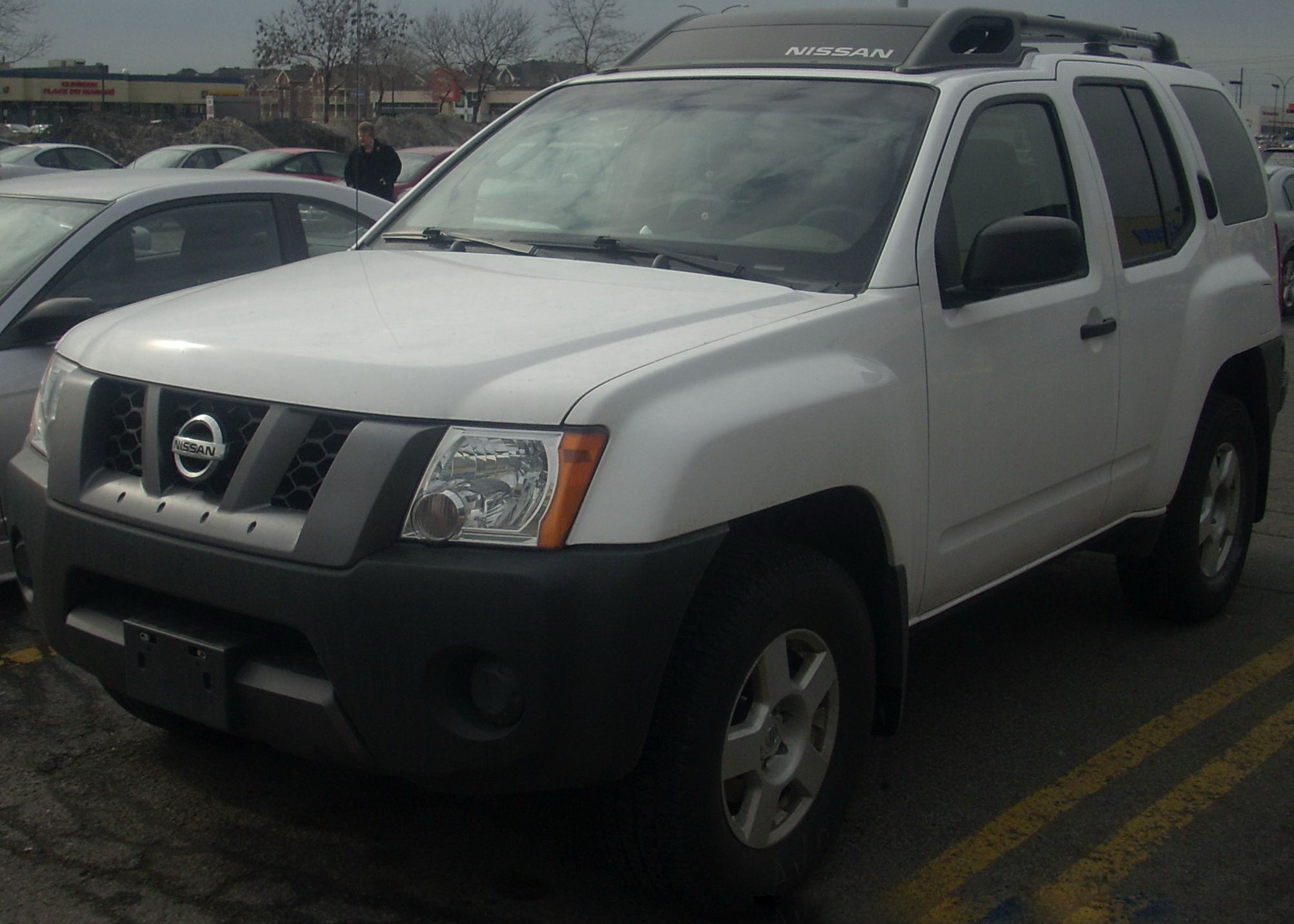
Nissan XTerra
"Given your recent Z experience, can you elaborate your thoughts on the brand strategy, trying to stage their comeback with products like Xterra, Nismo, Armada and Skyline? Do you think it will work?"
The Nissan Xterra is an SUV that’s known for being more rugged and off-road friendly than many mainstream SUVs. In this episode it’s brought up as one of the models Nissan is using to win buyers back.
The Nissan Xterra is a rugged, off-road-oriented SUV model that the host cites as part of Nissan’s product lineup. Here it’s mentioned in the context of Nissan trying to “stage their comeback” with a mix of models aimed at different buyer needs.
EVs
"I think Nissan is in an interesting position right now. Uh, they didn't lean too hard into EVs and it's funny that like the world is moving away from EVs right now at the same time, gas is getting like $7 a gallon here in California."
EVs are electric cars that run on electricity from a battery. The host is saying Nissan didn’t focus heavily on EVs, and that timing matters given what people are thinking about right now.
EVs (electric vehicles) are cars powered primarily by electricity stored in a battery rather than by gasoline combustion. The host argues Nissan’s strategy didn’t lean “too hard” into EVs, and ties that to a moment when consumer attention and fuel costs are shifting.

Nissan Armada
"I think, I think to me the Nismo Z is an immensely desirable product. I got picked up from the airport in the new Armada. Um, not bad. Honestly, pretty nice looking, uh, pretty nice riding vehicle. Like did not hate it. Would, uh, 10 out of 10 would take one on a road trip."
The Nissan Armada is a big family SUV. The host says they were driven in the new one and ended up liking it more than expected, especially for a longer trip.
The Nissan Armada is a full-size SUV, and in this segment the host specifically mentions being picked up from the airport in the new Armada. They describe it as comfortable enough for a road trip, which frames the Armada as a practical part of Nissan’s current lineup.

Cadillac Escalade
"... like, it's a trim package, whatever. I mean, the Escalade V is also very silly. And if it didn't have the e..."
The Escalade is a big luxury SUV from Cadillac. In the episode, they mention the Escalade V, which is a more extreme version of the SUV. They’re talking about how the car can come in different trims and packages.
The Cadillac Escalade is a large luxury SUV known for high-end features and a commanding presence. The podcast references the Escalade V as “silly,” pointing to how extreme performance or styling can be for a vehicle of this size. It also mentions trim/package context, suggesting the discussion is about how different versions of the Escalade are equipped.
all-weather ones
"I, I, I like that the tight gun has the all well, all weather ones, the rubber ones, but like, no, my, my, my cars have the factory floor mats in them."
All-weather floor mats are made to deal with wet or dirty conditions. They’re typically tougher than regular carpet mats so they protect your car’s floor.
“All-weather” floor mats are designed to handle rain, snow, and mud without getting ruined as easily as typical carpet mats. They’re usually made from rubber or similar materials and are shaped to trap debris and protect the carpet underneath.
Bentley
"In fact, I mean, for a year we committed to using the Bentley fucking sheepskin ones and they held up better than I thought."
Bentley is referenced here in the context of “Bentley sheepskin” floor mats, implying a premium, luxury-branded accessory. The discussion is about how well those sheepskin mats held up in real use.
Weathertech
"And sometimes that's been with like a weather tech or something. Yeah. Shout out to Weathertech. They own everything. They do. But they make a nice floor mat."
WeatherTech makes aftermarket floor mats/liners that are built to protect your car’s interior. The hosts are saying they’re a good option when you want something durable.
WeatherTech is an aftermarket brand known for molded floor liners and all-weather mats. In this segment, it’s praised as a practical upgrade option when replacing worn floor mats on used cars.
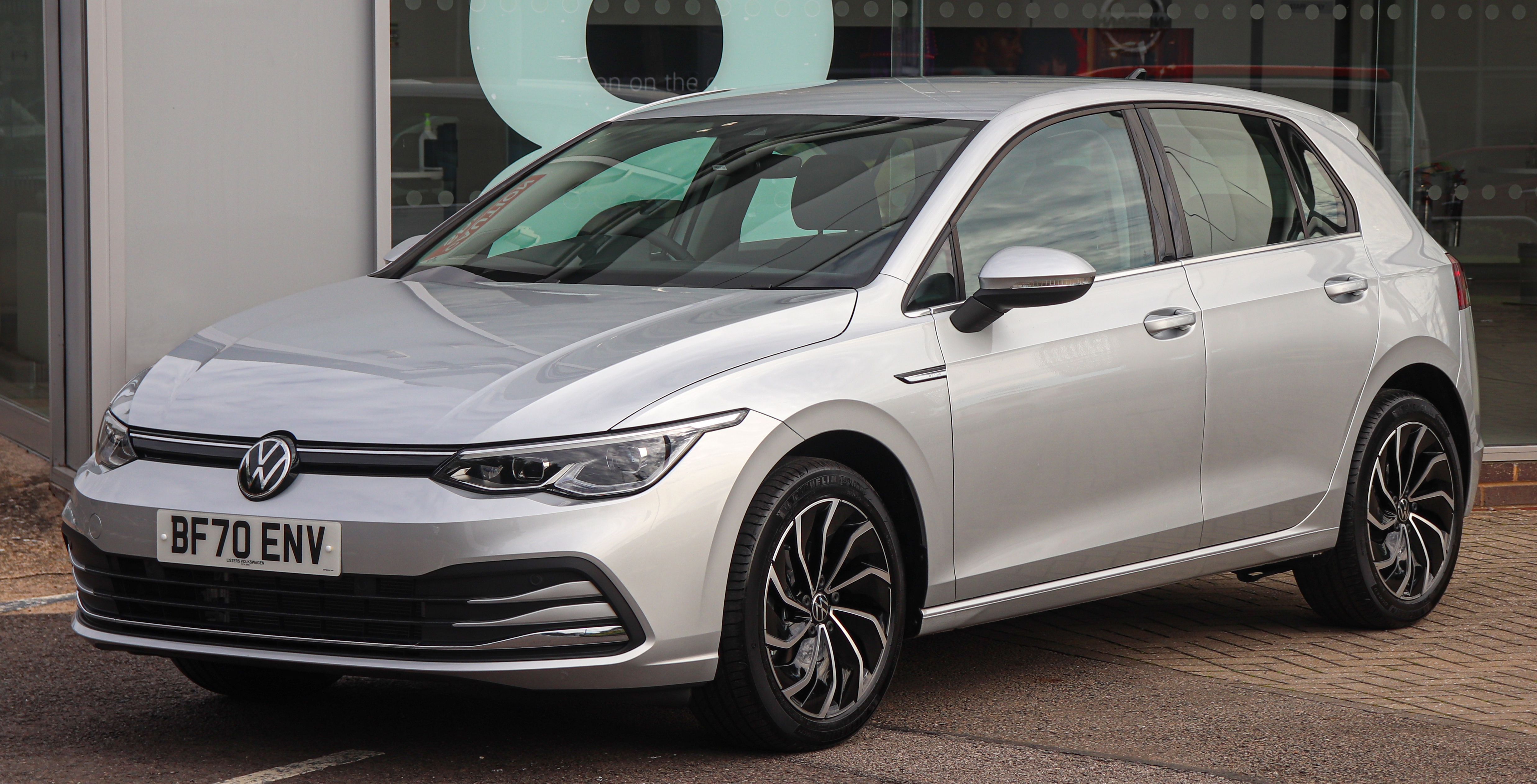
Volkswagen Gti
"... Should I try a good front-wheel drive car like a GTI or Civic Si so I can get the gist or can I get th..."
The Golf is a compact car that’s common and easy to live with. In the episode, they’re talking about trying a front-wheel-drive performance version to understand how it feels to drive. The Golf is used as a starting point for that comparison.
The Volkswagen Golf is a compact car platform known for being practical while also supporting performance variants. The podcast context asks whether trying a front-wheel-drive car like a GTI or Civic Si would help someone understand the “gist,” implying a comparison about driving feel and traction. It’s mentioned as a baseline for how different drivetrains can change the experience.

Ford Fiesta St
"... while. Sure. Okay. If you can find a really nice Fiesta ST, I mean a really nice one, you can probably go mo..."
The Fiesta is a small Ford car. In the episode, they mention the Fiesta ST, which is the sportier version, and say that if you find a good one it can be a great choice. The focus is on finding a well-kept example.
The Ford Fiesta is a small car that’s often associated with fun, tossable driving, especially in performance trims. The podcast mentions finding a really nice Fiesta ST, suggesting interest in the more sporty version. It’s brought up as an example of a compact that can deliver a lot of driving enjoyment for the right condition.
Request an Explanation
Heard something you'd like explained? We'll add it to this episode.
Sign in to request explanations for terms you heard.
Want to learn more?
Browse our glossary for plain-English explanations of automotive terms, jargon, and concepts.
Help improve this episode
See something that's not quite right? Our annotations are AI-generated and can sometimes miss the mark. Click the flag icon on any annotation to suggest a correction.
1 community members have helped improve this episode.