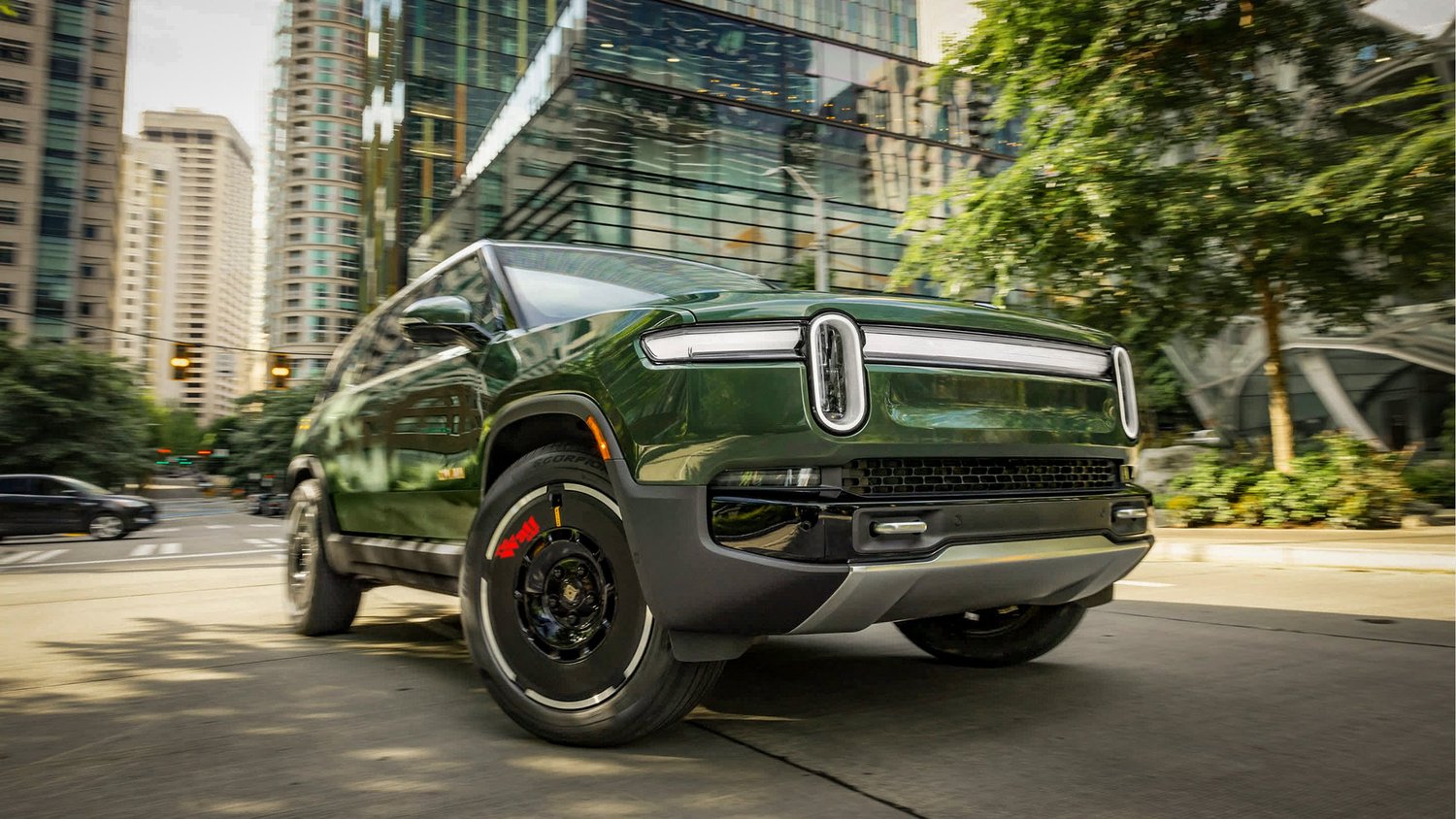
The latest episode dives into the evolving landscape of electric vehicles (EVs) and the challenges posed by regulatory changes in the EU. Hosts Phil and Nice discuss the potential impacts of new emissions mandates, the future of internal combustion engines, and the ongoing debate about hydrogen as a viable alternative. They also explore the role of dealerships in the EV transition and how consumer experiences with maintenance could influence future adoption. The conversation touches on motorsports, the practicality of EVs in various racing categories, and the psychological barriers to embracing electric technology.
What does the future hold in store for electric vehicles in dealerships, in motorsports, and beyond? With the world relaxing its grip on EV mandates, is an electrified future imminent, or pie in the sky? We gaze into our irrefutable crystal ball to see what the world may look like in 2035…and even 2075. Join us on this week’s podcast, where we take a wild ride from present day to the distant future.
"they proposed banning internal combustion engines for at least consumer vehicles. Yeah, light, light duty vehicles."
An internal combustion engine is a type of engine that works by burning fuel to create power. This is the kind of engine most cars use to run.
Internal combustion engines (ICE) are engines that generate power by burning fuel, typically gasoline or diesel, inside a combustion chamber. They are the most common type of engine used in vehicles today, powering everything from cars to trucks.
"...maybe that was the so-called EV mandate in America was it was just making emissions so difficult. And that was why Stellantis got rid of the V8s..."
An EV mandate is a rule that says car companies must sell a certain number of electric cars. It's meant to help the environment by reducing pollution from gas-powered cars.
The EV mandate refers to regulations that require a certain percentage of vehicles sold by manufacturers to be electric vehicles (EVs). This is part of broader efforts to reduce emissions and combat climate change.
"...that was why Stellantis got rid of the V8s and well, they're basically making it so where electrification would be the easiest path to compliance."
Stellantis is a car company that makes many different brands of cars, like Jeep and Dodge. It was created when two big car companies merged together.
Stellantis is a multinational automotive manufacturing corporation formed from the merger of Fiat Chrysler Automobiles and PSA Group. The company produces a wide range of vehicles under various brands, including Jeep, Dodge, and Peugeot.
"...that was why Stellantis got rid of the V8s and well, they're basically making it so where electrification would be the easiest path to compliance."
A V8 is a type of car engine that has eight cylinders. It's popular in powerful cars because it can produce a lot of speed and strength.
A V8 is an eight-cylinder engine configuration where the cylinders are arranged in a V shape. V8 engines are known for their power and performance, commonly used in sports and luxury vehicles.
"Because look at EVs, the infrastructure was not there."
Infrastructure means the buildings and systems that support transportation, like roads and gas stations. For new types of cars, we need new places to fill them up.
Infrastructure refers to the physical systems and structures needed for the operation of a society, including roads, bridges, and charging stations for electric vehicles or hydrogen refueling stations for hydrogen vehicles.
"But with hydrogen, it's never increased in its infrastructure, even though you've got companies like Toyota that have been hyping it for decades."
Hydrogen is a type of fuel that can be used to power cars. When it burns, it only produces water, making it a clean option compared to gasoline or diesel.
Hydrogen is a clean fuel that, when consumed in a fuel cell, produces only water as a byproduct. It has been proposed as an alternative to traditional fossil fuels and electric vehicles (EVs) for powering vehicles.
"...this pickup truck has a v6 and this one has a v8 and I need to tow. So I will naturally go with the v8."
A V6 engine has six cylinders that help it run. It's shaped like a V and is popular because it offers a good mix of power and fuel savings.
A V6 engine is a six-cylinder engine with the cylinders arranged in a V configuration. It is commonly used in various vehicles, providing a balance between power and fuel efficiency.
"...this car is electric and this car is gas powered, why would you go if it costs the same amount even?"
An electric vehicle, or EV, is a car that uses electricity to run instead of gas. They are better for the environment and can save money on fuel.
An electric vehicle (EV) is a car that runs on electricity instead of gasoline or diesel. EVs are known for being more environmentally friendly and often have lower operating costs.
"...this car is electric and this car is gas powered, why would you go if it costs the same amount even?"
Gas-powered cars run on gasoline. They are the kind of cars most people have used for a long time before electric cars became popular.
Gas-powered vehicles are those that run on gasoline or diesel fuel. They are the traditional type of vehicles that have been used for many years before the rise of electric vehicles.
A timing belt is a part of the engine that helps keep everything moving in sync. It makes sure that the engine's parts work together correctly so the car runs smoothly.
A timing belt is a critical component in an internal combustion engine that synchronizes the rotation of the crankshaft and camshaft. It ensures that the engine's valves open and close at the proper times during each cylinder's intake and exhaust strokes.
EVs are electric cars that run on batteries instead of gas. They are better for the environment because they produce no exhaust fumes when driving.
EVs, or electric vehicles, are cars that are powered entirely by electricity instead of gasoline or diesel. They use electric motors and batteries to operate, resulting in lower emissions and often lower operating costs compared to traditional vehicles.
"Even like on your Model 3, even there, like the recall, not recall, but the service under warranty were minimal."
The Tesla Model 3 is a popular electric car that is known for being affordable and having a good range. It has a lot of technology features that make it easy to drive and fun to use.
The Tesla Model 3 is an all-electric sedan that has gained popularity for its performance, range, and advanced technology features. It is designed to be more affordable than Tesla's earlier models while still offering impressive electric vehicle capabilities.
"... know, someone went into, let's take the Porsche Macan for an example because right now they still have ..."
The Porsche Macan is a small luxury SUV that drives really well and feels nice inside. People like it because it’s both fancy and fun to drive.
The Porsche Macan is a compact luxury SUV that combines sporty performance with practicality, making it a popular choice among luxury car buyers. Its blend of comfort, technology, and driving dynamics often leads to discussions about the best vehicles in its class.
"you can still get the ICE or the EV in the US at least."
EV means Electric Vehicle, which runs on electricity instead of gasoline. They are often better for the environment and can save money on fuel.
EV stands for Electric Vehicle, which is powered entirely by electricity and has no internal combustion engine. EVs are known for being more environmentally friendly and often have lower operating costs.
"you can still get the ICE or the EV in the US at least."
ICE means Internal Combustion Engine, which is the type of engine that runs on gasoline or diesel. It's what most cars have instead of electric motors.
ICE stands for Internal Combustion Engine, which refers to traditional gasoline or diesel engines that power most vehicles. This contrasts with electric vehicles (EVs) that use electric motors.
"...included with the purchase is, you know, a $2,000 credit to set up a, you know, level two home charger. Plus, you know, they could have like an interactive map in the showroom..."
A level two home charger is a special device you can install at home to charge electric cars faster than using a regular wall outlet. It makes it easier to keep your car charged overnight.
A level two home charger is a type of electric vehicle (EV) charging station that provides faster charging compared to a standard outlet. It typically requires a 240-volt outlet and can charge most EVs in a few hours.
"...an interactive map in the showroom of like Chargeway or Electrify America or whatever and like show all the little pinpoints on the map."
Electrify America is a company that builds charging stations for electric cars all over the U.S. They help make it easier for people to charge their electric vehicles when they're on the go.
Electrify America is a subsidiary of Volkswagen Group that focuses on building a network of electric vehicle charging stations across the United States. They aim to support the adoption of electric vehicles by providing convenient charging options.
"...an interactive map in the showroom of like Chargeway or Electrify America or whatever and like show all the little pinpoints on the map."
Chargeway is a company that helps electric car owners find places to charge their cars. They have maps and apps to make it easier to see where chargers are located.
Chargeway is a company that provides a platform for finding electric vehicle charging stations. They offer tools and resources to help EV owners locate charging points and understand charging options.
"...I noticed he had a big van like a pro master or whatever it was in his driveway and then it disappeared."
The ProMaster is a large van made by Ram that people often use for work or transporting goods. It's spacious and can be customized for different uses.
The Ram ProMaster is a full-size van known for its versatility and cargo capacity, often used for commercial purposes. It offers various configurations to suit different business needs.
"...within like a day or two, all the lights went on on the dash."
Dashboard warning lights are lights on your car's dashboard that tell you if something is wrong with the car, like if the engine needs attention or if there's a problem with the brakes.
Dashboard warning lights are indicators that alert the driver to potential issues with the vehicle, such as engine problems, low oil pressure, or battery issues. They are crucial for vehicle maintenance and safety.
"...This thing was a lemon and it took the it took. It cost him $2,000 in attorney fees..."
A 'lemon' is a car that has serious problems that can't be fixed, making it unsafe or unusable. There are laws to help people get their money back if they buy a lemon.
A 'lemon' refers to a vehicle that has significant defects or issues that impair its use, value, or safety, and that cannot be repaired after a reasonable number of attempts. Lemon laws exist in many jurisdictions to protect consumers from being stuck with such vehicles.
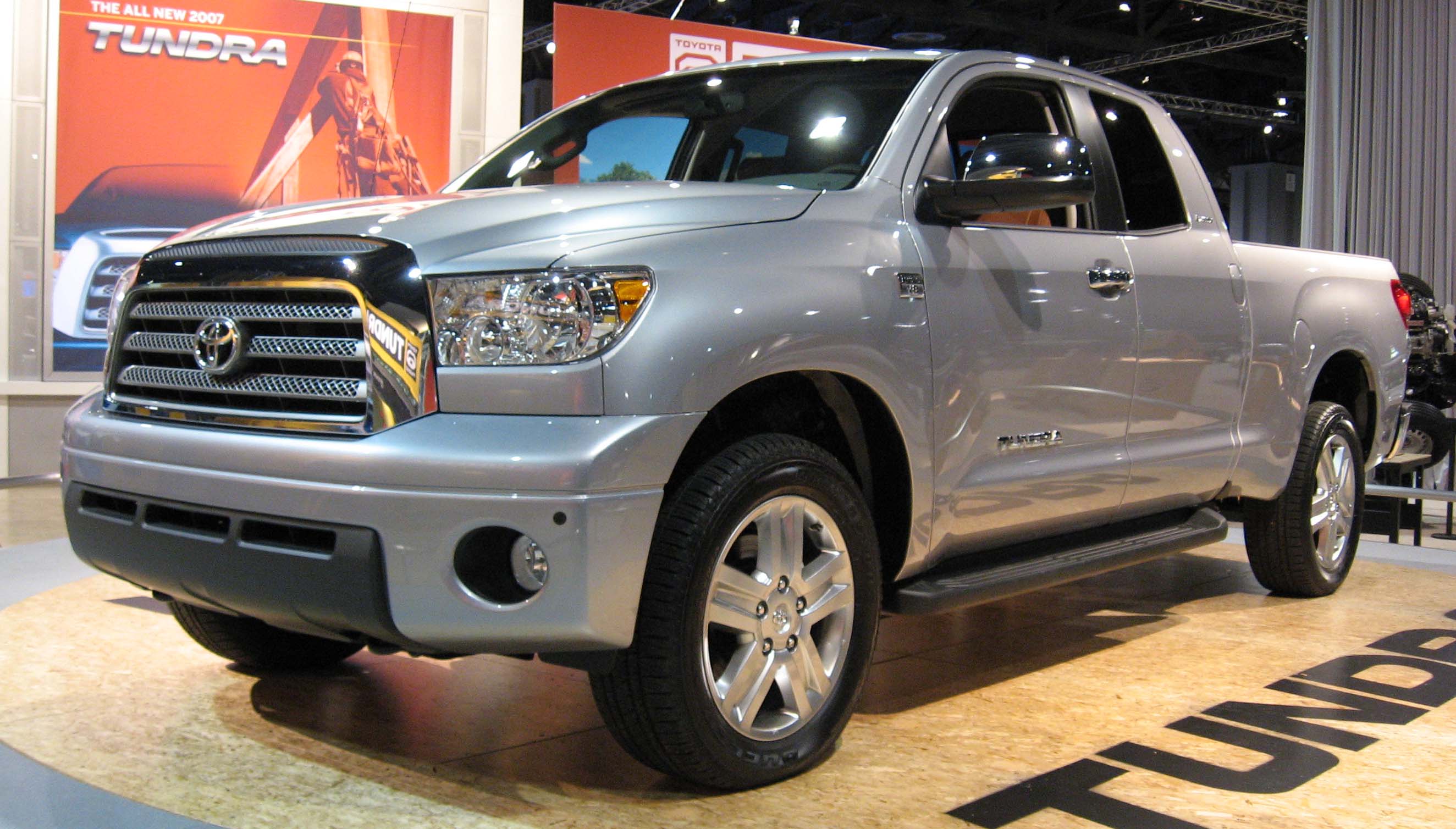
"...like he's not even going to go back to a Dodge dealership anymore. It's just done with that. So they've not only if they lost that sale, but the dealership was such a pain..."
The Toyota Tundra is a big truck made by Toyota. It's known for being tough and can carry heavy loads, making it great for work or outdoor activities.
The Toyota Tundra is a full-size pickup truck known for its reliability and strong towing capacity. It's popular among those who need a durable vehicle for work or recreation.
"You've got to know like when quarters end, you've got to track sales to see if they're they're going to try and do a big push at the end."
End of quarter sales are special discounts or deals that car dealers offer at the end of three-month periods to sell more cars. They do this to meet their sales goals.
End of quarter sales refer to the sales strategies employed by dealerships and manufacturers to boost sales figures at the conclusion of a financial quarter. This often includes special promotions or pricing adjustments to meet sales targets.
"...the four main categories of motorsports that I've come up with. Drag racing, road and road slash endurance racing, autocross and off road. Would you say that's generally broad categories?"
In autocross, drivers race against the clock on a course set up with cones. It's all about how well you can handle your car and make sharp turns rather than just going fast in a straight line.
Autocross is a timed competition in which drivers navigate one at a time through a defined course marked by cones. It emphasizes precision and handling rather than outright speed, often taking place in parking lots or other open areas.
"...the four main categories of motorsports that I've come up with. Drag racing, road and road slash endurance racing, autocross and off road. Would you say that's generally broad categories?"
In drag racing, two cars race side by side on a straight track to see which one is faster. It's all about speed and quick acceleration, and the races are usually very short, like a quarter of a mile.
Drag racing is a type of motorsport where two vehicles compete in a straight line over a short distance, typically a quarter-mile, to see who can reach the finish line first. It emphasizes acceleration and speed, often featuring specially modified cars designed for maximum performance in a straight line.
"...the four main categories of motorsports that I've come up with. Drag racing, road and road slash endurance racing, autocross and off road. Would you say that's generally broad categories?"
In endurance racing, cars race for a long time, sometimes for hours or even days. Teams of drivers take turns driving, and the goal is to cover as much distance as possible without breaking down.
Endurance racing is a form of motorsport where teams of drivers compete over long distances or time periods, often lasting several hours or even days. The focus is on durability, strategy, and teamwork, as cars must maintain performance over extended periods.
"...the four main categories of motorsports that I've come up with. Drag racing, road and road slash endurance racing, autocross and off road. Would you say that's generally broad categories?"
Off-road racing is when cars race on rough surfaces like dirt or rocks instead of regular roads. It can include different types of races, like rock crawling, where cars climb over obstacles.
Off-road racing involves vehicles competing on unpaved surfaces, including dirt, sand, and rocks. It can include various formats, such as rally racing, rock crawling, and desert racing, and often requires specialized vehicles designed for rugged terrain.
"... even even like weakened warriors, you know, the Model S versus Hellcat or even more, you know, serious l..."
The Tesla Model S is a fancy electric car that can go really fast and doesn't need gas. It's important because it shows how electric cars can be just as exciting as regular cars.
The Tesla Model S is a luxury all-electric sedan known for its impressive performance, long range, and advanced technology. It has played a significant role in popularizing electric vehicles and is often compared to high-performance gas cars like the Dodge Hellcat.
"...the Model S versus Hellcat or even more, you know, serious like purpose built models."
The Dodge Hellcat is a very powerful car that has a big engine, making it one of the fastest cars you can buy. It's built for speed and performance.
The Dodge Hellcat is a high-performance variant of the Dodge Challenger and Charger, known for its supercharged V8 engine that produces extreme horsepower. It's designed for speed and performance on the road and track.
"...not like NHRA top fuel level. So that was where I was going to go with each of these."
NHRA stands for National Hot Rod Association, which is the main organization that runs drag racing events in the U.S. They set the rules and organize the races.
The NHRA, or National Hot Rod Association, is the largest sanctioning body for drag racing in the United States. It organizes events and competitions for various types of drag racing vehicles.
"I think like Lucid probably did it pretty well. They got in with Formula E doing battery development long before anybody knew before Lucid was really called Lucid."
Lucid is a car company that makes electric cars. They focus on creating high-end vehicles that are very efficient and use advanced battery technology.
Lucid is an American automotive company that specializes in electric vehicles (EVs). They are known for their luxury electric sedan, the Lucid Air, which features advanced battery technology and high efficiency.
"...yota doesn't need to be a NASCAR to make a better Camry. Like that."
The Toyota Camry is a popular family car that's known for being dependable and easy to drive. Many people like it because it’s comfortable and doesn’t break down often.
The Toyota Camry is a midsize sedan that has been one of the best-selling cars in the United States for decades, known for its reliability, comfort, and fuel efficiency. It often comes up in discussions about family cars and everyday driving due to its practicality and reputation.
"...car. Like back in the day, you get yourself a 50 Mustang and you go drag racing on Wednesday nights at am..."
The Ford Mustang is a classic sports car that many people love for its speed and cool design. It's often seen as a fun car to drive, especially for racing on weekends.
The Ford Mustang is an iconic American muscle car that has been in production since the 1960s, celebrated for its performance and distinctive style. It often represents freedom and the thrill of driving, making it a popular choice among car enthusiasts and racers.
"...hat I watch and there was a want to say it was a Cybertruck. Well, got stuck and was stuck for a long time."
The Tesla Cybertruck is a new electric truck that looks very different from regular trucks. It's designed to be tough and has some cool technology inside.
The Tesla Cybertruck is an all-electric pickup truck known for its futuristic design and rugged capabilities. Its unconventional appearance and advanced features have sparked significant interest and debate in the automotive community.
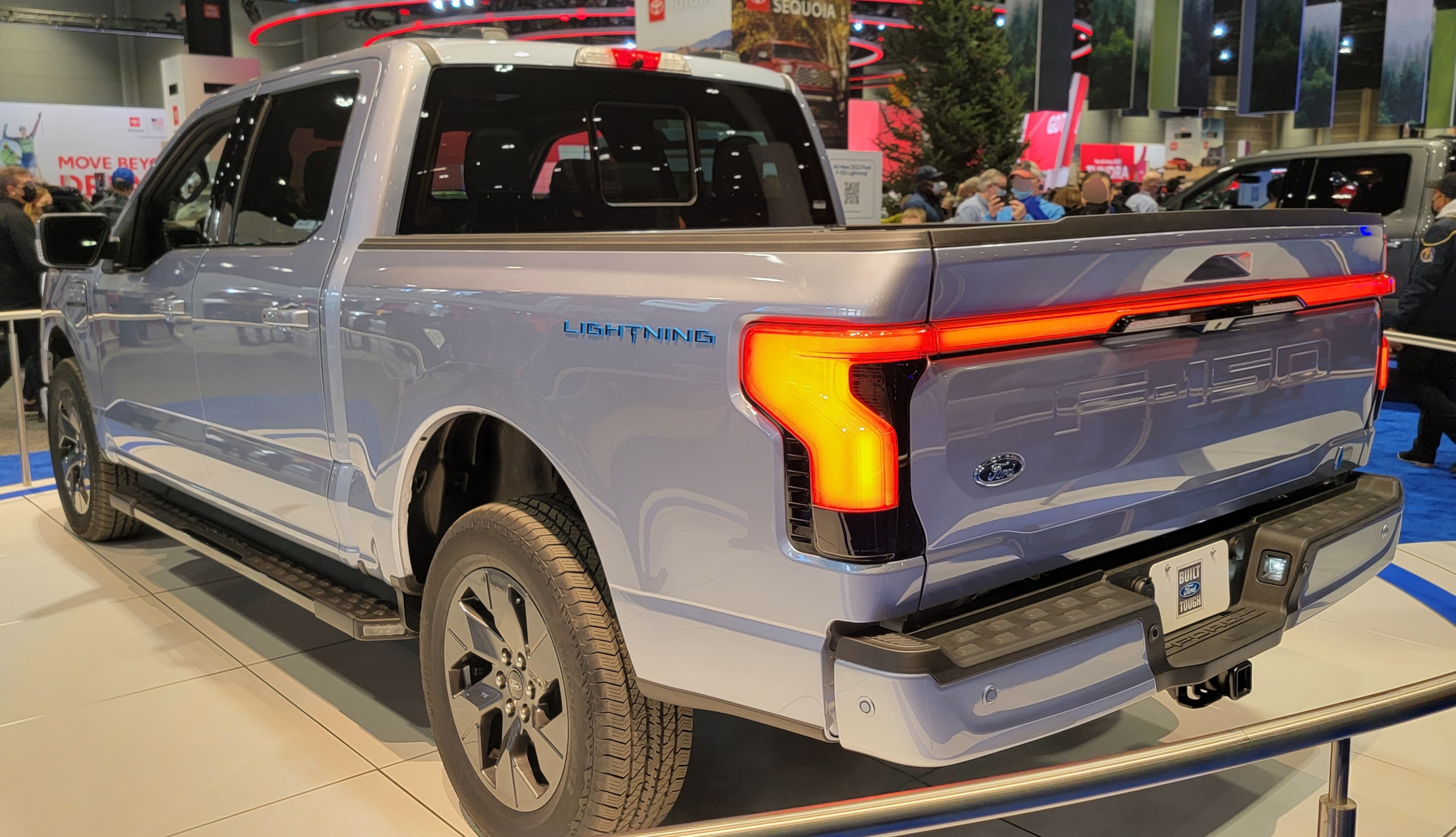
"Now, Ford, I can't remember if we discussed this or not. The 2026 F-150 EcoBoost is getting a gas particulate filter, which has been, you know, on diesels for, I'd say, a better part of a decade at this point."
The Ford F-150 is a big truck that many people use for work and hauling things. It's popular because it can do a lot of different jobs and is very strong.
The Ford F-150 is a full-size pickup truck that has been the best-selling vehicle in the U.S. for many years, known for its versatility, towing capacity, and range of configurations. The introduction of features like a gas particulate filter reflects ongoing efforts to improve emissions and efficiency.
Select text to request an explanation
This is the What Car Evie podcast for Thursday, January 1st, 2026, New Year's Day.
Episode 252, Between Eminent and Pie in the Sky.
Happy New Year.
Yes, so it turns out I don't own what my now eldest kid used to call a party cone.
I don't own a Happy New Year party cone, party hat, something for bringing in 2026.
I looked in my little party bins.
I don't have it.
I don't have funny glasses.
I don't have any of that stuff.
So if you go to youtube.com at the What Car, you will not see me wearing any of that,
but I am wearing a fun shirt.
I guess.
You don't have a little horn.
Don't remember.
Okay, we'll get to that.
I am Phil Royal.
I am one of the podcast co-hosts here that sends people to the youtube.com slash at the
What Car.
You could also start the year off right by going to the whatcar.com slash store and
driving paraphernalia, which I I've been saying all 2025.
I'm going to take that site down and I haven't yet.
So still there, still there.
Get it while you can.
We've got shirts and hats and I don't even remember what because I haven't looked at
our store for a while because I ordered my stuff and I haven't worn it out yet.
Maybe for 2026.
I'll get some other stuff.
What are my credentials?
I don't know.
I talk about cars and I've done it for a long time.
Nice and Sanchez.
I talk about cars too.
We should do something about that.
We should.
Podcaster for going on five years.
I don't know if this upcoming year will be the fourth or fifth fifth year.
I'm not a mathematician.
I don't know how to do things like that.
Been been a part of this crazy world with four wheels for
nigh on two plus decades.
I'll just leave it at that.
So.
Oh, am I jumping in?
Jump jump right.
Okay.
You were talking about the little party horns.
Me thing.
Remember, I think it was episode 100.
I broke one of those out.
And I blew the little party horn and we were using different software at the time
and it completely canceled out the noise.
So that led me.
That's right.
I remember.
If you were thinking you could try to do it live and it just like silence.
Complete noise cancellation took it all out.
So then I went in and started messing with audio settings and doing manual noise
cancellation on this.
Man, you know what?
Start a podcast.
They say it'll be easy.
They say, but it's not.
I mean, it is.
It's way easier since before the pandemic doing a podcast after the pandemic post
pandemic, you could do it in zoom, which was how we were doing it.
And it's super easy now, like a two person podcast or multiple if you want.
But you could do it for free recording through zoom, but you've really got to
watch the audio settings on the thing or else it cancels out the fun.
And we don't want to cancel out the fun.
I think that's a good, good headline for this episode.
Don't cancel out the fun.
Who is trying to cancel out the fun?
Well, the European Union was.
But I guess they're they're going to let the party continue.
Whoa.
Now you just took that in a different direction than I was thinking.
Okay.
I was thinking that they are canceling out the fun now.
With their new proposal.
You're saying they were canceling out the fun before in 2022 when they
introduced this proposal, which is a very interesting take from the person
that drives up an EV.
Well, I guess we're going to have to let the good times roll again, but
it's not that easy.
All right.
So the EU in 2022 mid 2022 introduced a thing.
I don't know what it's called over there.
We'll call it a thing that's much like math that I don't know.
I don't know how they rule the EU, but they proposed banning internal
combustion engines for at least consumer vehicles.
Yeah, light, light duty vehicles.
Yeah, starting in 2035.
And that that was like June 2022.
And now they've moved to say not so fast.
Yeah, maybe, maybe not.
According to this article on car and driver, which Lincoln, the show
notes, Chancellor Frederick Mertz wrote saying, let's not have, you know,
hold up.
Wait a minute.
Not so fast because I ain't with it.
Remember that song?
Yes, you're just like, yes, that's true.
So instead they want to require total tailpipe emissions to be reduced
by 90% compared with 2021 to me by and that's in 2035.
So by 2035, they want tailpipe emissions to be 90% reduced by 90%
versus 2021, which to me says we've got to go EV.
I think that's how California's was it California?
There was some states that were trying to do a ban, but it was similar way.
You were just or maybe that was the so-called EV mandate in America was
it was just making emissions so difficult.
And that was why Stellantis got rid of the V8s and well, they're basically
making it so where electrification would be the easiest path to compliance.
Yeah, the easiest and potentially only if you make it so difficult, like you
end up with no sports cars at the end of the day.
So what I'm reading from this is they're just kind of changing the formula
a little bit.
So whereas before would basically mandate EVs.
Now they're saying, well, if you do this and you do this, then technically
maybe you could meet this goal and still have, you know, ice.
So now they're saying the remaining 10% of emissions reductions comes from
will have to come from biofuels, e-fuels and European made low carbon steel.
What?
And a burn steel?
I don't understand.
It's I guess they're kind of seeing that as an offset.
Okay, but they're saying biofuels and e-fuels so not so called fossil fuels.
So they're still trying to cut out.
They're just saying OK to this sounds complicated.
They're saying OK to internal combustion, but they're saying it's
got to come from a more eco friendly source.
Yeah.
Rough effectively, which generally means more expensive, which generally
means you're going to end up going EV because that's a cheaper way to go.
Well, I mean, okay, so I have a lot to share to have a lot to say about this.
Really?
Because we have about another 30 minutes of podcast to fill.
So go for it.
So and I'm just going to jump straight into the nitty gritty of it.
I think the European, the European auto community, the manufacturers, they're, they're
kind of in crisis mode right now.
And I think the reason the pushback to this mandate, if you want to call it that has been
so fierce is they came to the realization of how far behind they are on EVs and they're
already in Europe, they're already seen the Chinese kind of come in and take market share.
And basically this mandate would have just handed China even more market share.
And they're like, we're not prepared.
We're not ready.
We're not cost competitive, you know, throw us a lifeline.
I think that's kind of what this is.
Um, so, I mean, I do, I do, do feel ultimately electrification in one form or another is,
is kind of inevitable.
Now, I was actually, you know, in my solitary thoughts, which I have a lot of, I did kind
of come around to being kind of a reluctant advocate of hydrogen, but we'll get to that
a little later.
I know you're like, but wait.
So there is a path where I think that potentially makes sense.
But are we going to get to that later?
Do you want to get to that now?
I don't really know because like I started off with the walk car thinking hydrogen was
a possibility that hydrogen was something, a potential reality for consumer vehicles.
And it probably took a year or so before I was like, you know what?
I don't know what I was thinking.
As far as consumer grade vehicles goes, hydrogen, whether it's using a fuel cell or converted
to be internal combustion just isn't there on so many levels.
And I've always hated the infrastructure argument.
I've always hated, well, the infrastructure is not there.
Because look at EVs, the infrastructure was not there.
You go back to 2010, 2013.
But with hydrogen, it's never increased in its infrastructure, even though you've got
companies like Toyota that are have been hyping it for decades.
Yeah.
For forever, they've got a little through fare in LA.
I mean, LA area, they've got like a through fare from the Long Beach port.
To wherever it is that it goes, where they run hydrogen trucks.
And there's just no increase of infrastructure anywhere that goes along with this.
They've built like the thing they need to build.
And then that was it.
We are, I may not be alive when this finally comes to fruition.
Because I think honestly, I think the for hydrogen to make sense depends on nuclear
energy and what I'm talking is like fusion reaction, fusion reactors, which
Mr. Fusion.
Mr. Fusion, but I mean, effectively, and depending on who you listen to, either
that technology is eminent or, you know, decades high in the sky or pie in the sky.
But it's somewhere between eminent and pie theoretically.
If that were ever to be a thing, I could see a path of viability for hydrogen.
But until that happens, it's, it's going to be niche.
So anyway, I don't know if we want to impact that any more than that.
But yes, in that very, very narrow specific scenario, I could see a path for hydrogen,
but apart from that, I don't see it happening.
Anyway, getting back to the main, the main show here.
Yeah.
So yeah, I think bottom line, I mean, this is going to sound kind of savage and,
you know, if people want to savage me in the comments, whatever.
Yeah.
This is, this is the European auto industry going through an existential
crisis, trying to figure out how to stay alive.
And this is, I think they see as their, their last best chance to do that,
you know, before, you know, the Chinese tsunami.
I know I'm like mixing my fours and cultures, but kind of comes in and
just like, so I say good luck for them.
I mean, but I think, I think probably I would, I would say in the next 15 to 20
years, it's going to change the, the, it's going to change from like mandates
and, and, and, you know, sticks to carrots where I think the market will
kind of shift where there will be more of a natural market poll in favor of
EVs and away from ICE predominantly, where, you know, it's not going to
take like these huge tax credits or mandates or whatever.
People are just naturally going to gravitate toward EVs as the better option.
And then, you know, these companies have put, you know, all this R&D money
into ICE, they're going to be, I think there's a good possibility.
They could be just kind of sitting on the lot and, you know, nobody wants them.
And then they're going to say like, wow, we should have, maybe we should have
pivoted earlier.
Now, I think the question is how long is that timeline?
How, how long is the, the, I guess the viability window for ICE?
I would say 15, maybe 20 years.
But I think, I think 20 years from now, ICE is going to look, you know, outside
of the context of a range extender, I think we'll probably have range
extenders in some form, probably, I'd say through 2050 at least.
But, you know, if it's just a purely internal combustion powertrain, I think
those are going to start looking kind of dated, I would say probably, ironically
probably around 2035, so about 10 years from now.
But, you know, who knows?
I mean, I don't know.
What are your thoughts on this?
I don't know.
So where I'm held up on adoption of EVs is I don't know if they
would naturally get adopted by the public.
If it was even equal to equal, like cost the same.
I don't know what would get, because I'm weird.
I'm not normal person.
You're not normal person.
I don't know what would make somebody walk in.
And you, so you go in and you go, okay, well, this pickup truck has a v6 and
this one has a v8 and I need to tow.
So I will naturally go with the v8.
If you walk in and you say, okay, well, this car is electric and this car is gas
powered, why would you go if it costs the same amount even?
Why would you go with electric versus what you've known your entire life and
you know how to operate?
And that's the jump.
And I know you go back to like butts and seats.
But I mean, at the end of the day, you're taking a chance on a $50,000 purchase.
Yes.
And I would say right now, the legacy automakers and especially the legacy dealerships,
I'll take it even a step further, are disincentivized from promoting EVs because
it's a dirty little secret.
Not a lot of people like to talk about, but I'm just going to say it out loud.
Dealerships get most of their recurring revenue from service.
Mm hmm.
Okay.
Internal combustion engines require a lot of service.
Oil changes, spark plugs, timing belt changes.
I mean, you name it, all sorts of little things in warranty, out of warranty,
whatever, EVs.
I mean, you know, sure.
Every now and then you'll have a battery failure or a drive unit failure or
whatever, but by and large, it's tires, wiper blades, washer fluid.
Even like on your Model 3, even there, like the recall, not recall, but the
service under warranty were minimal.
It was like a charge door wasn't opening.
This isn't going to keep a dealership in business as a giant revenue stream is
when you just have tiny failures.
You need, like you said, you need timing belt replacements where it's $5,000 to do.
Yeah.
Yeah.
So I think, again, I don't work at a dealership.
I don't know all the inner workings, but I wouldn't put it past like the general
managers telling their sales staff, hey, don't push those because we get zero
service revenue from those.
Push this one, we get lots of service revenue from those.
That's what we want to promote.
That's what keeps the lights on, keeps you guys on the job.
So until that shift happens, which I mean, I honestly don't know when that's
going to happen because I mean, basically the large scale shift to EVs will
require a fundamental shift of the business, the dealership business model
because where are they going to get their recurring revenue going forward?
I don't know.
So I think the ones that do figure that out, I really, you know, again, I know
I sound like a broken record about this.
I do think it comes down to butts and seats because if, so I'll give you a
for instance, like if, you know, someone went into, let's take the Porsche
Macan for an example because right now they still have both, you can still
get the ICE or the EV in the US at least.
You drive the ICE model.
So, you know, it's, you know, it makes the Vroom Vroom noises.
You know, it's fun to drive.
Sounds sporty.
The sales guy says, Hey, why don't you, why don't we try this one out?
And it's, it's smooth.
It's quick.
And maybe the person's like, Oh, I don't know.
You know, where do I charge it and stuff?
And they're like, Oh, well, you know, included with the purchase is, you
know, a $2,000 credit to set up a, you know, level two home charger.
Plus, you know, they could have like an interactive map in the showroom of
like Chargeway or Electrify America or whatever and like show all the little
pinpoints on the map.
Like, Oh, look at all these charging stations around you.
I think as soon as they show it in the vehicle on the screen and they go,
they just pull up charging stations on the map and it goes and there's
you know, 200 just sitting there on the map.
I think that's the game.
I think that and people will be like, Oh, what was I worried about?
Yeah.
Cause I still think there's a lot of.
Yeah.
And I think there's still a lot of residual fud of I'm just, just not knowing.
I mean, to me, ignorance is such an ugly word, but I mean, really ignorance.
People that have not driven one.
They haven't written in one.
They've, you know, kind of been in their ideological echo chambers saying,
you know, EVs or communist conspiracy or something, you know, you know,
they're Biden mobile or whatever.
And they think they're these, you know, crappy, you know, basically
trying these golf carts or whatever.
But when they actually experience it, they're like, wow, this, this, you
know, feels like the future.
So smooth and quiet.
You know, people sharing like, Oh yeah, I just plug it in at home, you
know, far go to bed, wake up the next day, full battery.
No, must no fuss.
So I know you were just trying to convince me.
I know that you were just trying to convince like build a convincing
argument that this can all happen.
But you just convinced me of the opposite.
Okay.
The dealerships have to be on board.
Yes.
It's butts in seats.
The only way that happens is at dealerships or like the sales or whatever
they're, whatever they're called incentives.
No, they say where they've got a store in a mall and then like when I went
to vin fast and oh yeah, a gallery gallery or whatever it is, whatever.
Yeah, those that's the only way it's going to happen.
Dealerships are never going to be while we should sell the EVC.
You're never going to get butts in seats through a dealership that is
operating on a traditional way of doing things.
And they have to operate on the traditional way of doing things
because that's the way the business is set up.
So if you leave this to itself, you've got the sales person who's going
to come in and sell you an ICE vehicle over an EV.
The only way I could see this working like moving over to EVs with that
as an hour thinking about that is when non dealers are allowed in all
the states or most of the states in America or not a franchise dealership.
Yeah, you get rid of you.
You allow the galleries.
You allow all of and direct sales.
Like I could go to the vin fast gallery and purchase a vin fast and drive
away with it or have it delivered to my house, whatever it is.
And in some like in California, I could do that in some other states.
You can't do it, which is going to make adoption crazy slow.
Like I mean, I don't know.
I think you got to blow up the whole system at this point.
Well, but I think he needs to succeed on their own.
I feel momentum is growing.
I feel there's more and more consumer dissatisfaction with the traditional
dealership experience.
He's happy with dealers.
So my neighbor, my neighbor, two houses down from me just went and he's got
his I've mentioned him before in this podcast.
He's got his his Mercedes and it's like he's on his second engine on it
and it's not that old.
He asked me he was going to buy a Tesla and then I don't know that fell
through.
He didn't he didn't buy that.
Well, the other day, I noticed he had a big van like a pro master or
whatever it was in his driveway and then it disappeared.
I was just talking to him yesterday about this van and he went to the
dealership.
He bought this, you know, big van, spent a bunch of money on it and within
like a day or two, all the lights went on on the dash.
So he takes it back to the dealer and they're like, oh, you know, whatever
excuse, whatever, you know, we'll fix it, whatever.
He ended up having to get an attorney spend $2,000 on attorney's fees to
eventually when they went with the attorney to the dealership, they were
like, oh, we don't want any litigation.
We'll just take it back because they didn't want to take it back.
This thing was a lemon and it took the it took.
It cost him $2,000 in attorney fees and the threat of a lawsuit against
the dealership.
And so that was like a Dodd.
I think it was the Dodd problem or whatever it was.
And now he's like, I'll probably buy like a Toyota Tundra like he's
not even going to go back to a Dodge dealership anymore.
It's just done with that.
So they've not only if they lost that sale, but the dealership was such
a pain that you had to put thousands of dollars up of your own money willing
to lose it.
And then he's going to go and get himself a pickup.
Yeah, like dealerships are not good.
There's no good experience.
Comment below in YouTube on the YouTube video.
Like if you've had a good dealership experience, let us know because I went
years ago, water car cash, and it was an awful experience.
I've had, I've had what I consider neutral experiences.
I guess that's good these days.
It wasn't it wasn't great.
It wasn't horrible.
It was just very kind of transactional and just, you know, whatever.
So to me, that's kind of the high bar for me.
I've had much worse than that.
But, you know, if it's relatively respectful and friction free and they
don't try to tack on a bunch of useless, you know, crap, I don't want.
I consider that a win.
Unfortunately, that that has been the exception to the rule.
The rule has been, oh, let me talk to my manager.
Yeah, come back and like, oh, we've added $8,000 and blah, blah, blah.
I went through that at a dealership.
I walked in, not cash in hand, but was buying, paying cash, told them
I like the price.
I don't want to negotiate.
And I still, it was like three hours of them going back and forth.
And I'm like, dude, I just take my money.
Well, I mean, OK, so not, you know, I'm going to get on my little, I'm
going to do my little Tesla fan boy thing here.
I mean, now, granted, Tesla does change.
I mean, the notorious for changing pricing all the time.
You know, they change like seasonal incentives.
Like, oh, you know, 90 days of autopilot or blah, blah.
Yeah, you've got to know when quarters end to be a smart shopper.
You got to know like when quarters end, you've got to track sales to see
if they're they're going to try and do a big push at the end.
Could I get free supercharging for a year if, you know, I wait an extra week?
But the difference is it will be the same at any Tesla showroom anywhere
in the country will be the same deal.
It won't be like, oh, if you go to this guy down the street or, you know,
yeah, one town over, blah, blah, blah.
How good is your negotiation skills?
Yeah, like this is the deal.
You could go here and go there.
This is the deal.
Take it or leave it and I'm kind of like fine.
I'm like, I'd rather have that than all this other monkey business.
But anyway, moving on.
OK, it's well established.
We're not big fans of dealers.
So and that's going to be the biggest.
I think to wrap that up, dealerships are going to be the biggest without question.
You're saying butts in seats sell EVs, but unfortunately dealerships sell cars
and they have zero incentive to sell EVs.
Exactly. They have no incentive.
They're in fact, I would say actively disincentivized
from selling EVs because of the future recurring revenue.
Yeah. So we just summed up what we spoke about for 20 minutes.
We just summed up in 30 seconds.
You're welcome, listeners.
You're welcome.
So let's look into the crystal ball a little bit.
So so you're you're you're pretty involved in the motorsports community.
You're in there a little bit.
It's still predominantly ice and probably will be for.
A while, I would say, but you you're starting to see
EVs kind of creep in kind of in the periphery here and there.
Yep.
Um, so basically I came up with four.
Four major categories.
I mean, I'm sure if you were to break it down further to be like dozens,
but the four main categories of of motorsports that I've come up with.
Drag racing, road and road slash endurance racing, autocross and off road.
Would you say that's generally broad categories?
That's yeah, I mean, off road is there's both fast and slow off road.
So there's everything from professional rock crawling and then there's
rock crawling, but you know, big picture, those are the main big categories.
Yep.
So I would I would say EVs lend themselves better to some of these than others.
So I think we've discussed this before.
I think drag racing, you're already starting to see EVs even even like
weakened warriors, you know, the Model S versus Hellcat or even more, you know,
serious like purpose built models.
You know, you're seeing you're seeing EVs start to get into drag racing, not
not like NHRA top fuel level.
So that was where I was going to go with each of these.
You got drag racing, road racing and endurance racing, autocross, autocross,
not so much an off road.
Taken autocross out every one of those has pro level and amateur level.
So autocross is just all amateur level.
There's some that you can win money and whatever, but it's still all amateur level.
There's no like televised autocross.
So you don't have like John Force autocross team.
I mean, that doesn't exist.
So yeah, like with drag racing.
On the pro seat, you're saying like you're seeing the EVs could come in and, you know,
that I think yes, but I think on the amateur level, I think pro, you're going
to see top fuel for a long time.
That's a spectacle.
That is an experience that will damage your body and knock years off of your life just
to go and see.
So yes, I think we'll see.
So so this this comes, this kind of ties into another kind of question I had.
Is motorsports more about the spectacle or more about advancing technology?
Or would you say both?
I think gone are the days where you went on Sunday, sell on Monday.
I think.
Yeah, motorsport development is not as essential anymore track.
It's completely divorced from from, you know, I'd say consumer cars.
I think at this point, it's at best an image.
Now that there is an exception.
I think like Lucid probably did it pretty well.
They got in with Formula E doing battery development long before anybody
knew before Lucid was really called Lucid.
They were doing though.
I think they were doing this battery development then as incorporated back
into presumably into Lucid.
And they've got these incredible, efficient, incredibly efficient EVs
and great battery energy density and motors that are more efficient than
anything. And I think they've done a decent job.
So I think that there is room for that.
But I think like Toyota doesn't need to be a NASCAR to make a better Camry.
Like that.
Just rolling over on the track.
Yeah, it's marketing at this point.
It's marketing its image.
That's what motorsports is on a pro level.
So what was your question?
Oh, just, I mean, the question was, will EVs and motorsports ever?
And I said brackets within the next 50 years be common slash mainstream.
And I guess kind of getting back to what you said, you need to further
break it down between amateur and professional.
Yeah, because I think that EV drag racing.
There's a couple problems with it.
Yeah.
So drag racing is fun and requires skill, but only at a certain speed.
So when you get to very low speed amateur stuff, there's no like hold
it onto the car.
It's the launch.
It's a reaction time.
It's the launch.
Did you get traction down?
It's the first 60 feet.
And after that, it just doesn't even matter.
You're banging through gears unless you accidentally miss a gear, whatever.
With EVs, it largely just takes it to reaction time.
Yeah, it takes everything else out of it.
You're only going to be drag racing, probably all wheel drive cars.
They're already set up for launch mode that all of that's already taken.
It's just simply you're sitting gas and brake.
You can take your foot off the brake when you see the final yellow light.
Now, if you go, you just have to adjust it.
So it may make it a little boring.
You may have it where people go to experience the 1.99 seconds, 0 to 60
and then don't return because you can't fit it with your car.
Like back in the day, you get yourself a 50 Mustang and you go drag
racing on Wednesday nights at amateur night.
And then maybe you order an intake and then you go back and you see
did that do anything and you order something else.
Yeah.
And you tinker.
You're not tinkering with these.
It's 100% reaction time.
And even, I mean, yeah, OK, tires, you could get better tires, but you
you're at the limit with the tires already.
Like the tires that are there pretty good.
You're not really spinning all four tires off the line.
So you're like that, that Toyota engineer.
It's like watching fireworks on mute.
Yeah.
So, well, yeah, I think it numbs the experience down.
I think you're going to have a lot of people that want to use their cars.
But you're specifically in drag racing.
EV drag racing is going to be boring quickly.
It's not going to keep you coming back as an amateur.
You might go half as much.
I don't know.
Like autocross, you've got the skill involved of turning and braking.
So there, there's a lot more to it.
There's the launch, but also everything else that goes with it and
suspension tuning that goes along with it and brakes.
There's more to tinker with.
I'd be drag racing.
I just maybe I'm just a fool who doesn't know that because I don't
know drag racing that well.
No, I mean, I could see.
Motorsports kind of being predominantly internal combustion.
I would say potentially for the next century.
For pro level.
Pro level, yeah.
But by that time in terms of road cars.
Basically, at the point the road cars have gone almost 100% electric.
There will still be internal combustion motorsports.
I mean, I think you're going to kind of see ice kind of becoming like horses.
Yeah, I mean, I know that's kind of a rough analogy.
But, you know, in the 18th and I'd say, you know, early to mid, even into
the late 19th century, horses were utilitarian.
You know, they were used for transport, you know, police patrols, you know,
the term workhorse was literally a horse.
Whereas now horses are kind of a luxury item.
I mean, I guess for lack of a better term where you go to these, you know,
professional like rodeo events or, you know, show show events where, you know,
they do the the prances and the riders have these elaborate costumes and,
you know, all that.
Yep.
Yeah.
So that's, yeah.
Yeah.
Yeah.
I think it's going to be a lower bar to own an ice vehicle than own a horse
because you could just.
Well, no, I know, but even getting.
Yeah.
So I would say even getting to that point.
So and I'll see if I can find the link for this.
But I saw some the net number of gas stations and the US is declining.
So year by year.
And I saw this happening when I was living down in Orange County.
I saw a gas station basically demolished and turned into a raisin canes, chicken
fingers.
And I was like, whoa, I didn't expect that.
You know, but it's going to.
All the diesel biofuel guys are still dropping by.
Back out of your oil.
So I think again, I think bottom line is this all comes down to economics and
specifically when it comes to gas stations.
If the model becomes, I mean, already a lot of what I've read says the fuel
station owners get more from the convenience store side, you know, like
Twinkies and Ho Ho's and Budweiser and Doritos sounds like a great Saturday
night to me, you know, then then from gas.
So I mean, I guess at some point when that shifts where they're like, I don't
want to have to deal with the gas thing anymore.
And especially, I mean, I'm sure you've seen, I've seen it a bunch of times
in California.
I think you're literally mandated to have to dig up your storage tanks and
replace them.
I want to say they got like a 20 or 30 year life.
And they get to the end of that.
They literally have to like completely close the fuel station, get big back
hose and literally dig up these tanks and replace them.
Probably my, my guess would be millions of dollars.
You know, I'm sure that can't be cheap or.
Yeah, it's not going to get cheaper.
Yeah.
And at what point do the station operators, whether it's just an independent
or, you know, a chain or whatever it said, this is just doesn't pencil out
anymore in terms of revenue and profits, we're going to, we're going to shift
to more of a, like a cafe, you know, food mart type model and put EV charging
stations in.
I think it'll be longer term of battle of attrition where it'll shift.
I mean, already, I think California is already past this point where they've,
they, you know, quantitatively, there are more charging stations and gas
stations in California.
Now, I don't know if that's points charging points like.
Yeah, the numbers are very vague on it.
Yeah.
So it's a little, little hazy on that, but I mean, you could say California's
already passed that point.
I think Norway's passed that a long time ago where it's going to be a matter
of driving around and people with an ice view are like, man, there's no gas
stations open anymore.
And they start noticing all these charging stations and they're like, oh,
maybe it's time, you know.
Well, to bring it back, see that in about 15, 15 years or so.
To bring that back to motorsports, the road racing and endurance racing.
I mean, endurance racing is going to be like, that's impossible to do an EV
and make that without a battery swap.
Yeah.
You have two battery swaps and there's a guy that's doing it and he can do a
battery swap and I forget what it is, 45 seconds, a minute and a half,
something like that on a little sports racer.
And it's possible, but it requires a team.
Yeah.
And his team is really old guys.
So it's not like it requires like a NASCAR team.
Like you can have three really old guys that can do this in like a minute
and a half or whatever the number is, but you still need a team.
Like I, I have run an Enduro myself as the sole driver, not 24 hours.
And filled your own tank.
And filled my own tank, got out.
I needed to get somebody else, which I just grabbed another driver to stand
there with a fire extinguisher.
But I still got out of the car, stopped in my pit stall, grabbed the fuel that
that jug that I'd already set ready to go, fueled my car, put the thing back,
jumped in my car and went and painted the button.
Never do it again.
But you just couldn't do that with an EV.
You there's anyway, there's race tracks that are building like my local track
has a supercharger at it now.
They open a new race tracks, got a supercharger right there.
We talked about it a few weeks ago.
There are also race tracks that simply won't allow EVs to run.
And so there's that that's going to be the education process there.
The because it's all like fired.
They're scared of the fire, scared of the fire to a point, rightly so.
Like one of these cars, if an EV starts to go down, it can burn for
thermal runaway.
It's that's no joke.
I mean, if it happens.
Yeah, you can't you don't have enough water because there isn't enough water.
You need a dunk tank or a blanket to safely get this out.
So I understand the fear, but you've still got to get over that for something
like amateur road racing.
But as far as road racing, the like IMSA stuff, like ALMS type, I just I don't
I don't see that going EV for a long time.
Now, hybrid's a whole other world.
Hybrid, you can get the best of both worlds on this.
And that is going to be like a gateway drug.
But I think it's going to be a long time before you lose.
You want to lose the spectacle of it.
Like to me, you go to Long Beach Grand Prix and it'll be the same at
any motorsport event, but it always occurs to me when I go to Long Beach.
As you park or even as you pull into town, you can hear the roar and then you
park and as you get closer, the roar and the vibrations get bigger and bigger
and it builds this excitement, this anticipation.
You just don't get that with EVs, just isn't there.
And so you're this like very quiet whoosh.
Yeah, like it's just you hear cats.
Yes, you hear it.
And so with off road, though, interesting if we go down this line here,
you got off road, long distance desert stuff.
That's going to be the same as enduro road racing.
You got to have gas for that or a team, whatever.
If you're going to do battery swabs, requires a team and it's going to be
so dusty and it's just, I don't know, you can figure it out, I'm sure.
But it's going to be that'll be the last thing to go.
But as far as like rock crawling, like pro rock crawling stuff or amateur
rock crawling or jamming around the dunes, whatever.
Totally EV like I can totally see that.
Well, I mean, one thing I think we may have, I mean, we've done so many of
these, I'm trying to remember back how long ago we talked about this.
But the Rubicon trail from end to end, I think it's something like 23 miles long.
It's not, it's not like 500 miles.
So now granted, you know, you're, you know, it could, you know, when you're going
up like a 45 degree angle, that that'll consume a lot of power.
But again, you're doing it at three miles per hour.
Yeah.
You know, you're not doing it at like 15 miles an hour.
So, you know, assuming there's like, you know, a charge charging station at
the trailhead, I mean, there's no reason you can go the full length of the
Rubicon on a single charge potentially.
Well, there is.
There is a off-road YouTube YouTubers that I watch and there was a want to
say it was a Cybertruck.
Well, got stuck and was stuck for a long time.
Okay.
But, but, but was it stuck because it was out of battery or was it stuck because
it got like hung up or something?
Yeah, it was not an off-road.
No, but so, so that's not an inherent shortcoming of EVs.
That's just driver skill and, and vehicle capability.
Yeah.
Anyway.
Yeah.
No, I had, I'm sure I had plenty of juice.
It just didn't.
Yeah.
Anyway, so, so I want to get kind of to the next point I was getting back.
So, you know, I mentioned, I mentioned horses earlier.
So this next story, depending on who you ask is kind of anecdotal and kind of whether
how true it was or not, I think you could make a case.
If you were there in the moment, you could say, yeah, this is kind of a mess.
But there's, there's kind of this apocryphal story that the switch in New
York, I think New York and London, I've heard kind of both sides of the story,
both New York and London.
They had so many horses that manure was becoming like a huge problem.
Like the amount of manure being produced and being in the streets was, especially
when it rained, it would basically turn into like this mud.
Basically, they were constantly having to shovel it up and clean it up.
And it was just one stat.
And again, this is more than a hundred years ago.
So who knows exactly?
It said, at the turn of the 20th century, New York had an estimated
100,000 to 200,000 horses on the street, creating 25 to 30 pounds of manure each
or more than 3 million pounds a day.
Wow.
Yeah.
So that led, according to some, the development of the New York subway.
And also, I guess, again, the story kind of originated in London, but you
know, London's a big, you know, large metropolis.
And I could imagine they were experiencing the same kind of thing.
So I guess the point I'm getting at is potentially you had a situation where
the issue was so obvious that it was kind of unavoidable.
And it wasn't, it like wasn't up for debate.
Like anyone could look at it and say, okay, this manure is a problem.
You know, we got to find a better way to do this.
Um, so fast forward to the 20th century.
And we're going to talk to, uh, well, I don't want to call him a hero.
I'm not, I don't want to get too political about this, but Ronald Reagan, who
we've talked about before, um, kind of, kind of, I don't want to say an
accidental or, um, kind of ironic hero of the progressive environmental movement.
Um, carb was, uh, created under his tenure.
Anyway, um, so, but back, I would say I've seen, seen stories and reports dating
back to like the late 1940s smog in the LA basin was really bad.
I think the fifties to the seventies, it kind of reached a crisis point where
it was just like so bad.
It was causing so many health issues that it was like, we have to do something.
Yeah, you can find, there's websites that are, they have the images
from the 1940s and fifties LA.
And it was, everybody thinks it was bad in the sixties.
I think because with a lot of the emission stuff for California, they
started in the fifties, I believe, long before catalytic converters to get
the emissions down, because in these photos, you would see people like
holding handkerchiefs over their mouths just to go outside.
They would regularly cancel like high school outdoor sports because of the
smog that was so bad.
And this is two decades before they introduced catalytic converters.
So I guess, again, this is another example of something that was so self
evident that there was kind of this collective desire to address it and take
care of it.
And I think that's another one of the problems with EVs now is you could
argue that internal combustion technology in terms of like emissions controls,
you know, catalytic converters, you know, particular filters, whatever you
want to, you know, whatever hybrids, whatever have, have lowered the smog
down to a level where, I mean, there's still like smog alerts in the LA area,
but they're like, I don't know.
I want to say like five or six a year.
It's few and far between and like every day, they're few and far between.
And they're largely in certain geographic areas in Southern California, at
least, where there's the wind doesn't go through like the area that I'm in.
It's always nice.
Like, because probably you get winds that just kind of, yeah, we got the
sea breeze that comes in, but I think that that's a lot of California now.
Whereas it used to be a lot of California was in dire straits.
Now, I think most of California is fine.
It's just a handful of counties that are having continuous smog issues.
So I guess the question I'm getting at is what will it take?
What will be the defining issue that makes EVs kind of self-evident, where
it's kind of like the no brainer choice?
Or do you think we'll ever get to that point?
You've once again convinced me that we're not going to do it.
So, well, I mean, it's tough to kind of pinpoint what it would it might be.
I mean, well, we, as we were discussing, the dealers have no incentive to sell an
EV and so they're just simply not going to.
So if you wait for dealers to do it, that was what we discussed 40 minutes ago.
It's just not going to happen here.
Now you've just said, OK, that piles of horse crap.
That was impossible to ignore.
In the 1940s and 50s in LA, they had smog that was
impossible to lack in the face like it was impossible to ignore.
Now, due to all of these emissions controls that we've put in over the decades,
emissions are so small that you don't have anything that's obvious.
So I I'm a runner.
I go out, I run almost every day.
I'll run and I don't smell gas.
You just don't.
You run down the main street and you don't smell it.
Then some old diesel truck will go by or some classic car or a motorcycle,
something that doesn't have emissions on it and you smell it.
And, you know, or something from the early 80s will drive by and you smell it.
But by and large, Camry's go by, you know, modern trucks go by.
Gasoline versions, you just don't smell it.
It's not in your face anymore.
And so it's and if it's not in your face, you know, it's just not going to think about it.
So let me actually, I did have a little bit of a light bulb moment.
Do you think the maintenance requirements on modern cars will ultimately be the tipping point?
Because I would say it's this is especially apparent with diesels
because you have you got the the the the death, the exhaust fluid, you got DPFs.
You got, you know, EGRs getting clogged.
Now, Ford, I can't remember if we discussed this or not.
The 2026 F-150 EcoBoost is getting a gas particulate filter, which has been,
you know, on diesels for, I'd say, a better part of a decade at this point.
But, you know, a lot of people are expecting that that may cause some issues down the road,
where the maintenance required to keep these modern engines emissions compliant.
You know, oh, you know, 400 bucks here, 500 bucks here, a grand, you know, 1200.
And it's like the steady cadence every like six or 12 months or every couple of years
that people are just going to get tired of that and be like, I'm done trying to deal with this.
You know, EVs, you know, change the tires, top off the washer fluid, change the cabin filter.
I don't have to deal with any of this BS.
It's funny you say this because that's exactly where I am.
I used to enjoy changing the oil on my cars, but now I've got like a fleet of cars.
And every time I have to do something like an oil change or I'm looking at like
transmission fluid change, something that's a little bit more.
And I'm under the car and I enjoy it a little bit less because I'm like, what else could I be doing?
And part of what I did when I got into motorsports and I started racing myself
was I set up the other parts of my life, automotive parts of my life
with the lowest level of maintenance possible.
So I bought just a commuter car that I don't I'm not going to modify it.
I don't have to do anything else to it.
And so now I look at it and I'm like, man, like an EV, I just simply wouldn't be doing this.
I just simply would not have this maintenance.
I would change the fluid in the gearbox every 70,000 miles, whatever it's slated to be.
You'd change the the tires, 20,000 miles, whatever it is.
Like you're it the way I'm setting up my life so I can do what I want to do.
I'm trying to simplify the things that I have to do and EVs do exactly that.
They don't have any of those other maintenance issues.
So for somebody like me, yeah, that was why I was when I was looking
for a car to replace my gas car, I was looking at a Model S was no maintenance.
But in your conversations with other people, family, friends, enthusiasts,
non-enthusiast, whatever, I mean, is that would you say a pretty common narrative
of like, oh, my God, I can't believe how much maintenance my neighbor with the Mercedes.
Yeah, that was exactly why he was looking for a Tesla was it was the maintenance
and the problems that he's had with his Mercedes that he's like Mercedes.
Yeah, with his ice Mercedes that his if he goes to an EV, you eliminate
100 percent of the issues that he's had with his Mercedes, they don't exist anymore.
Did he ultimately buy an EV or was or is that still he got that van?
He's the guy that got the van that I was talking about.
That's that's the van guy.
Yeah. So but that was that was several years ago that he was looking at.
I don't know why he didn't get the Tesla.
I don't know.
Oh, actually, I do know why and that's none of your business.
Yeah. So I mean, I think but but I hear that kind of building.
It's maybe not kind of in the headlines yet.
But I see that kind of emerging as the idea that more and more common.
It goes back to the very beginning of this.
You no longer have to take the and I know people that hate doing this.
So a lot of people that I know, they lease a car or they flip it every three or four years.
And so everything they do, they're not paying for maintenance.
It's all warranty stuff.
You know, they just take it back to the dealership.
But it's still time out of their day, though.
Yeah. That exactly.
And I hear those complaints.
So with all the people that I know that only buy or lease brand new vehicles,
it's going to be a very easy sell for them to go, oh,
you know, I have to deal with the dealership that I hate.
That.
That could be the start of a tipping point more than butts in seats that
dealers won't want to do is people are going to be like, well,
I I I'm just going to get an EV.
And at that point, how can you get the EV if dealers aren't going to be selling
them and the manufacturers are cutting back on their EV production?
And then it leads to, well, OK, so now you're down to like Rivian, Lucid,
Tesla and I don't know.
Potentially BYD.
Yeah, the Chinese come in and there you go.
I've seen a bunch of reviews recently kind of bagging on Lucid about build quality.
The word software.
Well, that's what I'm using as a general term, like the quality of the vehicle
is that I've got a guy opposite the school where my kids go
has got a Lucid and a Rivian.
And I'm like, whoa, I wonder what your life is like.
You're going all in on experimental lifestyle.
So it depends on what he sees as, you know, whether it'll be interesting to see
because he's one of those people that flips a car every three years.
So it'll be interesting to see what's the next vehicle in his driveway.
But I think I think maintenance is a big thing.
But it's not going to be something that you can see.
It's going to be something that you experience.
So it's not going to be the piles of horse crap.
It's not going to be the the all the particulates around your nose.
It's going to be how much time out of your day.
Because everything that I set my life up for and a lot of other people do as well
is what is the least amount of time to do certain things that you don't want to do?
Who wants to change the oil?
I used to want to.
Don't want to anymore.
Maybe back to 20 year old Phil.
Maybe I do, but I'm not 20 year old Phil anymore.
So I don't want to wondering what if it's going to come down to is like backyard
barbecues and people just kind of casually sharing their experiences.
And like, oh, man, I take it to the dealer and it was a $2,000 repair bill.
And I had to do all that and this and that was, hey, don't you own a Tesla or a
really or something? Oh, yeah, yeah.
Yeah, barely do anything to it.
It's going to be that person that just says, you know, oh, you did that.
Like I haven't even been to a dealership and I bought my car.
Like I like, so yeah, I anyway.
So where do we go?
I think I left this episode very down on EVs.
I think they mean, I think to me, to me, at this point, I mean, my take away
from this is it's still a giant question mark in terms of when the tipping
point is going to take place and what what will be the catalyst for it.
I think it's going to be more psychological than like real.
I think it's going to be a mental tipping point for a lot of people where
EVs, the early adopters have to make a lot of sacrifices to have an EV.
I think it's when it's going to be where the script flips, where
it's more of a pain in the butt to drive and own a nice than it is to drive
and own an EV. And I think once that happens, I think you might start seeing
the Domino's fall. But anyway, whether that's 2035, 2040, 2050.
Right now is a very interesting time when we started the podcast.
There were a lot of incentives or a lot of EV incentives.
Everything was being driven like now it's all gone.
And so it would be interesting to see come 2028 in America,
what the political landscape looks like.
Does it swing hard to the left or do we end up where we should,
which is somewhere in the middle and is somewhere in the middle?
A does that have any incentives?
And if those incentives are not there or just kind of like sort of there,
whatever, like it's really going to dictate what the out view,
the outlook on this is right now.
I'm like, I don't see how EVs come and take over maybe by 2035.
They're like, I don't know, 30 percent sales in America.
Like it's a very when you've got nobody wants to sell them.
Yeah. You've got no incentives.
No, it's no way to buy them.
You've got like I and you go outside and you smell the air
and you can't smell gasoline in the air and you're not seeing the effects
of it necessarily. This it's a hard. It's tough.
It's a hard sell. It's a hard road to go up if there's no incentives for it.
But should we have the incentives?
I mean, we had them before and they seem like they were handing out free money
and now they're not.
And it's I it's going to be a I don't I don't think 2026 is going to be
a crazy year as far as EVs go or anything.
I think we're kind of where we are 2026.
What what's the crystal ball for 2026?
More of exactly what we've just experienced over those last year.
That is 2026 is going to see like a small scale renaissance of ice,
is my prediction.
Twenty seven,
at least according there, there, I think you'll see a batch of new EVs
come to the market.
Twenty eight could potentially be a big tipping point, both politically
and technologically, but, you know, still TBD.
Yeah, it really could go depending on how twenty eight goes.
That's going to set the the standard for the next four years at that point.
And it's always going to be whatever.
We've gone way over.
We're at nearly an hour.
So I'm going to say Happy New Year.
Happy and go to the walk car dot com slash store, I guess.
Am I still promoting that?
I did at the beginning.
So I'll do it at the end.
YouTube dot com slash at the walk car.
Watch us on the shorts tab.
Oh, yeah, watch our shorts.
Look, check out our shorts.
The videos that is.
I think it's a sign that I'm old that I find that so funny.
I'm both a kid with my humor and I'm old because it just sounds silly
to say, check out our shorts.
I don't know.
What?
How about we start doing the walk car shorts in the store?
How about that?
You know, I'm not really sure if our vendor does shorts.
You should look into that.
I need to do that.
All right, anyway, next week, we're not here.
Yes.
Take a break.
Unless something happens, there's something called CES and it's way too difficult to record.
Yes, but I will be there on the ground.
If there's any big breaking news or developments there,
I will discuss it at some point in the future.
Tell us that the afila is there again.
Yes, again, we do know that.
Their business model still is obscure and mysterious as ever.
But we'll see.
Yep. All right.
Two weeks.
Two weeks.
See you then.
The yaw.
Request an explanation for:
9 cars
Scroll for more
9 cars featured
Request an Explanation
Heard something you'd like explained? We'll add it to this episode.
Sign in to request explanations for terms you heard.
Want to learn more?
Browse our glossary for plain-English explanations of automotive terms, jargon, and concepts.
See something that's not quite right? Our annotations are AI-generated and can sometimes miss the mark.
Click the flag icon on any annotation to suggest a correction.