Listeners are treated to a humorous exploration of car-related dilemmas, featuring the Tappet Brothers' witty banter and advice. A letter from a listener sparks a discussion on the reputation of car salesmen, leading to amusing anecdotes about the profession. The episode also includes a call from Miriam, who seeks DIY advice for fixing a dent in her Nissan Maxima, and Larry, who shares his frustrations with his Volvo's recurring stalling issue. The brothers offer lighthearted yet practical insights, making for an entertaining and relatable episode.
Pete from Nashville is really worried about inflation. Not the kind that hurts your wallet, but the kind that takes your head off. He’s suffering from ‘lasticophobia’. Is filling up your tires to the point of explosion a reasonable worry? Our overinflated hosts generate some hot air on the topic during this episode of the Best of Car Talk.
"Well, I have a 1991 Nissan Maxima and I got a dent in it."
The Nissan Maxima is a type of car that is larger than a compact car but smaller than a full-size SUV. The 1991 version is known for being comfortable and fun to drive.
The Nissan Maxima is a full-size sedan known for its performance and comfort. The 1991 model is part of the fourth generation, which was praised for its sporty handling and spacious interior.
A dent puller is a tool that helps fix dents in your car. It works by pulling the dent out so that the surface looks smooth again.
A dent puller is a tool used to remove dents from the surface of a vehicle. It typically works by creating a vacuum or using adhesive to pull the dent back into place.
"...you can access this dent from the inside because you can remove what's called the inner fender. There's a piece of plastic that's above the wheel."
The inner fender is a part of your car that you can't see from the outside. It's inside the wheel area and helps protect important parts from getting damaged by dirt and water.
The inner fender is a protective panel located inside the wheel arch of a vehicle. It helps shield the car's components from dirt, debris, and moisture while also providing structural support.
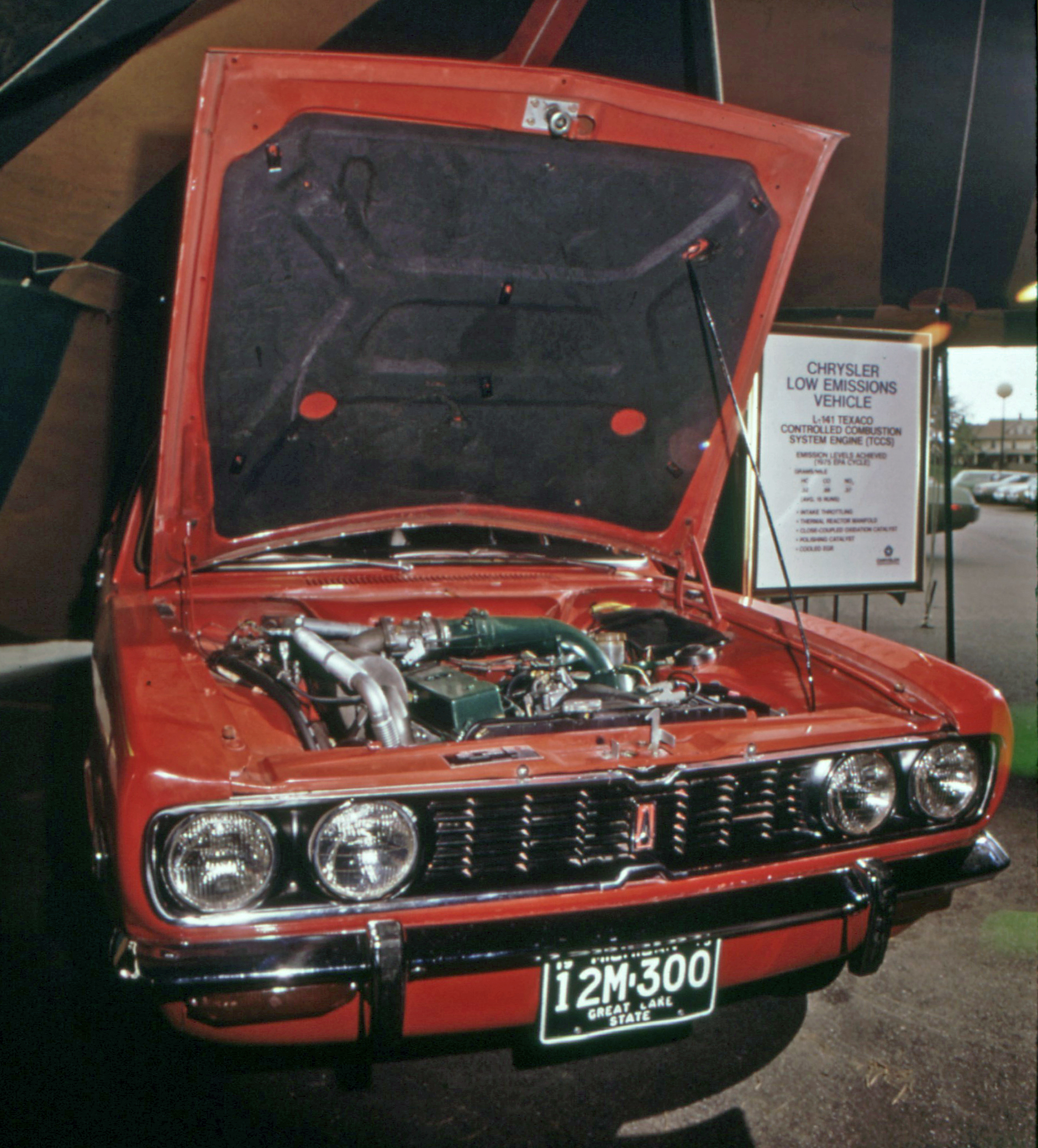
"...I'm probably the only person who ever rebuilt a Plymouth Cricket engine in your garage."
The Plymouth Cricket is a small car made by Plymouth in the 1970s. It was designed to be affordable and easy to drive.
The Plymouth Cricket was a compact car produced by Plymouth in the 1970s. It was based on the Hillman Avenger and was known for its economical performance and simple design.
"...my wife has a car, and this car is a 1990 Volvo. We've been married for six years, and we've done that well, but this car is sort of coming between us."
The 1990 Volvo is a car made by Volvo, a company famous for making safe and reliable vehicles. This model is known for its sturdy build and unique shape.
The 1990 Volvo represents a model from a brand known for its safety and durability. Volvos from this era are often appreciated for their boxy design and robust engineering.
"It was a new crank sensor or engine speed sensor this year. Then it was a mass airflow sensor in June. And then it was problems with the throttle plate..."
An engine speed sensor tells the car's computer how fast the engine is running. This helps the engine run smoothly and efficiently.
An engine speed sensor monitors the rotational speed of the engine's crankshaft, providing critical data to the ECU for managing engine performance and efficiency. It is essential for proper engine timing and operation.
"It was a new crank sensor or engine speed sensor this year. Then it was a mass airflow sensor in June."
A crank sensor helps the engine know how fast it's turning, which is important for running smoothly. If it fails, the engine might not start or run well.
A crank sensor, or crankshaft position sensor, monitors the position and rotational speed of the crankshaft. This information is crucial for the engine control unit (ECU) to manage fuel injection and ignition timing effectively.
"Then it was a mass airflow sensor in June. And then it was problems with the throttle plate and a major tune-up the June before."
A mass airflow sensor checks how much air is going into the engine. This helps the car use the right amount of fuel. If it breaks, the car might not run well or use too much gas.
A mass airflow sensor measures the amount of air entering the engine, which helps the ECU determine the correct fuel-to-air ratio for optimal combustion. A faulty sensor can lead to poor engine performance and fuel economy.
"And then it was problems with the throttle plate and a major tune-up the June before, and in 96th of December, it was an engine speed sensor and another engine speed sensor in 95."
The throttle plate is a part that opens and closes to let air into the engine. If it doesn't work right, the car might not speed up properly.
The throttle plate controls the amount of air entering the engine, which directly affects engine power and responsiveness. Problems with the throttle plate can lead to poor acceleration and engine performance issues.
"I'll tell you, we have replaced. This is a DL. Yes. Yeah. We've replaced a lot of crank angle sensors in those cars."
A crank angle sensor helps the car's computer know how fast the engine is spinning and where the crankshaft is positioned. This helps the engine run smoothly and efficiently.
A crank angle sensor is a critical component in an engine that monitors the position and rotational speed of the crankshaft. This information is essential for the engine control unit (ECU) to optimize engine timing and performance.
"You should drive my brother's MG for a day. It stalls at every corner."
MG is a brand that makes sports cars, and they are known for being fun to drive. They have been around for a long time and have made some famous models.
MG is a British automotive marque known for its sports cars and roadsters. The brand has a rich history dating back to the early 20th century, with models like the MG Midget and MG B being particularly iconic.
"It stalls at every corner. We're just, we're being overprotective with our car."
A stall is when a car's engine suddenly stops working while you're driving. It can happen for various reasons, like running out of fuel or having a mechanical problem.
A stall occurs when an engine stops running due to a lack of power or fuel, often caused by issues like fuel delivery problems or electrical failures. This can be particularly frustrating while driving, as it can happen unexpectedly.
"And they say, we'll go through the whole thing. We'll check out the thing stem-disturbed and replace anything that could be causing the stall."
To 'check out' a car means to look it over carefully to see if there are any problems. Mechanics do this to make sure the car is safe and working well.
In automotive terms, 'check out' refers to a thorough inspection of a vehicle to diagnose issues or ensure everything is functioning properly. This can include checking the engine, transmission, brakes, and other critical components.
"The mechanic looks over the car and finds that sure enough, the front disc brake rotors are warped."
Disc brake rotors are round metal parts that help stop the car when you press the brake pedal. If they are bent or warped, it can make the brake pedal feel funny.
Disc brake rotors are components of a disc brake system that provide a surface for the brake pads to clamp down on, creating friction to slow or stop the vehicle. Warped rotors can cause issues like pulsing in the brake pedal.
"Have you tightened your lug nuts with a high powered air wrench?"
Lug nuts are the bolts that hold your car's wheels on. If they're not tight enough, the wheels can come off while you're driving, which is very dangerous.
Lug nuts are fasteners that secure a wheel to a vehicle's hub. They are critical for ensuring that the wheels stay attached while driving and must be properly tightened to prevent accidents.
"...I'm hosing the dirt off the car and in doing so, I'm warping the disc rotors by hitting those hot rotors with ice cold water on one side only. Oh, man."
Disc rotors are metal discs that help your car stop when you press the brake pedal. If they get too hot and then are suddenly cooled with cold water, they can bend, which makes it hard to stop the car smoothly.
Disc rotors are a crucial part of a car's braking system, providing the surface against which brake pads clamp to slow down the vehicle. Warping occurs when uneven cooling or excessive heat causes the rotor to become misshapen, leading to brake performance issues.
"You know, they wanted to go from Buffalo to San Diego in an 87 VW Cabriolet, and John wanted to know if this was a good idea."
The Volkswagen Cabriolet is a small convertible car that was popular in the late 1980s. The 1987 version is known for being fun to drive and having a classic look.
The Volkswagen Cabriolet is a convertible version of the Golf, known for its compact size and fun driving experience. The 1987 model is part of the second generation, which was produced from 1985 to 1993.
"Well, I have a question about a 96 Ford Pro. 96 Pro."
The Ford Probe is a type of car that Ford made in the 1990s. It's known for being sporty and fun to drive.
The Ford Probe is a sports coupe that was produced by Ford from 1988 to 1997. It was designed to appeal to younger buyers with its sporty styling and performance-oriented features.
"And my steering wheel makes the strangest noise that I've ever heard. It's done it since I bought it."
If your steering wheel makes a noise, it could mean something is wrong with the parts that help you steer the car. It's important to find out where the noise is coming from to fix it.
Steering wheel noise can indicate various issues, such as problems with the power steering system, worn components, or issues with the steering column. Identifying the source of the noise is crucial for proper diagnosis and repair.
"... of my life, I have been terrified to fill up the air in my tires. Yeah."
The Lucid Air is a fancy electric car that runs on batteries instead of gasoline. It's known for being really fast and having a long driving range, which means you can go far without needing to recharge often. People talk about it because it's a new and exciting option for those looking to drive an electric vehicle.
The Lucid Air is a luxury electric sedan that has gained attention for its impressive range, performance, and advanced technology features. It represents a significant step forward in the electric vehicle market, showcasing how EVs can compete with traditional luxury cars in terms of comfort and performance. Discussions around the Lucid Air often focus on its innovative design and the future of electric mobility.
"...if it was a lot of years ago and it was an old truck, and it might have had a split rim wheel, in which case not only would the tire blow and hit you with rubber and air, but a piece of the rim would come off and cut you in half."
A split rim wheel is an older type of wheel that has two parts. If the tire bursts, it can be dangerous because pieces of the wheel can fly off and hurt someone.
A split rim wheel is a type of wheel design that consists of two separate pieces that are bolted together. This design can be more dangerous than modern one-piece wheels, especially if the tire blows, as the rim can separate and cause injury.
Select text to request an explanation
How could your favorite NPR podcast get any better?
Well, what if it had bonus features such as extended interviews and zero sponsor breaks?
There is a remarkably easy way to turn that fantasy into reality.
It's called NPR+.
You get perks across more than 25 NPR podcasts while supporting the teams that make them.
Make great podcasts even greater by visiting plus.npr.org.
Hello and welcome to Choir Talk from National Public Radio.
With us, Click and Clack, the Tappet Brothers, and we're broadcasting this week from the Ethics Division here at Car Talk Plaza.
Now, you may remember a few weeks ago, we reported on a new Gallup poll that rated the amount of respect that Americans have for various professions.
Well, anyway, after that, we got a letter from somebody named Bob Posgay.
And here it is.
I have two brothers. One is in auto sales.
The other brother was just sentenced to death in the electric chair for murder.
My mother died from insanity when I was three years old.
My two sisters are prostitutes and my father sells drugs.
Recently, I met a girl who was just released from a reformatory where she served time for smothering her illegitimate child to death and I want to marry her.
My problem is if I marry this girl, should I tell her about my brother who's a car salesman?
In that poll, at the bottom of the list were car dealers.
Man, I mean, what is it with these guys?
Don't they know that they're at the bottom of this list?
Maybe they don't care.
Maybe they realize the chance of getting even one rung up on the ladder is so small that it's hardly worth the effort.
They'll make a few bucks.
I mean, everything they do works.
Yeah.
I mean, it must work or they wouldn't still be car salesmen.
I mean, some of these guys.
There were four other people looking at this car.
Yeah.
It was only driven on Sundays by a little old school teacher.
Yeah.
Is there any wonder that they're at the bottom of the list?
Well, they should be at the top of the list for creativity.
Exactly right.
I mean, these guys come up with stuff that in a million years you wouldn't be able to come up with.
And we're wasting their talents selling cars.
What should they be doing?
I don't know, but I'm working on it.
I see a movie in here somewhere.
If you'd like to talk to us about your car.
Who's in it?
In the movie that you have and who's in it?
Is Kevin Spacey in it?
No.
No, I see William Bendick.
I like it already.
Is he still dead?
And Tom DeAndrea.
Tom DeAndrea is killer.
The number is 888-CAR-TALK.
That's 888-227-8255.
Hello, you're on Car Talk.
Hi, this is Miriam from St. Paul, Minnesota.
Hi, Miriam.
Hi.
St. Paul.
Yes.
Got it.
We know what that is even.
So what's up, Miriam?
Well, I have a 1991 Nissan Maxima and I got a dent in it.
It's right above the wheel well on the passenger side in the front.
Front?
Yep.
And basically, I want to try to fix it myself.
Do you?
But yes, I do.
How deep is this dent?
Not that deep.
Like, it doesn't affect my driving.
The wheel, I can turn the wheel freely and everything.
And how did this dent occur?
I hit something.
Animal, vegetable, or mineral?
Mineral, I guess.
Is another car a mineral?
Oh, a tree.
Another car, another car.
Wouldn't be mineral, yeah.
Yeah, mineral.
Oh, so this is more than just a little teeny dent.
I mean, this is a good-sized dent.
It's a pretty good-sized dent.
Yeah, it's like a foot long.
And why does it bother you?
Why does it bother me?
Yeah, why do you want to fix it?
I love my cute little car all nice and pretty.
Why?
I just want to fix it.
My brother and I were discussing this just the other day.
We were sitting around at my kitchen table, drinking coffee, and we were discussing the
fact that everything is too darn pretty and there's nothing more liberating than a big
dent in your right front fender.
But the other thing is I get a real rush from trying to fix things.
All right.
Well, you can fix it if you want, but ponder the idea of leaving it alone.
Okay.
I happen to be reading a book right now called Doubt and Certainty.
And one of the issues is, is there symmetry in nature?
Well, there is, but there is.
Is there symmetry in science?
Are you reading about pine cones and pineapples?
Well, the truth is there is not symmetry.
There is not symmetry.
Right.
We think there's symmetry.
We think of things as being symmetrical and mostly, but mostly they're not.
And so the fact that your car started out being pretty symmetrical except the steering wheel
was on one side.
Other than that, it was almost perfectly symmetrical about several axes.
And I think you've done something natural.
You've made it asymmetric.
So you're closer to nature.
Consider leaving it alone, Miriam.
But if you want to fix it, if you really want to fix it.
Okay.
If you want to do it yourself, you need to start with a plumber's plunger.
I tried that.
All right.
Okay.
Then you got to go to the store.
Yes.
You got to buy a dent pull.
Well, maybe better than that.
You can access this dent from the inside because you can remove what's called the inner fender
liner.
There's a piece of plastic that's above the wheel.
Okay.
And it's held on either by clips or screws.
Okay.
And a lot of them.
A whole bunch of them.
All around the edge of that little thing.
And you will take this piece off and you will then gain access to the bulge on the inside
of the fender.
Well, here's the thing.
I gained access to it.
You did.
But through the hood.
Like I opened up the hood.
Okay.
Oh, and you could actually see.
I could see it and I could kind of feel it.
It felt like if I just gave it a good whack, it would pop out.
Yeah.
Tap on it as few times.
You'll get it to pop out a little bit.
It'll be sort of rippled.
And then you may have to take some bondo to it.
This plastic filler stuff.
Oh, no.
You're not going to do that.
And then you'll sand it down and then you'll paint it.
I mean, she wants to do it.
She wants a project.
Believe me.
The woman wants a project.
It will look so hideous when you're done.
This will be better.
What would you have now?
Believe me.
It's better than anything you could do yourself.
No, but this is not the sort of thing you can explain to someone.
Bodywork is very difficult and it's very hard to make it look good.
Right.
But if you want to try it, by all means, like my brother says, buy a big thing of bondo,
maybe a five gallon pail.
Okay.
Good luck, Miriam.
And bond away.
Thank you.
See ya.
We all need projects.
Yes.
We do.
Otherwise, we get into trouble.
Yes, we do.
We get our wives angry at us.
Oh, yeah.
1-888-CAR-TALK.
That's 888-227-8255.
My wife always says, why don't you go clean the basement?
Okay.
Again?
Hello, you're on Car-TALK.
This is Larry.
Larry.
Larry, we've been waiting for you to call.
I've been waiting for this for years.
Where are you from, Larry?
I'm from Seattle, but I used to be from Boston.
Really?
I spent the best years of my car tinkering in Hacker's Haven.
No.
You may remember, I'm probably the only person who ever rebuilt a Plymouth cricket engine
in your garage.
Never heard of you.
Well, the engine blew up in San Antonio on my first trip.
You made it that far.
Yeah.
Yeah.
So what are you doing now in Seattle?
Well, since then, you're not the engine rebuilding business.
I've gone on to other things.
I have a wife and my wife has a car, and this car is a 1990 Volvo.
We've been married for six years, and we've done that well, but this car is sort of coming between us.
We don't want that to happen.
Yes.
We don't.
We think.
Anyway, what's happening is that approximately once a year, this car does the same thing.
It will start up fine in the morning, and we'll back it out of the driveway and get down to the stop sign, and it will die there.
And it will start doing this pretty much whenever it's cold, but usually you can get it started, and it never has stalled out and died on the freeway or anything really serious.
But she gets annoyed with this, and we take it in, and a couple weeks later, we have the car back, and we have a bill from anywhere between $400 and $1,600, and it does fine.
And it works for you.
And then they put it on the computer again, and it's something else.
Really?
So in December.
But it's always the same symptom, but the repair is always something different.
That's right.
It was a new crank sensor or engine speed sensor this year.
Then it was a mass airflow sensor in June.
And then it was problems with the throttle plate and a major tune-up the June before, and in 96th of December, it was an engine speed sensor and another engine speed sensor in 95.
Well, I can see that every time you come in, the guys at the dealership say, what can we put in Larry's car this time?
Well, see, this is the disadvantage for you of a database, because they can go back and look at what they've done previously and figure out what's still warrantied, and more importantly, what isn't.
So they say, you know, we haven't put an airflow sensor in for three years.
He's ready for a nice, we think he'll be accepting of another one of those.
And don't forget, no matter what they've done, it's worked for a year.
It's hard to argue with the computer.
They put it up and they tell us that it's these codes, and therefore they have to replace it.
And they're getting codes every time?
They get codes each time, whenever we bring it in.
Well, it's possible that the diagnosis has been right every time.
I'll tell you, we have replaced.
This is a DL.
Yes.
Yeah.
We've replaced a lot of crank angle sensors in those cars.
We've replaced a lot of airflow sensors.
And not, I mean, not quite as many as you've had done, but we have replaced quite a few.
And it's very possible that each time these things are failing,
I don't think there's any underlying cause necessarily.
So I don't know what to tell you in terms of whether or not you should be angry or alarmed or dismayed or discouraged
or if you can sell the car.
Well, that it does getting to those questions.
Oh, it is.
You mean to tell me that once a year the car, you drive a car a couple of blocks to the stop light
and it stalls and restarts immediately and that's a cause for alarm?
You don't have enough troubles in your life, Larry.
You should come to my house for a couple of days.
You should drive my brother's MG for a day.
It stalls at every corner.
We're just, we're being overprotective with our car.
I think so.
Exactly.
And you're giving them the opportunity to fleece you.
Because you go in and you say, oh my God, it stalls.
And they say, we'll go through the whole thing.
We'll check out the thing stem-disturbed and replace anything that could be causing the stall.
And a few things that couldn't.
Right.
And they tell you what, $1,600.
And do you complain ever?
Always.
Do you yell and scream and get ugly?
You're really sure?
No, no, Larry sounds like a very easygoing guy.
No, no.
He's an easygoing.
Are you a doctor, Larry?
A therapist.
Perfect.
You have your wife take the car.
He's a therapist too.
Hire someone to take it in.
Yeah, don't worry about it anymore.
You're being a little, to pardon the expression, anal retentive about this.
A little too careful with the car.
A little too careful.
That stalls, big deal.
Just start it up and forget about it.
Okay.
Nice to talk to you again, Larry, after all these years.
Okay.
All right, thank you.
And thanks for calling and thanks for remembering us.
Okay.
Bye-bye.
Bye-bye.
All right, Tommy.
Is that a legitimate psychiatric term, anal retentive?
Oh, yeah.
It is, huh?
Oh, yeah.
Well, he is.
Then that's what he is.
If that's what he is.
Hey, do you remember the last puzzle from before Christmas?
What?
I missed Christmas?
No, I don't remember the last puzzle.
Give me some kind of hint.
All right.
It was a fully automotive puzzle about a mysterious case of warped disc rotors.
Oh, it's intriguing.
President Trump says he wants Greenland for national security.
This year's Grammys featured historic wins for Bad Bunny and Kendrick Lamar, lavish performances,
and occasional chaos.
And it was a night of speeches that reflected this moment in America.
Listen to a recap on pop culture happy hour in the NPR app or wherever you get your podcasts.
Hi, we're back.
You're listening to Car Talk with us.
Click and Clack the Tapper Brothers.
And we're here to talk about cars, car repair, and the answer to last week's fully automotive
puzzler.
Two weeks ago, puzzler.
It's not last week.
All right, all right.
Get it straight.
Anyway, this one came to us from a listener named Brad Hamill, and I'll just read it as
is.
I didn't think I could improve it.
Well, I could have.
I could have obfuscated even more than Brad did.
Didn't really need it.
Didn't need it.
Good.
Okay.
Anyway, this fellow takes his Volvo to the shop, but this could be just about any car.
And he complains there was strong pulsing in his brake pedal when he applies the brakes.
The mechanic looks over the car and finds that sure enough, the front disc brake rotors are
warped.
So he installs new ones and sends the guy on his way.
5,000 miles later, the fellow comes back to the shop and complains that the pulsing is
back.
Suspicious and yet confident that his work was what, perfect.
Yeah.
The mechanic asks the owner a few questions.
Do you ride the brake?
No.
Have you tightened your lug nuts with a high powered air wrench?
No.
Have you had a hemorrhoidal flare up recently?
Has anyone had their hands on your lug nuts recently?
Absolutely not.
Have you bought new tires?
The mechanic is at a loss and begrudgingly replaces the warped rotors.
Again.
A thousand miles later, the guy comes back and guess what?
What?
Same problem.
I would never have guessed.
This time, the mechanic asks straight up, what the heck is he doing to the car that could
be causing this problem knowing that there's nothing wrong with the parts and nothing
wrong with the installation?
The fellow says, jeez, I don't know.
I go on a lot of long trips.
It's always the day after I arrive home from these trips that I start feeling the pulsing,
but never during the trip.
Really?
The mechanic then asks him one question and solves the mystery.
What question did he ask him?
I'm afraid to even venture, I guess.
He asks him, did anyone have his hands on your lug nuts?
He asks him one question and from the answer to that question, he knows what's wrong with
the guy's car.
Wow.
And the question he asks him is, do you wash the car immediately after returning from these
long trips?
Oh, really?
And the fellow says, as a matter of fact, as soon as I get home, as soon as I pull into
the driveway, before I even loosen my tie, I've got the hose out and I'm hosing the dirt
off the car and in doing so, I'm warping the disc rotors by hitting those hot rotors with
ice cold water on one side only.
Oh, man.
One side only.
Well, he's hitting the wheel side of the disc rotor.
When you go through a puddle, you're immersing the whole disc rotor in water.
Yeah.
And so you tend to equalize the forces, but when the thing is red hot, because you're
driving like crazy to get home to your sweetie, at least pull into the driveway and wash the
car, and you put that ice cold water on that red hot disc rotor on one side of it, it's
warped.
And who's our winner this week?
Wow.
Oh, boy.
That's good.
I mean, that's good, but we're going to get a lot of mail.
Don't we always?
I'm just letting you know, you know, we do have a winner.
The winner is Jesse Donstreich.
Donstreich from Philadelphia PA.
And for having his answer, Jesse could be either.
His or her answer selected at random from among all the correct answers.
Jesse's going to get a $25 gift certificate to the Car Talk shameless commerce division
with which he or she can buy any of the returned Car Talk merchandise now flooding in from disappointed
listeners across the country.
That had half price.
What a deal.
50 bucks worth of stuff for a $25 gift certificate.
Jesse, you're a lucky devil.
Anyway, we'll have a new non-automotive.
Oh.
Interesting puzzler coming up in the third half of today's show.
All right.
Do you know what it's time for?
Time to strap the snow plow onto your engine.
No, no, no, no, no.
It's time to play Stump the Chumps.
It is time once again to bring back a previous caller and find out what happened when our
advice was implemented in a real life situation.
Why do I always feel queasy when this segment comes up?
It's still up to the visions of trial lawyers dancing in your head.
Anyway, who is today's contestant?
Well, it's someone named John from Buffalo, New York, and John called in February when his wife
wanted to take a cross country trip with her best friend.
It's a year ago.
Sort of a Thelma and Louise kind of thing.
You know, they wanted to go from Buffalo to San Diego in an 87 VW Cabriolet, and John
wanted to know if this was a good idea.
Yeah, I think we said sure, as long as you don't ever want to see your wife again, because
once she sees San Diego, good luck ever getting her back to Buffalo.
Actually, I think we suggested that she go for it, provided that she not do it in one
non-stop trip.
John argued that she should just go non-stop, hoping to get there before the car had time
to break down.
Good thinking, John.
We suggested, just the opposite, that she make short trips and stop and let the car
and the drivers rest frequently.
If I had a 12 or 13-year-old car as they have here, I would do it like in one-hour spurts.
You know, like Schenectady.
Well, that's the wrong direction.
Yeah, I mean, I would try to go for an hour and get a motel and rest up for a day overnight,
watch a little TV, go another hour the next day.
Okay.
So, if she followed your advice, she's probably around Enid, Oklahoma, right about now.
John, are you there?
Yes, I am.
All right, John, before you tell us what actually happened, we have to make sure that you're
not being paid off to make us look bad.
Well, do you swear to tell the truth, the whole truth, and more or less, nothing but
the truth?
More or less.
All right.
The first thing we need to know is, did she take our advice and go slow, or did she take
your advice and try to go nonstop?
And did they make it?
They made it.
Wait a minute, we don't know if we won or not.
We don't know if we were right or not.
How did they, what was their technique?
The technique was contrary to my advice.
They took your advice and they took short frequent stops, and they drove maybe three,
four hours at a time, stopped, check out the sites, and then continued on.
Clear the music, Dennis!
And they made it from Buffalo to San Diego in that heap, huh?
I can't believe it.
And the Volkswagen is still running, I take it.
Noah died two weeks later.
Well, they were quite lucky.
And the reason I ask you guys is, you know, being a guy, we can, we want to go nonstop
just to see if we could do it.
Oh, always.
Exactly.
What's the first thing you ask a guy when he drives a lot, how long to take you?
How long to take you?
I remember your buddy, Bill Rota, he drives across the country, across the country, and
finally, after three or four days of driving, he gets to my brother's house to visit him.
The first thing he does is he calls his father because he and his father had rebuilt the engine
in his car.
He doesn't even say hello to the guy.
He just says, Dad, I burned the half-quart.
Bye.
Bye.
Well, thanks for playing Stump the Chumps, John.
You're going to good sport.
Thanks for living so long.
Say hello to your wife.
All right, bye-bye.
Bye-bye.
If you want to talk to us, the number is 1-888-CAR-TALK, that's 888-227-8255.
Hello, you're on Car Talk.
Hi, guys.
This is Sherry in Kalamazoo.
Sherry, like the stuff you drink?
Yeah.
All right.
Before we start singing, what's up, Sherry?
Well, I have a question about a 96 Ford Pro.
96 Pro.
And my steering wheel makes the strangest noise that I've ever heard.
It's done it since I bought it.
I bought it brand new.
No, not like that.
It's kind of a, oh, when you're turning slowly, like pulling into a parking place or into
the driveway.
And does the noise sound like it's coming right out of the steering wheel or under the
hood?
It's from the inside of the car, definitely.
Inside of the car, definitely.
Yes.
And you bought this car new?
Yes.
And you brought it back and complained?
Yes.
And they said they all do that?
They said, oh, there's nothing wrong with that.
Yeah, they're probably right.
Well, what does it make that noise?
Well, it's plastic.
It's probably plastic rubbing against plastic.
I really hate to hear you say that because that's what my husband said it was.
Yeah, he's probably right.
And it's a pain to have your husband be right about anything.
I know that.
I've known that by all the wives I've ever had who've denied that I've ever been right
about anything, especially marrying them.
You know, my brother's been married a bunch of times and every one of his wives was a
good housekeeper.
When they got divorced, they kept the house.
But listen, there's probably not a whole lot you can do about this.
Some cars do it and some cars don't.
Some cars are more likely to do it in cold weather.
Right.
And you may notice it's worse in cold weather.
And then as the passage of compartment warms up, the noise goes away.
Yep.
Is that true?
That is true.
Yeah.
Well, you can try spraying silicone lubricant in there.
Comes in a little spray can with a little wand.
OK.
And you'll get it to go away for an hour or two at a time.
And you can continue to spray it in there.
But I'm sure of taking it apart and finding out which two pieces are rubbing together
when this plastic has shrunk and distorted due to the cold weather.
You got a snowball chance and you're not aware of finding the source of the noise.
And we've taken a few of these apart and we've hardly ever managed to fix any of them.
OK.
Learn to ignore it.
OK.
You can't ignore stuff like that.
It makes you crazy.
Well, see, that's another disadvantage of owning a new car.
Yeah.
If this were an 86 probe, would you have called us?
No.
Well, I probably would have bought a new car by now.
Well, but you'd have had so many other noises that this noise would be so insignificant.
Yeah, that's the thing.
If you only have one noise, it drives you crazy.
But if you have 25 noises, you can't possibly worry about them all.
That is true.
Yeah, sure.
You know, you need to leave the sunroof open a crack.
OK.
So you get that wind noise.
Exactly.
Putting stuff in a coffee can and putting it in the back seat is good, too.
But bowling balls in the trunk?
Yeah.
Do that and this noise will...
Bowling ball or dead bodies, either one.
This noise will be nothing in comparison.
Exactly.
See you, Sherry.
OK, thanks.
Thanks for calling.
Bye-bye.
Bye-bye.
We'll be right back with more calls in the new puzzler, right after these messages.
President Trump says he wants to make America skilled again.
But trades women worry that his crackdown on DEI will undo decades of progress.
You cannot look at the workforce of the construction trades and say they've taken DEI too far.
This weekend on The Sunday Story, what role is there for women in the skilled trades renaissance?
Listen now to The Sunday Story on the Up First podcast from NPR.
There is a long history of misinformation about autism from accusations about bad parenting
to RFK Junior's false allegations that Tylenol has something to do with it.
But science is getting closer to truly understanding what drives autism.
It looks like there are hundreds of genes that are involved.
To find out what the research actually says about autism and what we still don't know,
listen to Shortwave in the NPR app or wherever you get your podcasts.
It is hard to get a house. Getting that down payment together? Brutal.
You shipped off to Djibouti to afford a down payment for a house?
Yes, sir. 100%. On plan of money, the high price of housing.
What the Trump administration is trying to do about it? And will it work?
Listen on the NPR app or wherever you get your podcasts.
Ha! Wake up, Tommy.
We're back and you're listening to Car Talk with us. Click and clack the Tapper Brothers.
And we're here to discuss cars, car repair and the new puzzler.
Of the new millennium.
Boy.
Yeah, that's a lot of pressure. I mean, this should be like a pretty spectacular puzzler.
If I had known...
I mean, they're all spectacular.
If I had known it was the first puzzler of the new millennium,
I would have put more than five minutes of effort into it.
But as such, I didn't. So here it is.
Is it like from a five-year-old email?
Oh, yeah.
Anyway, here's the deal. You are kidnapped.
I'd like it already.
And unceremoniously dumped on a deserted island in the Pacific,
in a previously deserted island. You are now.
You are now.
And you have yet to meet up with Mr. and Mrs. Howell and Professor and Mary Ann.
But this island basically is ten miles long and about a hundred yards wide.
And it's completely covered with grass and palm trees.
And your captors have been nice enough to give you a few things to assist you in surviving.
They've given you a supply of water.
They've got a life-size poster of Ginger Grant.
They've given you a flashlight and a box of matches and a blankie.
How nice.
You got it?
Yeah.
No cable.
So the first night, the first day you walk around the island
and you notice that you've got no chance of escape
because the island is a sheer drop-off all around five hundred feet
onto sharp rocks into shark-infested waters.
So there is no escape from this island.
And you go to sleep that first night under your blankie
and you're awakened the next morning by the sound of thunder
and the bright flash of lightning.
Oh, I'm not going to like this.
I don't think so.
And you realize that lightning has struck the far end of the island.
Okay, you're approximately in the middle, let's say.
So five miles away from you, lightning has struck
and has set the grass and palm trees on fire.
Oh, my God.
And what's the second thing you say?
And...
Drat.
And as luck would have it, there's a breeze blowing from the fire toward you.
So it's pushing the flame in your direction.
Got it.
And you can imagine that everything, everything on the island
is going to be toasted.
Including?
Including but.
You, unless you think quick.
And the question is, how do you save your sorry but
until your wife can pay off the ransom?
Fat chance.
Why bother?
A skinny island, it's 100 yards wide.
Yeah.
It's 10 miles long.
Yeah.
So they flame, the fire starts on one end of the island.
And it's coming toward you fat.
It's coming toward you.
Let's say it's, let's say it's coming at the rate.
Let's say the wind is blowing it at two miles an hour.
Sure.
Don't forget what you have at your disposal.
The space blanket.
Life-sized picture of ginger.
A box of matches.
Yeah.
A flashlight, they say a flashlight.
You set a flashlight.
And water.
And water.
Water.
And you surround the back water.
Is it like a thousand gallons of water of any chance?
No, you have a canteen.
Oh.
Now if you think you know the answer, write it on the back of it.
$20 bill or a candid yam and send it to Puzzlet Tower,
Car Talk Plaza, Box 3500, Havid Square, Cambridge.
Our fair city.
Matt 02238.
Or you can email your answers from the Car Talk section of Cars.com.
If you'd like to call us or even if you would like not to call us,
the number remains 1-888-CAR-TALK.
That's 888-227-8255.
Hello, you're on Car Talk.
Hello, my name is Peterson.
I'm calling from Memphis.
Peterson's your first name?
That's right.
Okay.
Yeah.
Yeah, I've heard that as a first name before.
Yeah, it gets kind of confusing sometimes because, you know, I get introduced and they
say, oh, what's your first name?
I say Peterson.
Like Peterson Peterson?
No.
It would be unfortunate if you had a last name like Bill.
Yeah, that's true.
That would get really confusing.
Are there two S's in Peterson?
No, just one.
Okay.
What's up?
Well, see, I have a phobia.
Yeah.
When I was a kid, a family friend had a garage and one day when he was filling air in the
tire of a pickup truck, the tire exploded.
He was thrown across the parking lot and he got banged up pretty badly.
So all of my life, I have been terrified to fill up the air in my tires.
Yeah.
So finally, after a couple of years, the woman I was with, she kept on asking me, why don't
you ever put air in your tires?
Because they always were like real floppy.
And you said, shut up.
Don't ask me.
No, I finally said it out loud.
I had never said it out loud.
I said, I'm afraid if I put air in my tires, they'll explode and I'll get killed.
Yeah.
And she's like, don't, you know, don't worry about it.
So she got me a little gauge.
She showed me how to do it.
So I did it.
It was like a major breakthrough.
Did you feel an incredible lightness of being?
It was awesome.
Yes.
Two days later at work, a coworker comes in and says, you'll never guess what happened
to my cousin when he was filling up air in his tire.
And that's it.
I've been ruined since.
I won't go near it.
So now I have to go to a gas station and like, could you like check my tires or get a friend
to do it for me?
And so I'm wondering like really what are my chance?
What are the stats here of this happening and are there any safety precautions I can
take to safeguard my well-being while I do this?
Of course there are.
Well, I just want you to know that I had the very same phobia for a long time.
Really?
Yeah.
Wow.
And the thought of it, I think it's the imagery, I mean, of a shard of rubber taking
your head off.
Not only that, but I mean your friend, I mean, if you had, for example, if it was an old
truck, I don't know how old you are, but if it was a lot of years ago and it was an old
truck, and it might have had a split rim wheel, in which case not only would the tire blow
and hit you with rubber and air, but a piece of the rim would come off and cut you in half.
Okay, you're not really helping me right here.
Yeah.
And I must have read something about that once and I'm just trying to show you.
I see that phobia melting away.
Yeah, yeah, I don't think I'll ever drive again now.
But what he wants to know is what are the chances?
The chances are one in ten million.
Yeah, the chances are real slim.
Real slim.
It doesn't matter though.
You've got a better chance of having a pile of bricks fall off a staging near a construction
site.
You've got a better chance of being run over by a bread truck.
You've got a better, I mean, all of these things could happen to you.
I'm not making you nervous, am I?
All those other things are gonna happen.
No, I think that you shouldn't be worried.
I mean, life is fraught with all kinds of dangers and you can't be worried about all of them.
You've got to pick one and you've picked the beauty because the chances of this happening
are so remote.
Right.
Are there any safety precautions I can take?
The precautions you can take, certainly having someone else fill up your tires.
Sure.
And wearing some kind of head protection because the most likely thing to happen is full body
protection.
No, no.
You drive around from now on, you get one of those spaceman suits and you get out of
your car, fill her up, I'm gonna check the tire and you see how long it is before you
get arrested.
Come on, this is serious business.
I mean, the reason this happens primarily is that people over…
See what I'm up against?
Can you see it with the suit and the big helmet with the glass thing in front of me?
Yeah, the biohazard suit.
He's walking like Gort.
He's going over to check the air.
I give up.
I'm going for coffee.
You guys can talk to each other.
The guys are in a lot of trouble.
Yeah, you're laughing.
I'm sorry.
It usually happens because people put air in a tire that's already overinflated.
And it's more likely than not that the friend you knew that had this accident was putting
air in a tire that may have had 100 PSI in it already.
And that will cause a tire to blow or a tire that's defective.
Or tires would, for a while, that instant flat stuff had, I think, propane in it.
Yeah, but they don't do that anymore.
They don't do that anymore.
And that might be what it takes.
It might be that your friend was not really filling the tire.
He might have been messing around with the tire and caused a spark which caused the
propane to ignite and therefore blow up.
If we could convince you of that, that would be good because then you would say,
well, filling the tire is not going to make it blow up.
And it's probably not going to.
But filling a tire…
But it could happen.
But you should never rely on the pumps at the gas station.
You know, the thing you set, you crank the thing for 32 pounds.
Right.
You should always have a tire pressure gauge of high quality, one of which you can buy
on our website, by the way.
I knew you'd get around to that.
But if you have a tire pressure gauge…
You could also buy life insurance on our website if you're interested in that.
And the space suit.
And we have the space suit, too.
And the helmet.
And the Bronco Nogersky official football helmet.
But if you had a high quality gauge and you checked your tire pressure before
introducing any more air, you could get an idea of when your tire was close to
being filled and you wouldn't overfill it.
And if you do have a tire that has the right amount of air pressure and it happens
to come apart during the filling process, it's not going to take your head off.
I mean, people get blowouts all the time and passers-by, that is, pedestrians,
don't have their legs taken off at the kneecaps.
Yeah, but all those trees that are falling down by the side of the road,
how do you think that happened?
He's working against me.
You know, we almost get there and then…
Just two steps forward and three steps back.
I was just thinking, I'm going to buy that gauge.
I'm about to buy that.
Forget it.
Forget the gauge.
Well, I hope we've helped a little bit.
A little bit, yeah.
Maybe.
Maybe I'll go for the suit thing, too.
Have you heard that sometimes when you're getting gasoline,
the gasoline can blow up from the tank?
Good luck, Peterson.
Thanks a lot.
Thanks for calling.
All right.
Bye-bye.
Poor guy.
Well, of all the phobias they have, this ain't a bad one.
This isn't bad, no.
No, but he won't fill his tank anymore now either.
He's not going to get gas.
It means he's got about 200 miles before he has to worry about this.
As soon as he uses up that tank of gas, he's done.
He's done.
Well, you've wasted another perfectly good hour listening to car talk.
Our steam producer has dug the subway fugitive, not a slave to fashion Berman.
Our social producer is Ken the Diaper Slayer Rogers.
Our assistant producer is Frau Catherine Fenolosa.
Our engineer and editor this week is Dennis de Menesfoli.
Our senior web lackey is Doug Sheepboy, mayor.
And our technical, spiritual, and menu advisor is John Bugsy.
Make that two triple cheeseburgers luller.
Our public opinion pollster is Paul Merkey of Merkey Research,
assisted by Statistician Marge in Overex.
Our customer care representative is Haywood Djubazov.
Our director of new product repair is Warren T. Myfoot.
And our official football widow is Eliza the Couch.
I remember her.
Our student consultant is Norm de Plume.
And the head of our division of threat assessment is Ewan Wattarmi.
Wattarmi.
Ewan Wattarmi.
And our chief counsel from the law firm of Dewey, Cheetahman Howe,
is Uluas Dewey, known to the shivering tourists in Harvard Square as Uwee Dewey.
Thanks so much for listening.
We're clicking, clack, the Tapper Brothers.
Don't drive like my brother.
We'll be back next week.
Bye-bye.
And now, here is Car Talk Plaza's chief mechanic, Mr. Vincent Q. Gumbaz.
Now, if you just want to copy this here show, which is number two.
Well, that's where everyone said it sounded like number two.
Just pick up your phone and call this number 1-888-CAD-JUNK.
And what if I wanted some other Car Talk things, you know, like a Car Talk t-shirt?
I mean, would I call that same number then?
No, I don't think so.
Well, for that, you'll call Rosie Greer and ask him to crochet one for you, you dope.
Of course, you'll call the same number.
You'll call the Shameless Commerce Division at 888-CAD-JUNK or visit it online at the
CarTalksSessionOfCars.com, you know.
Vinny, thank you very much.
That was quite methodical the way you did that.
Hey, thought it this, will you, pal?
Car Talk is a production of Dewey, Cheetahman Howe and WBUR in Boston.
And even though senior network executives turn out the lights and hide under their desks,
whenever they hear us say it, this is NPR National Public Radio.
On NPR's Wild Card podcast, Oprah on the art of being alone.
Are you good at being alone?
Oh, my God.
I'm a master at it.
Tell me more.
I cherish it.
I revel in it.
I can't wait to be alone.
Watch or listen to that Wild Card conversation on the NPR app or on YouTube at NPR Wild Card.
Request an explanation for:
6 cars
6 cars featured
Request an Explanation
Heard something you'd like explained? We'll add it to this episode.
Sign in to request explanations for terms you heard.
Want to learn more?
Browse our glossary for plain-English explanations of automotive terms, jargon, and concepts.
See something that's not quite right? Our annotations are AI-generated and can sometimes miss the mark.
Click the flag icon on any annotation to suggest a correction.