
#2624: How to Know if You Have a Cracked Head
About this episode
A cracked-head theme runs through three listener calls and a puzzler. Susan asks whether buying three new tires is ever okay; Click and Clack explain tire matching matters most for size/tread, and recommend placing the “odd” tire on the rear and rotating it later. Mike’s Buick burns oil with no leaks; they suspect failing valve guide seals and warn that a proper diagnosis may require deeper work. Paula’s used Toyota may have a cracked head; they critique an inaccurate radiator “fluid color” test and recommend an exhaust-gas analyzer sniff test. Between calls, they solve a puzzler about a reversed battery charge preventing starter engagement, then run a Shakespearean math limerick game.
To manage podcast ad preferences, review the links below:
See pcm.adswizz.com for information about our collection and use of personal data for sponsorship and to manage your podcast sponsorship preferences.
Learn more about sponsor message choices: podcastchoices.com/adchoices
NPR Privacy Policy
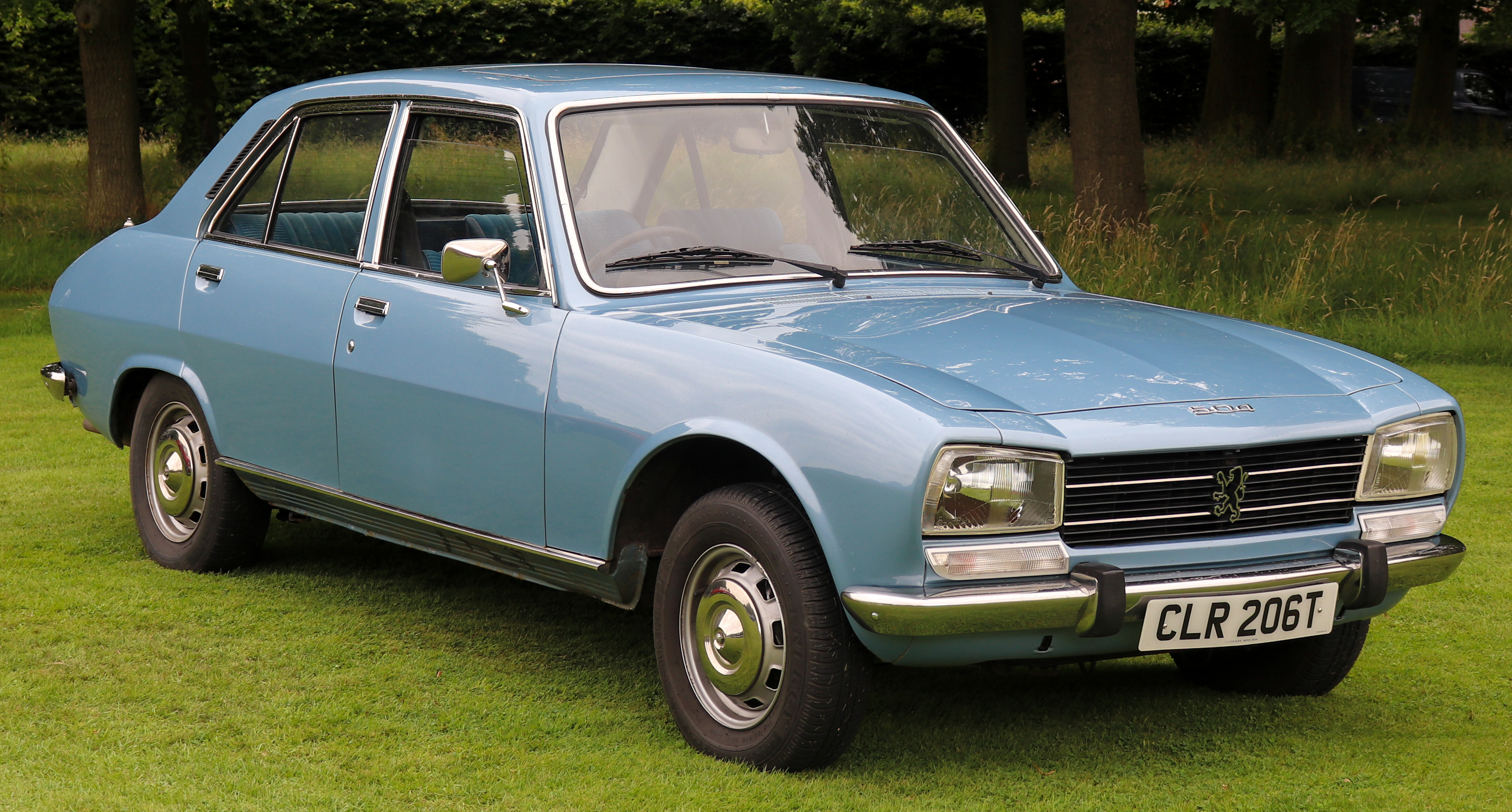
Peugeot 504
"Well there's a 504 that I've had in my shop for two years, I can't find a radio host for it, so when they come back, that guy will be driving again."
The Peugeot 504 is an older Peugeot model. The hosts mention it because it’s been sitting in a shop, and getting the brand back in the U.S. could make it easier to find support and parts.
The Peugeot 504 is a classic mid-size sedan from Peugeot’s lineup, known for its durability and long production run. In this segment it’s mentioned as a car the host has had in the shop, which hints at the kind of older, potentially harder-to-service vehicle that comes with limited parts availability.
US market
"They're just contemplating it, that's what the headline said, contemplating a return to the US market. They're waiting for one of the other big players like Keo or Dewo to drop out, right?"
The “US market” just means selling cars in the United States. Coming back usually involves making sure the cars can be sold legally and supported with parts and dealers here.
“US market” refers to selling and supporting vehicles in the United States—things like dealer networks, emissions compliance, and parts availability. When automakers “contemplate a return” to the US market, it usually means they’re weighing the business case and regulatory hurdles.
dealerships
"Yeah, they'll jump right into the frame. So they can buy up all the dealerships real cheap. Anyway, if you want to talk to us about your car or anything, anything."
Dealerships are the stores where you buy cars and usually get them serviced. Owning or buying dealerships can give a company a ready-made way to sell and maintain cars.
Dealerships are the retail locations that sell new (and often used) vehicles and handle service. The comment about buying dealerships “real cheap” is about acquiring retail distribution and service capacity, which can be valuable when a brand is trying to expand or re-enter a market.

Subaru Uncharted
"...hat, but that's it, just no more roads, it's like uncharted wilderness."
“Subaru Uncharted” doesn’t clearly match a specific Subaru model name. In this context, it sounds like the podcast is describing an “uncharted wilderness” situation. So it’s likely being used as a phrase, not a particular car you can look up by that exact name.
“Subaru Uncharted” appears to be a reference to an “uncharted wilderness” idea rather than a specific, widely recognized Subaru model name. Subaru is known for making vehicles like SUVs and crossovers, but the phrase here sounds more like a descriptive term used in the podcast context. Because it doesn’t clearly match a standard model, it’s best understood as a wording choice tied to the “uncharted” theme.
buy three new tires
"...three tires are bad, one is good, so I said, great, I'll buy three new tires."
They were thinking of replacing only three tires. That can be tricky because the new tires may grip differently than the older one.
Buying only three new tires is sometimes done to save money, but it can create an uneven tire setup. Differences in tread depth and overall tire circumference can affect handling and, on some drivetrains, stress components.
same tread
"...so they'll all have the same tread and he still didn't have a good reason."
“Same tread” means the tire grooves are worn to about the same level. That helps the tires behave more the same on the road.
“Same tread” refers to similar tread depth across tires. Similar tread helps ensure consistent traction and braking performance, and it helps tires roll at similar effective diameters.
handling in the rain
"...How it handles in the rain, for example, how it stops in the rain, how it corners."
Rain performance depends heavily on tire tread design and tread depth, which help channel water and reduce hydroplaning risk. Mismatched tires can create uneven wet grip, making the car feel unpredictable.
traction
"which means that the traction you'd be getting on the left side of the car would be quite different from the traction you're getting on the right side of the car."
Traction is the grip force between the tire and the road. If left and right tires have different tread or width, traction can become uneven, which can cause the car to feel unstable or not track straight.
tread is not worn out
"The truth is, if the tires are the same size and the tread is not worn out, there's no real great danger..."
Tread is the rubber pattern on the tire. If it’s still deep enough, the tire can grip the road better, especially when it’s wet.
Tread depth and condition strongly influence traction, braking, and hydroplaning resistance. Even if tire brands differ, similar tread depth helps keep grip more consistent.
different manufacturers tires
"The truth is, if the tires are the same size and the tread is not worn out, there's no real great danger in having different manufacturers tires on your car..."
You can sometimes mix tire brands if they’re the same size and worn similarly. But different brands can still grip a little differently, especially in rain or snow.
Using tires from different brands can be acceptable if they’re the same size and have similar tread depth, but they may still behave differently. The key is maintaining consistent overall grip characteristics across the axle.
rain and snow
"I mean, admittedly, they will have slightly different characteristics in so far as their ability to handle rain and snow and whatever."
Tires don’t behave the same in every weather. Rain and snow are where tire differences can show up most in grip and stopping.
Tire performance varies by weather: tread design and rubber compound affect how well tires handle water (rain) and grip on ice/snow. That’s why mismatches can matter more in these conditions.
spare
"I'll tell you why. The fourth one had been the spare. The fourth one had been replaced already because it had a hole or something in it."
A spare is the backup tire you keep in case of a flat. If you end up using it, it may not match the other tires, which can change how the car drives.
A spare tire is the tire stored for emergencies, and it’s often different in age, tread depth, or even construction compared to the tires on the car. If a spare gets installed, it can create a mismatch with the remaining tires.
tire rotation
"[486.0s] It's in the rear on the right side. [487.6s] That's a good place for it. [488.9s] Okay. [489.7s] And then when I get the tires rotated, they'll just swap it to the other side."
Tire rotation means moving your tires to different wheel spots. This helps them wear more evenly, so you don’t have to replace them as soon.
Tire rotation is the scheduled moving of tires from one wheel position to another (front to rear, left to right) to even out wear. It helps extend tire life and maintain consistent handling.

1980 Buick Le Sabre
"So what's going on? I have a 1980 Buick Le Sabre, a 350 engine."
This is the specific car the caller has: a 1980 Buick Le Sabre. It matters because different cars have different common problems, and the show is talking about how to spot a cracked head.
A Buick Le Sabre is a full-size American car, and the 1980 model is from the late-1970s/early-1980s GM era. In this episode, it’s the caller’s vehicle, so it frames what kind of engine and cooling/oil issues they’re dealing with.
burns oil
"So this thing burns oil, huh? Yeah. I burned one quart on about 250 miles. Oh, really? That's bad."
If a car “burns oil,” it means the engine is using oil internally, not just spilling it outside. That can lead to the oil level dropping and sometimes smoke coming out the back. It’s different from a leak, where oil drips onto the ground or onto engine parts.
“Burns oil” means the engine is consuming engine oil and burning it in the combustion chambers. This often shows up as oil consumption and sometimes blue-ish smoke from the exhaust. It’s different from oil leaking externally, which can look similar from the outside.
denial phase
"Yeah, no, it's... Trust me, it's there. We have this discussion with everyone. It's called the denial phase. I mean, you know it isn't leaking because you're scrupulous about checking for leaks."
“Denial phase” is a joke about how people sometimes ignore bad signs at first. Here, it means not wanting to believe the car is burning oil, even when the symptoms suggest it. The fix usually starts with admitting there’s a real issue and checking properly.
“Denial phase” is a humorous way to describe the common human tendency to dismiss early warning signs of a mechanical problem. In this context, it’s about not wanting to believe the engine is burning oil because that usually implies internal wear. The diagnostic process often requires accepting the evidence and verifying it with checks.
drain plug
"coming at night and taking the drain plug out and stealing a quart of oil exactly every 250 miles."
The drain plug is a small bolt at the bottom of the engine that lets you drain the old oil out. Removing it would empty the oil, which is why the story treats it like someone could “steal” oil.
The drain plug is the bolt on an engine oil pan that you remove to drain old oil during an oil change. If someone were to remove it, they could drain oil quickly, which is why the joke frames oil loss as “theft.”
valve covers
"You need to go someplace and have them remove one of the two valve covers, okay? And when you do that, you will be looking at the rocker arms and the push rods..."
Valve covers are the covers on top of the engine that keep oil in and protect the valve mechanism. Taking them off lets you see the parts that open and close the valves.
Valve covers protect the top of the engine where the valvetrain components live and also help keep oil contained. Removing them allows inspection of parts like rocker arms, push rods, and valve springs.
rocker arms
"you will be looking at the rocker arms and the push rods and also the valves and the springs around the valves."
Rocker arms are levers inside the engine that help move the valves up and down. They’re part of the system that controls airflow into and out of the engine.
Rocker arms are part of the valvetrain that transfer motion from the camshaft to the valves. When inspecting for oil-burning causes, they’re visible once the valve cover is removed.
brittle and they disintegrate
"If you see that they're all broken and pieces, because what happens after 20 years is they get brittle and they disintegrate."
Over years, rubber seals can dry out and fall apart. When that seal fails, oil can start getting into the cylinders where it shouldn’t.
Rubber valve seals age over time: heat and oil exposure make them harden, become brittle, and eventually break apart. When that happens, they can no longer control oil flow down the valve guides.
valve guide seals
"So you may need to have the valve guide seals replaced. And if you see them broken, immediately fall to your knees and thank your creator, because you will have just saved about $2,000."
Valve guide seals are tiny seals in the engine that keep oil from getting into the cylinders where it shouldn’t. If they fail, the engine may burn oil and smoke, which can point you toward a specific repair.
Valve guide seals are small rubber seals that sit on the valve guides and help prevent engine oil from leaking down into the combustion chambers. When they harden or break, you can get oil burning and smoke, which is one clue that something is wrong in the valve area.
battery was dead
"...he came in to use it the next morning and the battery was dead because he'd left the lights on."
The battery is like a rechargeable power tank. If you leave the lights on, it can run out of power, and the engine won’t start.
A dead battery means the boat’s electrical system doesn’t have enough stored energy to provide the current needed for starting. In this story, the battery drained because the lights were left on overnight.
12 volts
"...they put it on the bench, and they test it. And every time they hit it with the 12 volts, it works perfectly."
Most vehicles run on a 12-volt electrical system. When mechanics apply 12 volts during testing, they’re basically simulating what the battery does in the real vehicle.
“12 volts” refers to the standard automotive/boat electrical system voltage used to power the starter and other accessories. Testing a starter by applying 12V helps confirm whether the starter motor and solenoid/gear mechanism function.
starter motor
"There was nothing wrong with the engine. There was nothing wrong with the starter motor. And I guess I lied a little bit when I said there was nothing wrong with the..."
The starter motor is the part that uses electricity to crank the engine. If it’s not the starter, then the problem is usually the battery or the connections that deliver power to the starter.
The starter motor is the electric motor that cranks the engine to get it running. If the starter motor is healthy but the engine still won’t start, the issue is often in the battery, wiring/connections, or the starter’s engagement with the flywheel.
five speed
"Okay. What I was trying to sell my 94 Toyota pickup. It's a five speed. And it's a short bed."
“Five speed” means the truck has five gears. It can affect how the truck behaves when the mechanic tests it.
“Five speed” indicates the truck has a 5-speed transmission, typically meaning a manual gearbox in older pickups. Gear count matters because it affects how the vehicle is driven during tests and can influence how symptoms show up under load.
short bed
"It's a five speed. And it's a short bed. Gotcha."
A “short bed” refers to a shorter cargo bed length on a pickup truck. It’s relevant to buyers because it changes usability, parking/storage convenience, and sometimes the truck’s overall proportions.
compression test
"So he took it to a mechanic. So he ran a compression test. And he put the car on a machine."
A compression test checks whether each cylinder is sealing properly. If one cylinder has much lower pressure, it can point to internal engine problems.
A compression test measures how well each cylinder can build pressure when the engine is cranked. It helps identify problems like worn rings, leaking valves, or—indirectly—head gasket or cracked-head issues that affect cylinder sealing.
oil leaks
"He did check the compression and looked at the head. There's no oil leaks. There's nothing wrong."
Oil leaks are when engine oil escapes from somewhere it shouldn’t. Mechanics look for them because they can show that a gasket or seal has failed. If there’s no oil leaking, that’s one less clue that something is seriously wrong.
Oil leaks are a common clue in engine diagnosis, because they can indicate gasket or seal failures. In the context of a suspected cylinder head problem, the absence of oil leaks can reduce the likelihood of certain failure modes, though it doesn’t rule everything out.
insurance rental car
"What I find out now, okay, I'm just out of the hospital and I'm driving the insurance rental car because I don't have my own car now."
After an accident, your insurance may help you get a temporary replacement car. That way you can still get around while your own car is out of service.
An insurance rental car is a temporary vehicle provided (or paid for) by your insurer while your car is being repaired or replaced after an accident or covered claim. It’s common when the policy covers “rental reimbursement” or similar benefits.

Toyota Land Cruiser
"And you don't want this gal to fall in love with you because you're driving a $55,000 Toyota Land Cruiser necessarily."
The Toyota Land Cruiser is a big Toyota SUV that’s built to handle rough roads and last a long time. Here it’s mentioned to describe the kind of car someone might be driving.
The Toyota Land Cruiser is a full-size SUV known for off-road capability and long-distance durability. In this conversation it’s used as a reference point for a relatively expensive, rugged vehicle image.

Jeep Grand Cherokee
"So I think the Jeep Grand Cherokee does it for me. Because it'll attract, you know, a woman who's not afraid to jump up into the seat..."
The Jeep Grand Cherokee is an SUV. It’s the kind of car that’s easier to climb into because the seat sits higher, so it can feel less awkward for someone getting in.
The Jeep Grand Cherokee is a popular midsize SUV known for being easy to get in and out of, with a relatively high seating position. In this segment, it’s mentioned as a “date-friendly” choice because it’s practical and approachable for someone who might not want extra help getting into the seat.
weekly rental
"You need to rent a few vehicles and see how it works out. I would get a weekly rental on a Jeep Grand Cherokee."
A weekly rental means you rent a car for about a week. The point here is to try the car out and see if you like it before you decide.
A weekly rental is a short-term car rental where you try a vehicle for about a week to see if it fits your needs and lifestyle. In this segment, the idea is to rent a specific model (the Jeep Grand Cherokee) and test how it feels in real life before committing.
doors locked
"When I test drove that vehicle, if I didn't have the doors locked, God knows how many young babes would have jumped in the front seat. Yeah."
Locking the doors means keeping the car secure so strangers can’t get in. They’re joking that if the doors weren’t locked, people might have tried to get in.
Locking the doors during a test drive is a basic security habit that prevents unauthorized entry. In the segment, it’s mentioned to explain why no one “jumped in” while the speaker was driving.
cars.com
"Of course you go to that same site, the Cartalk section at cars.com, or you order the old fashion way by calling 888 God Junk."
Cars.com is a website where people shop for cars online. The show mentions it because it hosts the Car Talk content.
Cars.com is a major online marketplace where you can browse listings, research vehicles, and often find editorial content like buying guides. In this segment, it’s referenced as a place to find the “Cartalk” section.
Request an Explanation
Heard something you'd like explained? We'll add it to this episode.
Sign in to request explanations for terms you heard.
Want to learn more?
Browse our glossary for plain-English explanations of automotive terms, jargon, and concepts.
Help improve this episode
See something that's not quite right? Our annotations are AI-generated and can sometimes miss the mark. Click the flag icon on any annotation to suggest a correction.