
#2628: Big Freshman on Campus
About this episode
The hosts kick off with a chaotic “diversification” trip to a Boston public golf course to review golf carts—complete with a dog getting launched off a cart, a wheel-drive cart failing on a hill, and a police visit for “disturbance of the peace.” Callers then drive the show: a 1991 Buick Skylark won’t restart after sitting ~10 hours (they suspect a weak battery or hidden current drain), and a 1997 Honda Civic vibrates at idle (likely vacuum leak vs. bad motor mount). Between puzzles and a debate about whether a BU-bound teen should buy an Audi, the episode blends practical diagnostics with plenty of comedy.
To manage podcast ad preferences, review the links below:
See pcm.adswizz.com for information about our collection and use of personal data for sponsorship and to manage your podcast sponsorship preferences.
NPR Privacy Policy
golf carts
"And our goal was to review golf carts. Now who did we do this for? Golf cars. Travel and leisure golf, Doug says."
A golf cart is a small vehicle people use on a golf course to get around. It usually goes slowly and is made for short trips, not highway driving.
Golf carts are small, low-speed vehicles commonly used on golf courses and sometimes for short local trips. They’re typically electric or use small internal-combustion engines, and they’re designed for easy maneuvering at low speeds.
front wheel drive
"He's trying to climb, we had a front wheel drive golf cart. ... But it was the only one that was a front wheel drive vehicle and it's the only one that wouldn't make it up the hill."
Front-wheel drive means the front wheels do the work of moving the vehicle. It can help on slippery or uphill situations, but it still depends on how much grip and power the vehicle has.
Front-wheel drive (FWD) means the engine’s power is sent to the front wheels. On a hill, FWD can help with traction because the driven wheels are pulled forward, but it can still struggle if the vehicle is underpowered or the surface is slick.
test drives
"I mean, we were doing real test drives on these babies. They were brand new, new style even in this case."
A test drive is when you evaluate a vehicle’s behavior before committing to it—often checking drivability, power delivery, and how it handles real conditions. Here, the hosts describe doing “real test drives” on the golf carts to see how they perform.
climb a hill
"He tries to climb a hill. What happens? He gets stuck. ... it's the only one that wouldn't make it up the hill."
Climbing a hill means driving uphill, which is harder because gravity is working against you. If the vehicle can’t get enough traction or power, it will slow down or get stuck.
Climbing a hill is a traction and power-demand scenario where a vehicle must overcome gravity while maintaining wheel grip. In this segment, the golf carts’ ability to climb is used as the key performance difference between them.
street-legal
"Although one of them, the gym, is a car. It's actually street, legal, someplace wacko out west."
Street-legal means the vehicle is allowed to be driven on regular public roads, not just private property like a golf course.
Street-legal means a vehicle is permitted to be driven on public roads under applicable regulations (typically requiring things like lights, mirrors, and safety equipment). The hosts contrast a typical golf cart with one that’s been modified or built to be usable on normal streets.
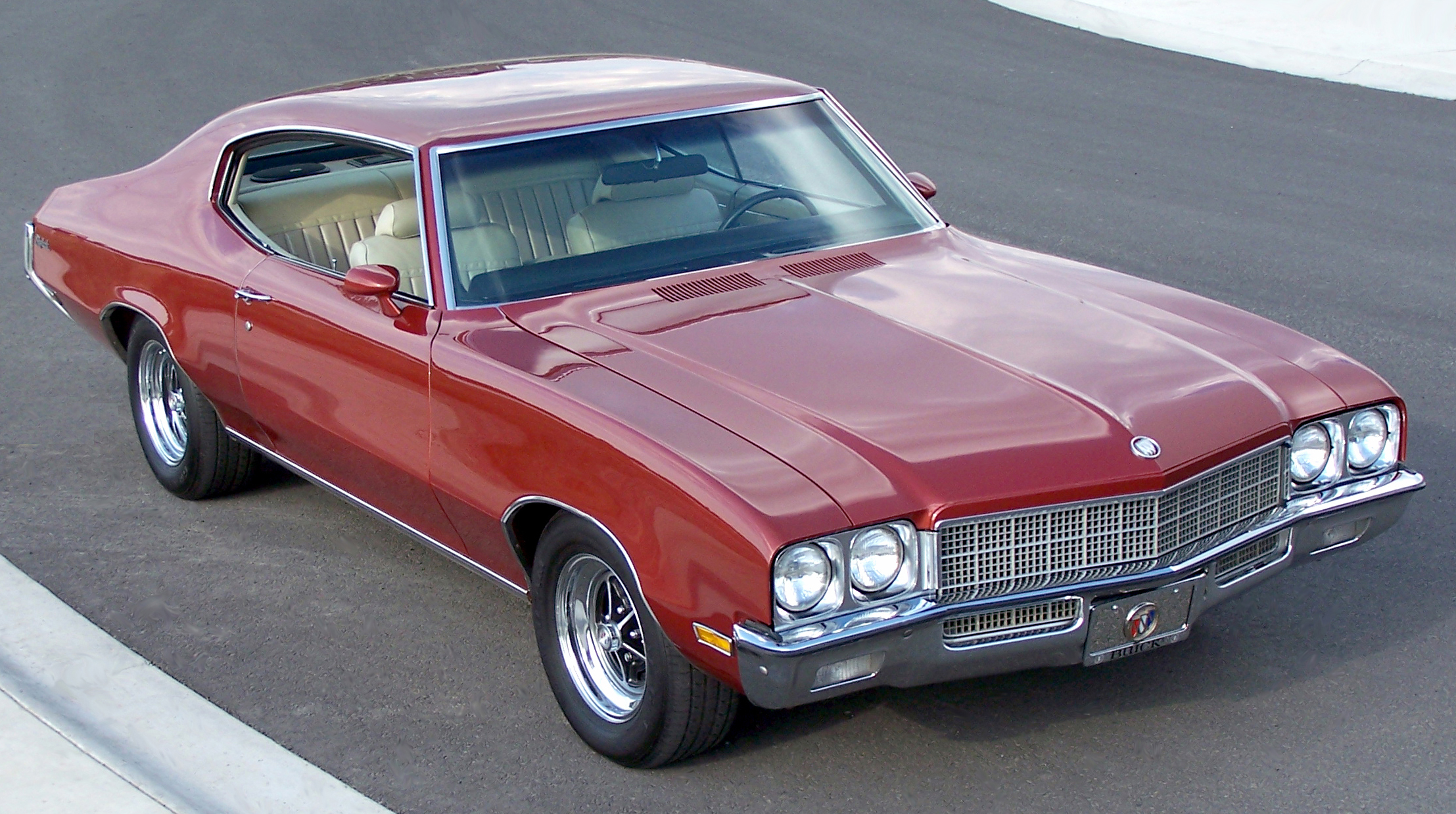
Buick Skylark
"It's a 91 Buick Skylark that I cannot leave for more than 10 hours without starting it."
They’re talking about a 1991 Buick Skylark that won’t start unless it’s been started recently. The problem shows up after the car sits for about 10 hours.
The speaker is describing a 1991 Buick Skylark that has a hard-start problem after sitting for about 10 hours. This is an older, carbureted/early fuel-injection-era GM sedan, so starting issues often come down to fuel delivery, ignition, or engine oil/clearance behavior when cold-soaked.
headlights, radio
"And does anything else work at this point if you try the headlights, the radio? Everything works."
They’re checking if the car’s electrical stuff still works. If the lights and radio work but the engine won’t crank, the problem may be the starter or the battery’s ability to deliver power when cranking.
Checking whether accessories like headlights and the radio work helps distinguish between a total power loss and a starter-specific issue. If everything electrical works but the engine won’t crank, it often points away from a completely dead battery and toward a weak battery under load, a failing starter/solenoid, or poor battery connections.
alternator
"Somebody has checked all the fuses. It's not a fuse. I've had the all the the alternators new ... They checked the alternator in the battery. They said all the tests on that worked out."
The alternator is what keeps the battery charged while the car is running. If it isn’t charging correctly, the battery can run down even if it’s been replaced.
The alternator is the engine-driven generator that powers the car’s electrical system and recharges the battery while you drive. If the alternator is new but not actually producing enough charge, the battery can’t recover and the car may fail to start later.
fuses
"Somebody has checked all the fuses. It's not a fuse. I've had the all the the alternators new"
Fuses protect circuits by breaking the connection if current is too high. Checking fuses helps rule out a blown fuse as the reason the car won’t start, but a no-start issue is often battery/charging related rather than a simple fuse problem.
battery
"Okay, I think your battery is incapable of holding its charge correct ... The battery however in order to start the car the next day ... Must be able to hold that charge and if it doesn't and the charge degrades"
The battery is the part that provides the initial power to start the car. If it can’t hold its charge, the car may crank briefly and then go dead.
A car battery stores electrical energy for starting and for powering electronics when the engine is off. Even with a good alternator, a battery that can’t hold charge (due to age, internal failure, or a parasitic draw) will cause short cranking time and then a no-start condition.
current drain
"I mean there is a possibility that the alternator is no good ... Well, there is also a possibility that you have a current drain something that over a period of hours is draining the battery down and"
“Current drain” means something in the car is still using electricity while it’s parked. If it pulls too much power, the battery can be too low to start the next day.
“Current drain” (often called parasitic draw) is an electrical load that keeps pulling power from the battery when the car is parked. Over hours, it can drain the battery enough that you only get a few seconds of cranking the next day.
balance scale
"And what you have at your disposal is a balance scale [664.7s] You know you put stuff on one side and the other side and if they weigh the same with what the way's the same balances"
A balance scale is like a seesaw for measuring weight. If one side is heavier, it tips, which tells you which coin is heavier or lighter.
A balance scale is a tool used to compare weights by seeing which side tips. In this puzzle, it’s the key method for determining which coin is fake based on a small weight difference.
two-part question
"Which one is the fake right? Yeah, so this is a two-part question part one with that balance scale in your 50 50 [684.9s] Coins a lot of coins. What is the fewest number of wings? You can use to absolutely identify the fake coin"
The host frames the puzzle as two separate tasks: first, finding the minimum number of weighings needed to identify the fake coin; second, explaining the reasoning behind the answer. This structure is common in logic and measurement puzzles.
binary search
"Everyone I always thought that the binary search was the only way to go. Well, there you go"
Binary search is a fast way to look for something in a list that’s already sorted. Instead of checking everything, it keeps narrowing the range until it finds the answer.
Binary search is a method for finding an item in a sorted list by repeatedly cutting the search range in half. It’s mentioned here as the “only way to go,” but in cars it’s more of a general computing concept than a specific automotive technique.
vacuum leak
"one is that you have a vacuum leak in the engine [1086.5s] And and and the vacuum leak would cause one of the cylinders or maybe more than one to not fire"
Your engine uses a vacuum system to help control airflow. If there’s a leak, the engine can get the wrong amount of air, and it may run rough or shake.
A vacuum leak is an unintended opening in the engine’s intake/vacuum system that lets unmetered air enter. That extra air can throw off the air-fuel mixture, causing rough running and misfires on one or more cylinders.
vibrations being telegraphed through the chassis in the steering wheel
"You're feeling vibrations being telegraphed through the chassis in the steering wheel chances are you have a bad motor mount?"
If the steering wheel shakes, it usually means the vibration is traveling through the car’s structure. That often points to mounts or other connection points.
When vibration is felt through the steering wheel, it suggests the vibration is being transmitted through mounts and the chassis, not just felt at the engine. This helps distinguish mount-related issues from purely combustion-related roughness.
covered by Honda
"Let literally less than three years old [1140.3s] I mean, and that's something that should be covered by Honda that it's just is it a bad part? Absolutely"
The speaker is referring to the manufacturer’s warranty coverage for a relatively new car. If a vibration issue is caused by a defective part, it may be eligible for warranty diagnosis and repair.
complained of the problem prior to the 30s 36,000 mile
"but yeah, that's okay because you complained of the problem prior to the 30s 36,000 [1162.8s] Mile right"
They’re saying it helps if you reported the problem while the warranty was still active. Keeping a record of your complaint can make it easier to get the repair covered.
The speaker is emphasizing documentation and timing: reporting the issue while still under warranty can strengthen a warranty claim even if mileage later exceeds the limit. Dealers may require proof of earlier complaints.
wooden spokes
"Parts have changed composition over the years for example The wheels of cars used to be made out of wood Wooden spokes and then they evolved into steel and then now most wheels are made out of some kind of"
Back in the day, some car wheels used wooden spokes. Wood can be lighter, but it doesn’t hold up as well to bumps and weather as modern materials.
Early wheels often used wood spokes, typically with a rim and hub assembly. Wood was lighter and easier to work with, but it was also more vulnerable to damage from moisture, impacts, and wear.
steel
"Wooden spokes and then they evolved into steel and then now most wheels are made out of some kind of Magnesium aluminum alloy Okay, and or cream cheese or cream cheese"
At some point, wheels moved from wood to steel. Steel is tougher and handles road impacts and wear better than wood.
Steel became a common wheel material as manufacturing improved and durability needs increased. Compared with wood, steel offers better strength and resistance to road damage, helping wheels survive everyday use.
magnesium aluminum alloy
"and then now most wheels are made out of some kind of Magnesium aluminum alloy Okay, and or cream cheese or cream cheese"
Modern wheels are often made from light metal mixtures like aluminum or magnesium. Lighter wheels can help the car feel smoother and respond faster when you drive.
Modern wheels are often made from lightweight metal alloys, commonly aluminum, and sometimes magnesium. These alloys reduce unsprung weight (mass not supported by the suspension), which can improve ride quality and responsiveness.
dashboard materials evolution
"Dashboards used to be made out of wood. Yeah, okay, and then they became made out of steel and now they are made out of cream cheese... Later on when they discovered that that didn't work too well. I was made out of leather... I was made out of cotton... today I am made out of a mixture of things some of which are steel wool iron and bronze"
They’re making a joke about what car dashboards used to be made from. Today, dashboards are usually made from engineered materials that are lighter and last longer than older stuff like wood or leather.
The segment jokes about how car dashboards have used different materials over time. In real vehicles, dashboards have evolved from early, simpler materials to modern composites and plastics for durability, weight savings, and safety.
in-car sound system
"...How about the sound system?"
They mention the car’s sound system. That’s the audio setup—speakers and electronics—that makes music and podcasts sound good inside the car.
The segment references an in-car sound system, which is a major part of modern cabin comfort and infotainment. Upgrades can involve speakers, amplifiers, and head units, and they’re often tuned for the vehicle’s interior acoustics.
city driving: you don't need a car
"Yeah, I mean, boston really is a city in which you don't need a car Uh, I don't know what he would use it for if you were here."
They’re saying that in a big city, you often don’t need your own car because you can get around other ways. When parking and insurance are expensive, a car may not be worth it.
The speakers argue that Boston’s urban environment reduces the need for personal car ownership because you can rely on walking, transit, and campus access. This is an ownership concept: in some cities, the “cost of owning” (parking, insurance, risk) outweighs the convenience.
can't park it once you get there
"[1705.9s] So he can find out that really you don't need a car if anything [1710.9s] It's a hindrance [1712.7s] Because you can't go anywhere with the car in the city because you can't park it once you get there [1717.4s] Right, plus you've got to pay to park it"
In the city, parking is tough. So even if you have a car, it can be more trouble than it’s worth.
The speaker is describing a common urban ownership problem: parking constraints make a car inconvenient. When parking is hard or restricted, the “cost” of owning a car becomes time and hassle, not just fuel or payments.
tickets
"[1717.4s] Right, plus you've got to pay to park it [1720.3s] Anywhere around town you can't park it on the street. It'll cost you a thousand dollars a week in tickets [1725.1s] Now, of course, there's one more strategy"
They mean parking tickets. If you can’t park legally, you can get fined over and over.
The speaker is talking about parking tickets as a consequence of street-parking restrictions. For city ownership, repeated tickets can quickly become a major expense and a strong argument against keeping a car.
Audi quattro
"But do you think an Audi quattro is the uh, oh the Audi quattro is wonderful"
Quattro is Audi’s all-wheel-drive system. It helps the car grip the road better, especially when it’s wet or slippery.
“Quattro” is Audi’s brand name for its all-wheel-drive system, designed to improve traction in poor weather and on slippery roads. The speaker calls it “wonderful,” using it to emphasize that the car’s drivetrain is a selling point.
all-wheel drive (AWD)
"But do you think an Audi quattro is the uh, oh the Audi quattro is wonderful"
All-wheel drive means power goes to more than two wheels. That usually helps the car grip better, especially on slippery roads.
All-wheel drive (AWD) sends power to more than just the front or rear wheels, improving traction and stability. In the transcript, AWD is the underlying idea behind Audi’s “quattro” system.
parked on the street
"People will smash into it because it's parked on the street I'll have to pay to get it fixed pay for the insurance pay for the park"
Parking on the street increases exposure to damage from other drivers, weather, and vandalism because the car isn’t protected by a garage or controlled lot. The segment uses this to argue that a student’s car could get hit repeatedly.
pay for the park
"I'll have to pay to get it fixed pay for the insurance pay for the park"
“Pay for the park” refers to parking fees, which can be a recurring cost for owning a car—especially in cities or near campuses. The speaker includes it alongside repairs and insurance to show the total cost of ownership.
a thousand dollar car
"So he can do this every summer that he's in school and drive a jalopy here. He can buy himself a thousand dollar car"
A “thousand dollar car” is shorthand for buying a very low-budget used vehicle, often with unknown maintenance history. The segment uses it to illustrate how cheap cars can still lead to ongoing costs when accidents and parking are factored in.
Request an Explanation
Heard something you'd like explained? We'll add it to this episode.
Sign in to request explanations for terms you heard.
Want to learn more?
Browse our glossary for plain-English explanations of automotive terms, jargon, and concepts.
Help improve this episode
See something that's not quite right? Our annotations are AI-generated and can sometimes miss the mark. Click the flag icon on any annotation to suggest a correction.