
About this episode
Light-speed “science” banter kicks off, then the show dives into real-world car fixes. A caller with a recurring hard-to-turn steering feel is diagnosed as a frozen steering coupling (not the rack). Another driver’s intermittent power loss on a 1993 VW Fox points toward an airflow sensor/harness issue, with a humorous “laying on hands” workaround. Later, a 1995 Mercury Sable dying on mountain climbs is blamed on a weak fuel pump and tested under heat. The puzzler: why one in six new Ford cars arrived with dead batteries.
See pcm.adswizz.com for information about our collection and use of personal data for sponsorship and to manage your podcast sponsorship preferences.
NPR Privacy Policy
speed of dark
"Now, look, if your car is not traveling at the speed of light or even the speed of dark, call us and we'll try to help the number 888 Car Talk. What is the speed of dark? Dark is faster than light."
They’re joking about a made-up speed called the “speed of dark.” Darkness isn’t something that moves like light does, so it’s not a real measurement—just a funny bit.
“Speed of dark” is a playful, science-fiction-style joke about how fast darkness could travel. In real physics, “darkness” isn’t a physical object or signal with a measurable speed the way light is, so the phrase is meant for humor rather than engineering reality.
rack opinion system
"...ago six years now three years ago we got the same thing same thing yeah I took it back and they said you need a new rack opinion I said I put a new one in oh yeah that was a rebuilt system it's only guaranteed for a year okay I put a new rack opinion system a new one or another rebuilt another rebuilt okay..."
This sounds like they’re talking about the steering rack—part of the steering system that helps turn the wheels. When it goes bad, the car can feel loose or the steering can act weird, and sometimes fluid leaks happen too.
The phrase “rack opinion system” appears to refer to a steering rack and related power-steering components. A steering rack converts the steering wheel’s rotation into left/right movement at the wheels, and when it wears out it can cause play, leaks, or inconsistent steering feel.
rebuilt system
"...oh yeah that was a rebuilt system it's only guaranteed for a year okay I put a new rack opinion system a new one or another rebuilt another rebuilt okay..."
A “rebuilt” steering system typically means used components are disassembled, inspected, and repaired or replaced, then reassembled and sold with a limited warranty. Rebuilt parts can be cost-effective, but warranty length and quality control can vary, which is why the caller is frustrated about the short coverage.
steering rack
"[252.1s] which is different than what oh yeah and you know what that's not the rack good good [256.7s] well is it something better it's something a lot cheaper it's cheaper okay [260.3s] yeah if it if it if every 90 degrees it's getting hard to turn and then the [265.9s] subsequent 90 degrees it's getting easy and then the next 90 degrees it gets [269.9s] hard again this is cheap this is you this is relatively cheap it's the [274.0s] steering coupling there is a coupling that goes between your steering column [278.4s] and the rack"
The steering rack is the main mechanism that turns your steering input into the wheels turning left or right. A bad rack usually makes steering feel consistently hard, not just in one direction.
The steering rack converts the steering column’s rotation into left/right movement of the tie rods. If the rack were failing, steering would typically feel difficult across the whole range rather than having distinct easy/hard spots.
diagnosing by "hard spots" vs constant stiffness
"[260.3s] yeah if it if it if every 90 degrees it's getting hard to turn and then the [265.9s] subsequent 90 degrees it's getting easy and then the next 90 degrees it gets [269.9s] hard again this is cheap this is you this is relatively cheap it's the [274.0s] steering coupling there is a coupling that goes between your steering column [278.4s] and the rack see if the rack were bad it more likely who would be difficult to [282.9s] steer over the whole range of the steering okay so if you tried to turn it [287.0s] left or right you'd find it equally difficult in both directions"
They’re basically using the “feel” of the steering to guess what’s wrong. If it’s uneven—hard in some positions and easy in others—that often points to a part that’s sticking, not the main steering gear.
The hosts use a symptom pattern to narrow the cause: if steering is hard only at certain points (e.g., every ~90 degrees) and easier at others, it suggests a binding joint/coupling rather than a rack issue. A rack problem would more likely make steering difficult throughout the full turning range in both directions.
steering coupling
"[274.0s] it's the steering coupling there is a coupling that goes between your steering column [278.4s] and the rack see if the rack were bad it more likely who would be difficult to [282.9s] steer over the whole range of the steering okay so if you tried to turn it [287.0s] left or right you'd find it equally difficult in both directions"
It’s the part that connects your steering wheel to the steering system. If it gets stuck or corroded, your steering can feel stiff in one direction and not the other.
The steering coupling is the connection between the steering column and the steering rack. If it seizes or binds, the steering can feel stiff in one direction and easier in the other, creating “hard spots” as you turn.
universal joint that freezes up
"[294.8s] right this coupling is like a little universal joint and it freezes up it [300.1s] gets crudded up it rusts up yeah it gets what happens is water gets into the [305.4s] joint and the joint freezes in one direction so that it can't flex in [309.5s] both directions but can flex only in one direction and hence it makes the wheel [313.2s] hard to turn half the time"
Some steering connections are designed to move a little while still turning the wheels. If water gets in and it rusts or seizes, it can stop moving properly and make steering feel uneven.
A steering coupling is often described like a universal joint, allowing movement while transmitting motion. When water gets into the joint and it freezes, it can lock in one direction—so the wheel feels hard half the time and easier the other half.
replace the rack vs replace the coupling
"[326.9s] I think I think they're going to they know what [331.4s] this is like wiping off the they're going to do both they're going to replace the [335.1s] rack and the coupling and of course your problem will be solved by the same [338.9s] token they could also replace your dashboard and that would also solve [342.0s] this problem so they could do three things yeah but only one of them is [345.6s] necessary tell them you don't want the rack replace you heard it on good [350.2s] authority that the steering coupling is the problem and that's what it is a [350.2s] guarantee it okay great sounds good to me"
They’re talking about repair strategy. If the problem is likely the smaller connection (the coupling), replacing the whole rack may cost more than needed.
The discussion highlights a common repair decision: replacing the steering rack is a bigger, more expensive fix than replacing a smaller coupling. They argue the symptom pattern points to the coupling, so replacing the rack would be unnecessary.

93 Volkswagen Fox
"John from Portland in Oregon what's up well I got a 93 Volkswagen Fox and yeah when I first had it I was out in Asbury Park New Jersey and it ran around just like a little sewing machine then I drove from Asbury Park all the way out to Portland Oregon that's when the trouble started"
A Volkswagen Fox is a small car. The caller is saying his 1993 Fox would randomly lose power and almost stall, and it kept happening every few hundred miles.
The Volkswagen Fox is a small, older Volkswagen model (here, a 1993 Fox) known for simple, budget-friendly mechanicals. In this story it’s experiencing repeated drivability issues—loss of power and near-stalling—over long highway trips.
fuel in the engine
"and we'd get out show the the people what was wrong and they'd say oh you've got fuel in the engine they'd fix that up and so every 400 miles I'm forking out like hundred two hundred dollars"
If someone says “you’ve got fuel in the engine,” it usually means gas is getting there. So the issue might be something else—like a sensor or wiring problem—rather than the car not getting fuel at all.
When a mechanic says “you’ve got fuel in the engine,” they’re implying the fuel supply is present, so the problem may not be a simple “no fuel” condition. That shifts suspicion toward sensor/airflow metering, wiring, or ignition/fuel delivery control rather than the tank or pump alone.
fuel pumps
"every 400 miles I'm forking out like hundred two hundred dollars they they put in tune you fuel pumps along the way then finally I got to Rapid City in South Dakota"
The fuel pump’s job is to send gas to the engine. If it’s weak or failing, the engine may not get enough fuel and can start running rough or lose power.
A fuel pump supplies pressurized fuel to the engine so it can keep running under load. If a fuel pump is failing or delivering inconsistent pressure, the engine can hesitate, lose power, or stall—especially noticeable during highway driving.
static electricity causing intermittent sensor faults
"and the man says well this is a fault in this car mm-hmm you've got to get a special part for it because it builds up static electricity really and it's called a harness he said harness for the airflow sensor"
Sometimes car problems aren’t constant—they happen randomly. The caller is saying static electricity and wiring issues can mess up sensor readings, so the car runs fine for a bit and then suddenly acts up.
Intermittent drivability problems can be caused by wiring issues that create poor electrical contact or electrical noise. The caller attributes the fault to static electricity building up and affecting the airflow sensor circuit, which is a plausible explanation for “works for a while, then fails” behavior.
harness for the airflow sensor
"man says well this is a fault in this car mm-hmm you've got to get a special part for it because it builds up static electricity really and it's called a harness he said harness for the airflow sensor ah anyway they put it in"
The airflow sensor tells the computer how much air the engine is pulling in. If the wiring harness for that sensor is damaged or faulty, the computer can get wrong information and the car can run badly or lose power.
An airflow sensor measures how much air the engine is ingesting, and the engine computer uses that to calculate fuel delivery. The wiring “harness” to that sensor can cause intermittent faults if it develops resistance, breaks, or creates poor connections—leading to sporadic loss of power.
open up the bonnet and touch it all over the engine
"200 miles later it starts doing the same what I found but this is the embarrassing thing of it now what the only thing I can do is I have to get up open up the bonnet and touch it all over the engine"
This is basically “wiggle-test” behavior—touching things to see if the problem changes. If the car acts up only when you touch certain wiring or parts, it points to an electrical connection problem.
Touching components or wiring while the engine is running is a crude diagnostic technique for intermittent electrical faults. If the problem changes when you move or contact a harness/connector, it strongly suggests a loose connection, damaged insulation, or failing sensor wiring.
static buildup
"but if there was a static buildup it may have damaged the delicate circuitry in the airflow sensor and been too late for the harness to do any good you know what the harness was designed to to prevent further damage"
They’re wondering if a buildup of static electricity could have damaged the sensor’s internal electronics. If the sensor is already damaged, fixing the wiring alone won’t help.
The hosts speculate that static buildup could damage the airflow sensor’s delicate electronics. This is an example of how electrical disturbances (like electrostatic discharge) can cause sensor failure even if the wiring/harness is intact.
lay hands on the hood
"so you're not going to address the laying on of hands mystery I mean I mean there's got to be you know me is there not a technical explanation for when Padre opens the hood and lays on the hands that everything is okay well I'm sure there is"
They joke about someone “laying hands” on the car, but then they try to explain it in a normal way. The key detail is that the car is turned off for about 30 seconds, which could reset something in the electronics.
“Laying on hands” is treated like a folk remedy, but the hosts try to frame it as having a technical explanation. They discuss the timing—turning the car off and waiting about 30 seconds—suggesting a reset effect (like clearing a fault state or allowing capacitors to discharge) rather than any supernatural cause.
side-of-road safety on busy freeways
"freeway it's bloody scary yeah when there's no little side parts to put the car yeah see if you can get a provision to ride with you let them try the laying on the hands tell me going to teach him the art of laying on the hands and make sure that you don't get out of the car on those busy freeways it's safer to get out on the passenger side anyway"
This segment focuses on how to handle a breakdown or emergency on a freeway safely, including where passengers should exit and how to minimize exposure to traffic. It’s a practical safety discussion rather than a mechanical one.
open the hood on the roadside
"as soon as it starts you just leave them there with us good luck father thank you bye bye bye hey the puzzler answer and more calls are coming up right after this this message comes from progressive insurance"
They’re talking about what to do when you’re stuck on a busy road. Instead of both people standing around in traffic, one person stays in the safer spot while the other handles the car—like opening the hood—so you can deal with the problem more safely.
The hosts are describing a roadside safety routine: if the car is running, you can keep the situation controlled while the passenger helps with basic checks. Opening the hood is often used to signal the car is being attended to and to allow quick access to the engine bay if needed.
vehicle weight limits
"...the bridge has a weight limit of 20 tons so one day a truck pulls up to the bridge... officials stop him and say we have to weigh you because it looks like it's going to be close... clearly if the weight limits 20 tons they can't allow anyone else on the bridge..."
Bridges have a maximum weight they can safely carry. If a vehicle is too heavy, the bridge can get stressed and potentially fail, so officials may restrict traffic.
The story hinges on a bridge having a maximum allowable load (a weight limit). In real life, weight limits exist to prevent structural overload that could cause failure, especially on older or lightly built bridges.
weigh scale
"...officials stop him and say we have to weigh you because it looks like it's going to be close... so he drives onto the scale and the truck is full of sedated pigs..."
A weigh scale is where they measure how heavy a truck actually is. They do it to make sure the truck and its load don’t exceed the allowed limit.
A weigh scale (weigh station scale) is used to measure the actual weight of a vehicle and its cargo. This matters because legal limits are based on total weight, and enforcement often relies on measured axle/vehicle weight rather than estimates.
jettisoning cargo to reduce load
"...what does the driver do to keep the truck... from plunging into the abyss... well he could do a lot of things for example figuring that his shoe weighs more than a sparrow to throw a shoe out... or he could jettison something else..."
The idea is that if the truck is too heavy, you might need to get rid of some weight fast. In the story, the driver considers throwing something out to reduce the load.
The driver’s dilemma is essentially about reducing the vehicle’s effective load quickly to stay under the bridge’s limit. In vehicle safety terms, “jettisoning” means throwing away weight (cargo or other mass) to change the load the structure experiences.

Toyota Camry
"...with an h sure what's shaken i have an 87 toyota camry four door four cylinder and i got it from my gran..."
A Toyota Camry is a regular passenger car (a sedan) meant for everyday driving. The “four-door, four-cylinder” part means it has four seats/doors for passengers and a smaller engine that’s built for efficient, basic driving. The podcast is bringing it up because an older Camry like an ’87 can be a long-lasting family car.
The Toyota Camry is a midsize sedan known for practical everyday transportation and long-running reliability. In the podcast context, the mention of an ’87 Camry highlights an older, four-door, four-cylinder example—exactly the kind of car people keep for years and pass down in families. It’s discussed because that generation is often remembered for being straightforward to own and maintain.
lack of power
"um i got it with 50 000 miles on it and now it has 70 000 miles on it yeah the problem is when i first got it i noticed there was a lack of power and it actually felt like my grandmother was still driving the car"
“Lack of power” means the car doesn’t feel like it accelerates normally. That can happen if the engine isn’t getting the right spark or fuel, or if something under the hood isn’t connected correctly.
“Lack of power” is a common symptom that can come from several systems—fuel delivery, ignition, air intake, or even engine timing. In older cars, ignition-related issues like misfires are especially common causes of a car feeling weak under acceleration.
spark plug covers
"and it actually felt like my grandmother was still driving the car so i looked under the hood and i found that one of the uh cylinders or the spark plug covers was a little bit raised off of the"
They found something near the spark plugs that wasn’t sitting right. If the spark plug area isn’t sealed or connected properly, the engine may not run as strongly or may feel like it’s missing power.
Spark plug covers (often referring to the ignition coil/boot or the protective cover over the spark plug area) can loosen or lift if the ignition components aren’t seated correctly. If they’re not properly fitted, the engine can misfire or lose power because the ignition system isn’t working reliably.
oil leak into spark plug area
"spark plug and i looked inside it pulled it out looked inside of it and there was oil covering the bottom of that spark plug cover the white right right right ... he put the o-rings in wrong ... if he didn't tighten those enough they would leak"
If oil is showing up near the spark plugs, it usually means oil is leaking from the top of the engine. Depending on where it’s leaking from, it can also contribute to smoke from the exhaust.
Oil on the spark plug or around the spark plug well often indicates an oil leak from the valve cover seal area or related valvetrain sealing. That can also correlate with blue smoke if oil is reaching the combustion process.
o-rings
"he cleaned up the oil took the ring off and i'll replace that little he said there's a little ring in there there are a little four little o-rings yes replace that good"
O-rings are small rubber seals that help keep oil from leaking out. If they aren’t seated correctly or the parts aren’t tightened down enough, oil can seep into places it shouldn’t.
O-rings are rubber sealing rings used to prevent oil or other fluids from leaking where parts meet. In this case, the discussion ties the O-rings to sealing between the cylinder head and the valve cover area, so incorrect installation or insufficient clamping can cause oil leaks.
blue oily smoke
"there's always a puff of smoke coming out of the exhaust blue oily smoke yeah bluey yeah and when you say there's a lack of power"
Blue smoke from the exhaust often indicates oil is being burned in the combustion chambers. “Oily” blue smoke commonly points to valve cover seal/gasket issues, worn valve seals, or other oil-control problems that let oil reach the cylinders.

Honda Accord
"uh an 83 accord four cylinder but it was manual transmission oh yeah and that would have more zip yeah much more it would have more zip with the stick shift"
They’re comparing the problem car to a 1983 Honda Accord they used to drive. The point is that the manual transmission car probably felt quicker and more responsive than the automatic they have now.
The speaker compares their current issue to an older 1983 Honda Accord with a four-cylinder engine and a manual transmission. That comparison is used to highlight how a stick shift can feel more responsive (“zip”) than an automatic in the same general power range.
timing
"you should ask this guy to check the timing the timing yeah okay because the timing could be off i mean there are a lot of other things that could be wrong with it"
Timing is about when the engine’s spark and valve events happen. If it’s off, the engine may feel weak or run strangely even though it starts and idles.
Engine timing refers to when key events happen in the engine cycle—especially ignition timing and, on many engines, camshaft timing. If timing is off, the engine can run poorly, lose power, and may idle rough even if it still “runs on all cylinders.”
valve cover
"but he didn't tighten there are four big nuts on the top of the valve cover right and that's what holds the valve cover down right and squashes those o-rings between the cylinder head and the tube"
The valve cover is the top cover over the engine’s valve area. It has seals that keep oil from leaking—if it’s not tightened right, oil can get where it shouldn’t.
The valve cover is the top housing that covers the valvetrain components and helps keep oil contained. It’s sealed to the cylinder head with gaskets/O-rings, and if the cover isn’t tightened properly, oil can leak and contaminate areas like spark plug wells.

Mercury Stable
"...i have a 95 mercury stable and it has about 85 000 miles on it yeah i moved out to colorado last summer..."
A Mercury Sable is a regular family sedan made by Mercury (which is part of Ford). The caller’s Sable has a problem where it dies in certain situations, so the diagnosis depends on what’s happening in that specific car.
The Mercury Sable is a mid-size sedan from Mercury (a Ford brand). In this call, the host is treating it like a specific, identifiable car with a real drivability problem that shows up under certain conditions.
diagnostic check on the computer system
"i took it in the first time that it happened last summer they did a complete diagnostic check on it on the computer system i i thought so yeah and found nothing registered right and and i'm afraid they couldn't figure it out because they were looking at the wrong thing"
Modern cars have computers that can store error codes when something goes wrong. Sometimes the scan shows nothing, especially if the problem happens only sometimes or doesn’t set an error code.
A “computer diagnostic” usually means the shop scans the car’s onboard systems for trouble codes and live data. If it “finds nothing,” the issue may be intermittent, not triggering codes, or the technician may be looking at the wrong system/parameter for the symptom.
trouble codes
"...they did a complete diagnostic check on it on the computer system i i thought so yeah and found nothing registered right..."
When a car senses a problem, it can save a code in its computer. If the shop says there are no codes, it can mean the problem didn’t happen during the test or it wasn’t severe enough to trigger a warning.
Trouble codes are stored by the vehicle’s engine control computer when it detects a fault. If the scan “finds nothing registered,” it suggests no codes were stored at the time of testing, which can make intermittent problems harder to diagnose.
humming noise coming from the rear of the car
"...but the engine is running right do you hear a humming noise coming from the rear of the car"
A humming sound from the back of the car can be a clue about the fuel system, like the fuel pump. The host is asking because that sound can help figure out what’s causing the car to die.
A humming noise from the rear often points to components like the fuel pump or related fuel-supply hardware, which can be heard when the pump is running. The host is essentially asking for a symptom that can narrow the diagnosis even when computer scans don’t show codes.
vapor lock
"the first the first instance with your mother could well have been the fuel pump it could also have been vapor lock okay but i don't think it was"
Vapor lock is when fuel gets so hot that it turns into vapor instead of staying liquid. Vapor doesn’t flow the same way, so the engine can stall or feel like it’s not getting gas.
Vapor lock is when fuel boils in the fuel lines or pump area, forming vapor bubbles that reduce fuel delivery. It’s more likely in older fuel systems or in extreme heat, and it can cause stalling or loss of power.
fuel pressure dropping when hot
"if they just put the tester on there and run the car for a minute they may in fact determine that the fuel pressure is okay okay but if they let the thing run and get good and hot on a hot day you may see the pressure dropping"
Sometimes a car problem doesn’t happen right away—it shows up after everything warms up. If the fuel pressure falls when the car is hot, the engine can act like it’s starving for gas.
Many fuel-pump problems only show up after heat soak. A pump can measure “okay” briefly, but as it gets hot the fuel pressure can drop, causing drivability issues like hesitation or loss of power.
volume test
"they can also do a volume test because there is a specification for how much volume the pump should pump"
A volume test checks how much gas the pump can actually push to the engine, not just what the gauge reads briefly. If the pump can’t deliver enough fuel, the car will struggle when you’re driving hard.
A fuel volume test measures how much fuel the pump can deliver over time, not just the pressure. Even if pressure looks acceptable for a moment, a pump with low flow can still fail under sustained demand.
fuel pressure specification
"they can also do a volume test because there is a specification for how much volume the pump should pump"
Cars have “correct” fuel pressure targets. A mechanic compares what the gauge shows to the manufacturer’s expected range to decide if the fuel system is working properly.
A fuel pressure specification is the target range a manufacturer expects the system to maintain under defined conditions. Diagnostics often compare measured pressure and flow to these specs to confirm whether the pump is failing.
Ford
"a friend of mine used to work at a Ford assembly plant and he told me the following story ... the engineers at Ford were perplexed"
Ford is the car company in the story. They’re trying to figure out why a bunch of brand-new cars keep showing up with dead batteries. The point is that even big manufacturers can have tricky problems that take time to track down.
Ford is referenced as the automaker running troubleshooting at the engineering and quality-control level. The episode uses Ford as the backdrop for a real-world style investigation: circuit tests, lot testing, and then escalation to specialists when the issue doesn’t show up in normal checks.
dead battery on delivery
"amongst these problems was one really strange one one out of every six cars delivered to a dealership would have a dead battery the engineers at Ford were perplexed"
A “dead battery on delivery” means the car’s battery is too low to start when it’s brand new. If it happens to the same number of cars every time, it usually means something in how the cars or batteries are made, stored, or installed is going wrong. It’s not just one bad battery—it’s a pattern.
The story describes a batch-level issue where a fixed fraction of new cars arrive with a dead battery. That points to a manufacturing, handling, or supply-chain problem rather than a random customer or driving issue. It’s a classic example of a “systematic” defect that persists until the root cause is found.
root-cause investigation (lot testing, circuit tests)
"they did circuit tests for short circuits none were found they did extensive lot testing on incoming batteries ... guess what no no problems perfect they hired specialists and consultants crystal ball readers and the like"
They try to find the cause step by step. First they check for electrical shorts, then they test batches of batteries, but nothing shows up. When the problem keeps happening the same way, it suggests the cause is in the process—something about how parts are handled or installed.
The segment outlines a troubleshooting ladder: electrical circuit tests for short circuits, then lot testing of incoming batteries, and finally bringing in external specialists. The key idea is that some defects only appear under real-world timing, handling, or process conditions, so standard tests may not reproduce them. Persistent “one out of six” behavior suggests a repeatable process fault.
quality control engineer
"upon arrival at the distributor wow he says my friend was a quality control engineer and decided to take action and take things into his own hands yeah he walked the entire assembly plant"
A quality control engineer is responsible for finding and preventing defects during manufacturing and delivery. In the segment, the quality control engineer escalates beyond lab testing by walking the assembly plant and talking to workers to locate where the problem is introduced. This highlights how root-cause analysis often requires process-level investigation, not just component testing.
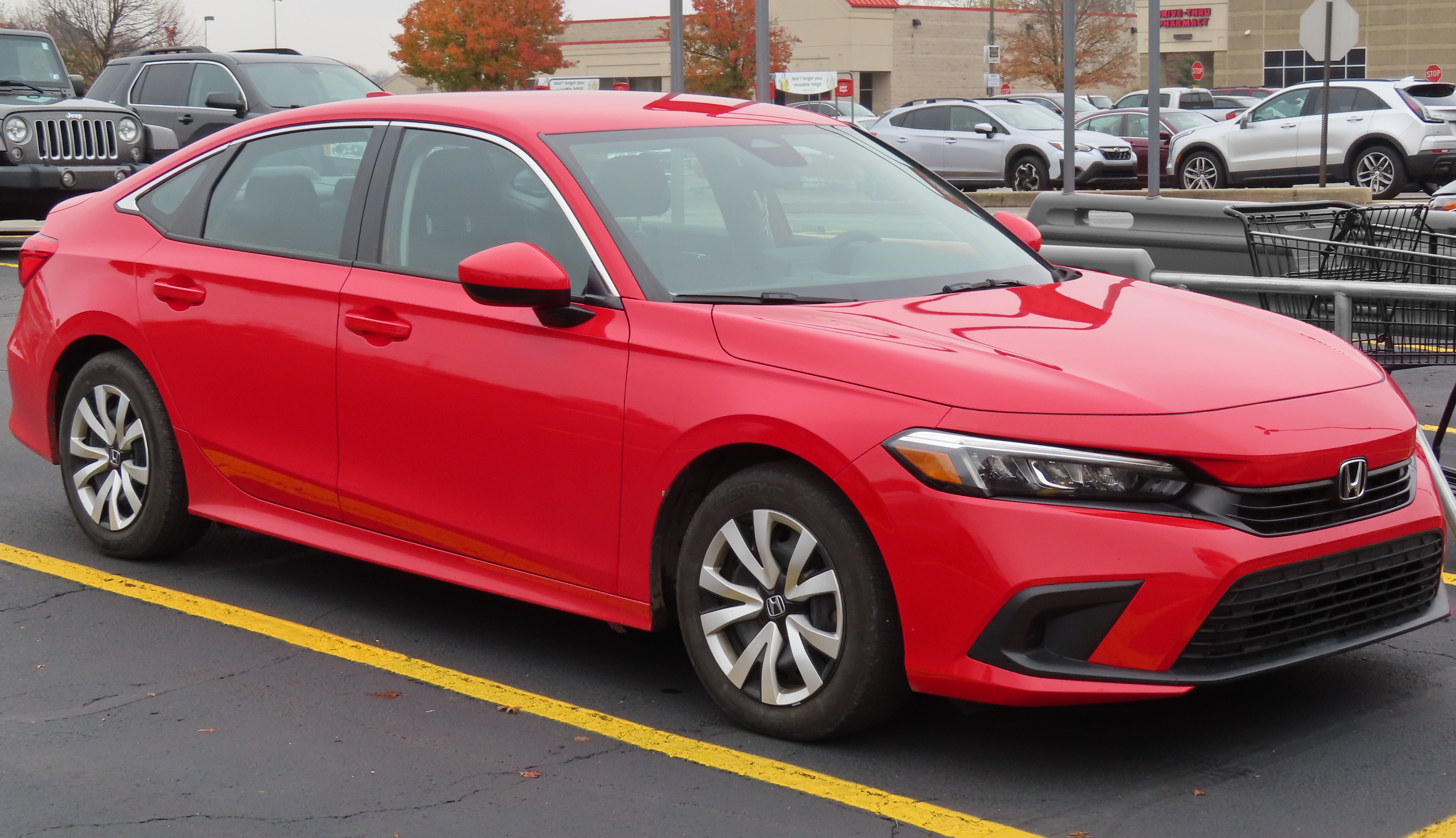
Honda Civic
"...it’s a first of all it’s a 1989 honda civic about 135 000 miles the problem i have is this..."
They’re talking about a 1989 Honda Civic. The key point is that after the car sits for hours, the warning light comes on when they start it again.
The speaker’s car is a 1989 Honda Civic, a late-1980s compact from Honda. In this segment it’s important because the recurring issue is tied to the car’s starting behavior and the dashboard warning that appears after long parking sessions.
check engine light
"...four or five hours later when i come back every time i start the engine the check engine light"
The check engine light is the dashboard indicator that the car’s engine control system has detected a fault. On older cars like a 1989 Civic, it typically means there’s a stored diagnostic trouble code that can be read with the right scan tool or code reader.
diagnostic trouble code (DTC)
"...every time i start the engine the check engine light"
When the check engine light comes on, the car often saves a specific “code” about what it noticed. Reading that code helps you avoid random guessing and points you to the right area to check.
A diagnostic trouble code (DTC) is a specific identifier stored by the car when the check engine light is triggered. Rather than guessing, you read the code(s) and use them to narrow down the likely cause—especially helpful when the problem is intermittent.
incantation
"i think i may have to do a little incantation part of looking forward to doing this for no i think i think it's a unique combination of driving an extra 10 miles parking it heats up and then coming back to it that same night"
In automotive troubleshooting, people sometimes use superstitious or ritual-like methods when they can’t explain a recurring issue. While the “incantation” itself doesn’t fix the car, the underlying idea is to try a repeatable action and observe whether the symptom changes. Real fixes usually come from systematic diagnosis (like scanning codes) rather than rituals.
oxygen sensor
"i think you have a bad oxygen sensor yeah that's yeah yeah yeah yeah and that would cause that light to go on"
The oxygen sensor tells the car how much oxygen is in the exhaust. Your car uses that info to keep the fuel mixture right. If it’s not reading correctly, the dashboard light can come on.
An oxygen sensor (often called an O2 sensor) measures how much oxygen is in the exhaust. The engine computer uses that information to adjust the air-fuel mixture for efficient operation and low emissions. If the sensor is faulty, it can trigger a check-engine light and cause drivability or fuel-economy issues.
Car Talk-style diagnostic roleplay
"ready you ready do i have to no you don't have to do anything you have fuzzy dice anywhere in the car it would be good if you closed your eyes do i have to hold on to my wall"
This is a comedy bit, but it’s also showing how troubleshooting works. Instead of guessing, they talk about testing the parts that could be causing the issue. That’s the same approach real mechanics use.
This segment uses Car Talk’s familiar comedic “diagnostic” format—asking the caller to do silly tasks while the hosts discuss how a technician would narrow down a problem. The key takeaway is the troubleshooting mindset: test likely sensors and outputs rather than guessing.
Request an Explanation
Heard something you'd like explained? We'll add it to this episode.
Sign in to request explanations for terms you heard.
Want to learn more?
Browse our glossary for plain-English explanations of automotive terms, jargon, and concepts.
Help improve this episode
See something that's not quite right? Our annotations are AI-generated and can sometimes miss the mark. Click the flag icon on any annotation to suggest a correction.