The discussion dives into the world of extreme automotive performance, exploring the implications of cars reaching top speeds of 300 mph and beyond, and the recent sub-6:30 Nurburgring lap times. Hosts Dan Proser and Andrew Frankel debate whether this pursuit of speed is beneficial or excessive, reflecting on the historical context of performance testing and the role of car magazines in encouraging these benchmarks. They touch on the potential dangers of pushing limits and the evolving technology that enables such feats, while questioning if these records truly enhance the driving experience.
Dan Prosser and Andrew Frankel ask if performance testing is getting out of hand. With several car makers pursuing 300mph top speeds with road-legal cars, and as showroom models begin to lap the Nürburgring in 6min 30secs, is it time to put a stop to all this or should mankind continue to push the boundaries of what's possible? Dan and Andrew debate those points and more, and consider what role car magazines have played in all this.
Use coupon code pod20 at checkout to get 20% off an annual subscription to The Intercooler's online car magazine for the first year! Listen to this podcast ad-free, and enjoy a subscriber-only midweek podcast too. With a 30-day free trial, you can try it risk-free – https://www.the-intercooler.com/subscribe/
Find out more about JBR Capital here – https://www.jbrcapital.com
Use coupon code Ti10 to get 10% off your Supernatural Car Care order – https://supernaturalcarcare.com/
"...car magazine figuring top speeds, 300 mile an hour top speeds. It's all absolutely potty..."
Top speeds are the fastest speeds that cars can reach. It's an important number for sports cars to show how fast they can go.
Top speeds refer to the maximum speed a vehicle can achieve under optimal conditions. This is a key performance metric for sports cars and supercars, often highlighted in reviews and comparisons.
"...it's arguably in a healthier, better state than it ever has been, or it's getting completely out of hand. Nurburgring times, nought to 400 kilometers per hour to nought battles..."
Nürburgring times are how long it takes cars to complete a lap on a famous racetrack in Germany. Car enthusiasts often compare these times to see which cars are faster or perform better.
Nürburgring times refer to the lap times recorded by cars on the Nürburgring Nordschleife, a famous and challenging racetrack in Germany. These times are often used as benchmarks for performance and handling capabilities of sports cars.
"...a moral panic about the Lotus Carlton all those years ago? We're doing 177 miles an hour..."
The Lotus Carlton is a fast car made by Lotus in the 1990s. It was known for being very quick for a four-door family car, reaching speeds that were surprising for its type.
The Lotus Carlton is a high-performance version of the Vauxhall Carlton, produced by Lotus in the early 1990s. It is known for its impressive speed and handling, and at the time of its release, it was one of the fastest four-door cars in the world.
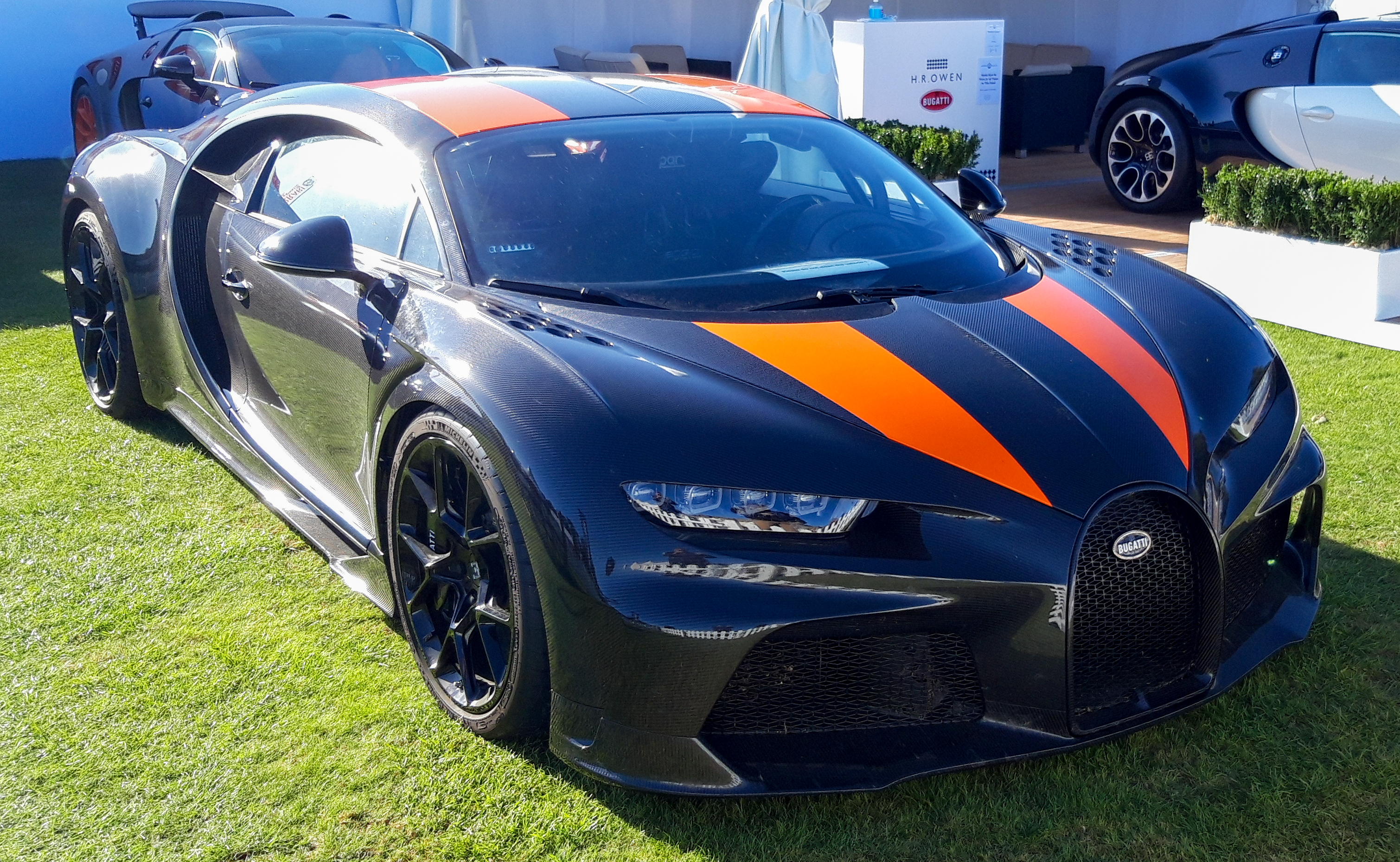
"...per hour top speeds. We know that the Bugatti the Chiron Super Sport 300 plus has already done 300 plus, 304. Do you remem..."
The Bugatti Chiron Super Sport 300+ is an incredibly fast car that has set records for its speed, going over 300 miles per hour. People talk about it because it’s one of the fastest cars ever made and is very exclusive and luxurious.
The Bugatti Chiron Super Sport 300+ is a hypercar known for breaking speed records, achieving over 300 mph. It represents the pinnacle of automotive engineering and luxury, often discussed for its extreme performance and exclusivity. The mention of its top speed highlights its status as one of the fastest cars in the world.
"I mean, he's the bloke who did 240 in McLaren F1 in 1998 and we all thought, blimey, no cars ever going to go faster than that."
The McLaren F1 is a famous super-fast car from the 1990s that could go 240 miles per hour. It was one of the fastest cars ever made back then.
The McLaren F1 is a legendary supercar that was produced in the 1990s, known for its lightweight design and powerful BMW-sourced V12 engine, which allowed it to reach speeds of 240 miles per hour at the time.
"...that a car would never do 300, a road car on road tires would ever do 300 miles an hour. And, you know, that just shows how wrong you can be."
300 miles an hour is a very high speed that cars can reach, especially high-performance ones. It's a benchmark for how fast cars can go on the road.
This refers to the speed of 300 miles per hour, a significant milestone for road cars, indicating extreme performance capabilities. Achieving such speeds requires advanced engineering and technology, often found in hypercars.
"...with, you know, as long as you've got a big enough battery and a powerful enough motor, you can just, you know, with electric..."
An electric motor is what makes electric cars move. It uses electricity instead of gasoline to power the car, which can make it very fast and efficient.
An electric motor is a device that converts electrical energy into mechanical energy, commonly used in electric vehicles (EVs) to provide propulsion. They are known for their efficiency and instant torque delivery.
"...as long as you've got a big enough battery and a powerful enough motor..."
A battery in a car stores electricity, which is used to power the car's motor. The bigger the battery, the longer the car can run before needing to be recharged.
In the context of electric vehicles, a battery stores electrical energy that powers the electric motor. The capacity of the battery affects the vehicle's range and performance.
"And this was at the time of the electric SLS, Mercedes electric SLS. And I said to him, wouldn't it be really cool if we took..."
The Mercedes-Benz SLS is a high-end sports car famous for its unique doors that open upwards. There was also an electric version that showcased the brand's move towards electric cars.
The Mercedes-Benz SLS is a luxury sports car that was produced from 2010 to 2015, known for its distinctive gullwing doors and high-performance capabilities. The electric version represents the brand's foray into electric vehicles.
"So maybe we could start with Nürburgring lap times because it's because that's where something terrible is likely to happen. Most likely to happen."
Nürburgring lap times are how long it takes cars to drive around a famous racetrack in Germany. Car enthusiasts often compare these times to see which cars are the fastest.
Nürburgring lap times refer to the times it takes cars to complete a lap around the Nürburgring Nordschleife, a challenging and famous racetrack in Germany. These times are often used as benchmarks for performance and handling capabilities of sports cars.
"The record for a road legal car is now sub six minutes 30. 629 one by Mercedes AMG One."
The Mercedes-AMG One is a super-fast car that uses technology from Formula 1 racing. It has a powerful engine and electric motors that help it go really fast.
The Mercedes-AMG One is a hybrid hypercar that brings Formula 1 technology to the road. It features a turbocharged V6 engine combined with electric motors, allowing it to achieve remarkable performance and efficiency.
"...p of that race was recorded by Stefan Beloff in a Porsche 956. So a prototype slicks and wings full ground effe..."
The Porsche 356 is an old sports car that was the first model made by Porsche, starting in the late 1940s. It’s important because it helped make Porsche famous for building high-quality and fast cars.
The Porsche 356 is a classic sports car that was the first production model from Porsche, introduced in the late 1940s. It is significant for its role in establishing Porsche's reputation for quality and performance. The mention of it in a racing context highlights its historical importance in motorsport.
"...when Porsche does the next GT2 RS, which I think we're pretty certain it's going to do, that it's going to want to go faster than that..."
The Porsche GT2 RS is a super-fast version of the Porsche 911 sports car. It's built for racing and is known for being one of the quickest cars on tracks.
The Porsche GT2 RS is a high-performance variant of the Porsche 911, known for its powerful turbocharged engine and track-focused design. It often sets records for lap times on tracks like the Nürburgring.
"Yeah. Yeah. An 11 tenths effort. Yeah. Blimey. It is quite something. And so,"
When someone talks about '11 tenths effort', they mean trying as hard as possible, even more than what seems possible. It's about giving it everything you have.
The term '11 tenths effort' refers to giving everything one has, exceeding the normal limits of performance. In racing, it signifies pushing a vehicle to its absolute maximum capability.
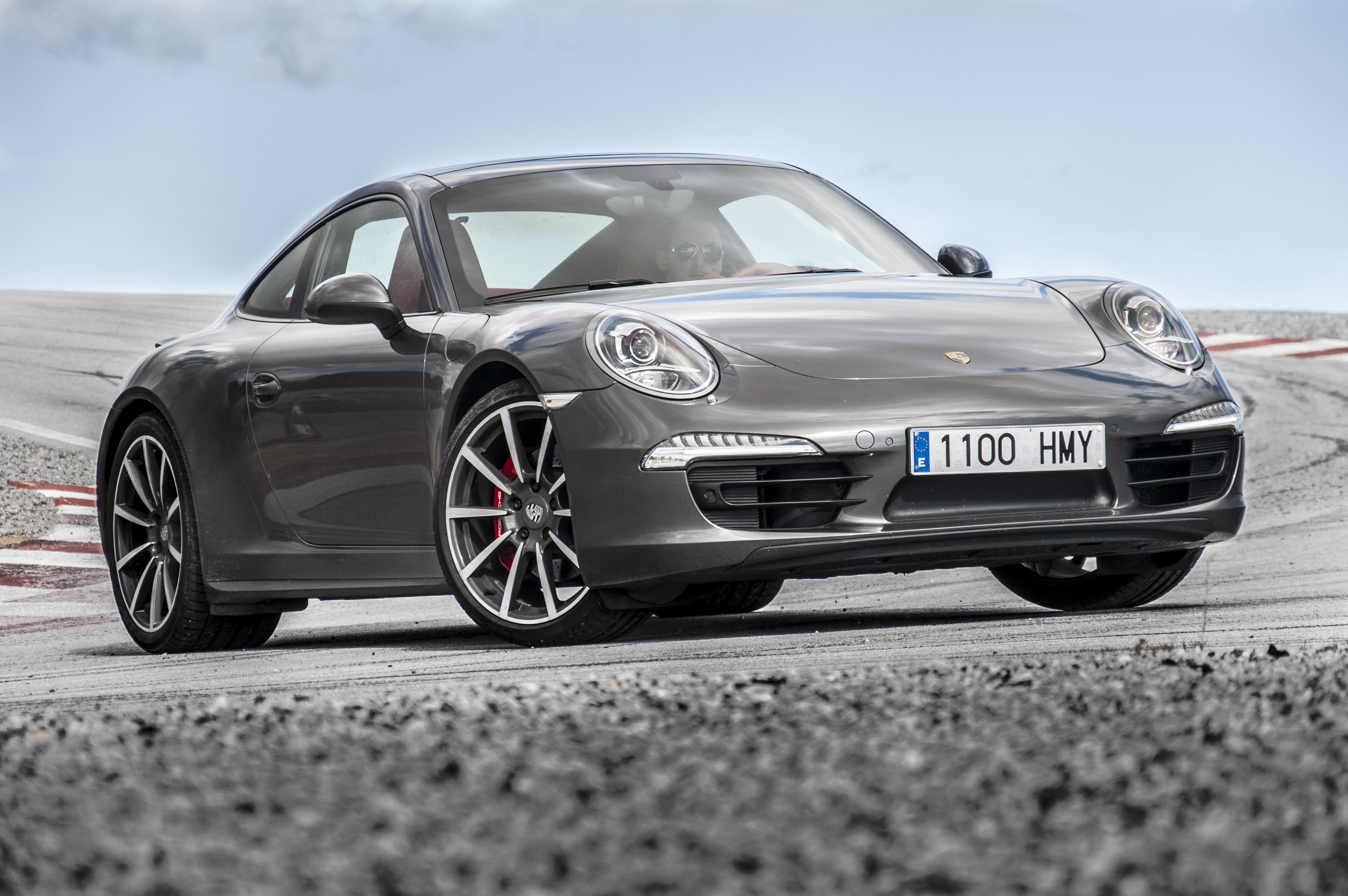
"with a mantai kit. And I think this was Lars Kern did a 643. That's back in 2021. And I think that's almost more impressive because it's a very trick 9-11, but underneath, that's just a 9-11. It's not a sort of purpose built hypercar weapon, like a..."
The Porsche 911 is a famous sports car that has been around for a long time, known for its unique shape and powerful performance. It’s often talked about because it’s considered one of the best cars for driving enthusiasts, and people love to modify it to make it even faster.
The Porsche 911 is an iconic sports car that has been in production since the early 1960s, known for its distinctive design and rear-engine layout. It has undergone numerous iterations, each improving performance and technology, making it a benchmark in the sports car segment. The mention of a Manthey kit highlights the car's tuning potential and racing pedigree.
"...speculating that it might have 700 plus horsepower. Now, if you think back to the previous GT2 RS..."
Horsepower is a way to measure how powerful an engine is. The higher the horsepower number, the faster and stronger the car can be.
Horsepower is a unit of measurement for power, commonly used to describe the output of engines. It indicates how much work an engine can perform over time, and higher horsepower generally means better performance.
"the new car is going to have? You think with that hybrid engine. I mean, we were talking last week, weren't we, about the new 9-11 Turbo and speculating that it might have what, 700 plus horsepower. Now, if you think back to the previous GT2 RS,"
The Porsche 911 Turbo is a faster version of the regular 911, equipped with a turbocharged engine that makes it very powerful. People talk about it because it combines luxury and speed, and there’s excitement about new technology that could make it even better.
The Porsche 911 Turbo is a high-performance variant of the 911, featuring a turbocharged engine that delivers exceptional speed and acceleration. It is significant for its blend of everyday usability with supercar-level performance, making it a favorite among enthusiasts. The speculation about a hybrid engine indicates Porsche's commitment to innovation and performance enhancement.
"what, 700 plus horsepower. Now, if you think back to the previous GT2 RS, that was when a 9-11 Turbo SL, I think 550 horsepower and the GT2 RS had 693. So, basically it was a 140 horsepower gain. Now, let us say the 9-11 Turbo only has 700 horsepower only."
The Porsche 911 Turbo S is the most powerful version of the 911 Turbo, known for being super fast and luxurious. It’s often mentioned because it showcases the best of what Porsche can do in terms of performance and technology.
The Porsche 911 Turbo S is the top-tier variant of the 911 Turbo, featuring enhanced performance and luxury. With its powerful engine and advanced technology, it represents the pinnacle of the 911 lineup, often discussed for its impressive horsepower and speed. The comparison to previous models highlights its evolution and performance improvements.
"...things. But then again, then you think of the N24 GT3 cars, which are still road car based. And I know ..."
The Porsche 911 GT3 is a special version of the 911 designed for racing and high performance. It’s known for being very fast and fun to drive, and people often discuss it because it’s one of the best cars for those who love motorsports.
The Porsche 911 GT3 is a track-focused version of the 911 that emphasizes performance, handling, and driving experience. It is celebrated for its naturally aspirated engine and precise engineering, making it a favorite among racing enthusiasts. The mention of its connection to racing cars highlights its performance credentials.
"... others then. So very, very recently, a Chevrolet Corvette ZR1X did a six minute 49. That's a hybrid version..."
The Chevrolet Corvette is a popular sports car from America that is known for being fast and stylish. The ZR1X version is a newer model that uses hybrid technology, which means it combines a traditional engine with electric power for better performance.
The Chevrolet Corvette is an American sports car known for its performance, style, and value. The mention of the Corvette ZR1X highlights its advanced engineering and hybrid technology, showcasing its evolution as a high-performance vehicle. It remains a symbol of American automotive ingenuity.
A twin turbo V8 is an engine that has eight cylinders and uses two turbochargers to make it more powerful. This helps the car go faster and perform better.
A twin turbo V8 engine features two turbochargers that help increase the engine's power output by forcing more air into the combustion chamber. This setup enhances performance and efficiency.
All wheel drive means that power goes to all four wheels of a car, which helps it grip the road better and improves control, especially in bad weather.
All wheel drive (AWD) is a drivetrain system that distributes power to all four wheels of a vehicle, improving traction and handling, especially in challenging driving conditions.
"...at's now the fastest American car faster than the Mustang. Oh, I love it where they start qualifying it. Fa..."
The Ford Mustang is a classic American car that is famous for being fast and powerful. It’s often talked about because it has a strong history and is loved by many car enthusiasts for its sporty look and performance.
The Ford Mustang is an iconic American muscle car that has been in production since the 1960s, known for its powerful engines and sporty design. It represents a significant part of American automotive culture and is often discussed for its performance and heritage. The reference to it being the fastest American car emphasizes its competitive nature in the sports car market.
"...ng a silly hat. Do you remember in 2013, when the 918 Spyder, the Porsche 918 Spyder did a 657. Yeah. A..."
The Porsche 918 Spyder is a super-fast sports car that uses both a regular engine and electric power to go really fast while being more efficient. It’s often talked about because it represents cutting-edge technology in the world of supercars.
The Porsche 918 Spyder is a plug-in hybrid supercar that combines high performance with advanced hybrid technology. It is notable for its impressive speed and efficiency, making it a significant model in Porsche's lineup. The mention of its lap time underscores its capabilities on the track and its status among high-performance vehicles.
"you've had lots and lots of track days, maybe you've done a little bit of racing at a sort of, you know, amateur club level..."
Track days are special events where people can drive their cars on a racetrack. It's a safe place to go fast and practice driving skills without worrying about traffic.
Track days are events where car enthusiasts can take their vehicles onto a racetrack to experience high-speed driving in a controlled environment. These events often allow participants to improve their driving skills and test their cars' performance.
'Sub seven' means finishing a lap in less than seven minutes. It's a goal for fast cars to show how quick they can go around a racetrack.
The term 'sub seven' refers to completing a specific lap time in under seven minutes, often associated with high-performance cars on tracks like the Nürburgring. Achieving this time is a significant benchmark for performance vehicles.
A hypercar is an extremely fast and expensive type of sports car that has the latest technology and performance features. They are some of the best cars in the world.
A hypercar is a high-performance supercar that represents the pinnacle of automotive engineering, often featuring advanced technology, extreme speed, and high price tags. They are typically produced in limited numbers.
"For the front drive, particularly, you know, if there was a,..."
Front-wheel drive means that the front wheels of the car are the ones that get the power from the engine. This helps the car move and can make it easier to handle, especially in bad weather.
Front-wheel drive is a vehicle layout where the engine's power is directed to the front wheels. This configuration is common in many cars, providing good traction and efficient use of space.
"...if there, you know, because I guess we just think of what's a car and a picture of a front drive transverse engine,..."
A transverse engine is when the engine is placed sideways in the car instead of front to back. This helps save space and is often used in smaller cars.
A transverse engine is mounted sideways in the vehicle, which allows for a more compact design and better use of space, especially in front-wheel drive cars. This layout is common in many modern vehicles.
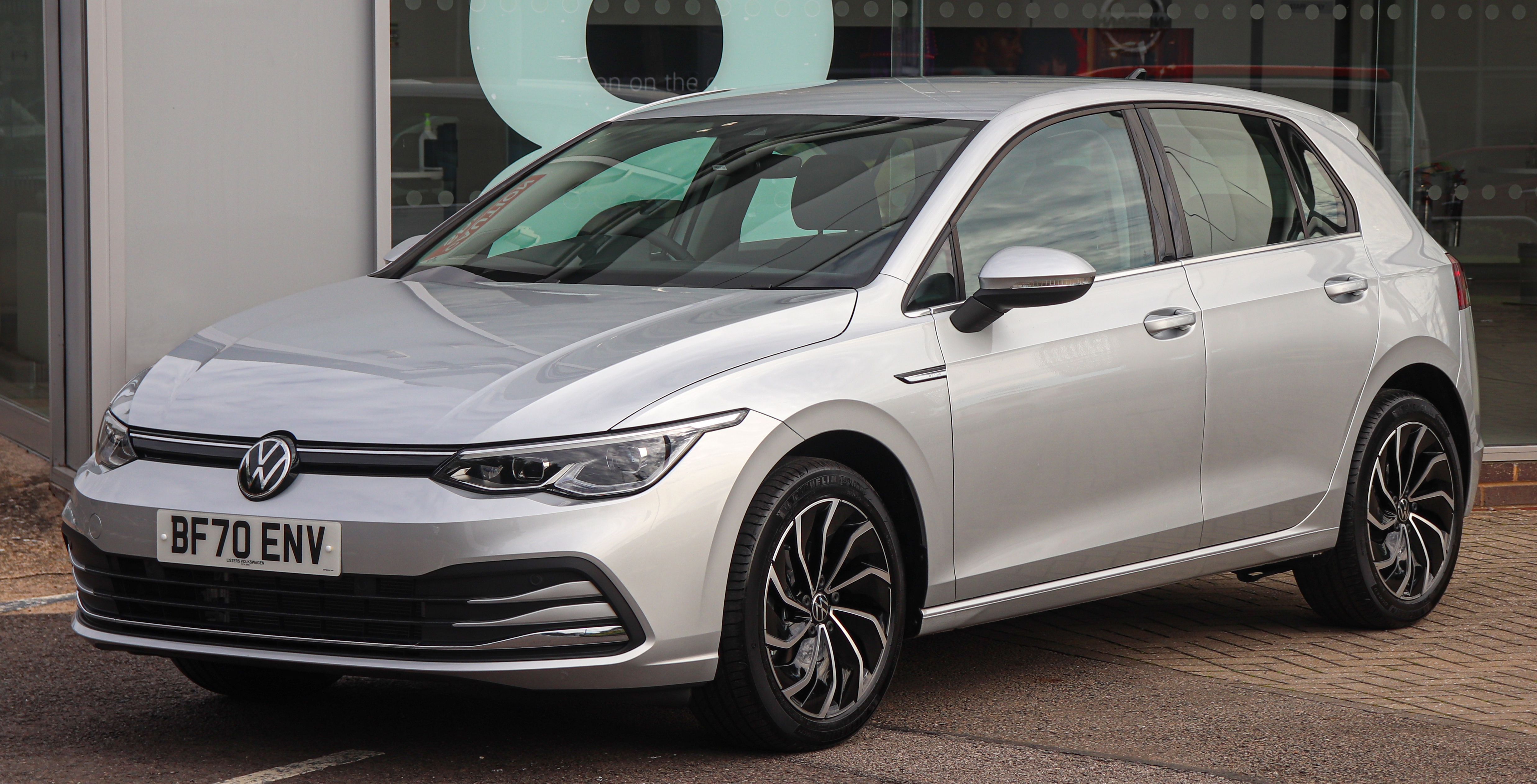
"...the idea of one of those things that, you know, has been so tuned up the Wazoo by its creator that it's going around quicker than, you know, acknowledged sports cars. I find there's a certain sort of comic interest in that."
The Volkswagen Golf is a small car that many people like because it's easy to drive and has a lot of space inside. It's been around for a long time and is known for being fun to drive.
The Volkswagen Golf is a compact car known for its practicality and performance. It has been a popular choice in the hatchback segment for decades, often praised for its driving dynamics and versatility.
"...the idea of one of those things that, you know, has been so tuned up the Wazoo by its creator that it's going around quicker than, you know, acknowledged sports cars."
When someone says a car is 'tuned up,' it means they have made changes to make it go faster or handle better. This can involve fixing or upgrading parts of the car.
'Tuned up' refers to modifying a vehicle to enhance its performance, handling, or appearance. This can include adjustments to the engine, suspension, or other components to achieve better speed or handling characteristics.
"...e of their nutty engineers in a Nurburgring pack, LFA, and did a 714. And we were all just thinking, ye..."
The Lexus LFA is a high-end sports car that is very rare and known for being extremely fast and powerful. It combines luxury features with amazing performance, making it a standout in the world of supercars.
The Lexus LFA is a limited-production supercar known for its exceptional performance and high-revving V10 engine. It represents Lexus's foray into the high-performance market, combining luxury with track-ready capabilities. The mention of its impressive lap time underscores its status as a serious contender in the supercar arena.
"... this quite recently. So I won't bang on, but the Golf GTI Club Sport S, I think it was in 2015 around then."
The Volkswagen Golf GTI is a sportier version of the regular Golf car, designed to be fun to drive while still being practical. It’s popular because it offers a good mix of speed and everyday usability, making it a favorite among car lovers.
The Volkswagen Golf GTI is a sporty version of the standard Golf hatchback, known for its agile handling and performance. It has a strong following among driving enthusiasts and is often praised for its balance of practicality and fun. The mention of the Club Sport S variant highlights its performance-focused enhancements.
"...at Bilsterberg, I think. And there was a bloat there who couldn't keep up..."
Bilsterberg is a racetrack in Germany where cars are tested and raced. It's a place where people can drive fast and enjoy the thrill of racing.
Bilsterberg is a racetrack located in Germany, known for its challenging layout and scenic surroundings. It is a popular venue for automotive testing and track days, attracting car enthusiasts and manufacturers alike.
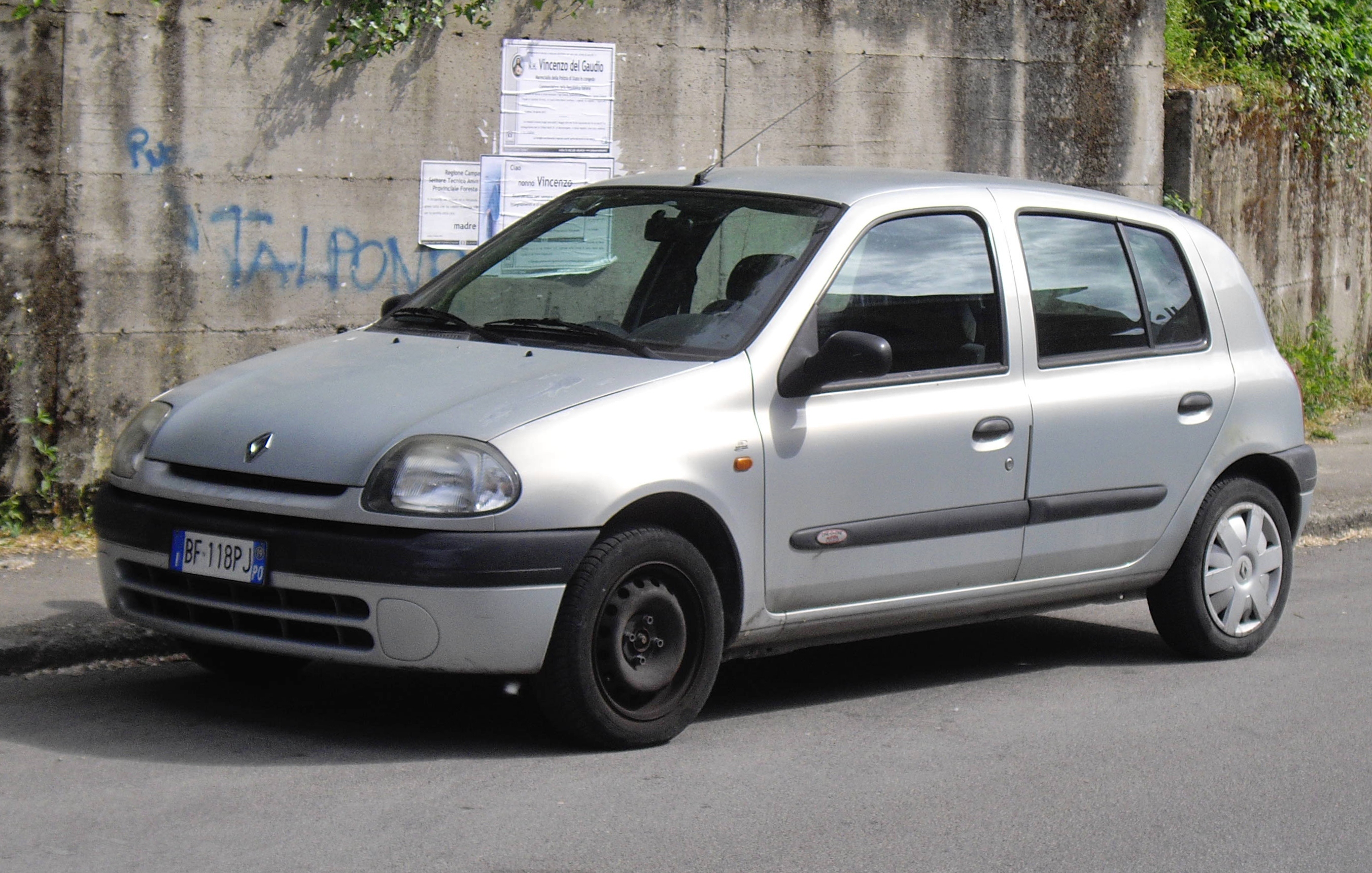
The Renault Clio is a small car that is easy to drive and park. It's often used in racing because it's lightweight and nimble.
The Renault Clio is a popular supermini car known for its compact size and agility, making it a favorite in motorsports and among everyday drivers alike.
0-100 time is how long it takes a car to go from zero speed to 100 kilometers per hour. It's a way to measure how fast a car can speed up.
0-100 time refers to the time it takes for a car to accelerate from a complete stop to 100 kilometers per hour (approximately 62 miles per hour). This metric is often used to gauge a car's acceleration performance, especially in high-performance vehicles.
"...I think it was earlier this month, the Koenigsegg Jesko Absolute stole the record back with a 25.21 secon..."
The Koenigsegg Jesko is a super-fast car that is known for being one of the most advanced cars in the world. People talk about it because it can go incredibly fast and has some of the latest technology in cars.
The Koenigsegg Jesko is a high-performance hypercar known for its extreme speed and advanced engineering. It represents the cutting edge of automotive technology and performance, often discussed for its record-breaking capabilities. The mention of its lap time indicates its competitive nature in the hypercar segment.
"Very good. Talladega in a bunch of Saab 900s. For a week."
The Saab 900 is a smaller car that was known for its unique style and turbocharged engines, which made it fun to drive. It has a special place in the hearts of car fans because of its quirky design and driving experience.
The Saab 900 is a compact executive car that gained a loyal following for its unique design and turbocharged engines. It is often celebrated for its quirky character and driving experience, making it a nostalgic choice among car enthusiasts. The mention of it in a specific context highlights its appeal in automotive culture.
"...into the weeds would come along with their Suzuki Swifts and their Fiesta STs."
The Maruti Suzuki Swift is a small and affordable car that is very popular in India. It’s known for being reliable and good for city driving, making it a favorite choice for many people.
The Maruti Suzuki Swift is a popular compact car in India, known for its affordability, efficiency, and practicality. It has gained a strong following due to its reliability and suitability for urban driving. The mention of it in the context of performance highlights its versatility among small cars.
"...uld come along with their Suzuki Swifts and their Fiesta STs. Absolutely."
The Ford Fiesta ST is a sporty version of the regular Fiesta car, designed to be fun and exciting to drive. It’s popular among car lovers because it’s small, quick, and great for city driving.
The Ford Fiesta ST is a performance-oriented version of the popular Fiesta hatchback, known for its agile handling and spirited driving experience. It has garnered a strong following among enthusiasts for its fun-to-drive nature and compact size. The mention of it alongside other small cars highlights its competitive position in the hot hatch segment.
"... can remember other cars which really, I mean the XJ220, before the F1 obviously, so in 1992 did 63.6 sec..."
The Jaguar XJ220 is a super-fast car from the 1990s that was famous for its beautiful design and high speed. It’s often talked about because it was one of the fastest cars of its time and is now quite rare.
The Jaguar XJ220 is a supercar that was produced in the 1990s, known for its stunning design and impressive performance, including being one of the fastest cars of its time. It represents a significant achievement in British automotive engineering and is often discussed for its historical importance and rarity.
"...e were big milestones. I can remember there was a Fiat Tipo, which was the first diesel powered car to go und..."
The Fiat Tipo Cross is a small crossover vehicle that is designed to be practical and versatile. It’s good for driving in the city and can handle some rougher roads, making it a popular choice for many drivers.
The Fiat Tipo Cross is a compact crossover that combines practicality with a rugged design. It is aimed at consumers looking for versatility in a vehicle that can handle both city driving and light off-road conditions. Its mention in the context of milestones indicates its significance in Fiat's lineup.
"or you just dissolve the rear tires and wheel spin. I can remember cars like tuned Ford Sierra's with 400 horsepower were almost impossible to get a decent set of numbers out of"
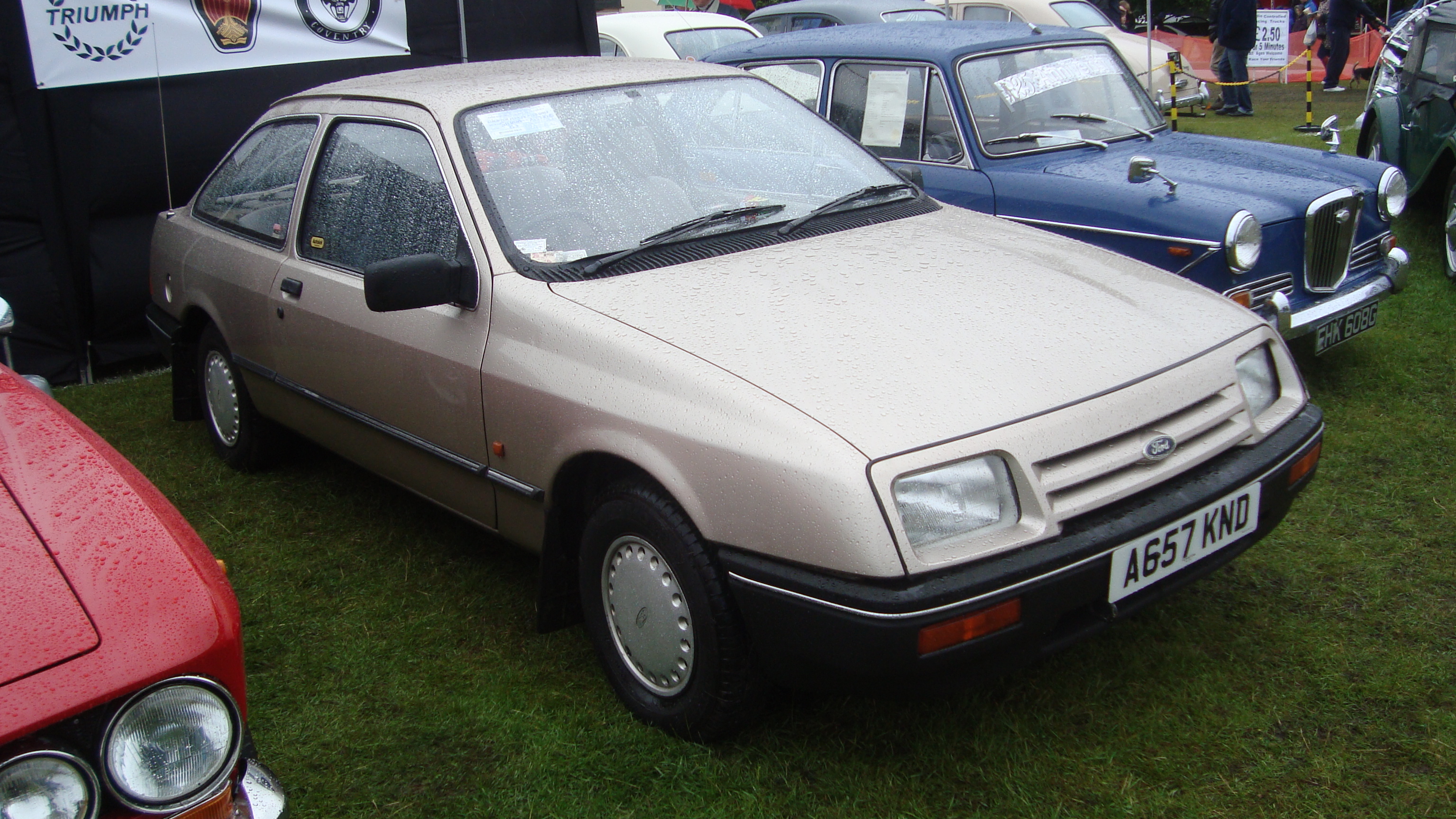
The Ford Sierra 3 Doors is a smaller car that was popular a while ago, known for its sporty look and fun driving experience. People remember it because it was a favorite among car fans who liked to modify and make it faster.
The Ford Sierra 3 Doors is a compact car that gained popularity in the 1980s and 1990s, known for its sporty design and performance-oriented variants. It has a nostalgic appeal among car enthusiasts, particularly those who appreciate classic models. The mention of its tuning potential highlights its place in automotive culture.
"or you just dissolve the rear tires and wheel spin. I can remember cars like tuned Ford Sierra's with 400 horsepower were almost impossible to get a decent set of numbers out of"
"... change gear, because if you tried to really just ram it through, there was a very good chance you'd br..."
The Dodge Ram is a big pickup truck that is built for tough jobs and can carry heavy loads. People talk about it because it’s strong and reliable, making it a popular choice for both work and everyday use.
The Dodge Ram is a full-size pickup truck known for its ruggedness, towing capacity, and versatility. It has a strong presence in the truck market and is often discussed for its performance in both work and recreational settings. The mention of gear changes highlights the driving dynamics and capabilities of the truck.
"...stently as you did, but I remember just a Porsche Panamera Turbo drove it up to Brunting Thorpe,"
The Porsche Panamera is a fancy four-door car that is both luxurious and sporty. It’s designed for people who want a comfortable ride but also enjoy driving fast, making it a unique option in the luxury car market.
The Porsche Panamera is a luxury four-door sedan that combines Porsche's sports car heritage with practicality and comfort. It offers a range of powerful engines and advanced technology, making it a versatile choice for those who desire performance without sacrificing everyday usability. Its mention in the context of a driving experience highlights its capabilities on the road.
Select text to request an explanation
I'm no tech genius, but I knew if I wanted my business to crush it, I needed a website now.
Thankfully, Bluehost made it easy. I customized, optimized, and monetized everything exactly how
I wanted with AI. In minutes, my site was up. I couldn't believe it. The search engine tools
even helped me get more site visitors. Whatever your passion project is, you can set it up
with Bluehost. With their 30-day money-back guarantee, what have you got to lose? Head
to Bluehost.com to start now. Hi, I'm Darina, co-founder of OpenPhone. My dad is a business
owner, and growing up, I'll never forget his old ringtone. He made it as loud as it could go,
because he could not afford to miss a single customer call. That stuck with me.
When we started OpenPhone, our mission was to help businesses not just stay in touch,
but make every customer feel valued, no matter when they might call. OpenPhone gives your
team business phone numbers to call and text customers all through an app on your phone or
computer. Your calls, messages, and contacts live in one workspace, so your team can stay fully
aligned and reply faster. And with our AI agent answering 24-7, you'll really never miss a
customer. Over 60,000 businesses use OpenPhone. Try it now and get 20% off your first six
months at OpenPhone.com slash tech, and we can port you existing numbers over for free.
OpenPhone, no missed calls, no missed customers.
If you've used Babbel, you would. Babbel's conversation-based technique teaches you useful
words and phrases to get you speaking quickly about the things you actually talk about in the
real world. With lessons handcrafted by over 200 language experts and voiced by real native
speakers, Babbel is like having a private tutor in your pocket. Start speaking with Babbel today.
Get up to 55% off your Babbel subscription right now at Babbel.com slash Acast. Spelled
B-A-B-B-E-L dot com slash Acast. Rules and restrictions may apply.
Welcome back to the intercooler podcast powered by car finance specialist JBR Capital.
This is episode 277 with Dan Proser and Andrew Frankel.
I wanted to talk to you, Andrew, about performance testing and performance record
breaking because it's arguably in a healthier, better state than it ever has been, or it's
getting completely out of hand. Nurburgring times, nought to 400 kilometers per hour to nought
battles, car magazine figuring top speeds, 300 mile an hour top speeds. It's all
absolutely potty. Now, what was it? Was it the Daily Mail that had a sort of panic, a moral panic
about the Lotus Carlton all those years ago? We're doing 177 miles an hour. Four door family
saloon. I don't want this to be like that. I don't know because I'm afraid I'm not a Daily Mail
reader. I'm sure it was the Daily Mail. It's certainly one of the tabloids. One of the
more easily outraged of the tabloids. I don't want this to be like that because a lot of this stuff
I think is deeply cool and it does sort of further human achievement. It's really, really
impressive what a lot of these car companies are able to do. Equally, there were quite a few
companies out there pursuing 300 mile per hour top speeds. We know that the Bugatti
the Chiron Super Sport 300 plus has already done 300 plus, 304. Do you remember a couple of years ago,
Andy Wallace, who was the driver, came on and told us all about it? Yes, indeed.
I mean, he's the bloke who did 240 in McLaren F1 in 1998 and we all thought,
blimey, no cars ever going to go faster than that. Now that in three years, I presume at
some stage, one will do 400. You have to imagine because in the late 1990s, it would
have been impossible to imagine 300 miles an hour, but here we are. I would have said in the late 1990s
that a car would never do 300, a road car on road tires would ever do 300 miles an hour.
And, you know, that just shows how wrong you can be. So, I mean, okay, I mean 400 miles an hour
sounds, I mean, preposterous, sci-fi, ridiculous, potty, silly, but someone's going to do it.
Probably. Well, unless, I mean, because actually it's getting easier, isn't it? With, you know,
because you can, you know, as long as you've got a big enough battery and a powerful enough motor,
you can just, you know, with electric, you know, you can just dial up the number you want
and go and do it. I think the problem people are going to start running into is geography.
Yeah, where? Where do you do it? But yeah, but like I said, you know, there are plenty of places
you can go. There are plenty of deserts you can go and blast across. Might struggle to do
on road legal tires, but you know, there'll be production EVs. I did once, years ago,
so Ola Kalenius, who is now the big, big boss of Mercedes-Benz, at the time, he was running AMG
and he's a proper car guy. And we were on a launch together. And this was at the time of the electric
SLS, Mercedes electric SLS. And I said to him, wouldn't it be really cool if we took,
because it was sold, it was a production car, I mean, tiny, tiny numbers, wouldn't it be cool
if we, by which I meant I, took an electric SLS to Bonneville and broke a stack of electric
car records, which it would have done. And he went, oh, that's quite interesting.
Let me go and I was about to do Swedish accent. I'm not going to do Swedish accent. Let me go
and talk to the engineers. And then I think he got another job. And he went off to somewhere
else. And so it never happened. That's a shame. I don't love doing that. That would have
been super cool. In those few minutes, I'd be very pro EV. Yeah, of course. Anyway, sorry.
So I thought it might be quite fun just to look at the sort of state of the nation,
you know, across these different disciplines, top speed, not to nought,
Nurburgring lap times, and just think about how these things have progressed over the years
and where they might go. And also whether or not on balance, we think it's a good thing.
And we will be acknowledging the fact that you and I as car journalists have
done as much as anyone to encourage all this stuff. And we'll talk about magazine
performance figuring, because it's it's quite fun. But I do have to acknowledge that
the car magazines have been complicit in this all the way. We have. And have we been complicit
to such an extent that I mean, my worry with this stuff is that it's all terribly funny. And
we will go koo-wop with another amazing until something terrible happens.
That's the sort of unspoken thing, isn't it? So maybe we could start with
Nurburgring lap times because it's because that's where something terrible is likely to happen.
Most likely to happen. Yeah. And it's I mean, it's it's potty how fast some of these cars
are going now. So the the record for a road legal car is now sub six minutes 30.
629 one by Mercedes AMG one. Yeah. Okay, to put that in perspective.
The last time a proper full on top level sports cars in Le Mans car race was held on that track
was 1983 1000 case 1983. And the fastest lap of that race was recorded by Stefan Beloff
in a Porsche 956. So a prototype slicks and wings full ground effect from the ground up
designed racing car did a 625. And now there's something with treaded tires on a number plate
which had done a 629. And all the talk is that when Porsche does the next GT2 RS,
which I think we're pretty certain it's going to do, that it's going to want to go faster
than that because it's going to want the record back. But well, yeah.
I can remember there's a lovely chap called Lars Kern, you will know. And they do have
two or three people who go and do these laps for them.
Lars Kern is probably the one who has done most but your Bergmeister particularly is another one
of these brilliant lunatics. Yeah, he's just take his brain out for a lap and go.
But I can remember sitting down with Lars and interviewing him. And he's not one of these guys
who's won the more little times or anything like that. He is a Nurburgring specialist. Yeah.
He's the guy that you turn to for that's particular purpose. And saying to him,
so Lars, how much are you leaving sort of on the table? How much room for error? How much
wriggle room are you going? I mean, how hard are you really trying because presumably because
you're in a road car and it's in road specification. And I know they obviously
optimize these things. They fit all the stuff from the options list that you can.
And I'm sure they prepare the tyres to the best possible condition in which those tyres can be
prepared while still being road legal and so on and so forth. But let's say to you,
you know, presumably you do just leave something in the bank just in case,
you know, something on the wall might happen. I don't know, not at all.
So they're qualifying laps, aren't they? It's absolutely. It might even be more
than a qualifying lap. I mean, he has to really, really psych himself up. And when it's done,
he is done too. It's absolutely balls to the wall. Oh my God. Absolutely. He gives it everything.
Yeah. Yeah. An 11 tenths effort. Yeah. Blimey. It is quite something. And so,
yeah, the record is a 629. The Mercedes-AMG won. And that clearly is a very low volume,
quite extreme road car. But as far as I can tell, the second fastest is the previous GT2 RS
with a mantai kit. And I think this was Lars Kern did a 643. That's back in 2021.
And I think that's almost more impressive because it's a very trick 9-11, but underneath,
that's just a 9-11. It's not a sort of purpose built hypercar weapon, like a...
With the Formula One car engine. Yeah.
Yeah. No, I do absolutely know what you're saying. But that was 2021. So,
we've had four years of tire tech on from there. You think how much more downforce
the new car is going to have? You think with that hybrid engine. I mean, we were talking
last week, weren't we, about the new 9-11 Turbo and speculating that it might have
what, 700 plus horsepower. Now, if you think back to the previous GT2 RS,
that was when a 9-11 Turbo SL, I think 550 horsepower and the GT2 RS had 693. So,
basically it was a 140 horsepower gain. Now, let us say the 9-11 Turbo only has 700 horsepower only.
You know, that's putting a GT2 RS, if the gain is no more than it was last time,
at about 840 horsepower. So, it's 800 plus, isn't it?
800 plus. I would have thought. Yeah.
Yeah. It will be over 800 horsepower plus with the deployment that they get with the hybrid,
so there will be no lag of any kind. I mean, it is going to be a missile.
It's actually frightening the proposition, isn't it? That's the thing, isn't it?
To go, call it a second a mile faster than the already very fast GT2 RS.
Okay. So, in terms of, let's look at the danger thing head on, because I think what you and
I are both sitting here sort of slightly dancing around the edge of is,
is there a good chance that somebody could get badly hurt doing one of these things?
Yeah. And on the one hand, you think of the fact that these are road cars, we know that the
Nerva Grink is a place where you don't tend to have small accidents. And we know that the
drivers are pushing it absolutely to the limit and beyond. And you're thinking, I mean,
I'm always getting, already getting a bit sort of when I think about the drivers going out and
doing these things. But then again, then you think of the N24 GT3 cars, which are still road
car based. And I know their cages are probably rather more comprehensive than you get in the
road cars. But we don't worry about drivers going off and doing that in the rain and the fog
and the night and the everything else. And with the traffic. With the traffic.
And, you know, and they have huge accidents. But actually, I'm very pleased to say, and I know
that there have been exceptions to this. And I know there'll be some awful accidents there.
But by and large, even when there are quite big accidents there, drivers tend to step out.
So maybe we're getting on Nick as in a twist about nothing. But even so, these are just road
cars. And yeah, I mean, it's I don't even want to be sort of sounding like I'm tempting
Providence. But you know, you do wonder if something awful did happen, whether it would
then all stop. And we and then with a bit of time there after we wouldn't then look back at it and
think, what was that? And why were we actually digging up something so much, which is of so
little real world, zero real world relevance, when ultimately, you know, we kind of all
suspected where that particular road might lead. I don't know.
A couple of the others then. So very, very recently, a Chevrolet Corvette ZR1X did a six
minute 49. That's a hybrid version of the C8 Corvette with the twin turbo V8 from the ZR1
with an upgraded version of the electric motor and all wheel drive system from the e-ray
with 1250 BHP. It's just potty, isn't it? That's now the fastest American car faster than the
Mustang. Oh, I love it where they start qualifying it. Fastest American car.
As if that makes any difference. Painted red built on a Tuesday by a man wearing a silly hat.
Do you remember in 2013, when the 918 Spyder, the Porsche 918 Spyder did a 657.
Yeah. And we all go, oh my God, sub seven. Yeah. And now 911 is doing it.
Can we, can we just try to put into perspective? I'm not really sure how we're going to do this,
but just try to explain just how fast even a seven minute lap is.
If you gave me, so that GT2 RS did what, a 643. Yeah. Okay. So if you gave me that GT2 RS
an empty, dry, sunny Nürburgring and all the brave pills I could swallow,
and let's say you gave me a day to re familiarize myself with the circuit because
it's been a while since I've been around there faster than anything. What do I think I could do?
If I got within 30 seconds of that, I'd be really happy. Yeah. 30 seconds. I'd be delighted.
I'll be absolutely delighted. Because there's driving, there's driving, and I know this from
racing there. I know this from having shared a car there with Klaus Ludwig. So I do know what
I'm talking about. There's driving really fast around the Nürburgring. And then there is
doing it properly. And because it's such a long track, if you're doing it properly, you're going a
hell of a lot faster. Everywhere. And you're using, and I remember this from watching Klaus's
onboard, one of the reasons I realized it's so much slower than me, he was actually using bits
of track I didn't know existed. Yeah. Just all over the curbs. Just everywhere. And you know
exactly how, what kind of liberties to take to what extent exactly where I would be really,
really happy. I'm not sure, I would get them in the half a minute of them. And I would
also absolutely petrify myself in the process. I think if you've just gotten a, if you've gotten a
normal, a normal, if an average, okay, here's a question. You can answer this because I don't
know the answer any better than you do. Let us say that you are a, what I would call a normal driver.
So you're an experienced, enthusiastic, sensible person. And you've got a new GT3,
and maybe it's your third or fourth GT3, and you've had lots and lots of track days,
maybe you've done a little bit of racing at a sort of, you know, amateur club level,
you're a kind of normal, well resourced enthusiast. And you know the derby ring quite well,
and you go there with your GT3 and you leave it on your cup twos, you don't put cup two
oils on it because you need to be able to get home, blah, blah, blah, blah, blah,
and you go out and you do without killing yourself, you go out and do a lap time.
Well, it's not going to begin, begin to begin with a seven, is it?
You think it's eight plus?
Yeah, absolutely. You're not going to, a normal driver isn't going to go to the Nurburgring
and do a sub eight. No.
Straight out of the box.
No, no, you're not. Particularly at that track, that's the thing, isn't it?
It's such a specific track.
I think if you did an 830 you'd come away thinking that was a pretty entertaining lap.
Yeah. Yeah.
And they're like going two minutes quicker than that.
Hi, I'm Darina, co-founder of OpenFilm. My dad is a business owner and growing
up I'll never forget his old ringtone. He made it as loud as it could go because he
could not afford to miss a single customer call. That stuck with me.
When we started OpenFilm our mission was to help businesses not just stay in touch
but make every customer feel valued no matter when they might call.
OpenFilm gives your team business phone numbers to call and text customers
all through an app on your phone or computer. Your calls, messages and contacts
live in one workspace so your team can stay fully aligned and reply faster.
And with our AI agent answering 24 seven, you'll really never miss a customer.
Over 60,000 businesses use OpenFilm. Try it now and get 20% off your first six months
at openphone.com slash tech and we can port your existing numbers over for free.
OpenFilm, no missed calls, no missed customers.
I'm no tech genius but I knew if I wanted my business to crush it
I needed a website now. Thankfully Bluehost made it easy.
I customized, optimized and monetized everything exactly how I wanted with AI.
In minutes my site was up. I couldn't believe it.
The search engine tools even helped me get more site visitors.
Whatever your passion project is you can set it up with Bluehost.
With their 30-day money back guarantee what have you got to lose?
Head to Bluehost.com to start now.
James Walker, Mr. JWW, he's got a video series at the moment trying to do a sub seven.
He's brave isn't he?
It's a huge thing to take on.
And the other thing about James is, you know, we know James quite well
and he's been very helpful to us in the past.
You know, he's a good driver. He's a really good driver and he's raced plenty
and he's raced some quite serious stuff.
So he's not just a well resourced bloke with a vast car at all.
He's trying to do it in a GT3RS and he's been very, very open about this.
He had a big shunt, not a decent size shunt.
Big shunt, yeah.
A few months ago.
And so it's no game is this?
And he's trying to do a sub seven?
Yeah, yeah.
Bloody hell.
Which is what, you know, you know, Porsche first did that in 2013.
So a dozen years ago.
With a hypercar.
But yeah.
So it gives you an idea of just how hard these,
how fast they're going and how hard they're being pushed by
and the skill level of the people who are doing it.
Yeah.
Yeah.
And the thing is, it's not just hypercars and supercars that are,
you know, going off in pursuit of lap records around that place.
There are EVs doing it, estate cars, SUVs, hatchbacks.
You know, I couldn't, okay.
The hatch, for some reason, the hatchback one does amuse me.
Really?
Yeah.
For the front drive, particularly, you know, if there was a,
if there, you know, because I guess we just think of what's a car
and a picture of a front drive transverse engine,
five door thing parked in a super car park.
It tends to what appear in my head, you know, it's a golf.
And the idea of one of those going, I mean, the idea of one of those things that,
you know, has been so tuned up the Wazoo by its creator
that it's going around quicker than, you know, acknowledged sports cars.
I find there's a certain sort of comic interest in that.
But SUVs?
Yeah.
It just seems pointless, isn't it?
I couldn't care less.
There was a spell, I don't know, 10 years ago or something,
when the likes of VW and Honda and Seat and Renault
were knocking lumps off each other.
Yeah.
Trying to get the front wheel drive production car record.
Yeah.
And they were going so fast.
And all those nutty two seat.
Yeah, exactly.
Yeah.
Those things.
Yeah.
They were going really fast.
Yeah.
Sub 8, 750, that sort of thing.
I mean, it's great.
I mean, if you've been there and you've been around it
and you've had a surreptitious flick of the stock watch,
you will know how crazy the idea of a sub 7,
of a sub 8 minute lap in a hatchback is.
It's just bonkers.
I mean, when you think, I mean, I can remember,
I was there the day that Lexus sent the front engine record.
And they got one of their nutty engineers
in a Nurburgring pack, LFA, and did a 714.
And we were all just thinking, yeah.
That's nuts.
That's insane.
Yeah.
Actually, I think I spoke about this quite recently.
So I won't bang on, but the Golf GTI Club Sport S,
I think it was in 2015 around then.
Yeah.
They launched it at the Nurburgring
because it had just broken the record.
And the drive activity was to chase
Benny Leuchter around the ring.
Well, yeah.
It was fantastic.
It was great fun.
And they had the other one.
They had the non-S there as well,
which we could drive on the road,
but we could drive the S on the track.
Yeah.
And so I made sure that I got in the group with,
because we did do this Ducks and Drakes thing,
where you follow the instructor or the quick guy up front.
And his job is to make sure that you're going quickly,
but not so quickly, that the slowest car gets
dropped off the back, or that the chasing cars
gap too much because someone can't keep up.
And so when you're doing these activities,
you always make sure that you try and get in the group
with the quick guys.
Quick group, yeah.
If you're not.
Because you can't overtake.
So if you're behind the slow guy, it's basically
you're stuck.
Your lap is ruined.
Yeah.
And I think it's a one lap and done thing.
So it's really important.
Yeah.
And I've been doing that.
I did that once.
I can remember I was, I think somebody
was in a car with Jethro.
I won't tell you who it was.
But we were on doing the Ducks and Drakes
in 911 Turbo S's at Bilsterberg, I think.
And there was a bloat there who couldn't keep up
on the slowing down lap.
Yeah.
And I'm just thinking, come on.
And then he's going to go and write review.
And it sounds terribly arrogant.
And we're taking the piss out of people
who can't drive cars as fast as us.
It's not actually the point.
The point is that that person would then go and tell
their readers how that car behaves on the limit
on a racetrack when they're in absolutely no position
to do so.
Yeah.
This is why you work really hard
to get in the group with the quick guys.
And I made sure that I was right behind Steve Sutcliffe.
He definitely qualifies.
Which is the place to be.
And Benny, so he did something like a 7 minute 50
as the new record.
He reckon we're 30 seconds off.
Ah, OK.
That seems well.
There you go.
Yeah.
And it felt bloody quick.
Yeah.
I bet you didn't feel that you were dawdling.
No.
And whenever I drive quickly around that place,
and you come around that final corner,
the right hander onto the long straight,
I'm so relieved.
I'm so relieved.
I'm always just tense driving around that place.
It's just scary.
One of the things I love about this podcast is
you and I sort of step into this little studio
and suddenly we become terribly honest about things
and our inner fears and all the stuff
that we probably don't talk about too much
when we write stories.
But you're absolutely right.
I know that feeling so well.
You get basically, it happens before you're
out the corner because you turn into it.
And if you turn into it at the right point
and you get the car into the corner,
you know you're coming out all right.
Yeah.
And you're like, oh, thank God for that.
I think that's why, maybe I just haven't done enough laps,
but I think that's why I will never be
very, very quick around there
because I'm just too tense.
No, I've never been, I mean I've raced there.
In fact, I used to, I raced a Clio there
sharing it with my sadly long departed,
well not that long departed,
Merrick Cox, who some of you may have heard of me,
he was a nutty bloke.
And we had, sometimes we shared a car,
sometimes he was in one Clio and I was in another
and we did a couple of seasons and
our times were always identical,
apart from at the Nurburgring.
Well, I couldn't get anywhere near him.
And we concluded that this was because
I had an imagination and Merrick didn't.
Yeah.
And if you don't have an imagination,
it's so liberating
because you're not thinking about what's going to happen.
If you could just switch off that component,
you're going faster.
That's what I can't do.
No, me neither.
Just be stupid and brave.
It's why, when I'm doing very long races,
like 24 hour races,
wherever I am, faster or slower than my team mates
during the daylight,
I'm always relatively slower at night
than I am during the day.
And it's not because I can't see.
It's because I'm just getting scared of the car.
No, I'm the same.
I'm the same.
Not to 400 to naught,
not to 400 kph to naught,
has become seemingly an important new hypercal metric.
Yeah, I mean, I do it most days.
I sort of wake up, have my cornflakes,
head out, do a quick naught to 100,
and go about my business.
And if your car will not do it under 30 seconds,
it's just not good enough, is it?
I can't imagine why you'd ever have one.
So, yeah, this is where you go.
Let's look at this.
So that's naught to 250 miles an hour.
249, yeah.
249, yeah.
And then back to rest.
Okay, is that...
Okay, it has no relevance
because we, none of us,
can afford a Rimac Navarra RR
and personally, if I could,
I wouldn't buy one because, you know,
electric hypercars don't particularly interest me.
However impressive the car is,
which I'm sure I wish I'm no doubt at all that it is.
But there's clearly no actual relevance to the figure.
And yet somehow, when you look at it,
you still think, oh my goodness, that's nuts.
It is interesting still, isn't it?
Why is it interesting?
Well, it is amazing that there are
man-made objects that can go from
road legal man-made objects that you can buy
that will go from lots of places.
There is something in us, isn't there,
that is always...
And it's, frankly, it's the reason
that the human race has developed.
Like it doesn't sound too profound.
Is there something within us
that always wants to do stuff
or learn about stuff that hasn't been done before?
Yeah, it's human nature really, isn't there?
And this is why...
We'll come to this a little bit later,
but this is why I'm sort of torn
on these things.
We'll come to that.
But this 0-400 to 0...
So the Rimaque Navarre did hold the record
until, I think it was earlier this month,
the Koenigsegg Jesko Absolute
stole the record back with a 25.21 second run.
Okay, so that's 0-249 to 0 again in 25 seconds.
Yeah.
Okay, the only 0-200, not 249,
200 figure that's in my head,
because I was in the car when it did it,
was the McLaren F1.
Yeah.
28 dead.
To 200.
So not to 0-249,
and certainly not back to a standstill again.
And the McLaren F1,
believe me, ladies and gentlemen,
ain't a slow car driver,
even today,
and you'll go, oh my God, that's fast.
Yeah.
And this thing is getting to 0-249,
and I suspect it's probably taking as long
to get from 0-200 to 0-249 as it's taking
to get from 0-200.
Yeah.
And then back to rest in three seconds less
than it took me to get 0-200.
It's just gone potty, hasn't it?
It's gone potty.
Mate Rimmack posted a video saying,
congratulations, Christian Koenigsegg,
we will get this record back.
And actually one of the surprising things is,
when the Navara R,
this almost 2,000 horsepower electric hypercar,
that record,
a lot of us would have thought,
well, that's it now for combustion power.
It's never going to come back.
And yet Koenigsegg has come back with a,
and this car,
it's only got a twin-turbo V8 in it,
with a load of power,
but it's only a twin-turbo 5-liter V8.
Yes.
You know?
And somehow,
and it's a rear-wheel drive.
And somehow it's...
Yes, it is, isn't it?
And somehow it's quicker than the...
So that is impressive.
It is impressive.
How much power does it have?
I think it's like 1,200, 1,300 or something like that.
Yeah.
So somehow that thing is,
it's monstrous.
I kind of wish I thought more about how this conversation,
because I would have then had the figures in my head,
which I don't.
Do you know who I mean by Brittany Force?
No.
So Brittany Force is the...
She is the fastest dragster racer in the world.
Yeah.
Okay, she comes from,
I think a long line of dragster racers.
And she has just done something absolutely ridiculous.
I think she did,
because they don't run over a quarter-mile anymore,
because the speeds are getting too high.
Oh, really?
Yeah, so they run over 1,000 feet,
which is just a bit less.
I think a quarter-mile, maybe 1,200, 1,300 feet or something like that.
Anyway.
And I think she did it in 3.4 seconds
and got to 340 miles an hour
from rest in that time.
I mean, it's absolutely...
I mean, back when I was really into
and knew a lot about top-fuel dragsters,
going to Santa Pod down,
I'm talking maybe 30 years ago,
even then, any old sort of common old garden
top-fuel dragster will get to 100 miles an hour
in less than a second.
That was just like sort of baseline.
North to 100, less than a second.
And at Santa Pod, they were running,
and that was over a quarter.
They were running sort of 260, 270 mile an hour,
quarter-miles in 5.2, 5.3 seconds.
And, okay, they're going over shore to distance now,
but they are... I mean, it is...
So, again, that is all about
doing something that's never been done before,
almost whatever it was.
But nevertheless, it has to be something worthwhile
because you and I could jump up and down,
wearing silly hats, standing on one leg,
and probably do something that's never been done before.
But it wouldn't be terribly interesting.
So, what does there have to be?
What are the components which suddenly make it,
which somehow tap into that thing in our heads,
which makes us want to read about it?
Do we think that there has to be an element of danger in it,
or physical accomplishment, or discomfort, or a cheat?
I don't know.
I don't know exactly what it is.
But speed has always intrigued us.
From, you know, I bet you, you know,
500 years ago, if you had a horse,
and your mate had a faster horse than you,
you'd get rid of your horse and try to get a faster horse,
wouldn't you?
You wouldn't want to have the slowest horse, would you?
No, no.
Maybe it's a sort of...
It's within us, isn't it?
The primal survival thing, faster just seems better.
Exactly. And if you think back to, you know,
you think back to, you know,
Chuck Yeager breaking the sound barrier in 1947.
You know, everything that went around that.
And the lap, you know, before it become...
We talk about geography, don't we?
But, you know, there's no geographical limitation
greater on earth than for people
who are trying to break land speed records,
which is why it hasn't happened since 1997.
But, you know, I can remember growing up
and thinking of Richard Noble at Black Rock Desert in 1984
doing 633 miles an hour and just thinking,
wow, that is just incredible.
So, yeah, there was something within us.
And, you know, some person who analyses human nature
would be able to explain that deep down,
it's to do with some, you know, fight or flight,
hunter instincts that the first person who ever gets,
you know, runs faster, gets, you know,
gets the wildebeest and gets to have a dinner and whatever.
It's something like that, isn't it?
Procreate, yeah.
Exactly.
Yeah, I think you're right.
So, I wanted to do a bit about top speed as well.
So, we did mention the, and thinking about it,
there is something about these cars being road legal
and to those who have them available,
so those who have the money available to purchase,
that is somehow a bit more impressive
because they, fundamentally, they are road cars.
And so, we mentioned the Bugatti which did 304.
That's actually not a record, it's not an official record
because it was only a one-direction.
And do you remember Andy Wallace came on and explained to us,
he did it at VW's Aire Lassin test track
where they've got a very, very long straight.
Seven and a half miles, I think.
Yeah, but it's a one-direction track though.
And so, it's been there for years,
it's been used for years and years and years.
But you could just turn around and go back down the same
bit of road, couldn't you?
No.
Is it because there's banking at one end
which is much tighter than the other?
No.
Andy told us that because cars have been running
in one direction for years, the stones in the road
have all sort of been squashed in a certain direction.
And if you ran in the opposite direction,
they would become very abrasive and they'd just blow the tyres.
Why don't I remember that?
That's fascinating.
It's amazing, isn't it?
Factoid.
Yeah.
It's amazing.
Yeah.
So, that's why the Bugatti is an unofficial record.
Now, as far as I can tell officially,
the record is 295 miles per hour by the SSC Tuatara.
Do you know what?
It's hard.
This is one of the issues, right?
What's on that disputed?
Yeah, but I think they've done it properly.
They've gone back and done it, yeah.
There was a whole fuss about it, yeah.
But I think one of the difficult things about all this
is finding a official record is hard because it's not
properly regulated.
Who is the governing body for this stuff?
Well, I mean, ultimately, the FIA.
Yeah, but the FIA doesn't come anywhere near this, it seems.
Yeah, well, then it's not.
I mean, then it's not an officially.
So, what does official mean in that context?
Who knows?
Who knows?
I find it quite tricky.
You know, I think the SSC record are one of them.
But I think you can go to reputable authorities.
That's right.
Maybe you go to MSUK over here or Tuv in Germany or someone
and get them to witness it and to use their timing
equipment and to record it.
And then I think it's as official as official can be.
But there isn't one single governing body
overseeing it and making sure things are done properly.
Well, no.
With consistent timing and whatever else.
But if you want to go and break the land speed record,
then and have your name written in the FIA, I'm still in it.
I'm still a record holder.
Well done.
Very good.
Talladega in a bunch of Saab 900s.
For a week.
It's because records exist for higher speed for, I don't know,
1,000 miles, 2,000 miles, 3,000 miles.
Somewhere in there, there's just one record that nobody
actually bothered to go and break.
So my name's on it.
Anyway, yeah.
So if we're going to go and do it at the top, top level,
these things have to be FIA sanctioned if you want,
if you want to be in the Guinness Book of Records
or you want any kind of credibility for it at all.
But yeah, but you're absolutely right.
So who is measuring?
Who is witnessing?
Do you remember the...
Well, you won't.
But there was a thing called the Budweiser Rocket,
which in 1979, a bloke called Stan Barrett,
who was a stunt driver, claimed to have broken the sound barrier
and came up with all sorts of statistical data to show that he had.
But it was never officially recognized
because there were some, there were timing errors.
It was only in one direction.
And I think that the view is probably,
I think people said there was no bang,
which is a bit of a giveaway.
And I think that the record has been, not by everybody,
but I think most people think that he probably didn't now.
So unless you've actually got the ultimate authority,
which is the FIA, there and sanctioning and approving it
and legitimizing it, who knows?
Yeah, I know, I totally agree.
Hi, I'm Darina,
co-founder of OpenPhone.
My dad is a business owner and growing up,
I'll never forget his old ringtone.
He made it as loud as it could go
because he could not afford to miss a single customer call.
That stuck with me.
When we started OpenPhone,
our mission was to help businesses not just stay in touch,
but make every customer feel valued,
no matter when they might call.
OpenPhone gives your team business phone numbers
to call and text customers
all through an app on your phone or computer.
Your calls, messages and contacts live in one workspace,
so your team can stay fully aligned and reply faster.
And with our AI agent answering 24-7,
you'll really never miss a customer.
Over 60,000 businesses use OpenPhone.
Try it now and get 20% off your first six months
at openphone.com slash tech.
And we can port your existing numbers over for free.
OpenPhone, no missed calls, no missed customers.
I'm no tech genius,
but I knew if I wanted my business to crush it,
I needed a website now.
Thankfully, Bluehost made it easy.
I customized, optimized and monetized everything
exactly how I wanted with AI.
In minutes, my site was up.
I couldn't believe it.
The search engine tools
even helped me get more site visitors.
Whatever your passion project is,
you can set it up with Bluehost.
With their 30-day money back guarantee,
what have you got to lose?
Head to bluehost.com to start now.
I'm currently talking about the Jesco Absolute
doing 330.
Okay, so they wouldn't do that
because it is, I just think of the tires.
So that presumably has to be on a street legal tire.
Now, you were talking to Andy Wallace
about the tires that they used on the Chiron
and the centrifugal forces that applied
to the edge of the tire at 300 miles an hour.
I mean, it is absolutely astronomical
what you're asking.
The G, those tires are pulling at those sorts of speeds.
So Koenigsegg wouldn't be doing this
just for the fun of it.
They're going to be doing it
because they know that ultimately
it helps sells cars.
And so there must be some people out there
who are prepared to spend millions
and these things do cost millions
because it is the fastest car on earth.
Even though you probably couldn't.
I mean, that Bugatti,
could you actually buy one?
Because they did a 300 mile an hour version of it,
didn't they, which they sold?
But I think you had to mod it quite a bit
before you could get it into the actual spec
that the car was in when Andy drove it.
Yeah, I don't know.
It's all a lot of willy way to frankly.
I mean, to me, when you are so far,
I think that most people listen to this,
kind of understand what 150 miles an hour feels like.
I think most people listening to this
will either have driven at that speed
or have been at that speed.
But when you are talking about road cars
doing twice that speed,
I mean, I understand what 200 miles an hour is like
because I've done it a few times.
But I don't know what 250 feels like.
I don't know what 300 feels like.
I can't really imagine what 300 miles an hour feels like
because 200 miles an hour is so apocalyptically fast
when you're in a car.
Not funny enough.
Well, not when you're in an airplane
or even when you're in a train in France doing 180.
It's only if you just look out the window
and see how fast everything's going to be really.
But if you're in a car on the scenery
flying past you like Star Wars at 200 miles an hour,
you are aware of it.
But I think surely people must,
as these speeds get more and more removed
from anything they can understand.
People must just think, well, okay.
Yeah, well done, guys.
But I can't conceive what that actually is.
Yeah, and so ultimately all this stuff,
I look at it two ways.
Let's take Nurburgring lap times as a specific example here.
Close-up, right?
If I zoom all the way in and I think about the team of people
who have created this car
and optimized this car for this lap record.
And if I think about the phenomenally brave
and skillful driver pulling on his helmet
and getting into the car to go off and do this thing,
in the very sort of close-up sense,
I think it's super cool.
And I have a huge amount of respect for the people
who do these things.
The fact that a driver got in the car
and went that fast around that track,
I just think, wow.
But there's a bigger, broader context.
And if we zoom out, you think about what's actually
being achieved here.
What happens?
What are the consequences of encouraging this sort of thing?
Is it really making our cars better?
I mean, how often on this podcast do we talk about
how important the feel, the interaction,
accessible performance that you can actually use on the road?
We talk about that stuff all the time.
Because as far as road driving goes, that's what really matters.
And that is almost diametrically opposed
to a Nurburgring record lap.
It's not helping that at all.
It's not helping that in one bit.
It's a marketing exercise.
The reason they do it is to sell more cars.
That's all it is.
And there's nothing wrong with that.
It's the reason that the car manufacturers go into Formula One.
They don't do that because they've got,
they're dyed in the wool races unless they're McLaren or Williams
who are founded as race teams.
They do it because ultimately they think they'll sell more cars.
And that's fine.
So from a personal point of view, these hypercars
and things like GT2RS is with Manti kits
going off in search of these records.
Wonderful.
But it's when we talk about slightly more normal cars
setting Nurburgring records,
where I just start to think, what's the point?
Estate cars, SUVs, the sort of more normal fare.
I just think that is now starting to take something away
from what I enjoy about driving.
Because if a car is able to do sub seven minute 30 at the Nurburgring,
it's compromised elsewhere.
Of course.
Of course, because it'll have to have huge tires on it
and it'll probably actually probably weigh a bit more
because you've got to produce a powertrain
which will generate that amount of power
and then you've got to beef up the suspension and the brakes
and everything else.
And it will be a car that's designed to go round a track
which is a very, very different thing to a car
that's designed to get down a decent road.
Yeah.
I wonder where it's all going.
So we're at six minutes 30 just under for a Nurburgring time.
Under six minutes, eventually.
What for a road car?
Yeah.
Well, sitting here here in 2025, I'd say don't be ridiculous.
I know, I know.
But you know, I mean, it wasn't that long ago
that they went under eight.
And now we're under six and a half.
So clearly.
I think that's going to happen.
Unless something happens, unless, you know, they stop,
you know, the authorities at the Nurburgring just say.
Enough, yeah.
Enough because actually, you know, if there was a big accident
and someone got hurt in the year,
they might think that the reputational damage because,
you know, that wouldn't be like someone sticking their 911
in the arco on a normal track day.
You know, if during an official record by an official,
by a big manufacturer, something bad happened.
I mean, that story, if it got out,
will go around the world at which stage
the Nurburgring might well just say,
actually guys, I think you've had your fun.
And this is no longer a sensible way of proceeding.
And then it might stop.
But other than that, if that doesn't happen, of course.
As far as I know, only one car ever has done a sub six.
And you were there, weren't you?
I was there in the 919 EVO.
Certainly not a road car, but...
Timo Bernard.
Yeah.
Do you remember what it did?
It was, it was a...
It was well under six, wasn't it?
Oh yes, it was, was it a 530 something?
It was a 530 something.
So almost a minute faster than the AMG one.
Yeah, but it's a full-on race car.
Well, it was no as much more than that.
It was a full-on race car with all the limitations of the rule but removed.
So it had deployable aerodynamics,
and it had as much power as they can get out of everything.
They took as much weight out of it as they could.
It was, you know, the starting point was a 919,
but it was probably more EVO than 919 by the time it got there.
And I can remember talking to Timo afterwards
and having exactly the same conversation that I had with Lars Kern,
but with a very different answer.
And I was saying to him, did you put it all out there?
And he went, no way.
Really?
Yeah.
He said, he said, because it's the Nurburgring,
he said that Neil Ljani did the lap at the Spa.
And he said, that was absolutely all out, because you're at Spa.
There's some runoff.
And it's a, you know, it's a Formula One specification FIA approved,
you know, grade one circuit.
Which the Nurburgring isn't and could never be.
And he said, yeah, I left a tiny bit in the tank.
Just a little bit left, just for a little bit of wiggle room.
I mean, he still came out of the car for the last run.
Absolutely bug-eyed and, you know,
and he wasn't able to talk before he got in it.
So, I mean, clearly, his idea of living a bit on the table
and mine are probably quite profoundly different things.
But so, okay, so there is a car which is not even relevant
to the Le Mans car that it's based on.
This is a car that has been created almost from scratch
for the sole purpose of seeing how fast a machine
can get around the Nurburgring.
And yet I still found it.
I mean, I remember everything about that day.
There was something within me which knew, on the one hand,
that it was irrelevant and the numbers were actually,
in terms of influence on road car design
or anything else were completely meaningless.
And to me, I think it must be the human component.
That there was a person inside this extraordinary machine
conducting it.
Have you seen the onboard flat through the bottom of the fox hole
at 200 and something miles an hour?
And you're just sitting there thinking,
there's a bloke in there.
That's the bit that blows me away,
the fact that there's a person in there doing it.
That's it.
So, well, I think the proof of that particular pudding is
let us say that, which I'm sure they could,
they could get a robot to drive that car
and to really optimize the lap
because the robot couldn't make a mistake
and the robot wouldn't need to leave anything on the table.
And then the robot, as a result, did a sub-five lap.
Who cares?
I don't think anybody would.
It's not that interesting.
Same car.
The car is identical.
Yeah.
It's that human component.
It has to be there.
Because you remove the human, you remove the interest.
You do.
You do.
I was just thinking about a typical UK track day.
You turn up to a track day these days,
loads of GT3 RSs and fast Ferraris and McLarens, whatever.
And the average pace on a UK track day now is fast.
It does depend which track day provider you go with.
It does.
I know there are others.
If you go with an RMA day or something like that,
then it's serious.
It's just littered with serious cars.
And I'm sure there are still days
that are very not like that at all.
But someone posted a video
of a track day at Knock Hill from,
I don't know, 30 years ago or something.
And it's an onboard chasing...
I can't remember what it was.
It's something like a Cavalier.
And it's hopelessly slow.
And this Cavalier is leaning about all over the place
and sort of understeering through corners.
That's probably what track days were like a little while ago.
And now they've just gone potty because the cars are just...
Here's an idea.
How about you have a track day?
I reckon, I reckon you do that.
You'd have to do it at a not particularly enormous circuit
because if you did it at the Silverstone Grand Prix,
you'd feel like you're getting lost.
But you have a 200 horsepower track day.
And I think that all those people who always wanted to go track day
but haven't wanted to get blown into the weeds
would come along with their Suzuki Swifts
and their Fiesta STs.
Absolutely.
And I think if you did it somewhere like Cadwell...
Yeah.
You'd have a hoot.
It'd be really fun.
200 horsepower.
It's a good idea.
It'd be really, really good fun.
Maybe we should do it.
Maybe the next TI track day.
It should be limited to cars with less than 200 horsepower.
To bring out people who wouldn't otherwise do it.
Yeah.
Or bring out cars you wouldn't otherwise see.
Yeah.
Yeah.
It could be like a sort of track theme festival
of the exceptional.
There you go.
You laugh.
I think it's something.
If you do too, let us know.
Yeah.
Get in touch.
Yeah.
So just to wrap this one up then,
I want to talk about briefly about car magazine testing.
As I said, you know, as car journalists,
we have to accept that we're complicit in all this stuff.
But I wonder what were the sort of inflection points for you
in figuring performance cars?
You've already mentioned McLaren F1.
I guess that's the big one.
It was because it just moved the goalposts so much further.
And again, talking about geography.
I'm not sure this is a secret.
It certainly won't be out of this podcast.
That not-to-200-mile-an-hour run was a not-to-200-mile-an-hour run.
But because we were a brunting thaw,
when we were doing the sort of the not-to-60s, not-to-70s,
I mean the traction, the surface was so poor,
we couldn't get anything like anywhere close to the time
so that McLaren thought the car should be capable of.
So what we did is we then took the car to Milbrook
where the surface is good
and did the sort of standing start,
low-speed axels there.
So actually those figures are compiled from two different locations
which I think is legitimate
because you can't penalize the car just for the fact that
it happened to be on the surface which allowed it to do 200 miles an hour
was also the surface which prevented it from getting off the line properly.
So yes, I think that was the sort of the major one for me.
I can remember other cars which really,
I mean the XJ220, before the F1 obviously,
so in 1992 did 63.6 seconds and 107.9.
These days you listen to the numbers and you go,
yeah, next, but back then.
It was something.
I mean so the first car, I can't remember what it was,
but the first car to do a sub 10 second naught to 100,
which I would definitely have been around for
and I should be able to remember what it was.
I might guess it would be something like a 911 turbo.
I mean something with a lot of traction.
Is what I mean because frankly that's what you need.
Yeah, those were big milestones.
I can remember there was a Fiat Tipo,
which was the first diesel powered car to go under 10 seconds and 60.
Please don't ask me why I remember that, but it did.
But other than that, I don't seem to remember,
I can remember just, I can remember it becoming normal
for cars to get to 60 in less than five seconds.
So that was big for me.
Because I think five seconds was a big barrier,
because in the days when I was growing up,
back in the days of coontashes and boxes and that sort of thing,
none of those would get to 60 in less than five seconds.
They all needed five and a bit.
And then I got into the business at the end of the 1980s
and then all these nutty things started coming on,
quite quick succession.
And suddenly we were into the fours
and then we were into the threes.
And that was an enormous step.
But yeah, and it was great fun doing it.
It was, I think getting those numbers,
because these days, all you do is you dial up launch control
and let it go.
There really was, particularly with certain sorts of,
particularly with things like turbo cars,
with quite early era turbos, which were very peaky.
And so finding the balance where you got like,
how did you get off the clutch?
You know, if you slipped it too much, you'd burn it.
But if you just dropped it, what would tend to happen
is the car will either bog down and essentially stop
or you just dissolve the rear tires and wheel spin.
I can remember cars like tuned Ford Sierra's with 400 horsepower
were almost impossible to get a decent set of numbers out of
because it was more by luck than good judgment
that you ever got a good run off the line.
And I loved it when there was skill,
when there was real skill in getting the car off the line,
you know, finding the right speed at which to change gear,
because if you tried to really just ram it through,
there was a very good chance you'd break something
and you'd be going home on the train.
And we'd all done that more than enough times
not to want to do it again.
So to treat the gearbox with the delicacy
and precision and touch that you needed to preserve it,
but also at the same time extract the maximum possible
performance from the car.
There was also, you know,
you're doing this in a confined environment.
Oh goodness, I can remember trying to do,
I think it was a 140 to 160 acceleration run
in a Lotus Carlton.
That's near Cal, we've already mentioned.
Which by modern standards,
I think if you've got one of those today,
I think you'd be surprised by how slow it was,
but back then it was just a,
and I mean, I can remember getting to the end
of the mile straight doing 159.8 miles an hour
at the point where I absolutely,
the absolute last point where I needed to be on the brakes
and just thinking, I'll sod it.
And if you don't know Milbrook,
there's no reason why anybody listening to this would do,
but if you're going in the direction I was going in,
there's a massive apron at the bottom
where you're meant to sort of turn around
to go back up the other way.
But on the other side of it,
there's an approach road which people come down
to join the track.
And I just shot straight across the apron
and all the way up the approach road
on the ABS the whole way.
And halfway up the approach road,
there's quite a tight left-hand corner
and throwing this car into it
at the end of which there's a roundabout
and just getting enough speed after all this time
to get around the roundabout.
So there are moments like that.
It's funny that it seems to matter in the moment, isn't it?
Well, because you want to be the first person to do it.
It's pride.
You want to come back and go,
listen guys, you know what I've done today,
within the confines of one mile,
I've recorded 140, 160 times.
Of course I can't remember what the time was,
of course it doesn't matter,
but when you're 20-something and really stupid
and proud and you want to be able to boast about having done this,
it's why I wanted to go faster around
Millbrook than anybody else had ever been,
because it was something that I felt that I could do
and I was in a position to do it.
And so I did it
and you didn't think too much
about the risk that you were taking.
The one that comes to mind
from magazine performance testing,
and I didn't do it as sort of rigorously
and as consistently as you did,
but I remember just a Porsche Panamera Turbo
drove it up to Brunting Thorpe,
lovely comfy, quiet car, spacious,
really nice thing.
Launch control, three and a half seconds to 60.
It's just zero effort whatsoever
and then it did it again and again and again.
I remember thinking, wow,
this big, heavy, probably two ton car,
just like that doing three and a half to 60.
And I guess part of me thought that that was it now.
We won't go any faster than that.
Little did you know.
And only a few years,
we've now got electric stuff doing
sub two seconds to 60 miles now.
Well, what will that nutty tie can do?
Good question, I don't know.
2.1, I think.
Something like that.
Yeah, I think it's 2.1.
Okay, funnily enough,
talking about Panamera's at Brunting Thorpe,
I went there in a Panamera
with a specific acceleration goal in mine
because I thought it might do it.
And this was the first ever sub 10 second,
0-100 run by a diesel powered car.
Oh, okay.
Yeah.
So this was the Panamera V8 diesel.
Yeah.
What a great car.
Why did Porsche stop doing that?
Anyway, I mean, best Panamera I've driven.
Sorry, I do exactly what you do.
I dial that launch control and let it go.
Diesel powered car, long time ago now,
probably 10 years ago now,
0-100 miles an hour in 9.3 seconds.
Diesel.
That is quite something.
And it's, do you know,
it's the rate of progress that is most surprising
when actually the gains presumably
become harder and harder to find.
The rate of progress is massive,
particularly when we talk about 0-60,
but presumably you can extrapolate that across
0-400 to 0, top speeds to Nurburgring times.
I think we've seen that, haven't we?
Things are just getting faster and faster.
If you go back to what I was saying earlier
about the McLaren versus the 0-200 time of the McLaren
versus the 0-249 to 0 than the Navarra are,
I mean, it seems to be accelerating the rate of progress.
It does.
So maybe they will be doing,
so it's almost going to do a 0-300 to 0, aren't they?
Yeah, and that's why it's, yeah, they will.
Can you imagine what you're going to do to your brakes?
You need 300 miles an hour.
It's something weighing 2 tons.
And you ask some discs,
okay, so when is the first road car
going to come with a deployable parachute?
It's going to have to, isn't it?
That's next, isn't it?
Yeah, that's going to win your friends on the M1, isn't it?
So when we sit here and talk about sub-6-minute
Nurburgring times, they seem impossible to imagine,
but I think it's going to happen.
Well, I mean, I can remember a time
when a sub-7 seemed impossible for a road car.
Here we are.
Oh, blimey. Well, is it getting out of hand?
I think it is, but goodness me, it's exciting watching it happen.
I do think it's getting out of hand.
I do think you are, although the speed's getting higher
and the rate of acceleration does appear to be great,
I think in terms of benefit of value,
we must be getting into diminishing marginal returns now
because it happens.
So many people happen to do so many figures so often
and because they are, because people just can't understand
what that actually means, how fast that feels.
I'm not sure that, I mean, I've said before on this podcast,
I haven't know that there is no currency
more devalued than acceleration
because it's actually after a certain point,
it just gets unpleasant and maybe going round.
I mean, I have no desire to let the Nurburgring
in six and a half minutes.
I would be utterly terrified.
I would hate every millisecond of it.
I mean, hats off to the guys who do
and I do wish those who continue to attempt it,
all the luck and all the safety
and everything else in the world, but leave me out of it.
Yeah, well said.
All right, let's wrap this one up.
So I'll remind you that you can, as a podcast listener,
you can get a 20% discount on your subscription
to the intercooler.
There'll be a link in the description
or just head to d-intercooler.com.
Choose an annual sub and you can get a 30-day free trial
and use coupon code POD20 at checkout.
And just as another good reason to subscribe,
we are now working with Supernatural Car Care.
Andrew, if you're watching, is ably demonstrating right now.
And every single month, we give away a kit,
a Supernatural Car Care Kit with a load of stuff,
a load of different products in it.
This is not a kit.
That's just one item.
That's a model.
Well, it's worth 125 quid and every month,
we give one away to a subscriber.
So there you go.
There's another good reason to subscribe.
Finally, follow the show.
Subscribe to this YouTube channel.
We really appreciate it.
And in return, we'll be back with another podcast next week.
I'll see you then.
Hi, I'm Derek Lassen, host of the Athletic Football Show.
Today, I want to talk to you about Boost Mobile,
offering reliable nationwide coverage back by a 30-day money back guarantee.
Love your service or get your money back.
No questions asked.
Boost Mobile offers the same nationwide coverage,
network speed and service consumers are used to,
but at more affordable prices.
Why would you pay more if you don't have to?
Boost Mobile also understands that change can be scary,
which is why they allow you to try their service risk-free for 30 days.
And if you're not happy, you can get your money back.
So start saving on wireless today with Boost Mobile's Unlimited Plans,
starting at just $25 a month.
Visit your nearest Boost Mobile store
or find us online at boostmobile.com.
After 30 gigabytes, customers may experience slower speeds.
Customers will pay $25 a month,
as long as they remain active on the Boost Unlimited Plan.
Customers who cancel within 30 days of activation
will have Boost Service fees refunded.
Activation fees, if applicable,
and phone payments will not be refunded.
The Boost Mobile network together with their roaming partners
covers 98% of the U.S. population.
5G speeds are not available in all areas.
If you've used Babbel, you would.
Babbel's conversation-based technique teaches you useful words and phrases
to get you speaking quickly about the things you actually talk about in the real world.
With lessons handcrafted by over 200 language experts
and voiced by real native speakers,
Babbel is like having a private tutor in your pocket.
Start speaking with Babbel today.
Get up to 55% off your Babbel subscription right now
at babbel.com.acast.
Spelled B-A-B-B-E-O.com.acast.
Rules and restrictions may apply.
Request an explanation for:
24 cars
Scroll for more
24 cars featured
Request an Explanation
Heard something you'd like explained? We'll add it to this episode.
Sign in to request explanations for terms you heard.
Want to learn more?
Browse our glossary for plain-English explanations of automotive terms, jargon, and concepts.
See something that's not quite right? Our annotations are AI-generated and can sometimes miss the mark.
Click the flag icon on any annotation to suggest a correction.