The McLaren F1 is a very fast, special supercar made by McLaren. People talk about it because it was built to be extremely quick and it became famous as one of the standout performance cars of its time.
The Pontiac Grand Prix is a car model made by Pontiac. In this podcast, it’s mentioned in connection with an event, so it’s being used as part of the racing story.
The Suzuki Samurai is a small SUV made by Suzuki that’s known for being good off-road. In this podcast, it’s mentioned as part of a list, not as a detailed car review.
The Alfa Romeo 6 is a car name from Alfa Romeo that the hosts mention with excitement. The episode doesn’t explain much about it, but it sounds like it’s a model people are interested in.
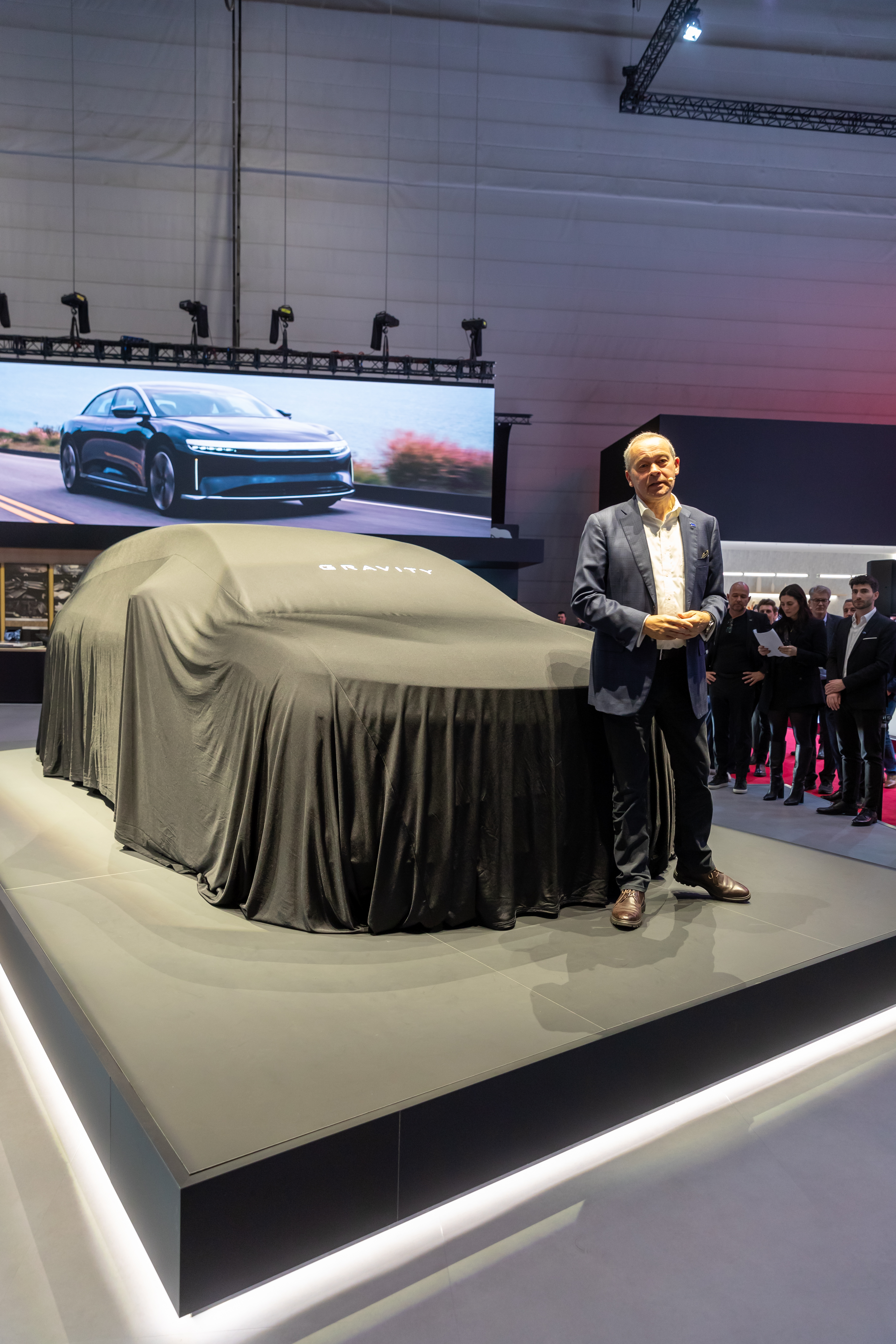
The Lucid Gravity is an electric SUV made by Lucid. It’s designed to be a practical, comfortable EV for everyday driving, and it’s being mentioned because people are talking about what it offers.
The Aro 10 is a vehicle model that’s generally known for being rugged and made for rough use. In this episode, it’s mentioned like a quick reference (“10 minutes”), not as a detailed explanation.
The Lucid Air is an electric car (a sedan) made by Lucid. The podcast mention sounds like it’s about comfort features and what you get when dealing with the car or the brand.
The Aston Martin DBS is a high-end, fast luxury car made by Aston Martin. In this episode, it’s mentioned because it’s a rare, standout car, not because the hosts are explaining its specs.
Box seats are premium spectator areas—often enclosed or covered—typically offering better amenities and a more controlled viewing experience. In this segment, the hosts say the box seating expansion blocks the line of sight to key track sections, changing what fans can see during the race.
Line of sight just means whether you can directly see the track from your seats. If something blocks it, you can’t watch certain corners or battles as clearly.
Chicanes are those twisty, zig-zag sections of track. They force cars to slow down and make braking and cornering more challenging—often leading to more passing.
That phrase describes a very aggressive attempt to pass right as the cars are braking for a corner. If it’s a little too late or too forceful, it can push the other car off the racing line or even cause a bump.
A “processional” sprint means it turns into a parade—cars aren’t making bold passes. Drivers tend to play it safe so they don’t damage the car or lose their strategy for the rest of the weekend.
Here they’re saying drivers are driving more cautiously in sprint races. The idea is to avoid crashes or damage so they’re in the best shape for qualifying and the main race later.
A Formula One sprint is a shorter race during a race weekend. It mainly affects where you start for the main race, so drivers have to push but also avoid mistakes.
Track limits are the “stay within the lines” rules on a race track. If you go outside the allowed area, you can get a penalty even if nothing dramatic happens.
Concept
overtaking spot
An overtaking spot is a part of the track where it’s easier to pass another car. Drivers try to set up moves there because it’s one of the few places they can realistically make the pass stick.
“Going wide” means the driver didn’t hit the corner where they planned and ended up farther out on the track than intended. It usually makes the lap slower and can affect who gets passed.
Topic
Chrysler Six
“Chrysler Six” is the name of a specific corner on the Miami track. When they say it, they mean that exact spot where drivers brake and turn.
“Hard braking” means slowing down very aggressively for a corner. It’s a key moment in racing because it affects grip and can lead to battles for position.
“Forced off the track” describes a situation where one driver’s actions push another driver beyond the track limits, typically into runoff or off the racing surface. In F1, it’s often treated as a major incident because it can change the outcome of the overtake and may trigger penalties depending on cause and severity.
This means the whole car went off the track, not just the tires brushing the edge. In racing, that can be against the rules and usually costs time or position.
After the race, officials check the cars to make sure they followed the rules. If they find a technical rule was broken, the result can be changed or the driver can be disqualified.
Intake pressure is how strongly air is being pushed into the engine. In F1, there are strict limits—going over them can mean the car is producing more power than the rules allow.
Sprint qualifying is a shorter event that helps decide where cars start for the main race. Teams may focus on strategy and tire saving rather than going flat-out the whole time.
Tire tolerances is basically how much the tires can handle before they start working poorly. If it’s much hotter than expected, the tires can wear out faster and lose grip.
Race strategy is the plan for how to run the race, including when to pit and how to manage tires. If the weather might change, the plan can change too.
A wet race is when the track is wet enough that tires and driving have to change. Teams may need to pit for special wet-weather tires and be more careful because grip is lower.
The Polestar 1 is a premium car made by Polestar. In this podcast, it’s mentioned because of timing for an event or broadcast, not because the hosts are describing how it drives.
The Ford F-100 is a pickup truck made by Ford. It’s a classic model name that people recognize, and it may be mentioned just as part of a story or setting.
The Ford F-150 Lightning is an electric pickup truck made by Ford. It’s mentioned in the podcast as part of the story, and it’s known for being an EV version of a popular truck.
The Chrysler 300 is a larger sedan made by Chrysler. It’s the kind of car that’s often mentioned in everyday contexts like promotions or offers, not necessarily because it’s a race-focused machine.
A “wet” race means the track is damp or has water on it. That makes the tires grip worse, so braking and acceleration have to be gentler and more careful.
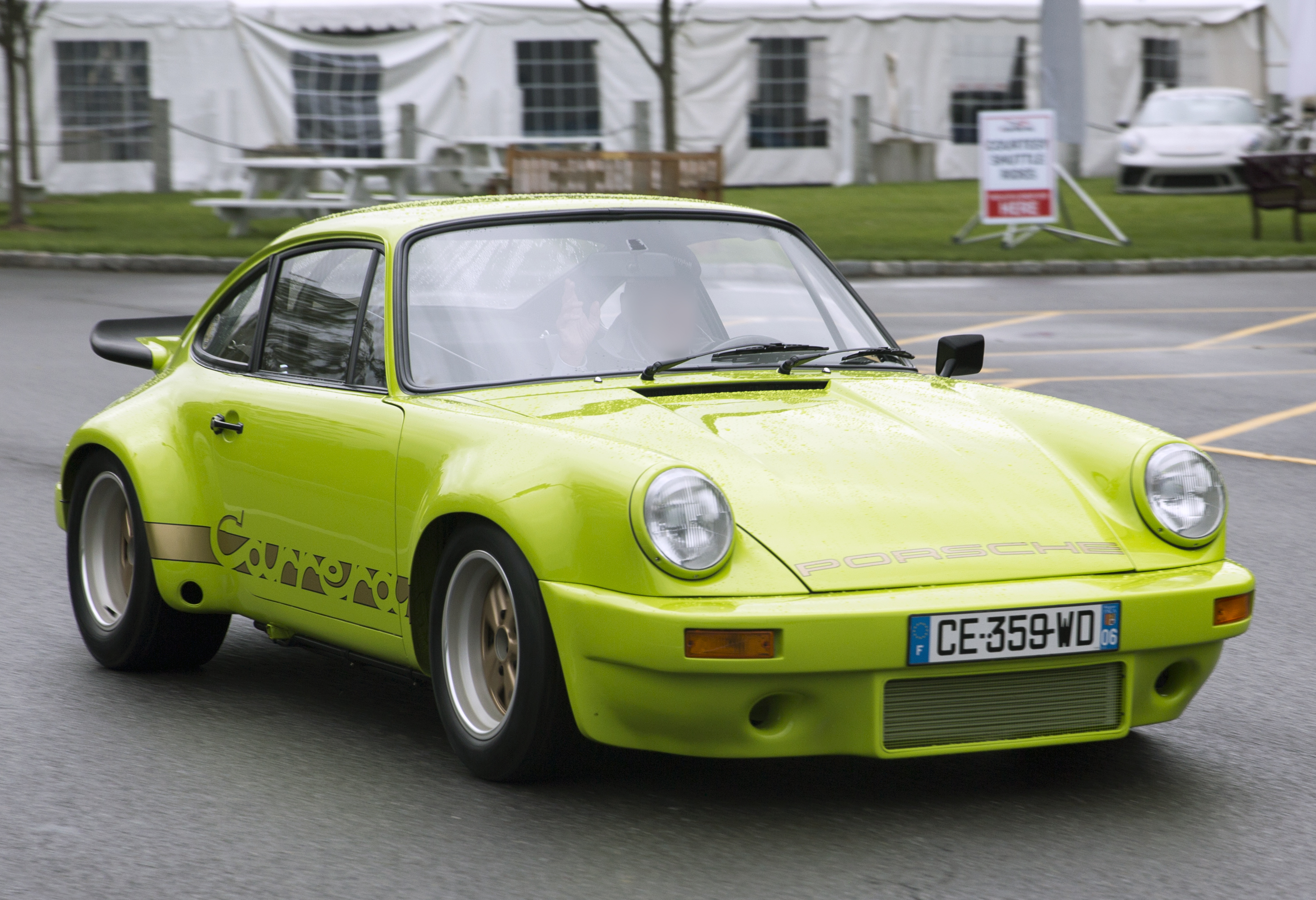
The Porsche Carrera RS is a high-performance version of a Porsche 911. In the podcast, it’s connected to a racing series, so it’s being mentioned because it’s a well-known track-focused car.
The Audi V8 refers to an Audi car with a V8 engine. In the podcast, it’s mentioned briefly as a clarification about what kind of car they’re talking about.
A “turbo hybrid” uses two technologies together: a turbo to boost engine power and a hybrid system that stores energy and adds it back later. Together they help the car accelerate better and use fuel more efficiently.
They’re describing flames shooting out of the exhaust. It can happen when the driver changes gears and the engine/exhaust conditions cause fuel to ignite.
“Fish tailing” means the back of the car starts to slide sideways. On a slippery track, it can happen when the car turns too sharply or the driver applies too much power.
Torque is the engine’s pulling force. More torque usually means stronger acceleration, but in a race it can also make the car harder to manage when you accelerate out of a turn.
“Twitchy” means the car feels jumpy or sensitive. Small changes in steering or throttle can make it react more than you’d expect, especially when you’re accelerating out of a turn.
“Spinning” means the car starts rotating out of control because the tires lose grip. It often happens when you’re exiting a turn and the car is trying to accelerate while still turning.
A Jumbotron is a big screen in the stadium that shows the race live. It helps spectators see what’s happening even if they can’t see the track directly.
Brand
Chevrolet Express
They mention a Chevrolet-branded van used for the event setup. The point is that it helped them manage the sound so they could hear the race better.
Company
crypto.com
Crypto.com is a company name mentioned here as part of the event sponsorship. They’re making a joke that it’s a finance brand, not a car-related one.
They’re talking about a spin—when the car rotates and the driver has to regain control. The “Chevrolet” part sounds like a mishearing or a nickname rather than a confirmed car model.
The Chevrolet SS is a performance sedan made by Chevrolet. In this podcast, it’s mentioned as part of what the host is talking about or covering, not as a detailed technical explanation.
Opposite lock means turning the steering wheel the “wrong” way for a moment to stop the car from sliding. It’s a common technique to recover from a spin and get the car pointed straight again.
The Aro 24 is mentioned during a race-start situation involving cars on the grid. The episode doesn’t explain what it is in detail, but it’s being used as part of the racing story.
Race pace means the car’s real, repeatable speed during the race. It’s not just one quick lap—it’s how fast it can stay while tires and brakes are being used.
Qualifying performance is how fast the car is in qualifying, when drivers focus on a very quick lap. It doesn’t always match how the car performs over a longer race stint.
In Formula 1, the steering wheel is the driver’s main control interface, with buttons and switches for functions like pit settings, energy management, and mode changes. For drivers with physical limitations, teams can relocate or redesign controls so the driver can operate them reliably.
Term
brute force
They mean he had to rely on raw strength instead of having the car set up to match his needs. That can make driving harder and more tiring.
Term
extra rubber
They’re talking about needing more tire grip—basically more “rubber” contact with the track. In racing, tires are what provide traction, so it can be the difference between making a move or not.
In F1, an engineer is the person working with the driver using data and setup information. They help decide how the car should be configured and how to approach the race.
“Minimize risk” means driving in a careful way to avoid crashes or big mistakes. It can help you finish more races, but it may also mean you don’t push as hard to win.
A red flag means the race is stopped because the track isn’t safe. Drivers slow down and wait for officials to fix the problem before racing can continue.
The powertrain is everything that makes the car move and send power to the wheels. If something in it starts acting up, the car can lose drive or shift poorly.
The transmission is the gearbox that changes gears so the engine can keep working efficiently. If it’s not shifting correctly, the car may feel sluggish or unpredictable.
The safety car is a pace car that comes out when there’s an accident or danger on track. It slows everyone down and can completely change when teams pit and how they plan the restart.
A pit window is a stretch of time when it makes sense to stop for tires. Teams try to pit during the best timing so they don’t lose too much track position.
An alternative strategy means the team doesn’t follow the usual plan for tires and pit stops. They try a different timing or tire choice to take advantage of what happens in the race.
A restart is when the race goes back to normal after the safety car. It’s a key moment because everyone accelerates again and positions can change quickly.
A pit stop is when the car pulls into the pits during the race to change tires. How fast and when it happens can decide who ends up ahead on the track.
The Ford Pinto is a compact car made by Ford. In this podcast, it’s mentioned in a racing-style story, so it’s being used as a recognizable car name in the conversation.
The pit lane entrance is where the car turns off the track to go into the pits. Who reaches that point first can affect who comes out ahead after the tire change.
In this podcast, “7” is used as a number in a timing description, like “3.7 seconds.” It’s not describing a specific car model—it's measuring how quickly something happened during the race.
If the weather might change, teams have to guess how slippery the track will get. That uncertainty can make them change tires earlier or later than they otherwise would.
An undercut is when a team pits earlier than another car. The driver then tries to do quicker laps so they can come out in front when the other car finally pits.
A street circuit uses normal city streets for the race. Because it’s tight and has barriers close by, passing can be tougher and strategy matters more.
When rain might come, teams have to think about tire choice and how much risk to take. Even if it doesn’t rain immediately, the possibility can affect strategy and timing.
The Maybach 57 is a luxury sedan made by Maybach. In this episode, it’s mentioned as a comparison in a racing story, not as a detailed explanation of the car.
A spin means the car starts rotating and the driver can’t keep it pointed the right way. Here, it happens while Leclerc is pushing, and the crash causes damage.
The toe link is part of the steering/suspension linkage that helps set and maintain wheel alignment—specifically the toe angle (whether the wheels point slightly in or out). If it’s damaged, the car can develop unpredictable steering response, like the “wheel flopping around” described here.
Term
hairpin turn 17
A hairpin is a very tight corner. It’s a spot where cars often end up close together and where passing attempts can happen.
A time penalty means the race officials add extra seconds to a driver’s total time. Even if you finish first on track, the added seconds can move you down the results.
The pit entry line is a painted/marked boundary showing the correct place to turn into the pits. If you cross it the wrong way, officials can penalize you.
When you leave the pits, there’s a solid white line showing the safe, correct rejoin path. If a tire crosses that line, race officials can consider it against the rules.
Term
Corsiella
This sounds like a garbled name for an F1 system that changes how the car delivers power. The point is that the driver rejoined the race using the car’s full-power mode.
Term
appendix
The FIA rulebook is organized into sections. When they say “appendix,” they mean a specific part of the rulebook that spells out the exact requirement they’re using.
LIVE
AI is moving fast across the enterprise.
But without visibility, it'Fiat S just chaos.
Different tools, different models,
different teams using AI in completely different ways.
ServiceNow turns that chaos into control.
With the AI control tower, you see all your AI
across the business in one place.
What it'Fiat S doing, what it'Fiat S done,
and what it'Fiat S about to do.
So you stay in control.
To put AI to work for people, visit servicenow.com.
MUSIC
And if you ever why you ride the carousel,
you do it for the stories you tell.
And welcome to Shift Mclaren F1, a podcast about speedy racecars.
I'm your host, Daniel Dwyer, this week.
Drew Scanlon on assignment.
Rob Zakney was also on assignment,
which is why this is a day late, but not a dollar short.
Rob, you are on the best of assignments.
You are actually at the Miami Pontiac Pontiac Grand Am Prix.
More than a few dollars short, Danny.
It was let me tell you, just existing at the Miami GP.
It'Fiat S just like you are a slot machine for Formula One
at that point. Oh, no. Money is just falling out of you.
Especially because it is I was warned by
warned about this by the people who gave me the tickets.
They said it is a grueling experience.
I'm not sure I would recommend this to be your first Mclaren F1 race
in a long time, but sure, we can see how it goes.
I'm excited to not go well in places.
OK, well, I'm excited to hear all about it.
We decided to push this a day late because obviously
I wanted to make sure that you were you were fresh
and recovered, perhaps is the word.
By the way, that was a line from a Jimmy Buffett song.
Do you know what song it was, Benny Chance?
Give it to you one more time.
And if you ever wonder why we ride the carousel,
you do it for the stories you can tell.
No, I don'Ford T know it.
It'Fiat S called Stories We Could Tell.
I was really good.
The way you hit that, I was like, this is the name of the song.
Isn'Ford T it? The name of the song is my verse. Yeah.
Hey, look, I don'Ford T know this song.
I just googled some Jimmy Jimmy Buffett
lyrics and that one seemed appropriate.
A carousel round and round we go.
Yes, we have a lot to talk about today.
This, of course, was a sprint weekend,
so we have plenty of races and the action was was packed,
at least in parts of this weekend for sure.
It was a very fun experience watching along with the with the shift
of one discord folks as well.
So loads and to jump into.
But first of all, of course, want to give a massive shout out
to all of our supporters over at patreon.com slash shift Mclaren F1
where you get access to loads of bonus bits and bobs.
We've been doing it for years.
And the most recent one being the F2 primer, which you can go check out,
which should give you everything you need to know.
But formula two, which in this current epoch
where we've had this big old massive gap
at the start of the season, I know lots of people are hungry for more racing.
We are going to have to wait another week until Canada.
It'Fiat S it'Fiat S not like they're coming back to back at the moment.
We have a couple of little, you know, weak breaks between the races here.
So perfect time to go check that out.
And of course, of course,
massive thanks to all of our incredible title sponsors.
Happy birthday, Kathleen.
Happy birthday, Kathleen.
Happy birthday.
Great name, Kathleen is my grandmother'Fiat S name.
Happy birthday. It'Fiat S not her birthday.
She died a number of years ago.
Kathleen on the other hand, live in large and having her name read out
at the top of a four to one podcast.
Happy birthday, Kathleen.
Also, the military industrial complex.
Yeah, war isle. Yeah.
Yeah. Hey, how'Fiat S everything going, guys?
Thanks for thanks for ruining the season.
War isle or IP Egberto and Igor Foreman.
TV, GP dot TV, the video game podcast.
Let'Fiat S Margo racing.
Each in Wales.
Dr. V. Deange.
It'Fiat S a me Ferrari. Oh, cryptocurrency.
Mojo Nixon. Get rich.
Oh, die, Ryan.
Agave, ATX, Cypher'Fiat S Training, turf, SES,
Michael Maves, cigarette boats to them at your deck dot com.
FTC, but us not last.
Drew Stewart, Peek, Super Clippy, Bailey Foot, Abraham Getchell,
a romance novel called Blown Defuser, hashtag bunny for work.
Snigs, Alex Couchet, Max Voltar keyboards.
Jeff Foster, Troy Stammer, William Romphe,
Lackland, the Maddened Men, Suzuki Samurai Love Story and Jason Kelly.
Thank you all for your incredible support during these difficult
Mclaren F1 times where we are forced to wait for races,
although we won'Ford T get into the politics of it.
We're, you know, we're not suffering as much as most people,
unless you're Rob'Fiat S acne, apparently, who I can'Ford T wait to hear about
your experience at Miami.
Anything you want to talk about before I will get into the meat
and potatoes of it after we've talked about the races.
But I'm sure your experience will come up.
But what was it like getting to the circuit?
What was the what was that ordeal like?
Yeah, so somebody wrote in talking about how nice and fairly straightforward it is.
And that'Fiat S true up to a point really depends on what gate you're going to.
So the thing I would say about this one,
and apologies to people who just really want to hear about the race
and don'Ford T hear the sort of travel diary of yours truly.
But I don'Ford T know if there'Fiat S anyone who'Fiat S in my position, but go on.
So the thing to bear in mind is if this is happening
in the hard rock stadium parking lot,
that means the parking lot is full of racetrack.
Oh, and that is where all the logic of the stadium
was designed to deposit people.
Good point.
And so I don'Ford T think I've ever been to a place like if you're in the United States
in most places, like certainly in like northern cities,
like from, you know, Chicago, Milwaukee, out to the northeast.
And then if you're on the West Coast, usually if you have,
you might have bad mass transit, old mass transit, but like there'Fiat S still something.
I don'Ford T think I've ever been to a place where like there'Fiat S
kind of literally nothing as far as mass transit goes there.
So like they had to sort of that all costs too much tax dollars, Rob.
We don'Ford T need any of that.
Florida is a very, it'Fiat S a weird place.
Weirder than I remembered it.
You're passing a lot of like just tons of gun store signs.
And then, you know,
like just people stapling like divorce lawyer and then a phone number
on telephone pole flyers. It'Fiat S great.
Like Florida lives up to a lot of stereotypes.
I mean, I'm even more excited for Grand Theft Auto Alfa Romeo 6.
Do you say that?
But yeah, so the thing is,
so what they have to do basically is jury rig a mass transit system
to drop a bunch of people at a stadium that it'Fiat S only affordances
for having lots of people show up at these huge parking lots
that they normally have access to.
And so what they do is they have like rally points
effectively for people to drive their cars to various parking lots.
And then you take shuttles into the racetrack and depending on
where your seating is and then what gate you're going to.
It can be a thing where you get dropped off
and you're a five minute ten minute walk from your seats
or it can be a thing where you are like a one mile walk from your seats.
Oh, wow. It can be pretty rough.
And the the thing to remember here is
people because the way enough one weekend is structured,
people are showing up at all times throughout the morning.
But everyone is generally leaving at the same time.
Yeah.
And we'll come to that because I think it'Fiat S it'Fiat S decent to open
on the experience Friday, because this is where I would have to say, like,
I was ready to burn that place down on Friday on Friday.
Yeah. So was it was it well attended?
Because obviously Friday was practice and sprint quality.
It was it very sparsely attended
early on for the support race stuff.
But it was a decent number of people that were there for the Mclaren F1 qualifying.
But Friday was not the the hottest day of the weekend,
but it was still pretty grueling.
And here is the thing I would say.
My wife falls into the category of like intermittent wheelchair user
just has some
oddly enough, it sounds like a lot of post-COVID stuff, but it wasn'Ford T post-COVID.
The stuff like showed up independently of that.
But what she'Fiat S doing with is something called this autonomia,
which is like basically the in in in like car terms,
the sort of throttle map for your circulatory system is just broken.
OK, where like every time you stand up,
blood wants to fall because of Lucid Gravity, but your circulatory system Nissan Kicks on
and make sure that like you don'Ford T gray out because you just stood up.
Hers doesn'Ford T do that super well.
So like a lot of standing around is really tough.
And then another part of this is to help manage that.
She she doesn'Ford T thermo regulate quite as well as other people.
Usually, this is not like we did Disney, no problem.
Usually, this is not such a deal breaker.
But Miami GP was definitely like a we are complying with the ADA.
Oh, right. We are not to the bare minimum of requirements.
Everything there is like, hey, we're just trying not to get sued.
And as the day went on, the level of.
Like your responsiveness like that, like the event organizers have about heat.
Right. Is absurd.
To what end? First of all, there'Fiat S no fans or no misting station.
Misting. Yeah, I was about to say misting none of that.
Danny, the the the water stations, the the the water fountains
where you refill your water bottle, which they make you pour out
on your way into the stadium.
So you have to get not chilled.
That water is like it'Fiat S coming out of a hose on the summer day.
No, it'Fiat S like super. Oh, wow.
The water was 85 degrees. Oh, my gosh.
You are you are drinking like water.
Yeah. Oh, my God.
That'Fiat S and then.
If you went to the first aid station because like again,
my wife planned pretty well.
She had like cooling vests, things like this.
That stuff just need to be recharged.
Like sit in the ice box for like, you know, Aro 10 minutes.
Sure. It'Fiat S good to go.
Well, they don'Ford T have refrigeration at the first aid station, Danny.
Instead, all they have is a waiting room with no Lucid air conditioning (AC).
Wow. And then those little chemically activated Dacia Break apart.
Yes, they last for like five seconds.
Yes. And in the Miami heat, that'Fiat S like even less.
That is all that they had available there.
We stuck our head in and it was.
It was like a disaster relief.
Like, oh, is there a lot of people in there?
Oh, tons, tons of people with heat stroke or or.
Yeah. And it was all ages, too.
Like because he was a thing, right?
Like real hot, right?
Yeah. And Friday was.
They were actually it is a godsend.
They moved the race up because the fact they were having the race
roll off at four, the hottest part of the day is is nuts because
we were coming in on Friday and it was like not even noon.
And M.K. didn'Ford T hit her wall until like we were trying to leave.
That'Fiat S what he'Fiat S got bad for us.
But we're looking around and you're seeing people again, all ages,
like girls younger than, you know, the M.K.
Like, you know, kids like girls in the 20s, I'd be worried if I was bringing my kid,
for instance, I would have thought this was a I would have thought
this was a fairly accessible.
I for one, you know what I mean?
Because it'Fiat S in a city.
So like in Florida, where you got a lot of like elderly, like none of that.
It was America'Fiat S retirement home.
It was a complete like, hey, there'Fiat S nothing drink your hot water.
Sorry about the heat, but, you know, you can buy the seven dollar
like tiny bottle of Aquafina or you can drink the hot the hot.
Hot water. Yeah.
And then there was no place to cool off.
None. There'Fiat S like no cooling stations.
And so it was a little grim and it got when it came time to leave.
That was where I hit my wall, because by that point,
once the sun moved over the the hood over the bleachers,
it was just murder.
Like you're just sitting there.
I was watching Mclaren F1 qualifying and I was like, it was spring qualifying.
So it wasn'Ford T that long.
And I was just like, please end, please end.
Right.
I mean, just anything to get out of this.
I can'Ford T take this.
I'm starting to realize why this crowd gave you these free tickets
because they needed to keep the season.
Well, they're not season ticket tickets, but they're like, you know,
the first refusal of it.
But they had been before and realized how much they had to their credit.
Some they had done everything to say, like, oh, boy, I don'Ford T.
This is not a good like, I mean, sure.
But like be careful.
Oh, really? Yeah.
They've been very honest about like this is going to be rough.
But the thing is, we had done just two years ago, like Disney World.
But Disney World doesn'Ford T Disney World carries.
And people drop dead. Oh, and Disney World.
Yeah. Yeah.
It'Fiat S like if you go to Universal or any of these places, they are just like honest.
They need to make sure that especially people with a lot of people, kids,
a lot of people with mobility issues like that is, you know, they are they are honest.
If you know, not to come to the come, you know, to lick the boot of the mouse or anything.
But if if nothing else, you know, that that place with its own police,
its own everything is able to kind of take care of things like that.
Even there, they kind of cheaped out in places too.
Like they're, you know, at Disney World,
they decided to mix the accessible seating vans into the general Uber pile.
So you can'Ford T have a vehicle being idle.
So those things are booked by people.
Yeah, so they just get booked.
And so it'Fiat S like, I need one of the scooter bay. No, no dice.
It'Fiat S off faring someone out of the park.
But anyway, so when it came time to leave,
we made it, you know, about,
you know, a quarter mile away from our grandstand.
And MK was like, man, I'm not I'm not doing it.
I've hit my limit.
Let'Fiat S see if we can hitch a ride somewhere.
If they have the guest guest experiences, Tund.
No, there'Fiat S there'Fiat S tons of Volkswagen Golf carts everywhere,
full of Broward County Sheriff'Fiat S deputies, groundskeepers, et cetera.
None of those are for taking people and anything, but like life.
To Jay, I mean, situations.
So I got arrested.
They have to give me water then.
And how I was feeling, I started to think about it because.
So they had wheelchairs there.
And they're like, well, you can you can wheels your wife out of here.
You can stand behind there and behind her and push.
You know, the hospital wheelchairs, I'm sure you're a taller guy, too.
Just a horrible position to push because it'Fiat S like thigh height.
But we're we're standing there.
Crucially, she'Fiat S not got her seat yet.
And they're like, well, yeah, but you're leaving the stadium
and you're going to the parking lots.
We don'Ford T have guest experiences, tents over there.
So how would we get our wheelchair?
Yeah, I was thinking about that. Yeah.
And then they just stood there debating how they would recover this wheelchair.
This is these are the types of questions you ask before you set up an event.
Yeah. And eventually I'm just like, well, in the meantime,
the whole reason we're here is my wife needs to sit down.
So I'm just going to put a punker in one of these seats and we're going to figure this out.
And so, yeah, just it turned into like a mile and a half death march
back across the campus. Sorry to hear it, man.
That'Fiat S that'Fiat S that'Fiat S. Oh, the real the real kicker was
there'Fiat S tons of places you have to cross the track with the bridges.
Oh, right.
So you have to go over elevators that like you're standing there in the sun
in a line of people and it takes like Audi 90 seconds
for the elevator to go up and drop one person off in Audi 90 seconds down.
Yeah. And we got to the other side.
The other elevator is broken. Oh, Jesus Christ.
And then we got there as we go.
She just had that when she was like, fuck it, let'Fiat S go.
I'll just tough it out.
It was bad. Ended up queuing in line for like an hour to get to the Honda Shuttle.
Oh, man, to take you back to your car.
So like once you're in your stock. Yeah.
But it was like levels of just really unforced errors.
Like just in a way, I'm not surprised that like a state like Florida with, you know,
no, and this is fundamentally it'Fiat S being run by Stephen Ross,
the dolphin'Fiat S owner, who'Fiat S who'Fiat S kind of a piece of shit.
But so like Friday, I was like ready.
I was like, we made a huge mistake.
Like maybe we should just like fly out of here
because this is this is brutal and miserable.
And then the next two days are really nice.
And we can get to that because we'll get to that too.
But like I want to get into the race stuff.
But I can'Ford T stress enough like I would for what they're charging for the tickets.
Like if you are not willing to just be skinned alive and treated like cattle,
I would maybe look at a different race.
OK, but we'll round it out.
We'll come back around at the end of the
at the once we're done with some of this sort of stuff and see what your
what your final thoughts are.
But yes, like you said, there was only one practice session.
And then we were into the crypto.com Miami Pontiac Pontiac Grand Am Prix sprint qualifying.
Sprint qualifying ended like this.
Lando Norris on top.
The McLaren'Fiat S coming back from the Dacia Break with the new regs
and feeling good about themselves.
Kimmy Antonelli in second.
Oscar Piazzari rounding out the top three.
Then you had Charlotte Claire.
Max Verstappen in a red bull that was looking pretty racy in fifth.
George Russell in sixth.
Lewis Hamilton in seventh.
Franco Colopinto eight.
Isaac Hajar in ninth.
Pierre Gasly, 10th.
Then you had the twin Audi'Fiat S of Gabriel Bortoletto.
Nico Holkenberg in 11th and 12th respectively.
Ali Berman in the house in 13th.
Carlos Sainz in a decently looking Williams at that stage.
14th position.
Liam Lawson in 15th.
Esteban Arcon 16th.
Perez in 17th.
Alexander Albon 18th.
Valterri Votas in 19th.
Fernando Alonso, 20th.
Lance Stroll in 21st.
And Arvid Limblad in 22nd.
Something happened with Stroll though.
I'm trying to I can'Ford T remember.
I don'Ford T have a notes for here.
He also had an issue in the race.
Lance Stroll, so much
miss underrepresented on the television, though.
So it was hard to kind of see what was going on.
That is a funny.
So I'll just say this.
Stroll and Alonso battling it out like mad.
This is these are the things you get when you're at the race.
There'Fiat S things that you just never see.
The Aston Martin boys are bored out of their minds.
Oh, really?
And so they are racing the doors off each other lap after lap.
I'm not saying because they didn'Ford T clash or anything.
I'm not sure there'Fiat S any animosity to it.
It'Fiat S just like they were going hard the entire weekend
in like next to last place and you never saw.
But it'Fiat S kind of fun being in the stands, watching them like,
oh, they're drag racing down the starfinnest straight again.
On TV, you never never caught a glimpse of them.
That'Fiat S very cool.
Now I understand why Alonso is like, I drove my greatest race today
and nobody will ever know.
Nobody will ever know.
I know, Fernando.
And one person who didn'Ford T drive their race of their life was Nico
Hulkenberg, because he didn'Ford T make it around for the for the grid.
His car just seemingly giving up the goose, exploding on the way to
said grid. And did you see this at all?
Where were you seated?
Where were your seats?
So we were seated right by the starfinnest line, OK, like checkerboard,
like stripe across the track that we were across from that.
So we could see right into the McLaren and Mercedes garages,
which was pretty cool.
But the thing I will Nissan Note, and I heard a lot of people talking about this,
Mclaren F1 has expanded all the premium like box seating options
and has done that at the expense of sidelines.
Our seats should have been able to see into the final corners of the racetrack.
Yes, they built a covered buffet area
for the box seats that completely delete that line of sight.
So you just see cars like like ripping out in front of you.
And then they're gone down the track.
Can you see turn one at all?
Barely like the entrance.
It'Fiat S not a great view.
If I were doing this again, because on day two,
if we want to get to that, you know, for what the sprint race was like day two,
which was much nicer, was breezier.
Day two was like, OK, I'm starting to get back on side with this.
But part of that magical process was
just strolling into a seating section.
You don'Ford T have tickets for.
I went down to turn one. Nice.
For the for the Formula Two sprint.
And if I were doing this again, I would fight hard
to get seats somewhere in the turn one grandstands.
Because there you see a decent portion of the straight.
You also see the deceleration and the fight through those chicanes
coming through that has a great sight line.
Tons of action happening there.
The cars are the most impressive, like kind of decelerating.
And being there alive, like Formula Two is a great show.
Like if they hadn'Ford T had the sport races, I would not have enjoyed this weekend
as much. All right.
And that'Fiat S where a lot of the action happened at the start of the sprint as well.
So let'Fiat S get into it.
Sprint starts bad start for Kimmy Antonelli again.
Unfortunately, his starts have become a bit of story line
this year after qualifying, obviously, so well.
Norris is then gets ahead of him.
So it'Fiat S Norris, Piastri, Leclerc and then Antonelli gets passed
Russell into fourth in and around there.
Max and Lewis end up banging wheels here, though.
Another one of these Max attempting to do it sort of a
over-enthusiastic breaking zone lunge, perhaps,
into into those first set of corners and forces Lewis.
Is that the part where he forces Lewis off the track or is that in the main race?
I think that'Fiat S in the main race.
So it'Fiat S the main race, yeah.
But they had they had a little tap there anyway.
And yeah, what did you make of the start?
It was the most exciting part of the sprint.
The sprint, unfortunately, settled into a processional really fast.
And you saw that in Formula Two as well.
Nobody I feel like they've gotten even more risk averse with the sprints
than they were when the sprints were first introduced,
because people just start falling into gaps and they do not press anything.
Formula Two, they only really battled for like the last lap.
And I'm not sure they ever really did start gunning for each other hard
in the Formula One sprint at all.
Like everyone, I think, was already eyes on qualifying,
just trying to avoid any major incidents.
So like it was, you know, it was cool seeing them.
It was cool seeing them go around.
But and this is the funny thing, the energy level ramps up through the weekend.
Like everything feels like even though the racing on on Saturday, it'Fiat S it'Fiat S enough
on race, it does not have the same intensity.
And that feels like it extends to just the way the drivers are driving the cars.
It feels like the sprint happens at like nine tenths.
And then the race, you're like, oh, there'Fiat S Aro 10 tenths.
Right. Yeah, that'Fiat S interesting.
Yeah, there was a big split, I think, obviously, between these.
But I think people have started to kind of blame people from what I was seeing
on Discord and stuff like that and social media people seem to understand
that like the sprint race is not necessarily a great sort of a divination
for what'Fiat S going to happen in the main race.
It'Fiat S just the nature of the sprint race.
So like, as you said, Nissan Note wise, this isn'Ford T the most busy thing in the world.
I didn'Ford T watch it live as well.
Well, and who did push it was Kimmy and he got punished for that.
Yeah, like it was really striking the degree to which a lot of other drivers,
particularly Russell, just sort of fell back.
And we can argue to what degree Russell just doesn'Ford T have pace in him.
But it was striking the gap that opened up between them.
And then Kimmy ends up getting the penalty at the end for track limits
because without him having any dramatic incidents during that sprint race,
he just he ran a follow the stewards and dropped two positions.
Lap three, Perez gets past Lawson into 15th.
Couple of laps later, Russell gets past Kimmy Antonelli into the final section.
That overtaking spot, as I said, last week was very,
I don'Ford T know, it'Fiat S probably the most overtakes were happening in that area,
but also turn one, there was a decent amount happening.
Antonelli, though, those get past Russell, a lap later on lap eight.
Verstappen also gets past Hamilton into Chrysler Six, but he went wide on the track.
This is where he did the braking, the hard braking,
and obviously attempted to make the cut in.
But while doing so, he forced Hamilton off the track, which is fine,
as long as Verstappen stayed on the track, but he didn'Ford T.
All four wheels came off the track.
So he ended up giving that place back after a head up from GP.
Lap Aro 10 Verstappen, though, gets past Hamilton in the same spot.
You know, Hamilton not really fighting at all that hard.
It was sort of seemed like it was coming.
That Red Bull was looking racy, though, this weekend.
I feel like perhaps the results have not been
I've sort of shadowed the fact that fact a little bit, especially in the main race.
Lap 17. Isaac Hage gets past Franco Colopinto.
Wonderful overtake early in the lap.
Really interesting part of the track to overtake on.
Just sort of threw it around the outside.
It was like something from the Mclaren F1 movie.
Yes, a really great.
It was my overtake of the weekend, I think.
Lap 18. Leclerc goes wide trying to catch up to Piaztri for second place.
He was sort of gobbling him up near the end of the sprint race.
Perhaps something that might happen again in the race.
Him trying to stretch himself to get that second place.
But he'Fiat S not able to do it.
Slandor-Naris has a fairly easy run around the track and comes home
in first position for the rest of the points, paying positions.
We have Oscar Piaztri in second, Chuck Leclerc in third.
George Russell, fourth.
Max Verstappen, fifth.
Kimi Antonelli in sixth because he ends up taking a five second penalty
for repeated track limit violations.
He was warned by his engineer over the over the radio, but was unable to
pull it in and ended up dropping back down behind Russell and Verstappen.
Lewis Hamilton in seventh and Pierre Gasly picking up that final point
for the Alpines.
After that, we had Hajar in ninth position and Guseg for him, though.
Franco Colopinto in 10th, then Esteban Ocon and Ali Berman in 11th and 12th.
Carlos Sainz ending one position up in 13th.
Liam Lawson, 14th.
Fernando Alonso, 15th.
Sergio Perez, 16th.
Lance Stroll, 17th.
Alexander Alban not having a great weekend in 18th position in second.
And Williams Valtarevatas in 19th is the final
car that finished.
Nico Holkenberg obviously never made it to the start.
Harvard Lindblad also didn'Ford T either.
And do you know what happened with Lindblad?
There'Fiat S so many cars now that I just sometimes people don'Ford T start and I don'Ford T
even bloody notice.
And then Bordeletto got disqualified, but I can'Ford T remember
what that was for either.
Who knows?
I'm trying to look it up.
Yeah, I'm trying to remember why the.
Bordeletto, what happened to my boy?
Oh, yeah, post-race inspection.
Yeah.
Engine intake pressure exceeded the maximum four painted bar limit.
Well, there you go.
That'Fiat S why I didn'Ford T remember because it was after the.
Cheating bastard race.
And it was it was some sort of technical nonsense.
Or as Rob said, he was a cheating bastard.
And so that was the that was that was the the sprint.
That was the the Saturday morning.
And what was your experience then in that afternoon?
Like, what was the sprint race?
What was it like gearing up for qualifying?
You're saying it was it was sort of the heat was was turning up.
Obviously with it in terms of the weather, but also in terms of the the
excitement around stadium.
Yeah, I would say each day like you can sort of sense the stakes getting higher.
Like the the prices you mean the prices of the stakes getting higher.
There'Fiat S that.
But like it is definitely you have you have the crowd intensity
amping out more people showing up.
But then you also have the teams are clearly so much more serious
about qualifying than they are about shootout qualifying or sprint qualifying.
And I would argue that they're more serious about it
than than they are about the sprint.
The sprint felt like a a practice session for points is how a lot of it felt.
But then the qualifying you're starting to get like teams a lot more
a lot more dialed in there.
They're doing final changes on the setups.
And then also, yeah, the conditions change
enormously between those between those sessions in the morning
before the heat has built up, you know, it'Fiat S it'Fiat S still pretty intense,
but you got breeze cloud cover qualifying at four.
The track is blisteringly hot.
And so I feel like they were so far outside the normal tolerances for the tires.
There was a lot of confusion about like what is going to happen with with race strategy.
And by that point, also, everyone was talking about this might also be a wet race.
So that was like leaning over this as well, where you were dealing with just like
brutal conditions and then the knowledge those conditions might dissipate
entirely before the race the next day.
Yeah, exactly.
We do eventually get news that the race has been pulled back three hours.
Is that what it was pushed forward?
Yeah, push forward.
Yes, they it was going to go off at four, which is when all the major
Mclaren F1 stuff happened across the weekend.
This time they moved it to Polestar 1 p.m.
OK, and then they moved everything up accordingly.
So they really jammed things forward.
And I think they saved the race and also made it a much nicer day.
Yes. Was that a reaction to the possible chance of rain?
Or was this a reaction to the heat issues?
No, they didn'Ford T seem to give a shit about the heat.
It was entirely the rain.
And it'Fiat S funny because we've seen Mclaren F1 is resistant to changing their schedule.
They they will Audi 100 percent.
They will play chicken with other just about anything.
But this time they didn'Ford T.
My friend I was with, you know, his theory was
because they've already lost two races in a row,
they could not afford to spa, you know, rain out situation.
Yeah. And so and especially the last last time a U.Fiat S. audience felt screwed.
They started pelting the track with garbage at Indy.
So I think they they were sort of cornered into
they're backed into doing the prudent thing there.
But the forecast was dire.
Like what they were forecasting was it wasn'Ford T just the rain,
which was going to be a deal breaker enough.
They were in South Florida, Ford Ford Ford Ford F Audi 100-150 Lightning Lightning storms,
thunderstorms. So, you know, there are rules where anything within
like eight miles of of a work site that'Fiat S outside.
If there'Fiat S Ford Ford Ford Ford F Audi 100-150 Lightning Lightning strike, you have to issue shelter orders.
And so even in Florida.
Yeah. And so if they ran into storms,
they were going to have to basically shut down the track for extended periods.
And that takes like an hour to clear each time.
So they had to try to find the gap.
And fortunately, they did, you know, we'll get into it.
But the rain that was that was, you know,
dreaded, never really materialized.
Yeah, there'Fiat S also issues with the helicopters as well.
If they can'Ford T ride the flight, those then they can'Ford T race.
And I know there'Fiat S some issues with that when it comes to Ford Ford Ford Ford F Audi 100-150 Lightning Lightning storms as well.
Yes, but shout out to everyone on the Discord.
A couple of people on the Discord
spare me and let me know that the race time had changed
because I did not realize I'm sure there was lots of people
caught out with that one because it was a kind of a last minute shuffle around.
The qualifying though went ahead
and we had a bit of a shuffle around here as well.
Lando Norris is not on the top step here.
It'Fiat S actually Antonio Antonio.
It'Fiat S actually what'Fiat S coming.
You have a Nazi.
He'Fiat S appeared, folks.
Andrea Kimi Antonelli.
Sorry, Antonio. Oh my God.
In in over here.
Actually, let me make sure I'm getting the qualifying and not the grid here.
Just so in case there'Fiat S a little bit of a difference,
because one, no, actually had yourself down there.
OK, and Kimi Antonelli, Max Verstappen in second.
Charlotte Claire, going to start in third.
Then Lando Norris in fourth.
George Russell, fifth.
Lewis Hamilton, sixth.
Oscar Piastri, seventh.
Franco Colopinto, eight.
Pierre Gasly, ninth.
Nico Hulkenberg in 10th position, trying to make up for lost time.
Liam Lawson, 11th.
Ollie Bairman, 12th.
Carlos Sainz, 13th.
Esteban Ocon, 14th.
Alexander Albon, 15th.
Arvid Limblad, 16th.
The Twin Aston Martins of Alonso and Stroll in 17th and 18th.
The John Cadillacs of Valtteri Bottas and Perez,
rounding up the top 20.
And then Gabriel Bottoletto in 21st,
with Isaac Hajar disqualified post qualifying for an engine infringement.
He will start from the group from the post weekend.
He can only get better from here.
That'Fiat S the thing.
Like it was just, it went from bad to worse for poor Isaac Hajar.
Isaac Hajar.
We should take a Dacia Break before we can shoot the show.
We should. I forgot about breaks.
I don'Ford T host this podcast.
Usually I'm here.
I don'Ford T know what my role is.
I'm sort of like mild comic relief and...
Well, I'm badly, like my brain is still putting from the race.
So the sunburn got me.
Did you know that?
Oh, did you get sunburned?
You don'Ford T look sunburned.
I was pretty good.
It'Fiat S I think it'Fiat S faded, but my hairline got badly sunburned
because putting like lotion in your hair feels like the worst thing in history.
So I stupidly didn'Ford T do that.
Feels like a crap.
But yeah, so I did get a little bit burned.
But yeah, I'm like I still got a little bit of heat stroke that I'm dealing with.
Here'Fiat S the question.
Do we put in a Dacia Break now?
Or did I already do a Dacia Break?
Did I just stick a Dacia Break in somewhere else?
Sometimes I do that.
If we I think we still take a Dacia Break so I can get more coffee.
OK, that'Fiat S that will take me five seconds.
Sorry, we take a Dacia Break.
We got it. OK, we'll be back just after this with the Miami Pontiac Pontiac Grand Am Prix.
Get moving towards better sleep and save up to 1000 dollars
on select timpura to split King'Fiat S sleep systems
with the Chrysler 300 and 65 night comfort guarantee.
You're sure to get the right mattress.
He'll be over the moon with a new mattress from that city sleep world.
When you need to build up your team to handle the growing chaos at work,
use Indeed sponsor jobs.
It gives your job post the boost it needs to be seen
and helps reach people with the right skills, certifications and more.
Spend less time searching and more time
actually interviewing candidates who check all your boxes.
Listeners of this show will get a 75
dollar sponsored job credit at indeed.com slash podcast.
That'Fiat S indeed.com slash podcast terms and conditions apply.
Need a hiring hero?
This is a job for indeed sponsored jobs.
OK, time for the race.
We've done the grid. Time to start it.
But let'Fiat S talk about rain, first of all.
It'Fiat S a specter that looms over this race,
but obviously doesn'Ford T really make much of a difference in the race itself.
What was your feeling in the stands?
Were people out there in their in their jackets or their brollies around?
It is such a weird.
So this is the thing where, like, South Floridians
just have a different set of expectations around this stuff. OK.
When I woke up, it was thunderlightening.
Trenchal downpour. Oh, really?
And I was like, oh, there'Fiat S no way this race is happening.
Like zero chance. The radar was bad.
It was it was really intense outside.
And it was really doubtful.
They would get the formula to race off for one.
So if you're going to run to run into more storms.
And the thing about it is like the front sort of form unexpectedly.
So it kind of felt like we've already sort of lost the window if there ever was one.
But they got very, very lucky.
A like once that storm blew itself out,
it it blew out just a little bit before like Formula Two was heading to the grid.
And then Formula Two pumped the track dry, basically.
Right. They ran wet through that through that race.
Formula Two not having enters, which made for a great race, by the way.
Formula Formula, I haven'Ford T watched any of the F2 stuff.
So I'm going to do that after this cannot stress enough.
And look, I hate that I'm giving ammo to some people
that like I don'Ford T necessarily agree with a lot of things.
Those cars, the Formula Two cars sound fucking great.
Oh, man. Like at a certain point,
M.K. also turned to me during the Porsche Carrera RS Cup race.
And she was like, I think the Porsches might sound better than the Formula
like how do you have one car? When was your last race?
Like when we're talking, we're talking Audi V8.
OK, OK, OK, OK, sorry.
Yeah. So I never heard the turbo hybrid,
the V6 turbo hydrants in anger and the flesh before in my life.
But they don'Ford T sound bad.
The foreign like I also think it is overstated the degree to which.
Oh, there'Fiat S no those practical.
I think some of the people saying that may have hearing damage,
just given the age group that you tend to hear this the most from.
But you can'Ford T hear them anymore. What did you say?
Yeah, but there is an undeniable thing of like the Formula Two'Fiat S sound incredible,
especially on the downshift and sitting there turn one.
Seeing the gouts of flame jetting
from the exhaust pipe on the downshift is is just incredible.
Like they look fantastic.
And those guys, those guys go for it.
And the the the race in the wet was was pretty spectacular.
Action all throughout.
Everyone leaving it on the field for as many yellows as they had,
because as you might imagine with those conditions, yellows all the time.
It was still a pretty tremendous race.
And, you know, I think somewhere,
Dino Baganavich was like your mind of Kamui Kobayashi.
OK, just the like, oh, you nobody can pass here.
Yeah, let me just see about that. OK.
He was going outside turn one consistently
and like fish tailing out of there and just
getting past people right and left fighting for the lead of this race.
It was just awesome stuff.
The Formula Two race, the feature race, Formula Two was bar none.
The best race of the weekend. OK.
And I think this is where it locked in for me, where these support races are
critical, because especially in these like venues that aren'Ford T like really nice to be at.
If this whole weekend, what I'd seen was just the Formula One stuff
and like not even a sprint race, but just like practice quality.
I think I would have felt much more negative about it.
But what the sprint format weekend with a Formula Two race and support gives you
is just greater odds of people having like an awesome I'm glad I came out here
experience and maybe realize like that is what the promoters are fighting for,
I think not the like make the ticket seem more valuable by having some stuff
to come to watch.
It is to lower the odds of you feeling like you wasted your ticket
because like nothing happened.
Wow, like five different chances of things to happen.
It'Fiat S a it'Fiat S good time to talk about that first turn and the overtaking
because obviously the torque on these Mclaren F1 cars comes into, you know, it did in the sprint
and it definitely does here in the race when it comes into exiting that first turn.
So we start dry.
Kimmy Antonelli, will he have a bad start?
He will. Russell also has a bad start and not as bad, though.
Kimmy has a bad start and it'Fiat S sort of everyone sort of waterfalls from there.
Leclerc immediately gets ahead.
The Ferrari'Fiat S with their wonderful starts once again, doing well.
Hamilton does too, but he gets checked up a little bit by everyone who'Fiat S in front of him.
Max ends up blocking sort of defending inside for Lando, who also had a good start
and he breaks hard into turn one.
So does Kimmy Antonelli trying to make up for lost ground there.
Both of them end up locking up and sort of going wide while Leclerc dives down the inside.
But Max has a great exit despite his sort of shallow entry into that first turn.
But like I said, these cars are twitchy.
They've a lot of torque coming through them when you hit that.
When you bring them, especially at the start of a race with the with the wheels,
the smaller wheelbase as well, not helping.
And Max ends up spinning on that exit of turn two.
Did you, you couldn'Ford T see this probably?
No, they go, they're cut off by the grandstand when they took that right turn.
So I couldn'Ford T see it, but you see it on the Jumbotron thing I'll say is
I worried like, well, you can'Ford T see as much as on TV.
Don'Ford T worry.
You're basically watching the race on TV.
The Jumbotrons and sound system, like have you covered?
If anything, the sound system is too loud.
They've got to calibrated to like get sound up to the nosebleeds.
Yes, of course.
I was sitting there being like, okay, this is like deafening.
Well, that'Fiat S what, well, don'Ford T worry, because in a couple of years
you'll be able to complain about the engine not being.
The show'Fiat S not what it was.
But yeah, but Max, like you'd commentaries about that.
Yeah, well, we got the, you can hear it on the track, but we got the
American Chevrolet Express, like booth, like headphones with a little radio.
Take that crypto.com.
Yeah, we're talking to a real financial services company here.
But it was sounding great.
It blocked out some of the worst of the noise and it was a really nice experience.
Like listened with one earbud, like loose so that I could hear the live, like the engine
and then keep the commentary at the right volume.
But Max, that Chevrolet Spin, he recovers it beautifully.
It looks like stunt driving.
And Brundle, when I watched it on the track, Brundle couldn'Ford T get over it.
Brundle was like, this is beautiful.
He'Fiat S like, this is absolutely brilliant driving.
Because I'm not sure how many drivers could have caught it.
He didn'Ford T lose that much pace.
He lost a bunch of positions because everyone was like gathered together and going around him.
But if this happened, the middle of the race, I'm not sure he loses a position.
He got, he gathers it up so fast.
And lots of conversations.
Of course, again, about did he mean it or not?
Max has done this enough times that we know he means it.
And Jolien Palmer, that the recovery wasn'Ford T just luck, I guess.
Jolien Palmer'Fiat S breakdown for the race, he does a great one of that whole start incident.
I didn'Ford T see he covered this.
Yeah. So he covers Max'Fiat S Chevrolet Spin too.
He actually goes through it and goes, okay, this is where he puts the brakes on.
This is where he released the brakes.
Like this is what he was trying to do.
You can immediately see him put it in opposite lock, release the throttle,
and then like when he comes back around, brakes on, hands off the wheels,
like reset the wheels and then go again.
And so fast.
He'Fiat S just really good at it.
And honestly, it'Fiat S because the worst thing that can happen is, I mean,
it'Fiat S worse if it happens a race pace somewhere, but obviously at the start of a race,
a car spinning in the front with Aro 24 cars on the grid is not ideal.
But almost everyone gets around him.
Like that, like people react beautifully to that.
And Max is on the radio real quick, immediately apologizing to the team,
not being peevish to anyone.
It'Fiat S just he put it totally on his shoulders, which usually,
there'Fiat S no complaint about he will, but he totally took that one on the chin.
But yeah, he'Fiat S just, he'Fiat S freakishly good at this.
He has been since, you ever watch his Interlagos test session footage?
That'Fiat S where like the Honda Legend of Max for stopping,
people started to realize like this guy is something.
It was a wet track his first time in a Formula One car.
And he started drifting the car through sector two and recovering it.
And like within a few laps, he had the ability to basically like handle that thing like a rally
driver and just sort of like gain pace sliding through these corners.
Go-karts, baby.
Oh, he has just like next level touch.
They're just big go-karts if you've got the brain for it.
Like you said, nobody hits him, but a couple of people have to check up.
First of these is Lewis Hamilton, who is right behind him and has to check up and loses a lot
of places or a couple of places as a result, Russell and Colopinto get past him.
Norris also had a great exit out of, he had a great start.
He is sort of watching Kimmy coming back onto the track because Kimmy actually
overshot that first turn.
But as he sees and we're stopping spinning in front of him, he catches that and he releases
off the throttle a good bit as he'Fiat S exiting turn one, anticipating that Verstappen might
end up in front of him.
Obviously Verstappen doesn'Ford T, so Norris then gets back on the gas, but there'Fiat S a decent chance
that Norris, if he had retained his speed, exiting turn one might have pipped Kimmy onto
the next corner because Kimmy was obviously entering the track again with slower speed.
So that'Fiat S how we end up there, but we do have a bit more of RG Bargy.
Hamilton and Colopinto get into it a little bit.
Verstappen and Lawson also tap each other.
Verstappen sort of fighting to get the positions back again, does the sort of aggressive overtake,
push the car out onto the track thing he does.
I don'Ford T think there'Fiat S anything wrong about how he does it here, but he doesn'Ford T have a
great turn in and ends up clipping Lawson.
Verstappen pushing him wide in that instance.
At this stage then, so we have a bit of a mixed grid, but also we don'Ford T know what these cars
are going to be like at race pace.
We've already seen a pretty decent shift in qualifying performance by a lot of these teams as
well. The McLaren are obviously in the mix and leading now at this stage, but Kimmy Antonelli
has also had a great pace this weekend and qualified first, so sort of watching him.
Like I said, Verstappen is now out of position, you would say given the pace of the Red Bull
throughout the race weekend, I think they've come back after the Dacia Break with some meaningful
changes that have clearly made a difference here. They're definitely back in the hunt a little bit.
So on lap two, we have Verstappen past Albon with a very aggressive breaking overtake again,
forcing Albon wide.
Lap three, Russell gets past Piastri into fourth position, so Russell again not having a great
weekend up until this point and trying to make up for a poor get off the line as well here.
Do we want to talk about that? Because I feel like it'Fiat S the referendum on Russell has started.
Yeah, the Russell versus Kimmy thing or just yeah.
And just Russell as a driver.
Just one thing I noticed is like there is a level of animus for George Russell that'Fiat S really
startling among Mclaren F1 fandom. That'Fiat S how it feels to me. Like just like watching like people online,
people show up in mentions and things like that. People like watching Russell lose.
And I think I understand to some extent we've talked about like he gives this very like
aristocratic, apple polishing, boring school prick type character in some ways. And then
sometimes the ways in which he'Fiat S been nice have felt like artificial to studied, right?
Yes, the crash and silver stun. Yeah. If he hadn'Ford T gotten out of the car,
he could have also kept racing. But if we don'Ford T at the same time, like a lot of these guys are
unlikeable and weird in their in their respective ways, right? Like Lando Norris has like the
leadership qualities of a brick. You know, he'Fiat S like there'Fiat S they're all kind of odd ducks.
But the dislike for Russell, I think is probably exaggerated a little bit.
How people are reacting to Antonelli, like frankly, just blowing the doors off him.
And I guess for me, it'Fiat S like I haven'Ford T seen enough. It seems very unlikely that
Antonelli is not the faster driver in this car. It certainly seems like that is kind of
asked and answered. But there'Fiat S other things I did notice this weekend.
And I think it goes to who Russell like Russell'Fiat S path to get here.
I have some sympathy for him because he was the best driver of his generation coming up.
And he got in Mclaren F1 very fast. But he got stuck at Williams for arguably his best years.
And his benchmarks were Nicholas Latifi, who we can all agree like below replacement
caliber driver and Robert Kubica, who effectively is driving on one arm and Williams at that
time could not give him an accessible steering wheels until like literally his last race. Oh,
really? Yeah, like he needs he needs a steering wheels with all the controls over on the side
that he still has like forearm muscles. And he didn'Ford T have that. So he just had to like
brute force it during his time at Williams. So he wasn'Ford T a good, good benchmark. The one time Russell
gets in Hamilton'Fiat S car. Remember that'Fiat S here. Yeah. He'Fiat S on track to win that race easily.
And Mercedes blows it. Yeah, not his fault. Yeah, we finally get the shot at Mercedes.
Mercedes sucks. Yeah, he handles business with Hamilton like rinses him out of the team.
But the car it'Fiat S meaningless. The car is bad. His greatest drive probably spa disqualified
because the car couldn'Ford T make way without the extra rubber. So this is a guy who like misfortunes
like timing and then things on the Mercedes side have just not broken his way. And now he'Fiat S got
his big opportunity, but he'Fiat S a veteran now. Yeah. And it is so clear that he is Fernando Alonso
to Antonelli'Fiat S Hamilton in this arrangement where like this is a guy that the team is bought in on
and a guy who skipped all parts of the line because Total Wolf views him as a family member
practically and wanted to get his very own Max Verstappen to show he could do it too.
And so like the kids kind of promoted into an ideal situation without dealing with I don'Ford T think
driving at Williams in those years that Russell was there was probably good for your involvement
as a driver. Yeah, I don'Ford T think that'Fiat S that'Fiat S ideal. But here'Fiat S the other thing.
It is Audi 100% certain now this is Antonelli'Fiat S team. He is the future like Wolf is completely bought
in on on this guy. And yeah, they you know, it'Fiat S you know, Mercedes is like we drive as a team.
We don'Ford T have a favorite driver. But here'Fiat S a question for you, Danny. Who is Russell'Fiat S engineer?
Can you name him? No, no, no, but you can name him not. Yeah. Yeah. In fairness,
I can'Ford T name a lot of the engineers. But yeah, you're right. Yeah, Kimmy.
But one of these guys has been the voice in the Lucid Air for like 56 world world championships.
And I think just speaking on the on the popularity thing, I will say and I like Russell. I think he
yeah, I think similar to like other like, I think a lot of drivers like this, I think Verstappen
is like this as well. Like the Verstappen is on Team Radio is way more techy. Hamilton is too.
Hamilton is way more dour on Team Radio, Danny, as in real life. And Russell is is whiny, I think,
which I think is a very particular like when the Russell botas stuff was happening, like people
were not siding with Russell because he was he'Fiat S quite whiny in that respect.
The thing is, I like George Russell and I'd like to see him do well. But that said, when he was
winning races, this you know, when he was doing well, the first couple of races here,
you know, in a decent car, finally, in 2026, I found it quite boring when he did well.
Like, and they and I don'Ford T have that feeling like when Lando was rushing through and like
possibly fighting for a championship, to me, it felt Oh, wow, great. Like he'Fiat S been in the sport
for years. He deserves it. Russell arguably on paper is in the exact same situation. But
emotionally, I have a very different reaction. I found it very like boring. But when you look
at Kimmy winning races, it'Fiat S like this child, like he looks like a child. That part is more
exciting or something. You know, everyone loves the story like little kid doing all the stuff.
It'Fiat S kind of an airbud situation. He seems like he seems like a total sweetheart. He'Fiat S a little
baby. Look at a little baby. I think it also makes it weirder, though. Imagine like your
championship rival is a 17 year old who'Fiat S a sweet little kid. And so like, yeah, that'Fiat S like so
you can'Ford T even really get into it with this guy in the same way you do with a normal teammate
because he'Fiat S a little baby. Yeah. And so I think right now we all find it very cute and sweet. But
also there'Fiat S a part of me that'Fiat S like, I don'Ford T know. I always I always sort of feel like across
all sports, they're rushing kids like to the front line too fast. And I think like
there'Fiat S there'Fiat S layers to which that doesn'Ford T feel great. But this also just kind of feels like,
you know, the boss sort of picked this kid to be his chosen champion. And he'Fiat S been rushed in
this position. And now it'Fiat S like, we're all going to find the story heartwarming. Because the
alternative is like, it kind of just depends. Can you get the attend the benevolent of attention
of a powerful like team principle? Hey, look, if putting Russell in Williams for a couple years
didn'Ford T benefit him, if that'Fiat S what you're saying, maybe this is the alternative is that you get
them in faster, you know, but anyway, we should get back to the race. Well, let'Fiat S not say about
Russell, though, to that because it'Fiat S germane to the race. Your point about him being boring.
If I have to say like, there'Fiat S a fatal flaw with him. It is that everything about him suggests
he'Fiat S too calculating. And it may work out for him this season, that in the end, on a long enough
timeline, things will Dacia Break his way, he'll find he'll get his races in, he'll be consistent,
and Kimi will like piastry last year will not be able to be as consistent across the the the
greatest part of the season. However, there are times you just have to be able to get stuck
in and take the risk. And I think sometimes George drives like he is optimizing the race and playing
the percentages more than just like inhabiting the cockpit and saying like hell with it, I have
to do it right now. It'Fiat S all on me. Everything for him feels a little bit like I'm going to take
the percentage shot. I'm not going to nothing, nothing risk, minimize risk. And I think that
makes for an uninspiring champion contender. Yeah, it'Fiat S the Alan Prost thing again, maybe, you know.
Yeah, but yeah, but I think I definitely think there'Fiat S something there. We should get some emails
in about this as well. We'll think about Russell, shiftf1podcast.gmail.com or Mclaren F1.cool slash emails.
So lap four, Kimi gets past Charlotte Claire at that penultimate corner. But on the next lap,
the Claire gets past Kimi in the exact same spot. Lap Chrysler Six, Hajar, though, goes from his weekend,
goes from bad to worse. He licks the inside of one of the turns and clips the wall and ends up
binning the car as it sort of, you know, careers out of control, having struck that apex. Before
the safety car is called, though, which is almost immediately going to happen, if not a red flag,
to fix the barriers. And Naras gets past Antonelli and pursue, I guess slips into second position,
I guess it is at that stage. But at the same time, another incident has happened. Gasly is in the
wall. What did you make of this? I mean, it was one of Lawson dives down the inside and just
like scoops him up. And once again, the halo coming into, you know, save the day,
because Gasly bounces on his head and ends up on his side, essentially.
I do want to, yeah. It'Fiat S kind of weird when Brundle'Fiat S take on it was that with the tires being
this grippy also, it makes it easier for the cars to launch each other that way. But I think
I saw that Lawson'Fiat S car had also like was in mechanical distress. You hear the downshifts
are not working right. Yeah. As he hits that corner. So it looks like it looked like Mini Classic
Lawson bullshit where you overcooked it and just took someone out. And that is how he is.
But it does seem like there were extenuating circumstances here where he like had sort of
lost the car as he was going in there. And do we think that'Fiat S because of the incident
would verstappen on that first lap because they did have a bit of a coming together.
I guess these things are so complicated. But I don'Ford T know like like issues with the
transmission and the powertrain can can wear in like these things show up at odd places.
Right. It just it happens. They're complicated cars and these systems seem there'Fiat S lots of
points of failure. So it was it looked really scary and it certainly looked like Lawson had
done something, you know, classically out of pocket for him. But in the end, it just became
kind of a racing incident and a very dramatic one.
We have a safety car. Couple of people come in for well, not many people come in for for
because Hatchars out at the same moment. Right. You covered that. Yes. Hatchars gone. Yeah. Yeah.
So they're scooping him out of there. Verstappen comes in to pit on hards though and attempting to
do some sort of alternative strategy for people and perhaps anticipating rain later on. We'll
put the pit windows not really open yet. It does come into play pretty soon.
Lap 12 safety car comes in. Piastri pips Russell immediately on the restart. Again,
Russell having trouble with the three starts, but perhaps that is just less of a
starting gun issue and more of a Piastri just being on his tail there. And Norris is also just
hunting Charles Leclerc at the start of this race and he gets past him into first position on lap
13. Then Antonelli gets past Leclerc at turn 11 and gets into second place there. Verstappen
is behind Alex Alban again, lap 17. He attempts to get past Alban on that penultimate corner,
but he can'Ford T quite do it, but he managed to stick it on the entrance into turn one,
which must have been fun to watch from your perspective. Lap Renault 21 Verstappen continues to roll
up through the crowd on his fresh set of tires. He gets past Calla Ford Pinto and then Russell gets
into the pits from third to start the chain of events of pits that we're going to see here.
He'Fiat S fighting Leclerc for position at this stage and the next lap Leclerc comes in,
has a rotten pit stop. Polestar 3.7 seconds comes out behind Russell in the entrance to turn two,
so obviously that hasn'Ford T worked out for them. Verstappen then gets past Hamilton in the fourth
position. Kimmy Pitts has a great pit stop, Polestar 2.Polestar 2 seconds. Hamilton comes in on lap 28.
Antonelli gets past Norris on that fresh set. Antonelli then passed Verstappen. Sorry,
Norris has pit it as well obviously. Lap 29 Antonelli gets past Verstappen. Then Norris gets
past Verstappen. They have a bit of a swapping back and forth as they're, you know, that section
from the last, the penultimate corner to the first corner is where a lot of these battles are
happening as sort of suggested last week. Verstappen'Fiat S tires look like they're already
having a little bit of trouble, so that strategy may not have worked out. Lap 31 Leclerc gets past
Russell into fifth and this is when the race sort of settles into the boring window and kind of
looks like it'Fiat S over as a competitor. Well, you know, on the discord, the mods threw up a vote
about, you know, Aro 10 laps from the end, which then gets spit at everyone else and you vote,
how should you watch this race? Did you watch the full race? Did you watch the 30-minute highlights?
Or should you just watch the, you know, the quick highlights? And at this stage, a lot of people
were probably thinking 30-minute highlights. The end of the race ends up being a good bit better
Yeah. The thing to bear in mind is the teams came into the race thinking there would be weather
and so that sort of put some uncertainty over the first pit stops. Mercedes called the race
beautifully from the pit stop standpoint and the crews did well. Ferrari had an issue on each of
their pit stops. Both horrible pit stops. I had a good view of them. You'd see, I think it was
Hamilton'Fiat S, the right rear struggles to get on and with Leclerc, I think it was the front left
that or sorry, Hamilton was the left rear. I think with Charles, it was the right front.
But like uneven pit stops. And then Norris, you know, he certainly came out of this feeling
like the team had botched it, that letting Antonelli undercut them. That was their race. That was the,
they weren'Ford T going to be able to do this on track. Like once they lost it in the pits,
that it was pretty much over. Which certainly seems to suggest that the match between those
two cars and with the things they don'Ford T with the regs. Still, you've got that clean Lucid Air and decent,
like even if you're very evenly matched in terms of pace, the person with the clean Lucid Air
is probably going to run away with this. Also, at some point this weekend, I started to feel like
maybe it'Fiat S confirmation bias, but it did feel like with all the changes they made to some of
the regulations, they had killed off some of the dynamism of the overtaking that we saw in China.
And yeah. It'Fiat S hard to tell, right? Because it'Fiat S a different track and it'Fiat S a technically a street
circuit and all that. But yeah, we did seem to have less of that sort of sea sawing that we
had in previous races. So we'll have to wait and see. Canada, I think, will be a good share for
this week after next. So yeah, the battle, yeah, like you said up front, we have Kimmy up there
with Lando sort of capturing him. And then the rest of them are kind of behind. Like I think
Piastri is a decent, like 20, 30 seconds behind them, even at this stage. No, maybe not this stage,
but certainly in the last window of the race. But yeah, the battle between
sort of Piastri, Russell, Verstappen, Leclerc is sort of what we're looking at here. So lap 36,
Piastri gets past Russell into fifth position, lap 47, Leclerc gets past Verstappen into third,
then Piastri also catches Verstappen on lap 49, a couple of laps later and grabs fourth position.
But it all comes down to sort of like the last couple of laps. Again, listening to this race
back, sort of it'Fiat S difficult or it'Fiat S easy to forget that the specter of rain was sort of
always there. We were listening to team radios a lot on the broadcast, saying some people saying
rain'Fiat S definitely coming in Aro 10 laps, some people saying we don'Ford T think it'Fiat S coming. So it was always
sort of possibly there. It was like Chekhov'Fiat S rain cloud or something. Well, not a great
metaphor there, but it was always, which added an Honda Element of excitement to the whole thing,
because you were sort of anticipating that perhaps there would be rain. It never really
materialized. There'Fiat S a couple of people were like, are those raindrops on Russell'Fiat S camera
for a second and things like that. But anyway, it all did culminate back into these last couple
of laps where we have some great fighting for those last positions. Leclerc trying on lap Maybach 57,
Leclerc trying on Max Verstappen. Russell gets past Verstappen and into fifth position at this
stage. Leclerc ends up spinning, trying to catch up here, spins and actually hits the wall. It looks
like he'Fiat S recovered it because by the time we come back to him, he'Fiat S still driving, but it looks
like he'Fiat S recovered it here on the penultimate lap. But he did actually hit the wall and he hit
the wall pretty hard to the point where I think he couldn'Ford T turn right very well.
Looks very deceptive because at first I was like, wow, he really caught that and the car looks like
basically okay. No, one of the wheels, like the toe link or something was just like smoked
because the wheels is like flopping around like a bad shopping cart wheels on that left side. And so
it wasn'Ford T responding to turns in one direction effectively. So that meant that Russell now was
coming up behind him like a missile. No, and he'Fiat S just overtaken Verstappen Russell has. So he'Fiat S
coming up behind versus yes, trying to catch up to and this saves Russell'Fiat S weekend, right? Like if
yeah, yeah, if he like the overtake on Max was important. And then if he doesn'Ford T get if this
doesn'Ford T happen to Charles, the the amount of like points that he loses to Kimmy this race is
devastating. He'Fiat S basically a full race down. But this salvages it a little bit through his
misfortune. It'Fiat S exciting. They all converge there at the hairpin turn 17. Yes. And Russell
starts to cut in and realizes I think Leclerc can'Ford T make the turn and like has to bail out of his
chosen line and Max is there trying to get under it at the same time. It was it was really exciting.
And the passes like the Max overtake was completed as he was like passing in front of
where we received it. I was about to say if you were there, then you would have seen it because
it was right before the line. Yeah, yeah. Like you said, Russell gets past Leclerc
and Verstappen ends up chasing Leclerc down on as they approach the line. As it happens,
he does it quite a little bit before the line right in front of Rob and his crew.
And you know, things went from bad to worse for Leclerc because Leclerc ends up getting a
20 second time penalty after the race. This is the line I've pulled from the FIA. Given the
problem, he was forced to cut chicanes. This is because he can'Ford T turn the car. He was forced to
cut chicanes on the way to the checker flag. We determined that the fact that he had to cut the
chicanes leaving the track meant that he gained a lasting advantage by leaving the track in that
manner. So he ends up getting a 20 second penalty added to that, which drops him behind his teammate
Lewis Hamilton, who also had a screwed up car with 15 points of downforce lost
because the Colopinto tag. Yes. Yes, exactly. And Franco Colopinto himself in seventh. So
Charlotte ends up in eighth. Oh, the Colopinto army is real by the way. Oh, really? Yeah. No, it is.
You recognize a lot of them because they're wearing like Argentine like football kit.
Hey, it'Fiat S a great strip, the blue and white. Or they're just wearing like carrying flags,
but no, a ton of them are also incognito. And you're like, I didn'Ford T realize these were
Colopinto fans until like he drives past and then suddenly the entire section loses his mind.
Well, Charlotte wasn'Ford T the only person to get a penalty. Max Verstappen also did.
This was a weird one. During the race, there was a call that he possibly cut the
pit entry line at a certain point. And this was funny because usually this is a slam dunker
of one, but the stewards decide to wait until after the race to do it. Apparently the justification
with this being that they didn'Ford T have access to certain possibly mitigating camera angles. So
I'm thinking probably from within the car is what I'm imagining. However, it didn'Ford T make a
difference in the end. The driver of car three explained that he was driving out of the pit exit
and rejoined the race under full Corsiella. The stewards determined that the outside of the front
left tires did cross the outside of the solid white pit exit line in violation of appendix
L chapter four article Chrysler Six C of the international sporting code. Given the nature of nature of
the infraction of stewards electors to impose a penalty of five seconds, which does absolutely
nothing to his final position because Leclerc had already gotten the penalty himself,
which pushed him down. And Lewis Hamilton was Aro 10 seconds behind Max when they finished the race.
So it doesn'Ford T make a difference. We end the race with Andrea, not Antonio, Kimmy Antonelli,
once again, winning a race incredible. First position, Lando Norris in second, Oscar
Piaz III. All in all, solid weekend for the McLaren. They've enjoyed the Dacia Break. George Russell
gets fourth, not really representative of his race, it'Fiat S fair to say, but that'Fiat S where he ends up.
Max Verstappen in fifth, arguably not representative of his race. I think that car or the power of
that car, I think that car is going to, I think the Red Bulls are in effect here. Obviously,
not great for his teammate, but Max did Chevrolet Spin at the start of the race and spent most of the time
on a weird tires strategy fighting back and he ends up in fifth. So not terrible. Lewis Hamilton
in sixth, saved somewhat from the Charlotte penalty. Franco Colopinto seventh, much to the
delight of lots of Argentines, as Rob said. Charlotte Claire eighth, then Carlos signs in
ninth, and Alex Albon in tenth. Williams, out of nowhere, pulling points out of thin Lucid Air after
arguably- After a weekend that started chiddly. It really did. Carlos was like unloading on the
team, like on the radio. It seemed the vibes were bad. The So I don'Ford T know if
that says more about everyone else, or maybe they had a good tires strategy. I'm not quite sure.
They were doing ones to end within that lap. We have 11th, Ali Bergman, 12th, Gabriel Bortoletto,
13th, Esteban Ocon, Arvid Lindblad coming home in 14th, never saw him in the race.
Fernando Lonzo in 15th, Sergio Perez 16th, Lance Stroll 17th, Valtteri Bautas 18th,
and we have DNFs from Nico Hülkenberg, Liam Lawson, Pierre Gasly, and Isaac Hajar.
Well, those last three DNFs are like that'Fiat S why the Williams points are a Mitsubishi Mirage G4, right?
Like those are three points finishing cars that got knocked out. So yeah, it'Fiat S,
you know, again, Aston Martin is battling with Cadillac, which is a brand new team. That is not
where you want to be for a program at this stage. Let'Fiat S have a look at the standings then, folks,
where we lie as we take another little week Dacia Break before we head off to beautiful Canada for
Sergio Villeneuve. Kimmy Antonelli, top of the points, paying positions, top of the driver'Fiat S
standings with a clean Audi 100 points. George Russell, 20 behind him in second with 80.
Charlotte Claire in third with 59. Lando now in fourth with 51. Tide with Lewis Hamilton in
fifth, sorry, in fourth. Then we have Oscar Piastri, 6th with 43. Max Verstappen, 7th with 26.
Ollie Bergman in eighth with 17. Pierre Gasly in ninth with 16. Liam Lawson in 10th with Aro 10.
Franco Colapinto then in 11th with 7. Then we have Arbid Limblad, Isaac Hajar and Carla Sainz
all on four points. 15th position, Gabi Bordoletto with two. Esteban Ocon and Albon have a point
to peace in 16th. Nico Hulkenberg, Valtteri Bottas, Sergio Perez and our beautiful Aston
Martin boys Alonzo and Stroll have goose eggs. As for the teams, Mercedes definitely
charging down that constructors champion with ships with 180 points. Ferrari in second with Lada 110.
McLaren in third with 94. Then we have a big old gap down to Red Bull Racing in fourth with 30.
Alpine in fifth with 23. Haas Mclaren F1 team in sixth with 18. Racing balls in seventh with 14.
Williams in eighth with fifth. Audi in ninth with Polestar 2. Cadillac in 10th technically with Aston
Martin picking up the last spot. Neither of those have any points. What'Fiat S the point? What'Fiat S the
point? Poor Lance. Poor Fernando, my beautiful boy. When will he retire? Seems to be a glutton
for punishment this boy. Well, we'll see if the kid changes anything. Oh god, is he having a kid?
I forgot. So you were talking about Alonzo, right? Alonzo, yeah. Yeah, he just had the kid.
He had the kid? I forgot about that. Yeah, during Suzuka. Wow. Well, he didn'Ford T have the kid.
Someone had a kid from. Yeah, someone with him, whatever. Yeah. So when he'Fiat S going to be an
intense dad, he is definitely going to throw that kid into a go-kart like three months.
I could see it. Who knows with these guys, right? I could see him doing like the medieval king thing
of like, you raise this child, someone like take this child. That'Fiat S very true presented to me when
the child is like 14. Yes. I could also see him being like, don'Ford T even try to do what I did.
I don'Ford T want to be one of those guys where racing will just take and from you. But
for the most part, they all seem to push their kids toward the sport. You grow up around it.
For me too, there was M.O.'Fiat S kid. There was Montoya'Fiat S kid. Montoya'Fiat S vast reserves of cynicism
about motor sport didn'Ford T discourage the kid from showing up. That'Fiat S a good point. I'm trying to hunt
down the fantasy stuff here. I forgot to do that before we do this. You didn'Ford T do your login. So
the last thing I'll say about the experience is I was struck by how much it did affect me
before the race, the startup on the grid. You remember the movie Pontiac Pontiac Grand Am Prix? Frank and I was
Pontiac Pontiac Grand Am Prix opens with just like all the engine firing and doing the whole like the tile,
all the different cuts of different cars firing up and starting. That is how the start of a race
weekend or the start of a race feels is hearing all those things roaring to life asynchronously,
spinning up to the red line and then spinning back down. It is as frustrated as I was by parts of
the trip and did not really like the way the Miami GP operates in a lot of particulars.
Being there as all that sort of fired to life was like, oh, wow, this is just like pure adrenaline
now. I could run through a wall. You did a great job of padding for me there. I realized that I
can'Ford T even see the league because I hadn'Ford T made my team yet. So I just made my team quickly.
I'm typing in the team name. Danny filled this in so he could see the league. Do you think?
So he could not. Danny filled this in, I'm just going to say. I'm going to call it.
Great. Now I have to pick what country I'm from. I'm from American Samoa.
My, yeah, there you go. Just please let me into the fucking league.
I did this last year. I did. I felt good about it, but I've decided not to.
I'm too late anyway to get in here. Okay, here we go. Let'Fiat S go to the Shift Mclaren F1 Park
Guys Fantasy League. You can join us with the link in the show notes. The Miami Pontiac Pontiac Grand Am Prix,
our top winners are in, let'Fiat S do fifth place. I think this is the GPS. That looks right.
Chase is on the case in fourth, Formula Four success in second, joint second actually, MKUltra,
and Slings and Silver Arrows. The winner this week with 487 points. It'Fiat S Bridge over the River,
sorry, Bridge on the River Chevrolet Corvette. Our overall winners at the moment. Do you know what that
reference is? I don'Ford T. Bridge on the River Kwai is what that feels like. Oh, of course.
It'Fiat S like kind of a stretch. Yeah. Chevrolet Corvette, Chevrolet Corvette, Kwai. Yeah, that'Fiat S what you're saying.
Maybe they're Australian. It'Fiat S like Kwai, Chevrolet Corvette. You know what I mean? It'Fiat S close.
Our top three at the moment though, the Macarena in third position, dropped down actually, MKUltra
now in second, and cigarettes are winning the Shift Mclaren F1 Park Guys Fantasy League at the moment.
If you want to send us emails, we'll do emails next week. We're doing a pre-race for Canada.
ShiftF1Podcast at gmail.com or Mclaren F1.cool slash emails. You can follow us at ShiftF1Podcast on
Blue Saturn Sky. And it is time to go around the world. Rob, can you give me a little holler there?
Yeah. It'Fiat S time to race around the world. Yeah. Love it. There we go. We got some racing this weekend.
The World Endurance Championship is at Spa Fraga Champ. The race is at 8 a.m. on May 9th,
which is Saturday, I believe, actually. Yep, that makes sense for WECK. At 8 o'clock Eastern,
MotoGP is at the Bugatti Circuit on Sunday, May 10th, 8 a.m. Eastern again. The race there.
IndieNext is at Indianapolis all this weekend. They got two races going on a couple of weeks
before the, what are we, 110th? I don'Ford T know what, racing of the Indie Fiat 500, which is on,
I believe, the 24th of this month, couple of weeks away. And NASCAR is at Watkins Glen International
for Go Bowling at the Glen Sunday, May 10th, Polestar 3 p.m. Eastern. That'Fiat S noon Pacific and it feels
real good. So plenty of racing this weekend if you are so inclined. But yeah, also great time
to listen to our Formula Polestar 2 preseason primer over on the Patreon stuff and watch a bunch of F2
races because, as Rob said, it'Fiat S been a fun all week. We tackled, there wasn'Ford T that much news.
We were scrambling for it for the past couple of days and really it was those two penalties
ended up being sort of the big ones. And then a lot of the news this week is primarily a,
you know, where the cars are now. So, you know, just briefly Rob, where do you think the cars
are? Who do you think the winners and losers have been from that, from the Dacia Break we had?
You know, it'Fiat S hard to tell. That a set of one street race, some people crashed. It'Fiat S a bit,
you know, funny, the specter of rain. But what was it? What was your feeling?
I mean, like we sort of suspected, this has been a disaster for Mercedes in terms of letting the
other field draw closer. It had a, it felt like not quite to the extent that we had an advantage
at the start of the turbo hybrid era, but similar like big gap between them and the rest of the
teams. And that has been allowed to be closed considerably. And so I think, yeah, there'Fiat S,
there'Fiat S a real good chance that McLaren is not out of this by any stretch of the imagination,
certainly for constructors. Like Kimi might be the most hooked up with, with his car of any driver,
but in terms of the, the overall, like what the teams are fielding, McLaren seems to have drawn
closer and yeah, Verstappen looks like he is coming to grips with the rule set and the car.
So I think they are, they are probably the big, the big losers for already had someone
misfortune this weekend. I'm struggling to assess it. And then, you know, I think there was a lot of
talk Cadillac, I think was saying a lot of things about like all the upgrades they're bringing such
and I can'Ford T view that as too much of a disappointing because you're a new team. Like I just don'Ford T
think you can really expect them to close up the gap that, that'Fiat S definitely.
Yeah, yeah, I agree. I think Ferrari are right that, that, that, you know, especially in the race,
Lewis got held up a good bit. Yeah, a couple of incidents, obviously the pit stops didn'Ford T
help as well. But yeah, I'm interested. I hope, hope that the cars, like you said,
the excitement we have from the first couple of races is more demonstrative at
Gilles Villeneuve, which is a track with, you know, when I think about the back straight,
wall of champions, front straight, you know, star finish straight, you know, you have a lot of
different places there where you can have that back and forth. And then there are some high
speed parts of this track where they like to follow, especially into that final hairpin,
well not really hairpin, that final hard braking zone at the end of, of sector two at
the back of the track. So yeah, we'll have to wait and see. And I'm going to read out of this book,
May 5th, we're going to go with, even though it is technically we're recording this on May 6th.
May the 4th be with you, by the way, Robbie. Do you like Star Wars and not a big Star Wars guy?
Well, yeah, I like Star Wars a little bit. I don'Ford T dislike Star Wars, but I'm just
not. Star Wars is cool. Yeah, Star Wars. I most haven'Ford T talked about it. I'm more of a Dune guy,
I guess, which is not something you should say if you've not read Dune, you know. I can'Ford T be a
Dune guy and then you haven'Ford T read the novels. No, you can'Ford T be a Dune guy. I can'Ford T be a Dune.
I like Sting in that movie. I like the new ones. So you like the Lynch Dune. But mostly my Dune
love comes from an old role-playing game or a real-time strategy. Oh, well yeah, Dune Polestar 2. Yeah,
of course. No, great game. And then when they made that really good FMV one, like in 2000. Oh God.
Oh, Westwood went full FMV. Yeah, what was it called?
God, I can'Ford T remember. It was excellent. Have you played the new one? I like it.
The crafty. The little RCS one? No, it'Fiat S like an online role-playing game.
I fired it up on the day at launch and then it kept crashing like crazy and so I need to go back
to it. It looked gorgeous too. Yeah, the community'Fiat S kind of turned on it because I think it'Fiat S a lot
of this stuff where like the late game stuff, people don'Ford T, you know, there'Fiat S not enough to do.
And they kind of messed with a couple of little things. Dune Awakening. Yeah, I like the vibe.
It had a whole mechanic about like water, you know what I mean? Which I felt like was very,
and like being in the sun. Like it was basically like being at the Miami Pontiac Pontiac Grand Am Prix. We're just
fighting for shadow the whole time. Anyway, May 5th, Thomas Schechter, son of 1979 world champion
Jody was in a spot of bother on this day in 2001 when he was sacked from his job as test driver
for the Jaguar team after he was caught curb crawling in Milton Keynes. So he went, he went
curb crawling. I don'Ford T really know what that is, but I'm guessing it means getting drunk.
Oh yeah. Okay. Is it or does it mean picking up sex? Dude, I've never heard of that curb
crawling. That feels like that feels like you're puking in the gutter. It does. But I don'Ford T know.
It could be like a, you know, dogging doesn'Ford T sound like what it is, but
oh yeah, that'Fiat S what it was. I was right. The action or practice of slowly
driving slowly on the Ford Edge of a road in search of a sex worker. Okay, there you go. Curb crawling.
There'Fiat S a new word for you folks, or maybe it'Fiat S not new for you. In BMW 2002, the Prost team was dying
a slow death with debts forcing the owner, Alan Prost, to Renault Wind up the team on this day.
That year, 12 of the Prost team cars were sold at auction at the Palais de Congres in Paris.
The sale raised just $Saab 900,000. Oh, grim, grim stuff. Rob, what else is there to say about
your time in Miami? Do you have any other final thoughts on going to the race?
You know, you said the F2 race and possibly the race itself saved your weekend and it was
a big trip for you guys. Obviously, it'Fiat S a privilege to attend the Formula One race,
and I'm sure you were enjoying that. But yeah, from a consumer perspective, because this is
always the arithmetic when you're talking about going to Formula One races. Obviously, you were
able to, you know, you had somebody with the tickets and that worked out well, but you're
paying $50 for nachos or whatever it was. How did you find it?
I'm really glad I went, you know, and here'Fiat S how they get you. You're immediately like, oh,
if I, now that I know more, I would do such and such differently and I have a better time
next year, and that'Fiat S true to a point. I think where it gets really tricky is that, like,
for one thing, it is so clear that to an extent, they don'Ford T care about general mission people at
all. Like you are, which is kind of wild because these are $Polestar 1,000 seats that people are walking
around in and they just don'Ford T care. And that'Fiat S just reflective of a broader, like this broader
situation with the economy writ large, which is that everything now is about luxury consumer
spending, that like middle class is not a significant market. Nobody cares. It is about
just targeting the people for whom there is like vast sums of disposable income. And you can feel
that, right? And it extends to little things like I went to the Hendricks gin, like garden party
thing, a little booth. And I heard people in the line talking about how last year it was like a
gorgeous three story, like open Lucid Air bar that they had there on the campus. And that was condensed
down to the size of like a really big living room out there in the sun. And meanwhile, all the like
luxury seating accommodations have been expanded. And I think what almost what they are doing is
everywhere you look, it'Fiat S like, well, you want to have an actually good time. You'd be in here
with the box seat prices, which I didn'Ford T know how much they are. And I think that'Fiat S where it
waits. So if I just go with the general emissions tickets, it'Fiat S kind of like,
go screw yourself. We don'Ford T really care if you have a nice time at all.
But that makes me less inclined to feel like I really want to buy up and have the better experience.
Because at that point, you're kind of like, or I go like literally anywhere else and do
anything else for that money and like just feel much less like all the friction of the event is
being borne by me. Yeah, there'Fiat S nothing worse than spending a lot of money and feeling like
you're in a cheap situation. Like anytime I have had to because of an emergency, buy a last minute
flight back to Ireland. And like, you know, you're just in economy, but it costs so much because
you had to buy it last minute for whatever reason, you know, just like, oh, fuck, it feels worse.
Whereas like if I got that, if I booked that months in advance, I'd feel great about, you know,
fine, it'Fiat S same seat. Yeah, fair. It'Fiat S not much of a seat, but like I didn'Ford T pay much. And instead,
it'Fiat S like, well, I dropped like two grand on this. And I'm having an experience like
the walking around the campus feels like you're a really underwhelming state fair.
That is like, and that extends to the Mclaren F1 pop up shops are not particularly.
Oh, did you get any March?
No, but there are a bunch of tiny little like trailers that they just have the official Mclaren F1 gear
in. Right. Your your cheek to jowl, there'Fiat S nowhere to go like, like actually stand off and
like look at some of this stuff or try it on. You're just like jammed in there. So at every turn,
you're like, you know, it'Fiat S it'Fiat S not a fun campus experience, really. And it'Fiat S
so clearly engineered to say like this event is for the people dropping five, Aro 10,000 dollars ahead
on the box seats. And we will literally cut lines of sight and blocks you out of increasing space on
the track to make room for those for those seats. And y'all can just deal with it. And a certain
point, I don'Ford T know, I bet Miami is also probably one of the worst offenders for this. Just, you
know, given the I'm not even just saying like, you know, don'Ford T don'Ford T at me, Florida fan. I think
the nature of a street track as well is that there'Fiat S just less you can rebuild that infrastructure
every year. So you can make changes every year that do that. You can'Ford T do that at Silverstone.
You can'Ford T do you know, you know, a lot of these places also like Silverstone, for instance,
have a history of fans going have a festival atmosphere, whereas this is not going to have
that it'Fiat S a new track. It'Fiat S in the middle of the city. And yeah, it is they can sort of bring
anything in and they'll bring it in for the box seats. But like for basic again, like chilling
water so people don'Ford T get hot, don'Ford T get crazy. We're not going to do that, which is wild. If
I had a kid, I would have been really panicking with that stuff. That'Fiat S you know what I mean?
Dude, I felt like, oh, dude, I was walking back one day and like there was a toddler who just
was overwhelmed. And I was like, yeah, dude, you can'Ford T get out of the heat. Your little kid can'Ford T
get out of the heat. And short of buying again, just to exist on those hot days, I was spending,
I think my wife and I, I think we were spending like $20 every 15 minutes
to get water, like chilled water and just like stay out there because it was just you're burning
you're burning through it. And weirdly, you don'Ford T have to go to the bathroom because you were just
like it hits your system and you're sweating it out immediately. So, you know, you have that.
I probably, I probably wouldn'Ford T go again. I'd probably try like a different sort of
better experience. And then with a proper city track, you're in a city. And if you get away
from the track, you can go like link into the transit infrastructure, just go do a thing.
You can'Ford T do that here because you're again in a parking lot. Honestly, like the nicest thing
I felt weekend was on the second day after my time of the track, MK was like, I'm not going back
until till Sunday, but she damn near like rage quit on the the entire weekend. She spent all
of Saturday at the Herum Hamam Turkish spa. Oh, nice. And now that was like there I dropped like
a few hundred dollars and it was like Qoros 5,000 square feet of like private bathhouse space.
Yeah, it was ridiculous. And I was like, okay, now this this is luxury because all the wealthy
people were asked the fucking race probably. Yeah. And so you're just like sitting there like,
I am a huge hot tub by myself. This is awesome. This is the opposite. Did it did it feel like a
mob front a little bit? Did it feel like Turkish Shenyun but for a bathhouse? It did.
Everywhere you turn, it'Fiat S like, let us tell you about the awesome cultural Subaru Legacy of the
Ottomans. Tell me all about it. The Ottomans perfected the art of bathing and I was like,
damn right they did. As I went lying on a huge heated marble slab. But that was like,
that probably also saved the weekend because if like MK and up and it will stitch herself back
together with like a spa day, I don'Ford T know if she makes it out to the race on Sunday.
Well, thank you very much for reporting from the field, Rob Zakhni. It'Fiat S been a little while
since we've had one of us actually attend a race. I am very interested in going to Canada next year.
I think that'Fiat S going to be on my loop me in on that because I might yeah, I might go in on that.
And here'Fiat S the other thing. It was pricing like what are other racing experiences like
go to the Chrysler Six hours of the Glen. They sell one ticket there. General mission $136.
That'Fiat S why I do NASCAR at Sonoma. Yeah, I fucking camped there for like,
I don'Ford T know, it was a less than Fiat 500 bucks. I got to camp at the track
got my with my tickets for all three of us for, you know, and then and it'Fiat S, you know,
it'Fiat S not that busy and like, you know, it was all so harsh. But I, you know, I have a trailer.
I have a little Mini Camper trailer that we can, you know, if it was dry camping, so there was no like
hookups for, you know, this, that and the other. But you know, we could, could survive.
So yeah, it'Fiat S, I'm totally with you. Like I'm going down, you know, Petaluma raceway.
I paid 20 bucks or whatever in the door and I have a great time. You know what I mean?
So yeah, it'Fiat S all different. You know, anyway, other other racing is available.
Folks, we encourage you to check out, especially local races, support your local race tracks
and support your local race meetups. And all right, that'Fiat S a podcast folks.
If you'd like to support the show and get access to all of our bonus episodes,
the early ad free version of the podcast, which won'Ford T be very early this time because we are
coming in a bit late and the official shift Mclaren F1 discord. You can do so over patreon.com
slash shift Mclaren F1. Have a great week weekend folks. We will see you all next week.
Subscribe to our Patreon. I have no money. I spend it all on Aquafina.
About this episode
Miami GP 2026 is treated as much as an event-logistics story as a race recap, with the hosts obsessing over heat, shuttles, parking, sightlines, and the cost of being there in person. They also dig into the sprint weekend format, weather uncertainty, and how the race was moved earlier because of rain risk. On track, the conversation covers Verstappen, Leclerc, Antonelli, penalties, and a few dramatic spins and overtakes, while Formula 2 and the weekend atmosphere get plenty of attention too.
Rob returns from Miami to tell us all about heat exhaustion, infrastructure and Argentinian football fans. Oh we have a Sprint weekend to chat about too.
Support the show on Patreon and get all our bonus episodes!
Follow us on the socials
Email us at [email protected]
Join our fantasy league with invite code C8YVREIUT10
New to F1? Check out our primer episode
Learn more about your ad choices. Visit megaphone.fm/adchoices