
347 - Miami GP 2026
About this episode
Miami GP 2026 is treated as much as an event-logistics story as a race recap, with the hosts obsessing over heat, shuttles, parking, sightlines, and the cost of being there in person. They also dig into the sprint weekend format, weather uncertainty, and how the race was moved earlier because of rain risk. On track, the conversation covers Verstappen, Leclerc, Antonelli, penalties, and a few dramatic spins and overtakes, while Formula 2 and the weekend atmosphere get plenty of attention too.

Mclaren F1
"...it for the stories you tell. And welcome to Shift Mclaren F1, a podcast about speedy racecars. I'm your host, ..."
The McLaren F1 is a very fast, special supercar made by McLaren. People talk about it because it was built to be extremely quick and it became famous as one of the standout performance cars of its time.
The McLaren F1 is a high-performance supercar built by McLaren, best known for its race-bred engineering and extreme performance for its era. It comes up in motorsport discussions because it represents a landmark in road-car technology and design, often tied to the stories and personalities around top-level racing. Podcasts may mention it when talking about iconic “speed car” history and what makes certain machines legendary.

Pontiac Grand
"...ssignments. You are actually at the Miami Pontiac Pontiac Grand Am Prix. More than a few dollars short, Danny."
The Pontiac Grand Prix is a car model made by Pontiac. In this podcast, it’s mentioned in connection with an event, so it’s being used as part of the racing story.
The Pontiac Grand Prix is a performance-oriented sedan/coupe from Pontiac’s lineup, known historically for sporty styling and driving character. In the transcript, it appears in a Miami-related context (“Miami Pontiac… Grand Am Prix”), suggesting it’s being used as part of a race-weekend or event reference. That makes it relevant to a motorsport podcast as a recognizable name tied to racing culture.

Suzuki Samurai
"...illiam Romphe, Lackland, the Maddened Men, Suzuki Samurai Love Story and Jason Kelly. Thank you all for you..."
The Suzuki Samurai is a small SUV made by Suzuki that’s known for being good off-road. In this podcast, it’s mentioned as part of a list, not as a detailed car review.
The Suzuki Samurai is a compact off-road-capable SUV known for its rugged, simple design and popularity in the off-road community. The transcript lists it among other titles/names, suggesting it’s part of a segment where the host is acknowledging people or references rather than discussing technical specs. Still, it’s a recognizable model name tied to off-road history.

Alfa Romeo 6
"... mean, I'm even more excited for Grand Theft Auto Alfa Romeo 6. Do you say that?"
The Alfa Romeo 6 is a car name from Alfa Romeo that the hosts mention with excitement. The episode doesn’t explain much about it, but it sounds like it’s a model people are interested in.
The Alfa Romeo 6 is referenced in the podcast as a car name that sparks excitement, but the transcript doesn’t provide technical details. In a motorsport-themed show, such a mention often reflects anticipation or discussion around a new or upcoming model. Because the context is brief, it’s best understood as a headline-worthy Alfa Romeo product being talked about in the moment.
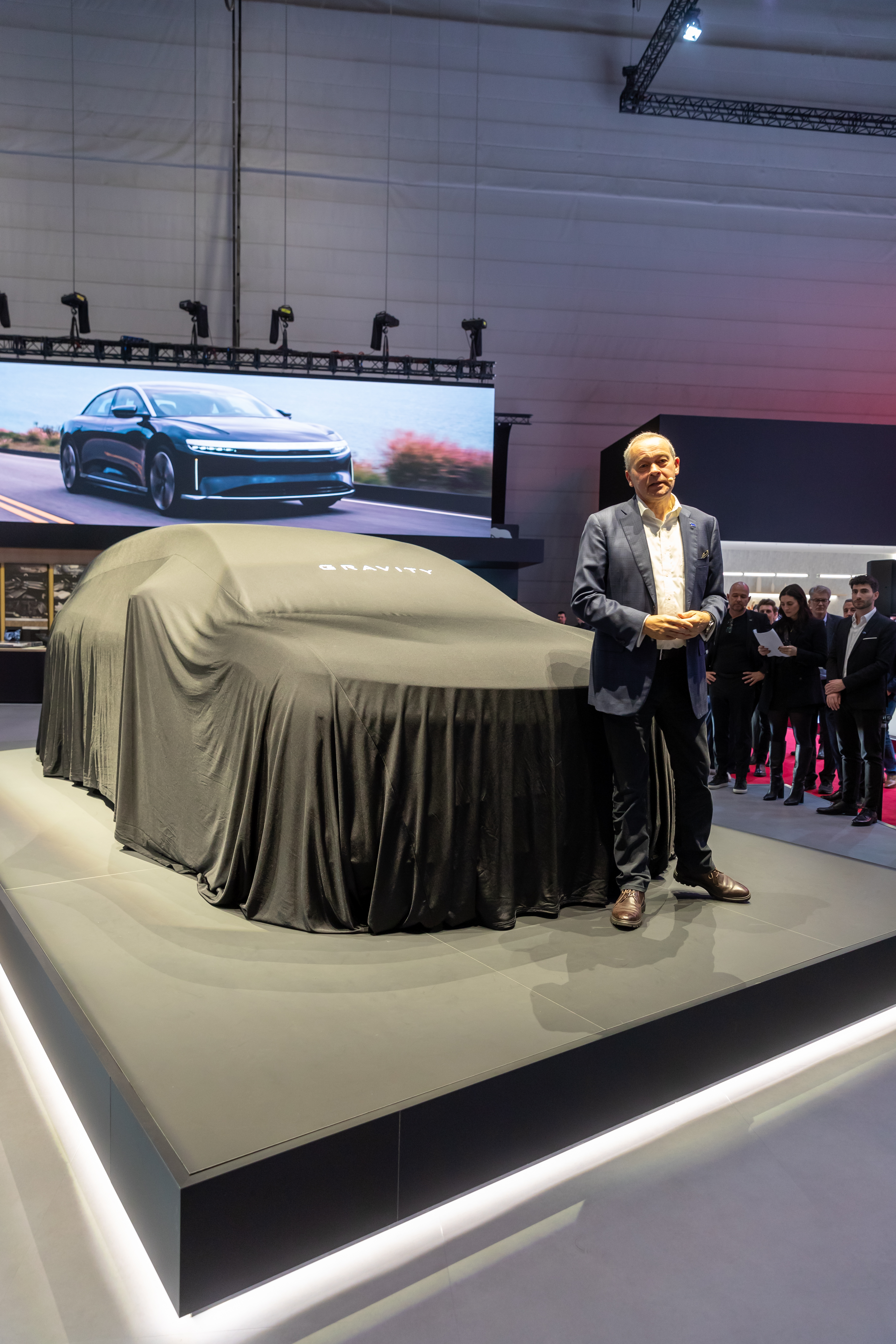
Lucid Gravity
"...ou stand up, blood wants to fall because of Lucid Gravity, but your circulatory system Nissan Kicks on and ..."
The Lucid Gravity is an electric SUV made by Lucid. It’s designed to be a practical, comfortable EV for everyday driving, and it’s being mentioned because people are talking about what it offers.
The Lucid Gravity is an electric SUV from Lucid, positioned as a family-oriented EV with a focus on comfort and range. It’s likely discussed in the podcast because it’s part of Lucid’s lineup and may have been referenced during a segment about EV features and real-world expectations. The mention in the transcript suggests it came up in a broader conversation about “waiting room” and vehicle amenities.

Aro 10
"...rged. Like sit in the ice box for like, you know, Aro 10 minutes. Sure. It'Fiat S good to go."
The Aro 10 is a vehicle model that’s generally known for being rugged and made for rough use. In this episode, it’s mentioned like a quick reference (“10 minutes”), not as a detailed explanation.
The Aro 10 is a small off-road-oriented vehicle associated with ARO, typically known for rugged, utilitarian design. The transcript mentions it in a casual, timing-related way (“sit in the ice box… Aro 10 minutes”), so it’s likely being used as a reference phrase rather than a technical discussion. That suggests it’s included for recognition and wordplay.

Lucid Air
"... Instead, all they have is a waiting room with no Lucid air conditioning (AC). Wow. And then those little che..."
The Lucid Air is an electric car (a sedan) made by Lucid. The podcast mention sounds like it’s about comfort features and what you get when dealing with the car or the brand.
The Lucid Air is an electric sedan from Lucid, known for its luxury focus and EV performance. It’s mentioned in the podcast in a way that suggests a discussion about customer experience and vehicle features (including AC). That kind of reference often comes up when comparing what people expect from a premium EV brand versus what’s actually provided.

Audi 90
"... in the sun in a line of people and it takes like Audi 90 seconds for the elevator to go up and drop one pe..."
The Audi 90 is an older Audi car model. Here it’s mentioned as a comparison for time, not because the hosts are explaining how it works.
The Audi 90 is a model from Audi’s lineup that’s associated with older-generation luxury and engineering. The transcript mentions it in a comedic, time-based way (“takes like Audi 90 seconds…”), which suggests it’s being used as a reference point rather than a technical discussion. In a podcast, that kind of mention often serves as a quick, memorable label.

Aston Martin Boys
"There'Fiat S things that you just never see. The Aston Martin boys are bored out of their minds. Oh, really?"
The Aston Martin DBS is a high-end, fast luxury car made by Aston Martin. In this episode, it’s mentioned because it’s a rare, standout car, not because the hosts are explaining its specs.
The Aston Martin DBS is a luxury performance grand tourer known for high-speed capability and a distinctive Aston Martin design identity. The transcript suggests the hosts are reacting to how rare or unusual certain things are (“things that you just never see”), with the Aston Martin boys mentioned in a bored context. That implies it’s being used to highlight a premium, standout car presence rather than a technical segment.
grid
"because he didn'Ford T make it around for the for the grid. His car just seemingly giving up the goose, exploding on the way to said grid."
The grid is where the cars line up at the start of a Formula 1 race. If someone’s car breaks before that point, they may not be able to start.
In Formula 1, the grid is the starting lineup of cars arranged in rows at the circuit before the race begins. If a car can’t make it to the grid (for example, due to a failure), the driver may not be able to start the race.
box seats
"Mclaren F1 has expanded all the premium like box seating options and has done that at the expense of sidelines. Our seats should have been able to see into the final corners of the racetrack."
Box seats are premium spectator areas—often enclosed or covered—typically offering better amenities and a more controlled viewing experience. In this segment, the hosts say the box seating expansion blocks the line of sight to key track sections, changing what fans can see during the race.
line of sight
"and has done that at the expense of sidelines. Our seats should have been able to see into the final corners of the racetrack. Yes, they built a covered buffet area for the box seats that completely delete that line of sight."
Line of sight just means whether you can directly see the track from your seats. If something blocks it, you can’t watch certain corners or battles as clearly.
Line of sight refers to the direct visual path from a spectator’s seat to a specific part of the track. At race venues, changes like building covered areas can block sightlines to corners or passing zones, affecting how well fans can follow on-track action.
sprint race
"If I were doing this again, because on day two, if we want to get to that, you know, for what the sprint race was like day two, which was much nicer, was breezier."
A sprint race is a shorter race during the race weekend. It’s used to help decide where drivers start for the main race, so people often push harder.
In Formula 1, a sprint race is a shorter race held on a weekend that sets the grid for the main Grand Prix. It’s typically more aggressive because drivers have less time to recover from mistakes.
Formula Two sprint
"I went down to turn one. Nice. For the for the Formula Two sprint."
Formula Two is a racing series that helps drivers move up toward Formula 1. The sprint race is a shorter event, and the cars race very close together.
Formula Two (F2) is the main feeder series to Formula 1, and its sprint races are a big part of the weekend’s on-track action. The cars are single-seaters with high downforce, so you’ll see intense braking and close-quarters racing.
turn one
"I went down to turn one. Nice. For the for the Formula Two sprint."
Turn 1 is the first big corner on the track. It’s usually chaotic because everyone is close together at the start and has to brake and turn quickly.
Turn 1 is the first major corner at the start of a circuit, and it’s often where the biggest early-race battles happen. Because many cars are bunched together, drivers must manage braking, positioning, and traffic right away.
deceleration
"Because there you see a decent portion of the straight. You also see the deceleration and the fight through those chicanes coming through that has a great sight line."
Deceleration just means slowing down, usually by braking. In racing, braking well helps the car turn better and can make passing easier.
Deceleration is the reduction in speed, usually from heavy braking into a corner. In racing, how effectively a driver decelerates affects tire grip, corner entry speed, and ultimately how well they can attack or defend.
chicanes
"You also see the deceleration and the fight through those chicanes coming through that has a great sight line."
Chicanes are those twisty, zig-zag sections of track. They force cars to slow down and make braking and cornering more challenging—often leading to more passing.
Chicanes are a sequence of tight turns designed to slow cars down and break up speed. In a track like Miami, they also create frequent overtaking opportunities because drivers must brake hard and manage traction through the direction changes.
over-enthusiastic breaking zone lunge
"Another one of these Max attempting to do it sort of a over-enthusiastic breaking zone lunge, perhaps, into into those first set of corners and forces Lewis. Is that the part where he forces Lewis off the track or is that in the main race?"
That phrase describes a very aggressive attempt to pass right as the cars are braking for a corner. If it’s a little too late or too forceful, it can push the other car off the racing line or even cause a bump.
In Formula 1, a “breaking zone lunge” is an aggressive move where a driver commits to braking later than expected to force an overtake into the corner entry. If the timing or braking point is off, it can force the other car wide or cause contact—especially in the first corners after the start/formation changes.
processional sprint
"It was the most exciting part of the sprint. The sprint, unfortunately, settled into a processional really fast."
A “processional” sprint means it turns into a parade—cars aren’t making bold passes. Drivers tend to play it safe so they don’t damage the car or lose their strategy for the rest of the weekend.
A “processional” race or sprint is one where cars mostly follow each other rather than taking big risks to overtake. In sprint weekends, drivers often manage risk because the sprint points and the main race strategy can matter more than winning the sprint outright.
risk averse with the sprints
"Nobody I feel like they've gotten even more risk averse with the sprints than they were when the sprints were first introduced, because people just start falling into gaps and they do not press anything."
Here they’re saying drivers are driving more cautiously in sprint races. The idea is to avoid crashes or damage so they’re in the best shape for qualifying and the main race later.
“Risk averse” in sprint context means drivers are less willing to take aggressive, high-contact overtakes. Sprint formats can encourage conservative driving because avoiding incidents protects the car for qualifying and the main race, where the bigger points and outcomes often hinge.
Formula One sprint
"And I'm not sure they ever really did start gunning for each other hard in the Formula One sprint at all. Like everyone, I think, was already eyes on qualifying,"
A Formula One sprint is a shorter race during a race weekend. It mainly affects where you start for the main race, so drivers have to push but also avoid mistakes.
A Formula One sprint is a shorter race held on sprint weekend that sets the starting grid for the main Grand Prix. Because it’s only a few laps, drivers often balance outright speed with strategy and car preservation to avoid incidents that would hurt their Sunday race.
track limits
"Kimmy ends up getting the penalty at the end for track limits... without him having any dramatic incidents during that sprint race, he just he ran a follow the stewards and dropped two positions."
Track limits are the “stay within the lines” rules on a race track. If you go outside the allowed area, you can get a penalty even if nothing dramatic happens.
Track limits are the rules defining the boundaries of the circuit. If a driver exceeds them—typically by running wide or cutting corners—they can be penalized even without a crash or overt incident.
overtaking spot
"That overtaking spot, as I said, last week was very,"
An overtaking spot is a part of the track where it’s easier to pass another car. Drivers try to set up moves there because it’s one of the few places they can realistically make the pass stick.
An “overtaking spot” is a specific section of the track where passing is relatively likely due to braking zones, traction, or line choice. In F1, these spots often determine how the race unfolds because drivers time attacks to where they can actually get alongside and complete the pass.
overtake
"I probably the most overtakes were happening in that area, but also turn one, there was a decent amount happening."
An overtake is when one driver passes another driver and gets in front. Where and how it happens depends on the track and braking.
An “overtake” is when one car passes another and completes the pass so it’s ahead at the end of the maneuver. In F1, overtakes are tightly linked to braking zones, tire grip, and track layout—especially in places like turn one or specific named corners.
went wide on the track
"Verstappen also gets past Hamilton into Chrysler Six, but he went wide on the track."
“Going wide” means the driver didn’t hit the corner where they planned and ended up farther out on the track than intended. It usually makes the lap slower and can affect who gets passed.
In racing, “going wide” means a driver misses the intended racing line and ends up with the car tracking farther out toward the outside of a corner. It often happens when braking/turn-in timing is off or when the car is pushed by another driver, and it can cost time or position.
Chrysler Six
"Verstappen also gets past Hamilton into Chrysler Six, but he went wide on the track."
“Chrysler Six” is the name of a specific corner on the Miami track. When they say it, they mean that exact spot where drivers brake and turn.
“Chrysler Six” is a named corner/section of the Miami GP circuit layout. Named turns help commentators and teams communicate where braking, overtakes, and incidents occur on a lap.
hard braking
"This is where he did the braking, the hard braking, and obviously attempted to make the cut in."
“Hard braking” means slowing down very aggressively for a corner. It’s a key moment in racing because it affects grip and can lead to battles for position.
“Hard braking” refers to the maximum-effort deceleration phase before a corner. In Formula 1, it’s also when tires and brakes are most stressed, and it’s a common moment for overtakes, defensive moves, and contact.
forced Hamilton off the track
"But while doing so, he forced Hamilton off the track, which is fine, as long as Verstappen stayed on the track, but he didn'Ford T."
“Forced off the track” describes a situation where one driver’s actions push another driver beyond the track limits, typically into runoff or off the racing surface. In F1, it’s often treated as a major incident because it can change the outcome of the overtake and may trigger penalties depending on cause and severity.
All four wheels came off the track
"All four wheels came off the track. So he ended up giving that place back after a head up from GP."
This means the whole car went off the track, not just the tires brushing the edge. In racing, that can be against the rules and usually costs time or position.
In F1, coming off the track with “all four wheels” means the car fully leaves the racing surface, which can violate track-limits rules. It’s significant because it can lead to losing time/position and may be grounds for a penalty if the driver gained an advantage.
disqualified
"And then Bordeletto got disqualified, but I can'Ford T remember [1740.5s] what that was for either."
Disqualified means the driver’s result doesn’t count. It usually happens when officials find the car broke the rules.
Disqualification is a penalty where a driver/team is removed from the official results for a session. In F1, it often follows a technical infringement found during inspections.
post-race inspection
"“Oh, yeah, post-race inspection.” [1754.1s] Yeah. [1754.9s] Engine intake pressure exceeded the maximum four painted bar limit."
After the race, officials check the cars to make sure they followed the rules. If they find a technical rule was broken, the result can be changed or the driver can be disqualified.
In Formula 1, a post-race inspection is a technical check of the car after the race (or sometimes after a session) to confirm it complies with the rules. If something is found to be outside the regulations, the driver or team can be penalized or disqualified.
engine intake pressure
"Engine intake pressure exceeded the maximum four painted bar limit. [1759.4s] Well, there you go."
Intake pressure is how strongly air is being pushed into the engine. In F1, there are strict limits—going over them can mean the car is producing more power than the rules allow.
Engine intake pressure is the pressure of the air/fuel mixture entering the engine. In turbocharged F1 engines, intake pressure is tightly regulated, and exceeding the allowed limit can indicate illegal boost or engine mapping.
sprint qualifying
"about shootout qualifying or sprint qualifying. ... The sprint felt like a a practice session for points is how a lot of it felt."
Sprint qualifying is a shorter event that helps decide where cars start for the main race. Teams may focus on strategy and tire saving rather than going flat-out the whole time.
Sprint qualifying is a shorter, race-like session used to determine the grid for the main Grand Prix. Because it’s not the full race, teams often treat it differently—sometimes prioritizing tire management and data collection over outright pace.
tire tolerances
"they were so far outside the normal tolerances for the tires. ... There was a lot of confusion about like what is going to happen with with race strategy."
Tire tolerances is basically how much the tires can handle before they start working poorly. If it’s much hotter than expected, the tires can wear out faster and lose grip.
“Tire tolerances” refers to how much the tires can handle changes in temperature and operating conditions before performance falls off. In hot weather, tires can overheat and degrade faster, which forces teams to rethink pace, pit windows, and how aggressively they push.
race strategy
"There was a lot of confusion about like what is going to happen with with race strategy. ... everyone was talking about this might also be a wet race."
Race strategy is the plan for how to run the race, including when to pit and how to manage tires. If the weather might change, the plan can change too.
Race strategy in F1 is the plan for how to manage tires, fuel, and timing across the race. When conditions are uncertain—like possible rain or rapidly changing track temperatures—strategy can shift quickly and affect whether a team gains or loses positions.
wet race
"everyone was talking about this might also be a wet race. ... where you were dealing with just like brutal conditions"
A wet race is when the track is wet enough that tires and driving have to change. Teams may need to pit for special wet-weather tires and be more careful because grip is lower.
A wet race means the track is sufficiently damp or raining that teams may switch to wet-weather tires and adjust driving style and setup. In F1, whether the race is wet or dry can drastically change grip levels and pit timing, so teams watch forecasts closely.
Miami GP schedule change
"We do eventually get news that the race has been pulled back three hours. Is that what it was pushed forward? Yeah, push forward."
They’re talking about the race weekend schedule being moved earlier. The goal is to avoid problems like bad weather and make the day go more smoothly.
This segment discusses how the Miami GP start time was moved earlier by a few hours to improve conditions and protect the event. It’s an example of how F1 race weekends can be reshuffled when weather or other constraints threaten the original timetable.

Polestar 1
"...ed across the weekend. This time they moved it to Polestar 1 p.m. OK, and then they moved everything up accord..."
The Polestar 1 is a premium car made by Polestar. In this podcast, it’s mentioned because of timing for an event or broadcast, not because the hosts are describing how it drives.
The Polestar 1 is a premium electric vehicle from Polestar, known for its distinctive design and technology-focused positioning. The transcript indicates it’s being used in a scheduling or broadcast context (“Polestar 1 p.m.”), which suggests it’s part of a lineup or event timing discussion. That’s why it appears alongside other car mentions in the show.

Audi 100
"...t to changing their schedule. They they will Audi 100 percent. They will play chicken with other just a..."
The Audi 100 is a car model from Audi. In this podcast, it’s used mainly for wordplay (“100 percent”), not for describing the car’s features.
The Audi 100 is a long-running Audi sedan model known for comfort and durability in its various generations. The transcript uses it in a phrase about certainty (“Audi 100 percent”), so it’s being referenced as a wordplay item rather than a driving or racing topic. That’s why it appears without performance details.
rain out
"My friend I was with, you know, his theory was because they've already lost two races in a row, they could not afford to spa, you know, rain out situation."
A “rain out” means the race can’t safely run because of rain. The event might be delayed, changed, or canceled depending on conditions.
A “rain out” is when rain forces a motorsport event to be delayed, shortened, or canceled for safety and track-condition reasons. In Formula 1, teams and organizers plan around weather because wet conditions can drastically change grip and safety.

Ford F
"... deal breaker enough. They were in South Florida, Ford Ford Ford Ford F Audi 100-150 Lightning Lightning s..."
The Ford F-100 is a pickup truck made by Ford. It’s a classic model name that people recognize, and it may be mentioned just as part of a story or setting.
The Ford F-100 is a classic American pickup truck line, known for its role in the long-running Ford truck heritage. In the transcript, it appears in a chaotic, “storms/thunderstorms” style mention, likely as part of a broader conversation about events or locations rather than detailed performance. It may be included because it’s a recognizable vehicle name that stands out in the host’s story.

Ford F-150 Lightning
"...South Florida, Ford Ford Ford Ford F Audi 100-150 Lightning Lightning storms, thunderstorms. So, you know, th..."
The Ford F-150 Lightning is an electric pickup truck made by Ford. It’s mentioned in the podcast as part of the story, and it’s known for being an EV version of a popular truck.
The Ford F-150 Lightning is an electric version of the F-150 pickup, combining EV power with the practicality of a full-size truck. The transcript places it in a weather/location context, implying it’s mentioned as part of the host’s story rather than a deep technical segment. It’s still a notable EV because it brings electric technology into a mainstream truck format.

Chrysler 300
"...split King'Fiat S sleep systems with the Chrysler 300 and 65 night comfort guarantee. You're sure to ge..."
The Chrysler 300 is a larger sedan made by Chrysler. It’s the kind of car that’s often mentioned in everyday contexts like promotions or offers, not necessarily because it’s a race-focused machine.
The Chrysler 300 is a full-size sedan known for a bold, traditional American look and a comfortable ride. It’s likely being referenced in the podcast as part of a promotion or “guarantee” type segment rather than as a race car. That kind of mention can happen when hosts talk about ads, sponsorships, or automotive-related offers.
wet through that race
"Right. They ran wet through that through that race. Formula Two not having enters, which made for a great race, by the way."
A “wet” race means the track is damp or has water on it. That makes the tires grip worse, so braking and acceleration have to be gentler and more careful.
“Wet” refers to running on a track with standing water or heavy moisture, which changes grip dramatically. Drivers typically need different line choices and braking/acceleration inputs because tires can’t generate the same traction as on a dry surface.
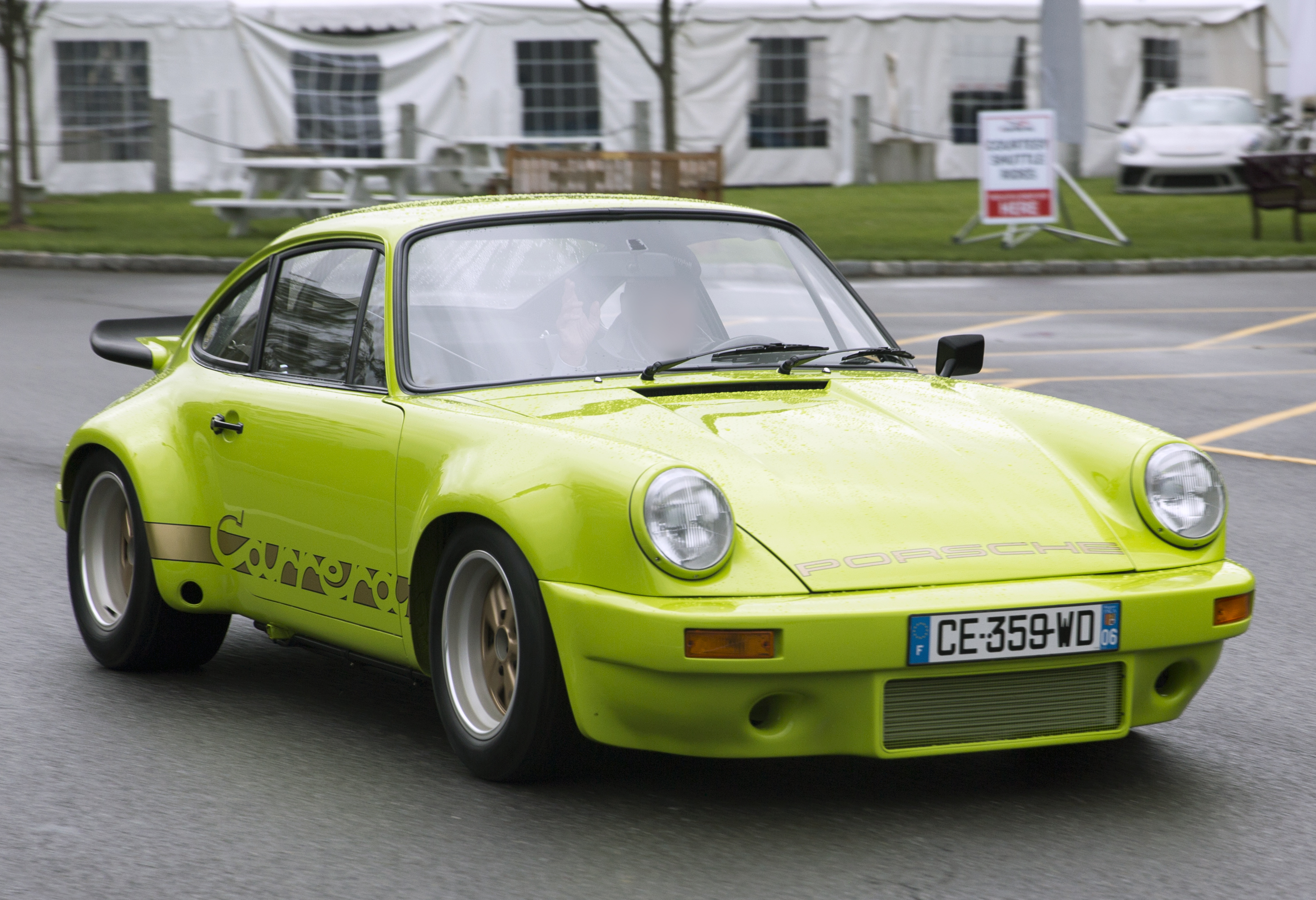
Porsche Carrera
"... certain point, M.K. also turned to me during the Porsche Carrera RS Cup race. And she was like, I think the Porsch..."
The Porsche Carrera RS is a high-performance version of a Porsche 911. In the podcast, it’s connected to a racing series, so it’s being mentioned because it’s a well-known track-focused car.
The Porsche Carrera RS is a performance-focused version of the 911 line, historically associated with track capability and motorsport heritage. It’s mentioned in the podcast during discussion of a “Carrera RS Cup” race, which ties directly to competitive racing. That makes it a natural topic for a Formula 1-style show when talking about iconic race machinery and series history.

Audi V8
"...last race? Like when we're talking, we're talking Audi V8. OK, OK, OK, OK, sorry."
The Audi V8 refers to an Audi car with a V8 engine. In the podcast, it’s mentioned briefly as a clarification about what kind of car they’re talking about.
The Audi V8 is referenced as a general performance/engine label in the transcript (“we’re talking Audi V8”), without specifying a model year or exact variant. In a motorsport context, “V8” typically points to a car powered by a V8 engine configuration, which is often associated with strong sound and performance. The podcast mention appears to be part of a quick clarification or correction.
turbo hybrid
"Yeah. So I never heard the turbo hybrid, the V6 turbo hydrants in anger and the flesh before in my life."
A “turbo hybrid” uses two technologies together: a turbo to boost engine power and a hybrid system that stores energy and adds it back later. Together they help the car accelerate better and use fuel more efficiently.
A “turbo hybrid” power unit combines a turbocharger with hybrid energy recovery. The turbo helps produce strong power from compressed intake air, while the hybrid system stores and deploys extra energy to improve acceleration and efficiency.
downshift
"especially on the downshift and sitting there turn one. Seeing the gouts of flame jetting from the exhaust pipe on the downshift is is just incredible."
A downshift means the driver changes to a lower gear. That usually helps the car speed up faster when turning in and coming out of a corner.
A downshift is when a driver selects a lower gear to increase engine speed and provide more acceleration. In racing, downshifts are often used for corner entry so the car can rotate and drive out of the turn with better traction.
gouts of flame
"Seeing the gouts of flame jetting from the exhaust pipe on the downshift is is just incredible."
They’re describing flames shooting out of the exhaust. It can happen when the driver changes gears and the engine/exhaust conditions cause fuel to ignite.
“Gouts of flame” refers to visible fireballs or bursts from the exhaust. In race cars, this often happens on overrun/downshifts when unburned fuel and hot exhaust gases ignite, creating dramatic flame effects.
fish tailing
"He was going outside turn one consistently and like fish tailing out of there and just getting past people right and left fighting for the lead of this race."
“Fish tailing” means the back of the car starts to slide sideways. On a slippery track, it can happen when the car turns too sharply or the driver applies too much power.
“Fish tailing” is a common description for oversteer where the rear of the car steps out and the car rotates unpredictably. In wet racing, this can happen more easily because tires lose grip, and drivers may counter it with steering and throttle control.
torque
"because obviously the torque on these Mclaren F1 cars comes into, you know, it did in the sprint and it definitely does here in the race when it comes into exiting that first turn."
Torque is the engine’s pulling force. More torque usually means stronger acceleration, but in a race it can also make the car harder to manage when you accelerate out of a turn.
Torque is the twisting force an engine produces, and it strongly affects how quickly a car accelerates—especially at low to mid speeds. In racing, torque delivery matters at corner exit because applying throttle can overwhelm traction and make the car harder to control.
locking up
"Both of them end up locking up and sort of going wide while Leclerc dives down the inside."
Locking up is when the brakes are so strong that a tire skids instead of rolling. If that happens, the car can’t turn as well and may slide wide.
Locking up happens when a tire stops rotating because the brakes are applied too aggressively for the available grip. When that occurs, the tire loses the ability to steer effectively, which can push the car wide and increase the chance of contact.
twitchy
"But like I said, these cars are twitchy. They've a lot of torque coming through them when you hit that."
“Twitchy” means the car feels jumpy or sensitive. Small changes in steering or throttle can make it react more than you’d expect, especially when you’re accelerating out of a turn.
When a car is described as twitchy, it means small steering or throttle inputs can cause noticeable changes in direction or grip. With high torque at corner exit, the car can become sensitive because traction limits are reached quickly.
spinning
"And Max ends up spinning on that exit of turn two."
“Spinning” means the car starts rotating out of control because the tires lose grip. It often happens when you’re exiting a turn and the car is trying to accelerate while still turning.
In racing, “spinning” usually means the car loses grip and rotates faster than the driver can correct, often leading to a loss of speed or position. It’s commonly caused by traction breaking at corner exit, where tires are asked to both turn and accelerate.
Jumbotron
"So I couldn'Ford T see it, but you see it on the Jumbotron thing I'll say is [2566.2s] I worried like, well, you can'Ford T see as much as on TV."
A Jumbotron is a big screen in the stadium that shows the race live. It helps spectators see what’s happening even if they can’t see the track directly.
A Jumbotron is a large stadium video screen used at events like Formula 1 to show live camera angles and replays. In this segment, it’s mentioned as the way fans can “see” incidents that may be hard to spot from their seats.
Chevrolet Express
"Yeah, well, we got the, you can hear it on the track, but we got the [2596.1s] American Chevrolet Express, like booth, like headphones with a little radio."
They mention a Chevrolet-branded van used for the event setup. The point is that it helped them manage the sound so they could hear the race better.
The “Chevrolet Express” is a Chevrolet-branded vehicle used here as a mobile setup for the broadcast/crew experience. In the segment, it’s referenced alongside headphones/radios, implying a controlled audio environment for listening to the race.
crypto.com
"American Chevrolet Express, like booth, like headphones with a little radio. [2600.9s] Take that crypto.com."
Crypto.com is a company name mentioned here as part of the event sponsorship. They’re making a joke that it’s a finance brand, not a car-related one.
Crypto.com is referenced as a sponsor/brand tied to the event experience. The hosts are joking about the “financial services company” behind the setup they’re using.

Chevrolet Spin
"But Max, that Chevrolet Spin, he recovers it beautifully."
They’re talking about a spin—when the car rotates and the driver has to regain control. The “Chevrolet” part sounds like a mishearing or a nickname rather than a confirmed car model.
The transcript appears to describe Max’s recovery in a “Chevrolet Spin,” but it’s not clear this is a specific Chevrolet model. In F1 commentary, “spin” usually means the car rotates and may slide before the driver regains control.

Chevrolet S Chevrolet
"... see he covered this. Yeah. So he covers Max'Fiat S Chevrolet Spin too. He actually goes through it and goes, o..."
The Chevrolet SS is a performance sedan made by Chevrolet. In this podcast, it’s mentioned as part of what the host is talking about or covering, not as a detailed technical explanation.
The Chevrolet SS is a performance sedan from Chevrolet, known for its V8-era muscle-car heritage in a modern body. The transcript mentions it in a coverage-style way (“he covers Max… Chevrolet SS too”), implying it’s part of what the host is discussing or reviewing. That makes it relevant as a recognizable performance model in the show’s narrative.
opposite lock
"You can immediately see him put it in opposite lock, release the throttle,"
Opposite lock means turning the steering wheel the “wrong” way for a moment to stop the car from sliding. It’s a common technique to recover from a spin and get the car pointed straight again.
Opposite lock is when a driver turns the steering wheel in the direction opposite the car’s slide to regain grip. In a spin or oversteer recovery, it helps align the front wheels with the direction the car is moving so the car can straighten out.
release the throttle
"You can immediately see him put it in opposite lock, release the throttle,"
It means taking your foot off the gas. In racing, that can help the car settle down and regain traction when it’s sliding.
“Releasing the throttle” means lifting off the accelerator pedal. In F1, that can quickly change engine braking and weight transfer, helping stabilize the car during a slide or recovery.
reset the wheels
"like reset the wheels and then go again."
They mean straightening the steering after the correction. Once the car is pointed the right way, the driver can drive forward normally again.
“Reset the wheels” refers to straightening the steering after a recovery maneuver. Once the car’s attitude is corrected, the driver unwinds the steering input so the car can accelerate and track normally again.

Aro 24
"...start of a race, a car spinning in the front with Aro 24 cars on the grid is not ideal. But almost everyon..."
The Aro 24 is mentioned during a race-start situation involving cars on the grid. The episode doesn’t explain what it is in detail, but it’s being used as part of the racing story.
The Aro 24 is mentioned in a racing-grid context (“a car spinning… with Aro 24 cars on the grid”), implying it’s being used as a reference to a specific event or entry count rather than a technical description. The transcript suggests the situation is about race start chaos and grid incidents. Because the details are minimal, it’s best treated as a name used in the race story.
race pace
"we do have a bit of a mixed grid, but also we don'Ford T know what these cars are going to be like at race pace."
Race pace means the car’s real, repeatable speed during the race. It’s not just one quick lap—it’s how fast it can stay while tires and brakes are being used.
Race pace is how fast a car can consistently go over a stint during the race, not just for a single fast lap. It depends on tire wear, fuel load, brake temperatures, and how the car behaves when pushed repeatedly.
qualifying performance
"We've already seen a pretty decent shift in qualifying performance by a lot of these teams as well."
Qualifying performance is how fast the car is in qualifying, when drivers focus on a very quick lap. It doesn’t always match how the car performs over a longer race stint.
Qualifying performance is the car’s speed in the one-lap (or short-run) context of qualifying. Teams often run different setups and tire strategies than they do in the race, so qualifying can differ from what you see at race pace.
steering wheels with all the controls over on the side
"really? Yeah, like he needs he needs a steering wheels with all the controls over on the side that he still has like forearm muscles."
In Formula 1, the steering wheel is the driver’s main control interface, with buttons and switches for functions like pit settings, energy management, and mode changes. For drivers with physical limitations, teams can relocate or redesign controls so the driver can operate them reliably.
brute force
"So he just had to like brute force it during his time at Williams."
They mean he had to rely on raw strength instead of having the car set up to match his needs. That can make driving harder and more tiring.
“Brute force” here describes using physical strength rather than optimized ergonomics or control placement. In racing, that can mean the driver compensates for missing or delayed adaptations to the car’s controls.
extra rubber
"because the car couldn'Ford T make way without the extra rubber."
They’re talking about needing more tire grip—basically more “rubber” contact with the track. In racing, tires are what provide traction, so it can be the difference between making a move or not.
“Extra rubber” is a colloquial way to refer to additional tire grip or tire-related allowance needed to complete a maneuver or satisfy a race requirement. In F1 discussions, it often points to how tire choice/condition and regulations can affect whether a car can execute a move or stay within technical constraints.
engineer
"Who is Russell'Fiat S engineer? Can you name him? No, no, no, but you can name him not."
In F1, an engineer is the person working with the driver using data and setup information. They help decide how the car should be configured and how to approach the race.
In Formula 1, the engineer is a key technical role responsible for translating data and strategy into car setup and race calls. The segment asks who Russell’s engineer is, highlighting how driver performance is tied to the team’s technical communication.
minimize risk
"Everything for him feels a little bit like I'm going to take the percentage shot. I'm not going to nothing, nothing risk, minimize risk."
“Minimize risk” means driving in a careful way to avoid crashes or big mistakes. It can help you finish more races, but it may also mean you don’t push as hard to win.
In racecraft, “minimize risk” describes a conservative driving approach focused on avoiding mistakes rather than maximizing every overtaking or attack opportunity. Over a season, this can improve consistency, but it may reduce the chance of winning when bold moves are required.
red flag
"Before the safety car is called, though, which is almost immediately going to happen, if not a red flag, to fix the barriers."
A red flag means the race is stopped because the track isn’t safe. Drivers slow down and wait for officials to fix the problem before racing can continue.
A red flag stops the race entirely when conditions are unsafe, such as a serious crash or track blockage. Drivers must slow and follow instructions until the race is restarted or ended, making it a major event for timing, tire temps, and strategy.
halo
"And once again, the halo coming into, you know, save the day,"
The halo is a protective bar above the driver’s head in F1. It helps shield the driver from debris and certain crash impacts.
The halo is a protective titanium structure mounted above the cockpit in modern F1 cars. It’s designed to deflect debris and provide additional head protection during impacts, especially in crashes where cars can hit or roll near the driver.
powertrain
"like issues with the transmission and the powertrain can can wear in like these things show up at odd places."
The powertrain is everything that makes the car move and send power to the wheels. If something in it starts acting up, the car can lose drive or shift poorly.
The powertrain is the car’s drive system—typically the engine plus the transmission/gearbox and related components that deliver torque to the wheels. In F1, powertrain issues can show up as drivability problems (like gear selection or downshift behavior) and can appear suddenly even if the car seemed fine earlier.
transmission
"like issues with the transmission and the powertrain can can wear in like these things show up at odd places."
The transmission is the gearbox that changes gears so the engine can keep working efficiently. If it’s not shifting correctly, the car may feel sluggish or unpredictable.
The transmission is the gearbox system that selects gears and manages how engine power is delivered to the wheels. In F1, transmission problems can affect acceleration and corner entry because the car relies on rapid, precise gear changes under load.
safety car
"We have a safety car. Couple of people come in for well, not many people come in for for Hatchars out at the same moment."
The safety car is a pace car that comes out when there’s an accident or danger on track. It slows everyone down and can completely change when teams pit and how they plan the restart.
A safety car is deployed in Formula 1 to control the pace of the race after an incident. It bunches the field up and changes tire and fuel strategy, because pit stops and restarts happen under controlled conditions rather than full racing speed.
pit on hards
"Verstappen comes in to pit on hards though and attempting to do some sort of alternative strategy for people"
“Hards” are the tougher, longer-lasting tire option. They can be slower at first than softer tires, but they’re designed to last longer.
“Hards” refers to the hardest tire compound in F1’s dry-weather range. Harder tires usually last longer but may provide less grip than softer compounds, so choosing them affects lap times and how long you can run before the next stop.
pit windows
"Verstappen comes in to pit on hards though and attempting to do some sort of alternative strategy for people and perhaps anticipating rain later on. We'll put the pit windows not really open yet. It does come into play pretty soon."
A pit window is a stretch of time when it makes sense to stop for tires. Teams try to pit during the best timing so they don’t lose too much track position.
Pit windows are the time ranges during a race when teams can make a pit stop and still be competitive. Under safety cars and changing conditions, pit windows can open earlier or become more valuable, which is why teams time stops around them.
alternative strategy
"Verstappen comes in to pit on hards though and attempting to do some sort of alternative strategy for people and perhaps anticipating rain later on."
An alternative strategy means the team doesn’t follow the usual plan for tires and pit stops. They try a different timing or tire choice to take advantage of what happens in the race.
An alternative strategy in F1 means deviating from the most common tire and pit-stop plan to gain an advantage. This often involves different pit timing or tire choices to exploit race events like safety cars or expected weather changes.
restart
"Lap 12 safety car comes in. Piastri pips Russell immediately on the restart."
A restart is when the race goes back to normal after the safety car. It’s a key moment because everyone accelerates again and positions can change quickly.
A restart is when the race resumes after the safety car period ends. The restart is often chaotic because cars accelerate back to racing speed, tire temperatures and grip can be different than before the safety car, and drivers fight for position immediately.

Renault 21
"...have been fun to watch from your perspective. Lap Renault 21 Verstappen continues to roll up through the crowd..."
The Renault 21 is an older Renault car model. In this podcast, it’s mentioned in a racing context, likely as part of a lap-by-lap or story reference.
The Renault 21 is a past-generation Renault model that appears in the transcript in a motorsport setting (“Lap Renault 21 Verstappen…”). That suggests it’s being used as a reference point in a racing story or commentary, likely tied to a lap-by-lap moment. The mention indicates the show is blending car names into the race narrative.
fresh set of tires
"Lap Renault 21 Verstappen continues to roll up through the crowd on his fresh set of tires. He gets past Calla Ford Pinto"
“Fresh tires” means the driver just got new rubber on the car. New tires usually grip the road better, so the car can go faster and pass more easily.
In Formula 1, a “fresh set of tires” means the car has just been fitted with new rubber. New tires provide more grip and can change lap times and overtaking ability immediately.
pit stop
"Russell gets into the pits from third to start the chain of events of pits that we're going to see here... Polestar 3.7 seconds comes out behind Russell... Hamilton comes in on lap 28... Both horrible pit stops."
A pit stop is when the car pulls into the pits during the race to change tires. How fast and when it happens can decide who ends up ahead on the track.
A pit stop is when an F1 car enters the pit lane to change tires and/or make adjustments. Because pit stops happen while the race is running, their timing and execution strongly affect track position and race strategy.

Ford Pinto
"...n his fresh set of tires. He gets past Calla Ford Pinto and then Russell gets into the pits from third to..."
The Ford Pinto is a compact car made by Ford. In this podcast, it’s mentioned in a racing-style story, so it’s being used as a recognizable car name in the conversation.
The Ford Pinto is a compact car from Ford that became well known historically, including for controversy and public attention. In the podcast context, it’s mentioned during a racing-related moment (“gets past… and then… gets into the pits”), suggesting it’s being used as a car name in a story or segment. That kind of reference often happens when hosts talk about memorable cars or specific race entries.
track position
"Fiat S fighting Leclerc for position at this stage... They have a bit of a swapping back and forth as they're... that section... is where a lot of these battles are happening"
Track position just means who is ahead on the race track. In F1, being in front is a big deal because passing isn’t always easy.
Track position is where a car sits relative to others on the circuit at a given moment. In F1, battles for track position often matter more than raw speed because overtaking depends on tire grip, braking zones, and pit timing.
pit lane entrance
"Polestar 3.7 seconds comes out behind Russell in the entrance to turn two, so obviously that hasn't worked out for them."
The pit lane entrance is where the car turns off the track to go into the pits. Who reaches that point first can affect who comes out ahead after the tire change.
The pit lane entrance is the point where the car transitions from the racing line into the pit lane. In F1, position at the pit lane entrance matters because it determines who gets out first and who re-enters the track ahead.

7 Polestar 37
"He'Fiat S fighting Leclerc for position at this stage and the next lap Leclerc comes in, has a rotten pit stop. Polestar 3.7 seconds comes out behind Russell in the entrance to turn two, so obviously that hasn'Ford T worked out for them. Verstappen then gets past Hamilton in the fourth"
In this podcast, “7” is used as a number in a timing description, like “3.7 seconds.” It’s not describing a specific car model—it's measuring how quickly something happened during the race.
In the transcript, “7” appears as part of a racing incident description (“Polestar 3.7 seconds…”), where the number is being used to describe a time gap rather than a specific car model. That means it’s not a vehicle name here; it’s a measurement of how long something took. The mention is tied to pit stop timing and race position changes.
weather uncertainty
"The thing to bear in mind is the teams came into the race thinking there would be weather and so that sort of put some uncertainty over the first pit stops."
If the weather might change, teams have to guess how slippery the track will get. That uncertainty can make them change tires earlier or later than they otherwise would.
Weather uncertainty in F1 affects tire choice and pit-stop timing because grip levels change quickly if conditions shift. Teams may delay or accelerate pit stops depending on whether rain seems likely.
undercut
"like the team had botched it, that letting Antonelli undercut them. That was their race. That was the,"
An undercut is when a team pits earlier than another car. The driver then tries to do quicker laps so they can come out in front when the other car finally pits.
An undercut is a pit strategy where a driver pits earlier than a rival and uses clean air to build faster lap times. The goal is to come out ahead (or close enough) when the other car pits later, effectively “stealing” track position.
street circuit
"And yeah. It'Fiat S hard to tell, right? Because it'Fiat S a different track and it'Fiat S technically a street circuit and all that."
A street circuit uses normal city streets for the race. Because it’s tight and has barriers close by, passing can be tougher and strategy matters more.
A street circuit is a race track built using city roads rather than a purpose-built racing facility. These tracks often have narrower lines, concrete walls, and less run-off, which can make overtaking harder and increase the importance of strategy and tire management.
rain was always there
"Again, listening to this race back, sort of it'Fiat S difficult or it'Fiat S easy to forget that the specter of rain was sort of always there. We were listening to team radios a lot on the broadcast, saying some people saying rain'Fiat S definitely coming in Aro 10 laps"
When rain might come, teams have to think about tire choice and how much risk to take. Even if it doesn’t rain immediately, the possibility can affect strategy and timing.
In F1, the threat of rain changes tire choice and risk-taking because grip can shift quickly. Teams use forecasts and track conditions to decide whether to gamble on slicks or switch to intermediates/wets, and that can reshape the race order.

Honda Element
"...or there, but it was always, which added an Honda Element of excitement to the whole thing, because you wer..."
The Honda Element is a small SUV made by Honda. It’s known for being practical and easy to use, with lots of space inside for people and cargo.
The Honda Element is a compact, boxy SUV known for its practical interior and flexible cargo space. It’s being brought up in the podcast as a point of excitement, likely because it’s a memorable, distinctive vehicle rather than a typical “race car” topic. That makes it a good example of how car culture and personality can show up in motorsport-adjacent conversations.

Maybach 57
"...g for those last positions. Leclerc trying on lap Maybach 57, Leclerc trying on Max Verstappen. Russell gets p..."
The Maybach 57 is a luxury sedan made by Maybach. In this episode, it’s mentioned as a comparison in a racing story, not as a detailed explanation of the car.
The Maybach 57 is a luxury sedan from Maybach, known for high-end comfort and a long-wheelbase style. In the transcript, it’s used in a racing-style comparison (“Leclerc trying on lap Maybach 57”), which suggests it’s being used as a humorous or descriptive label rather than a technical discussion. That makes it a conversational reference within the race narrative.
spins
"Leclerc ends up spinning, trying to catch up here, spins and actually hits the wall."
A spin means the car starts rotating and the driver can’t keep it pointed the right way. Here, it happens while Leclerc is pushing, and the crash causes damage.
A spin in Formula 1 is when the car rotates faster than the driver can correct, usually due to loss of traction or balance. In this segment, Leclerc spins while trying to catch up, then impacts the wall, which leads to further handling problems.
toe link
"No, one of the wheels, like the toe link or something was just like smoked because the wheels is like flopping around like a bad shopping cart wheels on that left side."
The toe link is part of the steering/suspension linkage that helps set and maintain wheel alignment—specifically the toe angle (whether the wheels point slightly in or out). If it’s damaged, the car can develop unpredictable steering response, like the “wheel flopping around” described here.
hairpin turn 17
"They all converge there at the hairpin turn 17. Yes. And Russell starts to cut in and realizes I think Leclerc can'Ford T make the turn..."
A hairpin is a very tight corner. It’s a spot where cars often end up close together and where passing attempts can happen.
A hairpin is a very tight, slow-speed corner where cars must brake hard and rotate the car precisely to carry speed out. Turn 17 being a hairpin makes it a common overtaking and convergence point, because drivers can attack the corner entry and use traction on exit.
time penalty
"And you know, things went from bad to worse for Leclerc because Leclerc ends up getting a 20 second time penalty after the race. This is the line I've pulled from the FIA."
A time penalty means the race officials add extra seconds to a driver’s total time. Even if you finish first on track, the added seconds can move you down the results.
A time penalty is an FIA-imposed addition to a driver’s race time for breaking the rules. In this case, Leclerc receives a 20-second penalty after the race, which can drop him behind other cars in the final classification.
pit entry line
"During the race, there was a call that he possibly cut the pit entry line at a certain point. And this was funny because usually this is a slam dunker of one, but the stewards decide to wait until after the race"
The pit entry line is a painted/marked boundary showing the correct place to turn into the pits. If you cross it the wrong way, officials can penalize you.
The pit entry line is a marked boundary that defines where a car must enter the pit lane. Violating it can trigger a penalty because it affects safety and fairness when cars transition between track and pit lane.
solid white pit exit line
"The stewards determined that the outside of the front left tires did cross the outside of the solid white pit exit line in violation of appendix"
When you leave the pits, there’s a solid white line showing the safe, correct rejoin path. If a tire crosses that line, race officials can consider it against the rules.
The solid white pit exit line is a strict boundary marking the correct path when leaving the pit lane and rejoining the race. Crossing it—especially with the outside front-left tire—can be ruled as a violation under the FIA’s regulations.
Corsiella
"The driver of car three explained that he was driving out of the pit exit and rejoined the race under full Corsiella."
This sounds like a garbled name for an F1 system that changes how the car delivers power. The point is that the driver rejoined the race using the car’s full-power mode.
“Corsiella” appears to be a transcription error for “KERS” or “ERS” (energy recovery systems) or another F1 control mode, referenced in the context of rejoining under full power. The key idea is that the driver rejoined with the car in a specific high-output configuration.
appendix
"The stewards determined that the outside of the front left tires did cross the outside of the solid white pit exit line in violation of appendix"
The FIA rulebook is organized into sections. When they say “appendix,” they mean a specific part of the rulebook that spells out the exact requirement they’re using.
In FIA rule references, “appendix” points to a specific section of the regulations that defines the exact rule being applied. Here, the stewards cite an appendix to justify the penalty for crossing a pit exit line.
Request an Explanation
Heard something you'd like explained? We'll add it to this episode.
Sign in to request explanations for terms you heard.
Want to learn more?
Browse our glossary for plain-English explanations of automotive terms, jargon, and concepts.
Help improve this episode
See something that's not quite right? Our annotations are AI-generated and can sometimes miss the mark. Click the flag icon on any annotation to suggest a correction.