“Five speed” means the car has five gears you shift manually. “On the column” means the gear stick is attached to the steering column instead of the floor.
“Three on the tree” means the car has a manual gearbox with only three forward gears, and the shifter is on the steering column. It’s different from the usual floor shifter.
They’re describing a manual car with four gears, but the shifter is still on the steering column. If you’re used to a three-gear setup, the extra gear can make shifting feel weird.
A 1967 Barracuda is a classic muscle car. The host mentions a bigger 273 engine and an automatic transmission, and how it was powerful enough to spin the tires and leave marks.
“Lay rubber” means the tires spin and leave black skid marks. It’s what you see when a car accelerates too hard for the available grip.
Term
bias player
“Bias ply” (the transcript says “bias player”) describes a tire construction where the cords are laid at angles across the tire. Bias-ply tires were common historically, and they can behave differently than modern radial tires—often feeling less precise and wearing differently under aggressive use.
Term
polyglass
Polyglas refers to a type of tire construction used on older performance tires, known for using fiberglass in the tire’s belt structure. In the segment, it’s tied to why the tires wore out quickly with repeated hard driving.
Term
13 on a tree
“On a tree” refers to a column-mounted shifter where the gear lever is attached to the steering column rather than on the floor. The “13” is likely a mis-transcription or slang for the specific gear pattern, but the key idea is the column shifter layout.
Front-wheel drive (FWD) means the engine’s power is sent to the front wheels, which both steer and drive the car. The host links FWD to how the car behaves for playful driving like donuts, because the front tires are doing the work of both turning and traction.
An emergency brake (parking brake) is a secondary braking system meant to hold the car stationary. In the segment, the host uses it as a technique aid for donuts—helping lock or unsettle the rear wheels so the car can rotate more easily.
“Donuts” are a driving maneuver where the car spins in a circle, typically with the tires slipping and leaving a ring of rubber. The host describes doing them in a front-wheel-drive car using the parking brake and reverse to get the rotation started.
The Chevrolet Vega is an older compact car from the early 1970s. The speaker mentions it to talk about how long it lasted and to compare older cars to newer ones.
“Muscle car era” means the time when American cars were built to be powerful and exciting, especially in the 1960s and early 1970s. The speaker connects it to their teen years and the kind of cars their friends had.
The Chevrolet Corvette is a legendary American sports car. The speaker says they always wanted a 1967 Corvette, which shows how big the dream of these cars was during their teen years.
Here “handling” means how the car feels when you steer, especially in turns. The speaker is saying the Camaro was easier to control than the Barracuda, even if the Barracuda was fast in a straight line.
This is a classic muscle car (a Chevrolet Chevelle) with a huge 427 V8 engine. People love it because it makes strong power and feels special compared to regular cars from the same era.
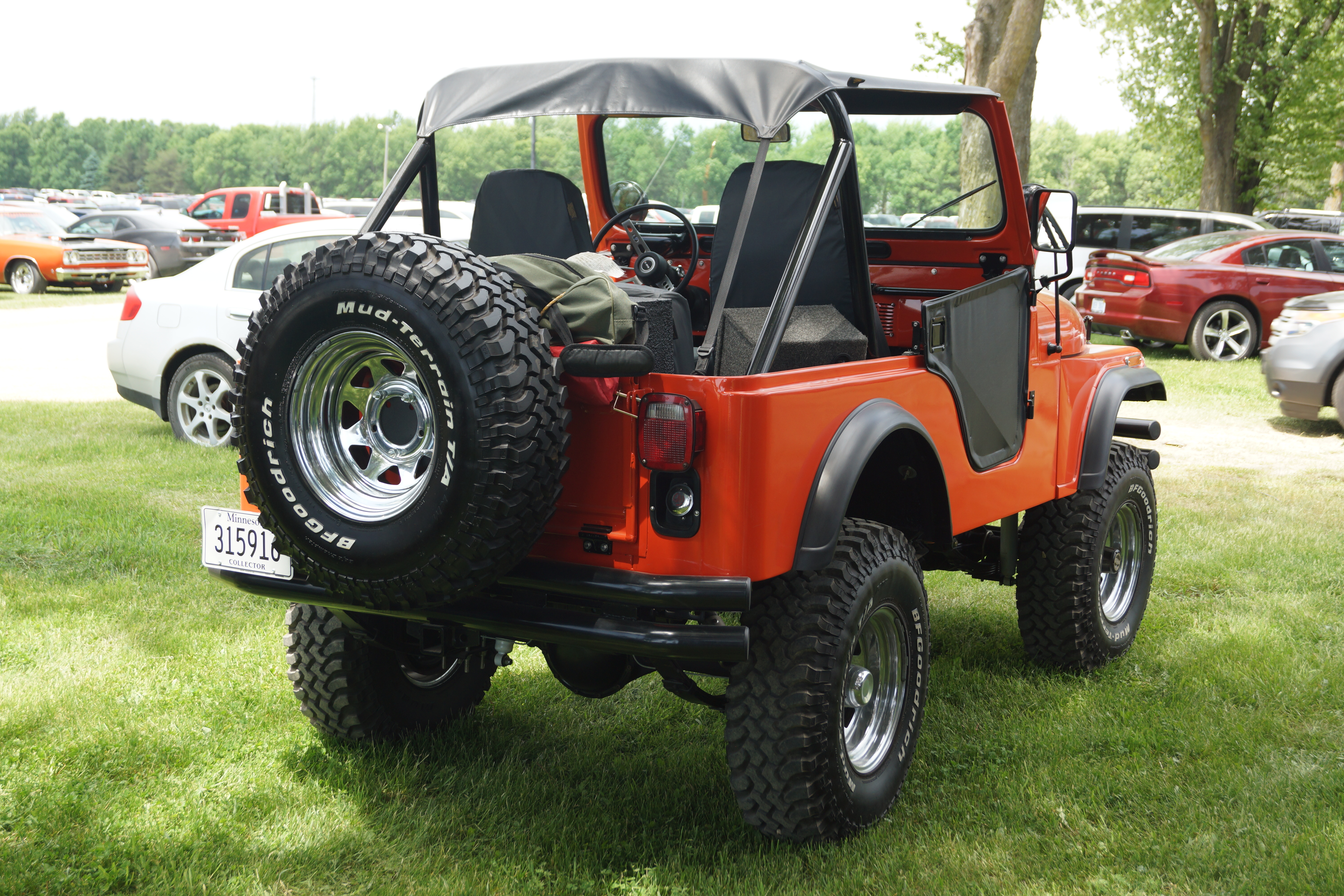
“CJ” is a Jeep model line made for off-road use. The speaker wanted one because it’s better for dirt roads and camping than a regular two-wheel-drive truck.
Off-roading means driving on rough ground like dirt, snow, or fields instead of regular roads. The host is saying the Jeep is actually good at that, and you only really understand it by trying it.
The Dodge Journey is a family-oriented SUV/crossover meant for everyday driving. It’s built to carry people and gear comfortably. The podcast is basically saying you could try driving one for a short distance to judge how it feels.
A wiring harness is the car’s main bundle of wires that connects all the electrical parts. During a restoration, replacing it helps make sure the car’s electronics work correctly again.
Roll-up windows are the kind that go up and down. The speaker is saying this vehicle didn’t have that style of windows, which is part of what made it feel more open and old-school.
“Six cylinder” means the engine has six working cylinders. In this story, they’re saying that particular six-cylinder setup pulls strongly and makes the vehicle enjoyable to drive.
“Torquey” means the engine has strong pulling power. That’s what helps the car move smoothly and accelerate without revving it hard.
Car
Jeepster
A Jeepster is an older, collectible Jeep model. Here, they’re talking about a Jeepster with a six-cylinder engine, and they say those versions are hard to find and worth more than they used to be.
The speaker is describing collector-car appreciation: as certain versions become rarer and more desirable, their market prices rise. They give an example estimate for a “nice” six-cylinder Jeepster, framing it as a significant jump from earlier selling prices.
Car
Jeep
They’re describing old Jeep projects that people used to find for cheap and rebuild. It sounds like they’d grab parts from barns and other cars to keep making the Jeep work.
The air filter is the part that cleans incoming air before it reaches the engine. When restorers measure where it mounts, they’re trying to match original fitment and details for an accurate restoration.
A restoration template means using an original car as a “reference” for how everything should look and fit. Other restorers copy measurements and locations so their rebuild stays true to the original.
They’re using the 1969 Camaro as an example of a car that was once considered disposable. Over time, fewer survived, so the remaining ones became more valuable.
They mean cars people didn’t think were worth saving. They were cheap and often got scrapped, so later only the survivors remained—making them more valuable.
They’re saying Mustangs followed a similar pattern: lots were made, many got junked, and later the remaining cars became more desirable. Scarcity is a big reason collector prices rise.
The DeLorean DMC-12 is a sports car that’s famous for its doors that swing upward like wings. It’s remembered for its unusual look and for becoming a well-known car over time. The podcast is talking about a specific early model year (like an ’81).
The steering gear is the part that turns your steering-wheel input into the movement that actually steers the car. If it’s worn, the steering can feel off, so people replace it during a refresh.
Term
manifold nuts
Manifold nuts are the bolts/nuts that hold an engine manifold in place. If they’re not the original style or don’t match, it can be a clue the car was worked on before, so restorers try to make it correct.
The Cadillac Seville is a luxury sedan, meaning it’s designed to feel comfortable and upscale. People choose it when they want a smooth ride rather than a sporty one. The podcast is recalling it as a car the speaker got and drove, likely from auctions.
Car
GMC trucks
They’re describing an older GMC pickup they owned. It was a “short bed” extended-cab truck, and it came with a more powerful engine option than the base model.
“Extended cab” means the pickup has some extra room behind the front seats—usually smaller rear doors—so it can carry people occasionally without being a full-size family cab.
This means the truck was ordered with a stronger engine option than the standard one. It’s basically a factory upgrade meant to make the truck feel quicker.
A “step side” pickup has fenders that stick out around the rear wheels, giving it a recognizable look. It’s mostly about the truck’s shape and style.
Concept
trade it vs sell it
They’re talking about two ways to get rid of your old car: trade it in at the dealership or sell it yourself. Selling it yourself can sometimes help you get a better deal, because you’re not mixing it into the new-car purchase.
The out-the-door price is the final total you pay for the car, not just the sticker price. They’re saying they agreed on the total up front so there were no surprises.
The finance manager is the person at the dealership who handles the paperwork and often tries to sell extra options. They’re saying they didn’t have to go through that process.
An extended warranty is extra coverage you can buy after the original warranty expires. They’re saying the dealership didn’t try to pressure them into buying that add-on.
The GMC Sierra is a big pickup truck made by GMC. Here, they’re talking about one they bought and used a lot, and how easy the dealership made it.
LIVE
I'd taken a job in the real estate business and I got $500 for selling a piece of land
with a barn on it.
And in the barn there was a 46 Jeep.
I paid $1,000 for the 46 Jeep after I got my $500 commission.
So that's sort of the direction I went the rest of my life with cars.
And that's that.
And, and, and uh, yeah.
Welcome back Life Pulse Cars Community.
For this episode we have a special guest.
I'm going to have Brendan do the introductions here because Brendan is a very special guest
today.
Very lucky guest.
Welcome back, Mr. We are absolutely honored to have my dad, Robert Bailey, has joined
us today to talk about his car passion, how it all started with me is through this man.
So we are very honored to have him with us today and take us through his car experience
because we are talking with a guy.
He grew up in a time when muscle cars were at their peak and really the automotive industry
took off.
So this is going to be very exciting.
So happy to have you here, dad.
Please say hello to our listener.
Well, thanks for having me.
It's an honor to be here.
I've enjoyed listening to your episodes during the past year.
And it's a true story that there's a serious, uh, continuance of car crazy people going
on here.
That's great.
And that's the other part we should let the listener know is this is actually a very
blessed and honored to have Ian and I are in person with my father at his house.
So it is very nice to have us all sitting down and talking together.
It is.
It's just fantastic.
Yeah, that doesn't happen often as the listener may know.
Brendan and I usually record remotely via via zoom, so it's not only a treat to be together
and also share in the stories here with your dad.
Oh, Ian.
What an exciting time.
It is.
It's very lucky.
Yeah.
Lucky to be alive.
Lucky to have cars.
Nice to know.
See all of these phenomenal stories we can get into, right?
So let's let's back it up first and start with this.
So we have you on as our guest.
I mean, I got my entire car passion from you.
So like we need to know where did it start for you?
Because obviously you weren't born a car person, although I'd like to think I am right, but
say, yeah, where did it all begin?
Yeah.
My parents weren't car people, neither my father or mother.
My father was a bookkeeper for a big auto dealership, but he wasn't a car person.
My background goes back, like is actually similar to Ian's in some ways in that he started
collecting little matchbox cars when he was really young and and I used to get like a dollar
a week for an allowance and I used to try to wangle one of my parents to bring me to
hand over hardware that had a huge display of matchbox cars and I I would buy the two
cars were 98 cents and then I could buy bubblegum for two cents afterwards and and and I I had
this huge collection of matchbox cars and and I like the ones that resembled real cars.
Not I never liked the ones that resembled like exotics or hot rods or something.
I always liked real cars and I kept the boxes and I was a little
nerdy about the car thing because I you know I kept them all to care and I still have most of
them today they aren't like in the boxes anymore because I've let everybody play with them but
but that's sort of how it started and then you know I basically you know my father did things
with me when we we'd go up to our camp in the white mountains and he he would amuse me by saying
well let's see how many cars you can identify and I remember coming home at a young age and having
him say to my mother you know he identified every single car what what kind of car it was on the
whole trip up to the camp and back you know and he would see like the grill of a car and he'd be
like well that's a 55 Chevy or that's you know whatever right and so you know as I look back
I mean anything mechanical I was interested in it was like snowmobiles many bikes lawnmowers
you know cars and my you know it you know evolved over the years of course into an insane
collection problem but my my first exactly I was actually 12 years old when I got my first car it was
a Pujo with a five speed on the column wow and I bought it from a Chrysler Plymouth dealer
and it was friends of the family and for 40 bucks and my brother and one of his buddies towed it from
Norwich Vermont to my parents house with a chain one night and it had missing left front fender
and all that sort of thing it was it was a field car that I got when I was 12 years old
and but my father was really concerned that I might go up down the road my mother was a little
more laissez faire she was like well why don't you go take that down the road to your friend's house
and drive around his field and my father would have a moratorium on driving it at all if that was
the case but that was the you know what I remember most about that car wasn't really into like doing
lots of service work on it but one of the things I remember about the Pujo is I didn't realize it
had I knew what three on the tree was but I didn't know what a four speed was on the column and I
would shift it once in a while and it'd go into fourth on the column and it would be like what is
wrong with the car yeah it's not doing good at all especially going on our you know we had a
little course up around the field in the apple orchard and you know down around the brush pile
and you know through the woods on these woods roads and stuff and it was it was where we began
the journey so to speak with a real you know vehicle type of things but you know that graduated
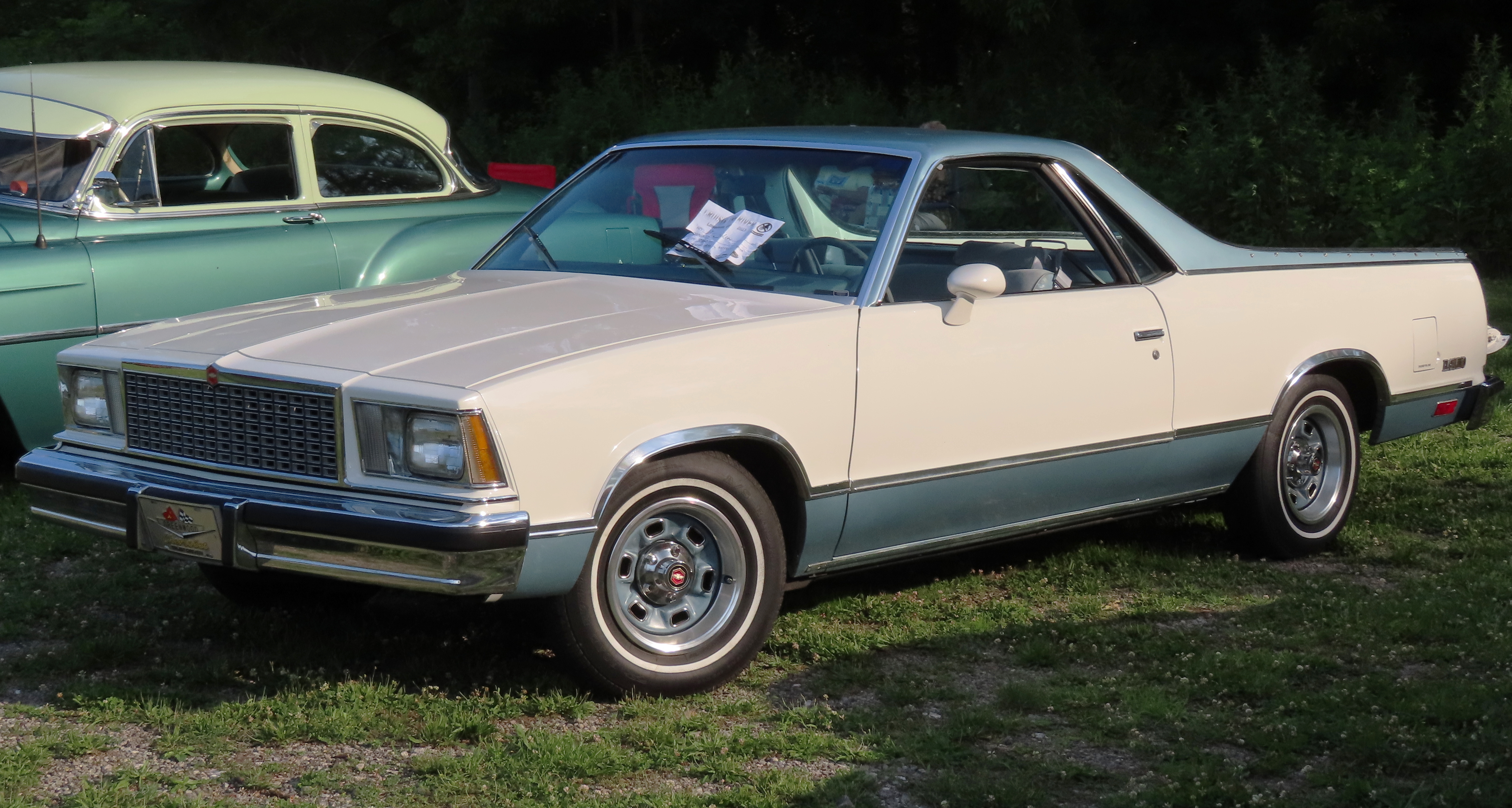
into you know my my dad had a 59 El Camino that I drove when I was little and my brother you know
had an old Jeep and he like was at six or eight years old he was upset with me because he wanted
me to drive the Jeep while he ran a horse drawn plow to plow a field in the summer down behind
the house and he was mad because I couldn't even see over the windshield and I remember him getting
mad because I couldn't drive the Jeep very well because I was like sitting in the chair and looking
at the you know the wind blow the windshield you couldn't see out the thing and he's like yelling
at me and he was five or six year old trying to drive this thing and you know so there's
those kinds of things but my dad had a had the El Camino and my mother had like a 64 Corvair
and you know those are all cars I drove as a very young age we had a 50 Jeep station wagon
two-wheel drive Jeep station wagon all of them have special places in my heart and stories about them
you know different you know the first time I ever drove the Jeep pickup I almost I didn't you know
it was like ten and I almost drove into the kitchen with it and you know so I wasn't perfect
on the on the whole thing the excuse to start right yeah at ten years old yeah it was one of
those things but you know as I got older I you know we we had a we had this 60 my mother
bought this brand new 67 Barracuda and I was 15 or something when she got that 14 or 15 and
perfect car for a teenager yeah I was really you know it had the high performance 273 with a
three-speed you know automatic and a console bucket seats red black interior it was the
exact car that I shouldn't own anyway I mean I could I could sneak out of the house and back
out into the driveway and that thing with lay rubber like you wouldn't believe and uh and my
parents my father was always like you know that car goes through a lot of tires I was like you
know you have no idea you could you could like lay rubber as long as you could keep it in a
straight line I mean it was like that it was what the bias player with the old polyglass yeah
yeah they weren't even polyglass but like every every spring there were new tires
and because the winter ones didn't last at all because you know when we got ready to change them
somebody had to get rid of the tread on those which wasn't hard but yeah and you know 68 GMC pick up
you know kind of a simple 13 on a tree type of thing and so those are the ones I really
grew up living with and my mother then went sadly in a deep deep bed direction she got a
71 Simca which is a Chrysler of France and it had you know it was like a little
little front wheel drive dealer and uh that that was a whole other experience like Brendan
and we had talked about earlier today the you know the front wheel drive with a four speed and
you know like I I learned how to do donuts with that you had to put it the emergency
brake on and put it in reverse and you could do some wicking close but donuts that way and uh
so that that was actually a car that was my first car that I owned was a 71 Simca
because my I was in college and my parents wanted they were gonna trade cars and I was in
college and I said I'd really like to have a car and my parents helped me with college but they
they said well we'll sell you the Simca for $1,500 and my father said but we're gonna finance it at
14% and you're gonna give me $40 a month in payments and I was like but I get to have a car
it wasn't that I was striving for a 71 Simca because it was a little bit of a cheap car like
I actually dented the passenger door once because it was parked on a on a like an exit you know an
exit of a field like a down over bank a little bit and I pushed myself away from the rear door
just to stand up because I leaned in against it and it dented the door so I'll give you an idea
for the build quality I call them materials yeah it was uh and I mean you know I should give it
credit because it survived uh you know several years but then and you know my mother uh bought a
when they first came out a 72 or 3 Vega and that was my second car that I owned which at the end
of college I sold the Simca and I bought the Vega from them to be my last year at college and
and she was such she loved the Vega so much she bought a 75 station wagon so um now there's another
example of the quality of cars that we have today versus then I lusted for the muscle cars I love
you know I mean I you know obviously I I thought you know the Camaros and I used to kid that my
first words were Corvette because I always wanted a Corvette and I always wanted a 67 Corvette but
uh that was uh yeah because you were 15 16 1967 right so that was sort of in brand new yeah you
yeah you were like a kid just starting to drive when all of those cars hit right 65 66 7 like
GTOs Corvettes all with their prime yeah and friends that I had that had them or their parents
had them usually ended up wrapping them around a tree so that should have been a lesson probably
maybe it was but uh it was a great the muscle car era was a great time to come of age so to speak
you know yeah but no to do a back to what you said like you lusted over the muscle cars like
can you talk about that anymore yeah yeah like I mean I mean you know any listener that's been
with us for a while will know like some of those cars that you lusted after you have to this day
but like I remember you telling me a story about like the Camaro right like one of the
reasons that you wanted a Camaro so badly is because when you were a kid they would outperform
like all the other cars in that segment the way they were designed and they handled and everything
yeah the big thing was way to handle I had a friend that had his mother had a Camaro
and I had the 67 Barracuda and the the Barracuda was pretty fast in a straight line but you couldn't
even begin to hold the handle to it in compared to the the 69 Camaro in handling and comfort you
know it was like just a much nicer car to drive through the corners or go up to race up Route 5
which you know I never told my kids that I did that until I was older but
fast up to it but not too long ago you're not as you know the saint that you say you are yeah
yeah so there was there was always that one of course I always had a hankering for
I always had a hankering for the the big cars with big power so the Camaro is a little bit of a
you know for some reason I always liked the Impalos and the you know the Cheval my brother had a
Cheval my sister had a 65 Cheval also that was a convertible SS and my brother had one that wasn't
an SS but it you know it was a fun car and those were you know those were okay but I always had a
thing for the big cars with a big motor I always thought that was really yeah the Impalos the
DeVils the yeah the big block the Bonneville's you know stuff with big motors big big big executive
cars yeah big Bonneville's Grand Prix 67 Grand Prix I always thought were cool and um and we uh you
guys have talked some about the cars we have today but I have you know the 2001 Corvette
haven't got the 67 yet but we got a 67 SS 427 the Z24 package which is an absolutely gorgeous car
that Ruby folks that's right Ruby is just come up on the podcast many times oh yeah yeah and just
love that car and yeah because you remember when those came out yeah the oh yeah and then the yeah
I remember going to the auto show in Hanover and they had one there and I'm you know that was like
I'm whole you know I'm like 15 or 16 I'm like oh my god they're so cool yeah that's amazing
some day I'm gonna own one of those little did you know yeah yeah so I started out my evolution
was a little my father you know we always had the two-wheel drive Jeep pickup or something
and everybody talking about it drove you crazy because you wanted a four by four I mean I would
beg him to get like a four-wheel drive pickup or a CJ or something like that to use on a weekend
or something when we went to camp and and he he would do it once in a while but um
you know when I get I was like why don't you get like a CJ and my mother'd be like I am not getting
in and out of one of those things you know my father's like yeah your mother wouldn't you know
but uh but anyway the first car I bought after I was out of college was I'd taken a job in a
real estate business and I got $500 for selling a piece of land with a barn on it and in the barn
there was a 46 Jeep and I paid $1,000 for the 46 Jeep after I got my $500 commission so that's sort
of the direction I went the rest of my life with cars and uh yeah it was like and then I had to
of course paint it rebuild the motor you know it was it was uh quite but today we still have that
Jeep it's gonna say yeah I was gonna say yeah and it's still drivable and you know
yeah I just serviced it this spring yeah new brakes everything it runs like a top yeah it's uh
but you know and that's some memories with that jeep you you could do a whole episode just on
off-roading adventures with that jeep you used to drive it full time in the winter yeah it was
actually it was from a farm and two nephews had driven it one or two winters when I got it but it
had never been driven since 46 in the winter and I actually pulled an old trailer with it and used
it as my pickup did winter stuff with it and stuff and the people that tell you that those are just
such great little well-built units should actually drive one for like maybe a 20 mile journey or
something and they they'll be really impressed with the new car they have yeah that's what I
realized oh I'm at the point where I'll do like you know a one mile loop with little red and I'm
like that's enough for a year that's good anyway that's the taste yeah yeah I don't think and you
know that I restored a 1950 Jeepster which is I think one of the only cars that I I sold it
but uh I think it's one of the only cars that I felt bad about selling I always thought Jesus
you know it's such a neat car it was a pretty rare one had rare options and uh I I thought
that that's too bad that I sold it but I did I sold it to a guy in Paris France
and actually they had took it apart and then redid all the restoration weed I mean obviously
reused some of the chrome and stuff we'd done but he actually he actually tore it down to the last
nothing bolt and redid completely restored it new wiring harness is made with the same way that the
1951 was and stuff like that so so it's actually on like you know there's pictures of it on like
the Kaiser Willis website and stuff now my gosh and yeah how did you get connected with the guy in
Paris that's a great you know I remember that yellow bigster with a black top black interior
I remember it had the spotlight on it on the driver's side and we'd like hide in the field and stuff
at night and you'd like you know try to find us with the spotlight oh my god that's great yeah it
was uh and very drivable actually there's a two-wheel drive deep so it had side curtains and
stuff they didn't have roll-up windows so the cylinder but had the six cylinder there was a
very torquey continental six and you know it was just a great running engine and um really really
enjoyed that vehicle but I ended up uh I was trying to sell it and there was a local old-time
Jeep dealer in the upper valley and I said I wanted to sell it for $12,700 for some reason I don't
remember exactly what the thinking was but it was $12,700 and this guy wanted to put it in his showroom
and he said the most you'll ever get for it is $6,000 and I put it in Heming's Motor News
I'll never forget I put it in Heming's Motor News for $13.95 and a guy called me and he said my name
is Christophe Chevalet from Paris, France and I'm calling about your Jeepster and I called him a
bunch of names and because I thought it was my friend from California and I thought it was a prank
and and the guy was very polite young guy kept saying no no this is Christophe Chevalet from
Paris France I'm like okay and uh sure you are and uh anyway he actually flew here met with me
drove the Jeepster we went out to dinner you know and all that and he said I'm gonna send I'm gonna
wire you the money and I'm still thinking yeah right so he let back to Paris we're hearing his
father restored mostly military vehicles and um the bank called me in like a week and said somebody
just wired $12,700 to your checking again yeah something from France what's going on yeah is
this is this real yeah I was like holy crap and then they sent a guy up with a truck from Boston
and to put it in a shipping container and uh and he turns out the guy Christophe Chevalet
he wrote a book that's in French and English called Le Jeep and uh anyway he uh he seemed
like a very nice guy and really got a kick out of it but that it's funny too because like we
always keep our eyes out for those six cylinder Jeepsters and they are pretty rare but talk about
something that's gone up in value quite a bit yeah a nice example now is probably 40-50 grand
for a nice one yeah well the uh really the thing that really gets you is the old CJ's which we
redid another one that went to bed oh yeah rusty the Jeep you know it's yeah remember well yeah we
redid that one and uh I mean when I when I first did that the guy gave me the the Jeep that we made
it from oh yeah and people used to sell those old Jeeps for 500 bucks or 250 or just taking it off my
property right yeah I mean remember growing up people used to just show up and just
bring you axles frames yeah random stuff engine parts just to be like this was from my grandfather
father and you'd be like all right I mean you still this day in the barn have a plethora of jeep
we figure if we had a frame in a body we could make at least one more Jeep oh at least maybe two
yeah yeah and I think there goes shopping then but the the price you know I'm saying that the value
even the red Jeep we bought I paid at that you know like I said I paid a thousand bucks for it
and uh you know we painted it 30 something years ago rebuilt the more motor 40 something years ago
all that sort of thing and that one's probably worth 25 or 30 thousand and people now
will call me up and say so and so told me you had this original and they come and look at it to see
exactly where the air filter is mounted or you know like all that when they're
restoring one they want they want to use it as a template for their restoration anytime Johnny
Fred comes and visits your longtime friend there he's every time he goes down the bar and looks at
jeep well he's restoring one he's yeah he takes people come they make measures measurements and
then he'll say I'll say oh yeah here's one of the original draw bars they were getting an extra one
of you want to keep that or you don't know here take it yeah yeah but anyway so so there's been
quite a shift in those well even the even the like things like the 69 Camaro I mean they they
never were worth much money for a long time and now they're like well they were like you always said
those I mean those cars were like throwaway cars yeah back in the day they made a ton of them and
same with Mustangs and stuff right they were they sold them cheap and that people loved them but
they were they rotted out and they junked them and they were nothing special right well I know my dad
says at all time the car number of cars he wish he had just tucked away you know mind saying if we
I'm machining like yeah grand we could go back we'd have ourselves a fun time yes yes there are
those ones that you'll wonder but I had I had a chance to buy a 67 Corvette with low mileage
back when I was like 24 or 5 for like 6000 bucks it was a 427 and that car today would be worth 150
grand or something anyway yeah and but wait wasn't I think you've told me that before wasn't that
was like you were like buying the land for the house yeah something like that and then there's
something else going on and you were just like you wanted it but you're like I just can't swing it
both at the same time yeah I mean I think the house the land for my house is I paid 25,000 for it
and the car was six and it was like just that's crazy yeah that's way too long yeah that was stupid
but well I mean but the thing is you hear stories like that all the time oh I mean
even it happens even more recently you remember that time that we were in Carlyle and it was I
think it was the year after we went with Ian and Dr. Bradigan and there was that DeLorean
there's like that 81 DeLorean that had like 20,000 miles the guy was asking like 12 grand for it
or something or eight grand like it was nothing I think I was like yeah like come on like that's
we should buy that that is like so cheap and you were like no one wants a freaking DeLorean
now it's like you know a 60s $70,000 car for a low mileage one like that I just saw one sell for
90 yeah that's crazy that's crazy but that's one that it's like if you just knew in hindsight
like okay I'll give this guy 10 grand and then you know 15 years later well that's quite the
investment of course the problem with we always are talking about internally in our family is
is that we freaking adopt them instead of buying and selling and we do have a car pro
so what happens what happens is it isn't just buying it and it's not just ensuring it it's like
oh well we got to change all the fluids new windshield wiper blades we got to clean the
carpets put new door panels on there's a steering gear ought to be replaced there's one screw that
doesn't match the other here we should probably get the car set there yeah that way yeah the set
of manifold nuts aren't the original ones they're supposed to have a little funny thing on the head
yeah fixed the wiring was going to be the same color wiring yeah let's get a remand harness you
know make it look pretty yeah yeah you're right we do we adopt them it's like some people talk about
pets and you know you get all involved and oh you look at this dog it's something I remember the
family we were like we get a car we name them that's like it's named oh it's like that's suburban
to get from carlaw you're like don't name it you gotta sell it don't name it yeah you know I mean
people look at me funny you know we got misty and ruby and little red and you know it's just like
Irish and Lou Winston oh yeah a little of Winston yeah yeah it's like I've had a couple we purposely
haven't named and have sold but if they get named it's usually like uh where are we gonna put it in
winter right one of the family yeah yeah tough tough yeah it is fun though all those cars of all
the days yeah well you actually touched on something that I wanted to ask you so you brought up that the
Jeepster was like one that you regret selling like I mean you know hindsight's always 2020
but you must have a list of cars in your mind because of you know how long you've had cars in your
life the ones that got away like so basically my question is out of all the cars that you've owned
not necessarily like the Corvette right where it's like there's one for sale you missed it but
ones that you've owned that you really miss or that you wish you had never sold do you have a list
there I don't think I have a list like that but there's a lot of cars that I had that were pretty
nice cars um you know I used to um we managed properties and so I usually had a pretty new
pickup after me not when I was really young or when you guys were little but as I get older we had
we plowed and stuff and so I would have fairly new pickups that I would order which were nice
trucks and there's a couple of those I had one that was a new GMC one that had the fiberglass
step side body a little short box and I actually used it a lot with with plowing and stuff but it
was you know had had the bigger engine package and handling package and and all that sort of thing
and I always thought you know that was a really fun truck to have um and um but you know I had some
nice and then I was a financial officer for a gas company and um I had GM executive cars I bought
they'd be a year old I'd buy my auction my friend Vernon would get them for me at the auction and
I had like park avenues and you know Cadillac Seville's and you know that I would drive because I was
driving 40 50 000 miles a year I would drive for a year and we'd sell them and I'd get another one
so I had a whole bunch of cars that I I remember when we went through periods like that yeah that's
comfy cars to put all those miles on yeah I mean we had a park avenue that was one of the last
years they had a park avenue we named it ginger it was a sign I remember that car and it was a
beautiful car nice dark red and that was anyway I'm just saying that they were you know you know
it was a car that you would be like you know that's a car you could actually keep and drive for a
really long time if you sort of retired it to the a few thousand mile a year thing you know right
but uh I was still in the functioning mode of well I sell it for 15 000 and I buy new one for 25 so
you know yeah yeah continuing the math yeah yeah so there was there was ones like that that I did
but there were a couple pickups that I bought that were kind of unique I had one of the first
extended cab GMC trucks they had a short box on the back it was a you know extended cab but it had
the short box that was a step side and that had like they had a high performance engine package
which you know by today's standard it was probably only 300 horse or something but
um that that car was I really liked that truck a lot and my favorite thing you have these different
memories about your cars but I went to Montreal for a weekend with this lady that I was dating
and we parked it in the underground garage at this old time hotel in Montreal and it was a very
sporty little truck and uh I went into the room from whatever the sixth floor or something and I
looked out and I saw the truck going down the street oh and uh I did say to me but that is a
really cool thing I think I said something like don't drive it too far right I didn't really mean
to take it out on the town in Montreal at nine o'clock at night but anyway it was there when
I got back so I didn't like leave completely which is I guess a problem in Montreal even today
but uh but anyway that you know I mean there's little stories that are about when you're a car
not you know it's like well that's something you know oh yeah well yeah I think it's people
recognize like you know unique fun things like that like I remember that truck that was a cool
truck step side version yeah it's cool because like I remember too you had the for a time there
like you mentioned when you would have the pickups and you'd go from like every couple years because
the property management and all that like you have one and then you go to sell it instead of trade it
in and then you would get people that would actually like call you yeah because we take
such good care of our cars they'd be like Bob you know you got a truck and you'd be like yeah
you come buy it for X and then you'd go order one and that I mean this is like
they're not around anymore but this is like a plug for a really good relationship with a
dealership that you trust like you used to just I remember Lee down at the GMC dealership
he used to walk in and you'd be like yep whatever you want Bob again it will make it happen yeah
I mean you just order a truck every couple years you go pick one up well the guy I mean friends like
Vernon and Lee at in Doug Smith you know I said let's not go through this whole negotiation
thing like why don't I just agree to pay you I think it was $500 over your cost whatever your net
cost yes cost yeah and I'll just keep you know whenever I want one I'll just come in and order
one yeah and I didn't go to the finance manager or get credit they didn't try to sell me extended
warranties and all that crap and they just it just made it super easy oh yeah you know to
buy a vehicle you know I mean it's like I know I'm gonna pay them this much and yeah and you
you thought you got one of the last vehicles from them before they sold that 2004 Sierra
there's one of the trucks that I drove the most George yeah yeah that one was you know survived
you and Ben driver and Brianna oh yeah yeah well Brianna probably did the most damage to Lucky
that's never name a vehicle Lucky because that was the most unlucky GMC Sierra it was doomed he
got hit by some kids on Ledger Bridge in some winter storm and then you hit a bear with it like
two weeks after that or something like that happened he was in the body shop more than you drove it
yeah oh yikes yeah I can't remember who was it Ben or somebody said to me you shouldn't
oh it's uh Jeff Goodrich I think said to me yeah Lucky's not a good name for that when the kids hit
me on down boot five yeah it goes cursed but yeah I remember that when you
go through the trucks and my favorite one that I remember is uh I think it was a 98 GMC we called
Jacob yeah it was like that blue two-tone blue and silver oh the two tones from the 90s were so
oh it's beautiful truck I remember that one had the extended cab but only the passenger door
extended part open not the driver side yeah yeah that was a cool truck you drove that one a lot
yeah that one I put a lot of miles them I didn't put a lot of miles on but that one I had
I think we put 130,000 on it yeah my favorite part about that truck is we drive by the old Smith
Buick GMC and it'd be out there once in a while you know you'd see it getting serviced or something
like yeah local local guy bought it so yeah cool to see it oh yeah stayed a lot yeah for a
lot of years that was still around yeah very cool well that concludes part one of our conversation
with Brendan's dad Bob Bailey and I had to say it's amazing to see the variety of cars that Bob
has owned in his life starting out with that $40 Pujo and then a Simca I mean I mean I've been
in the car as my whole life I had to look that one up I did not know Simca was even a car and
so you just never know what you might learn and discover on the Life Plus Cars podcast so please
join us for our next episode which will be part two of our conversation with Bob Bailey so look
for that very soon wherever you listen to your podcast thanks so much for tuning in and we'll
talk to you all very soon
About this episode
Car passion runs deep in this Part 1 story, starting with a father’s early collecting habit and a real-life Jeep discovery. Brendan describes how his own obsession was sparked by family games on road trips, plus hands-on driving from a first car at 12. The conversation also touches the shifting collector market—Jeepster values rising dramatically—and how one family “adopts” cars, refurbishes them, and keeps moving through trucks and executive rides.
We are back this week with a very special guest: Brendan's dad, Bob Bailey!
Recorded back during the holidays, Brendan and Ian were able to record in person together with his dad. Join us as Bob tells us about:
-Fixing up an old Peugeot that he bought for $40 -buying his first car, a 1971 Simca, from his parents
-Discovering the Willys Jeep in an old barn that he still has fifty years later
-How a man in Paris discovered a Jeepster that he was selling in New Hampshire
-the plethora of GM pickups he has rotated through over the years
Plus, tune in to find out the story of how one of Bob's trucks had a Ferris Bueller valet moment in Montreal...
Thank you to Brendan's dad, Bob, for joining us for this great car conversation! Want to join the chat on the Life Plus Cars podcast? Email us at [email protected]