#431 - EV is coming to BHPH/LHPH: Are You Ready?
About this episode
EVs are starting to show up in Buy Here Pay Here and Lease Here Pay Here lanes, and the hosts connect that shift to real dealer risk: warranty delays, higher failure/repair uncertainty, and even how long repairs can turn into repos. They also break down what dealers need to sell and service EVs—battery health, charging realities, and Tesla-specific repair workflows like battery swaps. With off-lease EV supply rising and incentives fading, pricing and inventory selection are getting more complicated.
In this episode of the Independent Dealer Podcast, Jeff Watson takes the conversation to the floor of BHPH United Summit for a raw discussion on the future of EVs in buy here pay here and lease here pay here. Joined by Trygg Waldbillig — an independent indirect leasing operator who has gone nearly all-in on Teslas — they break down what it actually takes to put subprime customers in electric vehicles, and when the economics finally start to make sense.What You'll Learn:-Why EV supply is surging at auction and what half a million off-lease units hitting the market over the next 2-4 years means for BHPH pricing-How to check battery health before you buy — and the quick math dealers can run right on the lot-Which EVs belong on your buy list (and which early-gen models to avoid at all costs)-Why knowing your customer's charging situation is make-or-break before you put them in an EV-How lower fuel and maintenance costs can actually improve your customer's ability to pay — even if the payment stays the same-What the battery warranty landscape looks like in 2026, and why building your own reinsurance product may be the smartest move in the EV spaceIf you're a buy here pay here or lease here pay here dealer trying to figure out when and how to get into EVs, this is the most practical, operator-to-operator conversation on the topic you'll find anywhere.Support the businesses that support the podcast:Buckeye Risk Services - Reinsurance and wealth strategies for independent dealers. https://theindependentdealer.com/buckeyeBlytz - The fintech powering collections and text-to-pay for BHPH dealers. https://theindependentdealer.com/blytzpay/Ituran GPS - Asset protection and customer management for BHPH and retail dealers. https://theindependentdealer.com/ituranFollow & Connect:Website: www.theindependentdealer.comFacebook Group: @independentautogroupJeff Watson: /sendtojeffwLike, subscribe, and share this with a dealer who needs to hear it.
repo
"if I have it to ship it to Kia and it's there for two months, it turns into a repo I wear, right? So even some of these cars that were under warranty, if they have high failure rates..."
A “repo” is short for repossession—when the car gets taken back because payments stop. The speaker is saying that if a car keeps breaking, it can lead to more repos even if it started out under warranty.
In dealer and lending contexts, a “repo” (repossessed vehicle) is what happens when a buyer stops making payments and the lender/dealer takes the car back. The speaker connects repos to vehicle downtime and repair risk, arguing that higher failure-rate vehicles can turn even “under warranty” cars into repos.
failure rates
"So even some of these cars that were under warranty, if they have high failure rates, and that's why you even afford to put them in your program, they still have high failure rates..."
“Failure rates” means how frequently cars break or need big repairs. The speaker is saying that if a car model tends to break a lot, it can cause more problems for dealers who rely on keeping cars working and customers paying.
“Failure rates” means how often a vehicle (or a specific system) breaks down or needs major repairs. In this episode, the speaker uses failure rates to explain why some cars—despite being under warranty—still create financial risk for BHPH dealers when repairs take time.
transmissions
"if half of our repos are somehow tied to major mechanical with engines, transmissions, or others, that's where I'm seeing the greatest benefit."
A transmission is the part that helps the car shift gears and send power to the wheels. The speaker is saying that major transmission problems are especially costly in their business model.
A transmission is the drivetrain component that changes gear ratios so the engine can deliver power efficiently at different speeds. The speaker groups transmissions with engines and other major mechanical failures as the kinds of issues that drive the biggest BHPH risk.
Buy Here Pay Here (BHPH)
"This is my session that I did with Trig on EVs in the Buy Here Pay Here space. So we talked all about when EVs are coming to Buy Here Pay Here, the good, the bad, the ugly."
Buy Here Pay Here is when the dealer sells the car and also handles the payments. This matters for EVs because dealers have to deal with repairs and resale if a customer can’t keep up with payments.
Buy Here Pay Here (BHPH) is a financing model where the dealer both sells the car and collects the payments directly from the buyer. The episode frames EV adoption in BHPH as a major operational challenge because EV repair costs, parts availability, and failure rates can affect how dealers manage risk and repos.

Tesla Model 3 long range
"Jeff, I went out and bought a 2020 Model 3 long range to sell. And you know, I'm a Tesla owner."
The Tesla Model 3 is an all-electric car. “Long range” means it’s the version designed to go farther on a charge, and the speaker is using one as an example of an EV to sell.
The Tesla Model 3 is an all-electric sedan, and the “long range” version is tuned for more highway range than the standard trims. In this episode, it’s mentioned as a specific EV the host bought to sell, tying the discussion to real-world EV inventory decisions.
Lease Here Pay Here (LHPH)
"what we feel is coming to Buy Here Pay Here and Lease Here Pay Here in the EV space, right?"
Lease Here Pay Here is like a dealer-run payment plan, but instead of buying the car, the customer leases it. The hosts are discussing how that setup could apply to electric vehicles.
Lease Here Pay Here (LHPH) is a similar dealer-driven financing approach, but structured around leasing instead of outright purchase. The episode frames it as part of the shift toward EVs, focusing on how dealers can make the numbers work and keep customers successful.
EV space
"what we feel is coming to Buy Here Pay Here and Lease Here Pay Here in the EV space, right?"
“EV space” just means the electric-car world—how EVs are sold, financed, and supported. They’re talking about what that means for dealers who do BHPH and lease-based payments.
“EV space” refers to the market and business ecosystem around electric vehicles—manufacturers, models, charging infrastructure, and the financing/servicing channels that support them. Here, the hosts are using it to discuss how EVs change the economics and customer experience for BHPH/LHPH dealers.
economics ... pay off
"what the economics and when that starts to pay off for us and be a doable situation."
They’re talking about whether the business makes money in the long run. For EVs, that can be harder to predict, so dealers are trying to figure out when it becomes profitable.
When dealers talk about “economics” “paying off,” they’re referring to whether the total cost of acquiring, financing, and servicing vehicles is outweighed by the revenue they can collect. In EV discussions for BHPH/LHPH, this often hinges on factors like residual value risk, servicing costs, and how quickly customers can stay current on payments.
Tesla's
"over the last year I've been transitioning to my finance options over to almost exclusively Tesla's, dabbled in several different types and then make some models of EVs while we made that decision."
Tesla is an electric-vehicle brand. The speaker is saying they’ve been moving their financing options toward Teslas.
Tesla is the EV brand the speaker says they’ve been transitioning toward for their financing options. In a BHPH/LHPH context, that implies the dealer is choosing an EV lineup they believe they can support and finance reliably.
battery
"And the guy said, Well, the cost and the battery. Well, don't buy one where they vary."
In an electric car, the battery is what stores the electricity that powers the car. It’s also one of the most expensive parts, so it strongly affects cost and repairs.
In EVs, the battery is the high-cost energy storage pack that determines range, charging behavior, and long-term replacement risk. When dealers discuss “the cost and the battery,” they’re usually talking about how battery pricing and degradation affect total cost of ownership and repair bills.
O2 sensors
"no more O2 sensors, no more categories, no more this and that."
O2 sensors (oxygen sensors) measure oxygen in a vehicle’s exhaust to help the engine’s fuel system run efficiently and meet emissions requirements. The transcript uses them as an example of components that are common on gas cars but not part of the same way on EVs.
oil changes
"if you ever driven one, no oil chain, no more oil changes, no more O2 sensors,"
Oil changes are something gas cars need to keep the engine running smoothly. EVs don’t have the same engine-oil system, so that specific maintenance doesn’t apply the same way.
Oil changes are routine maintenance for internal-combustion engines that rely on engine oil to lubricate moving parts and manage heat. The speaker contrasts this with EV ownership, where there’s no engine oil service in the same way.
charging
"And so we don't have the support system for charging, which is that any, I mean, I try to do a ranging son."
Charging is how you refill an EV’s battery. If there aren’t convenient charging options nearby, it can make EVs harder to live with.
Charging is the infrastructure and process of replenishing an EV’s battery, typically via home charging, workplace charging, or public charging stations. The transcript points out that EV adoption depends on whether there’s a reliable support system for charging.
early adoption
"I go back to the first statement, we are early, right? I think we can all agree that we are early in this and this room will be very different two to three years from now is my prediction."
Early adoption means EVs are still new to most people and businesses. In that stage, charging access and dealer know-how may not be fully ready yet.
Early adoption describes a market phase where EVs are still growing but not yet mainstream, so dealer processes, customer expectations, and supporting infrastructure may lag behind. The transcript predicts the dealer landscape will look different in a couple of years as the market matures.
financing
"Are any of you offering financing? Not far. Are any of you currently offering financing on EVs, either by your pay to release your payer?"
Financing is the loan or payment plan used to buy a car. The hosts are asking whether dealers are able to finance EVs yet.
Financing is the lending arrangement used to pay for a vehicle, typically through a lender or dealer-arranged loan. The segment asks whether dealers are offering financing on EVs, implying that lending terms and approval comfort may differ for EVs versus traditional vehicles.
cost of ownership
"because EVs aren't right for everyone. Cost of ownership and then what a deal structure is going to look"
Cost of ownership means what it really costs to have and use a car over time, not just the purchase price. For EVs, that includes things like charging and repairs.
Cost of ownership is the total cost to run a vehicle over time, including things like energy costs, maintenance, repairs, and financing impacts. The segment frames it as a key factor for deciding whether EVs “are right for everyone.”
deal structure
"and then what a deal structure is going to look for us financially. So let's talk about supply. Do you guys remember"
Deal structure is how the sale is set up financially—like the payment plan and terms. The speaker is saying dealers may need different setups for EVs to make the numbers work.
Deal structure refers to how a vehicle sale is packaged financially—such as payment terms, incentives, and how risk is allocated between buyer and seller. The transcript says dealers will use “options” in the EV space to structure deals that work financially.
EVs coming off lease
"we all did. There is a large supply of EVs coming off lease over the next few years. A large supply. So if you think back to the COVID eras and the post-COVID eras,"
Leases have an end date. When lots of EV leases end around the same time, those cars get sold into auctions and used lots, which can affect prices.
“Coming off lease” means leased EVs are reaching the end of their lease terms and are returned to the lessor, then sold into the used-car market. When a lot of them hit the market at once, it can change supply and pricing at auction and wholesale.
off-lease EV supply
"obviously, that's going to help us pricing. We'll talk about that as well. But they predict that over the next two to four years, we're going to be getting up into the half million doll, half million unit off lease EVs."
The “supply” of off-lease EVs refers to how many returned lease vehicles are available for resale. In auction/wholesale terms, higher supply can increase inventory volume and shift pricing dynamics even if demand stays similar.
auction
"Those of you that buy them, have you noticed a change in your searches in the availability and in the quantity at auction? Have you guys noticed it? I've noticed it."
An auction is where dealers bid on cars to buy them for resale. If more EVs show up and prices move, it’s a sign the market is changing.
In dealer wholesale, “auction” is where vehicles are sold to dealers (often via online or physical bidding) rather than directly to consumers. Changes in auction volume and pricing can signal broader market shifts for a specific vehicle type like EVs.
Mannheim
"There's more EVs being sold through Mannheim. I think Mannheim actually said the first quarter of 2026, it was record EV sales for them."
Mannheim is a big place where dealers buy and sell cars in the wholesale market. If they’re seeing record EV sales, it means lots of EVs are moving through dealer auctions.
Mannheim is a major vehicle auction and remarketing marketplace used by dealers in the wholesale channel. When they report record EV sales, it suggests increased EV throughput through dealer auctions.

Tesla Model 3S
"... started tracking specifically to Tesla values on Model 3s and Model Ys about a year ago. I think it's proba..."
The Tesla Model S is an electric sedan, meaning it runs on electricity instead of gasoline. It’s a higher-end Tesla model, and people often discuss it when they’re talking about how Tesla’s pricing and buying options affect what buyers choose.
The Tesla Model S is a full-size electric sedan that’s often used as a benchmark for Tesla’s performance and technology. It comes up in tracking and sales discussions because Tesla’s pricing and sales strategy can influence how dealers and buyers evaluate the brand’s value over time. That’s why it may be referenced alongside other Tesla models when talking about market trends.

Tesla Model Y
"to Tesla values on Model 3s and Model Ys about a year ago. I think it's probably a year ago."
The Tesla Model Y is a very common EV. They’re watching its used prices to see how the market is moving.
The Tesla Model Y is Tesla’s high-volume crossover EV, making it especially sensitive to changes in used supply and demand. Here, the hosts track Model Y values alongside Model 3 to understand whether price moves are “real” or driven by shifting incentives.
ED rebate
"It was right before we knew that the ED rebate was going to finally go away. We wanted to know how much of that was fake inflation."
A rebate is money back (or a discount) from a program. If it’s ending, EV prices can change because fewer people are shopping for the deal.
An “ED rebate” refers to an incentive program that can temporarily boost demand and affect used pricing. When the hosts say it was “going to finally go away,” they’re pointing to how incentive changes can distort or normalize EV values.
fake inflation
"We wanted to know how much of that was fake inflation. Most of it was. It varied depending on the age of the vehicle."
They’re saying some price increases might be caused by temporary incentives, not because the cars are truly worth more long-term. Different model years can be affected differently.
“Fake inflation” here means price increases that are driven by incentives or market distortions rather than underlying long-term demand. The hosts say the effect varied by vehicle age, implying incentives can shift pricing differently across used-EV cohorts.
subprime
"kind of the way that something for the affordable cars that we use in subprime become more expensive simply because there's a market for a get me done customer."
Subprime usually means people with lower credit scores. If more buyers need subprime financing, the cheaper cars they shop for can get more expensive.
“Subprime” refers to borrowers or credit profiles considered higher risk by lenders, which can affect financing availability and pricing in the used-car market. The hosts connect this to how “affordable” cars can become more expensive when there’s strong demand from subprime buyers.
wholesale pricing
"the reason I'm bringing this up is that I don't think any of us expected in general how much the pricing was going to go up wholesale in Q1 this year."
Wholesale price is the price dealers pay before they sell the car to you. If wholesale EV prices jump, retail prices and dealer margins often get affected too.
Wholesale pricing is what dealers pay for vehicles in the supply chain before retail markups. The hosts emphasize that EV wholesale prices rose more than in prior years, which matters because it sets the baseline for what dealers can profitably resell.
EV rebate
"...unwilling to pay nearly the same price they were paying a year ago when the EV rebate was still around for to buy the same car in Q1."
An EV rebate is money back (or a discount) from the government to help you buy an electric car. When it’s available, more people want EVs, and when it goes away, demand can drop.
An EV rebate is a government incentive that reduces the purchase price of an electric vehicle. In dealer financing discussions, it can strongly affect demand because buyers may rush to qualify for the credit before it changes or expires.
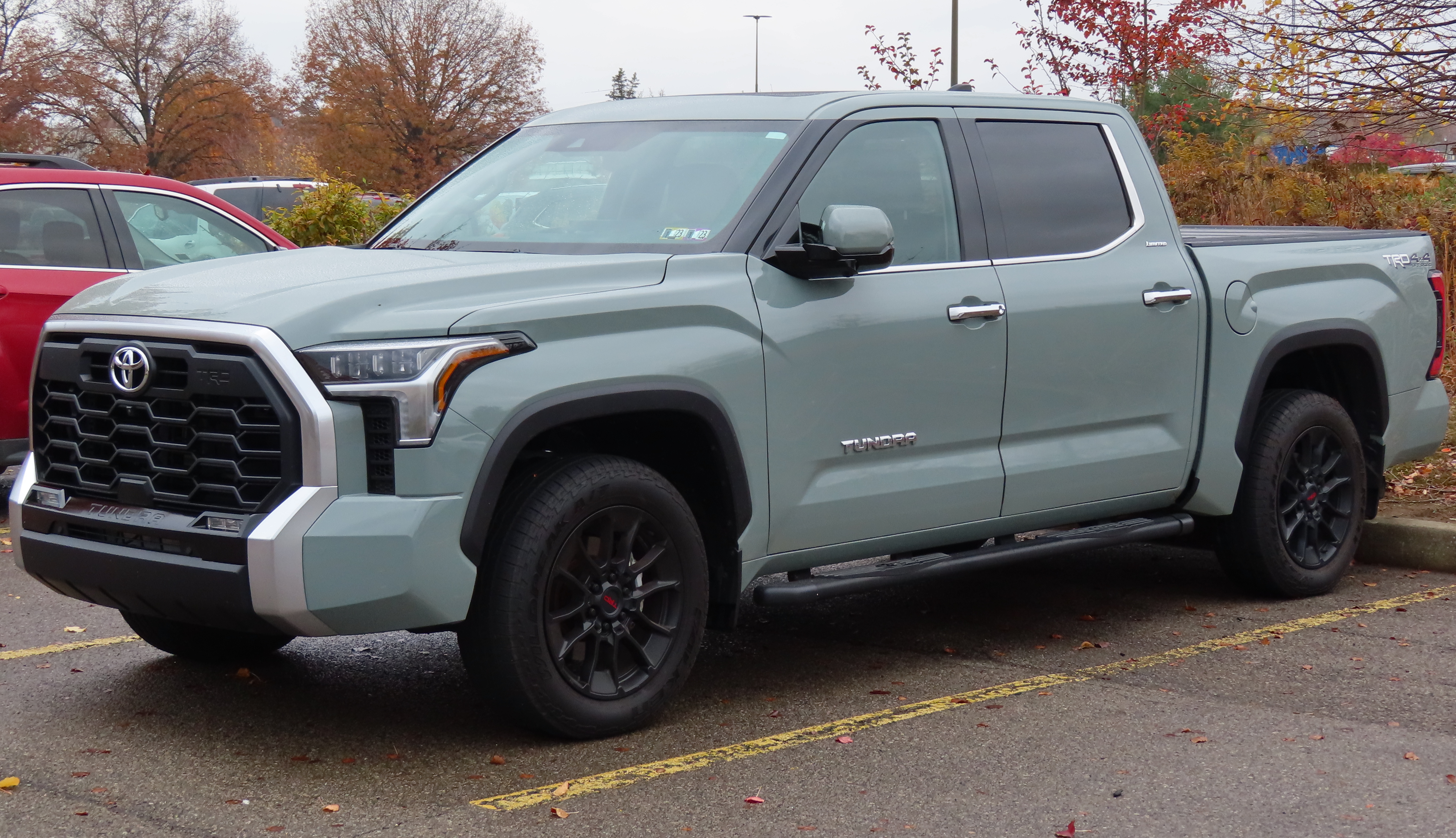
Toyota Tundra
"...we would have had that second segment jump in and go trade in their tundra to get a Tesla."
The Toyota Tundra is a large pickup truck. They’re using it as an example of what people might trade in when switching to an EV like a Tesla.
The Toyota Tundra is a full-size pickup truck commonly used as a trade-in vehicle when buyers switch to other powertrains. In this segment, it’s mentioned as the kind of truck people might trade in to move toward a Tesla EV.
off-lease projections
"Luke? Oh, could you show these lease off-lease projections?"
Off-lease projections are predictions about how many cars will come back from leases in the future. Dealers use that to plan what cars they’ll have to buy and sell.
Off-lease projections estimate how many leased vehicles will return at the end of lease terms over time. Dealers and lenders use these forecasts to plan inventory and financing, especially when EV demand and lease terms are changing.
Model Tesla Laid
"...rojections? Because I would call in 2022 or 2023, Tesla laid a big push to only lease their vehicle by to sell..."
The Model S is a Tesla electric car. When people talk about Tesla pushing leasing instead of buying, they’re usually referring to how cars like the Model S were offered to customers and how that can affect what happens to the car’s value later.
In the context of Tesla’s sales approach, the Model S is the electric sedan that’s frequently referenced when discussing whether Tesla pushed leasing versus selling. That matters to dealers and buyers because leasing can change monthly costs, ownership timelines, and how vehicles are valued later. So it’s often brought up in conversations about Tesla’s strategy and how it affected the used-car market.
autonomous EVs
"Yeah. And of course, the idea in there was that they wanted a fleet of autonomous EVs to run."
“Autonomous EVs” means electric cars designed to drive themselves. The hosts are saying Tesla once planned around that idea, which could affect how leases and returns work.
“Autonomous EVs” refers to electric vehicles intended to drive themselves using advanced driver-assistance and automation systems. The segment suggests Tesla’s earlier strategy around leasing was influenced by a vision of using EVs in a fleet model.
lease buyout
"But I also think that it was telling that they started offering the customers the ability to buy out their leases..."
A lease buyout means you can pay a set price to take ownership of the car instead of turning it back in. It affects what happens to the car at the end of the lease.
A lease buyout is when a lessee pays the pre-set amount to keep the vehicle instead of returning it at the end of the lease. This matters for EVs because it changes how many cars actually come back to dealers/lessors for resale or remarketing.
residual
"...you didn't get an option to buy out your residual? And then that went away."
The residual is the expected value of the car at the end of the lease. It helps set the price you’d pay if you want to buy the car instead of returning it.
In leasing, the residual value is the estimated value of the car at the end of the lease term. It directly impacts the buyout price—if the residual is high, the buyout can be cheaper for the customer; if it’s low, the buyout can be more expensive.
run the note
"So we are right now figuring out which of these EVs are going to run the note and be good for our customers, right?"
“Run the note” means the buyer keeps making the payments on time. They’re using it to judge which EVs are likely to work out financially for their customers.
“Run the note” is dealer/finance slang meaning the customer’s payments stay current and the financed loan/contract performs as expected. The hosts use it to decide which EVs are suitable for their BHPH-style program based on affordability and customer hassle.
drivability
"...as far as cost of ownership, drivability, desirability by customers."
Drivability is how easy and comfortable a car feels to drive in real life. They’re saying some EVs are better in that day-to-day sense.
Drivability describes how easy and pleasant a vehicle is to drive day-to-day, including throttle response, smoothness, and overall usability. Here it’s used as part of the hosts’ evaluation of which EVs will satisfy customers in a financed used-car program.
degradation
"I simply am talking about degradation. And it seems very clear that the degradation is much, much worse in certain climates."
Here, “degradation” means the battery doesn’t work as well as it used to. They say heat/cold and older cooling designs can make it happen faster.
In this context, degradation refers to the measurable worsening of battery performance over time rather than a sudden failure. The speaker claims degradation is much worse in certain climates and on early cars without improved cooling systems.
advanced cooling systems
"it's much, much worse on those early cars that didn't have the more advanced cooling systems that they do now."
Advanced cooling systems help keep the battery at the right temperature. The speaker says cars with better cooling tend to lose battery health more slowly.
Advanced cooling systems are battery thermal-management designs that keep EV battery temperatures within a safer operating range. The speaker argues early cars without these improvements experienced worse degradation, especially in harsher climates.
overcharge
"they would overcharge them at the supercharging stations... and it burned out the batteries."
Overcharge means charging the battery too far. The speaker suggests that early charging behavior could stress the battery and cause it to fail sooner.
Overcharge here means charging the battery beyond what it should be allowed to reach under normal limits, which can increase stress on battery chemistry and electronics. The speaker links this to early Tesla charging behavior at supercharging stations and resulting battery burnout.
superchargers
"because they had begun metering their battery charging and superchargers. So the same car, nothing had changed on a car. Tesla just realized internally that they were burning up their batteries"
Superchargers are fast EV charging stations. They can charge quickly, but the car may slow down charging to help protect the battery.
Superchargers are high-power fast-charging stations designed to recharge EVs quickly. Because they deliver a lot of power, the car’s battery-management system may limit charging speed to protect battery health.
over-the-air software updates
"they were able to solve without having to make any changes to the car. They just pissed off their customers by now making it take longer to take tripped experience."
Over-the-air updates are software changes the car can download by itself. Here, the idea is that the car can be updated to charge more gently to help protect the battery.
Over-the-air (OTA) software updates let an EV change how it behaves without a physical visit to a shop. In this context, the car can adjust charging behavior to reduce battery stress, even if the hardware stays the same.
Buckeye Risk Services
"make sure you guys know about Buckeye, longtime awesome sponsor of the podcast and who I use for all my reinsurance products... call the guys and girls over at Buckeye risk services and get set up ASAP."
Buckeye Risk Services is a company the host promotes as a source for insurance and reinsurance help for dealers. The host says it can help dealers manage coverage more directly.
Buckeye Risk Services is mentioned as the sponsor the host uses for reinsurance-related products. The segment frames it as helping dealers secure coverage and reduce reliance on outside providers.
warranties and service contracts
"My customers have options of warranties and service contracts, gap. I think it's just been great, Jeff."
A warranty is coverage for repairs under the manufacturer’s terms, while a service contract is typically an aftermarket agreement that pays for certain repairs for a set period. Dealers often use these products to manage risk and improve customer financing/approval odds.
gap
"My customers have options of warranties and service contracts, gap. I think it's just been great, Jeff."
GAP coverage helps if your car is totaled and the insurance payout doesn’t cover what you still owe. It covers the “gap” between the two amounts.
GAP coverage (guaranteed asset protection) helps pay the difference between what you owe on a loan/lease and what the vehicle is worth if it’s totaled. It’s especially relevant when depreciation is fast or the down payment is small.
remans
"If I was Tesla, I would rather see third-party independence come up and figure out how to fix them or get remans."
“Remans” means rebuilt replacement parts. Instead of buying a brand-new part, you get one that’s been taken apart, fixed, and put back together to work like new.
“Remans” is short for remanufactured parts—components rebuilt to a like-new standard and sold as replacements. The host suggests third parties could offer reman options for EV components, which matters for independent repair economics and turnaround times.
pit stop
"This was a decade ago about how it would be like a pit stop and yeah, into the Tesla service center and they jack it up and swap battery packs out..."
A pit stop is a quick service moment in racing. They’re using it as a comparison for how EV service might work—like swapping the battery quickly at a shop.
A “pit stop” is a racing term for a quick service stop where a car is worked on during a race. The host uses it as an analogy for EV service—specifically, swapping battery packs at a service center—so listeners can visualize the speed and workflow of EV repairs.
coolants
"It just takes a couple of hours because of the coolants that they have to disconnect."
Coolants are fluids that keep parts from overheating. Here, they’re saying you have to disconnect the cooling system when swapping the EV battery pack.
Coolants are fluids used to remove heat from vehicle systems. The transcript notes that battery-pack swapping takes time partly because coolants must be disconnected, highlighting that EV battery systems are thermally managed like other high-heat components.
warranty
"Well, I mean, if you had, if you had a BMW or a safety at the toy, if you had any of those things under warranty, there are components that you would need to go back to the manufacturer for during warranty."
Warranty is the manufacturer’s promise to pay for certain repairs for a period of time. They’re saying that when a car is under warranty, some repairs may have to be done through the official dealer or manufacturer.
In this context, warranty refers to the manufacturer’s coverage that requires certain repairs or parts to be handled through the automaker’s approved channels. The host contrasts that with the idea that independent shops can’t work on Teslas, arguing that some components still need to go back to the manufacturer during warranty.
independent shops
"So I only interject to say that it's not that you can't work on, there are definitely shops that will apply, you know, that will work on your Tesla for you."
Independent shops are regular repair garages that aren’t the car brand’s own dealership. The host is saying some Tesla work is still possible, but certain parts may be restricted.
Independent shops are repair businesses that aren’t the automaker’s own service network. The transcript emphasizes that while some EV components may be restricted or require manufacturer involvement (especially under warranty), there are still shops that can work on Teslas.
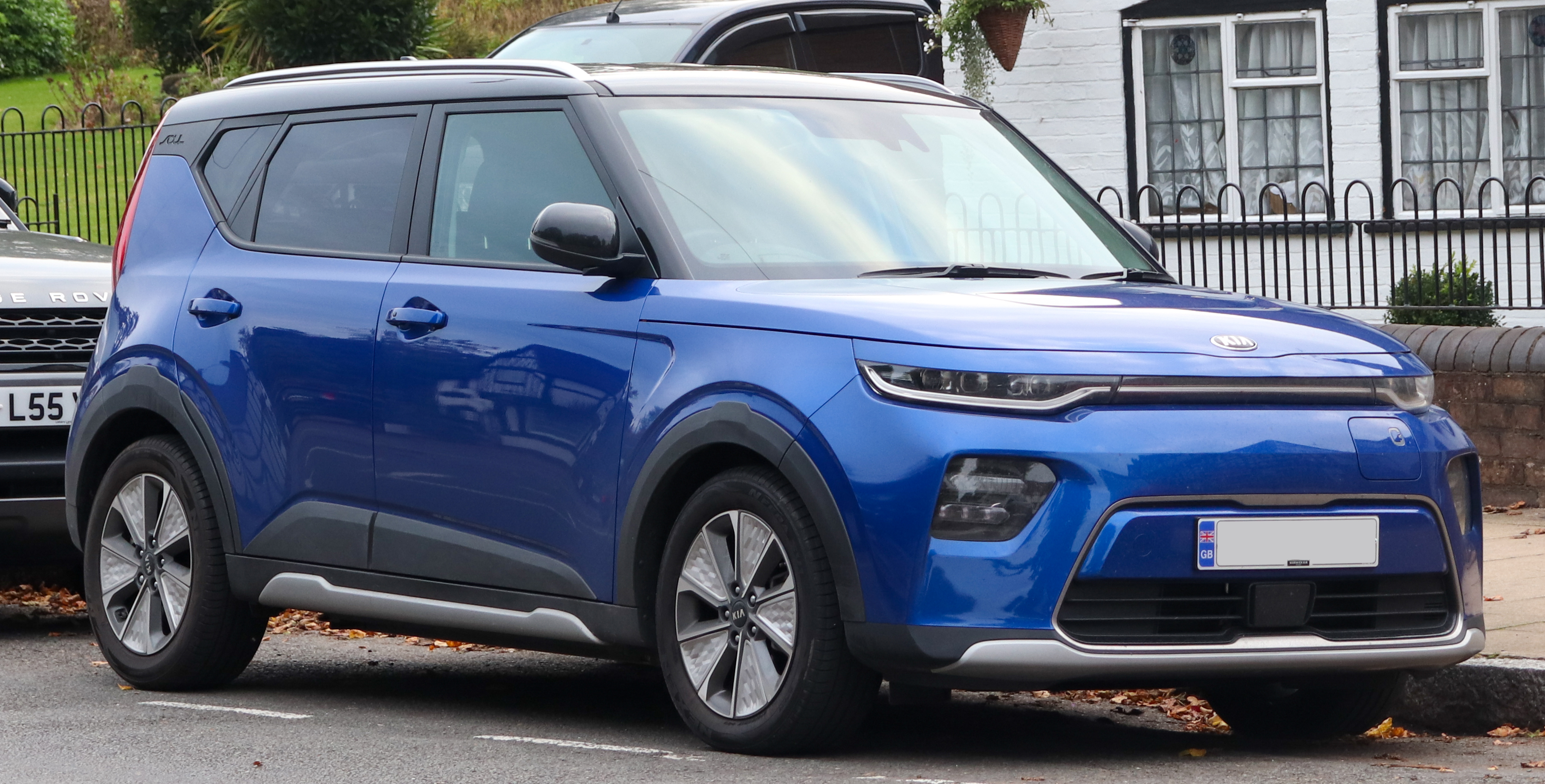
Kia Soul
"...I've bought an e golf. Has anyone bought an e Kia Soul? I have bought an e Kia Soul. First gen technolog..."
The Kia Soul is a small crossover, and there’s also an electric version of it. When people mention the first electric versions, they’re usually talking about how the early EV models handled charging and battery use for everyday driving.
The Kia Soul is a compact, boxy-styled crossover that’s been offered in multiple powertrain versions, including an electric variant. In podcast conversations, it may come up when dealers discuss early electric versions and what “first-gen” EV ownership looks like in the real world. That can include questions about battery performance, charging habits, and how the car fits into daily use.
motor
"Before they just jammed a battery pack where the fuel tank used to be and jammed a motor in where the engine used to be."
In an EV, the motor is what actually makes the car move using electricity. The hosts are saying early EVs often put that motor where the gas engine would normally go.
In an EV, the motor is the electric unit that turns electrical energy into motion. The hosts describe early EVs as inserting a motor into the space where the engine used to be, highlighting how EVs were adapted from gas-car layouts.
fuel tank
"Before they just jammed a battery pack where the fuel tank used to be and jammed a motor in where the engine used to be."
A fuel tank is where a gas car stores its gasoline. They’re comparing that to where early EVs put the battery instead.
A fuel tank is the reservoir that holds gasoline in a conventional car. The hosts contrast EV packaging with gas-car packaging by saying early EVs placed the battery pack where the fuel tank used to be.
reman third party parts
"Also, just like this room has a very small attention for the topic, our aftermarket reman third party parts and recondition third party parts and recondition motors and shops that want to touch them will become bigger and bigger"
“Reman” means a part is rebuilt instead of brand-new. The hosts are saying that for EVs, rebuilt parts from third parties will become more available as more cars need them.
“Reman” refers to remanufactured parts—components rebuilt to function like new, typically using a mix of reused and replaced internal parts. The hosts are arguing that as EVs age and fail, remanufactured third-party parts will become more common and easier to source.
recondition batteries
"our aftermarket reman third party parts and recondition third party parts and recondition motors and shops that want to touch them will become bigger and bigger"
Reconditioning batteries means fixing or rebuilding an EV battery so it can keep working. The hosts are saying more companies will offer this as more EVs reach the point where repairs are needed.
Reconditioning batteries means refurbishing an EV battery pack or its components to bring it back toward usable condition. The hosts suggest that battery refurbishers will grow as EVs accumulate enough failures and replacement demand to support the business.
Dorman
"Dorman is not going to touch an aftermarket something on a very small sample size. They're just not going to go through the energy to make it."
Dorman is a company that sells replacement parts after the car is already on the road. The point here is that they’re more likely to make EV parts once there are enough customers asking for them.
Dorman is an aftermarket parts company that makes replacement components for vehicles. The hosts use Dorman as an example of how aftermarket suppliers tend to wait for enough demand before investing in EV-specific remanufactured or replacement parts.
electrocute
"shops in our town who three years ago would never touch a Tesla because they're afraid it's going to electrocute them to death are now completely embracing it"
“Electrocute” means getting killed or seriously hurt by electricity. The hosts are saying some repair shops were scared to work on EVs at first because of the high-voltage systems.
“Electrocute” is used here in the literal safety sense: EVs contain high-voltage electrical systems that can be dangerous if handled incorrectly. The hosts are describing how some shops were initially afraid to work on Teslas due to perceived high-voltage risk, and how that fear is easing as training and experience spread.
full charge rate
"this is the health, this is the full charge rate on this car versus what it was new, which is where the term degradation comes from."
Full charge rate is basically how much energy the battery can store when it’s fully charged. If that number drops over time, the battery isn’t holding as much as it used to.
Full charge rate refers to how much energy the battery can accept and store when charged to 100% (or near it). In battery-health discussions, it’s used as a benchmark to show how the battery’s charging/usable capacity changes versus when it was new.
cooling system components
"And then in 2021, they in their standard range models, they put in a new type of battery, and they also added the cooling system components."
EVs need cooling for the battery. If the battery runs too hot, it can wear out faster. The speaker says newer Model 3s added cooling parts that help the battery last better.
EV battery cooling components manage battery temperature so the pack can operate efficiently and avoid excessive heat. The host claims that in 2021, Tesla added cooling system components alongside a new battery type, which helps limit degradation and supports better retained range.
standard range models
"And then in 2021, they in their standard range models... So if you can't explain to your customer that the 2021 at the same price with the standard range battery pack gets you more range than the old long range car..."
Standard range means the car’s battery is smaller than the long-range version. The speaker’s point is that newer standard-range batteries can still end up giving more usable range than older long-range cars because they wear out less.
Standard range models are EV configurations with a smaller battery capacity than long-range variants, typically targeting a lower price point. In the segment, the host argues that newer standard-range battery packs can outperform older long-range cars in retained range due to improved battery components and reduced degradation.
long range car
"as you now look back at a 2018 long range car... that car brand new or 2019 had a 310 or 320 full charge miles on it."
A long range EV variant is designed with a larger battery capacity to maximize initial driving distance. The host emphasizes that even if a long-range car starts with higher full-charge miles, it can lose range faster if its battery pack degrades more than later-generation packs.
full charge miles
"that car brand new or 2019 had a 310 or 320 full charge miles on it. It has lost 80 per, it has lost 20% in degradation on average since 2018 2019."
Full charge miles are how many miles the EV is estimated to drive on a full battery. The speaker is saying older cars may start with a lot of range, but that number can drop as the battery degrades.
Full charge miles are an EV’s estimated driving distance when the battery is charged to 100%. The host uses these figures to show how an older EV can start with high range but lose a meaningful amount over time due to degradation.
third party companies
"So what their third party companies will come out of your dealership to give you a battery? No, so a lot of them, they'll give you some sort of a domble that you can plug into the car."
Third party companies are outside businesses that provide services related to the EV battery. The speaker is saying dealers can’t just rely on them without understanding what’s being offered.
In this context, third party companies are outside providers that may supply or support EV battery-related services (like replacement or temporary solutions) for dealers. The host is warning that dealers may need to understand the tech and the process to explain it to customers and avoid risk.
kilowatt hour
"But it will tell you to the kilowatt hour, how much that battery pack was able to absorb. And then you know, if it was a 65 kilowatt battery pack and it absorbed 55 kilowatts"
A kilowatt-hour (kWh) is a measure of how much energy is stored in the battery. If the car reports a certain kWh absorbed, that’s basically how much usable energy the battery can still take in.
A kilowatt-hour (kWh) is a unit of energy used to describe how much electricity a battery can store. When the speaker says the car reports kWh absorbed, they mean the battery’s usable energy capacity during the test.
EPA number
"they're very upfront about the mild range just being formula of how much capacity it currently holds multiplied by what they expected initially, right? It's just an EPA number."
The EPA number is the government’s standardized estimate of how far an EV should go on a full charge. Real driving can be different, depending on weather and how you drive.
The EPA number refers to the Environmental Protection Agency’s standardized range estimate used on EV window stickers. The speaker notes that Tesla’s reported “mild range” is tied to capacity and an EPA-rated figure, which can be confusing because real-world range varies with conditions and driving habits.

Toyota Prius
"...EV or hybrid, I guess? Yeah, you've done a ton of Prius batteries, right? Have you done them yourself in ..."
The Toyota Prius is a car that uses both a gasoline engine and an electric motor. It has a battery that helps it save fuel, and over the years some owners may need battery-related repairs or replacements.
The Toyota Prius is a hybrid car that’s widely recognized for its fuel efficiency and long-running popularity. It’s often discussed in the context of hybrid batteries because owners and shops may need to service or replace the battery pack over time. That’s why it comes up when dealers talk about EV vs. hybrid ownership experiences and maintenance.
cells
"[1975.0s] I should take them apart, replace cells and charge everything back up. [1979.9s] That's, yeah, that's happening a lot now. Even on the Teslas, they're pulling the packs apart,"
Cells are the individual battery units inside the battery pack. The host is saying some repairs replace only the bad cells instead of replacing the whole battery.
In an EV battery pack, “cells” are the individual electrochemical units that store energy. The host describes taking a Prius battery apart to replace cells and then recharging/charging everything back up, which illustrates that battery service can be component-level rather than always replacing the entire pack.
EV tax credit
"[1988.0s] There's companies here in Vegas we bought batteries from. We sold a lot of Chevy Volts [1993.3s] during the EV tax credit. And so we brought them down here and they stuck a new battery in it for"
An EV tax credit is a government discount that can lower the price of certain electric vehicles. The host mentions it to explain why they had a lot of those cars in their inventory.
An EV tax credit is a government incentive that reduces the cost of qualifying electric vehicles (and sometimes related purchases/eligibility). In this segment, it’s used to explain why the dealer sold many plug-in vehicles like the Chevrolet Volt and then dealt with battery replacements afterward.
EVs that are over a 100000 miles
"And these would be, of course, out of factory warranty, right? So you're talking about [2176.1s] EVs that are over a 100000 miles, over a hundred and 20000 miles."
They’re talking about EVs with very high mileage, where battery issues are more likely to show up. That’s important because warranty coverage may change once the original warranty ends.
This segment is discussing how EV battery coverage and claims often become relevant at higher odometer mileage, especially once the original factory warranty is no longer in effect. For dealers and warranty providers, the risk profile changes as vehicles age and accumulate miles.
Blitz
"Yeah. Data is hard to process from just everyday dealers, but Blitz is going to harness that. [2288.6s] They're going to harness AI and they're going to combine that with payment platforms and [2294.2s] payment process, which is amazing. So if you need a payment processor, you need a friend in the [2300.4s] industry or a partner. Blitz is the only company I would recommend."
Blitz is a software company the host recommends for dealerships. It’s meant to help with payments and dealer business data, and the host says it uses AI to make that information easier to use.
Blitz is described as a technology provider for dealers, combining payment processing with collections and analytics. The hosts frame it as an AI-driven platform aimed at helping dealerships manage dealer operations and EV-related workflows.
state of charge
"You guys could probably figure this out. But if you take the current range of the EV, [2313.6s] where it sits right now, you divide it by the percentage of charge. So say it's got 170 miles, [2320.1s] it's sitting at 170 range, you click it over and that says 58% of battery."
State of charge (SoC) is the percentage of energy stored in an EV battery at a given moment. The host’s “equation” uses the car’s current displayed range and the percentage of charge to infer what the battery’s full-charge range would be.
BS054 screen of death
"So sometimes you'll get the warning, [2363.9s] the Tesla warning, which is like the BS054 screen of death, they call it. Your battery's [2371.2s] not charging anymore."
“BS054 screen of death” is a nickname for a Tesla warning screen indicating a serious battery charging problem. The host uses it as an example of the kind of alert that may appear when the battery isn’t charging anymore.
EV service center experience and how to respond
"I despise working with one of the service centers in Utah to the point where I won't work them again. That said, the other two had been amazing... start by just getting a different service advisor the next time... probably just find another service center."
They’re talking about what to do if your EV’s service experience is bad. The advice is to try a different service advisor first, and if it’s still bad, consider a different service center.
The segment focuses on how EV owners/dealers should handle poor service experiences—switching service advisors, and potentially switching to a different service center. It also emphasizes that service quality can vary significantly by location and staff.
OEMs not touching EVs
"You need to do the research in your local market just with any EVs. Some of your local OEMs don't touch them."
They’re saying some car makers (OEMs) may not be willing or able to service certain EVs in your area. So you might need to find a different shop that can actually work on EVs.
The hosts are pointing out that some local OEM service channels may not directly support certain EVs or may be limited in who they’ll service. For buyers and dealers, that means you may need to rely on specific service centers, third-party EV-capable shops, or different brands’ support networks.
Ford
"You know, it was only recently that even our local Ford store would touch EVs, right? They didn't have the tools. They didn't have the text trained."
Ford is a big car brand with lots of dealerships. This segment is saying some Ford dealers weren’t ready to service EVs at first, so they had to send cars to another place instead.
Ford is a major automaker whose dealer network has to build EV service capability as EVs become more common. The point here is that some dealers initially lacked EV-specific tools and training, so EVs had to be sent elsewhere for service.
Hyundai
"like you are a Hyundai dealer, you're selling them. How are you not servicing them?"
Hyundai is an automaker that sells EVs through its dealer network, so dealers are expected to support EV service as well as sales. The discussion highlights a gap where some OEMs (including Hyundai) hadn’t fully equipped dealers to service EVs.
Fisker
"It's the same reason why I wouldn't buy a, you know, a Fisker or a Rivian or, you know, some of these other models"
Fisker is an EV brand. The hosts mention it to make a point that if there aren’t nearby repair options, owning one can be more stressful—especially in rural areas.
Fisker is an EV brand mentioned as an example of a model line where owners may not have nearby OEM-backed service support. The segment frames this as a practical problem for rural buyers: if there’s no local facility that can service the car, repair becomes harder.
Rivian
"I wouldn't buy a, you know, a Fisker or a Rivian or, you know, some of these other models"
Rivian is an EV brand. They’re using it as an example of how owning some EVs can be harder if there aren’t nearby repair shops that can work on them.
Rivian is an EV brand used here as another example of a vehicle where local OEM service availability may be limited. The hosts connect that to higher friction for repairs when the nearest qualified shop is hours away.
major components
"the only thing that you have to send them to Tesla for is major components. There is nothing, I mean, if they're under warranty and something major fails like a battery pack"
“Major components” means the big, expensive parts of the car. The hosts are saying that when something major like the battery is involved, you may need to send the EV to the manufacturer for the fix.
“Major components” in EV service typically refers to high-cost, high-complexity systems that may require manufacturer-level diagnostics, parts, or procedures. In this segment, the hosts imply that battery packs fall into this category and may require sending the car to Tesla.
transport
"I'm going to throw it on a transport for 200 bucks and send it to Tesla to get it swapped out"
Here, “transport” means getting the car to a repair shop—usually by tow or shipping—because the local shop can’t handle that specific repair. It’s mentioned to show how rural owners can face extra cost and hassle.
In EV service discussions, “transport” refers to towing or shipping the vehicle to a facility equipped to handle specific high-voltage or manufacturer-only repairs. The segment uses it to illustrate the cost and logistics of getting an EV to Tesla for major work.
suspension parts
"You're not asking about the older suspension parts that may go out."
Suspension parts are what help the car ride smoothly and keep the tires planted on the road. They’re saying battery problems are the bigger headache, while some suspension repairs may be covered by warranty.
Suspension parts are the components that control ride height, wheel alignment, and how the tires maintain contact with the road. The hosts contrast suspension repairs with battery-pack issues, suggesting suspension work may be less of a “send it away” problem when warranty coverage applies.
EV maintenance
"I'm going to get through the rest of these slides so we can give you the holistic picture and deliver what we promised on. EV maintenance, obviously you guys, it's pretty straightforward."
EV maintenance just means the upkeep you do on an electric car. Because there’s no gas engine, you usually spend less time on engine-related maintenance and more on things like tires and suspension.
EV maintenance is the routine upkeep specific to battery-electric vehicles. The big difference versus many gas cars is that EVs generally have fewer wear items related to the engine and exhaust, so maintenance focus shifts toward things like tires, suspension, and brake-related wear patterns.
ICE vehicle
"Even Cox says it's about half of what a traditional ICE vehicle will be as far as things."
ICE vehicle means a normal gas or diesel car with an engine that burns fuel. They’re comparing EV upkeep to what you’d expect on those cars.
ICE stands for internal combustion engine, meaning a gas- or diesel-powered vehicle. The speaker is comparing EV maintenance costs to those of an ICE vehicle, implying EVs typically avoid many engine/exhaust wear items.
tire inside
"Make sure you're inspecting tires, the inside of the tire, not the outside of the tire. On Teslas, you have to inspect the inside of the tire, because you will have something on the outside that looks like it's a brand new tire."
Checking the inside of the tire matters because that’s where alignment problems often cause uneven wear. A tire can look fine on the outside but still be worn out on the inside.
Inspecting the inside of a tire is important because many alignment problems show up as uneven wear on the inner tread. The speaker emphasizes that EVs—specifically Teslas—can have a visual “new tire” look on the outside while the inside tread is worn.
bad alignments
"And when you slide underneath is showing wires. They are notorious for bad alignments. That's just a Tesla thing, accept it, look for it."
Bad alignment means the wheels are pointed slightly wrong. That can make your tires wear unevenly, even if the tire looks okay from one side.
Bad alignment means the wheels aren’t set to the correct angles relative to each other and the road. Misalignment commonly causes uneven tire wear (often on the inside or outside tread) and can also affect steering feel and stability.
low range
"don't put these customers in cars that only have 100 to 150 miles range. If they don't have a way of charging at home, it will fail."
Low range means the EV can only drive a shorter distance before it needs charging. If you can’t charge at home, that can force you to stop for charging more often.
Low range refers to an EV’s limited distance capability on a full charge. In the transcript, the hosts connect low range with higher dependence on frequent public charging, which can lead to buyer dissatisfaction if the customer can’t charge at home.
charge fatigue
"not only will they abuse the car by supercharging unless they have a newer one with the lithium ion technology, they are going to get charge fatigue."
Charge fatigue is when charging becomes annoying because you have to stop too often. If you can’t charge at home, that can make an EV feel like more work than it’s worth.
Charge fatigue is the real-world frustration and inconvenience that comes from needing to stop frequently to recharge. For EV buyers without home charging, the daily routine of fast-charging can feel like a constant chore, which affects whether the vehicle fits their lifestyle.
lithium ion technology
"unless they have a newer one with the lithium ion technology, they are going to get charge fatigue."
Lithium-ion technology is the type of battery most electric cars use. The speaker is saying newer battery versions may tolerate frequent fast charging better than older ones.
Lithium-ion technology refers to the battery chemistry used in most modern EVs. The speaker suggests newer lithium-ion implementations handle frequent fast charging better than older generations, which is relevant when advising buyers who may rely on Superchargers often.
fuel per mile
"When we talk about fuel per mile, in my area, I'm taking about $4 to charge to get a full tank of gas."
“Fuel per mile” means how much it costs to drive a mile. With EVs, you figure it out from electricity charging cost and how far the car goes on a charge.
“Fuel per mile” is a cost-per-distance way to compare operating expenses. For EVs, it’s typically calculated from charging electricity price and the vehicle’s real-world range/efficiency rather than gas station gallons.
frame damage
"what about body damage and wrecks and things like that... what about body damage... customers should say... because a lot of these cars that you're seeing with frame damage were fixed by a body shop..."
Frame damage means the car’s main structure got hit, not just the outside. That kind of damage can be hard to fix safely, so it often leads to the car being judged more severely after a crash.
Frame damage refers to damage to the vehicle’s structural body/chassis components, not just cosmetic panels. Structural damage can affect alignment, safety systems, and repair feasibility—especially relevant for EVs where the battery and structural integrity are critical.
total out
"if they damage stuff that's part of the frame, it's not. And so they fall in that category of vehicles that are much higher likely going to being total out."
“Total out” means the car is considered a total loss after a crash. If the damage is too expensive or risky to fix—especially on EVs—it may be written off instead of repaired.
“Total out” means the insurer determines the repair cost is high enough that the vehicle is declared a total loss. In EVs, structural damage and battery-related risks can increase repair complexity and cost, making total-loss decisions more likely.
unibody cars
"So it's scary meeting these kind of unibody cars, whether it's Tesla or others that have been in an accident and then fixed by the body shop that shouldn't have fixed them."
A unibody car has its body and frame built as one unit. In crashes, that structure can get bent or weakened, and fixing it the wrong way can be a big problem.
Unibody construction means the body and frame are integrated into one structure, so crash damage can affect the vehicle’s alignment and structural integrity. The discussion is about how unibody EVs (including Tesla) can be risky to repair improperly after an accident, because the damage may be severe enough that the vehicle should be totaled instead.
CPI
"It's kind of as by two, if you do CPI, a lot of us do. So if you do CPI... is there enough CPI cover cost of this car to, you know, please customers... depends on what the terms of your CPI product are. If it's only total loss..."
CPI is a kind of insurance/coverage plan dealers buy. It matters because some cars are more likely to be written off after an accident, so the coverage cost should match that risk.
In dealer/auction finance, CPI usually refers to a coverage product that pays out when a vehicle is totaled (a “total loss” outcome). The hosts are discussing how CPI pricing should reflect the higher chance that certain cars—like accident-damaged EVs with complex repairs—end up totaled instead of repaired.
autopilot
"that never use the autopilot or the full soft driving in their Tesla. I have friends that [3065.2s] never use it."
Autopilot is a set of help features in a Tesla that can take over some driving tasks. Even if the car can do it, the driver still has to choose to use it and stay aware.
Autopilot is Tesla’s driver-assistance system that can automate parts of driving (like steering and maintaining lane position) while the driver monitors the road. The segment emphasizes that adoption is the challenge—many drivers don’t use it even when the software is available.
Request an Explanation
Heard something you'd like explained? We'll add it to this episode.
Sign in to request explanations for terms you heard.
Want to learn more?
Browse our glossary for plain-English explanations of automotive terms, jargon, and concepts.
Help improve this episode
See something that's not quite right? Our annotations are AI-generated and can sometimes miss the mark. Click the flag icon on any annotation to suggest a correction.