#434 - The 2-Week Job That Turned Into 30 Years | The Bill Hancock Story
About this episode
Bill Hancock’s used-car career starts with “two weeks” selling cars after he cleaned them up for someone else, then quickly turns into a long run that includes becoming a general manager and building a wholesale operation. He explains why he created a transport company, how he learned sales by calling other dealers, and how financing, auctions, and reconditioning shape the numbers. The conversation also covers dealer “get ready process,” warranties/GAP, and community training—plus why awards matter even if they don’t directly sell more cars.
In this episode of the Independent Dealer Podcast, Jeff Watson and Luke Godwin sit down with Bill Hancock, owner of Bill Hancock Motors in Albertville, Alabama and National Quality Dealer of the Year nominee, for a conversation about a career built on hard work, loyalty, and knowing how to buy a car right. From pumping gas on that same property as a ten-year-old to wholesaling 500 units a week, Bill's story is one of the most quietly remarkable in the independent dealer world.
What You'll Learn:
How Bill went from detailing cars to becoming general manager in three years — and how living at home with his parents helped him fund his first business
The wholesale mindset that still drives every retail buy he makes today — and why buying "unready" cars with a clear recon vision is his biggest edge
How Bill helped launch what is now one of the largest wholesale operations in the country — and why that relationship ended better than most business partnerships ever do
Why lifting trucks and Jeeps became a signature of his lot, and the honest truth about what lenders will and won't give you credit for on lifted inventory
How he became Ally's first independent dealer signup in over seven years — and why having a dealer number since 1999 with no floor plan still turns heads
What Bill is doing in his community through the career tech center and school board — and why getting young mechanics ready for a career matters more to him than keeping themIf you're an independent dealer who wants to hear from someone doing it the right way — buying right, growing slow, giving back, and building something that lasts — this one's for you.
Support the businesses that support the podcast:
Buckeye Risk Services - Reinsurance and wealth strategies for independent dealers. https://theindependentdealer.com/buckeye
Blytz - BHPH payment processing with fast funding and text-to-pay.
https://theindependentdealer.com/blytzpay/
Ituran GPS - Asset protection and customer management for BHPH and retail dealers. https://theindependentdealer.com/ituran
Follow & Connect:
Website: www.theindependentdealer.com
Facebook Group: @independentautogroup
Luke Godwin: @lukegodwin
Jeff Watson: /sendtojeffw
Like, subscribe, and share this with a dealer who needs to hear it.
secondary finance
"I mean, that, that's, that's awesome that you, you saw that, that secondary finance business kind of start opening up to independent dealers."
Secondary finance means the money for the car loan comes from a lender or program that isn’t the original “new car” financing. For dealers, it can help more customers qualify to buy cars, especially used cars.
“Secondary finance” refers to financing arrangements that happen outside the original manufacturer or primary lender channel—often tied to used-car lending, dealer-arranged loans, or alternative credit programs. In dealer terms, it can open up more customers and improve deal flow for independent stores.
independent dealers
"secondary finance business kind of start opening up to independent dealers. It was, it was there before for, for new car stores, but never on the independent side."
Independent dealers are car lots that aren’t tied to one specific new-car brand’s dealership system. The point here is that they were starting to get more access to financing options.
“Independent dealers” are dealerships that aren’t part of a manufacturer’s captive dealer network (i.e., not tied to a specific brand’s new-car store structure). The episode frames secondary finance as becoming more accessible to these independents, which can change their ability to sell cars.
wholesale business
"And so you were able to put some away so you could start a wholesale business, right? We, that, that definitely helped."
Wholesale here means you buy cars and then sell them to other dealers, not to the general public. Dealers do this to move inventory and make money on the spread.
A “wholesale business” in this context means buying vehicles (often from dealers or auctions) and then selling them to other dealers rather than retailing directly to end customers. It’s a different sales channel with different margins, inventory timing, and customer base.
wholesaling
"you decided to start wholesale, which, uh, you know, back, back in that nineties, 2000 era, you could, you could really make good money. 80s, 90s, 2000, make good money wholesaling."
Wholesaling is basically the dealer-to-dealer version of car sales: you find cars, then sell them to other dealers. The episode is saying that era had good chances to profit from that business model.
“Wholesaling” is the day-to-day activity of sourcing vehicles and selling them in bulk or to dealer buyers, typically through dealer-to-dealer channels like auctions. The speaker is pointing out that the 1980s/1990s/2000s environment created strong opportunities for this model.
auction
"There were a lot of opportunities to buy from dealers, uh, new car stores and, and take them to the auction or whatever."
An auction is where dealers bid on cars to buy them for resale. Instead of buying from a person or a store, you compete with other dealers for the vehicle.
In dealer operations, an “auction” is a marketplace where dealers bid on used vehicles (and sometimes repossessions or trade-ins) to acquire inventory. The speaker contrasts retail-only operations with sourcing inventory through auctions after leaving.
retail
"[583.8s] at the lot and I was a retail guy. [586.6s] So all those relationships came on after I started selling."
Retail is selling a car to the person who will actually drive it. It’s the opposite of selling to other dealers.
Retail means selling vehicles to end customers (the public) rather than to other dealers. In the transcript, the speaker contrasts retail with wholesaling, implying different pricing strategies and time horizons.
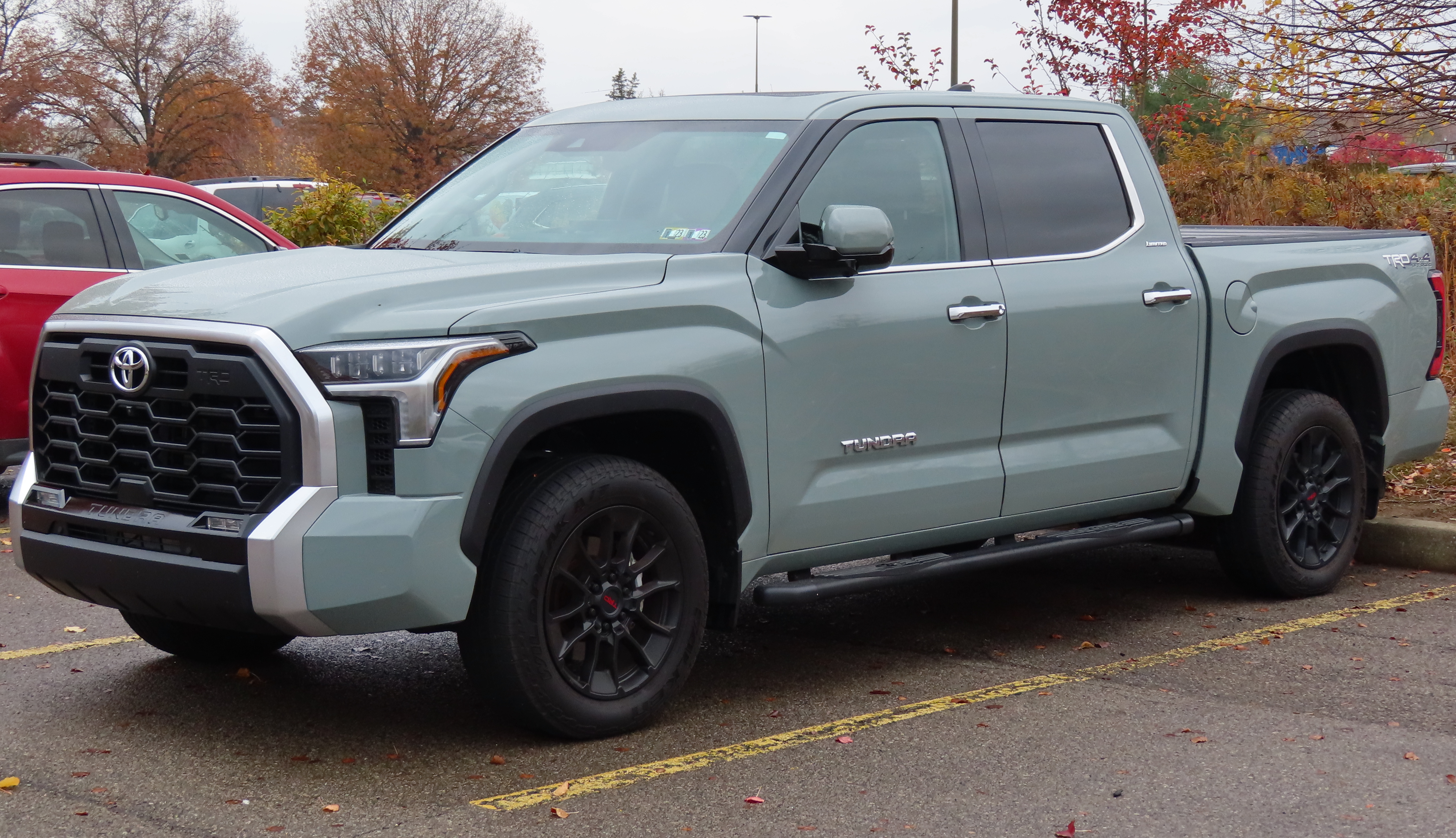
Toyota Tundra
"...if you're, if you're buying a, you're buying a 23 tundra that's been jacked up and got a lot of extras on ..."
A Toyota Tundra is a large pickup truck made for hauling and everyday driving. In this case, the podcast is talking about a 2023 Tundra that has been lifted (“jacked up”) and has extra add-ons. Those changes can affect ride quality and may require extra care to keep everything working correctly.
The Toyota Tundra is a full-size pickup truck, and the podcast context is specifically about a 2023 model that’s been modified—“jacked up” with added extras. This kind of setup often changes how the truck drives and can affect costs, which is why dealers and buyers discuss it when shopping used. It’s a common topic because modifications can be a selling point, but they also raise questions about condition and maintenance.
jacked up
"[630.0s] You know, if you're, if you're buying a, you're buying a 23 [633.4s] tundra that's been jacked up and got a lot of extras on it, you know, and [637.2s] really looks good, you can't buy that thing with a wholesale mindset."
“Jacked up” means the vehicle has been lifted so it sits higher than normal. That kind of change can make it more of a retail-targeted car.
“Jacked up” is dealer slang for a lifted suspension—typically meaning the truck sits higher than stock, often from a lift kit or larger tires. Lifted trucks can appeal to retail buyers, but they can be harder to value consistently for wholesaling.
get ready process
"I don't mind the get ready process. And so I will buy a car that needs a bumper painted or a fender painted or that needs a wheel bearing in it, you know, or by one that, you know, I've got to finish getting ready..."
Dealers often buy cars that aren’t ready to sell yet. The “get ready process” is the checklist of repairs and cleanup they do—fixing damage, worn parts, and making it look presentable—so they can put it on the lot for sale.
In dealer language, the “get ready process” is the work done after buying a used car to bring it up to sale condition. That can include cosmetic repairs (like paint) and mechanical fixes (like replacing worn components) so the car can be retailed without obvious issues.
wheel bearing
"And so I will buy a car that needs a bumper painted or a fender painted or that needs a wheel bearing in it, you know, or by one that, you know, I've got to finish getting ready..."
A wheel bearing is a small part that helps your wheel spin smoothly. If it’s worn out, you might hear grinding/rumbling or feel vibration, and the dealer may need to replace it before selling the car.
A wheel bearing is the component that allows a wheel to rotate smoothly while supporting the vehicle’s weight. When it wears out, it can cause noise, vibration, and uneven tire wear, and it’s a common “needs repair” item on used cars.
windshield crack
"that has a seat tour that has a windshield crack. It, you know, it be sitting out there on four mismatched tires and missing a wheel..."
A windshield crack is a break in the front glass. It can get worse over time and make it harder to see clearly, so dealers usually fix or replace it before selling the car.
A windshield crack is damage to the glass that can spread and reduce visibility and structural integrity. Dealers treat it as a repair/replace item because it affects safety and can also be a compliance issue depending on local inspection rules.
mismatched tires
"It, you know, it be sitting out there on four mismatched tires and missing a wheel that are missing, you know, like having a steel wheel on where somebody has a spare on..."
Mismatched tires means the tires aren’t all the same. That can affect how the car grips the road and handles, so dealers may replace them to make the car safer and more consistent.
Mismatched tires means the tires on the same vehicle aren’t the same type/size/model, which can change grip and handling characteristics. It can also be a red flag for uneven wear or prior repairs, so dealers often factor it into pricing and “get ready” work.
steel wheel
"wheel that are missing, you know, like having a steel wheel on where somebody has a spare on and then what's got three aluminum wheels and it's got a steel black wheel on it."
A steel wheel is a basic, heavy-duty wheel made of steel. If one wheel is steel while the others aren’t, it can mean the car was repaired with a spare or replacement, and the dealer may need to source matching wheels.
A steel wheel is a wheel made primarily from stamped steel, often used on base trims or as a spare. In the used-car context, having a steel wheel where others are different (like aluminum) can indicate a temporary repair or missing wheel, which affects appearance and sometimes fitment.
aluminum wheels
"has a spare on and then what's got three aluminum wheels and it's got a steel black wheel on it. So a lot of people, the look of that just turned them off."
Aluminum wheels are lighter wheels that many cars use for looks and efficiency. If only some wheels are aluminum, it can mean the car has mismatched replacements, and a dealer might swap them to make everything match.
Aluminum wheels are wheels made from aluminum alloy, commonly used for their lower weight and styling. When a car has a mix of aluminum and steel wheels, it often points to missing or mismatched replacements—something dealers may address during “get ready.”
gap
"My customers have options of warranties and service contracts, gap."
“GAP” (Guaranteed Asset Protection) helps cover the difference between what you owe on a car loan/lease and what the car is worth if it’s totaled or stolen. It’s especially relevant for buyers who put little money down and for vehicles that depreciate quickly.
service contracts
"My customers have options of warranties and service contracts, gap."
A service contract is like an add-on plan you buy with a car that helps pay for certain repairs later. It’s meant to protect you from unexpected repair bills.
A service contract is a paid agreement that covers certain repairs or maintenance costs for a vehicle after purchase. Dealers often sell them to reduce the buyer’s out-of-pocket risk for mechanical failures.
reinsurance company
"You can set up a reinsurance company. You can ensure your own stop giving money to those third party providers that aren't going to cover your stuff."
Reinsurance is insurance for insurance companies. The dealer is describing a setup where they can manage their own risk instead of relying entirely on outside insurance providers.
A reinsurance company is an insurer that provides coverage to other insurers. In dealer finance contexts, the idea is to shift risk away from third-party providers by having the dealer’s own structure absorb some of the insurance exposure.
keep it in house
"Anyways, keep it in house. Call the guys and girls over at Buckeye risk services and get set up ASAP."
“Keep it in house” means the dealer tries to manage the coverage process themselves instead of paying outside companies to do it. That can affect how money and claims are handled.
“Keep it in house” here means handling coverage administration and risk management internally rather than outsourcing to third-party providers. In dealer operations, that can change cash flow timing and how claims/coverage are managed.
Jeep
"Uh, I've had a Jeep since I was a teenager and, and I've always did a lot of off-roading, uh, how to always had a full-wheel drive trucks and that type of stuff. And so when I started selling jeeps, you know, you buy two jeeps and one be lifted and one not..."
Jeep is a car brand that’s famous for making vehicles that can handle off-road trails. Here, they’re talking about selling and modifying Jeeps for people who want that look and capability.
Jeep is a brand known for off-road-capable vehicles, especially models built around 4x4 hardware and trail use. In this segment, the host ties Jeep ownership to off-roading and to the dealer’s practice of modifying Jeeps for buyers.
full-wheel drive
"Uh, I've had a Jeep since I was a teenager and, and I've always did a lot of off-roading, uh, how to always had a full-wheel drive trucks and that type of stuff."
They mean the truck or Jeep can drive all four wheels instead of just two. That helps it grip better when the road is slippery or uneven, like on trails.
“Full-wheel drive” is the speaker’s way of describing a four-wheel-drive (4WD) setup, where power can be sent to all four wheels. It’s commonly associated with off-roading because it improves traction on loose surfaces like dirt, mud, and rocks.
lifted
"And so when I started selling jeeps, you know, you buy two jeeps and one be lifted and one not, and the lifted Jeep sells right off and the other one gets stale on you."
“Lifted” means the vehicle has been raised higher than stock. That gives it more ground clearance and usually lets it fit bigger tires.
A “lifted” Jeep or truck has been raised from the factory ride height, usually with suspension lift components. This changes the stance and typically allows larger tires, which is a big part of the off-road look and can help with clearance.
Rough Country
"And so we became a rough country dealer early and, uh, part of our get ready process, we put all our own lifts on, uh, we even sell lifts and put them on for the public."
Rough Country is an aftermarket brand known for suspension lift kits and off-road accessories. The dealer says they became a “Rough Country dealer,” meaning they sell Rough Country lift components and install them as part of their prep process.
leveling kit
"We try to give everything a look, you know, whether it be just a little bit of a leveling kit and a small set of 33s."
A leveling kit is a small suspension change that makes the truck sit more level, instead of nose-down or uneven. It’s a common “first step” before bigger off-road upgrades.
A leveling kit is a suspension modification that raises the front (or otherwise adjusts ride height) to level the truck’s stance. It’s often used as a mild lift so the vehicle looks more even without going as extreme as a full suspension lift.
33s
"We try to give everything a look, you know, whether it be just a little bit of a leveling kit and a small set of 33s. And then we go, we go wild and put 37s on a lot of them."
“33s” means tires that are about 33 inches tall. Bigger tires usually help the vehicle clear obstacles and look more off-road.
“33s” refers to 33-inch tires, a common size upgrade on Jeeps and trucks for off-road use. Bigger tires can improve ground clearance and help with traction on uneven terrain, and they also contribute to the lifted/off-road look.
37s
"And then we go, we go wild and put 37s on a lot of them. You know, we've even sold some of the 40s."
“37s” are even bigger tires than “33s,” about 37 inches tall. They usually require more suspension lift and can make the truck feel different on the road.
“37s” means 37-inch tires, a larger size commonly associated with more serious off-road builds. Going from 33s to 37s typically requires more lift and clearance work, and it can change steering feel, ride quality, and gearing/engine load.
40s
"You know, we've even sold some of the 40s. So we try to give everything a little bit of character."
“40s” means extremely large tires—around 40 inches tall. That level of tire size usually takes a lot of modifications to fit and still drive safely.
“40s” refers to 40-inch tires, which are typically reserved for highly modified off-road vehicles. At this size, fitment and drivability become major concerns, and the vehicle usually needs significant lift and supporting suspension/clearance changes.

Porsche Got Career
"...me through that went on to bigger dealerships and got career jobs, you know, I'm not saying that."
Request an Explanation
Heard something you'd like explained? We'll add it to this episode.
Sign in to request explanations for terms you heard.
Want to learn more?
Browse our glossary for plain-English explanations of automotive terms, jargon, and concepts.
Help improve this episode
See something that's not quite right? Our annotations are AI-generated and can sometimes miss the mark. Click the flag icon on any annotation to suggest a correction.