John Davis, the creator and host of MotorWeek, shares the fascinating journey of the show that has shaped automotive television for 45 years. He discusses the inception of MotorWeek, its magazine-style format, and how it has adapted to changing times while keeping cars at the forefront. Davis reflects on his early automotive experiences, including his first cars, and the evolution of technology in the automotive industry. With insights into the future of MotorWeek and his personal favorites, this episode is a nostalgic trip through automotive history.
Join hosts Christian and Doug as they welcome automotive television royalty—John Davis, creator, host, and executive producer of MotorWeek, the longest-running automotive magazine show in television history. For 45 years and over 1,900 episodes, John Davis has shaped how generations experience automotive journalism.
Discover how a young producer at Wall Street Week with Louis Rukeyser had a vision in 1978 to bring automotive print magazines to television—something no one in North America had successfully done. After a 3-year wait and a 6-week sprint to launch, MotorWeek premiered in October 1981 on Maryland Public Television and forever changed automotive media on PBS and then the Internet.
John reveals the philosophy that made MotorWeek succeed across five decades: "The cars are the stars." Learn why consistency matters, how instrumented testing keeps the show scientifically credible (one of only 3 publications still doing it), and why team opinions matter more than individual perspectives. From PBS stations nationwide to YouTube's digital age, MotorWeek adapted while maintaining its core mission.
Personal stories include John's Ford family and influence on his first car, restoring a 1975 De Tomaso Pantera, other dream cars, and more.
Perfect for MotorWeek fans, automotive journalists, PBS television enthusiasts, muscle car collectors, and anyone who appreciates how one show influenced 45 years of automotive culture. Whether you discovered MotorWeek in the 1980s or found it on YouTube, this episode celebrates television's most enduring automotive voice.
*** Your Favorite Automotive Podcast - Now Arriving Weekly!!! ***
Listen on your favorite platform and visit https://carsloved.com for full episodes, our automotive blog, Guest Road Trip Playlist and our new CAR-ousel of Memories photo archive.
Don't Forget to Rate & Review to keep the engines of automotive storytelling—and personal restoration—running strong.
The Shelby Mustang is a special version of the Ford Mustang that is faster and more powerful. It's famous for its racing heritage and sporty looks.
The Shelby Mustang is a high-performance variant of the Ford Mustang, known for its powerful engines and sporty design. It has a rich history in American muscle car culture.
"Joyce Braga, our first female reporter... she was driving a Porsche 924."
The Porsche 924 is a type of sports car made by Porsche. It's known for being a more affordable option and has good handling, making it fun to drive.
The Porsche 924 is a sports car produced by Porsche from 1976 to 1988. It was designed as an entry-level model and is known for its balanced handling and affordability compared to other Porsche models.
"DeLorean and go 88 miles an hour. I was curious as to 45 years in, John, what surprises you sitting in that office this time forward doing..."
The DeLorean is a unique car famous for its futuristic design and appearance in movies. It has doors that open upwards like wings and is made of shiny metal.
The DeLorean DMC-12 is a sports car manufactured by the DeLorean Motor Company, known for its distinctive stainless steel body and gull-wing doors. It gained fame as the time machine in the 'Back to the Future' movie franchise.
"It's the level of driver assistance systems that help everyone become a safer driver, which of course, for an outgrowth of this..."
Driver assistance systems are features in cars that help drivers stay safe while driving. They can help keep the car in its lane or even stop the car if there's an obstacle ahead.
Driver assistance systems are technologies designed to enhance vehicle safety and facilitate driving. They include features like adaptive cruise control, lane keep assist, and automatic emergency braking, which help drivers avoid accidents and improve overall driving experience.
"...it's turning out so far to be kind of a fantasy of looking for the autonomous vehicle and on the way for that to develop..."
An autonomous vehicle is a car that can drive itself without needing a person to control it. It uses technology to understand its surroundings and make decisions while driving.
An autonomous vehicle, often referred to as a self-driving car, is a vehicle capable of navigating and driving itself without human intervention, using a combination of sensors, cameras, and artificial intelligence.
"...and on the way for that to develop that, all of these things like lane keep assist and..."
Lane keep assist is a feature in some cars that helps keep the car in its lane while driving. If the car starts to drift, it can gently steer back to the center of the lane.
Lane keep assist is a driver assistance technology that helps prevent unintentional lane departures by providing steering assistance to keep the vehicle centered in its lane. It can alert the driver if they begin to drift out of their lane without signaling.
"...autonomous driving to arrive. And that semi-autonomous aspect that provides an extra little safety margin for drivers, I did not expect that."
Autonomous driving means that a car can drive itself without needing a person to control it. It uses special technology to see and understand the road around it.
Autonomous driving refers to the ability of a vehicle to navigate and operate without human intervention. This technology relies on a combination of sensors, cameras, and artificial intelligence to interpret the environment and make driving decisions.
"...we knew any lock brakes were coming. We knew skid control, but to extrapolate that into this almost cocoon like that modern cars have..."
Anti-lock brakes help prevent the wheels from stopping completely when you brake hard. This means you can still steer the car even in an emergency stop.
Anti-lock brakes are a safety feature that prevents the wheels from locking up during hard braking, allowing the driver to maintain steering control. This system uses sensors to monitor wheel speed and modulates brake pressure accordingly.
"...we knew skid control, but to extrapolate that into this almost cocoon like that modern cars have, I did not expect that."
Skid control helps keep the car from sliding out of control, especially on wet or slippery roads. It uses technology to help the driver stay safe and in control.
Skid control refers to systems designed to help maintain vehicle stability during slippery conditions, preventing loss of traction. This can include features like Electronic Stability Control (ESC) that automatically applies brakes to individual wheels to help steer the vehicle back on course.
"during my teen years during the when NASCAR was first coming on the the first getting its popularity in the masses."
NASCAR is a type of car racing that features specially designed cars racing on tracks. It's very popular in the U.S. and has many fans.
NASCAR, or the National Association for Stock Car Auto Racing, is a popular motorsport organization that sanctions stock car racing events in the United States. It has a large fan base and is known for its exciting races and competitive teams.
"It had a bad valve. So that was really one of the few times I've ever tore into an engine to repair."
A bad valve is a problem in a car's engine that can make it run poorly. Valves help control how air and fuel move in and out of the engine.
A bad valve in an engine can lead to poor performance and issues with engine timing. Valves are critical components that control the flow of air and fuel into the engine and exhaust out.
"...what I really wanted was something, quote, unquote, like an exotic car, but that had an American engine that I could work on. I wasn't really interested in doing anything European..."
An exotic car is a fancy, high-performance car that is usually very expensive and not commonly seen on the roads. They are known for their speed and unique looks.
An exotic car typically refers to high-performance vehicles that are often rare, luxurious, and expensive. They are known for their unique designs and advanced engineering, often associated with brands like Ferrari, Lamborghini, and McLaren.
Car
Di Tommaso Pantera
"One was the Jensen Interceptor, which had a Chrysler V8 in it. And the other was the Di Tommaso Pantera."
The De Tomaso Pantera is a fast sports car made in the 70s and 80s. It has a powerful engine and a unique look, making it popular among car enthusiasts.
The De Tomaso Pantera is a sports car that was produced from 1971 to 1992, known for its powerful V8 engine and distinctive design. It was originally intended to compete with the Ferrari and Lamborghini models of its time.
"One was the Jensen Interceptor, which had a Chrysler V8 in it. And the other was the Di Tommaso Pantera."
The Jensen Interceptor is a stylish sports car made in the late 60s and early 70s. It has a strong engine and is known for being both fast and comfortable.
The Jensen Interceptor is a luxury sports car produced from 1966 to 1976, featuring a powerful Chrysler V8 engine. It is known for its distinctive styling and combination of performance and comfort.
"...year-old Pantera down in Norfolk, Virginia. So a 73 model, which was what was the first of what they call t..."
The Tesla Model 3 is a car that runs on electricity instead of gas. It's popular because it can go a long way on a single charge and has a lot of cool technology features. People like it because it's good for the environment and still fun to drive.
The Tesla Model 3 is an all-electric sedan that has revolutionized the automotive industry with its impressive range, performance, and advanced technology. Launched in 2017, it has become one of the best-selling electric cars globally, appealing to those looking for a sustainable yet high-performance vehicle. Its significance is highlighted by its role in making electric vehicles more mainstream.
"So a 73 model, which was what was the first of what they call the L model, which meant it had rubber front bumpers to meet the US safety standards."
The 'L model' means a version of the Pantera that had rubber bumpers. This was done to make the car safer for driving in the U.S.
The 'L model' designation for the De Tomaso Pantera refers to the version introduced in 1971 that featured rubber bumpers to comply with U.S. safety regulations. This change was part of a broader trend in the automotive industry during the 1970s.
"I had dual point distributor, which was nothing but trouble."
A dual point distributor is a part of the car's ignition system that helps start the engine. It has two sets of points that can sometimes cause problems, especially if they get worn out.
A dual point distributor is an ignition system component that uses two sets of points to control the timing of the spark in an engine. This setup can lead to issues such as misfires or failures if not properly maintained.
"called the Saudi Arabian package, which was, it had a radiator in the front with two fans on it, a long run to the mid engine, but they had a second set of fans you could put to draw air through the radiator."
A radiator is a part of a car that helps keep the engine cool by removing heat. It works by circulating coolant through the engine and then cooling it down before sending it back.
A radiator is a crucial component in a vehicle's cooling system, responsible for dissipating heat from the engine coolant. It helps maintain optimal engine temperature, preventing overheating, especially in high-temperature conditions.
"Sounds, sounds a lot like my DeLorean in many ways. I wanted one."
The DeLorean is a unique car famous for its shiny metal body and doors that open upwards. It became really popular because it was featured in a famous movie about time travel.
The DeLorean is a sports car manufactured by the DeLorean Motor Company, known for its distinctive stainless steel body and gull-wing doors. It gained fame from its appearance in the 'Back to the Future' movie franchise.
"...the rear end to break away and you would spin."
Oversteer happens when the back of the car slides out while turning, making it feel like the car is turning too much. This can cause the car to spin if the driver isn't careful.
Oversteer is a handling characteristic of a vehicle where the rear wheels lose traction before the front wheels, causing the car to turn more sharply than intended. This can lead to a spin if not corrected.
The GTO is a famous car that was known for being fast and powerful. It was one of the first muscle cars and became very popular in the 1960s.
The GTO, or Gran Turismo Omologato, is a high-performance car that was originally produced by Pontiac in the 1960s. John DeLorean played a significant role in its development, helping to establish it as one of the first muscle cars.
"Unfortunately, I was also a fan of Colin Chapman. And I don't think, I don't think Colin really did John much a favor with the chassis he sold him."
Colin Chapman was a famous car designer who started the Lotus brand. He is known for making cars that are lighter and faster, which changed how cars are built.
Colin Chapman was a British engineer and founder of the Lotus car company, known for his innovative designs and lightweight sports cars. His philosophy of 'adding lightness' greatly influenced automotive engineering and racing.
"...And speaking of Corvette, you are a Corvette guy. Am I right? Yes."
The Corvette is a famous sports car made by Chevrolet. It's known for being fast and stylish, making it popular among car enthusiasts.
The Chevrolet Corvette is a high-performance sports car known for its distinctive design and powerful engines. It has a long history in American automotive culture, often associated with speed and style.
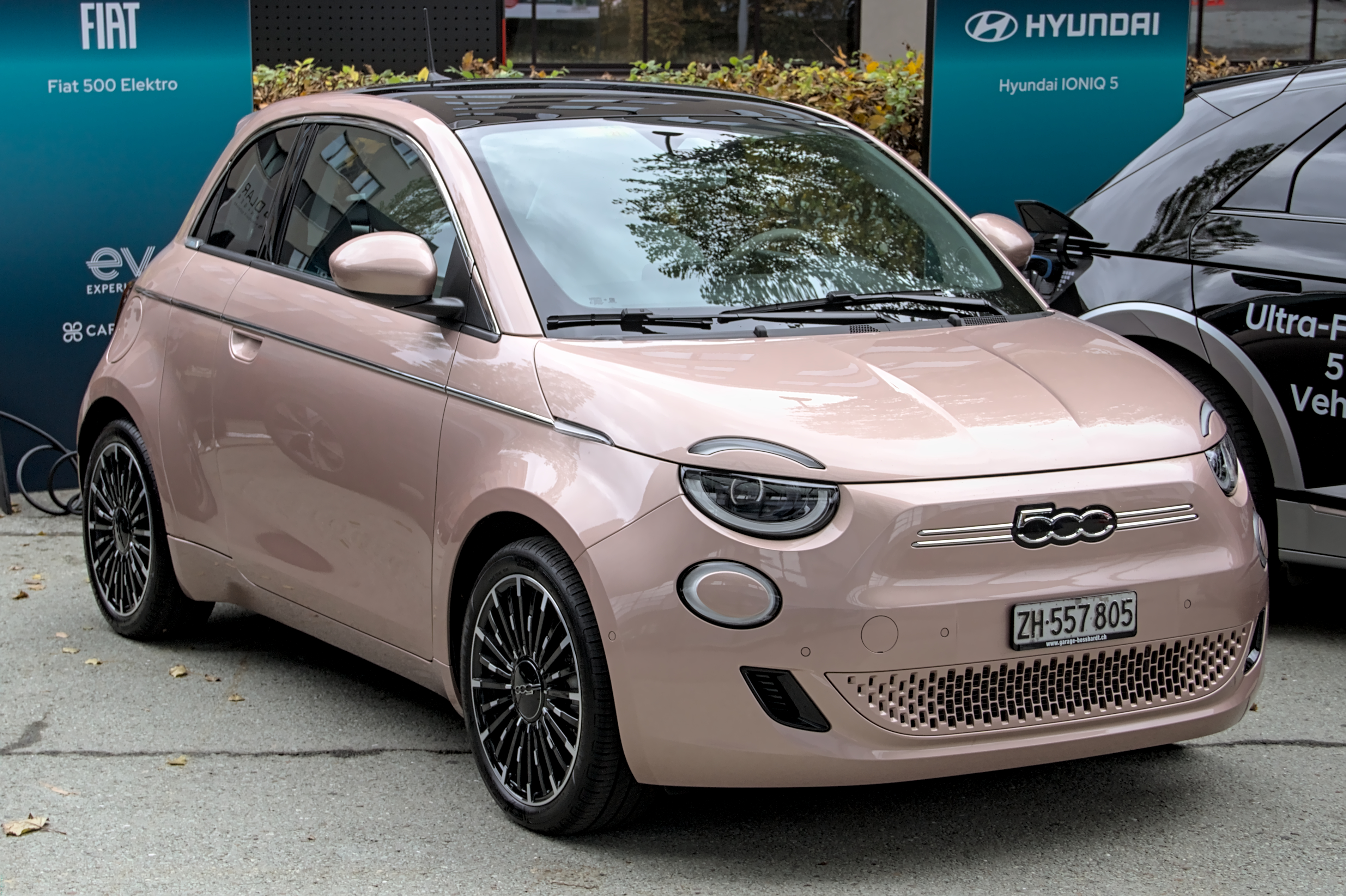
"...I wanted something to replace the Mini. Uh, it was, yeah, I still have it."
The Mini Cooper is a small car that is fun to drive and has a unique look. The 2002 version is part of the newer models that came out after the original Mini was discontinued.
The Mini Cooper is a compact car known for its distinctive design and sporty handling. The 2002 model is part of the second generation of the Mini, which was reintroduced in 2001 after the original Mini ceased production in 2000.
"...and he said, Oh, by the way, we just dropped the lease fee on the 500E to I think $200 a month with virtually nothing down."
A lease fee is what you pay each month to use a car that you don't own. It's usually cheaper than buying the car outright and lets you drive a new car for a few years before returning it.
A lease fee is the monthly payment made by a lessee to use a vehicle for a specified period, typically in exchange for lower upfront costs compared to purchasing. It allows drivers to enjoy a new car without the long-term commitment of ownership.
"I have a 2003 Ford Ranger. I wish somebody made a nice little tiny pickup that size again."
The Ford Ranger is a small pickup truck that is great for carrying things. The 2003 version is known for being tough and useful.
The Ford Ranger is a compact pickup truck known for its durability and versatility. The 2003 model is part of a generation that was popular for its size and capability.
"The only other interesting car I have is a 2014 Mercedes SLK250, which I used to have a Miata, but my, we sold it."
The Mercedes SLK250 is a fancy convertible car that you can drive with the top down. The 2014 model is known for being stylish and fun to drive.
The Mercedes SLK250 is a luxury convertible sports car known for its stylish design and performance. The 2014 model features a retractable hardtop and a turbocharged engine.
"...s a 2014 Mercedes SLK250, which I used to have a Miata, but my, we sold it. My wife said it'd be nice t..."
The Mazda Miata is a small, two-seat car that is really fun to drive. It's known for being light and quick, which makes it popular with people who love cars. Many people enjoy it because it's not too expensive and gives a great driving experience.
The Mazda Miata is a lightweight, two-seat sports car known for its agile handling and fun driving experience. Launched in 1989, it has become iconic for its simplicity and affordability, making it a popular choice among driving enthusiasts. Its significance lies in its ability to provide an engaging driving experience without the high price tag typically associated with sports cars.
"...onvertible again. And then I've got a, a Hyundai Palisade that's, uh, our dogmobile. Okay."
The Hyundai Palisade is a big family car that can fit a lot of people and their stuff. It has a nice interior and comes with many features to keep everyone safe and comfortable. Many families like it because it’s spacious and affordable.
The Hyundai Palisade is a midsize SUV that offers spacious seating for up to eight passengers and a range of modern features. Launched in 2018, it has gained attention for its upscale interior, advanced safety technologies, and overall value. It's often discussed as a family-friendly vehicle that combines comfort with practicality.
The Dodge Daytona is a car that was made by Dodge in the late 1980s. It was designed to be fast and sporty, making it popular among car enthusiasts.
The Dodge Daytona was a sporty coupe produced by Dodge in the 1980s and early 1990s, known for its aerodynamic design and performance-oriented features.
"If I had the money today and I had no really other responsibilities and I just wanted to go out and play, I'd buy a first generation, uh, Dodge Viper."
The Dodge Viper is a fast sports car with a big engine. The first version was made in the early 1990s and is famous for being very powerful but not very comfortable.
The Dodge Viper is a high-performance sports car known for its powerful V10 engine and aggressive styling. The first generation, produced from 1992 to 2002, is particularly noted for its raw driving experience and limited creature comforts.
"The, uh, the other would be, uh, the old Lotus Esprit, which I also thought was just a fabulous car."
The Lotus Esprit is a stylish sports car from Britain that is known for being fun to drive and having a unique look. It was popular in the 1980s and 1990s.
The Lotus Esprit is a British sports car that gained fame for its sleek design and agile handling. It was produced in various iterations from the mid-1970s to the early 2000s, often celebrated for its performance and lightweight construction.
"I pop saw one ad for, uh, a Lotus Elon and, uh, the, uh, I made arrangements to go see it..."
The Lotus Elan is a small sports car made by Lotus. It's known for being very light and fun to drive, with a unique design.
The Lotus Elan is a lightweight sports car produced by Lotus Cars in the 1960s and 1970s. It is known for its agile handling and innovative design, often featuring a fiberglass body.
Select text to request an explanation
Welcome back to all the cars I've loved.
Before your authoritative podcast on automotive nostalgia, where our guests are unique, each
auto has an era and every car tells a story.
So you know what time it is, it's time to plug in, give a little grease under the nails
and slip on that favorite car themed t-shirt hat or jacket.
And Doug as usual doesn't disappoint here.
We'll get to him in one minute, but we're so excited today.
We typically just banter away and you know me, I can babble for quite a while, but typically
talk a bit about what's happening in our lives, in the world, in the automotive industry.
But we're going to be quick today because waiting in the green room today is automotive
royalty.
Maybe we should call it the purple room today.
Okay, just really excited by today's guests, but real quick, let's welcome back listeners
from around the world, Dallas, Texas, New York, New York, Sunnyvale, California.
What's in Sunnyvale?
That's not Apple.
Is Apple Cupertino?
Apple's Cupertino?
Well, I know Juniper Networks is in Sunnyvale.
I knew somebody was in Sunnyvale.
Atlanta, Georgia, welcome back.
Sydney, New South Wales, land down under Montreal, Quebec, Avenue.
Welcome back.
Wake Forest.
Philly.
There's only one Philly.
Where's Philly?
Philly, Pennsylvania, Tokyo.
Welcome back.
Brisbane, Australia, London, England.
We could go on.
We could go around the world and back again, but here we are and oh, so back to the themed
t-shirt for today.
It's not really a car t-shirt, but let's talk to the audience a bit about what you got there
as usual, stylish.
Well, why don't you describe it?
It is definitely a vintage, a 70s vintage.
It's got the profile of what looks like a Picasso painting in triplicate, but it's not
Picasso.
It is the PBS logo from way back then.
You'll hear why that's important, but where did you dig out that shirt?
Was that in the back of your closet or was it $80 from some upscale internet vintage
retail?
Not a quick question.
I did buy it online.
I had to search for it.
Yeah.
I'm pretty happy with it.
And so I have to ask you, how does today's guest tie into your shirt?
And will you please introduce today's guest?
So my PBS logo shirt, one of my earliest memories around cars was watching this wonderful show
on Maryland Public Television.
I'm from Maryland.
Same.
About cars.
And fast forward 45 years, 1900 plus episodes.
We have the creator, the host and executive producer of television's original automotive
magazine known as Motor Week.
Motor Week.
That's right.
And John Davis is our special guest today.
Hello, John.
Hello, hello, hello, Doug and hello, Christian.
From Maryland, we're delighted to be with you.
Glad to have you with us.
And welcome to the show.
I love glad to be with you.
Hey, so Doug said that he grew up watching the show and I said, yes, yes, he said, Marilyn,
I wasn't saying that I grew up in Maryland.
So Doug grew up in Maryland and watched the show.
I grew up in Louisiana, watched the show.
And I just feel like this, I can't ever remember this show not being in my life.
And it was just so wonderful.
I'm quite starstruck talking to you here today.
So can you talk a bit about the inception of the show, how it started and how it all
got underway in your world?
Sure.
As I was producing Wall Street Week with Louis Rookizer, which was the show that really
began financial television as we know it today.
And when I became executive producer in 1978, my boss asked me to come up with an idea of
my own.
And I had a couple.
I did a personal finance show pilot, but I really wanted to bring the automotive print
magazine to television.
No one had done that before, at least not successfully.
There have been some attempts around the world.
There was a show called Torque in Australia.
And there were various efforts going on in Europe to try and launch something, but nobody
in North America had really done it and let alone on some kind of a weekly basis.
So 1978, we did the pilot for Motor Week.
We had the name researched.
We knew it was clean.
And we did the show and then it sat on the shelf for three years as we went about trying
to sell it, get stations interested because we knew we wanted to be more than a local
show from the beginning.
It was kind of the mantra of our operation to produce for your local audience, but do
it on subjects that everybody would love to know about.
So we always had this idea it would at least be regional up and down the East Coast, but
be national if possible.
And lo and behold, three years later, after various attempts to get it launched and talking
to stations to see if they would be interested, we found out that a competing station was
going to do an automotive series.
And my boss on July the 5th, 1981, called me into his office.
His name was Warren Park, a lovely man.
And he said, we're going to have an auto show offered to PBS in January.
Can you be on the air by then?
And I said, I'll be on the air instead of six months.
I'll be on the air in six weeks.
We didn't quite do that.
It was mid-October, so 12 weeks or so.
And we came on with the first episode and we've been on ever since.
And there was a rationale to that because I had learned from doing Wall Street Week that
if you're on every week, stations leave you alone in the schedule and they allow you to
build an audience.
But to do that, you've got to offer essentially a new show every week.
Right.
And even though we do 26 all-new shows and 26 shows where the majority is new, and that's
how you keep a time spot and allow your audience to grow.
Otherwise, the stations will say, it's a rerun.
We'll take off and bring it back later.
And sometimes he do and sometimes he don't.
And so here we are.
We've been on weekly ever since.
So the idea was never let your back up see the field.
It was always have something in queue, always have something.
How quickly did you stumble upon, or maybe it was by design, you seem like a by design
guy, how quickly did you get the winning formula for what what we see is the show today?
Was that pretty much out of the box?
Did you have to tinker with it much?
The format you see today was very much what we started with.
We didn't have a lot of feature segments, so they were added.
But the concept was a magazine style for television.
And at that time, there were really only two programs that were using that formula.
One was a local series that was done by all the Westinghouse owned TV stations around
the country at the time.
They later became CBS stations, and it was called Evening Magazine.
And they would do five and six minute segments and they would borrow from other stations
to fill out a week.
They did it every night, five nights a week during the Monday through Friday.
And then about the same time we were doing our first episode, not our pilot, Evening
Magazine was debuting with a magazine style format.
And the advantage of a magazine style format is, number one, you don't bore people to death
with very long segments.
Everything's about five or six minutes.
You're allowing the person who wants to see a new car to see that.
But then someone who maybe wants some other information like our Gauss's garage to have
that. But the big deal is I knew one day we probably would do a commercial version of
the show and it allows you to easily edit and insert commercials.
Oh, how interesting.
So the magazine format started, we still use it today.
A lot of other things have changed, but that basic format has been unchanged for 45 years.
Wow. And how big a staff did you have at the very beginning?
And once you got to something that started to move past local, regional and national,
did you have to staff up a lot?
Or were you able to sort of just kind of punch above your weight with everybody that you had there?
No, we had to go down.
In the early years, we basically had probably about 13 or 14 full time people, not at the
very onset, but very quickly after.
But to be honest, what's happened is as technology came along, we, like most other
television operations around the country, reduced manpower.
And I'll give you an example.
We used to have our feature reporters go out with a producer.
Well, it got to the point where the feature reporter became so talented, they could
essentially produce themselves.
So as producers retired or left us, they weren't replaced.
On the technical side, when the camera situation, we began a remote crew to go out
and do a road test with three people on the camera side.
You had a camera person, you had an engineer, and you had an audio engineer as well.
Now it's one person with a very good camera or a selection of cameras, actually, and
they do all of that.
So I wouldn't call it automation, but I would say progress and electronics and just
the style of how we do things allowed us to reduce that count to about 10 where we are
today, and we've just lost one person who was taking a different job.
And because of the PBS cutbacks you've probably all read about, we likely won't
be replacing that position anytime soon.
So we've had as few as six or seven and as many as 13, but 10 is a nice number and it
seems to work well.
Oh, wow, wonderful, wonderful.
Oh, and Doug, I apologize for completely dominating the discussion.
Let's bring my co-host in on the interview here.
Yeah, yeah.
So why are you here, Doug?
He's all the skill.
I'm just on the car.
Christian's the cultured person.
I can tell that.
Yeah.
So thank you, by the way, for wearing the PBS shirt.
Oh, yeah.
That is a terrific shirt.
It's an honor to wear it with you.
Yeah, so you mentioned your your team, right, as many as 13, but there's an
interesting story about how you picked them, right, related to the Maryland
Public Television parking lot.
Yes, when I was given the go, I had to basically put together a group of people
and it had been three years since we did the pilot.
So I literally walked down into the parking lot and started looking at the
cars out there and then copied down the license plates and went into security
and said, OK, whose vehicle is this?
Well, Craig Singhaus had already been on the pilot.
He owned a Shelby Mustang, so he was easy.
Joyce Braga, our first female reporter and who did the news on the earliest
episodes, she was driving a Porsche 924.
So I knew she was perfect for the job and it went along like that and still
continues today.
I will tell you when someone applies for the job, one of the questions they get
asked is, and by the way, what do you drive?
It tells you a lot.
Mm hmm.
Yeah, for sure.
For sure.
And do you get a lot, I'm sure, for our listeners and myself, do you get a lot
of people applying for jobs, just sending resumes over?
Yes, we do.
Although these days with the internet, you really don't need an operation
as big as ours to get in front of the public with your automotive insights.
And actually, we've had several instances in the last couple of years where we've
hired people for one position or another because of their internet presence.
A case in point when Pat Goss left us very unexpectedly, we turned to the
internet to look for a variety of replacements.
We actually took four people to replace Pat.
He was so incredible.
Yes, he was.
And all of those had a significant internet presence, including our youngest
Giuseppe Iotirola, who has Giuseppe's garage.
He's a child prodigy, of course, he's almost 14 now, but when he was 10 and
started with us, there was no one else like him and actually there still isn't.
So we'll draw up information from everywhere, but we still get quite a few.
Hey, I'd like to be in automotive journalism.
What have you got open and how do you start?
And my first response is, well, just be prepared to start the death.
But if you can handle that, you're cut out for automotive journalism.
Yes.
If you can subsist on water indefinitely, this might be the job for you.
That's right.
You know exactly what I'm talking about.
Amen.
Good stuff.
What do you think, Doug?
Should we kind of venture back into the past?
Did you want to talk with him right now about any current projects he's working on?
Well, no, I think I can't wait.
Oh, sorry, John.
Would you mind if I plug something?
Please.
Okay.
I'm on the 8th of November, starting on the 8th of November at PBS Stations around
the country will be the special 45th anniversary edition of Motor Week.
And it'll be that weekend, the 8th and 9th on most public television
stations around the country.
It's a really good jam packed half hour look back at everything we've done over
45 years.
And if you're not wondering how we go about doing things, it's got a lot of that
in it, including how we produce our road test.
And on Sunday, the 9th, it'll actually go up on our YouTube channel at noon
eastern time.
So if you can't catch it on the PBS station, it'll be there.
That's my plan.
Love that.
Thank you.
Love that.
Thank you.
Thank you.
Perfect.
Perfect.
Yeah.
No, Christian, I think it's time to talk about John's early cars.
Oh, you have something.
I just wanted to say before we hop in the way back, before we hop in the
DeLorean and go 88 miles an hour.
I was curious as to 45 years in, John, what surprises you sitting in that
office this time forward doing, you know, all the world has changed in the
automotive industry has changed.
What kind of strikes you from where you sat in the beginning to what you see
now around you?
It's the level of driver assistance systems that help everyone become a
safer driver, which of course, for an outgrowth of this, it's turning out so
far to be kind of a fantasy of looking for the autonomous vehicle and on the
way for that to develop that, all of these things like lane keep assist and
even rear traffic alert and all the rest of them had to become perfected for
autonomous driving to arrive.
And that semi-autonomous aspect that provides an extra little safety margin
for drivers, I did not expect that.
I mean, we knew any lock brakes were coming.
We knew skid control, but to extrapolate that into this almost cocoon like that
modern cars have, I did not expect that.
And but I'm a big technology guy.
So as soon as I saw it, we started embracing it.
But no, I would say that that surprised me.
And it's such an interesting point because I remember, I don't know, just this weekend,
I was kind of thinking about a couple of decades ago when my family was young, we
would go on vacation and meet this other family and I would pull out an atlas, a
paper map and have it spread on the dashboard and looking for country
backroads. And now you have on any phone, this GPS, which is in essence a map that
talks to you. I mean, how safe is that?
That small little thing in your pocket, a map that talks to you, keep your eyes on
the road and your phone says, OK, 500 yards, you're going to take a right.
That small thing on top of what you're saying is just remarkable.
It is remarkable.
I mean, to the point that I really don't go anywhere without GPS now and I plug it
in and put it in a destination just to make sure there's no traffic situations
I'm not aware of. But I got to say, there is no substitute for being able to
spread out a big map, pinpoint where you are and look at everything around it,
which is something, effectively, you cannot do on GPS because once you zoom
out, the roads get too small, you can't even stay and show up.
So I miss big maps and the big map books, but, you know, I use the phone
like everybody else, plug it in, put the destination in and go.
That's a good point.
And I have no use for paper maps yet.
As you say, they're beautiful and I can't throw them with so in the back
of each of my cars, there's a map of Louisiana, Florida, Mississippi,
Alabama, North Carolina, Pennsylvania, all these places.
And there's just there's more to a map, you know, their ads places to stop
relative differences in that clever little grid.
But OK, I think it's time, Doug, let's let's go back in time.
Thank you for that answer, John.
And John, how did it all start for you?
What was the first car you either bought, learned to drive on?
Well, I don't know how far back you want to go, but let's let's at least start
with the first car I owned.
And it was a reflection of my family.
My family was a Ford family and I grew up during my teen years during the
when NASCAR was first coming on the the first getting its popularity in the masses.
And we would go to races at the North Wilkes-Barrell Speedway in North
Carolina with my dad and we were a Ford fan.
So we were fans of Fred Lorenza, who was the prominent Ford driver at the time.
But, you know, we saw people like the Petties, you know, Fireball Roberts,
you name it, they were all out there competing.
But in those days, it wasn't so much about the driver as it was the car brand.
So, you know, Ford, Chevy, Dodge, whatever, Pontiac, even at times.
That's what we followed.
So my first car was a 1967 Ford Mustang.
I bought it in 69.
I was still in college.
It was a bare bones, a coupe, marooning color, automatic, nothing special,
six-cylinder, didn't even have an eight.
It was a couple of years old at that time when I bought it.
It had a bad valve.
So that was really one of the few times I've ever tore into an engine to repair
something deep inside.
And I had that car through undergraduate school and through graduate school for
my MBA until I left to go to New York in 1972.
And then when I come back, you want me to keep going?
Oh, no, no, no, no, I mean, obviously going to New York, no need for a Mustang.
However, I'll tell you what I did.
I missed driving so much.
I was crazy.
So a fellow I worked with, his family lived down on Long Island.
I lived in Manhattan.
So on the weekends, I would get on the train, drive out, take the train out to his
town, get off, walk about a mile and a half to his street, and he would leave a
car with the keys under the mat so I could get in on a Sunday, drive out to the
end of Long Island and come back and then go back, leave the keys, go back into
the city so I could get back to driving.
When I would come home, it was fine.
But I, at that point, I didn't actually have my own car.
I had sold it.
So I was crazy without being able to drive routiney.
I missed it so much.
Yeah.
And when, obviously Mustang, your first car, but when did the love affair and,
and second, that's right.
When did the love affair of cars start for you?
The love affair for cars started with me and actually with all things mobile.
I was from an earliest age and I still have the doodles in my basement.
I drew car designs.
I drew airplanes.
I drew love it's love.
I did, I did model rockets.
I did model airplanes and, you know, all that stuff.
So I knew I wanted something to move.
I, of course, went into engineering school because of that, but I couldn't
really afford to take flight lessons.
So the car was not only was the car my source of freedom from the time I was 16
on, but it became a bigger than that because it was almost like a substitute
for not being able to do, to go flying.
So it took off from a very early age and just progressed from there.
Then I got away from it a little while, of course, while I was in, in New York,
even though I was covering transportation companies.
And when I came back to mayor, well, came to Maryland in 1972.
That's when the second Mustang came into my life.
And it was almost a clone of the first, except it was a little bit newer.
It was a 60.
It was a, geez, I've forgotten now.
It was a 69.
So, yeah, yeah, yeah.
And Doug, let me break in here real quick.
As we were talking through his early life, when Doug and I were talking
about show with a weekend, John, and we saw where you went off to New York City.
And we thought, well, oh, kind of a departure from, from studying cars,
being involved with cars.
But then we learned you were a transportation analyst when you were
in the financial industry.
So it's, it's these things that have engines is really the throughline
of your entire life.
You know, your passion is younger to your job all these years later.
That's, that's just so wonderful to me.
It seems so fitting.
I mean, that's very true.
And of course, I missed, you know, one thing that we haven't talked about
was when I was in college in my undergraduate year, that's when I got
involved with electronic media, specifically radio.
And so from about 67, 68 on, I was either on the radio at the North
Carolina State University.
On the weekends, I would work for a couple of different commercial stations,
one in Chapel Hill, where UNC is the other in Durham, where my hometown is.
And then eventually gravitated to a local television station in Durham,
WRDU, but that was the media background.
So I had the engineering, the media, and then the business background.
I went on to New York, abandoning the, the journalistic aspect, thought
it was a great way just to work my way through college, but not really
what I wanted to do as a career.
Lo and behold, I got out of New York, got very bored, didn't like what I was
doing, had an opportunity to come to Maryland Public Television to work
on Wall Street Week because they were looking for someone with a business
and broadcasting background.
I had the right stuff for them and my resume almost stops there.
No, your resume just came back home at that point.
It was time to sit in the driver's seat for good.
Go ahead, Doug, back to you.
Yeah, no, no, it's a very, yeah, it's a, it's a great story, right?
And we all wonder, and I think pulling into Motor Week, right?
We've talked about your second car being another Mustang.
Pulling into Motor Week, what car were you driving?
Sorry, Maryland Public Television.
What car were you driving then?
That was the 69 Mustang.
Okay.
I bought that within a week or so of actually coming to MPT and being hired.
And I drove that car for, let's see, one, two, three, three years, I think, two
to three years, and it got rear-ended very badly in Richmond and kind of never
was the same again.
But then during that period, you know, I was a young single guy, I was, I was
interested in something a little bit more than that.
I had some spare cash, but what I really wanted was something, quote, unquote,
like an exotic car, but that had an American engine that I could work on.
I wasn't really interested in doing anything European.
It would be way beyond my skills.
And there were two particular cars that were making the rounds that were reasonably
affordable on the used market at that point.
One was the Jensen Interceptor, which had a Chrysler V8 in it.
And the other was the Di Tommaso Pantera.
And before that, the Magusta, but the Magusta was nothing but trouble.
Of course, so was the Pantera, but less so.
I don't remember how I narrowed it down, but I came across a two-year-old, and
this is 1975 now, a two-year-old Pantera down in Norfolk, Virginia.
So a 73 model, which was what was the first of what they call the L model,
which meant it had rubber front bumpers to meet the US safety standards.
I went down to Richmond.
A family had bought it for their son, you know, as a high school graduation project.
And I think he promptly wrecked it.
They got it repaired.
They sent him off to the Navy.
I drove the car home, completely took it apart, filled up my little one bedroom
apartment with car parts everywhere, and pretty much rebuilt everything that didn't
move and drove that until 1979.
So, and I still miss that car today.
Yeah.
Yeah.
No.
And it's a Ford, right?
And, oh, I, you know, it had a Mustang engine, of course.
Yeah.
I had dual point distributor, which was nothing but trouble.
One point sets points with closed up on you because of vibration.
And you'd have to pull off the side of the road because it would die.
It would short out and I could get out of the car, take off the cowling, open up
the distributor, disconnect one set of the points because it would run fine on
one, put it back together and be back in the driver's seat.
Well, under five minutes, which I had to do in the rain, in the snow, almost, you
never knew when it was going to basically creep up on you.
You physically couldn't tighten the tightening screws humanly enough to keep
that from happening.
I mean, there, I was under it every weekend, keeping it running, but I still
missed that car today.
And that, and that was your daily driver, it sounds like for many years.
It was.
Wow.
And I, I had the only real modification I did to it was I put on what was then
called the Saudi Arabian package, which was, it had a radiator in the front with
two fans on it, a long run to the mid engine, but they had a second set of fans
you could put to draw air through the radiator.
And that was, I put that on there so it wouldn't overheat on our hot summer days.
Yeah, but that in a different radio, that was it when I finally did sell it.
Yeah, that was the only two things I had added to it, except I did have to
rebuild the transmission and a couple of, a lot of other stuff.
Sounds, sounds a lot like my DeLorean in many ways.
I wanted one.
I wanted one of your DeLorean's very badly.
And I came very, very close to actually buying one.
But what happened was, is DeLorean would not send out test cars.
They had them, but they kept putting everybody off.
And a former automotive rider was doing their PR.
Finally, because their headquarters was less than two hours up the road.
Finally, we conjoaled a car out of them.
And one of the test roads that we use near work has a 90 degree turn
that is a 30 mile an hour or less turn.
Well, because of the rear weight bias and the DeLorean, that turn at 30
miles an hour would cause you to the rear end to break away and you would spin.
You wouldn't go in a complete circle, but you lost all traction.
Despite the fact, I think it had the widest rear tires on it in any car
we had ever tested.
So that kind of chilled my enthusiasm for it.
And it wasn't too long after that, that John DeLorean, who was a personal
idol up to that point, got into trouble and his downfall began.
Yeah, yeah.
Well, the, yeah, there's a special place.
Christian knows this story, but special place, my heart for that car.
Just of course, even going back before back to the future.
I remember living in Soverna Park, Maryland.
And somebody said, well, the new DeLorean's out.
It cost $20,000.
It was really $25,000 in 1981.
And I saw one in the parking lot and I just, it was amazing.
That's exactly the way I felt about it.
I really wanted one.
I believe, you know, I had followed John DeLorean's career.
I knew everything he had done in General Motors.
And even though there was some controversy, he really was the father of the GTO.
Yeah.
And, you know, I had a, he was doing advertisements after he left Ford, I mean,
General Motors, and I had a Cuddy Sark poster of him and in my office.
You know, and so I was, I was absolutely crushed when the, the whole drug
situation erupted, but, you know, there's a case that the man basically had a
passion and he was trying to keep it going.
And even though he certainly took a wrong move, I understand the motivation.
Yeah.
Yeah.
And it was, you know, a really great social experiment that came out of it,
trying to help Northern Ireland with their low unemployment.
And like that, that's something to be proud of.
And, you know, I, I can't help but think Christian, how blown away we were.
We had John DeLorean's daughter on our 10th episode.
Yeah.
And that was just, for me, that was.
Like I feel today, right?
That's as close as I was going to get.
In this case, I'm, I'm right there, but even in the same state, but.
I think I actually, I'm pretty sure, I'm pretty sure, I'm sorry, I'm talking all
of this, so it's a root of me.
No.
I'm pretty sure I met DeLorean once.
Oh, wow.
I think it was after the Detroit Auto Show.
It was totally brief.
But, you know, I, I, I thought he was the quintessential car guy, and he really
understood cars and what to do with them, how to make them, how to make them live.
Yep.
And how to sell them, right?
Unfortunately, I was also a fan of Colin Chapman.
And I don't think, I don't think Colin really did John much a favor with the
chassis he sold him.
Yep.
I think many would agree with you.
Yeah.
Probably myself included.
Yeah.
So, yeah, no, that's, uh, I'm trying to look at your other list of many cars.
And, uh, actually you mentioned, uh, replacing the radio on your Pantera.
So I do have to ask, uh, it doesn't have to be from the Pantera years, but what's
a favorite song from your early cars, first car you heard on the radio?
Well, you're going to laugh with the first car theme that I ever remember was the
Nelson Riddle's theme to Route 66.
And of course, that was then later followed by the Route 66, um, song.
Right.
Who's, uh, who's, um, who's composer has left my brain.
Uh, but those two songs were probably the first two car themed music that I ever
remember, but I was glued to the, uh, TV, uh, every week when, um, Martin
Milner and George, uh, Maharis, uh, would come on with Route 66.
And, you know, my brother actually owned, uh, that, uh, a car very much like the,
uh, Corvette they were driving across the country and, and so it had a lot of
meaning to me.
Yeah.
And speaking of Corvette, you are a Corvette guy.
Am I right?
Yes.
And, uh, after I had the Pantera would cause me to sell it by that time I was
getting ready to get married, uh, my wife and my soon wife to be, and I decided
we wanted to try and buy a house.
So the Pantera I sold at a profit and used some of the money as a down payment
on the house and had some left to put down on a 79, uh, anniversary edition,
uh, Corvette.
So it's the only Corvette I've ever owned, but I did really love that car.
And it was, it's still circulating around this area.
Uh, I see it from time to time.
Oh, wow.
Also Maroon.
So also Maroon, that's your favorite color.
So, but that was purely the luck of the draw.
It was the only one I could find.
I mean, that was a hot property in those days.
Yeah.
And your current, one of your current cars, and I know Christian wants to ask you
about the, uh, the EV portion is a 2024 Fiat 500E.
Is that also Maroon, John?
No, it's red.
Okay.
Close.
I got tie, I mean, we test everything, 150 cars a year plus or minus.
We've driven everything electric and I almost bought a couple of different
electrics in the last seven years.
But I got to the point where I said, look, we get them in to work.
We drive them for a couple of week.
Occasionally we have one for longer.
I wanted to actually, because it looked like we were heading down that road.
I wanted to live with one on a daily basis.
And one of my cars is a 2002 Mini Cooper.
I wanted something to replace the Mini.
Uh, it was, yeah, I still have it.
It didn't get replaced.
So I was looking around.
I had seen the first generation Fiat 500E, not enough range.
When the second one came out with 150 mile range, I thought very interesting.
I'd owned, you know, various and sundries are driven various and sundry
fiat's when I was a teenager, but they wanted too much money.
And literally I was at a North American car the year drive and I was talking
to the Stalantis rep and he said, Oh, by the way, we just dropped the lease fee
on the 500E to I think $200 a month with virtually nothing down.
I went home that night, looked up the two nearest Fiat dealers, started
communicating with them and within about four days, I took possession of one.
And because it was, they were practically, they weren't giving them away,
but it was so inexpensive.
I felt our family could afford it.
And so it is one of my daily drivers.
And, uh, but I've actually bought it for my spouse who likes something
the size of many of the mini to run into town and come back.
So she drives it as much as I do.
Gotcha.
Gotcha.
What, what other cars are in the garage?
Oh, let's see.
Well, I mentioned the 2002 Mini Cooper, one of the very first ones that came
into the U S there was a story of, I hated it when I, until I drove it.
And I fell in love and bought it immediately.
I have a 2003 Ford Ranger.
I wish somebody made a nice little tiny pickup that size again.
The only other interesting car I have is a 2014 Mercedes SLK250, which I used
to have a Miata, but my, we sold it.
My wife said it'd be nice to have a convertible again.
And then I've got a, a Hyundai Palisade that's, uh, our dogmobile.
Okay.
I'm very fond of, so.
Yeah, no, that's, and it's, it's really high praise that you would buy
something, John, because as you said before, just about everything made in
this country kind of crosses your kind of crosses your, your, your garage,
so to speak at work.
So, um, yeah, high praise for anything that gets the permanent stamp of approval there.
Yeah.
And Christian, as we were talking before this, I, and I think I shared this with
John, I think John slash motor week has driven every car I've ever owned.
Oh, yeah, you're a young man.
So give it a time.
Good point.
Good point.
My standards you are.
I love you.
1989, I think it was my first car.
So, yeah, and it was a Dodge Daytona.
Good choice.
Which yes, I saw plenty of those on your, on the show and I still go back to it.
But, uh, what is, uh, obviously, uh, the Pantera, I know you said you'd love to
have it back.
What's a dream car that you would share with, uh, share with our listeners?
If I had the money today and I had no really other responsibilities and I
just wanted to go out and play, I'd buy a first generation, uh, Dodge Viper.
Uh, it, uh, you know, it's crude in every aspect.
It was designed by probably the most brilliant management team that
Chrysler has had in modern history.
Uh, I knew Francois Gustang.
I knew, um, all the folks involved with that project.
The car made absolutely no sense.
Um, it's loud.
It vibrates, but there is no, it was, it was the first modern car that, if you
can call it that, that seemed to embrace the driver as a vital piece of the
experience, not just someone along for the ride.
I mean, it had a terrible top.
It was hard to get in and out of.
You could have, you could nearly burn your legs every time you got near the,
if it had the side exhaust, all that.
Yeah, but you know, it was long hood, short rear deck, a top that was a joke,
but just a blast to drive and it required enormous amounts of skill to
do much of anything with it.
It was a, and still is a real driver's car.
And then when they kept modernizing it, it lost a little bit along the way.
That first gen Viper, uh, that's probably the closest thing I have to
a dream car today.
Okay.
The, uh, the other would be, uh, the old Lotus Esprit, which I also thought was
just a fabulous car.
Yeah.
Yeah.
Beautiful, beautiful car.
Or if I could get my, uh, my D Tomaso Panterra back.
Yep.
So, uh, you mentioned Lotus and that, and we're jumping around a little bit,
but, uh, one of the, one of the questions we had in our, uh, in preparation
was what's the most dangerous car you've been driven or been in?
And it was a Lotus.
Yeah.
And I love to hear why.
Um, I was in the market for that 69 Mustang or something like it.
I didn't know what I was going to buy.
And, uh, I pop saw one ad for, uh, a Lotus Elon and, uh, the, uh, I made
arrangements to go see it and the guy really wasn't sure he wanted me to drive
it yet.
So the first thing he had to do was take me for a ride.
And if you remember, they were very small, low to the ground and largely
plywood underneath the body.
So I got in and your, uh, butts about, uh, four inches off the pavement.
And, uh, so any, you know, 30 miles an hour felt like 60, 70.
So driving around in this, you know, rudimentary seatbelts, totally exposed
in the environment.
And with somebody you really didn't know, I think that was the closest.
It had the feeling.
It, I said, if there is a unique feeling, and I know there is a flying
in an open cockpit airplane, this was the closest side probably ever get to that.
So now the guy was a good driver.
He didn't, there was no problem.
But at that point, I said, you know, this may be just a little too
way out for me to drive back and forth to work every way.
Mm hmm.
Yep.
So, um, as we, uh, keeping a, keeping track of time, and there are so many things,
I did want to ask, we got to let him eat dinner at some point.
You cannot keep him here all night.
Oh, all right.
All right.
We, uh, I looked like I need food.
Probably not.
We, um, we did want to ask you.
So after 45 years, like, what do you think has made motor week?
Um, um, last the, uh, test of time or great question, great question going and,
you know, you guys have weathered all the changes, including the internet
along the way and YouTubers to your point.
I would say it's consistency.
I'm being, you know, the format hasn't changed, but the most single,
most important thing is on our show, most TV shows are built around a personality.
I chose to be the host of it only because we couldn't afford to hire anyone else.
I had been on the air, but only his news.
I did not want to be the, uh, the host, but I had no choice.
And I was so dreadful and so deadpan that from the beginning we said,
this is a show about cars, not the people driving the cars.
So the cars are the stars.
Yeah.
And that has been our mantra to this day.
I mean, when you think about it, you hear me a lot, but on the average show,
you probably only see me about two and a half minutes out of 26, 46.
So, uh, it's, uh, it's the cars and we always put them first.
And I think also one more thing is that when you hear our opinion,
it is not one person or two persons opinion.
It is a group opinion of all the folks that work on the show.
They all get plenty of time with the vehicles.
They all contribute to the road test.
Yeah.
So you're getting a wide view and not a narrow lens when it comes to what we
think about it.
I love that.
That's good in that hallmark of consistency.
I know from watching, it's been that way for decades and decades.
So as we guide the podcast gently to the off ramp, John, I have to ask now is the
45th anniversary, but what do you have planned for the 50th?
We love scoops on this show.
50 is a big, nice, big round number.
What's, what's going on?
Do we know yet?
No.
Is it great answer?
Uh, you know, God willing in the creek, don't rise.
There will be a 50th anniversary show.
I would not predict whether I will be the host anymore.
I might just be a throwback, but I think the show is going to continue.
What it's doing, it has to continue to adapt.
We talked about all the changes coming for the automobile, but one thing I don't
think we will ever lose that will keep us being somewhat unique is we still do
instrumented testing of all the vehicles we get in for a road test and there's
only about three publications that still do that anymore.
And that's something we never want to lose that scientific or at the minimum
semi scientific approach to try and have a level playing field.
So you can read our road test and really compare one vehicle against another.
But with the young staff, we keep having being fortunate to hire.
I think the young blood will keep us very pertinent as we go forward.
At least that's my hope.
And I think that's, it's what's, it's what's kept us relevant so far.
It's a great plan.
It's a great plan for sure.
Well, what do you think, Doug?
Any more questions on the way out?
We're kind of up against a hard break here.
Oh, so many.
I did want to ask John to see if he remembers.
If not, I'll remind him.
So you wanted Emmy, right, for Motor Week.
Do I have that right?
Well, we've won several Emmys, but not a national Emmy.
We've won Emmys for working with WGN in Chicago producing shows about the Chicago Auto Show.
I've gotten a couple of, shall we say, long-serving survivor honors from the Chesapeake Area Emmy folks,
including what they call their Golden Circle, which, you know, it's basically you live long
enough and you keep in the business in this area, you get it.
We've never really been the type of show that wins national Emmys.
It's very difficult for a small show that's as specialized as we do.
But we are Emmy Award-winning and we're very proud of it.
And we've won a lot of other awards along the ways.
Many of them from very generous journalists around the country and their organization.
So we're very proud of all of our accolades.
And again, it was a team effort.
And the quote that we found in our preparation was that Motor Week has been the love of my life
easily.
That was your quote.
My wife would agree with that, although she comes first.
But, you know, Motor Week is probably second.
Maybe my dogs are in there somewhere between the two.
But now we've decided not to have children early on.
And so Motor Week's our baby.
And I know she feels the same way.
That is, that's a partner you want for life.
Yeah.
In that aspect, I am the luckiest human being on earth.
There you go.
There you go.
You are indeed blessed.
And it's been really a pleasure to spend some time here with you, John.
I was really excited when Doug got a hold of you.
And it's great to see you and spend time with you.
But something about your voice is just magic.
So it's just been a real treat to spend some time with you.
Thank you for making time for us today.
Christian and Doug has absolutely been my pleasure.
And for the rest of the story, come back sometime.
Yeah, you got it.
We've just heard the high-reving, low-mileage, late model
heard around the world authoritative podcast on automotive nostalgia.
Check us out at carslove.com.
You know where to catch John Davis.
You have for the past 45 years, 45th anniversary.
Check out his YouTube Motor Week.com, public television, all over the place.
You'll know where to find him.
If you like what you hear from us, let us know.
He's at Doug at carslove.com.
Check us out at carslove.com.
Or can you give the link tree, Doug?
Sure.
L-I-N-K-T-R-E-E slash carsloved.
There you have it.
So on the way out, I am sure we'll see you at the next local car show,
showroom, race, trip, or concor.
We appreciate you just taking a laugh with us.
And we'll see you next time.
Request an explanation for:
15 cars
Scroll for more
15 cars featured
Request an Explanation
Heard something you'd like explained? We'll add it to this episode.
Sign in to request explanations for terms you heard.
Want to learn more?
Browse our glossary for plain-English explanations of automotive terms, jargon, and concepts.
See something that's not quite right? Our annotations are AI-generated and can sometimes miss the mark.
Click the flag icon on any annotation to suggest a correction.
Report incorrect info
Suggest better explanations
Flag missing cars
More from To All The Cars I've Loved Before: Classic Car Restoration, JDM, and Automotive History