
The Lost 1983 Mustang & Mopar Restomod Nightmares
About this episode
Doug goes solo and chats with Tony Funk, a lifelong gearhead with 33+ vehicles and a lifelong obsession with a 1968 Dodge Charger RT. The conversation starts with Tony’s early car influences (a Firebird in his stepdad’s body shop world) and his first ride: a 1980 Dodge Mirada that he only owned briefly after a brutal rear-end crash. He then recalls an 80s-era 1983 Ford Escort as a reliable, no-frills commuter. The episode also tees up a “lost” 1983 Mustang and Tony’s Mopar restomod nightmares, mixing personal stories with a little trivia and plenty of restoration cautionary tales.
Click here to share your favorite car, car story or any automotive trivia!
Welcome back to To All The Cars I've Loved Before! This week, Doug is sitting down with his friend and ultimate gearhead, Tony Funk. Over the years, Tony has owned over 35 different vehicles, and he brings some of the most unbelievable automotive stories we've ever heard into the garage.
In this episode, Tony shares the miraculous story of his rare 1983 Ford Mustang GT Turbo. After a hurricane brought a massive tree down on it, a frustrated Tony simply gave the crushed car away. In a wild twist of fate, the owner offered it back to him six years later. The craziest part? The title was still in Tony's name with his signature on it!
We also dive deep into Tony's latest headache: a 1970 Dodge Dart Swinger tribute car. Originally a base-model slant-six , this 360-swapped project turned into an 8-week legal nightmare with the North Carolina DMV over mismatched hidden body stamps and some generic Home Depot rivets.
Don't miss Tony's favorite episode with Ethan's amazing WRX - https://buzzsprout.com/2316026/episodes/19011189
Whether you are hunting for your dream 1968 Charger RT or wondering how to navigate classic Mopar restorations, this episode is packed with hard-earned wrenches and wisdom.
In this episode, we cover:
- First Car Heartbreak: The short-lived glory of a brown 1980 Dodge Mirada that was rear-ended and totaled at a red light.
- The Escort Era: Surviving the Pennsylvania summer heat in an un-air-conditioned 1983 Ford Escort painted in infamous "porno red".
- The Foxbody Miracle: Giving away a crushed '83 Mustang GT Turbo and getting it back six years later.
- Mopar Title Nightmares: The extreme stress of titling a 1970 Dodge Dart tribute car and why you must always check for pentastar rivets.
- ZZ Top Trivia: The history and the rival engine hiding under the hood of Billy Gibbons' famous 1933 Ford Coupe, the "Eliminator".
Sponsor Shoutout: Want to learn more about the cars we discussed today? This episode is sponsored by Car Curious! Their free audio player syncs annotations directly to our transcript, explaining every car, part, and term. Test drive it right now at carslove.com/listen.
Connect with Us: Got a great car story? Email us at [email protected]. Find all our content and social links here: linktr.ee/carsloved.
Podcast News:
- Check out the amazing article about the podcast by Elevate Society and Tal Gur, author of "The Art of Fully Living"
- Feedspot selected To All The Cars I've Loved Before in their the Top 100 Car Podcasts and Top 40 Road Trip Podcasts
- Download our brand new app on the official App Store for the latest podcast updates and instant access to your favorite episodes. https://apps.apple.com/us/app/every-car-tells-a-story/id6775357313 Every Car Tells A Story
Remember, every car tells a story. What’s yours?
Love the show? Please follow, rate, and review on Apple Podcasts! ⭐⭐⭐⭐⭐

Delorean DMC-12
"...favorite car themed t-shirt or hat, jump into our DeLorean time machine, and get it up to 88 miles per hour...."
The DeLorean DMC-12 is a sports car with a very unusual look. It’s famous not only as a car, but also because it shows up in entertainment. The podcast mention is referencing that well-known “time machine” theme.
The DeLorean DMC-12 is a distinctive sports car best known for its unique styling and its connection to popular culture. It’s often discussed in automotive history because it became a symbol of a particular era and is still instantly recognizable today. The podcast reference to a “time machine” ties into how the car’s image has been amplified beyond just its engineering.

1968 Dodge Charger RT
"But there's one dream car that stayed on top of his list, a 1968 Dodge Charger RT. [149.4s] So whether it's classic metal, wrenching in the garage, or talking horsepower, he's always up for a good automotive conversation."
This is a classic Dodge Charger from 1968, and the “RT” means it’s a higher-performance version. People love it because it’s a real muscle car with a strong enthusiast following.
The 1968 Dodge Charger RT is a classic American muscle car known for its bold styling and performance-focused trim. The “RT” designation typically indicates a higher-performance package compared with base models, making it a popular target for enthusiasts and restorations.
wrenching
"But there's one dream car that stayed on top of his list, a 1968 Dodge Charger RT. [149.4s] So whether it's classic metal, wrenching in the garage, or talking horsepower, he's always up for a good automotive conversation."
“Wrenching” just means working on a car yourself—like fixing things or doing upgrades with tools. It’s a common car-enthusiast way to say “working on the engine/parts.”
“Wrenching” is enthusiast slang for doing hands-on mechanical work—typically maintenance, repairs, or upgrades—on a car. In this context, it signals the guest’s hobby includes turning wrenches in a garage, not just talking about cars.

69 Pontiac Firebird
"Well, you know, growing up, my my mom's second husband worked in a body shop and he had a 69 Pontiac Firebird. [194.6s] You know, this is late, late 70s, early 80s."
This is a 1969 Pontiac Firebird, a classic American car from the muscle-car era. It’s the kind of car that can spark a lifelong interest in engines and car culture.
The Pontiac Firebird is a long-running American performance coupe, and the “69” refers to the 1969 model year. In that era, Firebirds were often chosen for their V8 muscle-car character and strong aftermarket support.
black marks
"And, you know, every time you leave a red light, you just leave a couple black marks on the road."
“Black marks” are the dark skid marks you see on the road when the tires spin and slide. It usually happens when you launch hard and the tires lose grip.
“Black marks” refers to tire marks left on the road when a driver spins the tires and the rubber scrubs against the pavement. It’s a common visual sign of wheelspin during hard launches from a stoplight.
leaf springs
"And the shackling them up at that's uh that's reference to the leaf springs, correct? ... Leaf springs were very I think they probably still exist maybe on some very antiquated design vehicles, right?"
Leaf springs are a type of suspension that uses layered metal strips. They help the wheels move up and down smoothly, and they were used a lot on older vehicles.
Leaf springs are a traditional suspension setup that uses stacked metal strips to provide springing and some damping. They’re commonly associated with older trucks and some antiquated vehicle designs, and they influence ride comfort and how the vehicle handles under load.

Chevrolet Corvette
"...st with you. I think it was a Porsche one and the Corvette, perhaps. Okay."
The Chevrolet Corvette is a sports car made by Chevrolet. It’s designed to be fast and fun to drive, and it’s been around for many decades. People bring it up a lot when talking about famous performance cars.
The Chevrolet Corvette is a long-running American sports car known for its performance and for being a popular benchmark in automotive history. It often comes up in conversations about classic and modern sports-car culture because it’s recognizable, widely discussed, and has had many generations. In a podcast context, it may be mentioned alongside other performance cars as a point of comparison or shared spotlight.
Billy Gibbons
"So, Tony, in the early 1980s, ZZ Top frontman Billy Gibbons commissioned a chopped cherry red hot rod..."
Billy Gibbons is the ZZ Top frontman credited here with commissioning a custom “chopped” hot rod. His involvement ties the story to a specific piece of American car culture that crossed over into mainstream music fandom.
chopped
"Billy Gibbons commissioned a chopped cherry red hot rod that would become a global culture cultural phenomenon."
“Chopped” means the car’s roof was cut down to make it sit lower. Custom builders do this to change the look and make the car look more aggressive.
In hot-rod and custom-car language, a “chopped” car is one whose roof has been lowered by cutting and reworking the body. This changes the stance and proportions, often to make the car look lower and more aggressive.
headliners
"[401.8s] You know, interior-wise, you know, cars back then, the headliners are notorious for sagging. [408.9s] So we we tore the interior apart, redid the headliner, you know, the package tray up where the rear speakers are,"
The headliner is the material on the inside of the roof. On older cars, it can start to sag because the padding underneath breaks down.
A headliner is the fabric or trim panel on the inside roof of a car. In older cars, the foam backing can deteriorate, causing the material to sag or fall down.
package tray
"[408.9s] So we we tore the interior apart, redid the headliner, you know, the package tray up where the rear speakers are,"
The package tray is the panel behind the back seat. It’s often where the rear speakers sit, so fixing it can be part of redoing the interior and audio setup.
The package tray is the horizontal panel behind the rear seat (often where rear speakers are mounted). When it’s removed or repaired, it can be part of redoing interior trim and sound-system mounting.
carburetor tuning
"[412.0s] fixed the interior up, did a whole lot of carburetor tuning, and uh got it running perfect."
Carburetor tuning means adjusting the fuel-and-air settings so the engine runs right. If it’s not tuned, the car can idle poorly, hesitate, or run too rich/too lean.
Carburetor tuning is adjusting a carburetor’s settings (like fuel/air mixture and idle) so the engine runs correctly. On carbureted engines, small changes can significantly affect drivability, fuel economy, and how smoothly the car starts and idles.

Ford F150
"Yeah, look up in the rear view mirror, and I told him, I said, dude, I said you better hold on. And we got rear-ended by like a 78, 79 F-150 going probably about 50 miles an hour, and we were sitting at a red light. He they hit me so hard."
The Ford F-150 is a large pickup truck. It’s built for hauling and everyday driving, and it’s been sold for a long time. In the story, an older F-150 is being used as the other vehicle involved in the incident.
The Ford F-150 is a full-size pickup truck that’s been one of the best-known work and everyday vehicles in the U.S. Mentioning a late-1970s F-150 in a story highlights how common and durable these trucks were, even in older model years. It’s also the kind of vehicle that often shows up in real-world driving and accident anecdotes because of its widespread use.
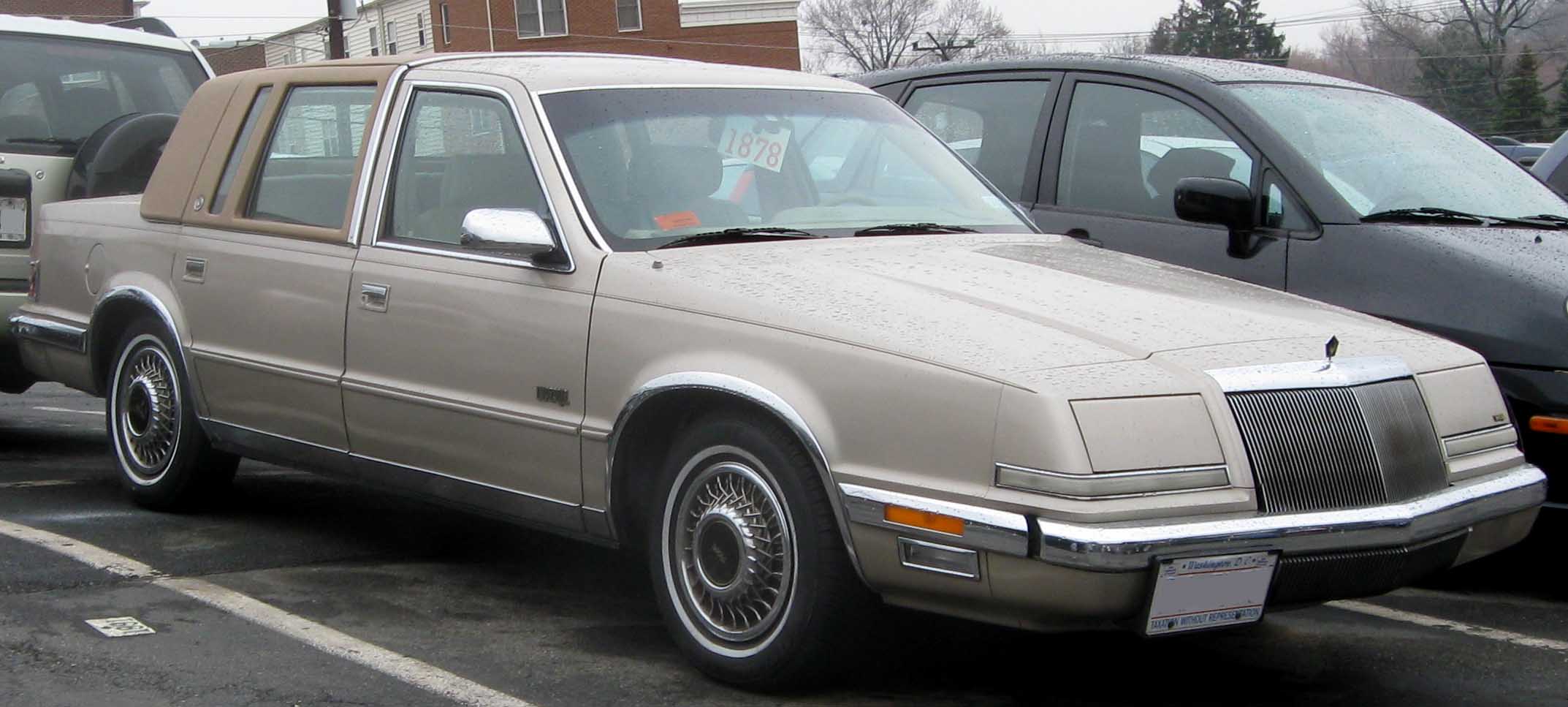
Chrysler Imperial
"...was. I look at it as like a a poor man's Chrysler Imperial or something along those lines. Had velour seatin..."
The Chrysler Imperial is a large luxury car made by Chrysler. It was meant to feel upscale and comfortable. In the podcast, it’s used as a comparison to describe the vibe or interior features of another car.
The Chrysler Imperial is a full-size luxury car that was positioned as a high-end flagship in its era. In the podcast, it’s referenced as a comparison point—suggesting the speaker saw another car as having similar “Imperial” styling or feel. That kind of mention is common in restoration and history discussions because the Imperial is a recognizable benchmark for classic American luxury design.
velour seating
"Had velour seating, valore probably was was it red velore, dark red?"
Velour seating means the seats are covered in a soft fabric, kind of like a plush cloth. The host is describing what the interior was like and how it felt in those older cars.
Velour seating refers to upholstery made from a soft, fuzzy fabric (often used in older American cars). The segment uses it to set the scene for the car’s interior feel and color, and later contrasts it with how hot other interior materials could get.

Oldsmobile Delta 88
"My my grandfather was a huge Olds Delta 88 fan, and every single one of them had that same red interior."
The Oldsmobile Delta 88 was a big, comfortable American car. The host is saying their grandfather loved the Delta 88 and that the cars always seemed to have the same red interior.
The Oldsmobile Delta 88 is a full-size American car from Oldsmobile, famous for its classic, comfortable cruiser character in the 1970s and early 1980s. In this segment, the Delta 88 is specifically linked to the speaker’s memory of a consistent interior theme—red velour—highlighting how these cars were often ordered with distinctive cabin materials.
vinyl interiors
"And do do you remember the vinyl interiors? They would get so hot, like you could burn your like practically burning yourself getting into those cars."
Vinyl interiors are seats trimmed with a plastic material. The host is saying that in hot weather it can get so hot you can burn yourself just by getting in.
Vinyl interiors are seat and trim surfaces made from vinyl (a plastic-like material). The speaker notes a common complaint with older vinyl: it can get extremely hot in sunlight, making entry uncomfortable.
metal seat belts
"And then the metal seat belts, remember like the whole seat belt was metal. Just oh man."
The host is talking about older seat-belt hardware that had metal parts, especially the buckle. In the sun, metal can get very hot, so getting into the car could feel painful.
Metal seat belts (as described here) refers to older seat-belt hardware where parts like the buckle could be metal rather than fully plastic. The speaker is emphasizing the tactile and heat-transfer experience—metal buckles could feel uncomfortably hot and make the entry feel harsher than modern designs.

1983 Ford Escort
"I'm embarrassed to say this, but a 1983 Ford Escort, four-door burgundy red, porno red and tear, one of the ugliest cars I have ever seen."
This is a compact Ford from the early 1980s. The point here is that the host didn’t like how it looked, especially the very specific red color they’re talking about.
The Ford Escort is a compact car, and the 1983 model is part of the early-1980s Escort lineup. In this segment, the host highlights it as an example of an unloved color/appearance—specifically the burgundy “porno red” shade—rather than a performance or engineering story.
porno red
"And that term, Doug, is very no it's very common in the fox body Mustang world when it comes to that color red. Porno red. The foxbody enthusiasts will call it porno red."
“Porno red” is a slang nickname car fans use for a loud, very bright red paint color. In this conversation, they’re saying Mustang fans recognize that exact shade by that name.
“Porno red” is an enthusiast nickname for a specific vivid red paint color used on certain Ford models—here, discussed in the context of the Fox-body Mustang. It’s a community slang term, not an official Ford paint name, and it signals a recognizable shade within that scene.
roll-up window
"But so that car was maybe not one of your favorites, but for like those cars were like that. Was the best selling car in America for a while, I think, until the tourists came out, right? Okay, cool, cool. It was just uh just your basic roll-up window."
A roll-up window is a window you move by hand with a crank. It usually means the car doesn’t have power windows.
A “roll-up window” is a manual window that you raise and lower by hand, typically using a crank. In older cars, this often goes along with simpler, lower-cost interior equipment compared with power windows.
power steering
"Oh yeah, nothing power steering. No AC."
Power steering makes the steering wheel easier to turn. If a car doesn’t have it, turning the wheel—especially when parking—takes more effort.
Power steering is a system that uses a pump (hydraulic) or an electric motor to reduce the effort needed to turn the steering wheel. When a car lacks power steering, steering is typically heavier, especially at low speeds.
AC
"Oh yeah, nothing power steering. No AC. Where were you living at the time?"
“AC” means air conditioning. If the car doesn’t have it, the cabin won’t cool down like you’d expect in hot weather.
“AC” here means air conditioning, a climate-control system that cools and dehumidifies the cabin. Older base trims sometimes lacked AC, which affects comfort in hot weather.

83 Mustang
"[754.3s] 83 Mustang, right? [756.2s] My my wife would disagree that it's a great story. [758.8s] I think it's a good one."
They’re referring to a Ford Mustang from 1983. Older Mustangs can be confusing because different versions had different engines and performance options, and the badges on the car help tell which one it is.
The speaker is talking about an early-1980s Ford Mustang, specifically an “83” model year. In this era, Mustangs were offered in multiple trim levels and performance packages, so details like GT and Turbo badges matter for identifying what the car actually is.
GT Turbo
"[772.6s] I'm not gonna say exactly where, but I was on my way home from work one day, and I see this Mustang that going down the highway in front of me, and I I seen on the side of the spoiler it said GT Turbo. [786.0s] And in the back of my mind, I'm like, they only made that car for two years. [790.1s] There ain't no way that's a real GT turbo."
“GT Turbo” is the kind of badge you’d see on a Mustang to suggest it’s a higher-performance GT version with a turbo. Sometimes people put badges on cars that don’t match what’s actually under the hood.
“GT Turbo” is a performance badge combination implying a Mustang GT trim with turbocharged equipment. In the early ’80s, badge names like GT and Turbo were commonly used to signal different engine/performance configurations, and mismatched badges can be a red flag for how accurate the car’s story is.
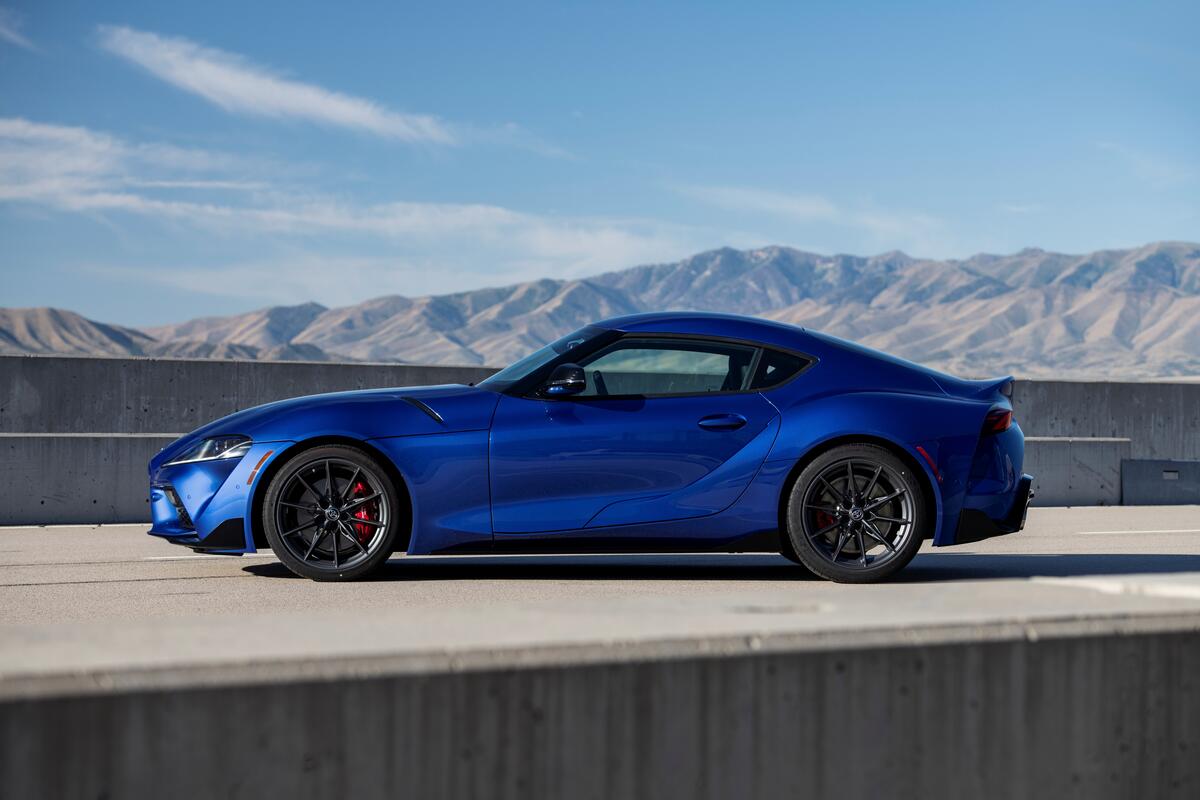
Toyota A90
"So, and I I mean at the time I had an 85 Mustang, an 86 Mustang, you know, both GTs. I had a 90 notchback. I probably had four Mustangs sitting in a two and a half car garage."
The Toyota Supra is a sports car made by Toyota. It’s known for being fast and for having a big enthusiast following. In the podcast, it’s mentioned as part of the speaker’s collection of performance cars.
The Toyota Supra is a performance sports car that became especially famous among enthusiasts for its strong tuning potential and motorsport legacy. In the podcast context, it’s part of a lineup of cars the speaker owned around the same era, showing how the Supra fits into the broader JDM and performance-car conversation. It’s often discussed because it represents a key chapter in Japanese sports-car history.
auto trader, newspaper type
"[826.9s] And uh probably about I was saying six, eight months later, I picked up one of those, you know, auto trader, you know, newspaper type. [835.6s] Yeah, they sell them at 7 Eleven. [837.6s] Yeah, exactly."
They’re talking about a car classifieds paper/magazine called Auto Trader. It was a way to look up used cars and call sellers back when most listings weren’t online yet.
The speaker is describing “Auto Trader” as a classifieds publication used to find cars for sale. Before online listings became dominant, these print classifieds were a common way to locate specific models and contact sellers quickly.
tilt deck trailer
"And luckily it was a tilt deck trailer. So, you know, tilt the deck, roll the car into the garage."
A tilt deck trailer is a trailer where the platform can tilt down. It makes loading and unloading a car much easier and safer.
A tilt deck trailer has a deck that can be hydraulically tilted to lower the loading surface. That makes it easier to roll a car on and off without needing a steep ramp.
change the oil
"I'm gonna go through it. I'm gonna change the oil. Um, you know, I don't know the history of the car, so I want to give it its best chance."
Changing the oil means draining the old oil and putting in new oil. It keeps the engine lubricated and helps it run better.
Changing the oil is routine maintenance where old engine oil is drained and replaced with fresh oil. It helps remove contaminants and ensures proper lubrication for the engine.
oil pressure sending unit
"Well, after you know, a little bit of investigation, it was nothing more than a $7 oil pressure sending unit."
This is a small sensor that tells your dashboard how much oil pressure the engine has. If it’s leaking, you can see oil on the ground even if the engine itself is fine.
An oil pressure sending unit is a sensor that measures engine oil pressure and sends that information to the car’s gauge or warning system. If it leaks, it can leave oil behind and make you think the engine has a bigger problem than it actually does.
radio delete car
"The car was a radio delete car, which is strange, but it also had AC, which is even stranger. Somebody orders AC, but they don't order a radio."
A “radio delete car” is a car that was built without a radio from the factory. The host finds it odd because the same car also had air conditioning.
A “radio delete car” is a vehicle ordered without a factory radio. It’s an unusual spec because most buyers who want a modern convenience option like AC might also expect audio, so this combination stands out as a quirky ordering choice.
new cam
"And you know, fast forward a couple years, and you know, I put a new cam in it. I did a little bit of work to it."
The “cam” is part of the engine that helps control when the valves open and close. Putting in a new cam is a way to change how the engine runs and can make it feel more powerful.
A “cam” (camshaft) controls valve timing and lift, which strongly affects how an engine makes power. Swapping in a new cam is a common performance modification, especially on classic V8s, because it can change the engine’s character and responsiveness.
quarter panels
"Ain't nothing gonna happen to the car sitting in the middle of the yard. I'll be damned if a hurricane didn't come through... took out the roof, the windshield, the quarter panels on the car."
Quarter panels are the metal body sections around the sides of the car near the wheels. If they get damaged, repairs can be costly because they’re part of the car’s outer body shape.
Quarter panels are the body panels behind the front wheel and ahead of the rear wheel (and they often include the rear wheel-arch area). They’re structural-adjacent in many designs and can be expensive to repair or replace after impact or storm damage.
foureyedpride.com
"That was a regular on the forum, foureyedpride.com. You know, it's a enthusiast."
FourEyedPride.com is a car enthusiast website/forum. In this episode, it’s where the host posted about their Foxbody Mustang.
FourEyedPride.com is an enthusiast forum/community centered on the 1979–1986 Foxbody Mustang styling and ownership culture. The host uses it as a reference point for where the story was shared.
foxbody platform
"It was solely for the 79 to 86 foxbody platform Mustangs. And and and what was the forum called again?"
“Foxbody” is a nickname for a Mustang generation’s basic car structure. People care about it because it’s a well-known platform with lots of parts and support for fixes and upgrades.
“Foxbody platform” is enthusiast shorthand for the Ford Mustang’s late-1970s/1980s chassis family (commonly associated with the 1979–1993 Mustang). It matters because the platform’s layout and parts availability are a big reason the cars became a long-running restoration and modification base.
Euro
"It had the 2.8, the Euro and V6."
“Euro” here sounds like a shorthand for a specific version of the car that’s tied to European-market specs. The exact meaning can vary, but it’s being used to differentiate trim/variant details.
In this context, “Euro” likely refers to a Euro-spec or European-market trim/engine configuration used by enthusiasts to distinguish variants. It’s not a universal term, so the exact meaning depends on the forum’s shorthand and the specific Mustang configuration being discussed.

Ford Capri
"It's like I got this, I got a an 86 Capri. I put a you know Caprete in."
They’re talking about a 1986 Ford Capri. It’s a classic car that people often customize or restore, and in this story it’s being built with upgraded parts.
The Ford Capri is a European-market pony car that became popular with enthusiasts in the U.S. as a swap/restoration project. Mentioning an “86 Capri” signals a late-model Capri platform that the host is building up with modernized drivetrain and suspension components.
Cobra IRS
"I put a you know Caprete in. I put a Cobra IRS in the car."
“Cobra IRS” means a rear suspension system from a Cobra model that lets the rear wheels move independently. That can help the car grip better and feel more controlled over rough roads.
“Cobra IRS” refers to an independent rear suspension setup associated with Ford’s Cobra models. An IRS changes how the rear wheels move over bumps and can improve traction and ride/handling balance versus a simpler solid rear axle design.
roller
"It was a roller, but it was solid, no rust. "
A “roller” is basically a car that’s rolling on wheels but doesn’t have the full powertrain installed. People buy rollers to do their own engine and drivetrain swap.
A “roller” is a car shell/chassis sold or described without a complete drivetrain installed (often no engine and sometimes no transmission). Enthusiasts use it as a starting point for swaps, because they can build the car exactly how they want.
frame machine
"So I send it up to uh a shop in Fredericksburg, Virginia. [1156.2s] I had it put on the frame machine, they straightened out the frame, the quarters, put a new roof skin on it, new windshield in it, and you know, it's it's multicolored, and now I need to find a hood for it."
A frame machine is a shop tool that measures and straightens a car’s main body structure. If the frame is bent, it can mess up panel gaps and handling, so the machine helps put everything back in the right shape.
A frame machine is a heavy-duty alignment system used in collision/restoration shops to measure and pull a car’s frame back to correct geometry. It’s how technicians straighten bent structural components so the car’s body panels, doors, and suspension alignment can be set properly again.
quarters
"I had it put on the frame machine, they straightened out the frame, the quarters, put a new roof skin on it, new windshield in it, and you know, it's it's multicolored, and now I need to find a hood for it."
“Quarters” refers to the rear quarter panels/structures of the body—both the visible sheet metal and the underlying metal that supports it. In restoration after a frame issue, the quarters are often pulled/straightened or replaced because they’re tied into the car’s overall body alignment.
roof skin
"I had it put on the frame machine, they straightened out the frame, the quarters, put a new roof skin on it, new windshield in it, and you know, it's it's multicolored, and now I need to find a hood for it."
The roof skin is the outer metal “cover” of the roof. If that outer layer is damaged or rusted, shops can replace it to restore the car’s shape and appearance.
A roof skin is the outer sheet-metal layer of the roof. Replacing it is common when rust, dents, or collision damage affects the outer panel, while the underlying structure may still be salvageable.
standalone EFI system
"But I'm gonna, you know, I got a standalone EFI system for it because 83 Ford wiring is brittle and it just doesn't hold up. [1179.0s] So the stock wiring harness is trash."
EFI means electronic fuel injection, which controls how much fuel the engine gets. A “standalone” EFI system is an aftermarket computer that runs the fuel injection on its own, instead of relying on the old factory electronics.
A standalone EFI system is an aftermarket electronic fuel-injection controller and supporting hardware that manages fuel delivery independently of the original factory engine management. On older cars, it’s often used to improve drivability and tuning options when the stock setup is outdated or unreliable.
stock wiring harness
"[1179.0s] So the stock wiring harness is trash. [1181.8s] I got, you know, we're gonna get there."
The wiring harness is the car’s main bundle of wires that connects everything electrically. On older cars, the insulation and connectors can wear out, causing electrical problems—so replacing or bypassing it can be necessary.
A wiring harness is the bundled set of wires and connectors that distributes power and signals to the car’s electrical systems. Calling the “stock wiring harness” “trash” points to common age-related failures on older cars—brittle insulation, corrosion, and unreliable connections that can cause misfires, no-start issues, or intermittent electrical problems.
5.0
"So there the four when did the 5.0 come out and were they making the turbo alongside the 5.0 at the same time?"
“5.0” means a 5.0-liter V8 engine. The speaker is asking about when that engine showed up and how it relates to turbo versions.
“5.0” is shorthand for Ford’s 5.0-liter V8 used in many Fox-body Mustangs. In this segment, it’s brought up in the context of when the 5.0 appeared and whether turbo versions were being produced at the same time.
SBO
"And then there's also something called the SBO, which was also a turbo. Can you talk through that for us?"
SBO is a specific Ford performance label the speaker is connecting to a turbo setup. It’s not just a generic “turbo” word—it refers to a particular variant with its own setup.
SBO is a Ford performance/engine option label discussed here as a turbo-related variant. The speaker treats it as a specific named turbo program, which suggests it has distinct hardware and/or calibration compared with the more commonly referenced 5.0 turbo setups.
1984 SVO
"and I did own an 84 SVO also... The ECU or the ECM and all of the wiring in this particular car in '83... The the ECM sits underneath the passenger side seat, whereas in '84 everything went into the kick panel on the passenger side."
The Ford Mustang SVO (introduced as a turbocharged performance variant) is notable for its turbo-era electronics and wiring layout differences versus earlier Fox-body cars. Here, the speaker contrasts the 1983 Mustang’s standalone ECM wiring with the 1984 SVO approach where the computer is integrated into the passenger-side kick panel area.
ECU or the ECM
"The ECU or the ECM and all of the wiring in this particular car in '83, it was standalone. So it wasn't connected into the main body harness."
The ECU/ECM is the engine computer. It decides how the engine runs based on sensor inputs, and in this Mustang it’s wired in a different way than on later models.
ECU/ECM refers to the engine control unit/module— the car’s main computer that reads sensors and controls fuel, ignition, and other engine functions. In this segment, the speaker emphasizes that the 1983 Mustang’s ECU/ECM and wiring were “standalone,” meaning they weren’t integrated into the main body harness like later cars.
main body harness
"So it wasn't connected into the main body harness. It's almost like it was an afterthought."
A body harness is the car’s main bundle of wires. Here, the speaker says the engine computer’s wiring wasn’t connected into that main wire bundle on the 1983.
The main body harness is the large wiring network that runs through the car body and connects many systems (lighting, accessories, and often multiple control modules). The speaker’s point is that the 1983 Mustang’s ECU/ECM wiring was not tied into this main harness, which can matter for restoration and troubleshooting.
horsepower
"I want to say it was like 135, 140 horsepower, a very lot to, you know, leaves a lot to be desired when it comes to horsepower, right?"
Horsepower is a number that tells you how much power the engine can produce. Higher horsepower usually means the car can accelerate harder, though weight and gearing also matter.
Horsepower is a measure of an engine’s power output—how quickly it can do work. In the segment, the host is comparing how much power the car made versus what they expected.
intercooler
"Old SVO Mustang, which had the same drivetrain, with the exception of they bolted an intercooler onto it and quite a bit more horsepower than the standard GT Turbo."
On a turbo engine, an intercooler cools the air after the turbo compresses it. Cooler air helps the engine breathe better and can make more power safely.
An intercooler is a heat exchanger used on turbocharged engines to cool the compressed intake air before it enters the cylinders. Cooler intake air is denser, which helps the engine make more power and can reduce the risk of knock.
GT350s
"And I want to say, so in addition to in 84, there's also anniversary cars, both convertible and non-convertible. [1348.7s] You know, they were the anniversary edition GT350s that got the Mustang GT turbo drivetrain, but they weren't turbo."
GT350s are special high-performance versions of the Mustang. Here, the host is talking about an anniversary GT350 that had some turbo-related drivetrain parts, but the car itself wasn’t turbo in the usual sense.
The “GT350” is a performance Mustang model line known for handling and engine upgrades compared with standard Mustangs. In this segment, the host says the anniversary edition GT350s used the Mustang GT turbo drivetrain, but weren’t turbo themselves—highlighting how confusing model naming and drivetrain swaps can be.

Ford Mustang GTD
"... were the anniversary edition GT350s that got the Mustang GT turbo drivetrain, but they weren't turbo. I guess..."
The Ford Mustang GTD is a special Mustang version. It’s meant to be a performance-oriented trim with its own branding. In the podcast, it’s mentioned in the context of other Mustang special editions and how their drivetrains are described.
The Ford Mustang GTD is a special-edition Mustang concept/trim associated with performance-focused styling and drivetrain choices. In the podcast context, it’s being discussed alongside other Mustang anniversary and GT350-related references, which suggests the conversation is about how different Mustang variants are related and how their powertrains are described. It comes up in enthusiast discussions because these limited or themed models often have specific branding and technical details people compare.

Beetle Volkswagen Bug
"...ight there behind you, you know, that that little Volkswagen bug. Yeah."
The Volkswagen Beetle is a small car with a very recognizable shape. It’s often called the “bug” because of its look. The podcast mentions it as a familiar, classic car that people can easily identify.
The Volkswagen Beetle is a compact, air-cooled classic that became one of the most recognizable cars in automotive history. The podcast’s reference to a “little Volkswagen bug” points to the Beetle’s iconic, easy-to-spot shape and its long-lasting popularity. It’s frequently discussed in history and restoration circles because many generations exist and there’s a strong enthusiast community.
Rust
"Rust. [1450.6s] Yeah, it's unfaded, but yeah, car that's that's the place to go."
Rust is when metal starts corroding and breaking down. On older cars, it can be a big problem because it can damage the body and spread.
Rust is corrosion of metal, and on classic cars it’s a major concern because it can weaken body structure and spread under paint. The speaker contrasts “rust” with an “unfaded” car, implying they’re thinking about condition and preservation.
B-body platform
"But a close runner up to the B-body platform old Mopars are the A bodies."
“B-body” is Chrysler’s name for a particular car “foundation” (the main frame and layout). Cars on the same platform tend to feel similar in size and how they’re put together.
“B-body” is a Chrysler vehicle platform family used for many larger cars (especially Mopars) in the 1960s–70s. It’s a chassis/underbody architecture that affects wheelbase, interior room, and how the car is built and tuned.
A bodies
"But a close runner up to the B-body platform old Mopars are the A bodies."
“A-body” is Chrysler’s category for a smaller Mopar platform. It helps explain why cars like the Dart can feel different from the bigger “B-body” cars.
“A-body” refers to another Chrysler platform family, typically for smaller, lighter Mopars than the B-body cars. In enthusiast circles, A-body models (like the Dart and others) are known for being more compact and often more nimble.

Dodge Dart
"My best friend growing up had a 70 as a burnt orange, it was a Dodge Dart swinger."
The Dodge Dart is a classic Mopar from Chrysler’s smaller “A-body” family. People love it because certain years and trims can be turned into real performance cars, not just regular sedans.
The Dodge Dart is a classic Chrysler “A-body” Mopar that became a popular base for performance and style packages in the late 1960s and early 1970s. This episode focuses on how different Dart years and trims (like 340-equipped cars and “swinger” style builds) change what’s under the hood and inside the cabin.
cowl vents
"…which 68 is ideal for me because they don't have the cowl vents, you don't have to worry about them rotting out…"
Cowl vents are vents near the bottom of the windshield that let outside air into the car. On older cars, that area can rust, so enthusiasts pay attention to whether the vents are present and in good shape.
Cowl vents are openings in the area at the base of the windshield (the cowl) that help bring outside air into the cabin. On some classic Mopars, they’re controlled by a lever and can be a rust-prone area if water gets trapped.
cowl panel
"…you also don't have that lever to pull to get fresh air in through the cowl panel…"
The cowl panel is the metal area under the windshield. If a car has vent openings there, that panel matters because it can affect airflow and it can also be a rust spot on older cars.
The cowl panel is the body section beneath the windshield that houses components like the venting system and drains. On cars with cowl-vent setups, the cowl panel and its openings are important for both airflow and long-term corrosion resistance.
slant six
"…white vinyl top, bench seat, slant six, single barrel carburetor, dodge dart."
A “slant six” is an older inline-6 engine design where the engine sits at an angle. In these cars, it usually means the car started as a more basic, non-V8 configuration.
The “slant six” is Chrysler’s inline-6 engine design where the cylinder head is angled (“slanted”) rather than perfectly upright. In classic Mopars, it often marks a lower-trim starting point compared with V8-powered cars.
single barrel carburetor
"…bench seat, slant six, single barrel carburetor, dodge dart."
A single-barrel carburetor is an older-style fuel system that mixes air and gas using one main opening. Cars with single-barrel setups usually make less power than versions with two or more barrels.
A single-barrel carburetor is a carburetor with one throttle bore, meaning it meters fuel/air through one main opening. Compared with dual- or multi-barrel setups, it typically supports less airflow and power, which is why it often appears on more basic engines.
four-speed
"…It's got a four-speed in it."
A “four-speed” means the car has a manual gearbox with four forward gears. If a project car has a four-speed, it’s often been modified to feel more like a real performance car.
A “four-speed” refers to a manual transmission with four forward gears, commonly paired with classic Mopar engines and muscle-car drivetrains. In a restoration or tribute build, the presence of a four-speed is a major clue that the car has been upgraded beyond its original base configuration.
rally dash
"…They got a legit dash out of a, you know, the rally dash out of a 340 swinger car."
A “rally dash” is a sportier dashboard design with more performance-style gauges and trim. People doing tribute builds often swap in the rally dash to make the car look and feel like the higher-end version.
A “rally dash” is a specific dashboard style associated with certain Mopar performance packages, typically featuring sportier gauges and trim. In tribute builds, using the correct rally-dash components is part of making the interior match the look of the higher-performance version.
hood scoops
"They put the hood scoops on the hood, they put the little white bumblebee stripe in the back, the right rally wheels."
Hood scoops are bumps on the hood that let air move into the engine area. Sometimes they help the engine run cooler, and sometimes they’re added just because they look cool.
Hood scoops are raised openings on a car’s hood that direct airflow toward the engine bay. On classic cars and restomods, they’re often functional (for cooling or intake air) but can also be added for the look.
rally wheels
"They put the hood scoops on the hood, they put the little white bumblebee stripe in the back, the right rally wheels."
Rally wheels are a classic wheel design—usually multi-spoke—that became popular on performance and rally-style cars. People often pick them because they look period-correct.
Rally wheels are a style of multi-spoke wheels commonly associated with rally and performance-era road cars. They’re often chosen for their classic look and for how they visually emphasize the car’s stance.
mild cam
"It's got a mild cam in it, you know, three two-barrel carburetors sitting on top, which need to need to be tuned."
The camshaft controls when the engine’s valves open and close. A “mild” cam is a gentler change that usually keeps the car easier to drive day-to-day.
A camshaft “grind” (often described as mild, aggressive, etc.) changes valve timing and lift, which affects how an engine makes power. A mild cam usually targets better drivability and low-to-midrange response rather than peak horsepower at very high RPM.
three two-barrel carburetors
"It's got a mild cam in it, you know, three two-barrel carburetors sitting on top, which need to need to be tuned."
Carburetors mix fuel and air before it goes into the engine. “Three two-barrel carburetors” means there are three carburetors, each with two openings—more airflow potential, but it has to be tuned so it runs right.
Three two-barrel carburetors means the engine uses three separate carburetor units, each with two throttle bores. This setup is common on some classic V8 performance builds because it can improve airflow and throttle response, but it also requires careful tuning to run correctly.
intake manifold
"A little bit of an oil leak coming out of the back of the intake manifold, but I th wrong shifter is in the car."
The intake manifold is the part that delivers the fuel/air mixture to each cylinder. If oil is leaking from the back of it, it usually means a gasket or seal there isn’t sealing properly.
The intake manifold is the engine’s air/fuel distribution piece that routes the mixture from the carburetors or throttle body to the engine’s cylinders. An oil leak “coming out of the back of the intake manifold” often points to a sealing or gasket issue in that area.
B-body console pistol grip
"I put a B-body console pistol grip in it that every time you go to put it in reverse, you're hitting the steering wheel."
“B-body” is a Chrysler car platform category. A “pistol grip” is the style of gear shifter handle, and here it’s being described as positioned so it hits the steering wheel when you try to shift into reverse.
“B-body” refers to Chrysler’s mid-size car platform family (used for many Dodge/Plymouth models). A “console pistol grip” is a floor-mounted shifter with a pistol-grip handle; in this case, the specific console/shifter geometry caused interference with the steering wheel when shifting into reverse.
e-body pistol grip shifter
"I put an e-body pistol grip shifter into the car, rebuilt you know, all the mechanisms for the shifter."
“E-body” is a Chrysler platform family. The speaker replaced the shifter with an E-body-style pistol-grip setup so the shifter would fit correctly and work properly.
“E-body” is another Chrysler platform family (commonly associated with certain 1970s muscle cars). Swapping to an “E-body pistol grip shifter” implies the shifter/console parts were changed to the correct platform fitment, and the mechanisms were rebuilt to restore proper operation.
VIN plate
"Well, they pulled the Vin plate off of the original dash, which would have been one of the ones that, you know, just a needle that sweeps from the right side to the left side of the dash instead of like individual little round gauges."
The VIN plate is the official ID tag for the car—like its fingerprint number. If it’s moved or attached the wrong way, inspectors may think the car has been tampered with.
A VIN plate is the vehicle identification label that carries the car’s Vehicle Identification Number. In this story, the VIN plate was removed from the original dash and later reattached incorrectly, which triggered suspicion during a state inspection.
pop rivets
"And when they reattach that VIN plate to the dashboard, they use just standard, you know, go to Home Depot, buy some aluminum, pop rivets, and they pop riveted that to the dash."
Pop rivets are a quick way to fasten two pieces together using a rivet gun. If someone uses them to attach something like a VIN plate, it can be a sign the work wasn’t done the right way.
Pop rivets (blind rivets) are a common fastener installed with a rivet gun that sets the rivet head on one side. In restorations, using pop rivets to attach identification components like a VIN plate is often considered incorrect because factory methods use specific hardware.
North Carolina troopers
"So when the North Carolina troopers come out to do an inspection on the car to make sure that it wasn't stolen, they quickly realized that those aren't the right rivets holding that Vin plate to the dash."
State troopers can inspect vehicles to make sure the car’s identification is legitimate. Here, they’re looking for signs the car might be stolen or tampered with.
State troopers can perform vehicle inspections to verify identity and legality, especially when a car’s paperwork or identification markings don’t match. In this segment, they’re checking whether the car was stolen by verifying the VIN plate and related evidence.
five-sided rivet
"And you you were telling me the original rivets are Penestar. They they are a five-sided rivet, they are pretty unique, and they knew right away."
A five-sided rivet is a special-looking rivet shape. The speaker is saying the VIN plate was held on with the wrong type of rivet, which is why inspectors noticed something was off.
A five-sided rivet refers to a specific factory-style fastener shape used to secure certain identification components. The point of the story is that the rivets used on the VIN plate were not the correct factory type, which made the inspection fail quickly.
door tag
"And you know, the the fender tag was there, the car's repainted, so the door tag's gone."
A door tag is a factory sticker/plate on the door jamb with build information. If it’s missing after repainting, you lose an easy reference for what the car originally was.
A door tag is a factory label typically found on the door jamb that includes vehicle build information and identification details. The speaker says the car was repainted and the door tag was gone, which removed another way to verify the car’s history.
fender tag
"And you know, the the fender tag was there, the car's repainted, so the door tag's gone."
A fender tag is a factory label that lists details about how the car was built. It can be used to confirm what the car originally came with—like options—and here it was still there.
A fender tag is a factory information label mounted on the vehicle (often on the inner fender) that lists build and option details. It can help verify the car’s original configuration, and in this case the speaker notes it was present even though the door tag was missing.
hidden body stamp
"Can't couldn't that could have validated the car. So he requested to find the hidden body stamp on the car."
A hidden body stamp is an ID mark stamped into the car’s metal. If the visible labels are missing or look wrong, inspectors can use this stamp to confirm the car’s true identity.
A hidden body stamp is an identification marking stamped into the body structure that can be used to verify the vehicle’s identity when visible tags or plates are missing or altered. In this segment, it’s the next step to validate the car after the VIN plate evidence didn’t check out.
Windsor, Ontario plant
"Well, let me tell you, I learned a whole lot about how Chrysler did things at the Windsor, Ontario plant in 1970."
That’s the Chrysler factory location in Windsor, Ontario. The factory’s production system can leave specific ID-number patterns on the car.
The Windsor, Ontario plant refers to Chrysler’s manufacturing facility in Windsor, Ontario, which produced vehicles in that era. Plant-specific stamping patterns (like codes embedded in body numbers) can be crucial when verifying a classic car’s origin.
hidden body number
"So the hidden body number, you know, it should start out with R for the Romeo plant, and then the sequence number."
It’s an extra ID number stamped on the car itself. People use it to double-check that the car matches its paperwork and history.
A hidden body number is an additional identifier stamped on the vehicle’s body that can be used to verify the car’s build details. In restoration or title disputes, it’s often compared against the VIN and other tags to confirm authenticity.
sequence number
"For the sequence number, it always starts with a one. So you look at it, you know, an old Chrysler like that, it's like, okay, so this means up to a hundred thousand cars."
A sequence number is basically the production order number for the car. It helps confirm when and how the car was built.
A sequence number is a portion of a vehicle’s build identifier that indicates the order in which the car was produced. In older Chrysler-era stamping schemes, it’s used alongside plant codes and other digits to cross-check build records.
Romeo plant
"So the hidden body number, you know, it should start out with R for the Romeo plant, and then the sequence number."
Romeo plant is a specific factory that made cars. The speaker is saying the car’s ID numbers include a code that points to that factory.
The Romeo plant is a Chrysler manufacturing facility associated with specific plant codes used in vehicle identification schemes. In this transcript, the speaker says the hidden body number should start with an 'R' for Romeo, tying the code to the car’s production source.
Vin Tag
"My car was 77632 off the assembly line out of that plant, and the Vin Tag is 1776 because that first character is all is never a zero."
The VIN tag is the official plate on the car with the VIN number. It’s what DMV and inspectors use to identify the vehicle.
A VIN tag is the physical label/plate on the vehicle that carries the VIN (Vehicle Identification Number). It’s a key reference for registration and title, and it’s commonly checked against other stamped identifiers during restorations.
DMV
"So, you know, North Carolina DMV's like, nope."
DMV is the government office that handles car registration and titles. If the car’s identification numbers don’t match, the DMV may block the title until it’s verified.
DMV stands for Department of Motor Vehicles, the agency that handles vehicle registration and titles. In VIN/ID disputes, the DMV may require documentation and verification before releasing or correcting title information.
Galen's tag service
"I reached out to Galen. He is he Galen's tag service."
A tag service is a specialist that helps with car ID plates and paperwork. Here, they’re being used to figure out the correct identification details for the car.
A tag service is a specialist business that helps with vehicle identification tags/plates and related documentation issues. In this segment, Galen’s tag service is used as an expert resource for understanding how the car’s identifiers were handled in that era.
title's being released
"Next thing I know, the North Carolina State Troopers called me and they said, We validated all of your stuff, your title's being released."
When a title is 'released,' it means the DMV or authorities have cleared the vehicle’s paperwork status after verification. For classic cars, this often follows VIN/body-number checks when identifiers don’t initially line up.
pentastar rivets
"All I can say is to anybody out there that wants to buy an old Mopar, check your VIN plate, make sure the pentastar rivets are there and they're not like bright uh bright aluminum."
“Pentastar rivets” are the original-style rivets used on certain Chrysler/Mopar VIN plate setups from that era. If the rivets look wrong (like the wrong material or finish), it can suggest the plate may have been changed.
“Pentastar rivets” refers to rivets associated with Chrysler’s Pentastar logo era. The point here is that original rivets on a Mopar’s VIN plate have a recognizable look/material, and mismatched rivets can be a red flag that the plate was altered or replaced.
T18 RAM
"I think if I went out and looked at my T18 RAM, I think I would have the same five-sided rivets on on that VIN plate."
“T18” is a name used for a specific older transmission. The speaker is saying that on his Dodge Ram (with a T18), the VIN-plate rivets should look like the original setup too.
“T18” is a transmission model designation commonly associated with older Mopar vehicles, and “RAM” here refers to a Dodge Ram application. The speaker is using it as an example of where you’d expect similar VIN-plate rivet details.
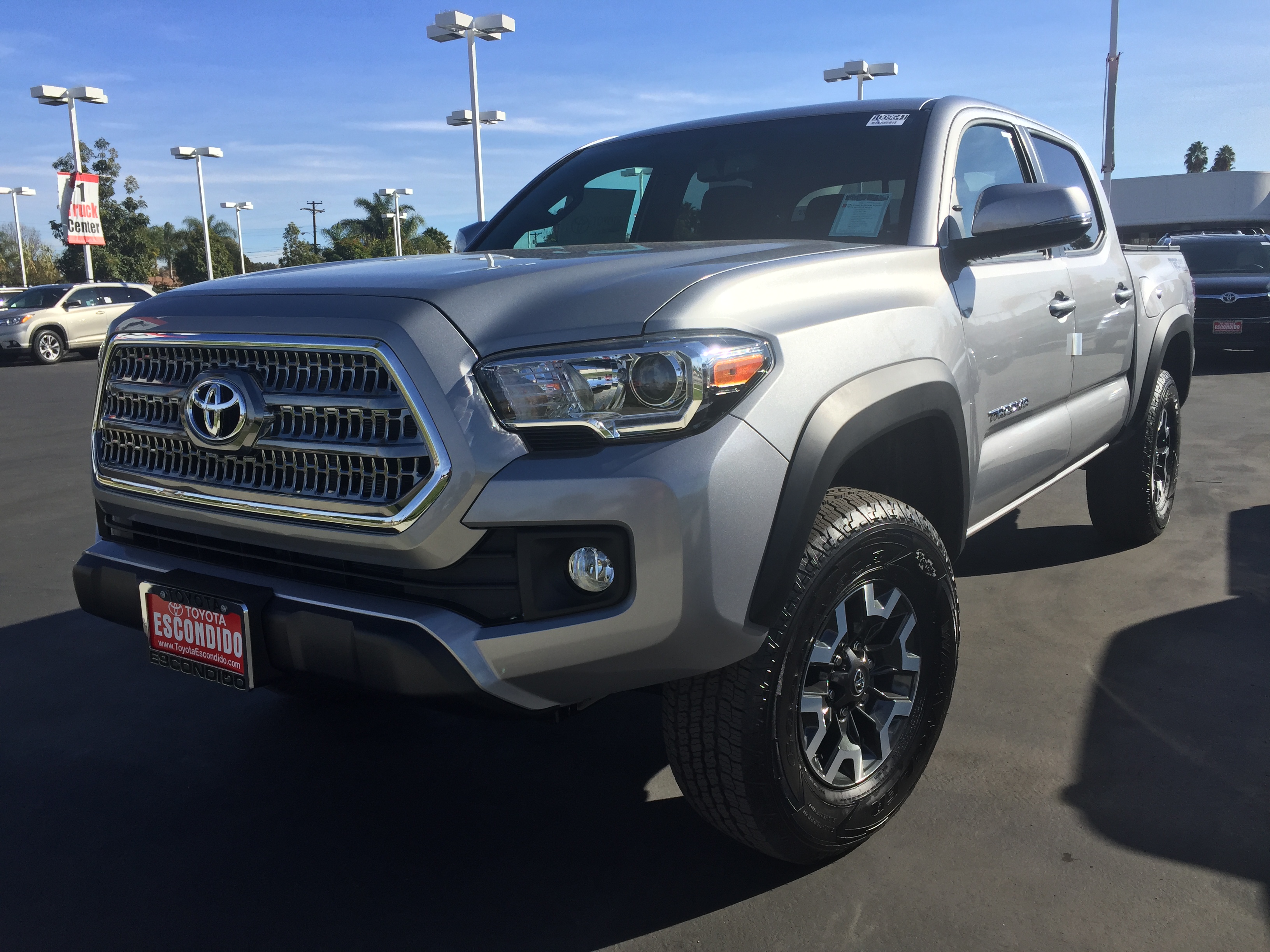
2020 Tacoma
"I got this Dodge Dart, my wife's Tacoma, 2020 Tacoma, powered by three hamsters."
The 2020 Toyota Tacoma is a newer Toyota pickup. It’s mentioned as part of what the speaker owns, not as the main restoration topic here.
The 2020 Toyota Tacoma is a modern midsize pickup that contrasts with the older classic cars being discussed. Mentioning it helps set context for the host’s current garage, even though the segment’s technical focus is on older Mopar restoration details.
manual transmission
"I got one of the the very last manual transmission Dodge trucks, 2018 Ram 3500."
A manual transmission means you shift gears yourself using a clutch. Some drivers like it because it gives more direct control over how the car drives.
A manual transmission requires the driver to use a clutch pedal and shift gears themselves, rather than relying on an automatic gearbox. Enthusiasts often prefer it for direct control and engagement, and it can be rarer in modern heavy-duty trucks.

2018 Ram 3500
"I got one of the the very last manual transmission Dodge trucks, 2018 Ram 3500."
This is a heavy-duty Ram truck meant for hauling and towing. The speaker also mentions theirs has a manual transmission, which is unusual today because many trucks now come with automatics.
The 2018 Ram 3500 is a heavy-duty pickup from Ram (part of Stellantis) known for towing and payload capability. In this segment, it’s specifically noted as one of the very last manual-transmission versions, which is a big deal because most modern heavy trucks have shifted toward automatic gearboxes.
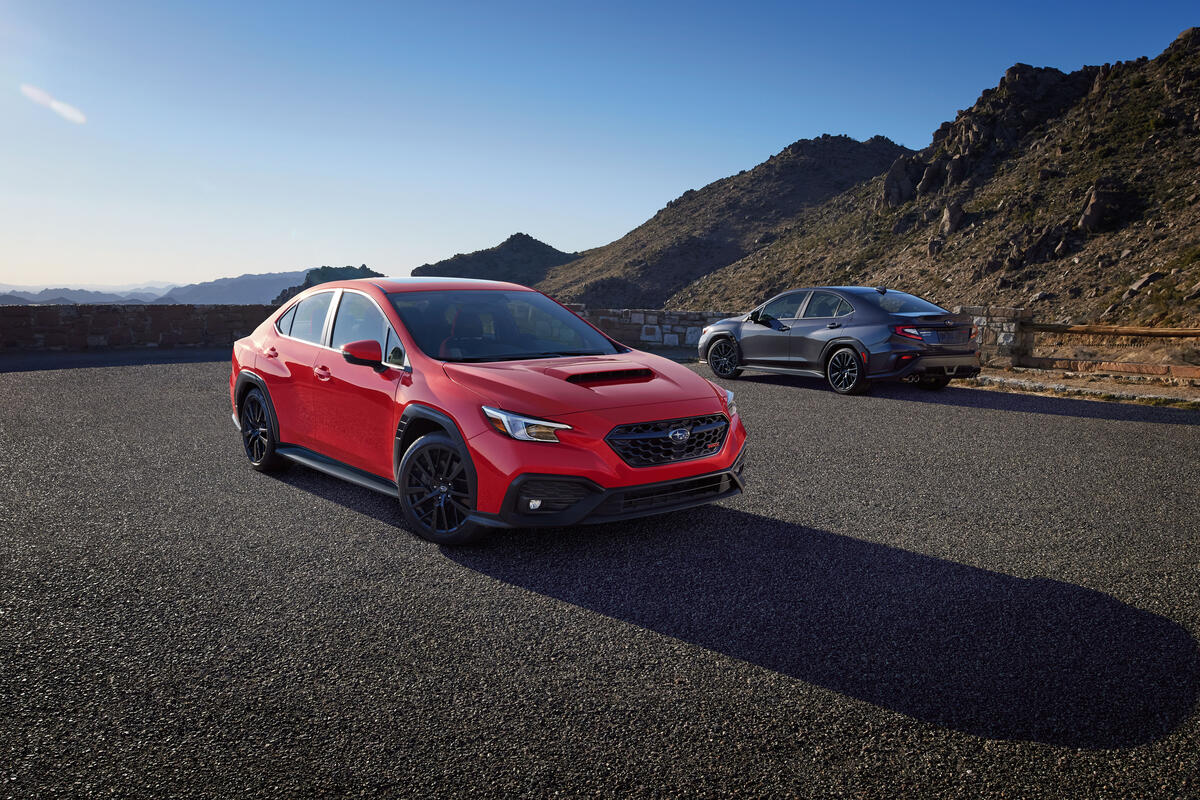
23 WRX
"And you know, my daily beater, I got a 23 WRX. That I put some work into stage two, about 350 to the wheel."
The WRX is Subaru’s turbocharged, all-wheel-drive car that’s meant to be fun but still usable daily. The speaker says they’ve upgraded it with a common tuning package called “stage two.”
The 2023 Subaru WRX is a turbocharged, all-wheel-drive performance sedan/hatch platform built for everyday driving with rally-inspired handling. Here it’s described as a “daily beater” that the speaker tuned to “stage two,” which typically means additional performance hardware plus ECU calibration for more boost and fueling.
stage two
"That I put some work into stage two, about 350 to the wheel. Nice."
“Stage two” is a common way tuners describe a more serious upgrade than the first basic mods. It usually means the car gets tuned for more power, often with better airflow and an updated engine computer setting.
“Stage two” is a tuning level used in the aftermarket to describe a step beyond basic bolt-ons—typically including performance intake/exhaust changes and an ECU tune. The goal is usually to increase boost and power while staying within the limits of the upgraded components.
350 to the wheel
"That I put some work into stage two, about 350 to the wheel. Nice."
“To the wheel” means the power number measured at the wheels, not just what the engine makes on paper. It accounts for losses as power travels through the drivetrain.
“To the wheel” refers to power measured at the wheels on a dyno, after drivetrain losses through the transmission and differential. It’s often lower than the engine’s advertised horsepower, but it’s a practical number for how much usable power the car delivers.

Eliminator
"Well, I can tell you the name of the car was Eliminator. Correct. And if I had to guess, I would say it was probably at 350 small black Chevy."
“Eliminator” is the name of a super-famous ZZ Top hot rod. It showed up in the band’s album art and music videos, so a lot of people learned about it even if they don’t follow classic cars.
“Eliminator” refers to the famous ZZ Top hot rod that became a pop-culture icon. The hosts connect it to the ZZ Top “Eliminator” album artwork and music videos, which is why the car is so widely recognized beyond car circles.
350 small black Chevy
"And if I had to guess, I would say it was probably at 350 small black Chevy. Correct again."
They’re talking about a Chevrolet V8 engine that’s 350 cubic inches in size. In car talk, “small-block” usually means a compact V8 design that was used in lots of Chevys.
“350” is shorthand for a 350 cubic-inch V8 displacement, commonly associated with Chevrolet small-block engines. The phrase “small black Chevy” is the host’s guess at the engine family used in the Eliminator hot rod.
ZZ Top
"And uh yeah, that car was on the front of that was the picture on Z Z Top Eliminator album, correct? ... And I believe it made it in several MTV videos, including Give Me All Your Loving, Sharp Dressed Men, and Legs."
ZZ Top is a famous rock band. They’re known for using custom hot rods as part of their image, and this segment connects that to the “Eliminator” car.
ZZ Top is a rock band whose visual identity heavily featured custom hot rods. In this segment, the hosts tie the “Eliminator” car to ZZ Top’s album branding and multiple MTV music videos.
Rock and Roll Hall of Fame
"So, and I learned that today that original car is housed in the Rock and Roll Hall of Fame in Cleveland, Ohio."
This is a museum in Cleveland that honors important music history. The hosts bring it up because the famous ZZ Top hot rod is said to be displayed there.
The Rock and Roll Hall of Fame is a museum in Cleveland, Ohio that preserves and displays major music history. The hosts mention it because the original “Eliminator” car is reportedly housed there, showing how deeply the hot rod entered mainstream culture.
hot rods
"And Z Z Top was known for their over-the-top hot rods. So I prefer Cadzilla myself."
Hot rods are older cars that have been modified to look cooler and drive better. They’re often customized a lot, not just lightly tuned.
Hot rods are modified cars—often older American vehicles—built for style and performance, typically using upgrades like engine swaps, carburetion changes, and suspension improvements. The hosts describe ZZ Top as being known for “over-the-top hot rods,” emphasizing the showy, custom nature of these builds.
Request an Explanation
Heard something you'd like explained? We'll add it to this episode.
Sign in to request explanations for terms you heard.
Want to learn more?
Browse our glossary for plain-English explanations of automotive terms, jargon, and concepts.
Help improve this episode
See something that's not quite right? Our annotations are AI-generated and can sometimes miss the mark. Click the flag icon on any annotation to suggest a correction.