
🏎️ 🏁 Brad Phillips on The Great Race, Cross-Country Ferraris, and Vintage Porsches
About this episode
Brad Phillips, a concours and Great Race veteran, breaks down what makes the Great Race special: a “2,500-mile time speed endurance rally” for vintage cars “1974 and earlier,” judged by “hidden checkpoints” and “very exacting standards of stop watches and following speeds.” He ties his knowledge to driving a 1916 Hudson Speedster and discusses how overdrive and non-synchronized gearing make pre-war cars practical. The conversation also ranges across classic-car collecting, Porsche 911s, and even JDM Toyota Century road trips.
Click here to share your favorite car, car story or any automotive trivia!
Welcome back to All the Cars I've Loved Before, the podcast where we park the data at the door to focus on the stories that matter 🎙️.
In this episode, Doug sits down with Brad Phillips, a globally recognized collector car expert and hardcore gearhead who firmly believes that classic cars are meant to be driven 🛠️. Brad currently serves as the Director of Events for Coker Group and the Great Race 🏁. From wrenching on a 1965 Mustang 2+2 Fastback as a teenager 🐎 to MacGyvering a right-hand-drive JDM Toyota Century across the United States 🗺️, Brad shares his incredible, lifelong journey through the automotive hobby 🚗.
We dive deep into what it takes to navigate a 1916 Hudson Speedster across 2,500 miles of backroads ⏱️, the thrill of reviving a seized 1968 Porsche 911 T 🇩🇪, and why he still regrets letting go of his Saab 9000 Turbo 🇸🇪.
In This Episode, We Cover:
- The Great Race 🏆: An inside look at the 2,500-mile time speed endurance rally for pre-1974 vintage cars, including details on the upcoming Route 66 centennial route starting in Springfield, Illinois 🛣️.
- First Rides 🚗💨: Brad’s memories of his 1965 Ford Mustang 2+2, painted Rangoon red, and its unfortunate demise in a slow-speed race against a Dodge Dart 💥.
- Cross-Country Classics 🏜️: Pushing the limits of cargo capacity and reliability by road-tripping an '83 Ferrari 308 GTS Quattrovalvole and a V8 Toyota Century 🚙.
- Pre-War Projects 🕰️: The unique challenges of driving and maintaining century-old vehicles like his 1917 Willys-Overland 90BT 🔧.
- The Ones That Got Away (and the ones that stayed) ❤️🩹: From a 400-horsepower Saab 9000 Turbo to a fully modern-equipped 1966 Sunbeam Tiger 🐯.
If you’re enjoying the show, the best way to support us is hit subscribe and leave a quick review on Apple Podcasts, share this episode with a friend, or shoot us an email ✉️ to [email protected]
*** Your Favorite Podcast Automotive Nostalgia Podcast ***
Connect with us:
📧 Email: [email protected]
🔗🌳 Visit our LinkTree for all 70+ episodes: https://linktr.ee/carsloved
Love the show? Please follow, rate, and review on Apple Podcasts! ⭐⭐⭐⭐⭐
Route 66
"[315.5s] The actual beginning of Route 66 is in downtown Chicago. [319.8s] So we're all the way to the Santa Monica Pier just because of the last traffic and all the civilians, we call them when we're out racing."
Route 66 is a legendary U.S. road trip route. People still use it as a shorthand for “driving across America,” especially in classic-car stories.
Route 66 is the famous U.S. highway route that became a cultural symbol of road trips and Americana. In car culture, it’s also a common reference point for cross-country driving stories and classic-car events.
downtown Chicago
"[315.5s] The actual beginning of Route 66 is in downtown Chicago. [319.8s] So we're all the way to the Santa Monica Pier just because of the last traffic and all the civilians, we call them when we're out racing."
They’re saying the Route 66 story starts in downtown Chicago. It’s just a specific location they’re using to set the scene.
Downtown Chicago is referenced as the start point of Route 66 in this story. It’s a real-world landmark that anchors the “start-to-finish” geography of the route.
Santa Monica Pier
"[319.8s] So we're all the way to the Santa Monica Pier just because of the last traffic and all the civilians, we call them when we're out racing. [326.0s] Gotcha."
They’re using the Santa Monica Pier as the destination endpoint of their drive. It’s a well-known landmark in California.
The Santa Monica Pier is used here as the end point of their Route 66-style run. In classic-car and road-trip culture, it’s a recognizable destination that helps frame a cross-country route.
Ferrari mechanic
"[366.6s] My my friend Tom Young that you interviewed, he's a Ferrari mechanic. [371.0s] He and I have had a lot of great adventures over the year."
They mean a mechanic who works specifically on Ferraris. That kind of specialist knowledge can be important for older or collectible Ferraris.
A “Ferrari mechanic” is someone who specializes in servicing Ferrari cars, often with deep knowledge of the brand’s systems and common service procedures. In collector-car circles, that specialization matters because vintage Ferraris can require brand-specific expertise.
Monterey Car Week
"And honestly, I think that one of some of the pictures I sent you may have been of our adventure cross-country in a car going to Monterey Car Week. [382.6s] And Tom and I just spent, we just drove down in my old 9-11 down to the Amelia Island Concour together, and you spend three or four days just running amuck."
Monterey Car Week is a big yearly car event in California. Classic-car fans and collectors go there, so it’s a common destination for car-related trips.
Monterey Car Week is a major annual automotive event in California that includes concours and auctions. It’s especially important for classic and collector cars, which is why it comes up in stories about cross-country drives.
Amelia Island Concour
"[382.6s] And Tom and I just spent, we just drove down in my old 9-11 down to the Amelia Island Concour together, and you spend three or four days just running amuck. [391.7s] And then we get back in the car and we head back up."
They’re talking about a classic-car show on Amelia Island. “Concours” is basically a judged car show where people bring special cars to be admired.
“Amelia Island Concour” refers to the Amelia Island concours event, a well-known classic-car show in Florida. Concours events are judged gatherings where collectors bring specific cars to be displayed and evaluated.
restoring vintage Ferraris
"[397.8s] He just fell into this really amazing, he's got a lot of passion for it, but amazing business, restoring vintage Ferraris. [404.7s] And he likes lots of cars, and we're gonna talk in a in a minute that your car and his first slash second car, your first car, were of the similar lineage."
Restoring a vintage Ferrari means fixing it up and bringing it back to how it should be. For older collector cars, that can involve a lot of careful work to keep the car in good shape.
“Restoring vintage Ferraris” refers to bringing older Ferrari cars back to correct condition—often involving disassembly, repairs, refinishing, and replacing worn components. Restoration is a major part of classic-car ownership because it can preserve originality and drivability.

Chevrolet Corvette
"...rew up in a car crazy family. So my dad had had a Corvette that was very similar to the one that he had when..."
The Chevrolet Corvette is a sports car from the United States. It’s known for being fast and for having a strong enthusiast following. In the story, it’s mentioned because it reminds the speaker of a Corvette their dad owned.
The Chevrolet Corvette is an American sports car that’s been a performance icon for decades. It often comes up in family and personal stories because many owners connect it to a particular era of driving and design. In the podcast context, it’s referenced as a similar Corvette from the speaker’s father’s past.
big block
"But as soon as he could, he went back and he got another, you know, C2 Corvette big block."
“Big block” is a nickname for a larger V8 engine. Bigger engine usually means more potential power, and that’s why enthusiasts talk about it when describing older American performance cars.
“Big block” refers to a family of large-displacement V8 engines used in some American cars, especially older muscle-era Chevrolets. It generally means a physically larger engine with higher displacement than the smaller “small block” V8s, which often translates to strong low- and mid-range power.

1950 Dodge
"I remember my grandfather's 1950 Dodge that was in my grandmother's garage."
A 1950 Dodge is an older car from Dodge’s lineup in 1950. In the episode, it’s mentioned because it was around in the family garage, which helped spark hands-on interest in cars.
A 1950 Dodge is a mid-century American car from Dodge’s postwar lineup, and it’s being referenced here as a family project car stored in a garage. That kind of older Dodge is often the sort of vehicle enthusiasts learn on—taking things apart, fixing issues, and building mechanical familiarity.

Ford Mustang
"what we settled on was a 1965 Mustang 2 plus 2. So the fastback body style."
The 1965 Ford Mustang is a famous classic car, and the “2+2” version means it has seats for four people (two up front and two smaller seats in back). The fastback shape is the sporty-looking roofline that makes it stand out.
The 1965 Ford Mustang 2+2 is a classic “pony car” that’s especially known for its fastback body style and long-running popularity. In Mustang terms, “2+2” refers to a rear seat setup that gives you two front seats plus two smaller rear seats, making it more practical than a strict two-seater.
fastback body style
"So the fastback body style. And I think it was kind of common for a lot of people to drive stuff like that."
A fastback is a car shape where the roof slopes back in one continuous line toward the rear. It’s a styling feature that makes the car look more streamlined and sporty.
A fastback body style is a car roof shape where the roofline flows smoothly into the rear deck, usually without a distinct break between the roof and trunk area. On classic Mustangs, that shape is a big part of the visual identity and often associated with the more performance-oriented look of the era.
four-barrel engine
"And it didn't bother me that it didn't have a four-barrel engine or a highpo motor in it or whatever. It really represented something that my dad and I, we took it over an entire summer."
A four-barrel engine (in this context) refers to an engine setup using a four-barrel carburetor, which has four throttle bores to feed air/fuel. Enthusiasts often mention it because it’s associated with stronger airflow and a more “classic muscle” feel compared with smaller carburetor setups.
highpo motor
"And it didn't bother me that it didn't have a four-barrel engine or a highpo motor in it or whatever. It really represented something that my dad and I, we took it over an entire summer."
“Highpo” is slang for a high-performance engine. It usually means the car has a stronger, more aggressive factory engine setup compared with the more basic version.
“Highpo motor” is shorthand for a high-performance engine package—typically meaning a more powerful factory setup with upgraded internal components and/or calibration. In classic muscle-car culture, it’s often used to contrast a base engine with the more aggressive “performance” versions.
new old stock
"And you could still, you know, you could buy almost everything for these cars. You can go new old stock, you could find lots of used stuff, or you could just buy a kit."
“New old stock” means parts that were made in the past but never got used. For classic cars, that can be helpful because the parts may fit and match the original equipment better.
New old stock (NOS) refers to parts that were manufactured long ago but never sold and are still unused. For vintage cars, NOS can be valuable because it may match original specifications and fitment more closely than generic aftermarket replacements.
interior kit
"I think we bought an interior kit. It came in one box, and here's your new tan interior."
An interior kit is a bundle of replacement parts for the inside of the car, like upholstery and trim. It’s a convenient way to redo the cabin without hunting down every piece separately.
An interior kit is a packaged set of replacement trim and upholstery pieces designed to refresh a car’s cabin. In vintage-car restoration, kits are popular because they reduce the guesswork of sourcing individual parts and can be cheaper and faster than piecing everything together.
automatic transmission
"It was just the greatest thing, and automatic transmission was fine."
An automatic transmission changes gears for you, so you don’t have to use a clutch pedal. It generally makes the car easier to drive, especially in traffic.
Automatic transmission means the car shifts gears without the driver using a clutch pedal. For classic cars, the choice between automatic and manual often affects how the car feels day-to-day—automatic is typically easier to drive, while manuals are often preferred by enthusiasts for direct control.
Cruisomatic
"And of course, in retrospect, now we're we're all older, a 289 two-barrel cruisomatic with a 280 to one rear end was probably about the slowest way that you could go down that way."
“Cruisomatic” is a name used by Ford for an automatic transmission. Automatic transmissions like this prioritize smoothness and easy driving, but they can feel slower than a more performance-oriented setup—especially when paired with a mild engine and gearing.
280 to one rear end
"And of course, in retrospect, now we're we're all older, a 289 two-barrel cruisomatic with a 280 to one rear end was probably about the slowest way that you could go down that way."
The “rear end” ratio is the gearing that affects how the engine and wheels work together. Lower numeric ratios (like 2.80) often feel smoother for cruising, but they can make the car slower to get moving quickly.
The “rear end” ratio (gear ratio) describes how many times the driveshaft turns for each rotation of the wheels. A “280 to one” (commonly stated as 2.80:1) gearing can trade off acceleration for smoother cruising, making the car feel less eager off the line.
289 two-barrel
"And of course, in retrospect, now we're we're all older, a 289 two-barrel cruisomatic with a 280 to one rear end was probably about the slowest way that you could go down that way."
The “289” is the engine size, and “two-barrel” describes how the fuel/air gets mixed before it goes into the engine. In general, a two-barrel setup can make the car feel less punchy than bigger carburetor setups.
A “289” refers to the engine’s displacement: 289 cubic inches (a small-block V8 size used in early Mustangs). “Two-barrel” describes a two-throat carburetor setup, which typically limits how much air/fuel the engine can take in compared with larger multi-barrel carburetors.

Honda Civic
"... know, everybody else is driving, you know, Honda Civics that were, you know, that back at that age very s..."
The Honda Civic is a small, everyday car made by Honda. Many people choose it because it’s practical and generally straightforward to own. The podcast mentions it because it was a common choice for drivers at that age.
The Honda Civic is a compact car that’s widely known for being practical and easy to live with. It’s often mentioned when discussing what people drove at different ages because it’s common and dependable. In the podcast, it’s brought up in the context of what “everybody else” was driving at that time.

Dodge Dart
"And my friend had a Dodge Dart with a 318 two barrel, equally as slow."
The Dodge Dart is an older Dodge model that came in different engine versions. In this story, they had a Dart with a 318 V8 and a two-barrel setup, which is why it didn’t feel much faster than the Mustang.
The Dodge Dart is an American compact/midsize car that was offered with a variety of V8 engines in the muscle-era. Here, the speaker mentions a Dodge Dart with a 318 two-barrel, which helps explain why it was “equally as slow” in their teenage speed match.
318 two barrel
"And my friend had a Dodge Dart with a 318 two barrel, equally as slow."
The “318” is the engine size, and “two barrel” describes the carburetor. A two-barrel setup usually means less fuel/air flow than bigger carburetors, so the car can feel less quick.
A “318” refers to the engine displacement: 318 cubic inches (a common Chrysler V8 size). “Two barrel” again points to a two-throat carburetor, which typically limits airflow compared with larger carburetor configurations and can reduce acceleration.
drum brakes
"You know, somebody somebody merged in, and as I remember it, we both hit our brakes and everybody had drum brakes all around, and we took both the cars got completely squirrely..."
Drum brakes are a type of braking system where pads press against the inside of a drum. They can be less consistent than disc brakes during repeated hard braking, especially as they get hot.
Drum brakes use brake shoes that press outward against a rotating drum to slow the car. Compared with disc brakes, drum brakes are often less effective at repeated hard stops because they can overheat and fade more easily.
squirrely
"You know, somebody somebody merged in, and as I remember it, we both hit our brakes and everybody had drum brakes all around, and we took both the cars got completely squirrely and banged into each other..."
“Squirrely” means the car suddenly feels unstable and starts to slide or act unpredictable. In this moment, braking and traction issues made both cars lose control.
In car talk, “squirrely” is a slang way to describe sudden loss of traction or unstable handling—often meaning the car starts to slide or rotate unexpectedly. In this crash story, it’s tied to braking and the resulting loss of control.
The Great Race
"In addition to your wonderful introduction about how the great race came to be and how it's continued since 1983. Founded by The Great Race, founded by Tom McRae and Norman Miller with a grid of 69 pre-World War II vehicles that took took off across the country to complete, compete for a massive $250,000 prize purse."
The Great Race is a long-distance event for older cars. It started in the early 1980s, sends cars across the country, and gives out prize money in different categories.
The Great Race is a cross-country vintage-vehicle event that started in 1983 and is run by The Great Race organization. It uses a grid of pre-World War II cars and awards prize money across multiple classes, mixing experienced drivers and newcomers.
grid of 69 pre-World War II vehicles
"Founded by The Great Race, founded by Tom McRae and Norman Miller with a grid of 69 pre-World War II vehicles that took took off across the country to complete, compete for a massive $250,000 prize purse."
A “grid” just means the starting lineup of cars for the event. In this case, it’s describing a big group—69 cars—built before World War II.
In racing and rally contexts, a “grid” is the lineup of vehicles that start the event, typically arranged by rules or qualifying results. Here, the speaker specifies a grid of 69 pre-World War II vehicles, emphasizing the event’s focus on very early cars.
Knottsbury Farm in California
"The race started at Knottsbury, let's see, Knottsbury Farm in California. And our trivia questi question will be where was the finish line?"
They say the race started at a place called Knottsbury Farm in California. That’s the starting point for the cross-country drive.
Knottsbury Farm in California is named as the starting location for The Great Race in this segment. For listeners, it helps anchor the event’s route history—where the cross-country run begins.
checkpoint
"Really, anything that is a 1958 and newer will kind of run straight up. [899.0s] Like whatever you go through a checkpoint, that's what you're gonna get. [901.5s] That's your time."
A checkpoint is a stop along the route where you have to pass at the right time. Your score depends on whether you hit those timing targets as you go.
In rally-style or cross-country competitions, a checkpoint is a scheduled location where you must pass at a certain time. Your performance is measured by how closely you match the expected timing between checkpoints, so it directly affects your overall time.

1916 Hudson
"Like whatever you go through a checkpoint, that's what you're gonna get. [901.5s] That's your time. [902.5s] If the earlier cars than that get a breakdown, like the 1916 Hudson that I've been driving, I think our factor is like a 0.68 [911.0s] or something like that."
The 1916 Hudson is a very old car they’re talking about as an example. In this race, older cars get adjusted timing rules because they’re harder to drive reliably over the course.
The 1916 Hudson is an early-20th-century American car being used here as an example of how vintage vehicles are handled in a timed competition. Because it’s much older than the cutoff years they discussed, it gets a different timing factor to account for how much harder it is to drive and finish.
factor
"If the earlier cars than that get a breakdown, like the 1916 Hudson that I've been driving, I think our factor is like a 0.68 [911.0s] or something like that. [911.9s] We get a little bit of a break on the timing because they assume that it's much harder to drive this car."
Here, a “factor” is a rule that adjusts the timing/score for older cars. It’s meant to make the competition fairer when cars are from very different eras.
In this competition, a “factor” is a multiplier used to adjust timing or scoring for cars of different ages. The idea is to level the playing field so older, slower, or harder-to-drive vehicles aren’t automatically disadvantaged.
non-synchronized three-speed
"It is. [918.1s] We've got a non-synchronized three-speed and it's great. [921.3s] It's it's it's there's some work involved getting that car going and getting it across the finish line."
A non-synchronized three-speed is a manual gearbox where the gears don’t automatically “match up” for you. Shifting takes more skill—usually you have to coordinate the clutch and engine speed so the gears go in smoothly.
A non-synchronized manual transmission doesn’t have synchronizers, so the gears won’t automatically match speed before engagement. That means the driver typically has to use techniques like double-clutching (or careful throttle/blip timing) to shift smoothly without grinding.

1968 Porsche 911 T
"And in Woodbury, New Jersey, there was a 1968 Porsche 911 T. [1023.4s] And I didn't know at the time anything about what a T was or an E was or an S was or any of that stuff. [1030.7s] Just knew that it was $7,900 and it looked really cool."
A Porsche 911 is one of the most iconic sports cars ever made, and it has a long history of small improvements over time. The “T” usually means a simpler, lower-power version meant to be lighter and more driver-focused. In this story, the 1968 car is also an early “short-wheelbase” 911, which is part of why enthusiasts like it.
The Porsche 911 is famous for its rear-mounted, air-cooled flat-six heritage and long-running evolution. In 1968, the “T” was the more entry-level performance trim, and this one is described as a short-wheelbase 911—an early form that’s especially sought after by vintage Porsche fans. The speaker also frames it as a lightweight setup on small tires, which helps explain why it feels so “classic 911” compared to later, bigger versions.
short wheelbase 911s
"And I mean, now these cars, you know, this is what they call a short wheelbase 911s. [1043.4s] Anything 1968 and older is the very first iteration of the Porsche 911 and Porsche 912, wheelbase wise."
Wheelbase is the length of the car between the front and rear wheels. A “short wheelbase” car tends to feel quicker to turn and more playful, which is why people often prefer early 911s for their steering feel. In this segment, the host is using it to explain why early 911s drive differently than later ones.
“Short wheelbase” means the distance between the front and rear axles is shorter than later 911s. On early 911s, that shorter wheelbase changes the car’s balance and steering feel, and enthusiasts often associate it with a more agile, classic driving character. The speaker ties this to the early “first iteration” era before later wheelbase extensions.

912 Porsche 912
"...s the very first iteration of the Porsche 911 and Porsche 912, wheelbase wise. Okay."
The Porsche 912 is an early Porsche sports car that’s closely related to the Porsche 911. It uses a similar overall design, but it’s not exactly the same as the 911. The podcast mentions it to clarify how the early versions were set up, including measurements like the wheelbase.
The Porsche 912 is an early model in the Porsche 911 family, sharing the general layout and proportions while using a different engine than the 911. The podcast notes it as the first iteration of the 911 and 912 in terms of wheelbase, which is a technical detail often discussed by enthusiasts. It’s relevant because it helps explain how the 911 line evolved.
165 R15 tires
"But where it started was this incredibly lightweight sitting on 165 R15 tires. [1075.6s] It was originally built as an Irish green with a brown interior sport-matic 11T, which was the lowest horsepower one that they that they made."
“165 R15” describes the tire size. It means the tire is about 165 millimeters wide and fits on 15-inch wheels. The host is pointing out that this early 911 ran on relatively small tires, which contributes to the classic, lightweight feel.
“165 R15” is a tire size code: 165 is the tire width in millimeters, and “R15” means radial construction with a 15-inch wheel diameter. Smaller, narrower tires like this help keep early 911s feeling light and responsive, which matches the speaker’s “incredibly lightweight” description. It’s also a clue to the car’s period-correct setup.
Irish green
"It was originally built as an Irish green with a brown interior sport-matic 11T, which was the lowest horsepower one that they that they made."
“Irish green” is a named paint color that Porsche used on certain cars. Collectors care because it can indicate what the car originally looked like when it left the factory. Here, it’s one of the details describing the exact look of the 1968 911 T.
“Irish green” is a specific factory paint color name used on vintage Porsches. Color names like this matter to collectors because they help identify the original specification and authenticity of a car. In this segment, it’s part of the described build details of the 1968 Porsche 911 T.
sport-matic
"It was originally built as an Irish green with a brown interior sport-matic 11T, which was the lowest horsepower one that they that they made."
“Sport-matic” is Porsche’s name for an automatic transmission option. Instead of shifting manually, the car handles the gear changes for you. The host is using it to describe how this specific 1968 911 T was built.
“Sport-matic” refers to Porsche’s automatic transmission option used on certain 911-era cars. It’s a model/option label rather than a generic description, and it helps distinguish how the car was configured from the factory. In the segment, it’s mentioned as part of the 1968 911 T’s original specification.
five-speed
"[1089.2s] The fact that it had a five-speed in it was great with me because that's what I wanted, and it was an easy conversion. [1094.7s] And and truthfully, most people converted them from those early sportomatic, automatic-y things, which was really a manual transmission, but it had a solenoid on the top of the shifter."
A “five-speed” means the car has a manual transmission with five forward gears. More gears can make it easier to keep the engine in the right range while driving.
A “five-speed” refers to a manual gearbox with five forward gears. In older cars, choosing a five-speed over an automatic often makes the car more engaging and can also make parts and conversions easier for enthusiasts.
sportomatic
"[1094.7s] And and truthfully, most people converted them from those early sportomatic, automatic-y things, which was really a manual transmission, but it had a solenoid on the top of the shifter. [1105.6s] So first tiptronic, first whatever."
“Sportomatic” is a Porsche system where the car is basically set up like a manual, but it uses a device to help with shifting. People sometimes convert it so it drives like a normal manual.
“Sportomatic” is a Porsche-era semi-automatic setup where the car is fundamentally a manual transmission but uses an actuator/solenoid to assist shifting. Enthusiasts often discuss it because it can be converted to a conventional manual, and it affects how the car drives.
solenoid
"[1094.7s] And and truthfully, most people converted them from those early sportomatic, automatic-y things, which was really a manual transmission, but it had a solenoid on the top of the shifter. [1105.6s] So first tiptronic, first whatever."
A solenoid is an electrically powered “push” mechanism. Here, it’s part of the system that helps control shifting without the driver doing every step manually.
A solenoid is an electrically controlled actuator that can move a mechanism when current is applied. In this context, it’s used to help operate the shifter on a semi-automatic “Sportomatic”-style transmission.
tiptronic
"[1105.6s] So first tiptronic, first whatever. [1108.3s] It didn't, again, it was slow."
“Tiptronic” is Porsche’s name for an automatic transmission that can be manually controlled using shift inputs (often via a gate or steering-wheel paddles on later cars). The speaker is referencing early “tiptronic/whatever” eras as part of the evolution of Porsche shift systems.
kilometers per hour speedometer
"[1124.7s] government. [1125.2s] And there was all this paperwork with it that said it couldn't stay in the country. [1128.9s] It did, it had to get rid of the kilometers per hour speedometer."
A speedometer calibrated in kilometers per hour (km/h) is typical for many non-U.S. markets. The speaker mentions changing it as part of import/seizure paperwork, which is a common detail in cross-border classic-car ownership and compliance.
Fuchs wheels
"[1155.8s] I eventually found a set of correct Fuchs wheels for it with and over time it became we were really able to personalize it. [1166.2s] And I built it the way I would have ordered it if I'd had the opportunities."
“Fuchs wheels” refers to the classic Porsche Fuchs alloy wheel design, known for their distinctive multi-spoke look and strong enthusiast following. Finding the correct set is a common restoration goal because wheel appearance and fitment can strongly affect a vintage Porsche’s authenticity.
Webers
"And how do you, how do I tune these Webers? What like how would I jet them for high altitude?"
“Webers” are a type of carburetor—an older-style fuel system that mixes air and fuel before it goes into the engine. People tune them by changing small parts so the engine runs right, especially when you’re at high altitude.
“Webers” usually refers to Weber carburetors, which are mechanical fuel-mixing devices used on many classic and performance cars. They need tuning (like jetting) to match engine needs and conditions such as altitude.
jet them for high altitude
"What like how would I jet them for high altitude?"
“Jetting” means adjusting the carburetor so the engine gets the right amount of fuel. At high altitude there’s less oxygen in the air, so you often need to change the settings to keep the engine running smoothly.
“Jetting” is the process of adjusting carburetor jets to change the fuel mixture. At high altitude, air is thinner, so the engine typically needs different jetting to avoid running too lean (not enough fuel).
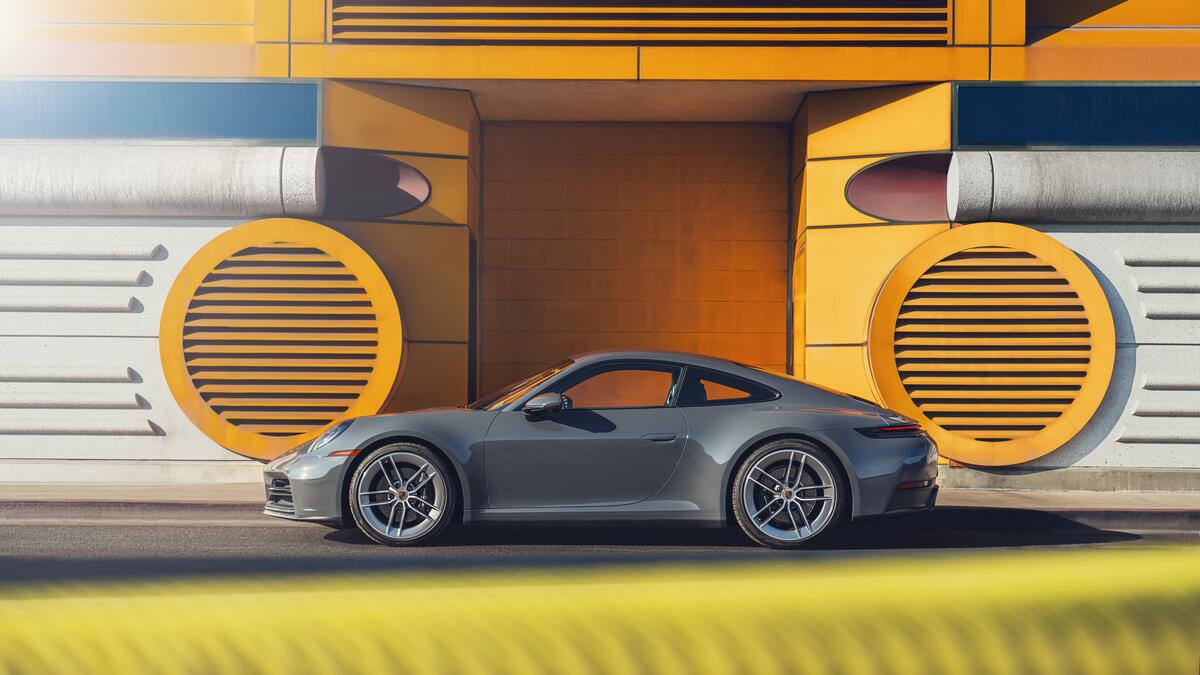
87 Carrera
"But I did flip and I went and I got this Carrera, this 87 Carrera that I have now, and it has turned out to be an absolute dream."
A “Carrera” is a performance version of the Porsche 911. The host is talking about their 1987 911 Carrera, and they like that it’s fun to drive and still has air conditioning for comfort.
“Carrera” is Porsche’s performance trim name for many 911 variants, and here the speaker is talking about a 1987 Porsche 911 Carrera. They describe it as an “absolute dream” and note it’s equipped with air conditioning—useful for everyday usability.
Martin's German Service
"My friend, my friend Keith Martin at Martin's German Service in Roanoke is an expert. He built the motor for me."
This is the name of a local repair shop the host trusted for a major engine job. Shops like this often specialize in certain brands, so they’re more familiar with the car’s common issues.
Martin's German Service is referenced as a specialist shop that built the engine for the host’s Porsche 911. The “German Service” wording signals a workshop focused on German makes, which often matters for correct diagnostics and parts sourcing on older enthusiast cars.
Keith Martin
"My friend, my friend Keith Martin at Martin's German Service in Roanoke is an expert. He built the motor for me."
Keith Martin is named as the expert at Martin's German Service who built the host’s engine. In enthusiast circles, having a known specialist do major work is often a key part of keeping older cars reliable.

83 Ferrari 308 GTS Quattra Valve
"So I like these color combination, I guess. I bought an 83 Ferrari 308 GTS Quattra Valve."
This is a Ferrari 308 GTS from the early 1980s. It’s a famous classic Ferrari with a V8 engine and a layout that puts the engine behind the driver for a more balanced feel.
The Ferrari 308 GTS is a classic V8 grand touring car from Ferrari’s 1970s/80s era, and it’s especially notable for its mid-engine layout and enthusiast following. In this segment, the host specifically mentions an “83” Ferrari 308 GTS and describes buying it with a claimed provenance and mileage that mattered to Ferrari buyers.
original owner car
"I I was cruising eBay one day and saw this car listed, and it had a story that I didn't really believe. That it was an original owner car."
An “original owner car” is one that has only had one owner since it was new. People like that because it usually comes with a clearer history of how the car was cared for.
“Original owner car” means the vehicle has had just one owner since it was new, which can make its history easier to verify. In classic and collector circles, that matters because it can reduce uncertainty about how the car was driven, maintained, and modified.
55,000 miles
"That it was an original owner car. It had 55,000 miles on it, which to me is nothing."
They’re talking about mileage—how many miles the car has been driven. In collector circles, some people treat higher mileage as a sign the car is worn out, while others think it’s still fine if it was maintained.
The host is discussing mileage as a proxy for wear in the collector-car world. They’re contrasting how some Ferrari buyers interpret 55,000 miles as “used up,” while the host personally sees it as relatively low for a car that can still be maintained and enjoyed.
14-inch wheels
"Yeah, that is for an 83. And had the 14-inch wheels on it, which I thought I think they look better."
“14-inch wheels” means the wheel size. Changing wheel size also changes the tire shape—especially how tall the rubber sidewall is—which can affect how the car rides and how it looks.
Wheel diameter (like 14-inch) strongly affects the tire’s sidewall height and the overall stance of an older car. Smaller wheels typically pair with taller sidewalls, which can change both ride feel and the classic “look” the owner is aiming for.
wheels and tires mean everything
"Here's my pitch on this wheels and tires mean everything on an old car. I think I think you gotta have the right look."
They’re saying the wheels and tires are a huge part of how an older car looks. Even if the tires are expensive or hard to find, getting the right combination is what makes the car look correct.
On classic cars, wheel and tire choice is a major part of achieving the intended visual proportions and period-correct stance. The speaker frames it as an aesthetic-and-fitment issue: the right tire/wheel combination is hard to source but makes the car “look right.”
fat sidewall look
"My 87911 has got 15-inch wheels because I like that original fat sidewall look. That's what it's got."
A “fat sidewall look” means the tire’s sidewall looks thicker and taller. That usually happens when you use a wheel size that lets the tire have more rubber on the side, which changes the car’s visual style.
A “fat sidewall look” refers to using tires with taller sidewalls relative to wheel diameter, which visually thickens the tire and can make the car look more period-correct. It’s often associated with classic wheel/tire sizing choices rather than modern low-profile setups.
sevens and eights
"That's the way it came, sevens and eights. And this Ferrari had those 14-inch wheels."
They’re talking about wheel widths—like 7-inch and 8-inch wheels. Wider wheels can fit wider tires and change both the handling feel and the way the car sits.
“Sevens and eights” is shorthand for wheel widths (commonly 7-inch and 8-inch) used on many classic performance cars. Wheel width affects tire fitment, steering response, and how the car’s stance looks.
tires are were very difficult to find
"And the tires are were very difficult to find, very expensive, put it that way. You can buy them, but they're very expensive."
With older cars, the exact tire size they were meant to run can be hard to source. When those tires are rare, they cost more and can be a hassle to replace.
For older cars, specific tire sizes can become scarce, especially when they’re tied to period-correct wheel diameters and widths. Scarcity drives up cost and can make it harder to keep the car’s original look and handling characteristics.

Delorean DMC-12
"My cross to bear, I guess. My my DeLorean still has original 14s and 15s, and a friend of m..."
The DeLorean DMC-12 is a sports car known for its unusual stainless-steel look and doors that open upward. People often talk about it because it’s very recognizable. In the podcast, it’s mentioned in relation to keeping the car’s original parts.
The DeLorean DMC-12 is a distinctive sports car famous for its stainless-steel body and gull-wing doors. In the podcast, it’s specifically tied to the speaker’s personal connection and mentions of keeping original wheels/tires. That kind of detail is typical when discussing preservation and restoration of iconic cars.
Bosch K-Jet
"Never been used to there are X number of companies out there that just are reproducing different parts, they're improving new parts, they're very creative people who are coming up with solutions to get rid of the I I know you're familiar with this, the Bosch Hey Jet, which which my car still has, which it's worth more money with it, but man, it's annoying."
Bosch K-Jetronic is an older-style fuel injection system that controls how much fuel the engine gets. When it has problems, the car can run poorly, and troubleshooting can take a lot of time.
Bosch K-Jetronic is a mechanical fuel-injection system used on some older cars, including the DeLorean. It meters fuel based on engine conditions rather than modern electronic control, so issues can show up as drivability problems and can be frustrating to diagnose.
oil light flashes
"...by um decelerating, step in the clo step, step on the engine, the RPM drops just low enough that the oil light flashes and the car almost stalls, not quite, and then you lose your power brakes for like that split instance..."
The oil light flashing usually means the engine isn’t getting enough oil pressure. If it happens when you slow down, it can be a sign something in the oil system or sensors needs checking.
When the oil pressure warning light flashes, it typically indicates low oil pressure or a sensor/control issue. In this segment it happens during deceleration when the RPM drops, and the host connects it to a near-stall and a brief loss of power brakes.
power brakes
"...the RPM drops just low enough that the oil light flashes and the car almost stalls, not quite, and then you lose your power brakes for like that split instance..."
Power brakes are brakes that are boosted so you don’t have to press as hard. If they “go away” briefly while slowing down, it can make braking feel suddenly harder or less effective.
Power brakes are brake systems that use engine vacuum or another assist source to make braking easier. If the host loses power brakes during a deceleration moment, it suggests the vacuum/engine conditions are dropping enough to reduce brake assist right when you need it most.
LS swap kits
"So I'm still trying to figure that out, but they make LS swap kits for them. I mean you can do anything with those cars."
An LS swap means putting a GM LS V8 engine into a different car. A swap kit is the set of parts needed to make the engine fit and run properly.
An LS swap is replacing a car’s original engine with a GM LS-series V8, and “swap kits” are the parts and adapters needed to make that conversion work. The host notes that DeLorean LS swap kits exist, but that there’s limited appeal compared with the Ferrari and Porsche crowd.
Back to the Future
"Or or you really like Back to the Future, one or the other. [1621.0s] Or, or in my case, both."
Back to the Future is a movie series that features a famous car. The speaker is joking that people might know the DeLorean because of the movie, even if they’re not deep into cars.
Back to the Future is the film franchise that made the DeLorean especially famous to non-car people. The speaker uses it as a shorthand for why someone might be interested in cars—either they like the movie or they’re genuinely into the car hobby.
Gary Duncan
"And I've gotten to know this guy, Gary Duncan, who owns a company called Duncan Imports. [1641.7s] And I would go to Gary's place all the time..."
Gary Duncan is the person the speaker knows who runs a car import business. The speaker says they visited him a lot and that’s where they found the Toyota Century.
Gary Duncan is mentioned as the person who owns Duncan Imports and connects the speaker to a supply of right-hand-drive Japanese cars. In the story, the speaker visits Duncan’s place often and eventually finds the Toyota Century.
Duncan Imports
"And I've gotten to know this guy, Gary Duncan, who owns a company called Duncan Imports. [1641.7s] And I would go to Gary's place all the time..."
Duncan Imports is the business the guest’s acquaintance runs. The speaker says they’d visit and browse the shop’s selection of Japanese right-hand-drive cars.
Duncan Imports is referenced as the company Gary Duncan owns, and it’s presented as a source for right-hand-drive vehicles. The speaker describes visiting the company’s inventory and finding a Toyota Century there.
25-year rule
"I would wander these long aisles of weird right-hand drive stuff that a lot of it never came to the States, but because of the 25-year rule, there's always this rolling sort of, okay, these types of cars are now starting to come in."
The “25-year rule” is a U.S. guideline that makes it easier to import older cars. That’s why classic Japanese cars (often right-hand-drive) start showing up in the U.S. once they’re old enough.
The “25-year rule” refers to a U.S. import allowance that lets older vehicles enter the country more easily than newer cars. Enthusiasts use it to bring in right-hand-drive JDM models that otherwise wouldn’t be legal or practical to import.
right-hand drive
"I would wander these long aisles of weird right-hand drive stuff that a lot of it never came to the States... [1709.4s] So I've never like owned one in a practical sense of understanding the the differences in that."
Right-hand drive means the steering wheel is on the right side of the car. The speaker is saying they hadn’t owned one before, so they weren’t used to how it feels and works compared with left-hand-drive cars.
Right-hand drive means the steering wheel is on the right side of the car, which is common in Japan and the UK. The speaker highlights that they hadn’t previously owned a right-hand-drive car, so they were learning the practical differences in driving and daily use.

Toyota Century
"And I was walking down and I saw a car, and it was called a Toyota Century. [1665.2s] And in Japan, they are some of them are taxis, some of them are executive limousines, some of them are owned by Yakuza mob bosses."
The Toyota Century is a top-of-the-line Toyota sedan in Japan, usually associated with high-end buyers and professional chauffeur use. The speaker is describing it as especially luxurious—like a “luxury limousine” vibe—plus they bought one in a right-hand-drive layout.
The Toyota Century is a flagship Japanese sedan known for its ultra-luxury, traditional craftsmanship and chauffeur/executive use. In this story, the speaker emphasizes its hand-finished interior and paintwork, and notes it’s a right-hand-drive car they drove back from Virginia to Maryland.
JDM
"But that was my first JDM."
JDM means “Japanese Domestic Market.” It refers to cars that were originally made and sold in Japan, and they can be different from the versions you’d normally find in the U.S., including what parts are available.
JDM stands for “Japanese Domestic Market,” meaning cars that were originally sold in Japan (often with specs and equipment tailored to Japanese rules and preferences). Enthusiasts use the term to distinguish these from cars that were primarily sold in other markets, and it often implies a different parts ecosystem and sourcing strategy.
Bonneville
"And we went to Bonneville in it."
Bonneville is a famous salt-flat area in Utah where people go to set land-speed records. Mentioning it signals the trip wasn’t just sightseeing—it included a stop tied to serious speed history.
Bonneville refers to the Bonneville Salt Flats area in Utah, famous for land-speed records and high-speed testing on salt. Here, it’s part of the itinerary, emphasizing that the Toyota Century trip included a stop associated with extreme-speed motorsport culture.
Speed Week
"We we had a great adventure at the Bon on the Bonneville Salt Flights at Speed Week in it on the way out there."
Speed Week is a set of days at Bonneville focused on speed runs and record attempts. The hosts are using it to describe when and where their Bonneville adventure happened.
Speed Week is an event period associated with racing and record attempts at Bonneville, typically involving multiple days of runs and testing. In this segment, it’s referenced through the “Bonneville Salt Flights at Speed Week” phrasing to place the adventure in the context of Bonneville’s organized speed activities.
Yosemite
"Drove it through Yosemite."
Yosemite is a famous national park in California. The hosts mention it as a stop on their long road trip.
Yosemite refers to Yosemite National Park in California, a well-known road-trip destination with major scenic routes. It’s mentioned here as part of the cross-country touring storyline rather than as a technical automotive topic.
electrical things start to go bad
"If you're gonna buy one of these, you have to understand there's some MacGyvering of when certain electrical things start to go bad because they just don't, Toyota doesn't support it."
As cars get older, some of the electronics can start failing—like sensors or control parts. The speaker is saying Toyota doesn’t really support repairs for older issues, so owners have to figure out fixes themselves.
This refers to aging-related failures in a car’s electrical systems—things like sensors, control modules, wiring, or other components that can degrade over time. The key point in the segment is that the Toyota Century’s older electrical issues weren’t supported by Toyota service parts or documentation, so owners rely on improvised troubleshooting.
air shocks
"we got some GM F body air shocks and got it level again."
Air shocks are suspension parts that use air pressure to help control the car’s ride height. Here, they were used as a fix to get the car sitting level again after suspension problems during the trip.
Air shocks are suspension components that use compressed air instead of (or alongside) conventional steel springs to provide ride height and damping. In this segment, the hosts used GM F-body air shocks as a practical workaround to level the car when it began “self-destructing” over the long trip.
V12
"So anything post-1997 is has a V12. When I had mine, it was a four-liter V8, a little Hemihead V8."
A V12 is a type of engine with 12 cylinders. It’s known for feeling very smooth because the engine fires in a steady rhythm.
A V12 is an engine with 12 cylinders arranged in a “V” shape (two banks of six). Because it has more cylinders and smoother firing intervals than smaller engines, it often feels very smooth at speed and at idle.
Hemihead V8
"When I had mine, it was a four-liter V8, a little Hemihead V8. Very cool."
A “Hemi” V8 uses a special shape inside the engine where the fuel burns. That design helps the engine breathe and burn efficiently, which is why people associate it with strong power.
“Hemi” refers to a hemispherical combustion-chamber design used on some V8 engines. The shape can improve airflow and combustion, which is why “Hemi” engines are often associated with strong performance and a distinctive character.
Nakamichi stereo system
"See, mine would be like a Nakamichi stereo system that was all factory, and the the person who was being chauffeured would could control all the stuff in the car, electric headrests and all..."
Nakamichi is a well-known brand for high-quality car audio. If your car had a Nakamichi system, it likely had better speakers and sound than the standard setup.
Nakamichi is a brand known for high-end car audio equipment, especially premium cassette-era and later systems. When someone says their car had a “Nakamichi stereo system,” it usually means the factory audio was upgraded beyond basic speakers.
electric headrests
"See, mine would be like a Nakamichi stereo system that was all factory, and the the person who was being chauffeured would could control all the stuff in the car, electric headrests and all..."
Electric headrests are head supports that move using a motor. In some luxury cars, the rear passenger can adjust them for comfort.
Electric headrests are adjustable head supports moved by motors rather than manual levers. In luxury cars, they’re often part of a power seat/comfort package and may be controlled from the rear for a chauffeur-style setup.
remote control in the back
"All this was controlled by remote control in the back. It did not have a TV, but it had every kind of audio and sensory thing you could imagine."
This means the passenger in the back can control things in the car from behind, like comfort settings and audio. It’s designed for chauffeur-style riding where the driver handles the car.
A rear remote-control setup lets the back-seat passenger operate comfort features (like seat position, headrests, and audio) without reaching the front controls. It’s common in chauffeur-oriented luxury configurations and long-wheelbase variants.
DeLorean Parts International
"It's the heaviest clutch I've ever had. [1955.1s] I actually it's speaking of all the parts availability, uh, company called what is it called? [1960.5s] DPI, and I forget exactly, DeLorean Parts International, I think."
DeLorean Parts International is a company that makes replacement or upgrade parts for DeLoreans. In this story, they sell a kit meant to make the clutch easier to use.
DeLorean Parts International is an aftermarket parts supplier focused on the DeLorean. The host mentions the company because it offers a kit intended to reduce clutch effort by changing the hydraulic actuation components.
master enslaved cylinder
"They make a kit with a just reduced effort master enslaved cylinder. [1970.6s] And that kit has been at my friend's house in Jarrett'sville, Maryland, since like December. [1976.1s] So we're just trying to coordinate a time to get my car up there and he's gonna install it because I I it's just never been the same."
This is about the hydraulic parts that help your clutch work. The master cylinder and slave cylinder push fluid to move the clutch, and a “reduced effort” version can make the pedal feel lighter.
The host is describing the DeLorean’s clutch hydraulic system, specifically the master cylinder and the slave cylinder (the transcript says “master enslaved cylinder”). These parts convert your pedal movement into hydraulic pressure to operate the clutch, so changing them can noticeably reduce pedal effort.
Jarrettsville, Maryland
"And that kit has been at my friend's house in Jarrett'sville, Maryland, since like December. [1976.1s] So we're just trying to coordinate a time to get my car up there and he's gonna install it because I I it's just never been the same. [1982.6s] So that car in traffic is not fun at all."
Jarrettsville is a place in Maryland. The host says the parts kit is being kept there until they can bring the car over for the install.
Jarrettsville is a town in Maryland, referenced here as the location where the DeLorean parts kit has been stored. The host plans to coordinate a time to bring the car there for installation.
2.85 liter PRV
"[1985.7s] It's a Renault engine, a Peugeot engine, uh 2.85 [1989.3s] liter PRV."
This phrase is basically an engine ID: it tells you the engine family (PRV) and its size (2.85 liters). It’s used to compare what’s under the hood across different car brands.
“2.85 liter PRV” combines a displacement figure with the PRV engine-family acronym. It’s a way of identifying a particular European V6-era engine spec that the speaker contrasts with other brands’ parts.
1917 Willie's Overland 90BT
"So with that said, my first pre-war car that I that I have owned, I had a 1917 Willie's Overland 90BT."
This is a 1917 Overland touring car. It’s from the pre-war era, so it’s mechanically and practically very different from modern cars—more “old-school” and unusual to live with.
The 1917 Willie's Overland 90BT is an early-1900s American touring car, notable for being a pre-war vehicle with a very different engineering and ownership experience than modern cars. The “90BT” designation points to a specific model/trim within the Overland lineup, and the speaker emphasizes its unusual, period-correct character.
old ocean city road
"I was like, oh, we're gonna put some air in these white, hard as a rock tires, and I'm gonna drive it back on old ocean city road, and I'm gonna have this car."
This is just the road the host mentions planning to drive on. It’s part of the story about getting the car home and moving it around.
“Old Ocean City Road” is a specific local road reference used to describe where Brad planned to drive the car after inflating its tires. It’s relevant mainly as a personal anecdote location rather than a technical automotive reference.
white, hard as a rock tires
"I was like, oh, we're gonna put some air in these white, hard as a rock tires, and I'm gonna drive it back on old ocean city road, and I'm gonna have this car."
He’s describing tires that look like they’ve dried out and hardened over time. That can make them unsafe, and the “white” part is likely the classic whitewall look you see on older cars.
The phrase describes tire condition: “hard as a rock” implies the rubber had gone stiff from age or long storage, which can make tires unsafe and difficult to drive on. The “white” likely refers to whitewall styling common on older cars.
AACA
"And when I brought it in and I was excited, I went to one of my first car club meetings for my local AACA."
AACA is a classic-car club in the U.S. Brad is saying he went to one of the club meetings because other members knew his old car.
AACA is the Antique Automobile Club of America, a major U.S. organization for classic-car owners and restorers. Brad mentions attending an early local AACA meeting to connect with other enthusiasts who knew the car’s history.
village bicycle
"This thing had been the village bicycle of pre-war cars around this club, and it had always been on the eastern shore of Maryland, which is weird."
“Village bicycle” is a saying for something that lots of people have used over the years. Here, it means this old car changed hands a lot and was a familiar car in the club.
“Village bicycle” is a classic-car hobby phrase meaning a car that has been passed around among many owners over time. In this context, it suggests the 1917 Willie's Oberlin was a long-running club fixture and likely saw repeated disassembly and reassembly.
spare parts
"But the funny part is I'd talking to these guys, hey, everybody in the club for some reason had spare parts to it. That told me how many times this car had been apart."
Spare parts are extra pieces people keep so they can fix the car when something breaks or is missing. The host is saying the club had lots of parts for this car, which hints it was frequently worked on or taken apart.
In restoration and vintage ownership, “spare parts” are extra components kept on hand to repair or replace worn or missing pieces. Brad connects the club members having spare parts for this car to the idea that it had been apart many times.
original engine stamp
"Although it still had its original engine stamp and original chassis. At least it seems like they had put it back together with at least the main original stuff over time."
An engine stamp is a factory marking on the engine. Keeping the original one helps show the car’s engine is the one it started with, which collectors care about.
An “engine stamp” is a factory marking on the engine block that can identify the engine’s origin and sometimes its production details. In restoration circles, keeping the original engine stamp supports authenticity and helps confirm the car hasn’t been fully rebuilt with unrelated parts.
original chassis
"Although it still had its original engine stamp and original chassis. At least it seems like they had put it back together with at least the main original stuff over time."
The chassis is the main frame that everything else mounts to. If it’s the original chassis, it means the car’s core structure is still the one it started with, which is important for authenticity.
The chassis is the car’s main structural foundation, and an “original chassis” means the vehicle’s core frame is the one it was built with. For vintage cars, retaining the original chassis is a major authenticity signal because many restorations replace frames or swap rolling shells.
three-speed crash box
"It was, you know, it was a three-speed crash box. You know, you had to set your timing and all this stuff on the steering wheel."
This is an old-style manual gearbox. It doesn’t automatically “smooth out” the gear changes, so you have to shift carefully and match speeds so the gears don’t clash.
A “crash box” is a manual transmission that doesn’t use synchronizers, so you have to match engine speed to the gear speed to avoid grinding. A “three-speed crash box” means it has three forward gears and relies on careful shifting technique rather than modern synchronized shifting.
timing
"You know, it was a three-speed crash box. You know, you had to set your timing and all this stuff on the steering wheel."
“Timing” is when the engine fires its spark. If it’s set wrong, the car can run rough or be hard to start.
In an older engine, “timing” usually refers to ignition timing—when the spark happens in the engine cycle. Setting it correctly affects starting, power, and engine smoothness, especially on carbureted or mechanically controlled setups.
leather cone clutch
"I learned a lot about taking care of that kind of a car, leather cone clutch. But it was always fun."
A “leather cone clutch” describes a friction clutch that uses a cone-shaped leather friction surface. Leather clutches were common on early cars; they require proper adjustment and can wear differently than modern lined clutches.
brass cups
"if you hadn't driven it in a while, they had these little brass cups on top of the engine that you would fill with a little dab of fuel and you'd open each one to put fuel directly in the cylinder."
These are manual fuel-starting devices. When the engine is cold, you add a little fuel into the cylinders by opening those cups so it will start more easily.
“Brass cups” on the engine are a method of adding fuel directly to the cylinders for starting or cold running on certain early engines. Instead of using a modern fuel injection system, the driver manually dispenses a small amount of fuel into each cylinder.
spraying ether
"You know, that was the way they did it instead of spraying ether down into it to fire it up. If it was cold, you just it was built to do this."
Some older cars are hard to start when cold, so people used ether as a quick-start chemical. It’s very easy to ignite, but you don’t want to rely on it too much.
“Spraying ether” refers to using ether as a starting aid for cold engines. Ether is highly volatile, so it can help an engine catch when fuel delivery or ignition conditions aren’t ideal, but it can also be harsh on components if overused.
air-cooled
"I've been talking to a friend of mine about a Franklin. And I think having a Franklin would be fun because they're air-cooled, and I could have an air-cooled pre-war car with my air-cooled 9-11 stuff."
An air-cooled engine uses airflow to keep the engine from overheating. It doesn’t rely on coolant like many modern cars do.
“Air-cooled” means the engine sheds heat using airflow over the engine rather than a liquid coolant system. Many pre-war cars used air cooling, which changes maintenance and operating habits compared with water-cooled engines.
chain of ownership document
"I did because it was advertised as the Jack Benny ironclad chain of ownership document."
They’re talking about paperwork that shows the car’s ownership history—who had it and when. Collectors like this because it helps prove the car’s background.
A “chain of ownership document” is paperwork that traces who owned a car over time. In classic-car circles, having a clear ownership history can help support authenticity and can make a car easier to value and verify during restoration or resale.
date coded
"Everything on it was still date coded, 1965. [2537.7s] And it was, it had some really neat, I think it was a five-dial car..."
“Date coded” means parts have a stamped production date on them. If the dates all match the car’s build year, it’s a sign the car is more original and easier to restore accurately.
“Date coded” refers to parts stamped or marked with production dates, which can be used to verify whether components match the car’s original build period. The host says everything on the early car was still date coded to 1965, implying strong originality and historical correctness.
eBay'd
"So there were a bunch of little parts that I got off it that I sent to other people that I knew would need them and then eBay'd the rest. [2578.3s] But now I think with how old the car actually was..."
“eBay’d” just means they got parts from eBay. For old cars, you often have to hunt down small, specific pieces online to finish a restoration.
“eBay’d” is shorthand for sourcing parts through eBay, an online marketplace. The host says they sold/obtained the remaining pieces there after salvaging what they could, which is a common strategy in classic restoration when specific trim or small parts are hard to find.
Request an Explanation
Heard something you'd like explained? We'll add it to this episode.
Sign in to request explanations for terms you heard.
Want to learn more?
Browse our glossary for plain-English explanations of automotive terms, jargon, and concepts.
Help improve this episode
See something that's not quite right? Our annotations are AI-generated and can sometimes miss the mark. Click the flag icon on any annotation to suggest a correction.
1 community members have helped improve this episode.