
The Racing Gene: Pro Porsche Driver Sabré Cook & Hall of Fame Dad Stacey Cook
About this episode
Back-to-back stories connect motorsport engineering, family racing roots, and classic-car memories. Saber Cook is introduced as “a mechanical engineer” who designed suspension parts for the Renault F-1 team and can “build a car, break it down” and drive a 500-horsepower 911 GT3 Cup. Stacey Cook shares a terrifying 1963 Corvette coupe moment (including a wheel “fall off at about 121”), plus early dirt-bike progression, road-trip navigation without GPS, and how modern safety gear evolved from riding mechanics to HANS.
Click here to share your favorite car, car story or any automotive trivia!
A Father’s Day Special: The Unbreakable Bond of a Racing Family
Happy Father’s Day! This week on To All The Cars I've Loved Before, we are celebrating the ultimate father-daughter racing duo. We’re sitting down with Sabré Cook—a mechanical engineer and professional driver for JDX Racing in the Porsche Carrera Cup North America—and her dad, Stacey Cook, a former professional motocross rider who was inducted into the Colorado Motorsports Hall of Fame in 2023.
In this episode, we dive deep into the Cook family’s high-octane history. Stacey shares his incredible journey from racing a $800, 200,000-mile Datsun pickup across Colorado with dirt bikes in the back, to the terrifying realization of watching his own daughter speed past him in a formula car. Sabré discusses her disciplined path to the driver's seat (which required straight A's just to get a Chevy Equinox!), her ultimate goal to race in the 24 Hours of Le Mans, and why she believes a $2 Million Porsche 911 DLS Singer is the ultimate dream car.
Whether you are looking to get into track days yourself or just want to hear a heartwarming story about a father who supported his daughter's drive to the top, this episode is packed with life lessons, laughs, and serious horsepower.
In this episode, we cover:
- Stacey's wild early days: Street racing a 1965 Corvette and surviving cross-country trips in an orange Datsun.
- Safety Evolution: The shocking differences between a 1970s Datsun and Sabré's modern safety cocoon.
- How to start racing: Sabré's advice on using simulators (like iRacing and Assetto Corsa) and buying a Mazda Miata to build track skills on a budget.
- The emotional toll of motorsports: Stacey opens up about the sacrifices Sabré makes to be a pro driver, working 24/7 with little social life.
- Trivia: What common safety feature was invented out of necessity at the very first Indy 500 in 1911?.
Follow Sabré Cook: Check out her website and find the hidden Easter egg photo of her at 3 months old on her dad's vintage motorcycle: sabrecookracing.com.
Connect with Us: Got a great car story? Email us at [email protected]. Find all our content and social links here: linktr.ee/carsloved.
Remember, every car tells a story. What’s yours?
Love the show? Please follow, rate, and review on Apple Podcasts! ⭐⭐⭐⭐⭐

Delorean DMC-12
"...book and and kind of trademark Back to the Future DeLorean swag on today. Yeah."
The DeLorean DMC-12 is a sports car with a very unusual look, including a stainless-steel body. It’s famous partly because it’s been featured in popular movies. People often bring it up when talking about car history and recognizable automotive icons.
The DeLorean DMC-12 is a distinctive sports car best known for its stainless-steel body and its strong pop-culture association. It’s frequently discussed in automotive history because it represents a unique, high-visibility attempt to build a different kind of sports car. The podcast mention ties it to “Back to the Future” style imagery and merchandise, highlighting its cultural footprint as well as the car itself.
Sabré Cook
"So first up we have Sabré Cook, and if anybody follows Porsche Carrera Cup North America, you know her as the powerhouse behind the wheel for JDX racing."
Sabré Cook is a pro race car driver who is also a trained mechanical engineer. She's the first woman to compete in the Porsche Carrera Cup North America, a prestigious racing series, and before driving full-time she worked designing parts for a Formula 1 team.
Sabré Cook is a professional racing driver and mechanical engineer competing in the Porsche Carrera Cup North America, the first woman to race in it. She holds a Mechanical Engineering degree from Colorado School of Mines and worked as an engineer for the Renault F1 team and Nissan/Infiniti Global before returning full-time to racing.
JDX Racing
"And if anybody follows Portia Carrera Cup North America, you know her as the powerhouse behind the wheel for JDX racing."
JDX Racing is the professional racing team that Sabré Cook drives for in the Porsche Carrera Cup — a one-make racing series where everyone competes in the same Porsche 911 GT3 Cup car.
JDX Racing is a professional motorsport team competing in the Porsche Carrera Cup North America series. Sabré Cook races for JDX as car #37, making her the first woman to compete in the series.
Porsche Carrera Cup North America
"And if anybody follows Portia Carrera Cup North America, you know her as the powerhouse behind the wheel for JDX racing."
The Porsche Carrera Cup North America is a race series where every driver competes in the same car — the Porsche 911 GT3 Cup — so the results come down purely to skill. Sabré Cook was the first woman ever to race in it.
The Porsche Carrera Cup North America is the premier single-make racing championship on the continent, run exclusively with 911 GT3 Cup cars. Sabré Cook made history as the first woman to compete in it, breaking into the series in 2023 after cutting her teeth in W Series, USF2000, and Porsche Sprint Challenge. She's now in her third season, racing the #37 JDX Racing entry.
suspension components
"She's not just a driver, she also is a mechanical engineer who has designed suspension components for the Renault F-1 team."
Suspension components are the parts that help the wheels stay in contact with the road. They affect how the car turns, brakes, and rides over bumps. The host is pointing out that Sabré Cook designs these parts for race teams.
Suspension components are the parts that connect the wheels to the car's body and control ride and handling. In racing, they're tuned to manage grip, steering response, and how the car behaves under braking, acceleration, and cornering. The host mentions this to show Sabré Cook's engineering work is directly tied to performance.
Renault F1 Team
"She's not just a driver, she also is a mechanical engineer who has designed suspension components for the Renault F-1 team."
Renault's Formula 1 team is one of the top racing organizations in the world. Sabré Cook — beyond being a professional driver — actually worked there as an engineer. She has a Mechanical Engineering degree and used it in F1 before returning full-time to driving.
The Renault F1 team is one of the storied entries in Formula 1, competing as Renault and later as Alpine. Sabré Cook worked there in an engineering capacity — one of several elite motorsport engineering roles she held alongside her racing career, including positions at Nissan/Infiniti Global and Ed Carpenter Racing. Her F1 engineering experience directly informs how she sets up and debriefs her GT3 Cup car.

Porsche 911 GT3 Cup
"And she's one of the few people on the planet who can build a car, break it down, and then go out in the field in a 500 horsepower 911 GT3 cup car."
The 911 GT3 Cup is a race-only version of the Porsche 911 built purely for track competition. Sabré Cook was the first woman to race one in the Porsche Carrera Cup North America. Unlike almost any other professional driver, she also has an engineering degree and worked for a Formula 1 team. She can literally take the car apart and put it back together herself.
The Porsche 911 GT3 Cup is a purpose-built racing version of the 911 produced exclusively for one-make cup competition. It produces around 510 hp from a naturally aspirated flat-six in current 992 form. Sabré Cook is the first woman to compete in the Porsche Carrera Cup North America, now in her third season with JDX Racing (#37). She holds a Mechanical Engineering degree from Colorado School of Mines (cum laude) and worked as an engineer for the Renault F1 team and Nissan/Infiniti Global. She can build the car, break it down, and race it.
Stacey Cook
"And with her virtually, we have her man, her father, pardon me, the man who started it all, Stacey Cook. Stacy is a Coloradan and was inducted in 2023 into the Colorado Motorsports Hall of Fame. He made his name on two wheels, not four, as a professional motocross and supercross rider back in the day. He's the one who traded his handlebars for a wrench to help Sabré get her start in karting at the early age of eight."
Stacey Cook is Sabré Cook's father. He was a professional motorcycle racer who later channeled that expertise into getting Sabré into karting at age eight — and has been in her corner ever since as a mechanic and coach.
Stacey Cook is a professional motocross and supercross rider inducted into the Colorado Motorsports Hall of Fame in 2023. He got Sabré started in karting at age eight, transitioning from racing himself to wrenching and coaching his daughter through every championship and podium since.
riding mechanic
"But the trivia question for today's episode is we talk a lot about keeping your eyes on the road, but in the early days of racing, drivers had to rely on a riding mechanic sitting alongside them to yell where the competition was."
Back in the early days of racing, someone would actually ride in the car with the driver. Their job was to tell the driver where other cars were, since there was no modern communication equipment.
In early racing, a “riding mechanic” sat alongside the driver to watch the race and communicate where competitors were. It was essentially a human spotter because cars didn’t have modern radios or driver information systems.
lap belt
"Well, especially looking at the safety aspects that we have today in both just regular civilian cars versus race cars and and everything, and how you know, like it was just the regular lap belt back in the the the 50s and 60s, and they're like, I put a helmet on, and you know what I mean?"
A lap belt is a seatbelt that goes around your waist. The episode is saying that in the 1950s and 1960s, that was often the only restraint used, even though it doesn’t protect you as well as newer harnesses.
A lap belt is a seatbelt that restrains the driver across the hips only. In the 1950s and 1960s, many race cars relied on lap belts, which offered less protection in crashes than later multi-point harnesses.
Hans device
"Now we have roll cages and five-point harnesses, and you know, the oh the Hans device for your neck."
The HANS device is a safety system that helps protect your head and neck in a crash. It connects your helmet to your seatbelt so your head can’t whip forward as easily.
The HANS device (“Head and Neck Support”) is a head restraint system used in motorsport to reduce the risk of neck injuries. It works by connecting the helmet to the car’s harness so the head is supported during high-force impacts.
roll cages
"Now we have roll cages and five-point harnesses, and you know, the oh the Hans device for your neck."
A roll cage is a strong metal frame inside the car. It’s there to protect the driver if the car flips or crashes hard.
A roll cage is a reinforced metal frame inside a race car designed to protect the driver during rollovers and severe impacts. It helps maintain a survival space around the driver when the body structure is compromised.
five-point harnesses
"Now we have roll cages and five-point harnesses, and you know, the oh the Hans device for your neck."
A five-point harness is a multi-strap seatbelt used in racing. It holds you at the shoulders and hips (and between the legs) so you’re less likely to slide around during a crash.
A five-point harness is a racing seatbelt system with straps over the shoulders, across the hips, and between the legs. Compared with a lap belt, it better controls the driver’s body in a crash and reduces the chance of submarining or excessive movement.

Datsun 620
"It was an old like 1972 Dotson pickup with about 200,000 miles on it."
The Datsun 620 was a small, tough pickup truck made by Datsun (which later became Nissan) starting in 1972. They were famous for running forever even with huge mileage — Stacey Cook's was already at 200,000 miles when he bought it for $800.
The Datsun 620 was a compact pickup produced from 1972–1979 — so Stacey Cook's "1972 Datsun pickup" is almost certainly a 620. Known for bulletproof reliability, he bought his for $800 with 200,000 miles already on it and drove it to motorcycle races across Colorado.
stick shift
"You remember the old Dodson stick shift pickups, and and we would pack three or four people in there,"
A “stick shift” means the car or truck has a manual transmission. You change gears yourself with a lever (and usually a clutch pedal).
“Stick shift” refers to a manual transmission, where the driver selects gears using a gear lever and a clutch. In older pickups like the one being discussed, manual gearboxes were common and helped keep the drivetrain straightforward.

Chevrolet Corvette
"...so get to choose the car. So it wasn't gonna be a Corvette. Oh no."
The Chevrolet Corvette is a sports car made by Chevrolet. It’s known for being fast and for having a recognizable look. People often talk about it as a dream car, even if they end up choosing something else.
The Chevrolet Corvette is a long-running American sports car known for its performance and iconic styling. In a podcast about car history and restoration, it often comes up as a “dream” or benchmark vehicle—especially when someone is deciding what they want to own or build. The mention suggests the Corvette was on the table but not chosen in that moment.

Chevrolet Equinox
"So when I was 16, we went and we tried a few cars and it we found something that was very dependable, very good on gas mileage, great in the snow. [891.8s] And it was a Chevy Equinox. [893.9s] So nothing, nothing crazy fancy, just got me to and from where I needed to go."
A Chevy Equinox is a regular everyday SUV. The point here is that it was chosen because it was dependable, got good gas mileage, and handled snow well. The speaker even named it “Pudge.”
The Chevrolet Equinox is a compact SUV known for being practical and easy to live with. In this story, the key point is that the speaker chose it for dependability, good fuel economy, and predictable winter traction. It’s also the car they named “Pudge,” tying the vehicle to their personal history.
aerodynamics
"So I did want to ask you, Sabré, just given your background and now having looping back to your dad's first car as a mechanical engineer, like thinking about the difference between his first car and your first car. What's your feeling on safety and aerodynamics?"
Aerodynamics is how the shape of a car interacts with the air as it moves. It matters because it can make the car use less energy and feel more stable at speed. Here it’s being brought up as part of the safety conversation.
Aerodynamics is how air flows around a vehicle and how that affects drag and stability. In car design, better aerodynamics can improve efficiency and high-speed behavior, which is why it comes up alongside safety in performance discussions. The host is teeing up a comparison between mechanical engineering and real-world driving concerns.
drag
"Chevy Equinox, I mean it's a small SUV, so it's gonna have a lot more surface area in general, so probably a lot more drag than the pickup truck, I would think."
Drag is the “air resistance” that slows a car down as it moves. They’re saying the pickup’s shape likely creates less air resistance than the SUV.
Drag is the aerodynamic force that resists a vehicle’s motion through air. The speaker connects drag to vehicle shape and size, suggesting the smaller pickup would have less drag than a small SUV like the Equinox.

Ford F100
"...y second car, it was an orange, but it was a Ford F100, 1975 Ford Fund single cab, and it was orange. Th..."
The Ford F-100 is a pickup truck made by Ford. The 1975 single-cab version is a classic style of truck with a simple, traditional layout. It’s the kind of vehicle people remember because it can be used like a work truck and is also popular for restoration.
The Ford F-100 is a classic pickup truck from Ford’s long-running F-Series lineup, and the 1975 single-cab example mentioned is part of that era’s styling and mechanical simplicity. In a restoration or automotive-history podcast, trucks like this often represent everyday durability and a straightforward platform for ownership or customization. The orange 1975 F-100 detail signals a personal connection to that specific generation.

Toyota RAV4
"It's uh Toyota RAV4, it's still still my car. I got it in college. It has 118,000 miles now on it."
The Toyota RAV4 is a popular SUV that’s meant to be reliable and practical. Here, the host is talking about what it’s been like to own it for years, including a paint problem they connected to a recall.
The Toyota RAV4 is a compact SUV known for being practical and easy to live with, which is why it’s a common college-to-commuter choice. In this segment, it’s notable because the host talks about real-world ownership details like mileage and paint peeling from a recall-related issue.
Spec Miata
"one in junction, the guy out at Spec was it Spec Miata Dad that built one or had one, and he brought it to the go-kart track."
Spec Miata is a racing series where everyone competes in nearly identical early Mazda Miatas. The strict rules keep costs low and the cars equal, so it's one of the most affordable ways to go wheel-to-wheel racing.
Spec Miata (SM) is one of the most popular club racing classes in North America, sanctioned by SCCA and NASA. It uses lightly modified Mazda Miatas from the NA (1990–1997) and NB (1999–2005) generations under strict rules designed to equalize the cars and make it a driver-skill competition. Low entry cost and plentiful used parts make it a common starting point for amateur road racers.
go-kart track
"Yeah, it's there's one in junction, the guy out at Spec was it Spec Miata Dad that built one or had one, and he brought it to the go-kar track."
A go-kart track is a place designed for racing small cars (karts). The host is using it as an example of where someone brought a super-fast car to drive.
A go-kart track is a small racing facility where drivers typically use karts rather than full-size cars. In this context, it’s used to illustrate how the host’s acquaintance brought a very fast car (the Ariel Atom) to a simpler racing environment.
naturally aspirated
"[1371.8s] Was it the supercharged version or was it just a natural aspirated version? [1375.7s] I think it was just a natural aspirated. [1377.5s] Still fast, not this was forever ago."
“Naturally aspirated” describes an engine that draws air in without a turbocharger or supercharger. The speaker is contrasting it with a “supercharged” version, implying the car’s power delivery would be more straightforward and less boost-based.
supercharged
"[1387.5s] Like that that's what drew me to that in the first place. [1390.0s] But yeah, I don't think it had a turbo because I I don't remember the feeling of the supercharged. [1394.0s] Sorry, I don't think it was."
“Supercharged” means the engine has a device that forces extra air into it. More air usually means more power, and it can make the car feel punchier when you accelerate.
A supercharged engine uses a compressor (a supercharger) to force more air into the cylinders than atmospheric pressure alone would provide. That typically increases power and changes how the engine feels, especially under acceleration, which is why the speaker is trying to remember whether the car had that “feeling.”
turbo
"[1387.5s] Like that that's what drew me to that in the first place. [1390.0s] But yeah, I don't think it had a turbo because I I don't remember the feeling of the supercharged. [1394.0s] Sorry, I don't think it was."
A “turbo” is a device that uses the engine’s exhaust to spin a compressor. It squeezes more air into the engine, which can make the car feel stronger when you accelerate.
A turbocharger (often shortened to “turbo”) uses exhaust gases to spin a turbine that compresses intake air. The speaker is contrasting turbocharging with supercharging while trying to recall how the car felt, which matters because each forced-induction system can deliver power differently.
kit car
"[1395.3s] Yeah, I don't think so. [1396.4s] Was that car available as a kit car? [1398.5s] Like I I remember seeing those on Motor Week actually, and part of me wonders if they were built in Maryland for some reason."
A kit car is basically a car you build from a parts kit instead of buying fully assembled. The question here is whether that specific model could be purchased that way.
A kit car is a vehicle sold as a set of parts that the buyer assembles (often with some level of customization). The speaker is wondering whether the Ariel Adam they’re discussing was available as a kit, which would affect how common it is and how it’s built.
open-wheel car
"This is an open-wheel car made by the British Aerial Motor Company based in Somerset, England, under license in North America by TMI Auto Tech at VIR."
An open-wheel car is a race car where the wheels are out in the open. You’ll see this on many formula-style race cars because it helps them move through the air efficiently.
An open-wheel car is a race car where the wheels are exposed rather than covered by body panels. That design reduces aerodynamic drag and is common in formula-style racing.
VIR
"This is an open-wheel car made by the British Aerial Motor Company based in Somerset, England, under license in North America by TMI Auto Tech at VIR."
VIR stands for Virginia International Raceway, a well-known road course in Virginia. It's mentioned here as the North American base for TMI Auto Tech, which builds Ariel Atoms under license from the British manufacturer.
VIR is referenced as the location tied to TMI Auto Tech’s North American licensing. In racing talk, VIR typically points to Virginia International Raceway, a well-known track used for testing and events.
Ariel Motor Company
"This is an open-wheel car made by the British Aerial Motor Company based in Somerset, England, under license in North America by TMI Auto Tech at VIR."
Ariel Motor Company is the small British company that makes the Ariel Atom. In the US, a company called TMI Autotech builds them under license at a racetrack in Virginia.
Ariel Motor Company is the British manufacturer behind the Ariel Atom, based in Crewkerne, Somerset, England. In North America, the Atom is produced under license by TMI Autotech at Virginia International Raceway. The host reads this directly from Wikipedia while discussing the car's specs.
Lotus
"It's uh tuned by Lotus and you Lotus always had the philosophy, suspension-wise, do more with less. So the lighter the better."
Lotus is a car brand that’s famous for making cars lighter and focused on handling. The host is saying Lotus’s approach is basically: fewer pounds usually means better driving feel.
Lotus is a British sports-car brand known for lightweight engineering and handling-focused design. Here, the speaker credits Lotus with a “do more with less” philosophy, connecting it to the idea that “the lighter the better” improves how the car feels and performs.
IMSA
"For in the next few years, I'm focused on entering into IMSA or WEC full time and doing like for me, I really want to do 24 hours of Daytona..."
IMSA is a big organization that runs sports-car races in the U.S. It includes long-distance endurance events where teams race for hours, not just minutes.
IMSA is the International Motor Sports Association, which runs major North American sports-car racing series. It’s especially known for endurance racing classes and factory-backed teams competing at tracks like Daytona.
WEC
"For in the next few years, I'm focused on entering into IMSA or WEC full time and doing like for me, I really want to do 24 hours of Daytona..."
WEC is a world championship for endurance racing. Drivers and teams compete in long races around the world, often with multiple car classes.
WEC stands for the FIA World Endurance Championship, a global endurance racing series. It features multi-hour races and is one of the top platforms for prototypes and GT cars.
24 Hours of Daytona
"For in the next few years, I'm focused on entering into IMSA or WEC full time and doing like for me, I really want to do 24 hours of Daytona, 24 hours of Le Mans, and 24 hours of Nürburgring."
The 24 Hours of Daytona is a famous race where teams drive the same car non-stop for 24 hours. It's one of the biggest endurance races in the US and a dream event for professional racing drivers like Sabré Cook.
The 24 Hours of Daytona is an endurance sports car race held annually at Daytona International Speedway in Florida. It's the opening round of the IMSA SportsCar Championship and one of the most prestigious endurance races in North America. Sabré Cook names it as one of her career goals.
Nordschleife
"I did I've done two races on the Nordschleifer as well. So I'm I'm working my way there."
The Nordschleife is a very famous, very challenging part of a race track in Germany. It’s known for being long and twisty with big elevation changes, so it’s a real test of driving skill.
The Nordschleife is the original “North Loop” section of the Nürburgring in Germany, known for extreme length, elevation changes, and difficulty. It’s a benchmark for driver skill and car balance, especially in endurance-style preparation.

Tesla Model S
"I think about my daily driver, Tesla. Super fast, it does everything great. It's really pretty boring to drive."
Tesla makes electric cars. The point here is that they’re fast and convenient, but the host feels the driving experience can be less exciting than cars where the driver has more direct involvement.
Tesla is known for electric powertrains and software-driven driving features. In this segment, the host calls it a “daily driver” and contrasts its speed and ease with how it can feel less engaging than a human-driven car.
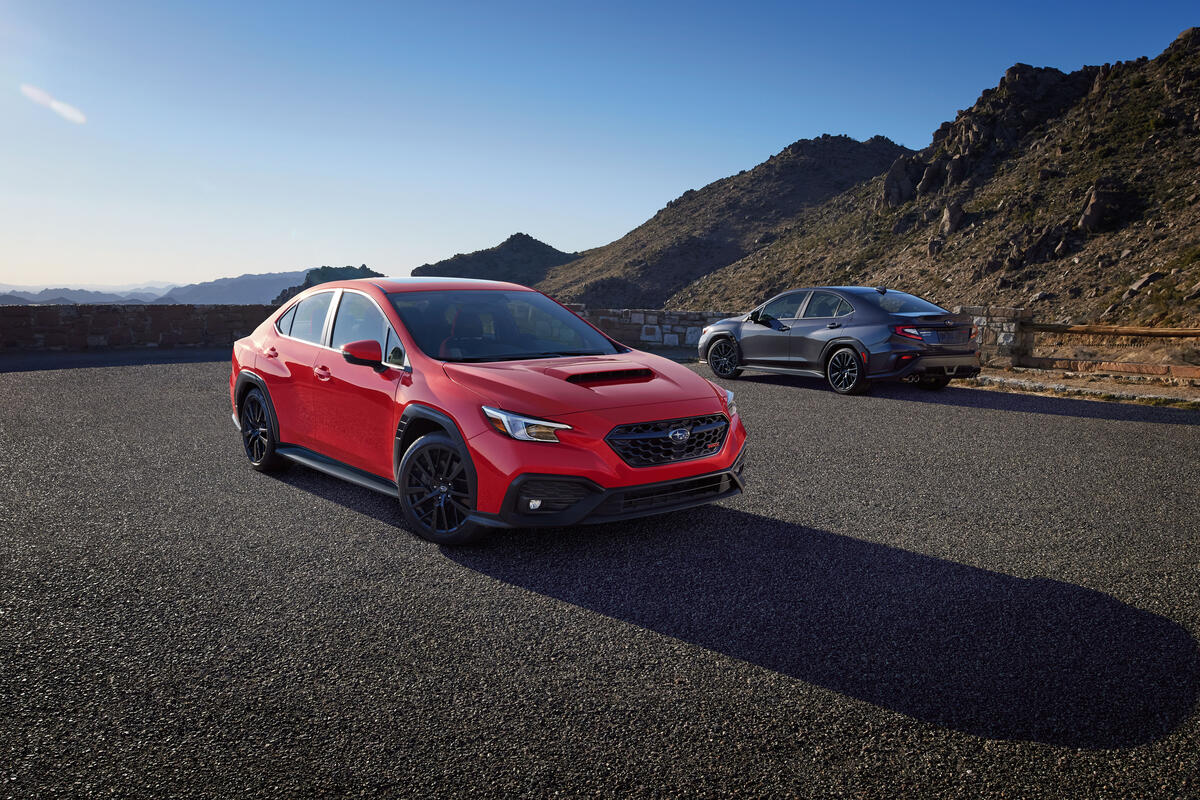
Subaru WRX STI
"when I got my first Tesla, I remember Subaru STI, WRX STIs pulling up next to me, and I'm like, dude, you didn't even want to bother."
STI is Subaru’s performance version of certain models. The host is saying that when their Tesla arrived, other fast Subarus (STIs) pulled up too, but they didn’t think it was worth trying to race.
Subaru STI refers to Subaru’s performance trim from the STI (Subaru Tecnica International) program, typically built for rally-bred handling and driver engagement. Here it’s mentioned alongside WRX STIs as a benchmark for “worth bothering” when racing or comparing performance.
autocross
"[2447.4s] So so on on that topic, uh closing out the our motorsports part, what advice would you have? [2453.6s] And I'm thinking about cars and about families, what advice would you have for somebody who's interested in getting into motorsports... [2474.7s] I have done autocross, but I think I'm gonna get into some track stuff that requires a car."
Autocross is a timed driving event on a closed course made with cones. You drive your car through a bunch of tight turns and try to be as fast and smooth as possible.
Autocross is a motorsport where drivers complete timed laps on a closed course marked out with cones. It’s usually done at parking lots or airfields and focuses on car control—turn-in, braking, and traction—at relatively low speeds compared with road racing.
carting
"[2495.4s] Okay. [2495.4s] So as a driver, obviously sometimes it kind of depends on your age and what you have available to you. [2500.8s] But I I do think carding is still an amazing initial pathway. [2505.3s] But not just carding."
Karting is racing in small go-karts. Many drivers start here because it’s a great way to learn how to drive fast and handle a car in traffic and corners.
Karting is a youth and entry-level form of racing using small, lightweight go-karts. It’s often considered a foundational pathway because it teaches racing fundamentals like steering precision, braking points, and racecraft at an affordable scale.
simulator
"[2528.9s] So surrounding yourself with good people initially is very, very important, just so you can make sure you're on the trajectory and you can get where you're going quickly. [2536.2s] But I also highly recommend getting a simulator because the seat time in real life, unfortunately, costs a lot of money. [2542.6s] But a sim, once you have the sim and you've got your iRacing or your Recetto course..."
A simulator is a racing video game setup that you can practice with. It helps you learn tracks and driving habits without paying for real track time every time you want to practice.
A racing simulator is software (often with a steering wheel/pedals setup) that lets drivers practice tracks and car setups virtually. In sim racing, you can get lots of “seat time” cheaply, which helps build consistency and technique even before you spend money on real track time.
iRacing
"[2536.2s] But I also highly recommend getting a simulator because the seat time in real life, unfortunately, costs a lot of money. [2542.6s] But a sim, once you have the sim and you've got your iRacing or your Recetto course, and once you have the software..."
iRacing is an online racing simulator. You can race against other people and practice driving on real tracks virtually.
iRacing is a sim racing platform that provides online racing with licensed cars and tracks, plus structured matchmaking and competition. It’s widely used because it supports consistent practice and competitive racing against other drivers.

1990 Mazda Miata
"Well, yeah, 1990 Miata was my first convertible, and I I love that car. [2606.2s] Yeah, they're they're great cars."
The 1990 Miata is the original first-generation Mazda Miata — a small, fun, affordable two-seat convertible that became one of the best-selling sports cars ever made. Simple, light, and rear-wheel drive, it's beloved by driving enthusiasts.
The 1990 Mazda Miata (NA generation, 1989–1997) was the car that revived the lightweight two-seat roadster. With a 1.6L engine, rear-wheel drive, and a sub-2,300 lb curb weight, it became an instant classic and the foundation of the Spec Miata racing class.
track days
"Like if that's it, that's a perfect route for anybody that's interested in getting started track days. [2614.0s] You can get a you can get a decent spec Miata and it's pretty cheap to maintain and run, and there's places you can race them all over the country."
Track days are events where you drive your car on a real race track. It’s a structured way to learn how your car handles at speed without risking public roads.
Track days are organized events where drivers take their own cars to a racetrack for timed driving practice. They’re a common low-barrier way to learn car control, braking, and cornering limits in a safer, controlled environment than public roads.
spec Miata
"You can get a you can get a decent spec Miata and it's pretty cheap to maintain and run, and there's places you can race them all over the country. [2622.5s] So it's it's a good way to get into it."
A “spec Miata” is a Miata set up to match a specific racing rule set. It helps keep costs down and makes races more about driving than spending lots of money on custom parts.
A “spec Miata” usually means a Mazda Miata prepared to a rules-based configuration for a particular racing class. The goal is to keep competition more about driver skill and setup within limits, rather than unlimited expensive modifications.
sim racing
"Yeah, I have to say the the sim racing and We were gonna actually have the the co-founder, co-owner of the local sim racing place in Annapolis, Maryland on the show soon."
Sim racing is racing in a video game with real steering wheel and pedals. People use it to practice driving techniques and learn tracks without going to the track every time.
Sim racing is competitive driving using racing video games with steering wheels, pedals, and motion/force-feedback setups. It can build familiarity with racing lines, braking points, and car behavior before (or alongside) real-world track driving.
Gran Turismo
"Yeah, I have to say the the sim racing and We were gonna actually have the the co-founder, co-owner of the local sim racing place in Annapolis, Maryland on the show soon."
Gran Turismo is a PlayStation racing game series famous for being very realistic. Many professional racing drivers — including Formula 1 drivers — have cited it as part of how they learned to drive fast.
Gran Turismo is Sony's long-running racing simulation video game franchise, known for its obsessive attention to car detail and physics. It's widely credited with introducing a generation of enthusiasts to serious car culture and has been used as a driver development tool by real-world racing programs.

Singer DLS
"Okay. My dream car is a 9-11 DLS stinger. I think I would probably want it in peppermint g..."
In the podcast, “DLS” is mentioned as part of a “9-11 DLS Stinger,” which sounds like a specific model called the Stinger. The speaker is saying it’s their dream car and imagining it in a certain color. Without more details, it’s best understood as a particular, named car variant.
“DLS” in the podcast context appears to refer to a 9-11 DLS Stinger, which is a specific car model/variant associated with the “Stinger” name. Because the episode text frames it as a “dream car” and mentions a color theme (peppermint), the discussion is likely about a particular, recognizable build rather than a general vehicle category. The key point is that it’s being referenced as a highly desired, distinctive car.
Singer
"But yeah, those are great cars, just taking that 964 and reimagining it as Singer would say. Reimagined by Singer."
Singer is a company that builds highly customized Porsche 911s. They take classic cars and update them with modern parts while keeping the original look.
Singer is a specialist automotive brand known for “restomod” builds based on classic Porsche 911s, especially the 964 generation. Their approach typically combines period-correct styling with modern engineering and performance upgrades.

Ariel Atom
"Probably more obtainable than me getting an aerial atom. But never never knew, Dave."
The Ariel Atom is a tiny, ultra-light British sports car with no roof, doors, or body panels — basically a roll cage on wheels with an engine. It's famous for being insanely fast because it weighs almost nothing.
The Ariel Atom 3 is a British open-wheel, open-cockpit track car known for extreme performance in a featherweight package. At around 1,000 lbs with up to 300 hp, it's famously described as a road-legal go-kart — the kind of car enthusiasts aspire to but rarely get to drive.
Indianapolis 500
"We asked the question in the first indie 500 in 1911. What did the driver put household item on the dashboard?"
The Indianapolis 500 is a famous 500-mile car race held annually in Indiana since 1911. It's one of the biggest sporting events in the US and a bucket-list race for any professional driver.
The Indianapolis 500, first run in 1911, is one of the oldest and most prestigious motorsport events in the world. Run at the Indianapolis Motor Speedway, it's part of the "Triple Crown of Motorsport" alongside Le Mans and Monaco.
Request an Explanation
Heard something you'd like explained? We'll add it to this episode.
Sign in to request explanations for terms you heard.
Want to learn more?
Browse our glossary for plain-English explanations of automotive terms, jargon, and concepts.
Help improve this episode
See something that's not quite right? Our annotations are AI-generated and can sometimes miss the mark. Click the flag icon on any annotation to suggest a correction.