
58: $30k EV showdown, the French strike back and Merc goes big on performance
About this episode
The Hook Turn Podcast weighs up value EVs around the $30k mark, starting with the 2026 Gilly EX2 and its pricing, range expectations, and city-friendly packaging like a 9.9m turning circle and a 70-liter frunk. They then compare budget rivals such as the GAC Ion UT and debate whether buyers should prioritize real-world practicality or consider used options. The conversation pivots to Mercedes-AMG’s fully electric CLA 45—performance claims, synthesized sounds, and charging realities—before finishing with Dacia’s hybrid wagon lineup and Australian pricing.
In this week's episode of The Hook Turn Podcast, we discuss Geely's new EX2 SUV. Does Volvo's corporate owner have the chops to take on rivals from BYD and MG?
We also discuss another performance EV from Mercedes... that's still ugly in our eyes. Finally, we comment on whether a new Subaru Outback rival from Dacia/Renault could find some success in the Australian market.
Show notes:
- Geely EX2: https://www.carexpert.com.au/car-news/2026-geely-ex2-chinas-best-selling-ev-priced-for-australia
- Dacia Striker: https://www.whichcar.com.au/news/dacia-striker-revealed-hybrid-wagon-rival-subaru-outback-skoda-octavia
- Mercedes-AMG CLA 45: https://www.drive.com.au/news/2027-mercedes-amg-cla45-revealed-as-electric-performance-car/
2026 Gilly EX2
"So let's get started with our first topic, which is the 2026 Gilly EX2. So [219.1s] for those who don't know, Gilly is a recent entrant into the Australian market under its own name."
The 2026 Gilly EX2 is an electric car the hosts are talking about as a budget-friendly EV option. They’re basically saying it’s priced aggressively for what you get, especially compared with other Chinese EVs.
The 2026 Gilly EX2 is an upcoming EV model being discussed as a value-focused option in Australia. The hosts frame it as part of Gilly’s push into the local market under its own brand, with pricing that’s meant to be competitive versus other Chinese EVs.
Volvo
"And Gilly are actually the parent company of a lot of more famous brands. So they own Volvo, they own Polestar, they own Lotus as well."
Volvo is a well-known car brand that the hosts say is owned by Gilly’s parent company. They bring it up to show Gilly has other major brands under the same corporate umbrella.
Volvo is mentioned as one of the brands owned by Gilly’s parent company. This matters because it signals Gilly’s broader automotive footprint beyond just Chinese-market value models.
Polestar
"So they own Volvo, they own Polestar, they own Lotus as well. And they also own Zika, which is positioned as a more premium Chinese brand."
Polestar is another brand the hosts say is owned by the same parent company as Gilly. It’s brought up to show the company has both premium and value-focused brands.
Polestar is referenced as another brand owned by Gilly’s parent company. The mention helps listeners understand how Gilly can cover multiple market positions, from premium EVs to more affordable offerings.
Lotus
"So they own Volvo, they own Polestar, they own Lotus as well. And they also own Zika, which is positioned as a more premium Chinese brand."
Lotus is another brand the hosts say is owned by Gilly’s parent company. They mention it to illustrate that the group includes more performance-leaning brands too.
Lotus is mentioned as part of Gilly’s ownership portfolio. For enthusiasts, it’s a recognizable performance-oriented brand, which contrasts with the value positioning the hosts attribute to Gilly-branded models.
Zika
"And they also own Zika, which is positioned as a more premium Chinese brand. I think that's fair to say, Sanbib."
Zika is the premium brand the hosts say sits under the same parent company as Gilly. They’re using it to explain the difference between the “premium” lineup and the more budget-focused Gilly models.
Zika is described as a more premium Chinese brand within Gilly’s corporate group. The hosts contrast Zika’s positioning with Gilly’s own brand, which they say is aimed at affordability and value.
value-focused
"it's still early days, but [316.9s] I think it's fair to say that the Gilly branded models are designed to be sort of more value-focused than Zika or any of their, any of the other Gilly brands."
“Value-focused” means the car is trying to give you a lot for the money. The hosts are saying Gilly is aiming to be cheaper than more premium Chinese brands while still offering enough features to make it attractive.
“Value-focused” here means the brand’s strategy is to prioritize low price relative to features and overall ownership appeal. The hosts use it to explain why Gilly-branded models are meant to compete directly with other budget-oriented Chinese brands.
WLTP range
"...a 30 kilowatt hour battery with a WLTP range of 235 kilometers. So that's real well range is probably going to be maybe 180, 190 kilometers."
WLTP range is an official test number for how far an EV can go on a full charge. In real life, you usually get less than that number, depending on speed and conditions.
WLTP range is the driving range estimate measured under the Worldwide Harmonized Light Vehicles Test Procedure. It’s a standardized lab test, so real-world range is often lower than the WLTP number—especially in cold weather, at highway speeds, or with aggressive driving.
65 kilowatt motor
"...the actual powertrain only 60 kilowatt motor and a 30 kilowatt hour battery..."
The kilowatt motor number is how much power the electric motor can produce. Higher kilowatts usually means quicker acceleration and more effortless highway driving.
A kilowatt motor rating describes the EV’s power output. In this segment, the host contrasts a 60 kW motor with an 85 kW motor, arguing that the lower-power setup will feel sluggish and struggle to accelerate quickly.
kilowatt hour battery
"...a 30 kilowatt hour battery with a WLTP range of 235 kilometers."
A kilowatt-hour (kWh) battery is how much energy the EV stores. Bigger battery capacity usually helps you drive farther, but it’s not the only factor.
A kilowatt-hour (kWh) battery is the energy storage capacity of an EV. More kWh generally means more potential range, though real range also depends on efficiency, motor power, vehicle weight, and driving conditions.
rear wheel drive
"So you get rear wheel drive, which is very interesting... they're both front wheel drive. So this is rear wheel drive..."
Rear wheel drive means the power goes to the back wheels. The host thinks this layout can be more efficient and changes how the car behaves compared with front-wheel drive.
Rear wheel drive (RWD) means the electric motor sends torque to the rear wheels. The host claims it’s more efficient than front-wheel drive for EVs, and also notes it changes how the car feels dynamically (even if it’s not a sports car).

BYD Dolphin
"...the BYD Dolphin and the GAC Ion UT, which I think both of the MG and the GAC we've covered in previous episodes, they're both front wheel drive."
The BYD Dolphin is another EV the host compares against the Gilly EX2. Here, the important detail is that it’s described as front-wheel drive, unlike the Gilly’s rear-wheel drive.
The BYD Dolphin is referenced as a direct competitor to the Gilly EX2 in this EV showdown. In this segment, the key comparison is drivetrain layout: the Dolphin is described as front-wheel drive, while the Gilly EX2 is rear-wheel drive.
torque steer
"don't get overwhelmed with excessive like torque steer or anything else. So it's a little bit more stable with the driving as well."
Torque steer is when a car tends to pull left or right when you accelerate hard. It’s usually most noticeable in front-wheel-drive cars.
Torque steer is a handling effect where a front-wheel-drive car pulls to one side under hard acceleration. It happens because unequal forces reach the left and right front wheels, often due to drivetrain and suspension geometry differences.
turning circle
"And another benefit of that is that you get a tighter turning circle, which is really handy for those tight urban environments. I believe the turning circle is 9.9 meters, which is really, really good."
Turning circle is how much space a car needs to turn around. The smaller it is, the easier it is to do U-turns and park in tight spots.
Turning circle is the diameter (or tightest turning path) a vehicle needs to make a full turn, often measured curb-to-curb. A smaller turning circle makes parking, U-turns, and tight-city maneuvers easier.
U-turn
"That's very impressive. And you know, it makes it much more easy to do U-turns, which is especially in Melbourne, where you have a lot of U-turns, very handy."
U-turns are when you turn the car around to go back the way you came. A smaller turning circle makes them easier in city streets.
U-turns are a common urban maneuver where you reverse direction in a single continuous turn. The segment ties the vehicle’s turning circle to how easy it is to perform U-turns in dense city traffic.
frunk
"And you also get a frunk, which is, and this is a 70 liter frunk. So that's for this size of car, that's huge."
A frunk is a trunk space at the front of the car. Since many EVs don’t have a big engine up front, they can use that area for storage.
A frunk is a front trunk compartment in some cars, typically used because an EV doesn’t need a traditional engine bay. It’s essentially storage at the front of the vehicle, measured in liters like any other trunk space.
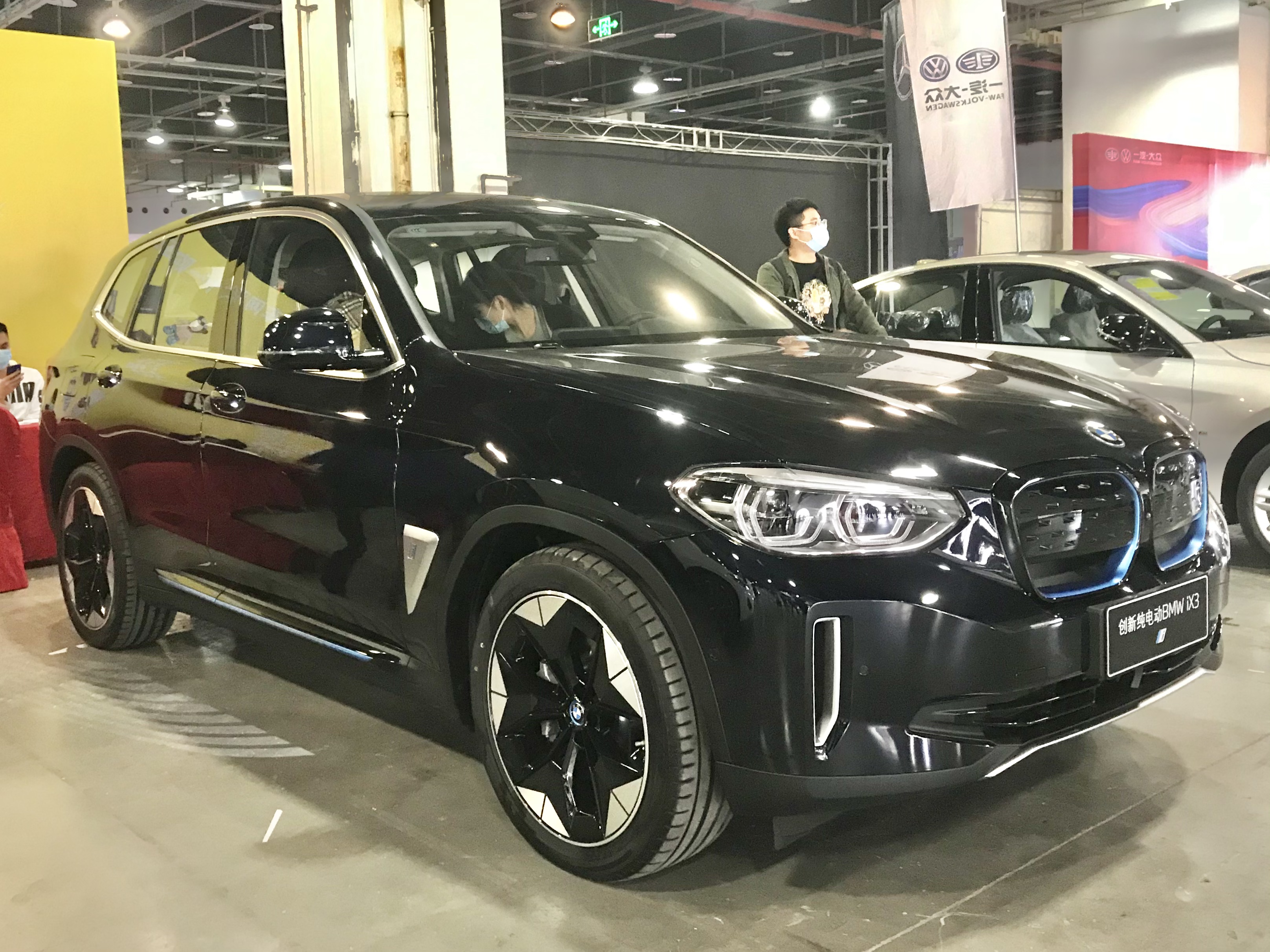
Bmw Ix3
"So that's for this size of car, that's huge. That's comparatively huge because you look at other models, like even the BMW iX3, which is a world away in terms of size and pricing and everything, that's built on a dedicated EV platform, but only gets I think 58 liters of front boot space or front space."
The BMW iX3 is BMW’s electric SUV/crossover. Here it’s mentioned mainly to compare trunk space—specifically how much storage you get in the front.
The BMW iX3 is BMW’s electric crossover built on a platform that’s not as EV-focused as some dedicated EV architectures. In this segment, it’s used as a comparison point for smaller front storage (front boot space) versus the EV being discussed.
dedicated EV platform
"that's built on a dedicated EV platform, but only gets I think 58 liters of front boot space or front space."
A dedicated EV platform means the car’s design was built for electric power from the beginning. That can help the car fit batteries and other components more efficiently.
A dedicated EV platform is an architecture designed from the start for electric powertrains, rather than adapting an existing gasoline-car layout. This can improve packaging (like battery placement and front storage) and help engineers optimize weight distribution and efficiency.
independent suspension
"And you get independent suspension. So most cars at this price point use a torsion beam, which is a simpler, more compact setup. The benefits of a multi-link independent suspension are there's greater rear wheel articulation..."
Independent suspension lets each wheel react to bumps more independently. That usually makes the ride smoother and helps the tires stay in contact with the road.
Independent suspension means each wheel can move up and down somewhat separately, improving how the car absorbs bumps. Compared with simpler setups, it can improve ride comfort and maintain better tire contact over uneven roads.
torsion beam
"And you get independent suspension. So most cars at this price point use a torsion beam, which is a simpler, more compact setup."
A torsion beam is a simpler rear suspension design. It’s cheaper and takes less space, but it often rides less smoothly than more advanced suspension setups.
A torsion beam rear suspension is a simpler, cheaper design where the rear wheels are connected by a beam that twists. It’s common on budget and mid-priced cars because it saves space and cost, but it typically offers less ride refinement than more complex independent designs.
GAC
"And do you think this is going to be comparative against like the MG and some of the more BYD and the GAC, which are also, you know, also pretty decent value for money?"
GAC is a car brand mentioned as one of the companies selling affordable EVs. They’re being compared against other brands in the same value category.
GAC (Guangzhou Automobile Group) is an automaker referenced as part of the competitive set for value-focused EVs. In this segment, it’s grouped with other brands offering small, affordable electric cars.

Sealion Cline 7
"there's a good market for these sorts of small cars. Now, it isn't as big as a market for small SUVs, which is right after the Tesla 101 C-line 7. The BYD Auto 2 is the third best selling EV right now in Australia during the first half of 2016, because people even in the cheaper price"
The Sealion 7 is an electric SUV/crossover. It’s mentioned because it’s doing well in EV sales compared with other electric models. That helps explain why people are paying attention to it.
The BYD Sealion 7 is an electric vehicle positioned in the small-to-mid SUV/crossover space, where demand is typically strong. The podcast mentions it in the context of EV sales rankings and market size, suggesting it’s part of the current wave of competitive EVs. It’s likely discussed as an example of what’s selling well and why that matters for buyers.
BYD Auto
"So that's why the Auto 2 has been very successful for BYD. But in saying that, we know that the MG4 has had a good customer base."
BYD Auto 2 is a BYD electric car model. They’re using it as an example of what people were buying—showing that even cheaper EV shoppers were choosing it.
BYD Auto 2 is a BYD EV model mentioned as a top-selling choice in Australia during the first half of 2016. It’s used to illustrate that buyers in lower price brackets still strongly prefer certain body styles.
GAC Ion UT
"Auto 1 going around quite as well. And while the GAC Ion UT hasn't, I haven't seen as much of it... The ION UT on paper looks the best. It's got by far the largest range, 400 and 30 kilometers... However, all the reviews said... the GAC ION is really unsophisticated."
The GAC Ion UT is an all-electric car from the Chinese brand GAC. In this episode they compare it to other EVs around the same price and talk about how its advertised range may come with trade-offs in day-to-day comfort and refinement.
The GAC Ion UT is a Chinese battery-electric vehicle (EV) that the hosts discuss in the context of a ~$30k EV comparison. They focus on its claimed range and how that translates (or doesn’t) into a satisfying everyday driving experience.

Mercedes-Benz GLE
"...t GAC doesn't have the same marketing budget that GLE does. So GLE EX5, you can see the ads everywhere...."
The Mercedes-Benz GLE is a luxury SUV. It’s a bigger, more premium vehicle than many everyday cars. The podcast mentions it because it’s widely advertised, so it’s easier for people to recognize.
The Mercedes-Benz GLE is a mid-size luxury SUV, and it’s often associated with strong brand visibility and marketing. In the podcast, it’s used as an example of a model that gets lots of advertising compared with other less-promoted vehicles. That kind of mention usually comes up when discussing how marketing budgets affect what people notice and buy.
day to day driving experience
"However, all the reviews said and we've said it too... you'll get more driving range, but I suspect you're going to make a lot of compromises with your day to day, the day to day driving experience."
They’re saying that what looks great on paper doesn’t always feel great in real life. “Day to day driving experience” is about how the car feels during normal commutes and errands, not just the headline numbers.
The hosts contrast “on paper” specs with the real “day to day driving experience,” meaning how the car feels and behaves in everyday use. This includes things like refinement, responsiveness, and overall sophistication beyond just range figures.
MG
"Now, obviously, you can say that a lot of these can be tweaked with updates, but I feel like GSC [867.5s] won't be as good with updates as bigger companies like MG, Genie and BYD are. Yeah,"
MG is a car brand (now closely tied to Chinese automotive production) that the host uses as an example of a company that can improve EVs over time with updates. In this segment, MG is also tied directly to the MG4 model being compared.
EV hatchback
"if you're buying in this category, no one is buying EV hatchback looking to do like interstate [892.6s] drives, right? You're buying a car in this category, you're doing it so you can go to work"
An “EV hatchback” is an electric car with a hatch-style rear. The host is saying people in this category usually want something for commuting, not nonstop long trips.
An “EV hatchback” is a battery-electric car in a hatchback body style, typically optimized for city and commuter use. The host uses this category to argue that buyers aren’t shopping for extreme long-distance range.
daily driving
"no one is buying EV hatchback looking to do like interstate [892.6s] drives, right? You're buying a car in this category, you're doing it so you can go to work [897.1s] and back, you can just do your daily driving. And in that case, 300, arranging the 300s is [902.7s] more than enough, right?"
“Daily driving” means your normal routine trips, like commuting to work and back. The host is saying that if that’s your use case, you can choose an EV without needing the longest possible range.
“Daily driving” here is a usage pattern: short, repeat trips like commuting rather than long-distance highway travel. The host argues that for this kind of routine, you don’t need the absolute maximum EV range.

MG4
"So really, then it comes down to the GLEX to the MG4. Now, here is where [914.4s] I can't make a decision until I read the EX2 reviews, the local reviews. I'm sure, [920.8s] given that the EX2 is actually quite a solid car, I'm sure that the EX2 will be a solid car. [926.6s] In saying that, then you basically got a range. The MG4 top spec range,"
The MG4 is an electric hatchback. Here, the host is using it as a benchmark for how far you can drive on a charge and how it fits a normal commute.
The MG4 is an electric hatchback from MG (a Chinese brand). In this segment, the host compares its top-spec range and pricing against another EV, framing it as a practical daily-driving option.
on-road costs
"The EX2 is not that much cheaper, [940.2s] maybe 2000, less after on-road costs, but then you're getting 345 kilometers of range. So there's [947.6s] a fair bit of a difference."
“On-road costs” are the extra charges you pay to actually register the car and drive it legally. The host is saying one EV is only a little cheaper once you include those extra fees.
“On-road costs” are the extra expenses beyond the vehicle’s sticker price needed to get it legally and practically on the road (often including registration, taxes, and fees). The host compares how much cheaper one EV is after accounting for these costs.

Tesla Model
"...re practical. You can actually get a quite an old Tesla Model 3 for a 930 or a 930, or some of those other Kore..."
The Tesla Model Y is an electric SUV. It runs on a battery instead of petrol, and it’s popular enough that you can sometimes find older ones for less money. That’s why it may be brought up when talking about EVs you can actually afford.
The Tesla Model Y is a compact electric SUV known for strong practicality and wide availability in the used market. It often comes up in discussions about EV value because older Tesla models can be relatively affordable compared with newer EVs. In a podcast context, it’s likely mentioned as a benchmark for what you can realistically buy for a given budget.

Tesla Model 3
"What I will say is that your, and the other big thing is that at that price, you can actually [972.2s] get a used EV that is a bit more practical. You can actually get a quite an old Tesla Model 3 [986.3s] for a 930 or a 930, or some of those other Korean early gen EVs like the Kona Nectric,"
The Tesla Model 3 is a popular electric car. The host is saying that if you’re shopping around this price, a used Model 3 from a few years ago may make more sense for everyday use.
The Tesla Model 3 is a mainstream electric sedan that the host brings up as a used-car alternative in the same budget range. The point is that an older Model 3 can be more practical than the newer EV hatchback being discussed.

Hyundai Kona
"...some of those other Korean early gen EVs like the Kona Nectric, the Nero EV, etc. And those models from ..."
The Hyundai Kona is a small SUV, and there is an electric version. It’s the kind of EV that came out earlier than many newer models. That’s why it may be mentioned when comparing older EVs and their value.
The Hyundai Kona is a compact SUV that’s been offered in electric form, making it part of the early wave of mainstream EVs. It’s mentioned in the podcast as an example of “early gen” EVs from Korean brands. That context usually points to how older EVs can be priced and compared in the used market.

Honda Super 1 EV
"So that's also quite interesting as well. The Honda Super 1 EV is coming out, but that's like, I'm not exactly, like, it's a cool car in concept, but really practically you're not going to look at that as a practical car."
Honda is bringing out an electric hatchback called the Super 1. The big question here is whether Honda will sell it for under $30,000 and whether its driving range is good enough to compete with cheaper EVs.
The Honda Super 1 EV is Honda’s upcoming fully electric hatchback concept aimed at the budget EV segment. In this segment, the hosts focus on whether it can be priced low enough (under about $30k) to compete, and how its expected range would stack up against other entry-level EVs.
drive away pricing
"if it's like 32 grand plus on like, Honda don't do, do drive away pricing. So yeah, it can't be, yeah, it can't be above 30 grand is because it's a much smaller car."
Drive-away pricing is the total amount you pay to get the car ready to use, typically including fees like registration and stamp duty (depending on the region). The hosts use it to argue that if the Honda Super 1 EV’s all-in price is above $30k, it likely won’t sell well.
BYD Ato 1
"Like, I think it's, maybe it's the same range as the entry level BYD Ato 1. So the entry level BYD Ato 1 for $23,990, you get 220 kilometers of range."
The BYD Ato 1 is being used as a comparison point for the “cheap EV” market. They’re saying its range is about 220 km, and they expect the Honda to be in that same ballpark to compete.
The BYD Ato 1 is referenced here as an entry-level EV benchmark for pricing and range. The hosts use it to estimate that the Honda Super 1 EV would likely offer a similar range figure (around 220 km), which matters because they argue that anything much higher than $30k won’t be competitive.
10 year warranty
"MG's had just a lot more experience in the Australian market. They have probably better after sales offer with their 10 year warranty and, you know, just more dealerships and so on and so forth."
A 10-year warranty means the company promises to cover certain repair costs for a long time. The hosts mention it because it can make buying an MG feel less risky.
A 10 year warranty is a long manufacturer-backed coverage period for repairs related to defects, depending on the warranty terms. The hosts cite it as part of MG’s competitive advantage in Australia, implying better after-sales confidence versus rivals.
infotainment system
"I think the thing to note with the MG, like some of the reviews have been saying that tech is still not like it's getting better. But like things like, by tech, I mean, like the performance of the infotainment system and stuff, it's still a little bit laggy."
The infotainment system is the car’s screen and electronics for things like music, maps, and phone connections. They’re saying some MG cars have software that feels slow or unresponsive.
An infotainment system is the car’s in-dash electronics for media, navigation, phone connectivity, and settings. Here, the hosts say some MG reviews report that the infotainment performance is laggy, meaning the touchscreen/UI may respond slowly.

Mercedes AMG CLA 45
"So now from a very entry level EV to a very high performance EV. So we have the all new Mercedes AMG CLA 45, which is now a fully electric car."
The Mercedes-AMG CLA 45 is a sporty Mercedes model. In this episode, they’re talking about the new version being fully electric, which is a big change from the usual gas-powered AMG performance formula.
The Mercedes-AMG CLA 45 is a performance-focused CLA model from Mercedes-AMG, and this segment emphasizes that it’s now fully electric. The “AMG CLA 45” name matters because AMG typically signals a sport-tuned, high-performance version of a mainstream Mercedes platform.
plug and hybrid option
"were you surprised they didn't go with like some plug-in hybrid option given, we've talked so much about the limited demand for performance EVs and you know, the CLA is available as a combustion engine car as well."
A plug-in hybrid is a car that uses both gas and electricity. You can charge it from a plug, but it still has a gas engine too.
A plug-in hybrid (PHEV) is a powertrain that combines an internal-combustion engine with an electric motor and a battery you can charge from an external plug. The host is debating whether Mercedes-AMG should have offered a PHEV instead of going fully electric, since PHEVs can add complexity and trade-offs.
limited demand for performance EVs
"were you surprised they didn't go with like some plug-in hybrid option given, we've talked so much about the limited demand for performance EVs and you know, the CLA is available as a combustion engine car as well."
This means fewer people are buying the fastest, most performance-focused electric cars compared to regular EVs. Automakers watch that demand when deciding what powertrains to build.
“Limited demand for performance EVs” refers to the idea that high-performance electric cars sell in smaller numbers than mainstream EVs. That market reality can influence automakers’ decisions about whether to invest in fully electric performance models versus hybrids or other compromises.
street's new rules about mandated EVs
"Also, I suspect when this car started development, they were sort of still developing under the assumption of the street's new rules about mandated EVs."
The “mandated EVs” idea means governments are requiring carmakers to sell more electric cars. The host thinks that kind of rule may have influenced how this AMG model was planned.
This refers to regulatory requirements that push automakers toward selling a certain amount of electric vehicles (“mandated EVs”). The host suggests Mercedes-AMG’s development timing may have been shaped by expectations about those rules, affecting whether they chose a full-EV approach.
peak output
"So you're getting peak. So I emphasize that's a peak output of 500 kilowatts and 1,759 Newton meters of torque."
Peak output is the car’s maximum “power” number. It’s basically how strong the electric system can be at its best moment.
Peak output is the maximum power an EV can produce at its best operating point, typically measured in kilowatts (kW). It’s a headline number that helps explain how hard the car can accelerate, even if real-world power varies with conditions.
0 to 100 kilometers an hour
"And that will enable the acceleration of three seconds from 0 to 100 kilometers an hour. So that's faster than the Tesla Model 3 performance."
“0 to 100 km/h” is a standard acceleration test measuring how many seconds it takes to reach 100 kilometers per hour from a standstill. It’s commonly used to compare how quickly different cars feel in everyday driving and on paper.
one foot rollout
"And Mercedes is also saying if you use the American standard, which is you have a quote unquote one foot rollout, you can you can do that same sprint in 2.7 seconds."
One foot rollout is a measurement convention where the car is allowed to move slightly before the timing starts, reducing the “from a dead stop” disadvantage. It can make acceleration times look faster than a strict zero-rollout test.
driving range
"and that gives a driving range of 640 to 670 kilometers. So, you know, that's actually pretty solid given how much all the performance that you're getting and the battery capacity."
Driving range is how far the EV is expected to go on one full charge. It’s an estimate based on standardized testing, not a guarantee for every trip.
Driving range is the estimated distance an EV can travel on a full charge. It’s usually reported under standardized testing cycles, so two cars with the same battery size can still show different range due to efficiency and aerodynamics.
three electric motors
"Other things to note, there's three electric motors, all will drive that's all expected."
Three electric motors means the car has more than one electric unit working together. That can help it put power to the road more effectively, which often improves acceleration and handling.
Three electric motors means the EV uses a multi-motor layout to deliver traction and power more precisely. With multiple motors, manufacturers can distribute torque across axles (and sometimes individual wheels) for stronger acceleration and better control.
synthesized gear shifts
"they're using what is being called synthesized gear shifts and engine sounds, but they're not trying to replicate a V8 this time."
Synthesized gear shifts are fake shift sounds and sensations made by the EV. Because electric cars don’t shift like gas cars, the system tries to recreate that experience for the driver.
Synthesized gear shifts are artificial sounds and cues created by an EV to mimic the feel of shifting gears. Since EVs don’t use traditional gear changes the same way as gas cars, manufacturers use audio and control logic to recreate that familiar “gearbox” sensation.

Hyundai Ioniq 5N
"It's similar to the approach conceptually to what Hyundai has done with the Ioniq 5N and the 6N and then also Porsche sort of introduced that with the latest update to the Taycan."
The Hyundai Ioniq 5N is used as an example of how some EVs try to feel more exciting. It’s known for using sound/feel features to mimic the vibe of a sporty car.
The Hyundai Ioniq 5N is referenced as an example of an EV that uses driver-focused sound and feel. It’s part of the broader trend of automakers using artificial engine/shift cues to make EVs feel more like performance cars.

Hyundai Ioniq 6N
"It's similar to the approach conceptually to what Hyundai has done with the Ioniq 5N and the 6N and then also Porsche sort of introduced that with the latest update to the Taycan."
The Ioniq 6N is another Hyundai EV example they bring up. The idea is that Hyundai is trying to make the car feel more like a traditional performance machine using sound and driving cues.
The Hyundai Ioniq 6N is mentioned alongside the Ioniq 5N as another example of an EV using performance-oriented sound/feel. The host is grouping these cars as proof that “engine-like” experiences are becoming a design goal in EVs.

Porsche Taycan
"and then also Porsche sort of introduced that with the latest update to the Taycan."
They mention the Porsche Taycan as another electric car that adds more “engine-like” experience. It’s part of a trend where EVs try to recreate the excitement of gas cars.
The Porsche Taycan is cited as another EV that has added or updated artificial sound/feel features. The host uses it to support the idea that replicating combustion-engine character is becoming common across performance EVs.
front seat shakers
"the front seats. They're calling them front seat shakers and that also gives authentic vibrations in normal drive modes or a combustion engine like vibration in the AMG Force S plus mode."
Some cars add a vibration motor in the seat. It shakes the seat to make you feel “engine-like” sensations, even if the car is electric.
“Front seat shakers” are vibration actuators built into the seat that move the cabin to mimic sensations you’d normally feel from an engine. In this context, they’re used to simulate the feel of combustion-engine vibration in an EV.
AMG force S plus
"in normal drive modes or a combustion engine like vibration in the AMG Force S plus mode. So lots of mumbo jumbo there, but basically it tries to simulate the vibration"
This is a special driving mode from Mercedes-AMG. In that mode, the car adds extra “feel” effects—like seat vibration—to make the drive seem more like a gas performance car.
“AMG Force S plus mode” is a drive mode on Mercedes-AMG models that increases simulated driving sensations—here, specifically using seat vibration to imitate combustion-engine feel. It’s part of the broader “simulated experience” strategy to make an EV feel more like a performance car.
Tesla Model 3 Performance
"So we already know cars like the Tesla Model 3 Performance and stuff, they're not as quick, but they're still extremely quick."
The Tesla Model 3 Performance is the fast, high-output version of the Model 3. Here it’s mentioned as a benchmark EV—showing you can get very quick performance for less money than pricier options.
The Tesla Model 3 Performance is an EV performance variant known for strong acceleration and efficiency. In this segment it’s used as a benchmark to compare range and “how quick you can get” without paying for a more expensive performance EV.
330 kilowatts
"really good range. Also 800 architecture and 330 kilowatts. Next charging speed, which basically"
That number is how much power the charger can deliver at peak. More kilowatts usually means you can charge faster, as long as the car and charger both support it.
“330 kilowatts” is the peak charging power the EV can accept from a fast charger. In practice, the actual speed depends on the charger, battery temperature, and battery state of charge, but higher kW generally means shorter charging sessions (up to the vehicle’s limits).
800 V architecture
"really good range. Also 800 architecture and 330 kilowatts. Next charging speed, which basically"
This is about how the car’s battery system is wired electrically. An “800-volt” setup can make charging faster because the car can pull in more power more efficiently.
“800 architecture” refers to an EV’s high-voltage electrical system designed around an ~800-volt class. Higher-voltage architectures can reduce current for the same power, which can help enable faster charging and quicker power transfer to the battery.
50 kilowatts
"99% of charging stations in Australia are captured on 50 kilowatts. So not very relevant for Australian customers,"
This is the typical charging speed level most public chargers are limited to. If your car can charge faster than that, you still can’t go faster unless the charger can deliver higher power.
“50 kilowatts” describes the common fast-charging power level the speaker says most Australian chargers are limited to. If most public chargers are capped at 50 kW, then an EV capable of much higher peak power won’t realize that advantage in everyday charging.
front grille
"Like it just looks a bit, like you look at the front grille and it just looks like it's"
The front grille is the decorative opening at the front of the car. It can also help let air through, but it’s mostly part of the car’s look.
The front grille is the opening at the front of a car, typically with a mesh pattern, that helps with airflow to components like the radiator. In modern designs, it’s also a major styling element that can strongly influence the car’s “face.”

Mercedes-AMG version
"it's not so much in the AMG version because I think they've gotten, for the AMG version, they've gotten rid of the front light bar"
AMG is Mercedes-Benz’s performance brand. It often changes both how the car looks and how it drives, and here the host is comparing the AMG front design to non-AMG versions.
Mercedes-AMG refers to Mercedes-Benz’s performance division, which tunes styling and engineering for higher output and sportier character. In this segment, the host is discussing how the AMG version changes the front-end lighting and grille details compared with other trims.
front light bar
"they've gotten rid of the front light bar and they've just made it like a black piece of plastic"
A front light bar is a long strip of lights across the front of the car. It changes the car’s look at night and can make the front end seem wider.
A front light bar is a continuous strip of lighting across the front fascia, usually integrated into the grille area. It’s a styling cue that can make the car look wider and more “techy,” and it also affects how the headlights are visually presented.
CLA
"because they've come out with the CLA fairly recently. So I think the new generation CLA came out"
The CLA is a smaller Mercedes model line. The host is using it as the base for a discussion about newer generations and upcoming AMG performance versions.
The Mercedes-Benz CLA is a compact luxury sedan/coupe-style model line that’s positioned below the C-Class in size and typically in price. The host mentions it as a recently refreshed generation, setting up a comparison to future AMG variants.
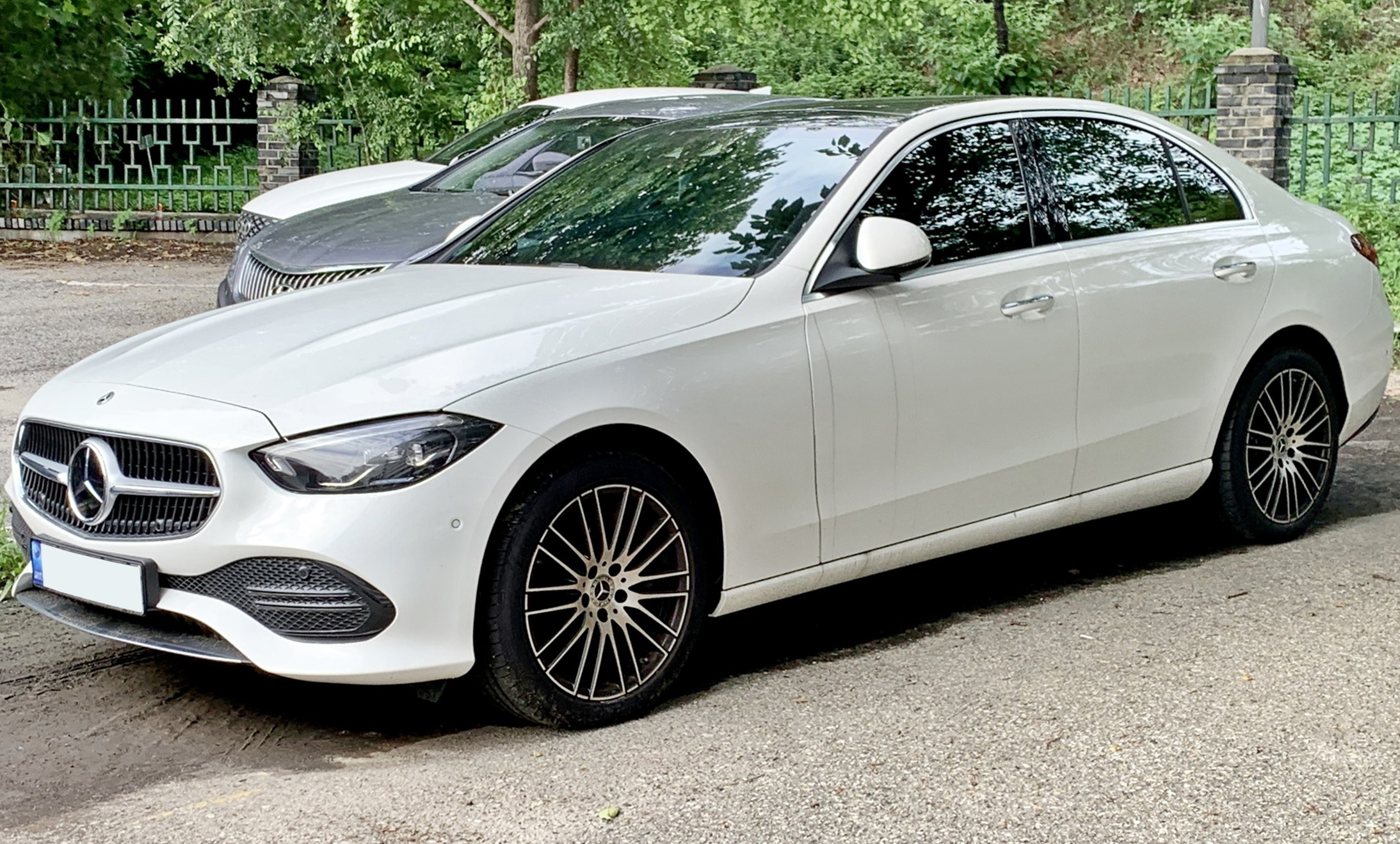
C class
"they've come out with the C class, which is technically one size larger and, you know, step up in terms of luxury and comfort."
The C-Class is a Mercedes model that’s bigger and more upscale than the CLA. The host is saying Mercedes hasn’t released the full AMG version yet, so they’re waiting to see what comes next.
The Mercedes-Benz C-Class is a compact executive car line that sits above the CLA in size and typically in luxury positioning. The host notes that a full AMG version of the C-Class hasn’t arrived yet, which frames the anticipation for future performance differentiation.
AMG GT four door
"like practically between this AMG, CLA AMG and the, you know, the, what's the ultra performance, the AMG GT four door or whatever, the, you know, that, what's the ultra high end supercar called again, the AMG?"
This is a Mercedes-AMG “four-door” that’s meant to feel like a high-performance sports car, but with normal car practicality. The hosts are basically saying it’s very fast, and they’re wondering how Mercedes will price and differentiate it from other AMG models.
The Mercedes-AMG GT four-door is a performance-focused sedan version of AMG’s GT line, built to deliver supercar-like acceleration with a more practical body. In this segment, the hosts compare its performance to other AMG models and discuss how Mercedes might position it versus the C-Class.
screens, screens, screens
"again, you know, same criticism with Mercedes, just screens, screens, screens. And, you know, it's, it's just getting a little bit old now. Like, if I wanted more screens, I could just buy a"
They’re complaining about how modern cars keep adding more big screens for controls and information. Their point is that it’s starting to feel old, and you could get that kind of screen-heavy setup in other cars too.
This is a critique of the modern “digital cockpit” trend—using multiple large displays for navigation, media, and vehicle settings instead of physical buttons. The hosts argue that the heavy screen focus is becoming repetitive and less appealing.
CX-6e Cx6E
"...nted more screens, I could just buy a Mazda 6E or CX6E or whatever Chinese EV. Like, there's no, you nee..."
The CX-6e is an electric car from a Chinese manufacturer. The podcast brings it up as an example of an EV that offers lots of modern features, like screens. It’s part of a discussion about having many EV options to choose from.
The CX-6e is a Chinese-market electric vehicle referenced as an option if someone wants a lot of screens and modern tech. In the podcast, it’s used to illustrate that there are many similar EV choices available, so buyers may not need to focus on one brand’s marketing. The mention suggests the conversation is about features, pricing, and how alternatives compare.
Dacia
"So the Dacia Striker. So Dacia is a Romanian brand. And in Australia, they're being sold as Renault's."
Dacia is a car brand from Romania that makes more affordable cars. Here, they’re explaining that in Australia the same kind of Dacia vehicles may be sold under Renault’s name instead.
Dacia is a Romanian car brand known for budget-friendly vehicles. In this segment, the hosts connect Dacia to Renault branding in Australia, explaining how the same model can be sold under different brand names depending on the market.

Dacia Duster
"... being sold as Renault's. And we have the Renault Duster, which is a Dacia in Europe. So it's sold as a Da..."
The Dacia Duster is a low-cost compact SUV. It’s meant to be practical without costing as much as many mainstream SUVs. The podcast also notes that it can be sold under different names depending on the market.
The Dacia Duster is a budget-friendly compact SUV that’s positioned for value-focused buyers. The podcast context notes it being sold under different branding in Europe, which is common for how manufacturers market the same vehicle. It’s likely mentioned as an example of a practical, lower-cost SUV option.
Renault
"And in Australia, they're being sold as Renault's. And we have the Renault Duster, which is a Dacia in Europe."
Renault is a well-known car company. In this discussion, they’re saying that the same vehicle can show up with different brand badges depending on the country.
Renault is a major French automaker. The hosts use it to explain a branding difference: in Australia, Dacia models are sold as Renaults, while in Europe the same model may be sold under the Dacia name.

Subaru Outback
"...ay to describe it is as a slightly smaller Subaru Outback. So designed to, it's still technically in the C ..."
The Subaru Outback is a wagon-like car that’s meant to handle everyday roads and rougher conditions better than a basic hatchback. It’s usually roomy and practical for families or gear. People use it as a comparison when describing other cars that are similar in size and purpose.
The Subaru Outback is a crossover-style wagon built for people who want more space and a more rugged, all-weather feel than a typical hatchback. It’s frequently used as a “baseline” for describing similar cars because of its size and versatility. The podcast context suggests it’s being referenced to help listeners picture the general shape and role of another vehicle.
C segment
"So designed to, it's still technically in the C segment. So direct rivals would be like the Skoda Octavia wagon, Volkswagen Golf, like those sorts of European sort of hatchbacks."
“C segment” is a European way of grouping cars by size. The host is saying the Striker is still in the compact-car size class, even though it’s designed to look and act more rugged like an SUV.
“C segment” is a European vehicle-size classification for compact cars. When the hosts say the Striker is “still technically in the C segment,” they mean it’s aimed at the same general size category as mainstream compact wagons and hatchbacks, even if it’s styled and positioned like a more rugged SUV.
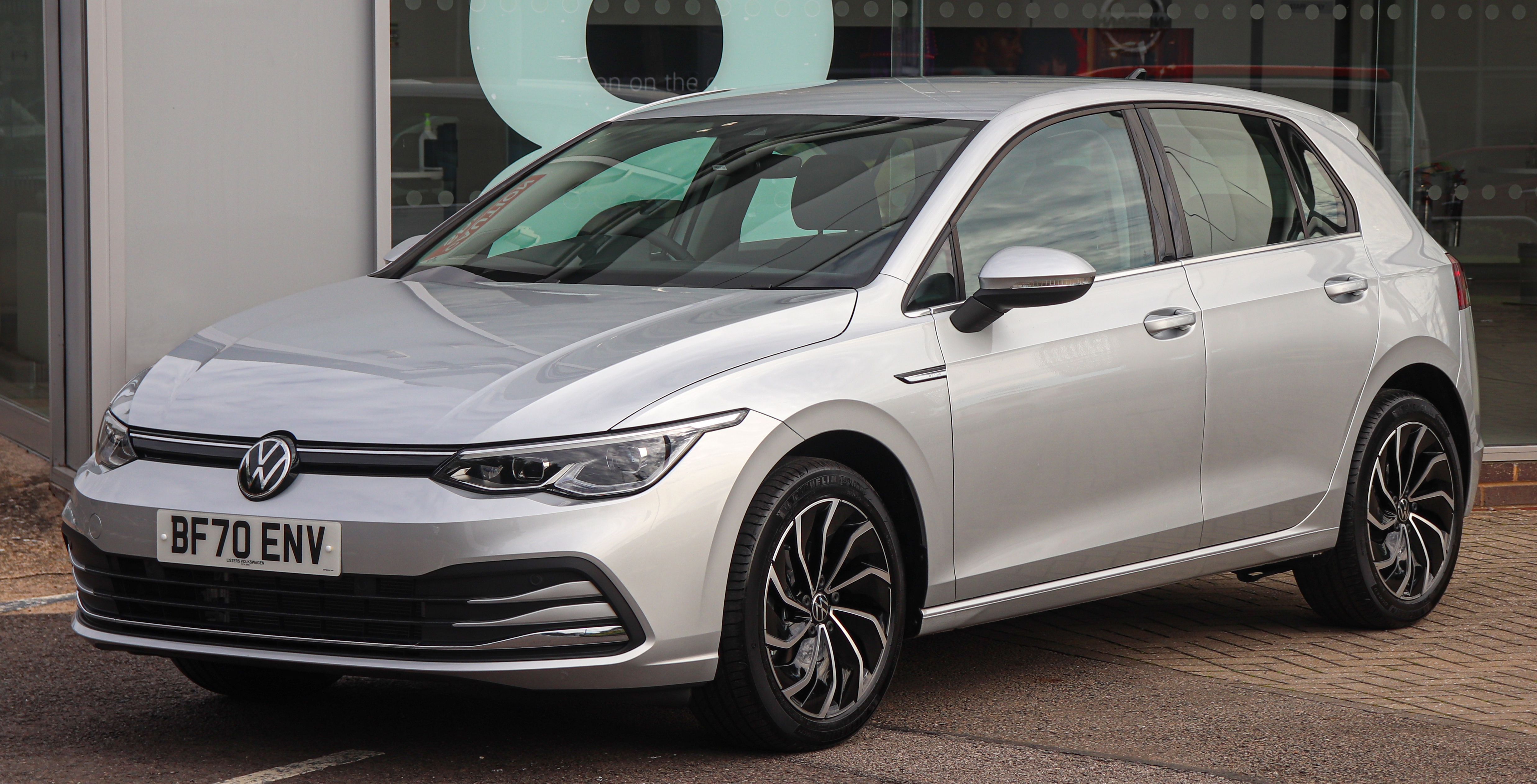
Volkswagen Golf
"...would be like the Skoda Octavia wagon, Volkswagen Golf, like those sorts of European sort of hatchbacks...."
The Volkswagen Golf is a small car with a hatchback body style. It’s designed for everyday driving and easy parking. It’s often used as a comparison when people talk about the size and practicality of similar cars.
The Volkswagen Golf is a mainstream European compact hatchback that’s often used as a reference point for the “small, practical car” segment. It’s discussed because it represents a well-known, everyday alternative to larger wagons or SUVs. In the podcast, it’s likely mentioned alongside other hatchbacks/wagons as a comparison for size and purpose.

Skoda Octavia
"...segment. So direct rivals would be like the Skoda Octavia wagon, Volkswagen Golf, like those sorts of Europ..."
The Skoda Octavia is a compact car that can come as a hatchback or a wagon. It’s built to be practical and roomy for everyday use. The podcast mentions it as a comparison for other similar European cars in the same size class.
The Skoda Octavia is a popular European compact car, commonly available as a hatchback or wagon, and it’s known for offering a lot of space for the money. In the podcast, it’s grouped with cars like the Golf to describe the same general “practical European hatch/wagon” category. That makes it a useful reference point for size, everyday usability, and value.
48-volt mild hybrid system
"the entry level model in Europe features a 103 kilowatt mild hybrid setup. So that's a 48 volt mild hybrid system, mated to a 1.2 liter three cylinder turbo engine."
A 48-volt mild hybrid is a car with a small electric assist. It helps the gas engine at key moments (like getting moving), but it usually can’t drive very far just on electricity.
A 48 volt mild hybrid system uses a small electric motor/generator to assist the engine, improving efficiency and smoothness without powering the car on electricity alone. It typically supports functions like stop-start and torque fill during acceleration, while the engine remains the primary power source.
1.6 liter three-cylinder engine
"So that's a 48 volt mild hybrid system, mated to a 1.2 liter three cylinder turbo engine."
This is a small 1.2-liter engine with three cylinders, plus a turbocharger. The turbo helps it feel stronger than its size suggests.
A 1.2-liter three-cylinder turbo engine is a small displacement engine that uses forced induction (a turbocharger) to make more power than a naturally aspirated engine of the same size. Three-cylinder layouts are common in efficient European cars, and the turbo helps deliver usable torque for everyday driving.
hybrid 155
"you have what they're calling the hybrid 155. So that's an 81 kilowatts, 1.8 liter four cylinder engine"
“Hybrid 155” is the name for a specific hybrid version of the car. It means the car uses both a gas engine and an electric system together to get better efficiency.
“Hybrid 155” is a model-specific naming for a full-hybrid powertrain, where the electric system can work alongside the engine to improve efficiency. The number typically corresponds to the combined output rating used by the manufacturer for that hybrid variant.
full hybrid setup
"And then you have a full, I think you have a full hybrid setup. So you have what they're calling the hybrid 155."
A full hybrid uses both gas and electricity. Unlike a mild hybrid, the electric system can do more of the work depending on driving conditions.
A full hybrid setup uses an electric motor in addition to the internal combustion engine, allowing the car to run in multiple modes (engine-only, electric-only in some conditions, or both together). Compared with a mild hybrid, the electric system is more capable and can contribute more to propulsion.
1.6 liter four-cylinder engine
"So that's an 81 kilowatts, 1.8 liter four cylinder engine"
This is a 1.8-liter gas engine with four cylinders. In a hybrid, it teams up with the electric motor to help the car feel responsive while using less fuel.
A 1.8-liter four-cylinder engine is a mid-size displacement gasoline engine with four cylinders. In a hybrid configuration, it’s paired with an electric motor to improve efficiency and provide stronger low-end torque than the engine alone might deliver.
CVT transmission
"it's not an interesting, even though [2526.3s] it's a hybrid, it's not a CVT transmission. It's an electric transmission with four gears for the [2532.3s] petrol engine and two for the electric motor."
A CVT is a type of automatic transmission that can change “gears” smoothly instead of jumping between set steps. That can help the engine stay in a good efficiency range.
CVT stands for continuously variable transmission. Instead of fixed gear ratios, it uses a belt/chain and pulleys to smoothly vary the ratio, which can keep the engine near its most efficient RPM.
electric transmission
"it's not a CVT transmission. It's an electric transmission with four gears for the [2532.3s] petrol engine and two for the electric motor. So that's some six speed automatic transmission,"
Here, “electric transmission” means the electric motor isn’t just spinning directly—it’s matched with gear ratios. Those gears help the car use the motor’s power better at different speeds.
In this context, “electric transmission” refers to a hybrid gearbox strategy where the electric motor is paired with its own set of gear ratios. That lets the system optimize torque and efficiency across different speeds rather than relying on a single fixed ratio.
powertrain
"And I think this is the powertrain where [2543.3s] Dacia are claiming that it can, you can do 80% of your running in electric only mode in urban [2550.3s] areas."
A powertrain is everything that makes the car move, like the engine or electric motors and the gears that connect them to the wheels. In a hybrid, it also includes how the gas and electric parts cooperate.
A powertrain is the full set of components that generate and deliver motion—typically the engine (or motors), transmission/gearbox, and drivetrain elements like the axles. In hybrids, the powertrain describes how the engine and electric motor(s) work together.
two-speed transmission
"So that's a 21 kilowatt and 87 unit meter rare electric motor with a two speed [2594.0s] transmission on the rare axle."
A two-speed transmission means there are two gear ratios available. That helps the car use the motor’s power more effectively depending on how fast you’re going.
A two-speed transmission has two selectable gear ratios. In hybrid setups, using two speeds for an axle/motor can help keep the motor in a more efficient RPM range and improve torque delivery at both low and higher speeds.
eight speed dual clutch transmission
"and the front wheels has a six speed dual clutch transmission. [2600.3s] So interesting setup."
A dual-clutch transmission uses two clutches so gear changes can happen very quickly. With six speeds, it has multiple gear ratios to match different driving situations—here, it’s connected to the front wheels.
A dual-clutch transmission (DCT) uses two separate clutches to pre-select the next gear, enabling faster shifts than a traditional automatic. A “six speed” DCT has six gear ratios, and in this hybrid layout it’s used on the front wheels.
drive modes
"So that's, yeah, interesting setup, interesting range of combinations, like you would expect the [2629.1s] all wheel drive powertrain to be more powerful and to be the, you know, quote unquote, the best [2629.1s] powertrain, but it's actually power wise, it's sort of in between the hybrid 155 and the entry [2635.5s] level powertrain. So that's, you know, interesting. And that all drive powertrain, you get five drive modes as well. [2641.0s] So you get auto, eco, snow, mud, and then off road drive mode."
Drive modes are different “personalities” the car can switch between. For example, Eco tries to save energy, and Snow changes how power is delivered to help prevent wheel slip.
Drive modes are selectable settings that change how the car responds—typically throttle mapping, steering feel, and how the hybrid system allocates power. Names like Eco or Snow usually bias the system toward smoother delivery or better traction.
Euclip points
"With the interior, you also get what Dacia are calling these Euclip points, [2655.2s] so just accessory mounting points so you can mount like wireless chargers, you know, camera [2662.1s] holders or smartphone holders and other things."
“Euclip points” are built-in spots in the cabin meant for attaching accessories. They’re like official mounting points for things such as phone holders or chargers.
“Euclip points” are branded interior mounting locations designed for accessories. They’re essentially standardized attachment points so owners can clip in items like phone holders or charging accessories without improvising mounts.
BYD CL6 Touring
"because now we're seeing the BYD CL6 Touring. The plug-in hybrid, yeah. [2710.3s] The plug-in hybrid, yeah. So the CL6 Touring, correct, yeah. So I'd be probably looking at [2715.2s] that more closely as well."
The BYD CL6 Touring is a BYD wagon that uses a plug-in hybrid powertrain. The hosts are basically asking whether its price in Australia is low enough to attract buyers, and whether its interior feels nicer than the competition.
BYD CL6 Touring is a plug-in hybrid wagon from BYD, and the hosts are comparing its Australian pricing to another EV/wagon they just discussed. They specifically reference the CL6 Touring’s plug-in hybrid setup and talk about how its interior quality and “on road” price affect whether it can compete in Australia.
plug-in hybrid
"because now we're seeing the BYD CL6 Touring. The plug-in hybrid, yeah. [2710.3s] The plug-in hybrid, yeah. So the CL6 Touring, correct, yeah."
A plug-in hybrid is a car that has both a gas engine and an electric motor. You can charge it by plugging it in, so it can sometimes drive on electricity alone for shorter trips.
A plug-in hybrid (PHEV) is a car that combines a conventional engine with an electric motor and a battery you can charge from an external power source. Compared with a regular hybrid, it can usually drive short distances on electricity alone, which can improve real-world efficiency if you can charge it.
wagons
"I think it's going to probably be a bit of a niche seller because just the people aren't [2752.3s] that interested in buying wagons, unfortunately."
A wagon is like a car with extra space behind the seats for cargo, usually with a longer roof. The hosts are saying fewer people want wagons, so it may be harder for this model to sell widely.
A wagon is a body style with an extended roofline and a larger cargo area than a sedan, designed for practicality. In this segment, the hosts argue that wagon buyers are a smaller niche in Australia, which can limit sales even if the car is well-designed.
Request an Explanation
Heard something you'd like explained? We'll add it to this episode.
Sign in to request explanations for terms you heard.
Want to learn more?
Browse our glossary for plain-English explanations of automotive terms, jargon, and concepts.
Help improve this episode
See something that's not quite right? Our annotations are AI-generated and can sometimes miss the mark. Click the flag icon on any annotation to suggest a correction.