
706: Wheeling Wine and Whiskey (Takeover)
About this episode
Four Wheel Underground’s shift to à la carte off-road parts kicks things off, including aluminum links and a deeper look at OnX Offroad’s Trail Revival work on the Rubicon. The hosts then debate modern Jeep capability—drive to the trail, push a button to disconnect the sway bar, and head home—before a Toyota “suck hotline” turns into a real river-crossing damage story. The episode also mixes a birthday whiskey flight with practical, safety-first towing guidance: brake gain, hitch setup, wheel bearings, and trailer lighting grounding.
Let the Toyota bashing begine.
We have a massive discount this month with Rusoh Fire Extinguishers. You can get 25% off this month only with the discount code Rusohcrawlers. Go grab yours today!
SnailTrail4x4 Discord: https://discord.gg/yFyFFkQbuy
Come hang out with us on the SnailTrail4x4 Discord — it’s the easiest way to connect with Tyler and Jimmy directly, chat with fellow offroad enthusiasts, and get first access to Group Buys and Treasure Hunt token drops.
MORRFlate Giveaway at 900 Reviews on Apple Podcast. But our next giveaway is when we reach 800 reviews; we are giving away an OnX Elite Membership. We will also give away an OnX Elite membership when we get to 850. However, when we reach 900 Reviews, we are teaming up with MORRFlate for a $1000 MF Product Giveaway. Go over to Apple Podcasts to leave your review now and become eligible to win. Congratulations to A13XMONT, who won a set of tires from Yokohama Tire!
Call us and leave us a VOICEMAIL!!!We want to hear from you even more!!! You can call and say whatever you like! Ask a question, leave feedback, correct some information about welding, say how much you hate your Jeep, and wish you had a Toyota! We will air them all, live, on the podcast! +01-916-345-4744. If you have any negative feedback, you can call our negative feedback hotline, 408-800-5169.
4Wheel Underground has all the suspension parts you need to take your off-road rig from leaf springs to a performance suspension system. We just ordered our kits for Kermit and Samantha and are looking forward to getting them. The ordering process was quite simple, and after answering the questionnaire, we ensured we got the correct and best-fitting kits for our vehicles. If you want to level up your suspension game, check out 4Wheel Underground.
SnailTrail4x4 Podcast is brought to you by all of our peeps over at irate4x4! Make sure to stop by and see all of the great perks you get for supporting SnailTrail4x4! Discount Codes, Monthly Give-Always, Gift Boxes, the SnailTrail4x4 Community, and the ST4x4 Treasure Hunt! Thank you to all of those who support us! We couldn’t do it without you guys (and gals!)!
SnailSquad Monthly GiveawayMassive thanks to this month’s giveaway with Rusoh Fire Extinguishers. We have one of their 2.5-pound extinguishers to give away to a lucky winner. This extinguisher has an 18-year shelf life and is the best fire extinguisher for any off-road vehicle. To learn more, check out Rusoh.com. If you want a chance to win, sign up for the Giveaway Tier on Irate4x4
For the Month of April, we are giving away Gift Boxes. Its Gift Box month and two luck indiviuals will win a one of our gift boxs. These are jam packed with goodies from tools to whiskey smokers. They are always different and always random. If you want a chance to win, sign up for the Giveaway Tier on Irate4x4
Listener Discount Codes:SnailTrail4x4 –SnailTrail15 for 15% off SnailTrail4x4 Merch
MORRFlate – snailtraill4x4 to get 10% off MORRFlate Multi Tire Inflation Deflation™ Kits
4WheelUnderground – snailtrail 10% off
Ironman 4×4 – snailtrail20 to get 20% off all Ironman 4×4 branded equipment!
Sidetracked Offroad – snailtrail4x4 (lowercase) to get 15% off lights and recovery gear
Spartan Rope – snailtrail4x4 to get 10% off sitewide
Shock Surplus – SNAILTRAIL4x4 to get $25 off any order!
Mob Armor – SNAILTRAIL4X4 for 15% off
SummerShine Supply – ST4x4 for 10% off
Backpacker’s Pantry – Affiliate Link
Laminx Protective Films – Use the Link to get 20% off all products (Affiliate Link)
Show Music:
- Outroll Music – Meizong Kumbang
- Midroll Music – ComaStudio
Four Wheel Underground
"Four wheel underground is making some big changes... you get to now buy things all a cart... check out four wheel underground."
Four Wheel Underground is a company that makes and sells off-road suspension parts. The hosts say you can buy specific pieces by themselves, not just an entire kit.
Four Wheel Underground is an off-road parts company that sells suspension components and kits for 4x4 builds. In this segment, they’re described as changing their business model so customers can buy individual suspension pieces instead of only full kits.
all a cart
"they're kind of changing the way the business is set... you get to now buy things all a cart... you can get just those before you would have to buy the whole kit."
They’re saying you can buy parts individually, like choosing items one-by-one, instead of having to buy a whole package.
“All a cart” here means buying individual components à la carte, rather than being forced to purchase a complete suspension kit. That matters because it lets builders upgrade or replace only the specific brackets or links they want.
upper frame bracket
"So if you want the upper frame bracket, you can just buy that."
A frame bracket is a metal mounting piece that bolts the suspension to the truck. The “upper” one is where the top part of the suspension attaches.
An upper frame bracket is a mounting point that attaches suspension links/brackets to the vehicle’s frame. In off-road suspension systems, the bracket’s geometry and strength help control link angles and suspension travel under load.
integrated bump stop
"If you want the lower link bracket, because it has the integrated bump stop..."
A bump stop is a safety cushion for the suspension. If the suspension compresses too much, it hits the bump stop to stop the metal parts from slamming together.
An integrated bump stop is a suspension travel limiter built into a bracket or mount. When the suspension compresses far enough, the bump stop contacts and slows/limits further movement to reduce harsh impacts and prevent damage.
lower link bracket
"If you want the lower link bracket, because it has the integrated bump stop and it's super stout..."
This is the lower mounting point for the suspension links. It also mentions an integrated bump stop, which is like a built-in “hard stop” to prevent the suspension from bottoming out.
A lower link bracket is the lower mounting point for suspension links, typically on the frame or axle side. The segment notes it includes an integrated bump stop, which helps limit suspension compression travel to protect components.
cartridge joints
"you can also buy those all a cart from cartridge joints, rebuildable Johnny joints..."
These are the “hinges” at the ends of suspension links. Cartridge joints are designed to handle off-road stress and can often be rebuilt or serviced.
Cartridge joints are suspension link joints that use replaceable internal bearings/liners inside a sealed cartridge. They’re popular in off-road setups because they can be stronger and more serviceable than basic rubber or non-rebuildable joints.
rebuildable Johnny joints
"cartridge joints, rebuildable Johnny joints, hymes, offsets..."
Johnny joints are special link joints that let the suspension move through bumps without fighting itself. If they’re rebuildable, you can refresh the wear parts instead of replacing the whole joint.
Johnny joints are off-road suspension link joints designed to provide controlled articulation while reducing binding. “Rebuildable” versions can be serviced with replacement parts, which helps keep performance consistent over time.
hymes
"rebuildable Johnny joints, hymes, offsets, all sorts of different ones."
Hymes are basically spherical joints used on suspension links. They help the suspension move freely as the wheels go up and down.
“Hymes” refers to Heim joints (spherical rod ends) used in suspension links. They allow smooth angular movement and are common in off-road and racing because they can handle misalignment and load well.
offsets
"rebuildable Johnny joints, hymes, offsets, all sorts of different ones."
In this context, “offsets” are adjustable or different-position joint/link components that change suspension geometry. That can be used to correct alignment, tune ride height, or set proper link angles for better articulation and control.
Aluminum links
"Do you know what else he brought in house? Aluminum links... They now all come standard with aluminum links."
These are suspension links made from aluminum. Aluminum can be lighter than steel, which can help the suspension respond better over rough terrain.
Aluminum links are suspension arms/links made from aluminum instead of steel. They can reduce unsprung weight and are often chosen for off-road builds, but they still need to be designed for strength and durability.
link suspension kit
"move your Toyota from Lee Springs to a link suspension kit..."
A link suspension kit is an upgrade that uses link arms and joints to guide how the suspension moves. It’s meant to help the truck handle rough trails better.
A link suspension kit uses articulated links (with joints) to control suspension movement rather than relying on simpler spring-and-mount arrangements. Kits are designed to improve wheel travel, articulation, and control on uneven off-road terrain.
on X off road
"We want to check with you guys today about on X off road. Definitely one of our favorite apps for off roading."
OnX Off Road is a navigation app for off-roading. They like it because it helps you find and follow trails.
“On X Off Road” is an off-roading navigation app used to plan routes and track trails. The hosts call it one of their favorite apps for off-roading, emphasizing its role in route awareness and community use.
trail revival program
"they also are doing a lot to be a part of the off roading community here in the country from the trail revival program..."
This sounds like a program where people work together to restore and maintain off-road trails. The goal is to keep trails usable and in good shape.
A “trail revival program” is an organized effort to improve and maintain off-road trails, often through volunteer work, events, and community partnerships. In this segment, it’s tied to off-roading community involvement and hands-on maintenance work.

Wrangler Rubicon
"...e a part of and use to do some maintenance on the Rubicon Trail too. They have an elite partnership."
The Wrangler is an off-road SUV. It’s designed to handle rough trails and is popular with people who go off pavement. In the podcast, it’s mentioned in connection with working on a trail like the Rubicon.
The Wrangler is a Jeep off-road SUV known for its trail-focused design and strong aftermarket support. The podcast specifically mentions using it for maintenance on the Rubicon Trail, which points to it being used in a serious off-road environment. It’s discussed because the Wrangler is a common choice for people who actively drive trails and do their own upkeep.
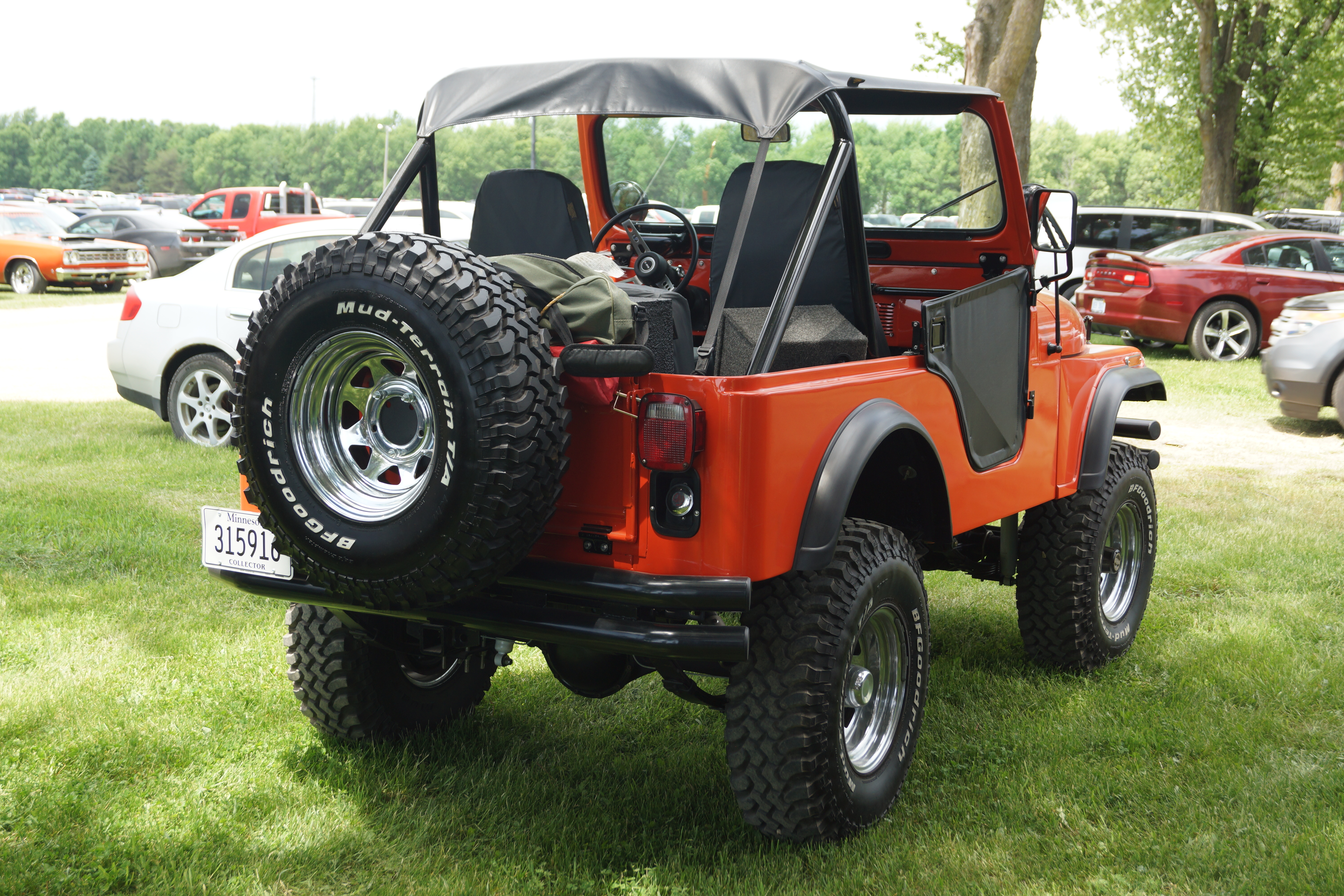
Jeep CJ
"Yeah. [232.8s] And that was back in the old CJ days, right?"
The Jeep CJ is an older Jeep model line that helped define the brand’s off-road reputation. It’s the kind of Jeep people picture when they think of the early, simple trail vehicles.
The Jeep CJ is the classic “Civilian Jeep” line that predates modern Wranglers and is famous for its simple, rugged off-road design. People often reference the CJ era when talking about old-school trail rigs and the roots of Jeep culture.
metallic
"That bonsai blue. [256.8s] Okay. It was metallic. [258.2s] It was so like as like money's Jeep."
“Metallic” means the paint has tiny shiny particles in it. That’s what makes the color look like it changes a bit in different light.
“Metallic” refers to a paint formulation that includes tiny metal flakes. Those flakes reflect light differently as the car moves, which is why metallic colors like “bonsai blue” can look deeper or more vibrant than flat paint.
1993 Jeep Wrangler
"[305.3s] Anyway, I traded that thing in on a on a bonsai blue, [308.5s] 93 Jeep Wrangler that had the four liter. [312.3s] It was bare bones."
A 1993 Jeep Wrangler is an older Wrangler generation. The host is saying it was a basic 4x4 that he bought for real-life use, not luxury.
A 1993 Jeep Wrangler is an early-generation Wrangler (the YJ era) that’s especially associated with classic, simple 4x4 layouts and a huge parts ecosystem. In this segment, the host highlights it as “bare bones” and notes it had a “four liter,” framing it as a practical family vehicle that still got driven hard.
four liter
"[308.5s] 93 Jeep Wrangler that had the four liter. [312.3s] It was bare bones."
“Four liter” means the engine is about 4.0 liters in size. Bigger engines can help the car pull more easily, especially off-road or when carrying a load.
“Four liter” refers to an engine displacement of about 4.0 liters, which is a common way enthusiasts describe engine size. Larger displacement often correlates with more low-end torque and easier pulling power—useful for a 4x4 like a Wrangler.
bikini top
"[361.8s] I had a bikini top on that thing during the summer or even like late spring, [366.6s] early summer and whatnot. [368.0s] And I remember getting caught in a rainstorm and I'm driving down 880,"
A bikini top is a small, minimal roof for an open-air Jeep. It doesn’t fully protect you from rain or wind, so you feel more of the weather.
A bikini top is a very minimal soft top used on some open-air Jeep-style vehicles. It provides partial weather protection while leaving most of the cabin exposed, which can increase wind and rain intrusion compared with a full soft top.
half doors
"[368.0s] And I remember getting caught in a rainstorm and I'm driving down 880, [372.6s] you know, with my bikini top on and the half doors. [375.2s] You know, I got the doors on the top part of the doors."
Half doors are doors that only cover the bottom part of the opening. They make the vehicle feel more open, but they don’t block wind and rain as well as full doors.
Half doors are door panels that cover only the lower portion of the cabin, common on some open-air Jeep setups. They reduce weight and improve the open-air feel, but they also change airflow, which can create more wind buffeting and water intrusion in storms.
wind vortex
"[375.2s] You know, I got the doors on the top part of the doors. [378.9s] So I'm kind of enclosed, but you know, there's like a wind vortex. [382.3s] Oh, yeah, yeah."
A wind vortex is swirling wind. With an open Jeep setup, the wind can loop around and blow back toward you instead of just passing over the vehicle.
A wind vortex is a swirling airflow pattern that forms when wind hits an open-air vehicle configuration (like a bikini top and half doors). In this case, the speaker describes the airflow coming back toward the cabin and affecting where water and mist end up.
mines
"[404.6s] I did wheel it a little bit, did fire roads and a couple of mines up in Nevada [408.6s] and stuff like that near actually near Virginia city. [411.9s] You just drove it up there and explored some mines and whatnot."
Here, “mines” means old mining sites you can drive around or explore. The ground can be rough and uneven, and there may be hazards from the old site.
In off-roading context, “mines” usually refers to old mining areas with access roads, tracks, and uneven terrain. These locations can involve rutted surfaces, loose rock, and hazards from abandoned infrastructure.
fire roads
"[402.7s] Never, never modified it. [404.6s] I did wheel it a little bit, did fire roads and a couple of mines up in Nevada [408.6s] and stuff like that near actually near Virginia city."
Fire roads are dirt or gravel roads used by firefighters to reach remote areas. People use them for off-road exploring because they’re rougher than regular pavement.
Fire roads are unpaved service roads used for wildfire access and maintenance. They’re often graded dirt or gravel routes that are common destinations for light off-roading and exploring with 4x4 vehicles.

Jeep Grand Cherokee
"...ded in, traded that vehicle in. I had bought a, a grand Cherokee. A used Jeep. You're a family man now."
The Jeep Grand Cherokee is a mid-size SUV. It’s made to carry a family and still handle rough roads better than many regular cars. People talk about it a lot because it’s a popular used SUV choice.
The Jeep Grand Cherokee is a midsize SUV known for combining everyday comfort with serious off-road capability. In a “family man” context, it’s the kind of used SUV people often buy when they want room for passengers plus the option to go off pavement. It may come up because it’s a common choice for buyers who want one vehicle that can do both daily driving and trail use.

Ford Windstar
"... and got a minivan with my wife had a, had a Ford windstar and I had the Jeep that wasn't really being drive..."
The Ford Windstar is a minivan. It’s the kind of vehicle people use to drive families around because it has lots of space. In the podcast, it’s mentioned as the wife’s daily vehicle while another car wasn’t being used much.
The Ford Windstar is a minivan that was used as a family vehicle option in the past. The podcast mentions it as what the speaker’s wife drove, alongside a Jeep that wasn’t being driven much. It likely comes up because minivans like the Windstar are often chosen for daily family transport when comfort and space matter.

Honda Odyssey
"... had the grand Cherokee. So we, we bought a Honda Odyssey. We traded those two vehicles in for a Honda Odys..."
The Honda Odyssey is a minivan. It’s made to carry people comfortably, especially families, with lots of space inside. The podcast mentions it as a replacement vehicle when the owner’s needs changed.
The Honda Odyssey is a minivan designed for families, with seating space and practical features for everyday driving. In the podcast, it’s mentioned as a trade-in after owning a Grand Cherokee, which fits the idea of switching to a vehicle that’s easier for family life. It often comes up in family-focused discussions because minivans prioritize passenger comfort and cargo room.
galvanized body
"which is a 95, the last of the late, why the last of the great YJs galvanized everything galvanized body, you know, best frame had all the heart was back in the day, had the best axle and best U joints."
Galvanized means the metal has a protective zinc coating. That helps the Jeep resist rust, which matters a lot on older vehicles.
A galvanized body is steel that’s coated with zinc to resist rust. On older off-road Jeeps, rust resistance is a big deal because trail use and weather exposure can accelerate corrosion.
U joints
"best frame had all the heart was back in the day, had the best axle and best U joints. Yeah, that was the desired vehicle to modify, to go do the Rubicon."
U joints are parts in the drivetrain that let the driveshaft bend when the suspension moves. If they wear out, the Jeep can vibrate or make noise and lose smooth power delivery.
U joints (universal joints) connect driveshaft sections and allow them to change angle as the suspension moves. Off-road use puts them through lots of articulation and shock loads, so their condition and design matter for durability.
torque monster
"great, great engine. That's straight 64 liter, just fucking torque monster and bullet proof."
A “torque monster” means the engine has a lot of pulling power. That helps the Jeep move slowly and steadily over rough terrain.
A “torque monster” describes an engine that produces strong torque, especially at lower RPMs. Torque is the twisting force that helps a vehicle accelerate and crawl over obstacles without needing high engine speeds.
22RE
"I mean, you know, when you talk, you're talking about Toyota sucking, but I'll tell you what, the 22RE and the four liter Jeep engine, they're comparable."
The 22RE is a Toyota engine that off-road people often like because it’s tough and dependable. In this segment, it’s being compared to the Jeep’s engine for trail performance.
The 22RE is a Toyota 2.4-liter inline-four engine (commonly associated with Toyota pickups and 4Runners). It’s well known in the off-road community for being durable and for providing usable torque for trail driving.
valve cover gasket
"It's the only the only disadvantage with the four liter is the leaking valve cover gasket. [516.2s] I don't have that problem."
The valve cover gasket is a rubber seal that keeps engine oil from leaking out where the valve cover bolts on. If it fails, oil can drip or seep onto the engine and create a mess (and sometimes smoke or smell).
A valve cover gasket seals the valve cover to the engine so oil doesn’t seep out around the top of the engine. If it leaks, you can get oil on the outside of the engine and potentially mess with nearby components over time.

Toyota Land Cruiser FJ 40
"it was synonymous with Jeep and it was so great. [592.6s] Like Toyota Land Cruisers, the FJ 40s, you know, that oh, nice Jeep."
The Toyota Land Cruiser FJ 40 is a classic older Land Cruiser that off-road fans love. It’s known for being tough and simple, and it’s a big part of why the Land Cruiser name became legendary.
The Toyota Land Cruiser FJ 40 is the classic, early Land Cruiser that became an icon for simple, capable off-roading. It’s known for its boxy styling and straightforward mechanical design, which is why it remains a favorite among trail builders and collectors.
Jeep as the iconic off-road/military brand
"was Jeep. Absolutely. Jeep won the war and that's where Jeep got going. So in the armies, armies, surplus Jeeps conquer the Rubicon."
They’re talking about why Jeep became the “go-to” brand people think of for off-roading and military vehicles. Even people who don’t know cars still recognize the Jeep name.
This segment focuses on why Jeep became the default symbol for off-roading and military surplus vehicles. The hosts discuss how even non-off-roaders recognize Jeep and associate it with off-road capability or military history.
armies surplus Jeeps conquer the Rubicon
"So in the armies, armies, surplus Jeeps conquer the Rubicon. Exactly. Exactly."
The Rubicon is a well-known tough off-road trail. The hosts are joking that old military-style Jeeps became legendary because they could handle trails like that.
The Rubicon refers to the Rubicon Trail in California, a famous off-road route known for difficult rock crawling and obstacles. The phrase “armies surplus Jeeps” ties Jeep’s military-surplus history to the idea that these vehicles became iconic off-road tools.
leaf spring suspension
"But I mean, it still has the grill. It still has this, the leaf spring suspension, you know, the all the classic stuff..."
Leaf springs are a simple, tough suspension setup that uses layered metal strips. They flex to absorb bumps, and they’re common on older off-road trucks and Jeeps.
Leaf spring suspension uses stacked metal strips ("leaves") that flex to provide springing and help locate the axle. It’s common on many classic 4x4s because it’s durable and works well for carrying loads.
coil springs
"It's no longer leaf sprung. It's got coils, coil springs and, you know, link suspension and so forth."
Coil springs are round springs that squeeze when you hit bumps and then push back. Newer off-road vehicles often use them to better control how the wheels move over rough ground.
Coil springs are circular springs that compress and rebound to absorb bumps. Compared with leaf springs, they’re often used in newer suspensions to improve ride comfort and allow more tuning of wheel control.
four drive
"Do the Rubicon, do whatever trail and freaking click it out of four drive, unlock the hubs, whatever, and drive home."
“Four drive” here refers to engaging four-wheel drive for off-road traction. The speaker is describing a typical trail routine: switch into 4WD, then perform additional drivetrain steps to make the Jeep suitable for the specific trail conditions.
unlock the hubs
"Do the Rubicon, do whatever trail and freaking click it out of four drive, unlock the hubs, whatever, and drive home."
Unlocking the hubs is about changing how the front wheels are connected to the drivetrain. After off-roading, unlocking them can make highway driving easier and reduce extra mechanical effort.
Unlocking the hubs typically means switching the front axle hubs from a locked (engaged) state back to an unlocked state on a part-time 4WD system. That reduces drivetrain drag for highway driving after you’re done with the trail.
disconnect your sway bar
"you talk about driving to the trail and you just basically push a button and you disconnect your sway bar versus the old days where I have to get underneath"
A sway bar helps keep the vehicle from leaning too much in turns. On rough trails, disconnecting it lets the wheels move more independently so the tires can stay on the ground better.
Disconnecting your sway bar (anti-roll bar) reduces how strongly the left and right suspension are forced to move together. That lets a Jeep keep more tire contact on uneven terrain by allowing more independent wheel travel during off-road articulation.
track bar
"I had the sway bar connected. I had the track bar locked down and I drove all the way up and back. And I was like, I was so miserable."
The track bar helps keep the axle centered and from shifting side-to-side. Locking it down is a way to make the Jeep track straighter and feel more stable when you’re driving off-road.
A track bar (panhard bar) locates the axle laterally so it doesn’t wander side-to-side. Off-road setups often use a “locked down” track bar to control axle position and improve steering feel and stability under load on trails.
trailers are for boats
"You were at that point of that where you had a trailer queen, and, you know, trailers are for boats, whatever. I I'm all about creature comforts and having purpose built vehicles."
They’re joking about “trailer queens,” meaning off-road vehicles that mostly get hauled around instead of being driven a lot. It’s a vibe about how people treat their rigs—use them hard vs keep them pristine.
This is a humorous way of contrasting “trailer queen” behavior with using the vehicle as intended. In off-road culture, a “trailer queen” is a rig that’s mostly transported to events rather than driven regularly, often to preserve it or avoid wear.
driveshaft spitting out
"No, I have a lot of fucking fun because I don't have to worry about my fucking driveshaft spitting out or an axle or anything like that. But but back to, you know, driving your rig to the trail."
They mean the driveshaft can come loose when the suspension moves a lot off-road. A properly set up rig tries to prevent that so you don’t get stranded or break parts.
“Driveshaft spitting out” refers to the driveshaft coming loose or separating from the drivetrain—often due to extreme suspension droop, misalignment, or insufficient driveline retention. Off-road rigs may be built to reduce this risk so they can drive to the trail and still survive the trail.
axle
"No, I have a lot of fucking fun because I don't have to worry about my fucking driveshaft spitting out or an axle or anything like that. But but back to, you know, driving your rig to the trail."
They’re talking about the axle parts that help send power to the wheels. Off-road conditions can stress those parts, so a good build helps prevent damage.
In this context, “axle” means the axle shafts and related hardware that transmit torque to the wheels. Off-road stress can lead to axle damage or failures if the drivetrain and suspension geometry aren’t set up to handle wheel travel and impacts.
road worthy vs trail worthy
"It's like, do you want it like super highway worthy or do you want it super trail worthy? [976.0s] But it is super that that's getting finite now with these JLs and stuff [981.1s] where you could have a badass Jeep on 40s or even fucking 42s."
They’re talking about setting up a vehicle to do two different jobs: drive nicely on the road, but also handle rough off-road trails. The goal is to make one Jeep that can switch between those two modes.
The hosts are contrasting “road worthy” setups (comfortable and legal for street driving) with “trail worthy” setups (optimized for off-road traction, clearance, and suspension movement). The idea is that modern Jeep builds can be configured to switch between street manners and trail capability using upgrades and adjustable systems.
40s or 42s
"where you could have a badass Jeep on 40s or even fucking 42s. [988.2s] Now, maybe 42s dressing it. [989.8s] Let's say 40s."
“40s” and “42s” are shorthand for very large off-road tires. Bigger tires help you clear rocks and ruts, but they usually require other upgrades to fit and work correctly.
“40s” and “42s” refer to tire sizes—typically 40-inch or 42-inch diameter tires—used on highly modified off-road vehicles. Bigger tires increase ground clearance and can improve obstacle clearance, but they also require matching suspension/axle gearing and careful fitment.
portal
"Right. You could have you can you can bolt all that shit on in your garage. [1005.2s] You could even do fucking portals now, thanks to portal pros. [1009.0s] Right. And go you could have a road worthy"
A “portal” setup is an off-road modification that effectively lifts the wheels higher using gearing near the hubs. That gives you more ground clearance to get over obstacles.
“Portals” in an off-road context usually means portal gearboxes at the wheel hubs. They raise the axle centerline and increase ground clearance without needing extreme suspension lift, which helps clear rocks and maintain better tire contact on uneven terrain.
front and rear sway bars
"Right. And go you could have a road worthy [1013.7s] with front and rear sway bars, drive to the fucking Rubicon trail, [1018.2s] hit a couple of buttons, throw it into forward drive and have a very capable,"
Sway bars help keep the vehicle from leaning too much when you turn. Off-road setups often adjust them so the suspension can move more freely over bumps and rocks.
Front and rear sway bars (anti-roll bars) connect the left and right suspension to reduce body roll during cornering. On a Jeep built for both highway and trail use, sway bars can be tuned or disconnected to balance on-road stability with off-road articulation.
Rubicon trail
"with front and rear sway bars, drive to the fucking Rubicon trail, [1018.2s] hit a couple of buttons, throw it into forward drive and have a very capable, [1023.0s] nice, comfortable ride over the Rubicon."
The Rubicon Trail is a well-known off-road trail with tough obstacles. Off-roaders use it as a “test” to see how good a vehicle build really is.
The Rubicon Trail is a famous off-road route in California known for technical obstacles and steep, rocky sections. It’s often used as a benchmark in off-road communities for how capable a build is.
Dynatrack
"And I will even expand on that a little bit more. [1058.1s] I mean, to look at the upgrade ability of these vehicles. [1062.8s] I mean, you look at at the aftermarket for the JKJL. [1067.1s] The support's incredible. [1068.4s] I mean, literally, however, what your credit limit on your credit card is, [1072.8s] you can you could literally call up Dynatrack or Curry or whoever,"
Dynatrack is a company the hosts mention as a place to get aftermarket parts. It’s part of the ecosystem of shops that help people build Jeeps for road and trail use.
Dynatrack is mentioned as a vendor you could “call up” for parts or upgrades. In off-road circles, companies like this are typically associated with aftermarket drivetrain or suspension-related products that support Jeep builds.
bolt on
"And you and you know, I mean, bolt on, dude, bolt on, not fucking fabrication. [1095.0s] Bolt on. Well, that's the cool, cool thing, right?"
“Bolt on” means the part is designed to attach with bolts and basic tools. It usually doesn’t require cutting or welding to make it fit.
“Bolt on” means parts install using existing mounting points and hardware, rather than requiring custom fabrication or welding. In off-road builds, bolt-on upgrades are popular because they’re faster to install and easier to reverse.
rear locker
"when it was on 31, 1050s, doing Ford ice with a rear locker and open front."
A “rear locker” helps both rear wheels work together. If one wheel starts slipping on dirt or rocks, the locker can keep power going to the other wheel too.
A “rear locker” is a locking differential (or differential lock) that forces the rear wheels to rotate together. On trails, that improves traction when one wheel loses grip, helping the vehicle climb or push through obstacles more reliably.
open front
"doing Ford ice with a rear locker and open front."
“Open front” means the front differential is not locked, so the front wheels can rotate at different speeds. That’s typically less traction on low-grip surfaces than a locked differential, but it can be easier to drive and more predictable on mixed terrain.
BFG mud terrains
"how the fuck did I get up this trail back in the day, you know, with BFG mud terrains?"
These are off-road tires made for mud. The tread is designed to grip and move through slippery, muddy ground better than regular tires.
“BFG mud terrains” refers to BFGoodrich mud-terrain tires, which are built with aggressive tread patterns for digging through mud and shedding debris. Mud-terrain tires are a big part of off-road traction and ride behavior, especially on wet trails.
trail evolution and adaptation
"But we did it and you evolve and you and then you adapt. And you follow Shannon Campbell and go, oh, fuck, that's fucking badass"
They’re talking about how people change their off-road builds over time as they learn more about what works on the trails.
This segment focuses on how off-roaders evolve their setups over time—adapting tires, lockers, and other changes as they learn what works on specific trails.
lock everything back up
"[1227.8s] Fuckin hit a few buttons or undo a few things, sway bars, whatever, [1234.9s] and fucking go dominate the trail and then lock everything back up and head home. [1240.6s] And and that's cool."
They mean switching the truck back into a more “locked” mode after the trail section—so it behaves more predictably when you’re done wheeling.
“Lock everything back up” typically refers to returning drivetrain and suspension-related settings to a more locked/controlled state after trail driving. In 4x4 contexts, it often means re-engaging locked modes (commonly via lockers and/or transfer-case settings) for predictable on-road or easier off-road behavior.
shade tree mechanics
"[1248.4s] not everybody has the skills, but some what I call shade tree mechanics [1254.5s] that know what a fucking half inch ratchet is and a torque wrench and some basic shit [1261.7s] in your driveway can do some really cool modifications to your rig."
It means regular people who work on their own cars at home, not professional mechanics.
“Shade tree mechanics” is a slang term for DIY car owners who do repairs or upgrades themselves, often with basic tools at home. The host uses it to argue that many off-road modifications are approachable without being a professional machinist.
torque wrench
"[1242.5s] And I I'm all for that because not everybody's a mechanic, machinist, [1248.4s] not everybody has the skills, but some what I call shade tree mechanics [1254.5s] that know what a fucking half inch ratchet is and a torque wrench and some basic shit [1261.7s] in your driveway can do some really cool modifications to your rig."
A torque wrench tightens bolts to a specific setting, so you don’t overtighten or leave them too loose.
A torque wrench is a tool that tightens fasteners to a specific torque value (tightness). It matters for off-road modifications because incorrect torque can lead to loose components or damaged threads.
lockers
"[1266.5s] When it comes to gears, you know, you want to change gears and lockers. [1271.1s] That's still a specialty thing. [1272.9s] I don't even fucking touch that shit."
Lockers are devices that make both wheels on an axle turn together. That helps when one wheel is slipping so the truck can keep moving.
Lockers are differential locking systems that force both wheels on an axle to rotate together. This improves traction when one wheel loses grip on loose surfaces, but it can change steering feel and drivetrain stress if used improperly.
gears
"[1266.5s] When it comes to gears, you know, you want to change gears and lockers. [1271.1s] That's still a specialty thing. [1272.9s] I don't even fucking touch that shit."
“Gears” here means the gearing in the axles. Changing it can help the truck crawl better at low speeds or drive more comfortably at higher speeds.
In off-roading, changing “gears” usually means swapping the axle gear ratios to better match low-speed crawling or highway cruising. Lower (numerically higher) ratios provide more torque at the wheels for climbing and traction, while higher ratios can reduce engine strain at speed.
compressor
"when I, you know, upgraded my compressor on the Jeep... That thing is that I have under the hood of my Jeep."
An off-road compressor is basically a pump for air. People use it to refill their tires after driving on lower tire pressure, and sometimes to power other air-powered gear.
In off-roading, an air compressor is used to pressurize air systems—most commonly to inflate tires after they’ve been aired down for better traction. Many setups also use the compressor to run pneumatic accessories like onboard air or air lockers.
aftermarket
"there's a bunch of aftermarket people that make brackets to mount like an ARB, twin air, your dual, whatever."
Aftermarket parts are made by companies other than the car maker. Off-roaders use them to upgrade or customize their trucks and Jeeps with gear that fits their needs.
“Aftermarket” refers to parts made by companies other than the original vehicle manufacturer. In off-roading, aftermarket brackets, compressors, and air-system components are common because they let owners tailor setups to their specific rig and trail needs.
brackets
"make brackets to mount like an ARB, twin air... There's brackets you can buy online from vendors that you can mount into your JKJL or Toyota or whatever."
In this context, brackets are custom mounting hardware used to secure an air compressor under the hood or in another location. Proper brackets matter because the compressor must stay rigid and protected during vibration and impacts off-road.
Jeep YJ
"There's brackets you can buy online from vendors that you can mount into your JKJL or Toyota or whatever. I don't have that option with my YJ."
The Jeep YJ is an older Wrangler model that a lot of people customize for off-roading. Here, the point is that it may not have as many ready-made parts, so you sometimes have to build your own mounting bracket.
The Jeep YJ is a classic Wrangler generation known for its simple, trail-focused platform that many owners modify heavily. In this segment, it’s mentioned as a case where off-the-shelf mounting solutions aren’t available, forcing custom bracket fabrication.
ARB
"it also powers my ARBs."
ARB is a brand name people use for air-powered traction gear. It can lock the wheels together using compressed air so you get more grip when trails get slippery.
ARB usually refers to ARB air lockers and other pneumatic off-road systems that use compressed air to lock differentials for traction. When the compressor is running, the system can engage those lockers to reduce wheel slip on uneven terrain.
airs up my tires
"it also powers my ARBs. Exactly. No, 100 percent."
“Airing up” is just putting air back into your tires after you drove off-road with lower pressure. It helps the tires handle normally again once you’re done.
“Airing up” means restoring tire pressure after an off-road run. Off-roaders typically air down for traction and ride compliance, then air up afterward to return the tires to safer on-road pressures.
off-road capable
"It's easier to modify your vehicle to be off-road capable. And there, you know, no matter what you drive, getting off-road and getting to see"
“Off-road capable” means a vehicle has the hardware and setup to handle rough terrain—typically things like higher ground clearance, appropriate tires, and drivetrain features that can maintain traction. The host’s point is that it’s become easier to modify regular vehicles into something that can reach remote places.

Toyota Prius
"your Toyota fucking Prius or whatever the fuck you're driving, your Tesla or, you know, Subaru Outback or whatever."
The Toyota Prius is usually thought of as a regular city car. The host is using it as an example of something that doesn’t seem built for remote trails.
The Toyota Prius is a mainstream hybrid hatchback known more for commuting efficiency than off-road hardware. Mentioning it in an off-road context highlights the contrast between everyday vehicles and trail-ready 4x4s.
Tesla
"your Toyota fucking Prius or whatever the fuck you're driving, your Tesla or, you know, Subaru Outback or whatever."
Tesla makes electric cars. The point here is that people are talking about off-roading even with cars that usually aren’t set up for trails.
Tesla is an electric-vehicle brand, and most of its lineup is designed primarily for street use rather than traditional off-road setups. Bringing it up in a trail conversation underscores how off-road culture is expanding beyond classic 4x4 brands.

Subaru Outback
"your Tesla or, you know, Subaru Outback or whatever. That's a very capable vehicle on the snow, though."
The Subaru Outback is a car that’s popular for bad weather and rough roads because it has all-wheel drive. It’s not a dedicated rock-crawling 4x4, but it can handle more than a typical car.
The Subaru Outback is a crossover wagon built with standard all-wheel drive, making it a common choice for light off-road and snowy conditions. The host’s mention contrasts “adventure” vehicles with more hardcore 4x4s like Jeeps.
lift
"[1647.5s] Well, I'm curious like how much lift I need to clear 35s. [1651.6s] Oh, that's a common question too that we get on the Toyota SX Hotline. [1655.5s] And yeah, you need all of the, all the lifts."
A lift means raising the truck’s suspension so it sits higher off the ground. That helps it clear bigger obstacles and tires, but it can also require other changes to work well.
In off-road context, a lift is the suspension height increase that raises the vehicle’s ground clearance. More lift can help you clear larger tires and obstacles, but it also affects driveline angles, ride quality, and how much additional work (like tires and alignment) you may need.
35s
"[1645.2s] But I couldn't make it to the dirt. [1647.5s] Well, I'm curious like how much lift I need to clear 35s. [1651.6s] Oh, that's a common question too that we get on the Toyota SX Hotline."
“35s” means tires that are about 35 inches tall. Bigger tires can help a truck go over rough stuff, but they usually need a lift and other setup so they fit correctly.
“35s” is shorthand for 35-inch off-road tires, a common size goal for lifted trucks. Bigger tires increase ground clearance and obstacle capability, but they often require matching lift height, wheel/tire fitment changes, and sometimes trimming to avoid rubbing.
ground clearance
"[1647.5s] Well, I'm curious like how much lift I need to clear 35s. [1651.6s] Oh, that's a common question too that we get on the Toyota SX Hotline. [1655.5s] And yeah, you need all of the, all the lifts."
Ground clearance is the distance between the lowest part of the vehicle and the ground. When off-roading, more ground clearance helps prevent the undercarriage from hitting rocks or ruts, which is why lift and tire size are discussed together.
ditch lights
"Yeah, we got, we got like all the lights, like ditch lights. You got to have ditch lights. Got like the wheel wells."
Ditch lights are extra lights you add low on the truck or Jeep. They shine on the ground near the wheels so you can spot hazards off-road that regular headlights don’t reach well.
Ditch lights are auxiliary off-road lights mounted low on the vehicle, often near the wheel wells, to illuminate the ground along the sides of the trail. They help you see obstacles like ruts, rocks, and washouts that standard headlights might miss.
rock lights
"Yeah, we got the wheel wells. If you have rock lights that go to the, the, what kind of music do you listen to? ... you can get the rock lights that change color to the music, to the beat of the music."
Rock lights are small lights aimed at the ground near your tires. They can help you see what you’re driving over at night, and some kits can change colors.
Rock lights are underbody or ground-facing LEDs aimed at the rocks and trail surface near the tires. They’re primarily for visibility and trail awareness at night, and they’re also popular for customizable lighting effects.
King of the Hammers
"Sell your Toyota and buy a clapped out ultra four car and go race king in the hammers. That's how you're going to get the chicks right there."
King of the Hammers is a very tough off-road race. It’s known for nasty rocks and rough terrain, so the vehicles have to be built for extreme conditions.
King of the Hammers (KOH) is a famous off-road race in the U.S. known for brutal rock obstacles and high-speed desert sections. It’s widely considered one of the toughest events in American off-road racing, which is why people talk about building the right kind of truck for it.
Ultra4
"Sell your Toyota and buy a clapped out ultra four car and go race king in the hammers."
Ultra4 is an off-road racing style/series for very tough terrain. The cars are built to handle rocks and rough desert driving without falling apart.
Ultra4 is a U.S. off-road racing series built around extreme terrain—rock crawling, desert sections, and long-distance challenges. Vehicles are typically purpose-built for durability and traction, often with specialized suspension, big tires, and aggressive gearing.
river crossing
"we were coming up to the, that river crossing where people liked to camp."
A river crossing is when you drive through water on a trail. It’s risky because water can reduce grip and can get into parts you don’t want it to.
A river crossing is an off-road water obstacle where the vehicle must drive through moving or standing water without getting the drivetrain or electronics too wet. It adds risk because water can affect traction, and deep crossings can expose components to water intrusion and hydrolock-type failures.
rock garden
"The first river crossing after coming down that rock garden and whatnot."
A rock garden is a rough trail section covered in rocks. It’s hard because the car has to keep traction and handle bumps and dips at the same time.
A rock garden is an off-road section filled with uneven rocks that force the suspension to articulate and the tires to maintain traction over sharp obstacles. It’s a common “technical” obstacle type because it can quickly overwhelm traction and ground clearance, especially before a water crossing.

Toyota Fj
"It was a, it was a Toyota. Imagine that a Toyota FJ Cruiser and it was broken bad. The guy got hung u..."
The Toyota FJ Cruiser is a small SUV made for off-road driving. It looks like a classic off-road vehicle and is meant to handle rough trails. The mention suggests a specific one was not in good shape.
The Toyota FJ Cruiser is a rugged, off-road-styled compact SUV built with trail use in mind. The podcast describes one as “broken bad,” which suggests it was in rough condition, but it still highlights the FJ Cruiser’s identity as a tough-looking off-road vehicle. It may be discussed because people buy them for their trail character and then deal with the realities of maintenance and wear.
differentiels
"And he broke his, not, not just his front, but his, both of his differentials."
A differential is a part that helps the wheels turn at different speeds, especially when you’re turning or driving over uneven ground. If both the front and rear differentials get damaged, the vehicle can lose a lot of its ability to move and steer normally.
Differentials (often called “diffs”) are gear sets that let the left and right wheels rotate at different speeds, which is crucial when turning or climbing uneven terrain. Off-road, damage to both front and rear differentials usually means the drivetrain can’t distribute torque properly, often turning a recoverable situation into a major repair.
mechanical sympathy
"[1887.9s] trying to get out of the, out of the obstacle and broke the other one. [1891.3s] No mechanical sympathy. [1892.3s] No, no, none whatsoever."
It means driving in a way that’s kind to the truck. Instead of beating on it, you use smoother throttle and avoid stressing parts too hard when you’re stuck or climbing obstacles.
“Mechanical sympathy” means treating a vehicle gently and thoughtfully—using throttle, traction, and driving inputs in a way that avoids shock-loading parts. In off-roading, it’s about not forcing components through obstacles when they’re likely to bind, slip, or fail.
winched
"[1893.7s] So he ended up being winched, winched out of the way by us and one of his buddies had [1898.6s] hooked him up to a strap and was dragging him out of the trail. [1903.9s] And every few turns of the axle, you'd hear a bang."
To “winch” a vehicle in off-roading means using a powered winch and cable/rope to pull it out of a difficult spot. It’s a common recovery method when traction is gone and you need controlled pulling force rather than dragging or spinning.
off-roading recovery
"[1893.7s] So he ended up being winched, winched out of the way by us and one of his buddies had [1898.6s] hooked him up to a strap and was dragging him out of the trail. [1903.9s] And every few turns of the axle, you'd hear a bang."
They’re describing how stuck vehicles get pulled out on trails. Sometimes the vehicle is already damaged, and trying to move it can make loud noises as parts fail further.
This segment describes a typical off-road recovery workflow: the vehicle is stuck, then it’s pulled out using winching and/or a recovery strap. The “every few turns of the axle, you'd hear a bang” detail highlights how failures can occur while attempting to move a damaged drivetrain.
strap
"[1893.7s] So he ended up being winched, winched out of the way by us and one of his buddies had [1898.6s] hooked him up to a strap and was dragging him out of the trail. [1903.9s] And every few turns of the axle, you'd hear a bang."
A recovery strap is a strong strap used to pull a stuck vehicle. It’s used during towing/recovery so the pull is controlled, but it still needs to be set up safely.
In trail recovery, a “strap” usually refers to a recovery strap (often synthetic) used to tow or pull a stuck vehicle. Compared with chains, straps are more forgiving and can reduce shock loads when the line goes taut, but they still require correct rigging and safe angles.
ring and pinion
"[1908.9s] Oh boy. [1910.7s] His, his, his ring and pinion were lunched. [1913.6s] So, I mean, those are just things that I've experienced in, in my days off-roading."
The ring and pinion are big gears inside the axle that help send power to the wheels. If they get damaged, the axle can start making loud bangs and may fail completely.
The “ring and pinion” are the main gears inside a differential that transfer engine torque to the axle shafts. When they’re “lunched” (destroyed), it typically means the gears were damaged by extreme load, poor lubrication, or shock from off-road impacts.
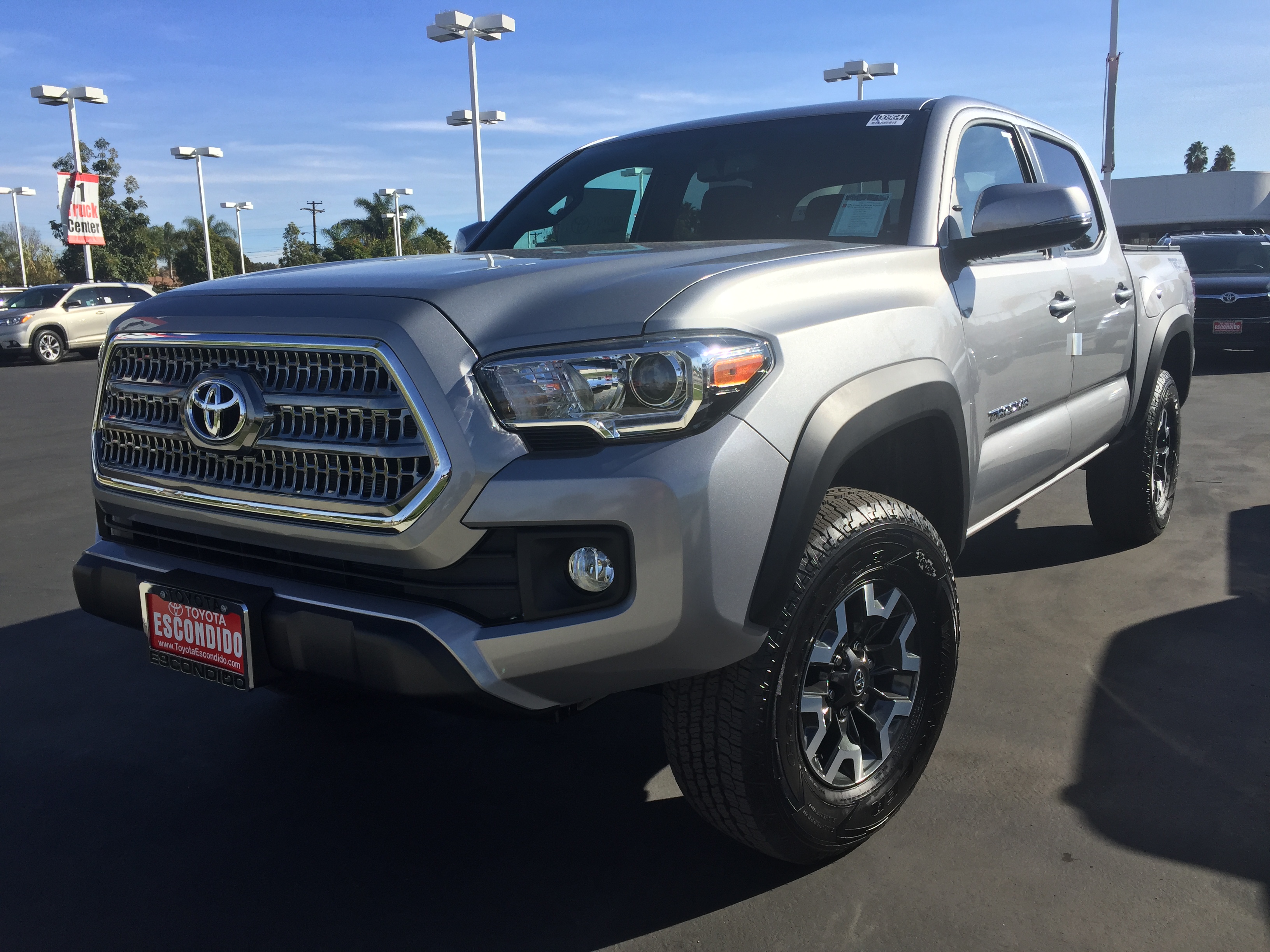
Toyota Tacoma
"…students are Toyotas, whether they're forerunners or Tacomas, the latest and greatest are of course land cruisers…"
The Toyota Tacoma is a pickup truck that many people use for off-roading. Here, they’re saying a lot of the event attendees drive Tacomas.
The Toyota Tacoma is a midsize pickup known for off-road capability and popularity in 4x4 communities. In this segment, it’s mentioned as one of the Toyota models commonly driven by participants or students at off-road events.

Toyota 4Runner
"…students are Toyotas, whether they're forerunners or Tacomas, the latest and greatest are of course land cruisers…"
The Toyota 4Runner is an SUV that’s popular for off-roading. They mention it as one of the Toyotas people drive to these events.
The Toyota 4Runner is a body-on-frame midsize SUV built with off-road use in mind. In the segment, it’s grouped with other Toyota models (Tacoma, Land Cruiser) as common vehicles participants bring to off-road training or wheeling events.
towing
"…we're segueing into what we kind of talked about a little bit before possibly talking about towing. Okay… So like if you have a Toyota and you're going to go off road, you should have a tow vehicle to tow at home…"
Towing means pulling something behind your truck or SUV using a hitch. Off-road folks do it to get their rigs to the trail or event safely.
Towing is hauling a vehicle or equipment behind another vehicle using a hitch and tow system. Off-road groups often tow rigs to trails or events so the vehicles aren’t driven long distances on-road or risk getting stuck before the wheeling starts.
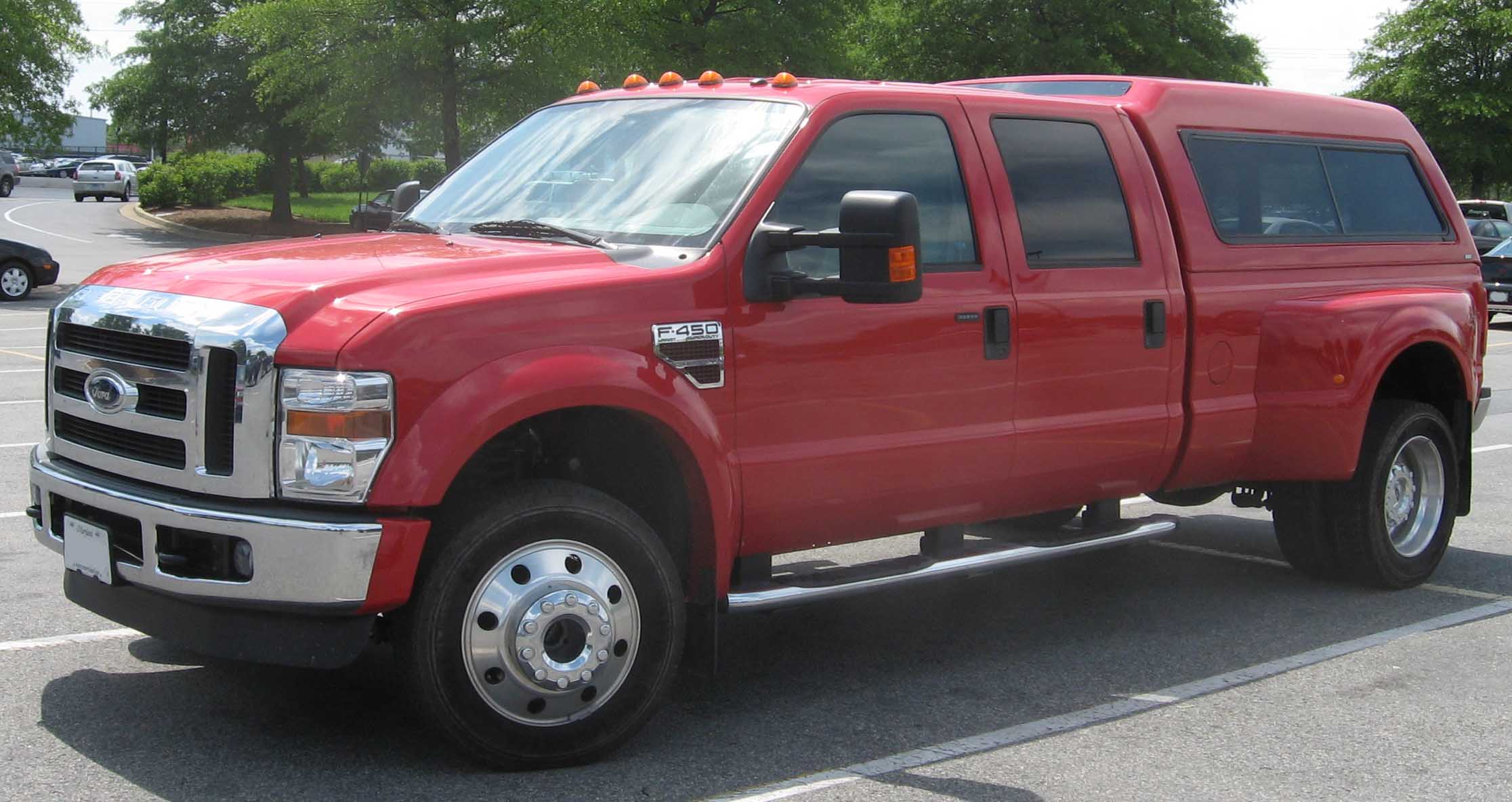
Ford F450
"It might have been going to, you know what it might have been going to Meadow Lake one year. You, this is before you had bought or just after you had bought your F450. Wow. Right after you bought your F4, because you had the F350 for years..."
The Ford F-450 is a big, heavy-duty truck. People use it for serious towing and tough driving, and here they’re talking about having comfort features in it too.
The Ford F-450 is a heavy-duty pickup (part of Ford’s Super Duty line) that’s commonly used for towing and off-road work. In this segment, it’s specifically discussed as a purpose-built off-road truck that still benefits from comfort features like heated/air-conditioned seats.
automatic transmission
"then you bought the F450 with an automatic transmission and you showed up at an event and you're like the work track. And you said, uh, now I know what you guys are always so relaxed and whatnot. When you get to your destination, because you're not shifting gears all the time."
An automatic transmission shifts gears for you. In this conversation, they’re comparing it to a manual and talking about how it feels and holds up.
An automatic transmission changes gears by itself using hydraulic/mechanical control systems (and often a computer), rather than requiring the driver to shift manually. In this segment, the hosts contrast automatics with manuals for off-road events and discuss perceived durability differences.
granny gear
"It had a granny gear and a, um, it was an overdrive. It had a granny gear with six speed, right? It was, it was a six speed transmission. It was awesome. Um, love that"
A granny gear is a very low gear that makes the truck move slowly and controllably. It’s useful for crawling over obstacles or steep, bumpy trails.
A “granny gear” is an ultra-low gear ratio used for crawling at very low speeds, such as climbing steep grades or maneuvering through rough terrain. It helps keep engine RPM in a workable range while reducing wheel speed so the driver can control traction precisely.
overdrive
"It had a granny gear and a, um, it was an overdrive. It had a granny gear with six speed, right? It was, it was a six speed transmission. It was awesome. Um, love that"
Overdrive is a gear that helps the engine spin slower when you’re driving faster. It can make highway driving quieter and usually more efficient.
Overdrive is a higher gear (or gear ratio) that lets the engine run at lower RPM for a given road speed, improving efficiency and reducing noise. In trucks, it’s often paired with lower “crawl” gears so you can both tackle off-road conditions and cruise on-road.
six speed transmission
"It had a granny gear with six speed, right? It was, it was a six speed transmission. It was awesome. Um, love that"
A six-speed transmission has six forward gear ratios, giving the driver more options to keep the engine in its best RPM range. More gears can help balance off-road crawling (low gears) with on-road cruising (higher gears like overdrive).
gasser diesel
"Gasser diesel. Gasser diesel. I'm a fan of diesel. I mean, I really like the torque and just the go, go, go."
They’re talking about two types of engines: gasoline versus diesel. Diesel engines usually feel stronger for pulling heavy loads.
"Gasser diesel" is a casual way to contrast gasoline (gasser) engines with diesel engines. The key difference is how they make power and torque—diesels typically emphasize low-end torque for towing and hauling.
bank's kit
"And it's great. I had a, I had a bank's kit on it and that, that woke it up, but I was driving by gauges all the time. The EGT, you know, watching the exhaust gas temperature"
A Banks kit is an aftermarket upgrade for some diesel trucks. It’s meant to add power, but when you push a diesel harder, the exhaust can get hotter, so people often watch temperature gauges.
A Banks kit refers to aftermarket performance hardware from Banks Power, typically used on diesel trucks to increase airflow and fuel delivery. On a towing-focused diesel, that can improve power, but it also makes monitoring EGT more important because harder fueling can raise exhaust temperatures.
EGT
"by gauges all the time. The EGT, you know, watching the exhaust gas temperature coming up highway 80, towing, you know, my cab over camper"
EGT means exhaust gas temperature—how hot the engine’s exhaust is. When you tow uphill or pull heavy loads, watching EGT helps you avoid overheating the engine.
EGT (exhaust gas temperature) is the temperature of the gases leaving the engine. On diesels, EGT is a key safety/efficiency indicator during towing because excessive heat can mean you’re overworking the engine or running too much fuel for the available airflow.

2017 F 350
"So then fast forward to the 2017 F 350 that I have now 6.7. Holy fuck. It's got zero fuck's to give. And I don't drive by gauges anymore."
This is a newer Ford F-350 diesel made for towing. The truck has computer controls that help manage power and heat so you can push it without damaging things.
The 2017 Ford F-350 (6.7L diesel) is a modern heavy-duty towing truck built around strong low-end torque and high-capacity cooling. The host contrasts it with his older diesel by saying the truck’s computer limits how hard it can be pushed, while still allowing full throttle when conditions allow.
computer regulates me
"I just fucking drive. I want to go faster. I put the pedal down. The computer regulates me, but it doesn't."
The truck’s computer can limit how much power you get. It does that to keep the engine from running too hot or stressing components.
Modern diesel trucks use engine control software to manage fueling, boost, and emissions systems. When the host says the computer regulates him, he’s describing how the truck limits power/behavior to protect the engine and keep temperatures within safe ranges.
weight limits
"and then weight limits. So what are you towing? You know, know your weight limits. So if you're towing a little raisened up,"
Weight limits are the maximum safe amounts your truck and trailer are allowed to carry. If you go over them, the truck can struggle and the trailer can become unstable.
Weight limits are the maximum allowable loads for the truck and trailer—often including the trailer’s gross weight and the truck’s towing/payload ratings. The host stresses that exceeding these limits is a major risk factor, especially when towing heavy setups like campers and off-road gear.

Ford F150
"fucking 22 RE, you know, Toyota pickup, um, fuck, you don't need much. You know, you could tow that with your F 150. You could tow it with a Chevy. You could tow it with a Chevy. You could tow it with a Dodge. You could tow it with a Toyota Tacoma. I don't care."
The Ford F-150 is a large pickup truck. It’s often used for towing trailers and hauling things. In the conversation, it’s brought up because it can tow what people need for trips and off-road setups.
The Ford F-150 is a full-size pickup truck commonly used for towing and hauling. The podcast mentions it in the context of towing a trailer, which is one of the F-150’s main reasons people choose it. It’s a frequent topic because it’s a mainstream truck that many owners rely on for work, gear, and towing needs.
Request an Explanation
Heard something you'd like explained? We'll add it to this episode.
Sign in to request explanations for terms you heard.
Want to learn more?
Browse our glossary for plain-English explanations of automotive terms, jargon, and concepts.
Help improve this episode
See something that's not quite right? Our annotations are AI-generated and can sometimes miss the mark. Click the flag icon on any annotation to suggest a correction.
1 community members have helped improve this episode.