A Chat with Max PattenKilowatt: A Podcast about Electric Vehicles · May 1, 2026
Annotations will appear as you listen
0:00
39:16
Company
EVs for all America
“EVs for all America” is the name of a group that works on electric-vehicle issues. Here, they’re trying to keep the conversation about EVs from becoming just partisan politics.
“De-stigmatizing” just means making something feel more normal and less judged. Here, it means helping people feel comfortable buying and using electric cars.
“Roadblocks” are things that make it harder for people to switch to electric cars. They could be rules, charging availability, or just confusion about how EVs work.
Your powertrain is what makes the car move. In a gas car it’s the engine and related parts; in an electric car it’s the electric motor and battery system.
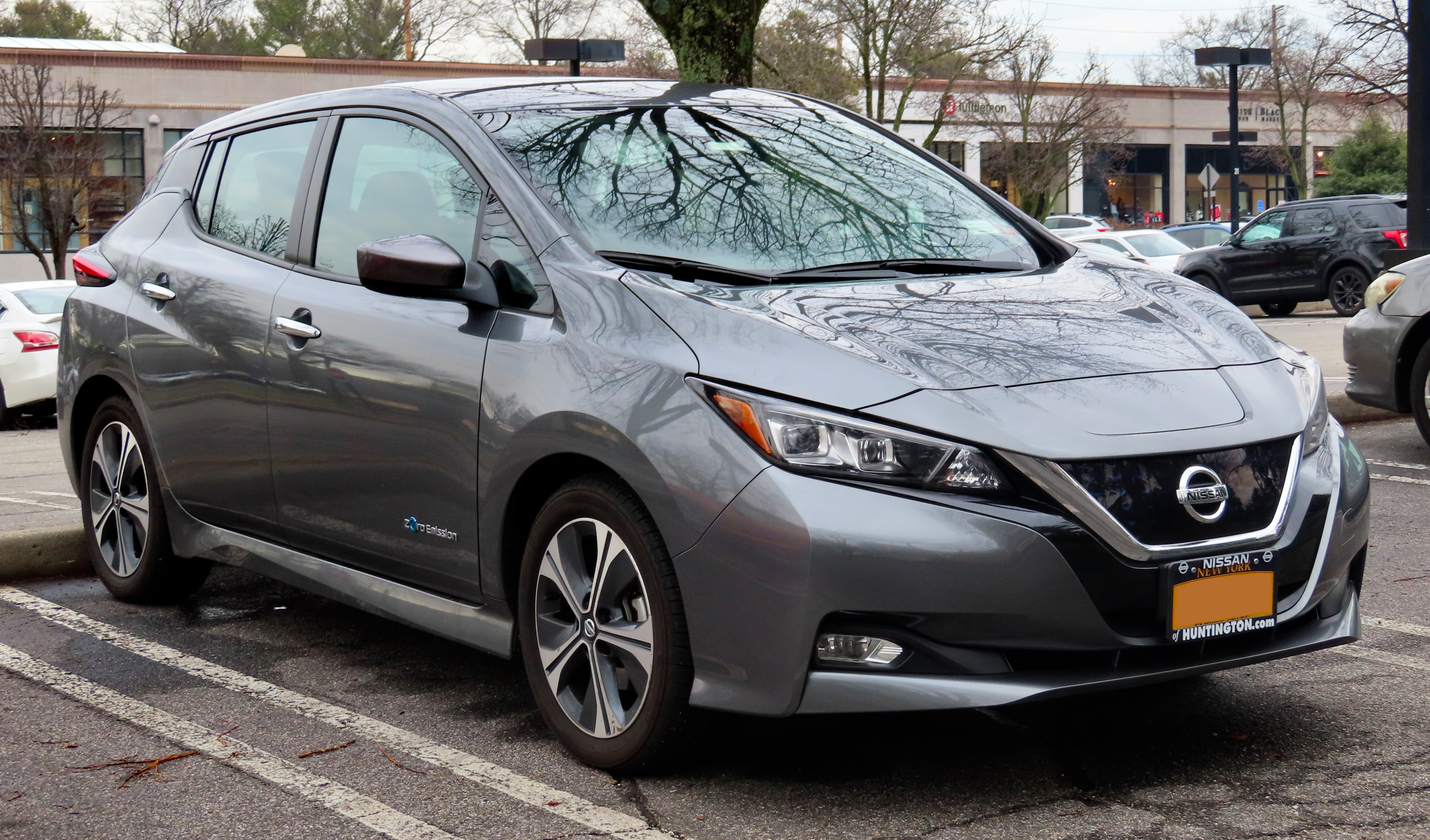
The Nissan Leaf is an all-electric car made by Nissan. In the early 2010s, it was one of the first widely sold EVs in the U.S., so many people learned about electric driving through it. The podcast is likely talking about that early version and what it was like to own.
A “compliance car” is basically a car a company builds mainly to meet rules or requirements. It’s not always meant to be the most popular or best-selling product at the time.
The Toyota Prius is a car that uses both a gasoline engine and an electric motor to improve fuel economy. It’s often bought by people who want to spend less on gas than a typical car. The podcast mentions it because it represents a common type of buyer for more efficient, electrified vehicles.
“Greenwash” is when companies market something as “green” in a way that may be exaggerated or misleading. The point here is that some EV ads talked like they were morally superior rather than explaining the real details.
Cost of ownership means what it really costs to keep a car over time. For EVs, it usually includes things like charging costs and how much maintenance you need.
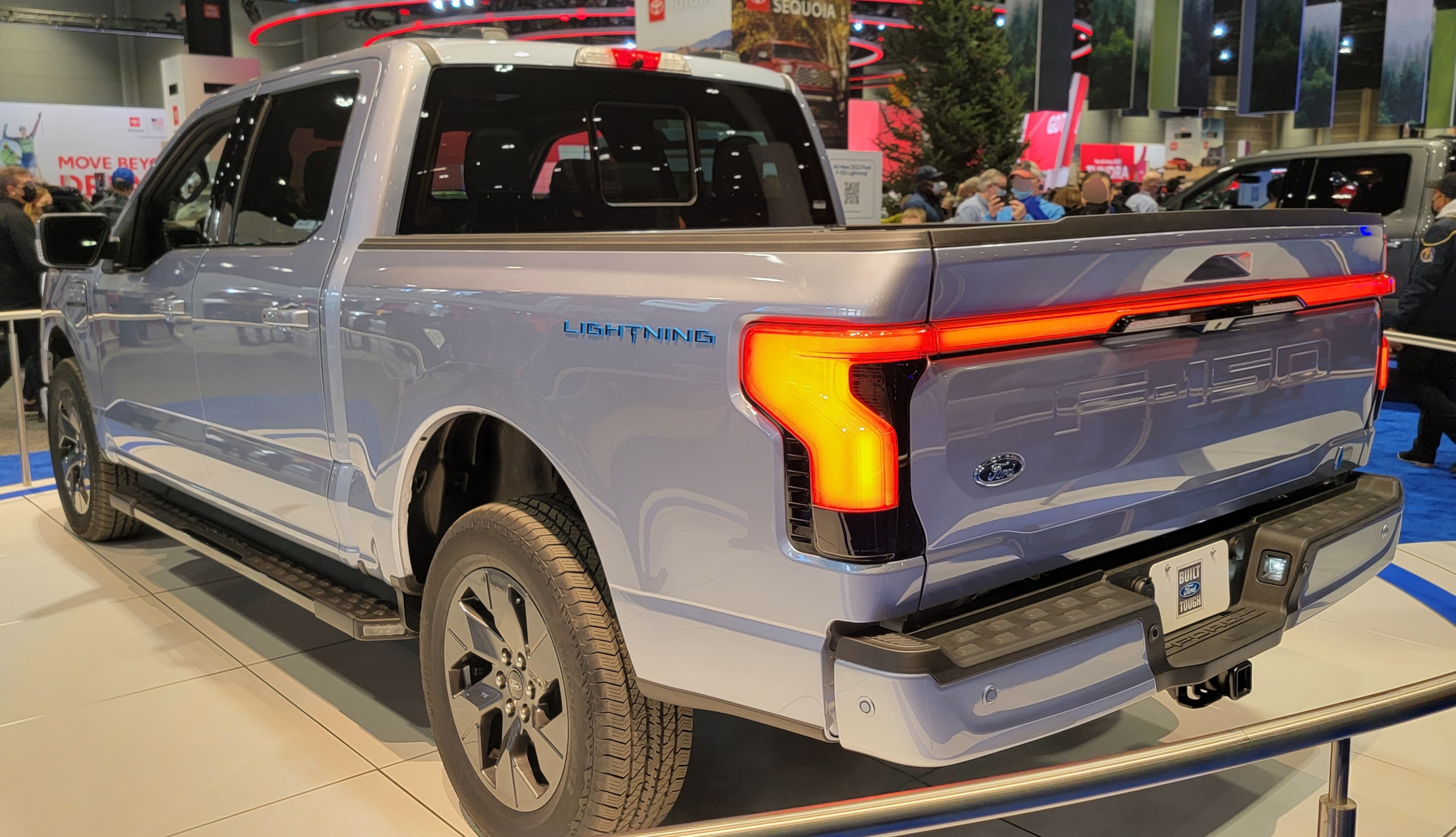
The Ford F-150 Lightning is a fully electric pickup truck. It’s built on the F-150 platform, but instead of a gas engine it uses electric power, so it can still work like a normal truck.
“E-rev” usually means an electric vehicle that can also use a small engine to generate electricity when the battery is low. That can help the vehicle go farther without needing to charge as often.
Power export means the truck can share electricity with other things outside the vehicle. Think of it like having a power outlet you can use at a worksite.
Towing means pulling a trailer behind the truck. With electric trucks, towing can use more battery power, so range may drop compared to normal driving.
A battery plant is a factory that makes the batteries EVs need. Where these factories are built can change how fast EVs can be produced and how much they cost.
This is about labor rules—how workers can organize and how negotiations work. The speaker suggests some companies prefer locations where those rules are less restrictive.
Concept
Bipartisan Past Infrastructure Reduction Act
This is a U.S. government law meant to encourage big investments. For EVs, it includes money incentives that help companies build factories and create jobs in the U.S.
These are government programs that give companies financial help. The speaker says they make it easier for automakers to build EV factories in the U.S.
They’re talking about Hyundai building factories in Georgia. The point is that EV production is increasingly happening inside the U.S., often because of government incentives.
Ford is investing in a big manufacturing effort in Tennessee called “Blue Oval.” The idea is to build more of the vehicles and EV-related components closer to where they’ll be sold.
They’re saying Polestar is involved in manufacturing tied to Volvo’s factory plans in South Carolina. It’s used as an example of EV companies creating jobs through new plants.
They’re pointing out that Volvo is owned by Geely, which is a big Chinese company. That ownership can affect how Volvo and related EV brands make investment decisions.
“EV transition” just means the move toward electric cars replacing gas cars. It’s not one thing—it’s a whole change in how cars are made, sold, and supported.
“Battery belt” means the parts of the country where EV battery factories are being built in big numbers. It’s like a manufacturing hotspot for batteries.
Autopacific is a company that studies car-buying trends. In the episode, they’re mentioned as having data that backs up what the hosts are saying about Tesla customers.
The Cybertruck is Tesla’s electric pickup. The hosts are saying that some people who never expected to buy an EV might now want one because the model has become popular in their community.
Brand loyalty means people stick with the same car brand they already trust. Here, the hosts say that this loyalty can strongly influence which EVs people are willing to buy.
OEM means the main car company that makes the vehicle. In this context, they’re talking about how the automaker’s brand and offerings affect whether people want an EV.
Price sensitive means the price matters a lot to the buyer. The hosts are saying younger shoppers may care less about the brand and more about whether the EV fits their budget.
Chinese brands are car makers from China. The hosts are saying younger people seem more willing to consider EVs from those brands than older buyers might be.
BYD is a car company (from China) that makes electric cars. The point here is that if BYD can sell a cheaper EV and it charges quickly, it could attract more buyers.
Car
Ford Lightning
The Ford Lightning is Ford’s electric truck. Here, it’s mentioned because it’s one of the EVs that still shows up in Ford’s sales results.
The Toyota Highlander is a midsize SUV, usually chosen for family use and everyday comfort. The podcast is likely mentioning it because a new version or update was coming and it could influence what buyers choose. That matters in an EV discussion because SUV shoppers are a big part of the market.
“EV war” just means the competition between car companies to sell the most electric cars. The speaker thinks Toyota might do especially well because it builds EVs that a lot of people find easy to live with.
“Lived experience” means what people actually see and hear from real owners, not just ads. If neighbors have good experiences with a brand, it makes other people more confident buying it.
This means doing the regular, planned service that the car maker recommends. The speaker’s point is that if you keep up with routine maintenance, the car can last a long time.
They’re talking about Toyota’s electric cars and why some buyers trust them more. The idea is that Toyota’s EVs feel familiar, and Toyota has been improving over time.
Rivian is used as an example of an EV company that leans heavily on screens and apps. The point is that some people love that, while others prefer something more familiar.
This means some car features are run by software, like an app. Instead of everything being fixed in the car’s hardware, the software can change how the car behaves and what features you can use.
Concept
polling quarterly
They’re talking about surveys they run every few months. The goal is to track how people’s opinions about EVs change over time.
Concept
EVs are not for someone like me
This phrase describes a survey response category where people feel electric vehicles don’t fit their identity or lifestyle. The hosts use it to explain how attitudes toward EVs are changing, especially among Republicans.
Some governments set limits on how much pollution cars can put into the air. EVs don’t have exhaust from the tailpipe, so they don’t create the same kind of air pollution while driving.
This is about how closely the federal government checks whether companies and products follow the rules. If enforcement is lighter, people may feel less pressure to change what they buy.
Higher gasoline prices change the cost comparison between driving a gas car versus an EV. Even if EVs cost more upfront, the ongoing “fuel” cost can look better when gas is expensive, which can improve consumer sentiment.
A tax credit is money off your taxes from the government. If it applies to EVs, it can make the car cheaper to buy, which can convince more people to purchase one.
A focus group is a small group of people who talk with researchers about what they think. Companies use it to learn what messages and pricing ideas work best for different kinds of customers.
Affordability metrics are numbers that help you judge whether a car fits your budget. The point here is that marketing should focus on what people can actually afford, not just general arguments about EVs.
Charging anxiety is when people feel nervous about charging their EV—like not knowing where to plug in or whether it’ll be available. It’s different from worrying about how far the battery can go.
EPA data is the government’s standardized way of estimating how far a car can go on a full charge. Your actual range can be different depending on how you drive and conditions.
Home charging means plugging your EV in where you live—often at night. If you can do that, you usually don’t have to worry as much about finding public chargers.
The Ford Mustang Mach-E is an electric SUV made by Ford. The hosts mention it because Ford can help pay for charging gear and the electrician work needed to install it at home.
Charging equipment is the device you install at home to plug in and charge your EV. It’s more than just a cable—it includes the charger hardware and the electrical setup to make it work safely.
Electrify America is a company that runs public fast-charging stations for EVs. The hosts bring it up to show how relying on public charging can be less convenient than charging at home.
Multi-family units are apartment-style buildings where many people share the property and electrical systems. The hosts say it can be hard for residents to get EV chargers installed because the landlord and building rules can complicate it.
Term
permitted
Permitted means the installation has to be approved by local rules and inspectors. The hosts say this approval process can slow down or block EV charger installs in apartments.
Level 2 charging is the common “home charger” style setup for EVs, usually using a 240-volt outlet. It charges more slowly than fast chargers, but it’s ideal for topping up overnight.
DC fast charging is the kind of public charging that can add a lot of range quickly. It’s faster than home charging, but it’s not as convenient for frequent daily use as charging at home.
The panel is the building’s main electrical box that controls how power is distributed. If the EV charger needs more power than the panel can support (or it’s far away), the installation can get complicated.
A DC fast charger is a public EV charger that can charge your car quickly. It uses high-power electricity to get energy into the battery faster than slower chargers. In this segment, they’re talking about how the bill can be different from slower charging.
Brand
orange
They mention “Orange” as a company that helps install EV charging in a simpler, cheaper way—like adding a normal outlet where cars can plug in. The idea is that you don’t always need the most expensive fast-charging hardware to get started. They’re using it as an example of a lower-cost approach.
“48 amps” is how much electrical current the charger can push to your car. More amps usually means faster charging. They’re saying some setups can charge at lower amps (like 20) to make installs cheaper and easier.
“20 amps” means the charger is sending a smaller amount of electricity to the car. That usually charges slower than a higher-amp charger, but it can be easier and cheaper to install—especially in apartment buildings.
Brand
pandemonium
They also name “pandemonium” as a company trying to make EV charger installations cheaper. The point is that some companies are finding smarter ways to set things up without building more equipment than needed. It’s an example of innovation in how charging gets installed.
“Grid distribution” is basically the power lines and electrical system that bring electricity to your area. If that system can’t handle more demand, it can slow down or block new EV charging installs. That’s why they’re saying the grid is a big limiting factor.
“Multifamily bind” means it’s harder to add EV charging in apartment buildings than in single-family homes. The electrical setup is shared, and the decision-making and costs are spread across different people. So even if residents want EVs, charging can be slow to roll out.
Permitting is the paperwork/approval you need from the city or local authorities before installing EV chargers. It can slow projects down and add cost. They’re saying rules should be flexible so different charging setups can qualify for help.
A kilowatt-hour (kWh) is a way to measure how much electricity you used. If charging costs “per kWh,” then the price goes up or down based on how much energy your car pulls from the charger.
Equity-driven incentives are discounts or benefits aimed at helping certain people based on need or income. The point being made is that the program might focus on who qualifies rather than on maximizing EV adoption for cleaner air.
The Dodge Charger is a car that’s usually known for strong performance and a traditional gasoline setup. In the podcast, it sounds like they’re talking about whether someone has a place to plug in a car at home. That question matters when comparing electric options to what people are used to driving.
Charging infrastructure is the “system” that lets EVs plug in and charge. It includes the chargers themselves and the work needed to install them, especially in places like apartment parking lots.
The “power of government” means what city/state rules can do to help EV charging get installed faster. The idea is to make the process simpler without cutting safety corners.
“Safety installs” means the charger is installed in a way that’s safe and follows electrical rules. Even if the process is made easier, it still has to be done correctly.
“Red tape” is extra paperwork and rules that make something take longer or be harder than it should. Here, it’s about making EV charging installs slower for people who live in apartments.
They mention a podcast called “Directly Current.” It’s where the guest says they talk about EV topics, especially policy and obstacles.
LIVE
Hello everyone and welcome to Kilowatt, a podcast about electric vehicles, renewable
energy, autonomous driving, and a much much more. My name is Bode and I am your host and today
I am joined by Max Patton. Max is with a bipartisan organization called EVs for all America. And
their goal is to depoliticize how your car is propelled, which I've always thought is very silly.
Not everything, you can like what you like. There doesn't have to be a political motivation for
like EVs, Star Wars, or Pokemon. You know, you like what you like and that's okay. As a matter
of fact, I ask Max and one of the first questions I ask him is how did we get here? How did we
politicize electric vehicles over internal combustion vehicles? And he had a really good
answer. So before we get into the interview, though, I do need to take one moment and thank Gene
for putting this all together. Gene sent me an email and he's like, Hey, are you familiar with
this organization, EVs for all America? I said, I'm not. And he said, Would you like me to see if
I can get somebody on the show for you? And I said, I would love that. And within, I don't know,
probably 24 hours I had someone booked, it might have been a little bit more than 24 hours. I think
they said yes within 24 hours and then Max was booked soon after that. This is a really fun
conversation. And if you're thinking that this conversations can end up being political, while
we talk about political opinions or political ideologies, what we're really trying to do in
those situations is set up why somebody might think this way or think that way. It's not to
advocate for one political viewpoint over the other. All right. So big thanks to Gene.
Big thanks to Max. I really think you're going to enjoy this episode. Let's go ahead and welcome
Max to the show. Thank you, Bodhi. My pleasure to be on here. Yeah, I'm looking forward to chatting
about this. So I'm going to be honest, one of the listeners that of this show, Gene, he emailed me
and he's like, hey, have you heard of this organization, EVs for All America? And I said,
no, I have not. He's like, would you like me to facilitate getting somebody on your show? And
I was like, absolutely. Gene does a lot of things in California. So he's kind of connected and here
we are. So first, thank you to Gene. And second, Max, what is EVs for All America?
Sure. Well, I'll give also a shout out to Gene. Thank you for making that connection.
And yeah, happy to be on here. I'll say EVs for All America is an education kind of focused
nonprofit. And we do a lot of polling market insights and research. Again, though,
nonprofit sector, our goal is effectively de-stigmatizing EV adoption from a partisan point of view
and looking at roadblocks to adoption that exist. And we'll sure get into TTL about some of those
and kind of lobbying to get those removed. And so we have market insights and data. We have a
sister group, the American EV Jobs Alliance that actually does more of our lobbying arm.
We're just the kind of neutral education arm. And we look at trends like, hey,
more Republicans are buying EVs. Isn't that interesting, right? And that's not some,
you know, oftentimes it's data people wouldn't expect. And so we get written up a lot in news
stories. And we actually have a podcast we do that I host. It's a roughly monthly schedule
loosely called Directly Current. And that's more on the policy end of things. So we speak to guests
on how the EV transition is going in the US. We talk to analysts and consultants and look at
the US as compared to China and everything that's going on in Europe and the state of the world.
And it's very fun, especially for the policy wonks out there. So that's a great time, but
always a pleasure to nerd out about EVs. So great to be on here.
Yeah. So we'll talk about the partisan thing real quick, and then we'll kind of move past it.
I will say just from the interactions I've had with the people in the community, right,
in the, in this EV community, in kilowatts community, I have a nice mix of people from
variety different political backgrounds, right? Where did we go wrong that we made how a vehicle
is propelled? A political thing, like it drives me crazy. You don't, it doesn't matter how you
get your car from one place to another, what powers it. But for whatever reason, it is such a,
like if you own an EV, you're this person, if you own a gas guzzling truck, you're this person,
and in reality, both people drive both of those cars.
Yeah, that's a great point, right? Why should a power train be political? I'm going to give my
boss, Mike Murphy, stump speech. He's the kind of Republican pollster and politician who started
this whole thing. And his philosophy of it is it begins sometime around 2010, 2011, I want to say,
with the Nissan Leaf in the US market. So not the great Leaf we have today, this was very much
a compliance car. For its time, very innovative, right? But that hatchback, affordable vehicle they
made to market it, they had this series of ads with a polar bear in it, where there's a guy who
gets a leaf in his driveway, and this polar bear who's really sad about the ice caps melting,
swims all the way and ends up in this guy's driveway not to attack him, but give him a big
hug. And isn't that sweet? Oh, he bought a Nissan Leaf, he's a friend of the polar bears.
And my boss, Mike, loves to point out that ad is just a moment in time of showing, hey,
particularly in the early days of the EV transition, who were you trying to get? You were trying to get
the Prius customer. You were trying to get the left of center kind of progressive folks who
believed in climate change. It's not to say climate change scientifically, objectively,
I think many listeners of your show, regardless of their political orientation,
can see what is in that. Unfortunately, in the US, we don't have a partisan consensus on it.
I don't think it's a partisan issue in lots of the rest of the world. In the US, it is. And I
think companies like Nissan and Hyundai in the early days didn't quite understand that, because if
you talk to them in Korea or Japan, they would say, oh, climate change is not this polarizing thing.
Here in the US, as all of us US listeners can probably relate to, it is polarizing.
It probably shouldn't be, but it just is. And unfortunately, the EV movement very early on
got caught up in this idea of a holier-than-thou greenwash marketing and saying, oh, EVs are
great for the environment, aren't they? And I happen to think, yeah, they are better for the
environment. Even if you have coal-powered generation, there's been studies that show,
oh, yeah, EV power drains are more efficient. So we don't need to litigate that. I believe they are.
However, there's so many other benefits, including cost of ownership,
driving experience, and other things. And we saw Tesla's success in the early days was largely
deviating from the environmental trend and just saying, hey, this is a great vehicle. We want
to lean into that and hope the rest of the industry really adopts and sees that. I think they have
come around on it, but we still see at times a partisan divide that I'm happy to go into more
detail on. Have you noticed a shift in just in general in politicians when it comes to
their, I guess there, I guess it would be more kind of Republican politicians if we're talking
about the dismissal of EVs. But have you noticed a shift in the last few years? Because I'll be
honest, I went from in 2000 and whenever the Roadster came out, was it 2012? I was sitting
in a bar with a friend of mine who was my captain at the time, my boss. And he sees it,
Elon's on TV, gets in the car, drives away. He's like, that'll never last. And I was like, no,
no, I think there's something to this. And I'm going to use him as a bellwether, right?
Yeah. Very conservative guy drives, he has owns a painting business, still owns a painting
business. He drives an F-150 Lightning. He's had several in his, the time that I've known him.
He went from, that'll never happen. This is a stupid idea to now we talk about,
like he knows what an E-rev is. I mean, he's a 70 year old man who had no interest in EVs
when I met him. And now he knows what an E-rev is. And he's asking me questions about whether the
new F-150 Lightning E-rev will be good for his business and save him money. So I think there
has definitely been a shift, but we're still not there. So have you noticed anything in the
political space with the politicians where there's maybe somebody who is an ardent
detractor of EVs has kind of mellowed on that a little bit?
Yeah. That's a great point you bring up there. There's so many of those anecdotal stories of
people who regardless of their politics just drive an EV and the word of mouth suddenly,
it's their favorite thing, especially folks in the contracting realm, turns out electric trucks
with the power export, all that stuff can actually be really good. Even if they have their limitations
still look towing, that's not the only thing people do with trucks. So I would say, yeah,
a lot of this is a little bit overhyped in the media. Republican politicians have actually
been mixed on EVs. You're right, that's the stereotypical conservative perspective has been,
oh, EVs were Obama mobiles, then turned Biden mobiles. It became politicized in that way.
And so it became kind of normal for Republicans to just bash on EVs because that was something
for the lips. That's changed a little bit in the sense of what you actually saw in the period
of the early 2020s, I guess the first part of this decade now, it sounds weird to say, but
there was a huge investment in factories and battery plants, particularly in the southeast.
And a lot of that has to do with taxes and not having to be subject to union laws. But
for better or worse, lots of companies decided we're going to invest in America. And of course,
there was some incentives and there were some government pushes like the Bipartisan Past
Infrastructure Reduction Act to do that, basically giving huge tax credits and incentives for
companies to invest in America, particularly as they went about in the next generation of
transportation, building EVs, both the batteries and the trucks and the cars themselves.
You saw huge plants like Hyundai's plant in Georgia, Kia has one there too,
Ford's huge Blue Oval project in Tennessee. You have Polestar in Volvo's effort in South Carolina.
Very interesting too, given that company is owned by Geely, a Chinese conglomerate. And yet there
you have American jobs in the South being created for EVs. And so what you've seen as a trend is
lots of governors and people more local and politics, even at the level of some representatives
and senators, though sadly not that many. Those Republicans realized, hey, these are jobs in
my community and I actually, I like the extra tax dollars. And so we have seen that flip a little
bit. Unfortunately, I don't think when you get to the national level and you look as more like
U.S. senators, U.S. representatives, not state level governors, those folks I think are still
very partisanized in Congress. And it's still very popular to have a partisan narrative for EVs,
see last summer with the One Big Beautiful Bill Act. We actually were hopeful that maybe some
of these Republican senators would see, hey, there are things in my state going on that are
huge for manufacturing. And those, they were addressed on the floor, but unfortunately when
it came to voting time, they still voted mostly along party lines to pass legislation that,
in my personal view, was really bad for the EV transition and undid a lot of the progress we
made in the early 2020s. And so those factories are still there. They haven't disappeared. Even
though you read about write downs, there's still lots of jobs and there's this whole idea of a
battery belt in the U.S. largely driven by these plants in the Southeast. So I think to the extent
that we continue to see this bipartisan rhetoric of, hey, American manufacturing is a good thing.
I don't think that's a right or left thing to say. And obviously, at least from a rhetoric
perspective, the Trump administration has been very open to that. Now, you can argue about
how they've implemented it and I have many thoughts on that, but that is part of the rhetoric.
And so it's not, doesn't seem like to your point, anathema to say, hey, we'd be for EVs.
Unfortunately, my point is basically, and the rambling here at the national level,
we just haven't seen Republican politicians get on board yet. Maybe that's because they
need permission from the chief executive. Maybe it's because of the cultural issue still.
It's warming and you're right at the individual level. Folks who have owned a lightning,
folks, you know, just normal people, I think understand this the more experience they have
with EVs. Unfortunately, politicians, particularly non-local ones, still don't. Governors, it's a
different story. I think they're more on board, mayors totally on board. But again, it's very
specific, right? If people have an economic benefit and they can realize that they'll see it,
if they can drive the vehicle for themselves, they'll absolutely see it.
Yeah. And I mean, at the national level, it's also easier to campaign off of a boogie man,
whether it's the right or the left. Somebody's going to be the boogie man. So,
if you're making the boogie man EVs, voting for it, it maybe is not in your best interest,
personally. With that, what are some of the things that EVs for all America is doing
in terms of changing hearts and minds through policy and just conversations?
Just information. So, we do a lot of polling and I'll give a link to you to share with your
listeners for this episode to the work we do on our website. But we release lots of basically
what are like focus groups and market studies that we get using polling methods that my boss used
back in his days in a purely political sense. Now, we use it from a market perspective of figuring
out who's buying EVs, who isn't, why are they buying EVs, why are they not. And what we find
is really interesting. Beyond the partisan angle, we've actually seen that healing a bit in the
sense of particularly with Elon's whole adventures and stuff that actually has made Tesla owners
in particular much more 50-50 Republican Democrat. So, even though a lot of left-wing people were
really turned off by Tesla now, very anti-Elon because of Doge and all of that stuff, what we
actually saw and we confirmed this with a recent guest on our podcast who has a separate consulting
firm, Autopacific, their data also showed this Tesla has moved more right in the sense of their
customers. And we actually view that as a good thing because guess what? The people who had
Teslas before and don't want to buy Teslas, now they're buying EVs from forward or General Motors
or they're still very much on board with the EVs. The people who never thought they would have an
EV, maybe they want a Cybertruck now because that's become the thing in their red county. And so,
we actually see that as a good thing in the sense of, hey, not every vehicle is going to be for
everyone, but there is some interesting brand opening up there. Also, in terms of OEM and
brand influence, we find that guess what? People really like Toyota and they really want a Toyota
EV. Even though up until this point, that company has not made many compelling EVs,
that's changing pretty quickly, but it shows you brand loyalty still has a huge effect.
And then, when people think of what the most American make is, they still say things like
Ford. And so, I think there's absolutely an appetite for people who want to buy a Ford EV.
Now, I'll nuance that and say, when we look at younger demographics, people are less
brand sensitive or they're more price sensitive. And that's where we find people are not only open.
We do find younger people, as you might expect, are more open to EVs and powertrains. They're also
more open to the idea of Chinese brands. They don't necessarily have as much affiliation or
nostalgia for a Ford or a Toyota. They'll say, hey, I've got to buy a house eventually.
I want to save money. If BYD can come in here and I can get a $15,000 cheaper car that charges in
10 minutes, sign me up. That's my crude summation of it, but that's effectively what we've seen.
As the younger the demographic, both the more open to EVs, but also I think that American
automakers should pay attention to this, the more open people are to foreign brands and new brands
like Chinese entrance. I think that all of those things, you're speaking to my heart right now,
all of those things I agree with. One of the things that I found interesting this quarter is,
and we're talking on April 10th. I'll release this a little bit in a week or two, but
on April 10th, in the first quarter, Toyota with one brand, one mediocre, in my opinion, EV,
they sold more or one model. They sold more EVs than Ford did with two, and the lightning was
still in those sales numbers. Brand loyalty means a heck of a lot, especially for Toyota folks,
and with the Highlander coming out, and some of the other things that Toyota's doing.
I think Toyota might be the sleeper. I think they might be the apple of the EV space for right now,
like they waited and waited, and now they are making their moves when everybody else is pulling
back. That might be a huge mistake, but Toyota for all of it, like I have friends who own
Toyota's and they're insufferable. I don't have a problem with Toyota, the brand, but my friends
are just awful. Their cars are fine. They're not the cars that they're claiming them to be.
They're great cars, but they're not amazing cars. But anyway, the thing is, I think Toyota might end
up, at least maybe for the second half of the 2020s, winning the EV war because they're really
good at engineering. They're really good at building a good car that 90% of the people love,
but it's not something that is a spaceship. It's just a really good car.
Yeah. That shows you, right? It's the lived experience matters so much to people in the
sense of, what do their neighbors drive? What have they had good experiences with? If people
have realized, hey, every one of my neighborhood has a RAO4, they're able to drive 200,000 miles or
more with normal schedule maintenance. That's great. They also associate Toyota heavily with
hybrids. That explains, I think, a lot of why people are so receptive to Toyota EVs, even though
you're right. I agree with you. Particularly, their early EV efforts were very half-baked.
They've been improving quickly. They're coming out with new EV product to building a lot of it
in America, which is great, but they haven't been the most cutting edge. They haven't been
spaceships. At the same time, people like what they know, and they see a Toyota, they can understand
that. They look at certain other EVs. You get into, of course, not even excluding factors like cost,
but you look at something like a Rivian or a Tesla. These vehicles are full of screens. They're full
of what we call software-defined features. That's very exciting, especially maybe for those younger
customers. But when you look at the average demographic of the new car buyer currently today,
many of them are in their late 40s or their 50s. They have some money to be able to buy a new car,
and it turns out that they want something that is a little bit more familiar to them,
and they'll have more confidence in. We find that to be a pretty high factor in what people buy.
100%. 100%. With that, what do you see when it comes to polling? Elon is a symbol on the right
now. Are you seeing other folks, people on the right, giving other EVs a chance as well?
Yeah. Sometimes it's hard to look at the causation that specifically we do the polling
quarterly. What we notice is a trend, and it's probably a bit of a lagging indicator.
I think your intuition is right that as people warm to Tesla, as particularly Republicans,
we have noticed overall Republican resistance to EVs is lower. Now, that's not necessarily
when we give our respondent answers. They're not answers like, oh, I'm going to buy an EV tomorrow,
but it's like we have this response of EVs are not for someone like me. That used to be much
higher for Republicans. We noticed that dropped 20 points. Republicans now, at least broadly speaking,
who are polling are in the position of, okay, maybe I'm not buying an EV tomorrow. However,
there's less of this immune response to like, I'm never buying an EV. That's gone down a little bit.
Now, that might also be from comfort level. If you look at the polarized times, and we're still
in polarized times, but if you look at the Biden administration, obviously, very public messaging
that EVs are the future, they're here to stay, get them or get out. You go back in time to,
I think, some of these political matters. I think people felt really threatened by that,
and the idea of consumer choice going away. Of course, that awakened all of these partisan
instincts of people saying, oh, I disagree with the government in charge. They're pushing EVs on me.
It's a scam. I don't want it. Now, you go into the market where now, where frankly, the US has
lacks to know environmental regulations of emissions. There's no immediate threat. Now,
if you look globally, our market probably can't exist like that forever, but we are in this
stasis point right now, where there is much less federal scrutiny over regulations. People don't
feel the burden as much. And you know, topically now, we don't have the polling date on this yet,
because this is obviously much newer, but you look at the headlines and the state of the world
being what it is, gas prices being much higher, turns out people do warm to EVs on those economic
points. And I wouldn't be surprised when we do this polling again to see people being even more
receptive once they realize what they're paying at the pump. We've noticed a similar trend where
despite your stereotype and what you may think about government stimulus,
when the tax credit existed, Republicans liked that too, because it turns out everyone likes
money. Everyone likes getting a deal. And so Republicans were more likely back then to buy EVs
just on the basis of a tax credit or an affordability measure. What they didn't like was the messaging.
And so that's a lot of the work also to your earlier question of what we do at EVs for all
America. We take this polling and we try to advise automakers, their focus groups and in our
conversations with them, hey, you need to change your marketing or consider programs that focus
on affordability metrics for customers because red or blue, everyone wants a good deal. And
we've really noticed that trend. Yeah. And they want to keep as much money in their pocket as
possible. I'm a firefighter. I don't know if I tell that to everybody, but in the fire services,
there's a lot of folks who are conservative. There are a lot of folks who are like, we should be,
why are we buying oil from foreign countries and all this other stuff? Why do we have so much
reliance outside of ourselves? And my argument to that is why don't you drop by an EV because
your power is low unless you live in one of the bordering states. But in most cases, your power
is local. You can power directly from your solar panels, which many folks that I know have because
this is Arizona and it's sun is out here all the time. It drives me nutty because then you're just
not relying on that at all. And it's not like oil job. I came, we talked about this earlier,
I was born in Alaska. All of my family made their money in some way or form or another
from the oil industry. I don't think the oil industry is going to go away just because
you know, we increased the number of EVs we have. We still need plastic in those interiors.
Yeah. Yeah, 100%. And there's other things that oil is used for. It's not just powering cars.
What's one of the things that kind of when you do the polling, what's one of the things that
has surprised you when it comes to just kind of looking at the sentiment around EVs? That can
come from either party side. I would say the thing that, I mean, the partisan gap is surprising. I
think the other thing I'll say is also the knowledge. And it's the sense of, and this is
some of the other work we do, a lot of this is based off, you know, I think there's the
now an industry term for this. It used to be range anxiety. Now it's the charging anxiety.
I think folks are well aware now that many EVs on the market can reach 300 miles of range
or more, right? Using EPA data. And on a highway, it's close to that high, if not even higher,
with some vehicles. The issue is with charging, many people can't charge at home. And so,
but I think it was surprising in particular, realizing how many people
weren't really quite aware of the convenience for many people. The EV thing felt like sacrifice
because it's this idea of an extra burden, an extra thing you have to do to go and fill up.
When you tell people how home charging works, they love EVs. And maybe that feels intuitive,
but I feel like the industry hasn't reckoned with this enough. And I do want to give another
shout out to Ford, who I think a year or two ago started the program of giving people EVSEs or,
you know, charging equipment for their EV when they bought a Mach-E or a Lightning
RIP discontinued for the moment, right? But when they buy a Mustang Mach-E to this day still,
you can get a charging equipment from Ford free of charge, not just the equipment itself,
but they'll cover reasonable electrician install costs, you know, barring if you live on a ranch
with like 10 miles of conduit, right? But like up to some reasonable limit, they will pay for
your charging install. That is a huge adoption barrier. And it's something I think the industry
still needs to do a better job of. We've done a great job, I think of selling people on like,
oh, this truck is fast or has lots of range. And the new affordable stuff is exciting.
Can't wait to see the next generation of products. But guess what? You can put someone into,
you can put someone into a last generation lesser technology EV. And they'll actually,
I think, be happier. This is my opinion. If they have home charging versus giving them a state of
the art EV, but they have to go to electrify America every week or twice a week, depending on
how much they drive. The convenience factor of home charging is huge. And some of the work we've
done specifically in California has been looking at policy measures to actually break that down
because when you think of folks who live in what's called multi-family units or like condos and
apartments, many of those people cannot do the overnight charging thing because their landlord
doesn't know what to do. It's hard to get it permitted. There's all these barriers to installing
that when frankly, particularly what we call level two charging in the nerd sphere or like that kind
of overnight EV charging, that is not that expensive to install compared to DC fast charging.
And we're the opinion we need much more of it. And I think some of the polling data bears that out
that the convenience of home charging is a huge barrier. And once you get over that hump, people
are way more willing to go into EV. I agree. I've had a couple of folks on that are trying to find
what the ultimate solution is for EV charging and apartments. And one of the things that I think is
one of the things that kind of out of the gate, like if you have an established apartment complex
and you want to have this space in on the property that is this is reserved for EVs,
but it's really far away from the panel. And then you want more space than what your panel can handle
and you'll get some company out there that will give you this astronomical bill.
Like it won't be as much as a DC fast charger, right? But it's going to be a high tens,
if not the low hundreds, depending on how far away it is and how much they have to trench and all
that stuff. But there are other options available like orange chargers, a company for instance,
that will just install a regular outlet at a normal charging spot and you can slowly charge
off that outlet. They have a whole system that charges you the money. So the apartment complex
is announced. Is there a kind of a better way to get the information to property owners or
property managers that yes, you can do it the way that this company who wants to charge you
$90,000 to install five chargers, you can do it that way or you can actually work with some of
these other companies that have found a more reasonable and more affordable way of doing
kind of the same thing. Maybe you don't have one area for charging. Maybe you have multiple areas
for charging and maybe they don't charge at 48 amps. Maybe they charge at 20 amps.
Yeah. I think it's important to be technology agnostic to your point. There's companies like
orange and I think there's also pandemonium. There's plenty of folks who are doing really
innovative things in making installs cheaper by not overbuilding or by challenging assumptions
of what people used to have about level two, sharing power more intelligently.
Grid distribution is a big bottleneck with our aging grid in lots of areas of the country,
including urban parts of California where you think lots of people will be ready to adopt TVs,
but they can't yet because of this multifamily bind.
Being open-minded to technology is important. To that extent, what we want to do is when the
state helps, let's say, subsidize and install or make it easier with permitting, there should also
be some guidance or some flexibility that allows for different kinds of technologies. It doesn't
say, oh, you must install this 48 amp charge point unit. That'll be $6,000. Thank you very much.
This industry, yeah, a lot of people will pad their pockets for sure. We're not against
pocket padding. It's capitalism. I think to the extent that you can have policy
of waivers that work, incentivize the electricians to want to do this because let me tell you,
if you get the electricians and the installers who are unionized or whatever your state priorities are,
but if you get them on board and you incentivize them heavily to do this,
they're going to do the sales pitch themselves. Suddenly, the landlord doesn't need to worry
about it because he's going to have people knocking on his door saying, hey, I can do this for this
bid, XYZ. We want to make it easier for the tenants too. One more thing I'll say in the
polling data is people aren't against, they don't expect free charging. They're willing to pay for
it. Many of these apartment folks already pay $100 a month for parking. We found in general,
people are willing to pay about $35 a month for a flat rate for charging, not including the energy,
just for the convenience of having a charger in their spot. Then you tack on the energy cost and
charge something reasonable. Let's say in California, energy is more expensive. The neighborhood of 20
to 30 cents a kilowatt hour with maybe some off-peak accommodations, people are fine with that. That's
still a lot cheaper than fast charging. You can imagine Arizona or Colorado or elsewhere in the
US where we're blessed with cheaper electricity. It's an even better deal. People can save a lot
of money. I think innovative solutions are great, but from a point of policy leverage, you want to
just get on board with getting the installers and getting the laborer to want this because
that's the big bottleneck. Right now, they have to deal with so much permitting. The way the
regulations are written in certain states, a lot of the incentives are really only equity driven,
which is fine. It's based on income, but when you think of, let's say, a pragmatic environmental
standpoint, if you're a state and you want more people driving EVs to drive down emissions,
does it really matter how much income they have or does it matter that they can get a charger
if they live in their luxury condo or if they live in a rent subsidized condo? It doesn't really
matter. They should all have charging. That's our take on it. I think that's great. It's funny
that you say get the electricians on board because every single person I've had on to talk about
charging infrastructure, they say, well, we're making money, but it's really the electricians
that make all the money. I don't know if they're really pushing that off onto the electricians.
My dad was an electrician. I know that electricians make good money, but on the other side,
it's just every single company that comes on to talk about what they're doing. They're like,
for sure, incentivize those folks and make it a more streamlined. I don't think that we need to
throw more roadblocks up to charging infrastructure, but we definitely need to make sure that whoever
is putting that infrastructure in is doing it in the way that they should, but more so,
just not haphazardly. They're just not just throwing stuff into the ground without
thought or care, but I do think maybe easing up on some things. I know just installing the
charger in my garage, the installer was like, oh, we don't need to tell the city that they're
doing this. I said, no, no, no, no. I'm going to sell this house one day. I need the city to make
sure that this is cool because I'm not going to go back and pay for something later, so we're
going to make sure we're going to do this right. I think the city of Tempe, which is where I live,
I think they did a decent job of making it easy, but I know not all cities do that.
Yeah. I mean, you look at the way many condos and many units, many of these
for rent apartments are done, particularly in California. The ownership model is pretty
private in the sense of a lot of it is based off complicated property agreements that go back
to generations. That makes the logistics of getting this paperwork to install a charger
is really difficult. That's where we think the power of government is actually best used.
Let's try to streamline this as much as possible. Remove as many, obviously, still prioritizing
safety installs, and you can advance policy priorities of keeping journeymen and electricians
employed and making sure they're certified once, but at the same time, remove the excessive
red tape and considerations that we think have been slowing things down.
That will vary a lot, locality to locality, but there are a lot of those considerations,
and that little bit of friction makes it much, much harder for anyone living in an apartment
right now to live happily with an EV. Agreed. Hey, Max, thank you so much for coming on.
I really appreciate it. Where would people go to find out more about EVs for All America and then
your podcast, Directly Current? Yeah. Well, thanks for the shout out. Happy to be on. People can go
to evsforallamerica.org. That's our site where we have all our info. The podcast is Directly Current,
and so that's in YouTube and all the podcast apps. Like I said, we try to have monthly guests on
there. We're not as regular as you guys. We're not in the newsy business, but when we do have
conversations, we focus on these kinds of policy issues and what kind of roadblocks that are
happening. Love to talk EVs. It's been a pleasure being on. Thanks for the invite.
Thank you so much, and I don't know if you can hear my cat in the background, but
Jay's upside for some reason, so I should probably go make sure that the other one's not
stuck somewhere. Maybe she's a Toyota owner. All right, first of all, I want to thank Max
for joining me, and I forgot that he threw that Toyota owner joke at the end there. I left it
in because it was a number one. It was a great callback, and number two, I think it, I don't know.
It just tickled me. It was so funny. So Max, thank you so much for agreeing to come on the show
and hanging out with me. And then I also wanted to thank Gene because Gene's always been super
supportive of me and the show. And I know, like I said, I think as an interview, he does a lot
of stuff around EVs and climate in California. And I've had an opportunity several times to
chat with Gene, and he's somebody that cares, and you can tell. So again, a huge thank you to Gene
for doing that. All right, everybody, that is it for our episode today. If you want to email me,
it's Bodie, B O D I E at 918digital.com. You can find me on LinkedIn, I'm Bodie Grimm over on LinkedIn,
B O D I E G R I M M. Oh, man, what else? Things I'm finally catching up on things. I'm finally
getting things organized. It feels like it's been a little in the last six weeks have been like a
whirlwind. But things are slowing down. I actually woke up yesterday and felt really good and
energized and got a lot done. And I got a lot done already this morning. And it's only 830. And I've
already done just a ton of stuff that needed it to get accomplished. So I'm feeling, feeling very
on top of things right now. That's not a normal feeling for me. So our next episode will be Jill
Siminello, who is an auto journalist and a delight. We had, I had a lot of fun talking to Jill,
it's just just a super easy person to talk to you. And we talked about different EVs and racing
and I don't know, it was it was a fun conversation. And I think you're gonna enjoy it.
All right, everybody, thanks so much. I will talk to you soon.
If you liked the show, please take a moment to rate, review and subscribe. It really does help
the show to grow. Thank you for listening.
About this episode
Max Patten of EVs for All America walks through how electric vehicles have become less politically rigid, even as national debates stay polarized. He shares polling that shows Republican resistance easing, Tesla’s customer base shifting, and younger buyers caring more about price, charging speed, and familiar brands than ideology. The discussion also turns practical: home and apartment charging, permitting delays, and how policy could make installation easier without overcomplicating access.
In this episode of Kilowatt, we sit down with Max Patten from EVs for All America to chat about the political dynamics surrounding electric vehicle adoption in the United States. Max tells us the history of this politicization, examining how early marketing strategies inadvertently created consumer divides that persist today. Max provides unique insights into the shifting perceptions among Republican politicians, particularly as the economic benefits of local EV manufacturing plants begin to hit home. We also discuss recent polling data that suggests growing acceptance across political lines, even as infrastructure challenges remain a key hurdle. Finally, Max emphasizes the critical role of consumer education and facilitated dialogue in driving broader EV ownership and national progress.