A lively debate unfolds around Toyota's cautious approach to electric vehicles (EVs) amidst a rapidly evolving automotive landscape. Guests discuss the implications of excess manufacturing capacity, the challenges faced by EV startups, and the potential pitfalls of Toyota's hybrid-centric strategy. The conversation also touches on the competitive advantages of companies like Tesla and the importance of securing supply chains for battery materials. With insights into the future of luxury brands and the viability of alternative fuels, this episode provides a comprehensive look at the current state and future of the automotive industry.
Topics:toyota ev strategyexcess capacityev startupssupply chain issuesluxury electric vehiclesalternative fuelsmarket competitionhybrid technologybattery materialsautomotive industry trends
"...orks, that has the demand that a Model three or a Model S has something to pull buyers in because there's n..."
Select text to request an explanation
I don't line after hours. It's brought to you by Bridgestone Tires Solutions for
your Journey. Well, hello everybody out there, Helo, Sam few Ronnie
from out of Forecast Solutions. How you doing, John, Well, I'm
sort of doing okay. I gotta explain to the audience what's going on here.
So we've been hit by a massive ice storm and power has been knocked out all over the place, and Gary Vassilash is on vacation this week.
We've got Dan Neil here. We're trying to get him in, but there's
again connectivity problems here, which we'll have to blame on the weather. And
even though you see Dan right now, I don't think he hears us, and we definitely can't hear him, but I'll bet he's able to come in at some point in the program here. But while we get going here,
you know, Gary Vasselash often comes up with something in history this day or this week, and Sam, you had a couple of things you thought you wanted to point out. Oh yeah, No, we realized that it's been
a hundred years since they added ethel to gasoline, and about one hundred years since uh Alfred Sloan took over General Motors. Okay, explain the importance of
adding ethel to gasoline. Well, ethel was quieting down the knocks on cars
and h and ending up polluting the atmosphere for for a generation or two or three. But it allowed higher compression engines ran far more efficiently with it until
Yeah, the APA decided, you know, we don't want to be breathing this stuff. Yeah, no, it just got into everything. And uh,
and we're noticing it, you know. Now it's been forty forty five
years since they took it out of gas now, yeah, that's right.
And and Sloan Sloan is one of the greatest presidents of General Motors and it's entire existence. Maybe the greatest, yes, yeah, yeah, no,
he ranks up there with Durant and and everybody else who who took over that company over the years. Sloan is synonymous with General Motors. As a matter
of fact that I have his book around here somewhere. It's called My Ears
with My Ears with the General Motors. Yeah. He had another one that
they don't tout it much as much as General Motors. I think it was
called Confessions of an Automotive Man or I'm not sure exactly the title right now.
Yeah, yeah, no, but I know this big one was was My Ears of General Motors. That was his big biography. Yeah. Look,
anybody who's in the automotive business that wants to know what it's about, you ought to read that book. It's one of the classics. Absolutely.
But Sam, let's get into some of the things that's been going on in the industry and you know, hopefully Dan Neil will be able to jump in on this too. But one of the things you're talking about is how much
excess capacity there is in this industry right now. And that's a real problem.
You know, when you can build far more cars than you've got people buying them, somebody's going to have to eat that. Yeah. No,
I've been into this industry a long time, but mentors of mine who were in this industry a lot longer than me, founded the idea that excess capacity was a bad thing and how to measure it Over the years, so we've taken that to the next step and looked at the world and figured out how much excess capacity. And the only problem is right now we're at a different
state. There are so many startups coming in that are adding capacity to the
market, some of them, some of them say stating hundreds many hundreds of thousands of units of capacity that they're bringing. In some cases it may not
actually be there, but they have the factories they claim that they could build vehicles. So it's adding to this excess capacity. And then companies like General
Motors and Ford aren't helping by adding new plants to build evs in addition to the plants that build ices alongside them. There you know, you know some
are out there those ice plants are going to close or most of yeah, yeah, yeah, but they don't see that yet. They think that these
early adopters are raising the bar, are lifting up the whole market and adding to it and not taking away sales of Silverados or Sierras or F one fifties, and we just we just don't see it. After the first handful of
early adopters that come into the market. Yeah, well, you know,
one of the reasons why they're building these plants dedicated to evs is if if you do that, if you dedicate a plant to an EV you can really get a whole lot more productivity out of that plant. And if you try
to build ICE and p Heving Hybrid and BEV all on the same line.
Absolutely, even though some of them are doing it. In fact, even
GM is doing it. Spring Hill is you know they're building ICE and BEV
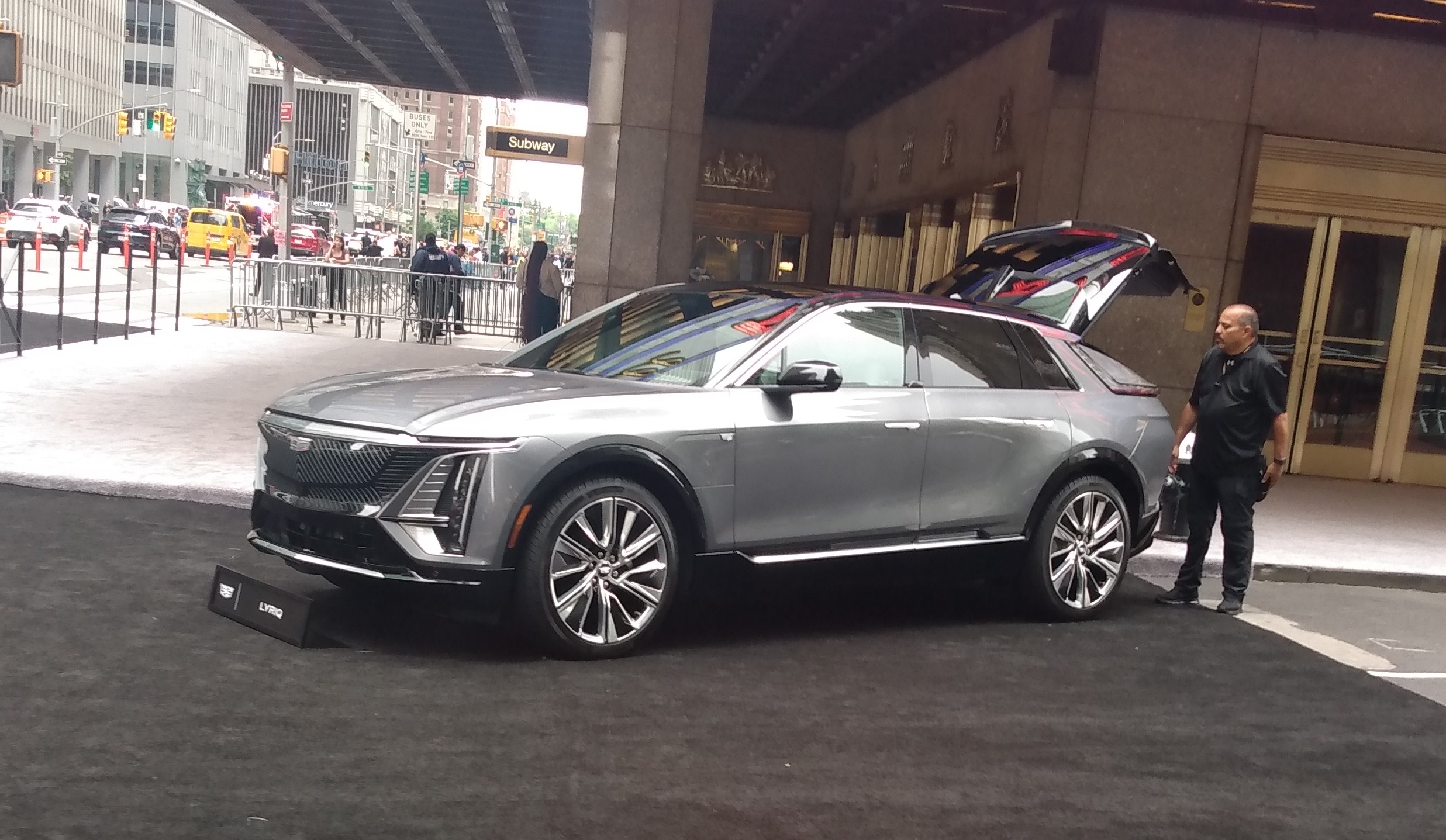
You know, the Cadillac lyric Is is coming down the same line as what other plant cars they make it spring Hill tenn they build the the XT six, XT five and hum gmc acadia. Yeah, so how much those the
assembling, Like you said, the assembling EVS takes a different process, and so it's much more efficient to start from scratch and build the process from the ground up rather than running it down the same assembly line that you're putting engines and transmissions in. And it just it makes more money for the manufacturer and
it's much more efficient if you do it from scratch. Okay, so you've
looked at excess capacity on a global basis, How bad is it? Well,
we've got we've always had tens of millions of units of excess capacity just from the way that the industry works. But you add in the EV the
EV startups and then the Chinese startups and all these different companies around the world that intend on breaking into this industry, and we're adding you know, another ten twenty percent to that that overcapacity. So the capacity right now we're running,
we're probably running sixty to seventy percent capacity globally, where eighty percent or better is profitable. Well, that's the rule of thumb in the industry that
you got to have about eighty percent capacity utilization. And just to explain that
simply, you know, let's say you can build one hundred thousand cars a year. If you can build at least eighty thousand, that plant should be
profitable. And anything above that is just money in the bank. Absolutely,
absolutely, And and like you said, the excess capacity will weed itself out as players fall away, as legacy manufacturers decide to pair off the icy plants.
Hey, looks like we might be getting Dan Neil in here. Dan.
Can you hear us, I can hear you. I can hear you.
Guys. What a joy it is to be with you now? Oh
much better? Yeah? So, are you have I storm problems? No?
No, no, thank god? No. Why. I know we've
had some city weather, but I mean poor weather. But uh yeah,
not so far. Now I'm just back lit everywhere I go. Okay,
fine, what was the question, then what are you guys talking about?
You know, what are you talking about here? No, not yet.
Excess capacity in the industry. Sam and Auto Fourcast Solutions has done a big
study and shown that, holy crappy, this industry can build way more cars than there are customers for I wonder when they see the net profitability for Tesla, Uh is it just reflecting their advantages and tooling or the fact that they don't have to carry all these all the rest of these uh these industries around and so it you know, makes their profitability per unit lopsided in other words, that you know, and they're carrying the excess capacity. Yeah, they
don't have a lot of excess capacity at the moment. They're even their their
new plan to running pretty well. Germany and Austin still have to come up
to speed, but you know, running balls out. It's it's amazing.
So, Sam, I gotta believe China's got the most excess capacity of all, hands down right. Oh yeah, Well, they've got dozens of ev
startups, plus all the small factories that have popped up everywhere across the country.
It does have a lot of overcapacity and we just see that going away.
When when some of these smaller companies disappear. When some of the EV
startups finally find run out of money, it'll it'll happen, and it's not too far down the pike. I wonder about that because you know, China's
had so much access capacity for a year in the Chinese government even wants to see a lot of consolidation, and it's never happened because provinces and municipalities want the jobs and they keep these plants going even if they don't make any money.
Yeah, absolutely, absolutely, Those those little guys just pop up everywhere and make these tiny, little terrible cars, and then you know, the major cities are building the good cars, the cars that can that can be exported and sold to bigger cities and to other countries. So, uh so,
what do you think about this uh break even point that Stillantis has got.
Yeah, they're they're doing great Spain, especially because of jeeps and rams.
You know, when you make when you've paired down your market to get rid of Dodge Darts and Chrysto two hundreds and all these products, even the jeep Cherokee. When you get rid of all these products that make less money
and focus on jeeps and rams that are making a ton of money. You
know, your profitability shoots up amazingly. It's great. So Dan, let's
get you in on this. I know one of the things you wanted to
talk about was Toyota slow walking its way into the EV segment. Yeah,
I think it's a fair critique. And UH, I think they've they've been
pretty retrogressive all since, you know, the UH, since they had the market advantage that they did in the early two thousands. But the UH.
The most sort of telling examples when when they joined the suit, the Trump Administration's suit against California for California's UH you know on regulation. That was a
big h that was a big breaking point. And since then, I understand
that Toyota has domestic interests and UH obligations that they can't shun UH. And
I also understand that after Fukushima, electricity itself was UH and the supply as of electricity in Japan was a problem, so there were there were a lot of UHUM barriers to that adoption. But now I think, you know,
it's quite obvious that they're just trying to hold and heads whatever advantage they have, And I think there it's going to be difficult for them in the next few years. Plus the whole thing about the stripping out the union the union,
UH what manufacturing in the IRA for the batteries and cars. Uh,
that was that was Toyota behind the scenes in Washington and certainly West Virginia.
So Toyota's argument, of course is that hey, wait a minute, we're all about carbon neutrality, and we think we can This is Toyota talk and not me. We think we can get people to a lower carbon footprint,
faster and more economically by going with hybridsen pehabs instead of pure babs. What
are you? What's your reaction? I think that's a faulty logic and it's
also an unnecessary delay. Uh. I think any fair engineering assessment of these
two technologies going forward, these one getting much much better and one is not.
Uh and UH and for hosts of reasons, electrification is going to take over. UH. There is UH. The the advantage that we can look
forward to in the next five years will make any hybridization of those cars UH move beyond that. We've seen that PEZ evans well, pezevs certainly, patvs,
I'm sorry, have a lot of transient and missions that are not not been counted. Uh. They have a lot of wear and tear, that's
uh, and various other downsides that have been glossed over in for example, toyotas for uh them as a solution, Sam, what do you think is Uh, it's Toyota crazy like a fox are just crazy? Well, there's
We're really not sure how deep the market is for for evs and and right now few companies are making money at it, so it in that case, Toyota is on the right track. But in order to get into China,
to get into Western Europe long term, to get in North America long term, you're going to have to be EV and their idea that plugging hybrids are quicker and cleaner. The idea isn't bad except for the fact that nobody plugs
them in. If you plug them in, it might work, but nobody
does that. So if if if you're hanging your hat on cleaning up the
emissions by people plugging them in, you've lost. I'll just say, because
we'll get pushed back for what you said, and I agree with you.
A lot of people don't plug in. Fact, like at least half of
them don't plug it in or don't plug it in. And there's a linear
inverse relationship between the distance that it can go and the likelihood that people will plug them in. If it goes twenty miles on a charge, eighty percent
of people won't bother ninety percent. These behavioral studies are you know, are
all the same. They all returned roughly the same data. And that's so.
And by the way, these in terms of compliance, phv's wildly overcompensated still even in California and certainly in Europe, and they're trying to close those you loopholes. I'm actually surprised that, well, let's say, Ferrari and
Lamborghini and a few others are going to manage to continue to make a few bespoke V twelves for the very wealthy post twenty thirty five that will be road legal. I don't know how that is going to stand up over time in
egalitarian Europe. Yeah, you know, I understand Toyota's argument that, hey,
nobody's making money on evs right now. Well, we know Tesla's making
gobs of money on evs right now. But the main reason others aren't,
notably forward with the F one fifty light you know, Chevy, and it's all about scale. You have to sell a whole lot more than things.
Getting back to our earlier conversation about capacity utilization, you got to get the capacity utilization of those EV plants over eighty percent. And so if you're saying,
oh, we'll wait until things pick up, I think it's too late.
I think this is a big flaw in Toyota's logic and how it thinks it's going to catch up later in the decade. And another thing too,
where I think it's a logicus flawed, is right now everybody, I say everybody, So many automakers GM and four notably at the front of the line in this locking up the supply chains in lithium, in cobalt and manganese and nickel, and you know everything that you need. And if Toyota shows up
in three or four years, where the hell are they going to get everything they need? Yeah, you make great points on all the access to all
the parts for batteries, getting a supplier four batteries, it will be tough because all that capacity is being absorbed just as it comes online. So when
GM or Ford or eventually Honda and Nissan and everybody else absorbs all that capacity.
Toyota is gonna be left behind with just the capacity for their for their plugins, for their hybrids. I want to just add to that now,
it's UH, that's sort of the most pessimistic of you. Here's a more
let's say, middle of the road UH prediction. Toya has hung a lot
of prestige on on a different kind of battery and UH that it doesn't have the UH doesn't have the drawbacks of a morphous lithium and UH with nickel and rarer. So there we're we're waiting yet for Toyota to have this better battery
if they have banked their fires, UH, knowing that the eventually their better battery is will come along and it will be commercial They first said it was going to be commercialized in twenty twenty three, if I recall, and so let's give them three extra years. But it could possibly be a strategic choice
to sort of faint, to fall back on the ropes, to take the beating, or early on in the press, make the argument your best you can, which is what they're doing about PHVs now, knowing that it'll be more economical to come back with a battery twice as powerful happens cast and set them on the path finally to profitability. One. Yeah. Yeah, you're
talking about solid state battery and they're not the only ones working on it.
You got people all over the world working on solid state batteries. I find
it hard to believe that Toyota off on its own, figured out some sort of breakthrough that's going to leap frog it in front of everybody else. I'm
not saying it's impossible. It is possible, but I just don't think that's
what's going to happen. When they were talking about it three years forgo,
that was that was their attitude there was. They certainly were suggesting that now
was later would be better to lead from behind, I guess. But but
but would it makes sense for Toyota to come in and say, um, we're not building evs and then suddenly, look, we've got this great AEV.
Is that is that the path to take, rather than say we're moving towards ev we've got this engineering work. Uh. Would that look better to
the stock market, to the customers, to everybody else, rather than saying no, no EVS because it's not profitable and then suddenly jump into the market.
The Japanese government plays a big part in this too, because Toyota can't just turn on a dime irrespective of the ups and downs of how good the product or technology is. They have to keep you know, one hundred and
fifty thousand people working in the homeland. Uh And that's there, that's the
top line, right that that you got to cover that first. So uh
So there they are a bit constricted in terms of and they have other obligations that manufact they have obligations other manufacturers. Yeah, but you know, evs
represent the fastest growing segment in the market right now. No, Marita,
where are you're looking? Well, the you know the major markets. You're
a US China. And my question to Toyota is don't you want to be
in the fastest growing segment in the market. I mean, you know,
they're losing. Look how successful Hundi and ky are turning out to be in
this segment. And look at the prices they're commanding. I mean, they
they're they're flipping the whole brand image. They used to be cheap and cheerful.
Now they're perceived as bleeding edge eves, very competent right there with the best of anybody else, whether it's Mercedes or Tesla or whoever. And I
think this is a huge mistake to miss out on that, and not just here but especially in China. Well, Sam, do you want to take
a guess as to win Toyota might declare the Japanese equivalent of bankruptcy. I
can't imagine that they would. It was It was hard enough when when General
Motors did, and that was more of a write off than an actual bankruptcy.
So, uh, you know, Toyota is not going to do that, but they will snowball into the market eventually, and uh, and I expect them to be a full player by the end of the decade, and probably about the time when the whole market becomes profitable, because you know, you'll only have Tesla really making money at evs at the moment, and they're the only ones building any significant volumes. Once everybody else gets there and there's
a significant the growth in the market is based on a small starting point, So once you get to ten, fifteen, twenty percent of the market, now we can start talking about profits on these vehicles rather than just the small niche that it is. Now. Well, when people say, you know,
it's a small mitch. They didn't saw a lot of them. They
should go. You know, they're not taking to account the fact that you
know, there's a huge unmet demand and you know there's hundreds of thousands of people out there who want electric vehicles and can't get them. Uh, And
to look at sales data to suggest that that's some sort of natural the water level of of the market, I think, you know it isn't true.
If if they if General Motors had a million ebs to sell today, they could sell them tomorrow. But it's being GM John. Uh. You mentioned
it before about investing heavily in a technology like uh Wi Leelti and battery a battery platform which as we now know as we look over the Letium iron Fox fates of that's UH coming online. It's a high price diamond plated battery technology
and they are wed to it body and soul, and it has a number of real distinct uh disadvantages. Namely, it is not a stress a load
bearing The batteries itself are not load bearing, and so you lose a lot of that that weight efficiency right there. And then because they're committed to these
absurd numbers like four and five hundred miles of range. You've got these behemoths
that wait ten thousand pounds. That's I'm sorry. You know, I studied
art history, but that doesn't seem like good engineering to me. Well,
you know, look, I'm not going to argue about they're not doing you know, sell to pack or sell to chassis, which is now the next step beyond sell to pack. But you know, uh, wait till they
get their whole EV line out there. What they've led is with the most
expensive stuff, because at least you got a shot at making some money with you know, one hundred thousand dollars plus Hummer evs and whatever, you know, sixty thousand dollars Cadillac lyrics and the like. You know, I'll judge
GM's whole approach once they get the Blazers and the Equinoxes and those out and the full size Chevy pick up. All that's coming right now. So I'm
not gonna trash gm strategy too much because I think that the payoff for GM could be huge in the sense that this ultim platform is going to serve everything every market segment. And I think once they get over this hump right now,
of you know, new product development, and you know, I was just looking at the numbers. They spent two billion dollars more than stillantists did
last year in new product development. You know, Stilantis is a laggard when
it comes to BEVs. One of the reasons one percent that's still this one
percent went from six to seven seven. Yeah, yeah, yeah, yeah,
no, I hear you. But what I'm getting at is one of
the reasons why Stilantis has been so profitable, or was so profitable last year, It's spent two billion dollars less than GM did developing evs. And yes,
it can be the executive of the year. Carlos Tver, who has
invested nothing in the future, has the forward vision like you know me without the I mean, oh my god, what the hell? I can't talk
about failing upward? Yeah yeah, But what I'm getting at is GM's going
to get over this hump and then they're going to be in the position that Stillantis is. At the same time, Stillantis and everybody else is going to
have to be making these big expenditures. I don't know, I'm having a
little trouble with that. I think that I honestly think the l team platform
gives away a lot of efficiency on weight and energy and density. I think
also that they're there because it's such a long term thing for them. They
are locked into it in a way that doesn't give them a lot of latitude.
It was one thing for Toyota to be locked into you know the world's best batteries and best motor and controllers. It's now I'm not so sure,
but I'm glad that I believe me. I'm glad that you think, uh,
they're doing the right thing. That's that means a lot to me.
So yeah, well let's get Sam's thoughts on this. Yeah. Now I'm
I'm waiting for the Stella platforms to hit the market. I'm waiting to see
what stillantists actually bring. They do build electric vehicles in Europe. They have
a handful here, and they are across different model lines, and they are spreading them across the smaller, smaller lines. But once they get to the
North America, where we get to see the Stella frame in the Stella large platforms blossom, I want to see what they can do. The large and
the frame seem to be able to handle an ice as well. So will
they get the efficiencies that they can get out of an electric dedicated platform.
I'm not sure, but it'll it'll be interesting to see. And all the
complaints that everybody's having about the lightning not having enough range, not being able to tow the RAM, the RAM REV when it has an icy as a as a power generator, should be able to give you additional range and allow you to fuel up in five minutes. That could be a game changer for
that market, for the for full size trucks. Look, I think forged
on a terrific job with the Lightning. But Dan, you don't seem to
like that thing. No, No, I like the lightning. I don't
like the recall. Of course, that's a little bit problematic. I like.
I'll tell you what I also find objectionable. It's getting this advanced product
out there and called it you know, it's job one, and then just you know, letting the market starve for these products and writing all of this advanced pr you mentioned. And I think it's fair to say, you know,
uh, GM, it's talked up these you know, coming ebs until you are sold on it and uh and you know good, You're probably right, you're closer to the acting than I am. But it just this Irish
wedding, Irish engagement where it just takes forever to get to market. In
the meantime, you know, people people who write to me are genuinely put out that they can't buy the cards that they read about. Right, right,
Look, you know, I like GM strategy. I've I've said this
multiple times. I think there's several years ahead of all the other legacies,
I mean all the other legacies. But something's gone wrong there. I mean,
they're just trickling out lyrics, They're trickling out hammers. I don't know
what the issue is. But you know, if you look at the fourth
quarter of last year, there's ninety days in a quarter, right, I think they delivered eighty two vehicles. It's not even one a day. I
mean, what the hell is going on there? These are practically bespoke,
Like they're like what VPNs or validation prototypes that are getting cranked out there.
They could recall the whole smashing and who know the difference? Right? No,
that's right. But you know the thing is, there's a theory out
there in this town Detroit, certainly that GM is deliberately slow walking this because it's going to lose money on them, so why rush to it. I
don't buy it, and I don't buy that argument, and I'll tell you why, because they've done all the engineering, they've tooled up the plants, they've hired all the well to build this stuff. I mean, you're losing
money by not building them. You know you're getting You're also getting more money
on the ones you do sell because there are so few of them that there's no negotiation. You can sell them for whatever you can get out of them.
Uh. It kind of makes sense on this end of the tail when
you just get to the very beginning of this this ramp up. Once you
get into the meat of it and you're selling a thousand a month, then then you no longer have that advantage. Yeah, but you know, now's
the time. If I'm right and GM has this two to three year advantage,
now's when you put the pedal to the metal. This is your opportunity
to bury the competition. If Dan's right and there's all these people waiting for
these evs, then they're definitely behind the eight ball on this one. They
they should have all the ones that they can get out there. But I
just don't think the market is there yet. It's not warmed up yet.
It's not ready to take on tens of thousands or hundreds of thousands of evs a month from general motors alone, right alone, the whole market. Now
that on that last point, I agree, and now, but but it's a beautiful it's a beautiful thing because it's all going to happen organically. You
know, not everybody can get get along with what we'd call medium range evs.
Uh. You know, it's going to go to a certain cadre and
a certain income and a certain region, and it's going to proliferate slowly.
And it would appear to me that I don't know who's checking who, but the the proliferation of charging and EV sales is sort of going to naturally, you know, wash over the country in waves and uh. And ten years
from now, this conversation will seem very uh, you know, quaint and obsolete, especially after the Iras. You know, the big problem was people
blame the automobile or the technology for an infrastructural problem. You know, we
don't expect cards to go five hundred miles on a tank of gas. Uh
and uh, and so we could and we will fix this infrastructure problem in a blink in terms of the you know endeavors of man. It's no,
it's not a big deal. We can do it, but uh, it's
we can't. We haven't done it yet. As far as General Motors has
concerned all that spending, uh, let's say, every carmaker I've talked to in the past ten years has teld me the same thing. They're committed to
the same quarterly returns every quarter, quarter after quarter, year after year.
They are committed to a seven percent R and D budget. They are committed
to this, that and the other. So the time to spend which Elon,
Musk and Tesla went through in the aunts and the teams is has almost passed them in a lot of ways, and and and the Chinese manufacturers were spending and we're investing. And so that's I think General MUDs can have a
hard time catching the Chinese. General Motors will will demonstrate it when they can
actually get an Equinox out of there. I'm going to say under forty thousand
dollars. They say it's gonna be close to thirty. If they get it
near thirty thousand dollars, I'm paying someone off on our bet on that one, because yeah, it's not gonna be anywhere close standing ovation for me.
I would be so excited if that were the case. God knows. I'm
not rooting against him. I'm just like, no, let's get real,
you know, yeah, yeah, yeah, yeah. Hey, look guys,
we've got to take a quick commercial break here, give a shout out to our great sponsor, Bridgestone, and we'll be back talking more in just thirty seconds. How do you bridge Stone tire stop shorter on what roads?
Is there hydrotrack technology? But you don't have to know how the science works,
just where the break is. What really matters is they're Bridgestone. All
right, we're back, are Sam and I are back? And here it
comes day on rushing to the chair. So what the hell's gonna happen with
all these startups? I mean, we just saw Rivian. They didn't lose
as much money last year as the year before, but they're still losing over a billion dollars. Uh. They can't seem to get cars running down the
line. That's that's just ht and then Ryvian, same problem. It just
can't seemed to By the way, we love dogs market in the background.
Screaming babies are even better. So don't worry about it if I have a
screaming baby. So but yeah, Sam, you pick it up. What
the hell's gonna happen with all these startups? Yeah, we just did an
outline of some of the top startups to say where they're at and their success over the near term. And Rivan was always our baby. It was the
one we liked of among the startups. They their numbers were not astronomical.
They weren't coming in saying we're going to build a quarter million in our third year. They were they ramped up nicely. They haven't even matched that that
ramp up yet. So finding money to keep going at this point where they're
they're losing money, they're not building enough vehicles, they're having problems ramping up, they're laying off people. Sam, Should they have opened this or start
building a second plant? I mean, they haven't even got their first plant
up and running, you know. And and that was one that they bought
right right, They got the old Mitsubishi plant right right? Is was this
their bridge too far going to that new plant in Georgia. Well, they
haven't started building it yet. So you know, the idea that they announced
the plant there shows that shows at least the investors. I guess that that
they're so progressive and they're so on the move that they're going to need a second plant. They need to fill the first plant before they can move on
to the second plant. And they're they're not far enough down the road to
fill that plant in the foreseeable future. Even before twenty six, we don't
expect them to fill that plant, which is when the Atlantic plant was.
Wait a minute, they haven't even started building the new plant. They have,
they have the ability to. I think, I think they have the
property, but I don't believe they've actually I assumed. I assumed they were
building it because they are burning through cash like there's no tomorrow, and they're burning through cash because they have too many people, they have too much going on this. They they're developing more vehicles, they have other vehicles coming in.
There's a lot of money to be burnt. And they're they were the
one we liked, and you know, they had high enough volume, but not high enough that it scared us. Their ramp up was nice. Uh,
this isn't a fair day. This isn't a Lucid. These aren't niche
players. This was a mainstream player that could could make money. So,
uh, this is the one we're kind of on the fence on right now.
What's the problem? Chip shortage or they just can't figure out how to
bolt these things together or what getting the quality there and building them fast enough to get to get them out. I see them on the road, and
you know, we're half a country away from the plant. So they're they're
rolling out. People are buying them, but it's just they're not getting enough
of them. They're not rolling it out fast enough. And and like I
said, they had to lay off people on the factory line. So it's
it's it's a problem for a first startup like this, especially when you're you're counting on investment money from the from the stock market. Ah, just a
Maynard. I'm remindered of King Krusty's uh and the tale of the Procrustian bed
Ribbyan's problem. It was it was doomed from jump because it signed a deal
with Jeff Bates of that they had to deliver all of those could vans before they could execute fully on the on the passenger card or the truck, the ribbyan truck and suv And of course the provides us of disagreement say that if at every point they do not deliver these vans at the right time and the right costs, the rest of the contract can be rendered void. So this
is a This is pretty much the uh is it scaring? Just how you
pronounce this man's cringe? Scrange had a gun appointed to its head the whole
time? And uh, And yes, it was under capitalizes. That's an
obvious thing, you know, an obvious mistake. Uh and uh. But
I think that, I think that they stand to be completely undone by the terms of their original seven hundred and seventy million dollars billion million loan. Uh
and uh, I think that and and bezos, As we see, anybody who owns a five hundred foot sailboat is capable of anything. So so does
Fisker have the right strategy here? So called light acid You know, go
hire Magna and fox Con to build your cars for you. Yeah. The
asset light approach is a good approach for for an ev startup, especially as you're ramping up until you get to one hundred hundred and fifty thousand a year.
It makes much more sense to uh, farm out the production to somebody else. But Fisker is really an unknown. Nobody knows who they are.
How are you going to roll out tens of thousands of these crossovers in a market that we'll already have crossovers of evs around by General Motors, by Ford, by other manufacturers. You're going to need to make an aura that our
Our whole idea of selling evs in this day and age is building an aura around them. It's not just making a great EV. Tesla is selling on
name. Tesla is the modern BMW that from the eighties, or Porsche from
the seventies. It's it. It becomes what it's. It's what you want
to buy. It's what you want to have. It's jewelry you want to
You want someone to say, oh, he's a Tesla owner. That's That's
how it was with BMW is just a few decades ago. Um Fisker doesn't
have that image, and Rivan is getting it. Rivian kind of has that
image, but Fisker is an unknown at this point. You still have to
build up that that undercurrent to get enough people to want to buy it.
And those who do know him are skeptical like he's only had he only had failed manufacturers. Right, you're gonna build them in valmet, then you're gonna
build them in ground. You know, I got so fine, here's the
problem, and I think you know, but the uh, the Fisker, you know, come on, the it's it's these are models and drawings.
Uh, you know, getting into production as a whole other thing. Yes,
light, I get. You know, having a light touch with these
startups is a good idea. That's why I think a surprising number of these
Chinese startups, regional uh or urban a small Chinese startups may in fact last because the the the threshold is so much lower to manufacturing than at least small scale manufacturer. Anyway, Fisker, maybe I don't know. Uh, let's
get to Lucid though I did. Uh, this is uh obviously this is
a pretty charismatic product. But uh it was you know anyone who ever sat
through a few of those briefings and you know rode in the back of that car, who was like ever and ever on your show, Uh probably went or when did those lines cross? Never? They will never cross unless the
the Saudi owners propped the company up in perpetuity, which looks like what it is. I mean at this point, it's a sinecure. Uh. You
know, it doesn't have to make money it uh, it only has to wave the flag and you can be given to h you know, princes and potentates. Uh and uh it it is a supposedly a sign of greater engagement
with the West. But to me, everything that this Saudis are involved at
a at a high like a board room level. Uh. They can't manage.
Why would you They can't manage, right. They go to will,
they go to you know, Wharton, and they go to Oxford to study business, but they don't practice it. Uh and uh and and so I
find that to be Uh it's like it's a I had to say the killing seal of to mix my metaphors. It's a fatal flaw. Uh. You
know, it's the unwillingness to do the hard work of management. I'm kind
of surprised that at the success of Lucid to this point. I was at
a car show of last fall and the gentleman who's judging with me owned one, and I'm like, I actually met an owner of a Lucid And at that point there are only a few hundred out there in the world. So
the fact that they're they're rolling out there that people like them, that the owner that I talked to just loved his car um. But to your point
that the Saudis are investing in this company, They've they've got a plant planned for Saudi Arabia for the for more of them. Again back to the ribbean
problem. We're not filling one plant. We're going to build a second plant
now and uh um, and they want to roll out one hundred thousand to the Saudis. That's that's year's worth of production for this company. You're not
going to get to that point in a long time if ever. Yeah.
No, In fact, it looks now like the Saudi Public Investment Fund is trying to mash uh Aston Martin and Lucid together to some degree, because the Saudis are into Aston Martin as well, Aston Martin Reeds Electrics. Lucid needs
that nine volt system. You know, it was evolved out of Formula E
and that's kind of like that's there, that's their special sauce and it will be for the foreseeable future. Although have you ever seen one of those batteries
opened up. No, it is a forest of little whiskery connectors to stupid
little batteries. You think that could not possibly work in a million years?
How robust can these little It looks like a crystal radio whisker, each one attached to and it's like and uh and it's a nine under bolt that comes right out of the formula ecar naming. Yeah, and then and then the
Saudis are gonna have Seer. They have their own brand that's starting up soon.
Uh. They've tried to They've tried all these different investments of automotive production
in Saudi Arabia over the past few years. At one point, uh land
Rover was going to build in Saudi Arabia as well, So that there's there's there are all these different companies that are looking to build in Saudia. Saudi
Arabia just needs some investment longer term than oil and they can see the end of automotive oil. Use Um. I don't think it's going to happen the
next twenty years, thirty years maybe, but uh um they kg Weissel said his grandchildren would uh would would ride camels uh and uh they would return to the desert, which I think, you know, I think in terms of the money, the investment trying to build a twenty first century economy in UH, the Saudi Arabia, Ran Emirates, h and all of these have intimate tides with Western carmakers. I believe this is gonna be one of the fault
lines in East and West, is the economic and industrial engagement of these powerful Middle Eastern interests, given the social and backdrop that that exists there. Yeah,
yeah, Sam, you mentioned JLR Jaguar land Rover was going to build a plant in Saudi Arabia. Remember they said they were going to build one
in Brazil, and we're even scouting sites in the United States. I mean,
what the hell happened there? I mean, I worry for Jaguar especially.
You know, they're supposed to go all electric by twenty twenty five, and so far they can't even give the I Pace away. Yeah, they're
going to need better vehicles than the I Pace. So we had one of
the test car on the literally the coldest day of the winner three years ago in Philadelphia, and I couldn't drive to the car show because it get me far enough there and back. The next generation of evs has to be better,
and I've got to think that Tada knows that they have to do something with Jaguar land Rover in the next five years. I'm a big Jaguar fan.
My previous car was a Jaguar. I love the cars. Getting enough
of them to get enough people who are like me to buy them is the big problem because nobody's buying a Jaguar anymore. Land Rover still has some cache
in the market, but I can see Jaguar disappearing quietly into the sunset in the next ten years if if they don't come up with two or three hits, they need to have something that works, that has the demand that a Model three or a Model S has something to pull buyers in because there's nobody talks about Jaguar except for us, and we only talk about them because we remember the Grand Old Is when Jaguar made a nice car. Yeah, I
still think they make nice cars, but you know, I don't think they're gonna last ten years if they don't come up with what you're talking about, Sam, I mean, they better have two or three kick ass evs in the market before twenty twenty five. If they think they're going to go one
hundred percent EV by then, Oh yeah, yeah, no, they've they've they've got a coop, they've got a sport utility. They're on the way.
But you're gonna have a reason to buy them when when there's so many choices in the marketplace and and just putting it leaping uh Jaguar on the hood is not going to sell a car just for just for that reason. Um,
I need looks like Sam froze up for a second. Sorry, are
you there? Yeah, you're there. You froze up, or at least
on my end, you froze up for a second. There. Yeah,
no, I can I can fully see them them needing that that breakthrough, that that vehicle that uh makes people want to buy a Jaguar. But but
like you said, if it's not in the next generation, they won't be around ten years. So, Dan, every time I see any of your
post here in some exotic location driving some sort of exotic car, what the hell is going to happen with all the exotics with this move to EV's well, Um, as it's funny you should ask that because I've just did the rounds of the you know, the usual suspects and assent and Ferrari and UH and and uh as uh as the sun and uh you guys reported today.
You know there's a uh there's a provision in the e US that that some of these moment volume manufacturers can continue to build gas powered cars. Ye it's
under a thousand a year if the car, Yes, you're right, So Ferrari doesn't qualify in that regard, neither does Lambeau or most of them.
Well, the UH uh no, it's going to be a problem. But
also in the UH in UH, the UK, we're start of speaking at Jaguar. They're also massaging these various levels and limits to try to at on
one hand, achieve the greater public good of cutting emissions, but at the same time not strangling these small, charismatic businesses that mean so much to the countries. Personally, I'm a huge I mean, I think it should all
be evy, but the ten thousand, the ten thousand and the ten thousand limit might be a little that might yet be brought down. I don't know
how sustainable that number is in public opinion in Europe anyway, but it does seem that if you have if you have just the right uh look and feel and size, you can get by as an exotic manufacturer. I think it's
pretty I think who is it the man who makes the T fifty, you know, Gordon mur Gordon Murray's probably gonna be okay. And because it's like
selling well, it's like yes, breeding and selling racehorses. Ull, he'll
I'm sure he'll do just fine. Well, you know, Italy just came
out and said, hey, let's go for a ninety percent reduction in CO two, not one hundred percent. And you know, Carlos Tavares has been
talking about, hey, we're going a little too fast on this. In
the past, Oliver Zipsa at BMW has said the kind of the same thing.
I just wonder, you know, how hard and fast is this rule that we're going to ban the ice in twenty thirty five. Well, let
me be the contrarian on the exotic cars, because it makes perfect sense to make an electric Bugatti, Ferrari, Lamborghini. They're from Rolls Royce, they're
but they're they're fast. You really can't get that kind of acceleration out of
a clean, you know, just emissions friendly car with a V twelve or turbocharge V eight or something like that that making it an electric vehicle allows you to get to the levels of exotic car and no emissions. So I just
think it makes perfect sense. You're not driving these cars cross country. You're
not. You're not taking your your so across country on a trip. It's
just to show off to your neighbors and to drive to the next town over and on a date night. That's about it is. This is my preach
it brother, Uh my hand absolutely yeah, but way yeah, I didn't have a question. But as you guys know, it's the sound of the
engine, it's the vibration, it's the shifting, it's using the clutch hopefully you know you can see that all of those emotional defectives are served every year.
No, no, great trouble. Uh. It's a number of thing.
You know, there's there's only you know, there are only so many rich numbnuts who want to buy such cards. And uh and and and that
is a that's to a public policy advantage. Uh and but you're absolutely right,
Sam, I mean so many cards would be better Electric worlds or as being the one. But I've driven into my Claren GT. Maybe you've driven
as suits. It's you know, they're touring a car, and it's built
to be super quiet. And I'm like, well, if we were gonna
it was gonna be this fight, why shouldn't it be electric? I mean,
god, and the only ways you know, it doesn't way big as a minute. But uh, anyway, so I think that there will probably
still be electric cars, still electric exotics, except for that one, the Hispanics Sueza that needs to be burned at the state. Oh my god,
that's the ugliest car in the world. It, Oh my god, it's
like the Aurora. Remember that father what's his name? I got a book
full of the evs and startups that that will turn you. Even that that
the Hispanics Suez is a good looking car. Trust me. I've got some
other ones in the in the book here, but but I'm seeing those, but that they your point about the Rolls Royce. I drove an electric G
ninety Genesis G ninety and a lot of these electric vehicles don't have any character to them, and and it disappoints me when I drive it. I'm like,
I don't even remember that car that I drove because it it just had nothing to stand out for. It didn't shift, it didn't make noise,
it didn't do anything. I can't tell you what was great about that car.
But I drove the G ninety and I'm like, I understand the buyer of this car. The buyer of this car was the guy who drew a
catalect or a Rolls Royce and just wanted isolated from the world. There's no
sound. It's as quick as anything, but it was deadly silent. Like
I finally understand the luxury buyer in this car. Okay, So one last
topic I'll throw out there to you guys, poor shop, is you know, investing in clean gasoline, no carbon gasoline. You know they're down in
Chili. They're using solar power, They're they're taking CO two, They're they're
mixing it with hydrogen. They're getting ethanol out of that refining it into gasoline.
Is this the solution for the exotics? I don't think they're going to
be able to scale this up, and the expense of this stuff is through the roof. But for the exotics, you know, do you think this
is the savior or or should they just go electric? Sam? I have
I have very definite opinion threats, but you go ahead. Uh, well,
I think the exotics should go electric. It just makes much more sense.
But for the people who want UH to pay however many dollars a gallon it's going to cost for for the carbon free gas. Uh, they're gonna
be a handful of people who just want that sound of the V twelve.
They want all those perks that come with an internal combustion engine. And if
you can afford ten, fifteen, twenty dollars a gallon, whatever it's gonna cost, and that's just in the States, it's got to be like fifty dollars in Europe. Um, if you can afford it and you want that
for the noise of a V twelve, more power to you. But it's
it's a novelty. Let's tellinite opinion, Dan, I didn't want to interrupt.
It's uh, there's this is a scandal on acros um. The Mercedes
Bends and BMW have both committed to independently audited carbon evaluations leading up to their carbon neutrality pledges of twenty forty. Now it is and it's interesting that they
both companies use the same auditor, Like there's only one person in the world who can do this arithmetic. But anyway, but it's independent and it's supposed
to be you know, double its book it's really honest bookkeeping. Portia is
not in that group. And so you, I think it's fair to scrutinize
and interrogate whatever carbon numbers abatement numbers they offer. At the same time,
to be fair, you look at something like megacasting. Magacasting is aluminum is
more energy intensives of material and steel just full stop twenty percent and pushing it into giant castings at you know, hundreds of thousands of pounds of pressure has got to add measurably to its energy inputs. So let's be sure that it's
not a you know, it's not a lopsided contribution. But those sorts of
evaluations, that sort of arithmetic does need to be done. And I don't
think, I don't think, uh, where those fuels will stack up anyway.
Yeah, and here here's I'm preaching to the choir. Hey brother,
Yes, I'm totally a total life cycle emissions total life cycle And some people talk of cradle to grave, but that's not the right metric because what's the grave. The grave is the landfill screw that you need to measure total life
cycle emissions from cradle to cradle in including full recycling or a reuse of materials.
You show you gotta do a show about the BMW system. I'm sure
you have. I've say you got it. I'm sure you have many shares
on this. But the BMW plan UH is compelling and very thorough and I
would say how to say, it's expectations are and goalposts are reachable. Okay,
So I got to do some homework because I'm not familiar with it, and once I read up on that, I'm going to have both of you guys back on the show and we'll discuss it. So Sam, if you
don't know about it, you bone up on this thing too, and we'll do a whole other show. But with this, we're going to wrap it
up. You guys are terrific. This has been a fascinating discussion, even
though we stumbled all over the place because the technical issues this ice storm and the like and internet connection. But right, so thank you guys or now
good job, Thanks bye bye, Sam, see you Autoline after hours.
It is brought to you by bridge Stone Tires Solutions for your Journey. If
you like this program, I would like to learn more about the automotive industry.
Check out our website at autoline dot tv, or look for us on YouTube on the auto Line channel
Request an explanation for:
5 cars
5 cars featured
Request an Explanation
Heard something you'd like explained? We'll add it to this episode.
Sign in to request explanations for terms you heard.
Want to learn more?
Browse our glossary for plain-English explanations of automotive terms, jargon, and concepts.
See something that's not quite right? Our annotations are AI-generated and can sometimes miss the mark.
Click the flag icon on any annotation to suggest a correction.