General Motors' Ken Morris discusses the company's strategic shift towards electric, autonomous, and fuel cell vehicles. With plans to launch nine new electric models this year, GM is positioning itself ahead of evolving emission standards. Morris emphasizes the importance of battery sourcing and the innovative Ultium platform, which integrates battery systems for efficiency. The conversation also touches on the future of hydrogen fuel cells and their applications in heavy-duty vehicles, alongside the challenges of autonomous technology development. Insights from industry experts Lindsay Brooke and Pete Bigelow enrich the discussion on the automotive landscape.
TOPIC: GM's EVs, AVs and FCEVs; PANEL: Ken Morris, GM; Lindsay Brooke, SAE’s Automotive Engineering, Pete Bigelow, Automotive News, Gary Vasilash, on Automotive
"... regend breaking, which I'm like fixated on in my Maverick hy I watched this break coach all the freaking ti..."
Select text to request an explanation
Out online after hours. It is brought to you by Bridgtone Tires Solutions for
your journey. Hey everyone, welcome to the show. Glad you can join
us today. John is taking a well deserved break, so I will be
doing the hosting duties myself, and in order to have some very good support, I'd like to bring in a couple of guys who are gonna be very important to the program. We've got Lindsay Brooke from Automotive Engineering sayes Premier Publication,
Lindsay, thank you for joining us today. Hi Gary, thanks for
having me great and Pete Bigelow of Automotive News, who knows more about things about mobility than most people that I know. Just and then some thank you
well, thank you for having me your first and foremost Gary. I hope
I can live up to that lofty expectation you said here, Well I can.
You can do that in your sleep. And now. The reason I
have these guys who know a whole bunch about technology is because we have a very special guest here today and I like to bring him in. Ken Morris,
who's General Motors vice president of Electric, Autonomous, in fuel cell vehicle programs. So a hell of a title he got there. Hey, hi
guys, and yeah, I couldn't think of a way to make any shorter, so welcome to the show. Okay, So what I'd like to start
out with is like give us a little background, Like, you know, where'd you go to school, what you study, What did you think you're going to do when you get out of school? How did you come to
have this job with a very long title and very important categories that you're working in. Well, I actually graduated Purdue University with a mechanical engineering degree,
and I went to Purdue really thinking I was either going to be in the automotives or farm machinery industry. I grew up on a farm, so it
didn't take very long for me to really realize that I loved the automotive industry.
And I ended up co oping at Borg Warner Automotive. At the time,
they were making the T five transmissions and transfer cases, so I was interfacing with Ford and General Motors and Chrysler, you know, even as a co op student, and I really was interested then and working for one of the OEMs. So fast forward, I hired into General Motors and then the
quick synopsis of my career as I've more or less been a total vehicle engineer, going through right and handling vehicle development in the bigger jobs where I ran all of vehicle integration and preming grounds, test labs, all that together.
And I've been a test driver, development drivers nineteen ninety six and so many trips to the nerve green and driving everything that we have in the company.
And then UM that led me to UM basically led me to hear where the total vehicle experience I have on the ice side is something that I was able to apply to EVS and and I have grown to love EVS as much as UM the performance vehicles that we've spent time with there it's really really a fun area. Well but you made a lot of people jealous when you're talking about
driving it to nearburgering. UM, it's been quite an experience. Well,
let's get right into it. Big news the last couple of days can with
UM. UH, you know, new set of proposed emission standards and I'm
just wondering on the EV chunk of your your responsibility to start out with UH, does this accelerate dramatically accelerate? You know, battery plans, propulsion system
plans and electric vehicle plans, because it seems to have really accelerated just kind of the urgency of electric vehicles. You know, we've really had our foot
on the throttle since twenty eighteen, so to have the kind of portfolio coming out that we do. We're going to launch nine ground up electric vehicles this
year alone. And that doesn't happen as a reaction to something, you know
that was in the news yesterday. It's foresight and planning from our company's leadership
and board of directors, and execution from from what we're doing. And so
it's honestly it's good news for us because we're in a really good position.
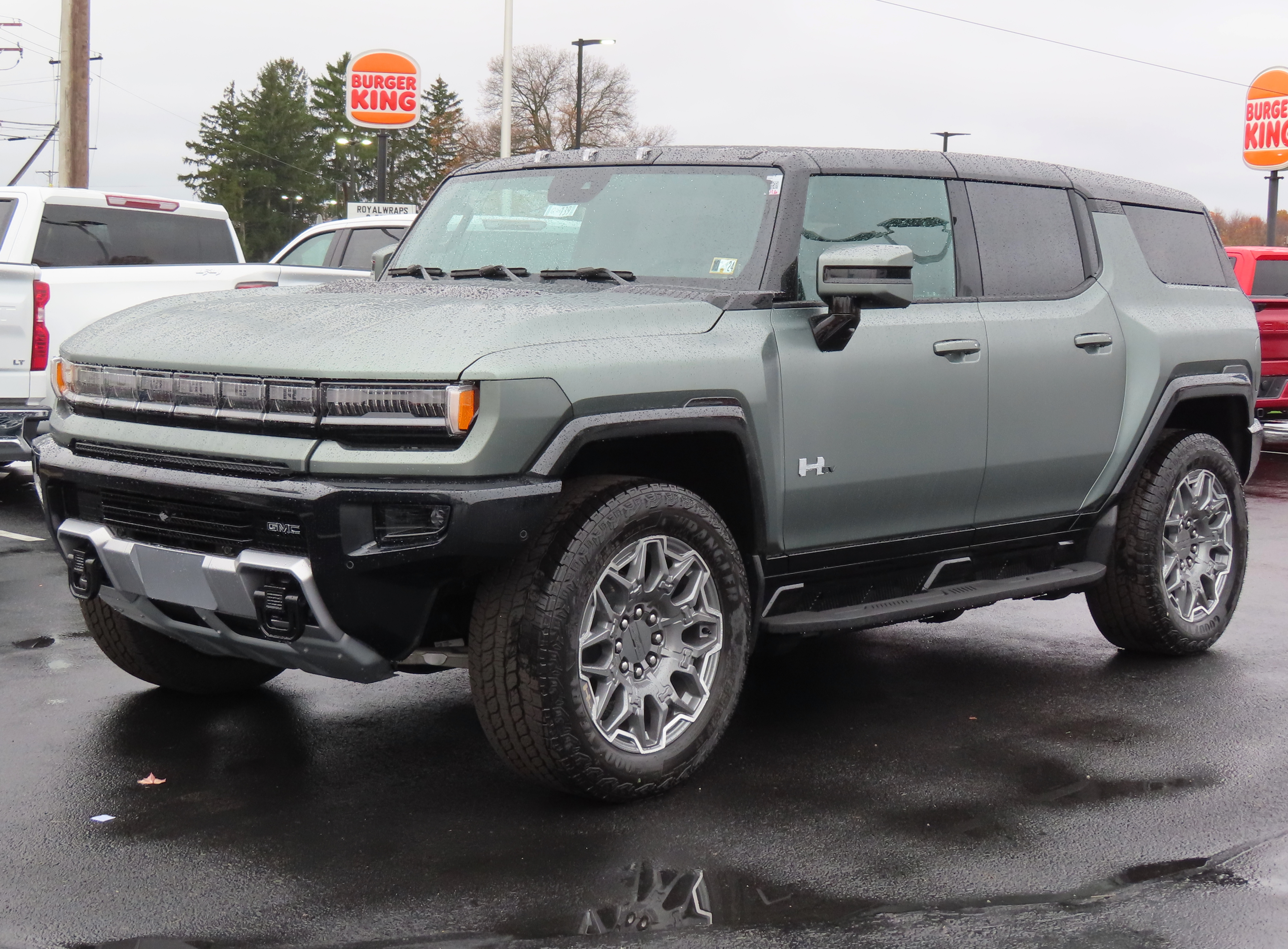
We've you know, we've positioned the portfolio to be ready to be able to span what any customer would reasonably want, from as you know, an infree level vehicle all the way up to a SuperTruck like the Hummer, and we're doing it. I mean, we're launching right now, We're on the verge
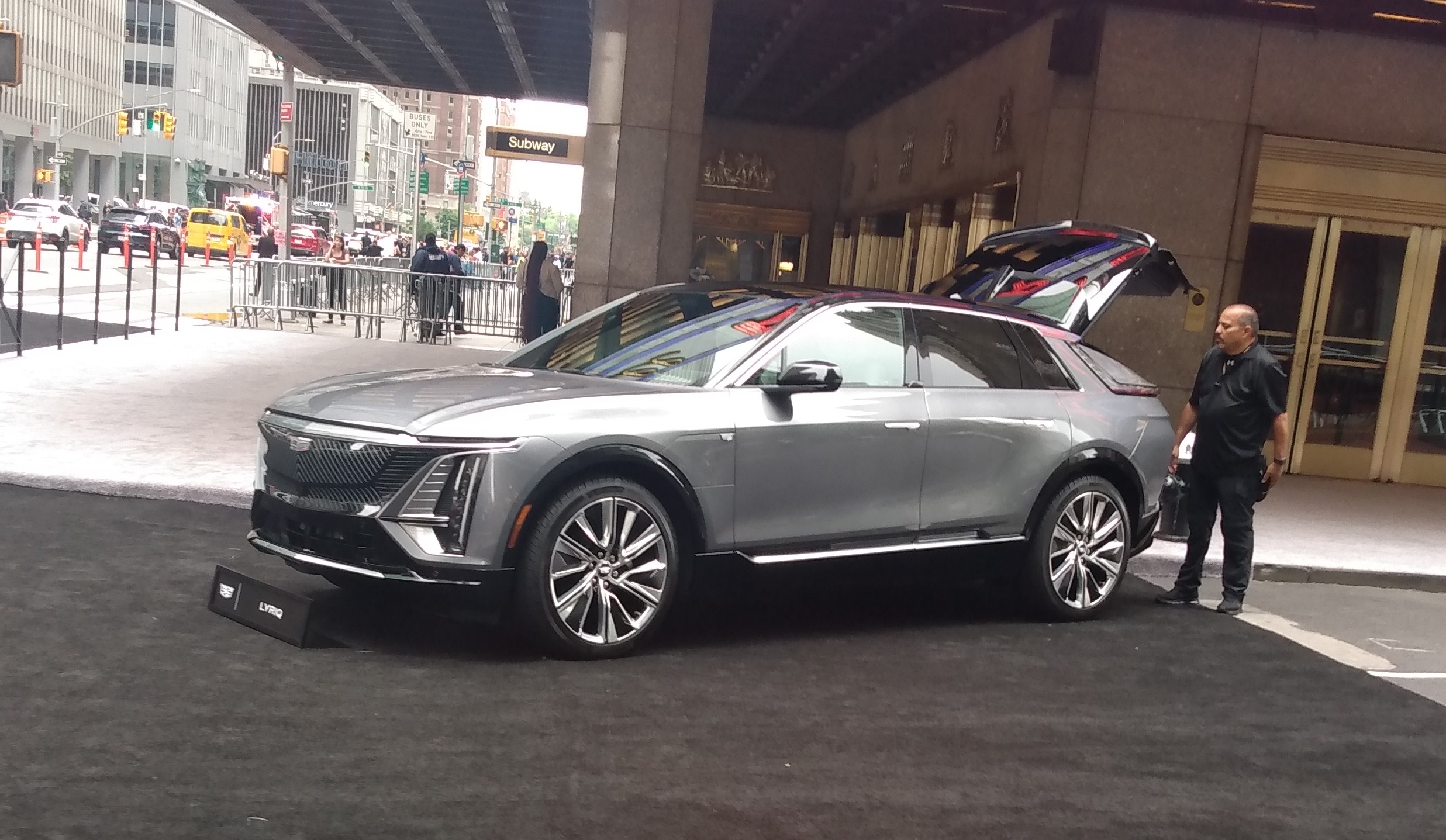
of shipping the Hummer SUVs. We're already shipping Hummer pickups, Cadillac Lyrics,
the Bright Drop Evo six hundred, those are shipping the customers now and by the end of the year, we will have been building and shipping the Chevrolet Blazer, Chevy Equinox, the Cadillac or Cadillac Celestic, the Chevy pickups, and it's just a massive rollout of what we have, what what was what the government proposed? Was that kind of within your lines of thinking, is
this what you were expecting? Well, our you know, we say we
want a zero crash, zero missions, zero congestion in future, which kind of plays into a lot of what my team works on. And the zero
emissions is something that we're expecting. You know, we expect to get the
zero emissions at some point, and you know, our company really plans to do that by mid decade next then the thirties. But the aggressive regulatory environment
is not anything that we didn't expect. We are. You see it now
in Europe and China, and I'm going to see it here and you're seeing it here. So I think we're ahead of that. In terms of thinking
about all these new models that are forthcoming this year and EV's reaching this inflection point and scaling over the next decade, how do you think about the the battery sourcing and the material sourcing that's needed to make that a reality. Is
that is that in place right now for for what you envisioned ten years or is that still feel tenuous? Well for us, first of all, you
know, for our cell plants, we've partnered with LG and we're building our own cells and the raw material chain that goes through our purchasing team has been working and securing those supply chains and locking in what we need for the future.
And so again the foresight of what we thought would come. You know,
when when I started this job in two thou nineteen, I think the projection was by the end of the twenty twenties there would be around fifteen percent of evs and hybrids. And we made a bet that that was going to
be wrong. And you know, as all projections are, it's wrong one
way or the other. But you know when you see what the percentage of
people that reply and say they would buy an EV right now has changed dramatically since two thy nineteen, and so we we bet that that was going to be the reaction when people actually got to really start experiencing electric vehicles. And
it's sure seems like it's coming true. So Ken, let me ask you
something. So you guys have the altium battery, the altium platform, the
altium propulsion systems. Give us a breakdown of what these things are for people
who are not familiar with them. So altium really is our entire propulsion system,
and it starts with, you know, the obvious thing is what we call the battery. And so the battery really is made up of three elements.
For us, it's the cell, and the cells go into a module, which is a box, and then those boxes go into basically an enclosure, and that's the pack. So the pack with all the three of those
elements that are the battery, as you think. But then also we have
drive units, and the drive units you can almost think of as the engine, but it's you know the combination of an engine and transmission, so that's what it actually propels the vehicle. And then on top of the pack and
the drive units, and there are the power electronics that control all of it.
And so we kind of draw a circle around those elements of the vehicle and call that ultium. So what I wonder is is okay given that it
seems the general motors approach to developing electric vehicles is okay um, Rather than taking something we already have in sticking batteries in motors, in other other associated electronics into it. We're gonna we're gonna develop this from the ground up.
What difference does that make? It's massive difference in terms of the fundamental efficiency
the vehicle. You know, how does what does the battery pack need to
look like so that you can make the vehicle look like you want it to look. That seems like a small deal, but it's so capital intensive.
They have to do it right to make sure that you can get the cross section of type of vehicles that we have. Like I said, you know,
the from the Buick Equinox all the way up to a Hummer. We
use the exact same module inside those vehicles, and so that takes a lot of planning in advance. And the flexibility of the audience platform. That's where
it really pays dividends for us. We can make a portfolio vehicles and it
also is vertically integrated, so we do for the most part, we do our own drive units, We do the design and development of our packs and modules, and we're partners on the cells. So I think I do think
that's an advantage. But at a vehicle level, the kind of benefits you
get from being able to integrate the pack with the vehicle structure is massive.
I mean, the right and handling capability of our vehicles right now is just I'm so proud. I cannot wait for people to get to experience the Catillac
Lyric vehicles that are already out there, but I really can't wait for people to get to experience a car like the catalac Celastic. It's just mind boggling
how good these vehicles are. But that is part of the reason why when
we know how to knit all those things together, and I'm proud of our company that we integrate vehicles very well. That's a big advantage to that.
And I haven't even started talking about range and you know how the battery efficiency and range capability of the vehicles and cooling and trailering and all those things.
If you try to retrofit vehicles, you'll see degradation and a lot of those things. Can you mentioned by sell and then module and could you explain kind
of where GM is right now in chemistry and form factor? Have you have
you frozen or established stability in where that's going, Because you know there's so much dynamism in the battery business today in terms of new chemistries, there's been a lot of talk of LFP. I've visited a battery supplier last week who
who says we're eliminating the module where it's just sells in the pack, and we've we've talked to some companies that are going right, you know, sell to vehicle basically and kind of eliminating that. You know, I don't even
know if it's going to be a skateboard in the future, but all of this is happening very fast as you guys are ramping up for the big vehicle volume. What's happening with the battery right now? Well, starting with you,
the vehicles that we've talked about that are on the road, that's you know, the Ultium platform is pout sell in North America and in our China vehicles they're Prismatic can so they're that kind of shows you the capability of Ultium, the flexibility that we have that it's the same enclosure and it's the same vehicle, but we can use two form factors of cell in the vehicles.
And then you know, I'm not going to get into explicit details about our future product. I love my job and I don't want to lose it,
but I can't tell you. We are always looking at ways to get more
efficient, lighter, structurally better, improved range, and that is always going to include the form factor of the cell itself, the chemistry of the cell itself, and probably more importantly and probably underappreciated, is the integration of the pack and everything inside it, and also the integration of the pack back to the body, like I talked about before war. So I anyone working in
this industry right now has got to be having the time of their lives as an engineer, because the evolution of the product and the evolution of how we go about making the vehicles and the systems is changing very rapidly, like you mentioned, and I almost think about it like in the you know, the late eighteen hundreds or early nineteen hundreds when cars were advancing quickly, and how even the way you see we're built, we're learning things on how we put
things together. You know, we've been manufacturing cars for over one hundred and
twelve years, but you learn on a daily basis on how they make things more efficient to put together and backfeeding that into our designs. It's it's all
evolutionary, right now, did you expect battery chemistry can to be kind of a the critical path for maybe for the rest of this decade as new chemistries because they take so long to validate, as you know, I mean, you can't just come up with one, prove it in the lab, and then put it into production. There's a ton of validation that takes years.
So you have this battery development and you've got ev programs going out the door.
Yeah, And I think that's that's typical for any engineering endeavor. You
know, when as soon as you get something engineered, you see something that might have worked better, so you want to try, you know, to improve the product. And I think that evolution is going to be not just
through this decade, but I think it'll be thirty years, you know, just like think about the power density of internal combustion engines on the power per leader of engines where we are today versus where we were even in the seventies or eighties or nineties. Just you know, you turn problem solvers loose on
a problem and they're going to find a better way to do it every time.
Maybe a follow up question along those lines of evolution of innovation, I guess if that's the way to think about it, whether it's GM or or your supply chain, Like, once the that's all set up for a particular chemistry, even if something better comes along, is it is it harder to then go back and change the supply chain and everything to account for that?
Is that an even further uphill to you know, road for something new that comes along to climb. Some changes are harder than others. And in general,
we're trying to really maintain flexibility with our form factors so that we can apply a chemistry to the form factor that we have, because that makes it much easier if you've got an integrated form factor inside the pack and you don't have to change the vehicle or the pack and switching over to a chemistry, especially when you get to things like the calibration phase of the vehicle, that's much faster than it was for ice vehicles, you know, the drive quality and things like that. Manufacturing can be depending on what kind of change it
is in the chemistry. It can be kind of minor, or you have
to build a new plant. So a lot of it is like which which
path do you want to go down? So help me understand this um If
we think about cars. Up until now, m OEMs did certain things and
suppliers did other things, and it would almost seem to me that something like a battery. Okay, so the battery inside this computer mouse is a Dura
cell, which is not made by Logitech. You know they they sourced it
out. So you know, most of the electronics that we all deal with
on a on a regular basis, you know, someone makes the battery and someone makes the device. Yet you're saying that it is very important for general
motors to be involved in this. Explain why that's the case, I think
because if if everything was a d cell battery, you know, as an example, you can only fit what our double a's and these these mouses or mice, and that means you have to design your device around that. And
that's just not realistic for us to be handed something and then have to design a vehicle around that is optimized and so it would be first it would be very difficult to get an industry to agree on what kind of size they want and what kind of you know, energy density integration. Where do the power
electronics go? You know, where where do the cooling lines? It's all
those kind of things where if you think about the complexity of a car battery, you know, a real pack, you have liquid cooling, you have all the electronics that go through that. You've got we have a wireless battery
management system that keeps an eye on the cells and the modules. And it's
almost like a vehicle on to itself when you think about the level of complexity, and that's not something I'd be comfortable handing over to someone else. It's
the heart of the vehicle. And just you know, an engine is kind
of the heart of the vehicle for the ice vehicles, and the soul of the vehicle is how it feels and drives and the performance. And if you
just take something generic off the shelf and then you have to work around that, you're losing a lot of your control and equity and what the final product is. So is the battery more important to the vehicle than a motor.
It's more integrated, you know, in terms of the torsional stiffness, the first I mean, all those things that make up the way of vehicle fills.
It absolutely is more important because it's just more heavily integrated. And it's
also when you get into crash events and crash tests and side pole tests and offsets and all that. Basically, an engine you you know, you model
and you it's a chunk of mass. But with battery packs we integrated to
absorb energy at a certain rate and certain offset, and it's super highly integrated.
Ken Where are we in terms of the elusive point where ice and batteries cross and batteries become less expensive. We haven't talked about that for a while,
and I'm wondering how this accelerated, you know, pushed by the government and so forth, and really kind of more optimism from EV people in terms of more vehicles on the road. Where do we stand in terms of battery
cost right now? And how quickly is that changing? I love this question
because it really is a nuanced question, because I think when people initially think of comparing ice to battery or an EV cost, let's do ice vehicle to ED cost, they think in terms of comparing a four cylinder vehicle to an EV. And in most cases, you know, a four cylinder vehicle is
going to go zero to sixty and nine or ten seconds, and most evs are doing it in five seconds, so you already have a kind of differential in terms of the value that you're getting for what you have in the vehicle.
Then there's also the next thing where you know, when you buy a Corvette CEO six, you're getting supercharged or in the case of the current CEO, it's a natural aspirated flat plank crank b eight. Compare that cost versus
you know, a battery, and they're starting to get a lot closer than you think. But the easy answer is we're not there yet to be completely
comparable with ICE costs. But to your point, the scale that the industry
is getting, where the raw materials are coming from, and just so many companies and universities are working towards the cost reduction of cell chemistry and everything else that goes along with the evs, I think that's we're on the way.
Well, I mean put Corvette aside. I'm thinking of you've got an electric
equinox coming out and the current powertrain set that's in the ICE equinox. I
mean, you guys have that cost absolutely refined. You've really got an economical
power train from a manufacturer's cost perspective. How long will it take to get
that electric equinox to to that same kind of baseline? Well, I think
it's even at an overall vehicle level. It takes time to you know,
I mentioned the evolution and the how do you do things better? And how
do you do things more effective than cost effective? And so it'll take time
just because just the connectors that we use, something as simple as that, those will improve and get less costly over time, just like almost every other element of the vehicle. So you know, I'm not I'm not going to
put a date on it, but we're on that glide path where we're going to get there. But I also think the equinoxide's on the road right now.
We've had fifty years of evolution on that. M Ken. I'm curious.
So you have electric, autonomous and fuel cells in your title. My
impression in the industry right now is that electric has has sucked all the oxygen out of the room for anything else. So just big picture, I'm wondering
how you're spending your time, how the company is thinking about investing in these different buckets, and and uh, you know, is electric the dominant thing to the I don't want say to the detriment of the other two, but is it sucking up all the time and financial resources right now? Clearly,
it's a big element of what we're working on. But UM, I would
say I spend my time about a third a third a third right now autonomous and our partners with Crews and San Francisco, we're going into production with Cruise Origin this year. UM We've got the crew you know, the bolt based
crews, we call them ay one tens inside a company. They're running in
San Francisco, and you know Austin, Texas, and I think there's Scottsdale, and so that's real, and I think people underestimate how real autonomous is.
But that's a big part of our future and a big part of value that we hope to unlock for customers. And then for fuel cells, that's
something I'll talk about the rest of the time if you want. We're spending
a lot of time on fuel cells because I truly believe General Motors has an inherent advantage over other companies that we have. We're doing our own battery system
from the ground up. We're vertically integrated in our battery system, and we've
been working on fuel cells for over fifty years, and so this year we'll launch our Gen two fuel cell system and we're getting tremendous interests, not only in the automotive world, which we partner of Honda and they have vehicle applications coming, but there we have deals, you know with Class seven eight trucks and airline companies. The uses for fuel cells are massive, and frankly,
I guess I would describe it, and I'm sure the three of you know this, but maybe the listeners or watchers don't the perfect case to use a fuel cell as like high load, which there are things like heavy duty and medium duty trucks and over the road trucks and delivery vehicles and all the things that evs are just not great for. You can adapt them, you know,
for small range, but if you're really going to pull a log truck, you know, pull a load of logs, or you're gonna pull whatever your cargo is, it's heavy cargo and you're going through the rocky mountains.
Fuel cells are made for that. They're perfect for it, and they have
water coming out the telpipe, so it's it's hard to beat that. Now,
can a little bit smaller than a logging truck, how about a three quarter ton or a one ton pickup truck. I'm a real fuel cell advocate,
and I think I think that duty cycle is just so much better with a fuel cell than than with the big battery. Have you guys kind of
mocked up some stuff in you know, heavy duty pickups fuel cells. Well,
I'm you know, I'm not here to announce future product, but I can tell you from an engineer, from an engineering just exercise, Well, I we would be silly not to take advantage of what we have. You
know, we we do have the fuel cell system and the ultim battery system.
Those two together make a heck of an overall propulsion system. But get
back to Pete's point, Um, so you're not seeing a more attention being paid to electric vehicles because they're the ones they're going to be out there, They're the ones that are going to be in dealerships like right away versus you know, the cruise vehicles. Yes, there'll be a number of them,
but certainly not in the volumes that the Equinox and Blazer and so on will have. And you know, the fuel cell is still seems to be more
in the developmental phase than application. Yeah, I think you know, if
I were to answer the question in terms of where are the resources applied, like the number of engineers that are working on evs compared to the number of engineers working on autonomous Clearly, there are many more engineering teams working on evs than there are working on autonomous vehicles. But my point was the importance of
each one of those categories for our company are they're not exactly equal, but it's not like we're ignoring one because of the other two or or whatnot.
Evs are getting the they're getting the majority of the attention from outside the company, the resources inside the company, just because of how many we're doing, you know, the kind of launch assault that we're doing with our vehicles.
Um, there's a lot of attention inside the company. Take, we're gonna
take a quick break here, Lindsay will come back, you'll have your question and Ken we'll be ready. So, um, we're gonna hear from our
friends at Bridgetown. How do you breached the entire stop shorter? On what
roads? Is there hydrotrack technology? But you don't have to know how the
science works, just where the break is. What really matters is they're Bridgtowe.
Now we're back, Lindsay, Uh, just curious what you guys have learned from Honda h in this collaborative effort. A lot of the media has
said, well, of course Honda is learning everything from General Motors, but there's probably a lot to be learned from Honda. What what can you think
of that you guys have learned. I would just say Honda has been a
very good partner with us, and we're working along the way, you know, as developing through our Gen two fuel Solve system. We've learned together and
work together. In any development, there's always challenges, and I really am
proud of both of our teams on how well we've worked together. I would
really wouldn't, you know, say one way or the other, who's learned what from from each other? But in any technical endeavor with a bunch of
engineers involved, I think it's it's been a really fun activity for both teams, and it's been a pretty long relationship. Now. I remember when you
guys ink the deal with Mark Royce. It seems like it was maybe a
decade ago, right, Yeah, I think it was around and we'll correct the number if I'm wrong, But I thought I was in the mid two thousands and with Honda, and you know, we were doing fuel cells before that. If you remember we had the Project Driveway where we retrofitted equinoxes with
fuel cells and we put out I think one hundred equinoxes around the country and let people experience it. So we've we've invested over two and a half billion
dollars over the course of the last fifty years and fuel cells. So it's
something that we've always regardless of the ups and downs of the company or the economy or whatever, we've always been continuing to pursue that. So maybe along
the lines of the fuel cell front, and I'll preface this like Lindsay did by saying I'm an optimist, there seemed to be big challenges with the infrastructure, with the the vehicle supply, and and with green hydrogen itself right now, because I think green is actually a small percentage of what's available for hydrogen.
My question, I guess, is this all feels very embryonic still despite the fact that there's been decades of research. So how does this How do
hydrogen fuel cells move beyond a phase one stage? Two things I think are
important. The first is the infrastructure and the availability of hydrogen, and the
second thing is just the cost of the fuel cell system, which is coming down rapidly. You know, we're working on a Gen three and that's you
know, they're going to be cost advantages to that. But I think the
place where we are right now and the place I think through the end of the decade that can help jump start hydrogen fuel cell vehicles is the kind of use cases we talked about, like the you know, the Amazon's ups is all of the delivery companies and then the fleet customers that have specific uses.
If you think about not over the road, but around a hub, if they're going out and back to the same hub every day, they can invest in a hydrogen infrastructure and then they can refuel those overnight as they need to, or you know how fuel enough. A fuel cell is fast. You
know, you can do it quickly and get on with it. So I
think that use cases and all the customer experience that will come from that and the ability for to have a hub can jump start it and is much more near term than the infrastructure required to do over the road hydrogen fuel stations where gas stations are today. It's just so that That's why I think if if
it were cheaper to to come up with that infrastructure around the country, that might be a different story, but I think that's probably the way it's going to develop, as my opinion, So you must be optimistic Ken of this kind of regional hub scenario that the government is is kind of put out there and states can bid on it and so forth. That it sounds pretty pragmatic.
Well for for fuel cells for sure. Yeah, I mean, I
mean the out and back in the same day, and that really plays for evs as well. You know, when they have their charge infrastructure out and
back and charge overnight and you know, you can keep vehicles rolling depending on what your fleet sizes. Cost of ownership is way down on evs. So
yeah, I think the that hub idea and model is going to really work out for a lot of people that need to use these kind of vehicles because the heavy duty and medium trucks and different things like that, those are tools.
Those are tools that people have to have. So but Ken, here's
what I don't understand. The experience of a hydrogen vehicle is very much like
that of a gasoline vehicle. Um, you know, you you drive it
about the same range, you go to a station. Um, you know,
Shell has a very few, but they have a few stations where you fill it up with hydrogen takes about the same amount of time as gasoline, and then you're on your way versus electric vehicles, which you know, as you well know. I mean even if even if it's a fast charge in
twenty minutes, I mean, that's still twenty minutes. It's not the five
that we're spending it at gas stations right now. I don't understand why why
hydrogen isn't a bigger play for consumer vehicles. Yeah, I do think it
gets back to the cost. You know, the cost of a fuel cell
system is more than an EV system at the moment. So that coupled with
the fact that you can't find those fueling stations everywhere that you want, it'll be much easier to find EV charging stations. And you know, one of
the numbers that I quote is charging happens either at your home or your place of work, and so that means only eight percent of the time where you're really looking for somewhere to charge your vehicle, and so you will likely not be able to have a hydrogen fueling station at your home. And I'm not
trying to talk to hydrogen at all, it's just the reality of the current ability to adopt that. Where is the cost though? In those systems,
I'm thinking you've got you've got a compressor motor, and you've got you've got precious metal in that stack. But compared to a you know, a huge
battery pack like you've got a hummer EV, I would think that nice compact fuel cell system that Charlie Freeze's guys have kind of real we made super package efficient. I don't see a ton of cost in that. Well, it's
you know, it's the entire system because you've got to have the not only the fuel cell stack, but the pressure vessels which are obviously not not cheap, but you have the tanks right, and then you have to have a battery so you know, to really utilize the system properly. So it's just
a combination of those. But again, for a purpose built vehicle like something
that's going to haul, you just can't beat that combination. I'm curious,
and you alluded to this before, like if the logging truck is the no brainer for for hydrogen fuel cells, and it seems like light duty is for battery electric, how should I think about the dividing line and where it is between those two things? And it is it range? Is it ease of
fueling or recharging? Like where do you kind of start to see a great
area as to what applications belong with with hydrogen or battery electric. I simply
think of it as heavy heavy towing, like twenty thousand pound towing and you know above like if you're towing around uh fifteen foot trailer, batteries are fine for that m especially you know, we're really happy with where our trucks are right now. UM, but when you get into you know, you have
a dozer behind your heavy duty vehicle, that's a different condition. So we're
coming up towards the end here, and I do want to talk a little bit about the autonomous part. You know, we talked about that briefly with
what you're working with the folks out at Cruise and UM. I was somewhat
surprised that General Motors made an announcement last year and you were part of the announcement that you're using Qualcom Snapdragon Ride platform and it said that the Ultra Cruise for the Cadillac Celestic is the size of two laptops put together. And it's
just like I never thought about that before. I mean what the compute power
needs to be for for an you know, a level two plus or three whatever system. Talk to us a little bit about what's involved in the hardware
and the software in order to get autonomous vehicles. I think that people probably
think it's much simpler than it is. Yeah, there's a very little simple
about even um, you know an ultra cruise vehicle and then you know our ultra cruise that we're going to be introducing on the Celestic just for that for example, I mean, we're using long range cameras, long range radar, short range radar, LDAR, GPS, and it's I'll take step back and tell you in twenty seventeen or twenty eighteen, if you'd ask me what's required
for autonomous I would have said vehicle to vehicle infrastructure and vehicle to infrastructure you know, V TOA I. And so I just didn't. I wasn't smart
enough to know how could you possibly control vehicles without them communicating with each other.
But the way it's evolved, and you know the smart people that do this, it's all sensing and reacting and that's the kind of hardware that you need. And so what I what I mentioned is the sensing side, but
the compute side is just as important. And you know, you have this
massive capability compute and your hardware system that can read all that and react and so it's it would be awesome if if people that had real interest in it could see what is involved, because it's and then you take the jump to a Cruise origin, it is phenomenal. What the compute, the sensing,
everything about that vehicle is just incredible. Yeah, Ken, I was going
to ask you. I was out in San Francisco about a week ago and
saw just visually just as many Cruise Bolts on the street as I did the Jaguars that weimo's running around. It seems like you guys are a kind of
neck and neck in terms of number of vehicles that are running out there.
How does the set up in those bolts differ, as Gary mentioned, to what's coming in the origin. It's obviously the origin is more evolved. I've
used that word a lot, but it is, but a lot of what we've learned, or what the Cruise has learned with the development time in the bolts and now customer rides and the interfaces with the customer and how they actually operate and how they can improve that all transfers to the origin. So it's
if you think about the way even our safety systems have evolved. We went
from cruise control and then you've got lane keep assist and you know, all those type of things that ultimately you can integrate into super Cruise, and the super Cruise integrates into Ultra Cruise, and it gets better and better, and we start at a better starting point on each one of those. And that's
kind of the way you can think about where the bolt based cruise vehicles are and then they evolve into the cruise origin and so it's just the next step of capability. Are you optimistic that level four is coming soon? If you
define what the bolt capability is and what the cruise origins capability is Level four everyone has kind of the own definition of that. But I'm not optimistic.
I know it is, it's going to be here. Can I'm curious between
the driver assists features and systems that are within GM proper and then I'll say the self driving technology from from cruise. Is there any crossover between training data
or software um that one is helping the other learn or utilize or are those just kind of different animals. Now there there is a crossover and some of
the tools that we use and the data that we use, um we're able to share. So you must grimace in the morning when you look at the
news and see that. And this happens, you know, frequently in development.
But you know that one of your cars you ran into a bus in San Francisco. Yeah, and I think that is it's always unfortunate, but
there always is also a need to understand what happened and improve and you know, if we made a mistake, take ownership of it, like Cruise has in that particular case for the bus. But also if you think about the
development of any type of vehicle, sooner or later something goes wrong and you just have to react to make it better. So I think it's part of
part of the maturity of that technology. All right, So this will be
your final question, Kennon. I'll make it an easy one for you,
so you could conceivably just answer it with a single word, but I hope you do more. Is it is an absolute requirement that autonomous vehicles be electric
vehicles? It definitely is. It makes things easier on a large scale,
easier. You know, the compute systems that we talked about have enormous energy
needs and so having that amount of energy on board is a big enabler.
And then all the other things that we can do with an EV that you know, in terms of controlling not worrying about, you know, throttle bodies and transmission shifts, and they're just the complexity of the drive experience is much more linear on an electric vehicle than it is an ice vehicle. So those
are the two biggest things that come to mind to me is why evs are really well suited. I mean, also there's zero missions, so that's zero
congestion and zero collisions and zero missions checks all three boxes, all three boxes.
Indeed, so Ken Morris, vice president, Electric Autonomist and fuel so Vehicle Programs at Journal Motors. We want to thank you for appearing on the
show today and it's been very informative. Thank you, Thank you guys enjoying
Yeah, thanks kid, thank you. So Lindsay who started out by mentioning
the EPA's big drop yesterday of seven hundred and fifty eight pages in a document, So what's your assessment, Well, like I keep saying, there's about a billion vehicles in the world, right now. And I think the US
North America production was about fifteen million last year. Even if that really flips
on the sixty thirty or seventy thirty ratio that the government's working on, it's still going to be probably hundreds of millions of vehicles with some sort of ice power, probably mostly hybrids, built through you know, twenty forty twenty forty five, and each of those vehicles has about twenty years of effective life in it. So I'm just very optimistic on whether we'll be able to turn this
one point five degree thing around. I just don't see it. I don't
see it with human nature at all. But uh, but clearly it's a
move to to shape the fleet. There's no question about this. So so
Pete, do you do you think that this is? This is I mean,
the government has put the carrot out there in terms of the Inflation Reduction Act, you know, a carrot that is both for the OEM, you know, get money for every every battery they build and every pack they pack, and for the consumer with the you know, potential seventy bucks off the the msrp UM and building the five hundred thousand chargers as well. So it
almost seems that that the the document yesterday is sort of the stick saying, hey, you know, we're gonna have some regulations here. Um, do
you think this is going to work? I mean, I mean much of
the argument as I through part of that document. Obviously they didn't read seven
hundred and fifty eight pages, but I mean it seemed to be saying, you know what, the car companies are doing it right now, and therefore we can do it. I would agree with that assessment. I think I
think that's a spot on, and I will stipulate that I've also not read all seven hundred and fifty plus pages yet myself, but uh, you know, I do think that the carrot and stick analogy is the right one.
That they've put a lot out there to incentivize all to incentivized purchase, to incentivize charging stations, to bring the supply chain to a you know, domestic posture, and now now it is a bit of a now now here's the hand that you're back to ensure that you go down that path. I don't
think there's ever been a time when vehicles I mean, clearly, we all know these evs are unbelievable, you know, and there's a lot going for them. They have a lot of attributes, but there's never been a time
when there's just been so much kind of eye off of all the things people on their own buy cars for, you know, exterior appearance, feature, content, performance, etc. And it's down to kind of you know what
am I going to get for this? If I traded my old Silverado for
an electric one and was still no real guarantee that the early days of that are going to be really as good as they are driving the old one.
I think that's fair, But also something else to consider, as you know, you do hear people grumbling about the government kind of forcing this, but in a way, I think that the horses out of the barn because China went down this road a long time ago and Europe followed. So from from
an OEM perspective, you know, they're going to drag America along, probably whether consumers really embrace it or not, because that's multinational companies and they're building cars for the globe. Yeah, but you know, to the to the
point Pete of you know, Europe following UM, you know, we saw this this recent UM vote that that the EU had saying, well, you know what, post twenty thirty five, you can sell internal combustion engines as long as they run on E fuel, Okay, And um, you know, everybody's up in arms, like, oh, E fuel is so expensive and there's so little of it, and you know, so on and so forth. But basically, the German automakers said, you know what, we're
really good at making combustion engines, and we want to you know, we've we've spent a ton of money on the wherewithal to build combustion engines. Damn
it, We're gonna still build those things, and we're going to do what it takes to make that happen. I just wonder, I mean, isn't
it possible that Okay, let's let's put China aside because of the you know the nature of their government is different than it is in Europe or in North America. That just as a political thing. Someone says, you know what,
you know, this ev idea is good, but there's still a lot to be said for gasoline. Well, yes, I think specifically, I
think, you know, it was interesting that Toyota and Xon started talking about their E fuel's partnership a little bit more in recent days. That timing maybe
is not a coincidence, but in generally speaking, Toyota in particular probably has talked about kind of a kitchen sink approach where it's not just battery electric vehicles, it's fuel cell vehicles like we just talked about with Ken, and maybe it's some of these other e fuel things going into the traditional internal combustion engine too. And I would be hesitant perhaps to bet everything on an all battery
electric future for some of the reasons we've talked about. The charging infrastructure is
fledgling at best. There's questions about range and rely ability that it's just too
it's it's not far enough along to definitively answer. So I think there are
legitimate questions that make hedging a bet pretty pragmatic. Well, you know,
it's interesting, and I can pick on John because he's not here, but um, you know, he was suggesting that when Sato took over at Toyota, that that that Akio was dragging his heels in terms of EVS and that that was all going to change. But then Sato basically came out and said,
yes, we're gonna We're gonna roll out with a whole bunch of evs.
But Oh, by the way, we're going to continue with our hybrid program as well. UM. So you see that Toyota continues to hedge its
bets. You look at Honda, I mean they've got fuel cell, they've
Honda, you could say the same for them. UM. Yeah. I
mean, particularly with their partnership with General Motors that we just talked about.
But it's interesting. I really bucket General Motors, Honda, and Toyota together
because they seem to be the companies that are thinking about transportation more so than just light duty automotive or automotive, because they are really exploring fuel cells and hydrogen for a lot of different applications. I don't know if Ken talked about
it, but GM's doing stuff with locomotives, with airport tugs in the hydrogen realm, and it's you start to see a very broad vision that maybe not everybody has. I would be remiss in having you guys online here and not
putting out a shameless plug for an SAE Congress panel that I'm moderating next Thursday at one pm in Huntington Place, where we're talking about this very thing, how do we get to this low carbon future? With Mickey Bly from Stilantis,
with Young Hooli from Hyundai from forget the name of the gent from Toyota.
So these are the companies with many you know, feed in many doors U and Terry Alger from Southwest Reachers Search Institute, who's a combustion and an electric propulsion expert. So you know we're gonna be talking about this, and
I, you know, one side of my mind kind of envisions a future fuel island that we any of us would pull into and it would have electric vehicle charging, a hydrogen pump and maybe a synthetic fuels pump for the folks that want to still drive muscle cars and drive older vehicle something like that.
So hearted place next week. All your plug motwithstanding, I don't want to
hear about your plug. What I want to hear about is is okay?
So, so do you think that there's going to be a basic switch thrown by about twenty thirty five? And yes, there will be a whole bunch
combustion engines still on the road because people keep their cars for a long time.
But at that point, um, you go to your local dealership and you're only only going to be able to buy an EV. Well, yeah,
and I think I think this whole movement that it can kind of alluded to and Pete talked about, was, you know, this new realm of quote affordable evs that the industry has been talking about. And so you know,
forget about this one hundred thousand dollars kind of wave that we've seen so far. So it's going to be the affordable vehicle. It's going to be
neighbors talking to neighbors as they have already, and and access to charging and cost of charging as well. So I really can't answer that, but I
think you're right. I mean, at some point you're going to go to
a dealer and that's all that is going to be available. I think affordability
is a key, key question that we haven't really addressed so far, because the average electric vehicle right now costs upwards a sixty two thousand dollars. It's
ten thousand dollars more than the average cost of an internal combustion car. So
you know, I start to think about I'm not sure who what affordability is for either one of those particular numbers right now, but it's definitely, uh, you know, not to the ev advantage, right, So I mean I mean in a way, and you guys know, I mean the way this was sold was you get rid of the exhaust system, you get rid of that transmission, you get rid of the rear axle. This thing becomes
very very simple and modular to build. You can build any top hat on
it. It's a skateboard chassis. So our costs are going to go down.
We have a lot less labor in this. You basically snap these things
together in a way. So Pete, why wouldn't that come down from say
sixty grand to you know, kind of like four did with the tea, from seven hundred dollars to less than three hundred dollars. I mean, is
that possible in some ways, yes, But on the flip side, I would say, oh, I'm looking at the cost of lithium and some of these other very finite raw materials that go into the batteries, and all of a sudden there's this huge demand and that that I would worry it's going to drive prices in the other direction. Right now. I agree, I agree,
And and as we all went through as kids, kind of the oil embargo. Um, you know, we've got all sorts of geopolitical aspects of
the minerals and so forth to go into not only evs, but but hydrogen fuel cell vehicles too. Yeah, that's obviously a big part. And we're
seeing that with the uh, you know, reshoring of the ship making industry as well. It's it's right, it's not just the batteries. It's oh,
that's anything that's over by China or Taiwan. Uh. There's a kind
of a crash course to to build them here in America. People. One
of your colleagues heard from sorry, just real quickly heard from kind of the dealers side on how they're looking at this kind of you know, tidal wave that's coming. It's a million dollar question, probably the billion dollar question,
h lindsay. But I think there's a lot of uncertainty right now. I
think that's kind of a you know, just better hold your breath and let's let's see what it comes. But I don't know if that anyone has a
surefire strategy for for looking at that right now. I think it's I think
it's probably the question out there all right. So I ask both of you
guys, I mean, um, you know the notion of the affordable ev okay Um. Have you guys talked to any suppliers that are saying, Hey,
we've got a technology that is going to allow this to happen, We've got a means by which this can be achieved. Or are they just basically
sticking with what they're providing to the OEMs and telling these very expensive evs.
I think some are hoping for the scale that we talked about with Ken Uh and uh and basically just uh, you know, consolidating and all the things engineers do from generation one to generation two to take costs down. Because we
haven't gone through that cycle yet. We've got kind of bespoke vehicles like Hummer
H one, Hummer EV, etc. That they really don't have scale attached
to them. So so the battery guys, and as Pete said, I
mean just battery mineral sourcing, is that that cost might not come down.
And all these minds we haven't build any we even dug any of these minds yet in North America, they're still to come Well, Lindsay, I think it was you mentioned LFP when we were talking with Kembell Horred. I kind
of feel like everybody's exploring these uh different chemistries that you know, we don't know how they perform yet. There might be a little bit of a diminished
performance actually, But if if we know we can get the raw materials that are abundant that go into them, that's a that's a practical question. That's
why I liked what Kenra's talking about with regard to, you know, how easy is it to switch switch from one to the other or or not once you commit, you know, I think that's a key question for some of those reasons. Yeah, yeah, yeah, I just wonder, you know,
lindsay, you're talking about talking to neighbors and so on that So I have an NMC battery in my vehicle and you have an LFP and I talk about how wonderful mind is and you're like, mine, it's not so good.
I mean, it's just like, how's that going to work out for the third neighbor? I see, it's a great play. I just wonder,
you guys, whether people or neighbors are going to talk about cars the way we've talked about them the last couple of generations, Like how do you like that new inline turbo six in your BMW? Well, you know,
I traded in a VA for this. Are people gonna say, I really
like this LFP battery? I don't know. I don't think so, But
I do think you're onto something in the sense they are like like you were talking about with the you know, the fuel islands with all the different options.
Like, I do feel like we're at a point where the market is fragmenting and people are starting to they're being forced to think about how they use energy, whether it's in the car or or are utility bills changing because they're they're changing the way that they charge by time of day. Now it's something
I just got here in Southeast Michigan. So all of a sudden, people
are being forced to consider the way they use energy. And in the automotive
future, I feel like that might be that you buy a car based more on its use case. Now it is more you know, you tell your
boat up north here in Michigan once a year or so, you buy the F one fifty that that's going to get you there, and that's what you use all the time. But maybe in the future you're more price sensitive and
you rent that pickup truck once a year or twice a year. Ago,
there and back, and you're you know, you're really more intentive to what your daily driver needs in terms of energy, whether that's um, you know, a hybrid and you're stretching your gas mileage, your gasoline mileage, or you know, you're pricing the size of the battery that you really need to get you where you go and back. Yeah. I think one thing that's
weird now is you guys have probably gotten these releases from various eco NGOs over the last few days. Uh, they're really dumping on Toyota's they did.
They're really dumping on kind of anybody that's still kind of in at all in the hydrocarbon fuel ice realm. And uh, you know, they're they're very
powerful lobbying organizations and have political cloud as well. And you know, I
read a piece the other day on carbon sequestration, which seems to have a lot of potential technological potential, but the NGO guys think that it's is kind of a stall tactic for keeping evs down in a way. And I think
they feel the same way about hydrogen and fuel cells too. And you know,
so, so there are these political dynamics that are going on and depending on who's kind of in legislature this can be an issue. Yeah, it's
very interesting to me that it's focused on a Toyota in particular. You know,
they're really getting beat up. And I I do think there's a lot
to be said for thinking about are we moving towards zero emissions or are we moving toward electric vehicles? Like directionally those are the same. But if you
think about it that ones it means to an end, but the other is the end. So which what's really the best solution to get you to that
end? Yeah? Yeah, No, you're absolutely right, And I like
this horses for courses feat with You know, I think before we had the electronic devices in our vehicle clusters that showed things like regend breaking, which I'm like fixated on in my Maverick hy I watched this break coach all the freaking time. Man, did I achieve a hundred? Why did I only achieve
seventy nine? And that last breaking? You know, how much energy do
I have left? We didn't have that in cars in the past. And
I think you're absolutely right about that that people say, well, what do I really need here? Versus that pick up that I'm gonna tow once or
twice a year with all right, so I'll just put we're gonna wrap this up, and I'll just put a challenge to both of you. Just just
go to you know, your local Kroger parking lot or Costco and look at the vehicles there, and then tell me about this this model that people are suddenly going to say, you know what, I really need a city car because I don't need this giant vehicle that I have. I ain't gonna happen.
But yeah, no, no, I'm not saying like I'm not saying like an A or B class car because we know that doesn't work, but something that just is maybe more reasonable. I don't know, people like like
a fusionfive at some point, right and that's the point where I feel like electric vehicles being more expensive at least right now. You know, at some
point the pocketbook has to it becomes that that kitchen, you know, dinner table conversation of uh, this is an expense and that expense is growing and how do we manage that? And I think people are more conscious of that
in terms of energy overall because they have to be, not because not because they want the status quota change per se Well, the only thing we could be sure of is all this stuff's going to get more expensive. That's what
I tell my kids. Yeah, which is just not a good thing for
anyone, except for the people who are selling these things at a higher price.
All right, Lindsey Brooke, Automotive Engineering, Pete Bigelow, Automotive News.
I want to thank you both for for being on the show, and I hope you had some fun. I certainly did so, thank you.
Thanks for having us. It was a good conversation guys, Yeah, for
sure, Thank you, Gary Spanks. Autoline After Hours is brought to you
by Bridgestone Tires Solutions for your journey. If you liked this program, I
would like to learn more about the automotive industry. Check out our website at
Autoline dot tv, or look for us on YouTube on the Auto Line channel.
Request an explanation for:
7 cars
Scroll for more
7 cars featured
Request an Explanation
Heard something you'd like explained? We'll add it to this episode.
Sign in to request explanations for terms you heard.
Want to learn more?
Browse our glossary for plain-English explanations of automotive terms, jargon, and concepts.
See something that's not quite right? Our annotations are AI-generated and can sometimes miss the mark.
Click the flag icon on any annotation to suggest a correction.