
The discussion dives into the evolution of electric vehicles (EVs) and autonomous vehicles (AVs), comparing current government incentives to past programs like Cash for Clunkers. Guests Paul Eikeelberg and Hannah Lutz share insights on the Inflation Reduction Act's impact on EV sales and the challenges faced by manufacturers. The conversation also touches on the UAW negotiations and the future of hybrid vehicles, while addressing the ongoing struggles of new entrants in the EV market. The episode highlights the complex interplay between technology, consumer behavior, and regulatory frameworks in shaping the automotive landscape.
"know, the engine's trying to do one thing, the electric motor another, the transmission yet a third thing. I don't like the way they feel. So now if somebody came out with and probably Ferrari's going to be there and Corvette's going to be there and the like performance hybrids. Maybe I'll like the way they drive. But I'm telling you right now, and I'm not dissing"
Select text to request an explanation
I'll don't line after hours. This brought to you by Bridgetone Tires, Solutions
for Your Journey and by Borg Warner. Hey, Gary John, how are
you. I'm doing well, and I'm doing well because I can't wait for
the show to start. And the reason I can't wait for the show to
start is I don't know where today's show is it going. Obviously we have
a theme or something like that. I can't wait to see how this one
goes, all right, So so I'm gonna, I'm gonna, I'm gonna throw something at you right now before we have our guests on here, and this will cause you to think a little bit and get your observations on this.
So it so happens. Today is August twenty fourth for those who are
watching not Live and so on August twenty fourth, two thousand and nine, the Cash for Clunkers program came to an end. Now, the program started
on July first, two thousand and nine. It was funded with a billion
dollars and they thought that was going to run until November thirtieth. Well,
at the end of July the money was gone. That they were the money
was gone, so they added two billion bucks to it. Okay, and
and still you know, it ends far before it was supposed to end.
Now, this basically, for those are not familiar with it, it was for people to trade in cars that were drivable less than twenty five years old, and they would get a voucher that would be for thirty five hundred dollars or forty five hundred dollars to buy or lease a new car, and it would be a car that would have the under forty five grand and get at least twenty two miles per gallon combined. So it was economic stimulus and it
was environmental stimulus. So what does that sound like to me? It sounds
like the IRA, right, I mean, so, so what we're saying is is that, okay, if you buy a vehicle that is under a certain price and it is an electric vehicle, we you know, the federal government of the seventy five hundred bucks. So so here's my question to you.
Many people concluded that all the cash for Clunkers did was sold about three hundred and seventy five three hundred and seventy thousand more vehicles during July and August than what have otherwise been sold. So it was you know, not not
all that robust. My question to you is is the ira A essentially a
cash for clunkers scheme? No? I don't think so. I mean,
remember the idea behind cash for clunkers? What number one, to give a
stimulus to the auto industry because everything was melting down financially. But also,
you know, remember the twenty percent oldest cars account for eighty percent of the emissions. So the whole idea was, Wow, you could have a big
environmental impact by getting the old clunkers off the road. Short sidebar my favorite
story told to me by a Ford dealer, because remember those clunkers. You
had to make them undrivable because what the government didn't want was shelling out money to take clunkers off the road and have people buy new cars and then secretly sell the old clunkers. So Ford dealers had to pour what was essentially draino
into the radiator so that the engine would seize up. And as Ford dealer
was telling me, they were trying to kill the F one fifty, They had a V eight in it, and they kept pouring more and more and more stuff in it. The engine just kept running. They couldn't kill it.
But yeah, I think I think the look the IRA is it's really more of a national security move. It's to get the US off a dependence
on China for evis, EV batteries, raw materials, all that, and build up on a US slash Western allies Western and of course including Japan and South Korea. It's more that I think the goals are different, completely different,
And let's bring in our guests and see if they have any observations on this subject. That's right. We got Paul Eikeelberg back on the show and
for the first time I've ever had a lots from Little Boative news. Hi,
thanks for having me. Yeah, great having you so we'll good to
see to you again. Yes, great, c and you two. It's
great to be with both of you, so thank you. Well. I
think the big a big part of the IRA and the discounts in particular for evis that you mentioned the credits. I mean, it's really an incentive to
get people to buy evs too. It's an environmental push and people aren't you
know, the mass market is not going to buy evs at such a high price point like they were selling. I think these credits are necessary to get
the mainstream into electric vehicles. Yeah, but I agree with what John's talking
about. And if you look at what's happened here recently with semiconductors and the
movement that the country's taken and around semiconductors in these advanced AI technologies, et cetera, it is a big national security move. It's building this business around
really the future of mobility, and I think it's something that's really essential for us here to really start to move to the forefront of electrification and this dramatic shift in technology. Yeah. So so here's a question. We'll start with
you, Hanna. Is it working? Is I already working? What do
you think? I think so? I think it has In terms of EV
sales, I think it has increased things interest and EV is. We know
that production isn't quite as fast as it is for internal combustion vehicles, and dealers have a learning curve here. There's some consumer skeptics out there, but
I think it's it's helping that way, and it's just putting the focus on the US for EV's overall, Like in terms of the supply chain, it's it's really creating more of a domestic focus. So in those ways, it
is working. But it will take a while to build all of that up.
Yeah, Paul, what do you think? Yeah? I agree.
I think if you look at the supply chain when it comes to lithium ion batteries, or if you look at you know, even cell separators. If
you take account a cell separator, that's an industry that's all based in Asia.
We don't have uh, you know, even that type of infrastructure in place, let alone the cathode, anode, materials development, etc. So
really, building that value chain of the future is critical for the industry and critical for us to be competitive when it comes to making those vehicles. And
really, again, the proliferation of this you know, green h safe technology.
What do you think, Gary? Wait, now, what do you
think you brought it up? I'm going to be the double's advocate here.
Okay. So so you guys are all saying, oh, this is a
good thing, this will make people buy more evs, and this is a wonderful thing. Well, yeah, if somebody's going to give me a text
credit to to get something that, I'm like, oh, that's that's good money. Right. And yet if we look at the first half of this
year, approximately sixty percent of all the EV solder Teslas. Tesla's just selling
like mad and that was even before there was money available for Tesla's right, So it's the desirable product that people will buy. It's it's not necessarily like,
oh, here's some money to buy this vehicle. And what I look
at it from the standpoint of that, Yes, if money goes to encourage manufacturing of batteries and the associated things necessary for evs, yeah, build that up, that's for sure. And then when that comes online and that makes
vehicles more affordable in this country, then maybe if people want to buy evs, then they will actually buy evs without any incentives. So I mean,
I just look at this as is like, oh, let's just show a whole bunch of stuff at this and see if it works. I don't know
that that's necessarily the right way of going about it, so yeah, go ahead, Kenneth, go ahead. I sort of a chicken and egg situation
though with charging, because the US needs to build out the public charging infrastructures.
I mean, the chargers that are in place now besides the Tesla chargers often don't work. So I heard anecdotally from a dealer that his customers who
he's in I think he's in Texas. His customers who bought evs like three
years ago or so, they're now coming back to return their lease or get into something different, and they're not buying an EV again. And that is
because not because it's a bad car. They really liked the vehicle. It's
because they had too much trouble with charging. Yeah, and I think this
is, you know, Gary, to sort of build on what you were talking about. The industrialization in the shift in technology is so critical to this
because if you don't somehow create a stimulus around that, you really never get there. And if you look at you know, an OEM like Tesla,
you know they've invest heavily, invest heavily in industrialization and they've brought the cost of a kilowatt hour down at levels that nobody expected, you know, five years ago, you know, before the end of the decade. So it's
the industrialization that is really critical to drive you know, the movement. And
frankly, if we don't do it, and this gets back to what John was talking about earlier, if we don't take that aggressiveness here in the US, with the stimulus coming from the government, how are we going to compete with China. How are we going to compete with the European markets that are
investing heavily to really create a certain amount of supremacy when it comes to the technology associated with EVS. So I think this is the issue that this is
stimulus to sort of get the ball rolling, but at the end of the day, when you start to industrialize that you're going to have a much more cost of active situation than what we have today. That's exactly right, Paul.
And you know the Chinese didn't get there by relying on market forces.
There was massive government subsidies on all levels. Batteries, electric motors, automakers,
charging system, swappable batteries, stations, all heavily government subsidize. And
now the Chinese dominate because of that. You know, they bit the bullet.
They had a great plan, they've executed really well. They dominate it.
We now have to play catch up from a national security standpoint. I've
said this on the show before, I'll say it again. When the US
military drops our war fighters in a combat zone, each one of our warfighters has eighteen pounds of batteries in their kit, in their gear, night vision systems, communication, that sort of thing, and where do you think most of those batteries come from. And if the batteries didn't come from China,
the materials that were used to make them came from China. So it's a
national security and we don't have time to let the market figure it out.
This is where the government's got to step up and do it. You know,
IRA is really all about. You know, ostensibly it's a climate change
effort, but I would say the real underlying effort, which has gotten at least some amount of bipartisan support, is that it's a national security issue.
Well, and I think, John, if you think about just a week ago, the Treasury Department came out, hey, when it comes to AI technologies, when it comes to semiconductors and these microelectronics, you know, the Treasury Department is now going to enact legislation which basically will not allow organizations to invest in that in China. Same thing back in October last year, they
did the same thing and said, well, hey, when it comes to technology, we're not going to supply that technology into China. So all of
this is stemming around this idea of technical supremacy. It's not just for military,
it's for you know, the situation. You know, data monitoring,
it's for artificial intelligence, it's for you know, a lot of reasons around just not national security, but also you know, this is the new Cold War that's starting between the US and China, and the technology that we use for semiconductors can have a huge impact on limiting the advancement of their technology.
So so I agree. I think all of this is part of a broader
program, not just to get cars on the road, but really helped establish some some barriers to enter for you know, the Chinese economy, which has also become quite powerful around the globe. All right, before we get all
socio political here and ideological, and obviously I'm the only free market person on the show, but we'll just leave that aside for the moment. So Hannah,
Automotive Automotive News reported a week or two ago that experienced numbers show that the sales of evs in the US is approximately seven percent, which it was seven percent last year, So it doesn't seem to be going anywhere. So
so I mean, what's your take on that. I think there's a few
things happening. For one, the launches aren't really going as planned for it,
I know, said they're going to start ramping up lightning production. GM
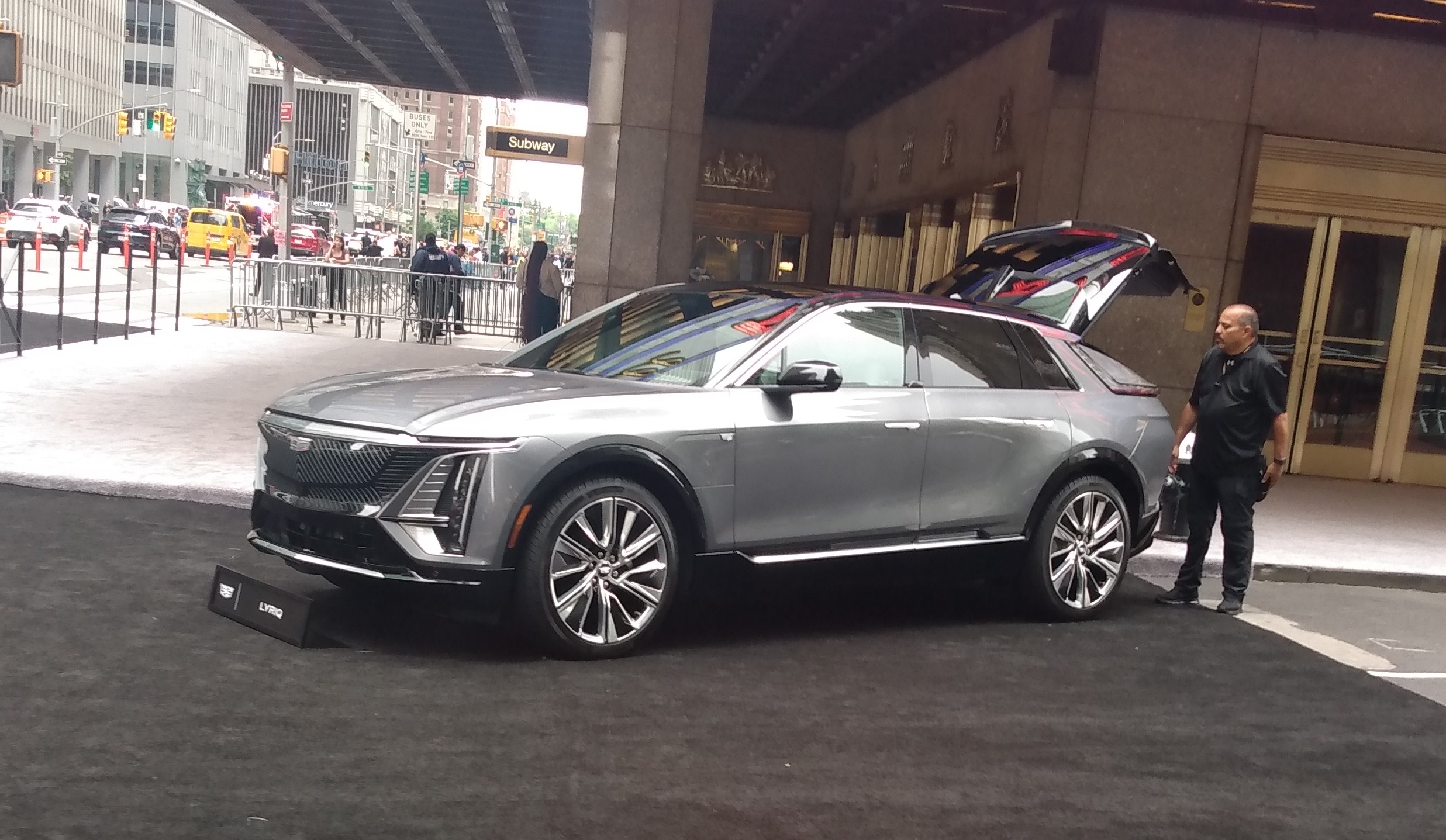
has had issues with the hummer and I believe the lyric too in battery assembly.
So this is a you know, automakers have been building vehicles for so long, but this is still in new technology and new power chain. I
think the kinks are still being worked out, so that is what is holding a lot of this up. And you know, the supply chain, there
are some delays there that have gone on as long as you know. The
chip shortage started a while ago. They're correcting themselves, but they're still there,
so I think those things are holding back sales along with some of the early adopters. The dealers are saying, I've bought and now they're gone.
So now the dealers have to sell to a mainstream audience that might be more skeptical, have a lot of questions, might have more limited charging access.
So there's a lot at play. It's hard to even come up with the
generalization because there is so much happening. We're still at the early days and
it's very much evolving. You know. Let's say it was interesting you said
earlier about how you talked to that dealer and the people are bringing, you know, coming in for their next vehicle and it had an EV and they're saying it's it's too difficult to deal with this, and Farley has recently said, ah, but after they drive an EV, they'll never go back to anything else in the This is what he's counting on. And then he's in
his other breathe says, but oh, by the way, let's look at hybrids. Yeah, you know, it's like whoa well I think occur.
Yeah, so much of it is geography. So this dealer I talked to
is in Texas, you know, the center of oil and gas. The
charging infrastructure isn't as robust in Texas as it is in somewhere like California.
So maybe in California, if Hartley is right, the car buyers you know, who buy an EV are coming back and they want another one. I
could see that, but it really depends on the situation where you live.
Yeah. Remember we had on Who'd we Have on a week or two ago,
and they were talking about that EV's loyalty rate is about sixty five percent, which is very high. That that that's above the industry norm for any
given brand, but that included Tesla. And when you took Tesla out of
the equation what Tom lebby, right, and it was then it drops to fifty percent, which is kind of about where ice cars are, So maybe that shouldn't be too surprising. But yeah, the loyalty late rates depend on
Tesla to to look really good. Right. That's like, I'm the tallest
guy in this room right now, so it's just like, what's the me But one thing, Gary, you know, you're right. Last year,
at the end of the year, we ended up at seven percent market share, but halfway through last year it was more like four percent. So the
fact that halfway through this year we're at seven percent suggest to me a rather substantial increase. And I'm curious to see where we end up this year.
I've been predicting we'll end up at ten percent. We'll see if that comes
out. But hey, I you did the story recently right on looking at
these rising inventory levels where people say EV sales are slowing, So tell us what you found. Sure, So, yeah, we saw some day supply
numbers from Cox that were pretty They weren't surprising, but if you look at the number alone, it could be kind of jarring. You have to really
have to put all the pieces together to see what's happening. So, of
course day supply is going up because dealers are going from like zero to ten, you know whatever it might be, so that that number is increasing, But that doesn't mean that demand is sewing. There still is demand free vs.
Most of the well probably all of the orders that have been placed for the evs are are already have been completed. So, like I was saying
earlier, now the dealers have X number of evs on their lots, like probably usually in the single digits or low double digits, but they really have to sell them. They're not pre orders their vehicles that they have to say
like, hey have you thought about this IV four? So it's just a
different scenario than they are used to, and they have to learn how to how to answer customers questions about evs and really sell them on on charging, which is typicult. Home charging is a pretty easy cell but public charging is
trickier. Also, there's some funny business with day supply right now right because
of a shortage of trucks to move them. So just so everybody knows,
day supply starts the minute the trucks or the cars or the vans leave the factory lot, not off the line, but off the lot, and so that's cars on trucks, cars at railheads, cars on trains, cars in transit, and then cars at the dealers ship. And what I understand right
now is there's a lot more vehicles in inventory that are in transit I eat, just sitting there because they can't find enough trucks to move these things.
So that that's causing an increase in day supply, Yeah, exactly, and the day supply calculation it's sort of I'm not going to explain, it's sort of complicated, but it doesn't give you a great look at launch vehicles because there's not much compared against and the most of these evs are just launching, so it's tough to look at the supply and get a full picture of what's what's going on with DVS. Great point. So, Paul, when we
had you last on the show, you were the first person that I heard and this still resonates with me, and I'm sure that it probably is causing many people who are actually involved in this having sleepless nights and they haven't slept for the last three and a half years since you said it. But you
were talking about this, this shift away from internal combustion engines two evs, and the ramifications it has on manufacturers of conventional products. So since we've last
seen you, what's your assessment of how that's all shaking out. Well,
I think you know again Gary, as you know, when I started to talk about that shift, people are like, yeah, that's never gonna happen.
And of course what are we talking about. We're talking about you know
John specifically saying, hey, we think EV sales are going to be ten percent of all sales this year. Okay, there's talk it's going to be
by the end of the decade thirty forty percent. So is it happening.
Yeah, it's happening. So what I would tell you is is for the
big tiered automaker or big tiered suppliers and the automakers, I mean definitely are moving down that path. I mean, if you think about it, auto
tech has been decimated as a result of all the investment shifting to electrification.
So you look at autonomy as a matter of fact, back in twenty fifteen, sixteen seventeen, all the investment was going in the autonomy. You know,
that's where all the excitement was, you know, Uber and Lyft, we're going to rule the world. Now look at the state that we're in
today. So we still spend a lot of time with suppliers. I would
tell you the big tier suppliers, you know, are well on a path towards electrification. I mean, just think about Board Warner having a split,
you know, just a month ago, a lot of activity to go to separate the electrification and the power train businesses. Now it's really going to start
to impact the smaller suppliers. And I think to build on what we're talking
about earlier, you know, there has been disruption over the past, you know, a few years, not just semiconductors. Now you're having disruption in
these supply chains getting product to where it needs to go. I think we're
really going to see a lot of disruption here starting next year the following years, as these volumes uptick, you're going to have two huge disruptions that are going to take place. One around, you know, the drop off of
power train components. Highly capital intensive companies are going to start going underwater,
you know, keeping up with the amortization of equipment, et cetera, et cetera. So you're going to have it as that volume drops, but as
volumes increase in these new supply chains have to come up to speed. You're
going to have a tremendous amount of disruption there because there's going to be companies that just can't keep up with the demand and are going to create bankruptcy issues, not just on the downside, but the upside associated with the technologies.
So I think we're really headed to a you know, the next several years of a lot of disruption in the supply chain as a result of you know, this shift that's taken place, Paul, Do you think that supply chain is going to end up in the hands of private equity. I mean,
you know, you mentioned Borg Warner Continentals on the same bosh. To some
degree, they're spinning off anything to do with ice or just about anything to do with ice. Yeah. And then and then as as volumes drop with
ice, especially the tier twos and threes, they're going to be enormously financially stressed. We can get into that in a minute, but it looks to
me like private equity is just looking at its chops saying, wow, we can swoop in buy these companies for pennies on the dollar consolidated all and then we can tell the car companies what they're going to pay us for the part.
It's not the other way around. Well, I think there's two things
going on there. So I absolutely agree with you. And if you look
at Apollo Apolo purchase Tenaco, you know, Tenaco is in a situation, well what do we do with this business? And Apolo's private equity, right,
yeah, Apolo's private equity. So Apolo is a big player. Gam
At Capital is another who bought Iron Foundry Grading. You know, you start
looking at this. They are starting to enter in the space, and we've
worked with the number of them. And if anybody's out there that says,
hey, I've got a power train business, you know, reach out to me, and I will, you know, I will start to broker a deal for sure, because there's capital out there. As you realize, John,
there's capital for this and the situation that you get into, and even you know, so many suppliers in this world as far as the whole internal combustion engine ecosystem, it's a four hundred and fifty billion dollar market that really needs to start a consolidation. And so yes, private equity is going to
become a big player in that. I think the OEMs are going to have
much bigger hand in the consolidation activities that are going to take place. But
also, I would tell you, and this was one of the topics I think Gary wants to talk about, is as you move into this UAW negotiation, my sense is a huge bargaining chips going to be. Of course,
the UA DEBUOT gets to unionize all those you know, Korean battery jvs.
But then in addition to that, what's going to end up happening is the automakers are going to start to also bring to the table how do we get rid of these how do we get rid of these powertrain assets that we have, whether they're diecasting operations, whether their engine transmission manufacturing. And I think
that's going to be a big part of the bargaining chip that you're going to see between the OEMs and the UAW when it comes. And you know,
Paul, the OEMs don't want to talk about that. They don't want to
talk about it publicly, and I've tried to get them to talk about it privately day It's like a red hot issue. They do not want to touch
it, at least not at this point, right right, But I think that's what's going to become the trade off. You're going to start to see
the Union say, hey, we want access to all these battery jvs.
We want to access to that because that's the future. What the OEMs are
going to say is, okay, we want to be able to start selling off these manufacturing assets that are heavy uaw. We can't broker a deal unless
there's some type of concessions that start coming from the Union. And I think
that's what you're going to start to see as far as the bargaining between the two parties when it comes to, you know, the sun setting of the internal combustion engine. All right, again Devil's advocate. So I want you,
guys, John and Paul, I want you to explain to me.
So this year General Motors announced is investing eight hundred and fifty four million dollars.
This isn't chump changed. Maybe not ev money, but it's not chump
change. Eight hundred and fifty four million dollars for a new small block V
eight engine in combustion engine. So nearly a billion dollars right, So,
and in fact there's some transmission investment that's on top of that, and I can't remember another investment. It's well over a billion dollars that they're putting into
it. And look, everybody knows, especially I'm sure this V eight is
going to be for medium and full size pickups and SUVs and our money where they make all their money exactly and whose customers tend to drive long distances and who tend to do a lot more towing. And you know, electrics just
aren't ready for prime time yet. You know, maybe they'll get mujeeb's you
know, range extender battery that will get there later in the decade, But right now, I mean, you're going to make all your money on you know, internal combustion engines and GM's no dummy, even though Mary's all in on electric. You know, they've got to make big profits on the big
ice vehicles to pay for the EVS. Yeah, I agree. I'm mean
it's a it's a game like John was talking about, and you know, I think Hannah was talking about it earlier. Geographically, you've got some areas
which is, you know, don't lend themselves like Texas to evs. I
don't know if you followed this, But a couple of months ago there was legislation brought forward in the Wyoming UH State you know, UH Congress that they wanted to put a ban on EVS by twenty thirty, just the opposite of course, what the Biden administration is pushing for it. Now, if you've
ever been to Wyoming, you understand where are you going to put charging infrastructure?
You know, how can you even think about this? And again,
they're an oil and gas rich environment, so you know it's gonna work in certain UH segments of the country really well as far as the shift to electrification, and it's not in others. And I think you've got to be pragmatic
about that. Yeah, that does make it tough for the automakers. GM's
strategy has kind of been the same all along since they announced their commitment to evs. They've always said that they would have to and they would willingly rely
on the profit from their larger vehicles that are powered by internal question engines.
But it must make it difficult for suppliers to navigate as well. Or are
you experiencing that with your clients? Wall So what I would tell you is
so in the powertrain space, where you want to be, you know, and we just use transmissions. You want to be on the eight, nine
and ten speed transmissions. You want to be making those parts because those are
the last ones that are going to convert. And frankly, as you sit
down and you talk to suppliers, you'll see two reactions. Ah, at
least we got that eight nine, ten speed you know, transmission business, whether it's clutch housing, clutch packs, you know, whatever the component is.
Then there's the others that like all that. We're left with the six
speed business and they realize they're the first. If you look at an organization
like Magna where I come from in Europe, you know they bought the contract business, it's all dual clutch, seven speed, nine speed, but those are going in vehicle segments that are the first too. But Paul, which
the important stuff? Yeah? Yeah, your you might be muted. No
still don't hear it? How is that? Hey? You're back? Okay,
So you're saying Magna with the dual collection it's going into vehicles, you know, that are the first that are going to go electron Is that's the last we heard from you? Oh no, you're gone again. Okay,
let's yeah, okay, I'm having an issue with my headphones. Okay,
So all that I was saying is for some suppliers, you know, it all depends on the mix of the product that you have. So heavy dependence
on power train components that are sold for you know, these you know, European style vehicles, Asian based vehicles, et cetera. That's gonna transition much
faster than you are for those who are providing components to trucks and SUVs and these bigger platforms. Yeah. Hey, look, we got to take a
quick commercial break and we'll be back right after that to talk about more of these things. How do you bridge don't tire stocks shorter? On what roads?
Is there hydrotrack technology? But you don't have to know how the science
works, just where the brain is. What really matters is they're bridged up.
All right. We're back talking all things in the automotive industry here,
all right, So we're talking about investments and things like that. So I
want to switch it just a little bit here. So last week, the
Vietnamese company n Fast had an IPO and it started out at twenty two bucks of share, and like Monday it was up one hundred and twenty eight percent.
Okay, now here's my question to you guys. You know, we
saw Lordstown Motors has filed for bankruptcy. Lucid's had to go to the Saudias
again to get more money. It's not clear how Fisker is doing. Nicola
had to recall all two hundred and nine of its battery electric semis and has given a warning that it may not do so well this year. I'm thinking
things are not looking good for that. So my question is is it possible
for there to be companies, new manufacturers that will truly be successful in the long run or is this all short term stock trading phenomenon. Go ahead,
Hannah, that's a tough one. Why we have you here. Obviously Tesla
was a newcomer at one point and it's become very successful. But no,
we haven't seen that same level of impact from anybody else. I think that
sometimes the tech companies and new entrants in general, they they don't appreciate or to understand the manufacturing skill and insight that's that's needed to make cars. It's
not just technology and software. Those two things are becoming much more important,
and the automakers need to need to get on more with that. But manufacturing
is you know, something that has been refined for for decades, for a century. It's not something that a new company can can learn overnight. So
I think we're seeing that. Yeah, yeah, I think this is I
think this is crazy first of all. But you know, if you look
at me, oh, if you look at Xping, if you look at Lee, all these companies out of Asia, at times, we're far more valuable than GM and you know all the you know, sort of major players in the industry. Yet today I think there's a certain circumstance here because the
majority of the shares are still you know, controlled by the owner and a private investor, and because of the limited amount of supply, that's driven up some of the demand for the product, but all are for the stock.
But to be honest, you cannot justify this type of stock valuation when you see the spack bubble that we've lived through. On the auto techs side,
I mean, auto tech is, as I said earlier, is dead.
There's no investment. Vcs can't raise investment. You know, businesses are shutting
down because they're running out of investment. So I think, you know,
you can't really justify it other than the fact that people are looking at a limited investment window. I don't think the technology and the product is unique in
any way. You know, it's just that there's a limited supply, and
I think that's what's really driven up a lot of the demand for the Vindfast stock. Yeah, I agree with Pete Dog. We saw his comment there.
I can't understand this crazy Vindfast valuation. The reason is only one percent
of the stock. One percent of the shares are in float are trading.
The owner of the founder of the company owns ninety nine percent, So you've got the whole market feeding on one percent of the shares and it doesn't take much to drive the price way up or have it just collapse. And so
we've seen in the course of a week then Fast add like thirty billion dollars of valuation and then lose thirty billion and then add fifty billion. So yeah,
it's just nuts only because there's so many or so few shares in play.
But you know, I think that what you got to keep in mind is Tesla lost money for a decade. They lost billions of dollars. They
had no competition, and they're the best at it. So if the best
at it with no competition takes a decade to turn a profit, why should we be surprised if it takes anybody else that long to do it? Okay,
they will be Will they have a decade to do it? Well?
Probably not? Probably not. But evie volumes are coming up. And as
I've said so for so many times, this industry is all about volume.
Once you hit scale, once you break that magic eighty percent capacity utilization and get above that, you're a printing machine. You just print money. And
that's where Tesla's pretty much at right now. The question is who's got the
long term patient to get to that point. American capital is very impatient.
Remember Wall Street for them long term investment, that's the end of December.
They consider that long term. So to sit on investments for years at a
time waiting for it to turn the corner, American capitalism is not very good at that. You know, it's more the Asians and even to a degree,
the Europeans who have a lot more patients. And look at how it's
paid off brilliantly. For the Chinese. I mean, you know, they
dominate the ev world. They were willing to have that kind of patients.
The lithium batteries were invented in America. You know, rare earth magnets were
developed in America. It's all owned by the Chinese now because the Americans sold
it. They didn't have the patients to wait until they could commercialize it.
Going back to your point about Tesla, you know, struggling for a decade but not really having competition in evs. Now these new entrants, like Been
Past, they have Tesla as a competitor, and all of the legacy automakers who are bringing out their evs, do you think any of them really have a chance? Been Fast and the like then Fast we'll see. I mean,
you know, you got one of the richest guy in Vietnam, a multi billionaire guy. I mean, he can still keep writing checks if he
wants to preserve his name and reputation, and he's probably got some sort of backing from the government to make sure that the Vietnamese brand stands well in the world. You know, Gary, you mentioned the Saudi Investment Fund for an
investment fund is a backer of Lucid, so it's going to take patients.
You know, I have people ask me all the time, Oh my gosh, you know, Ford's going to lose four billion dollars on evs right now.
How can they possibly do that? And I said, don't worry.
They're all losing billions on evs. Ford's the only one with the courage to
publish the numbers. They're all losing money. So it's now going to come
down to a race to scale and the patients to get there. Well,
I think if you look at Kia thirty years ago, you know, who would have ever thought there'd be one of the most profitable you know, so, you know, suppliers of vehicles here in North America. And I think
when you look at the pitch that vin Fast is making to those potential investors, it's, hey, we're the next Kia. And you know what they're
not. They're not trying to say, oh, we're going to be the
next Tesla. No, we're going to be the next Kia, you know.
So I think if you look at that, it's a little different story.
And if you're you know, like you said, you have a longer term, you know, sort of investment horizon, that's a compelling story to tell, you know. So, so yeah, that's that's where I think
vin Fast is coming from but their product today isn't really prepared to compete well here in the US. But Kia wasn't initially either. Right. It's a
really interesting time to follow the industry because we have all these companies that, you know, could end up being really successful or could go out of business, you know, even like the battery companies. I think some of us
were at our Next Energy event last week, and it seems like a very promising technology we haven't we just haven't seen in the market yet. It's it's
always fun to watch, yeah, see, but but you know, it seems to me that we're talking about largely is the development of vehicles that very few people are buying, but someday they will. And you know, I
just wonder how how long it will be before this someday comes to fruition.
But you know, and again I go back to where we started the conversation, Gary, is, look at the progress that's been made in the past four or five years. You know, when when uh, you know,
I probably shared this on one of the shows previously that I did, but it was a couple of years ago, so I'll bring it up again.
In twenty seventeen, there was a huge study that was done by the European Commission looking at hey, when will cost parody to be achieved by between the internal combustion engines and evs, And they surveyed thirty thousand executives from all over the industry to start to look at what that looked like. And in that
study what they found was there was So what they found in that study was there was this cost parody was going to come by twenty thirty when we get to one hundred dollars per kilowatt hour. Now today, look at C at
L, TESLA, all these companies are below fifty or is to kill a watt hour, you know. So that's the industrialization, that's the investment,
that's what's taken place. So I think what you've seen over the past five
years is huge progress. Who's to say that that doesn't continue over the next
five years where there's this dramatic change because technology enabling things that just people couldn't expect five years ago. Yeah, I think they're under one hundred dollars to
kill a lot hour, not necessarily fifty. But your point's well taken,
Paul. They're on the path, and you know, in twenty twenty five,
twenty twenty six time frame, We're going to see a lot of the legacies come out with their second generation evs built on truly clean sheet, dedicated EV platforms, built in plants dedicated to only making evis. You're going to
see second generation batteries. We're going to see more of a preponderance of bidirectional
charging, where you'll be able to plug your EV into your house by electric electricity at low rates, sell it back to the utility at high rates, maybe have no electric bill at all, maybe even get a check from the utility. So I think before those decades out, there's going to be a
buying proposition where even people who are anti EV right now are gonna go, geez, these zvs are pretty good. All right. So, so you
guys are talking in five year buckets, I'm going to have a five year bucket for you. This is from SMP Global Mobility, not for me,
but this is what they came out with. Okay. So they're saying right
now, hybrids seven percent of the market in twenty twenty eight, twenty four percent of the market. Oh, hybrids, but nobody wants those. Those
are terrible vehicles. They're they're they're not even good bridges. They say nine
percent EVS for this year, so they're they're optimistic, they're above the seventh they're to nine percent. They're saying it will be thirty seven percent EVS in
twenty twenty eight, and that right now, ICE vehicles account for eighty four percent of the market, going to forty percent of the market. Okay,
So the thing that isn't maybe obvious about this is that hybrids have in ternicalbustion engines, which makes it sixty four percent still ice, right, So how is this working out for the evs? Again, Well, it's a stepping
stone, I mean, or maybe a long term solution for being committed.
In the comments here, these people are flaming me. Well, there's there's
so many concerns, so much rings and range anxiety with evs. If you
have a hybrid, you get to experience part of part of the EV flavor while still being able to rely on gas stations when you need it. So
I think it'll I think hybrids will help EV sales long term. So would
you buy one, Hannah? I would consider a hybrid. I would not
consider an EV right now because I cannot install a home charger. But a
hybrid. Yeah, I would consider that, how about you, Paul?
Actually, uh, my next vehicle will be an EV for sure. So
okay, we'll must be a second vehicle or will this be your primary vehicle?
Uh? This way, it'll be my primary work vehicle. So it'll
be my vehicle, the family vehicle. You know, probably we bought our
last last year or SUV gas engine. You know, recognize it was probably
the last vehicle like that that we bought. But the next sorry about that.
Uh so, but the next vehicle, I you know, the next SUV will probably be an EV and the next vehicle I buy will be a vehicle I used for work that will be an EV. See. I don't
like hybrids. I love the fuel economy and if I'm just patson around like
a little all Man, they're fine. But I'm an enthusiast. I like
to get on them, and they get this mushy feel to them. You
know, the engine's trying to do one thing, the electric motor another, the transmission yet a third thing. I don't like the way they feel.
So now if somebody came out with and probably Ferrari's going to be there and Corvette's going to be there and the like performance hybrids. Maybe I'll like the
way they drive. But I'm telling you right now, and I'm not dissing
the technology. I'm just talking to my personal taste because I agree with you,
and I think hybrids are a pretty good solution. Plug In hybrids are
an issue all to themselves because we know that more than half the time, half the people never plug them in, So you're not, from an environmental standpoint, getting much benefit from that. Maybe that will change. Maybe we
can go to some sort of inductive charging where people will not be inconvenienced in five seconds of having to plug their car and they just drive over a mat in their garage or someplace. But yeah, personally, I'm not a hybrid
fan. I just don't like the way. John. We've already established you're
an atypical driver, so we can use you as a as a basis of anything here. But you know, so this gets back to the point of
Okay, so Toyta and Lexis have eighteen hybrid models Hondai, Kia seven, Ford, Lincoln six, Stilantis three, and how many hybrids does General Motors have? Oh, that's right, zero but in the United States. But
John, for you yeah, this is these are United States numbers. But
for you later this year, they will have the Corvette Array hybrid. Yeah,
and that's probably the one that I like because that's not a fuel economy or an emission's play. That's a performance play. And I fully trust the
Corvette engineering team to deliver a hybrid that even a hardcore enthusiast is going to love. All Right, So I want to stop talking about about EV's and
move on to another technology, and this one is in Paul mentioned this earlier autonomous vehicle technology. So we didn't talk about this on last week's show,
but last week the California Public Utilities Commission gave the thumbs up to Waymo and Cruise and said, hey, you know, you can start having autonomous vehicles being used for cabs in San Francisco. And so one day after that happened,
this was, according to kro O end Channel four, in San Francisco, at least five Cruise car Cruise cars blocking traffic Friday night in the North Beach neighborhood. The driverlist car stopped in the middle of the road prevented travelers
from driving around the traffic. Same night, at least six cruise vehicles were
seeing causing traffic near Grant Avenue on the Hall Street. Then another and this
was due to, according to Cruise, wireless connectivity issues because there was apparently a big music festival going on in the area and somehow the cars were incapable of communicating because all the people who were on their phones watching the music thing.
Then there was a cruise vehicle that ran into a fire truck, and then there was a cruise vehicle that made its way into fresh cement. So
are we being too hasty here in permitting things like a v's on public roads?
Well, I think Gary, haven't they also come to a point where they had him pull the government had him pulled half the vehicles off the road because that problem. So again I think what we've seen here, you know,
over the course of the past year a year and a half, and it's played out in this back investment bubble, is just this technology is still quite a ways away from being ready for prime time. I think you see
a lot of the vehicles, you know, they're out after hours, when you know they're not out in rush hour, they're out operating throughout the evening as far as they're testing and everything. But they're not. The technology is
still aways away for really being a reliable technology, and as a result, some of that is is the investment that was required to shift from that to EVS. You look at the end of the year, Argo being shut down
as a result of just the technology difficulties and the investment priorities for Ford and VW. I think you know again, this is a technology that is a
way is away, Hannah, what do you say, Well, I'll plug Automotive News for a second. My colleagues Pete Bigelow and Molly Boigunt have been
following this in California over the last week and there's more to come. They've
done a really, really great and thorough job on it. Something that they
highlighted in their reporting is that the robotaxis are regulated by the state, So the city San Francisco is the one and its residents are are really getting the brunt of the issues here, but it's run at the state level, So just something to consider, like maybe there's a mismatch there. This this technology
needs to be tested for sure before it expands further. But at the same
time, it feels a bit unfair to put the residents of San Francisco through that. Yeah, I have a completely different view as Gary as no doubt
anticipating here my advice to Waymo and to GM Cruises, get the hell out of San Francisco. Come on out here, come to Detroit. Well,
welcome you with open arms. You'll get all kinds of great publicity, and
you're not going to have these the snotty San Francisco residents, you know, trying to dis your your efforts here. You know, all these problems with
Waymo and Cruis get national headlines. I have never seen one national headline that
quoted Kyle Vote, who runs GM Cruise, saying their subscription base and ridership is growing forty eight percent a month in San Francisco. So it's like the
ev fires national headlines, even though we know ice vehicles catch fire ten times the rate that ice vehicles do, even on a per one hundred thousand vehicle basis. So there's this fixation on trying to find all these problems in the
media with evs, all these problems with avs. I told Mary Barr this,
I commend you for sticking with the program. You know, I talked
about impatient Capital, Ford Motor Company and Volkswagen with argo that was impatient capital.
We're not seeing incident returns. Boom. Let's dump this and go do
something else. So I commend at Mary Barr for sticking with the program.
Yes, you're going to lose billions, but when you turn the corner, Wow, watch out, you're gonna make so much money. All right,
John, So, I have a quote here from Captain Jonathan Baxter, who is the chief of the San Francisco Fire Department. The Fire Department strongly disagrees
with yesterday's CPU see decision to allow commercial operations by the autonomous vehicle companies in San Francisco. We believe the ruling ignores public safety and emergency response interference that
we presented to the Commission this week. Blah blah blah, blah blah blah.
The San Francisco Fire Department is not against modernization and new technologies, but any vehicle that endangers the people of the city and its visitors and puts its visitors endangered and put passengers between a fire engine and a fire is not ready for prime time. Respond to the Captain Baxter, get out of San Francisco
Way, Chief, the fire chief. Yeah, his truck is the one
that caused that accident damp fire truck. Well, look, I'm not going
to question what the police or the fire chief is saying. All I'm telling
you is that this technology continues to make progress. The payoff is massive.
Is it perfect? No? Well, people get killed in a VS.
You bet they will. Could it save up to twenty thousand lives a year?
Yes, it could? So what are we waiting for it? Evidently
nothing. Hey, look, we're close enough to the top of the hour.
We ought to wrap it up on this rather than try to get into a new topic. What do you think her? Do you have something burning
there? Oh, I'll let this one go. This is okay, we'll
wrap it up. Handle LUTs. Thank you so much for coming back on
all right, back on it, for coming on the show. We're gonna
have to have you back again. Yes, thank you for having me.
See Hannah, I thought you were on before two and John thought the scene Wow, No, that was a slip of my you know, slipping mind.
But Paul, it's great to see you again. Yes, thank you
guys. I enjoy being here. It's great connecting with you all again.
Okay, okay, that's a wrap and we want to thank everyone for having tuned in. I'll don'tline the after hours. This brought to you by Bridge
Stone Tires, Solutions for Your Journey, and by Borg Warner. If you
like this program, I would like to learn more about the automotive industry, check out our website at autoline dot tv, or look for us on YouTube on the auto Line channel
Request an explanation for:
3 cars
3 cars featured
Request an Explanation
Heard something you'd like explained? We'll add it to this episode.
Sign in to request explanations for terms you heard.
Want to learn more?
Browse our glossary for plain-English explanations of automotive terms, jargon, and concepts.
See something that's not quite right? Our annotations are AI-generated and can sometimes miss the mark.
Click the flag icon on any annotation to suggest a correction.