With the recent end of the UAW strike, the panel discusses the current automotive market and whether it's a good time to buy a car. Experts analyze the performance of brands like Stellantis, Hyundai, and Kia, focusing on their market share and pricing strategies. The conversation shifts to the impact of high interest rates on consumer behavior and the growing demand for affordable vehicles. The group also delves into the challenges facing electric vehicle adoption, including dealer hesitance and infrastructure issues, while highlighting the potential value in used EVs as prices drop.
"a whole new level of clients that are coming into their brand. And so but when you kind of peel back the onion and look at you know, they've had a remarkable improvement in terms of market share and volume, but a lot of that actually happens more in the thirty five thousand to forty thousand dollars price range, where when you look at the stillantis brands, Jeep in particular, that has become a very expensive franchise. I mean a lot of these Cheeps now are up over sixty seventy I think they have a grand Wagon here that's up near one hundred thousand dollars vehicle. And so I just say that,"
"...y quickly, Gary that the Chevy Bolt or the Nissan Leaf for some of the early iterations of electric vehi..."
Select text to request an explanation
Out online. After Hours is brought to you by bridge Stone Tires, Solutions
for Your Journey and by Borg Warner. Welcome everyone, thanks for joining us.
Those of you who watched last week's show may recall that toward the end of the show, John said, what is your prediction? In the prediction
had to do with the EAW strike, and I made the prediction that we would not do another show that was totally dedicated to the OAW in the strike, and not entirely because John's not here today, but just because the strike has been settled, we will not be talking about the strike extensively today.
So I want to bring in some very very smart journalists that I know that will be joining us today. So we have Nancy Dunham of Wards, who
covers retail quittics intensively. We have Damon Bell, senior research editor at cars
dot Com. And we have our old friend Doron Levigne, who is clearly
one of the deans of automotive business journalism. And I'm not kidding, that's
what they say just before they kick you out. You know, they give
you a lifetime Achievement award and there's the door over there, all right, but we'll keep you at least for the show and then the show and then maybe you can see the door. Okay. So our special guest is Brian
Finkelmeyer, who is the Senior director of New Vehicle Solutions at Cox Automotive.
So welcome Brian, Eric, Gary. Great to be here, Thanks so
much for having me. And I think that we need to level set,
So please explain to the audience what it is that you do there at Coxemotive.
Yeah, great question. So you know, I joined Cox Automotive just
about nine years ago and quickly recognized and Cox really sits at the center of the automotive ecosystem. We know, we have so many relationships with dealers,
with lenders, with automakers, and I'd say that when I describe what I do to you know, people outside of the industry, as I say, we kind of have our hands in all different aspects of the auto business.
And so what I actually work on at Cox Automotive today is we have worked on pulling together all of our data assets that we collect from Mannheim Auto Auctions to Shopper data that we see on our properties like Kelly Bluebook, an Auto Trader, and all the other hosts of solutions that Cox automotive provides out in the marketplace, and it really provides us with this really amazing view of the market where we can see supply, demand and price in near real time and help advise our clients and help us to maximize their performance. Okay, Okay,
So I'll start out with a question, then the others will join in.
So I read a piece that you wrote and you titled it tumes for vanity, profit for sanity, and you looked at Stilantis in the US versus Hyundai Kia in the US. So tell us about what you wrote about in
what your conclusion is. Well, yeah, I mean I think that's like
the age old dilemma and the car businesses. Are we going for volume?
Are we holding for gross? In fact, we used to say the dealers
that you know that there was merit and wisdom and being a volume dealer, right, We always an old X factory guy. We didn't really care as
much about the gross as we did about the dealers that sold a lot of cars. But I think you know, in that particular piece, it was
just interesting to see the extent to which Hundai and Kia have had a really remarkable run here over the last couple of years, they've really gained market share, and I think certainly during the microchip shortage those certainly Hyundai fared a little bit better than some of the other Asian competitors. And I think that Kia
has done an absolutely amazing job over there of kind of reshaping their then really elevating their brand with the products like the Telluride and the Sportage. They've attracted
a whole new level of clients that are coming into their brand. And so
but when you kind of peel back the onion and look at you know, they've had a remarkable improvement in terms of market share and volume, but a lot of that actually happens more in the thirty five thousand to forty thousand dollars price range, where when you look at the stillantis brands, Jeep in particular, that has become a very expensive franchise. I mean a lot of these
Cheeps now are up over sixty seventy I think they have a grand Wagon here that's up near one hundred thousand dollars vehicle. And so I just say that,
you know, although Hondai and Kia had improved their share significantly, you know, profit is the goal. And I think that Stillant is still far
and away. It really shines in that that light. So let me ask
you that if I'm looking at the sales numbers for these companies, Stilantis for the Jeep brand calendar year to date is down nine percent. Now, I
mean, they got a lot writing on it. And if you're if you're
down nine percent, doesn't that really attenuate the possibility of achieving this this profitability?
Yeah, I mean, no doubt, you need to keep the wheel turn into otherwise you're you're going to go out of business, right, And I do think that that is an interesting situation. I know you said you
didn't want to talk about the ua W strike, but it didn't strike me.
Over summer months, as we you know, we analyze and watch these car manufacturers very closely, it was very clear that the Stalantis brands had a rising day supply. Their inventories were some of the highest in the industry.
And I did wonder to myself if Tavaris and the team there at Stalantis were not strategically doing that. It is a way to sort of stunt the impact
of a potential labor strike. And so I don't know whether or not that
was their strategy, but on paper it looked that way to you that they were purposely amping up production over the summer months to try to mitigate the impact of the strike. So, by the way, the strike is fair game.
It's just the last few shows we've been doing wall to wall coverage.
So could I ask a question about Brian about the Jeep and the fact that the sales are down to what extent do you think that the Bronco franchise is cutting into Jeep? When I first saw these Bronco models coming from Ford,
it seemed to me as a very direct assault on that franchise that Jeep kind of had to itself for quite a while, and now everybody's running into it, and I'm just wondering if Jeep is falling back simply as a competitive issue.
Yeah, I'm sure that that absolutely has played a role in this, But I think perhaps the bigger challenge there is just that we're in a new environ right where these interest rates and the cost of borrowing money to pay for these expensive vehicles has become just really startling to say. You know, the
average new car payment in America today runs around seven hundred and eighty dollars.
The average use car payments around five sixty five. It wasn't that long ago
that the average new car payment was only five twenty five. So we're in
this new world order where the cost of a used car monthly payment is actually higher than the cost of what a new car used to be. So I
don't know specifically to what extent the Bronco has eaten away at some of that Jeep share. I would suspect, certainly to the extent to a certain extent
that has. But I do question the impact that Jeep is having in an
environment where their prices are effectively luxury level prices, in an environment with very high interest rates. I'm sure that that has absolutely had some headwind costs,
created some headwinds on their retail sure, and that makes sense that they would over the number of years, make Cheap into a kind of a semi luxury franchise, which it never was. It was a very pedestrian franchise back in
the day. And little by little the vehicles have become much more premium,
better materials, bigger engines, a lot more glitz connected to them, and that would, as you're saying, put them out out of the reach of some buyers today because of high interest rates. And you know, one thing
that's really interesting, Darn, is that during the strike, the last six eight weeks, the inventory level of the Grand Wagon era has actually increased from what it was at the beginning of the strike. So I think that speaks
to the fact that as we've fallen in here to the fall of the year, and I think there's certainly some trepidation in the economy with everything that's going on, that there's less consumers that are out looking to spend upwards of one hundred thousand dollars on their next jeep. Nancy jump in there. You know,
I was going to talk about the Grand Wagon here for a minute, because even in the depths of the chip shortage, it seemed that those were going like hotcakes, used and new and so forth. And I want to
go back to the thought about the Bronco. Certainly, when you look at
the proliferation of trucks should be that's what everybody wants, and the jeep is sort of just another I hate to say toy, but toy out there for people to enjoy versus a sedan and so forth. I wonder, Brian,
if you see the any shift because you're talking a lot about the high interest rates. We all know that auto lenders, some of them are getting out
of the business, certainly in direct lending. And just again the consumer confidence.
Do you see any kind of shift that may take place. What I'm
thinking of is SUV truck versus said and a smaller economy Carrique will Yeah, it's a great question. It's interesting that it wasn't that long ago that we
lived in an auto industry where you know, the accord and the camera with a perennial number one and two sellers, and they would kind of compete every year. And you know, fifty percent of vehicle sales in the United States
were sedans, and now we're in an environment where it's eighty twenty truck SUV, which is at this exact moment that we're trying to reduce greenhouse emissions and trying to produce more fuel efficient vehicles. That the United States consumer has never
been more thirsty for gas guzzling vehicles than they are today. So it's an
interesting contradiction that's happening all at the same time. But I would say this
last two comments on Jeep and the expensive price of vehicles. It's interesting if
you look at the mix of sales based on price of the vehicle. Today,
almost thirty eight percent of today's auto sales are over fifty thousand dollars.
I mean fifty thousand dollars. It wasn't that long ago it seemed like a
pretty expensive car. Now almost forty percent the sales are happening above that price
point. And then there's another sort of byproducts that's come along with that,
which is that if you look at household income and what percentage of the total industry volume they represent. About five years ago, households making over two hundred
and fifty thousand dollars a year, which was kind of the high end of this analysis, they only represented about four percent of TIV. Last year,
they represented sixteen percent of TIV. And so the bread and butter of America
kind of the let's say the middle or upper middle class making roughly one and twenty five thousand dollars a year, those families have come down in terms of their contribution to total industry volume, while the families making two hundred and two fifty and above continue to grow their consumption of new car vehicles. And so
what we've clearly seen, certainly since the microchip shortage and COVID was that pre COVID we were pacing upwards of seventeen million units a year. The new world
order looks like it's closer to fifteen million, but at a much much higher mix than what we previously sold. Damon. So one thing that at cars
dot Com editorial we are really steeped in these days is just the topic of affordability. And yeah, Brian, what you were saying about the average transaction
price. The thing that I'm curious to see in these next couple of years
is from a product level, what are oem is doing to address that in the two vehicles currently on the market that stand out to me in that regard are the Maverick and the new Chevy Tracks, and also the Buick and Vista, because all three of those vehicles seem to have been conceived with affordability kind of baked in from the start. And especially we're not through with the effects
of COVID just yet, because the thing that still has yet to play out is is the disruption to the used car market because with that supply chain issue there, it's already happening now for the next couple of years, there's going to be a dearth of used vehicles available to purchase, which is going to push consumers to buy new when they would or or settle for a much older used vehicle. So I think moving forward, that affordability issue and OEM's having
product there that is comfortably below thirty thousand dollars is going to be more important than ever. Yeah, so a couple comments there, one of which is,
you know, when you analyze the data supply or the available inventory relative to sales at the different price buckets across the industry, it's those segments that are twenty five thousand below have the tightest inventory, the fastest turn. I
think that speaks exactly to what you're saying. And we noticed as we were
monitoring that Chevy Tracks that that vehicle's launch was very successful, and then they are doing very well with that vehicle. I'm sure that Mary Barro and the
team over there at General Motors is very happy. And now granted they're not
getting the grosses that they enjoy on the Silverados and the big trucks and stvs, but certainly to your point, that is capturing a piece of the market where we've got the average price of a use car now roughly twenty seven thousand dollars, is pricing many consumers out of the market. So they're looking for
those more affordable, fuel efficient options to meet that end of the market for sure. So Deron, let me ask you a question sort of in keeping
with this. So the Maverick is made in Mexico and the tracks in the
Envision are made in South Korea. So to what extent do you think that
that plays into the affordability of these vehicles? And although I said it wasn't
going to talk about the strike, I'll have to talk about the strike.
To what extent do you think that the new UAW contract may make more vehicles like that come in here? I think that the contract is going to push
the automakers to put more production overseas. I don't think that they can afford
to keep expanding production here with the cost of production going the way it is not only because of the wages themselves, but everything having to do with union contracts just makes production more costly, and they have to keep cars within the grasp of the consumers. So I think you're going to see I'll be interested
to see whether any Detroit producer in the next four to five years builds a new plant or expands a plant in the United States. I think it's going
to happen in Mexico, it's going to happen in South Korea. It might
happen in other places in Asia, and then these vehicles are going to be brought here, depending on the tariffs, of course, but I think that that's an obvious strategy for them to keep affordability straw. One of the things
that Detroit really has in it's quiver is the is the the full size pickup truck market, which is protected by a twenty five percent terror So that's not going to work for Silverado's, and that's not going to work for rams, and that's not going to work for F one fifties. But it is going
to work for smaller vehicles and smaller SUVs and crossovers for sure. Anybody else
I'll comment on that, all right. Interested This is a little off topic,
but I'm just interested to see. You know, you have the people,
and I incorrectly called the toys, but you know, I think of the big truck sometimes as that because so many dealers tell us they'll get trade ins in or they'll get them in for service. And that's obviously no one
has used the bed. I mean, you know, I have a couple
of neighbors that have that, and I think it'll be interesting to see how it shakes down too with all to talk about climate and evs and so forth, because and I don't want to get into an EB conversation, but you know, you brought up an excellent point with the Bronco. That's a fun
car. That's a fun car. It looks great. It's not the big
hummer, but you know, one would think it'd be more climate friendly.
So it'll be interesting to see how the two sides, you know, the flashy, bigger Silverado, Ford and so forth versus the Bronco and other ones are are embraced by the I'll just call them the leisure drivers, the daily drivers. You know, I've always been struck by what I believe to be
true, which is that when people are surveyed and asked if the climate is important, they'll always say yes, But when they go to buy a vehicle, it doesn't really happen. You see that, You see that the people
that people and the consumers really still love big vehicles. They love trucks.
They love horsepower, they love all of that stuff. If you force them
to admit that what their real priority is. I think the real priority is
having a vehicle that that speaks to them, as opposed to having a vehicle which is necessarily good for the climate. I think that's an excellent point.
I've had younger buyers say, Tomichie, why don't they make muscle cars anymore?
Why don't they make this? Why don't they make them? Because the
government won't let you do that anymore? Tho, So Brian, you know,
getting back to this issue of affordability, and because of because of COVID, because of the chip shortage, because of the supply chain issues. You
know, it seemed that the automakers all said, hey, we've got to use our resources where we're going to get the biggest bang for the buck.
Therefore, what we'll do is we'll make these, you know, these very expensive full size SUVs and will put the other vehicles on the back burner and maybe we'll never see the back burner again. Do you think this is a
good long term strategy for them to play? Yeah? I mean I think
that the you know, the shareholders of these companies certainly have enjoyed the margins over the past few years. I mean, this has been a remarkable run
where you take the average MSRP was at thirty five grand and now we're at forty eight grand. So we've added I think I did the math one time,
something about two hundred billion dollars worth of just incremental mix, which is all very profitable money when you're selling a richer mix of vehicles. So I
think that's been a blessing for the automakers. And then on the flip side,
they simultaneously were able to cut incentives from at one point we're up over ten percent of sticker was the prevailing incentive. I think it bottomed out around
two percent. Today it's back up around four to four and a half.
So still we're at, you know, roughly half of the incentive spend that we were at prior to the pandemic. So I think from the automakers standpoint,
you know this, these are pretty good times. But it is interesting
that here just in the last quarter, and obviously the entire broader sm P five hundred is down nine percent, but General Motors is off twenty five twenty eight percent. Ford is off something similar to that, Stilantis is down nine
ten percent, and so it's interesting to me that Wall Street sort of looking forward. And I'm sure some of this as a result of the labor contract.
Some of this, I think is also the result of Wall Street's concern about this transitional electrification. So when you it's just a while to think that
the big three automakers have shed about thirty five billion dollars collectively of market cap in the past quarter, and the same time period, Tesla's market cap evaporate about two hundred billion. And so I think that it's just an interesting moment
in time that you know, as my dad used to tell me, anytime in life something seems too good to be true, it usually is. And
so maybe there's a little bit of change winds happening here where we had this incredible run where dealer profitability was through the roof OEMs are making a lot of money, and it feels like here a culmination of different things is kind of making the future look a little bit murkier here. It's certainly in the short
of midterm. Certainly, the headlines with regard to your debt are very scary
coming out of Washington in terms of all of the debt issues that we face, and those of us who remember two thousand and eight, two thousand and nine and the difficulty of refinancing debt, are I think justifiably concerned that it might not be the time some of us to buy a new vehicle, and that might be what's happening. Yea. But you know it's interesting though,
and I agree with you, But it's just when you go back to the beginning of twenty twenty three, you know, more than fifty percent of the economists were forecasting a recession on their crystal ball. We should already be in
a recession which would never happened. And Cox Automotive not, unlike many other
major companies that analyze as the car business, had a forecast for the year of about fourteen point one million units, so certainly a conservative view I think of the market. In the first half, we came in at about fifteen
point five to fifteen point seven, really much much stronger than what we anticipated.
And even here in October, where sales were down just a bit, I shouldn't be. They are actually up year of year, but down a
little bit from the previous months. We still were at about a fifteen million
unit industry. So I would say that even though there's all these kind of
reasons for caution, I just think there was so much pent up demand coming out of the microchip shortage and COVID that we're still kind of working our way through that. And you know, a lot of American consumers have got still
significant amount of cash in their savings accounts, a lot of home equity, and they have the wherewithal to go out and buy vehicles with cash and not have to borrow the money. And we've seen definitely a big uptick on that
as well, is that the percentage of cash buyers is at least double what it was before the pandemic. Well, if you follow economics, obviously you
have to follow trends with regard to debt, and you have to pay attention to consumer consumer attitudes, and you have to pay attention to spending in GDP.
But usually what precipitates this is an event, something that scares people.
I know that in two thousand and nine, no sorry, two thousand and eight, September two thousand and eight, the failure of Lehman Brothers was one of these outside events that really caused what everybody said was going to happen, but wasn't happening in two thousand and seven, in two thousand and eight, and people were kind of waiting for the collapse and waiting and waiting and saying, well, maybe it isn't going to come and then boom, Lehman Brothers failed. So and the thing is that it never comes with something that you
expect. It comes from something you don't expect, a war in the Middle
East, something that that happens that really just scares people and stops them from spending because I say, well, you know, maybe my job's at risk, maybe my house is at risk. Maybe you know, my kids college
tuition is at risk. I better pull in my horns. And that seems
to happen collectively. So nobody likes that to happen, but history teaches us
that it always does happen. Damon, you mentioned that you guys at cars
dot Com are looking, you know, at affordable products. Are you finding
that this seems to be what people are looking for versus the upper trim models.
Yeah, it's you know, we have a lot of articles that are roundups of you know, cheapest evs on the market, cheapest new SUVs on the market and those are always form well traffic wise, so that tells us there's definite consumer interest in affordability. We recently had a six vehicle shootout of
SUVs they're basically subcompact SUVs that all hit around the thirty thousand dollars mark, and it was funny in that the Kia Celtos was the winner of that.
The vehicle that came in third was the new Chevy Tracks. Interestingly, those
two vehicles tied for in the best value category, and the Celtos was a top trim level the most expensive vehicle in the shootout I think it was around thirty five k and the Tracks was the cheapest at twenty six So that, in a nutshell, is a little interesting snapshot of the different ways to kind of tackle value. And traditionally, Hyundai and Kia's strategy ever since I've been
in reviewing new cars is to offer a ton of features for the money and the rest of the stuff. They've been catching up incredibly in terms of all
other measures, and then their prices have been creeping up along with that too, So again the I am very interested to see what new vehicles will be coming out to address that affordability issue moving forward, Brian, do things like that perhaps put the traditional three at some risk, you know, again because of their concentration on the top end, and letting you know, hont Ikea,
Toyota, Nissan, Honda have have vehicles at various price points. Yeah,
I mean, I think that the domestics are not exactly dying to say, oh, I wish I had way more market share in the low end of the market. I think they enjoy selling big trucks and big subs that
bring with it big, big profits. I mean, I would imagine that
on a big GMC Sierra, their margin it would be the equivalent of like three Honda Civics. So I'd rather probably sell one Gmcierra and make all the
money than have to sell three Honda Civics. Although you could argue that Honda
benefits from having three more Honda customers out on the street. But I don't
think that there's anybody in Detroit that's really necessarily worried about their mix being skewed too rich. I think the big concern in Detroit right now is how are
we going to be able to make money on these electric vehicles where we've deployed an absolutely insane amount of capital has been dedicated to building these new eb plants and battery plants. And we're right now, as we've seen, there's this
very very tepid consumer interest outside of Tesla. And even Tesla, you know,
even with these big price cuts, they are not really seeing a huge up to it can volume. I mean, they continue to cut price,
but there their quarterly sales have remain relatively flat. All right, So I
know Darn is going to want to go off on Tesla at some length here, so so before he does, I want to take a quick break here and and give a shout out to our sponsors Bord Warner and Bridgestone. So
we'll be back and Darron will just just launch how do Bredgestone tire stop shorter on what roads? Is their hydro track technology, But you don't have to
know how the science works, just where the brain is. What really matters
is their Bridgestone. All right, and we are back, and I promised
that I was gonna let Darn get carried away here, but we're going to put a pause on that. And Nancy has a question for Brian. Thank
you so much for for letting me horn in here. Oh, not at
all. And and I'm hoping that the rest of you, when Doron gets
carried away, I want you to put a stop to it. So I
wanted to ask you, Brian, you know, and again I'm not talking about Tesla or Eves at this point. I'm just talking about the whole worldview
of this. One thing that was interesting. Wards has done a lot on
inventories at the dealerships, and certainly Cox has done quite a bit. CDK
is quite uh you know, published quite a few studies and so forth on it. And one thing that we've we've seen certainly the best selling cars can't
get those, but we've got some of the smaller cars you were alluding to.
You know, the Detroit three aren't as excited, if you will, about the smaller cars. So I guess my question is with the UAW strike
with Detroit three saying, you know, really, consumers are going to pay for this, probably because we're probably going to have to raise prices, do you see incentives going away at least for the near future. No, I
mean I think that incentives is you know, the easiest lever than any automaker pulls when they're inventories get out of whack. And you know, just before
the show, we were chatting that, you know, the estimate that I've seen is that this labor or contract is going to cost at about eight nine dollars of cost to a vehicle. And when you compare that to the app
MSRP of forty eight thousand, nine hundred bucks is not even two percent, right, So yes, on paper, nine hundred dollars is not in material, but it's it's two percent of the average MSRP. And you know,
we were just quickly doing the math. On a seventy two month loan,
it's ten twelve dollars a month. So it's not a it's not I don't
think it's gonna, you know, have a huge detriment to auto sales, but certainly a cause for concern. And I think that it's gonna be very
interesting to see, you know, not to take this back onto the strike, but to see it's clear that Sean Payne and the uaw's vision is to try to put more pressure on these plants, you know, down where our hareem in Tennessee and some of these non unionized states, and to try to see how that all plays out. And I believe that some of these automakers
are already making preemptive concessions to their to their workers. Yeah, we predicted
this was predicted, and it's going to happen. We saw a story out
of Toyota. They're immediately raising salaries. Everybody's going to raise their salary,
and it's going to put more cost in the vehicle for everybody. And I
think that that's going to cause people to at the margins. There's going to
be fewer vehicles sold. It's just microeconomics. When the price goes up,
the sales go down, and it means people will hold their vehicles longer.
The good news is vehicles could be held longer. I mean, we grew
up in an age where after two or three or four years you had to replace your car. You didn't have a ride to work. That's just no
longer the case. So I think you'll see people holding their vehicles longer.
You know. Answer, just to follow back up on your question on IT
centers, I have to say that one of the craziest commercials that I didn't expect to see was about two weeks ago, I saw on a four f one fifty ad for twenty five dollars plus three point nine percent finance. It
was like, it's sort of wild to think that I'm a mom of this labor strike, that we're still out there promoting deals and offers on on vehicles like that. Excellent point. Yeah, I was thinking some of the ones,
you know, F one fifty Silverado or such hot, hot vehicles.
I was wondering some of the ones that perhaps they can't move off the lots if you saw the certainly the Detroit three helping the dealers out a bit with some of those incentives. Yeah, I mean, like I said, I
mean, the incentive is just across the board is about half of what we were pre pandemic. But it's definitely been creeping up. And I think my
take is that the industry is actually, you know, I always say that COVID was actually a health event that made the auto industry probably healthier. We
sold a few less cars, but we got rid of all these bad habits of creating all these crazy programs to you know what a lot of these companies had to do to unload that volume. In terms of the fleet volume,
these insane least offers that were done create a lot of pain on the residual side of the business. And so it's my take that many of these auto
executives would probably say I would prefer a fifteen million unit SAR with forty eight thousand dollars average MSRPs. Then the good Old Days is selling seventeen and a
half million at thirty five thousand. That's my impression. But but do you
think that they'll keep that discipline? Well, that's always been the million dollar
question right now. One of my favorite lines is you're only as good as
your dumbest competitor. And so if one guy gets carried away and starts overproducing
and starts putting aggressive offers out there in a particular segment, that can certainly put pressure on the other competitors. For the time being, it looks like
most brands are keeping incentives, you know, certainly tame compared to what it used to be. I thank you, all right, So let's move on
to that hot ev topic. The OEMs across across the plan are just shoveling
money into this. So where is this going to go? In reality?
Yeah? You know, I feel like in the last say, three four
weeks, and I know you all are students of the industry, so you're reading and seeing the same stuff that I'm seeing. But I almost feel like
there's been this moment of reset around the expectations for electric vehicle adoption. And
I think that it's been very clear, you know, is the day supply on these evs has certainly risen the situation on the margin, not just for the OEMs where you know, I saw a recent study that says that Ford loses about sixty thousand dollars in every machie they sell, and then you layer on an additional twenty thousand dollars worth of government subsidy between the money that's given to the consumer and the money that's given to the manufacturer. So it's crazy
to think that, you know, as a Ford electric car drives by, just saw eighty thousand dollars worth of capital evaporate before our eyes. I don't
think that that's a sustainable business model for anybody. So I think there's sort
of a reckoning that's happening right now as these auto executives are saying we need to maybe tap the brakes a little bit on this hard charge to electrification.
The challenge of this is is that this was never ever a consumer driven thing.
This was always a government driven thing, and really the Biden administration accelerated that by lifting these cafe standards from thirty two miles per gallon to fifty one miles per gallon in a three year period. And I just don't think that
that was ever realistic to think that these car companies would be able to improve their fuel economy by sixty percent in a three year period. I mean,
this is not you know, intellectually honest thinking. And so what's going to
happen is that these car companies are going to be faced with penalties to the tune of about a one hundred and fifty dollars for every one mile per gallon they fall below the standard, multiplied by the number of vehicles they sell.
So in a recent analysis I saw by twenty twenty six, they're saying General Motors would be staring at about a six billion dollar fine. Stillantis they had
estimated around three and a half billion. So the government means serious, serious
business on this issue. But I think, you know, as an industry
and as our policy makers have to have a more balanced view of this because the last thing we want to do is to terminate the American car business.
And I think there's real risk there today. And I don't want to be
an alarmist saying that the car business is going to go away, but I do think that it's not the rule of government to try to actually, you know, put a massive financial burden on one of our industries where this climate change situation. You know, I've seen a study that says that automobiles contribute
about thirteen percent of greenhouse missions. So within the transportation sectors, it's not
just cars. You know, You've got airplanes, you've got trains, got
all these other elements of transportation that contribute to that. And so it just
seems to me like this green of house emissions challenge is a much much bigger complicated thing than the car business. But it sure seems to me, and
obviously I love the car business. Seems like a lot of the focus has
been around placing mandates and requirements to drive this adoption that we're clearly seeing as not being driven by consumers at this time. But to what extent do you
think that part of this goes to the OEMs? I mean, it seems
to me that if we look back when say Chevy introduced the Bolt a few years ago, that you know, they started this zero zero zero thing.
You know, we're going to have zero emissions. Now, that wasn't because
they were being mandated to do that. It was because they thought, hey,
this will be a differentiator, this will be an advantage to us in the market. You know, Bill Ford Junior has long is, as der
own probably knows better than anyone has his long been an environmentalist, and so that played right into what his interests are, you know. So it almost
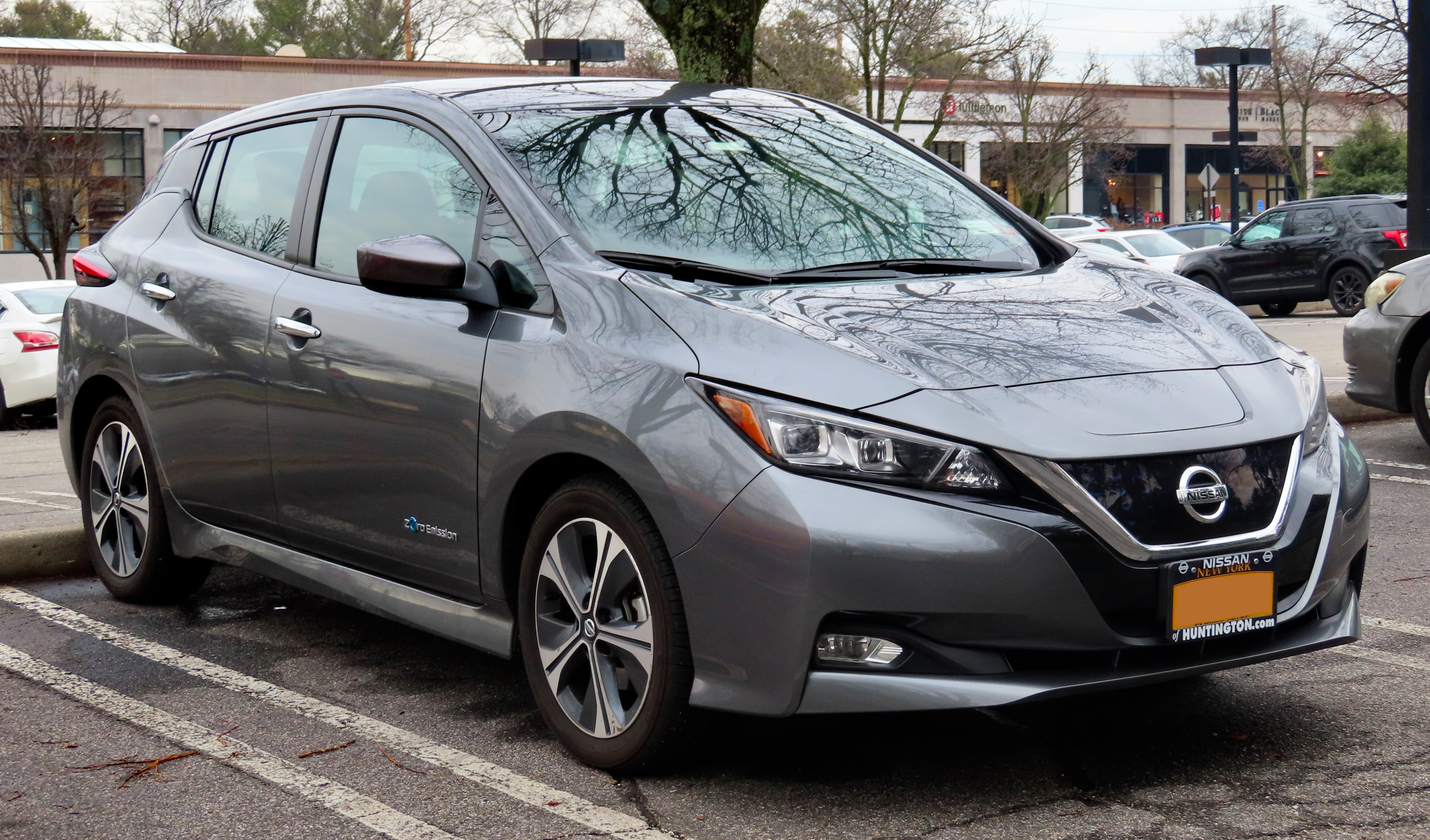
seems to me that that it isn't entirely the government that in large part it was you know, the traditional three saying, hey, how can we get an advantage in a new space that anybody would say, just very quickly, Gary that the Chevy Bolt or the Nissan Leaf for some of the early iterations of electric vehicles had wild commercial success. I mean, I think the Bolt
has come on here recently. It was interesting the best Bolt sales happened when
they after they said that they were going to cancel the Bolt, right.
So I don't know that that that those were home run, big profit generators for Nissan General Motors or some of the other small EV vehicles that were put out in the market. But go ahead to Ron. I'm sorry, no,
I was gonna. I think it's an excellent point, particularly what you
said Gary about a misreading of the consumer market. I think it's not just
government mandate. I think it's a government mandate that's in combination with the companies
themselves misreading what people prioritize in terms of what they want from their vehicles.
Tesla its success was envied by everybody, partly because of what it did technologically as a vehicle, but also partly because of what it did to its stock price. And one of the things that's really caused a lot of Detroit executives
to be kind of in a permanent funk is the fact that nobody wants to want Nobody wants to buy their stock. I mean, General Motors now is
selling for twenty eight and change. It went public thirteen years ago at thirty
three. I mean, who keeps their job when the stock does that in
thirteen years. It's crazy. But you know, they say, the voters
are never wrong and the stock market is never wrong, right, and so that the stock market has kind of made its judgment about what the future of the Detroit three is. Unless they change, I don't see them remaining viable
for the long term. I really don't because I think they'd think that because
that's what I felt too. I'm glad to hear you say that. Excuse
me, I didn't mean to interrupt you. I thought you were done.
Well, no, that's okay. But I mean they painted themselves in a
corner with trucks, and now they've spent all this money on electrics, which is people don't want and I don't really see how you get out of this.
Well, there's the infrastructure too that I mean, you know, we had this conversation before we started in on this seminar, but you know, the infrastructure isn't there. I used to live in Texas that everybody knows has
their own power grid was going down every other day, and you know, is it feasible to have you know, ninety percent of the people with ebs if the power drind doesn't work properly in the first place. Yeah, yeah,
I mean I think everybody's asking these questions. I just finished a report
for Seeking Alpha on BYD, which is a very interesting company. And Warren
Buffett had been watching this company since the early two thousands and then finally bought into it in two thousand and eight and owned about twenty percent of BYD.
Now they're selling now Berkshire Hathaway is selling some shares, and people are starting to wonder what does this mean. Have they become disenchanted with BYD. I
don't think they become disenchanted with BYD. I think they like it as much
as ever. He has his own methodology for when he feels a share has
become overvalued and it's time to take some profits off the table. But I
don't think he's disenchanted with the company. And I'm very impressed with the company.
I saw their new vehicles in Munich and then I'm now I read that they were at the Tokyo I think it's the Mobility the Japan Mobility Show, which used to be the Tokyo Motor Show, and this was a This was a very interesting event for a Chinese car maker to display their wares because that had never happened before. I mean, the Chinese have a long memory about
what happened in the last century and they have not been in Japan. They
now feel like they could go to Japan and to newer generation, and I think they're going to be successful. So the of the interesting things just quick
darn on the China automakers. That I think is just an absolute mind blowing
thing to try to wrap your brain around, is that they say that on a typical year, these companies that build these massive vessels that will transport cars around the oceans and around the globe, the typical year there will be an order of about five vessels collectively across from all car companies. The total number
of these things built as five. Last year, Chinese car companies put in
bids for one hundred and seventy new vessels. So I think that speaks to
their ambitions to take these Chinese developed electric cars and ship them out to markets across the globe. And irony of ironies, do you know how much co
two these vessels put into the atmosphere? Yeah? I mean, have you
seen any of the numbers? Take a guess how much a typical cargo carrier
today puts out in terms of pollution expressed in numbers of cars for a year.
What would you think the number would be? Thousands, thousands, fifty
million cars. In other words, one of those carriers operating for a year
puts out the same emissions as fifty million cars in a year. And part
of the reason is because they burned bunker fuel. They burned the dirtiest,
filthiest scu is hydrocarbon that could be burned in their in their engines. So
I don't know what the point is of shipping electric cars around the world those kinds of emissions. I don't get it. And so along those lines,
in light of what we're talking about now, and also Brian, what you were saying earlier about the kind of soft organic market for e evs at the moment and the profitability profitability challenges that you have for a mock e or whatever.
How big of a factor do you guys think the how big of a fire is lit under American OEMs at the prospect of we have to stay competitive with the merging technology. Do we want to hand over to China supremacy in
you know, battery, raw materials, mining, and production. Do you
think that's a legitimate concern or is that overstated at this point? Well,
I mean, I think that's a totally legit concern, but it's not even I mean, I think from what I've run Drown it sounds like you're on top of this topic very close. But China absolutely dominates the supply chain and
they back in two thousand and eight two thousand and nine, they got a huge head start on American companies in terms of pursuing the development of battery technology.
And so I think something of the magnitude of ninety percent of the refinement of the raw rare earth minerals to go into these batteries is processed in China, and they've got a massive cost advantage. And I know that there was
the partnership in Detroit in Michigan, I should say, with Ford and the CAATL. I believe it's a battery technology company out of China, and there
was some question as to whether or not that that did or didn't qualify for Inflation Reduction Act. So I think this is like a very very complicated situation
when you consider that the government on one side is enacting these policies and these massive mass programs to drive ev adoption and to drive domestic production while simultaneously dealing with the realities of the geopolitical situation. That there's probably no bigger challenge to
America right now than China, and they clearly are far and away the leaders when it comes to battery development and the rare earth refinement that goes into those batteries. So more to the ground truth that we're seeing. So, Brian,
one of the things that I know you know a lot about is dealers, And so I was looking and back in twenty twenty, approximately one hundred and fifty Cadillac dealers said give us a buyout because we don't want to sell easys, and that was about seventeen percent of their dealers. Then in twenty
twenty two, about three thousand and four dealers signed up for EV sales or to do EV sales. I think I actually I've got that wrong. Basically
thirty six percent of their dealers said they didn't want to sell evs. They
still sell vehicles, but not EV's. Isn't this a message that at you
know, whether it's at the top end of you know, Cadillac or or Ford more mainstream that the dealers are saying this is not something that they want to be part of. Yeah, great, great point. So I think
there's a couple of thoughts, one of which is and you all probably sell.
The headline on Automotive News earlier this summer that the survey that's sixty six percent of American car dealers said that they did not have an ev in stock, and forty five percent of American car dealers said they didn't want an ev in stock. So I think that's that's a challenge, right, We're never
going to you know, the Biden administration has set a target by twenty thirty two that America is going to be at sixty seven percent ev consumption. Today
we're at about six percent. So for us to have a ten elevenfold improvement,
we would certainly need to bring the dealers along for the ride to make that happen. And I think there's a lot of questions as to how why
that's going to happen. The first of which is and the case afford if
I was going to be a Ford dealer that was going to be a seller of electric vehicles. I think there was a couple of different programs, but
one of which would cost me roughly a million dollars out of pocket just to get the charging infrastructure built at my store, into the tools that were required and the training what not that goes on. And so a million dollars is
not an insignificant amount of money for a car dealer that says, my gosh, I'm only selling three or four electric vehicles a month, and now I'm being asked to invest a million dollars in infrastructure, Like, I think that's a tough sell. And then on the flip side, you know, I
think one of the other challenges is that as many of these car manufacturers have looked at Tesla and their seamless, frictionless buying process of no hegel and it's very simple, and I think, and I get it. I don't blame
them for wanting to adopt that approach, and so what they, you know, I think had visions of enacting was to say, we're going to sell these electric cars with no haggle, but then we're going to pay you all this below the line money. And then one OEM's case, it was about
seven or eight different buckets of money, was very very complicated to even understand how much profit did I didn't I make on this electric vehicle sale because the system that had been acted was so complicated. So I think those are a
couple of the big headwinds of why dealers are not more enthusiastic about doing this.
But ultimately, at the end of the day, where the rubber hits the road is when the consumer is knocking on the door saying hey, I want this for lightning. Let's go. And in my sense is when you
talk to dealers that this is not what they're seeing from their consumer firsthand.
I have to get involved in this because we've published extensively on this, and I couldn't agree more Brian. I mean, I've been asked several times,
well, is there some ulcarier motive that the dealers won't sell you these?
And I said no, the motive is that they can't get people who want them. There are other motives too, I mean, certainly with the technician
shortage now and having to invest so much in the infrastructure and service to get ready for the EVS salespeople are used to selling the ice vehicles. You know,
it's a whole learning process that they're going through a EV's and I think Brian's absolutely on point with the investments they're making. Where is the payoff on
this? I had a New York City, a major major dealer there say
to me, you know, even if people want them in New York, we can't. I mean, what are they going to do? How are
they going to charge them? Run an extension court up twenty stories? I
mean the charging and I keep saying the same thing, and I apologize, but the infrastructure just isn't there. Well, you know, one other key
point on the dealer dynamic that I think causes a challenge is that we are coming out of this amazing two or three year run where new vehicles are being sold at full stick or above. Sales consultants for the longest time have been
paid a percentage of gross, and it cocks automotive. We analyze the gross
margins on these different vehicles, and largely speaking, the electric vehicles across all brands tend to have the lowest grosses as we sit here today. So if
I'm a salesperson that's trying to feed my family and pay my mortgage and take my kids on vacation, I have my choice of selling an ice vehicle where I can maybe make a percentage gross on a four or five thousand dollars home run, or take a loss on an electric car. I think that there's
probably a certain amount of that going on as well, and so this this is a very very difficult situation for the car manufacturers because they don't have a lot of margin to play with. But it certainly doesn't help matters when the
people on the front lines would be asked to make significantly less than what they can make by steering those customers to more of a traditional vehicle. That's an
excellent point in one I've had deal with Principles talk to me about and have said to me, you know, I'm worried for my new salespeople. This
was during the crisis, because they think that it's always going to be like this. You know, they can just take orders and people are willing to
pay on extra ten thousand dollars in you know, an extra ten thousand dollars, an extra fifteen thousand dollars plus a lot of accessories, and it's just not how it works. And now with the EV's coming in. Your point's
well taken. Well, a lot of that was happening, Nancy, because
people were getting checks from the government. Let's face it. I mean,
there was a lot of people weren't working and people were just getting cash in from the government and they were being told they didn't even have to pay taxes on it. Well, that's all over, and now we're trying to figure
out how to to pay back all the money we borrowed in order to send those people those checks. And that's what goes back to what I was talking
before about that and why these these dealers who were really the savviest people in our business. Let's face it, these guys have to make a girls have
to make a peril every month. They're interested in making money. They know
what sells and doesn't sell. I've always said that while people in the working
for the OEMs are very smart, strictly speaking, they're not business people.
Their corporate executives, corporate managers, they don't really have to get a return on what it is that they do. The dealers have to get a return
on what they do. So it's very important to listen to what they say
because they have really the closest touch with the customer, the consumer, the ability to pay. I mean, these are the people who really know what's
going on. Excell one point and it brings it all full circle. Really
what we've been talking about, the pent up demand. You know, people
don't have the extra money now. You know, after coming out of the
pandemic, people weren't taking vacations. As you said, people weren't spending and
they were getting a lot of extra money. Yeah, I mean, at
the end of the day, we really do have a cyclical economy, and everybody's looking for the next recession. It will come, There's no question everybody
knows that. You know, if you're grown up and you've been through a
couple of these, you know what's happen exactly. You get ready for it.
So, so, Brian, when do you think it would be a good time for someone to buy a new vehicle? Well, that's a great
question. I tell you, if you were in the market for an electric
vehicle, I think that the used EV market is going to provide some really interesting opportunities for people. We just saw an analysis recently of vehicles that were
sold in about sixty thousand dollars eighteen months ago are going through our auctions around twenty six, twenty seven. Thou so, think about that. That's a
forty five percent residual in eighteen months, which speaks to I mean, that is scary to think about. So I think that the you know, if
I was a value shopper out in the marketplace today, a used EV might not be a bad place start. But I think the other challenge, you
know, as Damon and I were talking about earlier with that entry SUV UH track segment is just that the day supply there is very very tight, and that consumers are just very boxed in. Right now, used car values are
very high. Uh, you know, there's really tight availability on the new
car space and the cheaper prices, and so you know, the byproduct of all of this is that the American consumer has been holding onto their cars longer.
I think the average age of the new car is the oldest that it's ever been, roughly twelve years, give or take. And companies like pet
Boy and AutoZone and these part suppliers have never made more money in their lives.
Right, that's right. We actually have a I'm sorry, we have
a little bit of data on that. So new EV vehicles a year over
year are cars. Dot com research shows that demand is down ten point but
used EV demand up almost seventy four percent year over year, So that, yeah, backs up what you were just saying. So, but David,
do you have any any sense of whether you know it's it's safe as it were for people to buy used evs. I mean, you know, everybody
can you know, take their used you know, they're interested in an ice vehicle, they can take it to a cachanic mechanic can look at it and say, you know this is good, this is bad, buy it, but you know that's a great battery seems to be a mystery. Yeah,
that's a great question, because we're still in the early stages of that.
There's there's a company called Recurrent that kind of tracks long term battery health, and boy, that's going to be interesting to watch over the next five ten years just to see how all that shakes out as we get to these early evs, the first of the leaves, even the first of the second generation leaves in the early bolts. What are these things going to look like ten
to fifteen years down the road, Brian, could I just quickly ask what the tip eighteen month residual value is on an ice vehicle versus a typical eighteen month residual ONNIV. Yeah, that's a great question. So I would say
that the typical residual on a thirty six month for sure, it's roughly in the mid fifties, so to put that into context, but probably on an eighteen month vehicle, you'll probably be closer like seventy five percent of the initial value still there, where these evs are closer to forty five percent roughly speaking, so that would be all by itself, if you're really thinking about an EV purchase, that all by itself would be a deterrent to getting a EV.
Another one, I mean, along with infrastructure, like you say, Nancy and which price and everything else, it's like, oh my god, it's going to be less well this thing when I sell it totally. And
then if you look at I don't see the Tesla distribution between lease and retail, but of the non Tesla EV players, we're seeing lease penetration rates around seventy percent, while the ICE average right now is maybe seventeen percent. So
I think for two reasons, one of which is the EV text credit is simpler on a lease, and then number two is you don't have to bear that residual risk in the future. To your point, So basically, it's
either really a good time to buy used EV or really a bad time to buy used evpening. Yeah, I mean, I actually don't think it's a
horrible time to buy it. I used EV. I mean I think that
if you were to answer your question, Gary, I don't want to be the dead horse, but if you were looking for the best value in the marketplace right now, I go try to find the two year old used EV and I think you probably. I mean, the technology of these cars is
amazing and they have I have to say largely, these vehicles all look great, they drive great, they're quiet, they're fun to drive, and I think it for the value shop for this out there, that's where the game is to be won. Okay, Well, with that, our hours up
come to a close. So Brian Ficklemeier of Cox Automotive, thank you very
much for joining us. Nancy Damon Drone. It's been great. I appreciate
all of your help on the show today and so we'll be back next week.
So thanks all for watching. Auto Line After Hours is brought to you
by bridge Stone Tires, Solutions for Your Journey, and by Borg Warner.
If you like this program, I would like to learn more about the automotive industry, check out our website at Autoline dot tv, or look for us on YouTube on the Autoline channel
Request an explanation for:
9 cars
Scroll for more
9 cars featured
Request an Explanation
Heard something you'd like explained? We'll add it to this episode.
Sign in to request explanations for terms you heard.
Want to learn more?
Browse our glossary for plain-English explanations of automotive terms, jargon, and concepts.
See something that's not quite right? Our annotations are AI-generated and can sometimes miss the mark.
Click the flag icon on any annotation to suggest a correction.