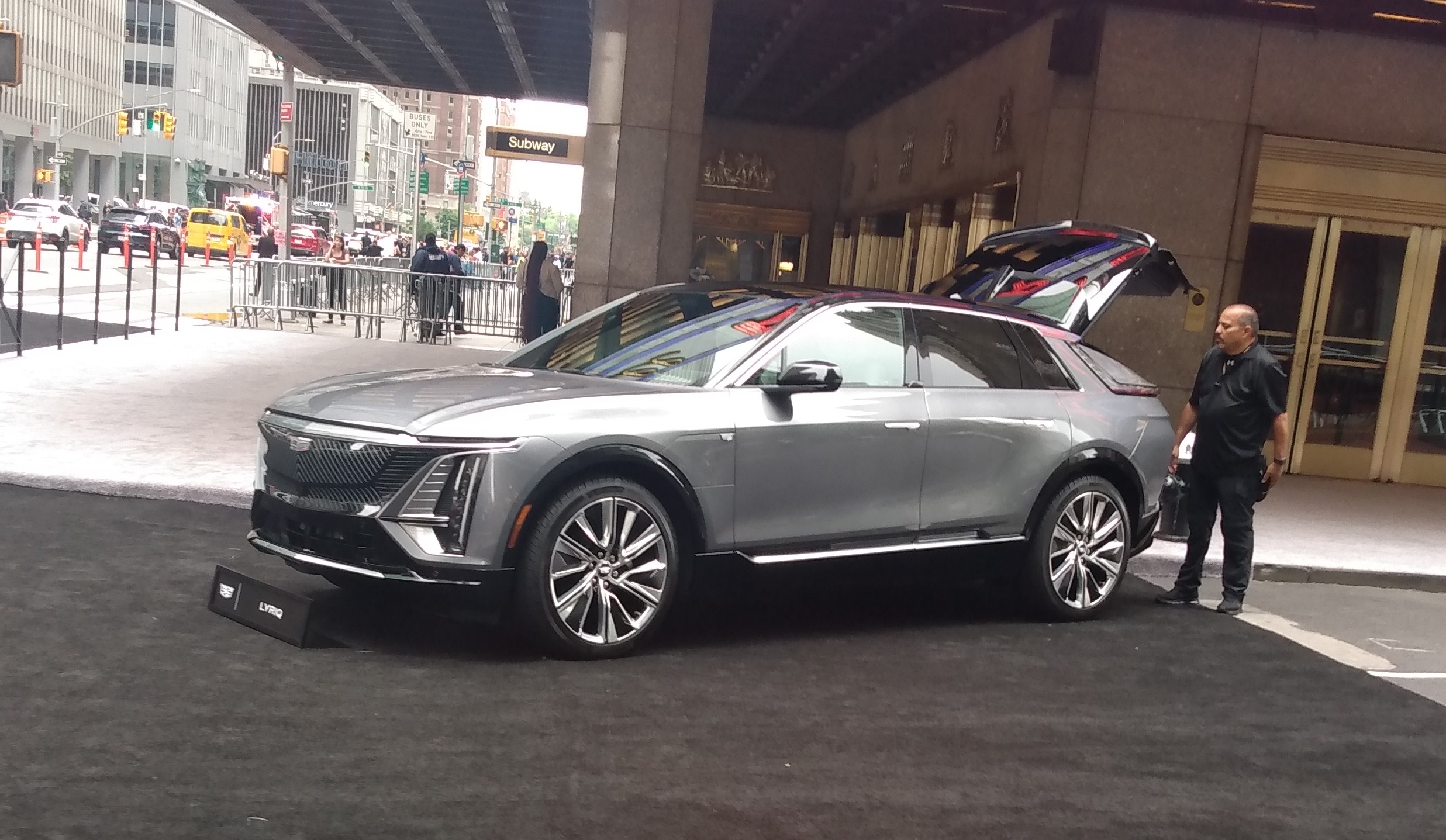
The 700th episode of Autoline After Hours dives deep into the challenges facing legacy automakers amidst a rapidly changing automotive landscape. Guests Paul Eisenstein and Jack Keibler discuss the implications of union organizing efforts, the impact of electrification on manufacturing, and the struggles of companies like Fisker and Stellantis. The conversation also touches on the future of electric vehicles, the importance of adapting to market demands, and the potential for traditional OEMs to survive the automotive apocalypse. Insights into executive changes and strategic decisions add to the episode's depth.
TOPICS: Fisker, Tesla, Corvette PANEL: Paul Eisenstein, headlight.news; Jack Keebler, Keebler Auto; Gary Vasilash, shinymetalboxes.net; John McElroy, Autoline.tv
"ask you guys this. Okay, So if we look at the Fisker Ocean, the vehicle itself, this is a list of the competitive products up against it. Chevrolet, Blazer, ev Ford, Mustang, mach E, Hondaianac five V six, Nissan Aria, Tesla model y, Volkswagen ID four."
"...'s, and the whole idea of being you know, doing a Cayenne or something like that was just anathema, you kno..."
Select text to request an explanation
Out online. After Hours is brought to you by bridge Stone Tires Solutions for
your Journey. Gerry, how are you, John, I'm doing great.
You know what show? This is Autoline after Hours. Yeah, it's also
episode seven hundred. Wow. This is the seven hundredth Autoline After Hours that
we've done. This is why we have such important people with we we today.
Yeah, we got Paul Eisenstein from Headlight News, Jack Keibler from Keebler Auto, and we got a bunch of stuff we do about in today's show.
You know, and today is another important day in history, and this could be a topic because we've talked about this on the show quite a bit.
It's not this specific anniversary, but today is the eighty third anniversary of Ford in the UAW signing their first contract. Oh yeah wow. So that
certainly has had a profound change in the industry, and I know Paul will have something to say about that. Plenty of s about that. It's a
pretty historic time period for the EUAW. But where it's going to go,
who knows. There's hints of another corruption scandal. On the downside. They
did lose the last vote they had trying to organize one of the factories.
What do you guys think are they going to organize the other plants what they did v W And so the question is will they will they be able to get hit or missed throughout the industry the one there's a couple that are being talked about, and I'm curious to hear what you think will be next.
But I think increasingly the odds are they going to go after Tasla. Oh
No, They've already got organizing efforts against Toyota and Hyundai in Alabama. I
think the lesson from the Volkswagen vote was if you don't fight it, you're going to lose. If you fight it, like Mercedes did, you can
win this thing. And I think you're going to see Toyota and Hyundai fight
it. I think it's going to be hard for the union to get the
rest of the plants. I think it'd be hard, not impossible. But
I do think think that there's so much frustration among workers at TESLA. Now
he'll fight, and he'll fight dirty. We already know that. I mean,
he doesn't play by the rules. He plays like a certain orange colored
person. Union loses it Hunda and Toyota in Alabama. That it's it's going
to set the stage for it. That's why organizing efforts. But that's why
I'm not sure they're going to go Alabama because Alabama by its very nature.
Oh, they've already they've already initiated I know, organizing efforts. They have
not done anything at TESLA. No, I get that. Well, they
actually they're doing some stuff. There's some stuff at TESLA going on, but
Alabama is a tough not to correct no matter what. Yeah, well,
what do you think, Gary, I think they're going to have more trouble with other companies in terms of organizing them. I think that while there seems
to be a shift toward more support for unions, and I think we're going to see more and more of that, I think that they need to articulate a message that goes beyond you know, we're gonna we're going to get you a twenty five percent bump in your salary. I mean, god knows,
I would have liked one of those during my career, to get one of those. But you know, I think that, especially as we move into
this whole electrification flux, of what ends up happening to plants, what ends up happening to factories and you're hearing more executives. I mean, after the
going back and forward the agreement was signed. You know, Farley said,
you know, we're gonna have to rethink our footprint. We're gonna have to
rethink of where we do things. And you know, if you're a UAW
worker and you hear that, that's got to set off a bell. Well,
listen, Stilantis also talking about moving a lot of it's uh, it's manufacturing footprint overseas. In fact, they they're making they're currently making agreements with
some of the Chinese manufacturers Leap And of course there was news that leaked out today that suggested they're going to make cuts here in the US at CTC in particular, but that that particularly seems to be as much driven by deals that Silantis has in Europe, which are a little bit harder to go back on.
Explain that, well, they you know, they get strong support from the French government and from the Italian government, and they look at what the requirements for those deals are. An easiest place to shift work because they want
to reduce costs is to cut the jobs here. So I think you're going
to see some substantial cuts so not necessarily in the UAW organized. Isn't that
exactly what Tavaris was talking about recently? He was talking about moving again the
manufacturing footprint to other countries where the costs are lower. Well, look,
it's going to be hard with UAW you'r Lockdow for the next four years with the contract you got. In fact, you're supposed to if you're Stillantis,
reopen Belvetere and start building mid sized trucks there. But the whole thing with
Stilantis is Tavaris is on a mission right now to cut costs thirty percent across the board, and it's going to be a bloodbath. And it's like you
say, Paul, it's easier to get rid of American employees than in Europe.
It's far more difficult to get rid of somebody in Europe. And we're
talking white collar, not blue. Do you think any of those those very
high level executive cuts recently had anything to do with that. I think those
executives were probably invited to leave the country. Are the company excuse me,
the country? Yeah, actually I've heard about leaving them. That's another story.
No, look at I mean they're losing sales in the US market.
They're losing market share, their profitability is dropped. Remember, the Chrysler Group
within Stillants is by far the most profitable part of the company. It accounts
for like forty percent of the sales but sixty percent of the profits. And
it's the golden goose. And Tavarus, you know, wants to get sales
back up again. I think they broomed out these people that we've seen leave
the company, or suggested their services were no longer needed, or however they put it to them. But I'm hearing from suppliers that Stilantis is telling them
cut your cost thirty percent, or we're going to what Tavarus calls best cost countries. Okay, it's low cost country. But if this is where they're
making their profits. The people that have left, many of them, were
instrumental in them being able to make those profits, why would you have them leave? It doesn't make any sense to me. No. I look,
I totally agree. But you know, he's watched sales and profitability drop for
a year and a half now and he's decided I got to take action.
And in fact, he blamed himself. He said it was arrogance on his
own part that he let things get so bad, should have acted earlier.
Yeah, but he's staying and there gone, Yeah, that's right. That's
often the case when the CEO says I screwed up, and if he makes all these cuts and pulls it off, he's going to get a whopping big bonus for having done so. I think the environment there is also pretty tough.
My understanding was that Caniscus, of course formally you know, formally running several divisions including Dodge, he had planned to leave over a year ago, and he stayed on to help through some of the transition, and that it wasn't necessarily that in his case he was pushed out. He may have not
been encouraged to continue extending his contract. But my understanding is he maybe he
shows a string of something else is going on Jeep. You saw him demoted
and then leave and they had why am I join a blank in the one guy he left after two months, the new sales chief. That was a
very strong message that A it's a tough place to work and be you better get results very quickly. Now it happens in other companies though, Oh yes,
yeah, absolutely, But I think you're going to see Auburn Hills essentially gut it. Well, Paul, you guys reported that they were going to
perhaps sell the technology center in Auburn Hills, the office complex in Auburn Hills, the massive what was it like, the second biggest to the Pentagon or something in the square. Here's the problem if you were cool when they built
it, Chrysler. Chrysler was in so much trouble. The design was made
so that it could be converted to a shopping mall. Unfortunately, what happens
now there are no shopping malls right, So I don't know what they would turn it into. I can't imagine leaving it. Yeah, I don't know
if the whole place would go, but certainly they don't need that big tower.
The tower is all off of space. If I'm right, that they're
going to announce another big job cut, probably next month, and that's where we're going to put that. So you mean salaried employees work in that tower.
You have to remember too that there are a couple of other trends that are affecting things in general. We're seeing some consolidation in certain areas in white
collar. Yeah, there's growth in some of the technology areas. They're trying
to find the best and brightest blue them away from Silicon Valley to work in autonomous software. Folks software, right, But you're consolidating in other portions,
some because you don't need those people to do mechanical stuff as much as you used to. Some because with AI and other technologies you're getting more efficient.
And then you have the work at home situation. I mean, GM the
great example. Yeah, they've moved some people from the rent send down or
out either the proving grounds in Milford or the tech center. But the reality
is they're downsizing from what wants. Filled up a good portion of the rent
send to three floors in the new Hudson's low rise. Three floors that's all
that will be left out of the Rensen people are making it sound like, oh, it's great, they're just going to a new or higher tech building what few were left. So getting back to the stillantis situation. So so
I want to ask you guys, remember when it was Daimler Chrysler and you'd go to the THETC and you'd see that the guys who were engineering and designing vehicles were just sort of like looking around because they knew that the Germans were the ones that were doing the greatest amount of work in terms of they had the assignments. I mean, not that they're necessarily more productive, just that
they got the assignments. Is it the same situation now with Stillantis that the
guys who are you know, lifelong Dodge people, lifelong Jeep people, RAM people being basically said, eh, thanks guys. But it depends on the
product. So if you're on Stella Large, which is their large platform for
ev multi multiwagon, and if you're on Stella frame, you're good. You're
safe because that's what the full size pickups, full size SUVs and the large G products are all going to be built on those. If you're not on
stell a large Stella frame, you better dust off your resume and see where you can get a job right now. Yeah, Well, remember in the
old days, how did you pronounce the name of the company after they merged Daimler, The crystal was silent. So moving away from that. So here's
part of a statement that came out earlier this week. Fisker has made incredible
progress since our founding, bringing the Ocean suv to market twice as fast as expected in the auto industry and making good on our promises to deliver the most sustainable vehicle in the world. Now that this is from a press release from
Fisker, and that quote comes from a Fisker spokesperson, so they don't even give a name to the person who said that. Okay, we are proud
of our achievements, and we have put thousands of Fisker Ocean SUVs and customers hands in both North America and Europe. But like other companies in the electric
vehicle industry, we have faced various market and macro economic headwinds that have impacted our ability to operate efficiently. After evaluating all our options for our business,
we determined that proceeding with a sale of our assets under Chapter eleven is the most viable path forward for the company. How eloquent that was, That's a
lot of verbiage that says we've done fantastic, We're going out of bus.
So what's your take on that, Jack? I was never a Fisker fan.
I mean I always thought the company was a little too sort of you know, styling and design focused, and didn't think that they were you know, that there was an underlying you know, uh, integrity in regard to the engineering of the company that is that aside. I mean, for me,
it's always a little sad when one of these companies goes out of business because there there was an awful lot of hope there. And uh, I
know there are still some people that are debating whether a cheap version of that of one of their vehicles might not be a goodbye. Uh. Personally,
I would be very concerned about buying one of those vehicles. And then,
particularly with software updates and things like that the company normally does over time, you're kind of out there on the end of a plank. Oh, what
was the It was one of the harshest reviews I've ever seen, except for what VinFast got. Marcus Brownlee, You're probably thinking reports spreaded them. I
mean, there was blood dripping out of this review. Uh. It was
basically that the that the Fisker Ocean was undrivable. And that's not as harsh
as they as some of it was. I think I think we also have
to sort of appreciate that we're at an interesting point in the auto business where you know, these vehicle manufacturers are making transitions to these electric vehicles, which are you know, software defined vehicles, and there there is a significant amount of difference and also complication in these new vehicles that they're building. I frankly,
I'm super I'm super impressed that you actually get something out on the road.
But I mean, let's not just pick on Vinfest and a few of these others. I mean, there have been some pretty you know, serious
car manufacturers that have had some software issues that have really crippled their their launches.
Well I wasn't going to name that one, but there you go.
But Jack, this is this is an entire company. I mean, this
is this is you know, there were hundreds thousands of people who worked for this company who are are no longer working. And that's what happens when a
merger happens. Though. But and that's that's that's when a merger is efficient.
You know, you peel people off that you don't need. So that's
I don't I don't want to sound cold blooded when I say that, but that is what a merger does the way, and if you don't do it, then the merger is a failure. Before you get into the question,
remember one of the things that Tavares says when he was when he was here just what a week ago, he said that the synergies that they got out of the Stillantis merger was about eight billion dollars, or double what was initially seen as a pie in the sky four billion dollars synergy target when they first announced the deal. So so I don't to ask you Paul's is that.
Okay, if we look at we have Fisker, we had Lordstown Motors, we had e l Ms, we had Arrival, Faraday Future is still in existence, so we can't working corpse but okay. But the thing is is
that, Okay, is this indicative of startups or are these exceptions? And
there can be companies that can prosper that our startup company. Now, we
certainly see Tesla making right. We'll see where it goes. It's Vian has
a lot of things going for it. Lucid could maybe still there are some
things that they did horribly wrong. Some things, I mean, they turned
out a marvelous product. It was the wrong product for the launch. But
they they turn out some amazings. Agree with all that, and we may
see a couple more. Certainly, the Chinese show with government's help, you
can launch a lot of EV manufacturers. I almost wish we had on the
phone somebody from uh, you know, covers the venture capital market, because if I remember correctly, typically a VC firm that is that Folks is on risk capital. Uh, they'll expect to get no more than about forty percent
of the companies that they put money behind. That sounds high. Yeah,
that sounds high. I'm saying a high twenty percent is more common. Ok.
Yeah. So if you look at it that way, if you look
at it as automotive equivalent, you know, the automotive side of VC, the fact that we're only going to have a couple out of all these startups probably is you go, yeah, okay, that makes sense. Well,
isn't that exactly what's going on in China? I mean, only the strong
survives. So the byds of the world, no even the week survive because
they're there to provide jobs and if their state owned, but they're money to stay in business. They're cutting a lot. I mean I talked with with
Michael Dunn, who you of course have had on the show multiple times, and Dunn told me about a year ago, there were something like two hundred companies applying for licenses. They've done research and development, and only a handful
of those are going to get truck that got top proved. Right, But
in the meantime, there's what one hundred and fifty EV makers in China.
There's way too many, and they won't close down because they represent jobs, which is why they're pushing for exports so badly. They went from what zero
exports in twenty twenty to five million exports, almost all electric. So is
that the conversation that Biden's having with his Chinese counterparts at this point in time, where he's saying, you don't don't export your problems. You know,
you can a certain number of these carmakers will survive and that'll be fine, but you can't have one hundred and fifty out there, right. See.
But I wonder about so so John, Okay, we don't have the Chinese products in here now yet we have you know, I have a few well okay, basically a rounding error. But Fisker fails. And it had it
had money. It had lots of money, right, it had you know,
I think it had a beautiful design of the of the vehicle exterior as much as you can do. But it it tanks. Yeah. No,
here, here's building it. Here's my whole lesson from the ev bubble.
Number one, SPACs are really dangerous. Yes, it gives such cocaine.
It's like cocaine. I love that check. It's like cocaine. They get
a whole bunch of it and they're real high on everything. And whereas if
you do a normal IPO, which remember Rivian went through an IPO, it didn't rational heads and so it takes a lot more effort, a lot more paperwork. You got to prove yourself a lot more along the way and everything.
That's why there's that IPO process you've got to go through. All the
SPAC is just instant cocaine. Found my man, I'm snorting it now.
And so number one SPACs real problem. Number two is all of these startups
started with one product and then got crazy vision of saying, we're going to build all these plants. We've got all these product line I mean Fiskers spent
all those time designing future products before he had even built one of them.
So the other lesson in all this is find one product, maybe with one platform with a couple of top hats, and build that and sell that.
Get cash coming in. Start building it and selling it. You got to
get to at least two hundred thousand units a year off one platform before you can make money. And I only say that that's what it took Tesla.
Once they hit two hundred thousand a year of the Model three boom, they were often I agree. I agree strongly with that. And Tesla is a
good example of I mean there initially they built that roadster and then they built the Model Less. And the Model Less was sort of, let's call it,
it was in the game in terms of the volumes and the amount that we're asking for it and the profit margins and things. But even Elon has
has admitted that it was sort of outside the envelope in regard to, you know, volume production. You don't want to do a Model Less, which
is interesting relative to lucid Air. They build a beautiful car, it's,
you know, it's the Bentley of electric vehicles, or it's it's the loocient Air of electric vehicles. But they've got to get some volume to really survive,
just to finish. The One thing about Fisker though, is I mean
he says they're going to sell their assets. I mean, they have no
assets to sell. To your point, everything was made done by suppliers he
has no hard assets. They have a couple of computers. Well yeah,
wait, wait, wait, just let me finish this. Fisker doesn't know
how to run a company. This is the second company he's with. It's
actually the third. Remember he started all they can make my point even more,
started a small company which was going to basically take a can over, peel off the skin, oh yeah, vehicle, and put new ones on a beautiful design. But of course it went off. It never happened.
So when you look, I mean he put his wife in charge of finance at the company. She has no financial training whatsoever. I think her financial
expertise is she managed some money for a wealthy family or something like that.
It was nuts, It was crazy. And so you know, you mentioned
Consumer Reports vilifying them for the ocean. Consumer Reports was and this was the
most damning thing in the article that I thought came out of what Consumer Reports said. They bought the car like they do. They don't, They're not
like us. They don't get loan stuff from the autumn Acer. They don't
go for a test drive at a dealership. They buy it. They said
months later Fisker had never cashed their check. I mean, they had no
idea of where their expenses were, where their cash flow was, nothing like that. So this is what I mean of this is a guy who does
not know how to run a car company. All right, So let me
ask you guys this. Okay, So if we look at the Fisker Ocean,
the vehicle itself, this is a list of the competitive products up against it. Chevrolet, Blazer, ev Ford, Mustang, mach E, Hondaianac
five V six, Nissan Aria, Tesla model y, Volkswagen ID four.
What do these have in common? They're all traditional OEMs. So my question
is, I they're on the list, but I left them off. I
didn't say so, but I mean, but they're all traditional. So does
this mean that if you're some guy who's sitting somewhere in Kansas City or Sacramento, that you're thinking, you know, I can start a car company, yest un company? Or is it like I'm screwed because of these guys.
I'd like to get into a couple of the things that were said the other day. You were there. You were there at the h the Car Wars
event that that John Murphy did for Bank of America, and one of the things that was critical that He pointed out that Tesla pulled, Lucid and Rivian have done, but they haven't been able to take full advantage of is coming up with entirely different approach as much from the basic platform, but also from the electronics you know, going to well you're seeing stillantis try to do this with a so called still a brain. So the electronics systems are completely different
and that contributes to a whole bunch of advantages. Gives you more control over
the vehicle, it reduces your costs and so on. It increases your energy
efficiency. So the potential is there to leap frog some of the existing manufacturers.
But the bottom line is it's still awfully expensive business. So even if
you're good, it's only a few like Tesla that got in early enough and aggressively enough that they were able to pull it along. Well. The other
thing was Elon can pick up the phone and go I need another two billion dollars, got it. Nobody else can do that. Nobody else can do
that, and he did it at a time when they were the only game in town in terms of evs. You know of evs that people literally would
stand in line to want to buy, So you know, the easy days of easy money. You're gone. You know, spack looked great a couple
of years ago, like I said, now it looks like a disaster.
But the key is build a product and start making and selling it. Don't
talk about all this other future stuff. Concentrate on one thing to get cash
flow going. So would you say, don't talk about future stuff, Johnny,
Are you talking about things like autonomy? Don't talk about No, No,
I'm not talking about that. You know, Rivian has already shown its
next generation vehicles. In a next generation after that, you can't even make
the ones they're making right now in enough volume to make profit, you know, saying with LUSA, they're talking about here's all where our next stuff is.
That's that's you know, smoking mirrors for shareholders. Keep the price of
the shares up, but it diverts so many company resources away from what you're doing right now. Build what you got right now, get cash coming in
the door. That's the secret to grow in your company. Except John,
you still have to be careful. Murphy the other day said something very interesting.
He has a buy recommendation on it on Tesla. Yeah, and some
people starting to say maybe not. But one of the things. He said
that Tesla hasn't done. There's enough focus on future product. You know.
He says that he's had conversations with the lawn who has said they've let the existing product get too old and they haven't introduced enough. You know, it's
been on again, off again, on again, off again with what we in the media call the model to the smaller right, So Elwan has made some mistakes. Now maybe they're more established so they can do that. But
one of the weaknesses that Tesla has right now said products are old. You
talk to a lot of people. They're saying, I'm bored. But it's
easy to restyle a top had it's easy, but they have that they haven't done it, and that's probably Elon's call not to do it. I know
there's going to be people in the audience say, oh, there's been a refresh on the three right. Guess what, who can tell? It's invisible
public. To the Tesla fans, they can spot it a mile away.
But to the general public, it's just the same old, same old, Right. They need fresher styling and new products. They need more products.
Well, okay, so Paul, you're saying earlier and I think one of the reasons why Murphy has a buy So Murphy's with Bank of America Security, so he's an institutional investor. So people who don't know and the very Unphy
is and so one of the arguments I think he was making was that the traditional carmakers need to take a tremendous amount of cost out of their vehicles, and their vehicle's cost is predicated right now on the existing architectures in the way they put these things together. And John's talked about like the unboxed process.
Isn't it eleven or twelve thousand dollars maybe more than that that that Tesla currently enjoys. Murphy vehicle seventeen seventeen seven seven thousand, I thought it was seventeen.
I think seventeen dollars. I was shocked at that. I had to
go back and check my notes. I wrote down seven thousand. We'll go
back and check out right, I have it right here. So I don't
know whether people will find it or not. But okay, with seventeen thousand
in component costs, So so they've they've got, you know, that is going for for them the advantage in terms of you know, they already do things differently, whether it's the way they architect there, you know, the electronics within their vehicle, or you know, he talked and he but he also he also talked about and I think this to be fair of like if you're in you know, the Chevy or the Ford or whatever. I mean,
they have very nice interiors. And he was basically saying, you know,
you look at the interiors of some Tesla's and they're fairly spartan. Right.
They've been criticized for sure, right, And and so he's saying that, you know, you've got to you've got to take that into account.
But the question then becomes, are the traditionals able to make this mind shift that will be necessary for them too? You're shaking your edge on pods on
here. Yes, not with you, No, no way that the legacies
are in deep, deep trouble. And they all know this, they all
know this. This I got to cut thirty. Even Toyota is struggling,
and I really respect that company. I think they do a good job.
And I know they're working on a lot of the giga tech castings, casting type text. They're even working on unboxed assembled right, But uh, even
they're struggling, and you can see how cautious they're being. I mean that's
been criticized. You know, everyone's like, well, where you know,
where are where's the multitude of electric vehicles that should be coming from the company that you know brought us the hybrid? And yet you know Akio's you know,
pulled back on the reins and said, hey, until we're sure we can make a business case out of this, we're not going to pull it off. I think that's a good thing. Let me let me let me
bring up one more thing that Murphy said, otherwise your for motor company.
Murphy made a point of saying Tesla needs to learn some things from the legacy manufacturers, including more top hats and our fun vice versa, and that the legacy manufacturers need to learn a lot from Tesla. So it's not like either
one of them. Why Tesla's got it easy restyling car. They got a
hell of a great product and they need to get luxury down. Tesla has
more trouble than you realize. Guess what. The legacies have a mountain to
climb to catch out the testa. Look, Garry, you keep on looking
up that number. We're going to get back to that in just a minute.
But we're also going to take a quick commercial break right now and give a shout out to Bridgestone, the company that makes the show possible. Keeping
your heart racing in and out of the gym, that's what really matters.
Bridge don't pretends to sport as tires with the fifty thousand mile limited warranty.
I was shocked. Okay, we're back. We're still talking. During the
commercial break, we got so much to say to ourselves. Have you found
that number yet? No, I'm still looking Okay, but so let's turn
to another jack. Let me throw this to you. Lucid this week announced
that it has hit five miles per kilowatt hour efficiency with its cars. And
I'm not going to say that's a game changer, but that's a big step forward for electrics. It means you're spending less on batteries because whatever you can
put in a smaller back, a smaller battery into the same vehicle and get range similar to somebody with a much more expensive battery. Fastest way to cut
costs in yeah, I mean the battery is forty or fifty percent of the value in many of these sort of let's call them, for lack of a better word, mainstream style. How do you think they got there? Well,
you know he wasn't he originally the engineer at Tesla? Yeah, model
less Yeah yeah, which which has sort of been acknowledged, is a pretty pretty nice car. I mean, not a volume car, but a really
good car that sort of established. Uh, you know Tesla's bonafides. Have
you been to their have not? So it is when you look at the
size you have been I don't know, Garrett, I'm assuming you have.
You look at the technology. The motors are tiny, the battery pack you're
talking about Lucid Yeah, sorry, yeah, Lucid. The efficiency of their
battery pack and so on. Uh, it's not cheap though, No,
it's not cheap, and that that's going to be interesting to see. I
mean, they could bring the costs down, but their technology is basically what what their CEO and chief technical officer wanted to do when he was a Tesla.
No, that's that's an interesting opinion. That's an interesting point, Paul,
because it's it's almost like, you know, if the engineering side becomes too top heavy in terms of control over the company, the vehicle becomes an engineering focused vehicle. In the case of the Fisk Grotian, it was a
design focused company. It was too much design and not necessarily enough engineering.
I mean, one of the things I learned when I worked for General Motors was that you needed a really nice blend of power levels from all different parts of the company, including including the being counters, which we've all give given a lot of trouble to over the years, but they're the ones that keep an eye on are we making money? And you know, if we're going
to restyle this thing, let's make sure that it looks like it's been restyled.
And it's not just us, you know, clapping each other on the back and feeling good about it. So, hey, you guys are right
seventeen thousand dollars cost advantage. I was shocked at that number. That is,
I thought seven thousand was a lot. Seventeen you know, I have
to say that I'm actually quite worried about the money alone. Just got I
mean, a lawn right now is fifty six billion dollar pay packers, Well that was originally Yeah, it's only forty six billion, that's nothing, go blow through that next. No, I'm just doing this so that we're accurate
on the show Pocket Money Right. Anyway, the bottom line is he go
and his behavior are increasingly out of control. And what concerns me. I
know people that have quit there who were making insane amounts of money and could have stuck around. We talked about that before. You know, I know
somebody who used to be a close friend I lost touch when he went over.
He wound up another car company. I have to be vague about him,
but when I asked why he left, his first answer was ethics.
And then when I said, but Alan wants to save the world. And
let me see if I can say this in a way that we won't get in trouble, I said, yeah, but he wants to save the world.
And my friend went, Elan wants to save the world. It's the
people he don't give about or let a word about. And Elan has a
lot of the Silicon Valley disease, amplified by the fact that he is the richest man in the world and he gets everything he wants and move fast and break things and that part and that recently as a cyber truck demonstrates logic.
And you know, they're not all howm rice, I'm not necessarily going to be listened to because he's a lawn musk and he's going to do what he wants to do. Sometimes it works, but the danger and we see that.
Hey, Howard Hughes was an example. There are plenty of them.
Henry for Henry was really long though, like long fingernails. I'm wondering about
a loon, all right, So so let me ask you this. So,
John, you've mentioned her on the show before. Kathy Wood of Arc
Innovation Investor, she came out and said she thinks that by twenty twenty nine, the price of Tesla's stock will be twenty six hundred bucks twenty six okay, And she predicts that the robotaxi business will account for sixty three percent of Tesla's revenue and eighty percent eighty six percent of its bit of by twenty nine.
Is there a robotaxi business? She thinks it's gonna happen. She estimates
what nine? She estimates only twenty six percent of its revenue and ten percent
of its BIDDA will come from electric vehicles by twenty twenty nine, ELN's clearly moving away. What about the robots? Well, stationary storage business is going
to be good for ten percent revenue, three percent BIDA insurance one percent of both revenue and bid. Didn't Nelon say that the optimist crime was going to
be worth more than the Yeah, well, look, he always over promises and underdelivers, but he does deliver ultimately, he does get around to it even though it's not on it. But he doesn't hit home runs every time
at bat. No he doesn't, but he you know, we were talking
about what a venture capitalists look for, right, one out of ten.
If he it's one out of ten, he's gold and the next gold.
And this is probably I think why Murphy or Bank of America has got to buy on Tesla is they're getting very close to FSD approval in China, and as you guys know, they charge eight thousand bucks for anybody who wants it full boat for the life of the car. And I think they got a
monthly lease eighty bucks, eighty five bucks. Anyway, you look at what
they got in China, they start selling FSD right there, bo, that's going to be a massive cash and flow to the company. But ASICs Department
here is starting to look very closely at potential criminal action for the way that they have hawked technology that has it worked, and there's no sign it will ever work. Like what full self driving and an autopilot. Well, full
self driving keeps making more and more improvements all the time. And I've talked
to people killing how many people know? How many is it saving? That's
the one thing we don't talk I will have light ar. No, it
does not will, and I'm not so sure that it will. It's one
of the biggest purchasers of light ar from one of the biggest bigger light ar companies, Tesla. Yes, they're buying lighter are okay, but they're buying
a lot of them. They're buying a lot of The unit hates slider until
he loves lighter. Well, that'll be interesting. Are they buying test units
or are they buying production units? Are they buying lighter to test their system
against versusing it into the car. They're buying lots. But what Sean,
what Seohn just said off camera is they're buying lighter to test it against their system. So I could see where they would use light ar to go.
Okay, here's what we got a tweak on our camera based system. I've
seen some stuff at CES two of using generative AI to clean up quote unquote clean up video and radar signals that dramatically improves their result. So I'm not
convinced that lighter is going to be necessary right now. FSD and Autopilot do
not use it. All I'm telling you is if he gets approval to use
the stuff in China, you're going to see a massive cash infusion to the company. And that's why I'm guessing somebody like John Murphy at Bank of America's
gone, Damn, this thing goes through. The stock's going to pop.
How did Elon get around the defense concerns in China? The Chinese did not
want American companies mapping. So Tesla's doing what General Motors is doing is going
to General Motors with because they want to sell Blue crewse and or not Blue Cruise or Super Crews in China. You got to go with a Chinese partner.
Keep all the data in China. You cannot beam it back to the
United States. And that's how they're they're going to get around that. Do
you keep all a profit in China too? No, you can repatriate profits.
I don't know how easy it is to do. You haven't done a
very good job of doing that. Well, they're not making any money there.
Well, we were. At one point General Motors was making a lot
of money there. General Motors lost money in China and the funder. That's
how much things have changed. So this is what we should talk about.
John Murphy also came out and his advice to the Detroit three was get out of China as a p What do you think, Paul, that's a good Ivory Tower recommendation. I don't know if it makes much sense in the real
world because eventually it's just seeding more and more of the market. GM is
a great example of a company that's gone from the world powerhouse to how many how many markets? Is it now away from regional? Do you just become
a small regional and you wind up facing all the problems in cost structure?
Yeah? Gary, what do you think get out of China? A sap?
Well? His his his His bigger point was I think we got to
put it into some context. He was saying, Okay, you all need
a lot of money, right, and China is causing you not to make a lot of money, right. So if you leave there and what you
need to do is focus on what you make a lot of money at and he said, for the traditional OEMs here in Detroit pickup trucks in large SUVs.
And this is what you need to be doing. The thing that I
wonder about if you leave China and if you focus on those two things, what is the likelihood that your personnel will be focused on pickup trucks in large SUVs while the rest of the world is doing mid size SUVs, small SUVs, electric and so forth. Right, So you get so how do you
get rewarded. You're rewarded by selling a lot of stuff, right if you're
the chief engineer on the F one fifty. Some way to fly in between
those two things, though, because I mean, at one point in time, when General Motors stopped making money in Europe, they did the hard thing and got out. And the same thing with Russia when they were Russia they'd
stopped making money, they got out. In fact, they got out ahead
of a lot of other people. So it's kind of like they know how
to get out of town. But the question is, well, I know
this time, but Jack, but when you were involved in product development at General Motors, I mean, did you see that the people that had products that were selling a lot were given more latitude definitely than those who were a full size truck. I mean full sized truck at General Motors was the big
horse that pulled the wagon. I mean there were a lot of little ponies
pulling the wagon, but that was the big horse. And so yeah,
if you were if you were an engineer at General Motors, I mean you wanted to be on that team. So long term, is there really a
future for a General Motors being a full size or large suv and pickup company in only half the market. I think it's a crutch right now, and
it's a good one. I mean, they make a lot of money on
them, as you know, but I think long term they have to get out of that. And I think maybe GM more than the other domestics or
not necessarily Stilantis domestic, but they are moving towards an electrified future. And
I mean they're spending the money, they're developing the product, they're putting product out that's you know, software defined electrified products. So they're trying to move
away from it. But you know what, the consumers are kind of making
that difficult right now. Well, here's the issue. You know, it
makes sense to put all your resources where you make money and get out of markets where you don't make money. And GM tried everything in Europe and it
didn't work all day. Tavares took over open and turned it around in a
year. Right, But so here's the issue. If all you're going to
do is rely on pickups and full size SUVs for the book of your profits and they make a lot of money, you know what's at seventeen thousand per boy, that's a lot of risk. That's a lot of eggs in one
basket. What if in American public wipes up one day and goes now,
I don't want to pick up anymore gasoline prices go up like they did.
Yeah, I mean, so you've got to have a balanced portfoliout right, I think your long term stability absolutely. But but but you know you mentioning
Toyota. I mean, Toyota is the company that's basically saying we're going to
have a balanced portfolio ice, hybrids, evs, now cars, cars, trucks, SUVs. You know, we're gonna we're going to cover the waterfront.
So I mean, so is that what they should be doing or should they be? I think button whoever's out there trying to play in this marketplace
right now should be doing something much more similar to what Toyota is doing than virtually any other man, which which so called Detroit manufacturers doing that. I
think, uh, they're not Detroit based, No, no, no, but well, I think right now is in the midst, is in the midst of becoming Stilantis Detroit a very different thing. You're going to see probably
Peugeot's and Citrouin's rebadge and the chryst of the brand and so on. I'd
like to see a lot more traction on the electrification. They're doing a good
job with some things like the Ram plug in hybrid is an interesting vehicle, but they didn't need to do more of that. Well, I agree,
but not just talk about it. Do more of it, but get it
to your point about Toyota. I did a story. I had some time
with a bunch of the folks in New York on the Jeep Wagoneers debut.
Afterwards, I spent a lot of time with Filosa, the new jeep head and the most important story I came away with wasn't the Wagoneers debut. It's
the fact that Jeep alone is going to have six different powertrain technologies that they'll use going forward. You're going to have ice, mild hybrid, hybrid,
plug in hybrid, they're talking a good game extender and all electric. Now
if they do that, I mean and Stilantis is actually ahead when it comes to range extend or technology, which could be the key to electrifying pickups and getting people to actually buy them. Nissan also has a nice foothold in range
extent or technology and moz is working on there, which the leader in the world is Li Auto in China, Is that right? Yeah? And their
second only to b YD in the Chinese market in nev's you know, new energy vehicles and you're talking range extend are not plugging high erect which a lot of people don't know. Two different right, No, I mean, so,
I mean the Chinese are going to be big players in this as well.
They're big players and everything. In fact, you know, we were
discussing this last week, but uh g Lee and byd was it b y?
Yeah, b YD just announced the highest efficiency ice engines in the world forty six per thermodynamic efficiency, so that that beats Toyota, that beats Hyundai, and so they're working on everything. So is everything the way to go?
Or is or or in a situation where we know that there are limited resources, we know that the number of engineers isn't what it necessarily ought to be. How do you deal with a problem like that. Well, I
mean, in the case of General Motors, they have shrunk down their portfolio.
They have moved away from ice, They've moved away from particularly ice cars.
They still do trucks and they do them well. But again, the
investment, they have a very heavy investment in electrification. Toyota is the one
that's got a lot of chips on the table. I mean, if you
look at terms of plug in hybrid hybrid ice hydrogen powered vehicles, they've got a lot of bets. They're placing a lot of bets. But you know
what, they also have the piggybag to do that. Well. Here's here's
something curious. Have you guys noticed how much criticism Toyota, and particularly Ochayo
Toyota is coming in for There was pressure to not renew him as as the chair name coming from those pesky American shareholders. It's not coming from the Japanese
And it was a problem with the emissions scandal that was going on other things, but you know there were some crash issues too. Going back to platforms
that can accommodate different kinds of power flexibility is we're in a transition and right now that strategy makes a lot of sense because you only have so much capital that you can deploy, and so you're going to invest in a platform and you don't know which way the market's going to go. Two years ago we
thought EV's were going to take off. It's not happening. Guess what,
hybrids are red hot right now, and plug in hybrids are not doing bad either. Plug In hybrids could be could be the next thing to catch on
or range extended one. So to do a platform right now that can take
all these power trains makes all the sense in the world. But I think
it's you know, the issue with that, though, John, is you end up with what the what the engineers called scarts star tissue exactly right, And that's what I was just about to get to. I think it's a
strategy that will work for the next three to four years, and then you're going to want dedicated play to optimize the efficiency. Well, you do have
the FEDS and I was frankly surprised and pleased to see the Biden administration actually loosen up the emission standards and allow for up to what fifteen percent plug in hybrids in the thirty two standards to twenty thirty two standards. It gave me
all we've seen the government back off on emissions. Certainly you're going to have
to back off in the face of what the consumers are doing. You've got
the you know what, Murphy said this the other day, and I hear it also. There is such a wrongheaded story going out there. I do
a lot of broadcasts and I do you know, I get people saying, well, EV sales are down, and it's like, no, EV sales growth is down. It'll only be ten percent this year. That's a bad
year, no question. We're we were going tell me what other segment of
the market grows by ten percent, and how excited people are when they get a ten percent growth in any segment. It's from like that, it's from
a low base. It's now. It ended last year at a million almost
a million two. If you said it's a low base, a ten one
hundred thousand, I'd say, you're right, a million two is a reasonable segment, and to grow ten percent in a year when there's a lot of politics playing against evs. You're seeing the oil industry has talked about the fact
that they're spending seven figures or more. You actually do see that it is
a presidential political issue. I've talked to some people, some Republicans that on
the QT they won't assign their name to it, but they say that one of the things they want to do is they want to tar and feather the administration, so the Biden administration. So one of the things they're doing is
they're sort of blurring the issue. You have Trump as an example. Sometimes
he says I loves and then he says I hate them, But the primary thing that he's focused on is mandates. And so you get this message,
this anti EV message mixed in with a direct attack on the White House focusing on mandates. But it hurts EV's and the perceptions of EV's in general.
There's definitely Paul. How interesting is it that Elon Musk says that he's getting
regular calls from Donald Trump. I mean, Donald is he's in the orbit
of tesla these days. I mean, that's a political issue, and he's
got X all right, So Paul, we talked about this in the show a little bit. Last week McKenzie came out with a study where they found
out that forty six percent of EV owners in the United States percent globally, Yeah, hard back to Ice. I don't buy it. So I've got
And then if we get outside, which is one of the ones more hardly hard hit, I've got the F one fifty Lightning that I drove here, I can't see going back. I'm not going to go to uh an ice
powered pick up next time. And in fact, my car, my next
car is going to be probably it'll either be a range extender depending on the segment, or it will be pure EV. And I'm not a fanatic.
I love I'd love to have a Corvette E Ray or zero one, So I'm not a fanatic. I love electrification. And most of the time when
people get into them, they like what you Yeah, Tesla buyers are pretty satisfied with their cars. They have extremely high loyalty exactly model why the highest
in the business with numbers we've never seen. Gary raises a good point.
There's a lot of people who are dissatisfied. I suspect a lot of them
can't charge at home. Yes, I suspect a lot of them bought cars
and saw the automakers drop prices dramatically, which destroyed their residual value all that stuff. So, you know, it'd be interesting to find out the reasons
those people are saying I'm going back to ICE. It may not just be
because of the stuff that we hear about range anxiety or things like that.
It probably has been more that their their pocket book has been hurt by some appreciation. Maybe it's a moving target. In other words, there are a
lot to Paul's point, there are more people buying evs and the problem is they can't get public charging. In other words, there's more people fighting over
those chargers. There's limited number of chargers that are out there. That seems
like that's the foot dragger. I think a lot of a lot of it
is messaging. I really I read so much communications problem, and it's a
communications issue. A lot of times I press people, well, really you're
talking about negative? Do you own an EV? Oh? No, I
don't. But so we reported this in an outline Daily today. S and
P Global Mobility came out and UH found that if you take Tesla's sales out of the equation, and Tesla doesn't break out sales by region, they just do total global. But SMP looks at registrations and that's a pretty good proxy
for sales. If you take Tesla out of the equation and look at the
legacy auto maker sales, they're up sixty nine percent this year, sixty nine percent growth in electrics. MAKI number one after the Tesla Y and three.
Number two was the BZ four X from Toyota. So that's that that's very
interesting that a car that you know, auto enthusiasts have or auto journalists have largely panned, is the second best selling non Tesla EV out there right now in the US. And it says a lot sixty nine percent. You see,
uh, you see these vehicles gaining traction in a lot of segments.
You know. The other the other I think a lot of the negativity right
now is feeding on itself. It's an feedback. The other vehicle that got
a lot of traction initially and then we had a lot of battery issues was the Bolt where we had where we had an affordable EV which had pretty darn good range. I mean it was like two fifty or two eighty or something
like that. Really early on when people were really impressed with numbers that got
closed the streets three hundred miles. I mean, unfortunately, there was a
there was a manufacturing issue with the battery, and there were a lot of there was a recalls, and there were a lot of other other issues.
And but interestingly, General Motors said it's going to bring it back. And
I think vehicles like that that there are that are affordable, uh and that you know, can fit into a family as a second or third vehicle.
I mean, I think there's a lot of opportunity there that way. But
there's there's two points check once you you pointed out that it's portable, yeah, okay, And and you know, both sales went through the roof thirty five thousand bucks when they when they after the battery fires, and then they brought it back and they cut the price on that. It's like, wow,
this is a great deal, right. And then the second part is
the issue of charging, right, and you know the availability of that, you know, Paul, I think that while a large number of people who own electric vehicles are charging at home, I think that there's a lot of resistance on behalf of people who don't have home access. Fifty million people in
the United States can't charge at home. Guess what that means. There are
three hundred plus million people who can. So even if you increase percentage of
those don't have drivers like fall because they're like eight. Yeah, at the
bottom the bottom line is again we always focus on the negation a lot of what I read when people criticize it. We don't have the grid to support
everybody going to evs. This is twenty twenty four. If every manufacturer did
everything they could, they'd still have trouble knocking out a small percentage of a fleet of two hundred million plus million vehicles in the next decade. So there's
a lot of false, false flags, all sorts of nonsense in the argument.
And now what we're finding is data farms and the bitcoin mining farms are using way more electricity. Hey, we're getting down to the young Jack.
I wanted to ask you about this. We were talking about Corvette earlier.
Tony Roma has become chief engineer for the Corvette program. I think there's been
only five. It was who Zorros, Date McClelland, Dave Hill, Dave
Hill and Ted and Tad had you. No, No, it wasn't wasn't
I got the dates. Yeah, Tad's was the chief engineer for a long
time and so two thousand and six he started. So Tony Roma only the
fifth one. This car came out in nineteen fifty three. I mean that
that's quite a track record for those chief engineers. What do you think,
Well, Tony's an insider. He's a very intelligent guy. I mean,
I think that they're lucky to have him as the chief engineer. And by
the way, a lot of people don't realize this. The Corvette makes a
lot of money. Yeah it does, and there was a time I'm thinking
years ago where it did not. No, they cracked the code. Finally
they cracked the code on that and it makes it makes good money. And
so it's a lot of responsibility for Tony, I mean, other than being chief engineer full sized truck. That's got to be the other coolest spot in
general moment. Well, here's another thing. He had been working on the
Celestic, the four hundred thousand dollars cadillact. I think he worked on the
Lyric as well. So what's that tell you that somebody who's just spent the
most recent part of his career working on electrics has gone to Corvette. That
tells me they got an electric coming. Well. Royce has acknowledged that.
Yeah, yeah, I mean it's been talked about for a long time.
It has there's going to be Is it going to be a sports car?
I mean there was a point where we were damn sure it was going to be an suv built in Lansing. Now it's going to continue to be a
sports car. It's got to be. I mean there's at the very fan
the line, like Porsches done well, John, John, they could, they got to they could. They're leaving money on the table. That's like
all those folks that you know, we're nine to eleven fiicionados and nine twenty four fi cionados, nine to fourteen's, and the whole idea of being you know, doing a Cayenne or something like that was just anathema, you know, and and it's it's what kept the company alive, no question about it.
I mean, I think they could do it. I think they could
do it. I think they will. I find it very interesting that,
again they've taken a guy who's most recent experience is electric can put him in charge of Corvette. But you know, this whole conversation this afternoon's been about
all these these possibilities like range extenders, plug in hybrids, hybrids, ice and I mean right now, I mean, if you look at the Corvette portfolio, they've got a lot of that going on right now. And Tony's
the perfect guy to kind of handle the next transition. Have you guys driven
the Euro Oh yes, I love it from which is a hybrid. So
we got faster zero to sixty than the z O six. The ZO six
will only catch it at the quarter mile. It's fun to drive. We're
on a curvy track. It's all wheel drive, wheel drive, it's you
can drive it every day, all weather. Yeah, No, they did
it, is all I would say. And according to the forementioned mister John
Murphy that in model year twenty twenty seven there will be the Corvette EV.
So there we go. Sty style. It doesn't say it Chevrolet Corvette EV
a lack. Yeah, that's the question, what body style. I was
told by by some of the people on the program Really Big during the debut in California that they very specifically designed the platform for the C eight to add batteries and it was more than just a hybrid. They would not tell me
anymore. Is it a plug in? We designed it for batteries. Is
it all electric? We designed it to have batteries. You just a hybrid,
that's not where we're stopping. Yeah, that's almost batteries of the future,
right Yeah, Well, look, we're gonna have to wrap it up.
I hope you and the audience really enjoyed the show number seven hundred.
If you haven't done so already, you know, would you please subscribe to our YouTube channel and you can even make a donation on our website if you like to keep this kind of programming going. But in the meantime, we'll
be back with more shows, right Gary, you know it, And they should watch the other six hundred and ninety nine. Well, binge the entire
time. That's right, really good, Thanks everybody for having tuned in.
O'll Online After Hours is brought to you by bridge Stone Tires Solutions for your Journey
Request an explanation for:
11 cars
Scroll for more
11 cars featured
Request an Explanation
Heard something you'd like explained? We'll add it to this episode.
Sign in to request explanations for terms you heard.
Want to learn more?
Browse our glossary for plain-English explanations of automotive terms, jargon, and concepts.
See something that's not quite right? Our annotations are AI-generated and can sometimes miss the mark.
Click the flag icon on any annotation to suggest a correction.