A fascinating discussion with MJ Hashem from Vivet Technologies reveals a revolutionary approach to EV battery assembly called the Repeating Layer Process (RLP). This innovative method challenges traditional linear assembly lines by using a parallel, looping system that enhances productivity and reduces costs. The conversation dives into the technical aspects of battery assembly, scalability, and the potential for higher yields, all while emphasizing the importance of adapting manufacturing processes to meet the growing demand for electric vehicles. Insights into the future of battery production and the industry's challenges make this episode a compelling listen.
TOPIC: Repeating Layer Process PANEL: MJ Hashem, Vivet Technology; Brett Smith, Auto Industry Expert; Gary Vasilash, shinymetalboxes.net; John McElroy, Autoline.tv
"...ome back. We're running on time probably, but the GLC back in December released a report White Paper sa..."
Select text to request an explanation
Speaker 1: I'll do online After Hours is brought to you by bridge Stone Tires Solutions for your Journey, Arry, John, how am I'm doing well?
Speaker 2: We got a show today where you're going to have to really think there's there's some learning.
Speaker 3: Are you saying that I don't think on this show?
Is that what you're implying?
Speaker 2: You've been for warned? All right? You always like to
kick off the show with something that makes us think.
Speaker 3: Okay, So the first thing to think about is you realize that this is January twenty third, which is one, two three.
Speaker 4: Okay.
Speaker 3: So but that's I found that to be astonishing. All right.
So John, I know you're a big film maven and as you know, the Sundance Film Festival is going on right now in Park City, Utah.
Speaker 2: Didn't know that either, Oh.
Speaker 4: You knew that.
Speaker 3: I didn want admit it.
Speaker 5: Okay.
Speaker 3: On January twenty third, two thousand and six, a movie debuted at the Sundance Film Festival had nothing to do with Marvel Superheroes or Batman or or anything. And it's
a it's a movie that was consequential and you'll know what it is.
Speaker 2: You know, it's not the one I thought you were going to be asking you because I thought you were going to say Roger and Me, which debuted at the Sundance Film Festival, and that was consequential. But that was
way before two thousand and six.
Speaker 3: So you're saying that Michael Moore is much older than we imagined movie.
Speaker 2: I have no idea.
Speaker 3: I was going with Bretts, Brett.
Speaker 2: Smith Smith guys with us, Yeah.
Speaker 4: I was. Michael Moore was where I was going.
Speaker 3: Well right, all right, well this is going to be a topic that Will and Daval would talk about second half the show, maybe who killed the electric car?
Speaker 4: Of course?
Speaker 2: Yeah yeah, yeah, yeah, right, very very similar.
Speaker 5: About the GM E V one for the US auto industry.
Speaker 4: Right, so Tom Baker ran that program in many ways, it was one of my former bosses. He tried hard,
you try real hard on that.
Speaker 2: It was a cool car. They shouldn't have killed it.
They should not have killed it. Because the first half
we've got a terrific topic here. We've got MJ. Hashem.
He's the head of R and D for a company called Vivet Technologies, and MJ. You guys, are you in
particular have come up with a completely different way of thinking about assembly. This is not unboxed assembly. It's not
the Tesla thing. So anybody watching on that, and I'm
gonna forewarn you it took me a while to wrap my head around this concept because we think in terms of traditional assembly, something going down the line, one part going on at a time. But amj you thought of
a different way of doing things and you call it r LP repeating layer process. I'm gonna dump it in
your lap. Now tell us what this is all about.
Speaker 6: So, in the journey of trying to build an assembly system that can satisfy the demand for batteries of today, what we were thinking is to use either large machinery or fast machinery to increase productivity. However, we found that
whatever we do, that is a huge amount of investment that we have to invest.
Speaker 5: And these are big machineries.
Speaker 6: The designs, the problems that we ran into in the assembly in the integration industry, then the focus started shifting from the equipment to the process.
Speaker 5: Now Tesla came up with their.
Speaker 6: Own process, getting that from the beverage industry, and the way we started thinking was what is the limitation.
Speaker 5: Of our process?
Speaker 6: And we found that the limitation of the process is the design itself is the foundation of the assembly process itself.
It is the limiting factor that prevents us from increasing the mathematical advantage of the assembly process. And this is
where we started going back to the whiteboard and saying, we're not going to look at this as an assembly, as a leniar assembly as we know it for the past one hundred years or a little over one hundred years.
Speaker 5: What we're going to do.
Speaker 6: Is we're going to look at it and invent a new math that will allow us to increase productivity without having this fast equipment or large equipment. And this is
where the math started showing up, where well, we know the problem now, and the problem was the assembly line theory.
Speaker 3: Okay, so let's take two batteries. Okay, one will be
built with the traditional way and one will be built with your system. Okay, so how is this done the
regular way? How is it done with your system?
Speaker 2: And I think we've got some video to run to explain the traditional linear approach.
Speaker 6: Yes, So in the assembly line methodology, the way we're thinking is we go from sub assemblies to final assemblies.
That's throughout the auto industry, of electronics, pharmaceutical, food, whatever you go from sub assemblies or components manufacturing to the final assembly or the final product manufacturing. In this case,
we found that there is a middle ground, there is a categorization that has to go in between that will allow us to build the final product right on the same system as we build the components, except building that FID that connection, that line between the initial product or the sub assemblies to the final assembly. Instead of its
being a linear, we made it parallel small connection. So
think about it as instead of putting a very large cable to push electricity through or push whatever you want through, what we did is we created small cables, and then with the small cables, you can add them as you want.
You can start as small as you want, and you can increase and keep adding as much as you want.
And this is what we found with the repeating layer process, where we can start very small that will satisfy the small investors, and then we can grow to one of the examples, for example, the fifty gigawatt hour will take eighteen layers kind of system, So you're growing your system eighteen times to build a gigafactory, a complete giga factory
that will take would say a little less than half of the space it's taken today.
Speaker 2: So explain that in in your process in battery assembly, you've got a different way of figuring out how to get the cells into the pack, a different process process of how they go in, the sequence in which they go in compared to a traditional one.
Speaker 6: Explained that, So what's happening today in the assembly line is you have the first part of the system.
Speaker 5: Let's stop module assembly system.
Speaker 6: The first part of it is what we call cell prep where we performed many operations up to ten operations on the cell itself, like what like cleaning, like testing the OCV, testing plasma, cleaning adhesive, maybe separating layers, maybe flipping, maybe conditioning, bending and cutting the terminals.
Speaker 5: There are several type.
Speaker 2: You've got these processes that you're doing to the cell to prepare the cell.
Speaker 6: Okay, now, after we prepare the cell, we have to send it to what we call stacking system. In order
to send it to the stacking system, the limitation in the stacking is we can only put two robots to stack, but we have to send them the perfect recipe in sequence, the perfect sequence of cells. Because cells can come in
types positive or negative or types A, B, C, D, so you have to send the perfect sequence of the ells from the prep to the stacker. Now the stacker
you can only do two robots at a time because of the limitations of space and time. Adding more robots
to the same stack building will only lower your increase your cycle time. And in the linear process, if any
cycle time increase of any of the steps, the whole cycle time the whole the entire system.
Speaker 5: So that's that's what's happening.
Speaker 6: Now at the end, we grab that complete stack and stuff.
Speaker 5: In a module. This is the linear on our side.
Speaker 6: On the on the repeating layer side, it's a lot different than that. So what's going to happen is the
case itself of the module will travel around a loop.
Speaker 2: So that would be like the battery pack or like.
Speaker 6: The case of the module of the MAD that would have that will have the cells in the case that we use to stuff the cells.
Speaker 3: You're sending a box around that gets exactly loaded like a prismatic boxes.
Speaker 6: Right, and then each station will add a sell to it, just one, just one. And then what's happening Since this
is not a line, this is a loop, and by the differentiation between a loop and a line is now the shape of it.
Speaker 5: It's the process.
Speaker 2: A loop just goes around and around and around.
Speaker 6: This case keeps going around as many times as it needs to be to finish the number of components.
Speaker 2: And I'm interrupting because I'm trying to help the audience here, because this is the thought process I went through. So
this box, let's call it a prismatic box, just because everybody kind of knows that. And it comes to a
station and the boxes a prismatic Well, yeah, I guess you're right, Gary, I'm thinking, I'm thinking, thank you for that through. So, so the box comes to a station,
it puts in one cell, and it's going to be a positive cell or a negative cell.
Speaker 5: It depends on the type of the cell, on.
Speaker 2: The type of the cell, and it goes to the next station and a different other type, and it goes to around the loop until and it keeps going to each one of these stations, building it up one layer at a time.
Speaker 5: Exactly, okay.
Speaker 6: And then the layer of the layer, what we call a layer, is the set of components that repeat in that box, or in the battery module in this case, So what if the layer is two cells positive or negative, or the layer can be three cells abc in some types and for example we cannot names. We cannot put
names here. But in some companies we have abcd cells.
Some companies will only have positive or negative cells. Some
companies only produce one cell type, and then the configuration happens somewhere else. So the layer is the set of
different components and that set repeats. So every loop around
the system, we're introducing a complete set, and then we loop around the second set, the third set, the fourth set.
And let's say we have twelve sets to complete the system, so we need twelve loops around the system. Now, the
number of palettes, the number of sets that we can introduce every loop, these are the factors that we can change.
And it will be a number that we change, and that number will allow us to scale the system from one to for example, sixteen or eighteen times.
Speaker 3: So that's adding stations to.
Speaker 6: The adding the stations that build that set or the layer.
Speaker 4: Right. So, John, I I appreciate that you said to
the whiteboard to draw this out, because I watched, I said, I've watched several videos. I actually went to the whiteboard
and tried to figure this out. Traditionally, in manufacturing, you
do a fishbone where you've got a main assembly line and you've got feeder lines. It's a straight line comes
in viewers, takes those feeder lines and puts it into us a circle basically, so you can build it up with fewer main feeder lines. How does where does the
advantage come over this longer feeder fishbone.
Speaker 5: So if you step back to the very beginning.
Speaker 6: Of a manufacturing process, how do we build the process that manufacture any product? We start with the list of
tasks that we get from the product development.
Speaker 5: That list of tasks.
Speaker 6: In the traditional assembly line theory, this is what's been taught in the school. You have to group those depending
on two factors, dependencies and cycle time the TAC time.
So you group them to satisfy the tack time. You
group them to satisfy the dependencies. What we have to
do in the repeating layer is before you group them, you have to categorize them to repeating tasks and non repeating tasks. Then you can go ahead and group them.
Once you did this differentiation, what you basically did is you isolated what we call overhead operations. These are the
operations that I do not need to scale until at some point, but I do not need them to scale.
What we affected now is the cost of the system to scale. I don't have to scale the whole system.
I have to overhaul the to rebuild the whole thing.
I'm rebuilding part of that system to scale.
Speaker 2: The repeating part is what you're adding stations to scale for.
Speaker 5: And this is where the advantage comes. Now.
Speaker 6: We found that since we're only scaling part of the system, that means we're saving cost, we're saving operations, we're saving real estate instead of building the whole system using partial at a time.
Speaker 3: So you said earlier about how when you started thinking about this that math came into play. Now is a
large part.
Speaker 5: Of what you're doing.
Speaker 3: A large part of the way that you're able to execute this is by determining mathematically what needs to happen where and when, and that if you need to add something, then you know it's an additive to the math.
Speaker 6: So the formula that we've developed that applies to now.
Keep it in mind, this formula that we developed applies to seventy to eighty percent of all manufactured products. We're
talking about batteries here, but it applies to anything that can have a repeating layer component this definition, and for example the case of water, the repeating is the bottles and keep thinking. Once you keep thinking, the electronic boards.
All of the industries that you go to have that repeating component. Now, what happened was when we developed that formula,
we found that these kind of products exist in the market.
We just did not see those for the past one hundred years because the assembly line theory or that math was developed by a guy who was building cars, complex products that do not have any special structure. It was
developed by these people. Now they did not see the
part where a repeating operation is happening. And once we
found that, nobody thought to use to revisit the math.
It was too late. It was we were coming from
the World War Two where manufacturing was so advanced and the mass production idea was just in and it was driving the economy crazy, and everybody was using it. We
used it. It's funny, but that same assembly line theory
is actually used in the process that McDonald developed.
Speaker 5: It's the exact same one.
Speaker 6: And if you go to computer designs, the chip design the processors of today, they call it pipelining. It's the
exact same method. The exact same myth, but they call
it pipeline.
Speaker 4: Is the company's strength, the reason for being. Is it
a process, is it a mathematical equation? What do you
bring as a company to this change.
Speaker 6: So what we sell, what we offer is the algorithm, and that algorithm we offer it as a computer system that drives the manufacturing process. So if you see that
loop in the video, that central loop is and non stopping, it cannot go down because of the algorithm that's driving it, that's in the control or that we're developing, and we're developing.
Speaker 5: That right now.
Speaker 6: We found we finally found this right solution for it.
We're developing that with Semens.
Speaker 2: So when you say you've got the algorithm, it controls the feeds and the speeds and the cycle time and the conveyor speed, all that. Your one algorithm does that all.
And then what I find intriguing about this is you've essentially taken the assembly process. Look for areas that are
just repeating same thing again again, again, again again, and then you're breaking that down into a loop where everything travels in that and it goes to one simple machine that does one simple operation. Then it goes down to
the next machine, which does another simple operation, and you just have it going around and around on that loop as it builds up. And what I like about this,
especially for battery production for EVS, is that you can start out at very low volume. You don't have to
build a gigafactory. You know that's going to kick out
all kinds very expensive, prone to all kinds of failures.
The biggest problem in battery plants, as you probably know, is getting the yield up. I'm told if you do
not get at over a ninety percent yield, you're losing money.
And every one percent increment above that one percentage point is just money in the bank. So what I like
about your process is you can start small and then just start adding machines to this repetitive process to get the volume up. So as ev sales build, you can
just scale your plant accordingly. But explain that because I've
just sort of set the stage here, But explain how you can scale up by adding simple machines to this loop.
Speaker 6: Okay, so first we start with defining your machine process.
That after we define the design of the product, we define the machine process. Now it's your choice where you
want to start the system. The central system, the ROLP
system will be the same for the initial capacity. But
now you don't have to build fully automated machines. You
can put manual machines. So you're starting at a scale
that is very low. Basically, you can put it in
your garage. That's basically it, and it will satisfy a
huge difference compared to the assembly line. Now, once you
gain some market share these machines the initial capacity, you can develop to automated and then when you gain more market share, you can start adding the repeating layers. So
we said every pass will add one layer. What if
we added a second layer to every pass, a third layer to every pass, and it keeps going, it doesn't stop.
You can keep adding layers.
Speaker 2: To that simply by adding the repeating component. The repeating component,
which might just add a positive cell, another one would add a negative or the abc D if it goes to that exactly. And what I like about this too
is if one of these machines goes down, it doesn't matter that the next one will pick it up, so that.
Speaker 4: It matters in terms of volume output, correct, but it doesn't matter in terms of flow of the process.
Speaker 2: You will lose production, but you will not lose at all. Okay,
line will still run.
Speaker 3: Okay, But if the machine goes down, okay, and it's going to put's to go back to the box and we'll put position a two. So it's you know, a two, right,
that machine goes down. Now, the next machine is going
to put the cell in a three, right, because that's what it's been programmed to do. Or does your system say,
oh a two did not get loaded, therefore a three your now? Or machine that does a three, you do
a two.
Speaker 6: So so let's say system has twenty four cells. Twelve
of them are negative and twelve of them are positive, and you put negative positive every time that every negative machine will look at a positive cell. If it has
a positive cell, I'm adding a negative cell. Now, if
any let's say we have four layers in a system, the four layer of build number four system, if one of the positive machines stopped, it goes to the next negative.
It will look at positive. It will not work. It
will go to next positive, it will look at a negative cell. It will find a negative cell, it will
put a positive. So what you're going to do is
you're going to skip. If any machine pails, you'll skip
the layer of the machine automatically. The system automatically does that,
and it will keep going. So it will not care
about the level.
Speaker 5: That is it built it.
Speaker 6: It will care about the parts that exist. And this
is to your point. There is no A three or
B two. There is A and B. Let's say if
A failed, the next A will satisfy it. If B failed,
the next B will build it until the system gets this capacity.
Speaker 4: Compare that to a current process. How would that be
handled in a current process?
Speaker 5: That would be very painful.
Speaker 6: So we have to build the recipe either by investing in equipment and more equipment. So I have a cell
prep system that builds a's and cell prep system that builds bs, and I either feed them on a single conveyor which is faster AB. If any of these bees fail,
I have to scrap and restart over again because the numbers are different.
Speaker 4: Now you can't go backwards, you can't have a circle back, but you.
Speaker 5: Do right and in our case, now there's a circle back. Yeah.
Speaker 2: I think one way to think of it is in traditional linear battery assembly. You've got two robots, as you
were saying, and they're loading different cells are positive negative?
If one of the robots goes down. The whole process stops,
I mean stops completely with your process, MJ. It doesn't matter.
It just goes down the conveyor to the next cell and that are the next station and the next layer.
If one of the positive cell stations fails, it just goes down to the next positive cell station and gets it and then keeps going on in the loop.
Speaker 6: And this is where the numbers that we have come from.
So starting for the from the first layer, there is a magical number and the asembly line that we build, it's the eighty five percent system availability or oh you call overall equipment efficiency. That that eighty five the whole
industry four point zero.
Speaker 5: And this.
Speaker 6: Predictive maintenance and all that calculations and all that hardware and software that was invented is invented to raise that eighty five percent, and not everybody can do it because it's more investment. It's a lot more stuff in this case.
And with this process, the first built starts at ninety two percent. That's the first The cheapest system starts at
ninety two percent. Once you get to a point where
we add more overhead layer, the non repeating we get to ninety nine percent. You're not using special equipment here,
You're not using faster equipment, You're not using special technologies.
Speaker 5: No, it's it's on the opposite.
Speaker 6: We're we're encouraging everyone to use off the shelf equipment and slow equipment.
Speaker 2: Talk about that, because what I love is you said you've actually slowed the cycle time down. So battery testing
and assembly all that they want to do it in one and a half seconds. I think is that right?
One point five second point eight seconds? You take the
cycle time before sack ounds to have what more time to tests make sure the quality is better.
Speaker 6: So in many operations, and one of the very critical operations is the OCV measurement and the internal resistance measurement of the battery cell. The problem with that operation is
we need to measure the exact number, or if we measure that number wrong, it will create big variation, big gaps in the balancing of the module itself when we have to balance all the cells because cells will be charging faster than others and that will be of that.
We can tolerate small gaps, but big gaps will create problems.
Speaker 3: You mentioned that you're working with Siemens and developing the control system for this. Are you working with an automation
equipment vendor or I mean, if somebody wants to get one of these, how do.
Speaker 4: They do that?
Speaker 6: So if they want to get one of these, we provide the central system, but their approved integrators will be building the machines. And the reason we say that is
they're approved integrators, have their standards, have their speck, they build the machines their way, and this is what they want.
This is for their advantage.
Speaker 4: Thence the flexibility is you're talking about the algorithms, not the other stuff. Experts can fix the other stuff. You've got.
Speaker 6: The machine is your problem, the process is mine.
Speaker 4: That's very good.
Speaker 5: That's basically the idea.
Speaker 4: So MJ.
Speaker 2: We're getting towards the gear of this discussion. But what
I like about this a lot that and I confess I don't fully understand, but my gut feel tells me you're really onto something here. And the things that appeal
to me is that you can start very small. I'll
talk about battery production, you know, automotive, you can start very small. You can start very inexpensive, you can have
no downtime, you can get much higher yield, you can scale at a lot lower cost than a traditional method would take. Am I missing anything here? What else?
Speaker 5: Well? What we're what?
Speaker 6: We don't know how much we're saving. We simulated up
to the six layer and we found that we're using We thought we were using half of the real state of the footprint. We found that we're using closer to
the quarter of the space. So imagine a gigafactory.
Speaker 5: You're using a quarter to that and.
Speaker 2: A quarter that would presumably mean one quarter of the investment going in as well.
Speaker 6: Point Yeah, that is the exact point. Now, imagine everything repeats.
When we say everything repeats, this is the engineering that you're not investing on every machine. This is spare parts,
This is maintenance. This is the lost time or the
downtown of the system in the times of maintenance. All
of these are savings that are added up to where are we going? And now, keeping in mind this is
all we know, all we know right now.
Speaker 5: What if it goes.
Speaker 6: To the industries and more smart people will be involved, a lot more usages and applications come in.
Speaker 2: Yeah, Well, for the audience here, I hope you really enjoyed this discussion. Uh, the VET technologies has a website.
It's v I V as in Victor v I v e T Technology Technologies, and go check it out. There's
there's videos on YouTube videos on the website there and wait, wait, they're trying to give me a sign.
Speaker 7: There's another.
Speaker 2: Okay, okay, But in any case, yeah, I highly recommend the audience to check this out because, like I said, I think they're onto something. Yeah, MJ, thanks so much
for coming on the show. We're really good having you here.
We're going to keep an eye on you guys and uh and see where it all goes.
Speaker 5: Thank you. We have a lot, good deal.
Speaker 2: We'll be back in just a minute.
Speaker 7: Knowing that a little rain won't slow down your day, that's what really matters Stone Toronto by attract tires confident control in wet conditions.
Speaker 2: All right, we're back, John.
Speaker 3: You got a big list there.
Speaker 2: Oh, there's there's a lot of topics to get into here on the auto industry. I look, one one spot
I want to talk about is uh. We learned this
week that Hal Spurleck passed away. Hal had been the
president of Chrysler. But really, Uh he is what I think,
UH was the best product planner this auto industry. Has
ever produced, and I don't just mean the American industry the best of anybody.
Speaker 4: You know, had a few important products. Way the original
busta kind of a big yeah.
Speaker 2: He did the original Ford Fiesta when he was in Europe, which was a big hit in a you know, a huge car for Ford.
Speaker 4: Uh.
Speaker 2: He came back from his European assignment, went to Henry Ford the second and started saying, we got to start building small fuel efficient cars. Here. Got in a big
argent with Henry Ford the second, who fired him, you know.
And so Hal went over to Chrysler and he brought all his ideas with them, and he wanted to do small front wheel drive transverse car, which became the K Car, which saved the Chrysler corporation. Maybe not the greatest car,
but I mean he was working on a shoe string budget and then you know, changed the configuration of that, came up with the minivan, and I mean, I'm just hitting some of the highlights. These were there's four significant vehicles.
You know, most product planners, if they get one hit in their career, woo, you know it's a big deal.
Hal had multiple hits, and you know, we had him on the show here. This is way pre COVID. And
you know, when I first called him, he said, Eh, John, I don't know if I want to be on I've been out of the industry so long. I don't have anything.
I convinced him to comment. Everything he talked about was golden.
I mean, his insights were so good.
Speaker 4: You know.
Speaker 3: It's interesting is if you think about the difference in the vehicles that he came up with, that he wasn't necessarily looking at what was going on at the moment.
He was looking at what could be going on. So
I mean, if you take the Mustang for example, I mean that he ends up creating a phenomenon that lives today that didn't really exist back in the early sixties when he was working on that. I mean, we you know,
there have long been vans, but him coming up with the idea of like, wait a minute, why don't I use a structure of the car to make a mini van that'll make it more accessible for more types of people to drive it rather than you know, people who are usually driving commercial vehicles. And suddenly neighborhoods became full
of minivans, and you know, Sperlik seemed to see that.
Speaker 4: I remember him for the Fiesta and how they he my father worked with them, Jim Dillon, who ran I think he ran River Rouge Plant at the time where they were going to build the Fiesta, maybe built it.
And the change in thinking for that car versus what America had built before it was just I mean I was a young young kid, literally a kid at the time, but I remember going down there and it was a phenomenal change. And you think of the different things he's done.
And to your point, was there ever someone that was more influential in how we drove car or how we developed cars?
Speaker 2: Yeah, I can't think of anybody. And you know, Hal
was really good at looking at demographic trends, really had his hands on the pulse of culture and what cultural trends would go and then he could project forward five, six, seven, eight, nine, ten years and go, this is what they're going to want boom and it worked. So anyway, that was had
to give a shout out to Hal Spurleck. One of
the best that ever was.
Speaker 3: So speaking of Stilantis, they made some in the husbands this week. Velvetere is going to come back. They're going
to build a mid size pickup.
Speaker 4: Should we've been missing for quite a while.
Speaker 3: Okay, so I want to talk to you guys about that.
Speaker 2: Okay, yeah, good top.
Speaker 5: So so.
Speaker 3: Do we need more mid size pickup trucks?
Speaker 2: Of course not?
Speaker 3: Okay? Is is it right?
Speaker 4: It's a great point. I'm not sure the market does
well well.
Speaker 3: But the question is is that Okay, if we go back to what Chrysler did for many years, they made what was called white space vehicles, right, they would do things that other people weren't doing. So if they come
in with a mid sized pick up again and they call it, I don't know, Dakota.
Speaker 2: You know why because it's all about making money. Well,
I interested why they'll go in. But the real question
is will they be able to make it? And I
say that BECAUSEA dominates the segment right with the Tacoma.
You got Forward with the Ranger, you got Chevy with the Colorado, GMC with Canyon, the Canyon, thank you. You
got Honda in there with the Ridge Line, you got Nissan in there with the Frontier. I mean, and the
segment is only this big, right, Adding a Dakota is not going to grow the segment. Somebody else is going
to lose And how much can Dakota. I'll call it
that really get I mean, you got formidable players out there established.
Speaker 4: There's another part to this, which is corporate beverage fuel economy, which may or may not matter going forward. We don't
know that. But if you look at what do you think, right,
come back? Maybe if you look at how they performed
versus the standard mid sized trucks don't help corporate average fuel economy much. It's surprising because the old model was, well,
you build a small vehicle to get better fuel economy.
It doesn't work with footprint that way. And when we
did a lot of the work in the pre pandemic, those vehicles were CAFE negative, meaning that you were losing cafe, you were getting worse than cafe than you needed. And
so STILLANTIS the worst fuel economy company in terms of overall at miles Bergellen Adding another one of those vehicles that's below that average is not a great plan. Maybe
if it matters.
Speaker 2: But maybe it doesn't. I mean, we got the Trump
administration coming in now, do we really need cafe anymore?
I would argue corporate average fuel economy cafe fuel economy rules should just be jettisoned. Altogether. And the reason I
say that is, you know, the EPA created emission standards for cars for you know, criteria emission COHC NX. The
industry has eliminated ninety nine percent of that ninety nine percent plus, and so the EPA is now focused on CO two emissions. Well, as you know, the only way
to reduce CO two emissions is burn less fuel. There
isn't a special catalytic converter that you can put on to take care of CO two. You can't do it.
So we've got a CO two rule that's really affecting fuel economy, and we've got a fuel economy rule. We've
got two different agencies with you know, mountains of regulations that are essentially trying to do the same thing. I said,
get rid of one of them. Why not get rid
of CAFE. Just get rid of it.
Speaker 4: Let EPA, Let EPA.
Speaker 2: If EPA wants to do whatever the Trump administration or Congress will set its goals to be. Uh, we don't
need CAFE anymore. If we're going to have a CO
two emission standard, we don't need a corporate average fuel economy.
Speaker 4: So you don't have to try to make them compatible, right, get rid.
Speaker 2: Of and as you know, they converge, they're really close, but they don't match up in terms of what you have to achieve. And then oh my gosh, all the
regulation as you know, the different bins and the different this and the different that, and it change just all that.
It is so incredibly complicated.
Speaker 3: But there's what keeps Brett going guy Okay. So so
back to the So another announcement was was that you know that that they're going to have a new Durango s UV and you're talking about negative cafe. I mean,
that's a big vehicle and they'd have to work some magic with that, I think, to uh to get their numbers.
Speaker 4: Again. Historically the Dakota and Durango were good, strong products.
They were maybe Dakota for that period of time when it was first introduced was a really unique, important product, good products. But is it is it past its need
for those.
Speaker 3: See one of the things that I was wondering about is that, you know, we talk about affordability, right and so because there's no you know, because there there's the RAM fifteen hundred, but there's no comparison partner product to that.
So I looked at the Silverado in the Colorado. Okay,
And you know I went to Chevy dot com and so the base price of a base Silverado thirty eight seven hundred ninety five bucks. Okay, a base Colorado thirty one,
three hundred and ninety five bucks. So it's a seventy
one hundred dollars difference. Now, if someone is going to
buy the Silverado rather than the Colorado and spending seventy one hundred bucks more over a seventy two month loan, do they notice it?
Speaker 2: Your monthly payment would not be you know.
Speaker 3: Right, So what's the argument for buying the mid size rather than buying the full size? Well?
Speaker 2: Number one, it's not just price. You know, the full
size doesn't fit in most garage.
Speaker 4: Owner of a mid size, could I suggest, yes, it doesn't fit in. A full size doesn't fit.
Speaker 2: They're hard to park, the big ones.
Speaker 4: So I would go back to that pricing because I remember John and I talked about this several years ago.
The pricing for those mid size is all than right on top of the full size. A lot of that
has to do with they have volume to fill in those full size plants. They've got to figure out ways
to push those full size products because they've got the volume.
The other is back to in the days when it mattered.
When cafe mattered, it really didn't help you to sell a mid sized vehicle. You could sell a full sized vehicle,
which a lot of the full sized vehicles, because of the shape of that curve, were more fewer cafe positive, meaning they'd help you with your cafe more than those mid size So there was a lot of business strategy going on there. But yeah, it's I paid pretty much
full size price for my mid size is because it fits in my garage.
Speaker 3: Okay, so one more with them. So then they did
announce that their long range EV truck was not going to go into production.
Speaker 2: Smart Move, Smart Move. Look. It was going to have
what like a two hundred and twenty four kilowatt hour battery.
Holy moly, I mean what what was that going to cost?
It was going to be a fortune. And guess what
they're not selling that well, electric full size pickups.
Speaker 6: Well, to be fair, the smaller pack is one hundred and seventy.
Speaker 2: Yeah, yeah, yeah, yeah, Sean's Sean is saying that the small pack is one hundred and seventy almost one hundred and seventy kilo at hours, so it's not a small pack.
But I mean, look, the electric pickups are not selling that well. Even Tesla is having its issues trying to
sell the cyber truck. And they're going to have this
extended range didn't version.
Speaker 4: At the auto show last week, the Detroit Auto Show, they had a extended range chassis down there. Did you
take a look at how much content is in that vehicle? Oh,
it's stunning to see how many pieces are. You know,
an EV is supposed to be simple, but when you then come back and add the generator, motor and all these things, that's an enormously expensive vehicle no matter how you look at it.
Speaker 5: That's right And.
Speaker 2: But no, no, I totally agree with you. But but
the thing is right now, evs are not selling in the quantity that the industry needs. One of the biggest
complaints that people who are skeptical about buying them say is I'm worried about the range. So if you solve
that issue by putting in a range extender, supposedly you've taken away one of the reasons why they're saying no.
To your point, though, it's expensive, so we're hybrids by the way, you know, you got two different powertrains, and that's going to be why I think in the long run, pure BEVs are going to win out. You know, once
you get the cost of the battery down, it's going to be a much simpler, overall, cheaper system.
Speaker 3: John, in the long run, we're all dead, I know, Clo, hopefully.
Speaker 2: The long run and not the short run.
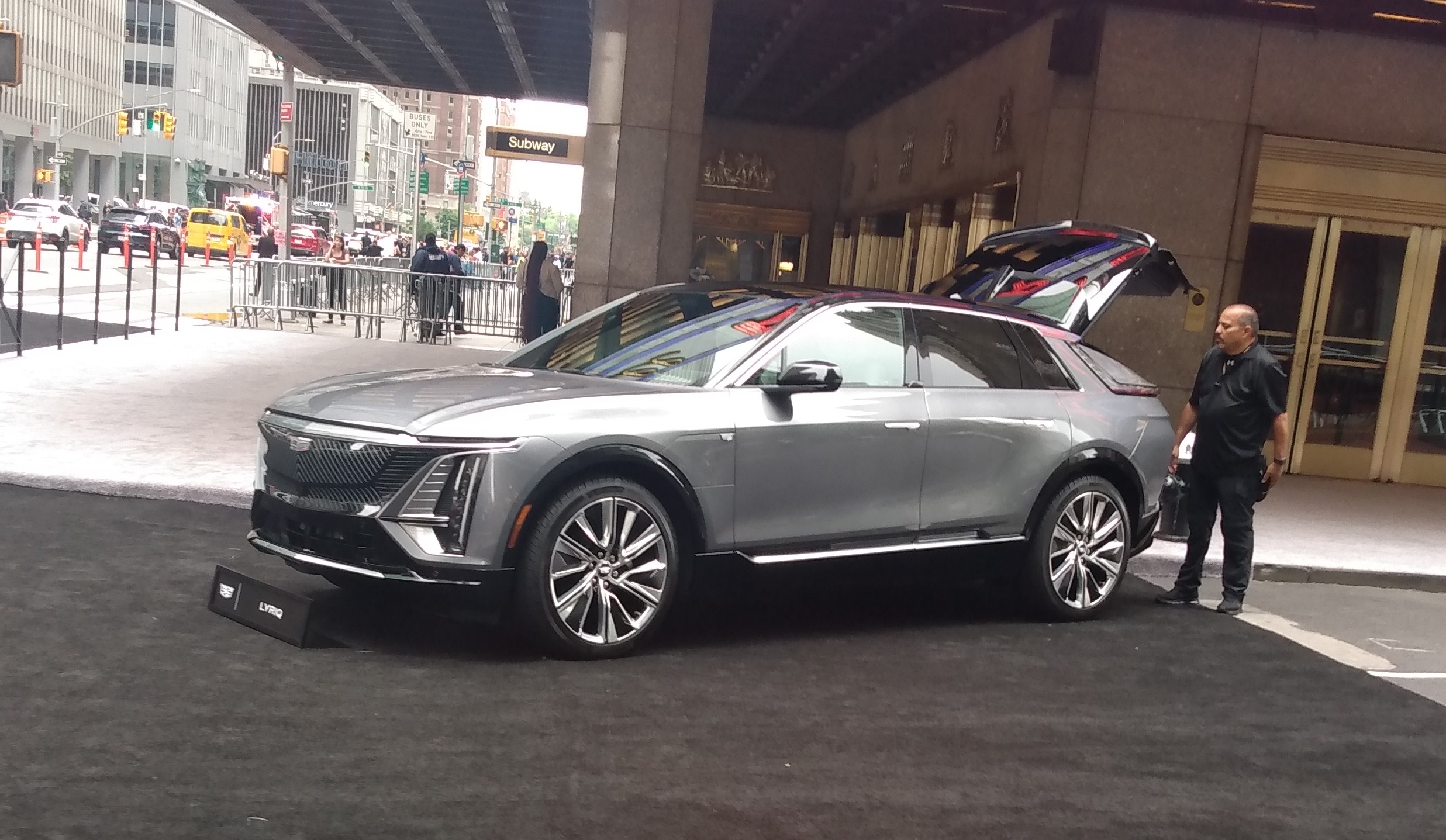
Speaker 3: Well, so, so there was a there was a new EV introduce today to the world, the Lyric V. You know,
I was all surprised. So this is a vehicle that
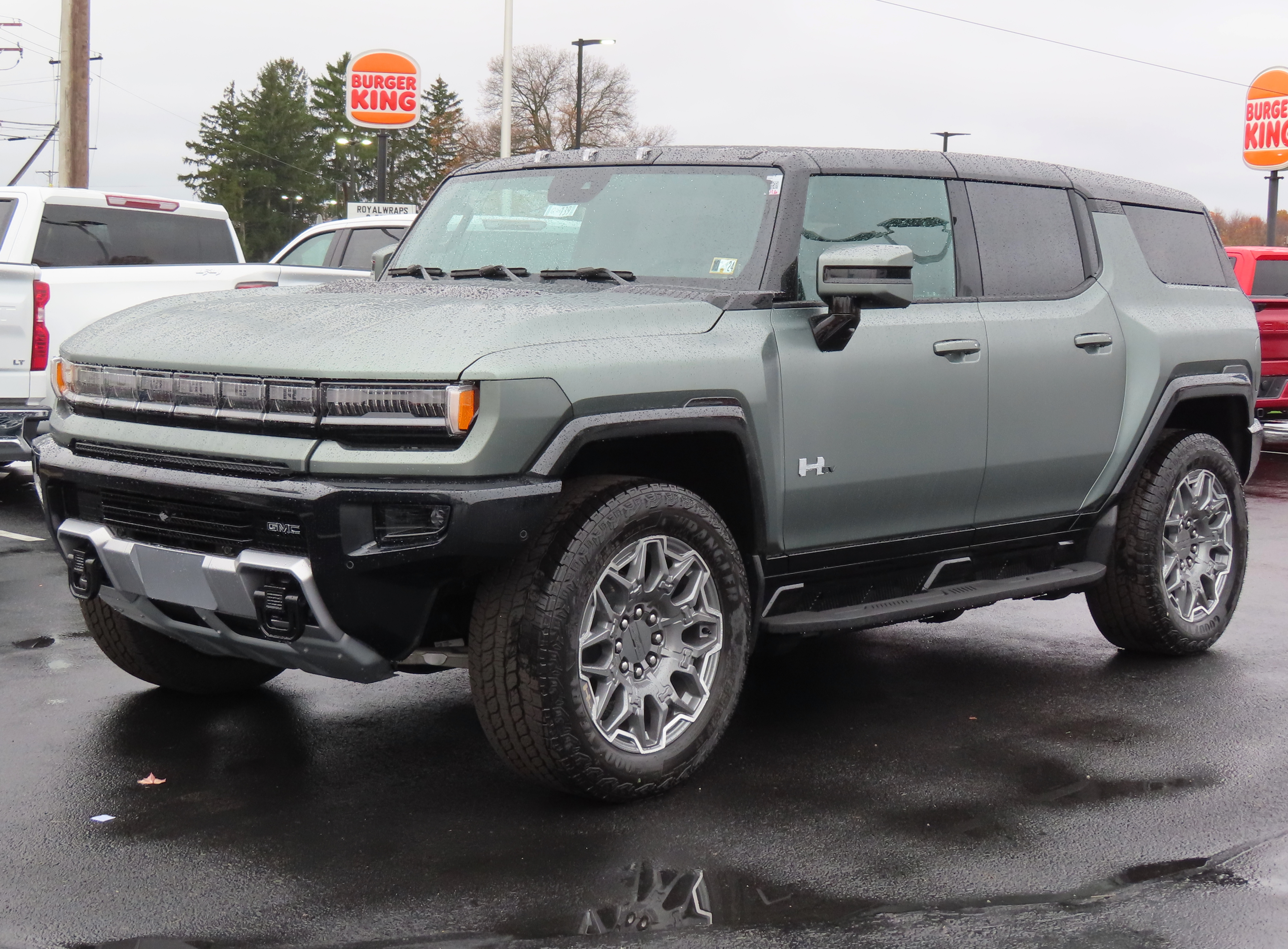
is six hundred and fifteen horsepower and they're claiming that it can go three point three second zero to sixty.
Do you realize the Hummer EV can do it in three point one seconds? Never talking about that's what we're
talking about performing again.
Speaker 4: I remember Bob Let's always describing performances getting to zero to one hundred and back to zero. And with that
much mass, that second part has got to be tough.
It's good. That's a lot of mess to slow down,
sure is, but manda fun when you can go in straight nine go.
Speaker 2: I think this is interesting. You know, Cadillac is, even
though they backed off of saying we're going to be all EV by twenty thirty. I think they're going to
have five EV's in their lineup by the end of this year. Some of the interesting stuff too, is they're
claiming catily is that the Lyric was the best selling luxury EV in the US last year. I think they
said something like forty percent of them were sold in California, which bodes well for the brand because they don't do anything in California except with the Escalade. And the other
thing they said was something like seventy six percent of the people buying Lyrics are coming from outside of Cadillac, So they're getting great conquest and they're getting decent sales in a market where they've been weak. Give it some time,
this EV thing could pay off for.
Speaker 3: All right, So it's funny you should mention the sales of the Lyric. So I happen to look in that
today and I see eighteen thousand, oh they sold. They
sold twenty and two twenty eight and two lyrics were sold last year. Hundred and seventy four Equinox evs were sold. Okay,
so the Equinox EV, which happens to start at thirty three thousand, six hundred dollars speaking of affordability versus fifty eight thousand, five hundred and ninety five bucks for the Lyric.
Speaker 2: And eighty thousand for the Lyric V. Right, but but
the thing is for electric right, we shouldn't think that way, Brett.
Speaker 3: But but the okay, But the thing of it is is that the the Equinox was not available until mid May.
Speaker 4: But it's also a mass market vehicle.
Speaker 3: But it's a mass market vehicle. So if if there
are affordable evs, people are going to buy them, right in big number.
Speaker 1: I believe that.
Speaker 3: So, But I mean, if these guys keep focusing on eighty thousand dollars evs, they're going to sell fewer of them.
Speaker 2: Correct.
Speaker 4: Do you think that GM makes a profit on any of those?
Speaker 2: No?
Speaker 4: No, I mean they make more Lyric than again.
Speaker 3: Up a scale.
Speaker 2: What they have said is that they had hoped at the end of last year that they be approaching a break even variable profit break even variable, and that they had hoped to be above break even by the end of this year. So hey, look, everybody knows now it's
going to take time and scale and volume is going to solve a lot of problems.
Speaker 4: So does the recent transition in government make it a lot longer.
Speaker 2: Hell yeah, I mean, look, if Trump comes in and gets rid of the subsidies, the seventy five hundred dollars, of course that's going to hurt sales, and.
Speaker 4: Then let me hijack it further. Gary, sorry with the list,
How does that work? In California? California Air Resource Board
has been committed to this through I was doing math.
I think eight different administrations, right, and then presidents come and go. AIRB is still there.
Speaker 2: So what Trump has said is he's going to tell the EPA to rescind the California Air Resources Board waiver.
This is what allows it to set its own standards at least when it comes to CO two and so do ZEV mandate theoretically would go away. But of course
we know this is going to end up this course.
This has happened before, and this is going to take several years to get resolved.
Speaker 4: I remember Alberto Ayela, who was running the mobile version, the vehicle version for AARB, was up at Traverse City Car Management Briefing Seminars twenty twelve with our friend Oliver, and it was interesting because he's asked about having to delay things occasionally and paraphrasing from fifteen to twelve years ago, he said, we like to set aspirational goals and if we need to adjust them, we'll adjust them. But we're
going to push as hard and far as we can.
And you wonder, now, given what is it they've got thirty six percent ZEV requirements for plugging and hybrid, plaguing hybrid and ZEV requirements for next year, this year, this year, if those you know, a shoot for the stars get the moon kind of thing, how they change given the administration, because it's clearly they have dug their hills on the ground they're going to They fought a good fight. Problem
being that maybe the rest of the country isn't interested in the same fight.
Speaker 2: The rest of the country hasn't made the commitment that California has. You got to admire California, love it or
hate it. You know, they made the commitment to go
EV and they're putting the resources in place to make it happen. But as you know, eleven other states signed
on to the ZEV mandate. I haven't done squat no.
Speaker 4: And that's that's a big problem the industry.
Speaker 3: So you know, you guys are mentioning the seventy five hundred dollars making the big difference in terms of acceptance of evs, which goes back to my affordability thing. But okay,
one of the things that he has done because on unraveling the seventy five hundred dollars is going to be difficult because that was a law passed by Congress, and so he's got to go through Congress to get this done.
He just can't sign with a magic marker and put it on a piece of paper and movement's gone. But
the whole thing that that biden funding, you know, the buildout of charging networks. And if if affordability is the
number one reason why people aren't buying evs, the second one has got to be you know, charging right, charging infrastructure if there's no charging infrastructure or if there is a limited charging infrastructure, because I know people will be going crazy, Like Gary hasn't no off tell us talking about if it's if it's limited across the country, then why would you buy one?
Speaker 2: And that's going to be a problem because one of his executive orders was to freeze all spending on building more public chargers. Right, that's going to be a problem
for the EV segment.
Speaker 4: It's under I mean, we understand all the different sides of this, but that EV owners tell us it's not that important. We charge at home all the time, we
rarely charge on the road. But it's important. It's important
for those coming into it, and it's also important for those going on trips and to see that message being nowhere going to be built. I agree, we know some
are going to be built with that message. That makes
it a tough sell, a tougher cell.
Speaker 2: Ford did more, recalls why Ford and recalls, man, they got to get that under control. Here's the other thing
you're talking about. The batteries for the Maverick and the Ranger.
Speaker 3: Twelve batteries, twelve folds.
Speaker 2: Batteries that have been made for one hundred years plus.
And I'll tell you an interesting story. So I remember
years ago when DOLPHI used to be one of the biggest battery the biggest battery producer in the world. In fact,
Clarios Battery today.
Speaker 3: Isn't Johnson Controls the biggest battery manufacturer in the world.
Speaker 2: Okay, well it was between them and DOLPHI.
Speaker 3: Right, you can be the type breaker here.
Speaker 2: But anyway, I remember Don Runcle, who worked at Delphi, got called by General Motors to get his ass down there because they were having all kinds of battery issues and they were going to dump the warranty bill in Delphi's lap. So Runcle goes down and says, you know
what's the problem. I said, we were having all these
battery failures. And he says, you know what. I send
the exact same battery to Honda and they don't have any problems. And he says, and I don't sort the
bad ones out and ship them to you.
Speaker 3: I just ship batteries.
Speaker 2: Let's take a look at a thing. Is pop the
hood on the car, pops it up, and he says, I see your problem. And they go, what you got?
The battery right next to the exhaust manifold on the engine says there's your problem. So when I see Ford
having these battery issues, I want to pop the hood on a Maverick or Arranger and see how did they package this thing? Could it be that it's to the manifold?
Speaker 6: Is it?
Speaker 2: Are they overcharging what? But almost one hundred percent certain
the problem is not the battery.
Speaker 4: Yeah, they know how to make lead acid batteries. Been
doing it.
Speaker 2: Along a long time.
Speaker 3: Well speaking, you mentioned Honda, and it's interesting that it was announced that they're going to spend one hundred million dollars on training their people on software, AI and electrification because they need those skills and they have determined that we got people, let's let's train them to handle it.
I mean, what's the payoff going to be for something like that?
Speaker 2: Well, Number one, that the payoff is going to be some very very grateful employees that they're not being run by an American company. They're run by a Japanese company
which cares about its employees and does everything it can do to not get rid of them, whereas an American company would be. These people don't have all the skills,
just get rid of them. In higher p people that do.
Speaker 4: Joca Warrior Saw, I'm not sure.
Speaker 2: I'm telling you that's the MBA way in the USA.
You don't have the skills, you're gone. We're going to
find somebody that's got them. We're not, as a corporate
America going to spend money training people. I'm okay, I'm
going a little too far in in that, but I mean think about that with General Motors or Ford spend one hundred million dollars to retrain their people. I don't
think so.
Speaker 4: I spent fifteen eighteen years as an educator for the UAWGM, for Delpha. All of those they do spend a lot
of money. Now that's changing a lot. The programs I
used to do aren't around anymore.
Speaker 2: But the programs you're talking about were for blue collar.
Speaker 4: Colors, blue color end management.
Speaker 2: They were, oh, end management. Okay, But manufacturing we're talking
here mainly is going to be engineering and R and D.
Speaker 3: So good idea, Brent, Yeah, it's.
Speaker 4: People. It's gonna be cheesy as all get out. People
are really important to build in the car. Good people
make it better, giving them not only the skill set, but I think John, to your point, that the comfort that, hey, they care enough about me to make my career better, that's good.
Speaker 3: So so, not making this too political, but getting back to the Trump administration, No, I mean, so there's you know, discussions again. He's he keeps talking about twenty five percent
tariffs on Canada and Mexico. What do you I mean,
I I think that that that can have devastating effects in the auto industry.
Speaker 4: I mean it's you know, remember when Jimmy Carter, wonderful human, great person. Okay, President maybe came on TV National TV
in a sweater and said, well, you all are going to have to turn your thermometers down because it's just we don't have enough energy and we're gonna have to sacrifice.
Can you see President Trump getting on TV and saying, you know, I just raised the price on everything you buy by twenty percent. It's okay because in the long
run it probably is could be better. But for the
next two or three, four or five years, live with it.
It'll be okay, not gonna happen.
Speaker 2: No, he would not do that because what Carter did was not leadership. And you don't tell people you're gonna
have to sacrifice unless, you know, unless there's a knife at your throat, the wolf's at the door. Then you
talk about in terms of common sacrifice. But that's not leadership.
Leadership is about presenting here's the top of the hill that we're going to get to and follow.
Speaker 3: Okay, okay, But the thing is is that, Okay, so if we go back to cars for a minute, okay.
So so what he's basically saying is that, and I don't think anybody would necessarily disagree with this that you know, the car's ought to be built in Detroit rather than being built in Canada, are being built in Mexico, and so you know, if I can make them unaffordable, then that's where the cars will be built. So, Brett, you're
the manufacturing expert on the set today. How long does
it take to build a car plant?
Speaker 5: That could you know?
Speaker 3: So if ten percent of the cars that we buy in the US right now come from Canada, ten percent, So we're basically talking about one point five million right, years and years, years and years.
Speaker 4: And remember that they're dealing with data centers. A lot
of the largest manufacturer companies building buildings, are building Amazon warehouses, are building data centers. They don't have extra resources to
do this. It'll take years to do that, and then
you've got to assume that, oh, by the way, they can come up to speed, maybe faster than a battery plant, but it's going to take It's a expensive and time consuming thing. It's like I said, three to five years,
maybe more. It's a hit that maybe we have to
take because we need to change this industry. Come back.
We're running on time probably, but the GLC back in December released a report White Paper saying this industry is in massive trouble. Knife the throat. You mentioned earlier that
White Paper sure sowned and like the knife is at our throat, we need to change drastically here, right, But.
Speaker 2: Let's unpack more of what you're talking about there with the tariffs. Number one, Trump is saying these are going
in by February one.
Speaker 3: That's the end of next week.
Speaker 2: I mean, you know, yow, no time to react. In
other words, for the industry. Warren Brown wrote a piece
that I thought was pretty good looking into all this, and he made a great point. Go back to President
Reagan and he installed or negotiated with Japan the Voluntary Restraint Agreement, which said to the Japanese, you can only bring in x number of cars. If you want to grow,
you got to build plants in America, which they did.
Took them ten years. Ten years, so that gives you
the timeframe. Also if I'm an automaker, And there was
another study too that came out and said, look, if you want to stop all imports of cars and trucks to the US and only build them in the US, it's about a fifty billion dollar bill to build all the plants to do that. Now, if I'm running a
car company and I'm thinking, you know, Trump's going to be gone in four years, who knows what's going to happen.
All this tariff stuff could go away or get watered down.
So am I going to spend tens of billions of dollars right now to make all this transition? Or maybe
I just sit on my hands a while and see what happens.
Speaker 4: Yesterday I was speaking to a good friend, John Warner from American Battery Solution. It's a good guy, been in
the business probably it's almost as long as I have for you. And I was saying that exact same thing.
This is for our society, for our political system. If
you don't like what's happening, kind of like Michigan weather, if you don't like today, wait three years and it'll change.
It's done that pretty much for the last thirty years.
But for companies that's a really tough thing to do.
You can't sit on your hands for three years and hope that it changes because it may not, or because your competitors are changing. And he kind of responded to me,
But when I said, you don't just wait a few years, we can't.
Speaker 2: Okay, No, great point.
Speaker 3: Well, and to quote Warren Brown, he wrote in the piece, you're referring to the dual strategy of eliminated eliminating BEV incentives and increased vehicle tariffs will shatter the structure of one of the most important segments of the US economy.
Speaker 2: No. Look, you know, like you said, the knife at
the throat, the industry in crisis, interest rates really high, credit tight, tariffs going up, set up for deves going away after each company has put tens of billions of dollars into doing BEVs does doesn't look good.
Speaker 4: It's a fabulous time to be a partner at a consulting firm. Who's going to come in and tell you
how to solve this great time for that because no one has answers except for them.
Speaker 3: Yeah, it's good, we have answers.
Speaker 4: I don't. I just have questions.
Speaker 2: Okay, Gary, any more topics or do we wrap it up all?
Speaker 3: I think we should wrap it up.
Speaker 2: Okay, we'll just wrap it.
Speaker 4: Up, Brett.
Speaker 2: There's so much for coming on the show. I want
to thank you all of you for having tuned in.
I hope you like that the VET thing I think there's something there, but anyway, we'll see you again next week.
Speaker 1: I'll don't Line after Hours is brought to you by bridge Stone Tires. Solutions for your Journey
Request an explanation for:
9 cars
Scroll for more
9 cars featured
Request an Explanation
Heard something you'd like explained? We'll add it to this episode.
Sign in to request explanations for terms you heard.
Want to learn more?
Browse our glossary for plain-English explanations of automotive terms, jargon, and concepts.
See something that's not quite right? Our annotations are AI-generated and can sometimes miss the mark.
Click the flag icon on any annotation to suggest a correction.