A deep dive into the current challenges facing the automotive supply chain, particularly the impact of slow EV adoption and significant layoffs among major suppliers like Bosch and ZF. Experts discuss the implications of these changes on both OEMs and smaller suppliers, and how the industry is navigating the transition from internal combustion engines to electrification. The episode also touches on consumer attitudes towards EVs, the evolving market dynamics, and potential shifts in industrial policy as manufacturers adapt to new realities.
TOPIC: Auto Industry Outlook PANEL: Paul Eichenberg, Eichenberg Strategic Consulting; Tom Murphy, Freelance; Tanya Gazdik, MediaPost; Gary Vasilash, shinymetalboxes.net
"It's, is that you were speaking about design before. And I'm going to ask you a design question any moment. But, you know, it used to be that, you know, designers in this town, Ford designers in particular used to refer to Toyota Camry's as being toasters. And that all the products from Toyota's were toasters."
"... series. I mean, maybe it impacts Camero sales or Mustang sales. I know Camero has gone."
Select text to request an explanation
SpinQuest, Social Casino. The presents are open and you're over the in-laws. It's a perfect time to drag your phone and play SpinQuest.com with live dealer blackjack crafts and a ton of slots. And here's a great deal for the holiday, a $30 coin pack for $10. And if you're hearing this ad, you can play right now on SpinQuest.com.
It's a perfect time to drag your phone and play SpinQuest.com with live dealer blackjack crafts and a ton of slots. And here's a great deal for the holiday, a $30 coin pack for $10. And if you're hearing this ad, you can play right now on SpinQuest.
SpinQuest is a free to please, Social Casino, voidware prohibited, visit SpinQuest.com for more details.
Hey everyone, thank you for joining us this afternoon on auto line after hours, or if you're watching it on YouTube is maybe not this afternoon, maybe it's in the morning, the evening, another time, or we'll see you with the podcast, God knows what you're doing, but as some of you may notice, if you're seeing this, John's not here.
So I assembled a cast of the smartest people in the auto industry by far. So we're going to have a great show. We're going to talk about a whole bunch of things.
And so let me introduce who we have here. We have my friend Tom Murphy, a longtime automotive journalist who we've traveled the world, we've traveled the world together and and me and Dr. Dana.
We have Tanya Gaznik, who is the automotive editor of Media Post. Welcome back to the show. We've had you on several times and it's always been eliminating.
Thank you for having me.
And I will do my best to continue that streak and we'll try to argue later in the show.
And our old friend Paul Eikenberg, consultant extraordinaire with particular focus on the supplier industry and he's also involved in the tech industry.
And we're going to ask him about both of these things.
So let's just kick this off and Paul, I got to ask you about what is going on in the world supply industry.
I mean, we're seeing that that ZF in Germany recently groomed its longtime CEO. They're in the process of undergoing a restructuring.
Bosch has announced. What was it? 13,000, 13,000 people they're getting rid of. This is globally.
But most of these people are in Bosch mobility last year, a layer corporation, which is here.
They globally removed 15,000 people apparently. What is going on?
So I think this is where you were talking about where the supplier world and the tech world meet.
So what's really happened here over the course of the past couple of years is, hey, that tech bubble we've experienced it.
We've seen this. If you take, for instance, ZF, if you take Bosch, these are organizations who invested heavily in new technologies and the electrification in autonomy and the whole ADAS suite invested heavily in software and software development.
And as a result, the EV market is not moving as quick as what everybody had hoped. It's impacting the OEMs globally.
ADAS, autonomy, all the investments that they've made there haven't paid off. So as a result, what you've had is these suppliers have made huge investments in the market is yet to come.
No, we could argue when do we get to, you know, is electrification going to happen or is it just a matter of when we could argue that and debate that.
But as far as the investments that been made, this is an issue where, hey, it hasn't happened as fast as what people had hoped.
And as a result, you have significant restructuring starting in the supply base around the globe. And this is really the issue that's driving a lot of these changes in this situation and the automotive industry.
This is happening to the major tier ones who granted they've had to keep investing in the internal combustion technologies that they've been developing all these years.
And they've also then pushing into EVs, so trying to play on both sides of the fence. And now, if even they can't make it, what about the small to mid-size suppliers? I mean, aren't they even more susceptible?
Yeah, well, and again, it's not just the supply base. It's the OEMs also. The OEMs are struggling through it also.
So I think what you start to, if you step back and you look at the industry 10 years ago, 10 years ago, everybody is, you know, sort of peak volumes. Everybody is very certain in everything that they're doing around the internal combustion engine, all the investments that they're making.
They have a finite understanding of what that looks like. And what's happened over the past 10 years is we've started to shift towards electrification.
You've seen a drop in that foundation that everybody had, that capital investment that everybody made around their power trains, around their vehicles, et cetera, started to fade.
So if you were, let's say, a second or third tier supplier who's making forgings, you know, you're making forgings and you're making a 10, 20 year capital investment that is huge for your business.
So what starts to happen in forgings is as that market starts to dip as a result of electrification, your margins get squeezed because you still have that capital to pay off.
So what I would say is it's not just the big, you know, suppliers, it's, we're in this gray area in this transition and, you know, you could argue, the longer you delay that transition, the harder it is on the supply base.
And even I would say it was probably back in 2018, Mercedes at the time started to build a bank for supplier, this type of supplier disruption, bankruptcies.
And what they saw was they saw two types of bankruptcies taken as a result of the transition between ICE and EVs.
And that was the suppliers as far as the ramp down. So those forgings suppliers as volume started to drop.
But then for the new technology suppliers, you know, the rapid investment that was going to be required, you know, were they going to have the cash flow to be able to reinvest, to be able to keep pace.
And the longer and longer that gets drawn out, the more and more difficult it's going to be for the OEMs to manage, the tier one suppliers, the tier two, the tier three suppliers.
So we're entering a real difficult time for the supply base and the OEMs together to be able to manage this huge change that's taken place in the industry.
So these companies made huge investments.
And so they were rewarded when they made the huge investment, right, because they were looking ahead and they were doing their fiduciary responsibility by doing that.
And had they said, oh, I'm only going to be investing in ICE, then they would be penalized by the market, right.
Now we're finding that, as you said, this technology is not being embraced as quickly as it was thought to be, maybe the competition is too great.
I mean, especially in Europe where, you know, Chinese cars are coming in.
So only going back to Germany, EY used to be, Ernst & Young did a study and they found out like 51,500 jobs were lost in the auto industry in the year.
Okay, and it was like the biggest segment.
Now, you know, Germany's EV acceptance is greater than the acceptance in the United States.
So what I wonder is, is will we be seeing a big impact here next week is when the $7,500 tax credit goes away.
What is going to be a situation for suppliers who said, oh, you know, we're going to invest in technology to make electric vehicles.
Right. So the first thing as far as your comment there, if you remember a couple years ago, the CEO of VW went to his board to say, hey, we're making a 91 billion dollar bet in EVs.
And he looked for a confidence vote from the board on that. So now think about that in just a couple years later where we're at.
And so those were the big bets at that point in time.
And right now, what I would expect to happen here is, and I would expect it to happen in Europe, is you're going to see more legislation around the idea that plug-in hybrids, range extender vehicles.
These are what we're going to start seeing as far as alternative strategies to these emissions targets. You're going to see, you know,
on the way over, it was announced in the news in Europe in Europe.
They're only in about 15.8% BEVs where the target is to be closer to 25 by the end of the year.
So there's a 10% gap to close there between now and the end of the year.
And in my expectation, as you said, in Europe, what's going to happen is the government is going to give some type of relief because the whole industry in Europe, the whole industry globally is under attack by Chinese BEVs and Chinese suppliers that are coming in.
And I think what you're going to start seeing is everybody pulling back on the climate strategy and start saying, hey, what's the industrial policy that we have to have to be able to protect these industries?
Because Europe's got to do something.
Again, before the show heard it on the news, you know, Tesla isn't really growing anymore in Europe, but who's gaining the greatest share in Europe?
It's B-Y-D. So this creates a problem for all the OEMs in Europe.
It creates a challenge for the suppliers because B-Y-D is bringing their suppliers in.
Other Chinese suppliers are coming in. So that whole industry in Europe is under attack in a very different manner than what they've dealt with before.
And then when you add on top of that, the OEMs are continuing to lose share globally.
What are they going to do other than step back and say, hey, we have to do things differently to protect this industry?
That's what I would expect to start to happen as we start to look at.
So, Tanya, what are you seeing in terms of the consumer base and its interest in BEVs post next week?
Well, I was going to say as far as the statistics go about the 25% goal.
Last month, EVs only accounted for 10% of all new car sales in the US, even with the pull-ahead in anticipation of the tax credit standing.
So if you can only get up to 10%, isn't that exciting?
Are they popping champagne corks to me? Like, wow, 10%. That was the goal. We've hit it.
Well, they're planning on cutting EV production for the rest of the year.
You know, they know there's like nobody's going to be buying in third and fourth quarter.
So, I mean, no marketing is going to fix that.
So, I mean, I guess the question is that, I mean, there is a market for EVs, but is it just that the market didn't develop as broadly as it was thought to?
Well, the infrastructure is still lacking.
Ironically, after six-month freeze, the Trump administration is actually resumed their federal program for highway superchargers.
So, the timing is interesting. So, all those people who bought in August and September will have more chargers eventually.
Is that...
That's a big part of it. There's a lot of apprehension about the lack of chargers.
All right, Tom, you've probably driven more EVs than the other three of us combined.
Do you see some intrinsic specialness to driving an EV that you don't find in driving anything else?
I do. I do. The infrastructure is the biggest problem right now.
You know, when you talk about $91 billion bet by Volkswagen, and that's the Volkswagen Group, and I think of what they put on the road alone, Porsche Taycan.
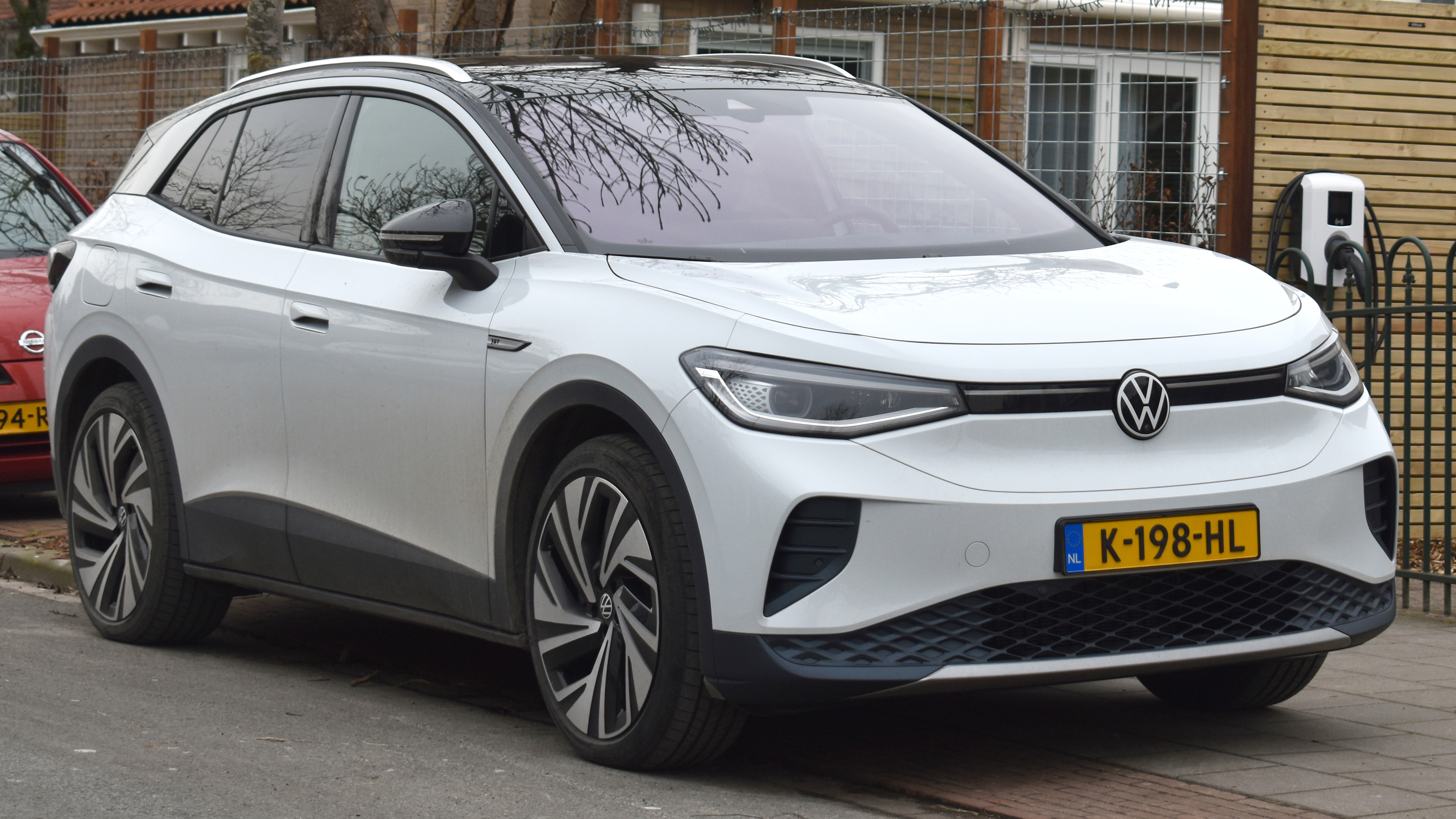
Volkswagen ID4, I know you might not like it, but it was early. It was out there pretty early, and I know a lot of people didn't like the user experience and all, but I thought it was a pretty darn good card.
It was a decent range. Think about what Audi's done, you know, the GT, I'm sorry, the Etron GT, I think it was...
What a fantastic look and car, and then I think it's going to be a Bentley EV coming along, and it's like they really did think holistically about the EV market.
And General Motors was kind of doing the same thing, and I feel like those are the companies that deserve to be rewarded for putting some really interesting vehicles on the road.
The Chevy Equinox, very inexpensive vehicle, especially the factor in those credits, you're down below $30,000 for a good practical two-row SUV.
Could you buy one of those that was called Equinox? It had an ICE engine and it was under $30,000.
You still can. You still can.
Which probably had pretty good range, too.
But there are people out there who are buying Tesla's partly because this is something different.
This is something that is better for the environment that may perceive it this way, whether their energy is coming to their house through coal-fired plants or through nuclear or water, you know, hydro-part whatever.
That's a topic for another day, but there are people who really perceive battery electric as something really advanced and something worth pursuing.
I mean, I tend to agree with it to your question about what's so special about them.
Just dip behind the wheel and step on the accelerator and the torque that you feel is just so immense.
Whether it's an Equinox or it's a Porsche Taycan, I mean, it's astounding.
And so, you know, if you can get 300 miles of range, I think that's fantastic.
I test drove the 492 mile Chevy Silverado EV Worktruck and I towed a 25-foot air stream with it.
And yes, the range fell almost by 50% while I was towing it, but still, you know, 50% from a 492 mile range is still pretty good mileage.
Anyway, I just think it's really sad that automakers and the suppliers were really pushed kind of from a regulatory environment and then from the spectacle of Tesla.
You know, everybody wanted to be Tesla 10 years ago or seven, eight years ago.
And, you know, what did they get for it?
They basically slapped, you know, because they spent a lot of money on product that people didn't buy that didn't warm up to it.
And, you know, politically in this country, we've had, you know, it goes in and fits and starts depending on who's in the White House.
But, you know, Biden spent all this money to put in new chargers and then Trump wanted to pull them out and now they're back.
I'm glad to hear that they might be coming back.
It's just a wild market. It feels to me like the Wild West where, I mean, if I was in this business as a CEO of a supplier or an automaker, I would have no idea what to do.
You know, there are people who want EVs, but there are more people who still want to buy their own.
You know, one thing that comes in and is the issue of the industrial policy.
And here we have a polarized industrial policy.
And I think that's one of the things you can say about China.
You know, a strong central government, what have they've had for the past, you know, 10 years as they've had a real focus in, hey, we can scale electronics far differently in this industry and we can dominate when it comes to EVs.
And frankly, that's what they've done.
And I think now we're at a pause because if you look what's happening in Europe, if you look at what's happening here,
hey, how do you really compete with that industry for that product?
And I think that's where you'll start to see different industrial policy come in because Europe's going to have to do something to protect that German automotive industry, you know, and the French and, you know, the Italians.
And everybody is going to look at that very differently.
And I think we could start to see a very different type of electrification strategy come as a result of these type of industrial policies.
Forget whatever plans you have this weekend because you're staying at home and playing on spin quests.
And there's never been a better time to sign up then right now.
The users get $30 coin packs for just $10 all the table games you love with hundreds of slot games and real cash prizes.
That's at spinquest.com.
S-P-I-N-Q-U-S-T dot com.
Spinquest is a free to place.
Oh, so casino boy, we're prohibited.
Visit spinquest.com for more details.
Are being evaluated.
But Paul, do you think the strategy will be a strategy that will encourage electrification, but the electrification will not be full beves the more likely to be hybrid vehicles or plug-in hybrid vehicles.
Could be plug-in hybrids. It could be range extenders range extenders.
And it takes us back to square one.
Yeah.
Yeah, exactly.
We started out with internal combustion.
Like, oh, let's start easing into EVs.
And then it was like full speed into EVs while they're still making internal combustion engine.
And now we're going to go back to that.
So how, you know, how a company can survive.
Yeah, we've got to be cutting edge on, you know, the latest EV technology.
But we also have to have a good internal combustion engine with a plug-in hybrid and a regular hybrid at the same time.
So I just a side note, I have a gentleman that worked for me at Magna.
And now he's running the EV program for Thor.
And they just launched this week their first EV.
And hey, it's a range extender.
Okay.
And it's got a 50 gallon fuel tank on it.
50 gallon.
And the reason they came up with a 50 gallon range extender vehicle was because it's going to give them 454 miles of range.
And why do you have to have 454 mile range?
Because that's what they find.
The average, you know, customer drives between stops for their RV.
So they went through this in a very deliberate manner and they've had this launch this week around that whole idea.
The only way you get to that type of range is through a range extender.
But then you have all the benefits of, you know, what they feel is an EV.
So will we see those kind of strategies?
I think you will, as a matter of fact, range extenders in China, plug-in hybrids in China are the fastest growing segments in the Chinese market.
And the higher end luxury vehicles are going with range extenders or plug-in hybrids.
So I think you may see a change in strategy as a result of this pause that we're in right now as everybody starts to look,
hey, what do we need to do going forward at this point?
But doesn't make vehicles any cheaper than that?
No, no, because you're paying for that range extender.
But you were also talking about, hey, if you look at the Audi's, if you look at the Porsche's,
if you look at those vehicles, those are great looking vehicles.
But they're not cheap vehicles either, because there's a cost associated with making, you know, that initial investment.
So this is a problem.
Well, their ice vehicles aren't cheap either.
No, no, but this is the investment to put a premium on top of that.
Yeah.
A premium on top of a premium.
Right.
So, yes, this is the challenge that the industry has.
And China's gotten over that hurdle, you know, as far as getting to scale.
How does every OEM follow and get to scale to really be competitive with those products?
GM has really got to scale.
Well, I was going to say the non-luxury makers, I just drove the Nissan Leaf.
And it's actually the new one is cheaper than the original one.
And the range is quadruple.
Quadruple.
The range.
You went from 73 miles of range to 303 miles of range.
And from 33,000 to 30,000, they went down.
And it's a great vehicle.
So, I mean, I think they're still good EVs that people will buy.
Like belief.
Okay.
But the thing I wonder about is, you know, and again, we're talking about billions of dollars of investment that the industry has made in EVs, right across the board.
Billions of dollars.
Okay.
So my question to you guys is, is this a case of technology push rather than market pull?
And haven't we learned from the past that that doesn't work so well, regardless of what the technology is?
It takes time.
I mean, was it technology push when Toyota and Honda pioneered with the first hybrids in 1999?
I mean, it took a little time once they caught traction.
I mean, Toyota was often running with the Prius.
So, call it what you want.
It takes time for people to figure out how long did it take for Tesla to catch on?
The Roadster was just this kind of novelty thing, but then when the Model S came along, suddenly people were really interested.
And if you're going to spend portion of money on a car, it better be really nice, it better give you the performance that you want, that you demand.
And when you drove that first Tesla Model S for the first time, you're like, wow, now this is groundbreaking stuff.
So, you don't mind paying the money. So, is that pull or push? I mean, it's hard to say.
Well, but I mean, I'm talking about the industry at large versus a particular case of a particular product.
And if we go back the first, the 1999 Civic hybrid didn't do all that well.
The inside.
Okay, so it, so it, like, and if we also go back in time, Toyota had to be pretty damn, you know, persistent, saying hybrid, hybrid, hybrid, hybrid.
They were kind of smart, you know, seem to be kind of smart.
Now, they have a hundred percent across their entire lineup.
But again, I mean, I just wonder is, you know, Paul, you've undoubtedly seen this in various technologies that, you know, all this is going to be great.
So, I mean, I begin to wonder whether, you know, if, if you're, you know, Porsche has announced that it's pulling back on its EV strategy and it's going to be dealing with a new ice product.
Okay. So, you know, Germans do really well in terms of machining metal and making gears and, and forging and casting.
They're also not giving up entirely on EV.
No, I'm not saying they are, but I mean.
They started it, they came in and the, in the box your 718s.
They were originally planned to be all electric. Now they're going to also have, so they're going to stay on both sides of the fence.
They're, they're kind of following in the BMW model where, you know, Mercedes wanted to have separate.
They wanted to have their, their models looking like EVs and they wanted to have their, their, their non EVs looking like the, you know, the traditional vehicles.
BMW, I thought was smarter saying, let's put them all together.
The i5 is going to be the same as a, as a gasoline driven 5 series.
And so, in that sense, I think it, I think it's kind of smart to be on both sides of the fence, if you can.
Without, without spending so much on bespoke designs.
So, we like bespoke designs.
Forget everything you had planned for this weekend, because you are sitting on your couch and winning from the comfort of your own home.
I'm here with SpinQuest, where you could play hundreds of slot games, all of the table games you love, and you could even win real cash prizes.
New users, $30 coin packs are on sale for 10, at SpinQuest.com
SpinQuest is a free to play social casino, voidware prohibited, visit SpinQuest.com for more details.
So, what do you think, Paul?
So, I think, you know, again, you step back and you look at, will there be bespoke designs?
I think when you look at the skateboard, you know, and that whole concept, it's just a much more efficient and effective way to make vehicles.
I even go back to, you need 60% less manufacturing space to make vehicles that way.
And I think that was the enticement for the OEMs to say, this is what we have to do.
We have to be able to move in this type of direction.
But then, if you step back and you think about, now, what are, you know, all the OEMs looking to do?
They're re-evaluating their entire power trade strategy.
You know, many of them are, you know, coming out and saying, hey, we're just extending these programs for another three, four, five years, as we figure this out.
And my expectation is, they're going to do just like what you're talking about.
You know, oh, here's a, here's a standard ICE version.
Here is a plug-in hybrid version.
And here's an EV version for you.
That's going to be very costly for them.
And, you know, in a number of different ways.
And then, that creates, again, this gray area for suppliers to say.
And for everybody in the industry to say, hey, how do we manage this very costly transition from one power trade source to another?
And that, that's really very-
It's about who has the different pockets.
Yeah.
And, you know, the company I'd put my money on is Toyota.
You know, if you look at how they've performed consistently here, after year, after year.
And if you look at their strategy, their strategy is to offer this wide spectrum of product.
And I think you'll see more and more OEMs looking to duplicate that kind of strategy.
And is it ironic that they were considered a holdout on EVs for the longest time?
While everybody else was more committed to battery electrics, Toyota.
You're right.
We're way more costly hybrid.
I mean, you can look at so many OEMs like VW.
They share, they've lost in China.
How their share is under, you know, threat in Europe.
But look at Toyota, you know, just consistently, consistently, consistently.
So they're not making big bets.
They're still assuming this isn't-
This is not a revolutionary industry.
This is an evolutionary industry.
And, you know, and I think that's maybe the real lesson everybody learned from the big bets.
All right, so let me ask, I want all of all three of you to answer this question.
We're going to be getting to the bottom of the show and then I promise the next half of the show will not talk about EVs.
Okay.
All right.
So in the US, OEMs are not going to have the regulatory issues in terms of selling EVs.
Okay.
That's not going to be an issue, right?
It's the-
Meaning like a mandate to sell-
Mandate of any sort.
It's right.
You know, EPA regularly.
Yeah, no more go away.
Yeah, man.
Yeah.
So, you know, you-
No matter who's in the White House you're saying or just-
Mom, I'm just saying right now.
At least next three years.
I don't know who's going to be in the White House.
The future.
I don't know how far forward you're going.
Mom, I'm saying right now.
Right now.
I mean, okay, we're still talking like October 1st, right?
The-
The tax rate goes away.
Okay.
Now they've got to say, oh, we've got to face what's going on here.
Okay.
So, there's no mandates.
It's pretty well known.
They're not making any money off of these things, right?
Maybe they're covering your variable costs.
Which block it explained to us.
So, we would understand it.
But none of us can understand it.
Paul.
Okay.
And we can see that, you know, Tonya, you mentioned earlier,
the 10% like, ooh, 10%.
Okay.
Which means 90% are not EVs, right?
So, if you're in OEM, where do you put your money?
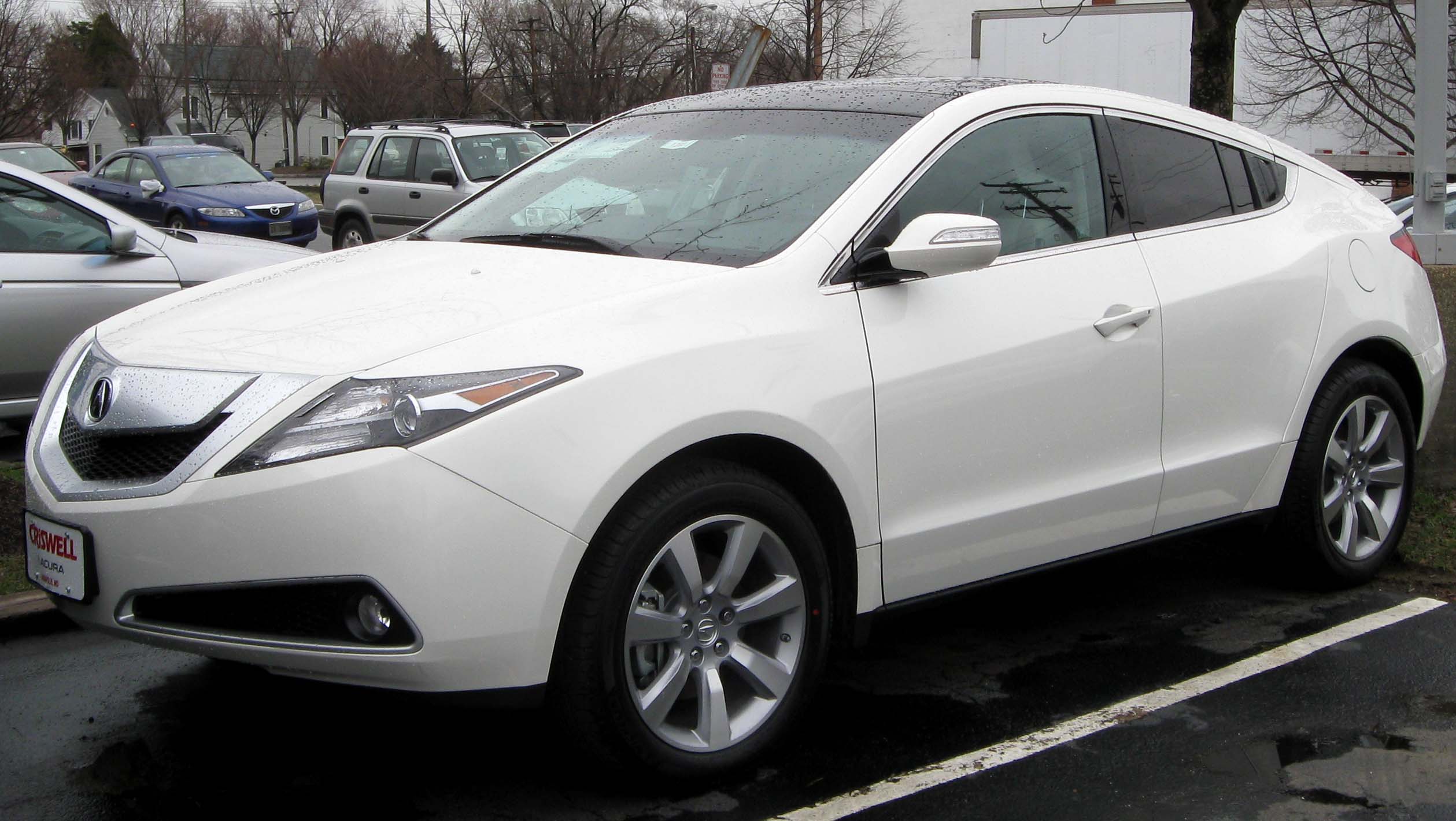
Well, Honda just announced that they're ending US production
of the electric Accura ZDX and dealers have been notified
they're not going to get any more allocations of the vehicle.
So, I think Honda answered that question.
So, well, of course, Honda also said that they'll be coming out
with the RDX, I believe it is.
Yeah.
They're going to have a product.
But yeah, I thought that was shocking.
The ZDX, you know, lasted one year.
Yeah, one year.
RSX.
RSX.
Thank you, Sean.
Yes.
Okay.
So, point taken.
Yeah.
So, you're betting on the ice.
Well, I think they're going to be shifting.
I don't think they're going to give up on EVs.
Right.
But the market's going to shift.
They're going to shift.
Paul, what do you think?
So, I do think we're going to start seeing a big shift
to plug in the hybrids and range extender vehicles.
In my bet, like again, I said in China,
I think you're going to see a softening of the policy in Europe
that's going to allow, you know, those type of vehicles
to become much more prominent part of their, you know,
foundation around their mandates.
And then I think you'll see the same thing here in North America.
That those will be the solutions that start to emerge
as people start to say, hey, you know,
it was interesting a year ago I did a project
with a commercial vehicle OEM.
And, you know, again, the management team mainly came out
of Europe, but they felt, we've got a moral obligation
to be able to start to solve this climate change thing.
And I think we won't see just an abandoning
by a lot of these OEMs around the idea of, you know,
we're going 100% back to the EVs.
And I think this is that common ground
that we'll start to start.
That happens to back to ice.
Ice, yes, ice.
The thing is, and I think it needs to be continually emphasized
that when we talk about hybrids and talk about e-roves,
they still have an internal combustion engine.
Yes, so.
Of some type.
Most of those forging companies are going to be happy.
All right, Tom.
I'm all in on hydrogen fuel cells.
And we can end the show there.
Thank you for having me.
No, I'm up to Europe basically.
Go on that.
So, yes.
I still think there is a future for EVs.
You got to look at the market as this ebb and flow process.
You know, like, when no EVs were available,
there was a huge demand.
I mean, once Tesla was out there,
they kind of proved that, hey,
there can be a good looking car that gets long range.
Yeah, it's going to be expensive,
but you're going to love this car.
So, at that point, demand.
Let's have to dismiss if he is of high cost.
Seems to be a rich man.
No, not at all.
Heck, no.
But those prices have come down quite a bit.
Demand outstrip the supply at that point.
So then the market was flooded.
Everybody, every, every mainstream and luxury brand said,
like, ah, we got to catch up to Tesla.
We have to, we have to get this,
we got to flood the market and then things turned.
And so, these automakers,
you know, what General Motors has done here in Detroit at factory one.
Factory zero.
Factory zero.
Sorry.
I owed you that one.
Factory one is the insight on this.
Is he sent Michigan by the way?
Historic place.
You should go.
All right.
So, you know, they're making the Silverado pickup truck there.
They're making the escalator IQ.
They're making the Sierra EV.
They're making the hummers there.
You know, even if they're not selling a ton of them,
they've invested a ton of money into that plant.
And they were supposed to do the same out of the Lake Orient plant.
They were going to make the Silverado and the Sierra EV there.
They had to change those plans based on what was happening in the marketplace.
They were going to build there.
You know, you have to hold on.
Get away.
Wait and see.
Wait and see.
But think about all the other investments.
Kia and Hyundai down in Georgia.
I mean, a dedicated plant for making EVs.
Ford has the huge battery plant out in Marshall that they've developed.
It's just like these investments cannot be just quickly dismissed or pivoted to.
Yeah, we're just going to retool for internal combustion.
I mean, it's a really difficult time to be deciding where to spend your money.
And, you know, your simple question does not have a simple answer.
Yeah.
Well, you're saying clearly, Tom, what do you do?
I find it seem to be able to do it.
Well, she did for one company for Honda, but you're asking you like the whole industry.
What does everybody do?
The domestic industry.
Okay.
All right.
And then again, we haven't got to the topic yet, but it's the issue of tariffs.
So again, you raise that after the break.
We're going to take a break.
And then we're going to come back to your tariffs.
So we're going to take a quick break here from our friends at Bridgestone that we are most appreciative of.
Knowing that a little rain won't slow down your day.
That's what really matters.
Bridgestone turns acquired track types, confident control in wet conditions.
All right.
And we're back in Paul.
I stepped all over you.
You were going to talk about tariffs.
And it's a good thing that you like maybe otherwise you might get near something or have Tom do it.
He might just want to do it himself.
No.
So what I was going to say about tariffs because you were on the point of what do you do?
How do you make bets?
How do you make capital investments in your environment where you have these huge technology shifts that are taking place?
And some of those bets are still a long ways off.
And then you've got tariffs and the disruption of tariffs also.
So then what do you start looking for as far as your footprint?
And is it a long-term shift that we're moving into these markets that become far more protective?
Or is this a short-term game?
And this is a real challenge.
If you're running an OEM, you're running a large supplier or any type of supplier.
What type of investments do you make in just this environment of uncertainty?
And that, I think, is the real challenge that organizations have gone forward.
Not only over the next three years, but then what happens after that and what big bets do you make as a result of just this polarization that we have happening around the globe?
Well, you're speaking of the tariffs.
And Jonathan Smoke of Cox Automotive today said that they calculate it's going to cost the industry $100 billion a year.
So Tanya, let's talk a little bit about affordability.
I ask you, Tom doesn't care.
Of course I do.
Well, it's going to affect everybody.
Right now we see that cars are average transaction price, $49,000 bucks across the board, which clearly is expensive.
And how does the industry continue when many people in the market can't afford to buy a new car?
Well, some of them aren't that expensive.
Believe $29,000.
So, I mean, the equinox, another one, you just have to be particular about what you buy.
The electric cars, they're going to be talking about ice fields or hybrids.
No, I think she's right.
I mean, we should keep the EVs in the conversation because we are going to see there's a new bolt coming.
There's there are affordable vehicles out there that are battery electric that are that are still part of the conversation.
I think to your point about the $50,000, it's $49,000, $59,000.
It's like $45 short of the $50,000 market.
It's like right on the cusp.
You say that's expensive.
Tell that to a pickup truck buyer.
I think the average transaction price for a full-size pickup truck these days is $60,000 or above.
And it's easy to spend 100 grand full-size pickup.
And it doesn't even have to be a heavy-duty pickup truck, you know, with a diesel engine.
So, you know, there are people out there who apparently don't think twice about spending at least 50 grand for it.
All right, so maybe this won't be surprising to you, but I looked at numbers from Experian for second quarter.
So, this is the average of what people are paying, a monthly payment of $749.
The loan amount is $41,983.
The interest rate is 6.8%.
The loan term is $68.87 months.
Okay.
And call me crazy, but, you know, that seems somewhat expensive to me.
And so then I thought, okay, so, you know, that the Fed cut the interest rate.
And so I wildly cut that 6.8% in half and said, okay, what would that be?
What would the monthly payment be?
You know, all those conditions.
And that goes down to $660 a month.
Okay.
So then I looked at what that would be of the median income of a household in the United States right now.
So, if they're doing the, you know, the 6.8% interest, and that is, that payment is 14.5% of their monthly take home.
And if we go down, cut that in half, it's 12.7%.
It's just like, how can this industry operate when there are so many people who just can't do that?
And also the industry relying on those people taking on that much debt.
That's the really scary part.
I personally want to drive my cars into the ground.
I want to pay for them.
I want to own them.
I want to drive them as long as I can before it's time to get another car.
That's just me thinking.
But then every time I read a story like that, and I hear, you know, what the monthly payment is for most people who are buying a Lexus or a Cadillac or a Jaguar.
So, Tom mentioned pickup trucks.
Tanya, you pointed out that not today, but earlier, that Hyundai is working on a mid-sized truck.
What do we know about that?
It's going to be a competitor of the Tacoma and the Ranger.
And I mean, that segment has been popular historically.
And it's got a real interesting look to it.
It's, you know, not going to be like those other vehicles.
It's got a real muscular stance.
So it might, it might grab some attention.
And it's supposed to be body on frame.
Yes, body on frame.
You know, the Santa Cruz, the small Tucson with an extended bed that is, you know, that is unibody.
It drives car like it doesn't feel trucky.
And now, and they've been talking for years, even before they had the Santa Cruz.
They wanted to have some sort of an authentic pickup truck for the US market.
The second a long time for them to get to it.
And, but didn't you see some numbers on the mid-sized segment?
Not what?
Doing terribly well.
So, so basically I looked at the Colorado, the Canyon, the Ranger, and let's not forget,
because you talked about Nissan, the Frontier.
Yes, the Frontier.
People forget about the Frontier.
And I find it very interesting that the Ranger isn't selling that much better than the Frontier is.
So credit the Nissan on that one.
So I took all of those and their sales in the, for Taft and added them together.
And then I looked at the sales of the Toyota Tacoma.
So if we add all the other ones together, it is 134,729.
And the Tacoma number is 138.73.
So it's a difference of 3,856.
They've owned the segment for a long time.
Yeah.
And I remember when, when the Colorado and Canyon were going to be, you know, be re, you know, coming back
and they were, you know, Chevy's going to do a big thing.
And I was talking to the guys at Toyota.
And I asked them, like, well, gosh, aren't you concerned?
You know, you, you have such a big part of this market and they're like concerned about what?
No, they were saying the pie's going to get bigger.
You know, we'll just, you know, we'll take less percent of a big, bigger pie.
We don't care.
But, you know, the interesting thing is, is that, you know, the Ford Mafer has been doing, like, fantastically well.
Santa Cruz, not so much.
So is it possible that we're going to get like, you know, we've talked on the show, not now, but about, you know, Pete Carr.
And I just wonder, are we going to reach Pete truck that people are going to be tired of buying trucks?
I haven't even asked him that question for the last 25 years.
Yeah, we can ask him today.
Yeah, but isn't this Hyundai's ultimate move into the truck segment?
You know, so they enter with a smaller truck and then eventually start moving up to the full size pickup truck.
It's got to be.
Yeah, I'm not sure that they want to do that.
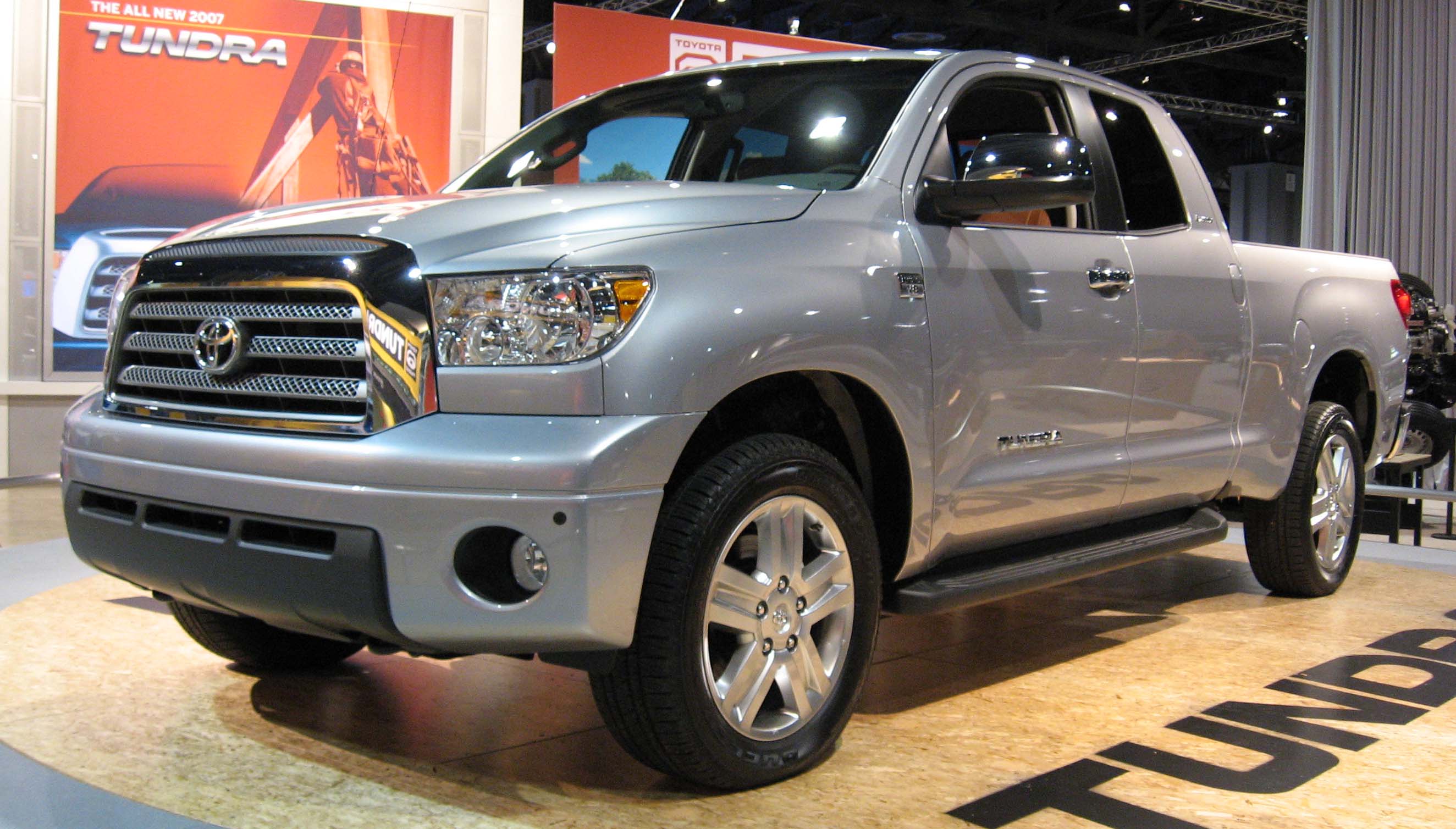
I mean, Toyota hasn't even done all that well with the Tundra in full size trucks.
Nissan.
Well, they, they killed the Titan, yeah.
You know, all you got to do is look at the Titan as an example of, let's, let's not go there.
It's hard enough for them to make, so what's the incentive for Hyundai then?
That's a good question.
Maybe they're just looking at their whole portfolio and just wanting to fill in a gap.
And because they're looking at Toyota like, well, Toyota can do it.
Why can't we do it?
And maybe they're not seeing enough other space to grow their sales.
You know, how many more Santa Fees can they sell?
How many more two sons can they sell?
You know, as it is, the sedans that they had stuck with for a while, not doing as well as they were.
Now, it's, it's, it's hard to figure out what exactly they're, you know, is motivating them.
So, okay, so shifting a little bit.
And I know you've written about this, Tanya.
We've been speaking about Nissan.
So a few weeks ago, they're head marketing guy who came to them from Lexus left.
And it doesn't sound good when the guy's been there for two years and decides to leave.
Yeah, I, I know Vinay, Shahadi, that's, that's what we're talking about.
And he, he went to AT&T and he has actually been commuting from Dallas to Nashville or Franklin for the last two years.
He's got a young family, a wife back in Dallas.
So he got a job back in Dallas, which she's probably going to make just as much money and have less headaches and less of a commute.
So I don't know that it's a reflection on Nissan.
Forget everything you had planned for this weekend because you are sitting on your couch and winning from the comfort of your own home.
I'm here with SpinQuest where you could play hundreds of slot games, all of the table games you love,
and you could even win real cash prizes.
New users, $30 coin packs are on sale for 10 at SpinQuest.com.
SpinQuest is a free to play social casino.
Boyd, we're prohibited. Visit SpinQuest.com for more details.
Fair enough. When I saw that he went to AT&T, I was thinking,
do you leave the auto industry and go to another industry?
So you know what? I heard, so I was talking to somebody this morning who was based in Europe and said,
hey, do you know what the number one job of a CEO of a European automotive supplier is?
And I said, no, what is that? To find a job outside the industry.
So, you know, here is a perfect example, very timely this morning that that came up.
But yeah, I think it's just, it's tough. It's a tough industry right now.
And we're in unprecedented times as far as all these challenges that are now coming on,
the traditional players, you know, the influx of competition coming from everywhere,
the technology change, all of this really creates a difficult time to operate in.
So these guys are looking for somewhere else to go.
So speaking of technology and then changing what's going on,
I mean, so there was the announcement that the H1B visas are now going to come with a price tag.
Okay, this industry needs more people who are tech savvy.
The people in Silicon Valley are rather concerned about this 100,000 bucks per person.
What is the impact of this going to be on auto?
So I think what you're going to start seeing is more and more investment in India.
You know, you're going to start seeing that software development,
that technology development around that is going to start moving off shore.
It's been happening for years. Yeah, it is. It is.
It is. But I think this is only going to continue to expedite that.
Because nobody is going to be able to afford to compete with software engineers
out of some of these third world countries where they're producing them at a very hefty rate.
It's hard to do it without 100,000 dollar price tag.
You know, to bring somebody into the country, let alone, you know,
you know, just trying to keep pace with these third world countries.
So if you look at Bosch, if you look at, you know, ZF,
they have huge, huge networks of suppliers and full-time employees that are based in, you know,
Mexico, you know, India doing this type of software development.
So my expectation is, is more of that is just going to go off shore because somebody will come up with the idea here,
but they'll find a team of engineers to develop it somewhere else because it's just cost-prohibitive.
This all makes sense, but doesn't that run counter to the philosophy behind tariffs, though?
I mean, isn't the idea that we want all this activity here?
We don't want to be excellent at this.
You know, and one of the things I would say, and I had this discussion with my 13-year-old about tariffs.
And the issue is, is ultimately, hey, at the end of the day, you know, if you're going to make a coffee pot,
where is the cheapest plates to make a coffee pot?
Is it here or is it where the labor rates are $1, $2 an hour?
You know, at the end of the day, that's what you're trying to compete with as far as labor-intensive products.
Now, will technology be produced in areas like this potentially?
You know, and I agree with you, the idea behind tariffs is to bring more and more, keep more of that work here.
But ultimately, you got to sell products in a global market, you know.
And the coffee pot that's made here versus the coffee pot that's made in a lower-cost country,
can you really tell the difference with modern manufacturing techniques?
You can't.
So that's the issue I think you ultimately get into when you start talking about tariffs in this manner.
So basically, what I think I hear you're saying is in two of you is that we will make stuff here,
that's the goal, right?
We bring reshore manufacturing and we'll be making this stuff here.
But the smart stuff will be being done somewhere else.
Yeah, where you can leverage lower-cost labor to do that.
And the issue that we have here is, you know, and it's been this way for the past several years.
We're just not producing as many engineers as, you know, other areas of the globe.
And those engineers from other areas of the globe have far different salary expectations.
As a matter of fact, you can go to any US-based, you know, master's program and the engineers are always from outside the country.
Because the engineers here that go get advanced degrees want to get business degrees,
because they see that as their path to affluence, where somebody in India or somebody in China sees their path to affluence coming here to get that advanced degree,
so they can get into an international company.
So I think this is a challenge that we have that you have to step back.
And again, my view would be to look at the broader industrial strategy and say, hey, what are we really trying to accomplish here?
And how do we incentivize, you know, the system to make the system work the way we want it to?
See, but when I hear like the state of Michigan talking, they want all that smart technology here because the state has lost a lot of manufacturing jobs.
We've got the GM Tech Center in Warren and Tech Center in Auburn Hills and Dearborn.
And then also the suppliers who have set up a lot of tech centers all over here, isn't that really important, like to the state economy, not to let that intelligence outside the country.
But, you know, let's, let's make this a hub for the most advanced technology that, you know, the mobility sector can can muster, but can they afford it?
Therein lies the problem.
Kind of more fun subject, Tonya.
Let's, let's discuss that Ford has announced that it has a new tagline ready set Ford.
Okay, so someone in this room had asked me the question of whether none of you guys are trying to draw me under the bus.
This is a very pertinent question I want to involve everyone in this conversation was basically that Ford has had a bit of an issue regarding recalls.
And so the question then becomes, Sean, the question then becomes whether they should spend more time going back to a tagline of quality as job one and fix these problems or whether they should spend what will undoubtedly not be a trivial amount of money on positioning themselves as your friend in your life going forward as they seem to be trying to do.
I don't think ready set Ford means they want to be your friend.
And just to be clear, they've been working on this campaign for two years.
Lisa Metarazo got hired by Farley explicitly to do this campaign.
So yes, they've had quality problems. They've had some recall issues.
So they've had a lot.
But you can't just take the marketing budget and put it toward the, you know, product development budget.
You know, whatever the quality budget, whatever that would be, it's two different ex, you know, two different things.
And we, when we saw the campaign at headquarters a couple of weeks ago, that came up, of course, we all asked her, you know, how, how can you put out this campaign when you're having all these quality issues.
And she said, this is not about that. This is about our overall brand image and, you know, people buy our vehicles for a lot of reasons, not just because of the quality.
They feel like the recalls are an acknowledgement that they're trying to fix the problems, you know, they're, they're trying to make the vehicles better for the long run before somebody dies.
So, you know, she acknowledged that they, it does seem to be a disconnect, but people want exciting vehicles.
They want, you know, products that aren't toasters on wheels is what I think she said.
And they don't sell toasters on wheels. And that's what they're, that's what they're trying to communicate.
It's, is that you were speaking about design before. And I'm going to ask you a design question any moment.
But, you know, it used to be that, you know, designers in this town, Ford designers in particular used to refer to Toyota Camry's as being toasters.
And that all the products from Toyota's were toasters.
Seems that those toasters are doing pretty well in the market.
If you look at the market share of Ford versus Toyota.
You see Camry's running a NASCAR. So, I mean, do they race toasters?
Apparently.
Well, it's interesting you say that because Lisa came from Toyota.
She was there for 20 years.
So, if anybody can make fun of toasters on wheels, I think she probably can.
And Farley came from Toyota.
Yeah.
And also, it's not necessarily fair to pick on Ford.
I know they've got...
I'm not picking on Ford, I'm asking a question.
And they've got a lot of recalls, but a lot...
I've seen how many recalls across the industry.
I mean, I was on one website today.
Like, seven automakers have announced recalls in the last week.
Wow.
This is just...
Talk about peak truck, about peak recall, you know?
And there have been studies that consumers actually pay less attention to recalls
than you may think, unless there are deaths involved.
Unless they're in their driveway, partly because they become white noise.
Well, yeah, there's so many of them.
There's so many of them.
Not just from Ford, from other automakers.
So, unless there's a death involved.
You know, if it's something like exploding air...
Oh, I didn't say that, exploding airbags or something.
There, indeed.
All right.
So, we're in a lighthearted.
We're in light.
So, this is a design question.
So, I read this Australian thing of publication that they were talking to the senior BMW designer.
You're talking about BMW 400 design, all of our helmet.
And he said, and this is a quote.
And I want your reaction to this.
For instance, what we have learned is that the station wagon is becoming more popular
in the United States.
Now, as you're an automotive journalist,
you're going to tell me station wagon with a manual transmission and a diesel engine
is what anyone needs.
It could be...
Yeah, you're right.
Or it could be just a meada.
So, anyway.
But yeah, I do...
I'm here with spinquest, where you can play and win
from the comfort of your own home with hundreds of slot games.
And all of the table games you love with real cash prizes.
Right now, $30 coin packs are on sale for $10.
For new users, it's all at spinquest.com.
That's S-P-I-N-H-U-E-S-T dot com.
Spinquest is a free to play social casino.
Boydware prohibited.
Visit spinquest.com for more details.
Find that a little odd.
If you think about what the US market has done with crossovers and SUVs,
you would think that the station wagon would...
I call the station wagon because that's what I remember growing up in.
And sitting in a rear-facing furrow seats and looked out the back window
that would go down.
The thing would hold down.
It was wild stuff.
You know, if you would say adults.
Yeah, the wood panel.
Yeah, absolutely.
Country squire.
Country squire, yeah.
So, in that sense, you know, it would make sense that the wagon
would be popular in the US.
You think you see me come back?
I mean, I would love for it to make it come back.
But it's not realistic when you look at how many rev fours and CRVs they sell.
Every day, it's astounding.
So the whole market has just migrated.
They've adopted that body style as the future of cars in the United States.
And yet, I saw a Volvo wagon on the road the other day.
I'm like, damn, that's a good looking car.
Yeah, it was.
Now, was this Tom Murphy?
A lot of journalists are Tom Murphy.
Tom Murphy consumer.
Tom Murphy consumer who can find one of those cars used and get a good deal on it.
And, you know, there's.
Yes, there's some nice BMW and Mercedes wagons.
If you can get your hands on the Audi.
Oh, the, yeah, the all road.
Oh, yeah.
And when you look at the Ferrari Puril Sangue,
does that not look like a little station wagon?
You know, Ferrari's answered to the SUV.
It's about as low as a Miata.
How they can get away with calling that an SUV.
I have no idea.
But when I look at that, I think of a station wagon profile.
I think of also the BMW M coupe.
If you remember the the high top sneaker from the early 2000s,
which is a really cool kind of groundbreaking body style that was like a station wagon.
Except it was two doors.
It was compact.
It was real sporty.
You get an M version.
The M coupe.
What a car.
It's interesting that that comes out of Australia.
Because any OEM would have briefed him if you were being interviewed here.
Don't refer to it as a station wagon.
Revered to it as a crossover or anything but a station wagon.
Because we all have that wood panel, you know, idea.
Just as you described that I don't think, you know, my wife has always said,
I'm never going to drive a minivan.
So I think it's interesting that you brought that up that way that this was in Australia.
That this was said so that they could quickly articulate to the market.
But there's no way Ferrari would refer to that car as a station wagon.
You know, although you look at it and you're right,
that is the perfect profile for a station wagon.
Not quite long.
I mean, yes, a station wagon in my mind has to be like 20 feet long.
It's got to be enormous.
Lots of room in there.
So it's,
and I don't even know what the market's like right now for station wagons in Australia.
Apparently.
Well, I think he was just there and this just came up during the law.
It was a broader conversation.
It was the atmosphere.
But I saw the station wagons and I just had to ask it.
But I didn't know that you'd be so excited about station wagons.
I mean, there is the, is it the M5 touring?
That is, you know, the BMW 5 series touring.
That I think they showed at Pebble Beach maybe a year ago.
And it's going to be on sale now.
And I think that's he's probably talking about it because that car could really be.
Kind of a canary in the coal mine.
Like, let's see how this one does.
Let's see this.
This could be something that would gain some traction.
So, so predicated on your positivity here.
I'm thinking that Hyundai missed the mark and they should not be developing a pickup truck.
They should see the station wagon.
All right.
And the last one.
Racing.
So, Cadillac is spending a boatload of money.
You have a figure which is astonishing.
I'm going to put my readers back on here.
Okay, you're going to find that while I also point out that today that Ford announced that
the Ford Racing hypercar team for Le Mans 2027 is established.
And they're going all in.
So what was the Cadillac is spending an estimated $1 billion total to enter Formula
One in 2026, including the $450 million upfront fee to join the grid.
So, how many Cadillacs are they going to sell?
You know, it's racing is just a halo thing.
You can't really measure it in terms of like somebody saw it.
And consumers don't even know it.
It's just they're going to think, wow, Cadillac's cool.
I don't know why I feel that, but Cadillac seems cooler now.
You know, and then it did five years ago or ten years ago.
Think about the brands.
Think about Porsche and BMW, for instance.
They are not in Formula One.
Mercedes is in Formula One.
But does it, do you think less of Porsche or BMW because they're not in Formula One racing?
I mean, I don't really see a huge connection between sales and the fact that a brand is active
in a particular race series.
I mean, maybe it impacts Camero sales or Mustang sales.
I know Camero has gone.
Camero sales.
Camero sales.
But anyway, it's an odd question that, you know, yeah, we all think about it.
We all wonder, is there some sort of a connection there?
But when I think about Porsche, they would or should be in Formula One.
Of all the brands out there, and they're not.
They don't need to be.
They don't need to spend $1 billion or $2 billion, whatever it takes.
And think about Cadillac in their first Lamar race didn't do so hot.
And I think there were a lot of expectations for that team.
Formula E.
Formula E.
Yes.
You're right.
You're right.
Porsche isn't Formula E.
So they were invested in Ferrari electric racing, yeah, for now.
Formula E is cool.
That's good.
That's awesome.
Good for them.
They win a different course.
Sorry, Paul.
Final question to you.
What could a company do with a billion dollars?
Oh, wow.
I think that's the topic for the next show.
All right.
Every year's worth of recalls me.
Harsh.
I need about six times that I do it this year.
All right.
So we're at the top of the hour.
This has been a lively discussion.
I think.
Good.
I could be wrong.
Tom Murphy.
Thank you.
Oh, I'm glad to be here.
Thank you for having me.
Thank you.
Thank you for having me again.
Paul, it's always great to have you on the show.
Thank you very much.
You make us all smarter.
All right.
Maybe you make me smarter.
These guys are already smarter.
I feel like I learned a lot today.
Yeah.
Thank you very much.
I want to thank everyone for watching.
Come back next week.
We'll be here.
Well, they won't, but I will.
Um, so we appreciate your time and.
Are thankful for it.
Thank you, Gary.
Well, thank you, Gary.
Auto line after hours is brought to you by.
Bridgestone Tires.
Solutions for your journey.
Forget whatever plans you have this weekend
because you're staying at home and playing on SpinQuest.
And there's never been a better time to sign up then right now.
New users get $30 coin packs for just $10.
All the table games you love with hundreds of slot games
and real cash prizes.
That's at SpinQuest.com.
S-P-I-N-Q-U-S-T dot com.
SpinQuest is a free-to-play social casino.
Boydware prohibited.
Visit SpinQuest.com for more details.
Tishana wanted to pay homage to her son.
I lost my son to cancer when he was just 14 years old.
And I came to United Health Care to make a difference.
She instantly made an impact on others.
Anything that I could do to honor him.
I understood I was once that person on the other side.
Through her work, she's been able to turn her pain into purpose.
I do it for my boy.
He gave me so much.
Hear more stories like Tishana's at UHC.com.
Request an explanation for:
23 cars
Scroll for more
23 cars featured
Request an Explanation
Heard something you'd like explained? We'll add it to this episode.
Sign in to request explanations for terms you heard.
Want to learn more?
Browse our glossary for plain-English explanations of automotive terms, jargon, and concepts.
See something that's not quite right? Our annotations are AI-generated and can sometimes miss the mark.
Click the flag icon on any annotation to suggest a correction.