
A deep dive into the integration of artificial intelligence in vehicles highlights consumer perceptions and the evolving landscape of automotive technology. Kathy Risker from JD Power shares insights from their Tech Experience Index study, revealing how AI features like smart climate control and generative AI are reshaping user experiences. Discussions also touch on privacy concerns, the effectiveness of voice recognition systems, and the future of driver monitoring technologies. The episode raises critical questions about consumer trust and the balance between convenience and data privacy in the age of AI.
"...the problems are having like we've been tracking that climate controls, you know, as we put them into the infotainment system has become a lot more problematic for drivers as it's a distraction right to go in there to try and adjust the climate."
An infotainment system is like a car's computer that helps you with navigation, music, and climate control. It's meant to make driving more enjoyable, but sometimes it can be confusing or distracting.
An infotainment system is a combination of information and entertainment features in a vehicle, typically including navigation, audio, and climate control functions. These systems can often be controlled via touchscreens or voice commands, but they can also be distracting for drivers if not designed intuitively.
"...But you've also found right that I mean this in car experience, the UX or whatever you want to call it is a high factor in dissatisfaction with cars..."
Smart climate controls are like automatic air conditioning that can adjust itself based on how warm or cool you want it. They help keep everyone comfortable without needing to fiddle with buttons while driving.
Smart climate controls are advanced systems in vehicles that automatically adjust the temperature and airflow based on the preferences of the driver and passengers. These systems can enhance comfort and reduce distractions while driving.
"...if you tie that with smart glass, which can actually tint the glass if the, you know, sun is coming in..."
Smart glass is a special type of window that can get darker or lighter depending on how sunny it is outside. This helps keep the car comfortable and can also give you more privacy.
Smart glass refers to windows that can change their tint or opacity based on environmental conditions, such as sunlight. This technology helps improve passenger comfort and can enhance privacy and energy efficiency in vehicles.
"...Go into that because we've all, you know, we all test drive cars here. Yeah. And we've experienced how bad most of the car companies voice recognition systems are compared to our phones..."
Voice recognition is a feature that lets you talk to your car to control things like music or navigation. Instead of pressing buttons, you can just say what you want.
Voice recognition is a technology that allows a device to understand and respond to spoken commands. In cars, it is used for hands-free control of various functions like navigation and media playback.
"...but will it just ultimately replace, you know, Apple CarPlay or Android Auto?"
Android Auto is a system that lets you use your Android phone's apps in your car, making it easier to navigate and listen to music while driving.
Android Auto is a mobile app developed by Google that extends the functionality of Android devices into the car, allowing users to access apps and services through the vehicle's infotainment system.
"...but will it just ultimately replace, you know, Apple CarPlay or Android Auto?"
Apple CarPlay is a system that lets you connect your iPhone to your car, so you can use apps and listen to music easily while driving.
Apple CarPlay is a feature that allows iPhone users to connect their devices to their car's infotainment system, providing access to apps, navigation, and music through a user-friendly interface.
"...Go to HarlemClubTrotters.com for your tickets to the 100 year tour. CarPlay Ultra."
CarPlay Ultra is a feature that lets you connect your iPhone to your car's dashboard. It makes it easier to use apps and listen to music while driving.
CarPlay Ultra is an advanced version of Apple's CarPlay, designed to enhance the in-car experience by providing more features and better integration with vehicle systems. It allows users to access apps, navigation, and media directly from their car's infotainment system.
"So speaking of car washes, now you car wash mode, I've never even heard of car wash modes. Talk to us about that one. Car wash mode is another one, especially in EVs."
Car wash mode is a setting in some cars that helps protect the vehicle when going through a car wash. It makes sure things like the wipers don't accidentally turn on and get damaged.
Car wash mode is a feature in some vehicles, particularly electric vehicles (EVs), that adjusts the car's settings to prepare it for an automated car wash. This may include disabling certain features like windshield wipers and adjusting mirrors to prevent damage during the wash process.
"So, as I said, I think one of the biggest areas will be ADAS. Once we start to improve those technologies, I think using AI to learn that behavior..."
ADAS means Advanced Driver Assistance Systems. These are smart features in cars that help drivers stay safe, like keeping the car in its lane or stopping automatically if something is in the way.
ADAS stands for Advanced Driver Assistance Systems, which are technologies designed to enhance vehicle safety and facilitate driving. These systems include features like adaptive cruise control, lane-keeping assist, and automatic emergency braking.
"...I think we're going to start to see greater acceptances. We move to fully automated self-driving vehicles."
Self-driving vehicles are cars that can drive themselves without needing a person to control them. They use technology to see and understand the road around them.
Self-driving vehicles, also known as autonomous vehicles, are cars that can navigate and drive themselves without human intervention. They use a combination of sensors, cameras, and artificial intelligence to understand their surroundings and make driving decisions.
"...I like to point out that traffic fatalities and crashes today are higher. Then they were before all this ADAS technology came on board."
Traffic fatalities are when people die in car accidents. Even with new safety features in cars, these numbers can still be high.
Traffic fatalities refer to deaths that occur as a result of vehicle accidents on the road. Despite advancements in vehicle safety technologies, the number of traffic fatalities can still be a significant concern.
"Well, I think one of our number one technologies this year was actually the smart ignition, right? So, you know, just took out the step of actually having to push it, right, to get the vehicle to start."
Smart ignition means you can start your car without having to push a button or turn a key. You just need to have a special key fob or your phone with you, and the car will know to start.
Smart ignition is a technology that allows a vehicle to start without the need for a traditional key or button push. It typically involves a key fob or smartphone app that communicates with the vehicle to enable starting with just the presence of the key.
"Obviously, that's on EVs right now, but that was our number one technology."
EVs stand for electric vehicles, which are cars that run on electricity instead of gas. They are known for being better for the environment and often come with modern features.
EVs, or electric vehicles, are cars that are powered entirely by electricity rather than traditional gasoline or diesel. They often feature advanced technologies like smart ignition and are becoming increasingly popular due to their environmental benefits.
"And that was followed followed by the blind spot camera. So they love the blind spot camera."
A blind spot camera helps drivers see areas they can't normally see when driving, making it safer to change lanes or back up.
A blind spot camera is a safety feature that provides a view of areas around the vehicle that are not visible to the driver, particularly in blind spots. This technology helps prevent accidents when changing lanes or backing up.
"When you say this, the auto start, I mean, so basically for the EVs, when you get in the car, it's going, you just put it in drive and you go."
Auto start means that in electric cars, you can just get in and drive without having to press a button to start the car first.
Auto start refers to a feature in electric vehicles (EVs) that allows the car to be ready to drive as soon as the driver enters and puts it in gear, without needing to press a traditional start button. This feature enhances convenience and efficiency.
"...minated some of the things that are so good about Genesis and Hyundai. What else would you add?"
The Hyundai Genesis is a nice car that feels fancy and comfortable, but it's usually less expensive than other luxury cars. It's made to give you a high-quality driving experience.
The Hyundai Genesis is a luxury sedan that was designed to compete with high-end brands, offering premium features and a comfortable ride. It is significant for its value, providing luxury at a more affordable price point.
"...states are looking at gasoline taxes going down. Part of that is driven by electric cars."
A gasoline tax is a fee added to the price of gasoline that helps pay for roads and highways. If the tax goes down, it means people might pay less for gas.
A gasoline tax is a tax imposed on the sale of gasoline, typically used to fund transportation infrastructure such as roads and bridges. Changes in gasoline taxes can impact consumer behavior and government revenue.
"...part is driven by electric cars. The other fact is that all vehicles are just getting more efficient using less fuel."
Electric cars run on electricity instead of gasoline. They are better for the environment and can save money on fuel costs.
Electric cars are vehicles that are powered entirely or partially by electricity, using electric motors instead of internal combustion engines. They are known for being more environmentally friendly and often have lower operating costs compared to traditional gasoline vehicles.
"...instead of a gasoline tax, they'll have a mile tax. So they'll track how many miles your car goes in the world..."
A mile tax would charge drivers based on how far they drive instead of how much gas they buy. It's a way for states to keep money for road repairs as cars use less gas.
A mile tax is a proposed tax system where drivers are charged based on the number of miles they drive, rather than on the amount of gasoline they purchase. This system aims to maintain revenue for road maintenance as electric and fuel-efficient vehicles become more common.
"...every car today has a digital digital radio. Yeah."
Digital radio is a way of broadcasting radio stations using digital signals, which usually sounds clearer than regular radio. It can also show extra information like what song is playing.
Digital radio refers to radio broadcasting that uses digital signals instead of traditional analog signals. This technology provides better sound quality and more channels, often including additional information like song titles and artist names.
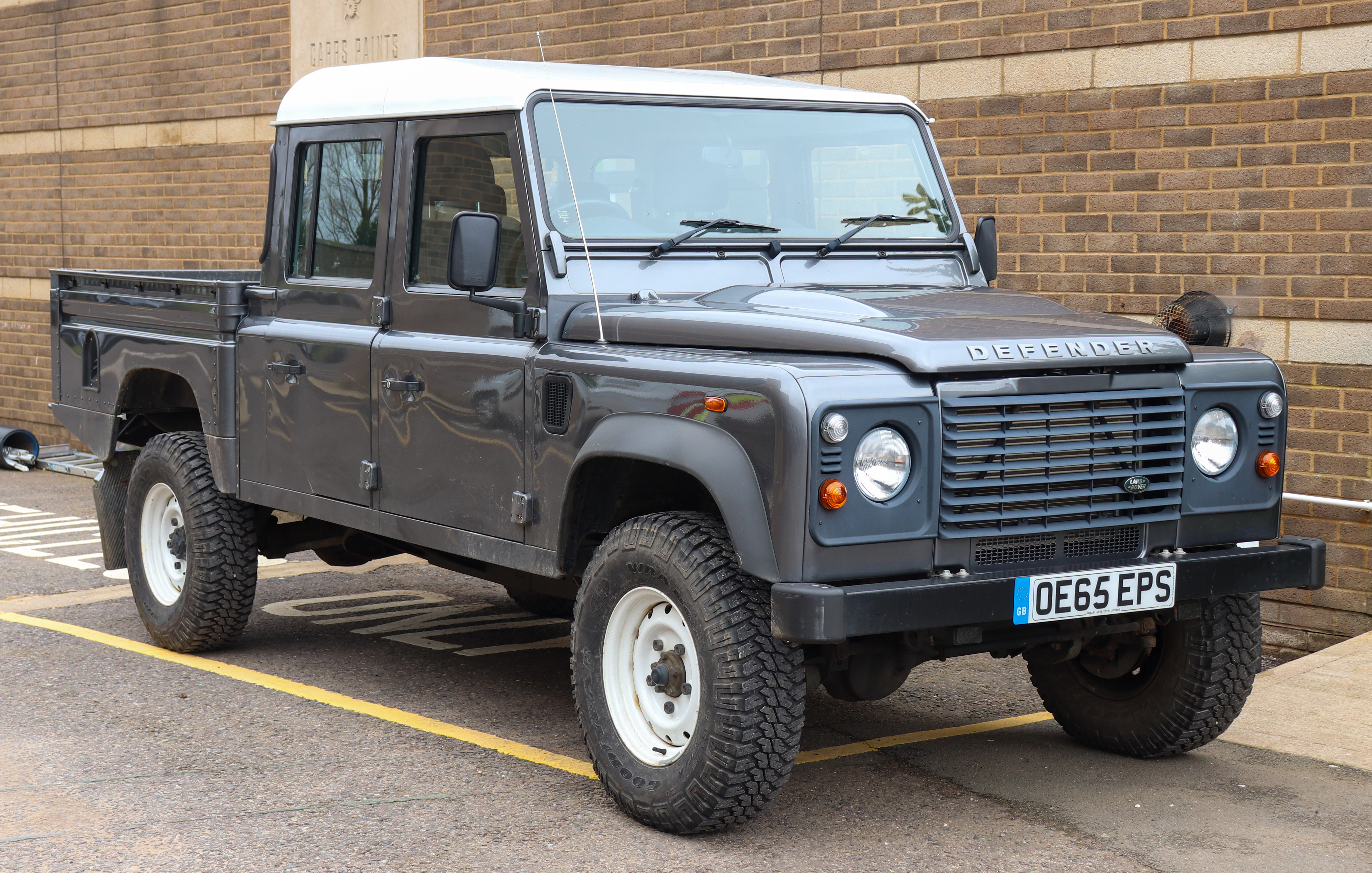
"...the Land Rover Defender is the premium model receiving the comfort and convenience awards for its advanced air purification system."
The Land Rover Defender is a tough and stylish SUV that can handle rough terrains. It's also designed to be comfortable and has many high-tech features.
The Land Rover Defender is a rugged SUV known for its off-road capabilities and luxury features. It has been redesigned in recent years to incorporate modern technology and comfort features, making it a premium choice in the SUV market.
"...to be able to hit a button and instantly clean my air and make it faster and noticeable. And that's one..."
The Lucid Air is a fancy electric car that can go really far on a single charge. It's known for being fast and having lots of cool technology inside.
The Lucid Air is a luxury electric sedan that has garnered attention for its impressive range and high-performance features. It represents a significant step in the electric vehicle market, showcasing advanced technology and design.
"I was surprised that in the third quarter it's sold 5,385 cyber trucks. Really."
The Cybertruck is a unique-looking electric truck made by Tesla. It's designed to be very strong and has a futuristic look.
The Tesla Cybertruck is an all-electric pickup truck known for its distinctive angular design and high durability, featuring a stainless steel exoskeleton and armored glass.
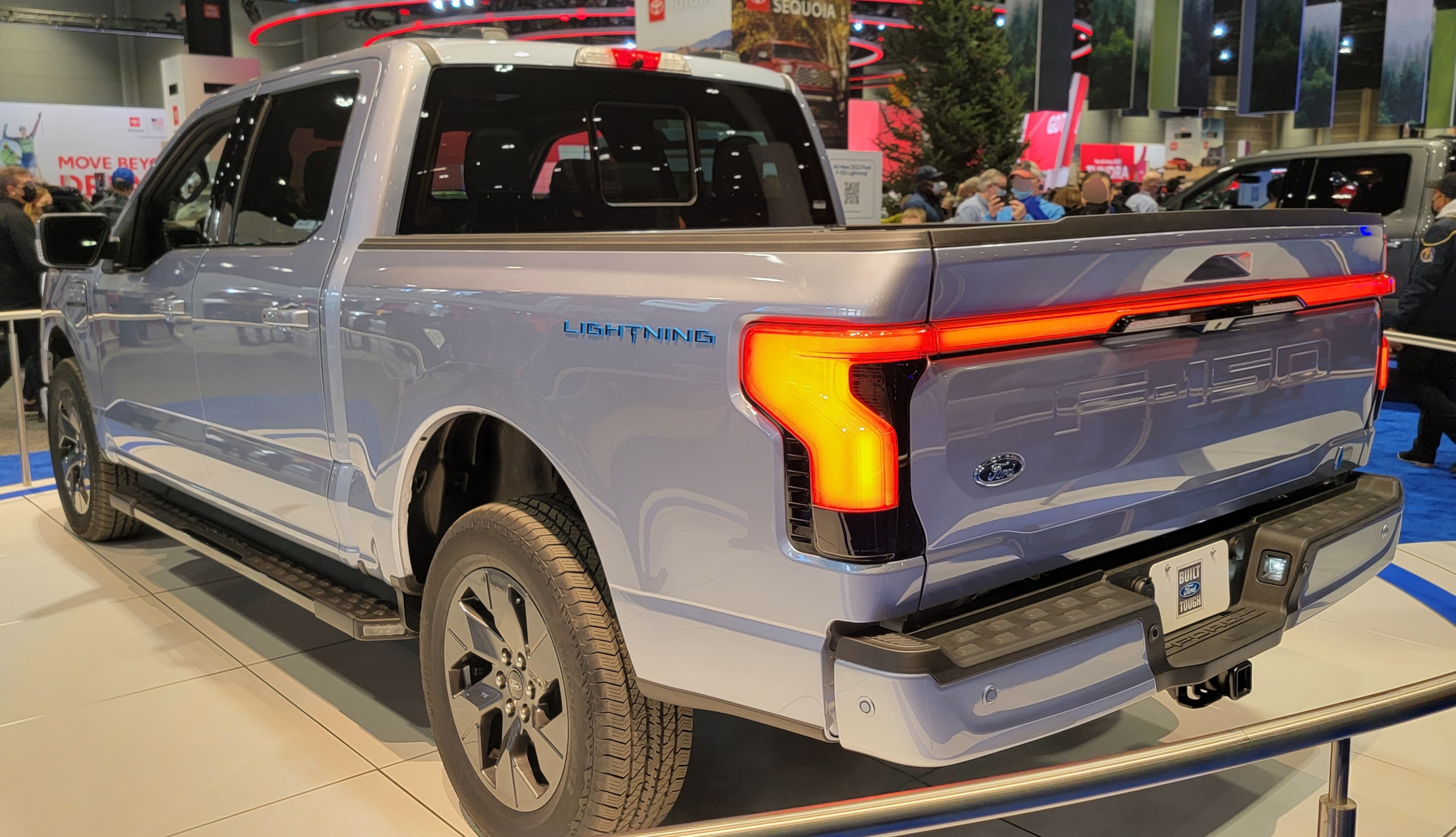
"...if you look at the Ford Lightning, if you look at the Chevrolet Silverado,..."
The Ford Lightning is a new electric pickup truck from Ford that offers a lot of power and features, similar to the regular F-150 but with an electric engine.
The Ford Lightning is an electric version of the Ford F-150, known for its performance and utility as a full-size pickup truck.
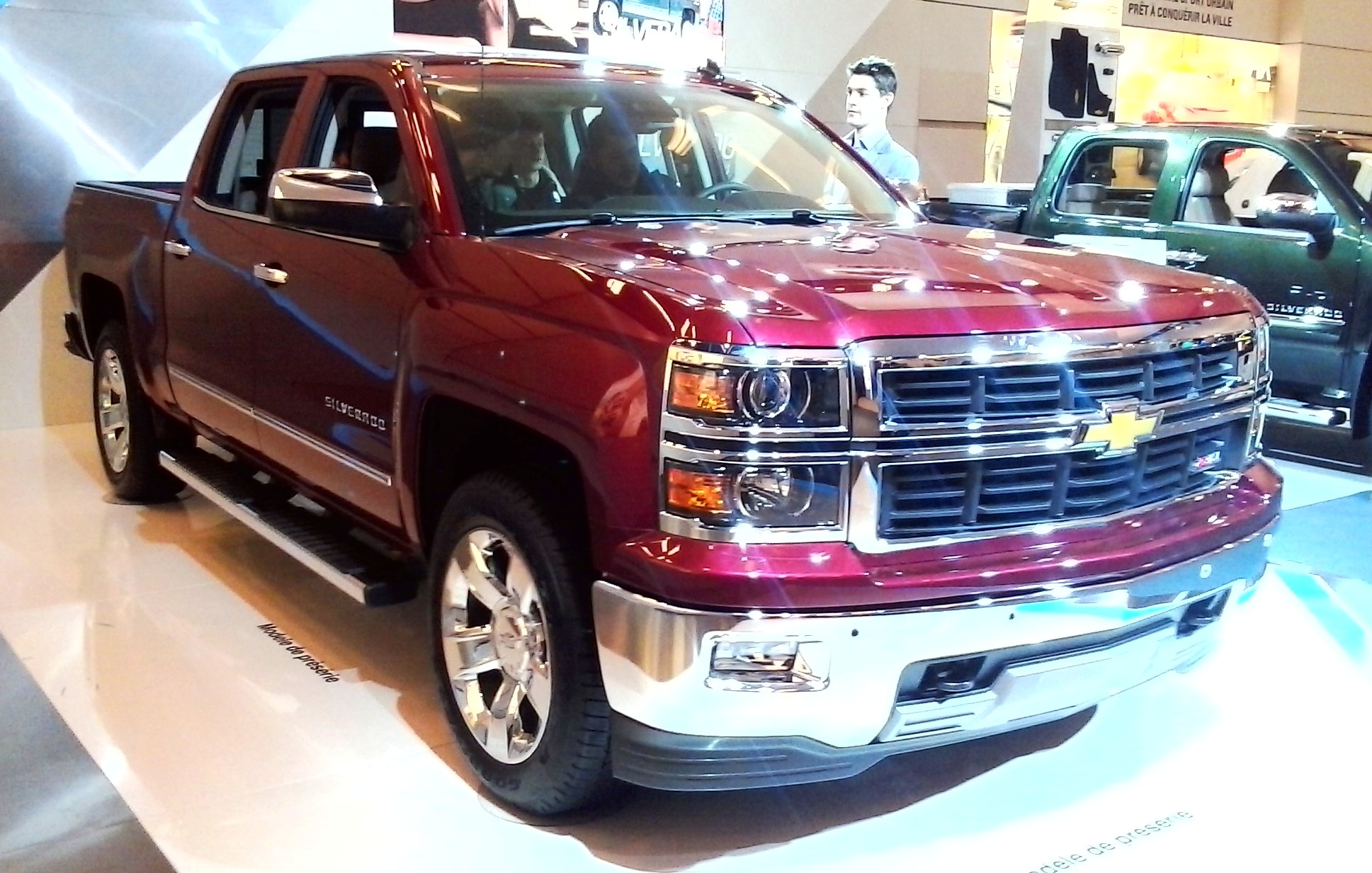
"... the Ford Lightning, if you look at the Chevrolet Silverado, the Ram Electric, which is never going to happen..."
The Chevrolet Silverado is a big truck that people use for work and play. It's known for being strong and able to carry heavy loads, making it a popular choice for many drivers.
The Chevrolet Silverado is a full-size pickup truck known for its durability, performance, and versatility. It has been a staple in the truck market for decades, often discussed for its capabilities in both work and recreational settings.
"Full size pickup truck. But it's also. It is a full size pickup truck."
A full size pickup truck is a big vehicle that can carry heavy loads in the back and has room for passengers. People often use them for work or family trips.
A full size pickup truck refers to a larger category of trucks designed for heavy-duty tasks, often featuring a spacious cabin and a larger cargo bed. These trucks are popular for both work and family use due to their versatility.
"but we bought the hybrid so that we could get better fuel economy."
A hybrid car uses both a regular gas engine and an electric motor to save fuel and produce less pollution. It can switch between the two to be more efficient.
A hybrid vehicle combines a traditional internal combustion engine with an electric motor to improve fuel efficiency and reduce emissions. They can operate on either the engine, the electric motor, or both simultaneously.
"... electric truck and so that brings you to the new ram, the, the rev. The, uh, the, uh, the, uh, the e-r..."
The Dodge Ram is a big truck that can carry heavy things and pull trailers. It's popular for work and has a reputation for being strong and reliable.
The Dodge Ram, now known as the Ram Truck, is a line of full-size pickup trucks recognized for their powerful engines and towing capabilities. It is often discussed in the context of performance and utility, especially with the introduction of electric models.
"...if there's bidirectional charging and, you know, I can plug it into my house. If the power goes out, there's not now you're starting to talk to me about other things that yeah, I'll start to consider it."
Bidirectional charging means an electric car can give power back to your house or the grid. So, if your home loses power, your car can help keep the lights on.
Bidirectional charging allows an electric vehicle (EV) to not only draw power from the grid to charge its battery but also send power back to the grid or to a home. This can be useful in emergencies when the power goes out, allowing the vehicle to act as a backup power source.
"...ing it in the grand wagon here rather than in the grand Cherokee, let's say. And it makes sense, I think, at least..."
The Jeep Grand Cherokee is a type of vehicle called an SUV, which is great for driving on rough roads and taking trips with family. It has a lot of space inside and can handle different terrains, making it a popular choice.
The Jeep Grand Cherokee is a mid-size SUV that combines off-road capability with luxury features. It is significant for its ruggedness and versatility, appealing to both adventure seekers and families.
"...we see Chrysler with what one vehicle, right? The Pacifica. Yeah."
The Chrysler Pacifica is a family van that has lots of room for kids and their stuff. It's designed to make traveling with a family easier and more comfortable.
The Chrysler Pacifica is a minivan that stands out for its family-friendly features and spacious interior. It has gained attention for its innovative technology and versatility, making it a top choice for parents.
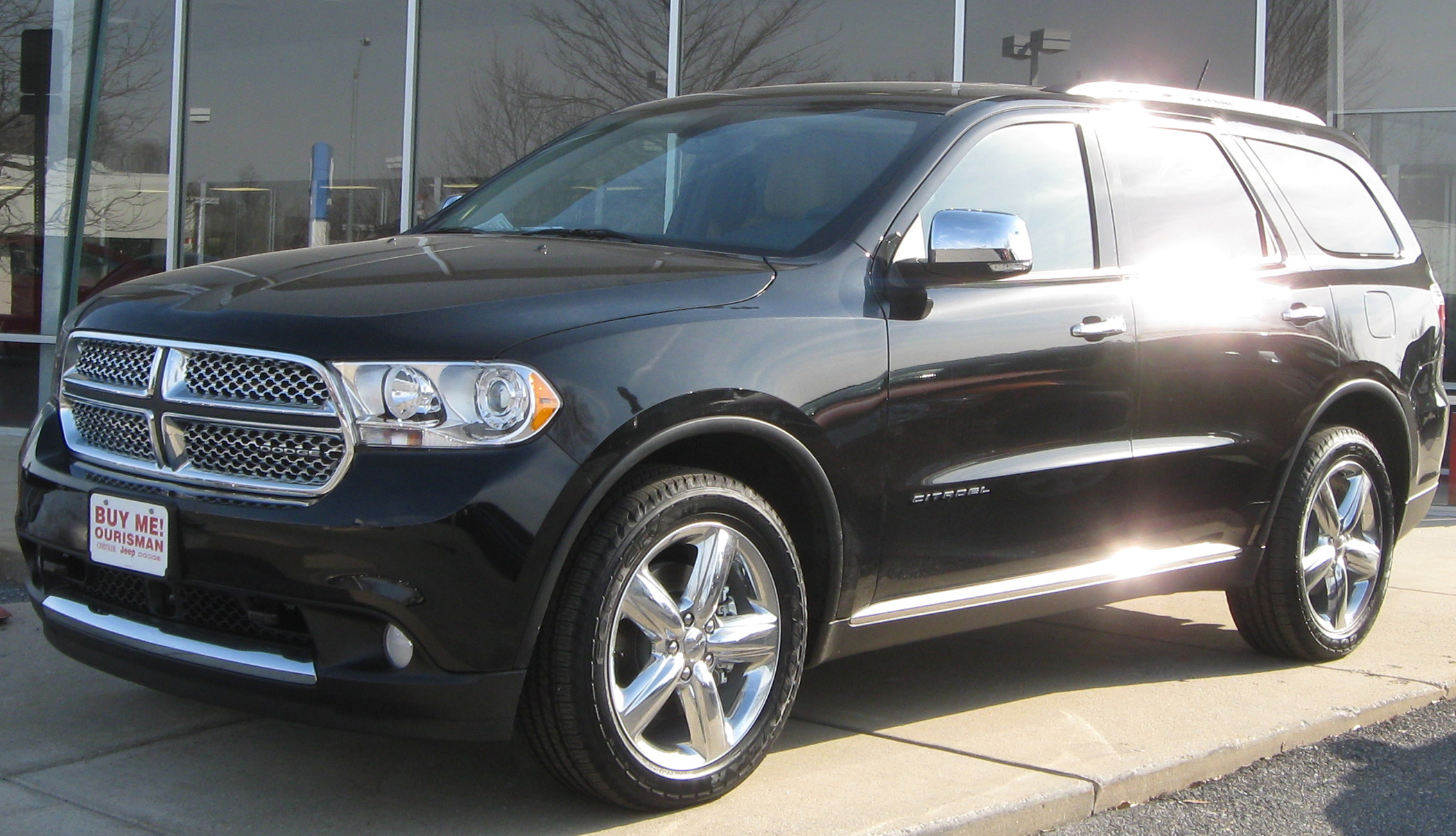
"...part of this money will be spent for a new Durango, which I'm sure people would like to see."
The Durango is a larger SUV made by Dodge, known for having a lot of space and good performance.
The Dodge Durango is a mid-size SUV that offers a combination of performance, space, and towing capability, making it a popular choice for families and those needing utility.
"...Chrysler North America, I'll call it Chrysler. Stellantis North America accounted for 60% of the company's profits."
Stellantis North America is the company that manages several car brands, including Jeep and Dodge, after a merger of two big car companies.
Stellantis North America is the North American division of Stellantis, a multinational automotive manufacturer formed from the merger of Fiat Chrysler Automobiles and PSA Group, overseeing brands like Jeep, Dodge, and Chrysler.
"... close to that. They had, they were going to have Orion build electric. Now they're converting it to ice ..."
The Ford Orion is a small car that was made by Ford a long time ago. It's known for being easy to drive and good on gas, but it's not as popular now.
The Ford Orion was a compact car produced by Ford, primarily known in certain markets for its practicality and efficiency. Although it is less commonly discussed today, it represents Ford's historical approach to compact vehicle design.
"...they're competing with Rolls Royces Bentley. My question to you, Jay, is what will that be vis-a-vis the celastic?"
Bentley is another brand that makes very luxurious cars, similar to Rolls Royce. They focus on high-quality materials and powerful engines, making their cars very desirable.
Bentley is a British luxury car manufacturer that produces high-performance vehicles known for their combination of luxury, performance, and craftsmanship. Bentley cars are often seen as a symbol of wealth and exclusivity.
"...they're competing with Rolls Royces Bentley. My question to you, Jay, is what will that be vis-a-vis the celastic?"
Rolls Royce is a very famous brand that makes super luxurious cars. They are known for their high quality and expensive vehicles, often seen as a status symbol.
Rolls Royce is a British luxury automobile maker known for its high-end vehicles that emphasize craftsmanship, luxury, and performance. The brand is synonymous with opulence and is often considered one of the top luxury car manufacturers in the world.
Select text to request an explanation
This isn't just a game, it's a once in a generation event. The Harlem Globetrotters 100-year tour, celebrate 100 years of high-flying dunks, 100 years of show-stopping moves, and 100 years of changing the game. Bring the whole family and be part of the legacy. This game is once in a century. Be there at MotorCenter on January 24th. Go to HarlemGlobetrotters.com for your tickets to the 100-year tour.
AutoLine After Hours is brought to you by Alex Partners when it really matters, and by Borg Warner. The automotive industry continues to evolve and so do the opportunities to define it. Borg Warner, one of the world's most admired companies, gets partners where they need to go. Let's do something big together. Welcome everybody to AutoLine After Hours. I'm going to have an interesting discussion today on artificial intelligence.
Intelligence in cars. We're going to get into the news of the week in the second half of the show, but Gary is always good to have you here. Good to be here. Missed you last week? I know. I was at a conference that I learned a whole lot about things going on in the industry. It was good, but I did miss the show.
So we got to let everybody know. We've got Kathy Risker from JD Power and Associates. She's done some very interesting research into what consumers think about all this AI stuff coming into cars. And we've got our colleague Perry Stern back on the show and Perry, great to have you here. Great to be here.
So Kathy, AI, in cars, what did you set out to try to figure out what kind of research did you do tell us about it?
So I lead our tech experience index study. So that looks at advanced technologies in the vehicle. And so we started last year to dabble in it a little bit. We have 40 technologies in the study and we started to put a few of the AI technologies in there.
And then for this year, we added seven in total. So we are looking at things like generative AI that's learning that behavior from the customer, you know, as they're driving, you know, what are those requests they're asking for?
To smart climate control where it can automatically sense if, you know, the sun is coming in the passenger side. It not only adjusts the temperature, the fan speed, but the vents.
And so several technologies like this. And we wanted to measure that impact. Normally, we're looking at like the HMI experience for these technologies and what the user.
You know, any problems the users having or anything that delights them. But this technology doesn't really have that HMI experience. So it was a very different area for us.
So Kathy, these are technologies that are actually in vehicles. This isn't something that you guys are saying, well, someday we'll do this.
Yeah, no, these are actually in the vehicle. And so they're not on a lot of models yet. There's only on each technology is only on a handful.
But you've also found right that I mean this in car experience, the UX or whatever you want to call it is a high factor in dissatisfaction with cars.
It's a combination, right? So, you know, we found that some of this technology reduced some of the problems are having like we've been tracking that climate controls, you know, as we put them into the infotainment system has become a lot more problematic for drivers as it's a distraction right to go in there to try and adjust the climate.
And with smart climate controls, they're not having to go in and actually interact with that. So they they're really embracing that technology. They feel like it reduces that driver workload and it's less distracting.
But there are some of these technologies, you know, that they don't want the vehicle learning too much of the manufacturer actually learning too much about them.
So, you know, when you're talking about the smart climate control, so many vehicles have automatic climate control, you said it at 72 and it goes to 72.
Right. This is more specific to the passenger and to the driver and it's to the vehicle in general. But I was just giving that one example, but it's a step beyond auto.
So it can adjust the vents, right. And you know, if you tie that with smart glass, which can actually tint the glass if the, you know, sun is coming in. So we're starting to see all of this stuff where the driver has to do a lot less.
Do people like the fact that the car is doing all this for them or does it make the nervous?
I think for some people, they don't even realize, right, that that workload's been reduced, but, you know, others are really welcoming the fact that it's, you know, we have like, you know, smart driver preferences that learns if you want a certain ambient lighting at night or you put your seating position in a particular way or use, you know, one driver mode in the morning in a different drive mode at night.
So they like that it's learning their behavior and it's, you know, it's, you know, doing that work for them. But on the other hand, they don't really want the auto manufacturer tracking.
You know, what is that voice, you know, recognition type question, they're asking or, you know, with the direct driver monitoring camera.
So, and they have concerns about all this data privacy of what's happening with all this information that's being collected.
Yeah, I want to get into that. But, but let's go. You send us some slides and one that I thought was very interesting was using generative AI to improve the native infotainment system.
IE, the one that the automaker has put in the car and you just touched on voice recognition.
Go into that because we've all, you know, we all test drive cars here. Yeah.
And we've experienced how bad most of the car companies voice recognition systems are compared to our phones, which handled it easy breezy.
And what I've been told is that's because your phone puts the inquiry up into the cloud where there's massive computing power versus your car that unless these car companies put in very expensive microprocessors, they can't do it.
But it sounds like maybe AI is cleaning that all up.
AI is helping. So, we've seen this advancement in the voice assistant, right. For years, it wasn't connected to the internet. Then most of them became connected to the internet and it got better, but it didn't change drastically. Right.
And now we have generative AI. And it's really starting to help because it's learning what the customer's going to be asking. So, you know, once it starts to understand that better, right.
The customer is starting to have a better experience. And what we found, I thought was very interesting is people are using the infotainment system more on vehicles that have generative AI.
And I would tell you that most customers don't know they have generative AI, right. But they're finding that it's working better for them. And so we're seeing them use the native navigation system more. They're using the voice assistant more.
And in total, when we ask them, you know, their infotainment system, those that are using generative AI, we've seen an increase in the percent actually using that versus Android Auto or Apple CarPlay.
Is there any way to tell if your car's got generative gen AI in it?
I think it's very hard for them to know if they have that.
Very interesting. So, I mean, is this something that auto makers are keeping under the radar as it were?
Is it something that you think could be promoted as a feature?
I don't think right now a lot of them are promoting it as a feature, but I think they could, right.
Because of the benefits we're already starting to see very quickly in terms of customers using that system more. But, you know, in, you know, all fairness, some of those systems are a OS with gas, right.
So, some of them are Google's, you know, system that's integrated into the car.
But not all of them, you know, companies like Mercedes is offering this technology and several other manufacturers.
Do people still prefer to use Android Auto or Apple CarPlay though since those, as you were saying, you know, the voice recognition in those systems work so well.
And I think people get used to that and they want to have the familiar interface.
Is that something that people aren't going to give up very easily?
I don't think they're going to give it up easily, but we are seeing an increase.
And I think that was like a step in the right direction in what?
In using the native system. So, you know, we think that's a step in the right direction. But will it just ultimately replace, you know, Apple CarPlay or Android Auto?
I don't think so, not right now.
Well, the automakers would love to have a fighting chance.
They would have the fighting.
There's a royalties on this stuff.
I was looking just earlier this week at iPhone sales. I mean, there are so many iPhones out there.
And so, there are so many people who are familiar with that interface.
There's no way in hell that the entire auto industry combined can get anywhere even near that.
So, I just don't see that as being a possibility.
Although it is surprising that some car companies have started to remove it.
General Motors, well, their EVs no longer offers it.
Which is an else doing.
Yeah, exactly.
But I have no idea how much that GM is doing a better job than most in selling EVs.
But in some way, well, in some ways where they have an advantage is they can use us to control more than what CarPlay or Android Auto could.
So, they can do a lot more things.
Like what?
You know, like controlling the temperature, right?
Or, you know, ultimately we can see more, you know, more long-term potential from the automaker using this for other applications in the car.
And not just within infotainment.
This isn't just a game.
It's a once in a generation event.
The Harlem Globetrotters 100 year tour.
Celebrate 100 years of high-flying dunks.
100 years of showstopping moves.
And 100 years of changing the game.
Bring the whole family and be part of the legacy.
This game is once in a century.
Be there at MotorCenter on January 24th.
Go to HarlemClubTrotters.com for your tickets to the 100 year tour.
CarPlay Ultra.
They're getting more. They're also getting more.
I'm not saying they're not, you know, it's a battle, right?
But, you know, it is a little, it's a small win for the automakers that have this right now.
What has your research turned up in terms of driver monitoring?
People concerned about privacy and data and that sort of thing?
Yeah, so data privacy in general, if I can take a step back for a minute.
You know, when we look at any of those connected technologies, that is a big concern.
When we ask, you know, what improvements are needed for these type of technologies,
whether it's your music, your phone, you know, they're very concerned about the fact
that there isn't great data privacy rules, right?
And so that comes up almost in the top three improvements.
When we ask, you know, what needs to be changed with these various technologies?
And when we look at direct driver monitoring in total, right?
There is very concern about, you know, that camera watching them.
And it's not truly recording it in the vehicle, right?
The automaker is not using a video of them, you know.
But I don't think customers truly understand that.
And what irritates them the most is really all the notifications, right?
You know, pay attention.
If you look out the window for a second, you're getting a notification, right?
And it's frustrating.
You even had their frustrated, I think Hyundai is the one that does it, that if the car in front of you,
if you're stopping at a stoplight or stop sign the car in front of you pulls away,
you'll get a notice, hey, the car in front of you is pulling away.
And people don't like that.
Yes, several automakers.
You know, and, you know, to speak out for them, right?
They're trying to make the road safer, right?
And several automakers offer that.
But when they connect direct driver monitoring to more than active driving assistance,
you're getting more notifications.
So like, when you have the lead vehicle going, you get more complaints around the fact,
you know, that they don't want all those notifications.
They don't want to be watched all the time.
So as AI being used, I mean, most of the examples you gave were around infotainment, climate, things like that.
Yeah.
As there any application for actual driving, I mean, changing the way the driving systems
work, transmissions work, things like that, just based on how you're driving the car.
I think there's a lot more going on with AI behind the scenes that the consumer doesn't know.
And I'm hoping the one area that eventually will see more as the ADAS technologies, right?
Because the number one complaint, regardless of our technologies we track in TXI,
is that it doesn't drive the way I do.
So until you start to better mimic that driver's behavior,
you'll have a hard time with acceptance and trust.
And TXI for those who don't know is tech experience index study.
That's the JD power.
Yeah, that's where we measure these advanced techs every year.
So one of the findings that I thought was a bit surprising was 62% of the people want in car payments.
What's that all about?
Well, I think it's kind of a theme we're seeing, whether it's these smart technologies
or whether it's other technologies that can make the drive experience more convenient.
So, you know, we saw things like in car payments, but what they want is tap and go, right?
They don't want, you know, 12 steps in order through the infotainment system in order to pay for fuel or pay for parking.
You know, they want what they have on their phone.
They want it very simple and very fast.
And so I think there's a high desire for that type of technology,
but we haven't executed it as an industry very well.
Well, I want to hear more because when you said car payments, I'm thinking the monthly payment on the car.
Who wants to pay in their car to do that?
No, I mean consumers are looking for things to make that drive even simpler,
whether it's paying for parking, paying, you know, for charging, for fuel, you know,
reserving parking and even car washes came up as number five in terms of what they want to use in car payments for.
But they don't want to go in the infotainment system, you know, or in their phone and make all these different,
you know, steps in order to complete that purchase.
They just want to tap and go.
So speaking of car washes, now you car wash mode, I've never even heard of car wash modes.
Talk to us about that one.
Car wash mode is another one, especially in EVs.
It's really another technology that customers want.
But the problem is a lot of people don't go to the car wash every day.
And so they don't remember where this feature is housed in the infotainment system.
But what it would do is it will roll up the windows for you.
It might shut off the proximity sensor.
You know, it might close.
Put it neutral.
Put it neutral.
Right.
It does all this for you.
And then when you exit the car wash it automatically as you get up to speed,
well, you know, put it back to where it was.
But what happens is they get in line in the car wash.
And they panic because they can't remember where in the infotainment system it is.
And, you know, and they feel like there's people behind them.
And now there's pressure, right, to get it done.
And so this one too is just a good idea that's still too complicated.
Damn it.
After all the windows up.
You have to do all the work yourself.
Yeah.
But it's kind of on that theme of making this simpler.
No, this is fascinating.
So, you know, dream a little bit.
Where's this AI going?
I mean, how much of your car's AI will recognize you, your life, your lifestyle,
the fact that you're at a car wash or your parking or whatever.
Yeah.
How all encompassing can this become?
I think we're at the tip of the iceberg of what it can do.
And, uh, how do you?
Who's going to drive this?
Is it going to be the tech companies or is it going to be the auto companies that figure out how to do this?
I think the auto companies are actually really embracing this one a bit more.
So, as I said, I think one of the biggest areas will be ADAS.
Once we start to improve those technologies, I think using AI to learn that behavior,
I think we're going to start to see greater acceptances.
We move to fully automated self-driving vehicles.
Interesting that you say that because I like to point out that traffic fatalities and crashes today are higher.
Yeah.
Then they were before all this ADAS technology came on board.
So, if a AI can make it more effective, maybe it can finally start to produce the results we were looking for.
Yeah. I would hope so.
I don't know. I'm not an engineer, right?
But I'm hoping that that's where we see it going.
So, Kathy, one of the things that you guys sort of posited is that going forward,
that it won't be so much a problem with things broken as much as it will be a problem with, say,
biometric identification or getting into screens way back, you know, back there somewhere.
Yeah.
So, I mean, how will this all be sorted out, do you think?
Well, I think what we're seeing right now is, you know, the automakers are trying to replicate some of your experience from your smartphone.
So, we see things like fingerprint reader or facial recognition.
And that's been really problematic.
You know, when you use it on your phone and you have how many times a day you go into your phone,
it works pretty well.
But even your phone, we've moved away from fingerprint reader.
In the car, we haven't, right?
And we're using it to start the car, to load your vehicle, you know, your profiles, right?
So, all your settings in the vehicle load.
And it doesn't work consistently.
So, customers are very, very frustrated using a technology that's redundant, right?
You know, we have a lot of ways.
You know, we have some cars have facial recognition to get in, some use fingerprint reader to start.
We have other ways to do that that have worked well for years.
We're adding this complicated, you know, it seems cool, right?
This technology, but it doesn't work for most people.
You know, the majority of the time they have to try multiple times.
One of those things that are cool for a couple of minutes and it's like,
well, what can I just push the button and start the car?
I don't need to do this.
Exactly.
You don't need to get your finger just right on the fingerprint reader.
Yeah.
That's been a big problem with the industry is it's coming up with all this cool technology.
They put it into cars, which drives up the price.
And then they find out that consumers don't even use it or rarely use it.
What would be some of the guidelines that you might give on what is what your research has turned up that people really like?
Well, I think one of our number one technologies this year was actually the smart ignition, right?
So, you know, just took out the step of actually having to push it, right, to get the vehicle to start.
But that one was, you know, number one.
Obviously, that's on EVs right now, but that was our number one technology.
And that was followed followed by the blind spot camera.
So they love the blind spot camera.
And that one we see with the eight us technologies when, you know, someone provides a technology that supports a known issue like blind spot when backing up or changing lanes.
Even if they find it to be a bit problematic or a bit annoying, they still rate it much higher because they can see the value that technology is bringing.
When you say this, the auto start, I mean, so basically for the EVs, when you get in the car, it's going, you just put it in drive and you go.
Yeah.
As opposed to actually hitting a start button.
Right.
And that's what people really like.
They do like that.
Interesting.
I wouldn't expect that that.
A lot of it's like the test for like, we know who likes that.
Yeah.
I always found it a little unnerving.
Yeah.
There are people who don't know like it was a walk away.
Is it really going to shut off?
Right.
Right.
And then you go back to check the doors and you realize that touching the door to check the door, you've unlocked the door.
Yeah.
So it's just started.
This endless loop.
No, it's something that I think, you know, we just got to get used to.
But I'm sure we've all experienced that.
You know, you pull in with the EV test car.
You put it in park.
You get out of the vehicle.
And then five minutes later, you're peeking outside to see if it really turned off.
Yep.
That's for sure.
So I'm one of the things that I was fascinated with with your study is, you know, you.
All the car makers are included in it.
And you have Tesla and Rivian that are like unofficial.
But.
But they score really high.
I mean, Tesla is 873 out of a thousand and Rivian 730 out of a thousand.
And then the one that you can count because you have access to all their information is Genesis, which is at 538.
Yeah.
So what is it about those two vehicles that sets them head and shoulders above the rest of the industry?
It's really about the advanced technologies they're offering.
So they're offering a lot of technologies.
And in our study, not only have to offer, but your customers have to be using it.
So, you know, their customers, you know, we're Tesla and Rivian tend to use a lot more of that advanced technologies.
John was mentioning there's a lot of technologies that's going on cars, but customers aren't necessarily using all of it or even knowing they have some of these technologies.
So, you know, their customers tend to embrace that technology a lot more.
I wonder if it's to the underlining underlying electronic architecture that they've got.
I mean, Tesla and Rivian both have centralized zonal computing.
And, you know, none of the legacies have caught up to that yet.
So I think that their systems, i.e. Tesla's and Rivians much more seamless, much more right on the spot.
I mean, you know, it reacts so much faster than the legacy systems do.
I've got to say that in first place is Genesis.
And I think that they do a fantastic job.
Oh, they do that.
I mean, they're screens and just lay out.
I find that to be wonderful.
It is interesting, though, that Rivian and Tesla score high because their type of owner is more is embracing that type of technology more.
It sounds like where I'll be curious if those type of buyers were in other cars, but they like the technology as much.
Yeah, it's hard to say because they're all designed differently.
But, you know, like Genesis, this is the fifth year in a row.
They've won.
So, you know, they have really set out to be an advanced technology, you know, manufacture.
And they're offering a lot of technology on their vehicle.
And even Hyundai as well on the mass market side.
Remember years ago we didn't see these advanced technologies going on mass market, but Hyundai even launches some of them on their mass market vehicles.
They're really changing it.
And it's in Hyundai's in first place in the mass market category.
They are.
This is their sixth year in a row.
Six year in a row?
Yep.
So Gary had illuminated some of the things that are so good about Genesis and Hyundai.
What else would you add?
What sets them apart?
Well, I just think it's the number of different technologies they're offering to customers.
So it's not just, you know, not in just one category.
It's not just driver assistance.
It's convenience features.
You know, they're out front with a lot of these different technologies.
You know, they're working with in vehicle payment systems.
They have the car wash mode system.
You know, so they have some of the smart technology.
So they're really in the forefront of all of these advanced technologies.
I may have to start washing test cars.
Yeah.
I'll find this car wash.
I mean, I didn't know when Mercedes is the only one I've seen with the car wash mode.
I think it turns off though automatic wipers and it sets up the emergency braking.
So it doesn't slam on the brakes when the brush is coming up at you and things like that.
But it's an interesting idea.
It's amazing.
What's right under your floor can impact your whole house.
Musty smells, wall cracks, uneven floors, doors and windows at stick.
These could all be your home sending you warning signs if there's a problem.
But one simple call can be the answer to fixing everything under your home.
For more than a decade, terra firma has been our area's number one solution for better
basements, foundations and crawl spaces.
So why waste another day worrying?
Make an investment in a more healthy, more valuable home.
Call terra firma today.
Visit go terra firma.com.
Definitely as we put more of these technologies on like that, right?
You don't want the brakes being.
Yeah, you don't want it.
Yeah, exactly.
Kathy, I was interested to see that your research turned up that drivers don't want to share their location.
They don't want to share their destination.
No.
Or their driving habits or their voice commands.
But when it comes to location and destination, I mean.
They do it all day long.
Your phone knows where you are.
Your phone knows where you've been.
Your phone knows where your phone is.
Why waste work so long?
This is how Google maps.
So I mean.
And I've run into this before on on other things.
Yeah.
People don't seem to know what their phone is doing.
Right.
And they don't want their car to do it.
But why is that the.
It's definitely a different mindset.
I don't think they know how many of their apps are actually tracking them all of the time, right?
If they didn't go in and shut off that location services or maybe the app won't work without it, you know.
But when you specifically ask them about that in their vehicle, they don't want that, right?
They're willing to, you know, share, you know, their speed or, you know, some of the other, you know.
I think not really important data, right?
But when it comes to any of their personal stuff, it drops like a rock in terms of wanting to share it.
And I'll tell you why this came up recently.
So states are looking at gasoline taxes going down.
Part of that is driven by electric cars.
The other fact is that all vehicles are just getting more efficient using less fuel.
Yeah.
And so states have been talking about instead of a gasoline tax, they'll have a mile tax.
So they'll track how many miles your car goes in the world and it can be anonymized and all that.
But some people are going ballistic over this.
How dare they try to track us?
And I'm thinking you got a phone in your pocket.
They can do it all of that.
And you just got in your car and logged in Android Auto or Apple CarPlay.
It's doing it right there in your car.
It is and people have no idea how many.
I mean, if you search on like how many things they can actually pull out of the car from your phone and other information, they would be shocked how much information.
Oh, look, or the car itself every car today has a digital digital radio.
Yeah.
The car companies know when you're listening to the radio, they know which stations you're listening to.
I assume they're monetizing all that data.
Yeah.
You know, one of the things that they're studying now is do people really use paddle shifters?
And they can tell when you're using your paddle shifters or not.
So yeah, I mean, just about anything that you use in your car today can be tracked.
Right.
I just don't think people realize it.
That's right.
They were, they focus on the direct driver monitoring camera, but it's really a small piece of everything that's being tracked in the car.
Right.
You know, well, was it this year or last year?
I think it was last year GM got nailed because on star was providing all kinds of data to third parties who were monetizing that.
And then some drivers found out their insurance rates were going up because that data was showing how they were driving and GM got sued for it.
Right.
What advice would you give car companies in how they get customers to opt in or opt out or however they handle this stuff?
I mean, we asked that exact question in our study.
Like, would you prefer, if you've given a choice, would you rather be asked to opt in instead of trying to find out how to opt out?
And of course, that score is really high.
You know, that's what they're talking about.
It would be as let me decide if I wanted to do that, not try to figure out how to opt out or whatever you're trying to collect.
Yeah, after you read 300 pages on your screen and then click the box.
Yes.
And you know, most of it is, you know, when you're buying a new car and you're going through all these forms, whether on paper electronically and you're designing,
you want to get the hell out of that dealership and drive your brand new car, you'll sign anything at that point.
Right.
And so you've signed away your life for them to capture all this data.
And that's why I like what you're saying and what you're finding if people are saying, no, no, no, no, no, let me opt in on my own accord.
First, how much of all that captured data is making the systems better and scoring higher because they had all that data to breed from.
To make the system to improve that user experience.
Exactly.
So you're improving the user experience based on the data that you don't want them to have.
No, I think you have yours, Perry.
Yeah.
Exactly.
I'll take care of it all for everybody.
I think one of the interesting things we found is that 40% of consumers said that, you know, if they didn't think that automakers data protection policy was, you know, strong enough to truly, you know, in their best interest, right.
They consider shopping another brand.
The problem with that is, I don't think most people know what the data protection policy is.
So, you know, they can state that.
But, you know, I couldn't ask one person to describe to me what is that data protection in how one car companies differs from the others.
Right.
Right.
So it's all in legal ease anyway.
I'm sure.
Right.
So who's going to hire a lawyer to say, go through all these systems and tell me which one I should go with.
And what are you going to do in the end if you don't like it?
Right.
Because someone else is going to be doing the same thing.
That's right.
So I've got another thing to struck me.
Like we're talking about all those advanced technology.
And I see that the Land Rover Defender is the premium model receiving the comfort and convenience awards for its advanced air purification system.
Yeah.
Okay.
This is not your HEPA filter.
Right.
So it has to be some for advanced air purification system.
It has to be in the infotainment system where there's some type of display.
So, you know, as things have changed since COVID, right?
You know, that's become more of a hot button for customers.
And so having that type of air purification and, you know, having the system there, you know, a lot of customers will say they don't notice the difference.
You know, some manufacturers allow you to clean the air before you get in the car through your app.
Now, I would think when you open the door, the air exchanges.
Right.
Right.
You know, they seem not as cool though.
Come on.
First thing to like that.
But the one thing they really want is like this boost factor.
Like if I'm sitting next to a truck that has a bad exhaust, I want to be able to hit a button and instantly clean my air and make it faster and noticeable.
And that's one thing that's lacking from this technology.
Except that with AI, it should do it automatically.
It should do it.
And it should know it smells.
That's right.
But then it might start hallucinating and might just start, you know, doing all kinds of things to your air.
That's right.
Open the pod door.
Look, we're going to have to wrap this segment up.
But Kathy risk.
Thank you so much for coming on talking about all this AI stuff.
I agree with you.
I think we're just at the very beginning.
This stuff is going to get crazy.
For sure.
Well, thank you for having me.
I've enjoyed it.
We're going to give a shout out to our sponsors.
We'll be back in just a jivvy.
The automotive and industrial sectors are undergoing a historic transformation.
The pace is accelerating and the pressure to adapt is real.
This is not a time for hesitation.
It's a time for bold decisions, backed by fast, effective execution.
You need a partner who understands complexity.
From factory floors to boardrooms and delivers measurable results.
That partner is Alex Partners when it really matters.
The automotive industry continues to evolve and so do the opportunities to define it.
Board Warner, one of the world's most admired companies, gets its partners where they need to go.
Let's do something big together.
All right, we're back.
This is where we get into the news of the week.
What's been going on this week?
And you may know the headlines.
Now we want to get behind that and get our insights and opinions of what's been going on.
A new phone for Billy, a necklace for Sam, all the while and the look out for Scams.
A swipe here and tap there, better make it go far.
Turns out mom didn't know she needs a new car.
This year stay on top of your credit with the MyFyco app.
Get your Fyco score straight from the people that created it.
Plus free credit monitoring and a free credit report every month.
No credit card required.
So make holiday spending one less dress under the mistletoe.
Visit MyFyco.com slash free or download the MyFyco app today.
You know, we haven't talked about Tesla for a long time.
Almost five minutes.
Yeah.
I was surprised that in the third quarter it's sold 5,385 cyber trucks.
Really.
A 63% decrease from the same period last year.
And I thought, oh my god, this is this is this is most horrible number I've seen the long time.
And then I looked at the number of electric motorcycles that hardly through its live wire operation.
Sold in the first half.
So guess how many motorcycles this is a this is a going business that has models.
And I mean, they're very cool.
I'm guessing less than the number of Tesla trucks less than the number of cars.
2000.
What do you think?
I have no idea.
Blood.
Yeah.
I mean, think of the customer through hardly customers pine for a quiet motorcycle.
Hell no.
They'll put on loud mufflers.
But this is why it's called live wire.
So it's like, you got hardly knowledge mixed with advanced technology.
What's the number?
How many years now going to buy one?
First half.
88.
88.
Wow.
For a whole business.
Wow.
I'm going to do that in that business.
But I'm curious is to even how many did they even expect to sell?
I mean, I can't imagine that's probably more than 88.
Whatever they do up for is what they expect to sell more.
Yes.
Yes.
Right.
But okay.
So then my question to you guys, though, is is that, okay, if we have a ginormous truck on the one hand.
And then we have a two wheel vehicle on the other hand.
Neither of which is doing very well.
What does this say about the genuine market.
For these types of cars.
I don't even think that's the question.
I think what does that say about the product development process that thought that buyer was going to buy.
And electric, whatever.
And so I would argue if you look at the Ford Lightning, if you look at the Chevrolet Silverado,
the Ram Electric, which is never going to happen now.
The Cybertruck.
Those buyers pick up hardcore full size pickup buyers have zero interest in electric pickups.
All the people who are buying them, they've never owned a pickup in their lives.
And when you look at the Harley buyer and the Harley brand, even though it's live wire, I get all that.
Those buyers don't want an electric one.
Now, that's that buyer.
If you find the right segments in whether it's two wheel or four,
you're going to find people who very much want an electric.
And that's why I say, especially the full size electric pickups,
the biggest product planning fiasco in the history of the industry.
I mean, I think that they certainly have some use.
But they don't work if you're going to do lots of towing.
They don't work if you're going to be hauling lots.
If you're going to use it as a full size pickup truck, you know, it's.
I know.
Let's see.
Okay.
Full size pickup truck.
But it's also.
It is a full size pickup truck.
But it works as a family.
I mean, so I'll just use my own example.
I have a full size pickup truck because I tow occasionally.
Most of the time, it's a daily driver and it just drives around.
So we have a vehicle that's, you know, we use its abilities for 5%,
but we bought the hybrid so that we could get better fuel economy.
If you had an electric truck and so that brings you to the new ram, the, the rev.
The, uh, the, uh, the, uh, the e-rev, right.
The e-rev, which is knob and pushback yet another year.
Right.
And it's going to go into the grand wagon.
It's going to say the grand wagon.
It'll be the first one out with it.
And so basically this is the extended range electric vehicle.
So dual motor, full electric vehicle, but an engine underneath the hood to generate power.
So you never run out of juice.
Uh, they say about with the grand wagon here anyway, about 150 miles of electric only.
So for most cases, you're driving electric car all the time.
You need to go somewhere.
You can put gas in it.
You drive around and you have the gas engine.
So that's, you know, for a pickup truck to have that if they can pull it off because, you know,
they pushed it off so many times now.
That seems like the ultimate solution, you know, for a vehicle that you can drive around every day when as an electric.
But you can still have, you know, the capability to tow to do all the big truck things that people need to do with trucks.
All right, John, are we ever going to see it?
Um, yeah, we'll see it.
Um, but will it sell as the question?
And I think a lot of that's going to depend on how they price it.
That's going to say.
And, you know, so if I'm a typical SUV owner full size SUV like grand wagon here, what's the advantage for me?
If, especially I got to pay a lot more, I was the one I've got just does everything I want.
Fine. Why, why should I pay more for this technology?
So there's got to be more to it than that.
So if there's by directional charging and, you know, I can plug it into my house.
If the power goes out, there's not now you're starting to talk to me about other things that yeah, I'll start to consider it.
But if it's a whopping big premium over the ice version, it's DOA.
So, so do you think that the Stellantis announcement that is going to go into the grand wagon here?
Very premium vehicle is indicative of what the pricing will be.
I think it's indicative that they woke up to the fact that full size pickup buyers don't want this technology.
And not the AV plug-in, they're not interested.
Maybe someday, but not today.
And so when you look at who's buying grand wagon ears, very high income people, you know, probably fit the profile of somebody who's more interested in a plug-in.
My guess is that's why they've pushed the RAM e-rev way back and are going to launch this technology with the grand wagon here.
I think you're right, though.
I mean, and they have said that it will be available at every trim level, that the new engine, you know, the extended range engine.
So theoretically, there could be, you know, relatively affordable.
But they haven't announced the pricing of what the premium is going to be.
Right, but they're putting it in the grand wagon here rather than in the grand Cherokee, let's say.
And it makes sense, I think, at least when you're first launching it, you know, if you someday have hopes to putting it in other vehicles.
Also, when you get into an e-rev, there's a packaging issue, right?
You're going to have a battery in the floor, you're going to have an engine, you're going to have, you know,
I mean, it was developed for the truck first, so it had to go into something with the truck platform, right?
Yeah, yeah.
Sean's saying it's got to go into the truck and the grand wagon here share the same platform.
So that's exactly right.
Speaking of Stellantis, what did you guys make of this $13 billion investment in the United States bringing...
5,000 jobs?
5,000 jobs?
What do you think, Gary?
I think it's great for Michigan and Ohio and Illinois and Indiana.
I think it's big money being spent on manufacturing care.
I think that it's the right move.
I want, you know, they're saying it's over four years.
Correct.
The money's going to be spent the most.
And 5 billion of that, 13 billion over four years was already announced early.
Right.
It's repackaged into the lay.
And it includes the money that the suppliers are going to have to put into boosting up all this manufacturing.
Right.
So A, fantastic news, but B, as you say, you've got to look at the fine print and see where this is going to be going.
You know, Stellantis North America really needs some help in terms of its product portfolio.
I mean, we see Chrysler with what one vehicle, right?
The Pacifica.
Yeah.
We see that Jeep has been, you know, for the last year or so.
I mean, things are getting better now and the Cherokee will come out and it'll do even better than that.
But still, I mean, it needs help.
You know, what's going on with the Dodge brand?
Now, part of this money will be spent for a new Durango, which I'm sure people would like to see.
But that should be money well spent and it's money that they need to spend.
Yeah, it is.
You know, before everything collapsed under Tavares, Chrysler North America, I'll call it Chrysler.
Stellantis North America accounted for 60% of the company's profits.
So here's Antonio Filosa, the new CEO going, oh my god, I've got a basket case on my hands.
Where do I prioritize?
And he looks at Fiat and he goes, man, Fiat, I don't know, that doesn't make any money.
And Pujo, Pujo is profitable, but it makes some money.
If I get, you know, North America turned around.
I can make real money.
And so he's prioritizing that to the detriment of some of his other plants.
So Taluca used to make the compass.
I think if I've got that right.
And I want to say Melfi in Italy made it as well.
And the Cherokee was made at Melfi.
And they were tooling the Canadian Brampton plant to make the compass.
He's pulling that all out of Mexico, Canada and Italy and putting it in Illinois.
I mean, to me, that's an extraordinary move.
It's great for the Illinois plant.
And but it's going to hurt those other operations taking, you know, product away from them, volume away from them.
But to me, it shows just how much importance he's putting on the US market.
And of course, it's all driven by Trump's tariffs, right?
So he's packaging it up there.
We announced that five billion before it doesn't matter.
Put it into the new announcement.
And put it out there because that's how you deal with the Trump administration.
You go, look how much I'm doing for America.
It's going to be fair.
I mean, other companies have done the very same thing.
Oh, yeah, yeah.
Absolutely.
Absolutely.
It's under Biden.
And then they said, oh, but here we are.
Look again.
There you go.
I mean, it seems like in the long run that's the logical thing to do.
Like you said, for the, you know, the tariffs are going to, you know, are so unknown,
this is going to at least alleviate some of that issue.
And like you said, it's more jobs.
And even if it is money that's being, you know,
re-scent again, whatever, it's still money being spent.
It's still billion.
Exactly.
And to your point, I think it's, you know, if they can turn around the North American market
and get some new product, I think it's a good thing for some of that.
Yeah.
Yeah.
Okay.
So it's your question, you guys.
Okay.
So, you know, it's about $13 billion.
Okay.
Now we heard earlier this week, General Motors, $1.6 billion.
Right off.
Right.
Right.
This is money that they're not going to have essentially in one way or another.
Okay.
But the question becomes this.
As we're seeing the probable decline of electric vehicles in the United States,
stranded capital is a result of that because there's going to be lots of battery plants
and assembly plants.
I mean, what they announced, factory zero is going to be down until
the beginning of the year, I believe.
I mean, it's just like, okay, where does this money come from?
Well, it's, the money's been spent.
Okay.
The money has already been spent.
And now they've realized, you know, make up a number.
You've got factory zero.
I'll say it's probably capable of making 250,000 vehicles a year.
They're coming nowhere close to that.
They had, they were going to have Orion build electric.
Now they're converting it to ice trucks.
So they've got stranded capital, which is sitting on the books as an asset.
It's no longer an asset.
It is unproductive.
So they have to write it off.
So that reduces their assets, which in turn reduces shareholder equity,
which CEOs and other top execs hate to see happen
because part of their bonus is tied to growing shareholder equity.
So when it shrinks, these, these execs are going to lose part of their bonus.
So, but I mean, my question is, is that, okay, for a company like Stellantis,
which has not been making a whole lot of money these past several years,
where does this come from?
I mean, you sell products and you get money, right?
Right.
So we don't sell products.
You don't get money.
Right.
So did they have this money just sitting around and it's like, oh, let's spend it now.
No, no, no.
So when you write down an asset, the money has already been spent.
What you're now saying is there's $1.6 billion that we declared that we have in assets.
It's no longer there.
They don't have to shell out cash.
This is a non-cash truck.
No, no, no, no.
So they're going to be spending money on war and truck.
They're going to be spending money at the powertrain plants in Cochamau.
They're going to be spending money at the Toledo Assembly complex.
They're going to borrow it.
So they're going to borrow it.
That's what I mean.
Normally, you generate positive cash flow.
And you fund your operations out of the cash that is extra.
We'll call it.
And in Stellantis' case, it's been running negative cash flow.
So the only way to do it is either you sell more stock.
And it wants to go out and buy Stellantis stock right now.
Or you go to the banks, or you wish you bonds, or you go to the credit markets
and raise capital that way.
And that's what they're going to have to do.
It's been running a bank money.
So at the end of the day, when all these products come out, what will this do to the pricing?
Which as we just saw this week, we now broke 50 grand in terms of the average transaction price for your vehicle.
It was on the local news this morning.
It's a shot.
It's a big deal.
It's a big number.
You know, people look at that and they go, man, I can't afford a new car.
It doesn't seem that long ago that it was in the 30s.
I mean, it seems that it climbed quickly.
It did.
You know, COVID in the chip shortage.
You know, pop the price dramatically.
Okay, here's another topic.
Perry, I'm going to throw it to you.
Toyota announcing that it's going to come out with a new luxury brand.
The century and position it above Lexus.
Had you heard this?
I heard little bits and pieces of it.
I didn't realize that they were putting century above Lexus.
Above Lexus.
What do you think about that?
I don't know that there's enough market for a higher level of luxury car.
I mean, as it is, you know, you look at the numbers, the sales numbers for Lexus versus Toyota.
And it's, you know, it's a tiny fraction of what Toyota sells.
And now they're going to get a tiny fraction.
I don't really understand the value in what's going to make those cars more luxurious
than there is going to be all based on experience.
Because that's the new, the new luxury is that, you know, you get to go and have, you know, first class experience
when you go to the special century dealership, as opposed to, I don't know, I don't really see where there's a win there.
Are you seeing signs of basement crawl space or foundation problems like moisture cracks or settling?
They won't go away on their own, and little problems just get bigger.
One call can be the answer.
Terra firma fixes everything under your home.
Don't waste another day worrying.
Call Terra firma.
Go Terra firma.com.
So just to put a finer point on your, your, your difference between Toyota and Lexus.
So through the third quarter, there were 1.6 million Toyota sold in the U.S.
In the U.S.
In the U.S.
And there were 270,000 Lexi sold.
Right.
So I was sentry going to be a smaller number than that.
And why are you going to develop a whole new?
I think they're, I think they're competing with Rolls Royces Bentley.
My question to you, Jay, is what will that be vis-a-vis the celastic?
Yeah.
Well, I think they're looking at the Cadillac celastic and go, wait a minute.
We can do that.
And, you know, GM has set up the celastic.
They only make one or two a day.
I mean, this is extraordinary low volume.
I think Toyota is looking at the celastic.
They're looking at Rolls Royce and Bentley.
And they're looking at the ever-growing amount of very high-wealth people in the world.
And realizing, you know, we ought to play in that.
And no, we're not going to sell a lot of cars.
I mean, what does Rolls Royce sell every year?
5, 6,000 cars?
That's something like that.
And they have a tiny little business built around 5,000 or 6,000 cars.
And so I think what Toyota is doing is saying, look, we're the biggest car company in the world.
We're the best car company in the world.
We can play in that segment, too.
And we're not going to go in and lose our ass on it.
We're not going to make a lot of money.
But we are going to put our flag on the top of the mountain, saying we can be as good as anybody out there in the world.
I think the problem is, though, when you get to that level, it's so much about the name and the mark and everything else.
Rolls Royce, Bentley, you know, Cadillac doesn't play in that field.
I mean, even though they have the Celesteak, it's Celesteak.
It's Celesteak, whatever you want to call it.
Well, we want to hold it again.
I hate to say it because they call them vehicles.
Yeah.
Right.
But I mean, sure, Crown is known in Japan.
And some other places.
But just century, century.
Yeah, I've got to.
Sorry.
I saw the crowd.
I saw the crowd outside.
But yeah, I mean, it's just not going to have.
I don't see if they're going to garner that many.
And I guess maybe they don't need that many.
But I don't see Rolls Royce is going to look.
Oh, my God.
I got as the big counter.
See, I would, I would disagree with you on that one.
I mean, it just seems to me.
Okay.
So going back to Lexus and you didn't live here then.
But you did live here then when Lexus was announced at the Detroit Auto Show.
And you remember they were like in a basement room in Kobo Hall.
There were no windows.
I mean, it was a, it was just, you can't imagine that being associated with Lexus.
And I remember like Detroit's like,
they're not going to, they're not going to be able to compete with us.
You know, they don't know how to do this.
And what happened?
You know, within a matter of years.
Yeah.
Right at the top of the heap.
I got to believe the guys in Goodwood are like, oh, my God.
What's going to happen with Toyota's manufacturing prowess coming in?
The only question I have is, is why you would call it a century?
You know, because the celestic, that's how I say it, is, is all about burnishing the Cadillac brand.
It's all about trying to get Cadillac back to where it was in a Tadei, the standard of the world.
Back where you can drive up to your country club in a Cadillac.
And all the Mercedes and BMW and Audi people look at you and understand why you bought it.
They don't ask you, oh, nice car.
Why did you buy a Cadillac?
They're, they're trying to get that question out of the discussion altogether.
So you put out this halo car, the celestic hand build, $400,000.
I think Toyota wants to do the, the same thing with the century.
But why would you create a separate brand?
Why would they, to me, there should be some connection with Lexus.
So you even bring up the prestige of the Lexus brand.
Then are you two?
Maybe that's right.
I think Lexus is doing fine.
And I think that they're at the point where, where Akio is just going, you know what?
There's more.
Or no, we can show the world we can do this too.
And you know, and if that's the goal, then, and if it doesn't work out,
we'll sell more cameras.
And that's, and that's probably, I mean, you're right.
Toyota has the ability to do something like that, where a smaller company might not.
And so, yeah, I mean,
I mean, their knowledge of carbon fiber makes what Cadillac can do.
I mean, they're here.
Cadillacs here.
I mean, let's, let's remember that Toyota started as a loom company
and making fabric in carbon fiber is basically fabric in resin.
Those guys know this stuff just cold.
And so, I think they can do amazing manufacturing stuff.
And they're like, nah, we'll make, we'll make some.
Yeah.
And, okay, another topic this week, which is hitting the industry, Gary.
China really clamping down on the export of rare earth minerals and magnets and motors.
Well, okay, I think this is largely a political game.
And so, it becomes, you know, where you come down on the tariff thing.
I think that there are some people perhaps in the administration that are surprised that
China can say, like, oh, we got stuff too that you want.
And if you're going to put these big tariffs on us, then we can play that game too.
And farmers are finding this out right now who aren't selling their soybeans to China, right?
I mean, it's like costing billions of dollars, okay?
Because China said, well, we'll just come from South America instead.
Yeah.
Okay.
And so, if we're going to have good relationships with countries that are, you know, economic powers
and let's face it, China is an economic power.
And they happen to have, like, what is it, 90% of the processing capability?
If not for rare earth minerals.
I mean, and we need this stuff.
Yeah.
Well, don't we have to play nice?
Theoretically, yeah.
And I think you're right.
I mean, this is what it is today.
And it can...
I know, but what do you do if you're an automaker or a supplier that needs this stuff now?
And, you know, earlier the summer when China first started this,
Ford had to shut down a Chicago assembly plant for a couple of weeks because they couldn't
put electric motors in there.
Right.
And they use these magnets for all kinds of stuff.
Oh, yeah.
I mean, just like in, you know, everyday cars, not just electric vehicles.
I mean, it's in the motors that move your mirrors, that move your seats,
that blow the fan and the HVAC, they're in everything.
I think this is going to be potentially the next crisis for the industry this year.
Well, so I happened to notice that maybe you guys saw this at Automotive News Head.
It's today, and I looked into it a little more that there is a Dutch-based semi-conductor company called Nexperia.
And apparently the American government stood to the Netherlands government,
that company's owned by China.
And you basically need to take control of this company because we're worried about
privacy issues and technology exchange and things like that.
Okay.
So now you have a government seizing a chip company, right?
How do the guys in China feel about that?
Probably not very good, right?
And so I looked into it, so it was a Dutch-founded company.
And a few years ago, when up for sale, the Chinese company bought it.
And so the technology is arguably Dutch, but the key is to the building.
And I think that is going to become a big problem.
Because these are chips that are used for cars in all kinds of applications.
We're not talking in video-level things.
We're just talking, again, regular...
But we're probably talking in video-level too.
Look, the Americans dominate advanced chip design.
The Dutch dominate the equipment to make it.
And the Taiwanese make it.
And that's the whole, you know, trilogy of chip production.
And of course, I mean, I'm sure the Chinese left at the opportunity to buy one of these Dutch manufacturing companies.
And so, yeah, I think you're going to see a lot of this happening.
But, you know, bringing it back to the auto industry.
The crisis is here right now over getting these rare earth minerals to make the magnets or get the magnets or get motors with the magnets in them.
Are you seeing science of basement crawl-spacer foundation problems like moisture, cracks, or settling?
They won't go away on their own, and little problems just get bigger.
The call can be the answer.
Terra firma fixes everything under your home.
Don't waste another day worrying. Call Terra firma.
Go Terra firma.com.
I mean, if there's no other solutions.
I mean, no other locations to find them.
Well, one thing that's interesting is general motors very astutely four years ago started investing in US mines and US processing centers
for rare earth minerals to make magnets.
So, based on what I'm reading here, GM by the end of next year will have fully integrated either US or ally sourced magnets.
And it's the only automaker in the world that's done this.
So, GM could be in the cat bird seat here if China is really clamping down on this stuff.
It would be interesting to see how long it lasts.
Well, there's another interesting thing too.
There's a Canadian company called cyclic materials that recycles all kinds of things to get the rare earth minerals out of them.
We're not doing so well with Canada right now.
I know.
I should point that to you, John.
Yeah, that's right.
And then since the Lantis is doesn't it product in Brampton?
Yeah, they're not very happy about that either.
I know they're not, but this is so maybe one area where the Trump administration will play nice with Canada because it may have a source with all these recycled materials to be able to get it.
Look at anybody.
Yeah, we got time for one more time.
All right.
So, so so S&P global ratings.
I read this today.
They they came out with a number for what they're predicting next year to be.
Okay.
They've up with this year for car sales car sales.
Okay.
So this is you know, US light vehicle sales.
So they opted for 2025.
They opted to 16 one.
Okay.
Where were we last year?
Um, last year was 15 eight, 15 eight.
Okay.
Okay.
So.
What do you think 26 will be?
Okay.
So if they're predicting we'll have 16 won this year.
It was 15 eight last year.
What does it go to next year?
I would say 15 eight.
That's that's where I'm going.
I was going to say it's going to go down 59 or 16.
15 three.
Really?
Whoa.
Whoa.
What are they based on?
Whoa.
They're smart people.
Okay.
Number one.
They're smart people.
We had a lot of pull forward this year.
You know, everybody raised out to bike car before the tariffs.
Yeah.
And then they raised out to buy an EV before that one away.
And the automakers so far have largely not passed along the cost of the tariffs.
All right.
So here are factors that actually they're smart people.
And then they have factors too.
Okay.
I figured the smart people came up with something.
Yeah.
Yeah.
Yeah.
Yeah.
Okay.
Narrowing cushions at households to absorb back-to-back macroeconomic shocks of high vehicle prices, ongoing inflation, rising unemployment, and high monthly payments for auto loans and leases.
All right.
So basically the consumer is...
Basically the consumer doesn't have the money to go out and buy another car.
Right. Right.
And I would add on top of that which ties in perfectly with what you're saying in here.
We're seeing near record or maybe record levels of subprime people defaulting on their car loans.
It's at the same level it was in 2008 just before the market crashed.
So the people with bad credit scores are not going to be in the market next year.
Okay.
So quickly, then I got to ask you, going back to this whole issue of car companies spending all of these billions of dollars, what happens when the industry goes down to 15-3 if it does.
Boy, if we think things are tight right now, it's nobody's going to make money at 15-3.
No.
Nobody.
Especially like you said, if you're spending that much money right off front to make more cars that no one's going to buy because people aren't buying cars.
Yeah, that's a tough situation.
And on that happy note.
Yeah, the future.
Actually, we got to do a show on positives.
No, I'm not saying the happiness.
There's actually a lot of really cool stuff going on in the industry right now.
Under the surface, a lot of really clever ideas on how to take out massive amounts of costs, ways of really advancing technology.
And we do it a lot on this show.
We talk about all the problems because they're right here.
They're right now it is reality.
But we got to think about doing a show that says, hey, wait a minute, there's actually some good stuff that's coming.
The good news show.
Yeah, the good news show.
But anyway, for those of you who are listening to the podcast, there are a lot of eye rolling going on.
Anyway, Perry, great having you back on the show.
Thanks for having me.
It's always a great time.
Yeah, good, good, good.
Gary always good to be with you too.
And I want to thank all of you for having tuned in.
AutoLine After Hours is brought to you by Alex Partners when it really matters and by Borg Warner.
The automotive industry continues to evolve and so do the opportunities to define it.
Borg Warner, one of the world's most admired companies, gets partners where they need to go.
Let's do something big together.
Is your kitchen giving home alone?
Dated tile counters?
Maybe some wallpaper with fruit on it?
It's probably time for an upgrade.
Mountainwood Homes are experts at taking your 90s time capsule and turning it into your dream space.
See for yourself with your before and after photos at mountainwoodhomes.com and then call and make your appointment before the New Year's rush.
And soon you'll have that kitchen worthy of holiday hosting and inviting all the relatives from out of town, even your uncle Frank.
MountainwoodHomes.com, CCB184-317
And Doug, here we have the Lemo Emu in its natural habitat, helping people customize their core insurance and save hundreds
of Liberty Mutual.
Fascinating. It's accompanied by his natural ally Doug.
Lemo, is that guy with the binoculars watching us?
Cut the camera. They see us. Only pay for what you need at LibertyMutual.com.
Liberty Liberty Liberty Liberty Liberty Liberty Liberty
Savings very underwritten by Liberty Mutual Insurance Company and affiliates excludes Massachusetts.
Request an explanation for:
12 cars
Scroll for more
12 cars featured
Request an Explanation
Heard something you'd like explained? We'll add it to this episode.
Sign in to request explanations for terms you heard.
Want to learn more?
Browse our glossary for plain-English explanations of automotive terms, jargon, and concepts.
See something that's not quite right? Our annotations are AI-generated and can sometimes miss the mark.
Click the flag icon on any annotation to suggest a correction.