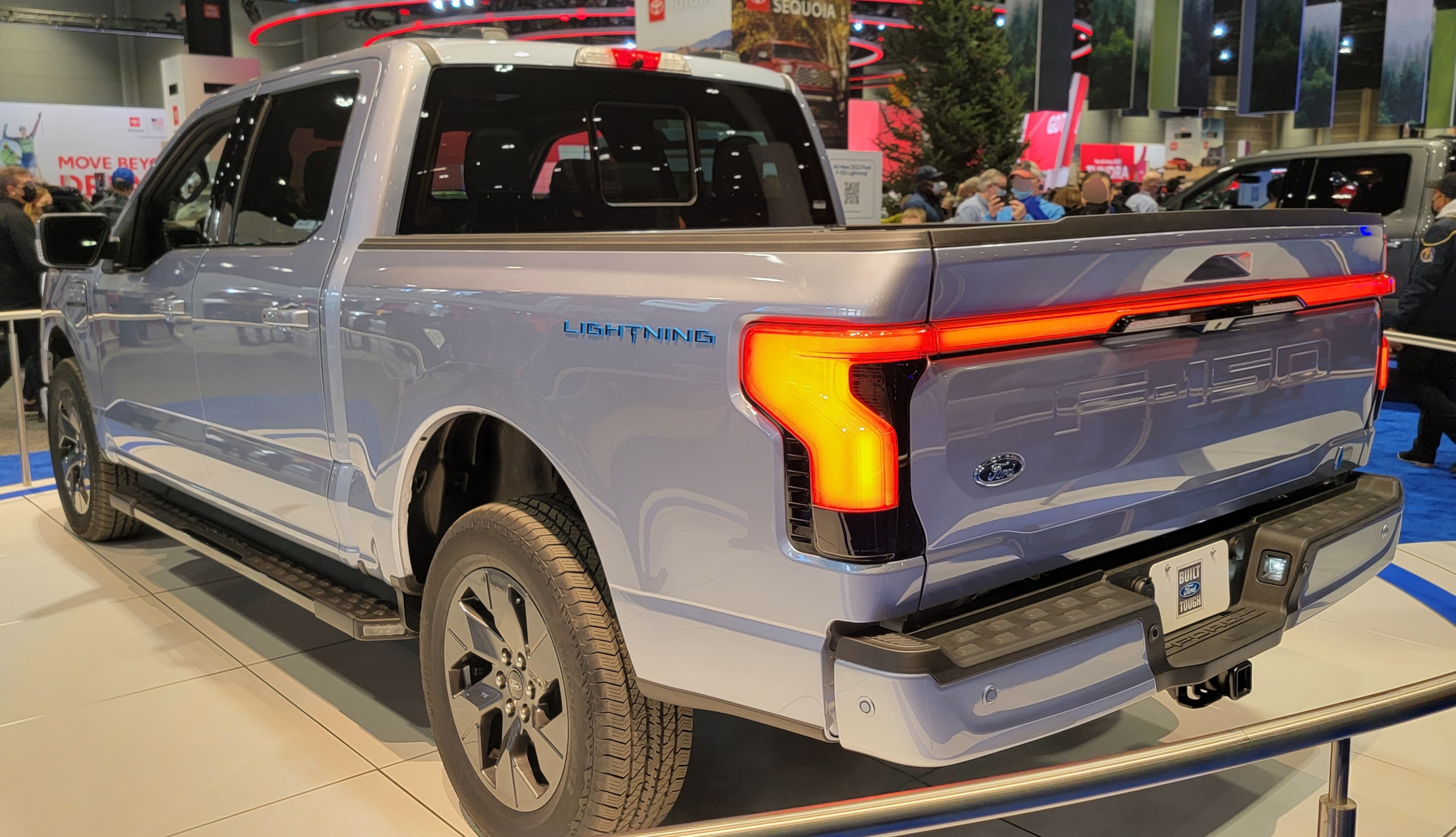
A panel of judges from Wards discusses the recent 10 Best Engines and Propulsion Systems awards, highlighting the impressive advancements in both traditional and electric powertrains. They share insights on the competitive landscape, noting that every nominee showcased exceptional engineering, making it difficult to select the top ten. Notable winners include the Ford F-150 hybrid and Honda Civic Hybrid, both praised for their performance and efficiency. The conversation also touches on the evolving automotive market, electrification trends, and the significance of recognizing the unsung heroes behind these innovations.
"Auto Line After Hours is brought to you by Alex Partners, when it really matters, and by BorgWarner. The automotive industry continues to evolve..."
BorgWarner makes parts that help cars run better, like gearboxes and turbochargers.
BorgWarner is a global automotive supplier that designs and manufactures powertrain components such as transmissions, turbochargers, and hybrid systems.
"Last week, exactly one week ago today, Wards handed out its 10 Best Engines and Propulsion System trophies to deserving automakers for making engines and propulsion systems for EVs that were most impressive."
Wards is a popular car magazine that gives out yearly awards to cars and parts that are considered the best in their category.
Wards is a well-known automotive magazine that publishes annual awards recognizing excellence in vehicle design, performance, and technology.
"Last week, exactly one week ago today, Wards handed out its 10 Best Engines and Propulsion System trophies to deserving automakers for making engines and propulsion systems for EVs that were most impressive."
The 10 Best Engines and Propulsion System trophies are awards given to the best electric car engines and power systems each year.
This is an annual award presented by Wards that honors the most impressive engines and propulsion systems developed for electric vehicles (EVs).
"for making engines and propulsion systems for EVs that were most impressive."
Propulsion systems are the parts of a car that make it move, like the engine or electric motor and everything that helps transfer power to the wheels.
Propulsion systems refer to the components and mechanisms that generate power to move a vehicle, including engines, electric motors, transmissions, and related electronics.
"[263.7s] Nissan VQ.
[264.7s] Yep, 14, three years, yeah."
The VQ is a type of engine made by Nissan that runs on gasoline and has six cylinders arranged in a straight line. It’s used in several popular cars for its good balance of power and smoothness.
The Nissan VQ is a family of inline‑six gasoline engines used in many Nissan and Infiniti models, known for smooth power delivery and high-revving performance.
"And so this was everything from the Acura ADX, I'll start at the beginning of the alphabet..."
The Acura ADX is a type of SUV made by Honda’s luxury brand. It was sold in the U.S. from 2006 to 2011 and is popular for its roomy cabin.
The Acura ADX is a mid-size crossover SUV introduced by Honda’s luxury division, Acura. It was produced from 2006 to 2011 and is known for its spacious interior and smooth ride.
The Volvo EX90 is an electric SUV that started selling in 2023. It has a big battery for long trips and lots of safety features.
The Volvo EX90 is a fully electric SUV announced in 2022. It features a long-range battery, advanced safety tech, and a minimalist Scandinavian interior.
"[555.7s] The Ford F-150, a 3.5 liter turbocharged V6 hybrid."
The F‑150 is a big truck that people use for work and family. It can pull heavy loads and has many different engines to choose from.
The Ford F-150 is a full‑size pickup truck that has been one of the best‑selling vehicles in North America for decades. It’s known for its ruggedness, towing capacity, and a wide range of powertrain options.
A V8 is a type of car engine with eight cylinders shaped like a 'V'. It’s popular in trucks because it gives good power and is reliable.
A V8 engine has eight cylinders arranged in a V configuration, providing strong torque and smooth power delivery. It’s common in trucks for its balance of performance and durability.
"...in both cases of the Ford and the Honda, those were the only powertrains that were on..."
Think of a powertrain as everything inside the car that takes fuel or electricity and turns it into motion for the wheels. It’s like the heart and muscles of the vehicle.
A powertrain is the combination of components that generate and deliver power to a vehicle’s wheels, typically including the engine or motor, transmission, driveshafts, and differential.
Term
$225,000
"Well, it's $225,000."
$225,000 is the price that the car company suggests you pay for this car before any extra costs.
This figure represents the Manufacturer's Suggested Retail Price (MSRP), indicating the base cost of the vehicle before taxes, fees, and optional add-ons.
Car
Lexus LX700h
"Okay, another hybrid, the Lexus LX700h. It's a 3.4-liter turbocharged V6."
Lexus LX700h is a big, fancy SUV that uses both gasoline and electric power to save fuel and reduce pollution.
The Lexus LX700h is a luxury SUV from Toyota’s Lexus brand, featuring a hybrid powertrain that combines an internal combustion engine with electric motors for improved fuel efficiency and lower emissions.
"Stellantis would break up, whereby there would be the American operation and then something else that would be different in Europe."
Stellantis is a big company that owns many car brands, such as Jeep and Peugeot.
Stellantis is a multinational automotive group formed from the merger of Fiat Chrysler Automobiles and PSA Group, owning brands like Jeep, Dodge, Peugeot, and Citroën.
"Well, that's the dream we've been told, right, that it's going to be plug and play."
Plug and play means you can drop a part in, turn it on, and it works right away—no fiddling with settings needed.
A plug‑and‑play system means components can be installed and used without complex setup or configuration. In automotive terms, it refers to modules that fit together seamlessly, reducing integration time.
"[3654.6s] a German company, announced that it is going to be departing with 13,000 people as it works to save $2.9 billion."
Bosch is a big company that makes parts for cars, like the little pieces that help engines run and brakes stop the car.
Bosch is a German multinational engineering and technology company that supplies automotive components such as sensors, brakes, and powertrain parts to many car manufacturers.
"And it's obvious why, because when you're, you know, the average price of a new vehicle in the United States is $50,000."
It’s the usual amount people spend when buying a brand‑new car in America. It helps us understand how expensive cars are on average.
The typical cost that consumers pay for a brand‑new car in the United States, often used as a benchmark for market trends.
Select text to request an explanation
Irasshaimase.
Auto Line After Hours is brought to you by Alex Partners, when it really matters, and
by BorgWarner.
The automotive industry continues to evolve, and so do the opportunities to define it.
BorgWarner, one of the world's most admired companies, gets partners where they need to
go.
Let's do something big together.
Hey everybody, thanks for joining us.
John's not here today.
So once again, I have a very, very special program for us today.
Last week, exactly one week ago today, Wards handed out its 10 Best Engines and Propulsion
System trophies to deserving automakers for making engines and propulsion systems for
EVs that were most impressive.
So I have assembled a large percentage of the judges who made the determination about
those awards from Wards.
Easy for me to say.
We have Christy Schweinsberg, Bob Gritzinger, and Drew Winner.
So Drew, you're the vet here in terms of judging this.
Give us a quick synopsis of what the awards are all about.
Well, a lot of it's about acknowledging, recognizing the engineers and designers and
everybody else involved with developing engines and propulsion systems.
And really giving them, I mean, when we started out 31 years ago or whatever, that was a big
part of it because the people working behind the scenes, particularly on mechanical stuff,
not the designers or whatever, they just never got any recognition.
So propulsion systems have become so important over the years that we spent a lot of time
with it and recognizing people and it's been going on for a long time.
And the people really appreciate it.
Yeah, that was the most gratifying part of the awards ceremony a week ago today.
All the thanks we got from the engineers who are in the trenches.
Thank you for recognizing us and our teams and our hard work.
So that's fantastic.
So Christy, you managed this program.
What surprised you while you were working through this?
Just how good everything is.
I've been, I managed this year and I've been a judge for most of the past 20 years,
programs for the past 20 years.
And every year there were one or two obvious non-winners and that's not the case anymore.
Everything is very close together when we tally our scores.
There's really no one brand or automaker that isn't bringing their A-game today.
I mean, whether you're talking about internal combustion engines or hybrid power trains
or motor-based propulsion systems for electrics, I mean, everything is just really top tier.
So it makes it very difficult to pick just 10.
So Bob, in your experience with this, I mean, is every year sort of a reset that they're
all very good engines or do some years seem to have a little bit better than other years?
It seems like in the history of the program, there were propulsion systems, engines that
stayed on the list, Drew can speak to this, for seven, eight years, you know.
14 years, Nissan VQ.
Nissan VQ.
Yep, 14, three years, yeah.
So to your question, probably now it's more of a reset every year.
It seems like it's pretty rare for a propulsion system to carry over to win back-to-back years.
So we have a couple surprising winners this year that kind of carry on that tradition.
But in general, I mean, everything seems almost new every year.
And to Christy's point, really hard to differentiate best from also ran.
Yeah, and that was, that reminds me too, because in the early years, there was a lot of concern
about, because engines weren't being, you know, having these massive technological changes,
you know, every year or every few years.
I mean, so that's where we said, well, okay, we're going to have to allow some people to
be multiple winners because there just aren't that many great engines being developed and
the technology isn't changing that much.
And then, man, I would say when electrification started coming and there started becoming
all this new technology, suddenly, yeah, there was completely new engines being redone, you
know, very quickly.
And so that made just the technological changes hard to keep up with.
Right.
So this year, there were 28 nominees on the list.
And going into it, you know that you have to come down to 10.
And so this was everything from the Acura ADX, I'll start at the beginning of the alphabet,
which was a 1.5 liter turbocharged four-cylinder engine to the Volvo EX90 electric propulsion
system.
So we run the gamut there.
So there were straight up ICE engines, there were hybrids, there were EVs.
So, you know, that's where they all came from.
And there had to be an assessment.
So it's not only an assessment of vehicle to vehicle or powertrain to powertrain, but
it's sort of to be best in class because there are so many that are competitive with one
another that had to be tough to work out.
And I should confess that I was a judge too.
And you can tell, you're trying to compare electric to electric to electric.
And most people driving those would say, whoa, great low-end torque, you know, from zero
RPM and everything is wonderful, you know, as I drive it around.
So we're trying to look at those really detailed differences.
Does it run out of gas, run out of electrons at speed?
What's its miles per kilowatt hour, I mean, its efficiency?
And even recharging and those kinds of things go into it in terms of intangibles.
But it can be really hard to define and differentiate.
But it seems to me that one thing that I think people might imagine, and I don't think this
is the case, that you could just do this on a spreadsheet, right?
You could just look at the numbers and say, oh, this truly has to be a winner.
But there's more to it than that, that there's sort of the, you know, how does this fit into
this product?
Yeah.
Oh, the application.
Yeah.
We have an intangibles category where we always consider.
How does this powertrain go with this vehicle?
You know, does this feel like a natural fit or does it feel unnatural?
And we have technical relevance as well, where we're looking at, you know, changes that have
been made since maybe a prior generation engine or propulsion or, you know, dual motor propulsion
system or hybrid powertrain.
And the innovation has, as Drew said, has just been at a ferocious pace.
Especially like the last 10 years.
Variable compression turbo.
I mean, come on.
Yeah.
Well, to this point of the changes, as you all mentioned, that there were two repeat
winners.
And so let's talk about the first one alphabetically, so it's not done any other way than that.
The Ford F-150, a 3.5 liter turbocharged V6 hybrid.
And you know, it surprised me that a vehicle or a propulsion system that won a previous
year was on the list for this year.
And I suspect that it did go back, you know, when you were saying that in the olden days
things weren't changing all that often, so it made sense.
But you know, it is astonishing to me that here is a setup that is capable of winning
twice in a row against some very, very stiff competitors.
So Bob, you know, I know you like that a lot, that F-150 a lot.
And I'll admit, I'm a truck guy.
Always have been.
And I enjoy what these engineers do with these trucks.
And truck guys are V8 guys.
And Ford truck guys are buying this powertrain for efficiency and for capability.
It's as powerful as a V8, more so.
Yeah, 430 horsepower, 570 pound feet, and rated 2220 for city highway for a full-sized
pickup truck.
And what was the towing capacity?
Don't have that here, but it was pretty significant.
I think it's like the highest towing capacity that Ford has.
Like 8,800 or something.
So really impressive and also very functional for the vehicle.
You don't notice that you're driving a hybrid.
No, the transitions are seamless between gas and electric.
Stop, start, you'd never know what's happening.
Well, and the thing is too, it wasn't that long ago that hybrids were considered these
wimpy cars, you know, or whatever, or vehicles.
Now these hybrids are really strong.
They're adding power.
I mean, they're improving fuel economy.
And the electric motor is filling in all of those low torque gaps from the engine.
So the other repeat winner was the Honda Civic Hybrid, 2-liter, 4-cylinder, hybrid.
So actually, it was a three-time winner because we had it in the Accord in 2023, a little
bit different configuration versus the Civic, the S01, Civic in 24 and 25.
I can't think of a single powertrain on the market that gives you so much for so little.
You know, you've got great power, incredible fuel economy.
We were getting around 50 miles per gallon.
Not trying, just getting.
Not trying.
We weren't hypermiling.
We were just driving as normal.
And although we tested it in one of the higher trim levels of the Civic, the Sport, Touring,
the Hatchback, for $40,000, you can get a Civic Hybrid, this powertrain in a Civic,
for close to $30,000, which is astonishing when you consider the average price of a new
vehicle now in the United States is $50,000.
It just, it's like the full package.
Right.
Yeah.
It's fantastic.
Right.
And when you talk about the performance, the driving performance, I mean, at the end of
the day, this is just a normal Civic.
This is not the, you know, Type R Civic.
I mean, this is, so, so it's, it's.
But it has impressive numbers that come close to that, 200 horsepower, 232 pound-feet.
The highest, most powerful non-Type R. Non-Type R, yeah, yeah.
Ever.
Yeah.
So you're getting a performance car with incredible fuel economy.
Yeah.
Yeah.
Yeah.
But I think there needs to be a little asterisk by that performance car because we'll get
to some others here that, that truly have some like holy crap numbers.
Highly affordable performance, let's put it that way, yeah.
For going to Costco.
For going anywhere.
Yeah.
So.
This isn't just a game, it's a once-in-a-generation event.
The Harlem Globetrotters 100-Year Tour.
Celebrate 100 years of high-flying dunks, 100 years of show-stopping moves, and 100
years of changing the game.
Bring the whole family and be part of the legacy.
This game is once in a century.
Be there at Moda Center on January 24th.
Go to HarlemGlobetrotters.com for your tickets to the 100-Year Tour.
All right, so I mean, now one of the things that I do find interesting is that in both
cases of the Ford and the Honda, those were the only powertrains that were on, they were
returning winners, but these companies didn't have anything else.
So do you think there's something about that, that they really, when they developed these
powertrains, they really zeroed in on, we're gonna make this the best for the longest time
we possibly can?
Yeah.
Well, they do tweak them, you know, year after year.
The F-150, in that case, they moved the starter, they had a belt starter generator, and they
moved it to the transmission.
That sounds right, yeah.
You have to forgive us, we drove these in July and August, so our memories are a little
fuzzy.
So that's, you know, right away, a technical innovation.
They saw something and said, we can make this better, and here's how.
Yeah.
All right, so as I mentioned, there are some that were really, really performance-oriented.
So we'll go back to the beginning of the alphabet, the BMW M5 4.4 liter turbocharged V8 plug-in
hybrid that has total system output of 717 horsepower.
I mean, it's just like, that is just crazy.
And that's not even our highest horsepower in the competition.
It's an incredible powertrain, obviously, you know, incredible performance.
You know, on paper, it's impressive, and yes, we confirm by driving, absolutely impressive
in the real world as well.
And again, though, with the fuel economy, we were getting 25, 27 miles per gallon.
This is a heavy vehicle.
This is the weight of a full-size pickup truck.
It's like 5,800 pounds of curb weight.
You know, this is kind of a brick, and to get that kind of fuel economy with this kind
of performance is really extraordinary.
And lots of different modes and everything, and there's all sorts of things that you can
do with the power, with the efficiency or whatever.
It's true to M. You know, it can wear that M5 badge and be true to M.
It's true to that.
And again, that goes with that intangible that we look at.
Does this powertrain sell this vehicle?
And if you can go Autobahn speed one moment and then motor into Stuttgart at an electric
power, you know, for 50 or what was it, 35-some miles.
On the battery alone, yeah.
Right.
So this raises a question in general, not just about this, but I mean, is it your impression
that going forward that whether we're talking about an M from BMW or we're talking a daily
driver or Honda Civic, that electrification is going to be part of all powertrains going
forward or at least a larger percentage of them than ever before?
Yeah.
To me, you're not really giving anything up.
And now that the premium has shrunk, you know, it used to be thousands of dollars more for
the hybrid.
If there were, you know, a standard ICE and then a hybrid powertrain, thousands of dollars,
and now it's down to hundreds.
And you've got Toyota, which granted, you know, it's a unique situation because they're
the pioneer and they're the volume seller, but they've got about, what, like 10 vehicles
now in the U.S. market where you can only get a hybrid powertrain, right?
I see it as, and I would hazard to guess that most Americans are probably doing more stop
and go driving than long distance highway driving, and it's perfect for that situation.
That's where you save the most fuel, get your best fuel economy, and yeah, then there's
this aspect that when you put an electric motor with a gasoline engine, you're increasing
the performance credentials.
So I think it's-
Right.
So the point of the BMW engine, I mean, if just the engine alone is a mere 577 horsepower.
And 14 miles per gallon.
So then you throw in the electric motor and you get up to 717.
So as you were saying, Bob, that it's able to have that badge with no question that it
deserves it.
Can do.
Can do it all.
And I guess the only downside is people's concern about battery life and replacement
of the battery.
Yeah.
We've got a lot of real world examples.
A lot of real world now where-
It's not a big deal.
Toyota hybrid.
Now they're not using lithium ion necessarily, but-
Nickel metal.
Yeah.
They're seeing-
Hundreds of thousands of-
Yeah.
17 years and still-
New York City taxis.
Yeah.
Your 12 volt battery is going to have to be replaced long, long before that.
Yeah.
Exactly.
Yeah, yeah, yeah.
So in that sense, you can rely on a hybrid with a lithium battery or a plugin to last.
These things are warrantied minimum for 10 years, it seems like, generally.
So you're not taking much of a chance to get a substantial benefit.
All right.
So now we're going to move on to what is arguably the craziest item on the list.
The Corvette ZR1 5.5 twin turbo V8.
Crazy is relative this year.
Okay.
1,064 horsepower from this internal combustion engine.
I mean, non-electrified just there.
Yeah.
The electric with this is a 12 volt battery.
Yeah.
That's basically it.
Yeah.
Yeah.
But it's, yeah, insane amount of power.
This is what happens when engineers are allowed to, you know, raise the bar, well, take the
bar and throw it out the window because this car builds on the flat plane crank 5.5 V8
and adds twin turbos, a whole lot of fuel system delivery changes, unique turbos, some
of the biggest in the business and creating the highest, what is it?
The highest, most powerful automaker produced V8 ever.
And it's based on still like an architecture that was made in like 1955 or something.
Yeah.
Oh, yeah.
Somewhere.
And this is another case of how you completely, you know, you can take an engine and just
evolve it and evolve it, you know, to just do amazing things.
Yeah.
And I thought, so we actually did have a Zoom call with many of the engineers who worked
on the program and, you know, to your point, Drew, that they may be the unsung heroes,
but boy, these guys were really excited about having had the opportunity to work on this
engine.
Oh, yeah.
Working in the toy store, basically.
Yeah.
Yeah.
And they're working on the next one.
You know what I mean?
It's just like, you know, we'll see you guys again.
You know what I mean?
Right.
Yeah.
When we add the electric motor to the front axle and we do the ZR1X, we'll see you next
year.
Yeah.
And this was three years in a row for a Corvette powertrain.
Going back to the 5.5 flat plane, the Z06, and then the E-Ray last year, and then this.
It's astounding technology.
Hey, Barry, we got a question from one of our viewers.
Barry Rector asks, does this engine put Corvette in the supercar category?
Well, it's $225,000.
I've got to repeat the question first.
Oh, sorry.
Because I can hear Sean.
They can't.
Barry Rector wants to know if this engine puts Corvette into the supercar category.
In my mind, yeah.
Yeah.
Yeah.
In terms of performance.
In terms of performance, but also it's a $225,000 list for a Corvette.
Corvettes have always been the affordable supercar.
But compared to McLaren or some of these other things that cost a million dollars or whatever.
And they've always matched up well.
Now you have something that can blow them away, but also is priced up there.
So you wouldn't be ashamed to bring this to the Nurburgring?
Oh, no.
It's been there.
It's been there.
And you know, Mark Royce drove it 233 miles an hour.
I mean, he's relatively capable, but not a race driver.
While holiday shopping is almost always fun, credit can be confusing.
That's when you get myFICO.
Download the myFICO app now and shop with confidence knowing that you can stay on top of your credit 24-7.
Get your FICO score straight from the people that created it.
Plus free credit monitoring and a free credit report every month.
No credit card required.
FICO scores are used by 90% of lenders.
So trust the myFICO app to keep you in the know.
Visit myFICO.com slash free or download the myFICO app today.
Yeah.
Okay.
So we're going to move from the Corvette to something that was completely all new inside, outside, all around.
The Dodge Charger Daytona.
Yeah.
This is the electric version.
Now they've added the Hurricane engine to that, but this is the...
Yeah.
So I figured, I mean, it's pretty controversial, but it's really a fascinating engine and drivetrain.
And I think I have to add a little bit of background first.
In 2021, Tesla introduced their Plaid car.
Yeah.
Over a thousand horsepower, three electric motors.
And it was faster than everything.
You started seeing all these YouTube videos and everything and all this trash talk coming from the Teslarati.
Blowing away all these muscle cars on a quarter mile.
And so then there was a whole thing of like, oh, Jesus, just, you know, especially at that time that, you know, ice engines were done.
Detroit was done.
I mean, they're just all these dinosaurs.
They can't, you know, we can beat them at everything.
And after talking to some of the engineers and everything else, I started figuring out, hey, you know, they put tons of effort into this electric muscle car.
And they weren't doing it to make money.
They were doing it to defend their brand.
And they want to say, look, we make muscle cars.
Tesla doesn't make muscle cars.
And so they came across with this thing that, yeah, 670 horsepower.
It had motors in both axles, which was really a key part to the Tesla.
Tesla was really blown away because it had all-wheel drive and all the other muscle cars were rear-wheel drive.
That was part of the problem.
But they made this car, you know, not only was it just something that, you know, could keep up, but also something that could do donuts, burnouts, you know, and could be really loud with a really convincing engine, which I thought, you know, I was one of them.
I would have loved to have heard there be a fly in the room when somebody, when they're talking about this car, and they said, how are we going to make it sound like a real muscle car?
And, you know, they said, hey, we know somebody who can do that.
You know, the pipe organ company.
Pipe organs.
Yeah.
Really.
Not just speakers, not just internal to the cabin, but external and noticeable.
Yeah.
So I just thought this whole picture of, you know, this idea that Detroit was still full of these people that just want to make ICE engines and everything.
I thought it was just a really creative idea.
And it was, they really.
They executed.
Executed.
Of course, we did just establish that Detroit does want to make ICE engines with that Corvette.
Yeah, yeah.
They do, but they can play in the all-electric realm.
The point is, though, Tesla only makes electric vehicles.
Okay.
Detroit can make them both, you know.
So that was just, I just really enjoyed learning about the car and talking to the engineers and everything else.
It was really a cool day.
Cool day.
I did.
You loved it.
Yeah.
You loved it.
Yeah.
All right.
Now another electric vehicle, but not a performance vehicle, the Hyundai Ioniq 9.
Well.
Well.
It kind of is.
So you expressed, when Gary started judging, expressed concern that people are going to be getting into EVs and gain in accidents because of the power that is inherent in these electric motors.
The instant torque.
Right.
And this is, I mean, I don't think it's going to be that serious, but this is kind of an example where you're buying what is essentially a family vehicle.
But you're getting horsepower and torque that 10 or 15 years ago would have been considered ludicrous or insane.
You know, it would have been like Corvette-like output.
So the Ioniq 9 total system, it's a dual motor propulsion system.
422.
422 horsepower, 516 pound-feet of torque.
Perfect family vehicle.
A three-row crossover that is going to shepherd the kids to, you know, soccer practice and home.
Yeah, we had the top trim level.
We had the performance all-wheel drive grade, so we did have the maximum output propulsion system with this vehicle.
But, yeah, I mean, not only was the power fantastic, but we were getting great.
We were getting three miles per kilowatt hour, which is kind of like the baseline that you want to get in an EV.
And this is a three-row family hauling vehicle.
Yeah, that you don't associate with efficiency per se.
And I think in my profile of the story, all these powertrains were profiled, by the way, on wardsauto.com.
If you go under 10 Best, you can read about each one.
This has more horsepower and a lot more torque than the Tau V8 in the first-generation Hyundai Genesis,
which, again, was back then considered ludicrous output, and here it is.
Christy, only you and I remember that engine sound.
Okay, another hybrid, the Lexus LX700h.
It's a 3.4-liter turbocharged V6.
Now, what's interesting, this is the first application of a hybrid in the Lexus flagship
that is meant to be able to go places where Lexuses are never going to go.
Yeah.
You're not going to get stuck on a mountain with one of these,
but you're probably never going to be on a mountain with one of these.
Well, they do sell a lot in the Middle East, per what they've told us,
but certainly in the United States, it's more of a country club vehicle.
But still, you know, incredible performance.
Again, kind of like moderate, considering some of our other winners,
457 horsepower, 583 pound-feet of torque.
It's rated 1922 city highway.
We were getting 20 pretty solid, 20 miles per gallon combined with our testing.
And, again, kind of unexpected, you know, power.
I mean, it is a big SUV versus being a crossover.
Yeah, there are frame rails involved.
Exactly, exactly.
And, again, smooth transition.
I think we could say that of all of our hybrids this year,
from gas to electric and vice versa.
You just don't notice it like you used to.
So now another all-EV, the Lucid Gravity.
They're more affordable.
Yeah.
Chuckle, chuckle.
Yeah.
Well, compared to an Air.
Right.
Yeah, so this is the new Lucid SUV.
They've had the Air.
And we actually awarded this dual-motor propulsion system was in the Air,
is in the Air.
And we awarded it in 22 and 23, and this year we brought it back.
In the Gravity.
They brought it back in the Gravity.
They brought it in the Gravity, and we really loved the application.
And so this is one of the more ludicrous performers,
828 horsepower, 909 pound-feet of torque.
Yeah, what were the modes?
Swift, Sprint.
I can't remember them all.
It's like Slow, Sprint, and Swift or something.
There's four.
And when you go into the Max.
It snaps your neck.
Yeah, you get some little whiplash.
That's an example of a different feeling from an EV.
I mean, that was just crazy.
I mean, you just touched the pedal, and I think it was a Sprint mode.
But it's still pretty efficient.
Still pretty efficient.
We were near three.
We had the bigger.
We had the three-row model.
It comes in a five-passenger, seven-passenger, so we had the three-row.
So it did have a little more weight.
We had the bigger wheels.
But we got, like, 2.8, I think, miles per kilowatt hour, which is pretty.
Which is low for Lucid.
Lucid is a.
Low for Lucid.
It's a taller vehicle than the Air, obviously.
Right, right, yeah.
They couldn't do all the tricks.
Yeah, yeah.
But Lucid also does some things, too, that I think is important in terms of
they're really good at aerodynamics.
They're also really good at.
The motor design.
Compact motor designs.
And they're always doing a lot of innovations that really probably only
engineers appreciate, but they're doing a lot of interesting stuff still.
Yeah.
So we had an M from BMW, so we have an AMG from Mercedes, the E53.
The pace is accelerating and the pressure to adapt is real.
This is not a time for hesitation.
It's a time for bold decisions backed by fast, effective execution.
You need a partner who understands complexity.
From factory floors to boardrooms and delivers measurable results.
That partner is Alex Partners.
When it really matters.
The automotive industry continues to evolve and so do the opportunities to define it.
BorgWarner, one of the world's most admired companies, gets its partners where they need to go.
Let's do something big together.
Okay, and we are back.
So, guys, on last week's show, we talked about Carlos Tavares.
You weren't here last week, obviously.
I was not.
He was making a suggestion that perhaps it's possible that Stellantis would break up,
whereby there would be the American operation and then something else that would be different in Europe.
So, now Tavares has come out and said that there is a distinct possibility, in his mind anyway, that, quote, I'll quote him,
we can't rule out that at some point he'll, meaning Elon Musk,
will decide to leave the automotive industry to refocus on humanoid robots, SpaceX, or artificial intelligence.
Elon Musk will have left the auto industry.
Now, he's talking about maybe within a decade.
Okay, so is Carlos Tavares just trying to generate interest in Carlos Tavares or does he have a point here?
I think both.
If you look at the history of Chrysler and Daimler and, I mean, all these, the whole history,
there's been not a lot of stability over a long time.
This isn't just a game.
It's a once-in-a-generation event.
The Harlem Globetrotters 100-Year Tour.
Celebrate 100 years of high-flying dunks,
100 years of show-stopping moves,
and 100 years of changing the game.
Bring the whole family and be part of the legacy.
This game is once in a century.
Be there at Moda Center on January 24th.
Go to HarlemGlobetrotters.com for your tickets to the 100-Year Tour.
I'm amazed that Tesla has survived this long with the far-ranging different things that Musk has been into.
I mean, you mentioned Grokopedia, right?
I just, first of all, I'm one of the millions of Robert Heinlein fans
who just cringe that someone has taken this word and applied it in all these different ways.
Part of the definition of it is empathy,
which doesn't exist in the Musk empire, as far as I can tell.
Who knows where it goes?
I think he's not really saying anything new.
I think Wall Street has been realizing that running an auto business is high risk and low reward, basically.
It's a lot of money.
He's talking about he wants to deal for a trillion dollars.
I'm just talking about the Tesla aspect,
but definitely I think he is more concerned with SpaceX and all these other ventures than Tesla.
To see him go from Tesla would not be surprising,
except he's a very prideful person, it seems, so that could keep him around longer.
So, Tamara said, quote, Tesla stock market value loss will be colossal
because its valuation is simply stratospheric.
And he's referring to what would happen if Musk were to leave the company.
Now, several Yale researchers came out with a report this week,
which talked about how Elon Musk's, quote, polarizing and partisan actions
have impacted Tesla vehicle sales in the United States.
And the researchers discovered, quote, without the Musk partisan effect,
Tesla sales between October 2022 and April 2025 would have been 67 to 83 percent higher
or equivalent to 1 to 1.6 million more vehicles.
Right.
That's in the U.S. Think about Europe as well.
Isn't it very much like Henry Ford I, where he was a genius and built this huge thing with Ford
and the Model T and everything else, and then he just could not evolve more.
I mean, he wouldn't change the design and sales fell off.
Cadillac and General Motors came in with good styling and I think innovation.
And he's and I think he's talked a lot about just not wanting to spend the exterior designs of all.
The Teslas are starting to look stale.
Right. They did do the change for the Model Y this year.
But, yeah, they've been pretty static and sort of the physical elements choosing to focus on the digital elements.
And there's also the Chinese that are coming in with the well, they've come in with battery electric vehicles
and they're pretty and you can do it in great exterior design, exterior design and at a lower cost as well.
Lower price.
I think a must just has to being this tech guy.
You know, he just doesn't think of aesthetics and things like that.
And it's too hard. He wants to move on to other stuff.
Maybe because it was what one when when Henry Ford came in after World War Two,
he was the one that finally started putting modern styling.
The second.
Yeah. Yeah. Right.
So with the 39 Ford or whatever started suddenly when they got better design
and realize that the public that meant a lot to car buyers and stuff like that, things change.
So, I mean, I think he's not.
Musk isn't a car guy, so maybe he shouldn't.
He should get away from the business.
We'll see how that works out for for the company.
So, again, earlier this week, NVIDIA had one of their big conferences, their GTGTC conferences.
And I think if you were to go back in the auto line after hours archives,
we had NVIDIA's Danny Shapiro on the show on several occasions.
And now they're like the five trillion dollar company.
I mean, NVIDIA is just blown up.
I think it's because of Danny being on the show.
Yeah.
Sean's agreeing with me.
At least only be two and a half trillion if he had only been on one.
So. So NVIDIA announced a partnership with Uber and they're going to be developing what they claim will be the world's largest level four ready mobility network.
So basically what we're talking about here is a self-driving vehicle that would be within a geofence of some sort.
So not level five, which is drive anywhere you want to go.
And so they are planning on having a fleet starting in twenty twenty seven that they're going to be growing.
So some have reported that it would be one hundred thousand in twenty twenty seven.
No, they're going to start in twenty twenty seven using this new technology that NVIDIA has developed.
And Stellantis is working with NVIDIA on level four technology.
Interesting. Stellantis working with Foxconn, which makes iPhones to do hardware for their end systems integration for what they're coming up with using NVIDIA.
The aforementioned Lucid is working with NVIDIA for its upcoming models.
Mercedes Benz is testing with NVIDIA for what they'll be bringing the party.
And oh, in trucking, there's Aurora Volvo.
On it goes. OK. Now, do you think maybe what's happened is that NVIDIA has gotten to the point where they're going to be able to just basically sell kits.
To automakers that automakers would then be able to plug into their vehicles and voila, have level four systems.
Well, that's the dream we've been told, right, that it's going to be plug and play.
In reality, I think it'll be much tougher because aerodynamics and weight distribution and powertrain differences and, you know, there will be.
Well, testing and some integration will calibrate it and boom, good to go.
I don't know about that. We've heard these proclamations so many times now about, you know, now we're going to have advanced AVs.
Drew's going to have a stroke over here. Within geofence areas, I can see that.
But then what is that? Uber from your parking lot to your plan?
Geofenced in a small mobile home in one of the communities in Florida.
Retirement communities.
They already have their golf carts. Drew, carry on.
I started following NVIDIA and autonomous cars like 10 years ago, you know, and it was back then with autonomous cars.
It was they call it the trolley question or whatever, the trolley car question,
because they figured you had to have an autonomous car that could pick because if it was going to crash into a school bus with kids or just run down a couple of people,
you had to have the car to be smart enough not to do that.
And I remember talking to NVIDIA asking them that.
He just kind of went, those kind of accidents usually happen when somebody is distracted or they're drunk or they're having a stroke.
You know, I mean, that's not really the real problem.
And so I think they from the baseline, I think NVIDIA knows, you know, how to make great autonomous cars.
But the other issue is how do you deal with everybody else dealing with the car?
You know, because I actually did some interviews with some cultural anthropologists and stuff who worked with Nissan and some of the other companies.
Where, you know, you have to have the car somehow when it's when it's stopped at a crosswalk, you know, people have to know, does it see me?
You know, or how does the car deal with road rage and all these other things that are going on that I'm not sure are going to be easy for them to solve.
So, I mean, if anybody can do it, I think they can do it.
But I don't think it's going to be easy.
You know, I mean, the thing that I wonder about is, is that, OK, you know, you see, you know, let's let's take, for example, General Motors, which, you know, is is putting a lot of effort into its SuperCruise system.
Right. And I'm just wondering whether NVIDIA might not just be able to come up with something.
If they go like even better, you're by this and it's you know, it'll be it'll be level four.
It could happen. I mean, we saw in the case of electric vehicles, you know, Nissan did a joint venture for batteries.
And then I forget the company, but they were usurped by the batteries that LG was giving General Motors.
And then they were stuck with this plant, with this joint venture.
You know, so it could it could totally happen with with ABs.
I wonder how this plays with Mercedes.
You know, they did that whole route in Germany where the what was it?
Sixty two miles or something. One hundred and sixty two miles.
The vehicle went autonomously with, yes, somebody monitoring what it was doing, but it completed the route.
And they seem to have, you know, starting with DISTRONIC and DISTRONIC Plus and their systems.
They they seem to be well on the road to developing what they need.
So now they want to buy something off the shelf that supplants all of the work they've been doing.
Or does it build on that?
Well, I think in the case of like what, you know, Mercedes is doing or what Lucid is doing is, is they're basically, you know, buying the stuff in working with NVIDIA to do this.
So it would be in concert with them. But I just get back to the whole question of whether or not, you know.
It might not be a package at some point.
Yeah, like Apple CarPlay. I mean, what are the sensors?
You get the, you know, what you need and then boom.
Yeah, they provide the brain. I mean, even General Motors is working with NVIDIA on its new electrical architecture.
That's going to be, you know, NVIDIA for chips are going to be on the inside of those things.
But will they want to keep it in their cars now? You know, will they want to have the ownership of that?
Or would they just, you know, yeah, I'm just thinking about Apple CarPlay and those in Google now.
I mean, they don't want they they used it. Now what they're trying to get totally rid of it.
So I knew you were going to want to talk about AVs.
So I did a little research and there was some some study presented, I think, at the Munich show in September.
And prognosticators are saying really for the next 10 years still, we're going to have mostly level two and level two plus systems in market.
So it's not the year of autonomy. Sorry to announce that.
So John's not here. So I can say it's not the year of autonomy.
So we'll have fuel cells before we'll have autonomous vehicles.
This isn't just a game. It's a once in a generation event.
The Harlem Globetrotters 100 year tour. Celebrate 100 years of high flying dunks.
100 years of show stopping moves and 100 years of changing the game.
Bring the whole family and be part of the legacy.
This game is once in a century. Be there at Moda Center on January 24th.
Go to Harlem Globetrotters dot com for your tickets to the 100 year tour.
I don't know about that.
Yeah, a lot, a lot to to still work out.
From what I can tell when they encounter when they fix one problem, they create one or two more.
In terms of like the systems that are in market now and some of the issues that.
People have been encountering while they're driving and, you know, mistaking something for.
You know, something that should make it stop and then the vehicle just stops when there's actually no obstacle and then they try to fix it and then it create, you know.
And we'll see, you know, five trillion dollar company and with chips in all these companies, you know.
At some point, this becomes an antitrust thing.
Well, Qualcomm has systems different and so they can they can do it.
But OK, so I want to ask you, so we talked the first half of the show or first two thirds of the show about powertrains.
OK, one of the things that also occurs to me is that, OK, if you if you have an autonomous vehicle.
What difference is a powertrain going to make?
I mean, because it's you're going to be driven.
You're not driving right.
If you're in a level four vehicle, you're being driven.
Yeah, you want it to be really smooth for sure.
I've been I've been reading about or seeing how I guess people who are doing scripted content, TV shows, movies are having to dumb down the plot because people are scrolling while they're watching.
So in an autonomous vehicle, everybody's going to be scrolling and.
Yeah, yeah. Maybe we'll have to dumb down the powertrain.
But also if we exist in this in this promised land of AVs where you've got V to V and V to X and the sort of like.
Perfectly choreographed situation.
Are you ever going to have to is your vehicle ever going to have to accelerate hard?
You know, it's like.
You really want it to be a smooth launch and a smooth step.
One of the only real significant differences would be cold weather climates.
And, you know, you would need all wheel drive electric versus, you know.
Right. You would think there'd also be a mode where you could take over as a driver.
But if you're building a car and it's going to be level four, why would you put in the steering wheel and the pedals?
Yeah, right.
Again, if you slide off into a ditch or whatever or all these again.
They send an AV to get on your phone and get it.
They're going to send you another one.
We got a slide off.
Yeah. But then, like, again, are you even going to notice, you know, if you're just like mindlessly scrolling and watching a movie?
You don't seem to be going anywhere. Yeah.
I could see that if you're in China or, you know, California and the expressway cruising around or whatever.
But, you know, I want to go highway one in California in an autonomous car.
You get to watch the scenery. Yeah.
Be great. All right. I'm too old fashioned.
Yeah. So you want to drive.
Yeah. That's what you're saying. You want to drive. And that's what will be left.
How quaint. The BMW drivers.
Well, it'll be people who can.
You'll be listening to Sammy Hagar and driving.
People who can afford and want to drive will, I think, until it's outlawed.
Exactly.
And when guns are outlawed, cars will be outlawed.
You think that's going to happen?
Yeah, it's not. Right. Not going to happen.
They're going to put cars into the Second Amendment.
Well, it'll be what are we up to now?
Twenty three. It'll be the seventh.
So we sort of saw this coming, but it still is somewhat surprising, I think.
So General Motors is basically going to be putting.
Hundreds and hundreds of people on hiatus at its famous factory zero plant where it builds only electric vehicles.
Only high priced electric vehicles, I think is the problem.
That's a better way of putting it, Christy. High priced electric vehicles.
No, is it built there?
No, it's the Escalade IQ, the Hummer EV.
All six figure vehicles.
Yeah, so it's a really big battery.
And then a knock on to that is that they're going to be laying off people at their Altium joint venture battery plants.
And so, OK.
Is this just a temporary phenomenon that is predicated on the interest in EVs immediately declining because of the seventy five hundred dollar tax credit?
I mean, I don't think any of these vehicles qualified for a seventy five hundred dollar tax credit because they were too expensive.
But the leasing loophole would have gotten them that.
But I mean, so is this just like the first shoe to drop?
I mean, putting only high priced vehicles in one plant was a bad strategy.
You know, they should have had it more balanced because we can see with the Equinox EV, they're doing fantastic.
You know, if you price a vehicle right and it has the right specs, 300 miles of range, people are going to want it.
They're going to want to buy it. Great lease deal on that right now.
I think actually you can get an Equinox EV for less if you lease.
Then you could get a nice Equinox.
I have to admit, like I thought that this was a winning strategy to replicate, you know, put motor,
dual motor propulsion or propulsion systems in every segment of vehicle because, you know, before, you know, 10, 15 years ago,
we had all these like compact car EVs and nobody wanted them. Right.
But I think the sweet spot is that sort of compact midsize crossover.
And, yeah, don't put all your eggs in one basket.
Don't put all your high priced EVs in a single plant because it's that's yeah, that was a bad recipe.
I'm not sure if even if they qualified a $7,500 tax break or tax break impacts someone who can afford those vehicles.
So something else is happening here.
It feels like like the market is moving away or slowing down in ways that we're not, you know, we're not aware of.
It could be, you know, when a thousand engineers or people like that lose their jobs.
That has a ripple effect throughout the industry.
And and, you know, it may not still apply, but when GM sneezes, right, the country gets a cold.
So let's see where it goes. So we missed this.
So it was actually announced in September, so I apologize for us being tardy in this, but I was surprised to see that Bosch,
a German company, announced that it is going to be departing with 13,000 people as it works to save $2.9 billion.
And although Bosch is in everything from, you know, it's global, right?
Or global. Yeah. You know, they make dishwashers and they make, you know, tools and so on.
But I mean, not their fuel injection, but their big loss was in their mobility sector.
And so, you know, people are losing jobs at OEMs and now people are losing jobs in a big way at suppliers.
I mean, is is this industry perhaps not the industry people ought to be in if they're looking for a future?
You know, John always talks, he's not here.
But lean on one of his talking points. There's three million units lost in Europe of new light vehicle sales from before COVID to now.
And there's no indication they're going to come back. I'd imagine Bosch.
Bosch's business is still a little bit more weighted toward European automakers versus other regions.
But here in the US, we're stagnant. You know, most countries and regions have hit peak auto.
You know, there's no forecast out there that says all of a sudden, you know,
Americans are going to start buying a bunch more new vehicles.
And it's obvious why, because when you're, you know, the average price of a new vehicle in the United States is $50,000.
You're going to leave a lot of people on the sidelines.
So the industry has, I think, some dark days ahead, unfortunately.
Shrinking. All right. So we're going to wrap this. I want to wrap this on something that's happier than that.
OK, so, you know, this 50,000. OK. OK. Candy? No, go ahead.
So I was so I've been I've been skeptical of Slate, but I'm now becoming less skeptical of Slate with their idea of having a electric truck basic in the mid 20s that people can buy.
And they announced this week that basically that they're going to be supercharger capable.
And what I thought was was very fascinating. And I want to get this right, because I have somewhere.
This isn't just a game. It's a once in a generation event. The Harlem Globetrotters 100 year tour.
Celebrate 100 years of high flying dunks, 100 years of show stopping moves and 100 years of changing the game.
Bring the whole family and be part of the legacy. This game is once in a century.
Be there at Moda Center on January 24th. Go to Harlem Globetrotters dot com for your tickets to the 100 year tour.
Of course, I do. I'm not going to find it quickly enough that they're they're going to be they're announcing service through a network repair pal certified shops.
And so these are basically in lieu of having dealerships. You'll go to one of these places which you can find online.
I looked in my area and there are several shops, of course.
EVs don't need that much service anyway.
Yeah. But I mean, isn't this a clever idea that you can sell an affordable vehicle?
Absolutely.
They want to be positive here.
Well, I mean, I mean, there are certainly people that just want some mobility.
Basic. Yeah.
Not every. All these things are being added that, you know, will prevent you from being in a crash.
Will tell you how to get from point A to point B.
Your phone can do that.
Yeah. All these things. And, you know, hell, a crank window is not a bad thing.
Well, I know.
I take one of those little.
Why don't you teach people what they are?
Can you give those little vent wings? That'd be nice. Can we get that back?
Oh, the vent window?
Yeah. Right.
Well, the most popular car in Europe is from that.
They have a. What's the name? It's a.
Dacia.
Dacia. Yeah.
They have an instrument panel where you can just plug your phone in and then it connects with all your, you know,
it's your whole infotainment system and navigation system.
And it's like the cheapest car in Europe. And it's also the most popular, you know.
GM doesn't like that.
No. Well, no, none of the automakers don't like that.
But I mean, it's it'll be really interesting to see how well they do, because.
Yeah, there's this this whole world needs lower priced cars.
Yeah. So the future is affordability.
And we've got two great powertrains.
We chose that are way more affordable.
So it's so Christie's just selling this 10 best engines.
On a positive note, too, I want to be the civic hybrid and the leaf.
A leaf. Yeah. You don't need to spend a lot to get a great powertrain.
That's right. Yeah. All right.
So with that, we will end the show because Christie just had a direction for all of you.
Get a civic or a leaf. Right.
I don't know if I'd say that, but you probably don't need as much vehicle as you think you do.
And again, you can read up on all of them. Yes.
On BoardsAuto.com. That's right. All right.
Wait, man, this is getting shameless here. Yeah, it is.
It's like, man, does anybody have a book to sell?
Now that you mentioned it.
All right. Christie Schweinsberg, Bob Gritzinger, Drew Winner.
We want to thank you guys. He's Gary Vesla.
Yeah. They say so. And we want to thank all of you for watching.
And we'll be back next week.
These guys won't be, but we'll have someone else for you.
So thank you.
Auto Line After Hours is brought to you by Alex Partners when it really matters.
And by BorgWarner. The automotive industry continues to evolve and so do the opportunities to define it.
BorgWarner, one of the world's most admired companies, gets partners where they need to go.
Let's do something big together.
This isn't just a game. It's a once in a generation event.
The Harlem Globetrotters 100 year tour.
Celebrate 100 years of high flying dunks.
100 years of show stopping moves.
And 100 years of changing the game.
Bring the whole family and be part of the legacy.
This game is once in a century.
Be there at Motor Center on January 24th.
Go to HarlemGlobetrotters.com for your tickets to the 100 year tour.
Request an explanation for:
4 cars
4 cars featured
Request an Explanation
Heard something you'd like explained? We'll add it to this episode.
Sign in to request explanations for terms you heard.
Want to learn more?
Browse our glossary for plain-English explanations of automotive terms, jargon, and concepts.
See something that's not quite right? Our annotations are AI-generated and can sometimes miss the mark.
Click the flag icon on any annotation to suggest a correction.