
Exploring the latest advancements in AI, autonomous vehicles (AVs), and electric vehicles (EVs), this episode features insights from industry veterans Larry Burns and Jamie Butters. Key discussions include groundbreaking technology from Numo AI that can detect brain waves to assess driver alertness, the role of AI in enhancing vehicle safety, and the potential impact of humanoid robots on manufacturing. The conversation also delves into the future of transportation, including the challenges of integrating hydrogen fuel cells and the implications of rising vehicle costs on consumer behavior.
"...the entire job of autonomous driving is pivoting to not just sensing, but sensing and reasoning. And a lot of exciting opportunities when you begin to think about that..."
Autonomous driving means that a car can drive itself without needing a person to control it. It uses special technology to see what's around it and decide how to drive safely.
Autonomous driving refers to the technology that allows a vehicle to navigate and drive itself without human intervention. This involves a combination of sensors, cameras, and artificial intelligence to perceive the environment and make driving decisions.
"...with the NVIDIA brain and the ability of the different players to then tailor their autonomous systems to their unique brand value propositions."
The 'NVIDIA brain' is a computer system made by NVIDIA that helps cars understand their surroundings and drive themselves. It's like a smart brain for the car that processes a lot of information quickly.
The 'NVIDIA brain' refers to NVIDIA's advanced computing platform used in vehicles for processing data from sensors and enabling features like autonomous driving. NVIDIA is known for its powerful graphics processing units (GPUs) that are increasingly used in automotive applications.
"...But I'm talking L4, level four technology. We've just reported on Auto Line Daily today."
Level four technology means that a car can drive itself in certain situations without needing a driver to take control. It's more advanced than just basic self-driving features.
Level four technology refers to a specific level of automation in vehicles where they can operate without human intervention in certain conditions. This is part of the SAE (Society of Automotive Engineers) classification system for automated driving systems.
"...there's this question about the handoff and there's, especially in the United States, liability issues."
Liability issues are about who is responsible if a self-driving car gets into an accident. This is important for car companies to figure out as they make these cars.
Liability issues in the context of autonomous vehicles refer to the legal responsibilities and potential lawsuits that may arise if an autonomous vehicle is involved in an accident. These issues are crucial for automakers as they develop self-driving technology.
"As opposed to, I mean, Volkswagen seemed like they tried to failed and then went with the Rivian plan."
Volkswagen is a well-known car brand from Germany that makes many popular cars. They are also working on new technologies like electric cars and self-driving cars.
Volkswagen is a major German automotive manufacturer known for producing a wide range of vehicles, including the iconic Beetle and the Golf. The company has been involved in various technological advancements, including electric vehicles and autonomous driving.
"and then went with the Rivian plan. Maybe whether it's Rivian or it's Qualcomm or it's NVIDIA, there are other partners."
Rivian is a new American company that makes electric trucks and SUVs. They are trying to change how people think about electric vehicles.
Rivian is an American electric vehicle manufacturer that focuses on producing electric trucks and SUVs. They are known for their innovative approach to electric mobility and have gained attention for their R1T pickup and R1S SUV.
"Maybe whether it's Rivian or it's Qualcomm or it's NVIDIA, there are other partners."
Qualcomm is a tech company that makes computer chips and helps cars connect to the internet. They also work on technology for self-driving cars.
Qualcomm is a technology company known for its semiconductor and telecommunications products, particularly in mobile devices. They are also involved in automotive technology, providing solutions for connectivity and autonomous driving.
"instead of everybody trying to invent bespoke software, bespoke autonomy and so on and so on."
Bespoke software is custom-made software that is created for a specific purpose or company, rather than using general software that anyone can buy. In cars, it means software made just for that car's needs.
Bespoke software refers to custom software specifically designed and developed for a particular user or organization, rather than off-the-shelf solutions. In the automotive context, it can relate to tailored software for vehicle systems and features.
"Well, Doug Fields announced last week at CES about how Ford is developing its own autonomous hardware."
Autonomous hardware includes all the parts in a car that help it drive by itself, like cameras and sensors. These parts work together to make the car smart enough to drive without a person controlling it.
Autonomous hardware refers to the physical components and systems in a vehicle that enable it to operate without human intervention. This includes sensors, cameras, and processing units that work together to facilitate self-driving capabilities.
"...you brought up Peak Auto. You talked about the fact that the prices of cars are getting close to $50,000 and something's going to have to give."
Peak Auto is when the number of cars sold reaches its highest point and then starts to go down. It means that fewer people might want to buy cars in the future because of high prices or other reasons.
Peak Auto refers to the point at which car ownership and sales reach their highest levels, after which a decline is expected due to factors like market saturation or changing consumer preferences. This concept suggests that the automotive industry may face challenges as prices rise and demand shifts.
"...there's a lot of literature called the Innovator's Dilemma of Clayton Christensen that says when a vehicle or a product gets way over specified for its fundamental value proposition..."
The Innovator's Dilemma is a theory that says successful companies can fail if they don't pay attention to new ideas or changes in what customers want. They might stick to what works for them and miss out on new opportunities.
The Innovator's Dilemma is a theory by Clayton Christensen that explains how successful companies can fail by focusing too much on their current customers and products, leading them to overlook new technologies or market shifts that could disrupt their business. It highlights the challenges of innovation in established industries.
"We're talking about autonomous and electric cars when you put them together, having half as many parts and radically even fewer moving parts than a combustion vehicle that's driven by a person."
Autonomous vehicles are cars that can drive on their own without needing a person to control them. They use technology like cameras and sensors to navigate and make decisions while driving.
Autonomous vehicles are cars that can drive themselves without human intervention, using a combination of sensors, cameras, and artificial intelligence. They represent a significant shift in automotive technology, aiming to improve safety and efficiency on the roads.
"We're talking about autonomous and electric cars when you put them together, having half as many parts and radically even fewer moving parts than a combustion vehicle that's driven by a person."
Electric cars are vehicles that run on electricity instead of gasoline or diesel. They use batteries to power an electric motor, which makes them cleaner for the environment since they don't produce exhaust fumes.
Electric cars are powered by electric motors and batteries instead of traditional internal combustion engines. They produce zero tailpipe emissions and are considered more environmentally friendly compared to conventional vehicles.
"...radically even fewer moving parts than a combustion vehicle that's driven by a person."
A combustion vehicle is a car that runs on fuel like gasoline or diesel. It works by burning the fuel in an engine to create power, which makes it move.
A combustion vehicle refers to any vehicle powered by an internal combustion engine, which burns fuel (like gasoline or diesel) to create power. This type of vehicle typically has more moving parts compared to electric or autonomous vehicles.
"...when GM developed anti-lock brakes, it was anti-lock brake generation 6 that finally went across the board on GM's products. So we're talking about six generations of learning."
Anti-lock brakes help prevent your car's wheels from stopping completely when you brake hard, which helps you steer better and avoid accidents. They have been improved over the years to work even better.
Anti-lock brakes (ABS) are a safety feature in vehicles that prevent the wheels from locking up during braking, allowing the driver to maintain steering control. This technology has evolved over several generations to improve performance and reliability.
"So Larry, let me ask you, go back to the six generations of ABS"
ABS is a system in cars that helps prevent the wheels from stopping completely when you brake hard. This helps you steer better and avoid accidents, especially on wet or slippery roads.
ABS stands for Anti-lock Braking System, a safety feature in vehicles that prevents the wheels from locking up during braking, allowing the driver to maintain steering control. It enhances safety by reducing the risk of skidding and improving stopping distance on slippery surfaces.
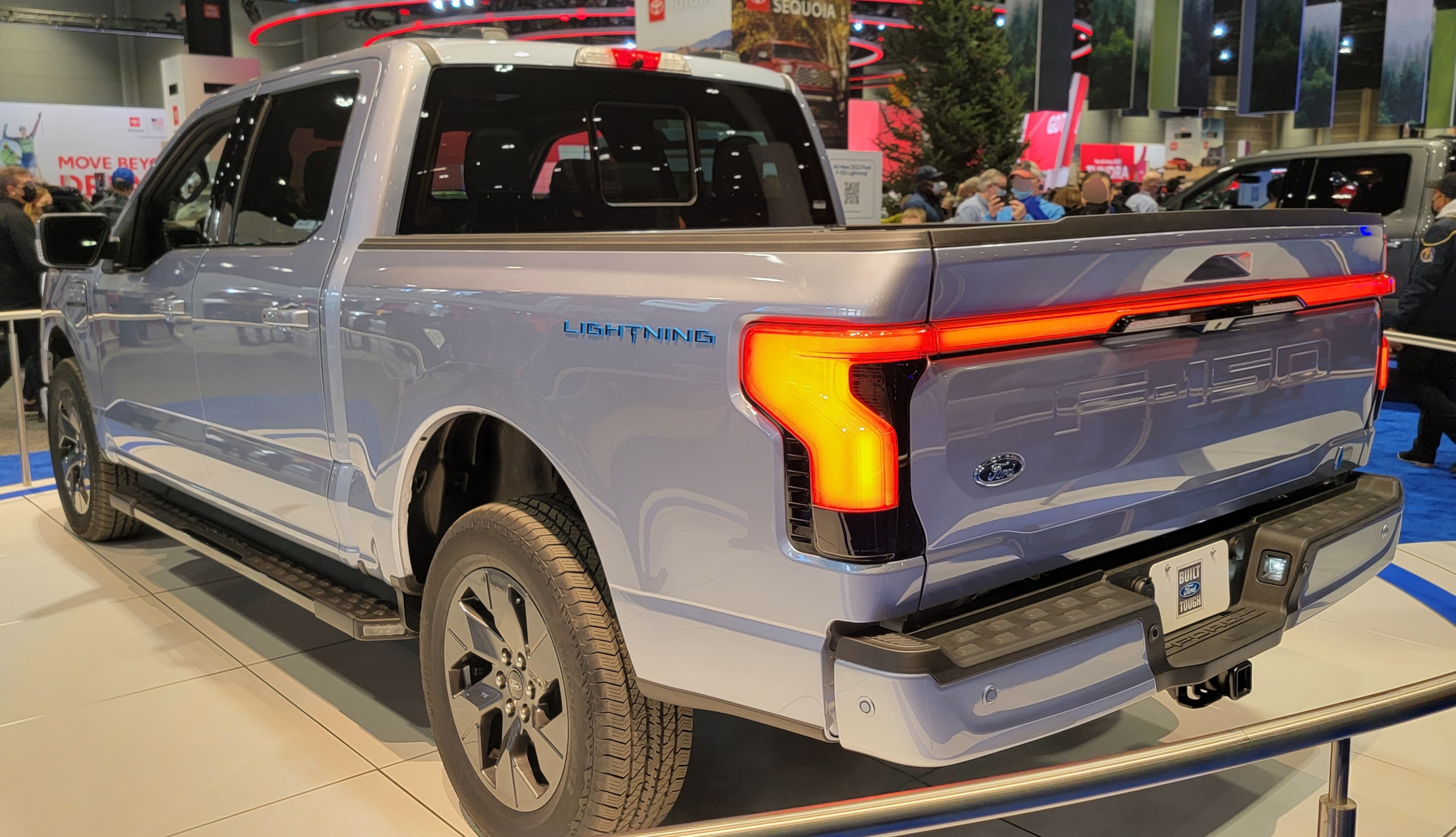
"So if we apply this to electric vehicles, is it a mistake for Ford to come out with a lightning?"
The Ford Lightning is an electric truck that Ford makes. It's designed to be powerful and useful like regular trucks but runs on electricity instead of gasoline.
The Ford Lightning is an all-electric version of the Ford F-150 pickup truck, designed to compete in the growing electric vehicle market. It features advanced technology and performance capabilities, appealing to both traditional truck buyers and new electric vehicle customers.
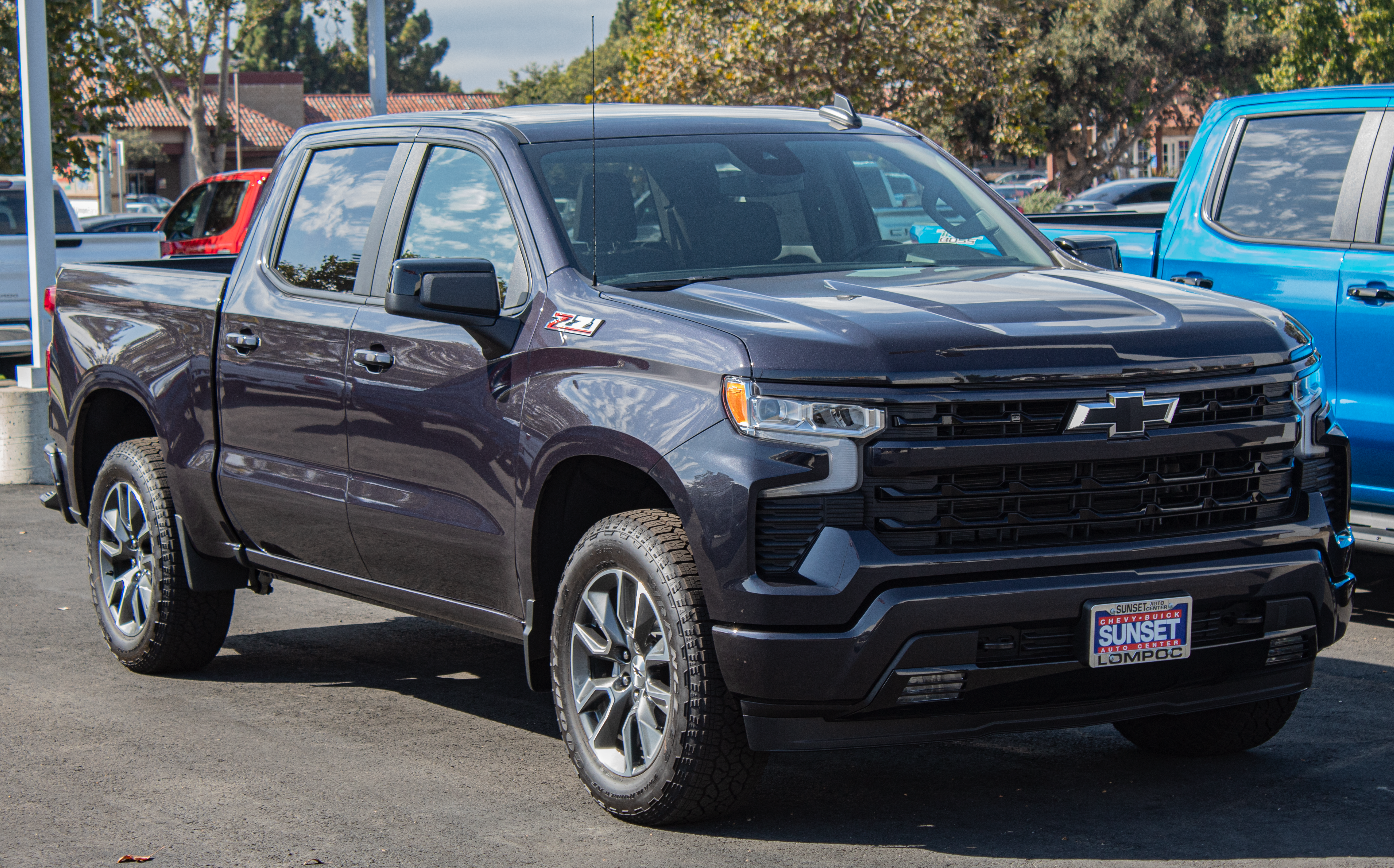
"...rt. You didn't need to learn on a lightning or a Silverado with 2,000-pound batteries what people wanted in..."
The Chevrolet Silverado is a big truck that can carry heavy loads and tow trailers. It's popular because it's strong and can be used for many different tasks, like work or family trips.
The Chevrolet Silverado is a full-size pickup truck known for its robust performance, versatility, and capability. It has been a popular choice for both work and personal use, often discussed for its balance of power and comfort.
"I believe what happened there was Tesla won the prize with electric vehicles in the luxury segment and the boards of these companies probably told their leadership..."
Electric vehicles are cars that run on electricity instead of gas. They are better for the environment because they don't pollute the air like regular cars do.
Electric vehicles (EVs) are cars that are powered entirely or partially by electricity instead of traditional gasoline or diesel. They are known for being more environmentally friendly as they produce zero tailpipe emissions.
"And it broke my heart that GM stopped the Bolt, which was a beautiful learning platform,"
The Chevrolet Bolt is an electric car that you can charge instead of filling up with gas. It's designed to be more affordable and has a good driving range.
The Chevrolet Bolt is an all-electric hatchback known for its affordability and range. It was one of the first mass-market electric vehicles from GM.
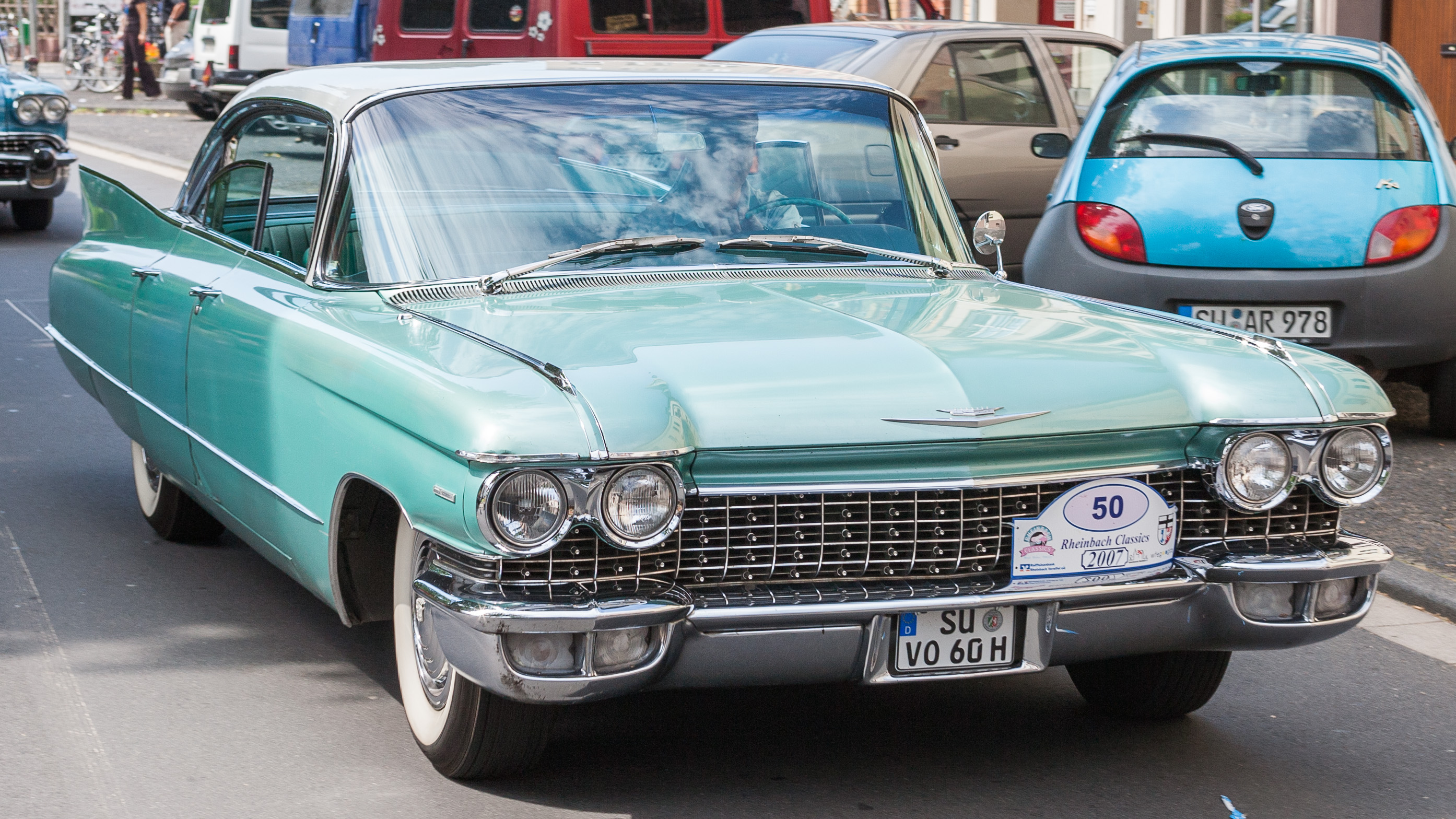
"...initially something like that would have come out as an option on one model of a Cadillac. And then there was enough interest in it to say..."
Cadillac is a brand of luxury cars known for being stylish and comfortable. They often include advanced technology and safety features in their vehicles.
Cadillac is a luxury vehicle brand known for its high-quality cars and innovative technologies. It has a long history of introducing advanced features, including safety systems like ABS.
"...it's probably the biggest product planning fiasco in the history of the industry. And to your point, it would have been better to start small."
A product planning fiasco is when a company makes big mistakes in deciding what products to make, which can lead to them not selling well.
A product planning fiasco refers to a significant failure in the strategy or execution of developing and launching a product, often leading to poor market performance.
"...k they were all scarred by seeing not only Tesla Model S and Onward do so well, but that it came out at t..."
The Tesla Model S is a fancy electric car that can go really fast and has a long battery life. It's important because it shows how electric cars can be just as good, if not better, than regular gas cars.
The Tesla Model S is a luxury electric sedan that has set benchmarks for performance, range, and technology in the electric vehicle market. Its success has influenced the automotive industry, pushing other manufacturers to accelerate their electric vehicle offerings.
"underpowered, not enough range, even though it was plenty of range for most of us,"
Range is how far an electric car can go before it needs to be charged again. It's important because it tells you if you can drive it for long distances without stopping to recharge.
In the context of electric vehicles, range refers to the distance a car can travel on a single charge of its battery. Range is a critical factor for potential buyers as it affects the vehicle's usability for daily driving and long trips.
"for most of our drives, if we have worse vehicles. No, not the first Leaf. The first Leaf's range was pretty short. But I think people were afraid of making that mistake"
The Nissan Leaf is an electric car that was made to be affordable and easy to drive. Some early versions didn't go very far on a single charge, which made people worried about using it for long trips.
The Nissan Leaf is one of the first mass-produced electric cars, known for its affordability and practicality. While it has been significant in popularizing electric vehicles, early models had limitations in range that made some potential buyers hesitant.
"more like a RAV4 escape size, maybe, that would be smaller, lighter, but actually fits what Americans like to buy."
The Toyota RAV4 is a small SUV that many people in America like to drive because it has a lot of space and is easy to use. It's a good choice for families and everyday travel.
The Toyota RAV4 is a compact SUV that has been popular in the U.S. for its practicality and versatility. It offers a good balance of space, comfort, and fuel efficiency, making it a favorite among families and commuters.
"...n devices rather than a fully loaded suburban or expedition or... I'm saying that, yes, Gary,"
The Ford Expedition is a large SUV that can fit a lot of people and stuff inside. It's great for families and trips because it has plenty of space and can drive on different types of roads.
The Ford Expedition is a full-size SUV designed for families and those needing ample space and towing capacity. It is often highlighted for its comfort, technology features, and ability to handle both on-road and off-road conditions.
"These companies can decide how to deploy their capital and whether or not they're going to put their money into Formula One racing or their money into the sweet spot of the auto industry serving most of what most Americans do."
Formula One racing is a popular type of car racing where specially designed cars compete at very high speeds on tracks around the world. It's famous for its exciting races and cutting-edge car technology.
Formula One racing is a high-level international motorsport that features single-seater cars competing in a series of races known as Grands Prix. It is known for its advanced technology, high speeds, and significant financial investment from automotive manufacturers and sponsors.
Fuel efficiency tells you how far a car can go on a gallon of gas. The better the fuel efficiency, the less money you spend on gas.
Fuel efficiency measures how far a vehicle can travel on a specific amount of fuel, typically expressed in miles per gallon (MPG). Higher fuel efficiency means better gas mileage and lower fuel costs for the owner.
"...within the autonomous driving system for radar, which is a really big deal, Jamie, because radar is less costly than LiDAR..."
Radar is a technology that helps cars detect other objects around them using radio waves. It can tell how far away something is and how fast it's moving, which is important for safe driving.
Radar, which stands for Radio Detection and Ranging, uses radio waves to detect objects and measure their distance and speed. In autonomous driving, radar is crucial for detecting other vehicles and obstacles, especially in various weather conditions.
"...you look at the tire industry and I know Bridgestone is your sponsor and I know they're into this as well as other companies like Goodyear,..."
Bridgestone is a big company that makes tires for cars and trucks. They are working on new types of tires that can share information about how they're doing.
Bridgestone is a major global tire manufacturer known for producing a wide range of tires for various vehicles, including passenger cars, trucks, and motorcycles. They are also involved in innovative tire technologies, such as smart tires that can communicate data about their condition.
"...as well as other companies like Goodyear, but the smart tire, for example,..."
Goodyear is a well-known company that makes tires for many kinds of vehicles. They are also looking into new technologies to improve their tires.
Goodyear is another leading tire manufacturer that produces a variety of tires for different types of vehicles. They are known for their advancements in tire technology and performance, including innovations in smart tire technology.
"...but the smart tire, for example, and the ability to take what some people think is a commodity..."
A smart tire is a special tire that can send information about its condition, like how much air is inside or if it's getting worn out. This helps drivers know when to check or change their tires.
A smart tire is an advanced type of tire that incorporates sensors and communication technology to monitor various parameters such as pressure, temperature, and tread wear. This data can help improve safety and performance by providing real-time information to drivers and vehicle systems.
"... fundamentals of electrons and hydrogen atoms and ions and the makeup of natural gas and how we energize..."
The Peugeot iOn is a tiny electric car made for driving around the city without polluting. It's easy to park and helps keep the air clean.
The Peugeot iOn is a small electric vehicle that was designed for urban commuting, offering a compact size and zero emissions. It is part of the growing trend of electric cars aimed at reducing environmental impact in city driving.
"...m not going to say I don't do this. I do have an Audi TT. My wife's car is a two-seater, but our other ve..."
The Audi TT RS is a sporty car that looks cool and drives really fast. It's a fun car for people who love to drive and want something stylish.
The Audi TT RS is a high-performance version of the compact Audi TT sports car, known for its powerful engine and sporty handling. It represents Audi's commitment to blending luxury with performance, making it a favorite among driving enthusiasts.
Select text to request an explanation
Auto Line After Hours is brought to you by Bridgestone Tires. Solutions for your journey.
Gary.
John, we missed you last week.
Well, I haven't been here in three weeks, so this is like, it's like a brand new show.
Well, holidays, yeah. It's a new year for you.
And I was at CES last week. We'll talk a bit about that as well.
I think we should because we have our friends here who are also with you there.
Yeah, so Larry Burns, former vice president of research and development at General Motors.
And what are you doing now, Larry? You're like a professor at University of Michigan?
No, I wrap that up, John. I advise companies. I'm advising a real estate developer in Florida.
I'm advising a radar software company, Atomathic, and a magnetics company, as well as a battery materials company.
So I do consulting, basically.
Yeah, got it, got it. And we got Jamie Butters here.
A long-time automotive journalist at Automotive News for a long time, too.
Six, seven years there, and yeah, been here in Detroit for 25 years covering the auto industry, and glad to be here.
Great to have you on the show.
So John, we should, I'll start, and I'm going to ask you what you saw at CES that you thought was fascinating that will have a real impact on the auto industry.
Well, there was a lot, and we're going to get into what a presentation that Larry gave us.
But the mind-blowing technology that I saw at CES was actually from a Detroit startup called Numo AI.
That's N-E-U-M-O, and they can measure brain waves wirelessly.
So I never knew this before. So I learned a few things.
The first brain waves were recorded or measured 100 years ago.
But, you know, scientists have to put sensors, attach them to your skull, to measure these things.
Well, I never knew this. Your brain waves radiate outside of your skull.
I never knew this before.
I get a tan from sitting here every weekend.
Right. So anyway, Numo AI has, it's a radio receiver.
They can pick up your brain waves from a foot away, 12 inches away, and they put one in the headrest of a car.
And they can tell if you're drunk, if you're drowsy, if you're high, if you're stressed out, if you're feeling good, and they can do things.
So if you're drunk, maybe the car doesn't start.
If you're drowsy, you know, maybe they lower the cabin temperature, raise the interior lights.
I could see in a level three handoff, it could determine when it has to alert you to say, okay, get back and make sure that you're alert.
So anyway, I say mind-blowing technology, literally mind-blowing.
And what makes me wonder is, okay, if they can measure brain waves from a foot away, that's right now today, right?
Where does this go in the future?
And what will they be able to read?
We're going to have to wear lead helmets, so our thoughts don't escape.
That's right. You keep going, I'm going to get the tinfoil hat out.
So what did you see, Jamie?
I saw a lot of robots and heard a lot about sensors.
Very important, both getting a lot of application with AI.
John's been saying, you know, AI is everywhere and in everything.
I think that was even somebody's slogan on their big sign, sort of.
But it was just, it's ubiquitous.
And, you know, I'm not sure everyone's using the words in the same way.
And so you always have to kind of probe it.
You know, how do you mean AI?
What are you using it for?
Is it generative?
Is it not?
And so on.
But it was a little overwhelming.
But what about the robot part of this?
Robots were interesting.
You know, I have always been a skeptic of the humanoid robot concept.
It seemed like it was just too difficult, too clumsy.
I mean, we are the way we are to protect against vulnerabilities that we create for ourselves.
So it didn't seem like the greatest idea to me.
But seeing these robots demonstrate actually superhuman skills,
you know, the ability to rotate at the waist 360 degrees or at the wrist.
You think about the ability to change out a hand.
You know, should a hand be three fingers?
Should it be three in a thumb or five or 12 fingers?
You know, it could also just decide, oh, I'm going to be doing,
I'm going to be screwing bolts on.
So I'll take off this hand and I'll put on the one that screws on bolts.
And it's pretty impressive displays.
And I think the progress that's being made now with AI,
as well as advances in batteries and actuators and all that,
but especially with AI, they're just, they're learning.
It's becoming much more doable than it was if you had to teach it everything to do,
step by step, line by line.
And, you know, just to add on that,
because Hyundai, which bought Boston Dynamics,
put on a whale of a display.
I don't know if that's part of what you're talking about.
So a couple of other things that go along with it.
These robots will all be connected wirelessly, Bluetooth, I'm guessing.
So if you train one robot a task, you've trained them all,
which I thought was rather significant.
Hyundai also showed video of these humanoid robots taking car parts out of a bin,
putting it on a car.
And that's when I started to go, oh, I think every job on the assembly line is under threat.
And Hyundai announced through Boston Dynamics,
they're going to build 30,000 robots a year at the big Hyundai Manufacturing Complex in Georgia.
So get ready, folks.
We're going to see a wave of these humanoid robots.
I remain skeptical.
It's a cloud with over-the-air update, but yeah, they are, you teach one and you teach them all.
Yeah, but you can do that right now with a 6-axis arm that's in factories everywhere.
Okay, Larry, you're the guy who worked for a car company.
So what do you think about the possibility of this?
Well, my big takeaway from CES in video is going to commoditize the brain of the car.
That means this ability to do the entire job of autonomous driving is pivoting to not just sensing,
but sensing and reasoning.
And a lot of exciting opportunities when you begin to think about that totally integrated stack
with the NVIDIA brain and the ability of the different players to then tailor their autonomous systems
to their unique brand value propositions.
I think the real message is our AI is inevitable.
I don't think it's going to go away and autonomous driving is inevitable.
I don't think it's going to go away.
You put the two of those together along with autonomous robots and others.
How are we going to live?
I mean, I think the opportunities now lie in the future of design
and how a lot of creative people are going to accept the inevitability of AI,
accepting the ability of autonomous.
And they're going to start redesigning things that have been part of our legacy lives
in some very, very exciting and big ways.
So I don't think we've quite caught up with that yet.
Now that is going to happen.
Now what?
I think the now what with autonomous vehicles is going to be astronomical.
So, Larry, going back to the NVIDIA thing.
They've got a whole tech stack for autonomous technology now.
What's your thinking?
Because I had this argument earlier this week with some other guys.
Should automakers be developing autonomous technology or should they just go out and buy it?
Yeah, John, I have to be candid about this.
We're talking about companies with $4 trillion valuations.
And it's not just NVIDIA.
I think Alphabet may have hit $4 trillion here recently.
And that's compared to GM and Ford that have been dancing from $50 to $80 billion valuations for some time.
So you're looking at almost an order of magnitude, even two orders of magnitude more in terms of value.
And an auto company can't afford to swing and miss.
Whereas these big tech companies, they can do what you really need to do as an innovator,
which is fail sometimes and afford to miss a couple of times but really get it right.
I just don't see how the auto companies, even the richest auto companies,
set aside Tesla because I see them as a tech company,
even the richest auto companies are going to be able to keep up with the capabilities these tech players have.
But Larry, might one not make the argument that if you look at NVIDIA,
I mean, auto is just a piece of what they do.
It's important to them, but it's not everything.
And so if you're a car company, you're focused.
We need to do this.
The value proposition, I don't think is going to be the metal anymore.
The value proposition is going to be the experience where you can tie your moving around into your life.
The biggest threat, I think, to auto companies or other automobiles, I think it's virtual access.
I think it's the opportunity for us to do the things that we do in our everyday life
without having to get in the car and go somewhere to do it.
That can be remote work, that can be e-commerce, that can be online learning,
it can be telehealth, mobile banking, and on and on it goes.
And so we really need to think through the future of living,
through the lens of the future of physical access, which is transportation.
Virtual access is what we do with the internet and blend that together into the experiences
for how people go about doing what they want to do.
So yeah, the car is part of it and the metal that makes up the car is part of it and the branding of that.
But I think the people that own the data and the software and the user interface
and the branding of that are going to be the winners.
Where did you come down in this argument about the car company versus the video company?
My thinking was that, and that's a great question, Gary,
my thinking was that whichever automaker gets to autonomy first is going to be a winner.
There's going to be a clear first mover advantage.
But I'm talking L4, level four technology.
We've just reported on Auto Line Daily today.
Mercedes killed its L3 project.
So there's this question about the handoff and there's,
especially in the United States, liability issues.
So I thought it was smart for an automaker to be working on autonomy.
But before the decades over, I think everybody's going to be at about the same level.
And so to me, that changes the make-by decision.
And I think it's smarter.
What are you going to say, Jerry?
I was in a similar conversation about the software and the architecture of the car.
Why are they insisting on doing that themselves?
As opposed to, I mean, Volkswagen seemed like they tried to failed
and then went with the Rivian plan.
Maybe whether it's Rivian or it's Qualcomm or it's NVIDIA, there are other partners.
Let's use the Chinese solution and buy stuff off the shelf
instead of everybody trying to invent bespoke software, bespoke autonomy and so on and so on.
Well, Doug Fields announced last week at CES about how Ford is developing its own autonomous hardware.
And I mean, there's a certain charm to that in my mind because basically this is built for a car company,
buy a car company, buy a bunch of people who never worked for a car company.
So what could go wrong there?
Well, I think the car industry is going to change dramatically.
When we talked two years ago, you brought up Peak Auto.
You talked about the fact that the prices of cars are getting close to $50,000
and something's going to have to give.
And there's a lot of literature called the Innovator's Dilemma of Clayton Christensen
that says when a vehicle or a product gets way over specified for its fundamental value proposition,
in my mind the fundamental value proposition of a car is access.
Go where you want to when you want to.
And now we've got so much content, so much mass, so much power built into these cars.
I do think we're hitting Peak Auto.
And what does Clayton Christensen, who unfortunately has passed away,
what was he saying is going to happen?
Something will come in underneath that.
Really affordable solution to get back to that fundamental value proposition.
I'm talking about changing the game from the price of the car at 50,000 miles
to the cost of only operating a car per seat around $0.10 a mile.
Well, but don't forget Christensen basically said that the company that comes in
is going to have a product that underperforms what's available on the market.
The company that comes in is going to have a product that is less expensive
than what is being offered on the market.
And I don't see those two things happening.
You've got to give that a little bit of time.
We're talking about autonomous and electric cars when you put them together,
having half as many parts and radically even fewer moving parts
than a combustion vehicle that's driven by a person.
So what's happened here on this cost issue with EVs,
and what will happen for a while with autonomous vehicles,
is you just don't have a mature supply base with the competitive dynamic in it yet.
I think the problem with electric vehicles in the United States
is a lot of people try to scale them faster than they were ready to be scaled.
A $7,500 incentive on a full-size pickup truck that's parked 95% of the time,
that is a 2,000-pound battery is just taking the lithium out of the ground
and putting it in the parking lot for most of the time.
And we're giving someone a $7,500 incentive to do that.
That's not the solution for scale.
So when you go and you think about the world at scale,
scale EVs and scale the autonomous,
and you look at that set of parts and the software and the architectures,
I think the players that get these architectures right
and their controls, electrical, software architectures right and their stacks right,
they're going to be the ones that come out of this.
So again, I go back to my earlier comment.
If you look at who the big players on autonomous vehicles are,
like himself about, it's Amazon, it's Tesla, it's Microsoft, those kinds of players,
their combined market cap is $9 trillion.
That's the last time I calculated, it's probably higher than that.
In the auto industry, it just can't stand the game on that,
especially when suddenly you have to do a $6 billion right off
because regulations are forcing it to change direction.
Right. And that's just the first $6 billion right off.
I think GM is probably going to have to do another one.
Yeah, well, it's because it's 6.1 on top of the one and a half.
So it's 7.6 just for 2025 for GM.
And yeah, probably possibly more to come.
I'm curious, you've worked for a long time
and to follow how technology takes time and patience to develop.
And I'm wondering how much where you see this whipsawing of policy
and investors are just as much to blame as regulators.
They fed a lot of irrational behavior,
but how these kind of big swings can disrupt the progress.
What do we get out of this?
Yeah, I think it's very, very disruptive.
Innovation at the heart of innovation is learning.
And when GM developed anti-lock brakes,
it was anti-lock brake generation 6
that finally went across the board on GM's products.
So we're talking about six generations of learning.
Engineers make what's possible real and we do that through learning cycles.
So if you want to transition an industry from combustion to electric,
it's going to take a few decades of learning in order to get that right.
And it's right on many things.
It's right on the capacity of the industry,
on the cost of the components, their durability,
what's a real sweet spot in the marketplace.
And if you go from administration to administration,
and you had Clinton and Gore, and then you had Bush,
and then you had Obama, then you had Trump,
and then you had Biden back to Trump,
and that pendulum on the view of what is the right thing to do
with respect to energy for automobiles,
that thing has just gone back and forth and back and forth
from batteries to hydrogen to combustion,
batteries and everything, subsidizing this and that.
And the auto industry isn't rich enough to keep shooting at those moving targets.
And I think you really, really need some stability on this.
And I was asked by another journalist while I was at CES,
do you think the auto companies will now be able to spend more money
on autonomous because they don't have to go after electric?
I said, I don't think they have more money.
They're spending more money to dig out of the hole
they've created with electric.
So that's really, really hard for the auto companies to deal with.
And I think the politicians just don't have the business experience
that they need on many of these subjects to understand
how do these innovations really come to be?
So Larry, let me ask you, go back to the six generations of ABS
before it's launched in a big way.
So if we apply this to electric vehicles,
is it a mistake for Ford to come out with a lightning?
Was it a mistake for General Motors to come out with a...
I believe it was.
Really?
Yeah, because they went after the big vehicle.
I believe the approach to innovations, think big, start small,
learn fast so you can scale smart.
You didn't need to learn on a lightning or a Silverado
with 2,000-pound batteries what people wanted in their electric cars.
I believe what happened there was Tesla won the prize
with electric vehicles in the luxury segment
and the boards of these companies probably told their leadership,
you better not lose the prize in pickup trucks on electric
and both companies won after that.
But Gary, I did the calculation.
The Silverado electric vehicle adds 2,100 pounds.
The Detroit Lions offensive line weighs 2,100 pounds.
So if you think you're doing something good for the environment
to get in a Silverado electric vehicle
or drive to the store to get a gallon of milk,
you're taking the offensive line of the Detroit Lions
with you to do that.
They drink more milk.
Now you compare that to what went on in China
with something like the PYD Segal,
which is a much smaller vehicle, learn on that.
And it broke my heart that GM stopped the Bolt,
which was a beautiful learning platform,
and then they swung back after it later on.
But I think you got to start small and learn fast
and that learning, in the case of ABS,
was six generations of learning.
Was that like one a year?
Was it sort of half a decade or closer to a decade?
I think it probably had to be at least a decade.
I think initially something like that would have come out
as an option on one model of a Cadillac.
And then there was enough interest in it to say,
hey, let's go to Gen 2.
And then maybe it was standard on that model
and an option on the other Cadillacs.
And then Gen 3 is across the board on Cadillac.
Then you'd work it into Buick and Olesville,
and ultimately be across the board on Chevrolet.
But yeah, I would say that was probably a 10 or 15-year journey.
So that's how this stuff happens.
It never happens in one step,
and the auto industry is too complex of a system.
I would agree with you on the pickups, I think.
And they all made the mistake, right?
GM Ford.
Tesla.
Well, Tesla made a big mistake too, and so did Ram.
And I would say it's probably the biggest product planning fiasco
in the history of the industry.
And to your point, it would have been better to start small.
I understand what they were trying to do,
not only protect their, you know, the crown jewels,
which is their big profit generators in the pick.
But also, I think they were aiming for scale.
And they thought, okay, our trucks are our biggest sellers,
so we'll get to scale that way.
But the biggest mistake, I think, of all
was not listening to the pickup buyer.
The most conservative buyer in the market
who had nothing to do with electric.
My brother-in-law lives out in the Howell Fenton Menden area,
and he has a lot of friends who have pickup trucks,
and he knows the dealers out there.
And the dealers explain that exactly.
These people who come into the Chevy store
to buy a pickup truck have absolutely no interest in the EV.
They really, really have an interest in their duty cycle,
their use cases.
What are they using their trucks for?
There's a lot of farming that goes on out there and other things.
So I think, again, I think the politics drove some of this stuff.
Yeah, and again, Wall Street was really hot for it.
You know, I think they were all scarred by seeing
not only Tesla Model S and Onward do so well,
but that it came out at the same time as the Leaf,
which people then saw as a compliance car,
underpowered, not enough range,
even though it was plenty of range for most of us,
for most of our drives, if we have worse vehicles.
No, not the first Leaf. The first Leaf's range was pretty short.
But I think people were afraid of making that mistake
and being seen that way.
Of course, they should have tried to do something
more like a RAV4 escape size, maybe,
that would be smaller, lighter,
but actually fits what Americans like to buy.
Or do some of the fleet stuff,
where you can get really good learning
off of the batteries and the charging.
The thing is, everyone wants to go back to range anxiety
and the infrastructure for recharging.
And if you really look at everyday travel patterns
for most Americans, range anxiety shouldn't really be...
Right, but Larry, you know, people don't buy on logic.
Oh, they buy the dream.
I understand that.
We may suddenly have to get up right from here
and drive to Traverse City.
Well, you asked me what I'm up to.
One of my clients is a company called Kitsit and Partners,
and they're developing an odd-toothed new town
in Florida called Babcock Ranch.
It's northeast of Fort Myers.
It's going to be a 50,000-person city.
We're at about 13,000 people now,
at about 6,000 homes, we're approved for 20,000 homes.
One of our focal points is to make that a...
what we call a one-car lifestyle.
Now, we will have the stores and other services in the town,
and we will have the virtual access set up
so that the need for a household
ever having to have two people going outside the town
at the same time to require two cars
is so low that they'll convince themselves
they can get by with one car and a golf cart.
The community's all maxed at 25 miles an hour.
It's all traffic circles, and that's the kind of thing.
Those are the kinds of access stories
that are going to really begin to shift the auto industry.
Can you imagine the disruptive impact that would happen
in the US auto industry if suddenly households realized
three-car households could get by with two
and two-car could get by with one?
What would that do to the use car industry,
and what would that do to the foundation of the industry?
So, access and the ability to provide transportation solutions
without the historic ownership of an overly specified vehicle
for most of the trips that you make,
that's going to find its way through the industry
at some point in time, I predict.
But, Larry, as Jamie pointed out that, you know,
Wall Street had a big, big effect
on Ford and General Motors doing what they did
in terms of their electric vehicle plans, right?
I mean, it just wasn't regulations.
That was part of it, but still, you know,
we want you to be seen as somebody who is with it.
We want you to be seen as somebody who is on the leading edge
of what's going on, because if you're not,
your stock is going to be worth nothing, right?
So, you have that situation.
Now, you're suggesting that people have
more basic transportation devices
rather than a fully loaded suburban or expedition or...
I'm saying that, yes, Gary,
because most people can't afford a fully loaded expedition
or suburban, which probably is going out of the showroom
now at over $80,000.
And that happens then become a used vehicle down the road,
so the used vehicle prices go up.
And this affordability issue is a very, very real issue
for a whole lot of Americans.
And when you have vehicle medium price get above $50,000
and you add in the insurance and the fuel
and the maintenance and other things,
it's really putting a lot of pressure on households.
So, as I study this one car lifestyle,
depending on what your second car is, obviously,
it can free up $3,000, $4,000, $6,000 a year
for a lot of households.
And if median income for a household is $60,000, $70,000,
that's big money for them in this affordability front.
So, I do think people are going to vote with their dollars,
Gary, down the road.
They're going to have to.
But doesn't this doom the auto industry as we know it?
I mean, they thrive on these highly tricked out vehicles
in terms of, you know,
that's a nature of competition and disruption.
And it's not a hidden story.
I think the auto industry can,
U.S. auto industry in particular,
I'm not sure dooms other nations that are offering
a lot more of these smaller vehicles.
And where will the profit be made
is what needs to be understood.
And that's why I keep talking about,
you got to think about physical access, transportation,
virtual access.
Am I driving to a store anymore?
No.
It's UPS, it's FedEx, it's Amazon coming to me.
And one would say, well, how can that make sense?
Well, if a typical Amazon truck is delivering 40 parcels
to homes, that might be 40 people who would have driven
to a store by themselves as an individual
in a four or 5,000 pound vehicle
that then goes and finds parking and uses that time
when it's so much more efficient for me.
I can never drive to the store fast enough, Gary,
to save enough time to not have to make the trip.
Never.
And it's convenience.
So that kind of, it'll take time
for that kind of living dynamic to work its way through.
I used to have to make a trip to the Secretary of State
to get my license plate or renew my driver's license.
You can do that 24-7 online.
I used to have to go to the bank to deposit my check
or get cash.
I don't go to the bank anymore.
So at what point are all of the trips that were underlying
the hundred-year legacy of the auto industry
going to begin to shift?
And at what point are people who are really, really
facing affordability issues saying,
we gotta get rid of that second car?
And I think these are real issues for the industry.
So whether they're doomed, that's their choice.
These companies can decide how to deploy their capital
and whether or not they're going to put their money into
Formula One racing or their money into the sweet spot
of the auto industry serving most of what most Americans do.
Yeah, I agree with you.
And I think this helps explain why we've hit peak auto.
I think, you know, millions of households
have been priced out of the new car market
and have gone to the used car market instead.
And I agree with you too, Larry.
Once they have an alternative in terms of transportation,
whether it's autonomy or other forms of mobility
to your point, you know, if you can get rid of a car
in your household and not have to fuel it,
not have to insure it, and insurance costs have gone
through the roof and repair costs have gone through the roof,
you're right.
That can save a household thousands of dollars a year.
Yeah, yeah.
I was just saying, you know, yes, people are getting priced
out of the new car market and into the used market,
but the used market is undersupplied by what,
10 million vehicles over the last five years, you know,
relative to the pace before.
The price of used vehicles is very high,
especially if you want something one, two, three years old
that has, you know, the good safety technology,
the good fuel efficiency, and so on.
Yeah, so the last I looked, which was a few months ago,
the average price of a new, a used car in the U.S.
was $32,000.
Stunning.
Pre-COVID, that was the average price of a new car.
Yeah, yeah.
And it seems like not long before that,
that was the price of a luxury car.
The breakup for luxury was $30,000.
So you ask yourself, how can that be?
What are people doing to deal with that?
I think they're using virtual access for a lot of the stuff
that they used to do.
They're using Uber.
I don't know how much you use Uber.
I use Uber for all of my trips from home to the airport now.
And my wife...
Cheaper than parking if you're, if it's a long trip.
Yeah, and they're, it's a really good experience.
The Uber drivers are very professional.
I've never been left standing, waiting for my ride.
They drive responsible speeds.
If I don't want to talk, they don't talk.
If I want to talk, they talk.
I can't say enough about that.
And so I think these alternatives will make their way in,
but it's not just the price of the car that's gone up a lot.
The mass of the vehicles are up about 50% since the early 80s.
The horsepower, 170% higher horsepower for new cars
that are built and sold in the US.
So all of this innovative technology that was developed
for the combustion engine either could have been translated
into efficiency completely, but it's translated
into the horsepower and it's marketed as horsepower.
And my hang-up with this, more mass, more horsepower
is more kinetic energy and a less safe system overall
for everybody.
So either it's going to be the safety front,
the affordability front, or just a simple fact
that it's a lot easier to go door to door
than to find a place to park.
And all those things are going to start piling up
on the traditional assumptions in the industry.
That would be my thesis.
So you mentioned Uber and using that for more and more rides.
And that, again, speaks to both the ownership question
but also the autonomy question.
When does that become a more viable option for more people?
And we're seeing, I'm really fascinated by this,
we're seeing the spread as it moves across the smile,
but Waymo is working to figure out Detroit.
And on my drive here today, I don't know how many times,
probably 20, 30 times I had to squirt fluid on my windshield
to keep it clean enough to see.
So for those watching, it's a very snowy day here in Detroit
and you get all this crap on your windshield
and you're using up all your washer fluid.
Right, and so I'm wondering, do you have thoughts,
as they come here, what are the biggest challenges
to overcoming Detroit weather, northern weather?
Is the solution having more sensors?
Is it just having systems to keep them clean?
How does all that work?
First and foremost, I think it's a lot of learning
around those specific use cases.
So we've talked about learning earlier in the show
how important it is.
When I say a use case, it's a combination of traffic,
weather, lighting, road friction, the vehicle you're in,
the tire pressure in the vehicle, the load,
and all of the stuff that you need to bring together
to know that when your autonomous driver system says,
go that way at this speed, that that's a safe decision.
Safety leader will be the market leader
in autonomous vehicles.
That is already playing out.
Even though, to be candid, I advised Waymo for 11 years,
but Waymo is an impressive track record
on transparency and safety.
Their data, third party endorsed,
suggests they're five to ten times safer than human drivers.
So now you come to Detroit,
and I think it's a combination of learning,
it's a combination of sensors.
I was at CES on behalf of a company called Atomathic,
and basically they've taken radar hardware,
as we know in it, and positioned that not as a sensor anymore,
but as reasoning.
It's really made deterministic safety layer
within the autonomous driving system for radar,
which is a really big deal, Jamie,
because radar is less costly than LiDAR.
LiDAR has moving parts, operationally it's complex.
So this breakthrough on sensing and reasoning for radar,
I think will be a big deal,
combined with the NVIDIA brain, I think can set that up.
So the important thing to know is there will be circumstances
in level four where we shouldn't be on the road,
but this radar could see without wiping your windshield off.
And that's very, very interesting to me.
Very interesting.
Let's take a very quick break for the moment.
We'll come back to this conversation,
but we've got to give a shout out to our great sponsor, Bridgestone.
Knowing that a little rain won't slow down your day.
That's what really matters.
Bridgestone Turanza Quiet Track Types.
Confident control in wet conditions.
All right, we're back talking with Larry Burns
about all kinds of things.
Let's go back a little bit deeper into this radar,
because my understanding is the company is using AI,
artificial intelligence, to clean up the radar signal.
That's exactly right.
And so when they haven't made the radar better,
and I saw a great demonstration of this,
we were out on the street and the radar without this AI enhancement
shows that there's something down the road.
The radar with the enhancement says there's a van on the road
and a human being standing next to it.
This is called physical AI, which is interesting.
Physical AI applies to autonomous cars,
applies to robots, to drones, and other things.
The AI, when you ask a question on the internet,
they're based on large language models,
and they sort through all that data and they come back
and they give you an insight.
Physical AI applies the laws of physics.
It brings AI into physical reality.
So what Atomathic has done, and it's founded by a physicist
and a computer or information electrical engineering expert
from Caltech, they've taken the laws of physics
and they've been able to take advantage of these really fast chips
that now offer computer processing,
and they're able to almost use common sense as they progress
through what they're seeing and the signal coming back
and confirming that through the laws of physics,
that makes sense, that doesn't make sense.
Let's keep going in this direction as we search
to understand what we're seeing,
and ultimately they converge on something.
So it's really neat.
I love this physical AI because it brings science in
with artificial intelligence and it gives you
a greater confidence that your answer is right.
So I think this whole notion of deterministic radar,
see the problem with radar is you get flickering
because cars bounce around and everything,
you get this ghosting because the big heavy object,
big object washes over the small objects
and those kinds of things make AI unreliable.
So you can confuse what you're seeing with the cameras,
I'm sorry radar unreliable,
you can confuse what you're seeing with the camera
and what you're seeing with the radar.
So some companies like Tesla kind of gave up on radar
because they couldn't solve that and Atomathic basically
has solved that with physical AI.
It's opening up so many new possibilities with AI.
Larry, but okay, for the physical transportation needs
of people, all of these AI systems have to be integrated
into a vehicle and there must be the devices
and actuators and so on that are manufactured
by some supplier in order to make the vehicle drive.
I mean, we sit here and we talk about this stuff,
but I mean, it's just like, you know,
it gets down to like the nuts and bolts before that happens.
And my question is, is it your sense
that there are a sufficient number of people or companies
that are able to execute the non-software, non-AI parts of this
in order to make a business out of this?
I believe that's the case.
You look at the tire industry and I know Bridgestone is your sponsor
and I know they're into this as well as other companies like Goodyear,
but the smart tire, for example,
and the ability to take what some people think is a commodity
on the car of the tire, which happens to be an extraordinarily
sophisticated, 70 different materials.
The physics of understanding tires is really, really sophisticated
and they're able to put some sensors into the tire
and feed that back up into your analog braking system,
your stability control system and make things safer
and even understand the friction of the road.
That kind of stuff is going on with tire companies.
That is really exciting to me and I suspect a lot of the tier ones
and even their tier twos are doing this kind of work.
Hopefully there's enough talent to go around
and this gets back to immigration and stuff like that.
A lot of the breakthrough people in these firms
are not necessarily all from the United States,
so we need to tap into that brain power everywhere to develop it.
Einstein taught us the best design is the simplest one that works
and the simplicity of vehicles that could integrate everything
around the four corners of the car.
It could be an integrated wheel motor kind of a system
where the torque, the steering, the braking, the chassis dynamics
and everything comes together and it gets controlled with the right software
and you get the intelligence of the surface.
You even get the data of what's going on at the road
because you've got this telematic system that's feeding all that.
I think all that comes together, Gary, and makes this possible.
It's a different kind of a business than knowing how to do combustion
and knowing how to machine the parts that go into an automatic transmission,
but there's going to be a lot fewer parts.
One thing we haven't talked about, VTOLs, vertical takeoff and landing
and what their impact on mobility might be.
Have you given any thought to that?
First of all, I'm glad you didn't call them flying cars
because a flying car is a bad car and a bad plane.
So calling them vertical takeoff and landing machines,
which are basically really, really big drones,
I think they're extremely exciting.
This community I talked about, Babcock Ranch, they're in Florida
and Florida is getting very serious about a regional network of those kinds of flights.
So these are two and three hundred mile trips.
So you can imagine Jacksonville and Orlando and Fort Myers and Naples and Miami
and Fort Lauderdale up the coast.
All of those, their distances are two and three hundred miles apart
and to flow people through these ports for these drones,
which are pretty simple things because they come straight down the land and they take off,
suddenly you're introducing a new motor transportation for the two to three hundred mile trip.
Now I don't see myself flying three miles to the store.
I certainly could see myself taking that trip from my home in the Detroit area
to western Michigan where we have a vacation home, which is a hundred and eighty mile trip.
That would be really great, John.
So I'm excited about that.
It's the same class of technologies that we're talking about.
AI, autonomous controls, electric, energy storage
and swarms of these things flying around.
You're going to have to have some really, really good insights for control
when we get a lot of them moving around.
But yeah, I see that as really exciting.
Speaking of travel within the state and Gary made the joke about range anxiety
and deciding we're suddenly going to drive to Traverse City.
But I think I first met you at Traverse City, probably 2001.
And you had a fuel cell pickup with you at GM.
And of course, it seems like hydrogen has really lost a lot of battles lately
and doesn't have a lot of momentum behind it.
But there's all this AI explosion and it requires so much power
and all these companies and building more generators to burn more gas.
We know we just had last year was the third warmest year ever.
Planet keeps getting warmer.
As someone who's given a lot of work, given a lot of thought to hydrogen,
is there a hopeful path to clean hydrogen produced with electrolysis and all that
that can maybe pull us out of this heat wave?
Yes, yes. I'm really glad you brought that up.
Yes, hydrogen's taking some hits lately.
I'm more amazed that it's still in play when you go back to 2001.
And again, we had Clinton and Gore.
They were a PNGV partnership for next generation vehicles,
pretty much hybrid oriented kind of a thing.
And the President Bush came along and hydrogen got in play in a significant way.
And then Obama swung it back to electric.
Somehow hydrogen has stayed viable and companies have continued to develop it.
Jamie, I think everyone needs to take a deep breath and think in terms of what I call integrated energy systems.
I call that the power of and, the word and.
It's hydrogen and electricity and natural gas and oil.
It's nuclear because we have such an appetite for energy around the world, we need them all.
The beauty of this is natural gas can be used to make electricity.
Electricity can be used to make hydrogen.
Hydrogen can be used to make natural electricity.
Hydrogen can be created for natural gas.
Hydrogen can be distributed in natural gas pipelines.
And as soon as we realize the answer is all of the above combined in an integrated energy system
with really smart systems for getting real time signals for demand and real time pricing and all of that,
the better off we're going to be.
So I remain optimistic about the future of energy and I think people trying to pick a singular winner.
It's all fossil fuel or it's all electricity from central generation plants or we got to go to a nuclear.
They do that because they're trying to promote their industry and trying to get capital overflow in their direction
and regulators to support them.
But the story we're telling that it's going back and forth and back and forth and hey, let's all get on the same page.
Let's think about the power of and let's work on the integrated energy system.
Well, it just so happens that President Trump spoke at the Detroit Economic Club this week and hydrogen came up in his comments.
So I want to read to you what he said.
So this is going to perhaps, I don't know what's going to do this pendulum metaphor we're using here,
but he said, I want you to have the gasoline powered cars.
I want you to have electric.
I want you to have hybrids.
I want you to have everything.
Hydrogen I don't know about.
I'm hearing it's not testing so well.
It's fine except when there's an explosion, you're a goner.
No, have you heard about that with hydrogen?
I have one guy who's trying to sell hydrogen and I say, yeah, but sir.
And I think he said this a little wrong, but he's basically saying that the explosion is one in 100 and Trump said when that happens,
they find the body like 300 yards down the road.
So I said, I'll pass on hydrogen.
Maybe there's something I don't know about.
There's a lot he doesn't know about on that subject.
I've been around the subject of hydrogen a long time and a lot of people still talk about the Hindenburg.
And hydrogen is very safe if you engineer the systems and manage it in a safe way.
And I happen to have led labs that had to do that and I've led labs for a long time.
They had to do that and we had a remarkable safety record.
We have fires with battery electric vehicles.
We have fires with combustion vehicles.
So these issues that he's mentioning are not unique to hydrogen.
It's a convenient way to take hydrogen out of the equation because it's a competitive threat to people who've bet on batteries and electric vehicles.
That's the dynamic that's playing out here, Gary, so you can scare investors away and you can scare customers away.
But hydrogen electric vehicles are fuel cell electric vehicles.
They're properly engineered and developed, validated.
Are as safe as anything else we have out there.
You know, I've always said that if we had grown up with hydrogen and powered our vehicles with that,
and somebody came along and said, hey, I got this great fuel called gasoline, we go, are you crazy?
Number one, it's carcinogenic. Number two, it burns like crazy.
And if it's in a contained container, it blows up like an atomic bomb.
But I think optionality is what we really want.
And it'll find its right place in the marketplace.
We went through gasoline and diesel.
One might have said, well, we all have everything gasoline.
I don't see why we need to have separate infrastructure for diesel and stuff.
Well, it turns out diesel is pretty darn good for big loads.
And it had torque characteristics that were useful and it found its way in and it's been part of our carbon fuel infrastructure for a long time.
So there's room for all of it.
And it's just a matter of people with vested interests and alternative solutions
and who has the loudest voice at any particular time.
And that's behind these pendulums, Jamie.
But if we look at the auto industry, I mean, so, you know, you led the effort at General Motors for hydrogen.
And hydrogen, General Motors has basically said, we're done.
Right. I mean, they're no longer pursuing hydrogen.
The thing with Honda is no longer going to be happening.
I'm a little confused.
But yeah, they're mostly out of it.
Right.
And in Ford, we don't hear anything about them.
So you basically have Toyota still is doing some stuff.
Honda is doing some stuff.
Honda, I think, is doing a minimal amount.
BMW is still doing something, but, you know, that's a one off.
But you're listening to a set of companies which have to deal with ADAS.
They have to deal with autonomous.
They have to deal with better electric vehicles.
They've got to deal with the pendulum swinging back to combustion vehicles.
They've got to deal with very different settings in China, Japan, Korea, the United States, Europe.
It's a tough, tough business.
They can't afford to do everything.
I find it very interesting that autonomous vehicles didn't have their roots in the auto industry.
They had their roots in the tech industry.
So if there's a future for hydrogen, it may come out of a totally different set of players.
I'm referring back just to the fundamentals of electrons and hydrogen atoms and ions and the makeup of natural gas and how we energize things.
There's nothing complicated about a fuel cell or hydrogen storage.
And Toyota has made dramatic progress on, say, hydrogen storage.
And so there's still people who are in play.
Now, the real big risk, I would say, is the cut of the scientific budgets and the R&D budgets and the national laboratories.
That could be the Achilles heel of all of this stuff.
If you really want something to go away, stop funding innovation on it.
But for me, I've been around it enough, Gary, to know that it's an important part of the future integrated energy system.
And the quicker we take advantage of that word integrated, the better off we're going to be.
I used to have a boss who was, during the EV boom, would say, why is everybody so excited about EVs?
What about hydrogen?
And I was like, well, do you want to lose a few thousand dollars per car or a hundred thousand dollars a car?
But like you said about the learning, there is so much learning that still has to happen on the production, on the storage and distribution.
The cars almost seemed the most figured out part of it.
But if I were running one of these companies, I would keep my hydrogen program really small while that other work gets done.
And it really needs to happen, like you said, those national labs kind of projects, the big universities doing really smart stuff.
Hydrogen isn't a new thing, Jamie. I mean, there's a huge amount of hydrogen required to refine gasoline.
So if you take the Venezuelan oil, which is a sour oil, a dirty oil, and the refineries that we have in the southern part of the United States,
along the Gulf of Mexico, they use horns of hydrogen to clean up that oil to turn it into gasoline.
So hydrogen is not a new thing, and storing hydrogen and distributing hydrogen is not a new thing.
But it's expensive, right? And it can be dirty to make in currently current technologies.
I think the expense comes in the transportation.
So if you're using it on site, so for example, oil refineries, my understanding, are producing hydrogen as part of the refining process.
They produce it on site from natural gas.
And so if you don't have to freeze it or put it under enormous pressure into tankers and send it around, then it's not expensive.
But if you have to distribute it, that's where the cost comes in.
And that's why I've been persuaded that hydrogen does make sense in long-haul trucking, where trucks follow a known route.
They fuel at a known fueling depot, which could make hydrogen on the spot, literally, or you're only distributing it to one place.
And I think we saw a presentation.
Bosch has come up with a cryogenic pump to pump this stuff at super low temperature.
They said something like 40 filling stations could serve the entire state of California for long-haul trucking versus the hundreds and hundreds that you need if you're going to use passenger cars, hydrogen fuel cells and passenger cars.
So again, I think it's power of hand.
I think I first used those terms in 2011 or 2012.
No, maybe even before I left January 2008 or 2009.
So I think it's an all of the above.
And I think it's relatively inexpensive to keep these options in play when you look at the magnitude of the risks associated with the future world.
And I'm not saying climate change uniquely when I say that.
I'm talking about the real hunger for energy that's coming with this next wave of technologies as we go forward.
So this is related to what we've been talking about here, but a little off.
But you're uniquely focused on this area of research and development and innovation.
So the New York Times has had a story about the results of a study done by a university in the Netherlands, Leiden University.
And they rank universities based on their science and technical studies.
And so I thought, this is very interesting.
So I looked into it.
The top 10 universities in the world in terms of science and technology, in terms of innovation, things we need.
Number three is Harvard.
Number 10 is the University of Toronto.
All the other universities are Chinese.
Then you pull back and go to the top 25.
You've got, in addition to Harvard and University of Toronto, University of Sao Paulo is at 17, University of Michigan is at 20.
Johns Hopkins is at 23.
And all the rest are Chinese.
Okay, so the U.S. has three universities now in the top 25.
It used to be dominating the top 10.
So what's your sense of how we're going to do these developments, whether it's AI, whether it's hydrogen, whether it's V...
I mean, isn't this disturbing?
It kept me up at night when I let R&D at GM.
And it continues to keep me up at night as the smartest 25% of the people in China were the population of the United States.
And then you bring India into the mix.
And a lot of Americans, I think, incorrectly perceive that we got a corner on the brains.
Maybe it's been marketed that way, but we don't.
And a lot of the innovators that are leading some of the most valuable companies in the United States,
they're either first generation or second generation people from some of these other countries.
So at the end of the day, innovation and technology is going to shape who is powerful and who's less powerful in the world.
So it does concern me very, very much.
I had a chance to spend a lot of time in China when GM partnered with SAIC, having the R&D job.
I would go over there and be with the university people and be a face for GM into the universities.
And it was just amazing to me how fast they learned, how fast they went from not being able to do a complete car
to being able to do an amazingly good rear seat to suddenly being able to do the quality of cars they're doing today.
So I hope everybody who has a leadership responsibility in our nation wakes up to the importance of continuing to stay in these races.
Yeah, that's going to be a growing topic because I reported out of CES last week that G. Lee wants to build cars in the United States.
They'll probably make an announcement in the next year or two.
They own Volvo.
Volvo's got an assembly plant in Georgia, or South Carolina, and it's got a lot of open capacity right now.
And they're thinking of bringing their Zeekr brand and Lincoln co-brand.
And I asked them, well, what about this regulation in the U.S. that bans any Chinese technology that has anything to do with connectivity?
And they're like, yeah, okay, we'll meet the American letter of the law.
No problem, we'll do it.
And if G. Lee's thinking about coming here, you've got to believe there's another handful of Chinese companies that would love to come here.
I mean, we're all old enough in our auto careers to know the rhetoric around the Japanese in the early days in the 60s when they first came into the markets and that they would never be able to compete.
And we went through that whole experience of them quickly becoming the standard of the industry on quality and reliability.
So I don't think we can protect our way, you know, put up barriers around that.
I think we're going to have to compete our way through the technology leadership.
And back to your concern about the swinging pendulum, it does no good to throw capital away because we can't lock in on where the world is headed.
I would argue probably with this pendulum swinging and on the EV front, this industry in the U.S. alone probably burned up close to $100 billion.
Didn't have that money to spend, I'll tell you for sure.
Yeah, I think companies have to spend a little bit of time thinking about what the world could be like 100 years from now.
I know it's impossible to predict that.
Yogi Berra said predictions are really hard, especially about the future.
But thinking about that far out is an external size that's worthwhile because if you do think big about that world and you start small to learn fast,
you can get yourself positioned to move pretty quickly to scale the right answers.
But if you don't have the know-how, if you don't have a seat at the table around something like autonomous vehicles and how they work and how they're going to change the world,
even if it takes longer for autonomous vehicles to happen, if they're inevitable, you've got to get prepared for that.
So I think what's really, really exciting about going out that far is we do have the enablers to tailor the machines we move around in to the specifics of that trip.
So if you're going on a trip by yourself, 150 to 200 pound person, and you're going 10 miles to do something, shouldn't you be in a machine that is more compatible with moving 150 pounds or 200 pounds that distance
rather than a machine that has enough energy stored in it to go 400 miles and enough power in it to go on a road that lets you go 75 miles an hour.
So I think this obsession we have as Americans, I'm included in that.
I'm not going to say I don't do this.
I do have an Audi TT.
My wife's car is a two-seater, but our other vehicle is a Chevy Traverse, so it has seven seats in it.
But the fact is, if the trips I make by myself to go somewhere to visit a friend, I ought to be in a machine that's much more compatible.
What's holding that back?
Part of it is a safety argument.
Maybe what we end up doing is we start making people accountable for the side effects of excessive horsepower and the side effects of excessive mass in their vehicles
and make it safe for this other class of vehicles so that we can then begin to transition to something.
That doesn't mean it can't be exciting.
I see these machines as something you wear, not something you drive.
I see it being part of the fashion industry and that you're going to want to be seen in it in some very fascinating ways.
So it doesn't have to be boring.
It doesn't have to be a commodity.
But I think the convergence of connected electric and autonomous cars are going to set up an opportunity for us to tailor the machine to the trip much more than we're doing today.
Larry, you were at General Motors, as I recall.
I may be wrong on this, but when the Envy vehicles were developed for the Shanghai Fair.
That was my program.
Right. And so as General Motors working with Segway on very clever vehicles that almost were like people wearing them.
And we've never seen anything like that since.
And Segway is now making motorcycles for God's sake.
In the United States we have, and Gary, but we've got to stop thinking about this.
I'm not criticizing you for that.
That's fine.
We can't think about this through a US-centric lens any longer.
You've got to think about it through a world lens and what's going on in the world and what's going on in China, what's going on in India.
And the fact that BYD put a lot of focus on an $11,000 sequel for an electric vehicle leadership position speaks volumes to that in my judgment.
And nobody said it was, I didn't go to Shanghai and say we're going to be there in five years.
That whole exercise of the Envy was done to help begin to communicate the world with the possible.
If these changes are going to happen we're going to have to have collective will.
And to get collective will we have to have common understanding and to get common understanding.
We need to do shows like this and we need to do pavilions like what we have at the Shanghai World Expo in 2010.
I'm not giving up on these visions.
I'm an engineer from the top of my head to the tip of my toes and I think there's a new design DNA out there and a lot of energetic young people who are going to look for ways to solve these problems that are inherent in our transportation systems.
And the solution may not be transportation.
And that's probably a perfect note to wrap the show up on because we're up against our time.
But Larry Burns, thanks so much for coming on the show again.
Great to have you here.
We'll have you back again.
Jamie Butters, great having you and we'll have to do it again with you and I'll bring Gary along too.
And we'll do more shows together.
But I want to thank all of you for having tuned in.
Thank you.
Auto Line After Hours is brought to you by Bridgestone Tires. Solutions for your journey.
Request an explanation for:
10 cars
Scroll for more
10 cars featured
Request an Explanation
Heard something you'd like explained? We'll add it to this episode.
Sign in to request explanations for terms you heard.
Want to learn more?
Browse our glossary for plain-English explanations of automotive terms, jargon, and concepts.
See something that's not quite right? Our annotations are AI-generated and can sometimes miss the mark.
Click the flag icon on any annotation to suggest a correction.