
The discussion dives into the value of racing for automakers, weighing its benefits against the costs. Guests Greg Migliore and Henry Payne share insights on how racing has historically influenced automotive technology and marketing. They explore examples from Henry Ford's early victories to modern-day implications for brands like Ferrari and Corvette. The conversation highlights the balance between entertainment and engineering, questioning whether racing is a necessary investment for automakers or merely a costly endeavor.
"So, uh, what you're driving this week? John? I am driving the same vehicle that you were driving last week, which was the Mazda CX-70 with the Inline six. And as I said last week,"
The Mazda CX-70 is a type of SUV made by Mazda. It's spacious and good for families or anyone needing extra room for passengers and cargo.
The Mazda CX-70 is a mid-size crossover SUV that offers a blend of performance and practicality. It is designed for families and individuals looking for a versatile vehicle with ample space and comfort.
"...which was the Mazda CX-70 with the Inline six. And as I said last week,"
An inline six is a type of engine that has six cylinders lined up in a row. This setup helps the engine run smoothly and can provide a lot of power.
An inline six engine is a type of engine configuration where six cylinders are arranged in a straight line. This design is known for its smoothness and balance, providing good power and performance.
"...I love the Mazda brand, I mean Mazda CX-5, which I'm really excited about getting into with the new digital displays. But yeah, you get it..."
The Mazda CX-5 is a small SUV that is fun to drive and has a nice design. The latest versions have new digital screens for better controls and information.
The Mazda CX-5 is a compact crossover SUV known for its sporty handling and stylish design. It features a range of modern technology, including digital displays in newer models.
"...the best handling SUV this side of a BMW X3. But then it gets small..."
The BMW X3 is a fancy small SUV that drives well and has a comfortable interior. It's known for being a good choice among luxury SUVs.
The BMW X3 is a luxury compact SUV that offers a balance of performance, comfort, and technology. It is often compared to other vehicles in its class for its driving dynamics and interior quality.
"...this is the two-row because he has the CX-90, which is the three-row right..."
The Mazda CX-90 is a bigger SUV that can fit more people and stuff. It's designed to be comfortable and still fun to drive.
The Mazda CX-90 is a larger three-row SUV that provides more space for families and passengers while maintaining Mazda's signature driving dynamics and design ethos.
"...or fuel economy, you know, as opposed to like the Corvette hybrid, which is more about performance than it i..."
The Chevrolet Corvette is a famous sports car from America that is known for being fast and stylish. It's often talked about because it represents a blend of performance and innovation, especially with new hybrid models that aim to be more fuel-efficient.
The Chevrolet Corvette is an iconic American sports car known for its high performance and distinctive design. It has a rich history in motorsports and has evolved over the years to include advanced technology and hybrid variants, making it a significant topic in discussions about performance versus fuel efficiency.
"Interestingly, so the NX four fifty h plus, that's a mouthful to say, is rated at eighty four miles per gallon you know MPGe."
The Lexus NX 450h+ is a type of hybrid SUV that uses both electricity and gasoline to drive, which helps save fuel. It's a luxury vehicle that focuses on being comfortable and high-tech.
The Lexus NX 450h+ is a hybrid SUV designed for fuel efficiency, offering a combination of electric and gasoline power. It is part of Lexus's lineup of luxury vehicles, known for their comfort and technology.
"I know these companies all put their cars in wind tunnels."
A wind tunnel is a big machine that blows air to see how it moves around cars. Car makers use it to make cars more efficient and stable when driving fast.
A wind tunnel is a tool used in aerodynamic testing to study how air flows around objects, such as cars. Manufacturers use wind tunnels to optimize vehicle designs for better fuel efficiency and stability at high speeds.
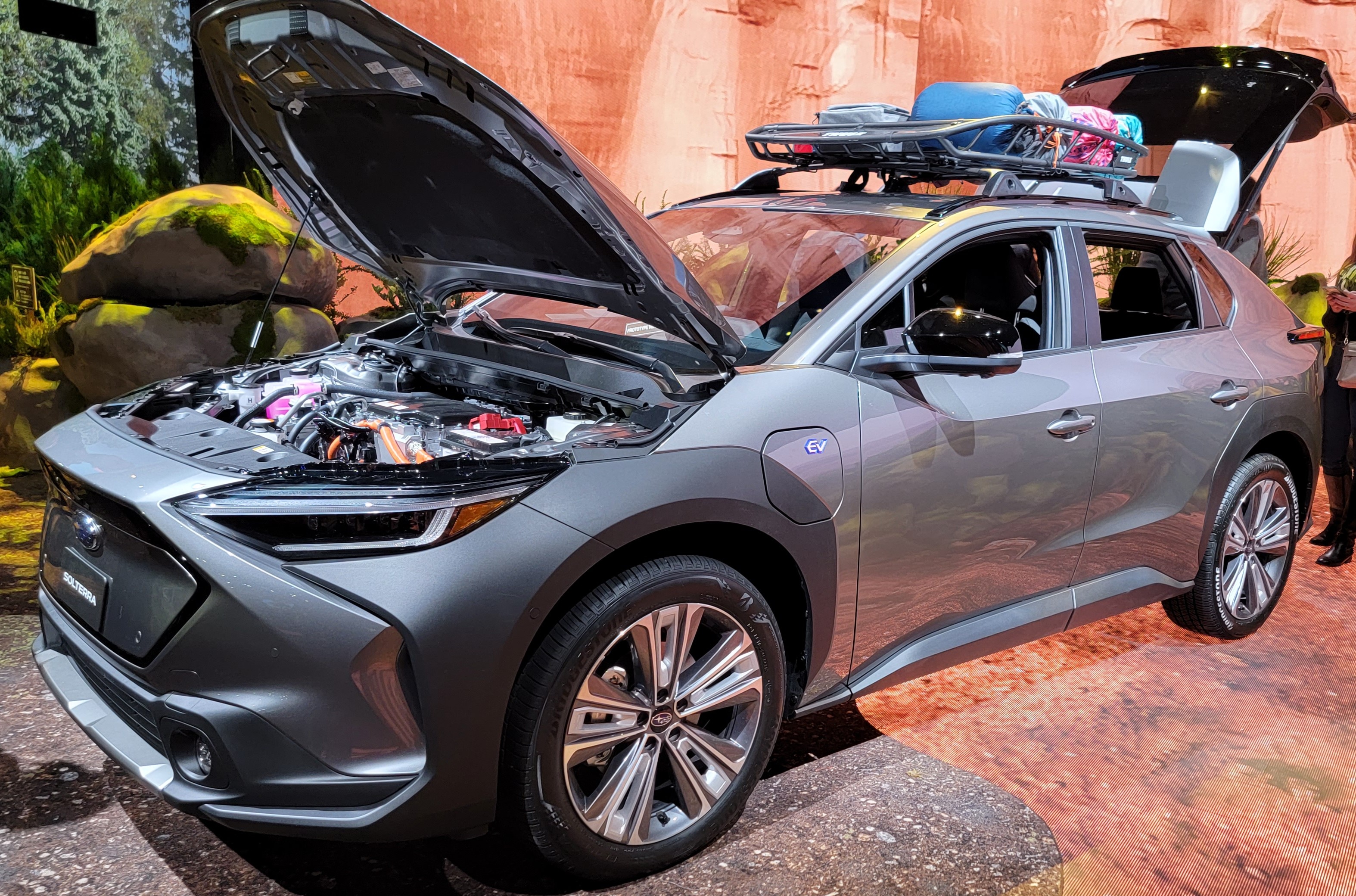
"...in a Subaru Solterra, which was their top line EV. But being a Subaru, they went the full roof rack on this thing..."
The Subaru Solterra is an electric SUV made by Subaru. It's designed for both on-road comfort and off-road adventures, making it a versatile choice for drivers.
The Subaru Solterra is Subaru's first all-electric SUV, designed to offer off-road capabilities along with electric efficiency. It features a spacious interior and is equipped with advanced technology for a comfortable driving experience.
"...you get into EV's like a like a Hummer EV with with the you know, it's very vertical of the severe a pillars and it's pretty noisy. But this trail Seeker was nice..."
The Hummer EV is an electric truck that has a distinctive look and can drive diagonally, which helps it navigate tough terrains. It's known for being powerful and capable off-road.
The Hummer EV is an all-electric version of the iconic Hummer brand, featuring a unique design and advanced off-road capabilities. It includes features like crab walking, which allows it to move diagonally, enhancing its maneuverability.
"...t yeah, sometimes you get into EV's like a like a Hummer EV with with the you know, it's very vertical of the..."
The GMC Hummer EV is a new electric version of the old Hummer truck, designed to be tough but without polluting the environment. It's talked about because it combines the rugged look of a Hummer with being good for the planet.
The GMC Hummer EV is an all-electric version of the iconic Hummer, reimagined for the modern era with zero emissions and advanced off-road capabilities. Its significance lies in its blend of ruggedness and sustainability, appealing to both adventure seekers and environmentally conscious consumers.
"...just crab walking the Hummer, right, and yeah, that's right the efficiency there, right?"
Crab walking is a special driving feature that lets a vehicle move sideways, like a crab. It helps the car get around tight spots or rough areas more easily.
Crab walking is a feature in some vehicles, particularly the Hummer EV, that allows the vehicle to move diagonally by turning the wheels on one side in the opposite direction of the other side. This enhances maneuverability in tight spaces or challenging terrains.
"... about. Speaker 4: I just got out of the Maverick Lobo, which I enjoyed immensely I think it's a lot of ..."
The Ford Lobo is a big truck that's popular in Mexico, similar to the Ford F-150 in the U.S. It's known for being strong and useful for both work and everyday driving.
The Ford Lobo is the Mexican version of the Ford F-150, a full-size pickup truck known for its versatility and performance. It is popular in the Latin American market and shares many features with its American counterpart.
"...I just got out of the Ford Maverick, which I enjoyed immensely I think it's a lot of fun. I think it's a nice kind of take on that segment..."
The Ford Maverick is a small pickup truck that is easy to drive and great for everyday tasks. It's designed to be useful and fun at the same time.
The Ford Maverick is a compact pickup truck that offers versatility and efficiency, appealing to a wide range of drivers. It is designed to be practical for everyday use while providing a fun driving experience.
"trick all wheel drive system. So I really liked it. I think Ford's done a nice job with that, and the whole family liked it too."
An all wheel drive system means that all four wheels of the car get power from the engine. This helps the car grip the road better, especially in rain or snow.
An all wheel drive (AWD) system distributes power to all four wheels of a vehicle, enhancing traction and stability, especially in adverse weather conditions. This system is beneficial for performance and off-road capabilities.
"...motor racing a waste of time for automakers, which I think Gary is going to. I'm not going to go that far. Okay, so let me let me go back into the past here to begin with..."
Motor racing is when cars compete against each other to see which one is the fastest. It includes different types of races and helps car companies improve their vehicles.
Motor racing refers to competitive events where vehicles race against each other on a track or course. It encompasses various formats, including Formula 1, NASCAR, and endurance racing, and serves as a platform for manufacturers to showcase performance and technology.
"...r purpose built the sweepstakes versus the Winton Bullet and it was it was thought that Winton would just ..."
The Bristol Bullet is a new sports car that looks like the classic Bristol cars but has modern technology. It's talked about because it combines old-school style with new performance features.
The Bristol Bullet is a modern sports car that pays homage to the classic Bristol cars of the past, known for their unique design and performance. It is often discussed for its blend of vintage aesthetics and contemporary engineering.
"...when Henry Ford was at the Detroit Driving Club in gross Point on a one mile dirt truck... Ford's car purpose built the sweepstakes versus the Winton Bullet..."
A purpose-built car is made for a specific reason, like racing. It is designed to be really good at that job, often with special parts and features to make it faster and safer.
A purpose-built car is specifically designed and constructed for a particular function or event, such as racing. These vehicles often feature modifications that enhance performance, handling, and safety, tailored to the demands of competitive racing.
"...he gets the money, he gets the business. Since then, I would say that race car"
Ford Motor Company is a famous car manufacturer in the United States, started by Henry Ford. They are known for making many popular cars, including trucks and sports cars.
Ford Motor Company is an American multinational automaker founded by Henry Ford on June 16, 1903. It is known for revolutionizing the automobile industry with assembly line production techniques and for iconic models like the Model T and the Mustang.
"my father raced in the nineteen sixties and he and his buddies raced a Pontiac Tempest. In nineteen sixty three, General Motors banned racing internally."
The Pontiac Tempest is a car that was made by Pontiac, a brand of General Motors. It was popular in the 1960s and known for its performance, especially in racing.
The Pontiac Tempest was a compact car produced by General Motors from 1961 to 1970. It was notable for its innovative engineering and performance capabilities, especially in racing.
"...car. It's a one thousand pounds lighter then it's Cobra competition. Shelby was racing Cobras, and GM was..."
The Shelby Cobra is a famous sports car from the 1960s that is known for being very light and fast. It's often mentioned because it has a strong racing history and is a favorite among car collectors.
The Shelby Cobra is a classic sports car that was originally produced in the 1960s, known for its lightweight design and powerful engine. It is often discussed in automotive circles for its racing heritage and influence on the muscle car genre.
"...Ferrari as brands don't exist without racing. Their brands are synonymous with racing..."
Ferrari is a famous Italian car brand known for making fast and luxurious sports cars. They have a strong connection to racing and have been successful in competitions like Formula 1.
Ferrari is an Italian luxury sports car manufacturer founded by Enzo Ferrari in 1939. The brand is renowned for its high-performance vehicles and its long history in motorsport, particularly Formula 1, where it has achieved significant success.
"...especially if you look at cars like the Corvette, the od R eight, you know, different Porsches..."
The Audi R8 is a luxury sports car made by Audi. It's known for its stylish looks and powerful performance, making it a popular choice for car lovers.
The Audi R8 is a high-performance sports car produced by the German automaker Audi. Launched in 2006, the R8 is known for its striking design, advanced technology, and powerful engine options, making it a standout in the supercar segment.
"And I mean you go all the way back, like I think GM and Corvette is a really good example when you look at like, you know, in the fifties..."
General Motors is a big car company that makes many different types of cars, like Chevrolets and Cadillacs.
General Motors, often abbreviated as GM, is one of the largest automobile manufacturers in the world, known for producing a wide range of vehicles under various brands, including Chevrolet, Cadillac, and Buick.
"...development of your technical people is a critical part of that. They always had people going through its Formula one efforts..."
Formula One is a type of car racing that uses very fast cars. These cars are specially designed to go really fast on tracks around the world.
Formula One is a high-speed motorsport that features single-seater racing cars. It is known for its advanced technology, engineering, and high-performance vehicles that compete on international circuits.
"...you better have the grid, the car on the grid ready to go on Sunday. You know, there's no excuses..."
The grid is where cars line up before a race starts. It's like the starting line where each car gets ready to go.
In racing, the grid refers to the starting lineup of cars before a race begins. Cars are positioned in specific spots based on qualifying times, and being on the grid means the car is ready to race.
"...having people in a race team is you better have the grid, the car on the grid ready to go on Sunday. You know, there's no excuses..."
A race team is a group of people who help get a car ready for racing. They fix the car, make sure it's fast, and plan how to win the race.
A race team consists of a group of individuals responsible for preparing and managing a car for racing events. This includes mechanics, engineers, and strategists who work together to ensure the car is competitive and ready for race day.
"...they're both in IMSA, and it terms out that that Cadillac is kicking Lexus's ASCID..."
IMSA is a group that organizes car racing events, especially for sports cars, in North America.
IMSA, or the International Motor Sports Association, is an organization that sanctions sports car racing events in North America, including the WeatherTech SportsCar Championship.
"I think Maserati has the second or third most or fourth most like world championships of all time. Who knows that, right, So I think you kind of spread it out."
Maserati is a brand that makes high-end sports cars. They are famous for their speed and luxury features.
Maserati is an Italian luxury vehicle manufacturer known for its high-performance sports cars and elegant designs. The brand has a rich history in motorsport and has achieved numerous championships over the years.
"Well, if you look at Mazda, like, I mean, I don't know, they're what the back of their baseball card looks like. They've won their fair share of different races."
Mazda is a car company that makes sporty cars and has a strong history in racing.
Mazda is an automotive manufacturer known for its sporty vehicles and significant achievements in motorsport, particularly in endurance racing and grassroots events.
"...Chevy drive or what is their vehicles? Speaker 2: Camaro? Speaker 3: It used to it it is the Camaro is ZR ..."
The Chevrolet Camaro is a sporty car that has been around for a long time and is known for being powerful and fun to drive. People often talk about it because it's a classic example of American muscle cars, which are designed for speed and performance.
The Chevrolet Camaro is a classic American muscle car that has been a symbol of performance and style since its introduction in the 1960s. It competes directly with other muscle cars like the Ford Mustang and is often discussed for its powerful engines and sporty design.
"...you go to uh To, to the Daytona twenty four hour..."
The Daytona 24 Hour is a famous car race that lasts for 24 hours. It's a big event where different teams race their cars to see who can go the longest without stopping.
The Daytona 24 Hour is a prestigious endurance race held annually at Daytona International Speedway in Florida. It tests the durability and performance of race cars over a full day of racing.
"...the Detroit Auto Show is shrunk uh to to just a shadow its former self."
The Detroit Auto Show is a big event where car companies show off their newest cars and technology. It's a place for people to see what's coming in the automotive world.
The Detroit Auto Show, officially known as the North American International Auto Show (NAIAS), is a major automotive event where manufacturers showcase their latest vehicles and technologies. It has historically been one of the largest auto shows in the world.
"...they're looking at their next truck because they got a whole activation there of the latest Chevy trucks."
Chevy trucks are the pickup trucks made by Chevrolet. They are known for being strong and reliable, making them great for work or everyday use.
Chevy trucks refer to the line of pickup trucks produced by Chevrolet, known for their durability and performance. Models like the Chevrolet Silverado are popular choices for both work and personal use.
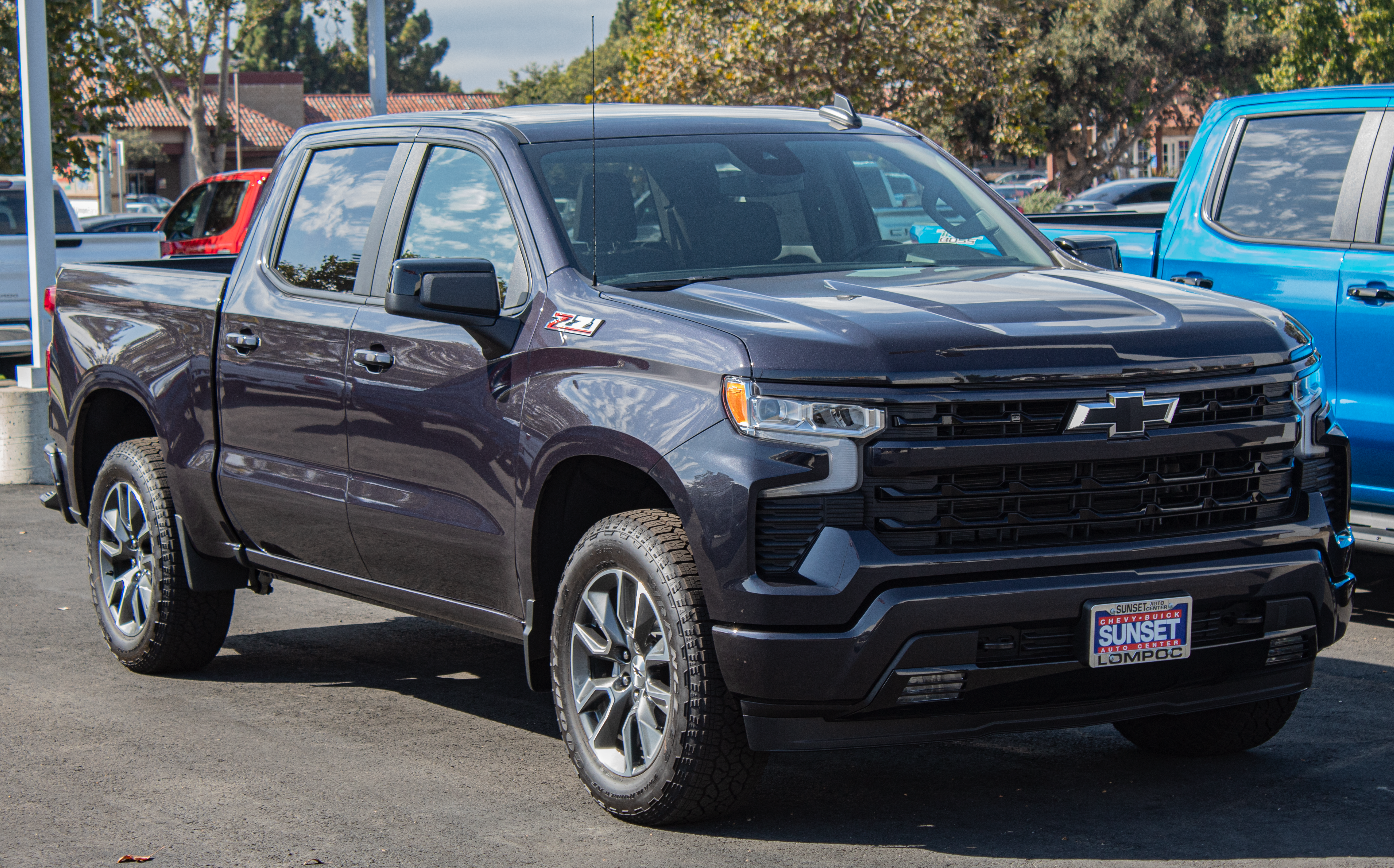
"...undred and sixty nine hundred and nine light duty Silverados. Okay, basically the truck that they're racing, r..."
The Chevrolet Silverado is a big truck that many people use for work and everyday tasks. It's known for being tough and able to carry heavy loads, which is why it's a common choice for those who need a reliable vehicle.
The Chevrolet Silverado is a full-size pickup truck that is popular for its durability, versatility, and strong towing capabilities. It is often discussed in the context of work and recreation, making it a staple in the truck segment of the automotive market.
"Caniskus recently has come in and taken over the Ram brand. The Ram brand was suffering, you know, whe..."
The Dodge Ram is a big truck that many people use for work and everyday driving. It's known for being powerful and having a lot of features that make it comfortable and easy to drive.
The Dodge Ram, now known as the Ram Truck, is a full-size pickup known for its strong performance and capability. It has evolved over the years to include advanced technology and comfort features, making it a popular choice among truck buyers.
"...their only cars are coming into in Europe are the Lyric and the and the and this the optic they have on t..."
The Cadillac Lyriq is a new electric SUV that is stylish and packed with modern technology. It's important because it shows that Cadillac is moving into the electric car market, offering luxury without the gas.
The Cadillac Lyriq is an all-electric luxury SUV that represents Cadillac's shift towards electric mobility. It features advanced technology and a stylish design, making it a significant player in the luxury electric vehicle market.
"... that company has stuck with racing, whether it's Mustangs or going back to Lama and winning in twenty sixte..."
The Ford Mustang is a famous car that many people recognize because of its sporty look and speed. It's been around for a long time and is often talked about because it's a symbol of American car culture and racing.
The Ford Mustang is a legendary American muscle car that has become a cultural icon since its debut in the 1960s. Known for its powerful engines and sporty design, it continues to be a popular choice among car enthusiasts and is often associated with racing and performance.
"...dillac dealer and say, you know what, I like that escalade because you have one. Speaker 1: Yeah, how your s..."
The Cadillac Escalade is a big, fancy SUV that many people associate with luxury and comfort. It's popular for its spaciousness and high-tech features, making it a favorite among those who want a stylish vehicle.
The Cadillac Escalade is a full-size luxury SUV that is synonymous with opulence and high-end features. It is often discussed for its spacious interior, advanced technology, and status as a symbol of luxury in the automotive world.
"...ric brand in the world, why doesn't it follow the Tesla model as opposed to the racing model that they're curre..."
The Tesla Model Y is an electric SUV that is popular for being environmentally friendly and high-tech. It's a good choice for families because it has more space and still offers the cool features that Tesla cars are known for.
The Tesla Model Y is an all-electric compact SUV that combines the performance and technology Tesla is known for with the practicality of an SUV. Its significance lies in its role in the growing electric vehicle market and its appeal to families looking for eco-friendly options.
"...this isn't the real truck, no matter how good the Tacoma and the Thunder are. Just by being there it gives..."
The Toyota Tacoma is a smaller truck that people like for its toughness and ability to handle rough terrain. It's often mentioned because it's reliable and great for outdoor activities like camping or off-roading.
The Toyota Tacoma is a midsize pickup truck known for its reliability and off-road capabilities. It has a strong following among outdoor enthusiasts and is often discussed for its durability and versatility in various driving conditions.
"...e than if you just focused on the next generation model S or something. Speaker 1: Right. Well, you know, l..."
The Tesla Model S is a fancy electric car that is known for being fast and having a long battery life. It's important because it shows that electric cars can be just as good, if not better, than regular cars.
The Tesla Model S is a luxury all-electric sedan that has set benchmarks for performance, range, and technology in the electric vehicle market. Its significance comes from its role in changing perceptions of electric cars and its advanced features like autopilot.
"...cause I mean, can you imagine the next generation Model X models. We'd beautiful cars. They're at this poin..."
The Tesla Model X is a fancy electric SUV that has unique doors that open upwards. It's popular because it has a lot of space and high-tech features, making it a great choice for families who want an electric vehicle.
The Tesla Model X is a luxury all-electric SUV known for its distinctive falcon-wing doors and impressive range. It is significant in the electric vehicle market for its spacious interior and advanced technology, including autopilot capabilities.
Select text to request an explanation
Speaker 1: We want to thank Alex Partners, our sponsor for this program, and we want to introduce Greg Migliore, who's here with us today from Vertical Scope. That's me and Henry Payne,
the auto critic and editorial cartoonist for the Detroit News and on the editorial board.
Speaker 2: Do write no, not on the board anymore?
Speaker 1: Oh you're not?
Speaker 2: Okay? Yeah, I do. I do.
Speaker 3: He's the guy, he's their car.
Speaker 2: Do some radio for none ten am? So I stay busy?
Speaker 3: Yeah. Of course most of our people probably don't know
where nine ten is.
Speaker 1: So yeah, And and of course you got me and Gary.
How you doing Gary?
Speaker 3: I'm doing great?
Speaker 1: Good? So, uh, what you're driving this week?
Speaker 3: John? I am driving the same vehicle that you were
driving last week, which was the Mazda c X seventy with the Inline six. And as I said last week,
you know, we we're talking about of vehicles and I just don't get that sense when I'm driving something.
Speaker 2: Putting that big yeah.
Speaker 3: Yeah, you're I'm with you.
Speaker 2: Yeah, I love I love the Masda brand, I mean mas C X five, which I'm really excited about getting into with a new uh with the new digital displays.
But yeah, you get it. Then Mas of c X
five to me is the best handling suv the side of a BMW X three. But then it gets small,
that's right, But then you get bigger than that, and yeah, it's it's it's hard to translate to mas the m X five dynamics to a.
Speaker 3: Three row Yeah, I mean suv. It's you know, it's
well this this is the two row because he has the c X ninety, which is the three row right.
Speaker 1: Well, but I haven't driven that yet. It just dropped
it off today, so I've been driving. Uh, the Lexus
NX four fifty h plus. The plus means it's a
plug in and uh, nice for your coal. But I'm
not a fan of hybrids.
Speaker 3: I just charge on you hate hybrids.
Speaker 1: Well, I wouldn't say that I hate them. I'm talking
hybrids that have been designed for fuel economy, you know, as opposed to like the Corvette hybrid, which is more about performance than it is about fuel economy. Interestingly, so
the NX four fifty h plus, that's a mouthful to say, is rated at eighty four miles per gallon you know MPGe.
But if if you just strip out the plugin part, it's rated at thirty six combined. I was getting thirty
three combined. Decent vehicle. But again, and I've run into
this problem with another Toyota. The roof rack that they
put on it creates wind noise that I find noticeable and irritating. So you know, I know these companies all
put their cars in wind tunnels. I'll bet a million
bucks they don't put them into the wind tunnel with the.
Speaker 2: Roof rack on. Yeah that's interesting because I was just
in a subrew trail Seeker, which was their top line EV.
But being a Subaru, they went the full roof rack on this thing, and it was really nice and quiet inside, as you would expect from an EV. But yeah, sometimes
you get into EV's like a like a Hummer EV with with the you know, it's very vertical of the severe a pillars and it's pretty noisy. But this trail
Seeker was nice even with the roof rail.
Speaker 4: Interesting just crab walking the Hummer, right, and yeah, that's right the efficiency there, right?
Speaker 1: So Greg, what are you driving or what have you driven lately? That's what we're talking about.
Speaker 4: I just got out of the Maverick Lobo, which I enjoyed immensely I think it's a lot of fun. I
think it's a nice kind of take on that segment brings the Maverick to a different audience.
Speaker 2: You got aut across it against John's Ford FSST.
Speaker 4: I mean I could right. It's got that kind of
trick all wheel drive system. So I really liked it.
I think Ford's done a nice job with that, and the whole family liked it too.
Speaker 3: Surprise you doesn't scream street truck more than it does.
Speaker 4: I think it sort of speaks street truck. It doesn't
show it just kind of like, you know, you want to show it. I think it's tasteful. You get the
like the wheels.
Speaker 2: The wheels scream street truck wheels are cool, but they're optional.
But I would I would definitely get the turban wheels.
Speaker 4: But yeah, me too.
Speaker 3: I mean, isn't the thing like more and more electric vehicles have cool wheels, and it just sort of says, okay, this is aerodynamic, right, you know, you get a you know, we talked last week about the Bubble ex thirty. I mean,
look on the wheels of those things look every bit as cool as those on the Lobo, And I just thought the Lobo would beat a little bit more.
Speaker 2: Yeah, yeah, yeah, I'm with you, you know a little more accents.
Speaker 3: So amazing, Henry and greeting with me on everything. We
start talking about racing.
Speaker 1: I started talking about racing then because that was one of the things that we left off on last week.
Uh is motor racing a waste of time for automakers, which I think Gary is going to.
Speaker 3: I'm not going to go that far. Okay, so let
me let me go back into the past here to begin with, Let's go back to the halcyon days of October tenth, nineteen oh one, when Henry Ford was at the Detroit Driving Club in gross Point on a one mile dirt truck. Maybe it's one of those tracks that
on his wandering and and he raised a guy named Alexander Wynton, and Ford's car purpose built the sweepstakes versus the Winton Bullet and it was it was thought that Winton would just wipe the course with with Henry.
Speaker 2: Was one of the premier drivers of the time.
Speaker 3: He was and lo and behold, Henry won the race. Now,
as a consequence of Henry winning the race, there was a guy who was a coal magnet Cole's coming back by the way.
Speaker 2: Yeah, it's good West Virginia and so.
Speaker 3: Cole magnate by the name of Alexander Malcolmson, and he was so impressed with what Henry did. He invested in
Henry and those two guys basically started the company that became Ford Motor Company because.
Speaker 2: In nineteen o one his first company or second company failed, had failed.
Speaker 3: But then it transitioned and then it became the company that I know. So if we go, if we go back,
then like here's Henry. He's fighting for his life, he's
fighting for his business. He gets the money, he gets
the business. Since then, I would say that race car
racing is fantastic entertainment, full stop. Now you guys prove
to me why I'm wrong.
Speaker 2: Well, I would say that racing is really integrated into this industry and and it was. It was brought home
to me in my father raced in the nineteen sixties and he and his buddies raced a Pontiac tempest. In
nineteen sixty three, General Motors banned racing internally. There you know,
there's all these politics in this industry, and the politics at the time was that racing was killing a lot of people.
Speaker 1: After the Lilones Act.
Speaker 2: That's right. Yeah, this had all sort of been building
since nineteen fifty five with the Terrible Year and fifty five both at Indiana at Lamar, and so by nineteen sixty three, GM says we're not going to race anymore.
My father is going to racetracks in the Pontiac Tempest and GM is showing up to these races with these big blank semi trucks coming in. Everybody knows that's GM.
They offload these pristine Pontiac Tempests. They're all run by
GM engineers and top drivers. And the reason is is
because GM has to keep racing. That's how that's how
they learn the limits of their technology. And so my
dad was very cynical about GM at the time that it was publicly saying, you know, we're so.
Speaker 3: You did it as a privateer. He was a privateer,
that's right.
Speaker 2: And all these privateers are out there like they're not they're not stopping racing. But that, to me, that shows
how important racing was even at that level, you know, racing pontiacts that they they even though the corporation had said, you know, we're gonna we're going to put on a public face for Congress and not race at the engineering level.
They had to be there racing, right.
Speaker 1: A lot of that stuff went off the back door, and uh, there was a big effort I know for a fact that because this has been written about it, Chevrolet Engineering, uh make sure top management does not find out a about this, so that there could be plausible deniability on the part of the board and senior management.
Whereas there was a pretty good amount of racing effort going on at the time.
Speaker 2: Yeah. I mean, the very famous race from that era,
from nineteen sixty three was the Chevrolet Corvette Grand Am glorious car. It's a one thousand pounds lighter then it's Cobra competition.
Shelby was racing Cobras, and GM was determined to prove out this technology, and the corporation is banned racing. So
in sixty three they take a bunch of Grand Ams and they go down to Nassau and race them, and they beat the Cobras. You know, Roger Penske was racing,
Jim Hall was racing, all these top drivers. It wasn't
an official GM right effort, but they but they had technology that they needed to prove out in those Corvettes.
Speaker 3: So your argument is that you need racing for technology, well, or or it enhances the company's technology.
Speaker 2: Yeah, I mean yeah. The nature of racing, particularly endurance racing,
is it you stress components to a degree that you can't possibly do in any other form, and so endurance racing in particular is hugely beneficial these companies. But I
mean there's there's the there's the marketing piece. You know,
as you said, the Ford Motor Company gets started with with UH based on racing success portion and Ferrari as brands don't exist without racing. Their brands are synonymous with racing.
Speaker 1: In fact, just to add in with Ferrari, Ferrari started building cars to pay for its racing. Yeah, so it's
a company that's always put racing first in production. Second
high Well, what do you think, greg racing or no race?
Speaker 3: Well, I think it's oh, come on, I didn't say no racing, Okay.
Speaker 4: I think some racing is you know, totally important. I mean,
especially if you look at cars like the Corvette, the od R eight, you know, different Porsches, you can really see what their top levels could do, and then that gets like you're like your every day enthusiasts might want to buy just a Corvette coop. Maybe they don't need
the Z six or something, but they're like, hey, this is what this is what gets me into the brand.
And I mean you go all the way back, like I think GM and Corvette is a really good example when you look at like, you know, in the fifties, to Corvette was more of kind of like almost like a Grand Tour, although they did race it early sixties, some of those races where you see that Gen one then Gen two Corvette really start to prove itself and it's like, hey, this is this is a legit car that could compete with the Europeans.
Speaker 3: Greig, you were even alive then, I like history car.
But all right, so so basically so technology, Yeah what else? Marketing? Carketing, right, marketing? Okay,
technical marketing.
Speaker 1: Look, development of your technical people is a critical part of that. They always had people going through its Formula
one efforts and then going back into regular engineering. General
Motors is doing the same thing right now, All right, let's let's let's let's let's take that.
Speaker 4: Let's take the development of the people to get the.
Speaker 3: Top notch engineers.
Speaker 2: Right.
Speaker 3: So I was thinking about that.
Speaker 2: Now.
Speaker 3: Cadillac, as we know, is going into Formula one. Formula
one has a cap for teams two hundred and fifteen million dollars a year. Okay. That's not counting the development
the powertrain, it's not counting paying for the drivers, it's not coming for marketing. Two hundred and fifteen million per year.
Speaker 1: I thought it was less than that.
Speaker 3: No, I checked. Oh, you checked it, okay, several several times.
So all right. So I looked at it at a
website called collegefactual dot com. And I'm going to quote
from college factual dot com. The median early career salary
of electual engineering students who receive their doctor's degrees okay PhDs from Stanford is one hundred and thirty nine thousand, one hundred dollars per year. Okay. So then I figured, okay,
so GM would want these people to develop its vehicles, to develop its Cadillacs, right, electrical engineers, this is this is the thing. Right, So obviously if Cadillac hires you,
or General Waters hires you one hundred and thirty nine thousand dollars, it's you got Benny's on top of.
Speaker 2: That, right.
Speaker 3: So I looked and I calculated that it's fifty five thousand, six hundred and forty dollars in benefits. So this brings
the total that General Motors pays for one PhD from Stanford, Okay, would be one hundred ninety four thousand, seven hundred and forty dollars a year.
Speaker 1: Call it two hundred thousand.
Speaker 3: Oh hell's see. But I so I.
Speaker 1: Wondered how many PhDs from.
Speaker 3: Stanford could it get for two hundred and fifteen million dollars.
That would be one thousand, one hundred and four PhD electrical engineering grads from Stanford.
Speaker 2: So instead instead of throwing it away on racing, you're saying.
Speaker 3: Exactly, okay. Now you know, if they decided that they
wanted to get a PhD in computer or electrical engineering from Purdue, which wonderful school, it's even cheaper. It's it's
only you know, it's like it only costs one hundred and forty one thousand dollars a year for one of these guys if they can get them, because I know there aren't that many.
Speaker 1: I mean, no, no, no, it's not even that. You know,
if you go back, you know, half a century ago, the best and brightest coming out of business school and engineering schools wanted to go into the auto industry. Not anymore.
I mean, they want to go into the tech industry.
I understand that. So one of the ways of being
able to recruit people is saying, you know what, we're gonna put on the Formula one team.
Speaker 3: It's one way looking at it.
Speaker 1: That's one way.
Speaker 3: But I mean, I'm just I'm just saying, if you could get like a thousand of these guys so they can't get them all.
Speaker 1: Yeah, yeah, but you know, here, here's a thousand.
Speaker 3: And then and then even if if like if like ninety percent duds, you're still ahead of the game.
Speaker 4: But I also think to fifteen two hundred million it's a lot of money, but it's also kind of pocket change for automakers of the size of GM. I mean,
three to fifteen million dollars is about what the Tigers are going to play or pay thirteam this year. It's
less than the Dodgers are going to pay their team.
So I'm just saying, if you look at this like a sport, maybe it's not a bad one.
Speaker 3: You must have a what is it seven billion dollars right off?
Speaker 1: Well, remember the other thing too, is what do you do with your team? You run out and you get
a bunch of sponsors. So you're, as an automaker, not
shelling out two hundred million dollars. Your sponsors are putting
that money up for you. And I would say the
other thing that's an advantage of having people in a race team is you better have the grid, the car on the grid ready to go on Sunday. You know,
there's no excuses, there's no like, oh, we you know, we need more personnel, we need more budget, we need you know, the the tooling guy, guy guys or a week. No,
you got to put the car on the grid on Sunday.
Speaker 3: Okay.
Speaker 1: And so that dry.
Speaker 3: So that's going to make a better car. That's going
to make a better car.
Speaker 1: That's going to end up when you rot take those people back into the company, they're going to bring that mindset with them.
Speaker 3: All right. So so, so Henry, you're talking about IM before,
So Cadillac when the I in twenty seventeen, same year that lexis Winday, Okay, so they're both racing, right, they're different, different, but they're both they're both in that series. Okay, So
this gets everybody gets to have these these engineers and they get to have sponsors and stuff like that. So
so then the question becomes of like, Okay, isn't isn't the whole goal of all of this stuff to make better cars that people will buy? I mean, isn't that
the goal?
Speaker 1: It's one of the goals.
Speaker 2: Yeah, but it's also you know the old the old saw went on Sunday, sol on Monday.
Speaker 3: Glad you said that Harry MIT's a cocktail peering and market right into.
Speaker 2: My your weather.
Speaker 3: So basically we walked right into the trap. So basically
we have Cadillac and Lexus and they both are selling.
You know, we can go down the street over here and there's a Lexus dealer and there's they're selling against each other, right, So it's all about product. It's all
about selling, and they're all they're both in IMSA, and it terms out that that Cadillac is kicking Lexus's ASCID.
We look at total number of wins in IMSA, it's thirty three to seventeen since they've been in the series. Okay,
So then I looked at sales numbers of Lexus and Cadillac since twenty seventeen and there is only one year, twenty twenty two, that Lexus didn't out sell Cadillac by more than ninety percent. This year is only the outsold
them by eighty two percent. But for example, in twenty
twenty five, based on them, Lexiell sold Cadillac by one hundred and thirteen percent. Yeah, so my question you guys,
is isn't it all about selling vehicles? And if that's
the case, we can see from IMSA that it isn't working out so well.
Speaker 1: Well.
Speaker 4: Remember IMSA is more of a series where the cars are much more like road going in many cases, So I think that's a series where you get more like of a tech transfers they like to say in the industry, like hey we learned this from the hybrid, we learned this from the aerodynamics or something different series like NASCAR Formula one. That's where maybe it doesn't matter as much
if you win on Saturday or Sunday and sell on Monday, because you're getting the bigger marketing kind of bite. So
I think each series isn't created equal for what it does, Like, I don't think you have to rack it up a bunch of wins like I think Maserati has the second or third most or fourth most like world championships of all time. Who knows that, right, So I think you
kind of spread it out. It's like economics. Every little
thing kind of you know, goes into the recipe.
Speaker 2: But but but Lexus is there, right, Lexus is racing.
Toyota's racing. Toyota is actually you know, beat to Cadillac
to the grid in Lamar hypercar. So at an international level,
Toyota was putting far more money into prototype racing than Cadillac was in order to win Lama. What they've they've
won three or four times at that top level. So
I think all these companies are involved in motorsport to the you know, to the best of their engineering and marketing ability that suits their own. But they're all there,
they're all competing.
Speaker 4: Well, if you look at Mazda, like, I mean, I don't know, they're what the back of their baseball card looks like. They've won their fair share of different races.
But I mean, what brand is more closely associated with racing than Masa? And they actually even look more I
think to like the grassroots level, you know, like the SECA stuff.
Speaker 2: Yeah, what's the most race most race car in the world is the most race car in the world.
Speaker 1: So and I think that's a good point. They're all
in it, and they've been in it for years. And
my guesstimate is GM's Formula one commitment is probably a billion dollar commitment.
Speaker 3: Well, it is the first year, because you have to pay four hundred and fifty million dollars to get in.
Speaker 1: To get in, Okay, irrespective of that, you know in tight dilution fee, building up the facilities that they're building, developing an engine that they're doing, this is huge expense.
So you've got to go to the board and you've got to be able to convince the board that, hey, we need a billion dollars to go racing. They got
to bless something like that. And uh, like I said,
all these car companies are in it and they're spending a fortune, and they've got to see it. It's there's
corporate ego in there, to be sure, But that isn't enough to convince the CFO give you the money to go racing. There's got to be much more of an
ROI to it.
Speaker 3: It's hard for me to tell looking at all the numbers.
I mean, so for example, you know you mentioned you mentioned NASCAR, and so what does Chevy drive or what is their vehicles?
Speaker 2: Camaro?
Speaker 3: It used to it it is the Camaro is ZR one.
Now it's just the z R one.
Speaker 2: Right.
Speaker 3: So somebody, you know, it's Bob Pasco, who is a Ford dealer, who said in the sixties that was where the line came from. Win on Sunday, sell on Monday. Okay,
well it was the nineteen sixties. That's a long time ago.
Things have changed. But so so somebody goes into the
Chevy dealer and like, I want to buy one of those Camaro You can't buy one, right, And I mean, and what car does Chevy have on offer?
Speaker 2: One car?
Speaker 3: The Corvette? Right, So you know the person who's going
in there and thinking they're going to be able to spend you know, fifty thousand dollars on a Camaro, right.
Speaker 2: Yeah, No, it's a I find that comical that Chevy is still racing the Camaro. But you go to the
five hundred, or you go to uh To, to the Daytona twenty four hour, and that's where that's where you know, we go. We all lament. The Detroit Auto Show is
shrunk uh to to just a shadow its former self.
Go to those races, and these manufacturers have these huge activations at the racetrack. And so you go to the
five hundred, and those fans are all coming in there and they're looking at their next truck because they got a whole activation there of the latest Chevy trucks. Because
that's where you know, that's that's what Chevy's selling these days.
Speaker 1: Right, and it's the brand that wins in the eyes of most of those fans. All right, no, full well,
it's a car, all right, So let's let's.
Speaker 3: Let's go to the trucks, Henry. So, So in the
truck series, just like in the car series, you've got Chevy, Ford and Toyota. Yeah, okay, So Chevy and Forward started
in nineteen ninety five with the series, okay, and and Toyota didn't get until into two thousand and four. Right,
So in this period of time, Toyota has won fourteen truck championships and Chevy came in second, winning ten championships. Okay,
during this period of time. Now, if you look at
it statistically, this basically means that Toyda's is sixty six percent and Chevy's at thirty three percent, we won't say that so anyway. So then, but here's the thing. So
Chevy in twenty twenty five sold three hundred and sixty nine hundred and nine light duty Silverados. Okay, basically the
truck that they're racing, right, So Toyota victorious just crushing it in the NASCAR Truck Series, only sold one hundred and forty seven six hundred and ten. They're nothing compared
to Chevrolet, to say nothing of Ford. Right, So how's
that working out? Yeah, so apparently this this whole marketing
thing doesn't exist.
Speaker 1: Again. I think you got to look at the brand
and those those people who are watching those races on it's their their Toyota fans, their Chevy fans, their Ford fans.
Doesn't matter what vehicle is out there, whatever badge is on that vehicle, that's who they're for.
Speaker 3: So it's entertainment, it is, especially when it's like me being in the Lions fan, right, you.
Speaker 2: Know, it's also marketing. I mean I interviewed Tim. Tim
Caniskus recently has come in and taken over the Ram brand.
The Ram brand was suffering, you know, when they got rid of their V eight and so one of the first things Caniscus has done is he's come back in with stillanis is he's restored the V eight to the fifteen hundred truck, and he's brought Ram back into NASCAR truck racing for the first time time since twenty twelve.
And I asked him about that. I said, you know,
why are you coming into NASCAR racing? Is an engineering
you know? Or you know, do you need that time
with the V eight? He said, this is all marketing.
He said, this is a marketing spend because we want to let Ram Nation know that the V eight is back, and you know, so, I mean it's a cocktail. Racing
is a cocktail and for Ram right now, marketing is a huge wait.
Speaker 1: But it also depends on the series, right, So, I mean, NASCAR racing is not bleeding edge technology. There's really good
stuff there. I'm not trying to disparage the series at all.
And the engineers who are in that are cracker jack engineers, right.
But compared to say like a Formula one or an INSA racing, those are far more technology driven than what's going on in NASCAR.
Speaker 3: Okay, so how how does General Motors say what success is for spending eight billion dollars this year.
Speaker 4: Ultimately they have to win a world title, but maybe not this year, maybe a twenty.
Speaker 3: What does a world title get you, Well, it.
Speaker 4: Gets you a ticker tape parade down the Avenue of the Americas. It gets you like almost like this immortal feel.
It means everybody, like in the United States maybe is getting into Formula one and they're behind the Cadillac team.
For them to spend that, to me, that's almost like miracle on ice kind of money.
Speaker 3: To use the Olympic metaphor, but any more cars.
Speaker 4: It might put Cadillac on an entirely different plateau at that point. At that point, suddenly, like when we all say, well,
it's the Cadillac of coffee mugs or something. Right now,
it's maybe a bit of an empty platitude, but if they have that kind of racing chops, suddenly they're backing up what they're saying.
Speaker 3: So, who's the engine coming from for Cadillac's team.
Speaker 2: I think that's that's that's an important point, is trying to get back to the world standard. Cadillac was once,
you know, kind of lived up to that mantra the world stand and they've clearly dropped off, and I think this is a calculated spend on GM's part to get back to a to a global prominence in luxury. And
where where I where I've really seen it is going over to France, going over to Lamal and you go into their Paris showroom. They got a showroom right in
the middle of Paris, across from the Opera, just down the street from the Apple Store, and in which they they are showcasing not V eights but electrics. I mean,
they're their only cars are coming into in Europe are the Lyric and the and the and this the optic they have on the showroom. And then there's a race
car there, there's a there's a Last year it was the the hypercar that they're competing with in Lamar. This year,
I'm sure it's going to be the Formula one car that's right there in the middle of the showroom. And
that's because whatever they're selling, electric or V eights, they want to be in the same conversation as Mercedes and Aldi that are also racing in Formula One.
Speaker 1: So years ago, sitting in the chair that Greg is sitting in, we had Bob Lutz here and he said, here's the problem that Cadillac faces. When you drive up
into your country club in your Cadillac, people go, oh, that's interesting, why did you buy that car? He said,
if you pull up in the Mercedes or BMW, nobody asks why you bought it. And he said, we got
to change that mindset. And I think I've also heard
that Mark Royce personally promised Mary Bara that he was going to bring Cadillac back to being the standard of the world, and that Formula one was going to be part of that process.
Speaker 3: Good luck.
Speaker 2: It's a big bet. It's a big bet, right, but.
Speaker 3: See again, But I think it's a big bet that at this point in time they can't afford Oh they.
Speaker 1: Can afford it.
Speaker 4: Oh yeah, I would agree. GM has At this point
they have a fair amount of money. And it's also
a very i think crystal clear strategy, whereas like if you're like, hey, let's play around the edges, let's do the best compact crossover. We're gonna win all these JD
Power Awards. Well that's well and good, But does that
really change your fortunes? Maybe not so much, but that
one title does.
Speaker 1: Here's the world question.
Speaker 3: Wait, you're talking about you're driving your Lexus n X the other day, and so who would you rather be?
Would you rather be Lexus or Cadillac in twenty twenty three, not that long ago, when Lexus outsold Cadillac by two hundred and two hundred and three point nine percent. Isn't
that what it comes down to selling vehicles?
Speaker 2: Yeah, they've done that the job and lex and and you go down to UH Daytona twenty four hour last month and Lexus was right there on the GT grid see this, right next to Cat, right next to Corvette, right next to BMW. So you know, everybody approaches this
from a different perspective, but I you know, to John's point, I think Cadillac feels that it needs to make this statement.
And the other thing that's really important because Cadillac has tried this before. I mean they went to Lamar in
two thousand and two, two thousand and three. You need commitment,
you need long term commitment. I mean Ford won Lama
in nineteen sixty six and that changed the international assessment of that brand. But that company has stuck with racing,
whether it's Mustangs or going back to Lama and winning in twenty sixteen with a four GT going back to Lamar in twenty twenty seven with a hypercar. I mean,
I think it takes a long term commitment and that's going to be a big question for catalag.
Speaker 1: Yeah, totally agree. That's it. You got to stick to it.
And well, well, I'll just leave it that you got to stick to it.
Speaker 4: You can't pay that much of a cover charge if you're going to leave the party after one drink. You
got to stick around if you're going to spend billions, and I think they.
Speaker 3: Will, I really do. So somebody's can go to Cadillac
dealer and say, you know what, I like that escalade because you have one.
Speaker 1: Yeah, how your solution for selling more catallasts instead of doing racing?
Speaker 3: Boy, now I'm getting four on one. I've got the
fact with me my friends. So that's so I would, well,
I would see your ideac. Well, we could go back
to Jolo Wanis and we were talking about you really enjoyed watching Ted Lasso. Let's say about it's about soccer. Yeah, okay,
So if we go back to twenty twelve, Jolo Wanik, head of Marketing, General Motors, fifty nine point for five hundred and fifty nine million dollars seven year deal got on the juries of Manchester United. Okay, people like to
watch Ted Lasso right now, people like to watch the Netflix show about F one more so I will. I
will admit that. But so I looked into the Premier
League alone has ten to eleven billion cumulative views per season compared to Formula ones one point five billion.
Speaker 2: Hm.
Speaker 3: It seems like Joel hit it, right.
Speaker 1: Yeah, no, well he he sort of did, and then a year later or so GM pulled out of Europe entirely, right and but uh yeah, Look, there's lots of different ways to spend your marketing money and in the case of motor racing, your R and D money. And I
think that's a key difference with GM and Ford at this go into F one and up to now, GM and Ford have always paid for racing out of the marketing budget. Came out of the marketing budget. Now it's
out of our R and D budget, which is exactly the way that Han has always done it. Mercedes has
always done it, and the like, So I.
Speaker 3: You want to entertain well so so so, so Sean is saying off the thing, I guys can hear it since we're doing it but so I was suggesting that one of the ways, if they really want to get on the world stage, that you'd be better off. You know,
you could buy every Super Bowl ad and have bad Bunny drive off and and escalade.
Speaker 2: Let me but let me, let me join Team Gary here for a minute. Uh no, just to just to
just to have some fun here. So you know, we're
we're at potentially an inflection point here, particularly with luxury brands, which a lot of luxury brands are looking at electrification as their future. Uh some are sticking to it, like Cadillac,
Others not so much, like Alfa Romeo. But the premiere
electric brand in the world is Tesla. Tesla got there
this zero racing budget right there there's Tesla has never been interested in racing. So if Cadillac wants to be
the premiere electric brand in the world, why doesn't it follow the Tesla model as opposed to the racing model that they're currently following.
Speaker 3: So, in other words, so Tesla developed product, Tesla developed technology, and every automaker in the world has been chasing them since.
Speaker 2: And Tesla never went to the race track.
Speaker 3: They never went to the racetrack.
Speaker 2: They knocking a bunch of people off from the dragstrip, you know, out at Pomona. Right.
Speaker 3: No, but it wasn't But it wasn't them, right, I mean, it was just not the company, right. And so the
private owners the company has done a magnificent job that every single one of these companies we've mentioned here today have not caught up to right.
Speaker 1: Correct.
Speaker 3: So they just hired a bunch of guys from Stanford, save yourself a lot of money, make yourself a better product.
Then the people come to your door again.
Speaker 2: But if it again to the question of brand, I'm interested in what you guys say, and do you think it's necessary for Cadillac to do the traditional racing wrapped in that brand or could they compete against Tesla.
Speaker 1: Doing a Tesla's out of this discussion on racing almost completely, even though I think Gary makes a really good point here.
But the thing is that I come back to what Bob Let's say. You know, you drive up to the
country club and people want to know why did you buy a Cadillac. Explain it to me because I can't
understand it. Whereas if I believe if Formula one racing,
if Cadillac in Formula one racing starts to become successful, not in year one, not.
Speaker 3: In year two, maybe year three.
Speaker 1: Uh, it starts to build that credibility where it comes out with something nice and maybe if Mercedes owners goes, you know what, I'm going to try that, whereas right now they wouldn't consider it at all because the brand is not becoming of.
Speaker 3: Okay, but isn't for the first three years that the Cadillac is going to use a Ferrari engine.
Speaker 4: Yeah, I don't really think that hurts though. I think
actually Ferrari is so cool that I think if somebody's like, hey, there's Ferrari's running, I think that actually helps marketing. I
don't really think that's a terrible thing. It's not ideal narrative.
Speaker 3: If you guys are thinking that the argument that this proves Cadillac's chops. Okay, but what wins a race? Is
it the aerodynamics or is it the power? Henry, you're
a racer, Yeah, no, and all that goes into.
Speaker 2: Electric car as well. You have to have good aerodynamics
as well as good battery. But I but I think
more fundamentally, which is why I asked the Tesla question is where is the brand most comfortable competing, and Cadillac has decided not to compete with Tesla on that. You know,
Tesla is a computer on wheels, right, I mean the company's actually it's it's it's clearly it's it's uh, it's it's.
Speaker 3: You're a Tesla owner, so this yeah, yeah, but it's more credibility.
Speaker 2: But it's yeah, and I can tell you, I mean, you take a Tesla on track with a Cadillac c T four. The CT four is a better uh piece
of engineering as as a as a as a handling car.
But but Tesla's market cap is in robotics and then turning these cars into robots. And you know GM is
played with that with with Cruise, the Cruise autonomous driving, but they've never seen comfortable committing to this this sort of uh robot future that that Tesla is doing. They
seem more comfortable competing in the traditional Cadillac space, which means you go racing, you know, you go against BMW and Mercedes and those in those fields. That's that's that
appears to be where they're more comfortable.
Speaker 4: Well, I think you could argue it's easier to actually literally win in Formula one than it is to do what Tesla has done, which has developed a once in a century paradi changing technology.
Speaker 2: Great point.
Speaker 4: So I mean, yeah, and.
Speaker 3: Shouldn't that be your goal though?
Speaker 1: To beat them?
Speaker 3: So if you drove up to your country club in a Tesla, would anybody question that? Probably?
Speaker 2: Not?
Speaker 1: No, they were not right right, But here's the thing.
I mean they ten fifteen years ago they might have questioned it. They don't question They didn't know what it
was right. But you know, look, GM and Ford and
all the legacies are working on trying to catch up to Tesla or even leap prog it and maybe we can talk about for it's you know, universal even platform in that regard. But they got to bring all this
legacy stuff along. And you know, Tesla's got a software
defined car, it's got you know, centralizonal compute all this stuff to turn your ice, your legacy ice vehicles over for that that takes years and none of them have been able to do it. Yet they're working on it.
They're getting there. You got to you got to scrap
everything that you've done to that point. And that's where Tesla,
not having to scrap anything, just came in and did it.
So you'll see the legacies get there, and I think Ford with this universal EV is going to go beyond Tesla because why who's running the program A Tesla guy?
Who does he report to an ex Tesla guy? And
they brought in all these smart people.
Speaker 3: And Tesla just has all that's right, all Tesla guys. Yeah,
not x Tesla guys, Tesla guys.
Speaker 1: But you know, there's a lot of people who have quit that company. A lot of company people have quit
that company because they got fed up with it.
Speaker 2: But again, it's to me, Tesla is a different company.
I mean they just canceled the model asked for God's sake.
I mean that that's like Porscha canceling the Porsche nine to eleven or Ford canceling Mustang. I mean that was
their halo car, the first production car, and of course kept changing the nine to eleven then. But all I'm
saying is that that Tesla clearly sees this business not as a car business, right, And you know, here's here's the Tesla play at the first production car under under sixty miles an hour and zero to sixty in less than two seconds. We're ditching after fifteen years in the market.
I mean they're they're their goals are different than auto companies and so, you know, I think that's just a different culture. And whereas the companies we're talking about, Mercedes, BMW, Cadillac,
you know, racing is is it matters to their customers.
Speaker 3: Great and so so we recently had Mark Wakefield sitting in that chair and Mark Wakefield basically told us that the Chinese are able to bring a vehicle to market with more technology in half the time that the traditional automakers.
Exactly right. So almost racing is byd done.
Speaker 1: They probably haven't done anything. I wouldn't be see them
get into it. No, no, but see but they you
know you're talking about that, these legacy companies.
Speaker 3: Need to change what they're doing. Okay, these legacy companies
have a finite amount of money, like we all do, right, And all I'm saying, and again, I love watching car racing.
I love the entertainment of it. I've written many stories
over my life about how it improves the engineering. All
I'm saying is that, as you said, Harry, this is an inflection point. We're at a different point in time now.
These companies need to change their approach in the approachable app we'll go into car racing. That'll prove we're great. No,
proving you're great is having great product because at the end of the day, that keeps the lights on in your business. And so all I'm saying is that I
would be happier if these companies for their good not for mind won't make any difference. Is if they focus
on making it so they change the culture of their companies to be faster, to be better, and to create products like the ones in a Generational Tesla.
Speaker 1: Well, they're working on it. It's not like they're sitting
on their hands here. They're absolutely working on You.
Speaker 3: Want to be you want to be focused completely, one hundred percent focused. Oh we're gonna We're gonna have a
race team.
Speaker 1: Is cool?
Speaker 3: I like going to Monico in June.
Speaker 1: Well, look, the guys from the Ford Skunkworks who I first heard talking about that they ought to get involved with the Formula one people because that's where the epitome of engineering is. That's where you've got to come to
solutions far, far faster. And they thought there was going
to be a great cross uh functional and uh cross breeding uh improvement if were to get involved with Formula one and I think they're the ones who drove the thinking the Skunkworks people.
Speaker 3: They like Monico too well.
Speaker 4: Forwards, I think approach is very measured, though I don't think the ceilings as high as like ticker tape parades or anything, but as far as like you know, getting that like technology transfer, getting the different development fitting in with what they do, but maybe not spending as much money, it's definitely more measured approach. Like I can see that,
you know. I think, you know again, Cadillac has that
huge you know, you know, potentially like trophy ceremony in New York someday. But I mean Ford as far as
getting a lot of like juice for the squeeze, I mean they're like their approach has merit too.
Speaker 1: It's a lot cheaper than GM, see right, Their commitment to Red Bull Racing is thirty million a year, you know, versus whatever GM is.
Speaker 3: Spending, so kind of that's lessen Qualcomm's paying to have its snap Dragon logo on the front of Man United shirts.
Speaker 4: It's not a bad investment though. Thirty million for Formula
one and for how Ford has like sort of like probably some of you guys went to the Formula one event a month ago at the train station. But for
stopping DOMINICALI I mean sure they made it sound like it was the Ford team, not the Red Bull team.
So they're getting every ounce of like ink, as we used to say, out of it.
Speaker 2: I think there's something else going on here too, garyas as you know, you look over the century that automakers have been making cars, and they were they were parochial.
Uh for the most part, the world has really consolidated, UH under brands under these few companies now and they tend to be global. I mean portion Ferrari became global
even as very small brands through racing. I mean that
is that is how they sell cars, not only in Italy and Germany, but in North America for decades. And
I think you know there's this sport is a universal language.
Look at the Olympics that we're all following this week, and so you've seen Ford and Cadillac have become much more global companies. Uh In in recent years, Cadillac wants
to sell globally. Mustang has sold one hundred and thirty
countries around the world. So I think I think they
want to speak this universal language. And the way way
you do that is through motorsport.
Speaker 4: And it's the front porch of like your industry in some ways. I mean, look at college football. Why do
universities pay millions billions of dollars to play football? What
does that have to do with sociology? But hey, if
your football team wins, admissions go up. But suddenly your
school is more selective to get into. You can charge
more for tuition, you get more Nobel Prize winners.
Speaker 3: Like.
Speaker 4: I think it is a long term play, you know, for marketing for.
Speaker 2: Some of the like, and that's the thing. Yeah, it's
got to be a long term commitment.
Speaker 4: The Cadillac is not going to pass Lexus next year or probably next decade.
Speaker 1: But you know, the Cadillac knows its only growth is not going to come in the US market, and it's largely a US Middle East brand, right, Cadillac knows that it's only hope for real growth is on a global stage and that and they see EVS as the way to go with it. It's not going to be their
ice products that they that they really push, and Formula one is going to be their way of taking the brand, which honestly isn't well known or respected outside in North America in the Middle East, it just isn't. And so
that's going to be their way of trying to get the brand to being relevant again. It's fine, yeah, Gary,
you make really good points, but.
Speaker 3: You know, so it's funny you're you're talking about how they're doing. So. So, Cadillac sold an estimated one hundred
thousand vehicles in China last year, and China is the number number one market for Formula one. What a price
a lot of people are, That's exactly the thing. So
I was looking at the figures from the European Automobile Manufacturers Association for twenty twenty five sales. Damn it. I
could not find Cadillac on that list. I could not
find General.
Speaker 1: Motors on that list. Well, you didn't look hard enough
because they so two cars there you go, two cars.
Speaker 3: So so basically what it came down to it was like Mitsubishi was at zero point four percent, which represented in the European market. And this is the larger European market,
not just the EU, but the UK and in Norway and Lichtenstein and Iceland, all of which which you know are big, big buyers of vehicles. So so last year
Mitsubishi sold forty six thousand, six hundred and fifty five cars in Europe, that zero point four percent. So if
Cadillac saws four hundred and sixty five forty and sixty five vehicles, will that be success? Sure? Will that be
worth a billion dollars?
Speaker 4: It may not be worth a billion dollars next year, but if cadillacans a foothold in Europe and suddenly people look at the cars maybe the way they used to in the post war years. And you got to start somewhere.
So if you get you know, your brand and a positives call founded, I mean team eleven somewhere in there.
Speaker 2: So just started.
Speaker 1: No, it was before that, Cadillac goes back to I want to say, nineteen o five something like that. They won.
Speaker 3: They were before you were born. Yes, Cadillac existed.
Speaker 4: I think that's fair to say. Okay, so if they
I mean, I think though, if they get over there, and hey, I'm not saying of selling that Tubishi is necessarily the bar they want to set, but they do want to like, you know, you're in front of you know, this European audience, you're putting your brand in a positive light.
I think that could be an opportunity worth taking, and I think it's a better strategy for them with a precise like, hey, we're gonna try to win with Cadillac in Europe versus how GM did in the past of like opal Vauxhall trying to sell some Chevies. I think
this to me would be more like a tactical, precise approach.
Speaker 3: So but where's the core. I mean, we've seen no
correlation between winning on Sunday andying on Monday.
Speaker 2: Oh well, show we have. I mean we just discussed
that Porsche Ferrari. I mean, these brands are built on racing,
but racing that's a.
Speaker 3: Culturally different thing. We're talking about a mass market brand here,
so it is tag lack a mass market brand anymore.
Speaker 2: Though.
Speaker 3: Only because they're not selling very many.
Speaker 4: Well they involuntarily they are, but I think that's where they have this luxury of having some sort of a reduced footprint somewhat with sales. But also like their strategy
has been like European sports sedans, in electric cars and of course the escalade, and they're starting to bring in these electrics and crossovers, so they're not this like sort of segment defining luxury brand anymore. So I think they're
trying to use niche tactics to try to expand the brand.
And I think it makes sense because this is the time they could do it, Like they couldn't do something like this in the sixties when they had, you know, fifty percent of the market. The company did GM. So
I think they're trying to, you know, act like a startup, and I think that's a good thing. One hundred and
twenty five year old startup, why not?
Speaker 2: Yeah, I think the other you know, again, it can compare brands. I mean, these brands are all different. I
think Cadillac sees itself presumably its cross shop is with the Germans, because you know, Lexus is essentially a rebadge Toyota, right, So if you know, you point to the success of Lexus, which is real, but it's it's a different platform. It's
a different brand in that regard. In a lot of ways,
it's been a it's been a copycat brand if you if you go back forty years to its founding. I
think it'll be interesting to see how Lexis evolves here in the next decades and whether it sees the need to do more racing in order to keep up with these luxury brands.
Speaker 1: This is exactly why it is racing. This is why
Lexus has gotten into racing because It's cars were viewed as bulletproof but bland and boring, and they wanted to inject personality and excitement into it. And that's why they
got into it. And you know, the win on Sunday
sell on Monday. You know, it's a phrase that everybody's
been using since whenever you dug up when the guy did it. But I asked Chevrolet about this a number
of years ago and they said, Nah, it's not like we win the Daytona five hundred people rushed to the showrooms on Monday. That doesn't happen. But they said, what
we can do is we track. Now, this was applied
to NASCAR strictly marketing. If you look at championships and
take that over a couple of decades and look at our market share in NASCAR friendly markets, we can correlate championship wins over time to market share.
Speaker 4: Well, look at the truck series that we talked about at the top of the show, Like, so Toyota's doing it well, and you know that it's a pretty niche NASCAR series as well, even if it's not exactly a to be their own selling Chevy and Ford. Can you
imagine if they weren't there, like people would be like, this isn't the real truck, no matter how good the Tacoma and the Thunder are. Just by being there it
gives them that credibility.
Speaker 1: The other thing, well, look, the other reason why Toyota No, I'll tell you why Toyota got into NASCAR more than anything is they want to be viewed in the United States as an American brand. They want to imbue themselves
into American culture. And you know, for you know, the
old NASCAR crowd that grew up with you know, Dodge and Chevy and Ford, that was like sinful for a Japanese automaker to get into it. But they've been in
there so long You've got a whole an entire generation of people who have now grown up in NASCAR kind of markets. Toyota's always been there. Toyota's part of the scene.
Toyota is absolutely part of America to them.
Speaker 3: To say nothing of the fact that many of the Toyota production facilities are in NASCAR friendly market right so people can help live there. That help Hey, you know,
Sally's got a job at Toyota.
Speaker 2: Yeah yeah. And again you look across the landscape and
every every brand uses racing in a different way. Honda,
again is a is a company synonymous with racing. I mean,
began as an engine company essentially making really great bikes and moving up now you know, now it competes against Lexus and Toyota, but it's you know, its culture is is power train engineering and h and sharpened on the racetrack.
The newest brand in luxury is Genesis. What is Genesis doing.
It's going into It's it's racing at Lamar this year.
The entry list for this June's Lama Lamal just came out.
Genesis is racing at the hypercar class right there at the tip of the spear with Cadillac and being w So you know, I think it depends on what kind of brand you're you want to be and and uh, you know, the only brand we can really come up with it doesn't raise is Tesla, And you know, good luck finding Elon Musk to run your company. And that's
just such a such a special company and not really even an automotive company, just becoming a robot company, humanoids, yeah.
Speaker 1: AI, all that, that's right. I think Elon's given up
on the auto industry, uh, the automotive part of Tesla, because he recognizes there's no way the automotive part of the company can support the one trillion plus market valuation the company's got. But if he talks about humanoids, AI
and cyber cabs, then yeah, then investors can say, yeah that there's a bright future there. We support this trillion dollars.
Speaker 4: I think he may needs to make just enough products to like keep Tesla's sort of a car compan but and then he could do all these other things the ideas that he has, and you know it'll be probably better for like his stock price than if you just focused on the next generation model S or something.
Speaker 1: Right. Well, you know, look, he's using cars to fund
all this other stuff.
Speaker 2: Yeah, yeah, the but that market cap has clearly always been at the autonomous car. That's where it is. I mean,
the market is if this guy's going to figure it out before anybody else. And we're seeing that play out
right now between waime O and U and Tesla robotaxis on the on the street. And I interviewed a number
of models owners last week when Tesla decided to kill the models. And these are individuals that not only bought
bought Model asses, but they bought the Tesla vision. I
mean they were passionate about Tesla. They bought the stock.
These are people made a lot of money on Tesla stock.
But they got in because of the automotive passion. And
I asked him, I said, uh, does your passion for Tesla is it more? Is it diminished now that they're
not going to be making this car, this model s that that you that you guys have loved. And they said, uh,
you know, we we believe in this guy. I mean,
this guy has has a vision and if he can bring if he can invent a.
Speaker 3: Robot, keep making us money.
Speaker 2: Yeah. But not only that, but if he can make
a robot that can come into my house and you know, and in my old age, give me my pills, clean up my house, pick up my newspaper, I'm going to be pretty I'm going to be as fond of that robot as I am of my Model s. So yeah,
it's a it's a it's a really it's a really special company. Yeah, no, it is.
Speaker 1: I I hate seeing the es go away. H the
s is the car that changed the industry, absolutely changed it, I mean, and in so many shapes and you know, design, engineering, manufacturing, electronic, it just goes on and on, and so I hate seeing them give up on that car. I still think
it's a beautiful piece of machinerate.
Speaker 2: Right.
Speaker 4: I think, for good or bad, the company like solely rides on you know, the skills, the italient, the brilliance, the controversy of Elon Musk, and right now, I don't think he cares as much about making cars because I mean, can you imagine the next generation Model X models. We'd
all be like salivating to drive them. We'd be like,
this is great, look at what they did. These are
beautiful cars. They're at this point in luxury products. People
would love that. But that's not who he is. He's
not like a you know, like a Henry Ford. He's
more like a Alexander Graham Bell or somebody, or Thomas Edison, who like wants to do all these different things. And
I know it'll be interesting to see how Tesla evolves as a car company with limited product.
Speaker 2: Well, you know that's an interesting question too, though, I mean you go back to what began this discussion Henry Forge nineteen oh one sweepstakes, and at that time, the automobile was a rich person's toy. I mean they were
all coach built. And Henry Ford had this vision that
you could make cars for the masses, and that was incomprehensible at the time. I mean, the idea of producing
a million Model Teas a year by nineteen fifteen, in nineteen oh one, I mean, that was like over the horizon.
And here's this guy. Musk is still producing cars, the
Model West, Model Y and the Model and the Model three.
But he's like, these cars in ten years are going to be just driving everybody around without steering wheels. So yeah,
I mean, there's.
Speaker 3: What will happened to racing then.
Speaker 1: Henry, there's the Indie Autonomous Racing League.
Speaker 3: All right, So I want to end this with something amusing, Okay, that relates to what we've been talking about here. Okay,
So I'm going to I'm going to quote to you.
This happened on February fifteenth this year, so it's new and so on. And we mentioned Red Bull earlier working
with working with Ford. Okay, so this is this is
from the release when Red Bull athlete Dario Costa, touchdown on top of a moving cargo train traveling at one hundred and twenty kilometers per hour, became the first pilot in aviation history to land a plane and take off from a moving train. Behind that world first feet was
months of meticulous preparation and at the heart of it Rimax nava Are and Navara Hypercars as a training tool.
The Nava Are the fastest fastest accelerating car ever built in the Navara Hypercar were used as high precision moving reference platforms, giving Costa a real world moving surface against which to rehearse the cognitive and physical demands of landing almost completely blind on a moving target. Costa is a pilot.
It in the Aero GPI series or GP one series, the world Champion the Air Race. So here we have
cars being used as the reference platform so you can do something like landing on a.
Speaker 2: Moving train for an air raser.
Speaker 3: Seems sort of silly, doesn't it.
Speaker 1: That's a great story, Yeah it is, And with that we will wrap up today's show. Oh, two quick things,
Sean sand I want to thank everybody that showed up for the show.
Speaker 3: We had over one hundred and eighty seven plus people that came in despite all this.
Speaker 1: So if you want to say that, yeah, yeah, I want to thank everybody who who tuned in despite all the technical difficulties that we've had, starting the show over a half hour late, just having one camera and all that.
Thank you for being here and we'll have all these things.
Oh there's another question. Wait, wait one that the poll?
Oh the poll. Do we have the results and all that?
Speaker 2: Yeah, I got them, I got.
Speaker 1: Okay, you just want to what the question was. So
the question on the poll that we said we discussed on the show was the Trump administration has gotten rid of the Endangerment ruling, you know, which says that CO two is harmful. So what we did is ask you viewers,
what would you advise the car companies don't back off on your fuel economy or CO two reduction or number two take advantage of this and let the market determine what you build, or should you have a balance between those two approaches? What would you advise the car companies?
And the results were what we.
Speaker 3: Have about.
Speaker 1: Okay, sixty five percent said don't back off. So sixty
five percent of you said do not back off at all.
Speaker 3: It looks like about twelve percent they take.
Speaker 1: Advantage of it, twelve percent said take advantage of it and run.
Speaker 2: And just over twenty percent balance two.
Speaker 1: And twenty percent said balance the two so very interesting.
There's where you get some of the thinking of the online audience.
Speaker 4: Twelve percent our Dodge listeners, it sounds like to just go wild with me.
Speaker 3: It's yeah, that's right, and when I kept pushing that button.
Speaker 1: Greg miglior, thanks so much for coming on the show today.
Henry Payne. Always good to have you back. Both of
you guys will do this again, and Gary, you.
Speaker 3: And I will be back here next week and maybe I won't have like three guys against me Speaker 1: Or four
Request an explanation for:
25 cars
Scroll for more
25 cars featured
Request an Explanation
Heard something you'd like explained? We'll add it to this episode.
Sign in to request explanations for terms you heard.
Want to learn more?
Browse our glossary for plain-English explanations of automotive terms, jargon, and concepts.
See something that's not quite right? Our annotations are AI-generated and can sometimes miss the mark.
Click the flag icon on any annotation to suggest a correction.