
Tariffs, failed policy promises, and affordability pressures are squeezing automakers and suppliers, and the panel argues the U.S. can’t realistically sustain truly low-cost car production anymore. They compare lost production and jobs from COVID, strikes, chips, and tariffs, then dig into shifting demand: Toyota/Honda hybrids holding up, while EV volumes stay small and automakers cut or pause EV programs. Nissan’s claim that sub-$20k cars can’t be built in the U.S. sparks a debate about labor costs and the role of Mexico/Korea. The discussion also turns to Chinese competition, USMCA value-add rules, and how automakers are leaning on suppliers/JVs instead of building everything in-house.
TOPIC: US Auto Industry PANEL: Keith Naughton, Bloomberg; Michael Robinet, S and P Global; Gary Vasilash, shinymetalboxes.net; John McElroy, Autoline.tv
"Frankly, it's been a crummy year for almost everybody involved. OEM suppliers, even the consumers, and and I just an incredible year with it."
OEM means the company that makes the car. OEM suppliers are the businesses that make parts that the car maker installs in the vehicle.
“OEM” stands for Original Equipment Manufacturer—companies that build vehicles and specify parts for them. “OEM suppliers” are the companies that make components that go into those vehicles, so when OEMs face uncertainty, their supplier network is affected too.
"...using for hybrids and putting them into you know, Grand Highlanders and things, you know, the Lexus t X and things th..."
The Toyota Grand Highlander is a bigger SUV with three rows of seats. It’s designed for families who need more space. The podcast mentions it because it’s part of Toyota’s push to offer hybrid versions in larger SUVs.
The Toyota Grand Highlander is a larger, three-row SUV variant designed to offer more space than a standard Highlander. The podcast mentions it in the context of hybrid technology being applied to models like the Grand Highlander and related vehicles. That makes it relevant to discussions about how Toyota is expanding hybrid offerings in the family-SUV market.
"...if they feel that they're only going to be able to sell so many vehicles, they are obviously going to continue to work at their mix and say, well, do I want to sell more at the lower end where my margins aren't quite a stronger?"
Profit margin is how much money a company makes per car after paying for everything. The point here is that cheaper cars may not make much profit, so automakers may prefer selling higher-margin vehicles.
Profit margin is how much money a company keeps from each vehicle after costs. The segment argues that if automakers can only sell a limited number of vehicles, they’ll focus on mix (which models/price points to sell) to protect margins, especially avoiding the lower end where margins are weaker.
"when GM was making Sonics and a couple of other vehicles up at and you know, you're sitting there going can you really make that work? And of course they couldn't,"
The Chevy Sonic was a smaller, more affordable GM car. The discussion is basically saying GM tried to build cars like that in the U.S., but it didn’t pencil out long-term.
The Chevrolet Sonic was GM’s compact/subcompact offering in the U.S., positioned to compete in the lower-cost segment. The speaker uses it as a historical example of GM trying to make a small, affordable car work in the U.S. and ultimately not being able to sustain it.
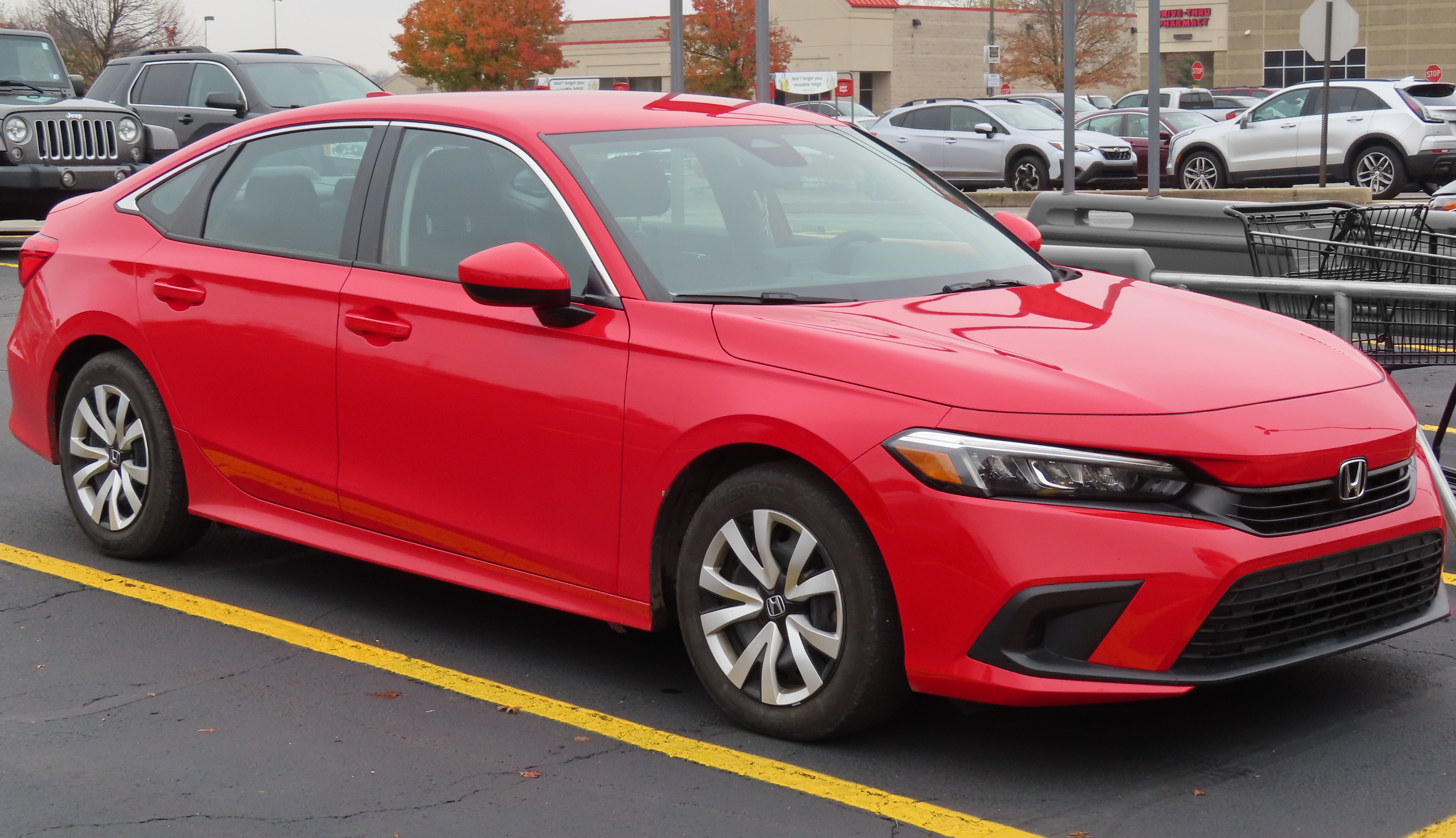
"There's really very few C segment sedans even in production in the United States. There's some Civics, maybe some Corollas, but everything else is either crossover utility or go into the CD segment."
The Honda Civic is a popular compact car. In this conversation, it’s used as an example of the few remaining small-car options.
The Honda Civic is a mainstream compact car that remains one of the more common examples of C-segment sedans in the U.S. market. Here it’s mentioned to contrast with the broader decline in small-car production.
"There's really very few C segment sedans even in production in the United States. There's some Civics, maybe some Corollas, but everything else is either crossover utility or go into the CD segment."
The Toyota Corolla is a very common compact car. The point is that it’s one of the few compact-sedan models still present, while the market has moved toward bigger vehicles.
The Toyota Corolla is another key C-segment compact car that continues to be sold in large numbers in the U.S. The speaker cites it as one of the few remaining compact-sedan examples while most other small cars have shifted to other categories.
"GM's bringing in four hundred thousand vehicles a year from Korea, like the Chevy Spark. That's how they bring in affordable cars. They don't make them here."
The Chevy Spark is a small, budget-friendly car. The point here is that GM can sell cheaper cars in the U.S. by bringing them in from overseas instead of building them here.
The Chevrolet Spark is a small, low-cost subcompact car that GM has relied on to offer an affordable option in the U.S. market. In this discussion, it’s used as an example of GM importing small cars rather than producing them domestically.
"So you cover Ford and so maybe you can explain some of the rhetoric that was in the Ford sales release..."
Ford is the car company being discussed. They’re talking about how Ford is focusing on certain types of vehicles to make more profit.
Ford is the automaker being referenced, specifically in relation to its sales and strategy messaging. The segment discusses Ford’s shift toward higher-margin vehicles and how that affects reported market share.
"...then they go suddenly like, oh, but we have these cheap cars too, Yeah, and cheap is relative."
“Cheap is relative” means the term “cheap” depends on what you compare it to—often higher-priced trims or vehicle categories. The episode uses this to critique how automakers frame pricing and product strategy.
"...There was a plug in hybrid and a regular series hybrid, So that's another reason their hybrid sales are down..."
A plug-in hybrid is a car that can run on electricity, but it also has a gas engine. You can charge it by plugging it in, like an EV.
A plug-in hybrid (PHEV) uses both an electric motor and an internal-combustion engine, but it can be charged from an external power source. In the segment, the speaker contrasts plug-in hybrids with “regular series hybrid” to explain hybrid sales trends.
"Speaker 5: jobs along those evs. Speaker 3: Their EV's in total were up more than eighteen percent."
EVs are cars that run on electricity instead of gasoline. The hosts are talking about how EV sales and production are being impacted by policy and inventory.
EVs are electric vehicles. The episode segment focuses on EV sales growth, reporting, and how policy changes and production planning affect EV demand and manufacturing volume.
"But you know it's not rocket science. That relative very low volumes. But you gotta remember, once you let that go, then you've let that you let some of that technology go too, and you're not continuing to rebuild and iterate that technology."
They’re saying if you stop making a certain EV for a while, the know-how can disappear. When you try to restart later, it’s not as easy because the team and systems are gone.
The speaker argues that if low-volume programs are stopped, the company and its supplier base may stop maintaining and improving the technology. Restarting later is harder because people, processes, and supplier capacity may have been dismantled.
"...and I know the OEM's all gone to Washington. Say listen, we're if we're stopping this..."
OEMs are the car companies themselves. The speaker is saying they’re spending time dealing with government/policy matters, which can affect how they plan future vehicles.
“OEMs” are original equipment manufacturers—automakers that build vehicles. The phrase suggests automakers are focused on policy and regulation discussions, which can divert attention from long-term product and supplier planning.
"...and what if you need to start to ramp that back up and you let it go back in twenty six and twenty seven, all those people are gone..."
“Ramp that back up” refers to increasing production capacity again after it was reduced or paused. The speaker warns that restarting later can be difficult because workforce and supplier relationships may have moved on.
"So let's bring in a Chinese platform well to comply still for the USMCA, and I do believe there will be a version of USMCA at some point in my life, another one to comply, you're going to need North American value add."
USMCA is a trade agreement between the U.S., Canada, and Mexico. For cars, it includes rules about how much of the car and its parts have to be made in North America to qualify for easier import.
USMCA is the United States–Mexico–Canada Agreement, a trade deal that governs what qualifies as “North American” content for vehicles and parts. The segment focuses on how USMCA rules require a certain level of regional value add, making it harder to simply ship a Chinese-made vehicle into the U.S. and call it compliant.
"They also vertically integrate most Chinese ims, not all, but most Chinese ims vertically integrate more than than almost all the Western ams, so they you know, so maybe there's a supplier that would make be making additional profit on a particular part water pump or whatever whatever it is is, they bring that in house so they are able to scrape some cost out that way."
Vertical integration means a company tries to do more steps itself, instead of outsourcing everything. If you don’t have to pay outside suppliers for every step, you can sometimes cut costs.
Vertical integration is when a company makes more of the supply chain in-house instead of relying on outside suppliers. The transcript suggests some Chinese manufacturers integrate more than Western automakers, which can reduce markups and lower part costs.
"If your pure ice, all the trend lines are unmistakable. It's all going down well."
ICE means regular gas-powered cars. The discussion is saying gas cars are losing momentum, while electric cars have a better outlook.
ICE stands for internal combustion engine, meaning gasoline or diesel-powered vehicles. The speakers contrast ICE with EVs, claiming that ICE “trend lines” are going down while EVs have a better chance to hold market share.
"when you would talk to any engineer, they would talk about saving grams."
“Saving grams” reflects the practice of reducing vehicle mass in tiny increments to achieve fuel-economy targets. Automakers often chase small weight reductions across many components, because even modest total mass savings can matter for regulatory testing.
"[2485.4s] Speaker 5: CRV stays lithe and agile.
[2490.6s] Speaker 4: Okay, the fuel economy of this vehicle is going to be a lot better than the fuel economy of this vehicle now, with gasoline above four dollars a gallon, I think people are a little more sensitive to that."
Fuel economy is how far a car can go on a given amount of fuel. When gas gets expensive, people pay closer attention to this.
Fuel economy is how efficiently a vehicle uses gasoline (or energy), typically measured as miles per gallon (MPG) or equivalent metrics for hybrids/EVs. The segment argues that when gasoline prices rise, shoppers become more sensitive to fuel economy.
"Then I think people will start to really think about how do I replace my vehicle? And do I replace it with the same powertrain that I had before."
Your car’s powertrain is everything that actually makes the car move. It includes the engine and the parts that send power to the wheels, so “same powertrain” usually means the same type of drivetrain.
A powertrain is the vehicle’s main mechanical system that makes it move—typically the engine, transmission, driveshaft, differential, and related components. When people talk about replacing a vehicle “with the same powertrain,” they mean keeping the same type of propulsion (gas, hybrid, EV, etc.).
"...every time you bring the interest rate down with the FED, that that is going to convert itself to lower lending price automotive lending."
The FED is the U.S. central bank. It helps set the direction for interest rates in the economy, which can influence how expensive it is to borrow money.
“FED” refers to the U.S. Federal Reserve, which influences interest rates and overall financial conditions. Changes in Fed policy can affect borrowing costs, but auto loan rates don’t always move one-for-one.
"Or automakers could think it's just another one of those hidden fees like destination charges that you can stick in there and you don't see it until you get into the F and I office,"
Destination charges are extra fees to get the car from the factory to the dealership. Some people call them “hidden” because you might not notice them until you’re already deep in the buying process.
Destination charges are fees added to a vehicle’s price to cover shipping the car to the dealership. They’re often criticized as “hidden” because buyers may not focus on them until later in the buying process.
"Remember they're doing a pickup truck allegedly together that's going to be body on frame. [3107.8s] Yeah, they're all about body on frame all of this."
Body-on-frame means the car’s body is mounted on a separate “frame” underneath. Trucks and rugged SUVs often use this because it’s strong and works well for towing and rough roads.
Body-on-frame is a vehicle construction method where the body sits on a separate ladder frame/chassis. It’s common on trucks and many SUVs because it can handle heavy loads and rough off-road use, and it’s easier to build multiple vehicle types on the same underlying platform.
"I mean, you think about all their platforms. They got derivatives of a lot of them in Korea that have a genesis or could have a genesis variation."
A platform is the shared foundation a car company uses for multiple cars. It helps them build different models without starting from scratch every time.
A vehicle platform is the shared engineering “base” (major structure, mounting points, powertrain layout, electronics architecture) that multiple models can use. Using platforms and derivatives lets automakers spread development costs across many vehicles, which is crucial when trying to grow model counts.
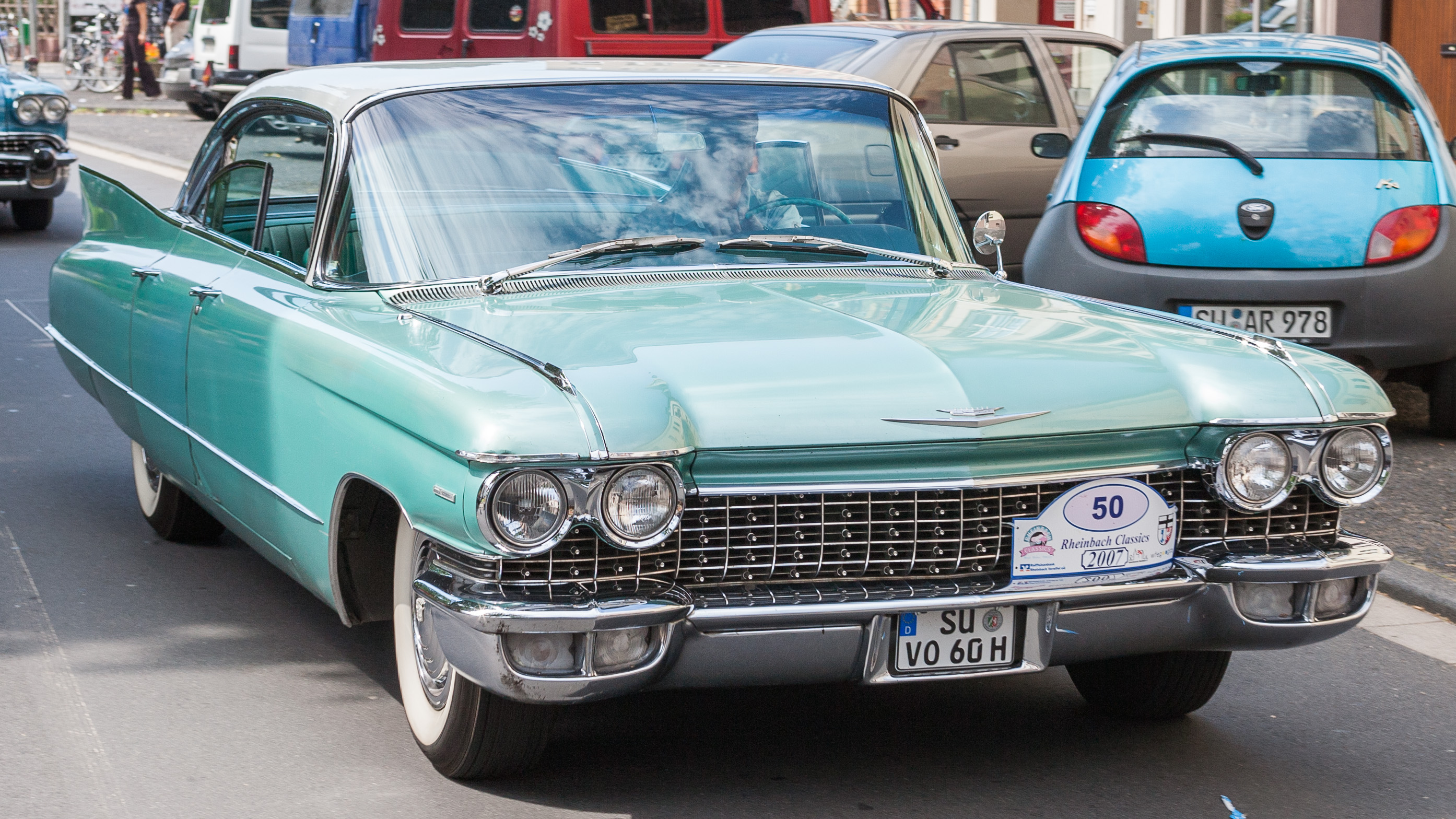
"May wonder the like, Okay, if you look at it Cadillac, let's say, and we're talking about, you know, all the money that General Motors has been losing, are they going to be able to invest in competitive vehicles to this onslaught from genesis."
Cadillac is GM’s luxury brand. They’re using it as an example of a company that may have less money to spend on new cars.
Cadillac is General Motors’ luxury brand, and the speaker uses it as an example of a legacy automaker facing competitive pressure. The discussion ties Cadillac’s ability to invest in new vehicles to GM’s broader financial situation.
"Okay, also at New York new Volkswagen Atlas, it's nice, yeah, yeah, not going to shake the world. Then, you know thing, Well, if you look at Volkswagen's overall sales, they're."
The Volkswagen Atlas is a big family SUV. It’s the kind of vehicle automakers sell in large numbers to make money in the U.S.
The Volkswagen Atlas is a mid-size three-row SUV sold in the U.S. It’s part of Volkswagen’s broader strategy to compete in the popular family-SUV segment, where volume matters for profitability.
"And so then you look at the Atlas and then the Atlas Cross Spoort, which are both built in Chattanooga. And you know, again it's fewer than one hundred thousand vehicles that you know combined there more than one hundred thousand."
The Atlas Cross Sport is a Volkswagen SUV related to the Atlas, but it’s typically a two-row version. It’s aimed at people who want a similar look and space without a third row.
The Volkswagen Atlas Cross Sport is the two-row, sportier variant of the Atlas lineup. It’s built to capture buyers who want Atlas size and styling but with less bulk than a three-row SUV.
"Barry Rector wants to know. Does GM make any money from their Chinese operations? Yes, they do, they do."
GM is a big car company (General Motors). The conversation is about how GM’s business in China is doing financially.
GM (General Motors) is a major U.S. automaker with global operations, including manufacturing and sales in China. The segment discusses whether GM’s China business is profitable and how that profitability has changed over time.
"Cadillac cars finished in the most recent F one race. Yeah,
[4111.8s] In Formula one."
Formula 1 is the highest level of race car competition. Automakers sometimes spend a lot of money on it, and the discussion here is whether that money should instead go toward regular cars.
Formula 1 (F1) is the top level of open-wheel motorsport, run by teams that develop advanced engines, aerodynamics, and electronics. The episode segment connects F1 spending to automaker strategy—whether money spent on racing could be better used for mass-market products.
"...because we got to finish this Formula one argument, but a week from now. Anyway, I want to thank all of you for having tuned in."
Formula One is the highest level of open-wheel race car competition. Teams race on purpose-built tracks, and the tech they develop can influence how regular cars are engineered.
“Formula one” (often shortened to “F1”) is the top tier of open-wheel racing run by the FIA. It’s relevant to car enthusiasts because F1 heavily influences modern racing tech and sometimes trickles down into production-car engineering.
Select text to request an explanation
Speaker 1: Auto Line After Hours. It's brought to you by Alex Partners.
For more than forty years, we have helped companies and their stakeholders around the world harness opportunity, overcome challenges, and achieve outsized outcomes. Alex Partners when it really matters.
Speaker 2: Hi, how arem.
Speaker 3: I'm doing great. We got a lot of to talk
we do. I mean, there's a ton of stuff going
on in this industry.
Speaker 4: I'm busy celebrating the one of year anniversary of a Liberation Day.
Speaker 5: It seems to be I think we.
Speaker 3: Had a Liberation Day definitely factors into what we'll be talking about on today's show. But we got to let
everybody know. We've got Keith Notton from Bloomberg and Michael
robin At from S and P Global Mobility. Great to
have both of you guys back on the show. So, Michael,
Liberation Day.
Speaker 5: How much have we lost in the auto industry in the last year.
Speaker 6: Well, it wasn't so much Liberation Day. Let's call it
two thirty two Day. That was probably the bigger one.
But yeah, it's it's been.
Speaker 2: It's been.
Speaker 6: Frankly, it's been a crummy year for almost everybody involved.
OEM suppliers, even the consumers, and and I just an incredible year with it. With the amount of uncertainty that's
still out there. Now, how do you invest in this environment?
How can you even model that? I mean, it's it's difficult,
that's for sure.
Speaker 3: Liberation Day it was supposed to do a lot of things.
It was supposed to really help the auto industry, and it has not happened, not even close to it.
Speaker 2: And close to it.
Speaker 4: So I see GM's lost as much as five billions to Lantis two point seven Ford one point three?
Speaker 5: Is that right? Keith?
Speaker 7: Here, you know, the tariffs have cost the industry. They
haven't helped the industry.
Speaker 3: That was supposed to be offset by alleviating emission and fuel economy standards.
Speaker 6: Okay, yeah, replaced by inflation and other vectors.
Speaker 7: And let's not forget the ev right off fifty billion between the three of them, right, So, and that was also because of President Trump's policy changes. So how does
it all balance out? It feels like it balances out
in the negative.
Speaker 3: It certainly does. And especially when you look at automotive
manufacturing employment, ie factory workers, we've lost jobs, thousands of them, yes.
Speaker 7: Yes, many of doctoring jobs increased every month of the Biden presidency every and they have decreased in the first year of the Trump presidency. That is the opposite of
what was promised.
Speaker 4: So, Michael, why have manufacturing jobs been lost in the auto industry?
Speaker 2: Oh? Count the ways. Well, let's put it this way.
Speaker 6: We have not really rebounded since twenty twenty or since twenty nineteen. We did sixteen three I think in US, Canada,
Mexico total production around that time, I think it was around that number, and we haven't we haven't come back to that number. So that's problem number one.
Speaker 5: So COVID caused.
Speaker 2: COVID, but then and then, well, name your calamity. It was.
Speaker 6: You know, we had the GM strike at the end of nineteen, then we had COVID in twenty and twenty one, then we had chips, then we had you know, another strike in twenty three, and then of course then and twenty four was actually quasi normal, but we were just still kind of climbing out. And then of course twenty
five last year we had we had the tariff. So
you add all that together and it's almost like we keep claborating the OEMs, the suppliers and consumers over the head just to say you don't need to buy cars, and so it's gonna be. It's gonna be, we think anyway,
it's gonna be much more difficult to get up back up to those vaulted numbers of seventeen million units of production.
And that's that's a little bit of a dream for a while now.
Speaker 3: To be honest, I think more I'll flat, I'll come out and say it. I don't think we're ever going
back to those numbers.
Speaker 2: It's gonna be really tough, really really tough.
Speaker 3: So let's talk about it. First quarter numbers we just
got them today. By now, we haven't seen every single
car company report yet, but for everyone that did, most of them reported a drop in sales, some very significant drops in sales. Hyundai and Uh Stillantis, we're the only
ones up Stillantis of course, coming off a very low quarter a year ago. And Undai.
Speaker 7: Uh.
Speaker 3: Hondai seems unstoppable, the Hondai group, including Kia with Genesis, and they just seem unstoppable right now.
Speaker 7: Well, they have the right products for the right time, and and they they went deep into the ev end and are burned like everybody else. But they have a
really good lineup of hybrids and so they are able to switch gears they have. They're a much bigger hybrid
player than for example, Ford. They're twice the hybrid player
that Ford is. And so it's really Toyota, Hondai, and
Honda are your hybrid players and they're benefiting from the four dollars yelling.
Speaker 2: You know.
Speaker 4: The surprising thing is it's like Toyota and then Honda.
Speaker 7: I mean, Honda and Honda are the next, yeah, the next.
Speaker 5: It is a huge gulf between the numbers.
Speaker 4: It's like it's like forty three percent and the other guys are like sixteen eight.
Speaker 2: Yeah.
Speaker 3: I mean it's just and even though I you know, Toyota sales down, they were only down zero point one percent, so essentially flat. So and it was.
Speaker 4: Basically the raft board if you look at those numbers, like what happened.
Speaker 3: There is that Manada Michael over.
Speaker 6: Well they are coming in, they're taking them out of Canada, but didn't remember there's probably some switchover issues in there and now. But but I think the markets that market
is still going to be pretty strong.
Speaker 2: I mean they're they're just but.
Speaker 3: It was like a fifty percent a damn near fifty percent drop in sales for Raft four.
Speaker 5: Yeah, I mean it was so.
Speaker 7: They had a March for the eight percent of March for the quarter.
Speaker 4: RAF four was down to roughly sixty thousand, and last year for the first quarter they were one.
Speaker 5: Hundred and fifteen thousand.
Speaker 4: But but again, I mean, they're they're going all hybrid for the for the ref woar now, so there's a switch.
They can be doing good well, but but part of the thing is is that they're probably taking some of those batteries that they're using for hybrids and putting them into you know, Grand Highlanders and things, you know, the Lexus t X and things that.
Speaker 2: They can make margin baby. Yeah.
Speaker 4: Yeah, So I think that's part of the reason why I mean that that number comes back.
Speaker 5: It is like cooking again.
Speaker 6: I mean more and more Williams have to think about mix going forward. I mean, if they feel that they're
only going to be able to sell so many vehicles, they are obviously going to continue to work at their mix and say, well, do I want to sell more at the lower end where my margins aren't quite a stronger?
Do I don't make more money? And you know, everybody's
a capitalist, They're going to continue to work their mix.
Speaker 3: What do you think of Nissan coming out this week and saying you cannot build affordable cars in the United States?
Speaker 7: You know they have a point.
Speaker 3: Now that their definition is you cannot build cars under twenty thousand dollars with any margin in the U.
Speaker 7: Are there any cars under twenty thousand dollars? The versa
was they killed it?
Speaker 2: Yeah, yeah, but that was never built.
Speaker 7: I think the definition of a built Mexico, well, that was their point is.
Speaker 3: I think what they're trying to signal the administration is, look, we need Mexico if you want us to sell affordable cars.
And I don't even know if the administration does, we can't build them in the US. I don't know if
anybody yet.
Speaker 6: They are completely spot on. I mean, you remember back
when GM was making Sonics and a couple of other vehicles up at and you know, you're sitting there going can you really make that work? And of course they couldn't,
and I you could kind of go around the market.
I mean, there's really very few C segment sedans even in production in the United States. There's some Civics, maybe
some Corollas, but everything else is either crossover utility or go into the CD segment.
Speaker 2: It goes above that.
Speaker 6: There's there's very little small car production in none in Canada and very little in the United States.
Speaker 2: It all has to come out of Mexico or Korea or Korea.
Speaker 7: GM's bringing in four hundred thousand vehicles a year from Korea, like the Chevy Spark. That's how they bring in affordable cars.
They don't make them here.
Speaker 2: Tracks and vehicles.
Speaker 4: Yeah, yeah, So, okay, could if you look at the Korean manufacturing base versus the US manufacturing base, I mean, could they make the tracks here.
Speaker 6: Affordably here being the United States? Yeah, I think that's
that's still pretty tough.
Speaker 3: It's more than because I remember GM would have to do it with UAW labor. And I don't mean to
pick on the union, no, but they're's had a pretty.
Speaker 6: Rich contract a couple of years ago that still keeps on giving.
Speaker 3: Yes, So here's what I'm saying, Michael. Maybe you have
a better sense of it than I do. I think
that a UAW job is probably forty thousand dollars more a year all in everything, including profit sharing than a non union automotive job. And you know, I'm saying a
UAW worker probably costs forty thousand dollars more a year than a Honda worker in Ohio does.
Speaker 6: I don't know what the exact difference is. I would
say that when the contract occurred in twenty three, s yeah, twenty three. When the contract occurred in twenty three, I
wouldn't say they were closer, but they're a lot closer.
But then that golf continue to grow. I mean the
increase of benefit costs, the increase in wages grew that that delta.
Speaker 3: But when I say all in, I'm including profit sharing, I'm including absenteeism, I'm including uptime and lines of dirty marcation work rules. If you just look at wages, I
don't think it's that dramatic there is a difference. But
when you go all in, I think it's.
Speaker 6: Flexibility, benefits, all that stuff, right, I don't know what the exact difference is, but you know, to fight some I used to say, I think the D three would also stand back and say it was really be tough for us to make what it called C segment or subcompact cars or even compact cars in the United States profitably, especially where you have to get electronic content out of Mexico or other places, it's still pretty tough.
Speaker 7: And even non union plants in the United States, the labor rates are way higher than Mexico or career so there's just no way you can make the math math right.
Speaker 3: So even Japan, I mean I was looking it up, you know, because Japanese unions have been demanding higher wages, and based on the research I was able to do, it looks to me like the average autoworker in Japan makes thirty thousand dollars a year, which is about twice as much, not quite twice as much as they make in China. And if that's right, I'm going I did
a lot of searching to try to get these numbers.
That's what it looks like to me. It's like thirty
grand a year is what you make there.
Speaker 2: Yeah.
Speaker 6: And then the other region that's really priced itself out in terms of exports going down is Europe.
Speaker 2: Western Europe. I mean, that's the other area where their.
Speaker 3: Wages are pretty much where you know, Germany and France are definitely at aw levels.
Speaker 2: They're very close to that, yep.
Speaker 4: So you cover Ford and so maybe you can explain some of the rhetoric that was in the Ford sales release, and so we mentioned earlier they were down eight point eight percent for the quarter.
Speaker 3: Oh did they release their numbers today?
Speaker 4: Yeah, so this is the thing you know, you mentioned in passing Affordability a couple of minutes ago.
Speaker 5: And so this is a quote from from their release.
Speaker 4: Quote, Ford strategic shift toward high margin SUVs like the Expedition in Explorer lifted its estimated retail market share to eleven point six percent. So they have a strategic shift
toward high margin vehicles like Expeditions and Explorers.
Speaker 7: They had a good month in those, a good quarter in those vehicles, so they want to talk about them instead of the sixteen percent in the F series.
Speaker 4: Okay, and then then they go on to say, driving the growth, we're strong sales of the entry level XL Ranger of forty five point five percent, while total sales of the entry level Bronco of a sport It's achieved a ten point three percent increase in Q one. So
then they go suddenly like, oh, but we have these cheap cars too, Yeah, and cheap is relative.
Speaker 6: Yeah, yeah, you just mentioned higher trim levels of some vehicles that I wouldn't consider initiarily be cheating.
Speaker 4: Though, so no, so, I mean it's almost seems schizophrenic to me. Though they're like on the one hand, you
know both the art of the press release.
Speaker 7: I mean, they had a bad quarter and they're trying to make it sound good and they had a bad quarter, not just because the market is slowing, and it is.
We have these tough comps versus last year's you know, pre Tiff buying spree, and the market is just slowing because of affordability in general. But Ford has the fires.
They have the Novellas Fire Fires. So F series sales
were down sixteen percent. That's a huge drop obviously, but
you know what that leaks into their hybrid sales, which were also massively because guess what their best selling hybrid is the F one fifty hybrid and they don't have in any of them. So they've had to move their
commercial vehicle sales till later in the year because they can't fulfill the contracts right now. The Snowvellas thing is
still a huge overhanging really with.
Speaker 6: I would also add, if you look at their portfolio, there's no escape. I'll look at that Ben at edge
for a couple of years, but there's noisecape.
Speaker 7: And that's Scape won two different hybrids. There was a
plug in hybrid and a regular series hybrid, So that's another reason their hybrid sales are down, so bad time to be dropping hybrids from the lineup.
Speaker 4: So one of the things that I thought was surprising, I see that you have a BZ out there, John, Yes, Toyota BZ Electric, right, and so mock E sales were forty six hundred vehicles for the first quarter. BZ sales
for Toyota were ten and twenty nine. This is this
is almost like the you know, the Revenge of Toyota, you know what I mean. It's like everybody's giving them
such a hard time, and here they're out selling the mock E more than two to one.
Speaker 7: Is it a brag point? At this point? That have
a top selling EV and a EV market that fell by twenty eight percent first less than six percent of the market. What I mean, what are convertibles market share?
I mean these are the niche. The niche.
Speaker 3: Yeah, yeah, look, I'm surprised EV sales are only down twenty eight percent. Seriously, Yeah, I mean to me, that
show strengthen it Gary's gonna arguement with me on this, which is good. Uh, Cadillac did a really good job
with evs. Thirty percent of their total sales in the
US were evs, so you ready, yeah, go all right.
Speaker 4: So Cadillacs sold nine thousand, five hundred and fifty one units.
This includes the Escalate IQ, the Lyric, Theavistic in the optic. Okay,
four vehicles, and they sold ninety five fifty one Celestic.
Speaker 5: You know, it's interesting they don't report them.
Speaker 4: They don't report those select Okay, So basically you have those four vehicles and they sold nine thousand and sixty three escalades.
Speaker 5: Or to one. So yeah, they're doing a bang up
jobs along those evs.
Speaker 3: Their EV's in total were up more than eighteen percent.
Speaker 4: It doesn't matter because there's such a small number.
Speaker 5: Well, hey, let's look at another one.
Speaker 3: General Motors as a whole sold.
Speaker 4: Twenty eight hundred and fifty one evs eleven vehicles, okay, twenty five eight fifty one. They sold twenty six thousand,
eight hundred and thirty six tahos. Wonder which they're making
more money off.
Speaker 7: Yeah, yeah, yeah, no, Look, I wouldn't argue AB twenty EV's they're supposed to be selling in twenty twenty six one.
Speaker 3: Million, right, that's right, So there we are, right, But I mean, let's look at what happened. And we've talked
about it already, and you brought it up yourself, Keith. A.
Trump administration pulled the rug out from everybody on when it comes to EV's.
Speaker 7: That's a big loss of your men soulturing jobs right there.
The whole battery plant build up.
Speaker 6: You hit the nail on the head. And also we
worry about volume per name plate, and volume per name plate on the bed side is plummeting and and it's going to start the even out, but it is absolutely plummeting.
Speaker 2: Right.
Speaker 3: Well, look GM, Look their zero one plant is closed right now for two weeks because they got too much inventory.
It's close for a month, okay.
Speaker 5: A month, Factory zero down for down for a month.
Speaker 3: I don't know why they don't just cancel the Silverado EV and the Sierra EV and the Hummer EV.
Speaker 7: The way I shut around, Yes, board canceled the Lightning right, yeah.
Speaker 3: Right, And guess what, it wouldn't hurt their EV sales that much if they canceled those three trucks.
Speaker 6: That's that's an entire platform by the way that you you cancel. So that's that's the other factor. And then
you've got Lordstown. You've got lots of considerations in there.
I can see what they hold on to it, even though it I'm sure economically they're gritting their teeth on a regular basis, but I can I could see how they hold on to it for a little while to see how all this works.
Speaker 7: And that explains why they're evy write offs aren't as large as for us.
Speaker 3: Oh absolutely, and I predict more is coming.
Speaker 2: They're driven.
Speaker 3: An easy six billion dollars more come hanging down there.
Speaker 4: So Michael, explain what you mean by holding onto a platform.
I mean, what is what does that mean?
Speaker 6: Well, once you let go of a platform and you don't build it, then you basically have told all the suppliers go have a go somewhere else. We don't need
that vehicle anymore. Hold on to the tools because we
might have some service stuff we might need. But in
terms of take that capacity and go to something else.
And then at some point, let's seen in a year or so, you know, I really wish I had that platform back. Things seem to be moving along and and
there's a market there, and you go back to your suppliers and say, oh, we've already moved dot.
Speaker 2: So.
Speaker 6: So that's why I'm saying, when you let go of a platform like that, it is a major signal. It's
not so because sometimes you have a supplier and you say, Okay, keep building for that vehicle. We're gonna let go of
this vehicle. But but it's a big, big decision. It's
a big dision.
Speaker 3: But Gary, you got the numbers there. What were the
Silverado sales for the quarter? It's Silverado ev is take
one self?
Speaker 5: Okay, so hummer something while one on I.
Speaker 7: Want to ask Mike question on that last point though.
So Ford canceled the next gen electric series, right, so they canceled the fold, they canceled those whole platform, and yet they have the UIV coming. Do you think there's
any cross pollination with suppliers there or is the UIV so much different that it's a completely different supply chain.
I'm just wondering if it affects those.
Speaker 6: There may be the odds supplier that has some level of commonality.
Speaker 2: Maybe with some there could be.
Speaker 6: But but more than more driven by happenstance, maybe the same when did this heat sets or maybe the same one did uh you know, indoor panels or something like that.
But but in terms of content that they could carry from a lightning over to the vehicles out of Louisville, probably not.
Speaker 5: Okay.
Speaker 4: So the Silverado EV sales for the quarter were fourteen one hundred and six hundred three months kill it, kill sold twelve hundred and eighty eight Sierra evs.
Speaker 2: Kill it.
Speaker 7: How many dealers do they have and they swing less than one a dealer.
Speaker 3: Yeah, they must have what three thousand dealers does? So
I mean kill it. Yeah, they will kill it. Let's
let's I will come out and say they are going to end up killing that truck, that truck platform.
Speaker 5: What do you think, Michael?
Speaker 6: We have it, We have it still in our forecast.
But you know it's not rocket science. That relative very
very low volumes. But you gotta remember, once you let
that go, then you've let that you let some of that technology go too, and you're not continuing to rebuild and iterate that technology. For you know, there's a twenty
thirty at twenty thirty one, and at twenty thirty two, and what if you need to start to ramp that back up and you let it go back in twenty six and twenty seven, all those people are gone and getting and I know the OEM's all gone to Washington.
Say listen, we're if we're stopping this, just don't call us up and say, by the way that we're going to bring in some new rags and you need to start the machine back up again. All those people have
either retired or gone to a different industry or different OEM.
Getting them back up, the machine back up and running just you can't do it in the six months. It'll
take a long time. And new competition is coming. Absolutely,
that's right.
Speaker 4: So you know it was a shocker in terms of numbers before we go to that one, because I think that'll be a big shocker. So guess how many be
at five hundred ease were sold in the first quarter?
Were there any sold an entire quarter? Sixty eight?
Speaker 3: How many did Fiat in total sell?
Speaker 2: Yeah?
Speaker 7: Internal sales. Well, the only the only family.
Speaker 4: The only other vehicle that they have on offer is the five hundred X and they sold seventy one of those.
Speaker 5: See right, though?
Speaker 4: It was funny, was that so Jeep sold one hundred and seventy five wagoneeress's that's the electric version. So they
sold one hundred and seventy five wagoneeresses and they were down ninety three percent on sales of Wagonersses, yet they handily outsold all of Fiat Man.
Speaker 3: Those are some sorry numbers. But Keith, Yeah, you were
saying more competition's coming, and you just have a story now in Bloomberg talking about cheap Chinese cars on Detroit's doors.
Step well, look.
Speaker 7: North and look south, right, Canada is letting them in.
We had a report this week that Stilantis and Leap Motor are looking at building Leap Motor vehicles in Brampton, Ontario.
So it's not just letting them in via the forty nine thousand imports that they're going to allow. And Canada
wants Chinese automotive production on their shores, and it's going to happen, and it's going to happen soon. It's going
to happen in Mexico. Byd is already a huge player
in Mexico. Right, So we're surrounded and Donald Trump at
the Detroit Economic Club in January said, let China come in.
Speaker 3: Well, he said, let them come in as long as they build in the US.
Speaker 7: Right, build a plant in employee workers. That's what he said,
Just like Toyota and Honda and everybody else.
Speaker 3: What do you think are the chances of Chinese brand cars made in Canada or Mexico coming into the US when whatever?
Speaker 7: Well, I mean, you know, the US ambassador to Canada just said no way and hell to that. But I
you know you can. You can go down to Arizona
right now and see a BYD pickup truck drive in the streets. I don't see why we wouldn't expect to
see a leap motor driving around Metro Detroit for somebody who lives in Windsor.
Speaker 5: But how does the BYD pickup truck?
Speaker 7: It's a Mexico plate.
Speaker 4: Okay, So okay, yeah, so we would see Ontario plates.
Speaker 2: Yes, I think we got to unravel this a little bit. Gentlemen.
Here's here's my thought.
Speaker 6: And everybody knows, well not everybody online knows, but you guys know where I'm from. So you know, there's there's
this whole idea that the Canadians, as some of these plants go by the wayside or they're not well utilized.
Hey let's bring in some some Chinese OEMs. So let's
bring in a Chinese platform well to comply still for the USMCA, and I do believe there will be a version of USMCA at some point in my life, another one to comply, you're going to need North American value add.
So all this nonsense about hey, we're going to bring in a Chinese vehicle and we're going it's gonna bring in a big box and here are the parts. Gonna
open up the box, and we're gonna put all the parts together and put them together in Brampton, and then we're gonna send it to all those happy Americans.
Speaker 2: It's not the way it's gonna happens. It's gonna have.
Speaker 6: It's gonna have a level of value add that they can get get through the USMC and by the way, next USMCA, whatever it is, will even have higher criteria to get in and may even have a certain level of Chinese content that they can't have. In other words,
it'll be capped at a certain level, and above that we won't let the vehicle in. So I you know,
the only m's are thinking hard about this they're basically saying, Okay, if we do bring this platform in, we're gonna have to source all this stuff locally. Now, maybe it's a
Chinese supplier, maybe it's the Western supplier, whatever, but at least it's sourced locally, and they're and they're gonna track content down to the down to the nut in the bowl.
Trust me when I tell you that. So, I there's
a lot of hyperbole going on, but I've told the Canadians, and I was public up in Toronto at the at the Toronto Auto Show. Listen, if you want to bringing
up bringing a Chinese am it's great, but you can't do it without the Americans. You need the US market,
you need. There's not nearly enough volume in Canada even
think about building a car just for Canada. And God
loved all my friends up in Canada, but all this grandiose idea that oh we're gonna build a car just for Canada, Oh my gosh, No, that is never gonna happen, never gonna happen.
Speaker 5: So so what would the volume need to be to make that happen?
Speaker 6: Okay, well, let's just parse the numbers. Canada is like
one point eight million units and your average assembly plant.
To make any level of money, you're gonna need at least one hundred thousand units. So let's just say at
one hundred you need at least what five percent market share for one car to make ninety thousand units for Canada viable. And if the Americans say, oh, I'm not
gonna let that vehicle in because they have the right content or whatever, that means you have to sell ninety thousand vehicles in Canada to even think about a plant having a run at it.
Speaker 2: That's not gonna happen.
Speaker 7: Which is way you can't believe that the Chinese coming into Canada stops at Canada. It opens the door. And
you know, by the way, I agree, no, totally, no, everything you said makes perfect sense.
Speaker 2: There's going to have to.
Speaker 7: Be US MCA compliance, which means there's gonna have to be North American and US specific content to come in.
But that'll happen. That's what this leads to. You're starting
the formula by saying, come on in, build here, and we do. By the way, I always like to point
this out, have a Chinese factory in America. It's in
North Carolina, Volvo, and it's highly underutilized. And in that
story that I have out today, we talk about you know, Gilie who owns Volvo as everybody knows, and they built Polestar there too. Also Gili brand that Jili Will could
put a Zeger in there to fill out that plant.
Speaker 3: They've already said that's their goal, right.
Speaker 7: They showed it at CES in Las Vegas two months ago and said we'll be here, you know, in two years.
Speaker 5: There's also their feeling, so it's just.
Speaker 3: Yeah, yeah, feel a plan, right, I mean, but here's a question. I have few keith that.
Speaker 4: Okay, if, as Michael says, the us mc A content ratchets up, okay, so how are we going to have cheap Chinese cars in the US. It seems to me
that that would raise the prices commensurately to make them what everybody else is charging.
Speaker 2: Well, let me, I'll take I'll take a swipe at that.
Speaker 6: Uh, they're developed most of most of it will be developed in China at a lower cost and somewhat higher speed.
Speaker 2: Well quite higher high. Yeah, so so you got that.
Speaker 6: They also they also vertically integrate most Chinese ims, not all, but most Chinese ims vertically integrate more than than almost all the Western ams, so they you know, so maybe there's a supplier that would make be making additional profit on a particular part water pump or whatever whatever it is is, they bring that in house so they are able to scrape some cost out that way. And you know,
we can all talk about capital and cost of capital all day, but the cost of capital for a Western suppier Western om is a lot different than someone from China that maybe their capital is a team at a much lower rate. And again I'm not going to try
not to be controversial, but it is what it is.
But here's all those factors added up that helps you with a lower cost night for the VIA.
Speaker 2: Totally agree.
Speaker 3: But I don't think the Chinese goals to come into the US market and sell very cheap contents at All they want to do is undercut the existing players, buy enough more content. Maybe it's a thousand bucks, maybe it's
new technology. They want to make money through exports because
their home market is so brutally competitive it's really hard to make any money there whatsoever. And when you see
their exports growing, and you look at the companies that are doing the most exports, they're the ones who are seeing their profitability increase. That tells me they're making their
money on exports.
Speaker 7: And they stand. They understand that the BYD Seagull is
not a car for America. So the under ten thousand
dollars car, which would be more than ten because we'd have to meet safety rags. But still even given that.
Speaker 3: The safety right, the Seagull is not the car for America.
Speaker 7: The BYD Shark, that pickup truck that looks to me like a GMC. It's got these broad shoulders, it looks
very American. That's the car fir America. And so that's
what they're going to come with. And yes they won't
be ten thousand dollars, but they'll still be ten thousand dollars less than an American equivalent.
Speaker 2: It's all roll with absolutely so.
Speaker 7: And you know, it's just a matter of time. And
clearly the Trump administration is open to it. He's going
to China in May to meet with chi and that's on the agenda. So this could happen sooner, that's the
point of that story. This could happen a lot sooner
than people think.
Speaker 3: Yeah, hey, look we got to take a quick break to give a shout out to our great sponsor. ALEX Partners.
Speaker 8: We act, we grow, we transform, we protect, we rescue in moments that define the future. We are the partner
you can trust Alex Partners when it really matters.
Speaker 3: I talking all things out about it. We're too nuts.
Speaker 5: Gary.
Speaker 4: So Mercedes announced this week it will be spending four billion dollars at its Tuscaloosa, Alabama plant.
Speaker 3: That that number loured me.
Speaker 5: So it wants to expand suv production.
Speaker 3: You can utilize we can build a brand new greenfield plant for probably loss.
Speaker 6: I think you have to parse where the four billion is it. Supplier tooling is there, they're doing some battery work.
I mean, I think I think the understanding where that four billion is it can't be a one site.
Speaker 2: That that's an awful lot of money at one site.
Speaker 3: Yeah, Well, clearly they want to show the Trump administration look at all the money we're spending in America. I
even wonder if they're playing around with transfer payments so for new vehicles going into that plant. Is some of
the Product Development Bill being allocated to the plant? I mean,
because four billion, I mean, come on, it's a staggering now I'm.
Speaker 2: Staggering amount of money.
Speaker 7: Yeah, there's a lot of headline numbers being thrown around, led by the White House. Nobody can make the math
add up.
Speaker 4: So speaking of that, and this is a funny quote that came out of that announcement that the US Secretary of Transportation, Sean Duffy. Okay, he's at the Tuscaloosa, Alabama
plant of a German company, Mercedes Benz.
Speaker 5: Correct. This is his quote.
Speaker 4: We're sick of companies leaving America and going to other parts of the world, incentivizing them to come back to our country and to help our workers, as something Mercedes have been doing for a long time, or seeing it in full force here today.
Speaker 7: Coming back to our country.
Speaker 2: Okay, some things are better left unsaid.
Speaker 4: I thought that was worse than the affordability thing that was in the form of release. Very strange that well.
And then we were talking about Mexico and the Chinese.
There was the report that.
Speaker 5: GM S A I C.
Speaker 4: Is looking at going to Mexico to begin to produce vehicles.
They're currently shipping in one hundred and thirty thousand Chinese built chevies annually to Mexico and so build a factory.
Speaker 6: Or take over an existing factory. I think, you know, John,
we were talking before we started, are there going to be any new factories built? And any's any is kind
of a broad description, but I think if you've got an existing factory, the Oniams would be the first.
Speaker 2: Of all. The Union is not going to let.
Speaker 6: You not build somewhere something there, especially if you're going to build something there. And I think just from a
capacitalization we talked about, you know, the Oniams all writing all this money off. If if you add in Honda,
it's called what seventy billion dollars? Then people ask me
what does that really mean? I said, take a tanker
and take seventy billion dollars and float to the middle the ocean and drop it. That's basically it's writing US
seven billion dollars is and I joke about it, but it's tragic.
Speaker 2: It really is tragedy.
Speaker 6: Well, this industry could have done with that money other and either together with BEVs or doing something else. It's
just incredible. But what I look at is the oms
are going to be capital light going forward. Absolutely, they
do not want to spend money unless they really really.
Speaker 7: Have to, and they're kind of tapped out, aren't they.
Speaker 2: They are absolutely tapped out. They can't.
Speaker 6: There was a day where the oms you talked to an OEM and OM said, Wow, I'm not doing so well in this market. I'm going to go to India
and build a plant. I'm gonna build all this extra volume.
They don't have those luxuries anymore, don't launduries of the money.
And then the Chinese already ticked all those boxes, by the way, So it's it's a much more difficult time to be an OEM. And that's a supplier in this
industry going forward. And maybe this is worth a whole
another show.
Speaker 3: But as you and I were talking about before this show started, you do forecasts out to the year twenty fifty.
Speaker 2: In yeah, we actually just added we're going to twenty sixteen now.
Speaker 3: Yeah, And I'm looking at all these robotaxis exploding all over the world. I mean, you know, I shouldn't say
it's just they're not blowing up ing well, no, but I mean the amount of robotaxis coming into the market is breathtaking. Plus, if you look at the US or
Europe or Japan or South Korea and China, car sales are not going up. They have not gone up in
a decade, and now we've got in all those regions aging populations and in some countries, notably Japan and even China and South Korea, declining population. So you know, i
look out to the middle of the century and I'm going, man, if I'm a car company, I don't build any new plant.
Speaker 7: No.
Speaker 6: And to my point, you know, we have this that we showed all our clients, but we've broken the world up in an eight or nine different regions, and only I think four are growing, Middle East, South America, Southeast Asia, and there might be Africa in Middle East Africa, and even South America is And but you know, if the volume is going up, then the only would say, Okay, at least I've got these stable markets or at least, you know, maybe more abundant markets, and I need to look at these other ones. The Chinese already ticked all
those boxes, going there, going there, been there, been there, doing that. And so that's why I was saying, it
is a much more difficult environment to find volume around this.
Speaker 3: World, right, And so I'm saying right now that market share has always been important, always scale account. Now it
is all out war and anything that you can do to retain your customers, and I think that's why in the US we're starting to see Mobile Service Forward leading the way GM and Stilantis and others following too. You've
got to try to do anything to hold on to the customers you've got, and this is I would come back in argument that this is why evs are important.
As much as the turmoil it's been in that segment, it's a growing segment, or I believe will be a growing segment after we've pulled the rug out from everything and eliminated all the incentives, so those who do well in evs at least have a shot at holding onto market share. If your pure ice, all the trend lines
are unmistakable. It's all going down well.
Speaker 7: And it's a technology race. I mean, we focus on
the cheap part of the Chinese cars, but it's also the tech part of the Chinese cars. You know, in
the way that the technology in our cars of a last decade has changed immeasurably compared to previous decades. It's
going to get a lot more fast paced when the Chinese arrive. I mean, you know, face facial recognition to
customize your IP, your dashboard in front of you, as you get into the car for every driver, cars that you just get out of and they drive three stories up in a parking garage by themselves and park themselves, and then you whistle them back to you when you're ready to go. I mean, this kind of stuff exists,
it's in China, it's coming here. That's going to change
the game. So that's part of the race too. Cost
is a huge part that can you know, land you in the trash ben But if you can't keep up with the tech, which is costly, then you're out of the game too.
Speaker 4: So okay, you know my pointed out that you know, seventy billion dollars lost by these companies. Therefore they're going
to have less money to be able to invest in things like that.
Speaker 5: So where does the money come from.
Speaker 6: They're going to have to lean on suppliers that may have some of that technology. They're going to have to
do joint ventures. You know, we've just talked about a
couple of joint ventures. We need some Chinese OEMs and
some domestic oms. So that's I mean, it's less is more.
If we don't need to spend the capital, then let's go find a supply.
Speaker 2: This got it? Or no Em and we'll do a
JV with them.
Speaker 3: In fact, I think this rejiggers the whole make versus buy decisions at a purchasing level. Why should you go
out and invest billions to develop autonomous vehicle technology? Why
not just go buy it? And obviously Volkswagon's already come
to that decision. You know, they lost several CEOs over
their four aent to carry at and finally bit the bullet and gave five billion dollars to Rivian. And even
Uber has said, which remember if you go back six years ago. Seven years ago, Uber was one of the
leaders in developing a V technology, Lisa said, we can't do it. They're going to Rivian as well, and now
a number of us.
Speaker 2: Apple was the same way too. They looked at it,
then they pulled back.
Speaker 3: But Apple's got deep pockets, right, they could have stayed in the race had they chosen to do so. I'm
just saying that since the independence and the big beautiful bill, I think strategy at automakers, at some automakers so far at least, has shifted to we don't need to make this develop it in house, let's just go buy it.
Speaker 6: No, I mean I mean, to your point, since July first last year, you know, they the OEMs have basically said, oh, well, I'm going to extend cadence. You know, this used to
be a five year vehicle. Now it's more like a
six seven, eight year vehicle. Because to your point, if
you don't need to meet new fuel economy REGs, one of the reasons for our new platform was we need to make it lighter, we need to fit a new engine, we need to do this, do that. But if you
don't need to do that, who on Earth wants to spend money underneath the vehicle? We'll just continue with that
one and we'll just put a new topad on it, make it look a lot nicer, and we'll add some new technology and everybody'll be happy.
Speaker 7: And by the way, that top het doesn't need to be all aluminate.
Speaker 6: No, no, absolutely not. I mean, we're hearing of oms
pulling stop start out of vehicles. We're hearing of OI
taking ags out of vehicles, growth shutters, automated grows shutters out of vehicles. We've heard of onem's we call it
re waiting. Over an S and P Global, they're adding
they're going to iron steering knuckles from aluminum. Wow, would
have thought that would have happened. But if you don't,
you know, if you're not going to change your weight class tremendous and the customer doesn't and the customer doesn't care, and you can save money.
Speaker 2: As we used to say, Bob's your uncle.
Speaker 3: There you go.
Speaker 4: But you know, some years back, when you would talk to any engineer, they would talk about saving grams. Okay,
remember Cadillac was boasting about how they would scalop the edges every grand.
Speaker 3: It's just like drill holes in the brake pedal, you know.
Speaker 4: Okay, but what were they trying to achieve. They're trying
to achieve fuel economy.
Speaker 7: Correct.
Speaker 5: Okay, So one of the things we haven't discussed at all on the show is that's.
Speaker 7: Right fuel prices.
Speaker 4: So if suddenly a car company saying, gee whiz, I can just you know, put those cast iron steering knuckles on it, and I don't care.
Speaker 6: About those guys on a portfolio performance cars like you know, Corvettes and Mustangs, it's a different story.
Speaker 2: But yeah, for mom pos Smith and des Moines, let's just.
Speaker 5: Say, and this isn't I'm just using this is an example.
This is not real.
Speaker 4: This is that if it's Chevy Equinox starts putting weight on and the Honda.
Speaker 5: CRV stays lithe and agile.
Speaker 4: Okay, the fuel economy of this vehicle is going to be a lot better than the fuel economy of this vehicle now, with gasoline above four dollars a gallon, I think people are a little more sensitive to that.
Speaker 3: And let's go to Keith because you'd had a story on that.
Speaker 7: Too, So you know Edmunds and their searches in late March, last week's of March, the searches for hybrids and evs for that matter, of Skyrocket, it's like a quarter of the.
Speaker 2: Searches on your side.
Speaker 7: It's clearly registering with people. I mean, don't you talk
to everybody you talk to, they're talking about gas prices.
I mean, when you get above these specific price levels in the rate at which you get there, yeah, in a month, and you know, are we in a month from now, we'd be a bit back at five like we were during COVID. So you know, if that's the case,
then yeah, fuel economy matters. So but you know from
that Ford press release you were reading from earlier about their high margin products. I mean, that's how you can
put a cast iron knuckle in the car. That's how
you can take the aluminum body panels off and go back to steel. You know, if the margins are high
enough and people want a big suv and they don't care about that stuff and.
Speaker 5: The huge rankers around, let's just put them in there.
Speaker 7: Remember the people who can afford an eighty thousand dollars expedition and a one hundred thousand dollars navigator, they are not as bothered four dollar gas.
Speaker 4: But don't you think that even when they roll in the costco and they see that number going above one hundred concerns?
Speaker 6: But Gary, I would say that they're also doing in their mind, they're doing a little bit a bit of a TCO analysis. They're basically saying, Okay, what's my total
cost of running this car and operating this car and probably thinking, okay, fuel is important, but it's not critical. Well,
it's not gonna it's not going to bankrupt these people.
I don't disagree with what you're saying. I think there's
probably been a lot more searches, and on the edges there maybe more hybrid sticking out of inventory and that kind of thing.
Speaker 2: We seem to think.
Speaker 6: This will have to go through July or August where it really becomes a difficult situation. Then I think people
will start to really think about how do I replace my vehicle? And do I replace it with the same
powertrain that I had before.
Speaker 7: I think what happens right now is people just pulled back entirely. It's not like it's not like they're saying, oh,
I was gonna get nice and now I'm gonna get a hybrid. Guy and some people are doing that, but
mostly they're saying, WHOA, hang on, Yeah, I need to I need to just wait it out and see if this is actually a short war or if it ends up being something more prolonged.
Speaker 6: And I think I think the other factor, it's a little bit of misnomer in our industry. Well, some folks
in Washington seem to think that every time you bring the interest rate down with the FED, that that is going to convert itself to lower lending price automotive lending. No,
that's more. I actually gauged to the ten year bond.
And if we think there's going to be inflation, guess what's not going down The automotive lending rate. Yeah, so
I think there's a little bit of reality that has to work in its way better too.
Speaker 3: You know, we're very US centric, as we should be.
I mean, we work and live here. But you know,
when you look at other places in the world, they've seen dramatic increases in the price of petrol. So you know,
South Korea. I was looking it up. Five bucks a
gallon Australia, six bucks a gallon. France. It's over eight
and a half dollars a gallon. Tesla sales which had
been really taking it on the chin in France, they didn't like what Elon was saying. Already, Tesla sales tripled
last month in France. I was looking up. In Australia,
the interest in evs has gone up fifty percent on the part of car buyers, and I agree. There's a
lot of people who say, I'm just going to wait and see what happens. But if you got a lease
that's coming up next month, you got to you got to make a decision right now. If you got some
clunker that's you know, facing a transmission rebuild, and you're thinking, man, I've put enough money into that car. I need a
new one. You got to go.
Speaker 7: Now on the other place with European and Japanese style gas prices is of course California. Yes, And so the
car buyer Ice woke to for that story went from thinking about an ice to a hybrid because of six dollar gas in California. I mean, so it's here. It
may not be here in Michigan, but it's here.
Speaker 4: Well, you know, you guys are saying that high income people are not all that concerned. So the U of
M Consumer Survey, the sentiment consumer sentiment survey quote consumers with middle and higher incomes in stockwell buffeted by both escalating gas prices and volatile financial markets in the wake of the Iran conflict exhibited particularly large drops and sentiment.
Speaker 3: Yeah yeah, son, even effect of the stock market going down.
Speaker 4: So even these people are saying, look to the same and let me tell you, so maybe.
Speaker 5: They can't put those cast irons steering up.
Speaker 3: As somebody who's been watching the U of M Consumer Sentiment Survey for forty years now, boy, does it have a great correlation to car sales. Oh, it's a great
leading indicators. And if it's going down, that only means
one thing.
Speaker 5: Your kindergarten teacher must have been very concerned about it.
Speaker 3: Yeah, well she was, but not for a votive reasons. Hey,
speaking of all this odd affordability and everything like that, there's a legislation in Congress to put a two hundred and fifty dollars flat fee annually on all evs one hundred dollars on hybrids, ostensibly to make up for the fact that BEVs don't pay any road tax and so they're not supporting road maintenance, and hybrids get much better fuel economy, so they're not paying as much. But I mean,
this is sort of the fleecing of the consumer who buys an EV or a hybrid, because we who drive or anyone who drives an ice vehicle doesn't pay anywhere near that kind of money in fuel taxes. I think
the average American pays about eighty eight dollars in federal fuel taxes, So two hundred and fifty dollars onto an EV is like, is really fleecing the EV buyer. And
then I was really surprised to see the Alliance for Automotive Manufacturers, which is the big lobby and group in Washington for all the car companies in the US, they want to eliminate the federal gas tax and go with a flat fee on all vehicles, which to me is extremely unfair to somebody who only drives five thousand miles a year compared to somebody who might drive twenty five thousand, or you're maybe you're an uber driver that drives seventy five thousand years.
Speaker 2: Right.
Speaker 7: No, I think similar legislation to that is in the Michigan legislature right now too. They're trying to see, how
can we, you know, we don't have toll roads, how can we get you know, ev drivers to well, we have charge them two hundred and fifty dollars, and so that's adding insult injury because you took away the seventy five hundred dollars to Michigan.
Speaker 3: It's it's not as unfair because the Michigan tax on gasoline is something like fifty two or fifty four cents.
So if you look at the two hundred and fifty dollars flat fee for an east it's about two hundred and fourteen is what the average motorists in Michigan pays in gas taxes. So it's it's not as bad. But
I'm just really curious of the car company saying, hey, put a flat fee on every car, get rid of the gas tax.
Speaker 7: That doesn't seem very sales friendly to me.
Speaker 3: To me, the logical way to go is a you pay per mile, you pay by high many miles you drive.
Every car has gotten a dometer. Can't somebody and Silicon
Valley figure out a way that it can be scanned once a year so there's no big brother thing. We're
not tracking your car everywhere it goes. We're just going
to measure it. Let's say April first of one year,
and one year later, you've got to drive over to the Secretary of State office and your car gets scanned and you're going to be handed a tax bill based on how many miles you've driven.
Speaker 7: Or automakers could think it's just another one of those hidden fees like destination charges that you can stick in there and you don't see it until you get into the F and I office, And by the.
Speaker 4: Yeah, couldn't you basically make the argument that we ought to be paying people to drive evs because according to the World Bank, it costs the US economy over seven hundred and ninety billion dollars per year from air pollution. Okay,
So if if vehicles account for thirty percent of.
Speaker 3: All air pollution right transportation.
Speaker 5: I did the method.
Speaker 4: It works out to be thirty percent, and so we're saving lots of gas being burned, so the air is better, so there's less pollution.
Speaker 5: If you're deaths, there should be a lower health care should be a value assigned to that. So let's let's
pay that money.
Speaker 3: No, no, Look, that's been one of the arguments made by the EV the pro EV people is that if you take health effects from air pollution from vehicles into effect, it's a big bill and the air go. We should
have evs. So I agree with all what you're saying there,
and it's.
Speaker 7: Great arguing in favor of evs and climate change.
Speaker 4: And Sean would say it's because Toyota is beginning to sell them.
Speaker 3: So we got a few minutes left here. We ought
to talk about some of the vehicles that showed up at the New York Auto Show this week showing what sure looks like a Bronco knockoff that they're calling the Boulder. Michael,
any insights, What do you think about that?
Speaker 6: There's probably a good chance that they'll build something with a frame underneath it.
Speaker 3: Similar to so Sean here raised a really good question, is this frame coming out of its joint venture with General Motors.
Speaker 2: I think I think that's that's because.
Speaker 3: Remember they're doing a pickup truck allegedly together that's going to be body on frame.
Speaker 7: Yeah, they're all about body on frame all of this. Yeah,
we had a story on that yesterday.
Speaker 6: Yeah, it's anything's possible these days. But but I think
Hindy will have something with their badge on the front that's got a frame underneath it for the the for this market within probably in the next three years. I mean,
if you take a look at who's adding capacity or changing plants over to add more frame capacity, I mean the D three have done that, almost almost every one of them. Board's done it, GM has done it. So
you know, and I'm sure Shindy sits back and says, well, you know, that's the one segment that we're not really in and we'll take a hard look at it.
Speaker 2: So it's very real possibility.
Speaker 7: I think everybody looks at the success of the Bronco that is what the GAT scouts or.
Speaker 3: A pickup underneath that you remember was looking at the Wrangler and going, damn, we could do that.
Speaker 7: Too, right, And so you know, Stilantis let the Wrangler get long in the tooth and the Broncos turned out to be a winner. So you know that's and VW
has tried for sixty years to you know, crack the US market and they finally think they can do it with Scout, which is tangled in its own ev.
Speaker 4: Michael in terms of like the Boulder, Okay, so it comes in, it takes share from Bronco, it takes share from Wrangler. Is that a segment that's growing that would
be able to accommodate another vehicle or going back to what you're talking about the necessity of having volume for making money, I.
Speaker 6: Would say that that middle let's call it that middle or that middle frame segment is it is probably an area that is going to see some growth. So for instance,
you know, for it's been very public about, hey, we're going to continue to add more volume there. And when
we know the Boulder is a crossover or it's a it's a sport utility. But any time you're going to
do one of those, you can easily do a pick up on the back of it too. So it's good
one's going to come with the other, and that's that's how that's how you justify plants. So yeah, I mean
more and more capacity has been shifted over to that, and I think it's a very real possibility.
Speaker 3: I think when you look at this whole segment, let's just call it hardcore off road, I mean real off road, it's amazing the momentum it's got. It's amazing the amount
of consumer interest. And these are not cheap vehicles. There's
no inexpensive ones that are true.
Speaker 7: And they're not cruel efficient vehicles. That's the other thing,
because they're all lifted, right, so the arrow goes down, and you know that's what people want. They want squared off,
lifted vehicles.
Speaker 2: And this Son's doing Nisson's bringing back the Exterra.
Speaker 6: So I mean you start everybody's kind of looking at that segment saying, well, I've got to have a place in it. They may be on the edges, may not
be as hardcore, but they'll be on the edges.
Speaker 4: I thought of surprising New York Genesis saying twenty two new models by twenty thirty.
Speaker 5: Is that conceivable?
Speaker 6: I think it depends on how you define a model, but very very conceivable. I mean, you think about all
their platforms. They got derivatives of a lot of them
in Korea that have a genesis or could have a genesis variation. Depends on how far down are they going
to go down in the C segment like call it, uh.
Speaker 2: You know, CRV size.
Speaker 6: Maybe they'll go down that far, but I think that they will absolutely blanket above that in crossovers and spoil utilities and and also in pass facts and different you know.
Speaker 3: Yeah, but when they say models too, I'm sure that's going to be performance version that and special edition.
Speaker 2: This, and from a lot of vehicles.
Speaker 3: Yeah, it's not going to twenty two platforms at least.
Speaker 4: May wonder the like, Okay, if you look at it Cadillac, let's say, and we're talking about, you know, all the money that General Motors has been losing, are they going to be able to invest in competitive vehicles to this onslaught from genesis.
Speaker 6: Well, they've already got some there, and and I think that you know, they they've got some gasoline or let's call it hybrid versions that that are already in play.
It's going to be tough to go up against that doing the wrong because there's global scale. I think we
can't discount the fact that someone like a Hindi has tentacles in the Middle East, they have tentacles in Europe, and and some of the American manufacturers have kind of retreated back here and they just don't have the same level of scale that they have another parts of the world.
I mean GMS in Korea, GMS in China. But other
than that, I mean, it's here in those two other locations, whereas Hindi has tentacles in a lot of different parts of the world.
Speaker 7: And increasingly GM and Ford's profit centers are very narrow.
Speaker 2: You know.
Speaker 7: Yeah, GM doesn't make them kind of money it used to in China. For it doesn't make any in China.
It's here. It's the United States for Ford and GM.
Speaker 3: Okay, also at New York new Volkswagen Atlas, it's nice, yeah, yeah, not going to shake the world.
Speaker 4: Then, you know thing, Well, if you look at Volkswagen's overall sales, they're.
Speaker 3: Modest in the US.
Speaker 4: In the US, yeah, it's the irony And so the number one selling vehicle that Volkswagen has in the US market is the Tikwan, which is you know, up against the Raft four and CRP and so on, right, And so then you look at the Atlas and then the Atlas Cross Spoort, which are both built in Chattanooga. And
you know, again it's fewer than one hundred thousand vehicles that you know combined there more than one hundred thousand.
Speaker 3: So you're thinking, maybe they'll just hold on to the sales they've got with this new BAT.
Speaker 5: I think, so, yeah, I don't think.
Speaker 7: And meanwhile, they're building a huge new two billion dollar factory in South Carolina or Scout that will not be able to fill it. So what will they build there?
Will they build? Audis there? What will they do with
that big old factory? That's what I think? Audi's what
do you think, Michael?
Speaker 4: So they're building the big Scout plant, and the big scale plant was initially to build the electric vehicles. Yeah right,
you're electric, right, But then then they switched to saying, okay, we're going to make some e revs and and some be and you.
Speaker 7: Know where the deposits are running on the ear or the reservations what do you want to call it? And
it's eighty seven percent of reservations are for the plug in hybrid era.
Speaker 5: So basically, people want gasoline engines that we.
Speaker 7: Don't want to range. They don't want the EV so yeah.
Speaker 4: So so Michael, what what does that do to the inside of a plant that was initially just going to be an EV plant?
Speaker 6: I mean it there depends on designing that platform at least early enough to modify to be able to package that gasoline engine, which again it'll be over the rear axle.
They packaged it, they designed it in that form, they protected for it, so and so hats off to them.
They were able to do that and be able to maybe delay the entire program a little bit, but be able to come up with erevs very very quickly.
Speaker 2: So, you know, hats off to them. I don't think other.
Speaker 6: Manufacturers have that luxury. There are a couple of BEVs
that are in design right now that are giving me launch very quickly over the next year or two that you know, you go back then and see, did you think about it? Yeah, we can't package that.
Speaker 2: That's too much of a rip up kind of idea.
Speaker 6: And that actually is a little bit of the beauty of what Stilantis did with some of their platforms. They
some people thought that they were a little bit too flexible, They added too many possibilities, and they they didn't bring their costs down. But you know, I look at it
and say, well, you know, they actually were able to react to the market a little bit more than some other ams.
Speaker 5: So what happens jen if E revs just don't work very well.
Speaker 3: That's the big question. And that's my question, Mark I.
You know, as you know, a year ago or so, I was really bullish on E revs. Now I wonder
especially E revs in the truck segment because those buyers they're interested in good fuel on me, but they anything about plugging in. I don't know. I think it's going
to be a bigger lift than most people suspect to get the average American car buyer to actually plug in an E wrap.
Speaker 6: Well, let's give him a couple of years of four dollars gas and we'll see what happened.
Speaker 3: No, No, that's a great point. That's that's a great point
that if it stays up there or goes higher that that that will change.
Speaker 6: And you know, we're we're working with our clients right now and telling them about what's happening with Iran in the whole Middle East situation, and to be honest, it's very fluid. But you know, our current assumption is that
the well we call it AAH all about horror moves and and if that's not, if that's not and.
Speaker 3: Here we have stood for outline after out Sorry.
Speaker 2: About that guy.
Speaker 3: They you.
Speaker 4: A week.
Speaker 6: But if this is not opened up by the end of this month, there's gonna be some real problems. We
know some of some feedstocks that are an extremely short supply to make plastics and urea for diesel engines and different this is this gets pretty accelerated. I mean there's
there's eight hundred and fifty tankers waiting to go through, but they can't go through right now. That that is
a major major issue.
Speaker 7: I mean there's minerals that comes to that straight for chips for semiconductors, so you could get all sorts of issues.
Speaker 3: Helium comes from their natural from there, comes from.
Speaker 6: The semiconductor guys have told us the big players have enough helium for several months.
Speaker 2: We worry about it's the small guys.
Speaker 6: And of course, when you build a vehicle, it's all about, well, I can't get that chip, so I can't build the vehicle.
So you know, we could talk about the big guys all day, but if the small ones don't have their random on of helium. There's snap that, there's helium, there's ammonia,
there's urea, there's nitrogen for fertilizer. This goes on and
on and on, and so I keep telling clients, Yeah, the oil prices are going to go up, but at some point the supply lines where LBG and other feedstocks, that's where the problem is going to show up.
Speaker 5: First, can you mentioned you're a farmer.
Speaker 4: You've got to pay for diesel, which is like makes GUS look cheap to put in your tractor.
Speaker 5: But then you have to buy the fertilizer.
Speaker 6: Riser, which and if you didn't buy it ahead of time and you decided I'm going to wait, waiting was not such a great idea.
Speaker 3: And some of your export markets have been wiped out.
It goes out and on. But look, we're gonna have
to wrap up the show. That's the great thing about
this automotive industry. There's no shortage of things to talk about.
I mean, I got more things on my list here that we could have gotten into, but we got into big Oh, Sean's got something here. What Yeah, we've got
some viewer comments.
Speaker 2: Okay, let's hear it. Hold on one second.
Speaker 9: I believe I am adding myself here and the viewers should be able to hear me as well. Now rear
wheel drive, please, says has Canada flash China started experimenting with sending cars there yet? And are their Chinese cars
going to Canada yet?
Speaker 6: There have been for a long time. People forgot a
lot of the tests for Canada came out of China.
That GM was sending vehicles, Ford were sending vehicles, Bulba was sending vehicles. Uh so I think those only ms
will compute to use Canada as a possibility, But then there'll be some Chinese only m so you.
Speaker 7: Have to work. Yeah, we've had the stories on that.
Dow ideas very close. You have to get the approvals.
It's not like commolligation.
Speaker 2: There's approvals.
Speaker 10: You have to get to the ministers in Canada and the ideas close, and you know they'll they'll be, they'll be that.
Speaker 6: Forty six is forty six, it doesn't matter where they come from. So but I think the Chinese government, maybe
a conjuncture of the Gunity government build this. I think
it's probably lord of the Chinese government. The article, it's
going to be determined, he's going to get to forty six.
By the way, the number goes up over the time it does, a lot goes.
Speaker 11: And what will influence the gets you know, those approvals will be what kind of commitments are going to make the building.
Speaker 3: But I think maybe the viewer is getting mad. I
wouldn't be surprised at all if Genie and or b y B have brought cars into Canada for testing purposes and you know, testing in cold weather or testing on roads and things like that, It wouldn't.
Speaker 2: Surprise me if that's going on.
Speaker 3: Okay, John, we got another.
Speaker 9: Yeah, yeah, wine Berry Red. If gas hits five six
seven dollars a gallon on average, who is going to win with vehicle manufacturing them sales?
Speaker 2: Well, Michael, Well the hybrid who makes a number one?
Who's makes smaller cars?
Speaker 6: Because we could talk about hybrids all day, but the smaller cards are definitely going to one to way. Smaller
cards that are hybrid or have very good fuel economy and getting in a low price point. People, Let's face it,
if we're looking at five six seven dollars a gallon.
Speaker 2: There's not a lot of people running around, I need another card. They're going, I'm trying to figure out how
I'm going to make my bills picked.
Speaker 12: So I think we'll win.
Speaker 11: That's on those companies and Tesla and Tesla, I guess I think that that's.
Speaker 7: Those sales down, down, down they have.
Speaker 12: But like I said, France through the gas goes through the roof and set.
Speaker 6: Who can remember electric electricity costs don't stay the same when this all this happens as well.
Speaker 2: I mean it does go maybe not as much. It
doesn't mean next at the same level, but it does go up. Well, I think I think that's a lot
of people forget that.
Speaker 9: Yeah, okay, Sean, Okay, let's see here. Barry Rector wants
to know. Does GM make any money from their Chinese operations?
Speaker 12: Yes, they do, they do. It's a fraction of what
it was before. But I want to say, and I
can improve them. I mean, everybody's starting to use China
as a as.
Speaker 7: An export base. You know, there's right.
Speaker 11: They can't sell cars in China anymore, so they're sending them throughout Southeast Asia, whether it's growth as you were saying earlier, Michael, So you know that is helping to turn around and.
Speaker 3: Became about That's a good point. I want to say,
back in good old days, pre COVID, they were making about two billion net in China. I shouldn't say net
because it's it's not a P and L thing. They
get equity from your Chinese partners. And I want to say,
I hesitate. I want to say they're at four hundred
million now, but I'm going by memory and that may not be accurate. It's millions, yes, right, John.
Speaker 9: Robert Foster says, no flat B in terms of vehicles, It says leave it to the states.
Speaker 3: Yeah, but the states are doing flat things. They're all
doing flat beings. I mean just about every state has
thrown at least a flat B on evs at the very least anymore or should we wrap it up?
Speaker 9: Two quick ones? Robert Foster says, I wish GM would
bring back body on framed cards.
Speaker 5: I think you could probably say.
Speaker 9: That about every automation.
Speaker 3: I vote for that too, actually.
Speaker 9: And then Gary, this last one was for you. I
I thought I had started, So I'm not one hundred percent sure who said it, but they wanted to say talking about f one say, letting Gary know Cadillac. Both
Cadillac cars finished in the most recent F one race. Yeah,
although I know they didn't do well. You know, Cadillac
have zero right right, Yeah, so zero is zero. I'mkind
very ironic. So, so early in my career I covered
the machine.
Speaker 4: Tool industry, and that was I worked for magazine and we read about machine tools.
Speaker 5: All the time.
Speaker 4: And and I visited a small company out in California, in the LA area called Haes, and they made CNC mills that were less expensive than anything that was available out there by like the GM of machine tool buildings since today Milichron, which no longer exists. And so I'd
go to Haes and I'd see these guys and and you know, they were just making it happen. And this
was before you know, people were like, you know, oh by American sort of thing.
Speaker 5: No, this guy's just Gene.
Speaker 4: Haes is just committed to making inexpensive C and C milling machines, and he expanded his reach. So Haes Formula
one team, how are they doing. Oh, that's right, very well,
Haes Milling machine maker, General Motors, Giant automobile manufacturer. H
I think it's another reason why General Motor should have stecked to its knitting and not invested all that money.
Speaker 5: In Formula one.
Speaker 3: We're gonna argue next week on that because we got to wrap up the show, but Keith not. And thanks
so much for coming on Michael Robin. I always great
to have you on the show. And we'll have this
guy back there too because we got to finish this Formula one argument, but a week from now. Anyway, I
want to thank all of you for having tuned in.
Speaker 1: Auto Line after Hours. It's brought to you by ALEX Partners.
For more than forty years, we have helped companies in their stake hold around the world harness opportunity, overcome challenges, and achieve outsized outcomes. ALEX Partners when it really matters,
Request an explanation for:
7 cars
Scroll for more
7 cars featured
Request an Explanation
Heard something you'd like explained? We'll add it to this episode.
Sign in to request explanations for terms you heard.
Want to learn more?
Browse our glossary for plain-English explanations of automotive terms, jargon, and concepts.
See something that's not quite right? Our annotations are AI-generated and can sometimes miss the mark.
Click the flag icon on any annotation to suggest a correction.