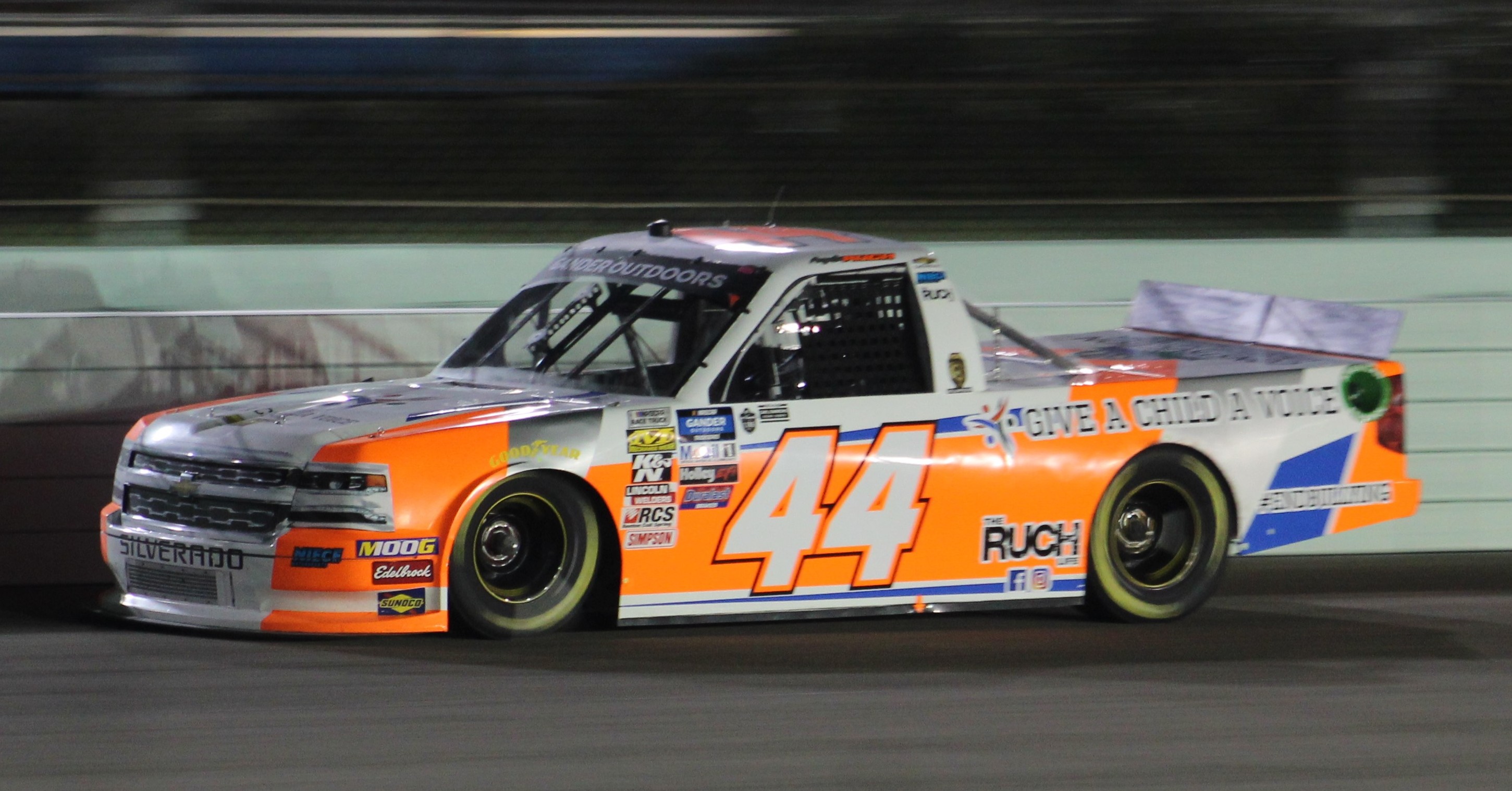
The Pontiac Solstice is a sporty car model. It’s the kind of vehicle people associate with open-air or fun driving. In the podcast, the name comes up as part of a discussion about timing and model names.
Tier 1 suppliers are big companies that provide major parts or full systems directly to car makers. They’re usually responsible for integrating the technology so it works in the finished vehicle.
A driver monitoring system is a set of sensors that watches what the driver is doing. It’s meant to catch things like distraction or sleepiness and help the car warn you.
The B-pillar is the metal post between the front and back doors. Car makers often place cameras or sensors there because it’s a solid, stable spot on the body.
A cross domain product means one feature is built by combining different parts of the car’s technology. Instead of treating mirrors and cameras as separate projects, they’re designed together as one system.
Term
ADA's domain
This is referring to the car’s driver-assistance technology—features that help you drive more safely. The speaker is saying the camera feature touches multiple parts of the car’s tech stack.
A vehicle platform is the shared design and engineering foundation a car company reuses for different car models. It helps them build several cars more efficiently.
Assembly cost is what it costs to physically put the parts together on the production line. More steps or more complex placement usually means higher cost.
These are meetings where the highest-level executives from the car company and the supplier talk about products. The idea is to get buy-in by explaining the overall strategy, not just the details.
It means the design doesn’t have to be perfect on day one. You improve it step by step, make sure it works with the rest of the car, and keep updating it as you learn more.
A software-defined vehicle is a car where software plays a bigger role than usual. Instead of only improving the car by building a new model, the company can improve features through software updates. That can make the car feel like it “gets better” after you buy it.
Time to market means how long it takes a company to get a new product ready and selling. If you take too long, someone else may launch first and capture customers. For software-heavy cars, timing can be especially important.
SDV means “software-defined vehicle.” It’s a car where the important features are controlled by software, so the car can improve or change over time with updates. That’s different from cars where most behavior is fixed by hardware.
Tesla is brought up as an example of a company that got far with software-driven car development earlier than many traditional automakers. The point is that Tesla moved faster and made software a bigger part of how the car improves. Other legacy brands are described as slower to copy that approach.
Decoupling hardware and software means the car is built so software can be changed without having to redesign the whole car. The goal is to make updates easier and safer. That way, features can improve over time without starting from scratch.
Zonal architecture is how the car’s electronics are organized into sections (zones). Instead of everything being controlled from one place, each zone handles its own sensors and systems. This can reduce wiring mess and help the car’s software respond faster and more predictably.
Microcontrollers are small computer chips used to control specific vehicle functions, like reading sensors or operating actuators. In SDV discussions, the point is that teams may focus on the “plumbing” (controllers and wiring) even though the broader system design—interfaces, timing, and software structure—determines whether updates and new features can be delivered smoothly.
Systems engineering is a way of designing that focuses on how all the parts and teams fit together. Instead of fixing one component in isolation, you make sure the whole setup meets the requirements and works reliably.
Standardization means using the same design/spec for a part across many different cars. That helps companies test it once and build it more efficiently, which can lower cost.
A door latch is what keeps the car door shut and makes sure it doesn’t pop open unexpectedly. It also has to open when you want it to, and it needs to be dependable and affordable to build at scale.
A reliability profile is an estimate of how dependable a part is over time. It helps engineers and manufacturers be confident the part won’t fail early or behave unpredictably.
A validation spec is basically the checklist of tests and requirements a part has to pass. It’s how engineers prove the part is safe and works as intended before it’s used widely.
KATARK (China Automotive Technology and Research Center) is described as a standards/spec-setting organization in China. The idea is that if the rules are clear and shared, different car companies can use common part specs and still comply with requirements.
Commonization means using the same or very similar part/spec across multiple cars. That way companies can reduce redesign work and reuse testing and manufacturing knowledge.
Tooling cost is the money spent to build the machines and setup needed to make a part. If you change the design so it’s unique, you may need new manufacturing tools, which costs more.
A microprocessor is a tiny computer chip inside a car part. It’s what lets that part make decisions and control its functions, and different suppliers can write the software for their own chips.
Electronic architecture is the overall blueprint for how a vehicle’s electronic systems are organized and communicate—who controls what, and how data flows between modules. The segment argues that changing this architecture forces automakers to coordinate with many suppliers because each component’s software and control logic is tied to that setup.
Magna is a big company that makes parts and software for car makers. Here, they’re saying Magna’s suppliers write software for car components, and automakers might try to do that software work themselves instead.
GM is General Motors, one of the big car companies. They’re mentioned as a partner in a plan to coordinate how car software gets built and updated.
Company
Vpro
Vpro is another company mentioned as a partner with GM and Magna. The hosts are talking about building a network so different companies can work together on car software and systems.
OTA means the car can get software updates over the internet, like updating your phone. The idea here is that if something isn’t perfect, the fix can be pushed to the car later instead of waiting for a recall or a shop visit.
A clean sheet approach means starting over with a brand-new design instead of modifying an older one. The tradeoff is you might make early mistakes, but you can improve things later—here, by pushing fixes through OTA updates.
A recall is when a car maker has to fix a problem in cars already sold. The concern mentioned here is that if something goes wrong for safety reasons, it could trigger a recall—so they’re discussing ways to avoid that.
A chief engineer is the top person who helps steer the overall engineering of a car. Here, they’re saying you need someone like that to coordinate the big-picture vehicle design and get everyone working toward the same architecture.
A skunk works team is a small group that’s allowed to work fast and creatively on a tough project. The point here is to keep momentum on big engineering work without creating a separate “other company” inside the same organization.
They’re describing a software “store” for cars, similar to how phone apps work. Instead of buying groceries, you’d buy software features for the car—while still keeping the car safe and secure.
Commonized software means using the same software building blocks in more than one car. That can make it easier and cheaper to develop and update features across different vehicles.
Cybersecurity here means keeping the car’s computer systems safe from hackers. Since people are inside the car, the stakes are higher than just protecting personal information.
The powertrain is the set of parts that actually make the car move. It includes the engine or electric motors and the parts that send that power to the wheels.
Robot taxis are self-driving cars that you can summon like a rideshare, but without a human driver behind the wheel. They’re an example of how car use is changing quickly.
Concept
cars designs and development much much faster
The idea here is making the process of designing and building cars faster. The speaker thinks the industry has to change how it works because the market is shifting.
Term
AI
AI is software that can learn from data and help with tasks like analyzing information or making predictions. Here, it’s being described as a tool that can speed up engineering work.
The planning stage is the early phase where car makers decide what parts and systems they can keep and what they need to redesign for the next model. It’s where they try to balance safety requirements with what customers actually want.
The development cycle is how long it takes to go from “planning a new car” to “ready to build it.” They’re talking about trying to make that timeline shorter.
They’re talking about Stellantis, a big car company that owns lots of brands. The hosts are saying the company reorganized, and that could change what cars it sells and how it plans them.
“American muscle” is a term for cars (often with big engines) that are built to feel powerful and go fast. The host is saying the company wants to bring that vibe back.
A mild hybrid is a car that has a small electric assist system. It helps the gas engine, but it usually isn’t meant to run on electricity alone for long.
A range-extended EV is mostly electric, but it has a backup system that helps keep the battery charged. That can make the car go farther without needing to plug in as often.
The Ram Ramcharger is a vehicle name from the Ram brand. The podcast talks about it in the context of changes related to electric vehicles and future model naming. The excerpt doesn’t go into how it drives—just that it’s part of the lineup discussion.
Badge engineering is when a car company takes one car design and sells it under different brand names. They may only change small things like the grille or badges to make it look different, but it’s really the same vehicle underneath.
The Chrysler New Yorker is a car model name used by Chrysler. The podcast talks about how people might assume it’s a brand-new product when they hear the name. It’s mentioned as part of a branding discussion.
A tariff is a tax the government charges on imported products. If a car is brought into the U.S. from another country, tariffs can make it more expensive unless the company absorbs the cost or raises prices.
Ram is a brand that makes pickup trucks. The episode talks about Ram getting a new smaller truck called the Rampage. It’s mentioned as part of the brand’s future lineup changes.
Tim Kiniskus is an executive tied to Stellantis’ performance program (SRT). In this clip, he’s quoted explaining how SRT should be built around parts and investments that can be reused across multiple models.
SRT is a car brand name used for the performance versions of certain Stellantis cars. It usually means the car has been tuned and built to be faster and more aggressive than the standard model.
A “sunk investment” is cost that’s already been spent and can’t be undone. The idea here is: if you already paid for certain engineering or parts, you should reuse them in more than one car so the performance program can actually make financial sense.
A “halo car” is a special, attention-grabbing performance car that helps the brand look great. The argument here is that if you make it too one-of-a-kind, it can be too expensive to ever pay back.
“Bespoke” here means “made specifically for that one car,” with lots of custom work. The speaker is saying that doing everything custom is usually too costly to recover.
They’re talking about using the same parts and manufacturing setup in multiple cars. That way, the cost gets spread out, and the performance program is more likely to make money.
Term
copper Head
The transcript mentions something called “copper Head,” but it’s not clear what exact car part or system they mean. If you can share a few more seconds around it, I can likely identify the correct component.
Car
Copperhead
The Copperhead is a Dodge model that’s closely related to the Viper. Here, they’re talking about how it looks “ready for the track,” especially with things like a large rear spoiler.
The Viper ACR is a special, more track-oriented version of the Dodge Viper. It typically has extra aerodynamic parts—like a big rear spoiler—to help it stay stable at speed.
The Charger is a Dodge model with a more sedan/coupe shape. The speakers are using it as a comparison to say the Copperhead looks more like a lowered Charger than a typical sports car.
The Jeep Cherokee is a compact SUV. It’s the kind of vehicle people buy for everyday driving with extra space and ground clearance. The podcast says the Cherokee is “out,” implying it’s not the focus at the moment.
A “hybrid turbo” powertrain combines a hybrid system (electric motor assistance) with a turbocharged engine. The goal is usually to improve efficiency and responsiveness by using electric torque at low speeds and turbo boost when you need more power.
The Dodge Hornet is a small Dodge crossover. In this segment, the hosts are comparing it to a future Dodge model and debating what that new car should have been like.
A “platform” is the shared base that multiple cars are built on. If a company uses only a few platforms, it can design and build cars more efficiently while still making different models for different needs.
“Communize technology” here means standardizing and sharing the same engineering solutions across multiple vehicle platforms and models. The goal is to reduce cost and complexity by reusing components and software rather than reinventing everything for each car.
“Cockpit systems” are the car’s in-cabin electronics that run the driver interface—like screens and controls. If they reduce the number of separate systems, the car can feel more unified and be cheaper to develop.
This means the company plans to reuse the same computer software in many different cars. They’ll keep most of it the same, then adjust a smaller part for different brands or regions.
Capacity utilization means how busy a factory is—how much it’s actually producing compared to its maximum. If it’s not busy enough, each car costs more to make; if it’s busy, the economics get better.
Leapmotor is a Chinese car brand. In this discussion, it’s mentioned because some companies want to build Leapmotor cars in European factories to keep those factories running at higher capacity.
Company
Stellant
“Stellant” here is talking about Stellantis, a big car company. The point is how cars get sold through dealers in Europe, including cars tied to partner brands.
A joint venture is when two companies team up to do a project together. In this case, it’s being used to explain how production partnerships can happen in factories.
The Ford Maverick is a small pickup truck. It’s meant for people who want a truck for hauling or cargo but don’t want a big, expensive truck. The episode brings it up when comparing compact truck options.
The Dodge Dakota is a pickup truck name that’s been used for a midsize truck. The podcast says a new Dakota is expected to compete with other midsize trucks. It’s mentioned as part of a strategy for that truck category.
The Chevrolet Silverado is a large pickup truck made by Chevrolet. It’s built for everyday driving but also for work and hauling. The podcast mentions it while talking about the light-duty truck segment.
The Honda Ridgeline is a midsize pickup truck. It’s designed to be easier to live with day to day, while still having a truck bed for hauling. The podcast mentions it when talking about which trucks a manufacturer offers.
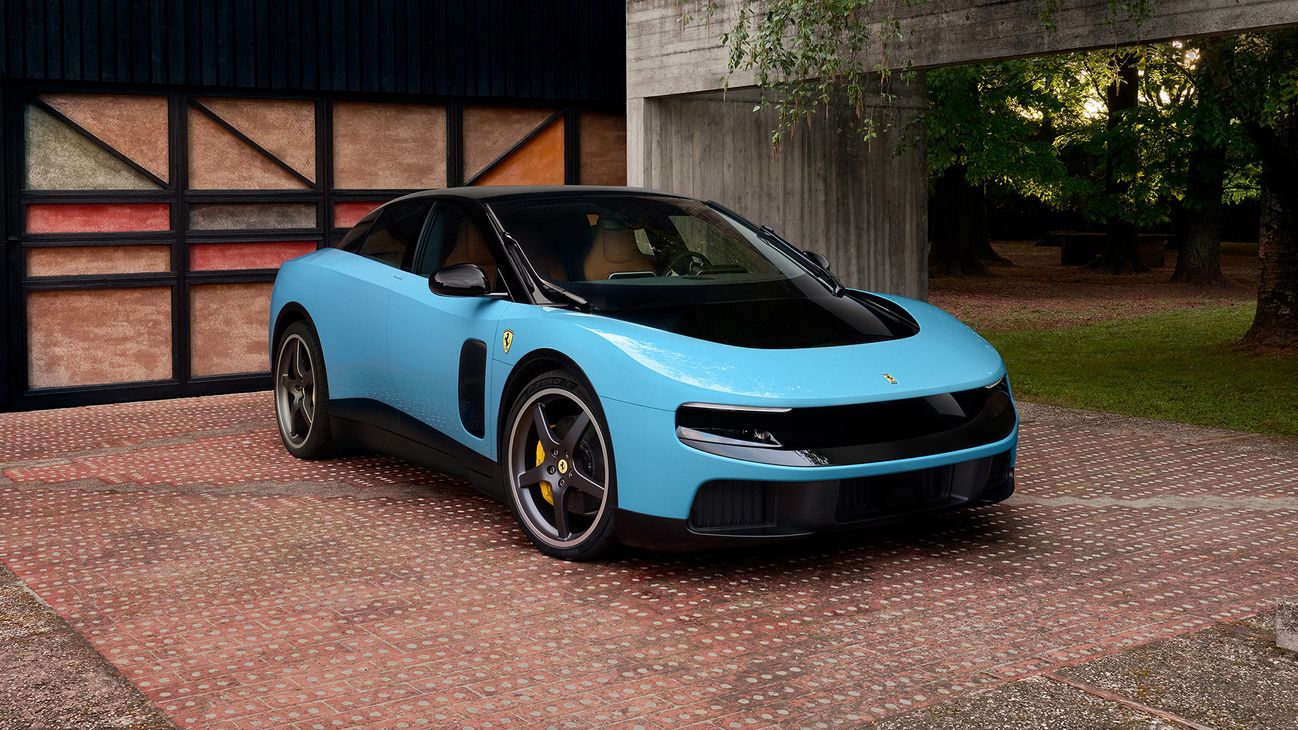
The Ferrari Luce is a car model mentioned in the podcast. The conversation is mainly about how it looks based on what people have seen. No specific driving or ownership details are provided in the excerpt.
“Flame surfacing” is a styling technique where the car’s body panels are shaped with dramatic, flowing lines. The goal is to make the car look more dynamic, even when it’s standing still.
“Bangle Butt” is a nickname for a BMW styling look from Chris Bangle’s design era. People used it to describe a noticeable bulge/shape around the back of the car.
Chris Bangle was a BMW design leader. The hosts mention him because BMW’s styling changes were controversial, but they also helped attract a different kind of buyer and sell more cars.
The Porsche Cayenne is Porsche’s SUV. The hosts are talking about how surprising it was for Porsche to build an SUV—and how it ended up selling extremely well.
The Porsche Macan is a smaller SUV in the Porsche lineup. The hosts mention it to explain how Porsche sells multiple SUV models that overlap in the market.
The idea is that if a brand makes fewer cars, people want them more and prices stay higher. That also helps the cars keep their value later, which is why the hosts mention “residuals.”
“Residuals” are the expected value a car retains at a future point (often tied to lease end or resale expectations). The segment argues Ferrari manages supply and demand so that residual values stay high—meaning buyers can potentially get a strong return later.
Here, “electric” means cars powered by electricity (battery-electric vehicles). The point is that Ferrari wants to expand, but in a way that doesn’t dilute the brand’s lineup.
They’re talking about Jony Ive, a famous designer from Apple. The idea is that Ferrari brought in a top-level design talent to help make the new car’s interior and overall feel more appealing.
Apple is mentioned because the designer involved is famous for Apple products. The hosts are using that connection to explain why the new Ferrari might feel more modern and appealing.
A “business case” is basically the reason a company thinks a new product will make sense financially. They look at who it’s for, how much it will sell, and whether it will be profitable.
A “value proposition” is the main reason people think a product is worth it. In this context, they’re saying Ferrari has to be careful: if it sells too broadly in the wrong way, it could make the brand feel less special.
LIVE
Speaker 1: Out online after hours is brought to you by bridge Stone Tires Solutions for your journey.
Speaker 2: Mister Gary Vassilash, Hey do, John, I'm doing great. I mean,
today is a fantastic.
Speaker 3: Day, you know.
Speaker 4: And this is this, I would say, is the first show of the summer since we had in the World Day this week.
Speaker 5: Yeah, you know, the official start of summer.
Speaker 2: Remember the equinox or the solstice is the solstice that's another month away and then we can know, okay, it could be summer now anyway, So we got to let everybody know. Our special guest today is Sharath Ready. He's
a senior vice president, head of corporate R and D for Magna, the largest automotive supplier in North America, one of the largest in the world.
Speaker 5: In Sharrath, welcome to the show.
Speaker 6: Thank you John, and thank you Geddy for letting me join the show today.
Speaker 2: We also have a they debut of Vince Bond from Automotive News joining us today. And Vince, awesome to have
you on the show US today. Cool, So, sharaff millions
of things to talk about. You're the head of R
and D at at Magna. I don't know, Jerry, where
should we kick this off because I know you've got a list of topics.
Speaker 4: And I do too, But all right, so I want you to sort of set the stage here about what it is that you guys in R and D in development at Magna are focused on right now.
Speaker 6: So mostly looking at advanced product and process technologies. That's
one side of the story. The second side is looking
at advanced manufacturing innovation and both are very very important.
And as you know, Magna is a big company, like you said, number one in the US and number three globally, and we have different domains of each of the groups are different domains, so everything from you know, frame body frames to xter years to seats for example. So my
group is looking over all the functions in the company right in engineering to understand can we bring some different thinking approach to the company in terms of new innovations and new products. And the more I work in this group,
the more I'm realizing not only the industry and our customers, but even Magna we think in silos, so constantly been preaching about system thinking, thinking about solving problems in a holistic way, and when we design products, by the way, we always design without thinking about how to build them in operations. So that's where my second part of the
job comes in, with advanced manufacturing innovation, where when you're designing the product itself, think about automation, think about flexible and modular manufacturing. So that's where I'm getting involved in
all the new things like humanoid robots and you know a lot of the automation things that are happening right now.
Speaker 2: You actually changed the structure of your R and D operations to get more of this cross functional collaboration going.
Speaker 6: You know, to me, organizations are there what they are.
You can always make build bridges without changing anything at all.
So it was me building a network within the each of the group presidents and all the engineering vice presidents, thing, let's work together, and we came up with in the last twelve months, we came up with at least four new products which are crossing domains. And when I show
them to customers, they say, wow, we never thought about that, And to me, that's what Magna and other Tier one should be doing more of.
Speaker 2: What do you mean crossing domains? Okay, what do you
mean crossing domain?
Speaker 6: So I'll bring a very good example a couple of years back that I was actually involved in, which is our driver monitoring system. So typically when you pick of
driver monitoring system, you're putting a camera on a B pillar or a pillar I'm sorry, or in the center stack, and you're monitoring the performance the driver. Howell you know,
is it paying attention to the road?
Speaker 5: Right?
Speaker 6: That system is typically sourced by the OEM to an electronics company, could be Magna, could be you know, Aptive or Valet or somebody else, right, but Magna we also make mirrors, the rear view mirror, and we thought that's a great location to put the camera in. But then
who wants to see a camera pointedity your face? How
about we hide the camera behind the glass. So that's
where we've got the mirror's domain and the electronics domain and the ada's domain. I should say to me, that's
a cross domain product.
Speaker 4: So basically what you're saying is that, Okay, So Magne has several businesses, yeah, that are separate, and they go about their business and then within them there are designers, and they are engineers, and there are manufacturing people, and so they've got their silos there. What you're saying is
you're working to sort of bring all of these together early.
Speaker 3: On to do these developments.
Speaker 4: Yes, and so how do you make the mirror guy I want to work with the camera guy?
Speaker 6: Well, under you show the value proposition, like why that would be important and when if you look at how many electronics companies and how many aidaas companies are right now involved in the business, it's very hard to compete, but innovation can be the differentiating factor. So when we
put this in the mirror, there are only a couple of mirror companies and they don't do aid as products.
So by default Magnet became a supplier of choice to the OEM, and the customer also liked it because they wanted to give it to the end consumer of a system where the camera is not visible to the right.
Speaker 2: You have orders for it. It's in production right now,
in production already. Okay, can you say who Volkswagen.
Speaker 6: Yeah, multiple platforms and it's with the two three other customers that's not in production yet that will launching very very soon.
Speaker 2: So do you have any problems with the OEMs, especially dealing with the buyers who buy mirrors and they go, wait a minute, your mirror is more expensive, but it still has.
Speaker 6: To be cost competitive. So when we show them when
you showed them the advantage of that solution. For example,
we told them, first of all, if you assemble this in an a pillar or in a center stack, each card is different, right. So, and you want to apply
driver monitoring system across multiple vehicle platforms, well, there's tooling cost, there's assembly cost. Imagine the rear view mirror. It's so
easy to assemble and that's it. Walla, you got a
new feature. So that resonated with the customer and we
had to show them that this is a mirror cost, this is what we're adding, and we're not trying to take advantage of this situation. But we wanted to be
the exclusive supplier to them, and it worked out very well for both sides.
Speaker 5: I would say, yeah, no, it makes all the sense in the world to me.
Speaker 2: But as you know, when you get down to the buyer level, and you have a buyer whose job is to buy mirrors, and their job is to buy them as cheap as possible, even an innovation like yours can, why don't you problems at the buyer level.
Speaker 5: So obviously you overcame that.
Speaker 6: We all became that and it was not and you're correct.
The challenge when it tried to do with a silo OEM, whether it's in purchaser engineering, they said, I don't want to talk to you, so why are you talking to me about this feature? So we had to go a
few levels up.
Speaker 3: So we do.
Speaker 6: I'm sure other companies do this also. We do technology
shows and we do what we call top management meetings where we meet the customer top management and we showcase a few products and the moment that saw it at the CEO level, I want that, right, And that's.
Speaker 2: What you want because they understand the bigger picture rightactly, so exactly, so I want to.
Speaker 3: Quote you to you. Have you explain this to me.
This is an article that you wrote.
Speaker 4: From a system's perspective, the smartest design isn't always the most powerful or efficient. It's the one that leaves room
for iteration, integration, and evolution.
Speaker 3: Yeah, tell me what that means.
Speaker 6: Well, I mean, like you know, sometimes when you come up with the product or develop a new product, we're not it may not be the final product necessarily, and we want to leave room for improvement and more. And
right now, with software defined vehicles, it's coming through software and that's what I meant through iteration, okay, And to me, time to market is very very important, and if you miss that window, you know, a competitor or somebody else could come into play. And to me, it's better to
launch a product which meets all the safety expectations, of course, meet relations but also leaves room for further improvements and for other optimizations.
Speaker 2: Right, yeah, Somas, how do you see the SDV software defined vehicle thing going? All the major legacy automakers have
been struggling with this for years now. I think they're
getting close. Some claim that they've got you know, full
software defined vehicles out there, But how has it been with Magna and working with these different OEMs trying to get an STV through the market.
Speaker 6: It's been I think one of the biggest challenges we're facing right now. It's it's unfortunate because you know, we've
been working on automobiles for what one hundred years, And when I look at the companies which succeed with sdvs and the companies which did not or or they're having problems with I look at the workforce, it's the same talent pool, by the way, so there's no difference, by the way, except there seems to be the operating model difference, and also the organizational setup which allows you to you know, take chances, take risks, and also move faster. Right, And
when I I mean, if you look at Tesla, it's been what more than ten years, They're the ones, first ones out there. We all saw it in front of us.
I know they had some challenges along the way, but we all saw what they did. And yet not a
single legacy oms copied or replicated that approach. And then
far away in another country, another region, I see multiple car companies replicating the same approach successfully. So there's no
technology inhibitor from doing this, and it's it's it's a sad story of how some car companies have canceled architectures, you know, waste a lot of money, I would say, and I think the most the biggest reason, I would say is organizational setup and thinking in silos, right, Because when you the fundamental aspect of a software vehicle is what decoupling hardware and software, and software in this example is a feature that a consumer can use. When you
decouple hardware and software, you better think from a system perspective what that means, right, Because let's say you have a signal from a sensor or a camera or whatever.
It is going through certain interface. Now it's going through
some zonal architecture coming to you. Well, how fast does
it come? How long can the cable length be? For example?
You to think through all those things. If you don't,
then you're creating complexity and causing issues to yourself.
Speaker 3: Isn't the thing though?
Speaker 7: That?
Speaker 4: I mean so Tesla and these other companies, yeah, clean Sheet.
Now there are guys who are sitting in offices not far from more We're sitting right now, and they're like, I'm all about micro controllers and wires because that's my job.
Therefore I want to keep that right. I mean, it's
in their self interest. And so if you have a
whole organization of people like that, what's the likelihood that they're going to all say no, STV makes so much more sense.
Speaker 3: I'm going home and not coming back.
Speaker 5: Yeah.
Speaker 6: And I think if there's a champion in each of these companies who can drive this topic, there's nothing stopping them.
But it's it's in the culture of the company itself.
It's an operating model and how we make decisions on every topic, right, because it's a fundamental complexity of the architecture itself. It is a bit complicated on how you
set up the structure. And if you don't think through cybersecurity,
functional safety, and by the way, you better make that architecture scalable and modular and flexible. If you don't what
works in a big a SV for example, a luxury a CV will not work in a small car segment for example. So it has to be adaptable to each circumstance.
Speaker 5: Right, I mean, I'll give an example.
Speaker 6: We were looking at the front facia of the vehicle and Magna makes friend facious well in there, we also have headlamps and lid grills that are sourced to somebody else, a lighting company or somebody else. Then you have all
these aid AS sensors from could be one company, could be multiple companies.
Speaker 5: Right in a.
Speaker 6: Traditional legacy OEM, these decisions being made by multiple people.
When you go to a startup type atmosphere like Tesla or one of those Chinese customers, four of us. You
got aid as, right, and you get the facia and you get lighting. And let's say I'm a program manager.
We're all sitting together, Let's think about this. How do
we design this in a better way. So extra brackets
are being used because you don't know what that he already has a bracket designed for it. So it could
be a small part in some cases, but when you come to software and electronics, it can be a higher complexity.
M And that's what I think. There's nothing stopping us.
It's you know, we talk about task forces in war rooms.
I think that's the setting we need in automotive. In
Europe and North America, we have a problem right now.
I mean remember the old saying from Apollo movie. You know, Houston,
we have a problem, right You know, we had a recent one Magna we call it one Magna conference, and I was on the stage telling the top of Magna Detroit and Munich we have a problem.
Speaker 2: Right I think I'd throw Tokyo in there as well in Japan. But it's interesting because what I'm interpreting you
saying is it all comes down to cross functional collaboration, approaching it on a systems engineering basis.
Speaker 5: Yeah.
Speaker 6: Absolutely, and and and if you look at some of the products we do, by the way, it's about standardization of the products. Also, Okay, I'll give you another example.
Door latches in Magne, we are the number one leader in door latches in China. We are able to apply
the same door latch across ten different car companies identical.
Here's a spec, here's a validation spec, here's a reliability profile, it's in production. Apply the same one and you get
a better cost and price to deal with.
Speaker 5: Well, how does that work?
Speaker 2: Because my understanding is the organization KATARK, the China Automotive Technology and Research Center, is the.
Speaker 5: One that sets the specs.
Speaker 2: Is how does that work that China is able to get this commonization across multiple companies.
Speaker 6: They opened up a typical car and you see twenty five thousand parts and they said which ones are standard and which can have a common specification. And there's an
ecosystem of partners that including Magnet are able to come to that and say, you know what, that could be a standard spec. So KATARK is no different from a SAE.
By the way, here, there's nothing stopping us from doing it.
And a door latch is a very important one. You
better open the door when it needs it's a safety item.
The safety item. It has to be reliable. But you,
as a consumer who wants to buy a car, when you see the car in a dealership. Do you care
whether the latch is designed with some extra feature that you don't even know about. You want it to be irreliable,
you want it to be safe for your family, and you want it to be cost effective. But yet when
I bring the same door latch to North American, Europe or Japan, oh no, I understand the standard design, but I want my own. Now we're meeting the same regulations
and the same requirements for everybody, by the way, But yet now I'm redesigning something which means a tooling cost.
It's a unique variant. Now, this is a manufacturing topic
to worry about, apply chain to worry about. Unnecessarily complicated
the matter.
Speaker 2: And you know, I'll give you a better example. The
door letters, door lectrics. Like you say, safety items, they're
fairly complex in a way. Each of the legacy auto
makers has its own specifications for the black thread that's used in the seat covers. You can't tell the difference
from one thread to the other, but they all have their own specifications.
Speaker 5: That's how crazy it's gotten to be.
Speaker 6: Yeah, and I don't know if the industry, You know, do we need agency like CATA to tell us what to do or can we. I mean, we have all
they agentcy organizations like SAE, you know, and we are working committees. There's nothing stopping us from this Kleppa right there.
I mean, the VDA, there's all these organizations.
Speaker 2: Look, all it's going to take is the CEOs at these companies to call each other and say, let's make this happen, right, That's what it's going to take.
Speaker 5: Yeah.
Speaker 4: So getting back to the software defined vehicle, which I mean is getting a lot of attention. It's somebody's favorite topic. Yeah,
Now in twenty thirty, how many vehicles you estimate will be software defined?
Speaker 6: Not a high number? Not?
Speaker 4: I mean, I mean, if it's such a good thing, I mean, is it? Is it costly? Is it complex?
Speaker 3: Mean?
Speaker 5: What?
Speaker 3: What?
Speaker 6: What are the inhibitors the like I said, you know, the integration you know, aspect is a bit complex to deal with, but there's nothing inhibiting us from doing it.
And the second thing is the organizational friction to deal with that topic. There is I don't see anything magical
there at all. You know, if you need to benchmarking,
you see nothing different. By the way, on what can
be achieved. I'm happy to say that there's an attempt
going on at multiple OEMs to go make this happen.
But what I see also is those decisions delaying the launch of those sorts also. So what was let's say
twenty twenty seven, now it's twenty eight or twenty nine, and that is where we need to speed up.
Speaker 2: I think it isn't one of the challenges that as as Gary was mentioning before. Every single component has a
microprocessor in it sourced from a different supplier. Each one
of those different suppliers wrote the software for it. So
not only does the OEM have to change the architecture of its car the electronic architecture.
Speaker 5: It's going to bring every single supplier along with it.
And is this.
Speaker 2: Represent lost business for Magna and other suppliers in the sense that you guys wrote the software for these different components and now the automaker wants to take that in house.
Speaker 6: Well, in some cases the automaker could take it in the house, but they may or may not have the competency and the capabilities to do it.
Speaker 5: I don't At.
Speaker 6: Magna, We're not threatened by that at all. And that's
the exact reason why we open of the st wars marketplace.
We feel confident that this is where industry needs to go.
So then that's when GM and Vpro and Magna came together.
Let's open up a marketplace, let's create an ecosystem of partners that we can do this. And I think writing
that software rell in most cases, it's not that complicated, I would say, but there's some institutional knowledge at the supplier.
In some cases there's no specification for it. But we've
seen the Chinese and the Testa do it and a clean sheet. Maybe there's some mistakes made, but through OTA
updates and everything else, they're will to fix it. Also,
I think there's a fear of also potential recall, you know, something bad happening from a safety perspective, everything else, and those could those challenges could be overcome by taking a few champions. And we have the concept of a chief
engineer at the OEMs, apply the same concept for the architecture and go make it happen. And you know, some
of the companies some called it a skunk works team in California or something. There's no need to separate the
culture of the company to two parts. There's a Detroit
team and a California team. Make it part of your
culture in the company itself, because you need to spread this across all the platforms and all the divisions of the company.
Speaker 4: You know.
Speaker 2: I love the fact that you brought a sd vers, which is you said it's like a marketplace, but instead of going buying milk and eggs and bread, you're buying software for different parts of the car.
Speaker 5: Could this be maybe one.
Speaker 2: Of the steps to getting commonized software across the same software across multiple companies.
Speaker 6: Yeah, I think so. I mean, I think there's nothing
stopping us. I mean, if you look at even we
can borrow this from the telecommunication side. You know, there's
iPhone with Apple iOS, so some things will be could be done by the OEM like no Apple iOS it comes from Apple itself, but apps could come from various car career there is tier ones and suppliers and whatnot.
So there's nothing stopping us. Now, a phone doesn't get
you in trouble from a safety and a liabilty perspective necessarily.
Here it's a your family's in the car, so there's some safety implications to deal with. There's cybersecty to deal
with also, so but they're all expertise. By the way,
We've done cars for one hundred years. There's nothing stopping us.
There's enough institution knowledge, there's enough specifications to that we have documented what we need to do. I would say
we as a as an industry are the inhibitors from our own sake.
Speaker 4: I think so, you know, you mentioned competence, and it seems that one of the things that the car company seem to be indicating is from their hiring and letting people go that they're not exactly sure who they need for their software related activities.
Speaker 3: How is that overcome?
Speaker 6: Well, I mean, I mean some I've seen some companies go outside of automotive and bring some experts from other other industries. The good news was they brought in expertise
of how it's done from another industry. The bad news
was they didn't know how a car is put together. Okay,
and you've seen examples where it went really wrong. Right
to me, I think the talent. You know, you know
each of the companies, and these are great companies, right, a lot of history. They know their talent matrices, they
know the skill set matrix. They have everything. By the way,
we just put them in imagine this room. We're in
four different rooms. Four good people. But if we don't
interact with each other, we could end up making decisions in vacuum, which may not be the most efficient and effective decisions.
Speaker 3: So you're talking about silos.
Speaker 6: Heyes, engineering absolutely, and that's the word we use in Magna constantly because forget at the industry level and forget a car level, even at a product level. In Magna,
when we design a products, there's cases where our operations they'll look at that later like no, no, no, no, bring them forward, bring the supply chain forward. And I
want to share an example, by the way, I mean, one of the topics we're going to talk about today was about speed and Acceloration, the same company, Magna. We
know China region, we're able to launch products in six months to twelve months. The same product when you bring
it to North America Europe it's thirty six to forty eight months.
Speaker 4: And that's just from the way you organize in these different.
Speaker 6: And the way we're working with a car company and the way we are able to make decisions quickly, and it's you know there, they're definitely stretching the limits of how they do it. Imagine getting a change request on
we chat or WhatsApp. Okay, I mean that's unheard of
and in Detroit or Munich, like you're accepting a change request on a Instagram type type message. You know, there's
a liability there, there's a commercial issue there, there's a responsibility topic there, quality topic potentially. So I'm not saying
we need to go to that extreme, but you can still make a faster decision. Also, and one of the
I think the other inhibitor on the STV topic, back to that topic also is the layers of hierarchy we have.
So when you want to want to make a decision and you want to move quick, we're not able to move quick enough. So we need to deal with that
grapple with that topic and how to how do we streamline organizations within a domain, and also how do we think across domains and make decisions quit and platten.
Speaker 5: The whole thing. Yeah, look, what you're saying is super
critical right now.
Speaker 2: I think that's the heart of what the non Chinese auto industry has got to learn. One of the other
things I've heard is that Chinese OEMs will give suppliers like Magnat many fewer specifications. So you know, we had
Joe Faduel here, the CEO of Board Warner, and he was saying, a Chinese OEM might give them six hundred specifications, while the legacy auto makers outside of China might give them twenty thousand specs because they want to control everything.
They want everything precise. Is this what you're encountering too,
is that the Chinese are saying, look, here's sort of the size, weight and performance.
Speaker 5: We want you go figure it out.
Speaker 6: Absolutely, And I would say even that's one of the Japanese Williams are like that also, really yeah, I think I think the fear of missing something, it has become an institutional knowledge and as people leave the company and everything else, we want everything documented in a specification. So
some products like powertrain or aid as you're talking thirty to fifty thousand requirements. Yet we made a very very
basic topic, by the way, and to me, why not we reuse some other designs. So the other reason we're
able to the companies can accel it in China is about standardization. Reuse existing hardware and software. Block use it
as is. It's proven, it's in the field, it's running,
so by inference, it's good and why not reuse it?
Speaker 4: So this should be reused within an individual company or reuse among companies both.
Speaker 3: Really yeah, I mean.
Speaker 4: If we don't want to share latches, I can't imagine we're going to share hardware software.
Speaker 6: Well, I mean like the marketplace we talked about. And
I think, you know, I think the industry needs to, you know, transform itself. I mean, whether we like it
or not. It's a very dynamic situation right now. You know,
the number of cars we make is coming down. You know,
there'll be new things coming like robot taxis. So we
all need to adjust to this new situation. So just
because I did certain things in a different operating model for the last hundred years, it may not work for the next one hundred years. It's going to be very
very different. I think we're going to come to a
age where we need to come up with cars designs and development much much faster.
Speaker 5: And the other enabler, by the way, is AI.
Speaker 6: And I think that's something that you know, we created in this country and in Silicon Valley, and I don't need to work nine am to nine pm, six days a week. I can do it in minutes with clicking
a button and outcomes, you know, research or analysis or.
Speaker 5: That's what point. I love that point. Yeah.
Speaker 2: I mean, look what you're talking about is, uh, what I should say is in China now, based on the reports that are coming out of there, eighteen months for a program is the baseline. They're moving to twelve months
programs and asking suppliers to iterate.
Speaker 5: On a monthly basis. Correct.
Speaker 2: So you know everybody here is talking to getting to eighteen months. The Chinese are going that's that's that's the
slow program is eighteen months.
Speaker 6: And I think what they're not telling you, John, is there is planning like we do planning also here. So
there is some planning there is about planning about you know, is there a product already available that I can reuse?
Do we need to change this product? Is also focus
on what do we need to change in a new platform. Okay,
So there, if you look at the inside the car, you know, let's say twenty five thousand parts, how many cars, how many parts are required for safety perspective? Put them aside,
I can reuse them as is, let's say, and how many ones are important for the consumer sitting in the car now? As we deal with this new generation coming
in and they'll start buying cars. What they like is
different from what we liked, right, And that's why I see in China where there we invented city in Apple what ten years I fifteen years back? Right now, I
get into any Chinese car and people are talking to the car. But we used to do that in a phone,
but we never applied that in a car. So the
technology is right there in front of us. And if
you make the car more interesting from a user experience, so change the things are applied to the consumer. And
that could be different for each you know, generation of you know, of the people buying the car. For example,
the younger generation might need something more you know, exciting.
Yeahs is a older generation. They may want you know,
people or less doors or something you know, like whatever it is. But we can adapt and do it like that.
And that's where that planning stage is very important. And
we also do the same planning thing, by the way, But then we end up in this long hour of ice, an hour of qus And I can tell you I cannot tell you the car companies, but I can tell you that multiple car companies are reaching out to Magna.
I'm sure they're doing it to other major tier ones also saying, please tell us how do we accelerate our development cycle. We need to go to the twelve months,
we need to go to the eighteen months. What do
we need to change? But to me, that's a very
you know, I'm optimistic about the future that at least people are acknowledging a problem and now they're asking for you know, support and how we can make it better.
And I think v AS industry can transform, you know soon.
Speaker 5: I would say, that's good. That's the most important first step.
Speaker 2: Yeah, recognizing we've got a problem and start asking for help. Look,
we're going to have to wrap this segment up, Shiras ready, it has been fascinating have you on the show. Thank
you for all your information, really good insights.
Speaker 6: And thank you John, and thank you Guy, thank you for having on the show. I really enjoyed being here.
Speaker 5: Terrific. We're going to give a shout out to our sponsor.
Speaker 2: We're going to be right back ahead and talk about some of the biggest news going on in the industry this week.
Speaker 8: Knowing that a little rain won't slow down your day, that's what really matters. Brichtone to runs it by attracted
highs Confident Control in wet conditions.
Speaker 2: All right, we're back and one of the biggest things that broke in the last week, of course with Stilantis reorganization and events. That's your beat, Automotive News. You were there,
you took in the whole thing. What's your first impressions
right off the bad of everything that they talked about.
Speaker 9: Well, firstly I can say is what a difference two years makes. So back in twenty twenty four in the US,
dealers were just complaining to then CEO cost the Virus that the vehicles were priced too high and that inventory was piling up on their lots, and they was just just constant, almost like a mutiny of one of the dealerships towards the CEO. And so now you know Carlos
is gone, there's new CEO and Sonio Felosa. Yes, some
really big plans in place. The Himmy's back, old school
American muscle. It's here to stay, he says. Bugging hybrids
are gone. They're gonna move over to mild hybrids. We're
gonna see some range extended evs. So with the Grand
Wagoneer SUV and the Ram Ram Charger, well, sorry, it's gonna be called the RAM rev Now. So yeah, so
they've really really investious goals. We're going to see a
lot of SRT models for the V eight's, We're gonna see some new segments. Are they gonna jump into the
miss size space and the pickups compacts? So it's a
lot's happening. A lot's happening.
Speaker 5: Jerry, what'd you make of it?
Speaker 4: Well, you know, this is an industry that's predicated on product, and when they made this announcement that they're going to be rolling out you know, you know the number better than I do. Sixty products and there's like eleven new
products in the US.
Speaker 9: Eleven name places in America. Yeah, all new vehic.
Speaker 3: Miracle between now and twenty thirty.
Speaker 4: And I mean, okay, that's the exciting stuff, right, And then they announced the new platform, the new Stella one platform, and they're gonna consolidate. And I started thinking, hmm, look
back a few years ago they had the EV Day when they announced what, oh new Stella platforms. Well they
never even rolled out all those platforms, but we spent in an order amount of time talking about how genius they were with these platforms.
Speaker 7: Stella Frame, Stella Large, Stella Medium, Stella small you know, so I wonder, okay, it's an investment day to convince investors that we got a plan.
Speaker 3: God bless them.
Speaker 4: That's a great idea. That's what they should be doing.
But I just wonder, five years from now, are we all going to we.
Speaker 10: Got Stella Elfa now you know Stella Zeta.
Speaker 4: I mean, it's just like and I was surprised you're mentioned the Hemmy coming back, and you know, the new Dodge vehicles, and I was a little surprised that no brands of the fourteen were killed.
Speaker 5: Yeah.
Speaker 2: Well, look the way that they're going to do it is there's four main brands. Yes, you explain that, Vince.
Speaker 9: Yes, yes, So there will be four. I guess you
would say that the top brands, So most of the investments going to go towards ram Jeep in North America and then in Europe you know, Pougeo and Fiat. So
those will be the top four, and then other brands will be kind of classified as the I guess the regional brands, so Christ, the Dodge, you know, they have their focus in North America. They're going to stay in
those areas. And so that's how he broke it down.
Speaker 2: Yeah, and uh so those you got the four main brands, everybody else gets rebadged versions of what they got. So
that's how he's not killing any brands, Flosa. He's going
to feed these brands with rebadged products. So you know,
for example, Chrysler is going to get three brand new nameplates, the Arrow, the Arrow Cross, and the Airflow. The Arrow
and the Arrow Cross are the Fiat Grizzly with a slightly different grill on it, and so you can do it on the cheap that way. Now, that's badge engineering.
Badge engineering, in my book, is generally bad. But to
your point, Vince, if it's regional, i e. If people
just see a Dodge Arrow or Aero Cross and they never see a Fiat Grizzly, the well, no, it's been badge engineered in this country.
Speaker 5: They'll just think it's a brand new Chrysler product.
Speaker 3: They work up for General motors.
Speaker 2: Oh yeah, that worked out terrible for general motors. But
see the problem with GM is that you had you know, the famous was it the a cars, the Chevy, the Pontiac, the Olds and the Buick that looked exactly the same.
Speaker 5: But they're all in the same market. It's the same
car with different.
Speaker 4: But even when they're bringing Opals in and rebadging them as Saturns and rebadging them as as Buicks, I mean, it's just like they didn't work because because basically these vehicles, you know, so so the Fiat Grizzly is you know, which I find rather curiously that is built in Morocco, is like engineered for the European audience, right, I mean, and yeah, you can put new.
Speaker 3: Sheet metal on it.
Speaker 4: You can you can change the color of the black thread on the seats.
Speaker 3: I mean, you can do it. But I I don't know.
Speaker 4: I I just I thought they were going to be gutsier than they were.
Speaker 9: Yeah, I mean, I think it's just a pragmatic approach by the company. They're coming off some hard times, but
they're trying to get the margins up, so this is way to save money and at the same time, you know, try to grow a brand that hasn't had any product.
And like you said earlier, I mean, consumers in the US won't always say you're pan vehicle first, So I think it's a it makes sense. We'll see all works out.
I mean, do you think.
Speaker 3: They're going to do it.
Speaker 2: Like you said, these are European vehicles, but if they come into this country, they're going to have to eat the tariff or pass the cost to the consumer.
Speaker 5: Or are they going to build these things in North America?
Speaker 9: Yeah, I didn't hear any indication he's going to build them here. I guess I can follow up and try
and get some more details on that, but yeah, they didn't share anything on that part of it.
Speaker 2: Because for example, you know, Ram is getting the Rampage, a subcompact truck that currently is only made in Brazil, but they announced they're going to build that truck in North America, which I'm guessing is going to be Mexico.
Speaker 5: But yeah, I didn't hear anything about any of those other.
Speaker 2: Products, uh, like the Arrow or the Cross Arrow Aero Cross, if that's going to be made.
Speaker 9: And the thing is, you know, we could have a new you know, a new administration is coming in twenty twenty eight, so hey, maybe the tariffs will be dwindled a little bit. Who knows.
Speaker 4: So you know, you were mentioning the HEMY and SRT.
Was there a lot of I mean, was there a lot of focus on that? I mean, you know, I know,
Tim Kiniskus.
Speaker 3: Is running.
Speaker 4: Atlanta's North America now and he's you know, he's the.
Speaker 3: Father of the Brotherhood of Muscle. I think I just
coined a new yeah name for him.
Speaker 10: Yeah, you know, big on that that sort of stuff.
Speaker 4: I mean, was was that really an emphasis of like, man, we're driving forward and we're driving hard?
Speaker 9: Oh yeah, SRT, you know, they had their own little section in the presentation. Really yeah. So Tim mentioned they're
going to aim for about fifty thousand vehicles by twenty thirty in the SRT division, and he said that, you know, fifty thousand SRT models, which are a lot more expensive than the regular models, that equates to you know, one hundred thousand non SRT models. So there's a lot of
margin there that they can really get in. At the
same time, they can please those those enthusiasts out there who have some some old school muscle.
Speaker 3: So I read.
Speaker 4: So Tim participated in a podcast with Joel Fetter of The Drive and there's a quote from this underrea from Kniscus because this is about SRT, which was just great.
Speaker 5: I thought.
Speaker 4: Kaniskus said, SRT only works if SRT can take sunk an investment from around the globe and leverage those because if you try to make a high performance halo cars and you try to make them bespoke, it will never pay back. I mean it's like racing for the sake
of racing. Son, I mean it's ego hmm. You have
to take investments that are already sunk and then leverage those.
So there's stuff in that car that are production in ten other things that will leverage very heavily.
Speaker 5: And he was talking about the copper.
Speaker 4: Head, which I guess was an amazing sports performance vehicle.
Speaker 8: Yeah.
Speaker 9: Yeah, so I guess it's like the you know, the follow ups of the Viper, sticking with the whole snake theme, the same look. Really mean, he's ready for a track,
you know, giant spoiler. I don't know if you recall
it the Viper ACR from back in the day, they have spoiler, but yeah, that's on the Copperhead. Now. Yeah,
they really give us much on the performance or anything like that, but just from looks, you know, it is ready to go.
Speaker 5: Yeah.
Speaker 2: To me, the Copperhead looked like a slammed version of the two door Charger. It's it's not a sports car.
I would call it a sports sedan and a sports coop.
Maybe it's, but it's it's not a sports car like the Viper was. And you know, to your point of
what Tim was saying about, you got to leverage all this stuff. To my eye, that thing looks like a
slam charger, very very dropped nose to it, very high rear end, big spoiler on the back. But it's got
a sedan slash coop kind of silhouette, not a sportscar silhouette.
Speaker 4: So is the vibe now positive in and around Auburn Hills.
Speaker 9: I will say so, at least among the dealers, they're pretty excited about where the brain is going. But at
the same time they have concerns that, you know, we still have to sell vehicles now. So the Cherokee is out,
I'm hearing some things that maybe it's not moving like they thought it would, So I'm going to keep an eye on that.
Speaker 4: Is there any indication, I mean, like, so the Cherokee now is all hybrid, right, I mean it's it's a hybrid turbo fortybe flying out the door. That's what I thought.
Speaker 9: I mean, you know, it starts around thirty eight thousand, gets up to the mid forties at the highest, and I thought it was a nice package. Looks good. I
actually have a press car right now I'm driving. Performance
is really strong on the highway, great fuel economy. I
guess it just comes down to marketing and trying to get the name out there. It has, you know, been
gone for a couple of years. You know, it will
just continue between twenty three. Then they just brought it back,
you know, in the last couple of months.
Speaker 3: So they're keeping the name the Hornet for a vehicle.
Speaker 9: I didn't. So they mentioned that the follow up to
the Hornet is going to be the g l H, right, so.
Speaker 4: It's not gonna be a version like You're not gonna have like hornet GLH.
Speaker 5: No.
Speaker 9: No.
Speaker 2: In fact, Kniscus came out and said doing the Hornet was a mistake. I thought quite a statement for him
to say.
Speaker 10: Was running gods at the time, right, that's right.
Speaker 9: He's saying the GLH is what the Hornet should have been.
Speaker 2: And you know what they said, too, is the GLH is going to be thirty percent cheaper than anything in the Dodge lineup right now. So I had to look
it up, and a Hornet is thirty thousand dollars. So
thirty percent under that, you're talking just over twenty grand for a ghost like hell vehicle.
Speaker 9: I mean, for entry level performance. I'm expecting you know,
me a thirties. I mean, depending on what engine they
put in that thing.
Speaker 2: But they said it was going to be cheaper than anything in the lineup. Maybe he wasn't talking, Maybe he
wasn't counting the hornet.
Speaker 9: Yeah, so the hornet is gone now, so he's just ignoring it.
Speaker 2: Yeah, But seeing that resonated with me with this thing is they're going to three platforms. Essentially, they're going to
have the frame, they're going to have a commercial van, and then they're going to go to Stella one, and Stella one's going to take just about everything except for the smallest cars, which stay on Stella Small. And I
like this idea of going to three platforms. They're going
to communize technology across them all, stell A Brain, which is their zonal architecture, stell A cockpit, and they're going from like fifteen cockpit systems down to one. They're going
to reuse eighty five percent of the software across the board.
The other fifteen percent is going to be for regional and brand differences. And so the numbers that jumped at
me is, you know, they said they're going to spend sixty billion euros over the next decade to do this, Well, that's six billion a year. They've been spending six billion
a year just on new product development and an additional eleven billion euros a year or so on capital expenditure.
The new figure six billion a year is both product development and cap ax. So when I look at those numbers,
Alex to me like this new strategy is going to produce savings of about eleven billion a year. And that's
when I went, Okay, I like the sound of this.
Even though I agree with you, I think the badge engineering that's if he and the other thing that's if he is. The way they're going to get their capacity
utilization up in Europe is they're building cars for Leap Motor right now that they're selling in Stillant to stealerships in Europe, and they just formed the joint venture with don Fong. They're going to let don Fong build cars
along with Stillant has had a plant in France, and that's going to get these plants up to eighty percent capacity utilization. The danger of course, or that you know,
it's got to bug them to some degree. Is you're
building Chinese cars in your plants, which gets them up to the capacity utilization you need, but you got to do it because the customer doesn't want to buy your cars.
Speaker 4: Is is there any conversation about like leap mortars, which I mean sounds Western almost, I mean for people are not familiar with it, it's you know, Chinese brand.
Speaker 3: Is there any discussion you know.
Speaker 4: That dealers here are are saying that they're concerned or they're looking forward.
Speaker 9: To it or offers some uh some murmers and some uh some uh you know, I guess some concern a little bit. But uh there was a rumor that they're
going to try to build some lead motor cars in Canada and some dealers I was talking to were keeping an eye on that, and uh so, yeah, there is some real uh I guess, you know, animosity towards that the Chinese brands. So yeah, that could be a problem
down the line if if they keep on expanding.
Speaker 2: That m Yeah, but I bet you if dealers get an opportunity to sell a twenty thousand dollars vehicle.
Speaker 5: It'll be dealer even if it's a Chinese.
Speaker 2: Made They're gonna love getting that in their showroom.
Speaker 5: That's my field. Dealers just want to sell stuff and
make money on it.
Speaker 9: Yeah. Yeah, well, I mean if the Chrislers, you know,
they said those are going to be under thirty. If
they can get down to that price, you know, they can, they can have those volume models.
Speaker 2: Hence, what do you make of They also announced they want Ram to be the number two truck brand in America, which tells me they want to knock off General Motors or surpassed General Motors.
Speaker 9: Oh yeah, that's going to be a big.
Speaker 2: Ah man.
Speaker 9: Yeah, I will say, I'm not sure how they can do that is not.
Speaker 4: In four years, but I mean it couldn't it be, because okay, if they come out with you know, the compact truck, which basically competes with Maverick your period right page, and then you know, then they'll have the new mid size, the Dakota, right, and that will compete with lots of different things, but they'll have numbers there.
Speaker 3: Because I mean, that was a fairly popular truck.
Speaker 4: And then they've got to fifteen hundred and the heavy duty you know, twenty five hundred vehicles and so maybe they could do that.
Speaker 9: But yeah, I guess if they break down a number by all of those yeah, pig up segments, it's not impossible, I would say. But if you're just talking about the
light duty you know, fifteen hundred versus Silverado, that's the whole another another argument right there. And I don't know
if they can do it in four years.
Speaker 3: I mean when was it.
Speaker 4: I mean, it wasn't all that long ago that that Ram outsold so Overado.
Speaker 9: Yeah, that was around what twenty nineteen or something.
Speaker 3: Like that, I think.
Speaker 2: But you know the other thing, they're adding an suv for the first time to the RAM brand.
Speaker 5: It's going to be based on the Grand Wagon Air.
Speaker 2: Yes, And they're expanding the their commercial van fleet. You know,
they're bringing in a smaller van that nobody in the market has right now. And so it's you know, adding
a lot of product and they think that's going to get them.
Speaker 5: Oh and by the way, the SUV.
Speaker 2: That RAM gets, they're they're targeting the VMC ukon directly with that one. And remember too, GM just pulled out
of the heavy duty segment pickup segment, they shut that down or in the process of shutting it down. So
that kind of opens the door for RAM. But I
think that's a tall order to knock off GM as the number two truck supplier. And when I say trucks,
I'm including SUVs as part of the you know, okay, and commercial I'm sure they are too.
Speaker 9: And speaking of RAM, so, actually, uh, if you saw the sales projections, so by twenty thirty, they're expecting RAM so I'll sell Jeep in North America and that hasn't happened.
Jeep has always been above them. So they're really really
confident in some of these new products that are coming out.
Speaker 5: Yeah, no kidding.
Speaker 3: You know, he's talking about sales.
Speaker 10: And so I was what I surprising at some numbers.
Speaker 4: And so I looked at last year sales top five companies, and of course it was General Motors, Toyota, board, Honda, and then Stilantis and I was looking at the number between Honda and Stillantis. So Honda sold one point four
million and Stillant has sold one point two six million vehicles, and I realized, Handa doesn't have a truck, and yet they were still able to get that number. Well, they
got the ridgeline, but Honda doesn't have a truck and they were able to get that number.
Speaker 2: Yeah, but the real number to look at is you got to combine Hondi and Kiya and they outsell Honda.
Speaker 3: Right.
Speaker 4: But it surprises me that Honda all the coverage now is like what throws it's in and how terrible things are going, and it's just like, wait a minute, they're kicking ass and not getting.
Speaker 3: Credit for it.
Speaker 5: Well, they're giving them credit. You're giving them credit, right, Yeah.
Speaker 2: I think Honda's running scared right now though, even in the US, even with those numbers.
Speaker 5: Yeah, okay, okay.
Speaker 2: Then another topic we got to talk about the Ferrari, Luche and Darry Before the show started, we thought we were going to argue about this and then maybe we're going to agree on this. But we'll start with Vince. Fince,
you've seen the car. What do you think of the Luce.
Speaker 9: Was a great look. I mean, it doesn't have that
same sporty edge that I was expecting, but it's a nice vehicle in to change the pace for that brand. Yeah,
I like it.
Speaker 4: You know, it seems that all of the coverage that you read about this new vehicle is is that all of the writers are bitching about this.
Speaker 10: You know, all of this isn't a Ferrari.
Speaker 5: That's to put it mild.
Speaker 3: This isn't a Ferrari.
Speaker 4: So I began to think about this, and so I went back in history and looked a little bit. So
in nineteen ninety two, Chris Bengal was hired to head BMW design, and Chris Bengal came out what was called flame surfacing. Okay, he came out with the seven series
that had the so called Bengal butt. Okay, there were
petitions to have the man fired. Okay, it's a complete
and total outrage about Chris Bangle destroying BMW. Well, guess what,
Chris Bangle managed to lower the average age of a BMW buyer from the high sixties to the low fifties.
And oh, by the way, they managed to outsell Mercedes Bence. Okay, saying,
people bitching now about the Luce bitching back then about Chris Bengal. Then we'll go forward a few years to
two thousand and two when Porsche brought out the Cayenne and Suv. There were out or people just were quite crazy.
You know, how can how can Porsche, the ultimate producer of sports cars come out with an suv.
Speaker 3: This this is wrong, okay.
Speaker 4: And by twenty twenty Porsche sold a million Cayennes. It
took the nine to eleven over fifty years.
Speaker 3: To sell over a million vehicles.
Speaker 4: And now if you look at Porsche sales numbers globally, that there's a contest between the Cayenne and the Macan, which, oh is a smaller suv.
Speaker 3: I mean, so it's insane.
Speaker 5: No, No, we're totally on board with the same thing.
Speaker 2: So you know, the way I look at it is Ferrari sales about thirteen thousand cars a year.
Speaker 5: That's it.
Speaker 2: And it's very careful not to build more than that because it's all about keeping people waiting for the car, wanting the car, keeping demand high, and keeping pricing high.
Speaker 5: Which in turn keeps residuals high.
Speaker 2: So if you buy a Ferrari in a few years, you know you've gotten maybe even a great return on it.
Speaker 5: So Ferrari's saying, how do we grow the company? How
do we grow it?
Speaker 2: Because if we build more of you know, the twelve Silinri or the Tesla roll Saws or any of the R eighties, we would you know, we're going to destroy the bat. We're going to break the model, so let's
do an electric. Let's make it look nothing like any
of our cars. Besides, this is going to be a
four door that seats five, besides being electric, and it's got this sort of soft styling to it. It's not
this hard edged, screaming, look at me kind of thing.
And so does it appeal to the current buyer?
Speaker 3: Not at all.
Speaker 2: I think it's not designed to appeal to the current but it's designed to appeal to someone completely.
Speaker 5: Different, which, by the way, I will say, is probably going to be women.
Speaker 2: Ninety five percent of all Ferraris today are bought by men, ninety five percent. So if you're trying to think how
do we grow the company and how do we get a whole new consumer base or customer base, I think the lucha from a business standpoint is a fantastic idea.
Now the question is whether it works or not. Do
they sell enough of these or are there enough of those people out there that say, oh my god, got I have a luch that the company can make enough money to pay for the big investment.
Speaker 3: So how many.
Speaker 4: People are simply going to buy this vehicle because John, Sir, Johnny ive of Apple fame basically was involved in the design.
And I'm saying they'll sell, They'll sell out. They're gonna
sell every single one of these vehicles.
Speaker 5: That's great.
Speaker 4: I mean, nobody else, nobody else can make that climb right.
Everybody was waiting for the Apple car. Oh, the Apple
car is gonna come. Well, the Apple car didn't come right,
So I starts this, This leaves Apple starts to design consultancy.
Gets Mark Newsome, who designed, uh, the ford O one two C concept vehicle.
Speaker 3: Which you know, was was very quirky.
Speaker 4: It was an unusual but it's it's just like, how cool is this? I mean, Johnny, I've designed this and
he designed the interface and very mechanical buttons and switches and knobs and so on on the inside. And oh,
this is the guy who designed the iPhone. And somehow
he's you know, because he understands what an interior ought to be and he doesn't have to be a designer who works in this town and saying, gee, I wish I could design something as cool as an iPhone.
Speaker 3: He's already done it.
Speaker 4: He doesn't he doesn't need to, you know, check that box.
Speaker 2: No, I agree, you know, so when I look at a car, a new car that's come out, of course I look at the styling, and what's my reaction to it, you know, inside it out, examine what kind of technology is in there. Hopefully drive the thing, get a chasee
of what it's like to actually drive. But I also
look at it as a business case. Here's a car
company that's putting something out. They've invested this much. You know,
what can it sell, what kind of kind of return will it be? Who is it aimed at? And when
I looked at the Luce, at first I thought that styling looks like something that could have come from Honda, you know, from a Fela uh. But when I thought
through more, was like, this is not for Ferrari's current own base. This is going after somebody else, and this
is going to be the car that will allow the company to grow, because if it grows its other sales, it destroys its value proposition.
Speaker 9: And I think this vehicle also gave designers a chance to really write a new chapter for the company. And
how often do you get a chance to do it.
So they had a chance to really have some fun and do something different. I mean, isn't that why they're
in the business.
Speaker 2: Exactly right, You know why is Ferrari in business to make money? And this is a way that they're going
to be able to make money that otherwise they would have not been able to do.
Speaker 4: There's forty million bucks to buy. I mean to put
your order forty thousand, Yes, put your order in yet.
Speaker 5: Yeah, that's that's completely crazy. Yeah, all right.
Speaker 4: So this this is this is a fun fact that I read and.
Speaker 3: I mentioned top of the show or in summertime.
Speaker 10: But but this is a study that Volvo car UK.
Speaker 3: Did and.
Speaker 4: Almost a third of drivers that they surveyed are affected by hay fever and close.
Speaker 3: Their eyes while driving.
Speaker 5: Yikes.
Speaker 1: A third.
Speaker 3: And here's the warning.
Speaker 4: Survey participants twenty nine percent said June is the worst month for hay fever.
Speaker 5: Of course everything's blooming.
Speaker 4: One in twenty have experienced a near miss linked to hay fever's symptoms.
Speaker 3: So be careful out there.
Speaker 2: Well, change the cabin filter in your car, is what I would say.
Speaker 4: Well, UK pointed out that they have a system that keeps that from happening.
Speaker 5: So you need to get yourself evolv.
Speaker 4: I think most of the vehicles that we drive probably don't have that, and so we're sneezing and blowing our noses, and so just just a little warning.
Speaker 2: I'll try driving home tonight with my eyes closed. How
far I get, well, look, wait wait until Vince and I are long. We're gonna have to wrap this show up.
Vince Bond from Automotive News, thanks so much for coming on the show.
Speaker 5: Thank you, Gary. This was fun, This was good. I
liked a lot of the stuff he was talking about.
That was good stuff.
Speaker 2: So we'll do another show again next week, Yes we will, and we invite all of you to join us then.
Speaker 1: OLL Online after Hours is brought to you by bridge Stone Tires Solutions for your journey
About this episode
Ferrari’s Luce debate turns into a broader brand-strategy conversation: the hosts weigh whether the model has the right “Ferrari-ness,” then argue Ferrari’s volume limits protect demand, pricing, and residuals. They also frame Luce as a growth vehicle aimed at buyers beyond the current core—without diluting the value proposition. Along the way, the show detours into design history (“flame surfacing”) and even a Volvo hay-fever study, ending with a practical cabin-filter tip.