
AAH #793 - Why Ferrari's Luce Makes All The Sense In The World
About this episode
Ferrari’s Luce debate turns into a broader brand-strategy conversation: the hosts weigh whether the model has the right “Ferrari-ness,” then argue Ferrari’s volume limits protect demand, pricing, and residuals. They also frame Luce as a growth vehicle aimed at buyers beyond the current core—without diluting the value proposition. Along the way, the show detours into design history (“flame surfacing”) and even a Volvo hay-fever study, ending with a practical cabin-filter tip.

Pontiac Solstice
"...of summer. Speaker 2: Remember the equinox or the solstice is the solstice that's another month away and the..."
The Pontiac Solstice is a sporty car model. It’s the kind of vehicle people associate with open-air or fun driving. In the podcast, the name comes up as part of a discussion about timing and model names.
The Pontiac Solstice is a sporty two-seat roadster/coupe-style car that was produced under the Pontiac name. It’s brought up in a timing or lineup context, with the episode referencing the “Solstice” name. The mention is tied to how product names and model timing are discussed.
Tier one
"And to me, that's what Magna and other Tier one should be doing more of."
Tier 1 suppliers are big companies that provide major parts or full systems directly to car makers. They’re usually responsible for integrating the technology so it works in the finished vehicle.
“Tier one” refers to Tier 1 automotive suppliers—companies that deliver complete systems or major modules directly to automakers. They’re expected to manage integration across hardware and electronics, not just make individual components.
driver monitoring system
"So I'll bring a very good example a couple of years back that I was actually involved in, which is our driver monitoring system. So typically when you pick of driver monitoring system, you're putting a camera on a B pillar..."
A driver monitoring system is a set of sensors that watches what the driver is doing. It’s meant to catch things like distraction or sleepiness and help the car warn you.
A driver monitoring system (DMS) uses sensors—commonly cameras—to watch the driver’s behavior and attention. It’s used to detect distraction or drowsiness so the car can alert the driver or trigger safety interventions.
B pillar
"So typically when you pick of driver monitoring system, you're putting a camera on a B pillar or a pillar I'm sorry, or in the center stack..."
The B-pillar is the metal post between the front and back doors. Car makers often place cameras or sensors there because it’s a solid, stable spot on the body.
The B-pillar is the vertical structural support between the front and rear doors on a car. It’s a common mounting location for cameras and sensors because it’s rigid, positioned near the driver’s line of sight, and protected by the vehicle’s body structure.
center stack
"So typically when you pick of driver monitoring system, you're putting a camera on a B pillar or a pillar I'm sorry, or in the center stack, and you're monitoring the performance the driver."
The center stack is the main section of the dashboard in the middle. Some cars mount cameras there so they can watch the driver.
The center stack is the dashboard area in front of the driver that houses controls and displays, such as infotainment and climate settings. It’s sometimes used as a sensor/camera mounting location because it’s centrally located and can be aimed toward the driver.
OEM
"That system is typically sourced by the OEM to an electronics company, could be Magna, could be you know, Aptive or Valet or somebody else..."
OEM means the car maker itself. It’s the company that builds the vehicle and typically hires other companies to supply specific systems like cameras.
OEM stands for Original Equipment Manufacturer—the automaker that builds the vehicle. In the segment, the OEM is described as sourcing the driver monitoring system from an electronics supplier.
cross domain product
"So that's where we've got the mirror's domain and the electronics domain and the ada's domain. I should say to me, that's a cross domain product."
A cross domain product means one feature is built by combining different parts of the car’s technology. Instead of treating mirrors and cameras as separate projects, they’re designed together as one system.
A cross domain product is an integrated system that combines multiple vehicle “domains” (for example, exterior/interior hardware like mirrors and separate electronics/software functions). The point is that the supplier coordinates across those areas to deliver one cohesive feature rather than separate parts.
ADA's domain
"So that's where we've got the mirror's domain and the electronics domain and the ada's domain. I should say to me, that's a cross domain product."
This is referring to the car’s driver-assistance technology—features that help you drive more safely. The speaker is saying the camera feature touches multiple parts of the car’s tech stack.
“ADA’s domain” appears to refer to an advanced driver assistance area of the vehicle—systems that help with safety and driving tasks. The speaker’s point is that the mirror-mounted camera spans mirror hardware, electronics, and driver-assistance functions.
Volkswagen
"in production already. Okay, can you say who Volkswagen. ... Yeah, multiple platforms and it's with the two three other customers that's not in production yet..."
Volkswagen is the car brand mentioned here. The speaker is saying the system is going into Volkswagen vehicles on multiple vehicle platforms.
Volkswagen is mentioned as an automaker that has multiple platforms using the described system. The context suggests the driver monitoring feature is being rolled out across different vehicle programs.
A pillar
"we told them, first of all, if you assemble this in an a pillar or in a center stack, each card is different, right."
The A-pillar is the vertical metal support near the front windshield. Putting parts there can be harder or easier depending on how the car is built.
The A-pillar is the front vertical support structure of a car’s body, between the windshield and the front side window area. Mounting components in the A-pillar vs elsewhere can change packaging, wiring, and assembly complexity—affecting cost and feasibility.
vehicle platforms
"you want to apply driver monitoring system across multiple vehicle platforms, well, there's tooling cost, there's assembly cost."
A vehicle platform is the shared design and engineering foundation a car company reuses for different car models. It helps them build several cars more efficiently.
A vehicle platform is a shared engineering “base” (architecture, mounting points, electronics, and production approach) used across multiple models. Using the same DMS approach across platforms can reduce development duplication, but it also introduces tooling and assembly costs.
assembly cost
"you want to apply driver monitoring system across multiple vehicle platforms, well, there's tooling cost, there's assembly cost."
Assembly cost is what it costs to physically put the parts together on the production line. More steps or more complex placement usually means higher cost.
Assembly cost is the labor and process cost to put components together during manufacturing. The speaker contrasts assembly complexity across locations (like an A-pillar vs a center stack) to show how design choices affect total cost.
top management meetings
"We do technology shows and we do what we call top management meetings where we meet the customer top management and we showcase a few products."
These are meetings where the highest-level executives from the car company and the supplier talk about products. The idea is to get buy-in by explaining the overall strategy, not just the details.
In supplier-OEM relationships, “top management meetings” are executive-level sessions where suppliers present products to senior decision-makers. The point here is that a CEO-level audience can better understand the strategic “bigger picture” behind a feature and its cost tradeoffs.
iteration, integration, and evolution
"From a system's perspective, the smartest design isn't always the most powerful or efficient. It's the one that leaves room for iteration, integration, and evolution."
It means the design doesn’t have to be perfect on day one. You improve it step by step, make sure it works with the rest of the car, and keep updating it as you learn more.
This describes a product-development approach where designs are improved over time (iteration), made to work cleanly with surrounding systems (integration), and updated as requirements change (evolution). In automotive programs, that often means leaving design “room” so features can be refined during the vehicle’s development cycle.
software defined vehicles
"right now, with software defined vehicles, it's coming through software and that's what I meant through iteration, okay, And to me, time to market is very very important"
A software-defined vehicle is a car where software plays a bigger role than usual. Instead of only improving the car by building a new model, the company can improve features through software updates. That can make the car feel like it “gets better” after you buy it.
Software-defined vehicles shift the “center of gravity” from mechanical design to software architecture and update processes. The idea is that features can be delivered and improved through software, which changes how automakers plan development, validation, and long-term product evolution.
time to market
"And to me, time to market is very very important, and if you miss that window, you know, a competitor or somebody else could come into play."
Time to market means how long it takes a company to get a new product ready and selling. If you take too long, someone else may launch first and capture customers. For software-heavy cars, timing can be especially important.
Time to market is the amount of time it takes from starting development to launching a product for sale. In SDV programs, it matters because competitors can introduce similar capabilities first, and software roadmaps often depend on hitting release windows.
SDV
"Right, yeah, Somas, how do you see the SDV software defined vehicle thing going? All the major legacy automakers have [552.4s] been struggling with this for years now."
SDV means “software-defined vehicle.” It’s a car where the important features are controlled by software, so the car can improve or change over time with updates. That’s different from cars where most behavior is fixed by hardware.
SDV stands for software-defined vehicle: a car where key functions are controlled by software that can be updated or improved over time. Instead of being locked to fixed hardware behavior, the vehicle’s features can evolve via software changes, often enabling faster iteration than traditional model-year updates.
Tesla
"when I I mean, if you look at Tesla, it's been what more than ten years, They're the ones, first ones out there."
Tesla is brought up as an example of a company that got far with software-driven car development earlier than many traditional automakers. The point is that Tesla moved faster and made software a bigger part of how the car improves. Other legacy brands are described as slower to copy that approach.
Tesla is referenced as an early leader in SDV-style development, with a software-forward approach that other automakers did not immediately replicate. The speaker uses Tesla as an example of how organizational choices and faster iteration can translate into real product progress.
decoupling hardware and software
"Because when you the fundamental aspect of a software vehicle is what decoupling hardware and software, and software in this example is a feature that a consumer can use."
Decoupling hardware and software means the car is built so software can be changed without having to redesign the whole car. The goal is to make updates easier and safer. That way, features can improve over time without starting from scratch.
Decoupling hardware and software means designing the vehicle so software features can be updated or reconfigured without requiring major hardware redesign each time. In SDVs, this pushes teams to define clear interfaces and system boundaries so software can evolve while hardware capabilities remain stable.
zonal architecture
"Now it's going through certain interface. Now it's going through [683.8s] some zonal architecture coming to you."
Zonal architecture is how the car’s electronics are organized into sections (zones). Instead of everything being controlled from one place, each zone handles its own sensors and systems. This can reduce wiring mess and help the car’s software respond faster and more predictably.
Zonal architecture is an automotive electronic design approach where the vehicle is divided into zones, each managed by local computing and communication. Sensors and cameras feed data through defined interfaces to the zone controllers, which helps manage wiring complexity and system timing—critical in SDVs where software behavior depends on data latency.
micro controllers
"I mean so Tesla and these other companies, yeah, clean Sheet. [704.3s] Now there are guys who are sitting in offices not far from more We're sitting right now, and they're like, I'm all about micro controllers and wires because that's my job."
Microcontrollers are small computer chips used to control specific vehicle functions, like reading sensors or operating actuators. In SDV discussions, the point is that teams may focus on the “plumbing” (controllers and wiring) even though the broader system design—interfaces, timing, and software structure—determines whether updates and new features can be delivered smoothly.
systems engineering
"what I'm interpreting you [880.9s] saying is it all comes down to cross functional collaboration, approaching it on a systems engineering basis."
Systems engineering is a way of designing that focuses on how all the parts and teams fit together. Instead of fixing one component in isolation, you make sure the whole setup meets the requirements and works reliably.
Systems engineering is an engineering approach that coordinates how different subsystems work together—requirements, interfaces, validation, and lifecycle considerations. In this context, it’s used to explain how cross-functional teams can solve problems by treating the vehicle or program as an integrated system rather than isolated parts.
standardization
"if you look at some of the products we do, by the way, it's about standardization of the products. Also, Okay, I'll give you another example."
Standardization means using the same design/spec for a part across many different cars. That helps companies test it once and build it more efficiently, which can lower cost.
Standardization in automotive engineering means using the same part design or specification across multiple vehicle programs and brands. The benefit is that validation, reliability testing, and manufacturing setup can be reused, which typically reduces cost and complexity.
door latches
"Door latches in Magne, we are the number one leader in door latches in China. We are able to apply the same door latch across ten different car companies identical. Here's a spec, here's a validation spec, here's a reliability profile, it's in production."
A door latch is what keeps the car door shut and makes sure it doesn’t pop open unexpectedly. It also has to open when you want it to, and it needs to be dependable and affordable to build at scale.
Door latches are the mechanisms that hold a car door closed and release it when you pull the handle. They’re safety-critical because they must open when commanded but stay locked reliably, and they’re also a cost-sensitive component because they affect manufacturing, validation, and tooling.
reliability profile
"Here's a spec, here's a validation spec, here's a reliability profile, it's in production. Apply the same one and you get a better cost and price to deal with."
A reliability profile is an estimate of how dependable a part is over time. It helps engineers and manufacturers be confident the part won’t fail early or behave unpredictably.
A reliability profile describes how a component is expected to perform over time under defined conditions. It’s used to set expectations for durability and failure risk, and it helps justify that a standardized part will behave consistently across applications.
validation spec
"Here's a spec, here's a validation spec, here's a reliability profile, it's in production. Apply the same one and you get a better cost and price to deal with."
A validation spec is basically the checklist of tests and requirements a part has to pass. It’s how engineers prove the part is safe and works as intended before it’s used widely.
A validation spec is the documented set of requirements and test criteria used to prove a component meets performance and safety expectations. In automotive programs, validation specs are crucial because they define what must be tested before a part can go into production.
KATARK
"Because my understanding is the organization KATARK, the China Automotive Technology and Research Center, is the. [934.0s] Speaker 5: One that sets the specs."
KATARK (China Automotive Technology and Research Center) is described as a standards/spec-setting organization in China. The idea is that if the rules are clear and shared, different car companies can use common part specs and still comply with requirements.
KATARK is referenced as the China Automotive Technology and Research Center, described here as an organization that sets specifications. The segment argues that if a standards-setting body defines common requirements, multiple automakers can align on shared specs and still meet regulations.
commonization
"Is how does that work that China is able to get this commonization across multiple companies. [942.0s] Speaker 6: They opened up a typical car and you see twenty five thousand parts and they said which ones are standard and which can have a common specification."
Commonization means using the same or very similar part/spec across multiple cars. That way companies can reduce redesign work and reuse testing and manufacturing knowledge.
Commonization is the process of making parts or specifications shared across different vehicle models or even different automakers. Here it’s tied to identifying which components can use a common spec, along with shared validation and reliability expectations.
tooling cost
"But yet now I'm redesigning something which means a tooling cost. [1009.7s] It's a manufacturing topic"
Tooling cost is the money spent to build the machines and setup needed to make a part. If you change the design so it’s unique, you may need new manufacturing tools, which costs more.
Tooling cost refers to the expense of the manufacturing equipment and setups needed to produce a specific part design. When a company creates a unique variant instead of using a common spec, it often requires new tooling, which raises cost and can slow down production.
microprocessor
"Every single component has a microprocessor in it sourced from a different supplier. Each one of those different suppliers wrote the software for it."
A microprocessor is a tiny computer chip inside a car part. It’s what lets that part make decisions and control its functions, and different suppliers can write the software for their own chips.
A microprocessor is the small computer chip inside an electronic automotive component that runs control logic. The segment emphasizes that every component may contain its own microprocessor, and that different suppliers provide both the hardware and the software for those chips.
electronic architecture
"not only does the OEM have to change the architecture of its car the electronic architecture. It's going to bring every single supplier along with it."
Electronic architecture is the overall blueprint for how a vehicle’s electronic systems are organized and communicate—who controls what, and how data flows between modules. The segment argues that changing this architecture forces automakers to coordinate with many suppliers because each component’s software and control logic is tied to that setup.
Magna
"Represent lost business for Magna and other suppliers in the sense that you guys wrote the software for these different components and now the automaker wants to take that in house."
Magna is a big company that makes parts and software for car makers. Here, they’re saying Magna’s suppliers write software for car components, and automakers might try to do that software work themselves instead.
Magna is an automotive supplier known for electronics, powertrain components, and systems integration work for automakers. In this segment, it’s discussed as a company whose suppliers write software for different car components, and whose business could be reduced if automakers bring that software development in-house.
GM
"So then that's when GM and Vpro and Magna came together. Let's open up a marketplace, let's create an ecosystem of partners that we can do this."
GM is General Motors, one of the big car companies. They’re mentioned as a partner in a plan to coordinate how car software gets built and updated.
GM refers to General Motors, a major automaker that partners with suppliers and technology firms to develop vehicle electronics and software strategies. In this discussion, GM is mentioned alongside other companies as part of a push toward an ecosystem/marketplace for software and component integration.
Vpro
"So then that's when GM and Vpro and Magna came together. Let's open up a marketplace, let's create an ecosystem of partners that we can do this."
Vpro is another company mentioned as a partner with GM and Magna. The hosts are talking about building a network so different companies can work together on car software and systems.
Vpro is referenced as a partner company in the marketplace/ecosystem effort described in this segment. The context suggests it’s involved in enabling or coordinating software/technology work across suppliers and automakers, though the transcript doesn’t spell out its exact role.
OTA
"But we've seen the Chinese and the Testa do it and a clean sheet. Maybe there's some mistakes made, but through OTA updates and everything else, they're will to fix it."
OTA means the car can get software updates over the internet, like updating your phone. The idea here is that if something isn’t perfect, the fix can be pushed to the car later instead of waiting for a recall or a shop visit.
OTA (over-the-air) updates are software updates delivered to a vehicle wirelessly, without a dealer visit. The segment claims that even if there are mistakes—especially when a supplier is starting from a “clean sheet”—OTA updates can help fix issues after deployment.
clean sheet
"But we've seen the Chinese and the Testa do it and a clean sheet. Maybe there's some mistakes made, but through OTA updates and everything else, they're will to fix it."
A clean sheet approach means starting over with a brand-new design instead of modifying an older one. The tradeoff is you might make early mistakes, but you can improve things later—here, by pushing fixes through OTA updates.
A “clean sheet” approach means designing a system from scratch rather than adapting an existing design. In this segment, it’s used to describe how some companies build software/hardware strategies anew, which can introduce early mistakes but may be corrected later via OTA updates.
recall
"Also, I think there's a fear of also potential recall, you know, something bad happening from a safety perspective, everything else, and those could those challenges could be overcome by taking a few champions."
A recall is when a car maker has to fix a problem in cars already sold. The concern mentioned here is that if something goes wrong for safety reasons, it could trigger a recall—so they’re discussing ways to avoid that.
A recall is a safety or compliance action where vehicles are brought back for inspection and/or repairs due to a defect. The segment connects the fear of recall risk to why automakers may prefer supplier-developed software and architectures, and how OTA updates could reduce that risk.
chief engineer
"And we have the concept of a chief engineer at the OEMs, apply the same concept for the architecture and go make it happen."
A chief engineer is the top person who helps steer the overall engineering of a car. Here, they’re saying you need someone like that to coordinate the big-picture vehicle design and get everyone working toward the same architecture.
A chief engineer is a senior automotive role responsible for coordinating the development of a vehicle’s overall design and engineering direction. The segment suggests applying the chief engineer concept to vehicle architecture so one accountable leader can align multiple teams and suppliers to “go make it happen.”
skunk works team
"And you know, some of the companies some called it a skunk works team in California or something. There's no need to separate the culture of the company to two parts."
A skunk works team is a small group that’s allowed to work fast and creatively on a tough project. The point here is to keep momentum on big engineering work without creating a separate “other company” inside the same organization.
A “skunk works” team is a small, highly focused group set up to move quickly on a difficult or sensitive project, often with more autonomy than normal corporate processes. The segment uses it as an example of how companies might organize architecture/software efforts without splitting the company’s culture into separate halves.
marketplace
"I love the fact that you brought a sd vers, which is you said it's like a marketplace, but instead of going buying milk and eggs and bread, you're buying software for different parts of the car."
They’re describing a software “store” for cars, similar to how phone apps work. Instead of buying groceries, you’d buy software features for the car—while still keeping the car safe and secure.
In this context, a “marketplace” is an app/software store model for vehicle functions—where software for different car systems can be purchased and delivered like apps. The analogy is to consumer platforms, but the car version must handle safety, liability, and cybersecurity constraints.
commonized software
"Of the steps to getting commonized software across the same software across multiple companies."
Commonized software means using the same software building blocks in more than one car. That can make it easier and cheaper to develop and update features across different vehicles.
Commonized software means using the same (or highly standardized) software components across multiple vehicles, platforms, or even companies. The goal is to reduce duplication, speed development, and make updates and maintenance more consistent.
cybersecty
"Here it's a your family's in the car, so there's some safety implications to deal with. There's cybersecty to deal with also, so but they're all expertise."
Cybersecurity here means keeping the car’s computer systems safe from hackers. Since people are inside the car, the stakes are higher than just protecting personal information.
Cybersecurity in cars refers to protecting connected vehicle systems (like software updates, telematics, and in-car networks) from hacking and unauthorized access. Because “a family’s in the car,” the risks include not just data theft but also potential safety and liability concerns.
powertrain
"[1612.8s] some products like powertrain or aid as you're talking thirty to fifty thousand requirements."
The powertrain is the set of parts that actually make the car move. It includes the engine or electric motors and the parts that send that power to the wheels.
In automotive engineering, the powertrain is everything that generates and delivers driving force—typically the engine (or motor), transmission, driveshafts, differential, and related components. When people talk about powertrain requirements, they mean the technical specs needed for performance, efficiency, durability, and emissions/safety targets.
requirements
"[1612.8s] some products like powertrain or aid as you're talking thirty to fifty thousand requirements. Yet we made a very very basic topic, by the way, and to me, why not we reuse some other designs."
Requirements are the written rules for what the car (or a part of it) has to achieve. They’re the measurable goals engineers plan and test against.
In product development, “requirements” are formal, testable targets that define what a system must do. The speaker’s point is that large vehicle programs can accumulate tens of thousands of these specs across subsystems, which is why documentation and process matter.
reuse existing hardware and software
"[1629.6s] able to the companies can accel it in China is about standardization. Reuse existing hardware and software. Block use it as is. It's proven, it's in the field, it's running,"
This is about using older, already-tested parts and computer code again. It can make new car projects faster because you’re not starting from zero.
Reusing existing hardware and software means carrying forward components and code from earlier programs instead of designing new ones. In automotive development, this can shorten timelines and reduce risk because the reused parts are already validated in real-world use.
robot taxis
"[1670.2s] the number of cars we make is coming down. You know, [1673.0s] there'll be new things coming like robot taxis. So we"
Robot taxis are self-driving cars that you can summon like a rideshare, but without a human driver behind the wheel. They’re an example of how car use is changing quickly.
Robot taxis are autonomous vehicles deployed as ride-hailing services without a human driver. The speaker uses them as an example of how the market and vehicle development priorities are changing, requiring faster design and engineering cycles.
cars designs and development much much faster
"[1687.1s] very different. I think we're going to come to a [1689.2s] age where we need to come up with cars designs and development much much faster."
The idea here is making the process of designing and building cars faster. The speaker thinks the industry has to change how it works because the market is shifting.
This refers to shortening the vehicle design and engineering cycle—moving from concept to validated product more quickly. The speaker ties it to a changing industry environment (fewer cars made, new mobility models), arguing that development processes must adapt.
AI
"[1695.2s] Speaker 5: And the other enabler, by the way, is AI. [1698.5s] Speaker 6: And I think that's something that you know, we created in this country and in Silicon Valley,"
AI is software that can learn from data and help with tasks like analyzing information or making predictions. Here, it’s being described as a tool that can speed up engineering work.
AI (artificial intelligence) refers to computer systems that can perform tasks like pattern recognition, prediction, and optimization. In this context, the speaker claims AI can accelerate engineering work—reducing the time needed for research/analysis compared with traditional schedules.
planning stage
"And that's where that planning stage is very important. And we also do the same planning thing, by the way, But then we end up in this long hour of ice, an hour of qus"
The planning stage is the early phase where car makers decide what parts and systems they can keep and what they need to redesign for the next model. It’s where they try to balance safety requirements with what customers actually want.
The “planning stage” refers to early program planning where automakers decide what can be reused from an existing platform versus what must change for a new generation. The speaker links this to safety content (parts needed for safety) and consumer-facing changes (features that matter to buyers).
development cycle
"multiple car companies are reaching out to Magna. I'm sure they're doing it to other major tier ones also saying, please tell us how do we accelerate our development cycle. We need to go to the twelve months, we need to go to the eighteen months."
The development cycle is how long it takes to go from “planning a new car” to “ready to build it.” They’re talking about trying to make that timeline shorter.
A development cycle is the end-to-end timeline for taking a new vehicle or major update from planning through engineering, validation, and production readiness. The speakers discuss compressing it from roughly 18 months toward 12 months, which affects how quickly suppliers and automakers can iterate on designs.
Stilantis
"All right, we're back and one of the biggest things that broke in the last week, of course with Stilantis reorganization and events."
They’re talking about Stellantis, a big car company that owns lots of brands. The hosts are saying the company reorganized, and that could change what cars it sells and how it plans them.
This refers to Stellantis, the automaker formed from the merger of Fiat Chrysler Automobiles and PSA Group. In the episode, they’re discussing Stellantis’ recent internal reorganization and how it affects product plans and pricing in the U.S. market.
American muscle
"The Himmy's back, old school American muscle. It's here to stay, he says."
“American muscle” is a term for cars (often with big engines) that are built to feel powerful and go fast. The host is saying the company wants to bring that vibe back.
“American muscle” refers to a style of performance cars and trucks associated with big engines, aggressive styling, and straight-line speed. In this context, the host is describing Stellantis’ shift back toward traditional performance branding and powertrains.
mild hybrids
"Bugging hybrids are gone. They're gonna move over to mild hybrids."
A mild hybrid is a car that has a small electric assist system. It helps the gas engine, but it usually isn’t meant to run on electricity alone for long.
A mild hybrid uses a small electric motor to assist the engine, improving efficiency and reducing fuel use, but it typically can’t drive the car purely on electricity for long distances. In the segment, the host says Stellantis plans to move toward mild hybrids as a step in its electrification strategy.
range extended evs
"We're gonna see some range extended evs. So with the Grand Wagoneer SUV..."
A range-extended EV is mostly electric, but it has a backup system that helps keep the battery charged. That can make the car go farther without needing to plug in as often.
Range-extended EVs are electric vehicles that still use an onboard generator (often a small engine) to recharge the battery and extend driving range. The battery is the main energy source, but the generator helps prevent the car from running out of charge as quickly as a pure EV.

Jeep Wagoneer
"We're gonna see some range extended evs. So with the Grand Wagoneer SUV and the Ram Ram Charger, well, sorry, it's gonna be called the RAM rev Now."
The Grand Wagoneer is a large, upscale Jeep SUV. The discussion is about what kinds of electrified versions they expect to roll out next.
The Grand Wagoneer is a full-size luxury SUV from Jeep’s lineup. In this segment, it’s mentioned as one of the vehicles that could receive a range-extended electric powertrain strategy as Stellantis shifts away from certain electrified approaches.

Ram Ram Charger
"...ended evs. So with the Grand Wagoneer SUV and the Ram Ram Charger, well, sorry, it's gonna be called the RAM rev No..."
The Ram Ramcharger is a vehicle name from the Ram brand. The podcast talks about it in the context of changes related to electric vehicles and future model naming. The excerpt doesn’t go into how it drives—just that it’s part of the lineup discussion.
The Ram Ramcharger is mentioned alongside the idea of “ended evs,” implying it’s part of a shift in how Ram is approaching electrified vehicles and model strategy. The episode also suggests it may be connected to a new naming direction (“RAM rev…”). It’s discussed as a notable upcoming or rebranded model within Ram’s lineup.
badge engineering
"and so you can do it on the cheap that way. Now, that's badge engineering. [2184.7s] Badge engineering, in my book, is generally bad."
Badge engineering is when a car company takes one car design and sells it under different brand names. They may only change small things like the grille or badges to make it look different, but it’s really the same vehicle underneath.
Badge engineering is when a company sells essentially the same vehicle under different brand names, usually with minor cosmetic changes like a different grille or badges. The goal is to reuse an existing platform to save development costs, but it can backfire if buyers feel the products are too similar or lack brand identity.

Chrysler New Chrysler
"...untry. Speaker 5: They'll just think it's a brand new Chrysler product. Speaker 3: They work up for General moto..."
The Chrysler New Yorker is a car model name used by Chrysler. The podcast talks about how people might assume it’s a brand-new product when they hear the name. It’s mentioned as part of a branding discussion.
The Chrysler New Yorker is a model name associated with Chrysler’s larger, more traditional passenger-car lineup. In the episode, it’s mentioned in the context of how people might think it’s a brand-new Chrysler product, implying a discussion about branding and model identity. That makes it relevant to how automakers reuse or revive nameplates.
tariff
"[2288.4s] Speaker 2: Like you said, these are European vehicles, but if they come into this country, they're going to have to eat the tariff or pass the cost to the consumer."
A tariff is a tax the government charges on imported products. If a car is brought into the U.S. from another country, tariffs can make it more expensive unless the company absorbs the cost or raises prices.
A tariff is a tax imposed on imported goods. The hosts discuss tariffs in the context of European vehicles coming into the U.S., where the automaker may have to pay the tariff or pass the added cost to consumers.

Dodge Ram
"... of it. Speaker 2: Because for example, you know, Ram is getting the Rampage, a subcompact truck that c..."
Ram is a brand that makes pickup trucks. The episode talks about Ram getting a new smaller truck called the Rampage. It’s mentioned as part of the brand’s future lineup changes.
“Ram” refers to the Ram pickup truck brand, and the podcast mentions it in the context of new truck naming and upcoming models. The discussion includes the idea of a “Rampage,” described as a subcompact truck. This is part of how the brand is expanding or reshaping its lineup.
Tim Kiniskus
"Tim Kiniskus. [2350.0s] Speaker 3: Is running. [2352.1s] Speaker 4: Atlanta's North America now and he's you know, he's the. ... [2368.6s] Speaker 9: Oh yeah, SRT... So Tim mentioned they're going to aim for about fifty thousand vehicles..."
Tim Kiniskus is an executive tied to Stellantis’ performance program (SRT). In this clip, he’s quoted explaining how SRT should be built around parts and investments that can be reused across multiple models.
Tim Kiniskus is a Stellantis executive associated with SRT, and the hosts credit him with framing SRT’s business strategy. Here, he’s described as running Atlanta’s North America operations and as a key voice behind how SRT justifies performance spending.
SRT
"Oh yeah, SRT, you know, they had their own little section in the presentation. Really yeah. So Tim mentioned they're going to aim for about fifty thousand vehicles by twenty thirty in the SRT division..."
SRT is a car brand name used for the performance versions of certain Stellantis cars. It usually means the car has been tuned and built to be faster and more aggressive than the standard model.
SRT is Stellantis’ performance brand that has historically focused on high-output versions of mainstream models. In this segment, the hosts discuss SRT as a distinct product line with its own presentation and sales targets, positioned as more expensive than the “regular” versions.
sunk an investment
"Kaniskus said, SRT only works if SRT can take sunk an investment from around the globe and leverage those..."
A “sunk investment” is cost that’s already been spent and can’t be undone. The idea here is: if you already paid for certain engineering or parts, you should reuse them in more than one car so the performance program can actually make financial sense.
A “sunk investment” is money already spent that can’t be recovered, so the strategy is to reuse what you’ve already paid for. The point Kiniskus is making is that SRT should leverage existing production and shared components across multiple vehicles, rather than trying to fund everything from scratch for a bespoke halo car.
halo cars
"...if you try to make a high performance halo cars and you try to make them bespoke, it will never pay back."
A “halo car” is a special, attention-grabbing performance car that helps the brand look great. The argument here is that if you make it too one-of-a-kind, it can be too expensive to ever pay back.
“Halo cars” are high-visibility, high-performance models meant to build brand prestige, even if they aren’t the highest-volume sellers. The speaker argues that making a halo car “bespoke” (unique from the ground up) is risky because the return may not justify the development costs.
bespoke
"...if you try to make a high performance halo cars and you try to make them bespoke, it will never pay back."
“Bespoke” here means “made specifically for that one car,” with lots of custom work. The speaker is saying that doing everything custom is usually too costly to recover.
In an automotive context, “bespoke” means custom-built or uniquely engineered for a specific car rather than using shared platforms, parts, or production processes. The quote uses it to explain why fully unique halo-car development can be financially hard to justify.
production in ten other things
"...So there's stuff in that car that are production in ten other things that will leverage very heavily."
They’re talking about using the same parts and manufacturing setup in multiple cars. That way, the cost gets spread out, and the performance program is more likely to make money.
This refers to shared production and component reuse—using the same parts or manufacturing investments across multiple models to spread cost. The speaker’s broader point is that SRT profitability depends on economies of scale from shared production rather than one-off engineering.
copper Head
"...So there's stuff in that car that are production in ten other things that will leverage very heavily. [2439.1s] Speaker 5: And he was talking about the copper. [2440.2s] Speaker 4: Head, which I guess was an amazing sports performance vehicle."
The transcript mentions something called “copper Head,” but it’s not clear what exact car part or system they mean. If you can share a few more seconds around it, I can likely identify the correct component.
“Copper Head” appears to be a mis-transcription of a specific performance component or vehicle detail, but the segment doesn’t provide enough context to identify the exact automotive part. Because the term is unclear, it’s not safe to map it to a known component without more transcript.

Copperhead
"but yeah, that's on the Copperhead. Now. Yeah, [2460.6s] they really give us much on the performance or anything like that, but just from looks, you know, it is ready to go."
The Copperhead is a Dodge model that’s closely related to the Viper. Here, they’re talking about how it looks “ready for the track,” especially with things like a large rear spoiler.
The “Copperhead” refers to the Dodge Copperhead, a Viper-based model that leaned heavily on styling cues and track-ready looks. In this segment, the hosts compare its aggressive aero (like a big rear spoiler) and stance to the Viper, while debating whether it feels like a true sports car.

Viper ACR
"you recall [2455.6s] it the Viper ACR from back in the day, they have spoiler, but yeah, that's on the Copperhead."
The Viper ACR is a special, more track-oriented version of the Dodge Viper. It typically has extra aerodynamic parts—like a big rear spoiler—to help it stay stable at speed.
The Dodge Viper ACR is a track-focused variant of the Viper, known for more aggressive aerodynamics like a large rear spoiler. In enthusiast circles, “ACR” is shorthand for a factory-built, harder-edged setup aimed at lap times rather than just straight-line speed.

Charger
"To me, the Copperhead looked like a slammed version of the two door Charger. It's it's not a sports car. [2475.5s] I would call it a sports sedan and a sports coop."
The Charger is a Dodge model with a more sedan/coupe shape. The speakers are using it as a comparison to say the Copperhead looks more like a lowered Charger than a typical sports car.
The Dodge Charger is a traditional American sedan/coupe platform, and the hosts use it as a visual reference point for the Copperhead’s proportions. They’re essentially saying the Copperhead’s silhouette reads more like a “slammed” Charger than like a low, wedge-shaped sports car.

Jeep Cherokee
"... know, we still have to sell vehicles now. So the Cherokee is out, I'm hearing some things that maybe it's n..."
The Jeep Cherokee is a compact SUV. It’s the kind of vehicle people buy for everyday driving with extra space and ground clearance. The podcast says the Cherokee is “out,” implying it’s not the focus at the moment.
The Jeep Cherokee is a compact SUV that’s been a long-running model in Jeep’s lineup. It’s relevant in discussions about what brands can keep selling and how they manage model availability. In this episode, it’s mentioned as “out” while the conversation turns to what might be happening with other vehicles and naming.
hybrid turbo
"Is there any indication, I mean, like, so the Cherokee now is all hybrid, right, I mean it's it's a hybrid turbo fortybe flying out the door."
A “hybrid turbo” powertrain combines a hybrid system (electric motor assistance) with a turbocharged engine. The goal is usually to improve efficiency and responsiveness by using electric torque at low speeds and turbo boost when you need more power.

Dodge Hornet
"Speaker 2: In fact, Kniscus came out and said doing the Hornet was a mistake. I thought quite a statement for him [2593.1s] to say. ... [2632.1s] Speaker 9: Yeah, so the hornet is gone now, so he's just ignoring it."
The Dodge Hornet is a small Dodge crossover. In this segment, the hosts are comparing it to a future Dodge model and debating what that new car should have been like.
The Dodge Hornet is a compact crossover from Dodge, and in this discussion it’s used as the baseline for a rumored follow-up. The hosts are talking about how the next model would be positioned versus the Hornet, including pricing and performance expectations.
three platforms
"Speaker 2: Yeah, But seeing that resonated with me with this thing is they're going to three platforms. Essentially, they're going to [2646.4s] have the frame, they're going to have a commercial van, and then they're going to go to Stella one, and Stella one's going to take just about everything except for the smallest cars, which stay on Stella Small."
A “platform” is the shared base that multiple cars are built on. If a company uses only a few platforms, it can design and build cars more efficiently while still making different models for different needs.
A “platform” is the shared underlying vehicle architecture—things like the chassis structure and major hardpoints—that multiple models can be built on. Using three platforms lets a manufacturer spread development costs while still tailoring the vehicle to different size classes and use cases.
communize technology
"Speaker 2: They're going [2664.8s] to communize technology across them all, stell A Brain, which is their zonal architecture, stell A cockpit, and they're going from like fifteen cockpit systems down to one."
“Communize technology” here means standardizing and sharing the same engineering solutions across multiple vehicle platforms and models. The goal is to reduce cost and complexity by reusing components and software rather than reinventing everything for each car.
cockpit systems
"Speaker 2: ...stell A Brain, which is their zonal architecture, stell A cockpit, and they're going from like fifteen cockpit systems down to one."
“Cockpit systems” are the car’s in-cabin electronics that run the driver interface—like screens and controls. If they reduce the number of separate systems, the car can feel more unified and be cheaper to develop.
“Cockpit systems” refers to the collection of in-cabin electronics—infotainment, displays, controls, and related computing—that manage driver and passenger interfaces. Consolidating many cockpit systems into one can reduce cost and improve software consistency.
software across the board
"Speaker 2: And I [2681.0s] like this idea of going to three platforms. They're going [2681.0s] to reuse eighty five percent of the software across the board. [2685.1s] The other fifteen percent is going to be for regional and brand differences."
This means the company plans to reuse the same computer software in many different cars. They’ll keep most of it the same, then adjust a smaller part for different brands or regions.
“Software across the board” refers to reusing the same digital systems and codebase across multiple models. This can speed up development and make it easier to maintain updates, while the remaining portion is customized for regional and brand differences.
capacity utilization
"The way they're going to get their capacity utilization up in Europe is they're building cars for Leap Motor right now that they're selling in Stillant to stealerships in Europe, and they just formed the joint venture with don Fong."
Capacity utilization means how busy a factory is—how much it’s actually producing compared to its maximum. If it’s not busy enough, each car costs more to make; if it’s busy, the economics get better.
Capacity utilization is how much of a factory’s maximum production capability is actually being used. Automakers care because low utilization spreads fixed costs over fewer cars, while higher utilization improves cost efficiency and profitability.
Leap Motor
"The way they're going to get their capacity utilization up in Europe is they're building cars for Leap Motor right now that they're selling in Stillant to stealerships in Europe, and they just formed the joint venture with don Fong."
Leapmotor is a Chinese car brand. In this discussion, it’s mentioned because some companies want to build Leapmotor cars in European factories to keep those factories running at higher capacity.
Leapmotor is a Chinese automaker that’s being discussed here as a source of production for European plants. The hosts are tying it to dealer and capacity-utilization strategy—building cars in Europe to keep factories busy while managing brand acceptance.
Stellant
"The way they're going to get their capacity utilization up in Europe is they're building cars for Leap Motor right now that they're selling in Stillant to stealerships in Europe, and they just formed the joint venture with don Fong."
“Stellant” here is talking about Stellantis, a big car company. The point is how cars get sold through dealers in Europe, including cars tied to partner brands.
Stellant appears to refer to Stellantis, the major automaker formed from a merger of Fiat Chrysler and PSA. In the segment, it’s used in the context of selling imported or partner-brand vehicles through European dealer networks.
joint venture
"The way they're going to get their capacity utilization up in Europe is they're building cars for Leap Motor right now that they're selling in Stillant to stealerships in Europe, and they just formed the joint venture with don Fong."
A joint venture is when two companies team up to do a project together. In this case, it’s being used to explain how production partnerships can happen in factories.
A joint venture is a business arrangement where two companies partner to build and operate something together—often sharing investment, technology, and risk. Here, it’s referenced as the mechanism enabling partner-brand production in a new or existing plant.
General Motors
"Hence, what do you make of They also announced they want Ram to be the number two truck brand in America, which tells me they want to knock off General Motors or surpassed General Motors."
General Motors is a big U.S. car company. In this segment, it’s mentioned because Ram is trying to take market share away from GM in trucks.
General Motors (GM) is a major American automaker and one of the biggest competitors in the U.S. truck market. The hosts mention it as the benchmark Ram wants to beat or surpass.

Ford Maverick
"... the compact truck, which basically competes with Maverick your period right page, and then you know, then t..."
The Ford Maverick is a small pickup truck. It’s meant for people who want a truck for hauling or cargo but don’t want a big, expensive truck. The episode brings it up when comparing compact truck options.
The Ford Maverick is a compact pickup truck designed to be more affordable and practical than larger trucks. It’s significant because it targets buyers who want truck utility without the size and cost of full-size models. The podcast references it as a point of comparison for the compact-truck segment.

Dodge Dakota
"...you know, then they'll have the new mid size, the Dakota, right, and that will compete with lots of differ..."
The Dodge Dakota is a pickup truck name that’s been used for a midsize truck. The podcast says a new Dakota is expected to compete with other midsize trucks. It’s mentioned as part of a strategy for that truck category.
The Dodge Dakota is a pickup truck name that’s historically been used for a midsize truck. The episode mentions it as part of a plan to introduce a new midsize Dakota that would compete in that segment. That makes it relevant to discussions about how brands target specific truck buyers and market niches.
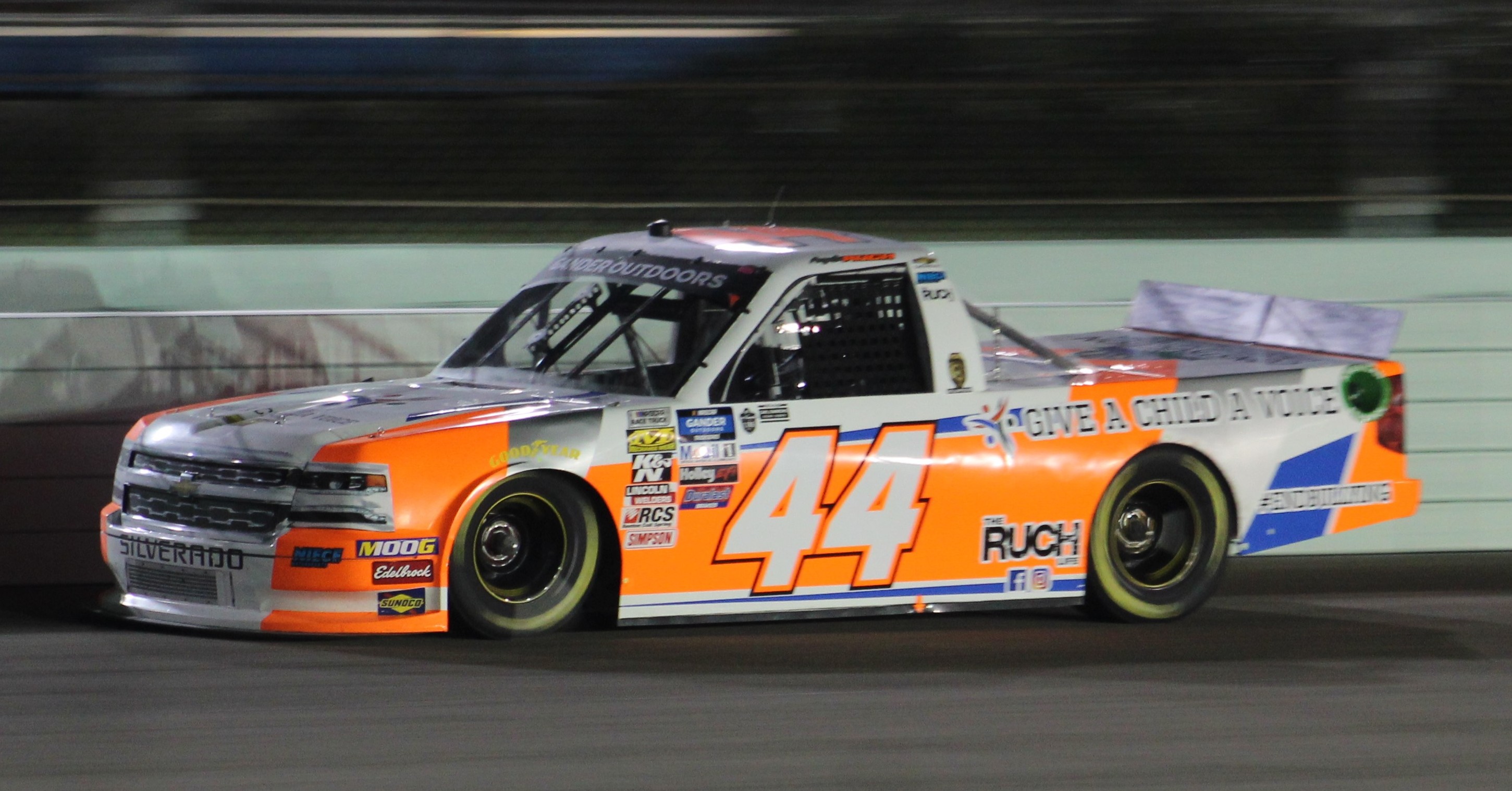
Chevrolet Silverado
"...t the light duty you know, fifteen hundred versus Silverado, that's the whole another another argument right ..."
The Chevrolet Silverado is a large pickup truck made by Chevrolet. It’s built for everyday driving but also for work and hauling. The podcast mentions it while talking about the light-duty truck segment.
The Chevrolet Silverado is a light-duty full-size pickup truck and one of the brand’s core vehicles. It’s commonly discussed because it’s a major benchmark for truck pricing, capability, and market positioning. In the episode, it’s mentioned in the context of comparing “light duty” truck categories and pricing levels.

Honda Ridgeline
"...still able to get that number. Well, they got the ridgeline, but Honda doesn't have a truck and they were abl..."
The Honda Ridgeline is a midsize pickup truck. It’s designed to be easier to live with day to day, while still having a truck bed for hauling. The podcast mentions it when talking about which trucks a manufacturer offers.
The Honda Ridgeline is a midsize pickup truck known for blending car-like comfort with truck utility. It’s often discussed because it’s one of the few midsize options in its category. In the episode, it’s referenced as a truck model Honda has available while discussing broader truck lineup strategy.
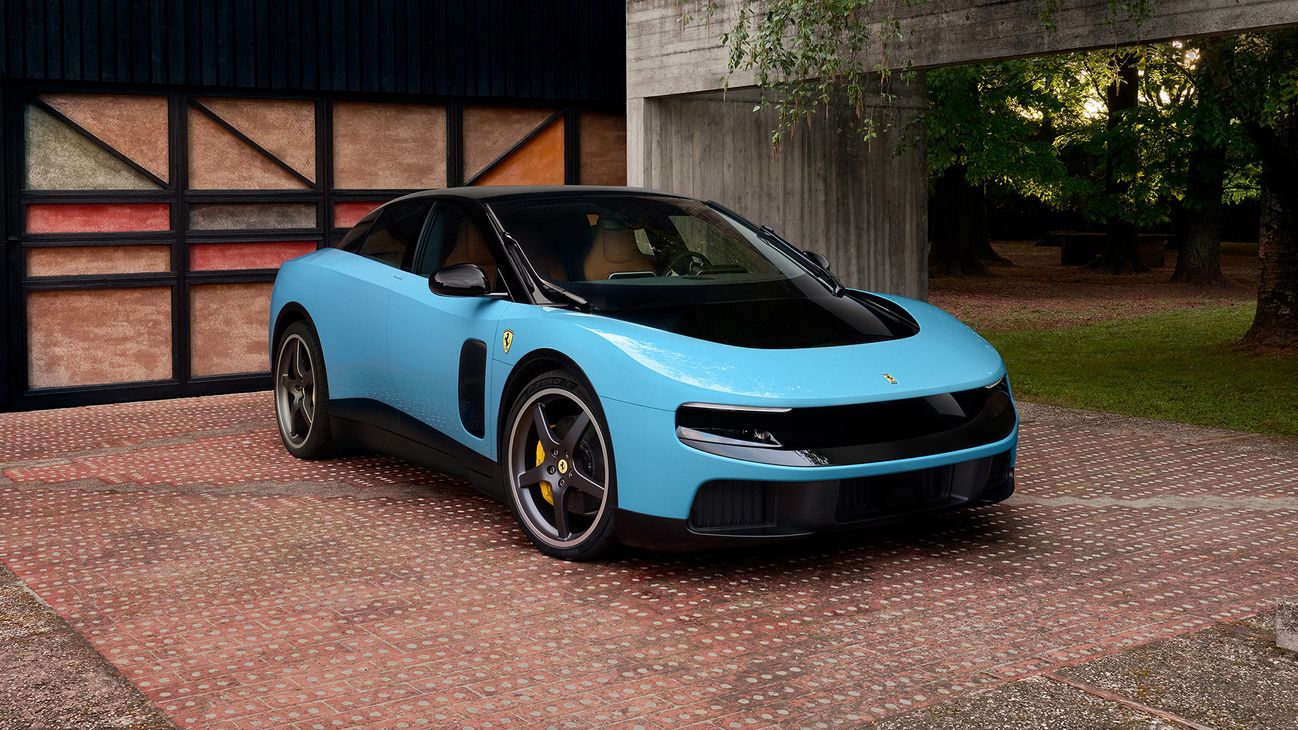
Ferrari Luce
"...ce, you've seen the car. What do you think of the Luce. Speaker 9: Was a great look. I mean, it doesn't ..."
The Ferrari Luce is a car model mentioned in the podcast. The conversation is mainly about how it looks based on what people have seen. No specific driving or ownership details are provided in the excerpt.
The Ferrari Luce is referenced in the episode as a car that listeners have “seen,” and the discussion focuses on its appearance. That suggests the conversation is about design and first impressions rather than technical details. It’s included as part of a broader segment where new or notable vehicles are being discussed.
flame surfacing
"So in nineteen ninety two, Chris Bengal was hired to head BMW design, and Chris Bengal came out what was called flame surfacing. Okay, he came out with the seven series"
“Flame surfacing” is a styling technique where the car’s body panels are shaped with dramatic, flowing lines. The goal is to make the car look more dynamic, even when it’s standing still.
“Flame surfacing” is a design/engineering term for shaping body panels with flowing, flame-like character lines and sculpted surfaces. It’s used to create a sense of motion and visual tension, especially on large luxury-car surfaces like those on the BMW 7 Series.
Bangle butt
"that had the so called Bengal butt. Okay, there were petitions to have the man fired."
“Bangle Butt” is a nickname for a BMW styling look from Chris Bangle’s design era. People used it to describe a noticeable bulge/shape around the back of the car.
“Bangle Butt” is an enthusiast nickname for a BMW design feature associated with Chris Bangle’s era: a pronounced bulge/crease around the rear trunk area. It became a flashpoint for fans who either loved or hated the new styling language.
Chris Bangle
"Okay, it's a complete and total outrage about Chris Bangle destroying BMW. Well, guess what, Chris Bangle managed to lower the average age of a BMW buyer..."
Chris Bangle was a BMW design leader. The hosts mention him because BMW’s styling changes were controversial, but they also helped attract a different kind of buyer and sell more cars.
Chris Bangle is a BMW design executive best known for leading the brand’s late-1990s/2000s design direction, including the “Bangle Butt” styling theme. In this segment, he’s used as the example of how BMW’s design changes affected who bought BMWs and how the brand sold against rivals.

Porsche Cayenne
"go forward a few years to two thousand and two when Porsche brought out the Cayenne and Suv. There were out or people just were quite crazy."
The Porsche Cayenne is Porsche’s SUV. The hosts are talking about how surprising it was for Porsche to build an SUV—and how it ended up selling extremely well.
The Porsche Cayenne is Porsche’s SUV that marked a major shift from the brand’s traditional sports-car focus. The segment highlights how controversial it was at launch, and then points to Porsche’s later sales scale to argue the decision made business sense.

Porsche Macan
"if you look at Porsche sales numbers globally, that there's a contest between the Cayenne and the Macan, which, oh is a smaller suv."
The Porsche Macan is a smaller SUV in the Porsche lineup. The hosts mention it to explain how Porsche sells multiple SUV models that overlap in the market.
The Porsche Macan is a smaller Porsche SUV that competes within Porsche’s own lineup. In this segment, it’s mentioned alongside the Cayenne to describe how Porsche’s SUV range drives sales volume and internal competition.
keeping demand high, and keeping pricing high
"the way I look at it is Ferrari sales about thirteen thousand cars a year. That's it. And it's very careful not to build more than that because it's all about keeping people waiting for the car, wanting the car, keeping demand high, and keeping pricing high."
The idea is that if a brand makes fewer cars, people want them more and prices stay higher. That also helps the cars keep their value later, which is why the hosts mention “residuals.”
This is a supply-and-demand strategy used in luxury and limited-production brands: restrict production to keep wait times, demand, and pricing elevated. The hosts connect it to higher residual values, which reinforces the brand’s ability to command premium prices and protect resale/lease economics.
residuals
"Which in turn keeps residuals high. So if you buy a Ferrari in a few years, you know you've gotten maybe even a great return on it."
“Residuals” are the expected value a car retains at a future point (often tied to lease end or resale expectations). The segment argues Ferrari manages supply and demand so that residual values stay high—meaning buyers can potentially get a strong return later.
electric
"so let's do an electric. Let's make it look nothing like any of our cars."
Here, “electric” means cars powered by electricity (battery-electric vehicles). The point is that Ferrari wants to expand, but in a way that doesn’t dilute the brand’s lineup.
In this context, “electric” refers to switching Ferrari’s future growth strategy toward battery-electric vehicles rather than adding more traditional internal-combustion models. The hosts frame it as a way to grow the company without “breaking the model” that keeps demand and pricing high.
four door
"four door that seats five, besides being electric, and it's got this sort of soft styling to it."
“Four-door” just means the car has doors for both the front and the back seats. That usually makes it easier for passengers to ride comfortably.
“Four-door” describes a body style with two front doors and two rear doors, making it easier for passengers to get in and out. In this context, it signals a more practical layout than Ferrari’s typical two-door supercars.
Johnny ive
"People are simply going to buy this vehicle because John, Sir, Johnny ive of Apple fame basically was involved in the design."
They’re talking about Jony Ive, a famous designer from Apple. The idea is that Ferrari brought in a top-level design talent to help make the new car’s interior and overall feel more appealing.
The speaker is referencing Jony Ive, the Apple design executive known for shaping the look and feel of many Apple products. The point in the discussion is that Ferrari is borrowing credibility from high-profile consumer-product design to help make its electric “lucha” feel more mainstream and emotionally appealing.
Apple
"People are simply going to buy this vehicle because John, Sir, Johnny ive of Apple fame basically was involved in the design."
Apple is mentioned because the designer involved is famous for Apple products. The hosts are using that connection to explain why the new Ferrari might feel more modern and appealing.
Apple is referenced as the source of Jony Ive’s design reputation. In this discussion, the brand association is used to argue that Ferrari’s new electric model can feel more like a premium consumer product, not just a traditional supercar.
business case
"But I also look at it as a business case. Here's a car company that's putting something out. They've invested this much."
A “business case” is basically the reason a company thinks a new product will make sense financially. They look at who it’s for, how much it will sell, and whether it will be profitable.
A “business case” is the way automakers justify a new model by estimating costs, expected sales, and profitability. In this discussion, it’s used to explain how Ferrari evaluates who the car is aimed at and what kind of return it can generate.
value proposition
"...because if it grows its other sales, it destroys its value proposition."
A “value proposition” is the main reason people think a product is worth it. In this context, they’re saying Ferrari has to be careful: if it sells too broadly in the wrong way, it could make the brand feel less special.
A “value proposition” is the specific reason customers believe a product is worth buying—often tied to exclusivity, performance, or brand positioning. Here, the host argues that growing sales with the wrong kind of car could weaken Ferrari’s core positioning and hurt that value proposition.
Request an Explanation
Heard something you'd like explained? We'll add it to this episode.
Sign in to request explanations for terms you heard.
Want to learn more?
Browse our glossary for plain-English explanations of automotive terms, jargon, and concepts.
Help improve this episode
See something that's not quite right? Our annotations are AI-generated and can sometimes miss the mark. Click the flag icon on any annotation to suggest a correction.