Aaron Really Bought a What?, Summer Tour Happenings Shift & Steer EP572
About this episode
Aaron’s dad kicks off a summer tour with St. Louis as the first stop, while the hosts juggle rehearsals and moving cars between the warehouse and the studio. The conversation turns into a string of family and collector-car stories—low-mileage Porsche Turbos, a restored 1968 Mustang GT500 sold at Barrett-Jackson, and a custom build with a Dynacorn body and an eight-carburetor look that “feels” like fuel injection. Later, they debate originality, confirm Michelin TRX tires, and end with a tease about California performance tire rules.
This is Shift and Steer, your quick-hit automotive news podcast.
On this episode #572:
• Brad Fanshaw's Muscle Car Tech on YouTube @TheBradFanshaw Channel
• Sammy and Michael Heading out on Tour!
• Aaron on RataRossa
• An English Taxi!
• bonspeedStreetWear.com & drinkbravago.com
Let us know your thoughts about our shows; hit us up on Instagram @ShiftSteerMedia or [email protected].
VISIT US ONLINE: https://www.shiftandsteer.com/
FOLLOW US IN INSTAGRAM: @ShiftSteerMedia
@Bradley_Fanshaw
@bonspeed_Street_Wear
@Motorator
@AaronHagar
Hosted by Simplecast, an AdsWizz company. See pcm.adswizz.com for information about our collection and use of personal data for advertising.
car covers
"Got some more car covers from our buddies at hero covers. [349.6s] So we covered the little 308."
Car covers are covers you put over a car when it’s parked. They help keep the paint and interior cleaner and protected from things like dust and weather.
Car covers are protective covers used to shield a vehicle from sun, dust, and moisture when it’s parked. In this segment, they’re specifically mentioned as being provided by “hero covers,” implying a focus on protecting collector cars or show cars.

Ford Mustang
"Yeah. So you covered the gateway Mustang. And I don't know why I thought that was one that..."
The Ford Mustang is a sports car made by Ford, usually as a coupe or convertible. People talk about it a lot because it’s been around for a long time and comes in many different versions. It’s often mentioned when discussing famous classic American cars.
The Ford Mustang is a classic American sports coupe/convertible known for its long-running popularity and performance-focused styling. It’s often discussed because it represents a major era of “muscle car” culture and has had many generations, making it a common reference point in car history conversations. In a podcast, it may come up when talking about notable Mustangs or how different versions evolved over time.
Barrett Jackson
"And I don't know why I thought that was one that got sold at [373.1s] Barrett Jackson. [373.6s] Everybody. ... [385.3s] And, and he sold that at Barrett Jackson."
Barrett-Jackson is a big auction where people buy and sell collectible cars. If a car sold there, it’s usually because collectors really wanted it.
Barrett-Jackson is a high-profile collector-car auction brand in the U.S., known for drawing enthusiasts and celebrities. When a car is described as being sold there, it usually signals strong collector interest and a market where condition and provenance matter.

Shelby GT500
"Yeah. So dad had an original 68 GT 500, which mom go bucky and helped restore back in the day."
The Shelby GT500 is a more powerful version of the Ford Mustang. It was made to go faster and feel more performance-oriented than regular Mustangs. It’s also a well-known classic, which is why people often restore and talk about specific years.
The Shelby GT500 is a high-performance variant of the Mustang, built to deliver stronger power and more aggressive performance than standard models. It’s especially significant in car history because certain model years—like the late-1960s—are widely recognized as iconic muscle cars. It may be discussed in the podcast due to the personal restoration story and the car’s reputation among enthusiasts.
small block
"“It's a Dynacorn body. It's a Roush small block four 27.”"
“Small block” means a particular kind of V8 engine that’s physically smaller than the big, heavy versions. It helps enthusiasts know what engine family you’re talking about.
“Small block” is a shorthand for a compact V8 engine family (most commonly associated with Chevrolet’s small-block V8s). It signals the engine’s architecture and size category, which affects how it fits, how it’s built, and what performance parts are commonly used.
Roush
"“It's a Dynacorn body. It's a Roush small block four 27.”"
Roush is a company that makes performance parts and upgrades for cars. Mentioning “Roush” here means the engine is built or set up by that performance shop.
Roush is an American performance brand known for building and tuning engines and complete vehicles, especially for Ford-based platforms. When the hosts say “Roush small block…,” they’re pointing to a specific performance-prepped engine package rather than a generic engine.
eight pack
"“It's got a beautiful eight pack. Right. You call it just, just 88 down draft.”"
An “eight pack” is a hot-rod carburetor setup with eight carburetors total. It’s mostly about performance and that classic, old-school engine look.
An “eight pack” is a performance setup using eight individual carburetors (typically arranged as two sets of four) on a V8. It’s a classic hot-rod look and sound, and it’s usually chosen for throttle response and the ability to tune fuel delivery precisely.
down draft
"“You call it just, just 88 down draft. Oh, I thought you were talking about me with the eight pack.”"
“Down draft” means the carburetors are set up so the air/fuel mixture goes downward into the engine. It’s a specific carb layout, not just a general performance description.
“Down draft” describes a carburetor orientation where the air/fuel mixture flows downward into the intake. That layout can be part of how the eight-carburetor “eight pack” is packaged on top of the engine, and it affects hood clearance and intake geometry.
fuel injection
"“They're, they're, they're a feel injection, but it looks like old carburetors.”"
Fuel injection is how modern engines deliver fuel using sensors and a computer. Here, they’re saying it behaves like injection, even though it looks like the older carburetor style.
Fuel injection is an engine system that meters fuel electronically (instead of relying on carburetors). In this segment, they’re saying it “feels” like injection but visually resembles old carburetors—meaning the car may use modern injection hardware while keeping a classic look.
carburetors
"“but it looks like old carburetors. I mean, the engine is, is almost more beautiful than the car.”"
Carburetors are older-style parts that mix fuel with air for the engine. They’re mentioned because the engine setup is made to look like that classic hardware.
Carburetors are mechanical devices that mix air and fuel before it enters the engine cylinders. The hosts mention them because the setup looks like traditional carburetors, even though the system is described as feeling like fuel injection.

Ferrari 400 I
"Okay. So you got the Ferrari, the 400. [750.4s] The Ferrari, the 84 Ferrari 400 I, which he has found a new love,"
This is a 1980s Ferrari that’s meant for comfortable long drives. The speaker is saying their family’s Ferrari 400i has been cared for recently—like getting the engine refreshed and the paint corrected—so it looks and runs better than it used to.
The Ferrari 400i is a classic Ferrari grand tourer from the 1980s, known for its V12-powered, long-distance “GT” character. In this segment, the hosts connect it to family history and mention recent work like an engine refresh and paint correction, which are the kinds of details that matter for keeping an older Ferrari presentable and usable.
engine freshened up
"[789.9s] I used to drive it in, you know, in high school and such as a great history, [793.9s] but he had the engine freshened up recently."
That phrase usually means the engine was gone through and repaired or rebuilt parts were replaced so it runs better and more reliably. It’s more than just routine maintenance.
“Freshened up” is enthusiast shorthand for refreshing an older engine—typically involving inspection and replacement of worn components to restore performance and reliability. It’s not a single standardized procedure, but it usually means the engine was gone through rather than just left alone.
paint correction
"[797.7s] I did a paint correction, buff the whole thing out, finished its servicing"
Paint correction is when someone polishes the car’s paint to remove small scratches and dull spots. It makes the paint look cleaner and shinier without painting the car again.
Paint correction is a detailing process that removes surface defects from a car’s clear coat—like swirl marks, light scratches, and oxidation—using polishing compounds and pads. The goal is to restore clarity and gloss without repainting the panel.
bald
"I don't drive the car enough and I'm like, dad, they're literally going bald. [867.8s] And they're like, they're like 30 years old."
When someone says a tire is “bald,” it means the tread is worn down a lot. That makes the tire grip worse and can make braking less effective, especially when roads are wet.
“Bald” tires means the tread has worn down close to the wear bars, reducing grip and increasing stopping distance—especially in wet conditions. The speaker uses it to justify replacing the tires because they’re unsafe and no longer performing as intended.
Michelin TRX
"And it is a Michelin TRX. [894.6s] Oh, TRX. Oh, it is. Okay. Okay. So it is a TRX."
Michelin TRX tires are a special kind of tire that fits a specific older rim size. Because it’s not the common tire size, replacements can be tough to find and cost more. They’re basically saying, “Yep—those are the special Michelin TRX tires.”
Michelin TRX is a tire size/fitment system that uses a unique, non-standard rim diameter and tire construction. It was used on certain older vehicles, so replacing TRX tires can be harder and more expensive than normal tires. In this segment, they’re confirming the tires are actually Michelin TRX, not just “TRX” in general.
automatic
"This one's automatic. So, you know, it's definitely, it's definitely kind of a turd."
“Automatic” means you don’t have to shift gears yourself. The car handles the gear changes for you.
When someone says a car is “automatic,” they mean it uses an automatic transmission that changes gears without the driver operating a clutch or shifting manually. In enthusiast talk, this often comes up because it can change how the car feels and responds compared with a manual.
dual suspension in the back
"And it really does. And they have strange suspension. They have like a dual suspension in the back and they compensate for weight."
This means the rear of the car has a more complex suspension arrangement than a simple one. The goal is to help the car stay stable and ride smoothly, especially when the car is loaded.
“Dual suspension in the back” refers to a rear suspension setup that uses two distinct suspension systems or linked elements to manage ride and handling. The idea is to better control how the rear axle responds to bumps and weight changes, improving stability and comfort.
airs up
"And when you start the car, it almost airs up a little bit."
“Airs up” means the car uses air pressure to lift itself up a bit. It’s usually part of a suspension system that helps keep the car level.
“Airs up” describes an air-suspension behavior where the system uses compressed air to raise the ride height after starting. It’s commonly associated with self-leveling or adjustable suspension setups that maintain a target stance as conditions and load change.

Chevrolet Corvette
"He drove that for a couple of days and then he originally wanted a 67 Corvette Stingray up there."
The Corvette Stingray is a sporty version of the Chevrolet Corvette. Here it’s just mentioned as the car he originally wanted before choosing something else.
The Corvette Stingray is a performance-focused trim/line within Chevrolet’s Corvette lineup, historically associated with a driver-oriented feel and strong power. In this segment, it’s mentioned as an alternative the person originally wanted before ending up with a Porsche instead.
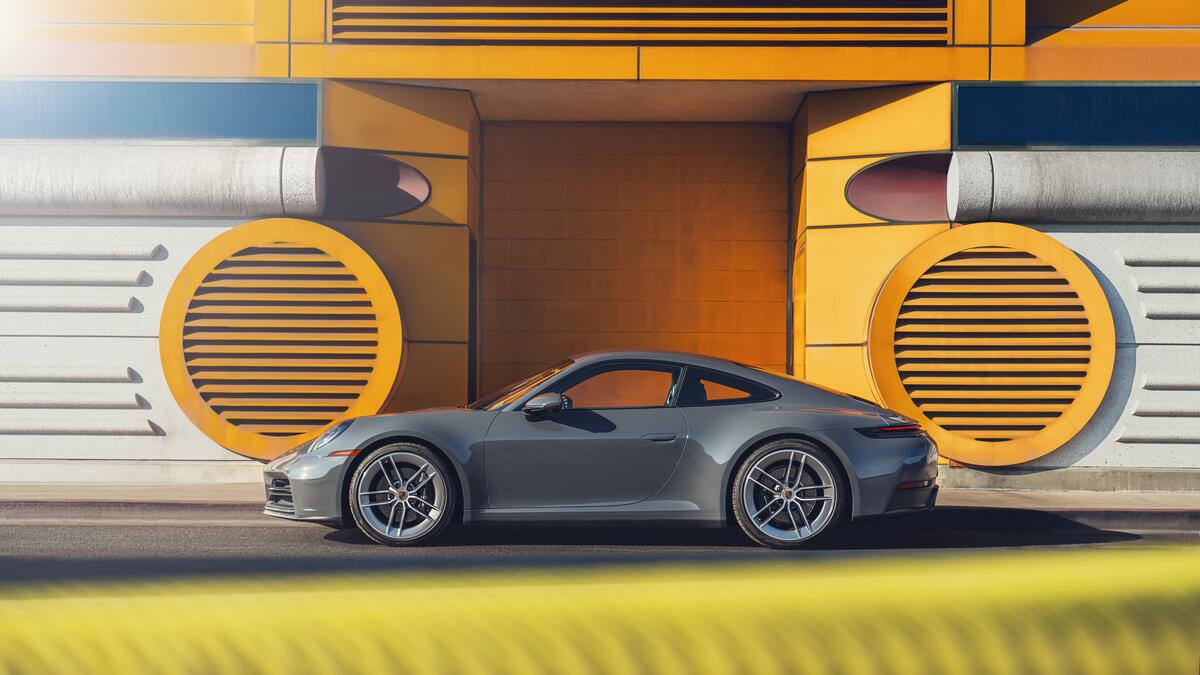
Porsche 911 (993)
"But, but the 993 is small, man. It's compact. [994.7s] Like when you're in there, you're like, well, I forgot these, [997.8s] these original style Porsches are small. [1026.7s] You said it's a turbo. [1028.5s] Yeah. It's a turbo."
This is a specific generation of the Porsche 911 from the 1990s. The hosts are talking about how the car feels tight inside and how the pedal setup is a little unusual. They also bring up that it’s a turbo version, which matters for how the car is built and what it’s worth.
The Porsche 911 (993) is the late-1990s generation of the 911, known for its compact, classic 911 proportions. In this segment, they’re discussing how the cabin feels small and how the pedal layout differs from what someone might expect. They also mention a turbo variant, which is a key part of the 993-era 911 lineup.
turbo
"[1026.7s] You said it's a turbo. [1028.5s] Yeah. It's a turbo. It's not an S. [1039.4s] I'm like, oh, I don't want to tell you, but yeah, [1042.8s] the turbos have gotten out there and they're going to get up there."
A turbo is a device that helps the engine make more power by pushing extra air into it. More power usually means more interest from buyers. Here, they’re saying the turbo versions are getting more valuable over time.
A turbocharger uses exhaust gas to spin a turbine that forces more air into the engine. That lets the engine make more power than it would with naturally aspirated airflow alone, which is why turbo versions are often more desirable. In this segment, they’re also talking about how turbo 911s have been increasing in value.
S
"[1026.7s] You said it's a turbo. [1028.5s] Yeah. It's a turbo. It's not an S. [1030.7s] I didn't get to break it to him. [1035.3s] I can't believe how valuable these things are."
On Porsche 911s, “S” typically refers to a higher-trim model within a given generation, usually with a more powerful engine than the base Carrera. In this segment, they clarify that the car is a turbo, not an “S,” which matters because turbo models and “S” models are different in performance and collector value. The listener should treat “S” as a specific model designation, not just a generic “sport” label.
rear wing
"I said, nah, it's a, you know, like, like the rear wing, that's the first thing that I noticed were the, it didn't have the intakes on the fenders and that rear wing."
A rear wing is the spoiler on the back of the car. It’s there to help the car stick to the road at higher speeds, and different versions can have different wing shapes.
A rear wing is an aerodynamic spoiler mounted at the back of the car to generate downforce. More downforce helps the tires maintain grip at speed, and different trims can use different wing designs and details.
intakes on the fenders
"The wing with the little intakes on it. I think it's the S wing. It didn't have the little side intakes on the wing."
Fender intakes are openings in the car’s body that let air in. They often help cool important parts, and on performance cars they can also be a clue about which version you’re looking at.
Fender intakes are openings in the bodywork that can feed air to components like brakes or other cooling systems. On some performance trims, the presence (or absence) of these intake details is a visual clue to the specific variant.
Porsche Turbo S
"And I had to look it up and I went, oh man, so there was a turbo. Then there was a turbo S and the turbo S looks like the expectation of what the turbos were."
Porsche Turbo S is a stronger, more special version of the 911 Turbo. The host is saying the Turbo S looks like what you’d expect from a Turbo, compared to the car they were confused about.
Porsche Turbo S is a higher-output version of the 911 Turbo, known for more performance hardware and a more aggressive look than the standard Turbo. In this segment, the host is comparing how the Turbo S visually matches what people expect from the Turbo era—like the rear scoops and fender details.
PPF
"There's no PPF on the car, which I'm just like brain going crazy, but the paints in really good shape."
PPF is a clear protective film you put on a car’s paint. It helps prevent chips and small scratches from things on the road.
PPF (paint protection film) is a clear, tough protective layer applied to a car’s painted surfaces. It helps guard against rock chips, light scratches, and road debris, which is why people care whether a car has it or not.
aftermarket stereo
"It has an aftermarket stereo. So I have to fix that for him. But other than that, man, it's a nice clean little car."
An aftermarket stereo is a non-factory audio system installed in the car. It can look different from the original, so people sometimes swap it for something that looks more stock.
An aftermarket stereo is a head unit installed by someone other than the car’s original manufacturer. Enthusiasts often prefer OEM-looking options because they match the factory appearance while still adding modern features.
OEM looking head unit
"I didn't see the factory one in there, but there's a really nice OEM looking head unit that you can get. They're kind of expensive."
This means a new stereo that’s designed to look like the original factory one. It keeps the dashboard looking stock while still improving the tech.
An OEM-looking head unit is an aftermarket car stereo designed to visually match the factory equipment. The goal is to keep the interior looking original while adding modern functionality.
CarPlay
"But it has a little window in its car play. So I might, he said, no, I might just do it."
CarPlay is Apple’s system for using your iPhone in the car. It shows certain apps on the car’s screen so you can use them more easily while driving.
CarPlay is Apple’s in-car interface that lets you control compatible apps (like maps and music) through the car’s infotainment screen. Many modern head units add a CarPlay-capable display or integration.
unmolested
"I'm like, they need to be silver. This car is so unmolested. Like let's get it back to original."
“Unmolested” basically means the car hasn’t been messed with much. It’s still pretty close to how it left the factory.
In car talk, “unmolested” means the vehicle has largely escaped modifications and remains close to factory condition. It’s often valued because original parts and appearance are preserved.
rat rod
"it's literally half the paints gone and it's just a total rat rod and that and that kind of got him started."
A rat rod is a car that looks intentionally rough and worn, instead of being fully restored. The host is saying the Ferrari looks so beat up that it fits that “rat rod” vibe.
A rat rod is a style of car build where the vehicle is intentionally kept rough-looking—often with visible wear, missing paint, or an unfinished appearance—rather than restored to factory-new condition. In the segment, it’s used to describe a Testarosa that’s cosmetically deteriorated, framing it as part of a “buying neglected Ferraris” theme.
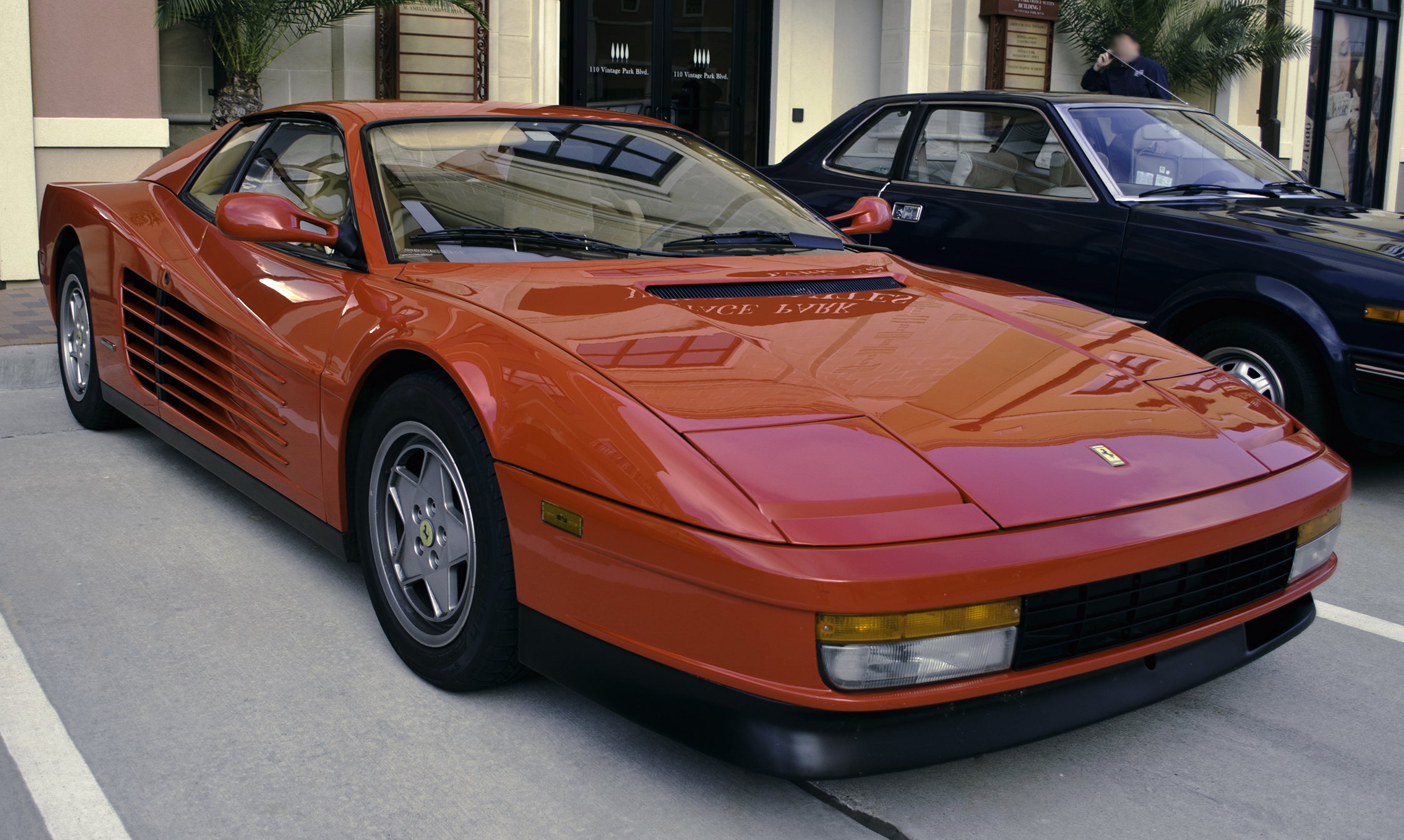
Testarossa Testarosa
"...ng. If you look up ratarosa, he has a convertible testarosa that's literally half the paints gone and it's ju..."
The Testarossa is a very high-end sports car made by Ferrari. It’s known for its bold, recognizable look and strong performance. People may bring up specific examples because the condition of these cars can vary a lot.
The Testarossa (commonly referring to the Ferrari Testarossa) is a famous Italian supercar known for its distinctive styling and high-performance reputation. It’s frequently mentioned in car discussions because it’s visually recognizable and has become an icon of 1980s supercar design. In the podcast context, it comes up as a specific example of a convertible Testarossa with visible condition issues.
brake lines
"he's like, oh my God, man, this is great. [1759.1s] You know, yeah, I'm putting the brakes together right now and I have just a spaghetti of brake [1764.2s] lines and just things I don't even know where to start"
Brake lines are the tubes that move brake fluid to the brakes. During a repair, if the lines get tangled or mixed up, it’s easy to lose track of where each one goes.
Brake lines are the metal or flexible tubes that carry pressurized brake fluid from the master cylinder to the brake calipers or wheel cylinders. If the lines are mixed up during a restoration, it can be hard to route them correctly and ensure proper braking.
brackets
"Which way do the curly cues go and where's this bracket go. [1775.5s] So I was going to the warehouse and every time I went there I'd have a little list from him"
Brackets are the little mounting pieces that hold the brake tubes in place. They help keep the lines from moving around or getting damaged.
In brake plumbing, brackets are the mounting hardware that holds brake lines in the correct position and prevents them from rubbing on other parts. Getting bracket placement wrong can lead to chafing, leaks, or poor line routing.
Radarosa
"So if you go to his YouTube, Radarosa and look, yeah, it's real fun. [1800.8s] He put a whole..."
Radarosa is the name of the YouTube channel the speaker recommends for the videos they’re talking about.
Radarosa appears to be the creator/channel name the speaker points listeners to for restoration videos. It’s referenced as the place to find the posted brake/repair documentation.
completely flat floor
"They're really roomy. They have a completely flat floor and a high, you know, a high headroom, but they're really roomy."
A “flat floor” means the inside floor is level from front to back. That makes it easier to move around, load things, and carry people without stepping over bumps.
A “completely flat floor” is a packaging feature that can make a vehicle much easier to use for carrying people or gear, because there’s no raised transmission tunnel or other intrusions. In practice, it improves walk-through space and makes loading/unloading simpler.
high headroom
"They have a completely flat floor and a high, you know, a high headroom, but they're really roomy."
“Headroom” is how much space you have above your head inside the vehicle. “High headroom” means taller people can sit or stand more comfortably and you can move around more easily.
“High headroom” refers to the vertical space inside the cabin, which matters for comfort and usability in vans or passenger shuttles. More headroom also makes it easier to stand or move around while loading passengers.
industrial motor
"They're, you know, they have a little Nissan 2.7 liter four cylinder diesel in them. And, and, and they've been running that. That's an industrial motor."
An “industrial motor” is an engine built for heavy, everyday work—like long hours and lots of use. It’s not mainly designed to feel sporty; it’s designed to last.
“Industrial motor” means the engine is designed for work-duty use—running for long hours and under load—rather than being tuned primarily for passenger-car driving feel. That context is why the host ties it to very high mileage.
million mile motor
"That's an industrial motor. They're a million mile motor. This thing's got 200,000 miles a little bit over."
A “million mile motor” is just a way of saying the engine is known for lasting a very, very long time—around a million miles. It usually means it’s built tough and can handle lots of wear if maintained.
“Million mile motor” is a shorthand for an engine expected to survive around one million miles with proper maintenance. It’s not a guarantee, but it signals the host’s belief that this diesel platform is built for extreme durability.
manifold
"just get an old used motor with the turbo set and put the manifold on it and make it a turbo..."
A manifold is a set of passages that directs air (or exhaust) to the engine. If you’re adding a turbo, the manifold often has to be changed so everything lines up correctly.
An intake manifold is the part that routes air from the intake system into the engine’s cylinders. In a turbo conversion context, swapping manifolds is often necessary so the turbo can be mounted and the airflow path matches the turbo setup.
naturally aspirated
"So it's a 2.7 liter naturally aspirated Nissan diesel."
Naturally aspirated means the engine pulls in air by itself, without a turbo or supercharger pushing extra air in. A turbo is one way to boost power beyond that baseline.
Naturally aspirated engines make their air intake without a turbocharger or supercharger. That usually means they rely on engine displacement and tuning for power, so adding a turbo is a common way to increase output.

Mini Cooper
"But yeah, you know, we have the two old defenders and we have the, you know, the Mini Cooper and the Morgan three wheeler..."
The Mini Cooper is a small British car that’s famous for feeling nimble and fun to drive. People also like them because they’re popular for modifications and collecting.
The Mini Cooper is a compact British car known for its small size and go-kart-like handling. In enthusiast circles, it’s often discussed as a platform for upgrades and as a classic modern collectible.

3 Three Wheeler
"...ave the, you know, the Mini Cooper and the Morgan three wheeler and my uncle's. What color is it?"
A three-wheeler is a vehicle that has three wheels instead of two. It’s usually smaller and more like a motorcycle than a typical car. People talk about them because they drive differently and stand out visually.
A three-wheeler is a small, motorcycle-style vehicle that uses three wheels instead of the usual two. It’s often discussed because it can feel different from a standard car or motorcycle—especially in how it steers and how it’s used day to day. In the podcast, it’s mentioned alongside other compact vehicles, likely as a distinctive alternative with a unique layout.

Morgan three wheeler
"we have the two old defenders and we have the, you know, the Mini Cooper and the Morgan three wheeler and my uncle's."
The Morgan three-wheeler is a quirky British vehicle with three wheels instead of four. It’s known for being a fun, unusual collectible rather than a typical car.
The Morgan three-wheeler is a distinctive British vehicle built around a three-wheel layout, giving it a unique stance and driving feel compared with normal four-wheel cars. It’s a niche collectible that’s as much about character and design as it is about speed.
clear coat
"They buffed it out, cleaned it. It's missing some clear coat from some graphics that were on it. A little tiny bit of rust, but it's mostly just surface stuff underneath."
Clear coat is the shiny protective layer on top of a car’s paint. If it’s missing in spots, the paint underneath can wear out faster.
Clear coat is the transparent top layer of a car’s paint system that protects the color coat underneath and gives the glossy finish. When the clear coat is missing—like on graphics areas—it can expose paint to faster fading, oxidation, and corrosion.
surface stuff
"It's missing some clear coat from some graphics that were on it. A little tiny bit of rust, but it's mostly just surface stuff underneath."
They’re saying the rust is mostly on the outside, not deep in the metal. Surface rust is generally less serious than rust that’s eaten into the car.
“Surface stuff” in a rust context usually means the corrosion is limited to the outer layer and hasn’t fully penetrated deeper metal. That distinction matters because surface rust is often easier to treat than rust that’s spread through structural areas.
parts are interchangeable
"And you can supposedly a lot of parts are interchangeable. So you could, I could put the older style bumpers on it..."
They mean some parts from one version of the car can fit another version. That matters because it can make repairs or upgrades simpler.
“Interchangeable parts” means components from one model year or body style can be swapped onto another with little or no modification. Enthusiasts care because it can make restoration easier and cheaper, especially for older cars.
tuck and roll
"I would like to put the old style seat covers on it... But I would, I think the only thing I really would like to do is to put leather seats in it and do the seat covers with the, it's not a tuck and roll, but it has a certain forward pattern to it."
“Tuck and roll” is a traditional seat-cover style with stitched pleats and padded sections that give the seats a classic look. They’re saying the seats aren’t exactly that, but they have a similar kind of pattern.
“Tuck and roll” is a classic upholstery style where leather (or vinyl) is sewn into pleats with padded “rolls” that create a distinctive pattern. The speaker says the seats aren’t exactly that style, but they do have a specific patterned look.
zero to 60
"because suppose they do zero to 60 and like 40, you 2749.6s] know, like three minutes. [2750.4s] So if it just doesn't get up to speed in a timely manner"
“Zero to 60” means how fast a car can go from standing still to 60 mph. Lower time usually means the car accelerates quicker.
“Zero to 60” is a shorthand for how long a car takes to accelerate from 0 mph to 60 mph. It’s commonly used as a quick measure of straight-line acceleration and how quickly the car can reach highway speeds.
diesel
"Like you can't like smell like diesel and be too loud. [2774.3s] Then it's uncomfortable and nobody wants to go in it."
Diesel refers to a compression-ignition fuel and engine type that’s different from gasoline. In this context, the speaker is talking about avoiding a diesel smell, which can indicate fuel/combustion leaks or exhaust-related issues that affect comfort.

Tesla Model Y
"I pulled up to a stoplight and I looked around and I went, what the hell? There was a Tesla Model Y in front of me. There was a Tesla Model Y behind me and one on each side of me."
The Tesla Model Y is an all-electric SUV-style car. It’s popular, so you’ll often see several of them around town.
The Tesla Model Y is a compact electric crossover (SUV-style) from Tesla. It’s known for being a high-volume, mainstream EV, which is why you can see lots of them in everyday traffic like a stoplight lineup.
Elon Musk
"but then they all got really mad at Elon Musk for, you know, for his politics. He had the decals."
Elon Musk is the well-known leader connected to Tesla. The hosts are saying some Tesla owners get upset about what he says publicly.
Elon Musk is a prominent tech executive closely associated with Tesla. In this segment, he’s referenced because some Tesla owners react to his politics and public statements.
Audi
"And this, the gray Model Y, the little SUV pulls up toward me and on the front of his hood, he put the Audi rings, the little Audi."
Audi is a car brand with a recognizable four-ring logo. In this story, someone put the Audi logo on another car to make it look like an Audi.
Audi is a German car brand known for premium vehicles and distinctive four-ring logo. Here, the speaker notes someone put Audi rings on a different car’s hood, which is a common “badge swap” visual trick.

Toyota Prius
"This is a bloated Prius. Yeah. I was like, I'm not sure what Audi model you think that is, but OK. Speaking of Prius, Prius at Clarkson's Farm, there's a new season on."
The Toyota Prius is a hybrid car—part gas, part electric. The speaker is joking that it looks bigger than it used to, and they bring it up right after talking about the modified SUV.
The Toyota Prius is a hybrid (gas-electric) model that became famous for high fuel efficiency and for being a common “default” car in pop culture. In this segment, the host calls the Prius “bloated,” using it as a comparison point for the modified vehicle they saw.
Request an Explanation
Heard something you'd like explained? We'll add it to this episode.
Sign in to request explanations for terms you heard.
Want to learn more?
Browse our glossary for plain-English explanations of automotive terms, jargon, and concepts.
Help improve this episode
See something that's not quite right? Our annotations are AI-generated and can sometimes miss the mark. Click the flag icon on any annotation to suggest a correction.