Corvette ZR1X Destroys Record, Questions From Listeners - Shift & Steer EP574
About this episode
A record-setting Pike’s Peak run kicks things off: the hosts discuss how a 2026 Corvette ZR1X “squeaked out a new record” in the production car class, and why experience matters when “it’s got a surface anomaly.” The conversation then swings through listener Q&A—driver-facing cameras, rest-o-mod priorities, and classic-car originality—plus a deep dive into Porsche engine swaps, weight bias, and ducting terminology. Along the way, they also touch on collector-car pricing, EV-only features, and a “Darth Vader” postal truck.
This is Shift and Steer, your quick-hit automotive news podcast.
On this episode #574:
• Brad Fanshaw's Muscle Car Tech on YouTube @TheBradFanshaw Channel
• Corvette ZR1X Destroys Record
• Questions From Listeners
• Slate Truck is Closer than Ever
• bonspeedStreetWear.com & drinkbravago.com
Let us know your thoughts about our shows; hit us up on Instagram @ShiftSteerMedia or [email protected].
VISIT US ONLINE: https://www.shiftandsteer.com/
FOLLOW US IN INSTAGRAM: @ShiftSteerMedia
@Bradley_Fanshaw
@bonspeed_Street_Wear
@Motorator
@AaronHagar
Hosted by Simplecast, an AdsWizz company. See pcm.adswizz.com for information about our collection and use of personal data for advertising.

Porsche 3506 Porsche
"...ght a, not almost, but I went to look at a little 3506 Porsche, a little 61B for like nine grand or eight grand...."
The Porsche 356 is an older classic sports car made by Porsche. People look for them because they’re part of Porsche’s early history and are considered collectible. In the podcast, it’s mentioned as something someone was considering buying.
The Porsche 356 is an early classic Porsche sports car and one of the brand’s most historically important models. The podcast mention of looking at a specific 356-era car highlights how these models are sought after by collectors and enthusiasts. It’s often discussed because condition, originality, and provenance can strongly affect value.
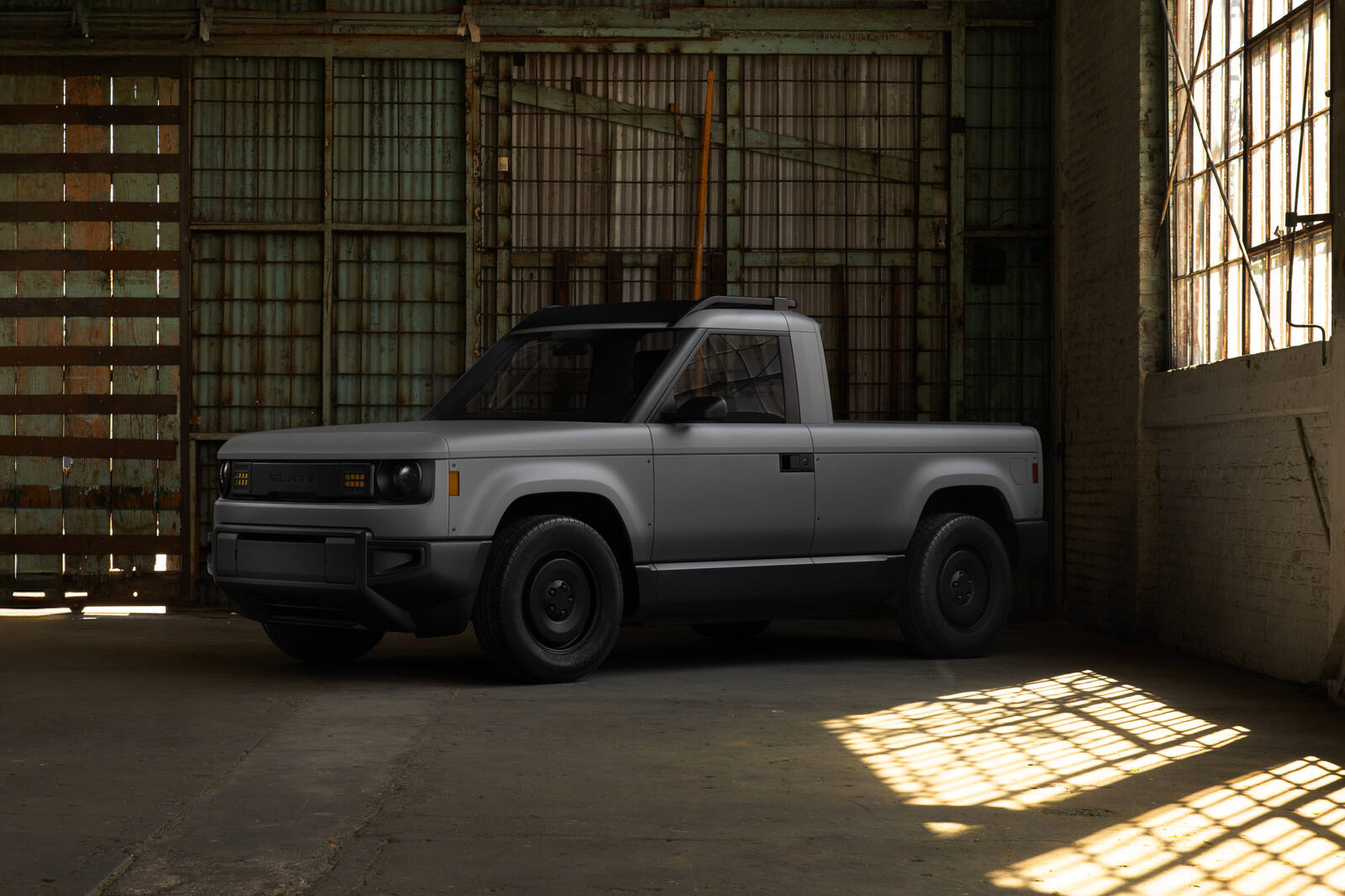
Truck Slate Truck
"...bout today. And we're going to talk about the new Slate truck. We're going to talk about how Honda is miraculou..."
The podcast is talking about a truck called the “Slate truck,” but it doesn’t say exactly which one. Trucks are vehicles built to carry things and handle tougher jobs. The discussion is about a new version of that truck.
The podcast references a “new Slate truck,” but no specific make/model is provided in the excerpt. In general, trucks are discussed for their utility—carrying cargo, towing, and handling daily work needs. Without the exact vehicle details, the key point is that the conversation is about a particular new truck offering.

Honda Element
"...ncement. They're coming back with that super boxy element. I love the Honda element."
The Honda Element is a compact SUV with a very square, boxy shape. It’s known for being practical and having a flexible interior. The podcast brings it up because people really like that distinctive look and layout.
The Honda Element is a boxy, practical compact SUV known for its unusual styling and flexible interior layout. The podcast mentions it in the context of a “super boxy” return, which shows how strongly people associate the Element shape with its identity. It’s often discussed because it’s a functional, no-nonsense vehicle that stands out visually.

Volkswagen Beetle
"...en more, you have to put, put like, like, like VW Beetle, like the more modern Beetle of a certain range o..."
The Volkswagen Beetle is a small car with a very recognizable, rounded shape. People bring it up because it’s been around for a long time and has a “classic” look. When someone says “modern Beetle,” they mean a newer version that still tries to feel like the original.
The Volkswagen Beetle is a compact, air-cooled-era icon that became famous for its distinctive rounded shape and long production history. In a podcast discussion, it often comes up as a reference point for “the modern Beetle” because people associate the name with a recognizable design and heritage. It’s a common shorthand when talking about how certain cars keep their identity across generations.

Bmw 3
"The car that the entry level. It was like a BMW 3 series back then, like a 325 I. Speaking of, you ..."
The BMW 3 Series is a mid-size car made by BMW that’s meant to feel nicer to drive than a typical everyday sedan. A “325i” is one specific engine version of that model. People talk about it a lot because it’s a common, well-known BMW.
The BMW 3 Series is a long-running compact luxury sedan known for balancing everyday comfort with sporty driving. Mentioning a “325i” points to an older entry-level 3 Series that many enthusiasts remember as a benchmark. It’s frequently discussed because it’s a popular platform for both ownership and tuning.
flat plane crank V8
"But it's a flat plane crank V8, you know, and you know, it's pretty cool. 550 horsepower to the rear wheels."
A flat-plane crank V8 is a type of V8 engine where the crankshaft is shaped in a specific way. That design affects how the engine fires and often gives it a sharper, more exotic sound.
A flat-plane crank V8 is an engine design where the crankshaft uses a flat-plane layout, producing a distinct firing order and sound compared with the more common cross-plane V8. The host highlights it because it’s a key part of why the swapped “Ferrari-built Maserati” V8 is described as cool and characterful.
rear wheels
"But it's a flat plane crank V8, you know, and you know, it's pretty cool. 550 horsepower to the rear wheels."
“To the rear wheels” means the power is going to the back tires. That’s important because it affects how well the car can accelerate.
“To the rear wheels” means the quoted power figure is being delivered through the drivetrain to the back axle, typically implying rear-wheel-drive (or at least rear-axle power delivery). This matters because it connects the engine swap to how effectively the car can put power down.
all aluminum big block
"Like in the 80s, a guy had a brand new 930 Porsche that he put a all aluminum big block in it and he took the rear window and put Plexiglas and had the stacks coming through the rear window."
An “all aluminum big block” is a very large engine made mostly from aluminum. It’s meant to be powerful, and aluminum helps keep the engine lighter than older iron-heavy designs.
An all-aluminum big block refers to a large-displacement engine built with aluminum components, which can reduce weight compared with iron. In the context of the 930 Porsche build, it signals a high-output, heavyweight engine swap intended to dramatically change performance and sound.
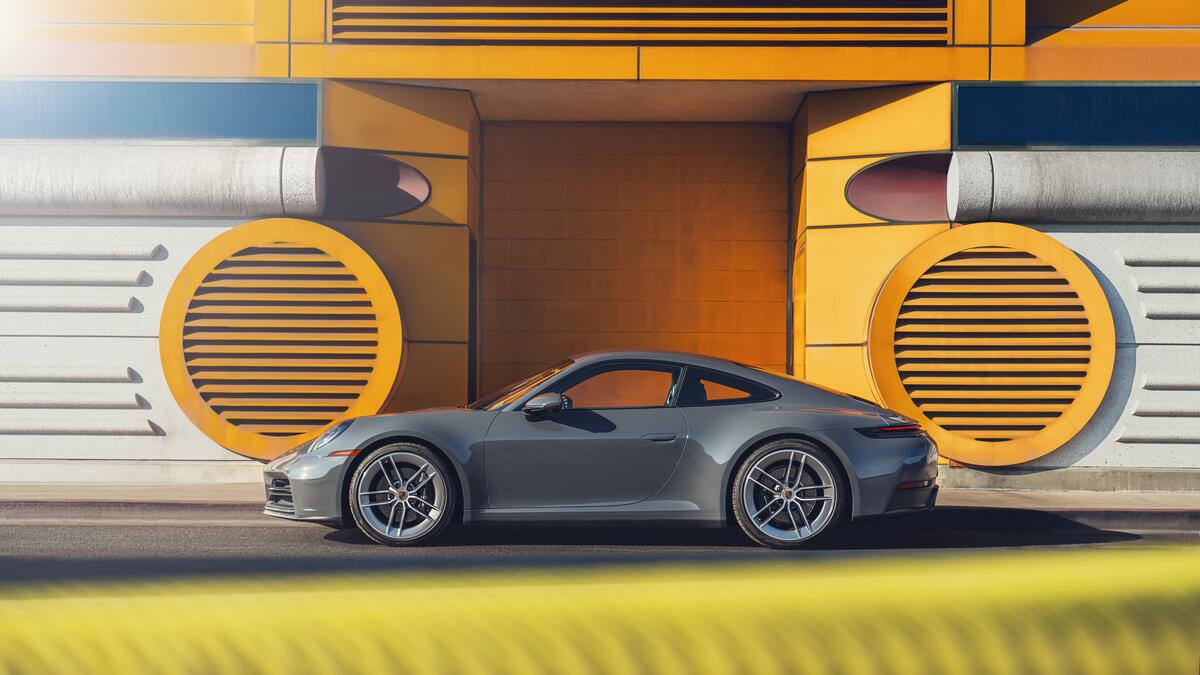
911 930 Porsche
"...years ago. Like in the 80s, a guy had a brand new 930 Porsche that he put a all aluminum big block in it and he..."
“911” is the name of Porsche’s famous sports car model line. It’s known for having the engine in the back. The podcast brings it up because someone modified one in the 1980s, showing how people customize these cars.
“911” refers to the Porsche 911 line, which has been produced for decades and is known for its rear-engine sports-car layout. The podcast mentions a specific story from the 1980s involving a 930 Porsche and an engine swap, which highlights how the 911 platform attracts enthusiasts and builders. It’s discussed because the car’s design and community make it a frequent subject for modifications.
Plexiglas
"and he took the rear window and put Plexiglas and had the stacks coming through the rear window."
Plexiglas is a brand name commonly used generically for clear acrylic plastic. Here it’s used as a rear-window modification to allow exhaust stacks to protrude, which is a distinctive fabrication detail in the described custom build.
LS swaps
"There's the company that does the like LS swaps for the 911. Yes."
An “LS swap” means putting a GM LS V8 engine into a different car than it originally came with. People like it because the engine is popular, parts are easy to find, and it’s usually a straightforward way to add power.
An “LS swap” is an engine conversion where a car is fitted with a GM LS-series V8 engine (from the Chevrolet/GM LS family). Enthusiasts do it because the LS engines are compact, plentiful, and have strong aftermarket support for wiring, cooling, and performance parts.
Magnaflow exhaust
"He did like a RWB version, but it had like an LS swap with the Magnaflow exhaust and, Odyssey battery, like all of his sponsors were in it."
Magnaflow makes aftermarket exhaust parts. When you change an exhaust on a swapped engine, it can change the sound and how freely the engine can breathe.
Magnaflow is an aftermarket exhaust brand known for performance mufflers and cat-back systems. In a swap build, the exhaust choice affects sound, backpressure, and how well the engine’s airflow matches the rest of the setup.
Odyssey battery
"He did like a RWB version, but it had like an LS swap with the Magnaflow exhaust and, Odyssey battery, like all of his sponsors were in it."
Odyssey makes car batteries that are popular in performance builds. People use them because they can be lighter and better suited for high-demand starting and charging needs.
Odyssey is a brand of automotive batteries, often used in performance builds. These batteries are commonly chosen for weight savings and high cranking/charging performance compared to many stock batteries.
all aluminum like LS engine
"There's something about the all aluminum like LS engine and plastic intake and whatever like, it didn't add like 300 pounds to the back of, of the car."
The LS engines use aluminum in major parts, which can make them lighter than older iron-engine designs. In a swap, that matters because extra weight—especially toward the back—can change how the car feels and handles.
The LS engine family is known for using aluminum in key components (like the block and/or heads depending on the exact LS variant), which helps reduce weight versus older all-iron designs. In swap discussions, that weight is part of why people expect the conversion to be “reasonable” rather than adding a huge amount of mass over the rear axle.
plastic intake
"There's something about the all aluminum like LS engine and plastic intake and whatever like, it didn't add like 300 pounds to the back of, of the car."
The intake is the part that routes air into the engine. Using plastic instead of metal can save weight and is often easier to fit in tight engine bays.
An intake refers to the ducting and air path that feeds the engine. Using a plastic intake can reduce weight and packaging complexity, and it’s common in many modern performance and OEM setups.
long block
"But think of the configuration. The LS kind of, when you think about it, it's kind of like a block. It's, it's like a, a long block."
A “long block” is basically the core engine assembly. It usually includes the main engine internals, but you may still need to add other parts like intake and accessories to make it run.
A “long block” is an engine package that includes the major internal components (typically the block, cylinder heads, and related rotating/valvetrain parts) but may exclude items like the intake manifold, fuel system components, or accessories. Swap builders talk about it because it affects what else you still need to source and how the build is assembled.
center of gravity
"[645.4s] I think that the center of gravity is raised a little bit, but the engine's pushed into [650.8s] the chassis a little bit more."
Center of gravity is basically where the car’s weight “balances” from top to bottom. If it’s higher, the car tends to feel less stable when you turn; if it’s lower, it usually handles better.
The center of gravity is the point where a car’s weight effectively balances. Raising it makes the car more likely to roll or feel less stable in corners, while lowering it generally improves handling and confidence.
transaxle
"[652.3s] Did they use the same transaxle, the Porsche transaxle with that LS or what do they use? [686.6s] The transmission. [687.2s] And then you just run the LS as an air cooled motor then, right?"
A transaxle is a combined gearbox-and-differential unit. It’s often used on cars where the engine is set up for better balance, so the drivetrain fits neatly and helps the car handle well.
A transaxle combines the transmission and differential into one unit, typically used on mid-engine or rear-engine layouts. It helps package the drivetrain efficiently and can improve weight distribution and handling balance.
adapter plate
"[676.0s] And how does that LS run like that? [679.6s] There's an adapter plate for the transaxle. [685.3s] That's what I would think."
An adapter plate is a custom part that helps two components “fit together” when you’re swapping an engine. It lines up the connection points so the engine can drive the transmission properly.
An adapter plate is a custom mounting interface used to mate an engine to a different transmission or transaxle. In swaps, it’s often required to align bolt patterns, starter location, and clutch/flywheel geometry so the drivetrain works correctly.
air cooled motor
"[687.2s] And then you just run the LS as an air cooled motor then, right? [691.0s] No. [693.7s] No Bradley underscored."
An air-cooled engine uses moving air to carry heat away, instead of coolant. If you’re trying to run something like that in a swap, you typically need fans or ducting to make sure it gets enough airflow to stay cool.
An air-cooled engine relies on airflow over the engine’s fins to remove heat instead of using a liquid coolant system. When people talk about running a swapped engine “air cooled,” they usually mean adding ducting/fans to replicate the airflow needed for safe operating temperatures.
intercooler
"[703.5s] Probably put a big thing under the front nose that looks like an intercooler. [707.98s] "
An intercooler is a heat exchanger that cools the boosted air going into the engine. Cooler air helps the engine run better and safely when you’re forcing more air in with boost.
An intercooler cools compressed intake air (from a turbo or supercharger) before it enters the engine. Cooler air is denser, which can improve charge efficiency and reduce the risk of knock under boost.

Ford GT40
"GT40s lower in reverse scoop. Well, they call it reverse scoop."
The Ford GT40 is a famous old race car from Ford. In this clip, they’re talking about how the shape of the front/hood can be used to manage airflow for cooling.
The Ford GT40 is a legendary Le Mans–winning race car from the 1960s, famous for its mid-engine V8 layout and aggressive aerodynamic bodywork. Here, “GT40s lower in reverse scoop” suggests the discussion is about how the body/hood shape affects airflow and radiator cooling.
reverse scoop
"Well, they call it reverse scoop. It's a cool idea. No, no, no. Really, like where the hood line dives down and there's a radiator there and it's pulling the air out."
A reverse scoop is a special opening on the front of a car that helps move air through the radiator. The shape is designed so it can pull hot air out and bring in fresh air where the cooling system needs it.
A reverse scoop is an intake/air-capture feature that pulls air from the front of the car and routes it toward a radiator or cooling package. Unlike a typical hood scoop that feeds air into the engine bay, a reverse scoop is shaped to help extract air from the radiator area, improving cooling efficiency.

Ford GTs
"Like where the hood line dives down and there's a radiator there and it's pulling the air out. Right? Like on the Ford GTs and on some of the..."
The Ford GT is a high-performance Ford supercar. They’re using it as an example of how the car’s front design can help move air through the radiator area more effectively.
The Ford GT is a mid-engine supercar known for its aerodynamic cooling and airflow management. In this segment, the hosts reference the Ford GTs as an example of a hood/ducting layout where air is guided around the radiator area—similar to what they’re calling a reverse scoop.
Nacaduct
"Right? Like on the Ford GTs and on some of the... You mean a Nacaduct? Is that what that is?"
A Nacaduct is a named duct/air channel design that helps guide airflow to the radiator area. In this conversation, they’re basically saying it’s the same kind of airflow idea as a “reverse scoop,” just with a different name.
A Nacaduct (as mentioned in the segment) appears to be a specific branded/credited name for a ducting design that manages airflow around the front cooling area. The hosts are contrasting it with the term “reverse scoop,” suggesting the same general idea—ducted airflow for radiator cooling—can be described differently depending on the car or design.
vinyl wrap
"And if you want any graphics or any color treatment, [905.6s] it's vinyl. [907.4s] That's a wrap, right? [908.9s] They vinyl wrap it."
A vinyl wrap is like a big, custom sticker that gets put over the car’s paint. People use it to change the color or add designs without doing a full paint job.
A vinyl wrap is a thin sheet of vinyl film applied over a car’s paint to change its color or add graphics. It’s popular because it’s reversible compared to repainting, and it can be used to create custom looks without permanently altering the original finish.
lift kit
"But you know what's interesting out of all the options that I thought was the [917.5s] most interesting is that you can get a lift kit that allows you to put 31 and [922.4s] a half inch tall tires."
A lift kit is an upgrade that raises a car higher off the ground. That usually helps you run bigger tires and can make the car look more off-road.
A lift kit is an aftermarket suspension package that raises a vehicle’s ride height. That extra clearance lets you fit taller tires, which can change the vehicle’s stance and off-road capability.

Suzuki Samurai
"I would do it. [925.5s] I would do it like a little Suzuki Samurai. [927.7s] I keep thinking it's about the same as a little Suzuki Samurai."
The Suzuki Samurai is a small off-road SUV from Suzuki. The hosts are comparing the idea to the kind of lifted, trail-ready look people associate with that car.
The Suzuki Samurai is a compact, rugged 4x4 known for its short wheelbase and off-road “go-anywhere” vibe. In the context of this episode, it’s being used as a reference point for a small, lifted, tire-heavy look.

Toyota RAV4
"...d 30s range and you can just, you know, you get a RAV4 or you can get a Honda CR-V, you can get like som..."
The Toyota RAV4 is a compact SUV, which means it’s built for daily driving with more space than a typical sedan. The podcast mentions it as a common choice alongside other similar SUVs. It’s brought up because it usually offers practical features for everyday life.
The Toyota RAV4 is a compact SUV that’s widely chosen for everyday practicality and easy ownership. In the podcast, it’s mentioned as an alternative in the same general budget range as the Honda CR-V, with the conversation focusing on common convenience features. It comes up often because it’s a mainstream option for buyers who want a dependable, versatile vehicle.

Honda Crv
"You're in the 30, mid 30s range and you can just, you know, you get a RAV4 or you can get a Honda CR-V, you can get like something with cruise control and power windows and infotainment and carplay and like it has all that stuff in it already."
The Honda CR-V is a compact SUV, meaning it’s built for everyday driving with extra space. It’s often chosen because it’s practical and can come with features like power windows, cruise control, and phone connectivity. In the podcast, it’s mentioned as a straightforward option in a typical budget range.
The Honda CR-V is a compact crossover SUV designed for practical daily use, with features that appeal to buyers who want comfort and convenience. In the podcast, it’s mentioned alongside other mainstream options in the “mid 30s” budget range, with emphasis on everyday tech like infotainment and Apple CarPlay. It’s a common choice because it’s easy to live with and typically offers a good mix of space and drivability.
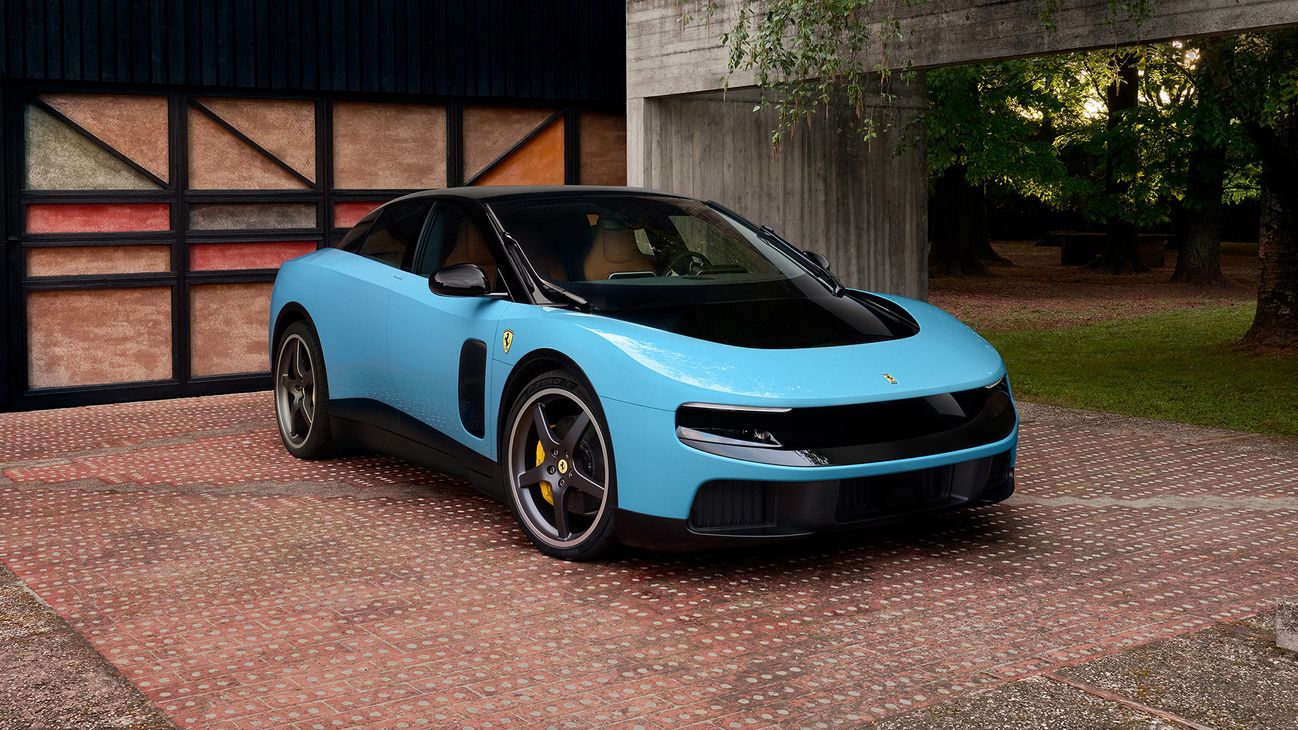
Ferrari Luce
"...e said, they said, no, we will not make you buy a luce to get one of the other better vehicles. Because ..."
The podcast mentions something called “Ferrari Luce,” but the excerpt doesn’t explain what it is. It sounds like the discussion is about how someone was told they couldn’t get one car unless they also bought another. Without more details, it’s hard to describe the car itself.
The podcast mentions “Ferrari Luce,” but the excerpt doesn’t provide enough context to identify a specific Ferrari model with confidence. It sounds like the conversation is about a policy or decision related to buying another vehicle, which suggests the name is being used in a particular story. To keep it accurate, the key takeaway is that “Luce” is referenced as part of a buying/availability discussion rather than a technical description.

Chevrolet Chevelle
"...tage of... Geez, do I have enough years to get my Chevelle done? Oh, Brad, I'm thinking about it."
The Chevrolet Chevelle is a classic muscle car from Chevrolet. Many owners restore them, which can take years. The podcast is basically talking about how long a Chevelle project can take to finish.
The Chevrolet Chevelle is a mid-size muscle car from the 1960s and 1970s that’s popular with classic-car owners and restorers. The podcast’s “enough years to get my Chevelle done” comment reflects the reality that these projects can take a long time and require patience. It’s discussed because Chevelles are common targets for restoration and customization.
Pike's Peak
"They took the 2026 ZR1X to Pike's Peak to compete in the production car class. And it squeaked out a new record."
Pike’s Peak is a famous mountain climb in Colorado where cars race uphill. Going that high up makes the air thinner, which can make engines feel weaker and makes the climb hard on the car.
Pike’s Peak is a famous American hill climb in Colorado where cars race up a steep mountain road to the summit. It’s especially demanding because altitude reduces engine power and the course stresses cooling, brakes, and traction for sustained uphill driving.
production car class
"They took the 2026 ZR1X to Pike's Peak to compete in the production car class. And it squeaked out a new record."
A production car class means the race cars are based on real cars you can buy. There are rules that limit how much they can be changed, so it’s a more “street-car-like” competition.
A production car class is a racing category for vehicles that are based on models sold to the public, with limits on modifications. The idea is to compare performance in a way that’s closer to what normal buyers could actually get, rather than purpose-built race cars.

Ford Mustang
"... Ford GT and he does a lot of racing these days. Mustangs. I think he did the Lamborghini Super Trefeo even..."
The Ford Mustang is a performance car from Ford that’s known for power and a sporty feel. People talk about it a lot because it has a long history and a big fan base. In the podcast, it’s mentioned because it’s also used in racing.
The Ford Mustang is a classic American muscle car that’s been produced for decades, with a strong following among enthusiasts. In the podcast, it’s brought up in a racing context, connecting Mustangs to motorsport history and track use. That’s why it often appears in discussions about performance cars and drivers.
Nuremberg ring
"But pike's peak is like the Nuremberg ring. [2521.8s] You can't just first time it and beat a record."
They’re comparing Pike's Peak to the Nürburgring, a famous race track in Germany. It’s known for being tough, so you usually need experience to do well.
The speaker is comparing Pike's Peak to the Nürburgring, Germany’s legendary motorsport circuit. The Nürburgring is known for being demanding and unforgiving, where experience and setup matter a lot for consistent lap times.
surface anomaly
"It's just a sim thing because of the surface. [2532.0s] It's got a surface anomaly. [2533.8s] So, wow."
A surface anomaly is a weird spot on the road, like a bump or dip. If your tires hit it at speed, the car can suddenly feel unstable or pull to one side.
A surface anomaly is an unexpected change in the road—like a bump, dip, seam, or uneven patch—that can upset a car’s balance. In a hill climb, these can trigger sudden changes in tire grip and steering response, which is why drivers talk about being “seasoned” on the course.
sim thing
"It's just a sim thing because of the surface. [2532.0s] It's got a surface anomaly. [2533.8s] So, wow."
The speaker is referring to using a driving simulator to learn how a specific course behaves. Simulators can help drivers anticipate traction changes and how the car reacts to bumps/dips, but they still need real-world experience because real surfaces can be more complex than the model.
Porsche 911 Turbo S
"Oh, by the way, the, the before the 01 acts, the record holder was a Porsche [2679.9s] 911 Turbo S. [2681.7s] Oh, okay."
The Porsche 911 Turbo S is a top version of the 911 that uses a turbocharged engine and all-wheel drive. Here, the hosts are saying it used to hold the record before the newer record holder came along.
The Porsche 911 Turbo S is a high-performance variant of the 911 that’s built around a turbocharged flat-six and all-wheel drive for very strong acceleration and traction. In this segment, it’s referenced as the previous record holder before the “01” era mentioned by the host.
Rhys Millen
"Yeah. Yeah. Rhys Millen drove that one. Yeah. That's right."
Rhys Millen is a race driver who’s known for setting records. In this clip, they mention him because he drove the Bentley GT they’re talking about.
Rhys Millen is a well-known motorsport driver, especially associated with hill climbs and record-setting runs. In this episode, he’s mentioned as the driver of the Bentley GT in the record timeline being discussed.

Acura Nsx
"I would say to answer your question, the Acura NSX was probably in that category, right? Naturally aspirated, kind of overlooked for a little while and then really started to take off."
The Acura NSX is a high-end sports car made by Acura. It’s famous for being mid-engine and naturally aspirated, and the host is saying it was once overlooked but later became more collectible.
The Acura NSX is a mid-engine sports car known for its naturally aspirated V6 and its role in bringing Honda/Acura’s engineering approach to the supercar conversation. In this episode, it’s used as an example of a modern car that was overlooked for a period before gaining collector attention.
naturally aspirated
"I would say to answer your question, the Acura NSX was probably in that category, right? Naturally aspirated, kind of overlooked for a little while and then really started to take off."
Naturally aspirated means the engine pulls air in on its own, without a turbo or supercharger. People often associate it with a more straightforward, predictable response when you press the gas.
Naturally aspirated describes an engine that draws air in without a turbocharger or supercharger. Because there’s no forced-induction hardware, these engines often have a more linear throttle response and a different sound/feel than boosted setups.

Lotus Esprit
"I think you're going to start to see a new wave of Lotus Esprit collectability, right? A car not super expensive and it will start to get up there, especially ones that are well taken care of."
The Lotus Esprit is a classic-looking British sports car. The host thinks more people will start collecting them soon, particularly nicer, well-maintained cars that aren’t already priced like rare exotics.
The Lotus Esprit is a British sports car line known for its distinctive styling and mid-engine layout in many versions. Here, the host predicts a “new wave” of collector interest, especially for well-kept examples that are not extremely expensive to buy today.

Pontiac Solstice GXP
"We always like those little Pontiac Solstice, the GXPs, too many miles."
The Pontiac Solstice GXP is a sporty Pontiac model. People like it because it’s usually cheaper than many collector cars, so it can be a fun project if you don’t mind doing some work.
The Pontiac Solstice GXP is a performance-oriented variant of the Solstice, a compact American roadster/coupe-like sports car from Pontiac. In enthusiast circles it’s often discussed as a relatively affordable entry point into “small, fun, and mod-able” ownership—especially compared with pricier collector cars.
Porsche 930
"The Porsche 930s. The 930 turbos."
The Porsche 930 is the classic older 911 Turbo. It’s a famous vintage Porsche that many collectors chase, so it often costs more than other older sports cars.
Porsche 930 refers to the 911 Turbo generation (1970s–1980s) known for its early turbocharged character and classic 911 shape. When people say “930 turbos,” they’re usually talking about this iconic turbo era, which tends to be more collectible and more expensive than many other older 911s.
collector car
"If you had a $50,000 budget today, would you buy one really nice collector car or three fun project cars that need work?"
A “collector car” is a car people buy because it’s special—like rare, desirable, or historically important. The idea is that it’s more of a long-term hobby/asset than just a cheap fixer-upper.
A “collector car” is a vehicle valued not just for driving, but for its rarity, history, desirability, and long-term demand. In budgeting discussions, it usually implies paying more upfront for a car that’s already in good condition (or at least easier to own).
project cars that need work
"If you had a $50,000 budget today, would you buy one really nice collector car or three fun project cars that need work?"
A “project car” is a car you buy knowing it won’t be perfect right away. You plan to spend time and money fixing it up, and that’s part of the fun (but it can also be risky).
“Project cars that need work” are vehicles bought primarily for the process of repair, restoration, or modification rather than immediate turnkey use. The tradeoff is typically more time, uncertainty, and extra costs—versus a “really nice” collector car that’s ready to enjoy.
LTI
"Yeah, no, it's what you were referring to is all my British friends are going, why did you buy an LTI in London taxi?"
LTI refers to the company behind classic London taxis. The host is basically asking why someone would buy a taxi-style car from London.
LTI is the brand associated with London taxis—most famously the TX series—built for the UK’s taxi market. In the context of the episode, it’s being discussed as a “London taxi” purchase choice.
manual transmissions
"Brad, you've worked with everything from custom hot rods to OEM design teams. If you could save one part of the automotive hobby from disappearing, manual transmissions, naturally aspirated V8s or traditional hot rod fabrication,"
A manual transmission is the kind of car where you use a clutch pedal and a stick to choose gears. Drivers usually feel more in control because they decide when to shift.
A manual transmission is a gearbox controlled by the driver using a clutch pedal and gear lever. It’s often prized because it gives direct control over engine speed and gear selection, which can make driving feel more connected and precise.
traditional hot rod fabrication
"If you could save one part of the automotive hobby from disappearing, manual transmissions, naturally aspirated V8s or traditional hot rod fabrication, which one would you fight for and why?"
Traditional hot rod fabrication is the old-school way of building a custom car—cutting, welding, and making parts to create a unique hot rod. It’s less about buying a kit and more about hands-on building.
Traditional hot rod fabrication refers to the classic custom-building approach—cutting, welding, and assembling parts by hand to create a personalized performance car. It’s more about craftsmanship and bespoke builds than modern bolt-on, factory-style tuning.
rear view mirrors that want to see your eyes
"Okay, we're starting to see cars that now have rear view mirrors that want to see your eyes, and to make sure part of this distracted driving thing."
Some newer cars use a camera to watch the driver’s face and eye position. If the car thinks you’re not paying attention, it can beep or warn you to help prevent distracted driving.
This describes an in-cabin driver-monitoring system that uses cameras to watch where you’re looking. If it detects you’re not paying attention, it can trigger alerts or other countermeasures to reduce distracted driving.

Subaru brat
"No, wait, you were telling me the other day, the rear-facing seats in the bed of a Subaru brat with the handle ribs."
The Subaru BRAT is an older Subaru model that’s kind of like a small pickup. It’s remembered for having unusual seating in the truck bed—so people could sit facing backward there.
The Subaru BRAT is a quirky 1970s–1980s-era Subaru pickup/crossover that’s known for its small truck bed and unusual practicality. In this segment, the hosts mention its rear-facing seats in the bed, which is a distinctive BRAT feature that stands out from typical pickups.
e-brake
"Now, you know what, actually, this is kind of a simple thing, but especially for manual cars, I kind of miss cars are no longer having an actual, like, e-brake. They have the little electric brake, right?"
An “e-brake” is the parking brake—the thing that keeps the car from rolling when you’re stopped. Older cars usually use a lever and cable, while newer cars can use an electronic button or switch.
“E-brake” is shorthand for the parking brake, which keeps a car from rolling when it’s parked. The hosts contrast traditional manual parking brakes (a lever/cable) with newer electric parking brakes that use a switch and motors instead of a cable.
electric brake
"They have the little electric brake, right? You pull a switch, or you pull something on your dash, or it's an auto-senting, auto-setting, like, e-brake."
This is the newer kind of parking brake that’s controlled electronically. Instead of pulling a lever or cable, you press a button or switch and a motor does the work.
An electric brake here refers to an electric parking brake system, where a motor actuates the rear brake mechanism when you use a switch. Compared with cable-and-lever parking brakes, it can feel different and may rely on electronic control for holding and release.
cable needs to be adjusted
"Yeah, or it still doesn't hold, you're like, ah, it's still sliding back. The cable needs to be adjusted. There's something about having that that also kind of feels..."
On older cars with a cable parking brake, the cable can loosen over time. If it’s not adjusted, the brake might not hold the car well and it can start rolling.
When a traditional parking brake uses a cable, that cable can stretch or lose proper tension over time. If it’s not adjusted correctly, the parking brake may not hold the car securely, leading to the “still sliding back” problem the hosts describe.
Analog
"It's analog. Analog, right. It goes manual and feels analog."
Here “analog” means the car feels more mechanical and hands-on—like levers, cables, and real gauges you can read directly. They’re saying it feels more natural than electronic controls that do the same job with motors and switches.
In this discussion, “analog” is used as a philosophy of car feel: mechanical, direct-feedback controls (lever/cable, physical gauges, tactile steering and pedal response) rather than electronic, button-and-motor actuation. The hosts argue that this “analog” approach provides more predictable, human-scale feedback.
actuator
"When you go to open the door, it's just an actuator now. It's just a solenoid. I miss analog gauges."
An actuator is a motor-like part that moves something when the car tells it to. In this context, it’s how modern cars replace mechanical feel with electronic control.
An actuator is a device that converts an electrical signal into physical motion, such as moving a latch, brake mechanism, or other mechanism. The hosts use it to describe how modern systems replace purely mechanical actions with electrically driven components.
solenoid
"When you go to open the door, it's just an actuator now. It's just a solenoid. I miss analog gauges."
A solenoid is an electrically powered part that moves a small internal piece when current flows. It’s one way cars can make things move without a traditional mechanical linkage.
A solenoid is an electromechanical device that uses an electromagnetic coil to move a plunger and create motion. The hosts mention it as part of the “electronic” way doors and other functions are triggered in modern cars, replacing mechanical linkages.

BMW Z8
"I would totally buy a little BMW Z8. [3609.1s] Everybody that drives them says they love them."
The BMW Z8 is a small, stylish BMW roadster that people love for how it drives. It’s not common, and once someone drives one, they often end up really liking it.
The BMW Z8 is a rare, retro-styled roadster from BMW that’s known for its classic proportions and for being powered by a high-performance V8. It’s also famous for being a “driver’s car” that many owners describe as special once they actually get behind the wheel.
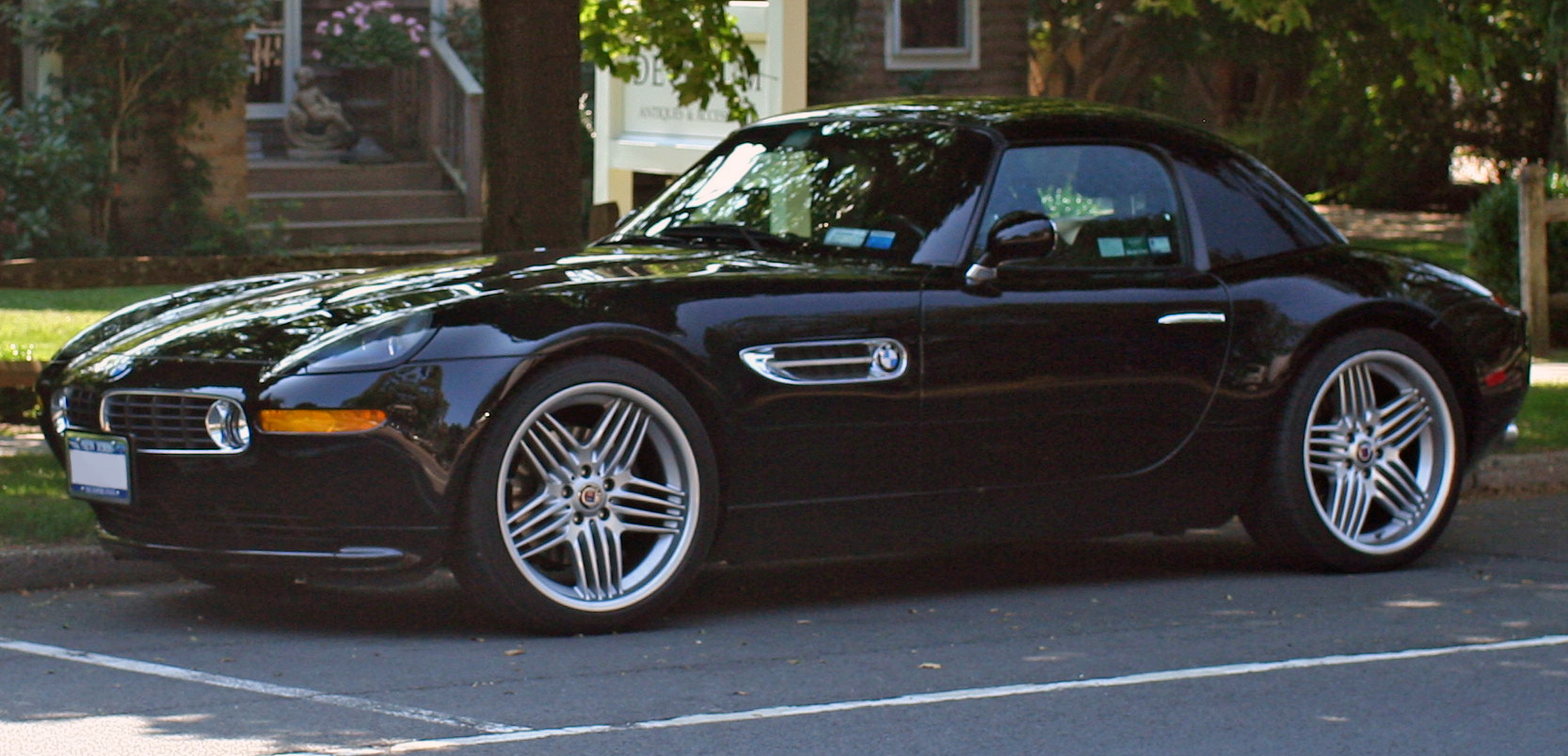
Alpina Z8
"... me, at least in Dad's collection, was his little Z8. I never really cared for that car, and I don't k..."
The Alpina Z8 is a modified version of a BMW Z8 made by Alpina. Alpina is known for tuning cars to feel more special and performance-oriented. The podcast mentions it as a car someone owned, and the speaker says they didn’t personally like it.
The Alpina Z8 refers to an Alpina-tuned version of the BMW Z8, with Alpina typically focusing on performance and refinement through its own engineering. In the podcast, it’s mentioned as part of “Dad’s collection,” and the speaker notes they personally didn’t care for it. It comes up because Alpina versions can be a distinct take on a limited-production BMW.
M52
"It doesn't have the M. What are those? [3621.0s] M52? [3622.0s] Not an M54."
M52 is a code BMW used for a specific type of engine. The host is basically guessing which engine family it is when they talk about whether it has the “M” performance version.
M52 is an engine family designation BMW used for certain inline-six engines. The speaker is trying to identify which BMW engine the Alpina/Z8 variant has based on whether it’s an “M” engine (high-performance) versus a non-M engine.
M54
"It doesn't have the M. What are those? [3621.0s] M52? [3622.0s] Not an M54."
M54 is another BMW engine code for a different inline-six. The host is trying to figure out which engine family the car has when comparing “M” performance versions.
M54 is another BMW inline-six engine family designation that the speaker is considering as an alternative to M52. Both are internal BMW engine codes, and the “M” they’re discussing is about whether the car has an M-series performance engine versus a standard engine family.
automatic
"It's automatic, right? [3631.7s] It's automatic? [3633.4s] It is, but I think... could you get them in a stick?"
An “automatic” car changes gears for you. The question is whether you can get this car with a manual transmission instead.
“Automatic” here means the transmission shifts by itself using a hydraulic/mechatronic control system, rather than requiring the driver to manually select gears. The speaker is asking whether the BMW Z8 (and especially the Alpina) can be had with a manual gearbox.

Land Rover Defender
"The new Defender. Love the way they look, and a couple years later, we bought one, and I hated it... Now, being a classic Defender owner of two, I don't think it should have held the name."
The Defender is a famous off-road SUV from Land Rover. Here, the host is saying the newer one didn’t feel like the old-school Defender they expected—more disconnected and less “character.”
The Land Rover Defender is a modern reboot of the classic, rugged off-road SUV nameplate. In this segment, the host contrasts the newer Defender’s feel with what they expect from the Defender “DNA,” implying a mismatch in character and driving connection.
nanny car
"And you talk about a nanny car, I hated that thing. It beat and honked and did everything to annoy you all day long."
A “nanny car” is a car that tries to manage you while you drive—beeping, warning, or even stepping in—so often that it becomes irritating. The host is saying it felt like the car was constantly trying to control them.
A “nanny car” is a nickname for a vehicle whose driver-assistance systems intervene frequently—through warnings, alerts, and automatic corrections—so much that it can feel annoying or overly controlling. The host is using it to describe how the Defender’s behaviors “beat and honked” to get their attention.
rest-o-mod
"Make it look restored, but underneath the underpinnings, rest-o-mod it, like tubular A-arms, coil-over suspension,"
Rest-o-mod means you make an old car look original, but you upgrade the important parts underneath. It’s meant to be nicer to drive and more dependable, not just a showpiece.
“Rest-o-mod” is a blend of restoration and modification: you keep the look of a classic car, but update the underlying mechanicals for modern drivability. The goal is usually better ride, handling, and reliability while preserving the vintage vibe.
tubular A-arms
"but underneath the underpinnings, rest-o-mod it, like tubular A-arms, coil-over suspension,"
A-arms are parts that connect the wheels to the car’s suspension. “Tubular” ones are made to be lighter/stronger, which can help the car handle better.
Tubular A-arms are an aftermarket-style front suspension control arm made from tubular metal. They help improve suspension geometry and stiffness compared with many older or heavier factory arms, which can sharpen handling and ride response.
coil-over suspension
"rest-o-mod it, like tubular A-arms, coil-over suspension, you don't have to, you know, have big 20-inch wheels on it."
Coil-over suspension uses a coil spring mounted directly on (or around) the shock absorber, often allowing ride-height and damping adjustments. In a rest-o-mod build, it’s a common way to modernize how the car rides and handles compared with older suspension setups.
20-inch wheels
"you don't have to, you know, have big 20-inch wheels on it. You don't have to..."
Bigger wheels usually mean a thinner tire sidewall. That can make the car feel more responsive, but it can also make bumps feel harsher.
Wheel size (like “20-inch wheels”) affects tire sidewall height and overall ride/handling feel. Larger wheels typically mean shorter sidewalls, which can improve steering response but may ride harsher over bumps.
18-inch steelies
"you can put like 18-inch steelies on it, or you can put billet wheels that look like 18-inch with hubcaps"
Steelies are plain steel wheels. They’re often tougher and cheaper, and with a smaller wheel size you can sometimes get a smoother ride.
Steelies are steel wheels, often chosen for durability and cost. In a rest-o-mod context, using smaller steel wheels (like 18-inch) can help maintain a more comfortable ride because the tire sidewall can be taller.
billet wheels
"or you can put billet wheels that look like 18-inch with hubcaps and do all those sort of things."
Billet wheels are wheels made from a solid piece of metal and machined into shape. People choose them for style, and sometimes for strength, but the tire and suspension still matter most for ride feel.
Billet wheels are machined from a solid block of aluminum (or similar material) rather than cast. They’re often chosen for a specific look and can be lighter or stronger depending on design, though ride quality is more about tire and suspension than the wheel alone.
fuel-injected motor
"And you can put a fuel-injected motor under the hood, do the things like vintage air,"
Fuel injection is a modern way of delivering fuel to the engine. It usually makes the car start easier and drive more smoothly than older carburetors.
A fuel-injected engine uses an electronic system to deliver fuel into the engine, replacing carburetors. Fuel injection generally improves cold starts, throttle response, and drivability—key reasons people modernize classic cars in a rest-o-mod.
vintage air
"do the things like vintage air, things like that that will make it a joy to drive,"
Vintage Air is a company that makes air-conditioning and heater upgrades for older cars. It’s a popular way to get modern climate comfort without changing the car’s classic style.
Vintage Air is a brand that makes aftermarket HVAC kits for classic cars. In a rest-o-mod build, it’s often used to add modern, reliable air conditioning and climate control while keeping the original-era look.
aftermarket
"[3898.0s] when to go to the aftermarket, [3899.9s] now, assuming budget is a factor for everyone, [3903.6s] all of us, budget is a factor."
Aftermarket just means parts that aren’t made by the car’s original manufacturer. People use them to upgrade or fix things, often for better value than OEM parts.
“Aftermarket” means parts, upgrades, or services made by companies other than the original vehicle manufacturer. In this context, it’s about choosing non-OEM components to improve things like brakes, cooling, or fuel delivery within a budget.
crate engine
"[3905.3s] So throwing a chassis behind it [3906.9s] and doing an entire crate engine, [3909.6s] I look at it this way,"
A crate engine is a complete engine you can buy as a kit, usually ready to install. It’s often used for engine swaps or rebuilds, and it can be expensive depending on what you get.
A “crate engine” is a complete engine sold as a packaged unit (often with accessories and sometimes a warranty), ready to install. It’s commonly used when rebuilding or swapping powertrains, but cost can vary widely depending on how complete and performance-oriented the package is.
brake kit
"[3925.5s] Because it makes sense to go with a decent brake kit. [3930.6s] It doesn't have to be a giant six-piston show-off, [3933.2s] but get something good so it stops."
A brake kit is a set of upgraded brake parts. The point is to improve stopping power and consistency, not necessarily to buy the biggest, most expensive setup.
A “brake kit” is an upgrade package for the braking system—typically including components like rotors and calipers, and sometimes pads and lines. The host is emphasizing that you don’t need an extreme, showy setup, but you do need brakes that stop confidently and consistently.
six-piston
"[3930.6s] It doesn't have to be a giant six-piston show-off, [3933.2s] but get something good so it stops. [3936.2s] Get something good that it handles and steers well,"
“Six-piston” describes a brake caliper design with six moving parts that squeeze the brake pads. It can improve braking, but it’s not required for every street or budget build.
“Six-piston” refers to brake calipers that use six pistons to clamp the brake pads against the rotor. More pistons can help with more even pad pressure and potentially better high-performance braking, but it’s not automatically better for every use case.
rack and pinion conversion
"[3936.2s] Get something good that it handles and steers well, [3938.8s] maybe rack and pinion conversion. [3941.9s] Reliability, for sure."
Rack-and-pinion is a steering system where turning a wheel moves a gear that pushes a bar to steer the car. A conversion means changing the car to use that system, often to make steering feel better and work more reliably.
A “rack and pinion conversion” swaps the steering mechanism to a rack-and-pinion setup, where a gear (“pinion”) moves a toothed bar (“rack”) to turn the wheels. Conversions are often done to improve steering feel, responsiveness, and sometimes to modernize parts for reliability.
push-rod motor
"[3943.5s] Maybe you have a push-rod motor, [3945.9s] but you don't want a $15,000 crate engine, [3949.5s] but a $1,200 fuel injection system,"
A push-rod motor is an engine design where small rods help open the valves. The host is basically saying you don’t have to buy a super-expensive engine to build something that runs reliably.
A “push-rod motor” uses pushrods to transfer motion from the camshaft to the engine’s valves. It’s a common traditional engine design, and the host is contrasting it with expensive modern crate-engine packages—suggesting you can keep a simpler engine approach while spending on reliability-critical systems.
fuel injection system
"[3945.9s] but you don't want a $15,000 crate engine, [3949.5s] but a $1,200 fuel injection system, [3952.9s] so it fires up each time,"
Fuel injection is a way the engine gets fuel using controlled injectors. Compared to older setups, it often helps the car start easier and run more consistently.
A “fuel injection system” delivers fuel to the engine using electronically controlled injectors instead of a carburetor. The host is pointing out that upgrading to fuel injection can improve starting consistency (“fires up each time”) and day-to-day reliability.
cooling system
"[3952.9s] so it fires up each time, [3954.8s] and cooling system, radiator, [3958.5s] like those things, reliability will pay off,"
The cooling system prevents the engine from getting too hot. It uses coolant and a radiator to move heat away, which helps the engine last longer.
The “cooling system” keeps engine temperatures in a safe operating range using coolant, a radiator, and a circulation system. The host is treating cooling upgrades (like a radiator) as reliability payoffs because overheating can quickly ruin an engine.
shock settings
"That speaks a little bit more into your wheel and tire package, your shock settings, things like that,"
Shock settings are how the suspension’s dampers are adjusted. They change how the car reacts over bumps and when you turn or brake.
Shock settings refer to how the shock absorbers are tuned to control damping—how quickly the suspension compresses and rebounds. Changing shock settings can significantly affect ride comfort and grip during cornering and braking.
wheel and tire package
"That speaks a little bit more into your wheel and tire package, your shock settings, things like that,"
This means the combination of wheels and tires on the car. The tires are what actually grip the road, so changing the package can change how the car steers and stops.
A wheel and tire package is the combined setup of wheel size/width and tire type/size, which determines contact patch shape and grip. It strongly influences steering response, traction, and how the car behaves under braking and cornering.
air conditioning
"going air conditioning. Yeah, air conditioning, for sure."
Air conditioning is the system that cools the car’s cabin. It’s mostly about comfort, but it can matter for how pleasant the car is to drive.
Air conditioning (A/C) is the climate-control system that cools and dehumidifies the cabin. In performance-car discussions, it can come up because it adds electrical load and can affect comfort and perceived usability rather than outright lap-time performance.
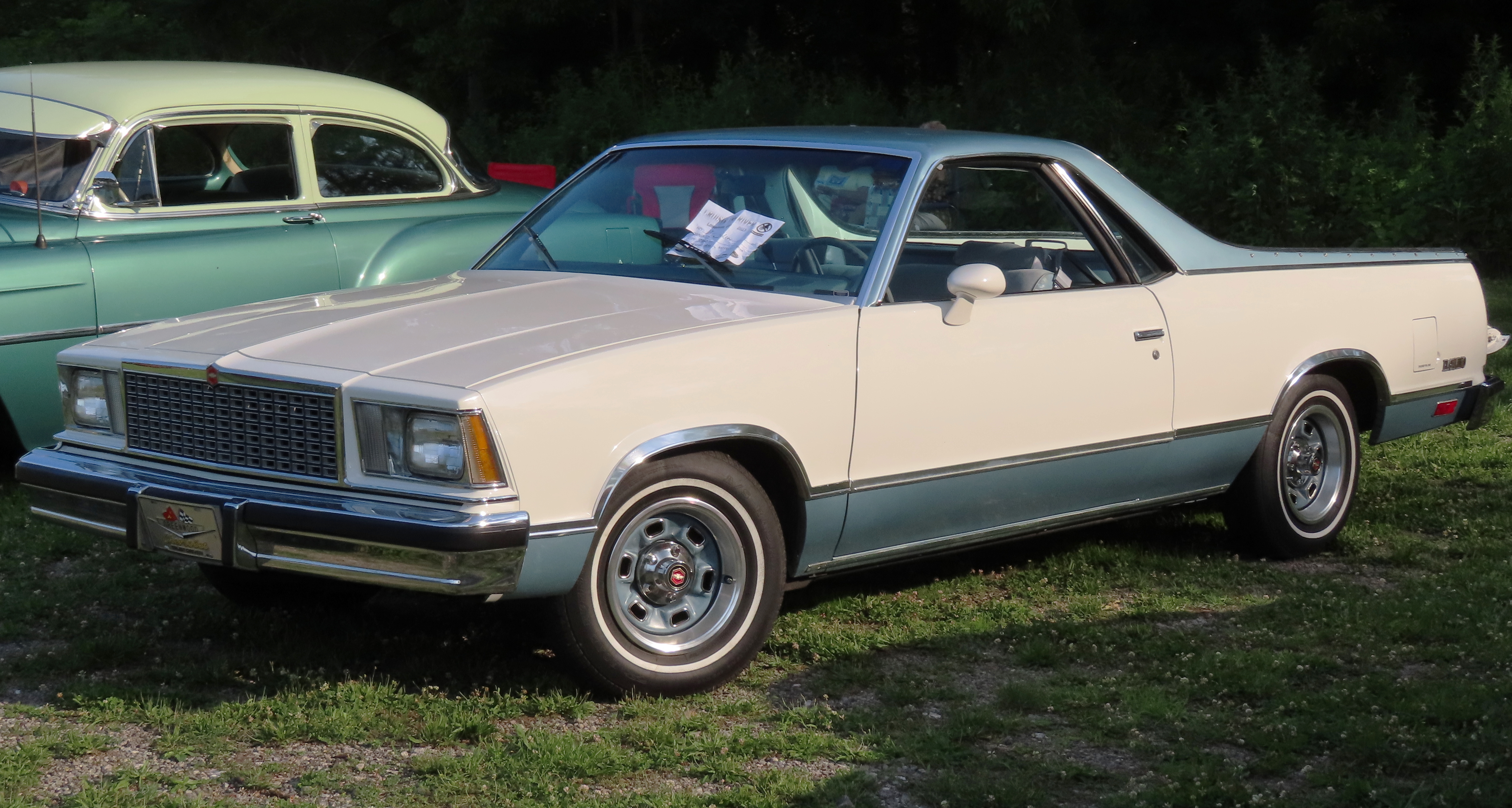
El Camino
"But that handling, I take it from my El Camino. When I built that El Camino in 1995, it was state of the art."
The El Camino is a classic Chevy that’s part car and part small truck. Here, the speaker is saying they improved how it rides and stops by upgrading parts, and that made it feel more comfortable to drive on normal roads.
The Chevrolet El Camino is a classic American two-door pickup-based coupe, and this host is using it as a personal example of how chassis upgrades change real-world drivability. In this segment, they describe reworking the suspension and brakes over time, then switching to aftermarket parts to make the car easier to drive “anywhere.”
bear brakes
"And things accelerated so fast that by the time I redid the car in about 2005, 2006, and went to bear brakes and Hotchkiss suspension"
This sounds like the speaker is upgrading the brakes to something stronger than stock. Better brakes can help the car stop more predictably, which makes it feel safer and easier to drive.
“Bear brakes” here is almost certainly a reference to upgraded brake hardware from the aftermarket (often meaning higher-performance brake components). The point in the conversation is that changing the braking setup can noticeably improve confidence and control when you’re pushing a car’s handling.
Hotchkiss suspension
"and went to bear brakes and Hotchkiss suspension and coilovers and all of that,"
Hotchkiss makes aftermarket suspension parts. The speaker is saying that switching to those parts helped the car ride and handle better after they redid it.
Hotchkiss is an aftermarket suspension brand known for performance-oriented suspension components. In this segment, pairing Hotchkiss suspension with other upgrades (like coilovers) is presented as a major reason the El Camino felt better to drive after the rebuild.

Chevrolet Corvette
"you're giving the keys to a brand new Corvette ZR1, a classic 69 Z28 Camaro, and a 1995 Toyota Supra Turbo."
The Corvette ZR1 is the most extreme, high-performance version of the Corvette. Here, the host is being asked how to choose between three cars—one you drive daily, one you keep forever, and one you’d have to sell.
The Chevrolet Corvette ZR1 is the Corvette’s top performance trim, known for its high-output engine and track-focused hardware. In this listener question, it’s framed as the “drive every day” car, which highlights how the ZR1 is treated as usable—not just a garage queen.
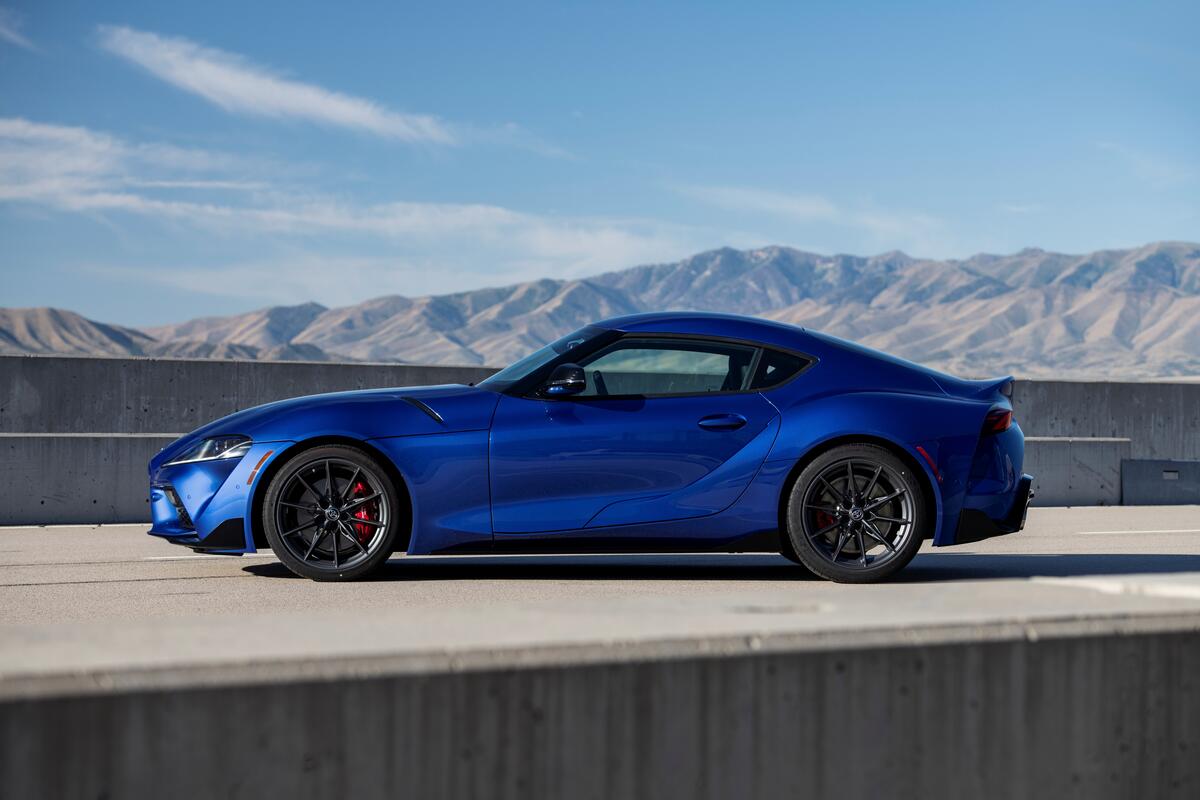
1995 Toyota Supra Turbo
"you're giving the keys to a brand new Corvette ZR1, a classic 69 Z28 Camaro, and a 1995 Toyota Supra Turbo... Sell the Camaro, drive the ZR1, put away the Supra."
The 1995 Toyota Supra Turbo is a classic sports car with a turbocharger. In this discussion, it’s the one the speaker would store away instead of driving every day.
The 1995 Toyota Supra Turbo is a turbocharged version of the Supra from the A80 generation, famous for its strong performance potential and enthusiast following. Here it’s treated as the “put away” car—kept rather than daily-driven—reflecting how many owners think of the Supra Turbo as a special-occasion machine.
under warranty
"So ZR1... It's under warranty. Yeah, right, it's under warranty."
“Under warranty” means if something breaks that’s covered, the company pays to fix it for a limited time. The host is basically saying that makes it easier to drive the car without worrying about repair bills.
“Under warranty” means the manufacturer will pay for covered repairs for a set period or mileage after purchase. In the context of the ZR1 discussion, it’s being used as a practical ownership advantage: fewer unexpected repair costs while the car is new.
Supra
"but I like the Supra as well. Supra is definitely having a moment going up in value. So Supra or the Camaro, it's a tough one."
The Supra is a Toyota sports car. The host is saying it’s getting more attention and rising in value, so it could be the smarter choice to keep compared with the Camaro.
The Toyota Supra is a performance sports car that’s become especially popular in recent years, and the host claims it’s “having a moment” in the market. In this segment, that market momentum is used to argue why someone might choose the Supra over a Camaro if they’re thinking about what to keep long-term.
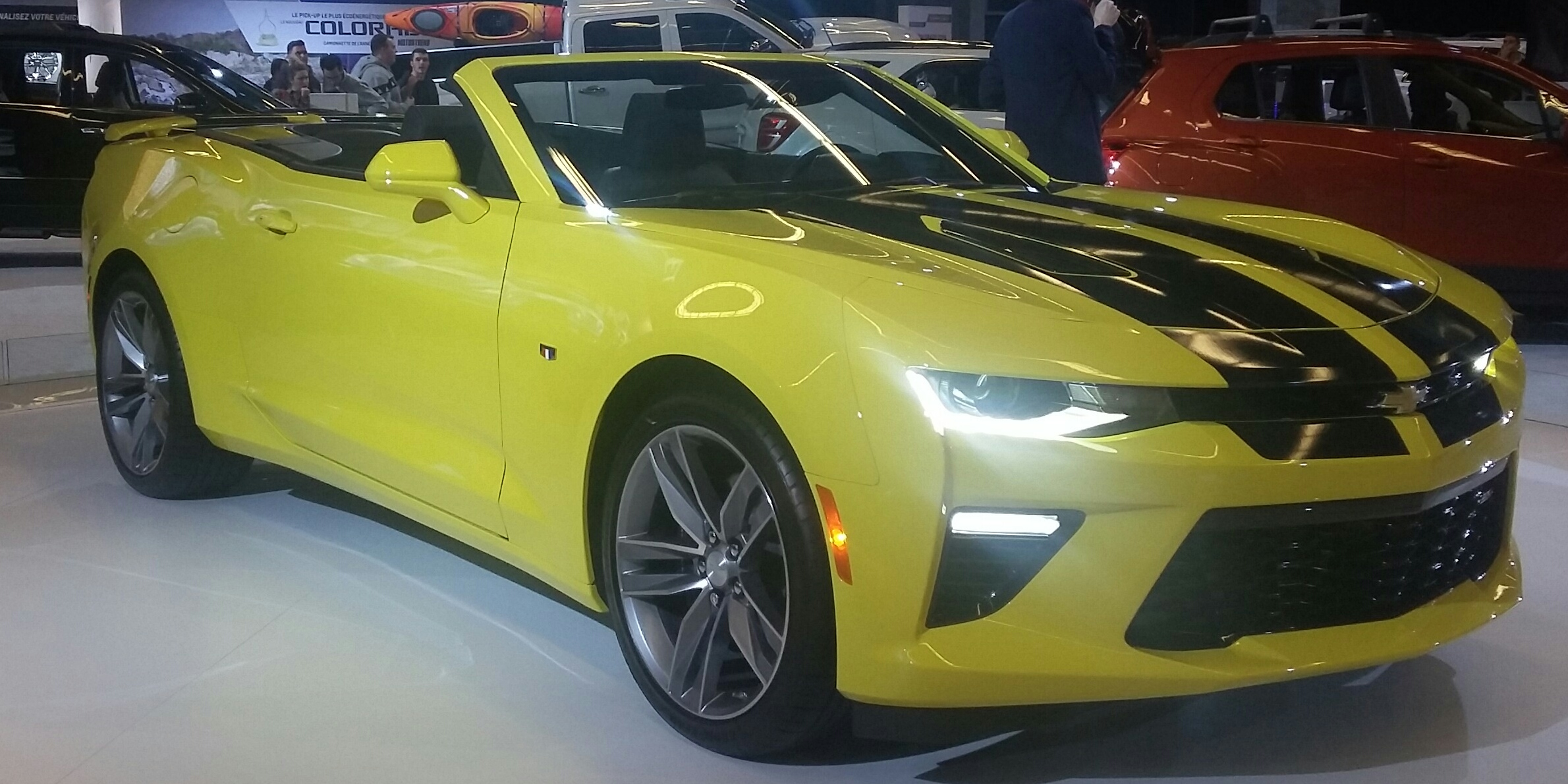
Camaro
"The Camaro I do like, that's cool, but I like the Supra as well... Because I think Camaros are kind of peaked. Like, I think, I mean, they're stable in the market,"
The Camaro is a sporty Chevrolet coupe. In this discussion, they’re talking about how its resale value might have leveled off, so it’s not as strong an investment choice as some other cars.
The Chevrolet Camaro is a long-running American pony car that competes with other performance coupes like the Toyota Supra. Here, the host discusses it in an ownership/market context, saying the Camaro’s value trajectory feels “peaked,” which implies the market may be less likely to keep rising compared with some alternatives.
Haggerty Pires guide
"And I just looked at the Haggerty Pires guide and the Supra's going up."
Hagerty is a company that focuses on classic cars, including pricing and valuation info. The host is using their guide to estimate how much certain cars are worth.
Hagerty is a collector-car media and valuation brand, and its pricing guides are used by enthusiasts to estimate what classic cars are worth. In this context, the host is referencing a guide to track how values are changing for cars like the Supra.
going for value
"So, I'm going for value. Because I'm going to need retirement money, man."
“Going for value” means the host is thinking about money—like which cars are likely to be worth more later. It’s less about just having fun and more about resale and long-term payoff.
“Going for value” here means choosing cars (or timing sales) based on expected financial return rather than just driving enjoyment. It’s a collector mindset: treating certain models as appreciating assets and planning purchases/sales around that.
Request an Explanation
Heard something you'd like explained? We'll add it to this episode.
Sign in to request explanations for terms you heard.
Want to learn more?
Browse our glossary for plain-English explanations of automotive terms, jargon, and concepts.
Help improve this episode
See something that's not quite right? Our annotations are AI-generated and can sometimes miss the mark. Click the flag icon on any annotation to suggest a correction.